Ninja Luxe Café vs Philips 3200: which is easier day to day?
One is a guided espresso machine, the other a true push-button bean-to-cup. The Ninja Luxe Café Premier weighs every dose, tamps for you and adds cold brew, while the Philips 3200 grinds, brews and froths at one touch with a milk jug that rinses clean in seconds. I used both every day for four weeks to find out which one is easier to live with, and which one makes the better cup.
We choose products independently. We may earn a commission through links on this page; your price stays the same. Affiliate policy
Jargon helpNew to espresso? Tap any dotted term to see what it means.
In this comparison
If you want the best-tasting espresso and milk drinks, and you don’t mind a minute of guided hands-on work, buy the Ninja Luxe Café Premier. It weighs every dose, tamps for you, makes genuinely strong espresso, steams real microfoam and adds cold brew and cold foam. If you want the easiest machine to live with, where anyone in the house presses one button and walks away, the Philips 3200 is the better pick. Its coffee is milder, but its LatteGo jug rinses clean in seconds and it never asks you to touch a portafilter✕PortafilterThe handle with a metal basket that holds the ground coffee on a traditional espresso machine. You lock it into the group head to brew..
The two machines
Specs checked November 14, 2026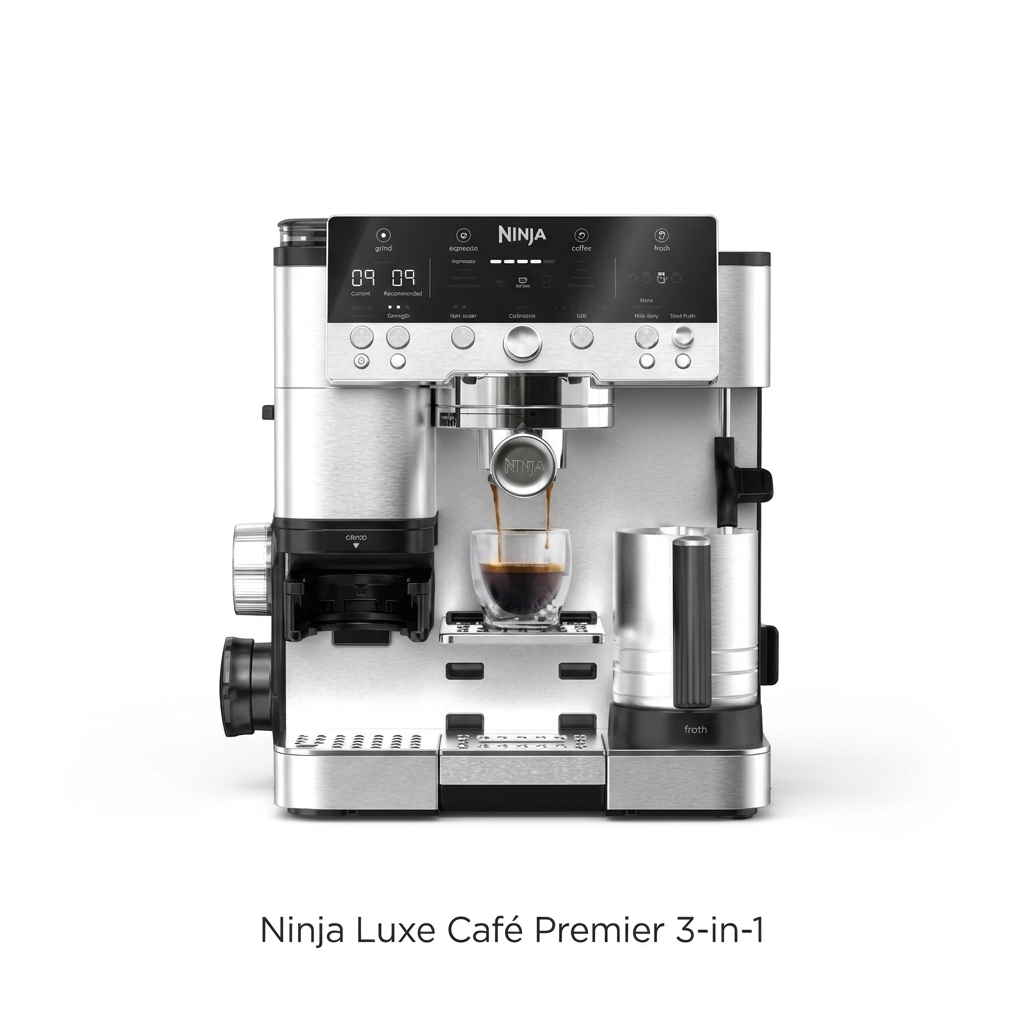
A guided espresso machine with a 25-step burr grinder, a built-in scale, an assisted tamper, drip-style coffee, cold brew and a hands-free frother.
Check price on Amazon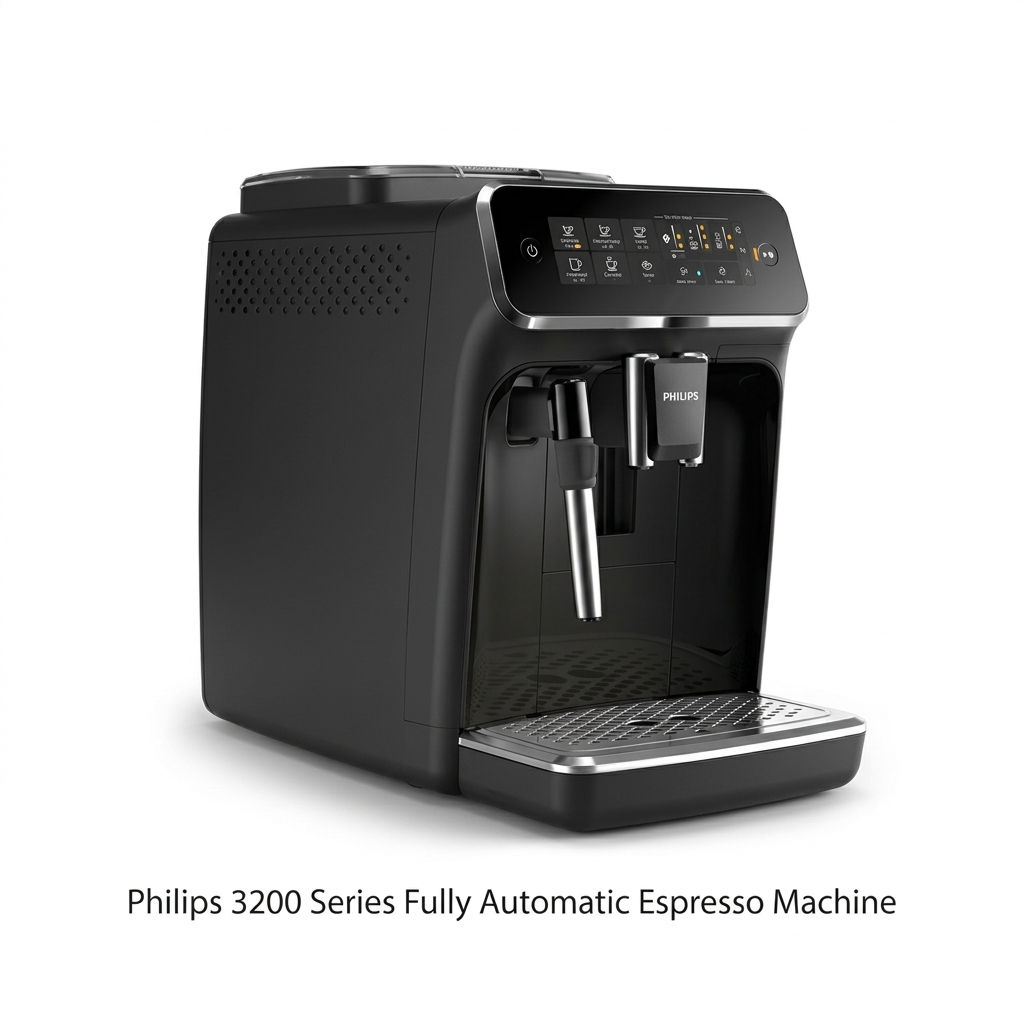
A one-touch bean-to-cup machine with five drinks, a ceramic grinder, a removable brew group and the tube-free LatteGo milk jug.
Reveal Today’s DealNinja Luxe Café vs Philips 3200 at a glance
- Buy the Ninja if coffee flavor matters most and you’re happy to spend a minute per drink.
- Buy the Philips if you want true push-button drinks that anyone in the house can make.
- The Ninja makes stronger espresso and better foam; the Philips is simpler to clean and to share.
- Only the Ninja makes cold brew and cold foam, and only the Philips grinds, tamps and ejects the puck by itself.
Head to head
The better result in each row is marked, based on my four weeks with each machine and the manufacturer specs. Rows where the two are about even have no winner.
The tally is not my verdict. Espresso strength matters far more to some buyers than cleaning time, and the reverse is true for others.
| Spec | Luxe Café Premier | Philips 3200 |
|---|---|---|
| Espresso strengthmy tasting, same beans | Full body, ~18 g double ✓ Best | Mild, ~8 g dose |
| One-touch drinks | No, guided steps | 5 drinks plus hot water ✓ Best |
| Milk foam texture | Silky microfoam, 4 presets ✓ Best | Good, one texture |
| Cold brew and cold foam | Yes, both ✓ Best | No |
| Drip-style coffee | Yes, with Luxe basket ✓ Best | Long coffee only |
| Grind settings | 25, conical burrs ✓ Best | 12, ceramic |
| Weighs the dose | Yes, built-in scale ✓ Best | No |
| Milk system cleaning | Whisk and jug to wash | Two-part jug, rinse in ~10 sec ✓ Best |
| Puck handling | Knock out by hand | Automatic grounds drawer ✓ Best |
| Effort per drink | About a minute of steps | Press and walk away ✓ Best |
| Removable brew group | Not needed, it’s a portafilter | Yes, rinse under the tap |
| Cup clearance | Shot glass to thermos ✓ Best | Up to about 5.7 in |
| Width on the counter | About 13.4 in | About 9.7 in ✓ Best |
| Rows won | 7 | 5 |
Ninja Luxe Café vs Philips 3200 pros and cons
Ninja Luxe Café Premier
- Strong, full-bodied espresso from weighed doses
- Silky microfoam, four froth presets and cold foam
- Espresso, drip-style coffee and cold brew in one machine
- Every drink takes a minute of hands-on steps
- Large-basket coffees can taste weak
- Loud beeps until you switch them off
Philips 3200
- Five one-touch drinks that anyone can make
- LatteGo jug has no tubes and rinses clean fast
- Removable brew group and AquaClean filter included
- Mild espresso from a small dose of about 8 g
- Milk foam is good, not café-smooth
- Mostly plastic body and a small drip tray
Who should buy which machine?
- Espresso and latte lovers who care about flavor
- Anyone curious to learn espresso without the mess
- Homes that also want cold brew and iced drinks
- Busy households that want one-touch coffee
- People who hate cleaning milk tubes and wands
- Mild coffee and latte macchiato drinkers
Design, size and build
These two look like they belong in different kitchens, and in a way they do.
The Ninja Luxe Café Premier is a squat, wide machine with a brushed steel front, a bean hopper on top, a dial-and-button panel and a real portafilter handle sticking out of the group head. It looks like a café machine that has been tidied up.
The Philips 3200 is tall, narrow and mostly glossy black plastic. The front is a flat touch panel with five drink icons, and everything you service, from the water tank to the grounds drawer, comes out from the front.
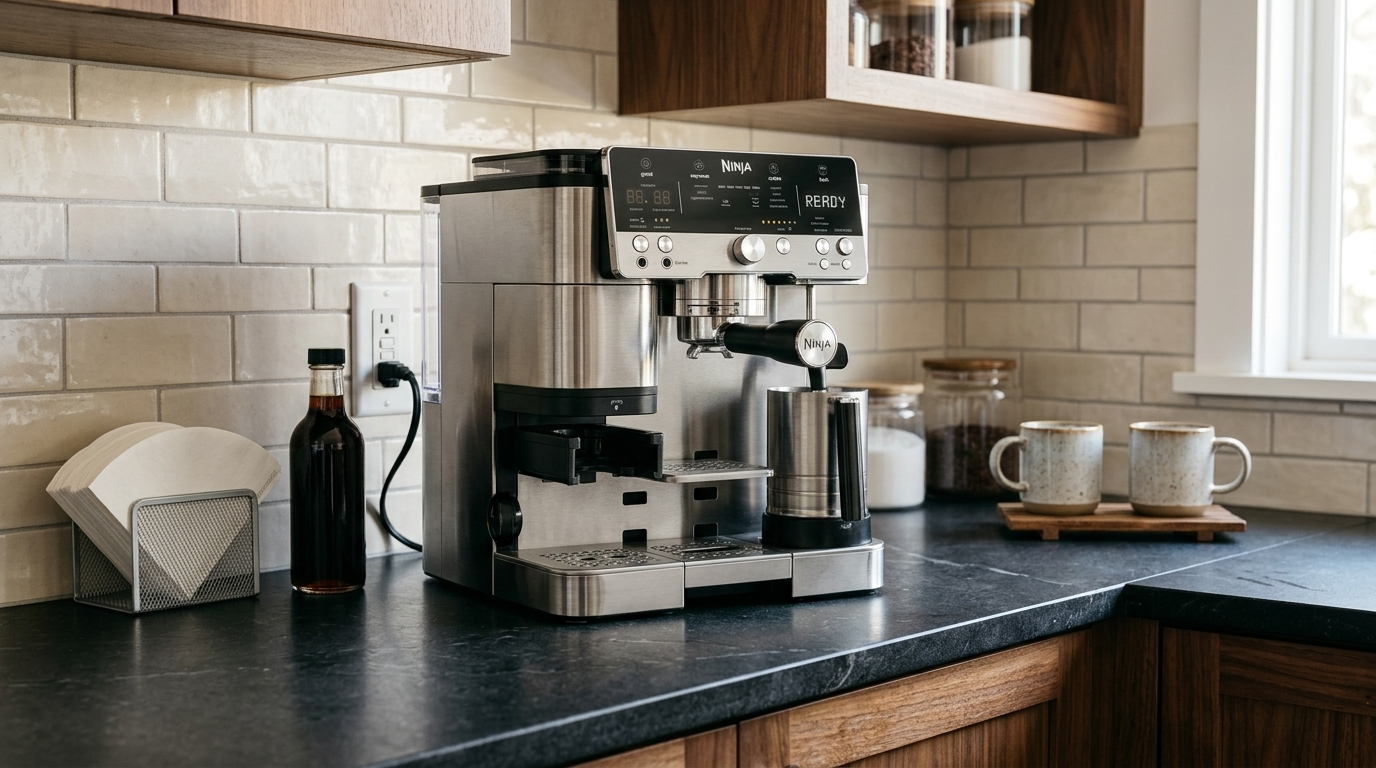
The Ninja looks and works like a compact café machine, with a portafilter you lock in by hand.
The Ninja is about 13.4 inches wide, 13 inches deep and 14.6 inches tall. It’s heavy and stays put when you lock in the portafilter, which matters more than it sounds on a machine you push and twist every day.
The Philips measures about 9.7 inches wide, 17 inches deep and 14.6 inches tall, and weighs about 17.6 pounds. It is narrower by almost 4 inches but deeper by about 4 inches, so it suits a slim gap better than a shallow counter.
Width on the counter
The Philips fits slimmer gaps; the Ninja needs a shallower but wider spot.
Build quality is better on the Ninja. The steel front, solid portafilter and metal steam wand feel like they will last, while the Philips’ glossy panels pick up fingerprints and its drip tray feels light.
That said, the Philips never felt flimsy in four weeks of daily use. It simply feels like an appliance, where the Ninja feels like a piece of coffee equipment.
Our tip: Leave about 5 inches above either machine, because you will refill the bean hopper from the top every few days.
Setup and the first week
Setup took me about 15 minutes on the Ninja. You test your water hardness, fill the tank and hopper, run a rinse and then pull a few calibration shots while the machine suggests a grind setting.
The Philips was quicker to unbox and start. You fit the AquaClean filter, fill the tank and hopper, enter your water hardness and run a rinse, and the first drink is a few minutes away.
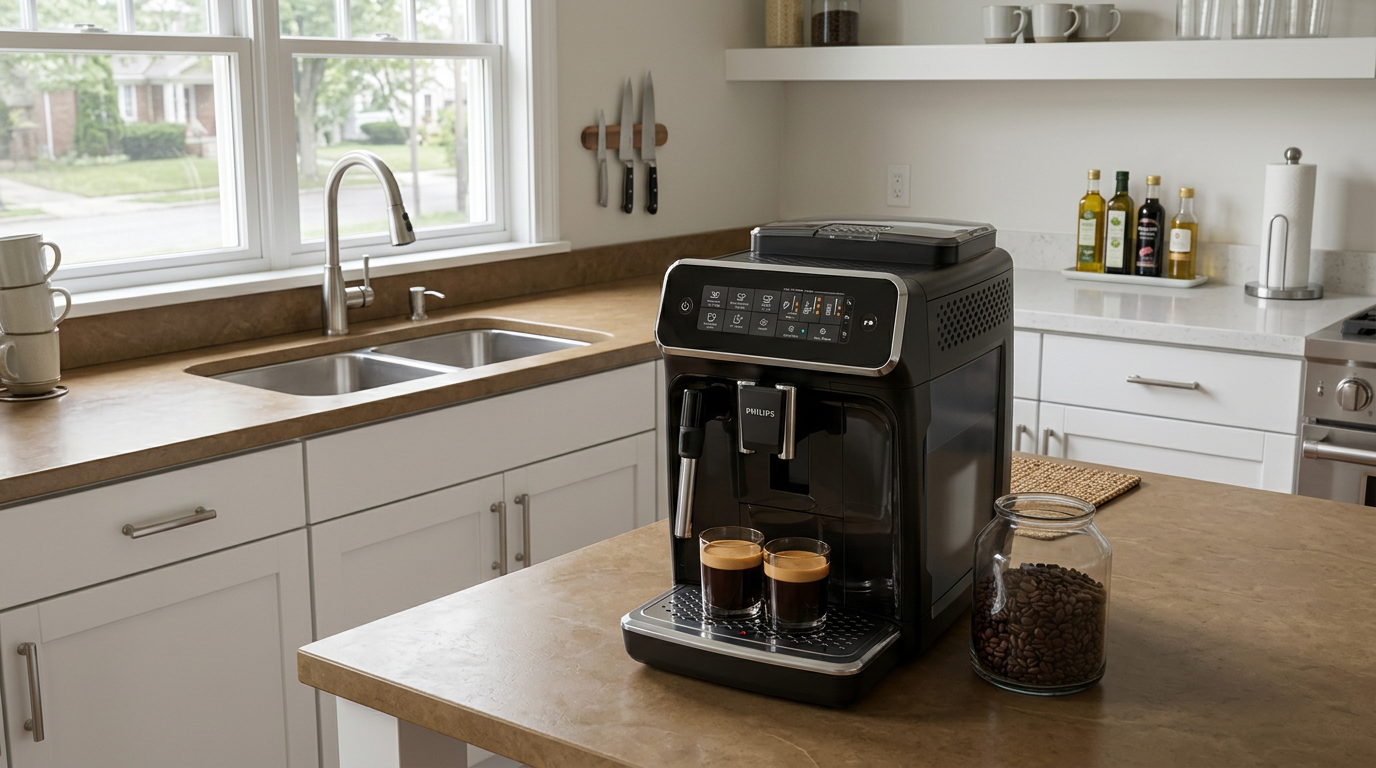
The Philips 3200 is ready for its first drink a few minutes after unboxing.
How long until it tasted right
This is the hidden cost of the Ninja. Its Barista Assist recommends a grind for your beans, but each new bag still needs a few test shots before it tastes right.
In my testing, a dark roast took about two shots to dial in, a medium roast three, a medium-light five and a light roast seven or more. Those are wasted shots, and they add up if you change beans every week.
Shots to dial in a new bag on the Ninja
Counted from my own dialing-in on the Luxe Café Premier.
The Philips has no such learning curve. I set the grinder a couple of steps finer than the default in week one, and after that I never touched it again.
The first few cups on any new bean-to-cup machine taste flat while the grinder clears out factory test coffee. I didn’t judge the Philips until about the fifth drink.
Our tip: Buy medium or medium-dark beans for your first bag on the Ninja, because they dial in within two or three shots.
Daily workflow: how easy is each one?
This is the real question behind this comparison, so I timed and counted my steps for a month.
The Ninja is a semi-automatic espresso machine with training wheels. You grind into the portafilter✕PortafilterThe handle with a metal basket that holds the ground coffee. You lock it into the group head to brew., the built-in scale weighs the dose, you swing the assisted tamper lever, lock the handle in and press brew. Then you steam milk in the jug with the hands-free frother.
The Philips is a super-automatic✕Super-automaticA bean-to-cup machine that grinds, doses, tamps, brews and ejects the used coffee by itself. You press one button.. You fill the LatteGo jug, clip it on, press cappuccino and walk away. It grinds, presses, brews, froths and drops the used puck into a drawer by itself.
| Step | Ninja Luxe Café | Philips 3200 |
|---|---|---|
| Grind | Press grind, machine weighs it | Automatic |
| Tamp | Pull the assisted lever | Automatic |
| Brew | Lock handle, press brew | Automatic |
| Milk | Jug on the frother, pick a preset | Automatic, from LatteGo |
| Puck | Knock out by hand | Drops into a drawer |
| After milk | Wipe and purge, wash jug | Rinse jug under the tap |
Hands-on steps per latte, my count
Counted from my morning routine, including milk cleanup.
In practice, the Ninja took me a little over a minute of hands-on time for a latte once I had a rhythm. Nobody else in my house learned it in the first week without help.
On the Philips, my family made their own drinks from day two. That is the honest difference: the Ninja rewards one interested person, while the Philips serves everyone.
Grinder and dose
The grinder and the dose✕DoseThe weight of dry ground coffee used for one drink. A café double espresso usually uses 14 to 18 grams. explain most of the flavor gap between these two machines.
The Ninja uses conical burrs with 25 settings. It grinds a double in about 10 to 15 seconds and weighs it on the built-in scale, aiming for around 18 grams of coffee for a double shot.
The Philips grinds with ceramic burrs✕Ceramic burrsGrinding discs made of ceramic instead of steel. They stay cool and keep their edge for years, but usually offer fewer grind steps. that have 12 settings, adjusted with a knob inside the bean hopper. Its maximum dose is about 8 grams per drink, even on the strongest of its three strength levels.
Coffee per espresso drink
Dry coffee weight per drink, from my scale and the reviews of both machines.
That difference is huge. Ten grams of extra coffee is the gap between an espresso that tastes like a café shot and one that tastes like a short, smooth coffee.
The Philips makes up for the small dose with a longer, gentler extraction, which is why its drinks taste smooth and mild rather than bitter. It just can’t taste intense.
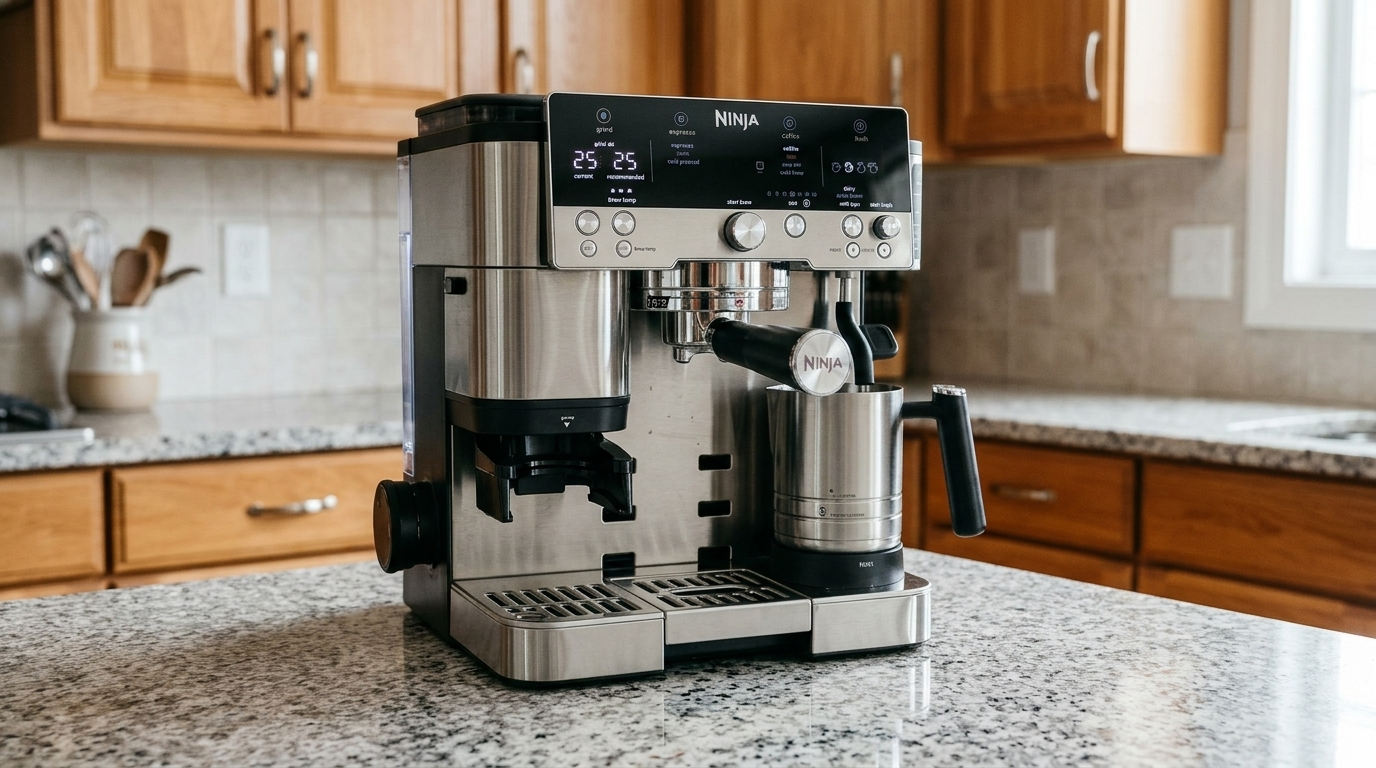
The Ninja weighs every dose, so your double comes out the same every morning.
| Grinder detail | Ninja Luxe Café | Philips 3200 |
|---|---|---|
| Burr type | Conical | Ceramic |
| Settings | 25 | 12 |
| Grind assistance | Recommends a setting | None needed |
| Dose control | Weighed by built-in scale | 3 strength levels |
| Max dose per drink | ~18 g double | ~8 g |
| Pre-ground option | Yes, add to basket | Yes, bypass chute |
Our tip: On the Philips, turn the grinder two steps finer than the factory setting while it’s running, because it adds noticeable body without making the coffee bitter.
Espresso quality
With the same medium-dark beans, these machines made two very different espressos.
On the Ninja Luxe Café Premier, my double used about 18 grams of coffee and came out at around 36 to 38 grams in the cup, close to a classic 1:2 brew ratio✕Brew ratioThe weight of liquid espresso compared with the dry coffee. A 1:2 ratio means 18 g of coffee makes about 36 g of espresso.. It had a thick, hazelnut crema✕CremaThe golden, foamy layer on a fresh espresso. It forms when pressure pushes oils and gases out of the coffee., a syrupy body and notes of chocolate and caramel.
On the Philips, the strongest espresso came out at about 1.1 fluid ounces from roughly 8 grams of coffee. It was smooth, clean and never bitter, but light in body and gone in two sips.
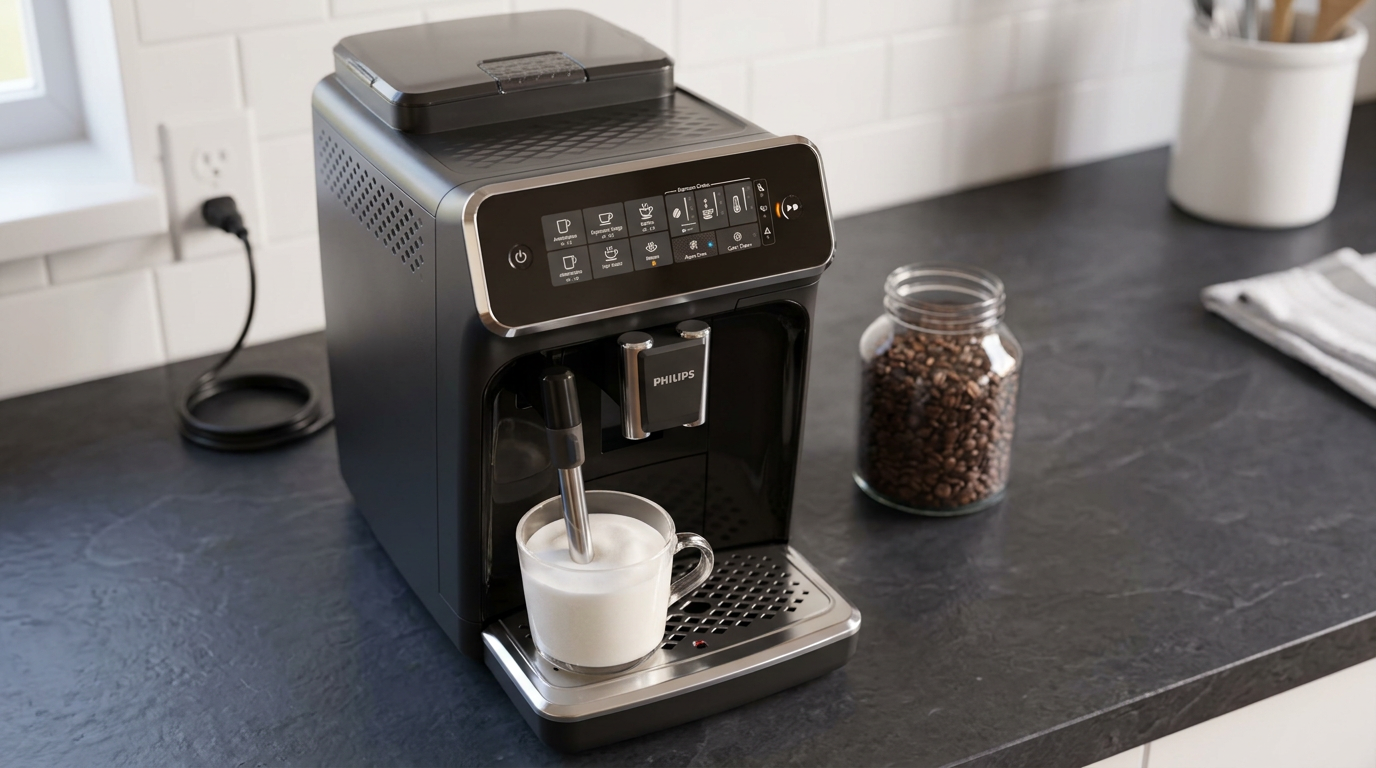
The Philips makes a smooth, mild espresso; it shines more in milk drinks and long coffees.
My espresso ratings
My scores out of 10 for body, crema, flavor and consistency, from my single reviews.
Temperature was right on both. The Ninja adjusts temperature and pressure during the shot and brews at the classic 9 bar, and it never tasted burnt or sour once dialed in.
The Philips has three temperature settings. I used the highest for espresso and the middle one for long coffees, which kept the cup hot without losing sweetness.
| What you taste | Likely cause | Ninja fix | Philips fix |
|---|---|---|---|
| Sour, thin | Under-extracted | One grind step finer | Two steps finer, strongest level |
| Bitter, harsh | Over-extracted | One step coarser | One step coarser |
| Watery | Dose too small | Use the double basket | Shorter drink volume |
| Lukewarm | Cold cup | Warm the cup first | Warm the cup first |
Long coffee, drip and cold brew
If you drink big mugs of black coffee, the comparison flips in places.
The Philips makes a one-touch long coffee and a real Americano✕AmericanoEspresso topped up with hot water. Done properly, the water is added after the shot instead of being pushed through the coffee.. The coffee button runs a longer extraction through the grounds, while the Americano brews an espresso and adds water afterward, which tastes cleaner.
A full tank gave me about 13 mugs of coffee on the Philips. They were smooth and pleasant, if mild, and that suited the two people in my house who drink coffee with a splash of milk.
The Ninja’s answer is its Luxe basket, which brews drip-style coffee and cold brew. The drip-style cups were clean and fruity with a light roast, but with the large basket they often tasted weaker than I wanted.
Its cold brew✕Cold brewCoffee made with cool water and a long, gentle extraction. It tastes smoother and less acidic than hot coffee poured over ice. is the bigger win. It brews cooler and slower straight over ice, and the result was smooth and low in bitterness, a drink the Philips simply can’t make.
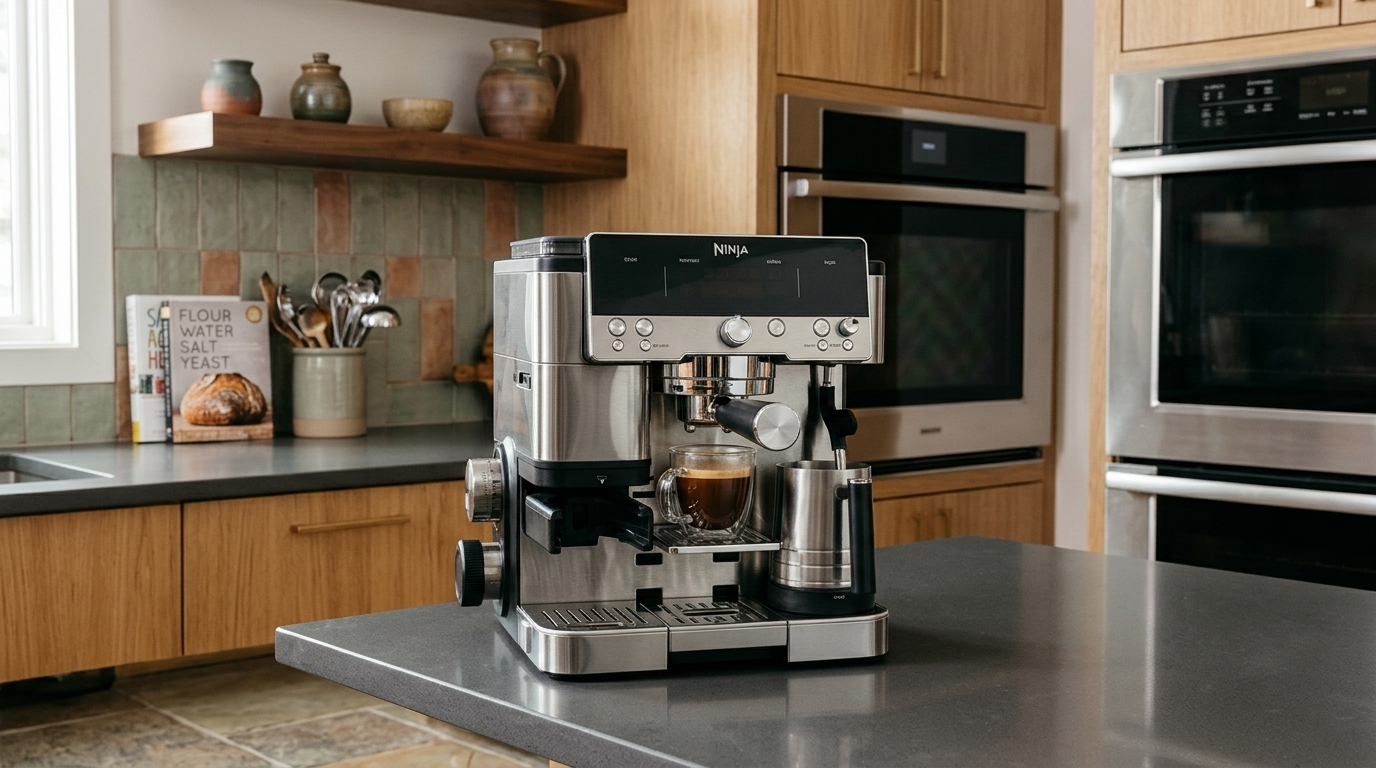
Cold brew-style coffee over ice is one of the Ninja’s best tricks.
| Black coffee | Ninja Luxe Café | Philips 3200 |
|---|---|---|
| Espresso | Excellent | Mild, smooth |
| Americano | By hand, via hot water | One touch |
| Long coffee | Drip style, can be weak | One touch, smooth |
| Cold brew | Yes, rapid cold brew | No |
| Iced coffee | Excellent | By hand over ice |
| Travel mug | Fits thermos-size cups | Up to about 5.7 in |
Our tip: On the Ninja, brew drip-style coffee one grind step finer than suggested and choose the richer style, because the default large-basket cup can taste thin.
Milk drinks
Milk is where both machines spend most of their time in a typical home, and they approach it in opposite ways.
The Ninja has a hands-free frother with a whisk in the jug. You choose thick or thin froth, hot or cold, and pick dairy or plant milk, and it steams to temperature by itself. There’s also a manual mode if you want to steam like a barista.
The Philips uses its LatteGo✕LatteGoPhilips’ two-part milk jug. Steam pulls milk from the jug and mixes in air inside it, so there are no tubes to clean. jug. Steam pulls milk into the jug’s chamber, mixes in air and pours foam straight into your cup, with no tubes anywhere.
Ninja froth ratings
My scores out of 10 for texture and stability on the Luxe Café Premier.
The Ninja’s thick froth made a proper café cappuccino, and its manual steaming gave me glossy microfoam✕MicrofoamMilk foam with bubbles so small you can barely see them. It feels silky and pours into latte art. I could pour basic latte art with. Its cold foam was the best I have had from a home machine.
The Philips foam was good and consistent, but airy rather than silky. Its latte macchiato layered neatly in a glass, and its cappuccino had a generous cap, but you can’t change the texture.
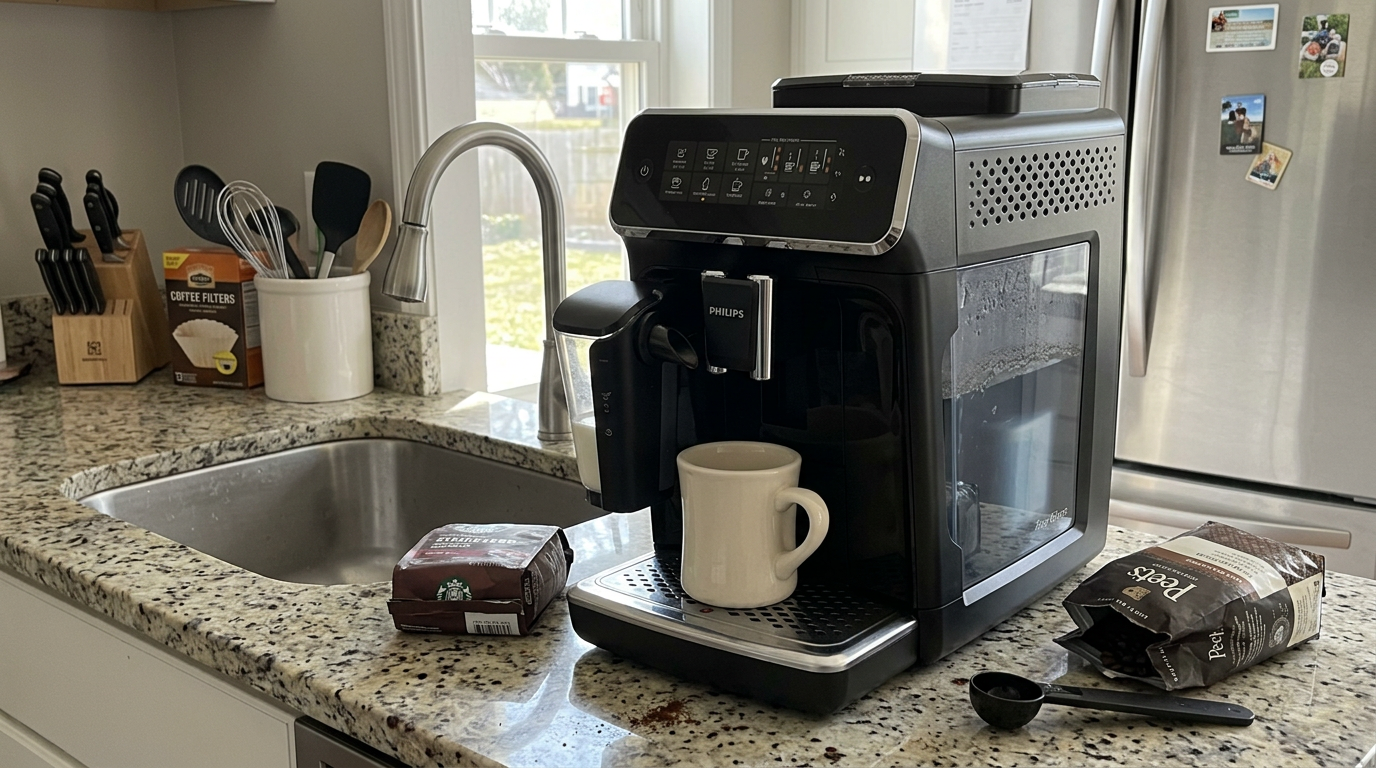
The LatteGo jug pours foam straight into the cup and has no tubes to clean.
Both hit a good drinking temperature. The Ninja’s milk landed around 140 to 149°F in my probe tests, right in the sweet zone, and the Philips came out in a similar range when I started with cold milk.
Milk tastes sweetest around 140 to 150°F. Above about 158°F, the sweetness fades and a cooked taste creeps in.
| Milk drink | Ninja Luxe Café | Philips 3200 |
|---|---|---|
| Cappuccino | Thick froth preset | One touch |
| Latte | Thin froth preset | Latte macchiato, one touch |
| Flat white | Thin froth, short milk | No preset |
| Iced latte, cold foam | Yes | No |
| Plant milk | Dedicated setting | Works, foam is lighter |
| Latte art | Possible, manual mode | No |
Cleaning and upkeep
For daily cleaning, the Philips wins clearly. Its LatteGo jug comes apart in two pieces, rinses clean under the tap in about 10 seconds and is dishwasher safe.
The brew group✕Brew groupThe part of a bean-to-cup machine that presses the ground coffee, holds it while water passes through and then ejects the used puck. slides out from the side once a week for a rinse under the tap, and the grounds drawer holds about 12 pucks before it asks to be emptied.
The Ninja has more to wipe. After each milk drink, you wipe and purge the steam wand and wash the jug and whisk, and the used puck gets knocked out of the portafilter by hand.
My daily hands-on cleaning time
My estimate of hands-on time per day for two people, not counting automatic rinses.
Descaling took about 30 minutes on the Ninja using its guided routine, and with moderately hard water the alert came up after about a month of daily use.
On the Philips, the AquaClean filter changes the picture. Replace it when the machine asks, and Philips rates it for up to 5,000 cups without descaling✕DescalingRunning a mild acid through the machine to dissolve the mineral scale that hard water leaves in the heater and pipes..
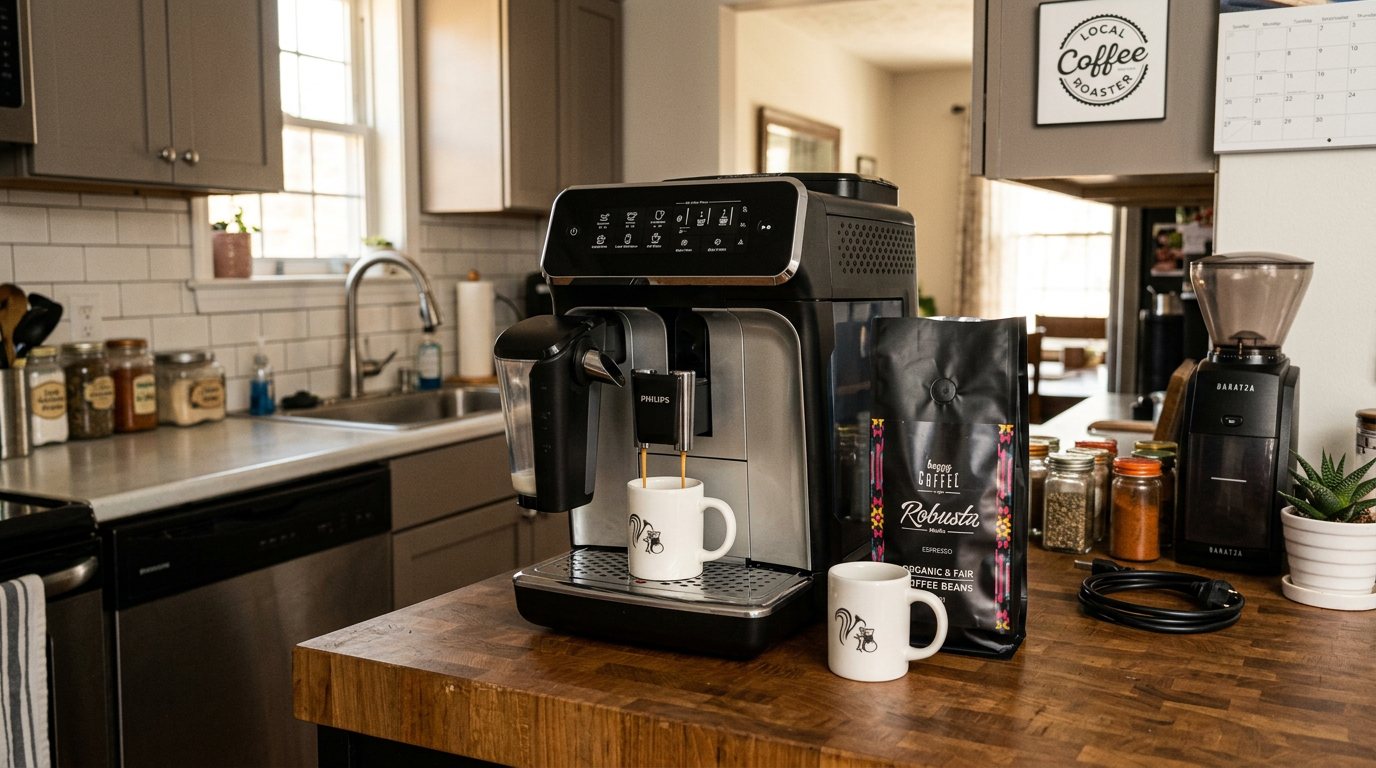
The Philips brew group slides out from the side for a weekly rinse.
| When | Ninja Luxe Café | Philips 3200 |
|---|---|---|
| After each milk drink | Wipe and purge wand, rinse jug | Rinse LatteGo jug |
| Daily | Knock out pucks, empty drip tray | Empty drawer and tray |
| Weekly | Wash baskets and funnel | Rinse the brew group |
| Monthly | Clean grinder, backflush | Grease the brew group, cleaning tablet |
| When prompted | Descale, about 30 min | Replace AquaClean, or descale |
Our tip: Purge the Ninja’s steam wand for two seconds right after every milk drink, because dried milk inside the tip is the hardest thing to clean later.
Noise and speed
Neither machine is quiet while grinding, but they are loud in different ways.
The Ninja’s grinder is moderately loud and quick, finishing a double in 10 to 15 seconds. Its beeps, though, are loud and frequent until you switch them off in the settings, which I did on day two.
The Philips grinds for a shorter time, because it grinds less coffee. Its Aroma Seal lid also damps the grinder, and in an open-plan kitchen it was the calmer machine in the morning.
How loud each felt, my ranking
Relative loudness from my side-by-side use. Shorter bars are quieter.
Speed depends on what you count. From a cold start, both were ready to brew in well under a minute. A black coffee on the Philips took about two minutes from switching on, and a cappuccino with cleanup about three.
On the Ninja, a latte took me about three minutes including steaming and cleanup once I had the routine down. That is close to the Philips, but you stand at the machine the whole time.
Water, beans and supplies
Both tanks are a similar size, so refills come around at a similar pace. The Ninja uses more water per drink, because rinsing and purging add up.
Here is roughly how far one full tank went for me.
Drinks per full tank
Rough maths allowing for rinse and purge water. Your numbers depend on cup size.
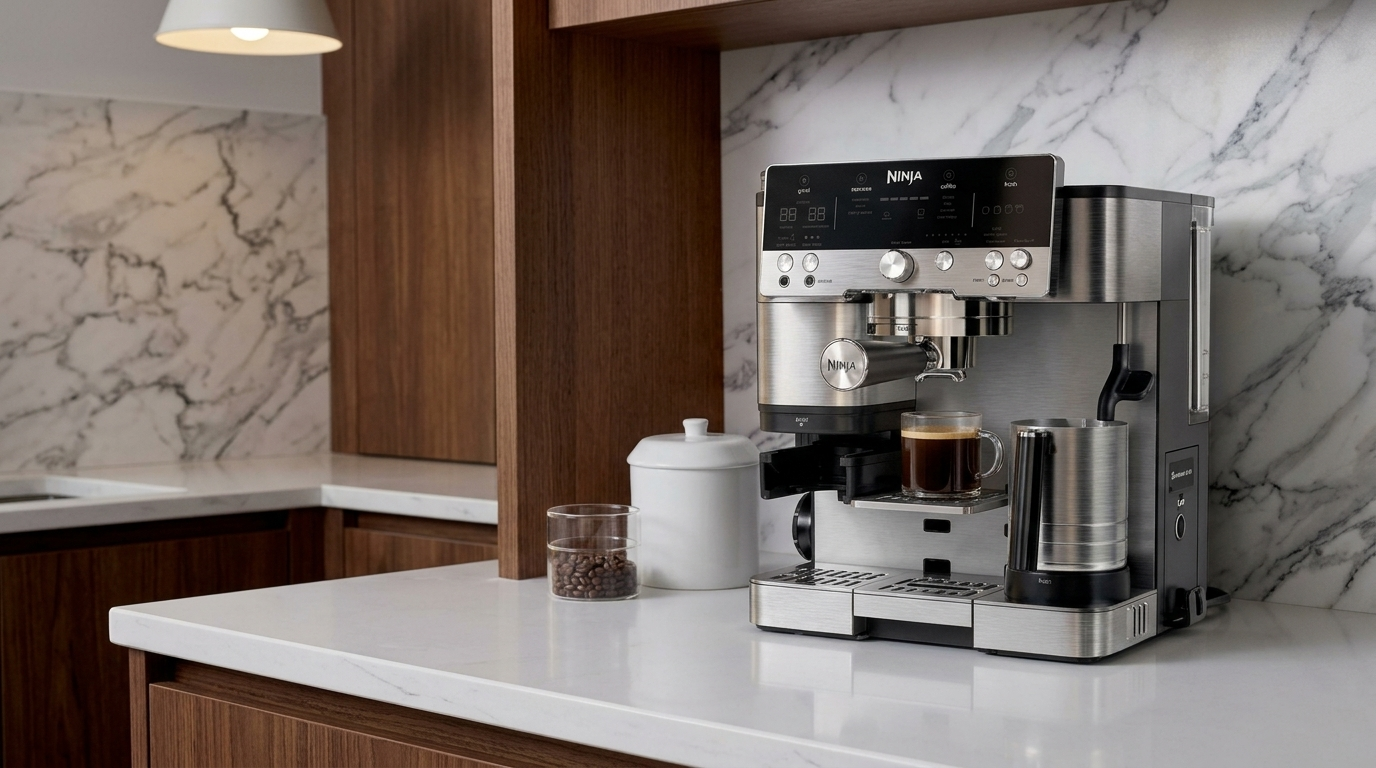
The Ninja’s hopper and tank are easy to reach from the top and back.
Use fresh whole beans within a few weeks of roasting on both. Medium and medium-dark roasts suited the Ninja’s grinder best, and they gave the Philips’ small dose more flavor.
Avoid shiny, oily beans in the Philips, because the oil builds up in the grinder and chute and can block them over time. On the Ninja, oily beans are less of a problem but still clog the burrs faster.
| Bean type | Ninja Luxe Café | Philips 3200 |
|---|---|---|
| Medium-dark blend | Best espresso, 2–3 shots to dial in | Best all-rounder |
| Medium single origin | Great drip and cold brew | Brighter Americanos |
| Light roast | 7+ shots to dial in | Thin, sour at default |
| Very dark, oily | Fine, clean burrs often | Avoid |
Our tip: Buy a bag you can finish in two to three weeks, because both grinders show off fresh coffee far better than stale.
Real-life scenarios
Specs only go so far. These are the moments where one machine clearly pulled ahead in my kitchen.
An 18-gram double and silky thin froth tasted like a café drink. The Philips cappuccino was pleasant but milkier and lighter.
Everyone pressed their own button and walked away. On the Ninja, I became the barista for the whole house.
Cold brew-style coffee over ice with cold foam on top. The Philips can only brew hot coffee for you to pour over ice.
They made a latte macchiato on the first try without asking me anything.
Manual steaming made real microfoam I could pour hearts with. LatteGo foam is too airy for art.
Ten seconds under the tap for the milk jug, and the pucks were already in the drawer.
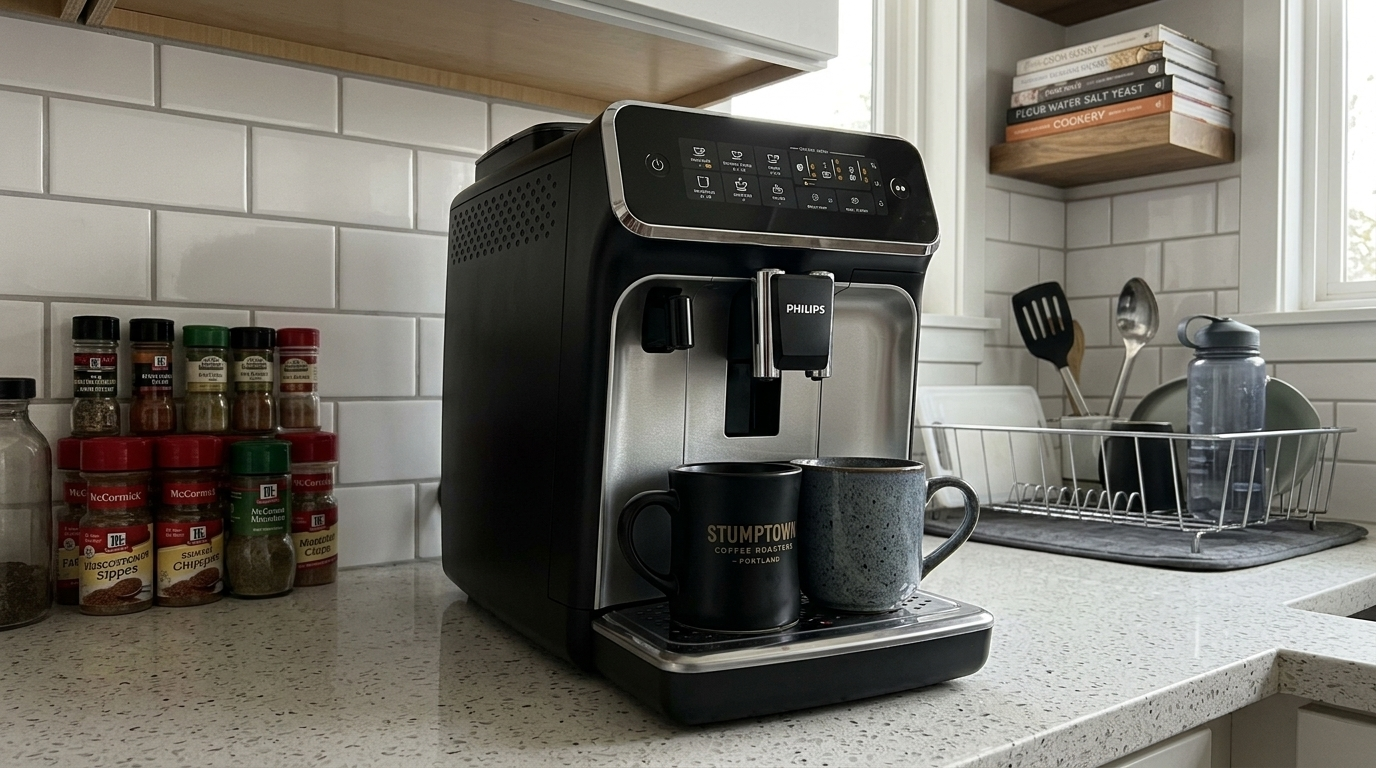
In a busy household, the Philips was the machine nobody needed help with.
My scorecard
These are my own scores out of 10. The first four come from my single reviews of each machine, and I added versatility because it decides this matchup for many buyers.
Ninja Luxe Café Premier
Overall: 8.1 in my single review.
Philips 3200
Overall: 8.0 in my single review.
The overall scores are almost tied, which tells you this is a choice about how you want to make coffee, not about which machine is better built.
The Ninja wins on flavor and range. The Philips wins on the things you notice at 7 a.m. when you are not in the mood to think.
See How Much You’ll SaveWhich one is right for you?
4 quick questionsWhich one should you buy?
It comes down to one honest question: do you want to make coffee, or do you want coffee made for you?
If you enjoy the ritual and taste matters most, the Ninja is the better machine. If convenience and cleanup matter most, the Philips is the one you will still be happy with in a year. Still weighing other options? I rank every model I’ve tested in my guide to the best Philips espresso machines.
If you are still deciding between a guided machine and a fully manual one, my Ninja Luxe Café vs Breville Barista Express comparison covers that step, and my Philips 2200 vs 3200 comparison shows what you give up by spending less on a Philips.
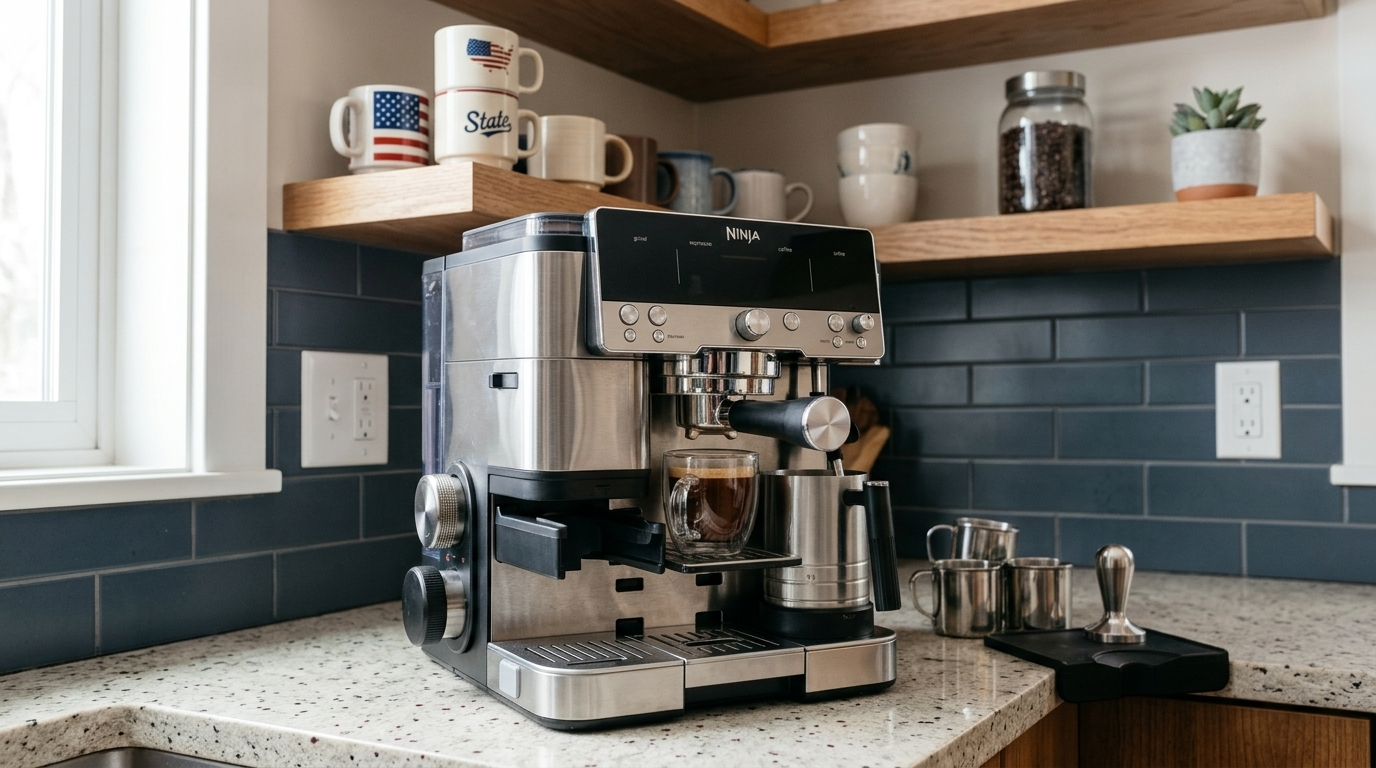
For flavor and range, the Ninja earns its place on the counter.
- Strong espresso and silky foam matter most
- You want cold brew and iced drinks
- You like learning a little espresso craft
- One or two people make most of the drinks
- You want true one-touch drinks
- You hate washing jugs and wiping wands
- You mostly drink big mugs of drip coffee
- Several people make their own drinks
- You want the easiest milk system to clean
- You prefer smooth, mild coffee
- You have a narrow counter
- You want strong, café-style espresso
- You want latte art or cold foam
- You want cold brew
For most coffee lovers, my pick is the Ninja Luxe Café Premier. It made the better espresso, the better foam and the only cold brew of the two, and its scale, grinder guidance and assisted tamper take most of the guesswork and mess out of real espresso. Give it two weeks and the steps become second nature.
The Philips 3200 is the smarter buy if you want coffee to be effortless. It’s milder, but it makes five drinks at one touch for anyone in the house, and its LatteGo jug is the easiest milk system I know to clean. For a busy family, that convenience beats flavor every morning.
Whichever you choose, buy fresh beans, use cold milk and keep up with the quick daily cleaning. Both machines reward a little care with years of good coffee.
Ninja Luxe Café vs Philips 3200 specifications
From manufacturer specifications and my own testing.
| Ninja Luxe Café Premier | Philips 3200 | |
|---|---|---|
| Model | ES601 | EP3241 / EP3246 |
| Type | Semi-automatic, guided | Fully automatic (super-automatic) |
| Drinks | Espresso, drip-style, cold brew, milk presets | 5 one-touch drinks plus hot water |
| Pump pressure | 9 bar at the coffee | 15 bar pump |
| Grinder | Conical burrs, 25 settings | Ceramic, 12 settings |
| Dose | Weighed, about 18 g double | About 8 g max |
| Strength levels | Set by dose and basket | 3 |
| Temperature settings | Adjustable | 3 |
| Milk system | Hands-free whisk frother, steam wand | LatteGo two-part jug |
| Cold foam | Yes | No |
| Water tank | About 68 oz | About 61 oz (1.8 L) |
| Bean hopper | Removable | About 9.7 oz (275 g) |
| Grounds handling | Knock out by hand | Drawer, about 12 pucks |
| Water filter | Hardness setting | AquaClean, up to 5,000 cups |
| Dimensions (W x D x H) | About 13.4 x 13 x 14.6 in | About 9.7 x 17 x 14.6 in |
| Weight | Heavier, stays planted | About 17.6 lb |
How I tested and compared them
I used each machine as my everyday coffee maker for four weeks, making espresso, Americanos, long coffees, cappuccinos and lattes, plus cold brew and cold foam drinks on the Ninja.
I weighed doses and shots on a 0.1-gram scale, measured milk temperatures with a probe thermometer, worked through each grind range with medium, dark and light roasts, and foamed whole, 2% and barista oat milk.
I ran every cleaning and descaling routine, then compared my notes with the manufacturer specifications, owner documentation and published test data.
- Coffee: dose, crema, body and consistency.
- Milk: foam texture, temperature and drink range.
- Workflow: steps, learning curve and who can use it.
- Ownership: cleaning, noise, water use and footprint.
Ninja Luxe Café vs Philips 3200 FAQ
Is the Ninja Luxe Café easier to use than the Philips 3200?
No. The Philips 3200 is easier, because it grinds, tamps, brews and froths at one touch. The Ninja guides you with a grind recommendation, a built-in scale and an assisted tamper, but you still handle the portafilter and milk jug yourself.
Which makes better espresso?
The Ninja Luxe Café. It doses about 18 grams for a double and pulls a full-bodied shot with thick crema. The Philips 3200 uses about 8 grams, so its espresso is smooth but mild.
Which is easier to clean?
The Philips 3200. Its LatteGo jug has two parts, no tubes and rinses clean in about 10 seconds. The Ninja needs the steam wand wiped and purged and the jug and whisk washed after milk drinks.
Can the Philips 3200 make cold brew?
No. Only the Ninja makes cold brew-style coffee and cold foam. On the Philips, you can brew coffee and pour it over ice yourself.
Is the Ninja Luxe Café a super-automatic?
No. It is a semi-automatic espresso machine with guidance. It grinds and weighs the dose and helps you tamp, but you lock in the portafilter and knock out the puck yourself.
Which is better for milk drinks?
For flavor and texture, the Ninja: it makes silky microfoam, thick or thin froth and cold foam. For convenience, the Philips: its latte macchiato and cappuccino are one touch.
How many drinks does the Philips 3200 make?
Five one-touch drinks: espresso, coffee, Americano, cappuccino and latte macchiato, plus hot water.
Which takes up less counter space?
The Philips 3200 is about 9.7 inches wide but 17 inches deep. The Ninja is about 13.4 inches wide and 13 inches deep. Pick based on whether your gap is narrow or shallow.
Do both use whole beans and pre-ground coffee?
Yes. The Philips has a bypass for pre-ground coffee, and on the Ninja you can add pre-ground coffee straight to the basket.
Which is better for a family?
The Philips 3200, because everyone can make their own drink with one press. The Ninja suits one or two people who enjoy making coffee.

- Our hands-on Ninja Luxe Café Premier review
- Our hands-on Philips 3200 Series review
- Ninja and Philips product specifications and owner documentation
- General espresso brewing, milk and maintenance guidance