Ninja Luxe Café vs Breville Barista Express: which is better for beginners?
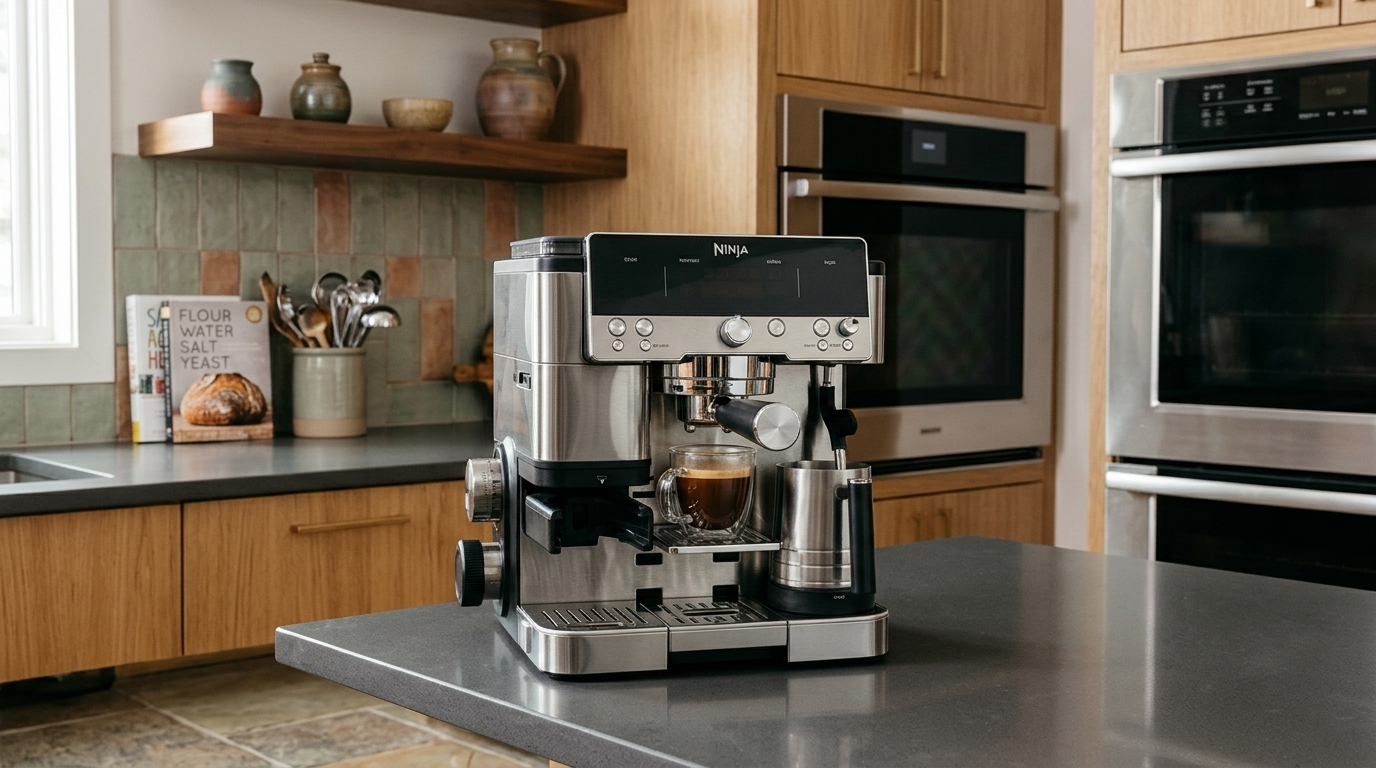
Both put a grinder, a portafilter and a steam wand in one machine, and both promise real espresso at home. Then they split: the Ninja Luxe Café Premier weighs your dose, tamps for you, tells you whether to grind finer and froths milk at the press of a button, while the Breville Barista Express hands you a pressure gauge, a manual tamper and a classic steam wand and lets you learn the craft. I used each one as my daily machine for four weeks to find out which one a beginner should actually buy.
We choose products independently. We may earn a commission through links on this page; your price stays the same. Affiliate policy
Jargon helpNew to espresso? Tap any dotted term to see what it means.
In this comparison
If you have never made espresso and want good lattes, cappuccinos and iced drinks from the first week, buy the Ninja Luxe Café Premier. It got me to a balanced shot in three tries, kept my counter clean and made the best cold foam I have had from a home machine. If you want to learn real espresso skills, pour latte art and keep the option to grow into light roasts later, the Breville Barista Express is the better teacher. It takes a few days of dialing in, but once it clicks it pulls sweet, syrupy shots and steams genuine microfoam.
The two machines
Specs checked November 13, 2026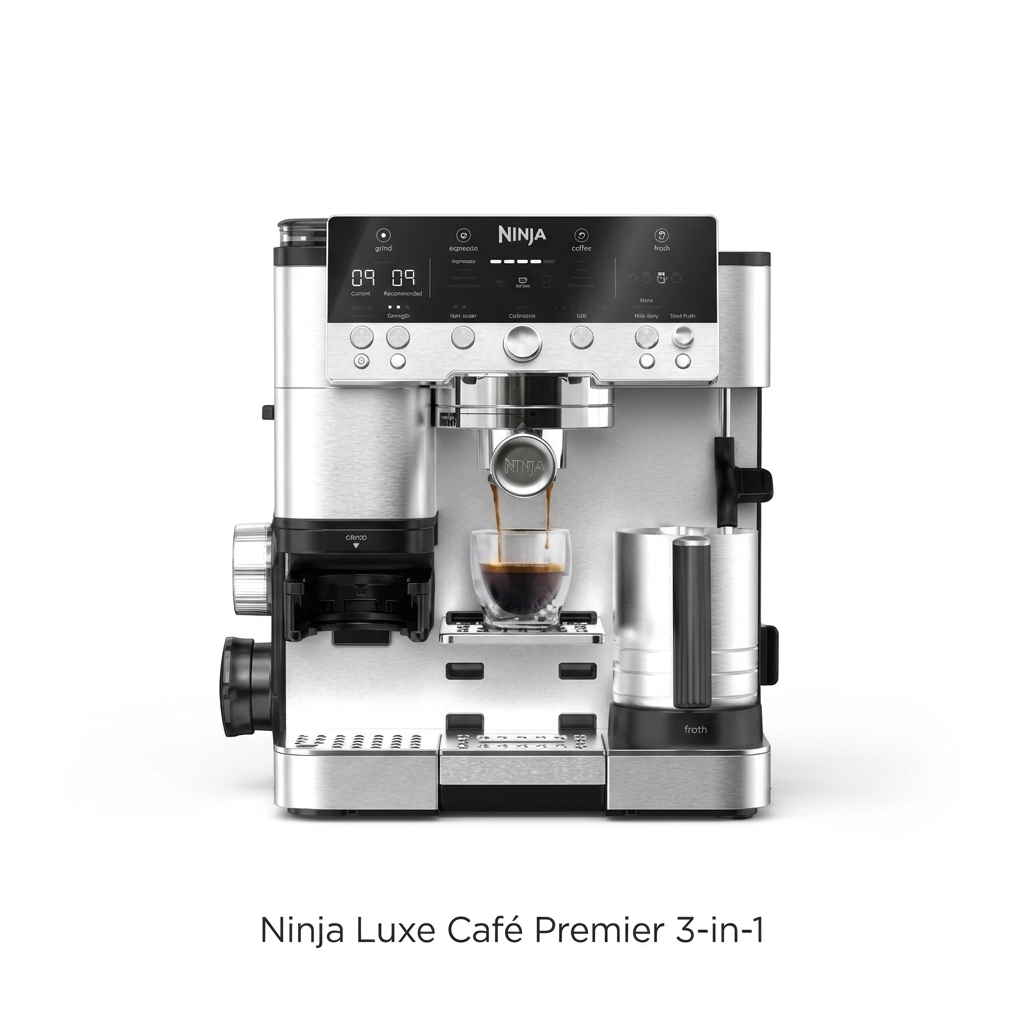
Barista Assist grind advice, a built-in scale, an assisted tamper and a whisking frother with four presets, including cold foam.
Check price on Amazon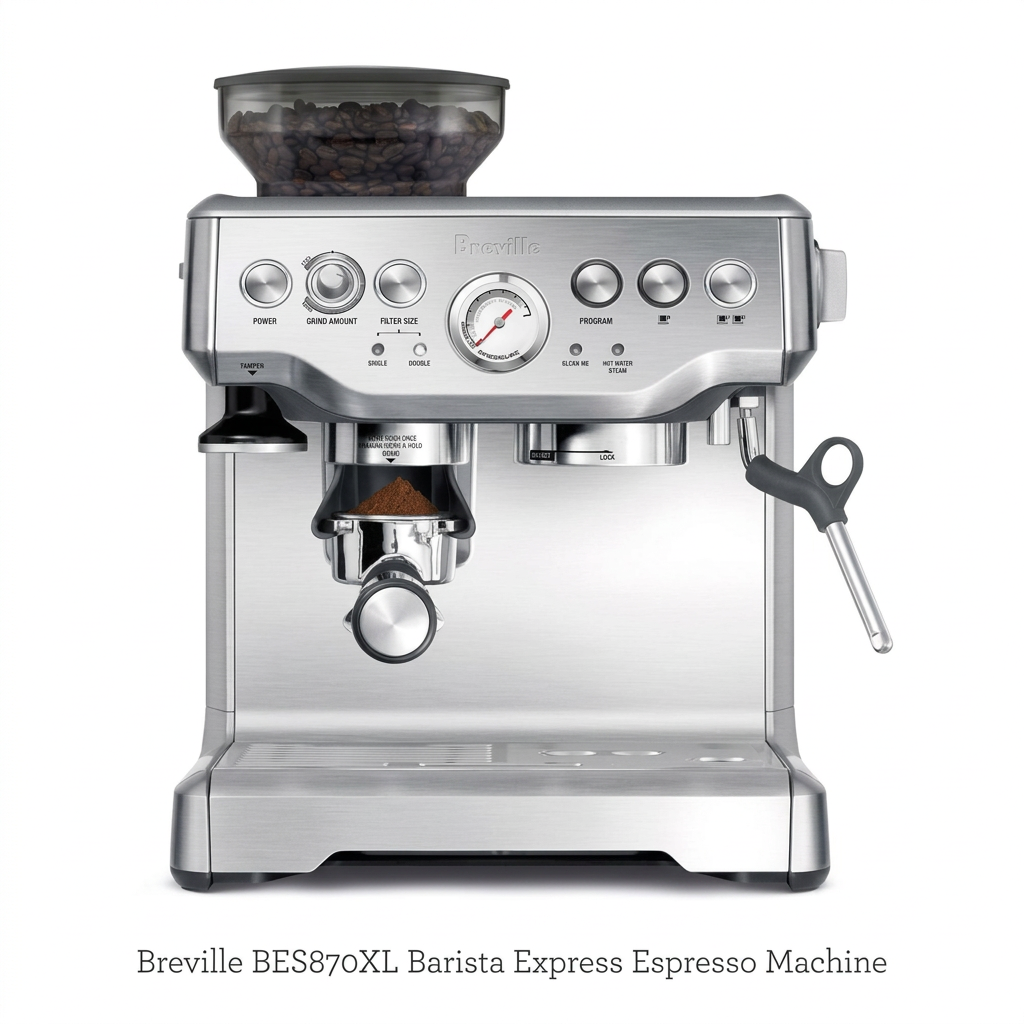
A conical burr grinder, an analog pressure gauge, PID temperature control and a classic manual steam wand that can pour latte art.
Reveal Today’s DealNinja Luxe Café vs Barista Express at a glance
- Buy the Ninja if you want café-style milk drinks and iced lattes with almost nothing to learn.
- Buy the Express if you want to learn espresso properly and pour latte art.
- With medium and dark roasts, both make rich espresso; with light roasts, the Express has more headroom.
- Neither is a good drip coffee maker; make big mugs as americanos on both.
Head to head
The better result in each row is marked, based on four weeks with each machine and the manufacturer specs. Rows where the two are effectively the same have no winner.
The tally is close, and it is not my verdict. Read the rows that match the drinks you actually make.
| Spec | Ninja Luxe Café | Barista Express |
|---|---|---|
| Shots to a balanced espressomy dial-in, medium roast | About 3 ✓ Best | About 8 |
| Dosing | By weight, built-in scale ✓ Best | By time, needs a scale |
| Tamping | Assisted lever ✓ Best | By hand |
| Shot feedback | Tells you finer or coarser | Analog pressure gauge ✓ Best |
| Grind range | 25 settings | 16 plus inner burr, finer ✓ Best |
| Light-roast espressomy tasting | 6.0 / 10 | Workable with a finer grind ✓ Best |
| Milk frothing | Four automatic presets ✓ Best | Manual wand only |
| Latte-art microfoam | Stiff on auto, OK manual | Glossy, pourable ✓ Best |
| Cold foam | Yes, one touch ✓ Best | No |
| Hot water for americanos | Use a kettle | Dedicated outlet ✓ Best |
| Low-water warning | Yes ✓ Best | No |
| Counter mess | Funnel contains it ✓ Best | Some spray |
| FootprintW x D x H | 13.4 x 13 x 14.6 in | 12.5 x 13.8 x 15.9 in |
| Rows won | 7 | 5 |
Ninja Luxe Café vs Barista Express pros and cons
Ninja Luxe Café Premier
- Guided, mess-free espresso for beginners
- Weight-based dosing keeps every shot consistent
- Excellent one-touch cold foam for iced drinks
- Large-basket coffees taste weak and watery
- Grinder struggles with light roasts
- Loud beeps until you switch them off
Breville Barista Express
- Sweet, syrupy espresso once dialed in
- Pressure gauge teaches you what is happening
- Steam wand makes real latte-art microfoam
- Grinder needs an inner-burr tweak out of the box
- Slower steam and a wait between brewing and frothing
- No low-water sensor on the tank
Who should buy which machine?
- First-time buyers who want good drinks fast
- Iced latte and cold foam fans
- Households where several people use one machine
- Beginners who want to learn real espresso skills
- Anyone who wants to pour latte art
- Future light-roast and specialty coffee drinkers
Design, size and build
The two machines take very different approaches to looking like a café machine. The Express is brushed stainless steel with a round pressure gauge in the middle, chunky dials and a magnetic tamper that docks next to the group head.
The Ninja is wider and squarer, with a digital display, a big drink dial in the center and the frother on the right. It is mostly plastic with brushed metal accents, and it felt solid and stable but not as premium as the steel Breville.
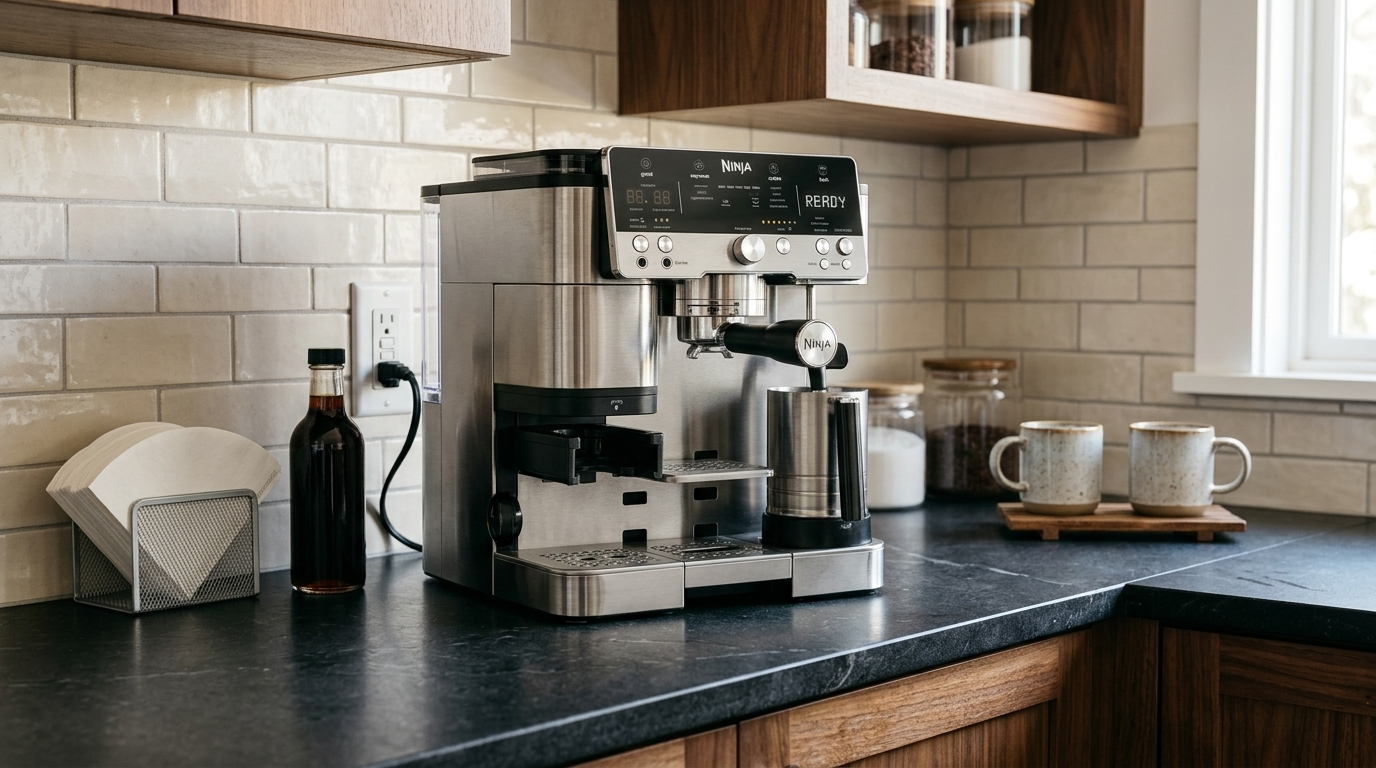
The Ninja looks more like a modern appliance, with a display and drink dial instead of a gauge.
On my counter, the Ninja took up about the same space as a microwave. It is about 13.4 inches wide, 13 inches deep and 14.6 inches tall, and it weighs about 26 lb.
The Express is a little narrower at 12.5 inches, a little deeper at 13.8 inches and a little taller at 15.9 inches with the hopper on. At 22 to 23 lb, it is the lighter of the two, but both stay put when you lock the portafilter in.
Cup clearance: a quiet Ninja win
The Ninja’s cup clearance is excellent. Remove part of the drip tray and a tall travel mug or thermos fits under the group head, while small espresso cups sit higher on the tray.
The Express is built around cups and a milk jug. A normal mug fits, but a tall travel thermos does not, so I brewed into a jug and poured when I wanted a big takeaway coffee.
Our tip: Measure the height under your wall cabinets before you buy, because both machines need a few inches of extra room above the hopper for refilling beans.
Guidance vs a pressure gauge
This is the heart of the comparison. Both machines try to stop a beginner making bad espresso, but they do it in opposite ways.
The Ninja uses what it calls Barista Assist✕Barista AssistNinja’s guided system. It recommends a grind setting for your drink, then tells you after each shot whether to grind finer or coarser.. You choose a drink, it recommends a grind setting, and after the shot it tells you whether it ran too fast or too slow and which way to adjust.
In my first week, I went from a sour, watery shot to a balanced one in three tries. I did not need a timer, a separate scale or any espresso knowledge, because the machine did the thinking for me.
The Express gives you information instead of instructions. Its analog gauge shows the pressure building in the basket: low means the coffee is not resisting enough, maxed out means the grind is choking the flow.
That needle taught me more about espresso than any button ever has. But it does not tell you what to do next, so I needed about eight shots, one inner-burr adjustment and a digital scale before the Express was pouring like warm honey.
Shots it took me to reach a balanced espresso
My dial-in results during week one with fresh beans. Fewer is better.
There is a long-term trade-off, though. After a month on the Express, I understood why a shot went wrong and could fix it on any machine. After a month on the Ninja, I made great drinks, but I mostly followed instructions.
Grinder and dosing
Both machines grind straight into the portafilter with conical burrs✕Conical burrsTwo cone-shaped grinding parts, one inside the other. Beans are crushed between them, and the gap between the burrs sets how fine the coffee is.. The difference is how they decide how much coffee you get.
The Ninja has a built-in scale under the grinder and doses by weight. In my tests the dose stayed within a few tenths of a gram from shot to shot, even as the hopper emptied.
The Express doses by time. A front dial sets how long the motor runs, and my first attempt gave only about 8 grams in the double basket, so I weighed, adjusted and repeated until it gave about 15.4 grams every time.
That matters more than most people realize. A shot that is a gram light runs fast and tastes sour; a gram heavy and it chokes and tastes bitter.
With the Ninja, I rarely thought about it. With the Express, I checked the dose on a scale every few days, because timed dosing✕Timed dosingThe grinder runs for a set number of seconds rather than stopping at a set weight. The dose drifts slightly as beans age or the hopper empties. drifts as beans age.
The Express’s hidden inner burr
The Express has 16 steps on its side dial and an inner burr adjustment under the hopper that shifts the whole range. From the factory, mine sat on 6, which left most of the dial too coarse for fresh beans.
Moving it to 2 took five minutes and gave usable steps on both sides of my sweet spot at 7. It is a one-time job, but nobody tells you about it in the box.
| Grinder detail | Ninja Luxe Café | Barista Express |
|---|---|---|
| Settings | 25 | 16, plus inner burr |
| Dosing | By weight, built-in scale | By time, adjustable dial |
| Dose consistency | Within a few tenths of a gram | Drifts, check weekly |
| Grind time, double | 10–15 seconds | About 10 seconds |
| Best roasts | Medium and dark | Medium to light, with tuning |
| Out-of-box setup | Ready to use | Move the inner burr first |
Our tip: On either machine, only change the grind setting while the grinder is running or empty, because turning it finer on stopped burrs full of beans can jam them.
Tamping and counter mess
Tamping is where many beginners go wrong, and the Ninja simply removes the problem. A dosing funnel sits on the portafilter while you grind, and you pull a lever to tamp without taking the funnel off.
That assisted tamper gave me a level, evenly pressed puck every single time. Over four weeks, my counter stayed cleaner with the Ninja than with almost any grinder machine I have used.
On the Express, you settle the grounds with a couple of taps, press the magnetic tamper straight down and trim the excess with the Razor tool. A tilted tamp leaves one side thinner, and water rushes through it, which is called channeling✕ChannelingWater finding a weak path through the coffee puck instead of flowing through it evenly. It makes shots sour and thin..
It took me about a week to tamp level without thinking. Some grounds also sprayed onto the drip tray and counter when grinding, so a small brush lived next to the Express.
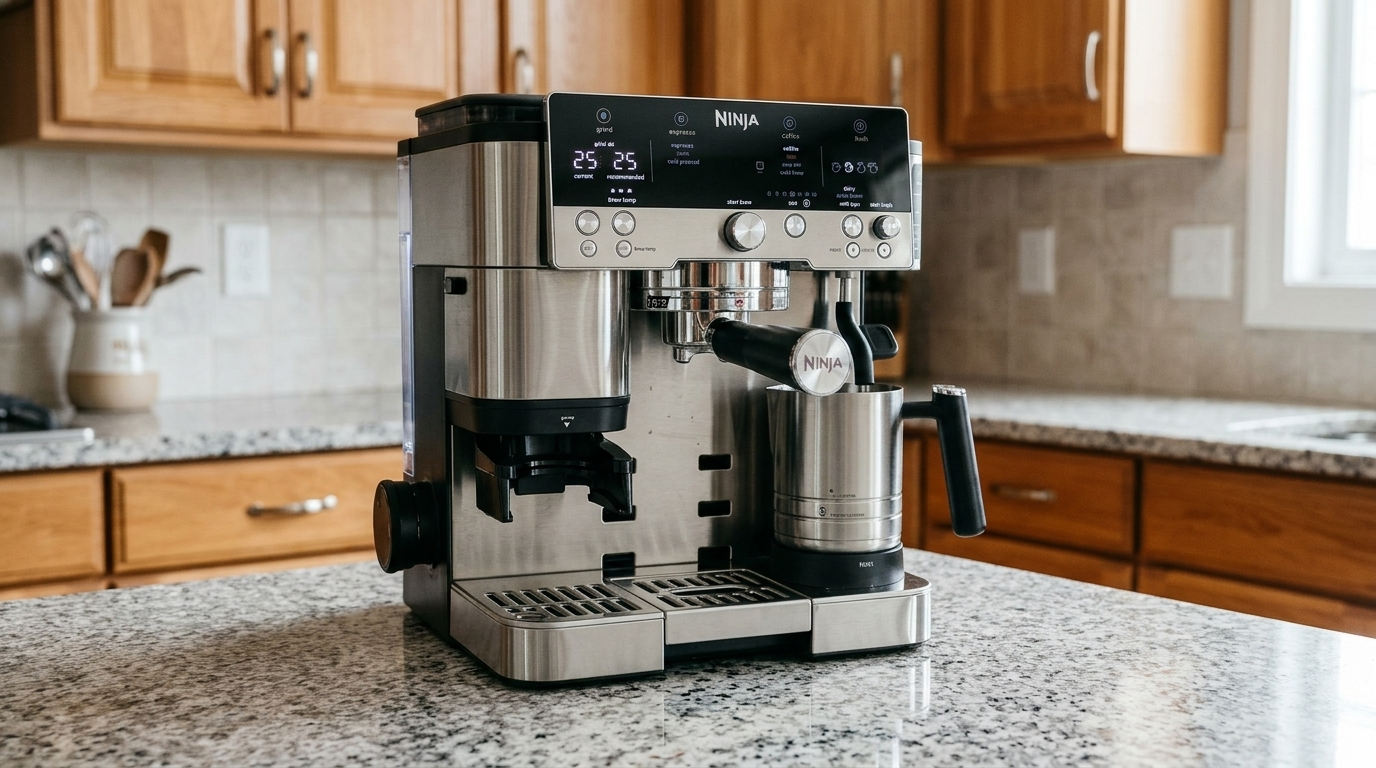
The Ninja keeps the funnel on through grinding and tamping, so the counter stays clean.
| Step | Ninja Luxe Café | Barista Express |
|---|---|---|
| Grind | Into a funnel, by weight | Into the basket, by time |
| Settle | Optional tap | Two taps by hand |
| Tamp | Pull the lever | Press by hand, keep it level |
| Trim | Not needed | Razor tool |
| Clean-up | A wipe of the funnel | Brush the tray and counter |
Espresso quality
The good news for a beginner: with the right beans, both machines make espresso that tastes like it came from a café.
The Ninja brews at 9 bar with automatic pre-infusion✕Pre-infusionA short, low-pressure soak of the ground coffee before full pressure starts, so the water spreads through the puck evenly. and active temperature control. With medium and dark roasts, my shots were rich, smooth and full-bodied, with a thick hazel-colored crema and clear chocolate, caramel and nutty notes.
The Express uses a 15-bar pump, low-pressure pre-infusion and PID✕PID controlA small controller that constantly adjusts the heater to hold the water at one temperature, instead of letting it swing hot and cold. temperature control. Once dialed in, its shots flowed like warm honey with a deep, velvety crema, and tasted sweet and creamy with balanced acidity.
Side by side with the same medium-roast blend, I could not reliably pick a winner blind. The Ninja got there in three shots; the Express got there in about eight.
My espresso scores by roast
My flavor scores out of 10 once each machine was dialed in.
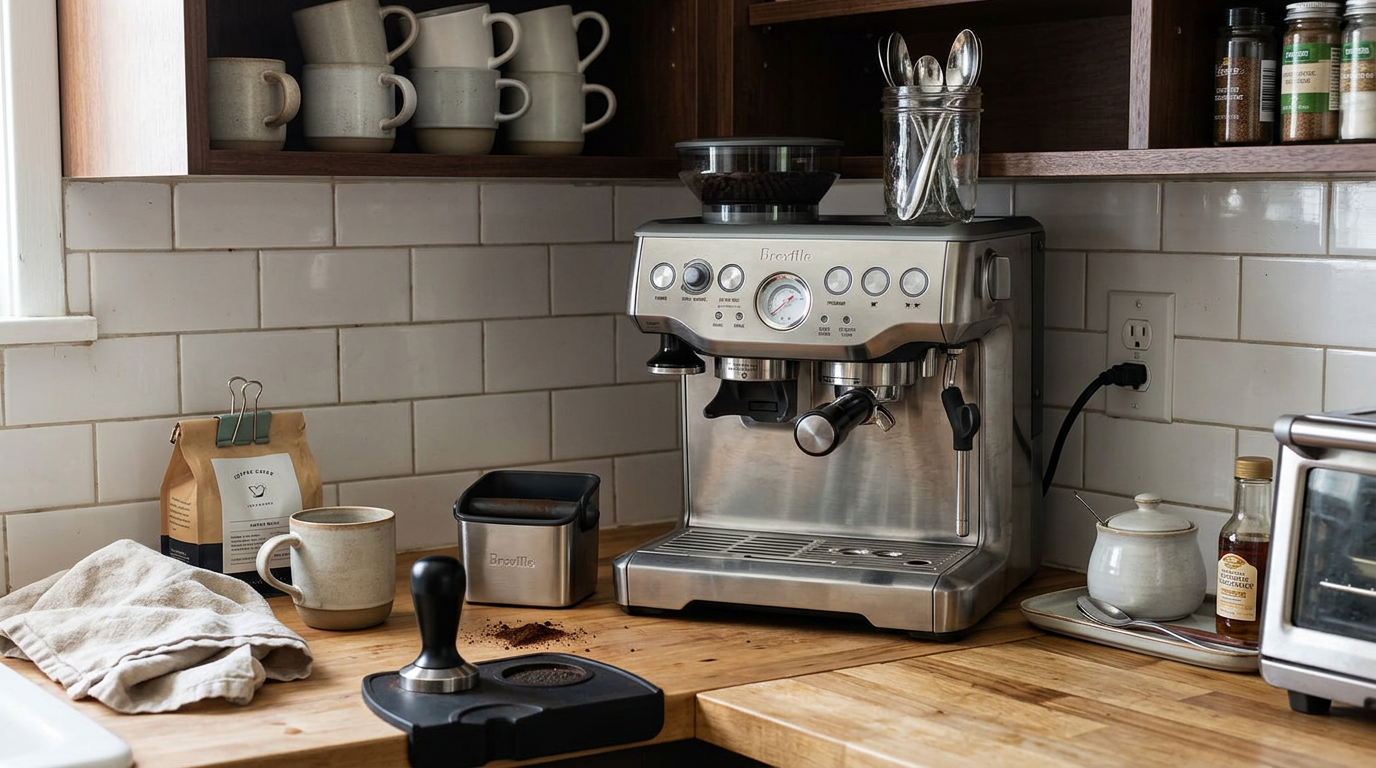
Once the inner burr was set, the Express pulled shots every bit as sweet as the Ninja.
| What you taste | Likely cause | First fix |
|---|---|---|
| Sour, thin, watery | Under-extracted✕Under-extractionWhen water does not pull enough flavor out of the coffee. The shot tastes sour, thin and watery. | Ninja: follow the finer prompt. Express: one step finer. |
| Bitter, harsh, drying | Over-extracted | Go one step coarser, or lower the temperature |
| Pale crema that fades fast | Stale beans | Use beans within a few weeks of roasting |
| Lukewarm shot | Cold cup and portafilter | Run a blank shot of hot water first |
Our tip: Warm your cup with a blank shot of hot water before brewing on either machine, because a cold cup steals heat from a small espresso in seconds.
Light roasts, dark roasts and temperature
This is where the two machines part ways for anyone who cares about specialty coffee.
The Ninja’s grinder does not go fine enough, or grind evenly enough, to extract delicate light roasts well. Even at its finest setting and highest temperature, my light-roast shots were sometimes sour, thin or lacking sweetness.
The Express, with its inner burr moved to 2 and its side dial a few steps finer, handled the same light roast better. It still needed a slightly higher temperature and a longer 1:2.3 brew ratio✕Brew ratioThe weight of coffee in the basket compared with the weight of espresso in the cup. 15 g in and 30 g out is a 1:2 ratio., but the sourness turned into a pleasant, fruity brightness.
Temperature is easier to change on the Ninja, which has several brew temperatures in its menu. Dropping it one step for a very dark roast took the edge off the roasty bitterness and made the shot noticeably sweeter.
On the Express, you nudge temperature through a button combination in the manual. It works, but I only bothered for light roasts.
If you mostly buy medium or dark espresso blends, like most people do, this section barely matters. Researchers at the Technical University of Munich found that particle size has a big effect on extraction speed, which is exactly why a grinder that cannot go fine enough limits light roasts.
| Roast | Ninja Luxe Café | Barista Express |
|---|---|---|
| Dark | Excellent, drop temperature one step | Good, a step coarser |
| Medium | Excellent, close to first suggestion | Excellent, side dial 6–8 |
| Medium-light | Good after about 5 shots | Good, slightly finer |
| Light | Often sour, limited by grinder | Workable, finer and hotter |
| Very dark, oily | Avoid, clogs burrs | Avoid, clogs burrs |
Big coffees, americanos and hot water
The Ninja calls itself a 3-in-1 because it also makes drip-style coffee and cold brew using a large basket. On paper, that sounds like one machine replacing three.
In practice, this was the weakest part of the Ninja. The full-size coffees were often thin, watery and under-extracted, because it pushes a lot of water through a small bed of coffee in a short time. Rapid cold brew had the same problem: fast, but weak.
My fix was simple: I made an americano✕AmericanoA shot of espresso topped up with hot water. The coffee is never over-extracted, unlike pushing a whole mug of water through the grounds. instead. The catch is that the Ninja has no hot water outlet, so I used a kettle to top up the double shot.
The Express has a dedicated hot water spout next to the steam wand. Making an americano or a long black, water first and shot on top, took ten seconds and kept the crema intact.
| Drink | Ninja Luxe Café | Barista Express |
|---|---|---|
| Espresso | Excellent with medium and dark | Excellent once dialed in |
| Americano | Double shot, kettle water | Double shot, built-in hot water |
| Large-basket coffee | Thin, under-extracted | Not offered |
| Rapid cold brew | Fast but weak | Not offered |
| Iced coffee | Espresso over ice | Espresso over ice |
Milk drinks
If you drink lattes and cappuccinos, this is the section that will probably decide it for you.
The Ninja’s frother is a steam wand with a spinning whisk inside, which it calls the Dual Froth System. You choose a preset, place the jug and let it run, and it stops automatically when the milk is ready.
There are four presets: steamed milk, thin froth, thick froth and cold foam, plus separate settings for dairy and plant milk. My probe readings put the milk at about 140 to 149°F, a good drinking temperature.
The Express has a fully manual steam wand with a single-hole tip. You purge it, put the tip just under the surface and stretch the milk yourself until it looks like glossy paint, which took me about 45 seconds for 6 ounces.
There is no auto-stop, so you stop when the jug is too hot to hold, around 140 to 150°F. The first week, my foam was too bubbly; by week two, it was silky.
Foam quality, my scores
My texture and stability scores out of 10 with cold whole milk.
The Ninja’s automatic foam is easy and consistent, but a little stiff, and it separates from the milk. That makes great cappuccinos and poor latte art.
The Express’s hand-steamed microfoam✕MicrofoamMilk foam with bubbles so small you can barely see them. It feels silky and glossy, which is what latte art needs. integrates properly. By week three I could pour a heart most mornings and a simple rosetta on a good day.
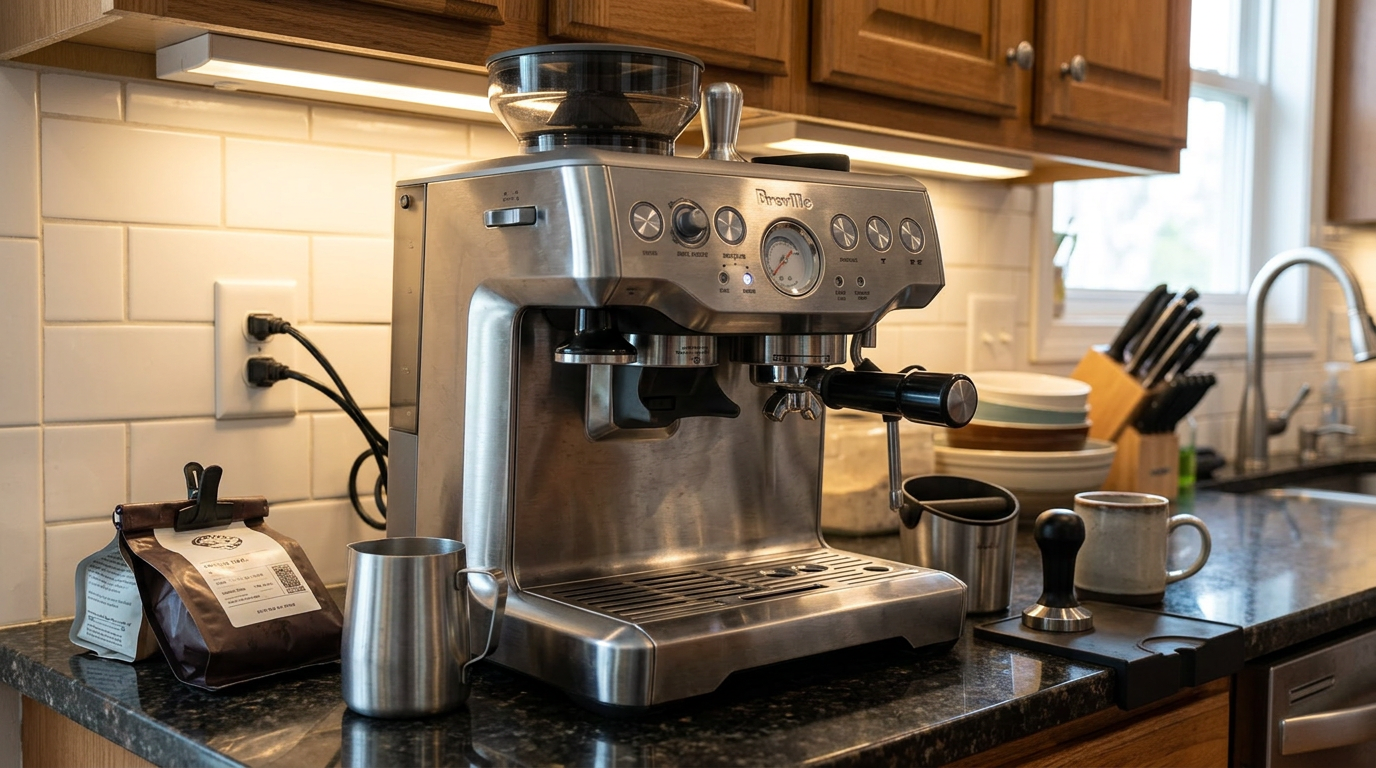
The Express’s gentle steam gives a beginner time to find the whirlpool, and the foam pours latte art.
| Milk drink | Ninja Luxe Café | Barista Express |
|---|---|---|
| Cappuccino | One touch, tall foam | Manual, takes practice |
| Latte | One touch, thin froth | Manual, glossy microfoam |
| Flat white | Manual steam for best texture | Manual, best for latte art |
| Oat milk | Plant setting, good | Stretch a little longer |
| Brew and froth together | Froth while the shot runs | One task at a time |
Our tip: Always start with cold milk straight from the fridge in a cold jug, because warm milk makes big, loose bubbles on both machines.
Cold foam and iced drinks
Cold foam was the unexpected highlight of my Ninja test, and it is the one thing the Express cannot do at all.
The whisk spins without steam, so you get a thick, sweet foam from cold milk. It is smooth, held its shape for more than five minutes and sat neatly on top of an iced latte.
A double shot over ice, cold milk and a layer of cold foam made a café-style drink in about two minutes. Adding a little vanilla syrup to the milk before frothing worked well too.
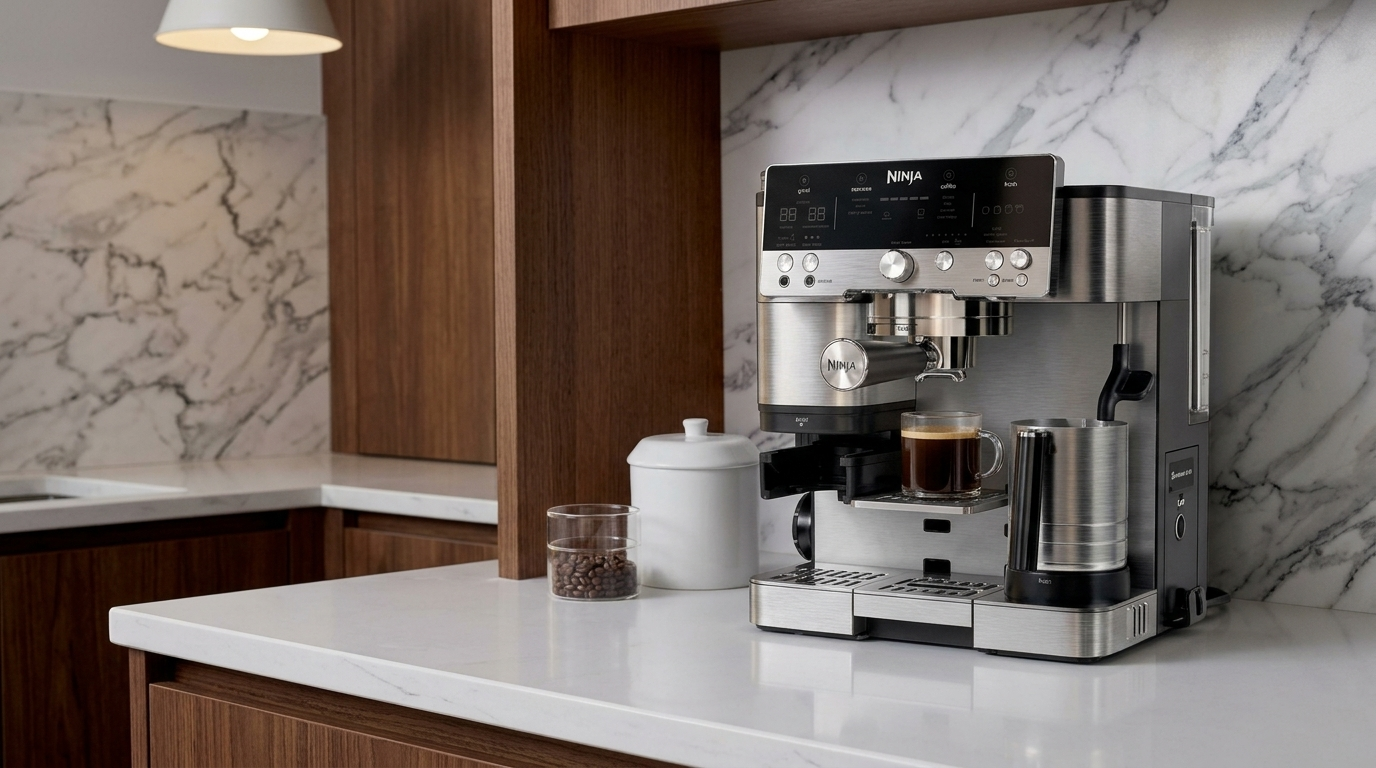
Cold foam made the Ninja my go-to for iced lattes on warm afternoons.
On the Express, iced drinks are simple but plainer. I pulled a double shot over ice and added cold milk, which tastes good but has no foam cap.
You can shake cold milk in a jar to fake it, but it collapses within a minute. If iced lattes are your daily habit, this is a strong reason to pick the Ninja.
Our tip: Froth cold foam with a splash of syrup already in the milk, because it mixes evenly and keeps the foam sweet all the way down.
Cleaning and upkeep
Cleaning is easier on the Ninja, mostly because it makes less mess in the first place. The dosing funnel keeps grounds off the counter, and the portafilter knocks out a firm, dry puck.
The Ninja’s funnel, baskets, water tank, hopper and drip tray are dishwasher-safe. Its frother needs a quick wipe and purge after every use, and the whisk pulls off for rinsing.
The Express needs a little more daily care. After every shot I knocked out the puck, rinsed the basket and flushed the group head, and after every milk drink I wiped and purged the wand straight away.
When the Express’s Clean Me light comes on, you backflush✕BackflushingRunning water backwards through the brew valve with a rubber disc and a cleaning tablet. It dissolves coffee oils that build up inside. with the rubber disc and a cleaning tablet. The Ninja alerts you to descale, which took about 30 minutes and came up after about a month of daily use with my moderately hard water.
My hands-on cleaning time per day
My estimate, not counting automatic purges.
| When | Ninja Luxe Café | Barista Express |
|---|---|---|
| After milk drinks | Wipe and purge, rinse the whisk | Wipe and purge the wand |
| After each shot | Knock out the puck | Knock out, rinse, flush |
| Daily | Empty tray, rinse funnel | Empty tray, brush counter |
| Weekly | Soak the whisk | Brush gasket and chute |
| When prompted | Descale, about 30 min | Backflush and descale |
| Dishwasher-safe parts | Funnel, baskets, tank, hopper, tray | None recommended |
Our tip: Purge and wipe the steam wand within ten seconds of frothing on either machine, because milk that bakes onto hot steel takes minutes to scrub off.
Speed, noise and daily use
Both machines are quick enough for a weekday morning. The Ninja heats up in about a minute or less, and the Express in about a minute.
A latte on the Ninja took me three to four minutes from switch-on, because I could froth the milk while the shot was running. On the Express, it took four to five minutes, because it brews and steams one task at a time.
Minutes from switch-on to a latte
Average across my weekday mornings, including cleaning the wand.
Both grinders are moderately loud for 10 to 15 seconds. The Ninja’s beeps were the noisiest thing in my kitchen at 6 a.m. until I switched them off in the settings.
The Ninja also has a low-water alert, which saved me from a failed shot more than once. The Express has no sensor, so if the tank runs dry mid-shot the pump keeps going and the shot is ruined.
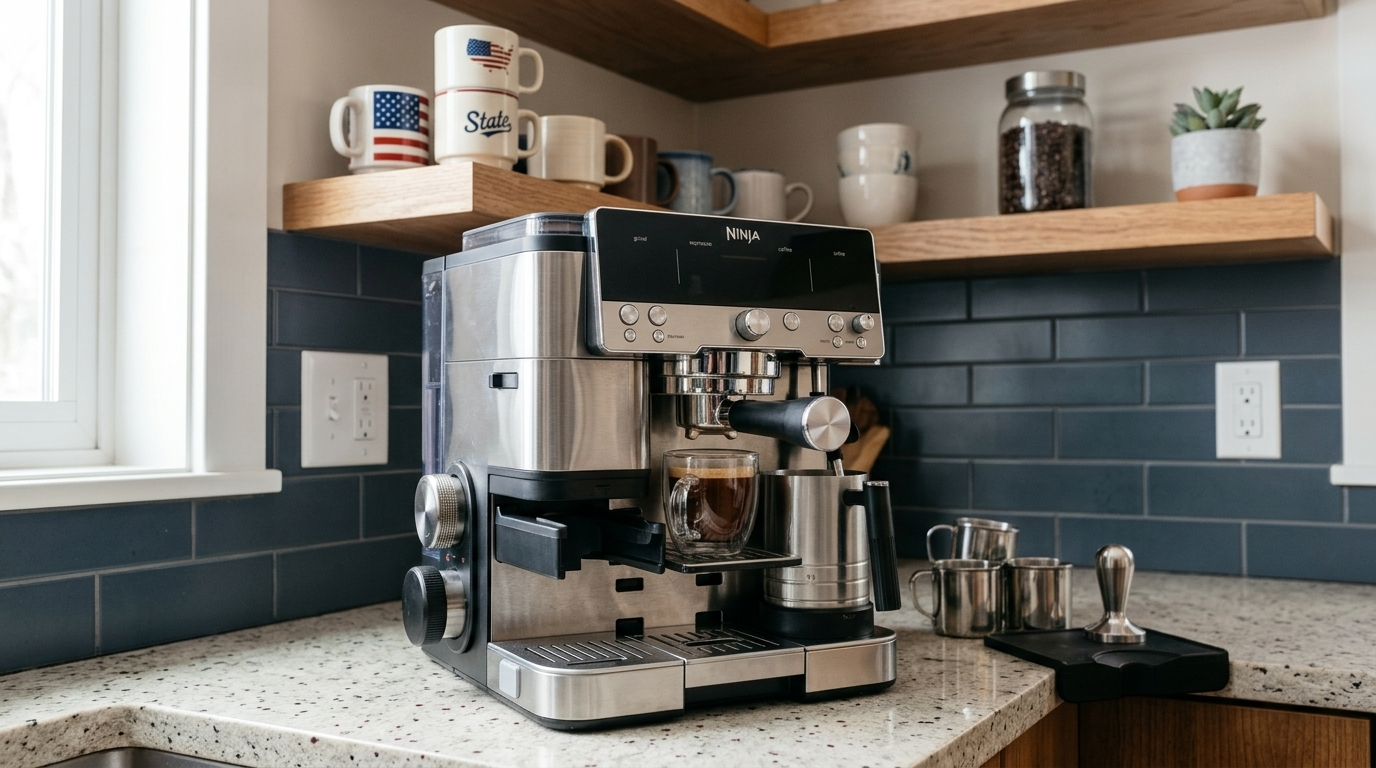
Frothing while the shot runs is what made the Ninja the faster latte machine.
| Daily detail | Ninja Luxe Café | Barista Express |
|---|---|---|
| Heat-up | About 1 minute or less | About 1 minute |
| Grind a double | 10–15 seconds | About 10 seconds |
| Brew and froth together | Yes | No |
| Low-water alert | Yes | No |
| Loudest moment | Beeps, can be muted | Grinder and steam hiss |
Beans, water and supplies
Both machines reward fresh beans. Coffee roasted within the last two to four weeks gave the thickest crema and the most even flow on both.
On the Ninja, I stuck to medium and dark espresso blends, because that is where its grinder shines. On the Express, medium roasts were easiest to start with, and light roasts became possible once I moved the inner burr.
Use filtered or fresh tap water and skip pure distilled water, because coffee needs some minerals to taste full. The Express takes a charcoal filter that Breville suggests replacing every two to three months.
University of Oregon researchers found that uneven extraction can waste up to 40% of the coffee in a puck. That is a good reason to get your dose and grind consistent on either machine.
| Bean type | Ninja Luxe Café | Barista Express |
|---|---|---|
| Medium-dark blend | Best all-rounder | Rich body, thick crema |
| Medium roast | Excellent, near first suggestion | Sweet and easy |
| Light roast | Limited | Good with a finer grind |
| Very dark, oily | Avoid | Avoid |
Our tip: Buy beans in bags you can finish within two to three weeks, so your grind setting stays stable from the first shot to the last.
Find Out the Price TodayReal-life scenarios
Specs only go so far. These are the situations where one machine clearly pulled ahead during my eight weeks of testing.
Barista Assist got me to a balanced shot in three tries, with no scale, timer or tamping skill.
One-touch cold foam on a shot over ice. The Express can only do a plain iced latte.
Hand-steamed microfoam integrates and pours. The Ninja’s automatic foam is too stiff.
A double shot topped up from the built-in hot water spout. The Ninja’s large-basket coffee tasted thin.
With the inner burr moved, it opened up into fruity brightness. The Ninja stayed sour.
Presets meant anyone could make their own drink with no lesson.
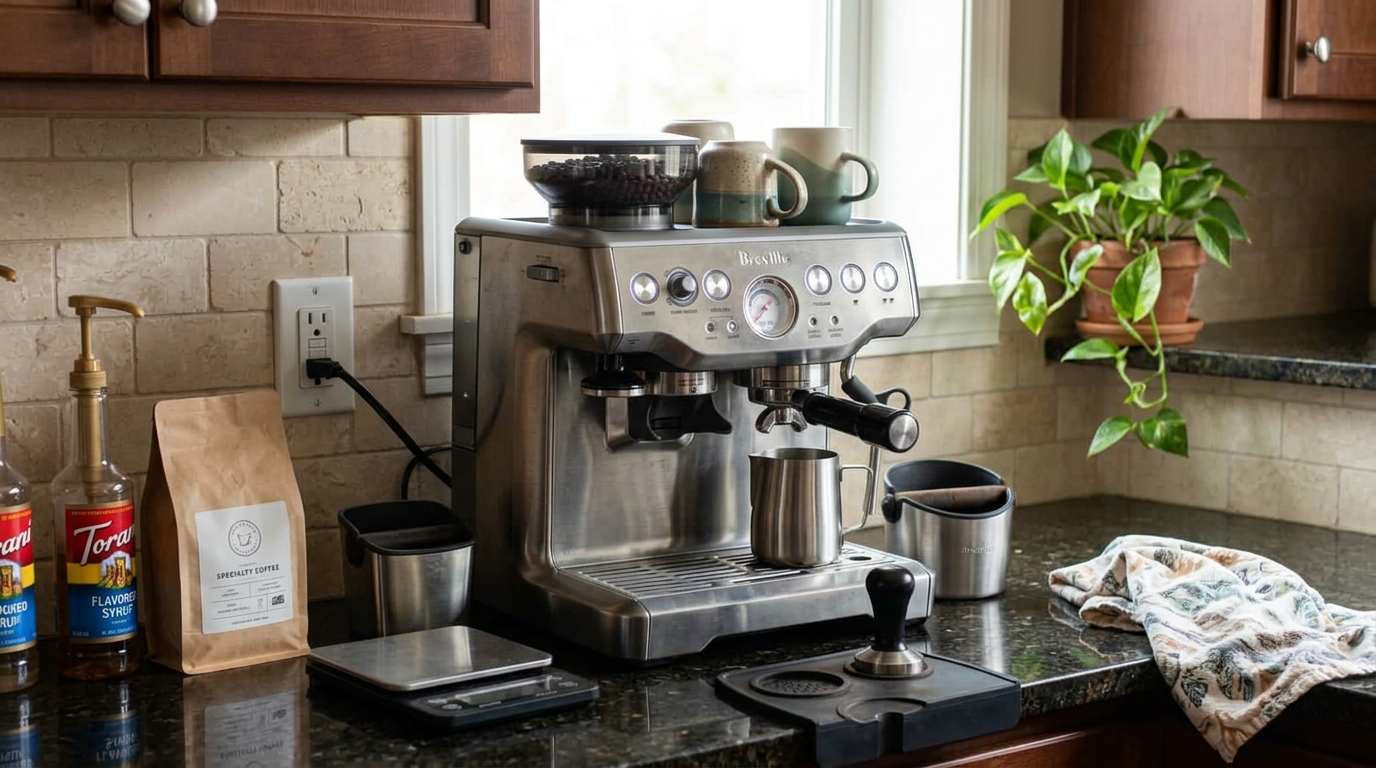
A scale next to the Express made more difference than any setting on the machine.
My scorecard
These are my own scores out of 10. The first four come straight from my single reviews of each machine, and I added beginner-friendliness and room to grow because they decide this matchup.
Ninja Luxe Café Premier
Breville Barista Express
Overall, I rate the Ninja 8.1 and the Express 8.0. That is almost a tie, and it should be: the Ninja is the easier machine to start with, and the Express is the better machine to grow with.
See How Much You’ll SaveWhich one is right for you?
4 quick questionsWhich one should you buy?
It comes down to one question: do you want to make great drinks, or do you want to learn to make great drinks? Both are fair answers, and they lead to different machines.
For more detail, read my Ninja Luxe Café Premier review and Breville Barista Express review, or browse all the coffee makers I have tested.
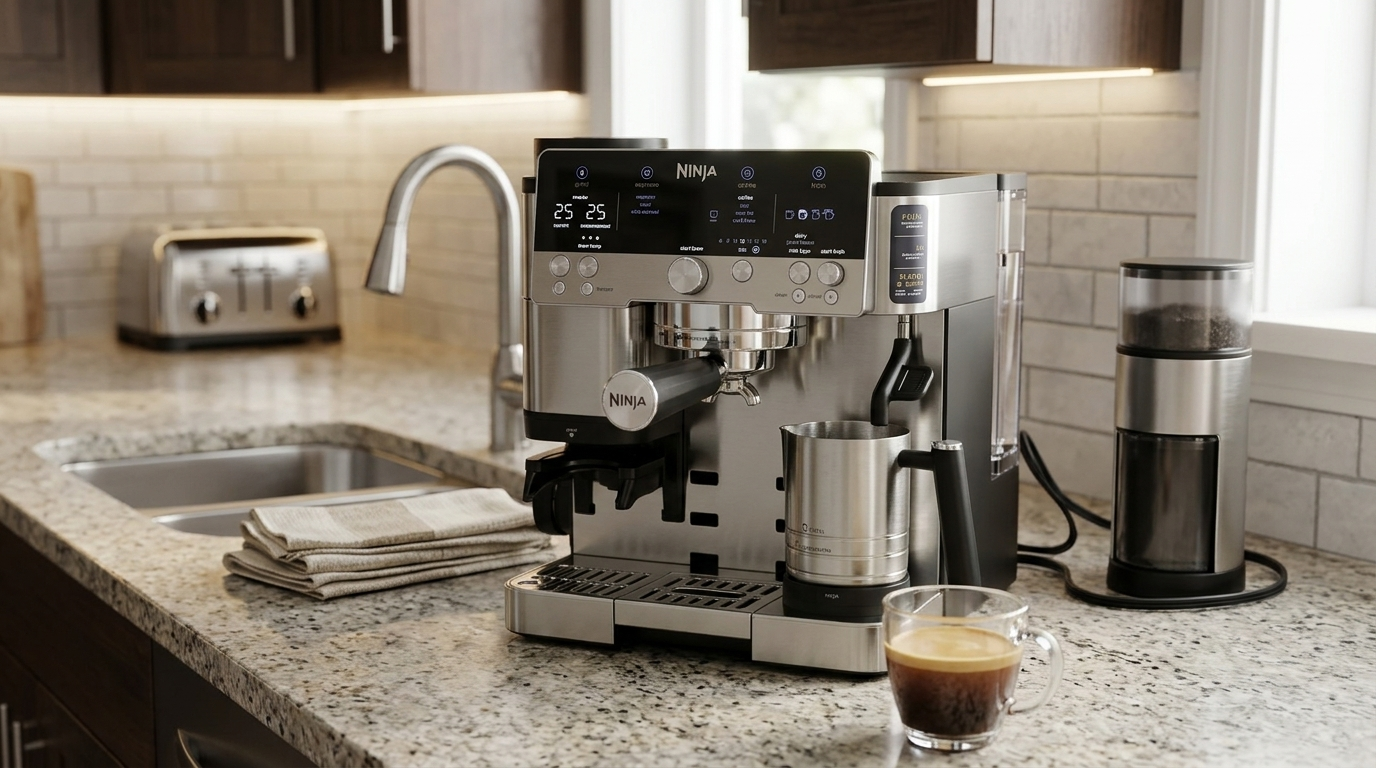
For beginners who want café drinks from week one, the Ninja is the easier choice.
- You have never made espresso
- You love lattes and iced drinks
- You want a clean counter
- Several people share the machine
- You want big drip-style mugs
- You buy light, fruity roasts
- You want to pour latte art
- You want to learn real espresso skills
- You want to pour latte art
- You drink americanos and want hot water on tap
- You may explore lighter roasts
- You want push-button milk
- You will not buy a scale
- You want cold foam
For most beginners, my pick is the Ninja Luxe Café Premier. It got me to a good shot faster than any machine I have tested, kept the counter clean and made milk drinks and cold foam at the press of a button. Stick to medium and dark roasts and make big mugs as americanos, and it is a very easy machine to love.
The Breville Barista Express is the better buy if you want to learn espresso rather than just drink it. Its gauge, manual tamper and steam wand ask more of you in week one, but by week four you can pour latte art and dial in almost any bean.
Whichever you choose, buy fresh whole beans and cold milk, and keep the milk side clean. Both machines reward a little care with years of good coffee.
Ninja Luxe Café vs Barista Express specifications
From manufacturer specifications and my own testing.
| Ninja Luxe Café Premier | Barista Express | |
|---|---|---|
| Model | Ninja ES601 | Breville BES870XL |
| Type | Semi-automatic with grinder and scale | Semi-automatic with grinder |
| Brew styles | Espresso, drip-style coffee, cold brew | Espresso |
| Grinder | Conical burr, 25 settings | Conical burr, 16 settings plus inner burr |
| Dosing | By weight, built-in scale | By time, adjustable dial |
| Tamping | Assisted lever with funnel | Manual, magnetic tamper |
| Pressure | 9 bar, active adjustment | 15-bar pump, gauge shows real pressure |
| Temperature | Several adjustable levels | PID, adjustable by button combo |
| Milk | Steam wand plus whisk, 4 presets incl. cold foam | Manual steam wand |
| Hot water | No, use a kettle | Dedicated outlet |
| Low-water alert | Yes | No |
| Power | 1,650 W | 1,600 W |
| Dimensions (W x D x H) | 13.4 x 13 x 14.6 in | 12.5 x 13.8 x 15.9 in |
| Weight | About 26 lb | About 22–23 lb |
How I tested and compared them
I used each machine as my daily coffee maker for four weeks, making espresso, americanos, lattes, cappuccinos, flat whites and iced lattes, plus the Ninja’s large-basket coffee, cold brew and cold foam. Testing notes were written up together by Michael Reynolds and the HouseholdMe team.
I counted shots to a balanced espresso with dark, medium and light roasts, weighed doses with a 0.1-gram scale, measured milk temperature with a probe, timed every routine and compared automatic and manual frothing with whole, 2% and oat milk.
I followed every cleaning routine, then checked my notes against Ninja’s and Breville’s specifications, owner documentation and published espresso research.
- Coffee: dose, crema, body, flavor and consistency.
- Milk: foam texture, temperature, speed and drink range.
- Workflow: heat-up, controls, guidance and daily routine.
- Ownership: cleaning, water care, noise and footprint.
Ninja Luxe Café vs Barista Express FAQ
Is the Ninja Luxe Café or Breville Barista Express better for beginners?
For most beginners, the Ninja Luxe Café Premier. It recommends a grind, doses by weight, tamps for you and froths milk automatically, and it got me to a balanced espresso in three tries. The Barista Express is better if you want to learn espresso skills and pour latte art.
Which makes better espresso?
With medium and dark roasts, they are very close once dialed in. With light roasts, the Barista Express did better because its grinder goes finer after you move the inner burr.
Can the Barista Express make cold foam?
No. It has a manual steam wand only. The Ninja Luxe Café Premier has a one-touch cold foam preset that was one of its best features in my testing.
Does the Ninja Luxe Café make good drip coffee?
Not in my testing. Large-basket coffees and rapid cold brew tasted thin and under-extracted. A double shot topped up with hot water made a much better big coffee.
Does the Ninja Luxe Café have a hot water spout?
No. I used a kettle to top up americanos. The Barista Express has a dedicated hot water outlet.
Which one is better for latte art?
The Barista Express. Its manual steam wand makes glossy microfoam that pours well. The Ninja’s automatic foam is a little stiff, though its manual steam mode is better.
Do I need a scale with these machines?
With the Barista Express, yes, because it doses by time. The Ninja has a built-in scale and doses by weight.
Which one makes less mess?
The Ninja. Its dosing funnel stays on through grinding and tamping, and many of its parts are dishwasher-safe.
Which one is bigger?
They are similar. The Ninja is about 13.4 x 13 x 14.6 inches and 26 lb; the Barista Express is about 12.5 x 13.8 x 15.9 inches and 22 to 23 lb.
Does either have a low-water warning?
The Ninja does. The Barista Express does not, so check the tank every morning.

- Our hands-on Ninja Luxe Café Premier review
- Our hands-on Breville Barista Express review
- Ninja and Breville product specifications and owner documentation
- Influence of Flow Rate, Particle Size, and Temperature on Espresso Extraction Kinetics, Technical University of Munich, Foods (2023)
- The perfect shot of espresso every time with chemistry, University of Oregon research
- General espresso brewing, milk frothing and maintenance guidance