Best Espresso Machines Under $500
I used 21 affordable espresso machines as my everyday coffee maker for four weeks each, from hands-on portafilter machines to simple bean-to-cup models. Five made drinks I’d happily pay café money for. For most people, I recommend the Ninja Luxe Café Premier: it recommends a grind, weighs the dose, tamps for you and makes the best cold foam I’ve tested at this level.

Michael Reynolds
Buying Guide
21 models · 5 picks
4 weeks per machine
I choose products independently, based on hands-on testing. We may earn a commission through links on this page; your price stays the same. Affiliate policy
Jargon helpNew to espresso machines? Tap any dotted term to see what it means.
In this guide
The short answer
- Best overall: the Ninja Luxe Café Premier. Guided espresso, weight-based dosing, hands-free froth and drip coffee and cold brew in one machine.
- Best for learning: the Breville Barista Express. A built-in burr grinder, pressure gauge and steam wand that make sweet, syrupy espresso with practice.
- Best espresso: the Gevi 58mm Commercial. A 58 mm group, adjustable temperature and a shot timer in a mostly metal body.
- Best one-touch: the De’Longhi Magnifica Start. Rich espresso, a true Americano button and very easy cleaning.
- Simplest bean-to-cup: the Philips 1200. Fresh-ground espresso or long coffee from a two-button touch panel.
Our picks at a glance
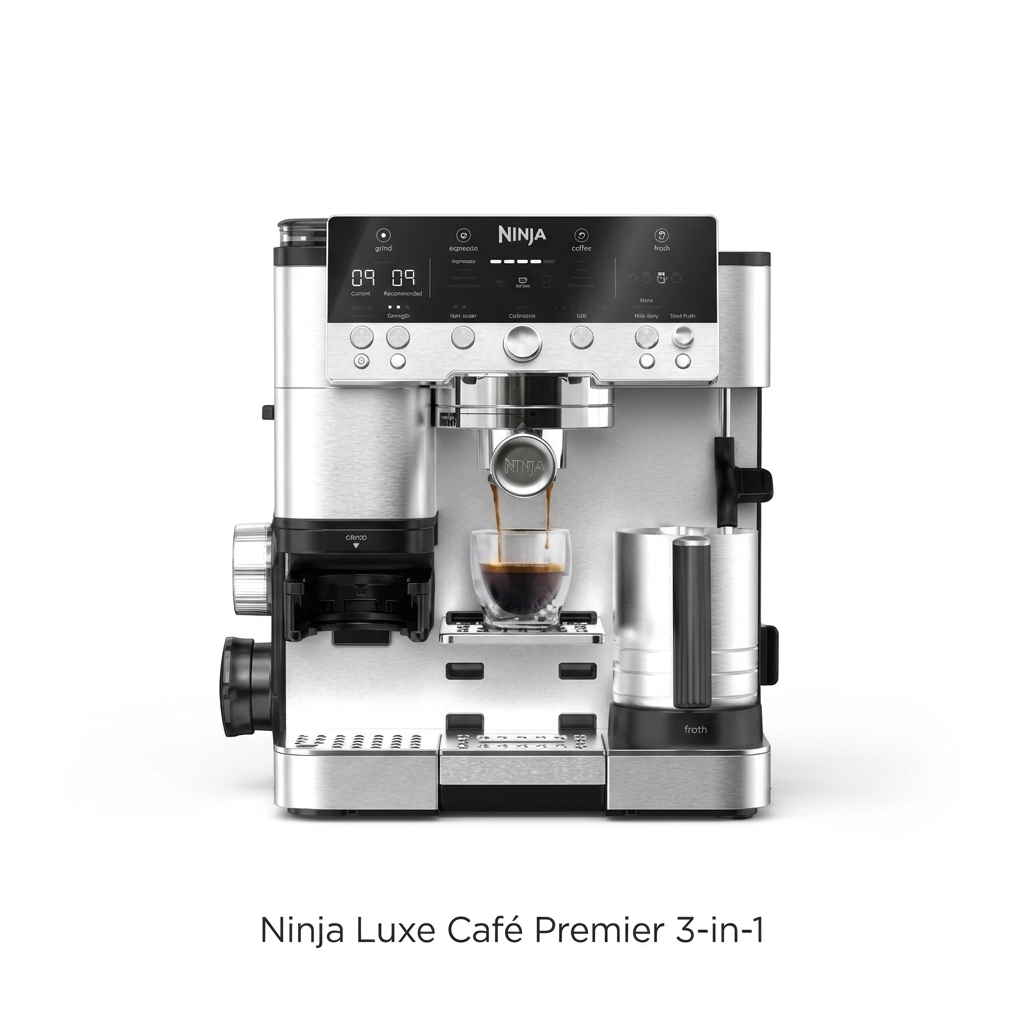
Ninja Luxe Café Premier
Recommends a grind, weighs the dose and tamps for you, then froths hot or cold milk hands-free.
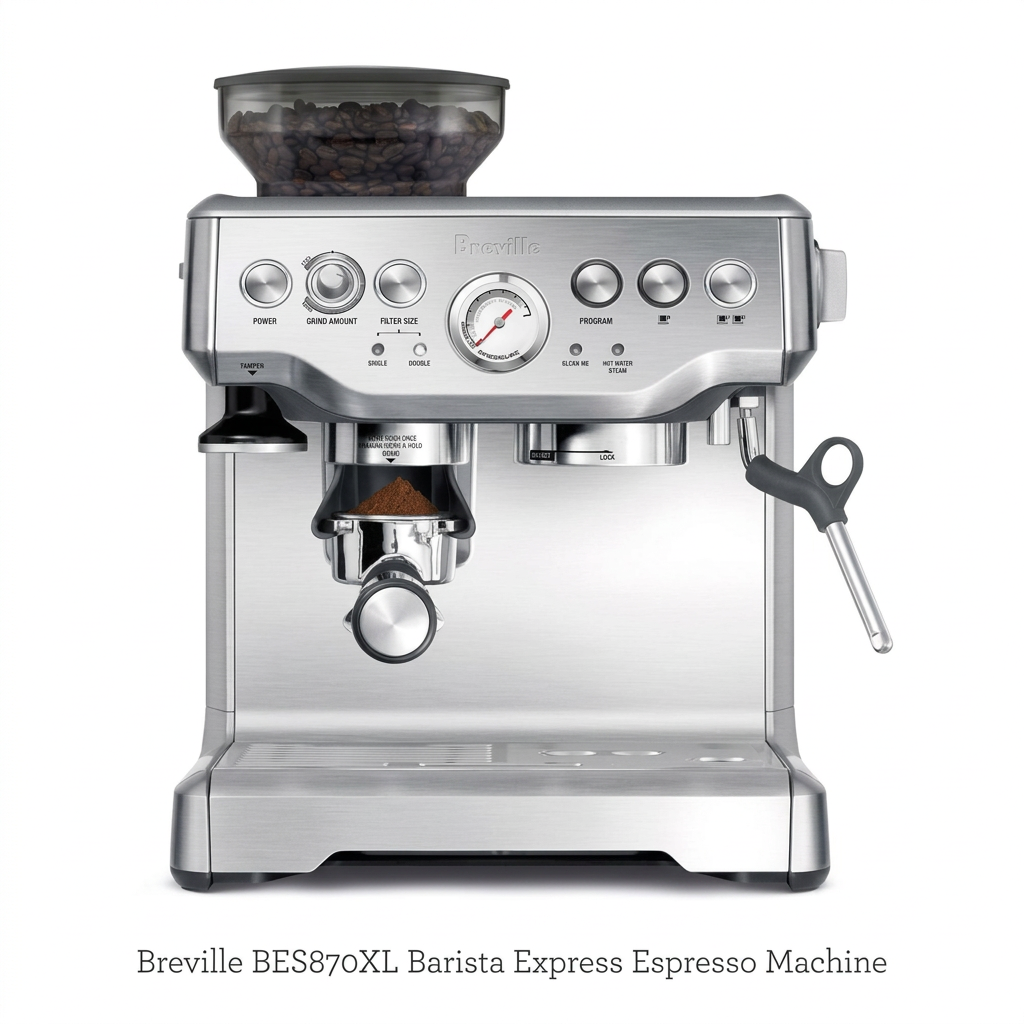
Breville Barista Express
A burr grinder, pressure gauge and steam wand in one body, for hands-on espresso that rewards practice.
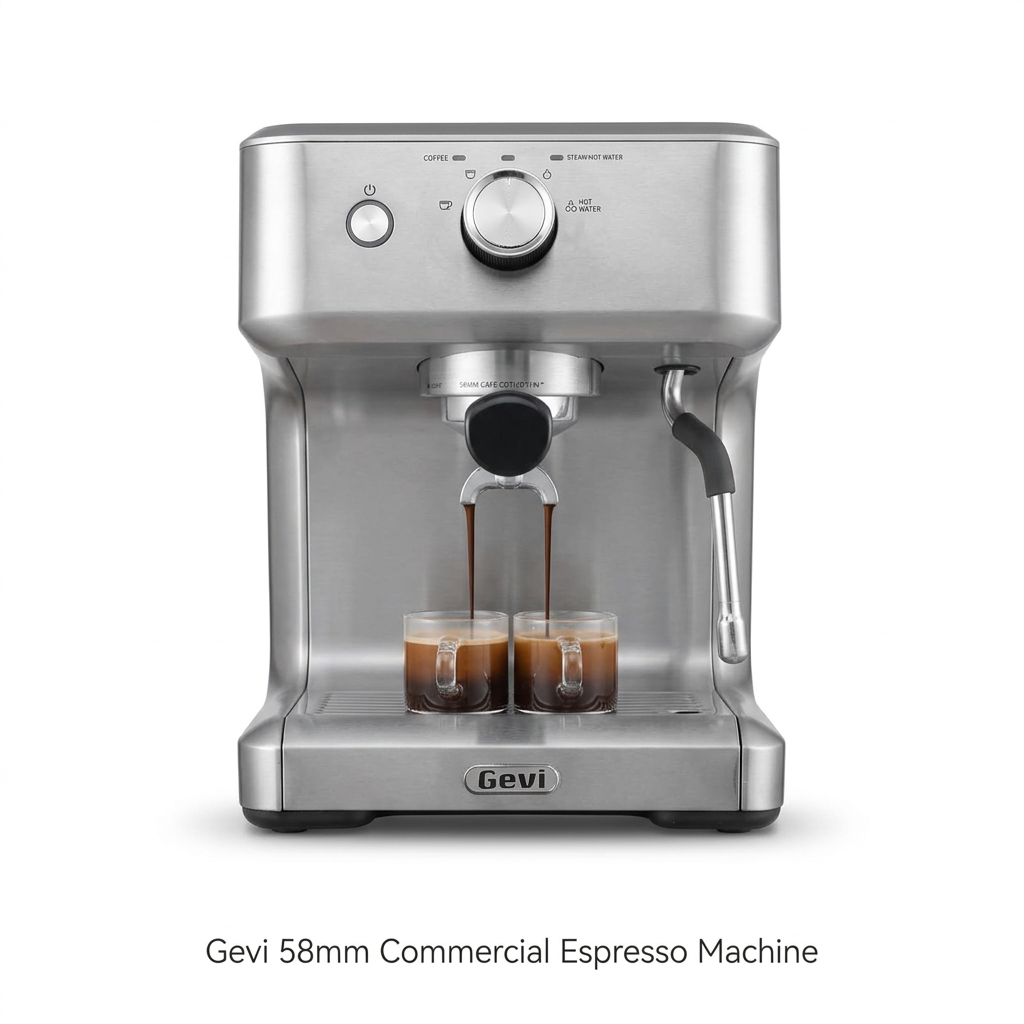
Gevi 58mm Commercial
A 58 mm group, adjustable PID temperature, a pressure gauge and a shot timer. Pair it with a good grinder.
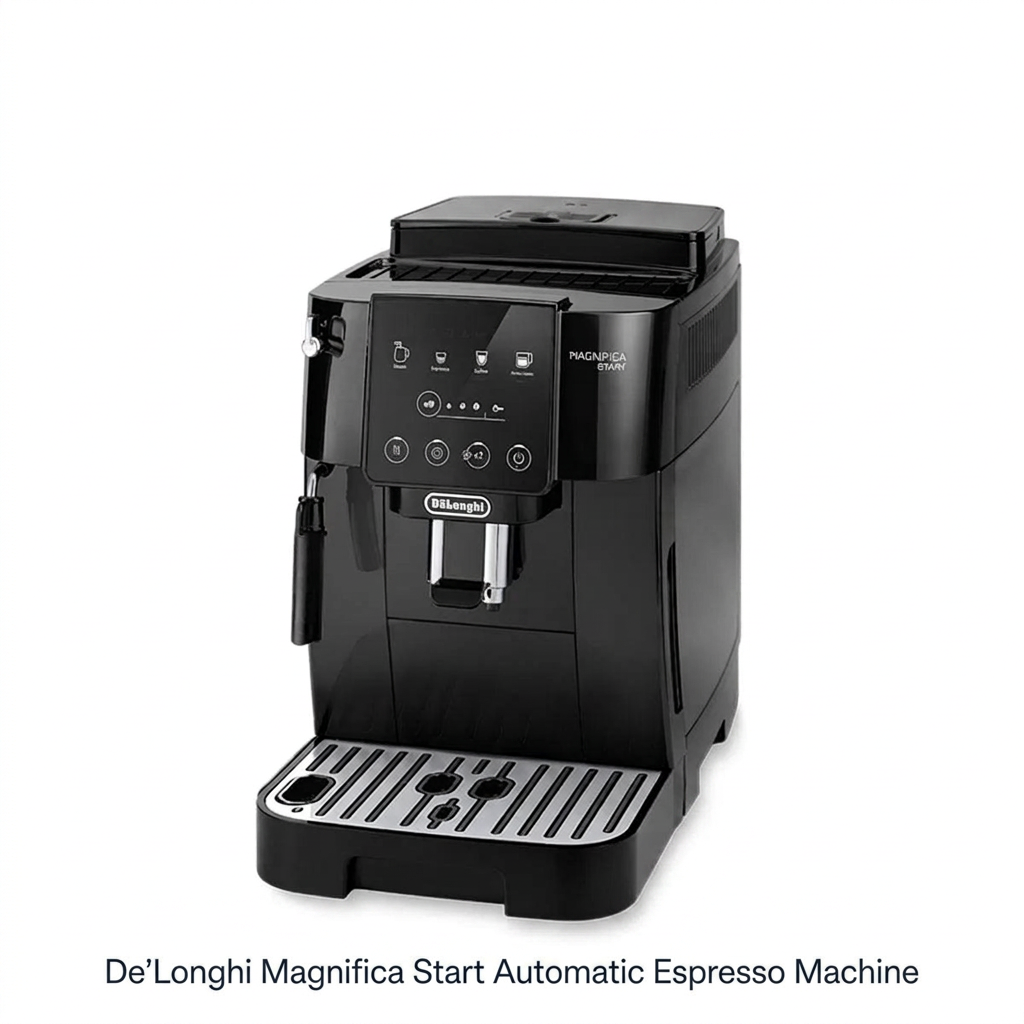
De'Longhi Magnifica Start
Rich espresso from De’Longhi’s proven brew unit, a true Americano button and a manual steam wand.
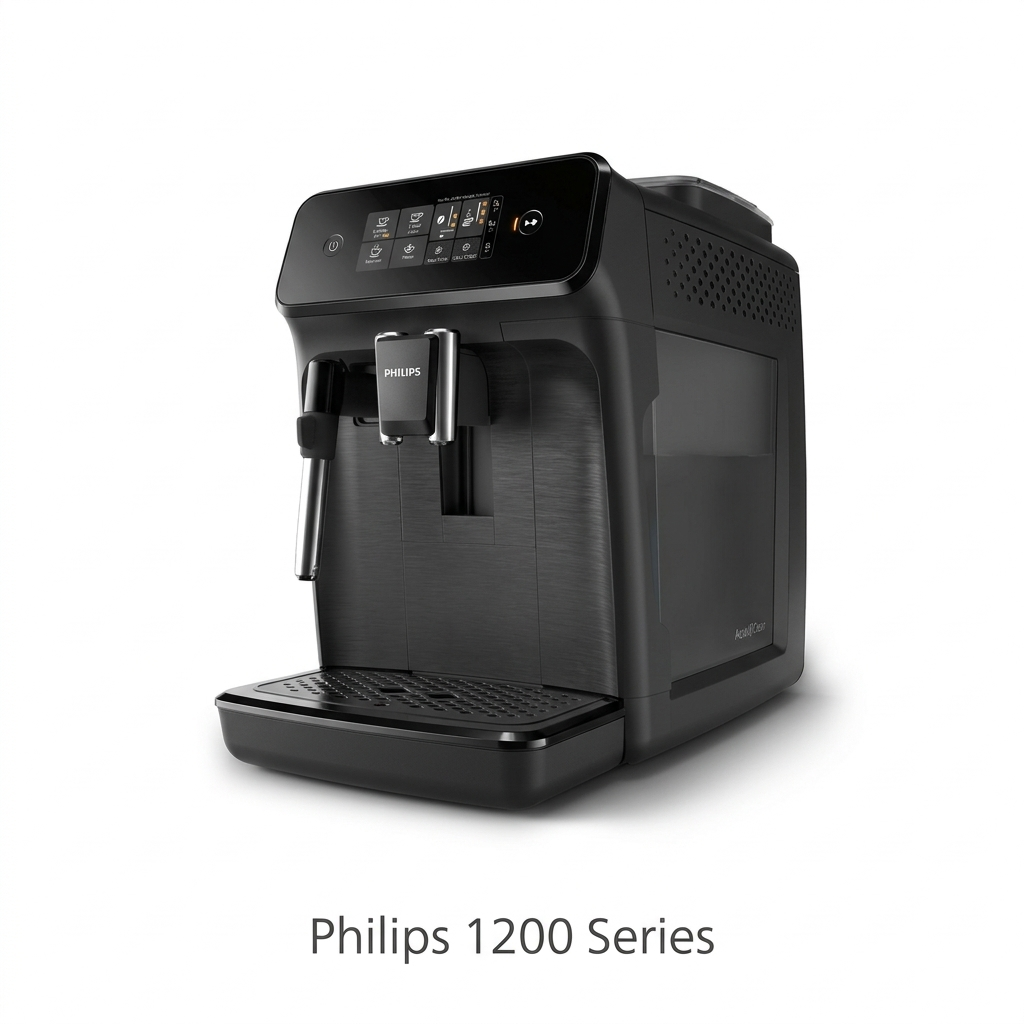
Philips 1200 Series
Fresh-ground espresso or long coffee from a simple touch panel, with a forgiving milk frother.
Prices change often. Click through to see the current price on Amazon.
Compare the best affordable espresso machines
Scores come from my four weeks with each machine. Specifications come from manufacturer documentation and my own measurements. "Not listed" means I couldn’t confirm the figure.
| 5 models compared | Best overall | Best to learn on | Best espresso | Best one-touch | Simplest |
|---|---|---|---|---|---|
| My test scores | |||||
| Overall score | 8.1 | 8.0 | 8.2 | 7.8 | 7.6 |
| Espresso | 8.5 | 8.4 | 8.8 | 8.4 | 7.5 |
| Milk drinks | 7.9 | 7.8 | 8.3 | 6.6 | 6.5 |
| Ease of use | 8.7 | 7.5 | 7.2 | 8.2 | 8.7 |
| How it works | |||||
| Type | Guided semi-automatic | Semi-automatic | Semi-automatic | Super-automatic | Super-automatic |
| Built-in grinder | 25 settings | 16 settings | ✕ | 13 settings | 12 settings |
| Portafilter | ✓ | 54 mm | 58 mm | ✕ | ✕ |
| Tamping | Assisted | By hand | By hand | Automatic | Automatic |
| Milk | Hands-free frother | Steam wand | Steam wand | Steam wand | Panarello-style frother |
| Extras | |||||
| Drip coffee | ✓ | ✕ | ✕ | ✕ | ✕ |
| Cold brew | ✓ | ✕ | ✕ | ✕ | ✕ |
| Americano button | ✕ | ✕ | ✕ | ✓ | ✕ |
| Pressure gauge | ✕ | ✓ | ✓ | ✕ | ✕ |
| Water tank | Not listed | 2 L | Not listed | 1.8 L | 1.8 L |
| Best for | Anyone who wants guided espresso, milk drinks and iced coffee. | People who want to learn real espresso skills. | Enthusiasts who own, or will buy, a good grinder. | Espresso and Americano drinkers who want one touch. | People who want fresh-ground coffee with almost no learning. |
My test scores at a glance
Every machine was scored on espresso, milk drinks and ease of use, then given an overall score. The Gevi scored highest, but it has no grinder, so you need to budget for a good one alongside it.
The Ninja is my top pick because it’s complete out of the box: grinder, guided dosing, hands-free milk and iced drinks. For most people, that makes it the easiest way to great drinks without stretching the budget.
Editorial scores from four weeks of daily use per machine.
| Best in each category | Winner | Score |
|---|---|---|
| Espresso | Gevi 58mm Commercial | 8.8 |
| Milk drinks | Gevi 58mm Commercial | 8.3 |
| Ease of use | Ninja Luxe Café Premier and Philips 1200 (tie) | 8.7 |
| Best Americano | De’Longhi Magnifica Start | One touch |
| Iced drinks | Ninja Luxe Café Premier | Cold foam |
Our tip: On a budget, spend on the grinder and the drink you’ll make every day, and skip extras you’ll rarely use.
How I tested
I’m a former line cook with an SCA certificate in barista skills, and I’ve tested kitchen appliances for HouseholdMe since 2018. For this guide, I used 21 affordable espresso machines as my everyday coffee maker for four weeks each.
I weighed doses and shots, timed drinks, measured milk temperature with a probe thermometer and compared every machine with the same three bean types. For the Gevi, which has no grinder, I used the same mid-range burr grinder throughout.
What an affordable espresso machine gets you
You don’t need a premium machine to make great espresso at home. The parts that decide flavor, a decent grinder, stable temperature and enough pressure, are now common at this level.
What you give up is mostly convenience: fewer one-touch drinks, simpler milk systems and smaller screens. In my tests, the best affordable machines made espresso within a point of machines costing several times as much.
Three kinds of affordable machine
| Type | What you do | Best for | My picks |
|---|---|---|---|
| Guided semi-automatic | Lock in, pull a lever, press start | Beginners who want real espresso | Ninja Luxe Café Premier |
| Semi-automatic | Grind, tamp, brew, steam | Learners and enthusiasts | Barista Express, Gevi 58mm |
| Super-automatic | Press a button | Anyone who wants one touch | Magnifica Start, Philips 1200 |
Why buying a machine pays off
Home espresso keeps growing. A 2025 national coffee survey found 66% of American adults drink coffee daily, 28% had an espresso-based drink in the past day, and 71% of daily drinkers make all their coffee at home.
National coffee consumption survey data, 2025.
At home, a latte is mostly the cost of beans and milk. Most people who drink one café latte a day make back the cost of an affordable machine within months.
Where affordable machines cut corners
Expect simpler steam wands, plastic in places and smaller tanks. Grinders often have fewer steps, which makes light roasts harder to dial in.
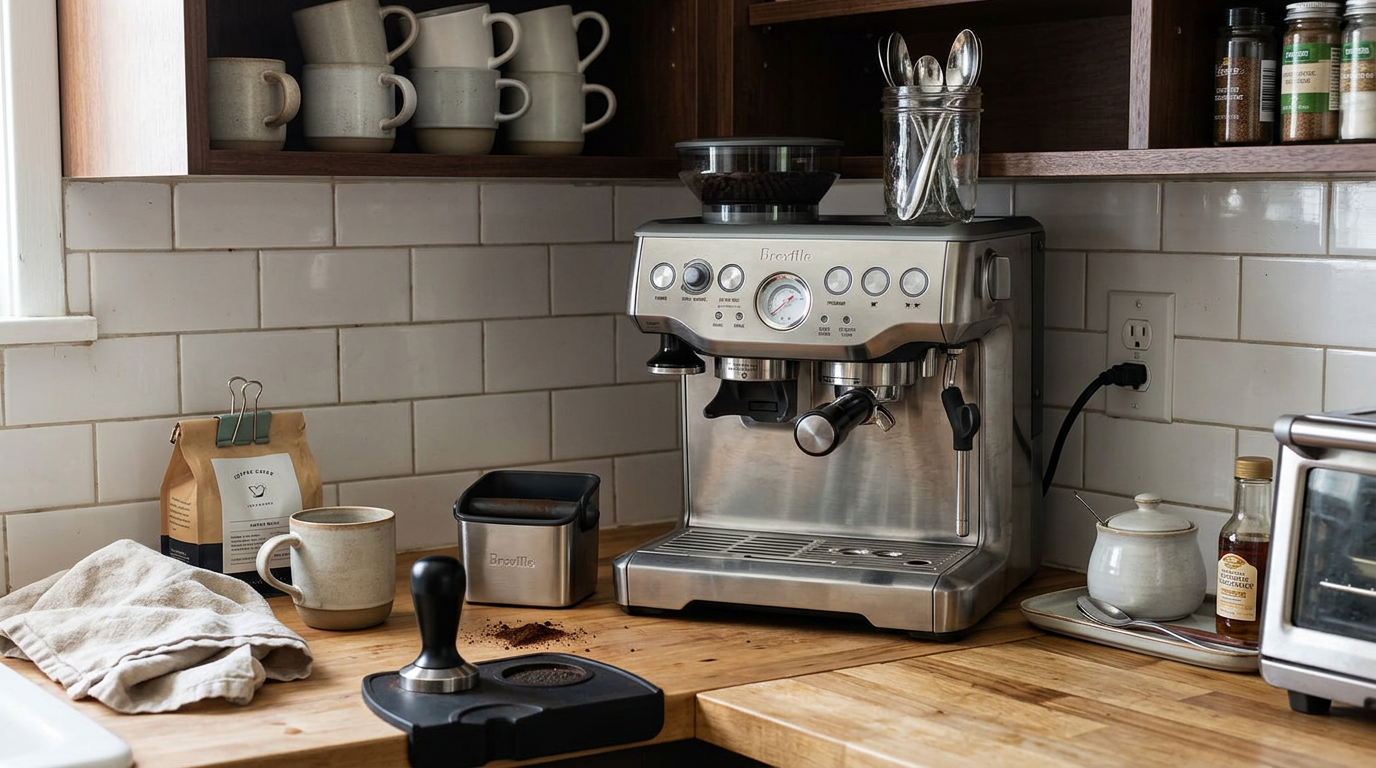
An affordable machine with a built-in grinder covers the parts that matter most.
Our picks in depth
1. Ninja Luxe Café Premier
The Ninja Luxe Café Premier is the affordable machine I’d recommend to most people. It walks you through espresso step by step: it recommends a grind, weighs the dose✕Dosethe weight of ground coffee used for one brew. A classic double shot uses roughly 14 to 18 grams., catches the mess with a funnel and tamps for you.
It also makes drip-style coffee and cold brew, and its cold foam is the best I’ve tested at this level. Its bigger coffees from the large basket can taste weak, though.
Guided espresso
Choose a drink and basket size, and the machine suggests a grind setting. It weighs the coffee as it grinds, so every double gets the same dose.
The funnel keeps grounds off the counter, and a lever tamps the puck evenly. By day two, my doubles were rich, chocolatey and consistent.
Hands-free milk and cold foam
The Dual Froth System has four presets, from steamed milk to thick foam and cold foam. Put the jug under the whisk, press one button, and it stops on its own.
Cold foam was the standout. It whipped cold milk into a thick, sweet topping that held its shape for over five minutes on an iced latte.
Drip coffee and cold brew
The drip setting brews a clean, filter-style cup. Cold brew steeps cooler water through the grounds for a smooth iced coffee in minutes.
The larger basket for big coffees was the weak spot. A 12-ounce coffee tasted thin, so I made a double espresso and topped it up with hot water instead.
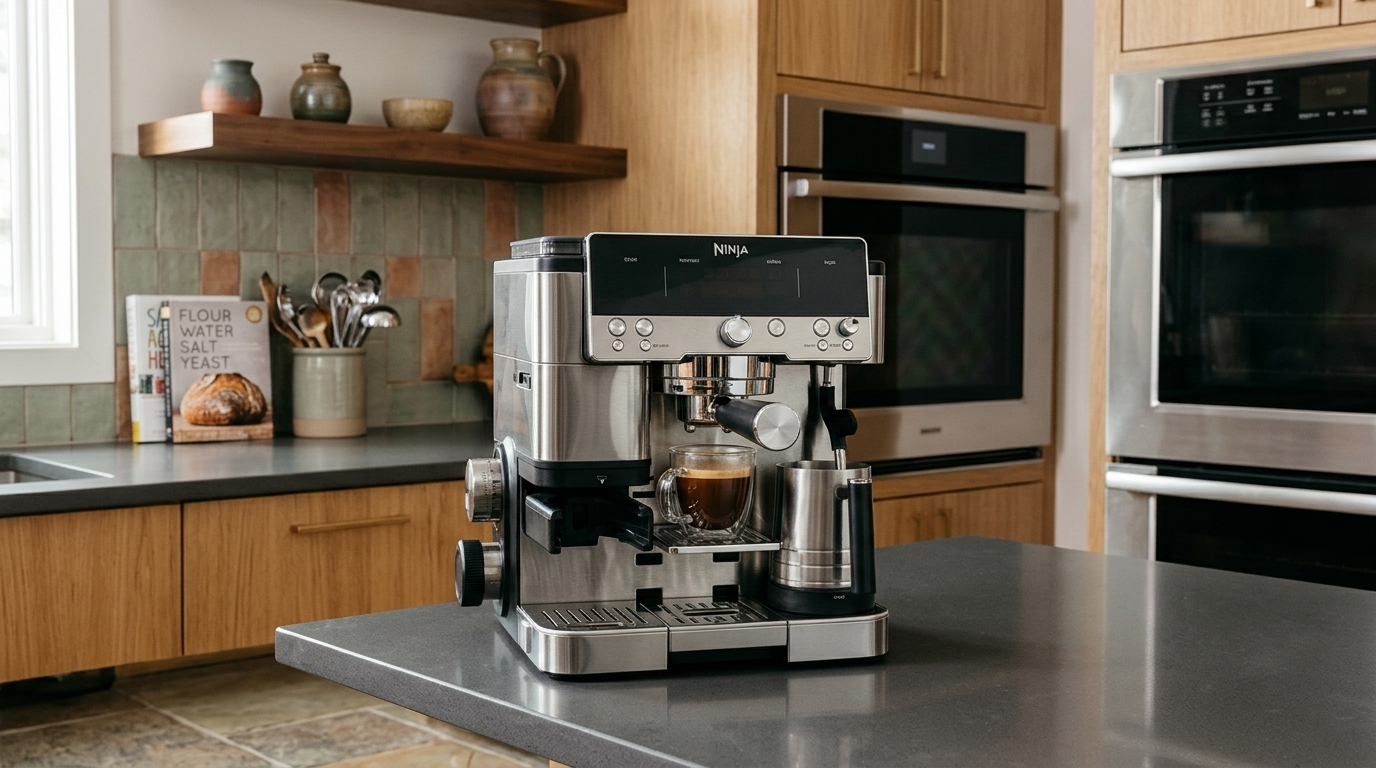
The hands-free frother stops at the right temperature on its own.
Who it suits best
The Premier is ideal for a household where one person wants a latte, another wants iced coffee and a third wants a plain mug of drip. Few affordable machines cover all three well.
What to know before you buy
It’s a large machine for its class, and it uses water generously for flushes. There’s no dedicated hot water spout.
For guided espresso, great milk and iced drinks at an affordable level, the Luxe Café Premier is my pick.
- Guided grind, dose and tamp
- Excellent hands-free cold foam
- Drip coffee and cold brew
- Very little mess
- Big coffees taste weak
- Large footprint
- No hot water spout
- Beginners who want real espresso
- Iced coffee fans
- Homes that drink drip coffee too
- Small kitchens
- Anyone who wants full manual control
- Big-mug coffee drinkers
Choose this if you want guided espresso, great milk and iced drinks in one affordable machine. Read my full Ninja Luxe Café Premier review.
2. Breville Barista Express
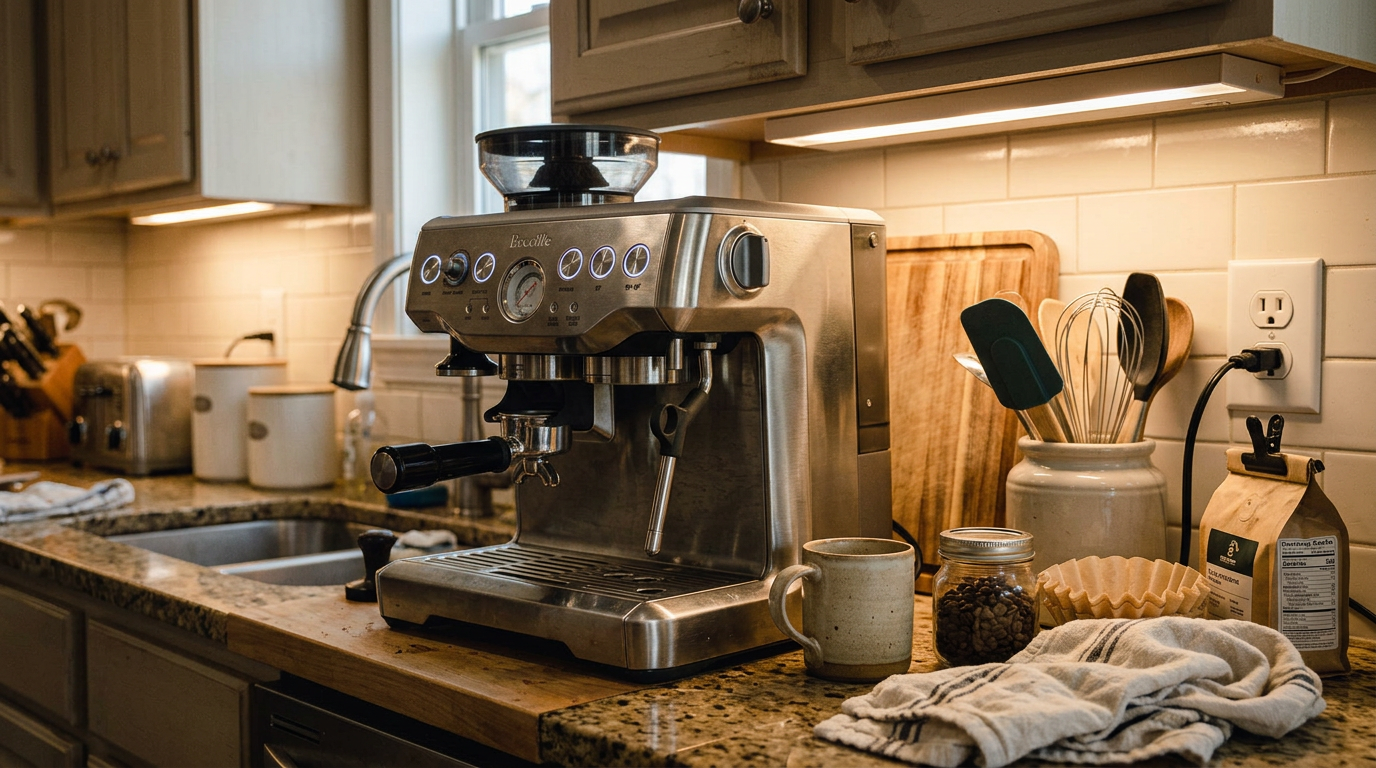
The Breville Barista Express is the best affordable machine to learn real espresso on. It has a conical burr grinder✕Conical burr grindertwo cone-shaped grinding rings, one inside the other, that crush beans to an even size. Even grounds extract evenly, so the cup tastes less bitter and less sour., a 54 mm portafilter, an analog pressure gauge and a manual steam wand.
You do every step yourself. Once you’ve practiced, it makes sweet, syrupy espresso and genuinely silky milk.
Espresso
Dialed in, the shots were sweet and syrupy with a thick crema, scoring 8.4. The pressure gauge helped me learn: when the needle sat in the middle range, the shot usually tasted right.
With some beans, the perfect grind fell between two of the 16 steps. Adjusting the dose slightly fixed it.
Steam wand
The wand is gentle, taking about 40 seconds for a cappuccino’s milk. That slower pace is forgiving while you learn to make microfoam✕Microfoammilk foam with bubbles so small you can’t see them. It feels silky, pours smoothly and blends into the espresso..
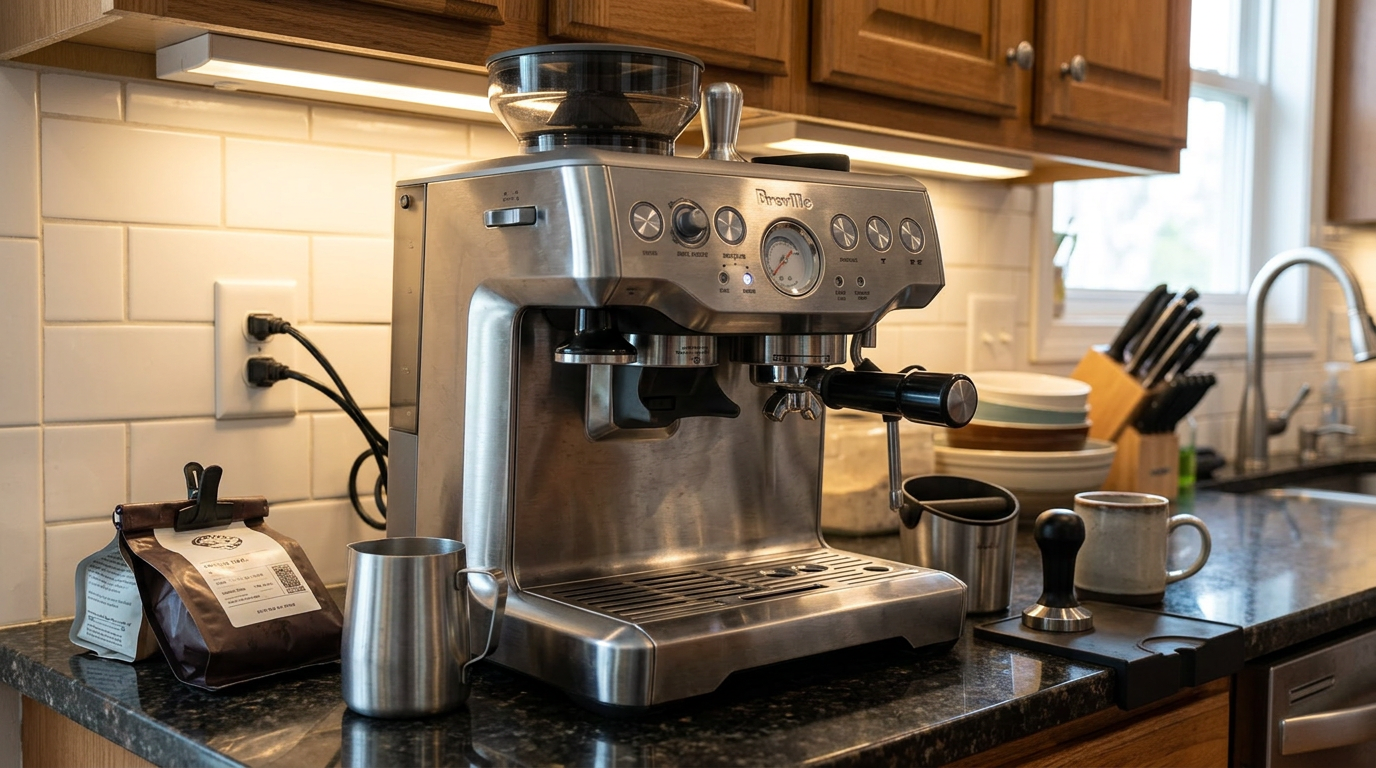
The pressure gauge shows when a shot is on track.
Grinder tips
The grinder has an outer dial for coarseness and a separate dose dial for how long it grinds. I set the grind first, then nudged the dose until the coffee sat just below the basket rim after tamping.
Every few weeks, lift out the upper burr and brush away old grounds. It keeps the grind consistent and stops stale coffee mixing into fresh.
What to know before you buy
Plan on a few days and a bag of beans to dial it in. Heat-up takes longer than newer Breville models.
For learning espresso without stretching your budget, the Barista Express remains a classic.
- Sweet, syrupy espresso once dialed in
- Built-in burr grinder
- Helpful pressure gauge
- Silky milk with practice
- Steep learning curve
- Only 16 grind settings
- Gentle steam
- Aspiring home baristas
- People who like analog controls
- Espresso-first drinkers
- One-touch fans
- Busy mornings
- Anyone who won’t practice
Choose this if you want to learn real espresso on a proven, affordable machine. Read my full Breville Barista Express review.
3. Gevi 58mm Commercial
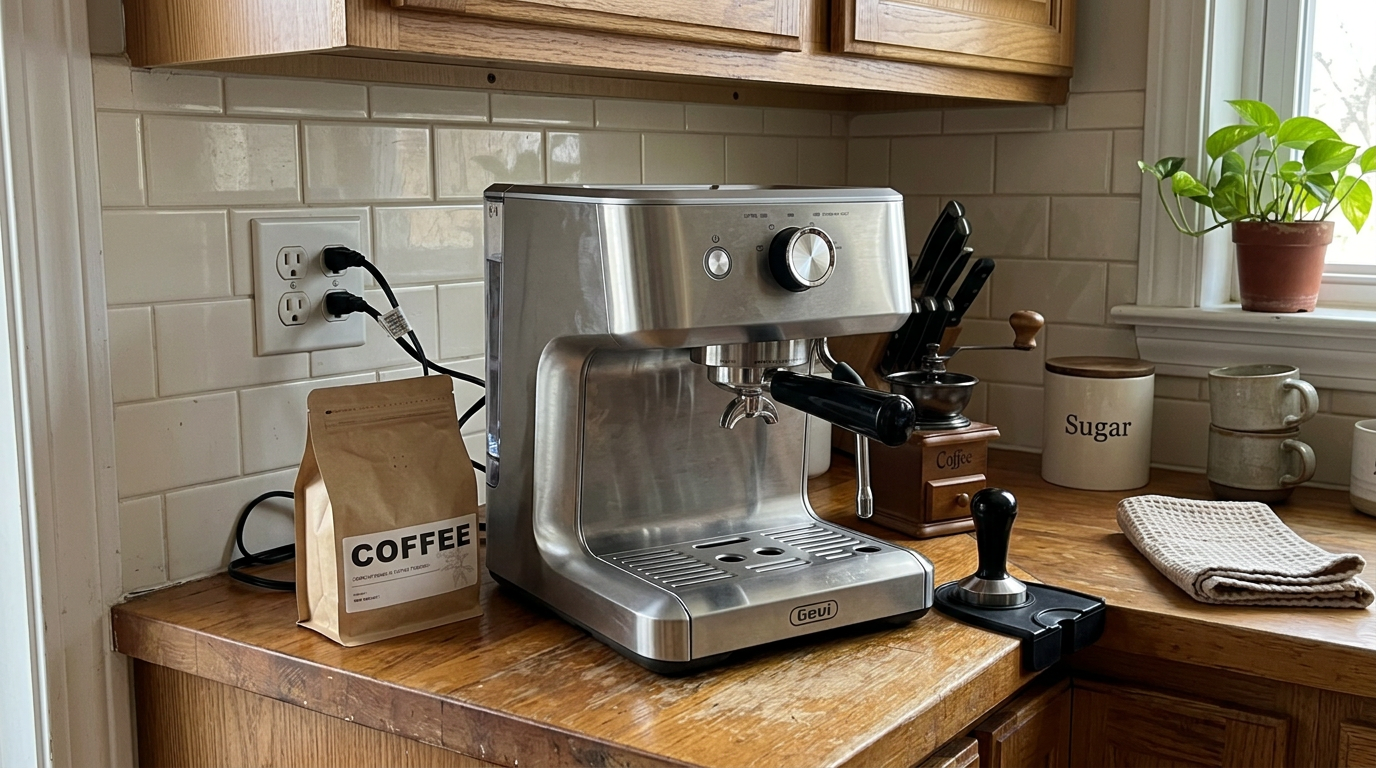
The Gevi 58mm Commercial made the best espresso and milk of any affordable machine I tested. It packs a 58 mm group, adjustable PID✕PID temperature controla digital controller that holds brewing water at a set temperature, usually within a degree or two. Stable temperature means consistent shots. temperature, a pressure gauge, a shot timer and a three-way solenoid valve✕Three-way solenoid valvea valve that releases leftover pressure after a shot. The used coffee puck comes out dry and firm instead of soupy, and the portafilter doesn’t spit when you remove it. into a slim, mostly metal body.
It has no grinder, so you need a good one alongside it. It also rewards practice and won’t hide a poor grind.
Café-style espresso
With a good burr grinder, the shots were rich, sweet and balanced, scoring 8.8. The 58 mm basket gives an even extraction, and adjustable temperature let me suit each roast.
The shot timer and gauge make it easy to repeat a good recipe. Pucks came out dry thanks to the solenoid valve.
Milk
The steam wand is powerful for this class. With practice, my milk was glossy enough for latte art, and it scored 8.3.
Our tip: Set the Gevi a few degrees cooler for dark roasts and a few degrees hotter for light roasts.
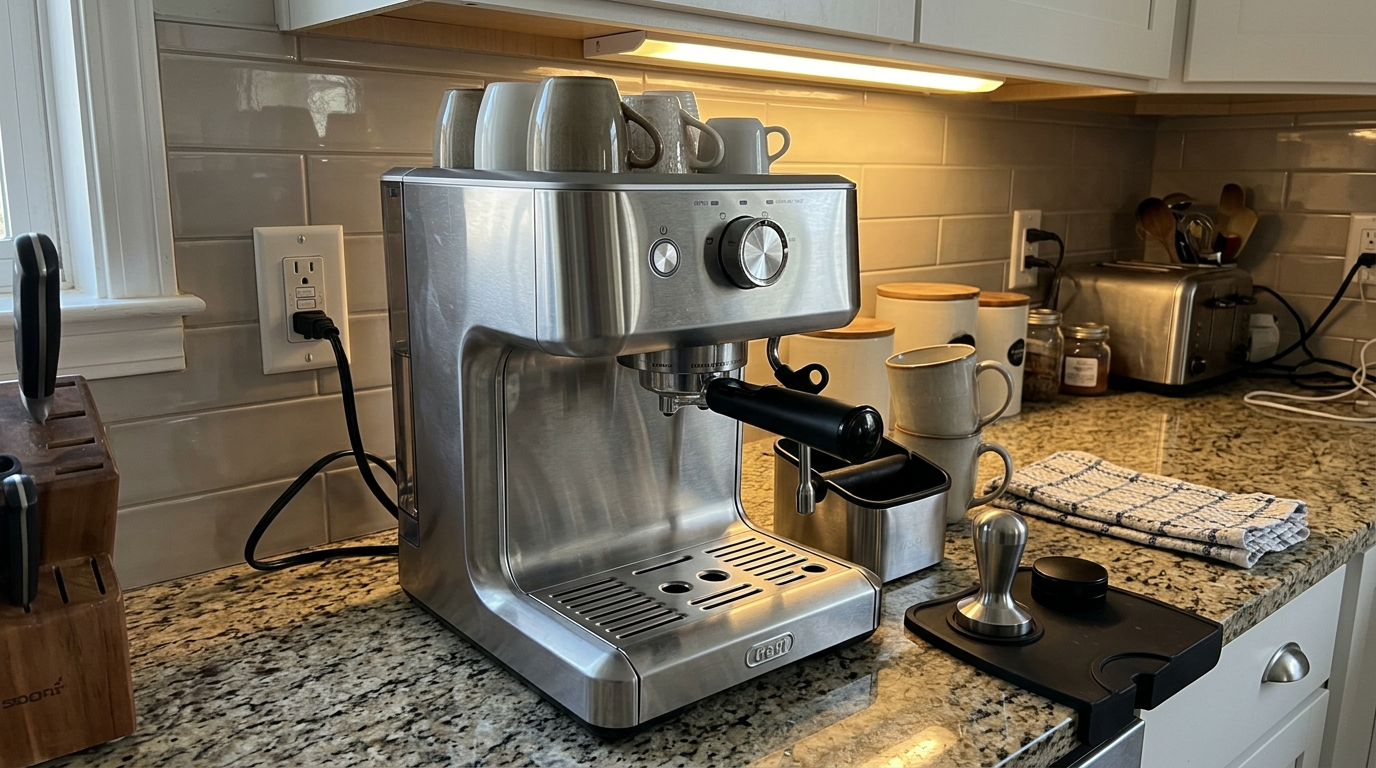
The 58 mm group is the same size used in cafés.
Which grinder to pair it with
A good espresso grinder needs fine, stepless or micro-stepped adjustment. In my tests, a mid-range burr grinder was enough to bring out the Gevi’s best; an entry-level grinder with big steps held it back.
If you don’t own one yet, add a grinder to your plan before choosing the Gevi. Otherwise, a machine with a grinder built in will make better coffee for the same total outlay.
What to know before you buy
You need a separate espresso grinder, and a cheap blade grinder won’t do. It’s a hands-on machine through and through.
If you already own a good grinder, the Gevi 58mm is the best espresso you’ll get at this level.
- Best espresso of my affordable picks
- 58 mm group and PID temperature
- Shot timer and pressure gauge
- Solid, mostly metal build
- No built-in grinder
- Needs practice
- Not for one-touch drinks
- Enthusiasts with a good grinder
- Latte art learners
- Anyone upgrading a starter machine
- Beginners without a grinder
- People who want one touch
- Small budgets that can’t add a grinder
Choose this if you own a good grinder and want café-quality espresso. Read my full Gevi 58mm Commercial review.
4. De'Longhi Magnifica Start
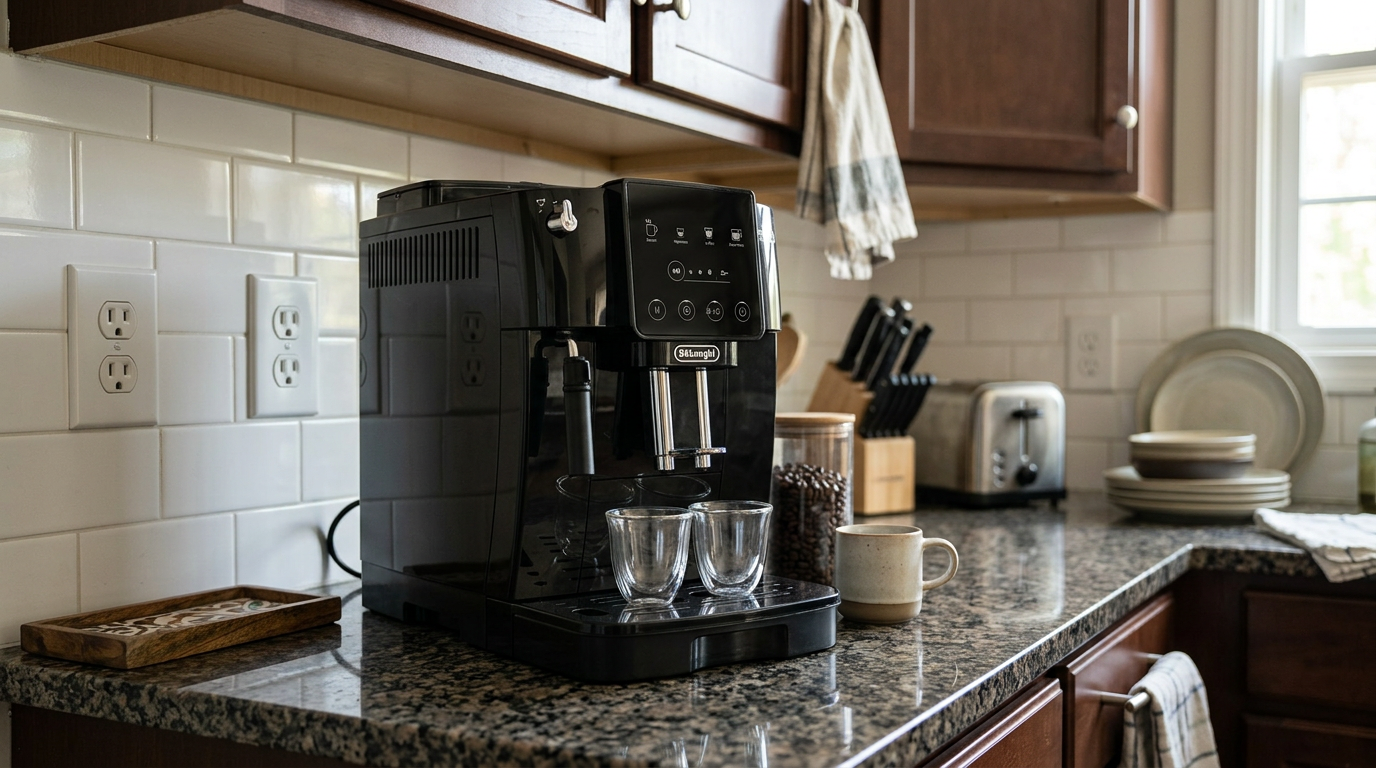
The De’Longhi Magnifica Start is the best affordable one-touch machine I tested. It uses the same brew unit as De’Longhi’s pricier models, and its espresso is rich and full.
Its true Americano button made the best big cup in the range. Milk is all hands-on, through a manual steam wand.
Espresso and Americano
The espresso had a thick crema and a nutty, chocolatey flavor, scoring 8.4. That’s as good as many super-automatics costing far more.
The Americano button brews espresso and then adds hot water separately. My big mugs tasted clean and bright, never over-brewed.
Easy cleaning
The brew unit slides out and rinses under the tap. There’s no milk system to clean, just the steam wand to wipe.
Our tip: Skip the 2x button for a strong mug, and use the Americano button instead, because it tasted far fuller.
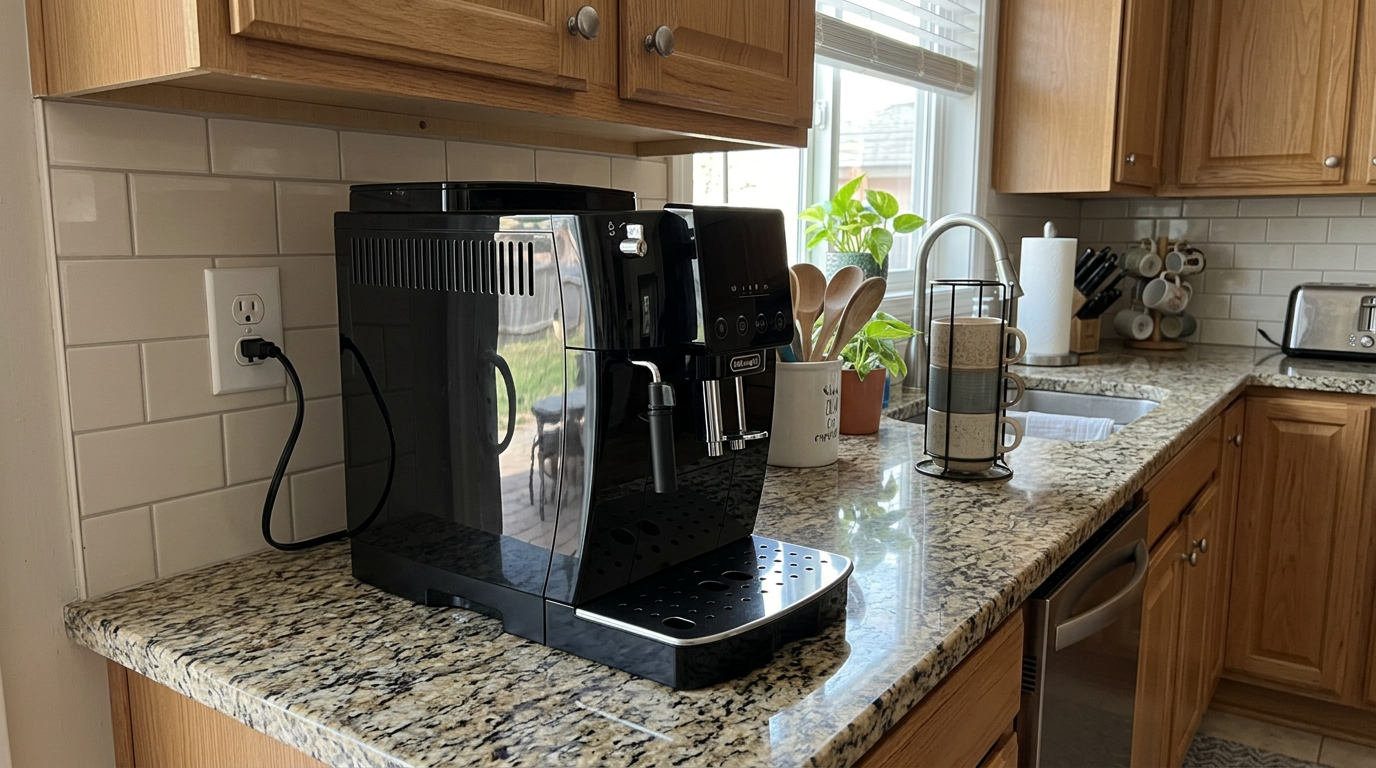
The Magnifica Start uses the same brew unit as pricier De’Longhi models.
Steaming on the Magnifica Start
The wand is a simple design that pulls in air. Keep the tip just under the surface until the milk grows by about a third, then sink it to heat.
With a few days of practice, my cappuccinos were creamy, though never as silky as the Gevi’s. If you only want milk now and then, it’s plenty.
What to know before you buy
The steam wand needs technique, and the milk scored only 6.6. The 2x button made weak double coffees.
If you drink espresso and Americanos and want one touch, the Magnifica Start is the best value.
- Rich espresso from a proven brew unit
- True Americano button
- Very easy cleaning
- Quick heat-up
- Milk is fully manual
- Weak 2x button
- Only three drinks
- Espresso and Americano drinkers
- First-time one-touch owners
- Anyone who hates cleaning milk systems
- Daily latte drinkers
- People who want many drinks
- Families who want profiles
Choose this if you want rich one-touch espresso and great Americanos. Read my full De'Longhi Magnifica Start review.
5. Philips 1200 Series
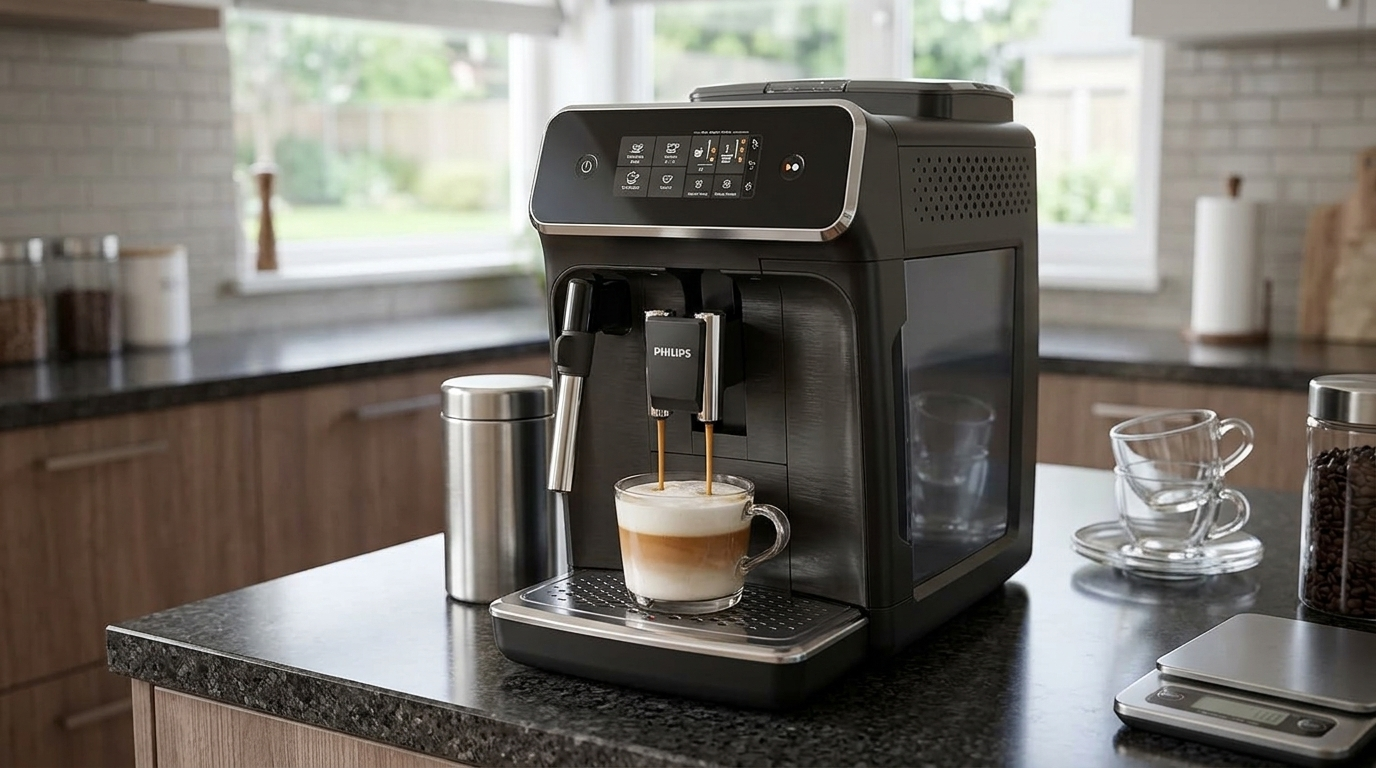
The Philips 1200 is the simplest way to fresh-ground coffee I tested. It makes espresso or a long coffee from a simple touch panel, with a sealed, tinted bean hopper and three brewing temperatures.
Its coffee is smooth and easy to like. The foam is airy and the menu is short, though.
Coffee
The espresso was smooth and gentle, with low bitterness, scoring 7.5. Long coffee was easy-drinking and consistent.
Three temperatures let me brew a little hotter for black coffee and cooler for milk drinks. The sealed hopper kept beans fresher.
Milk
The simple frother pulls in air for you, like a Panarello wand✕Panarello wanda steam wand with a sleeve that pulls in air for you. It makes foam easily, but the bubbles are bigger than a barista’s microfoam.. It made plenty of foam with no skill, but the bubbles were big and airy.
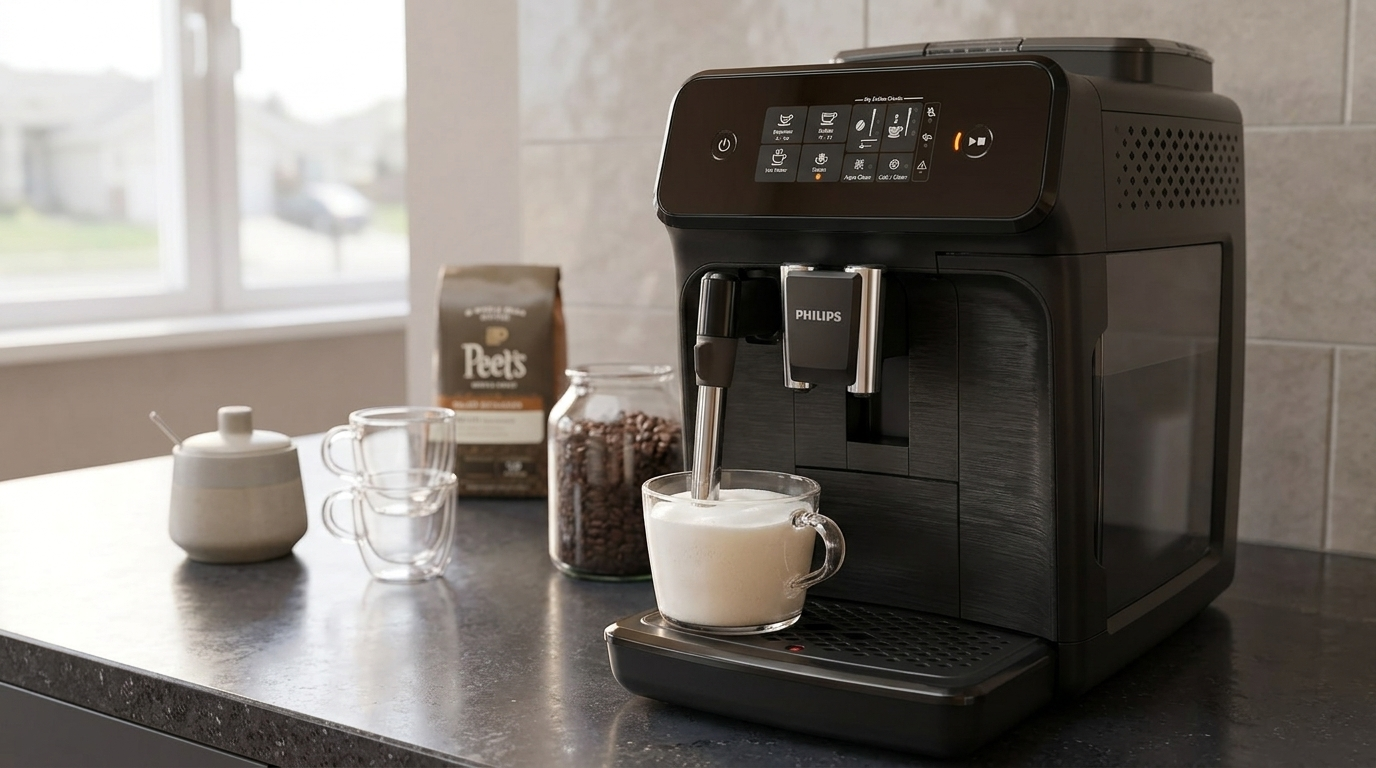
The touch panel has just two drinks and a few settings.
Daily routine
Switch it on, wait about 40 seconds, press espresso or coffee, and that’s it. The drip tray and grounds bin slide out together, and the brew unit lifts out from the side for a weekly rinse.
It’s the machine I’d give to someone who has never used anything but a kettle. There’s simply nothing to get wrong.
What to know before you buy
The water filter isn’t in the box, so budget for one. There are only two drinks.
For fresh-ground coffee with the least learning, the Philips 1200 does the job.
- Very simple touch panel
- Smooth, easy coffee
- Three brewing temperatures
- Sealed bean hopper
- Airy foam
- Short drink menu
- Water filter sold separately
- First-time bean-to-cup owners
- Black coffee drinkers
- Anyone who wants no learning
- Latte lovers
- Espresso enthusiasts
- People who want many drinks
Choose this if you want fresh-ground coffee with almost no learning. Read my full Philips 1200 Series review.
My test data: espresso, milk and time
These are the numbers I recorded during four weeks with each pick. They show where each machine earns its place.
Espresso scores
The hands-on machines made the richest espresso, because they pull bigger doses. The Magnifica Start was the surprise, matching the Barista Express from a one-touch machine.
Editorial scores from four weeks of daily use.
Milk scores
Milk is where affordable machines differ most. The Gevi and Ninja made genuinely good milk; the one-touch machines’ simpler wands were weaker.
Milk drink scores out of 10.
Time to a finished latte
I timed every machine from a cold start to a finished latte after the first week of practice.
| Machine | Cold start to ready | Latte, start to finish | Skill needed |
|---|---|---|---|
| Ninja Luxe Café Premier | About a minute | ~2.5 min | Low |
| Breville Barista Express | About a minute | ~3.5 min | High |
| Gevi 58mm Commercial | About a minute | ~3 min | High |
| De’Longhi Magnifica Start | ~40 s | ~2.5 min | Medium, for milk |
| Philips 1200 | ~40 s | ~2 min | Low |
Our tip: If you drink lattes daily and don’t want to learn steaming, choose the Ninja, because its frother does the hard part.
Running cost per cup
Every pick uses whole beans, so a cup at home costs a fraction of a café drink. Milk is the other main cost.
Rough share of a home latte’s running cost.
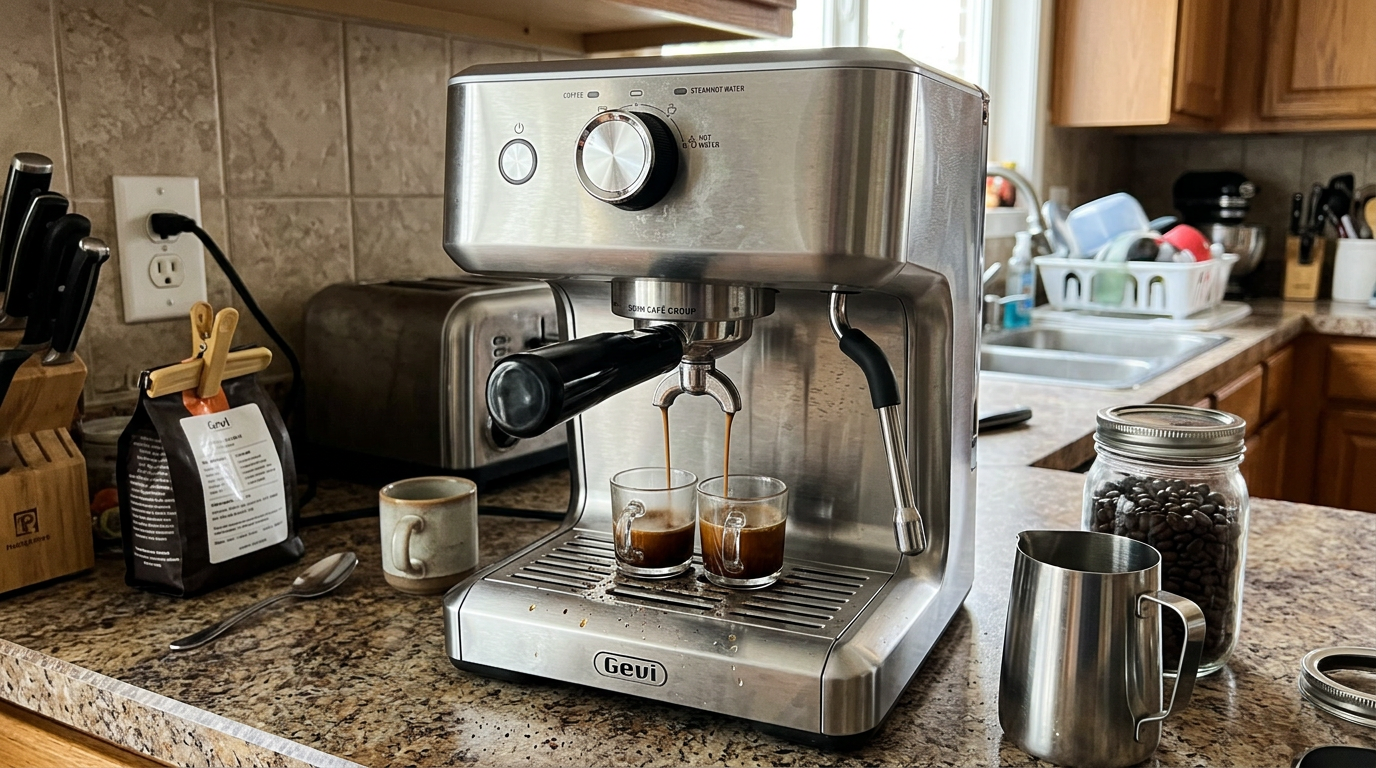
The Gevi’s gauge and shot timer make good shots repeatable.
Which one is right for you?
4 quick questionsAnswer four questions, and I’ll point you to the affordable machine that fits how you drink coffee.
Or find your morning below
One button for thick, sweet cold foam.
A pressure gauge shows when your shot is on track.
A 58 mm group and adjustable temperature.
A true Americano button that adds water separately.
Two buttons and nothing to learn.
Hands-free milk that stops at the right temperature.
What to look for in an affordable espresso machine
On a budget, every feature has to earn its place. These are the differences that changed my daily routine, in the order I’d check them.
A grinder, or a plan for one
Fresh grinding matters more than anything else. If a machine has no grinder, like the Gevi, budget for a good burr grinder alongside it; pre-ground coffee goes stale within days.
| Your situation | Best choice | My pick |
|---|---|---|
| No grinder, want simple | Machine with built-in grinder | Ninja Luxe Café Premier |
| No grinder, want to learn | Semi-automatic with grinder | Breville Barista Express |
| Already own a good grinder | Machine without grinder | Gevi 58mm Commercial |
| Want one touch | Super-automatic | De’Longhi Magnifica Start |
| Want the simplest | Basic super-automatic | Philips 1200 |
Pressure ratings
Ignore big pressure numbers on the box. Espresso brews at around 9 bar, and every pick here reaches it; a 15 or 20 bar rating describes the pump’s maximum, not the brewing pressure.
Our tip: Look for a pressure gauge or a stated brewing pressure, not a pump rating, because only brewing pressure affects the shot.
Milk system
A real steam wand makes the best milk with practice. A hands-free frother like the Ninja’s makes very good milk with no skill.
Simple frothers that pull air in for you are easy but make airy, bubbly foam. They’re fine for cappuccinos, less so for flat whites.
Temperature control
PID✕PID temperature controla digital controller that holds brewing water at a set temperature, usually within a degree or two. Stable temperature means consistent shots. temperature control keeps brewing water stable, which means consistent shots. The Gevi lets you adjust it; the others manage it for you.Build and size
Affordable machines use more plastic, but the important parts should be metal: the portafilter, the group and the steam wand. Check that the machine fits under your cabinets with the hopper fitted.
What you give up on a budget
This is what spending more added in my tests, and whether it changed the coffee.
| Feature | On my affordable picks | On premium machines | Does it change the coffee? |
|---|---|---|---|
| Espresso | 7.5 to 8.8 | 8.7 to 9.2 | Small difference at the top |
| Grinder | 12–25 settings | 30–45 settings | Yes, for light roasts |
| Milk | Wands and simple frothers | Automatic, temperature-controlled | Yes, for convenience |
| Drinks | 2 to a handful | Dozens | No |
| Screens | Buttons and dials | Touchscreens | No |
| Profiles | None | Several | No |
The pattern is clear. An affordable machine gives up convenience and variety, not espresso quality.
If you’d use automatic milk and a big menu every day, a premium machine is worth it. If not, my picks make the same core drink for far less.
Affordable espresso machine vs a capsule machine
Capsule machines are the other common choice at this level. This is how they compared with my picks.
| Affordable espresso machine | Capsule machine | |
|---|---|---|
| Fresh-ground coffee | Yes, with a grinder | No |
| Coffee choice | Any whole bean | The brand’s capsule range |
| Espresso quality | Good to excellent | Decent and consistent |
| Milk drinks | Steam wand or frother | Usually a separate frother |
| Running cost per cup | Low, beans | Higher, capsules |
| Waste | Compostable grounds | Used capsules |
| Skill needed | None to a lot | None |
A capsule machine is quicker to learn and very consistent. But every cup costs more, the coffee is never fresh-ground, and the waste adds up.
One double shot a day, about 18 grams of coffee each.
For anyone who drinks espresso daily, an affordable machine with a grinder pays off quickly and tastes noticeably fresher.
How to get café results from an affordable machine
The gap between a good and a great drink on an affordable machine is mostly technique and beans. These five habits made the biggest difference in my testing.
- Buy beans with a roast date
Use them within four weeks of roasting. Supermarket beans with only a best-before date are usually months old.
- Preheat everything
Run hot water through the portafilter and into your cup first. A cold cup steals heat from a short espresso.
- Weigh one shot a day
A cheap scale shows whether your dose and yield are consistent. Aim for about double the coffee weight in the cup.
- Steam cold milk in a cold jug
It gives you more time to texture the milk before it gets too hot.
- Clean as you go
A quick wipe of the wand and a flush of the group head keeps flavors clean.
What changed the taste most in my tests, ranked by impact.
My go-to recipe on any of these machines
For a double espresso, I start with 18 grams of medium-dark beans and aim for about 36 grams in the cup in 25 to 30 seconds. On the one-touch machines, I set the strongest aroma and a small cup size.
If the shot tastes sour, I grind finer. If it tastes bitter or harsh, I grind coarser, and I change only one thing at a time.
Our tip: Change one setting at a time and taste after two shots, so you know exactly what made the difference.
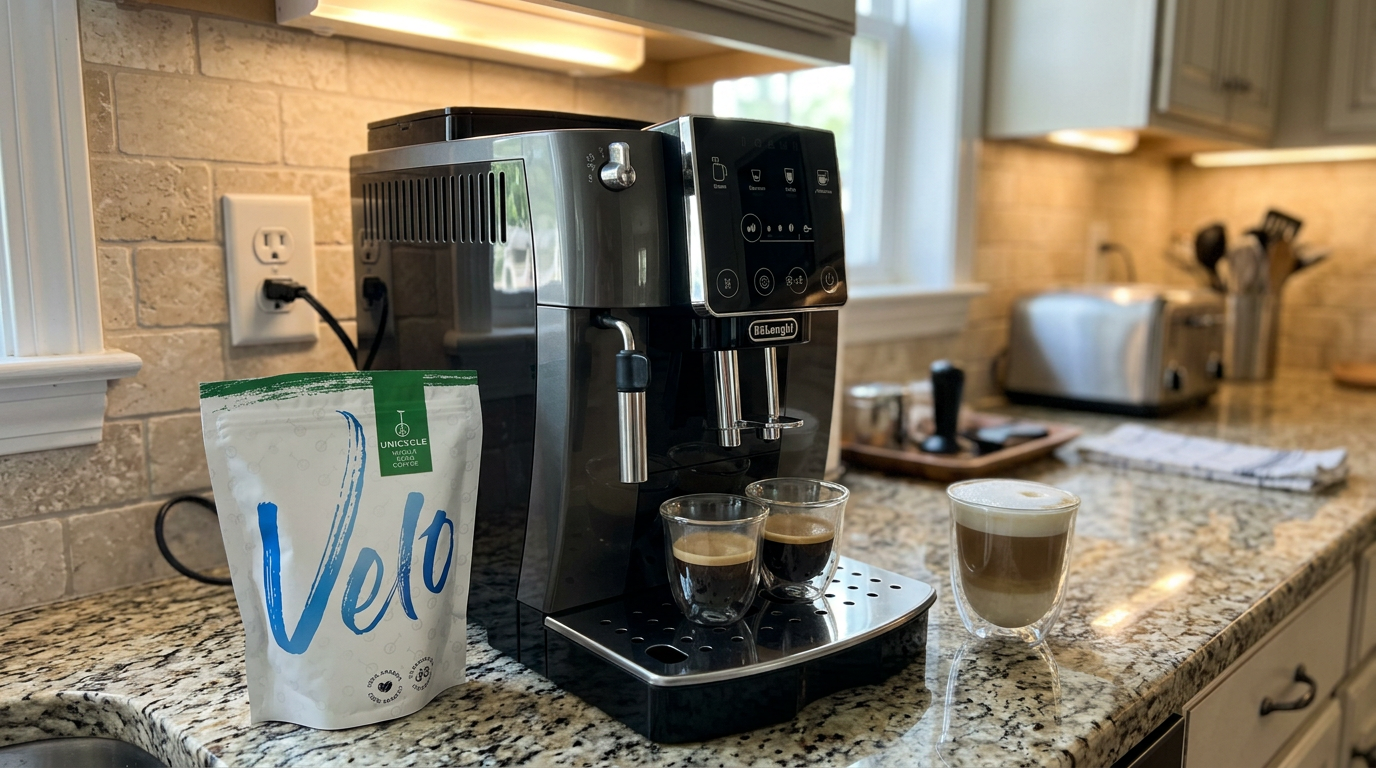
On one-touch machines, the strongest setting and a small cup size give the fullest espresso.
Maintenance and running costs
An affordable machine stays cheap to own with a few simple habits.
- Use filtered or soft water
Limescale is the main reason budget machines fail early. A filter or bottled soft water helps a lot.
- Purge and wipe the steam wand
Wipe it right after use and purge for a second, so milk can’t dry inside.
- Rinse removable parts daily
Drip trays, grounds bins and frother parts rinse in the sink in a minute.
- Clean the grinder weekly
Brush out the chute so old grounds don’t make fresh beans taste stale.
- Descale on schedule
Follow the machine’s reminder or the manual’s interval for your water hardness.
| Consumable | Which picks | How often |
|---|---|---|
| Water filter | All except the Gevi | Every 2–3 months |
| Descaler | All five | Every 1–3 months, by water hardness |
| Cleaning tablets | Barista Express, Ninja | When prompted |
| Steam wand pin | All with wands | As needed |
Our tip: Buy descaler and filters in bulk, because they’re most of an affordable machine’s running cost.
Common mistakes to avoid
These are the mistakes I see most with affordable machines.
| Mistake | What happens | Better habit |
|---|---|---|
| Pairing a good machine with pre-ground coffee | Flat, sour shots | Use fresh-ground beans |
| Believing the pump pressure rating | Wrong expectations | Look at brewing pressure |
| Using a blade grinder | Uneven extraction | Use a burr grinder |
| Skipping descaling | Weak steam and failures | Descale on schedule |
| Steaming milk too hot | Flat, cooked taste | Stop around 60°C |
| Oily dark beans | Clogged grinders | Medium or medium-dark |
Other affordable machines I tested
These all made decent coffee. Each one was beaten by a pick that does the same job better.
If you can stretch a little, my guide to the best espresso machines with a built-in grinder covers the next step up.
I also tested several very low-cost steam machines that brew at around 3.5 bar. They make strong coffee, but not true espresso, so none came close to my picks.
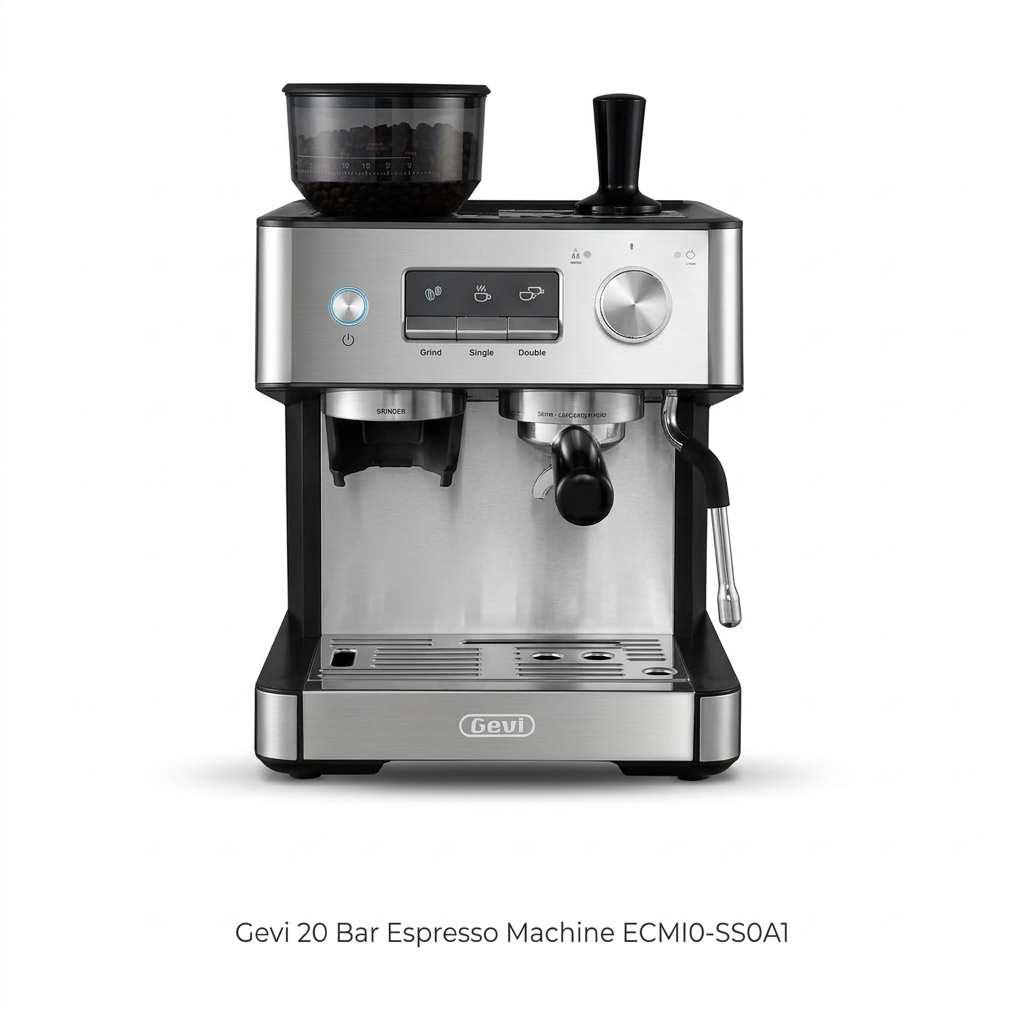
A 30-setting grinder and a 58 mm portafilter. Good value, though the grinder was the weak link.
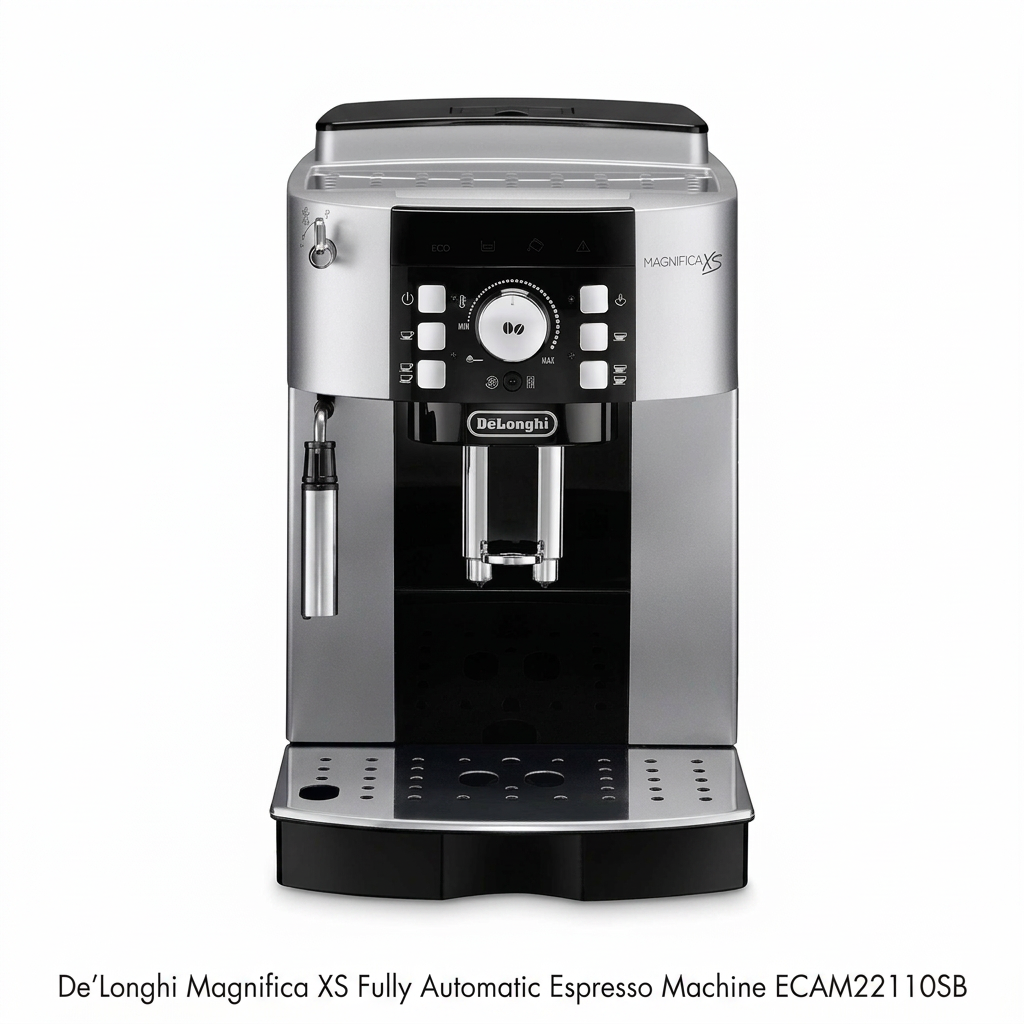
The Magnifica Start’s simpler sibling with a classic steam wand. Big-machine espresso in a slim body.
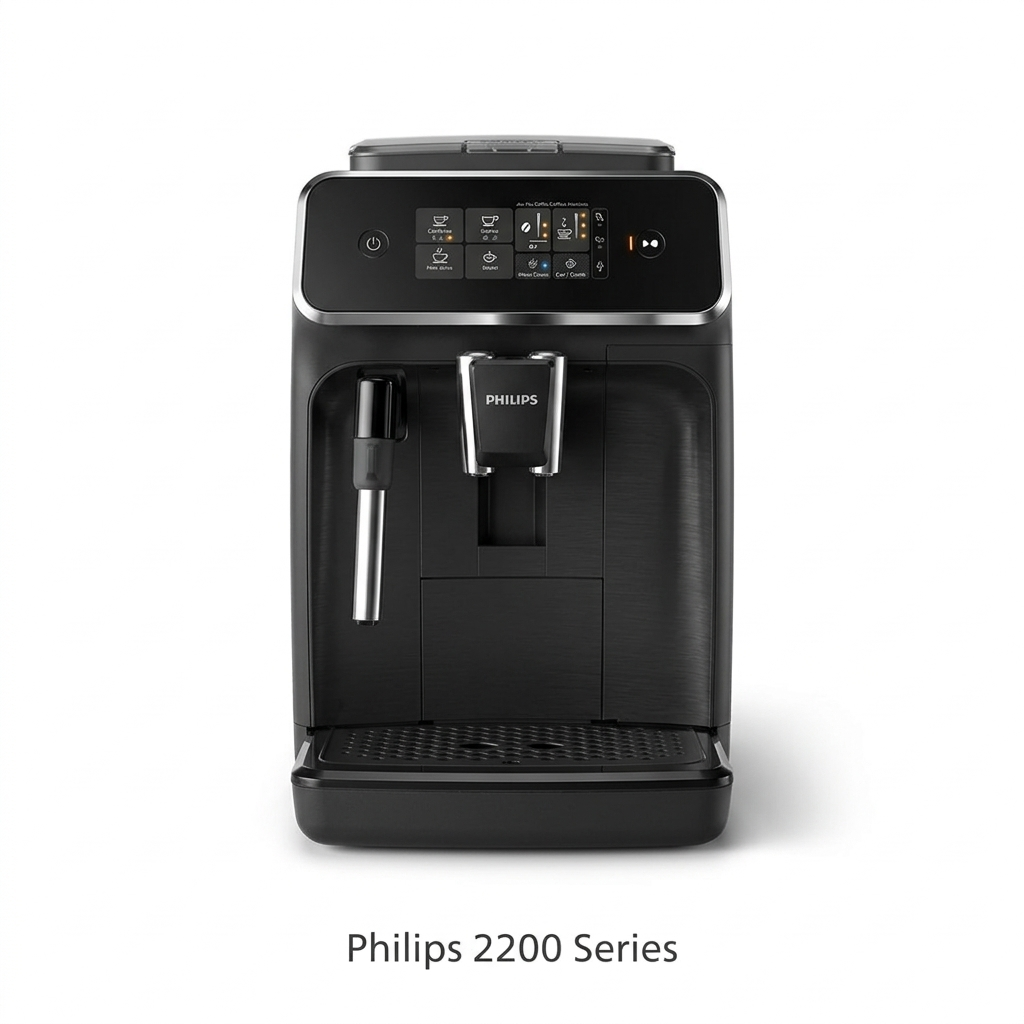
A touch-panel machine whose frother hides a real steam tip. A step up from the 1200.
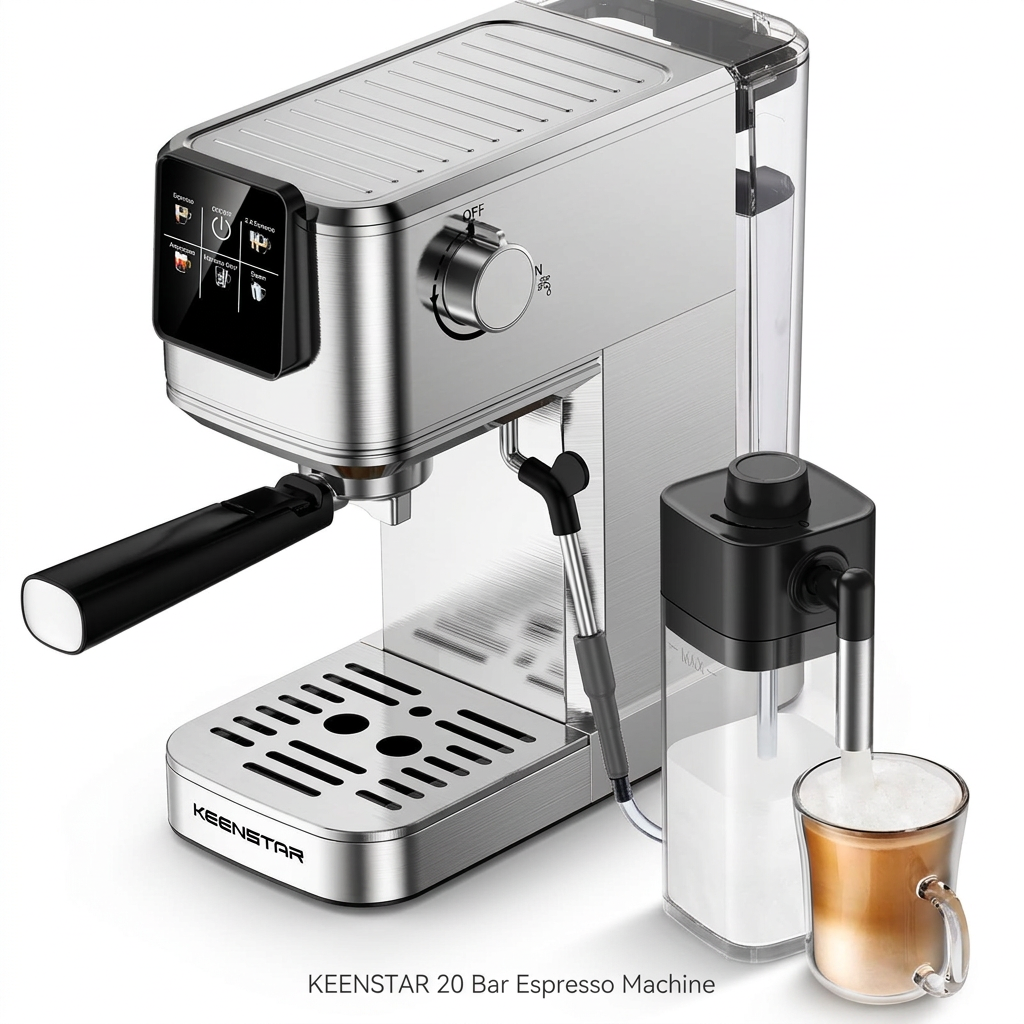
A 20 bar machine with a cold brew mode. Fine for occasional lattes, weak espresso.
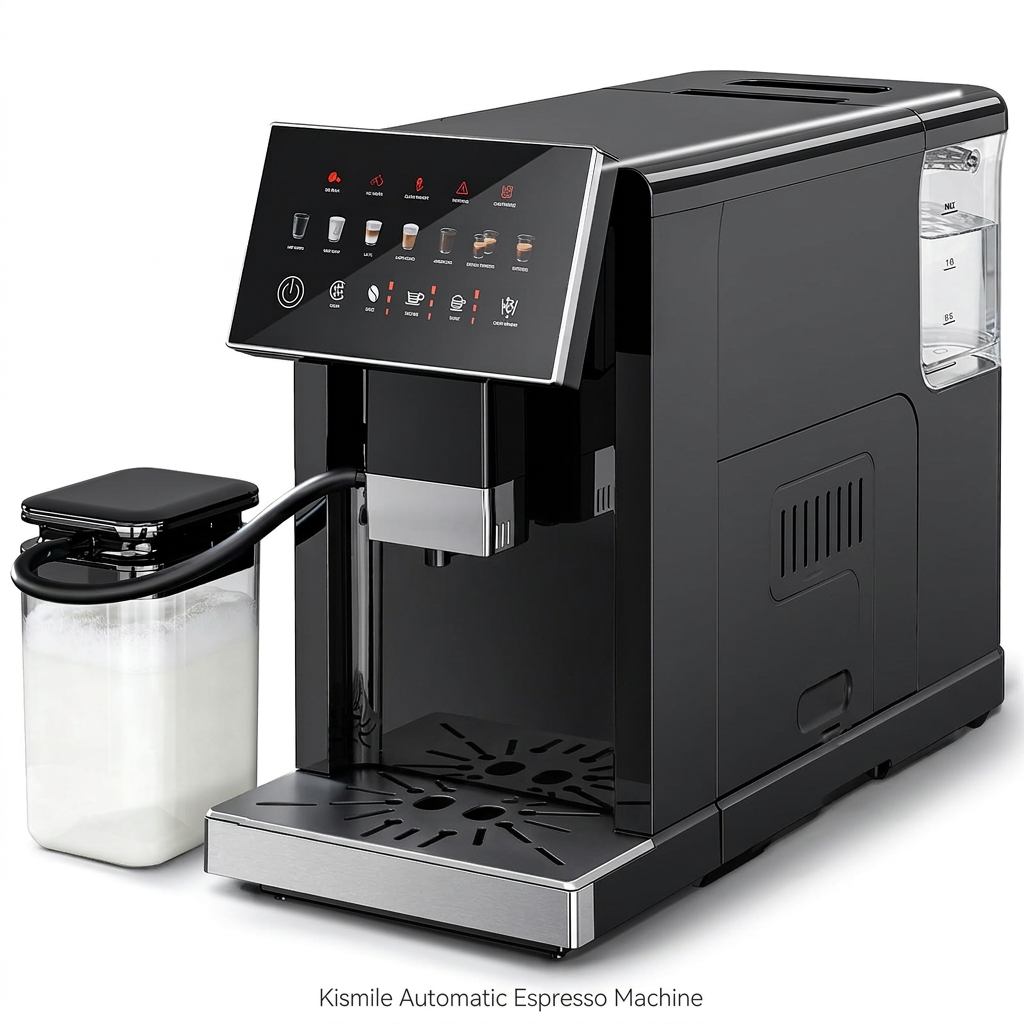
A slim, one-tap machine with 15 grind settings. Convenient, but espresso was thin.
Frequently asked questions
What is the best affordable espresso machine?
For most people, the Ninja Luxe Café Premier. It guides you through grinding, dosing and tamping, froths milk hands-free and makes iced drinks too.
Can an affordable espresso machine make real espresso?
Yes. Every pick reaches proper brewing pressure, and the best scored 8.4 to 8.8 for espresso in my tests, close to premium machines.
Do I need a separate grinder?
Only for the Gevi 58mm. The other four picks have a burr grinder built in.
Which affordable machine is best for beginners?
The Ninja Luxe Café Premier for real espresso, or the Philips 1200 for the simplest one-touch coffee.
Is the Breville Barista Express still worth it?
Yes, if you want to learn hands-on espresso. It makes sweet, syrupy shots once dialed in, but it takes practice.
Which affordable machine makes the best milk?
The Gevi 58mm, with practice. For hands-free milk, the Ninja Luxe Café Premier.
Is a 20 bar machine better than 15 bar?
No. Espresso brews at around 9 bar. Higher pump ratings don’t make better espresso.
Which one makes the best Americano?
The De’Longhi Magnifica Start, with a true Americano button that adds hot water separately.
How long do affordable espresso machines last?
With descaling and cleaning, typically 4 to 8 years. Hard water without a filter shortens that a lot.
Can I make iced coffee?
The Ninja Luxe Café Premier makes cold brew and cold foam. With the others, brew espresso over ice.
For most people, my pick is the Ninja Luxe Café Premier. It guides you to good espresso from day one, froths hot and cold milk hands-free and adds drip coffee and cold brew.
Choose the Breville Barista Express to learn the craft, the Gevi 58mm if you own a good grinder, the Magnifica Start for one-touch espresso and Americanos, or the Philips 1200 for the simplest routine.
Whichever you choose, buy fresh beans, use filtered water and descale on schedule.
Kitchen & coffee tester
Michael spent six years as a line cook in restaurants in Chicago and New York, and he has tested kitchen appliances for HouseholdMe since 2018, from air fryers to coffee makers. He holds an SCA certificate in barista skills and used 21 machines as his everyday coffee maker, 4 weeks each, for this guide.
- Four weeks of hands-on testing of each of 21 affordable espresso machines by HouseholdMe
- HouseholdMe reviews of the Ninja Luxe Café Premier, Breville Barista Express, Gevi 58mm Commercial, De’Longhi Magnifica Start and Philips 1200
- Manufacturer specifications and owner documentation
- National Coffee Data Trends survey, 2025
- Buying guide published, based on hands-on testing of 21 affordable espresso machines.