Philips 2200 vs De’Longhi Magnifica XS: budget classics compared
These are two of the longest-running budget bean-to-cup machines, and they look like twins on paper: same width, same tank, a manual steam wand and a removable brew group you rinse under the tap. In the cup, they are not. The Philips 2200 keeps everything simple with a touch panel, an AquaClean filter in the box and a frother that strips down to a real steam tip, while the De’Longhi Magnifica XS uses De’Longhi’s big-machine brew unit for a much fuller espresso. I used both every day for four weeks each and weighed, timed and measured the difference.
We choose products independently. We may earn a commission through links on this page; your price stays the same. Affiliate policy
Jargon helpNew to espresso? Tap any dotted term to see what it means.
In this comparison
If espresso is your drink, buy the De’Longhi Magnifica XS. It shares its brew unit with De’Longhi’s far pricier machines, and its shots had a dense crema and a round, chocolatey body that the Philips couldn’t match. If you want the easiest machine to learn, an AquaClean filter in the box and a steam tip that can pour latte art, the Philips 2200 is the friendlier choice, just use its smallest cup size, because its 6- to 7-gram dose makes a lighter, lungo-style shot.
The two machines
Specs checked November 14, 2026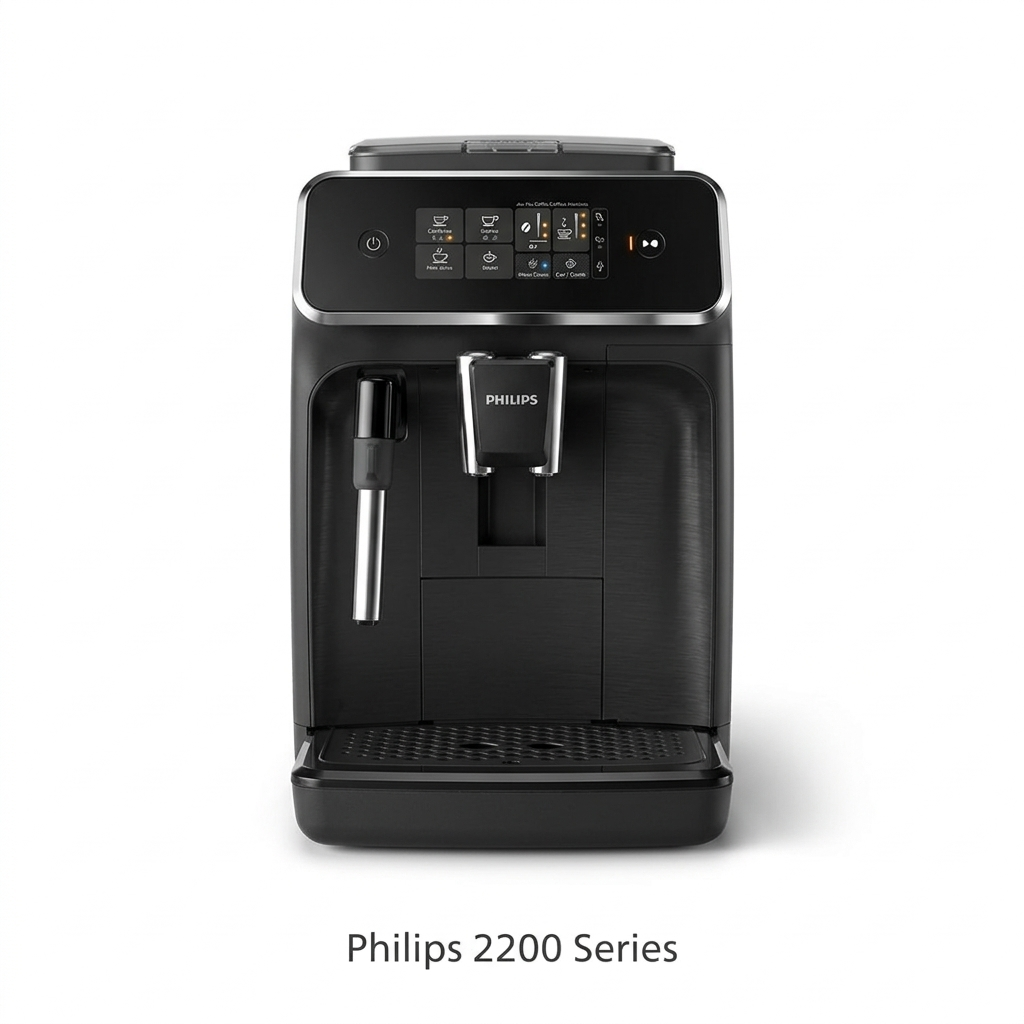
A simple touch panel, three strengths and sizes, an AquaClean filter in the box and a frother sleeve that pulls off to reveal a single-hole steam tip.
Check price on Amazon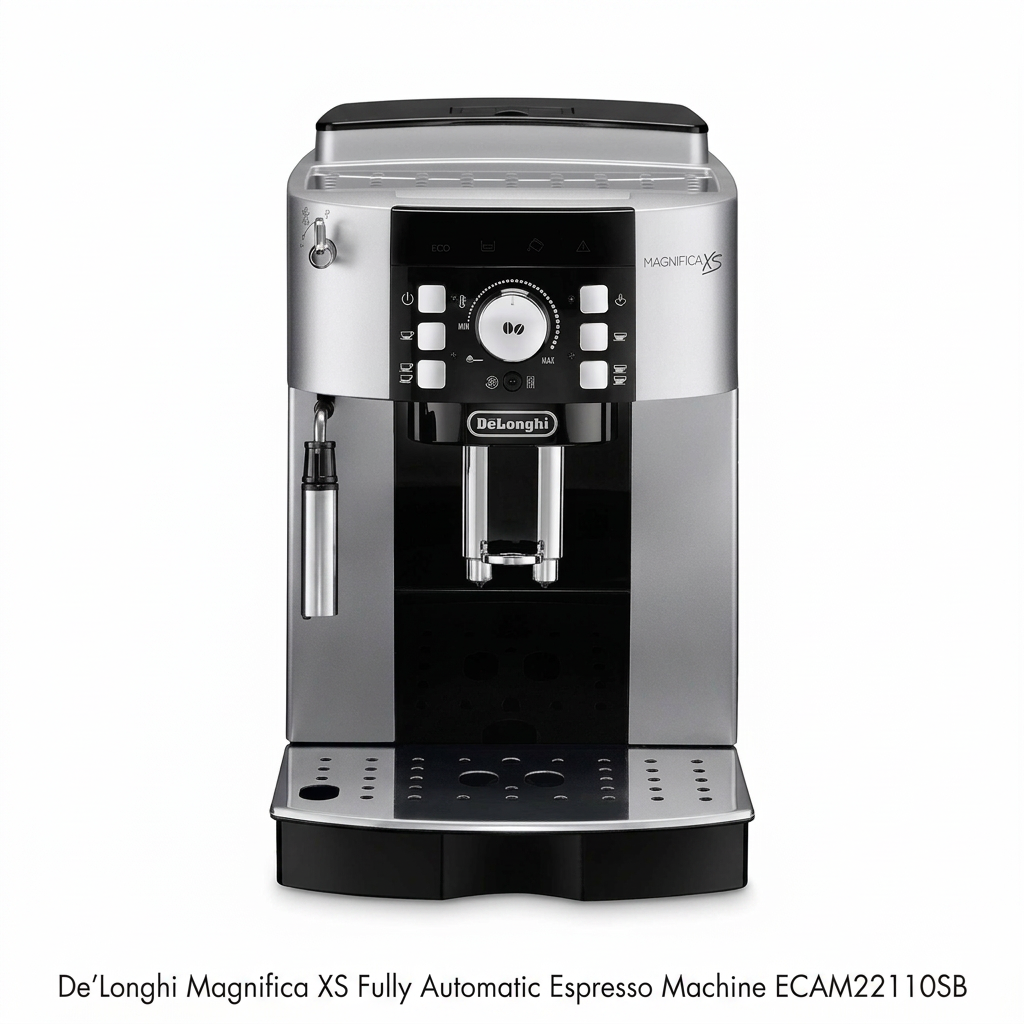
De’Longhi’s shared brew unit, a rotary strength dial, a Panarello wand and a brew unit you rinse in the sink, in a long-proven design.
Reveal Today’s DealPhilips 2200 vs De’Longhi Magnifica XS at a glance
- Buy the Magnifica XS if straight espresso and strong milk drinks are what you want.
- Buy the Philips 2200 if you want simple touch controls, a filter in the box and a steam tip for latte art.
- The difference in the cup comes from the dose: the Philips grinds about 6 to 7 grams, which makes a lungo-style shot.
- Both clean the same way: no tablets, a brew group you rinse under the tap and a wand you purge and wipe.
Head to head
The better result in each row is marked, based on my testing and the manufacturer specs. Rows where the two machines are effectively equal have no winner.
Keep in mind that the tally is not my verdict. For most people, the espresso row outweighs several of the others.
| Spec | Philips 2200 | De’Longhi Magnifica XS |
|---|---|---|
| Espressomy tasting | Smooth, light, lungo-style | Dense crema, round body ✓ Best |
| Dose | About 6–7 g, weighed | Larger, De’Longhi brew unit ✓ Best |
| Double | Two full brew cycles ✓ Best | Two spouts, one lighter cycle |
| Strength control | 3 levels | Rotary dial ✓ Best |
| Cup size control | 3 sizes | Programmable buttons |
| Controls | Touch panel ✓ Best | Buttons, dial, lights |
| Warnings | Clear touch-panel icons ✓ Best | Blinking light patterns |
| Steam wand | Sleeve off reveals a single-hole tip | Panarello, sleeve slides off |
| Latte artmy progress | Clean hearts by week 3 ✓ Best | Hearts by week 4 |
| Water filter | AquaClean included ✓ Best | Filter supported |
| Brew group | Removable, rinse | Removable, rinse |
| Width | 9.7 in | 9.4 in ✓ Best |
| Weight | About 16.5 lb ✓ Best | About 20 lb |
| Rows won | 6 | 4 |
Philips 2200 vs De’Longhi Magnifica XS pros and cons
Philips 2200
- Steam tip can make silky microfoam for latte art
- Simple touch panel with three strengths and sizes
- AquaClean filter included and brew group comes out
- Small dose makes espresso closer to a lungo
- Only two coffee drinks on the menu
- Steaming takes practice for the best texture
De’Longhi Magnifica XS
- Rich espresso that matches much pricier machines
- Brew unit slides out and rinses clean, no tablets
- Slim, front-loading design with a big 60 oz tank
- Milk frothing is manual and takes practice
- Warning lights are cryptic without the manual
- Grinder is loud on every drink
Who should buy which machine?
- Beginners who want to learn latte art
- People who like smooth Americanos and simple controls
- Buyers who want a filter in the box
- Straight espresso drinkers
- Anyone who wants stronger milk drinks
- Buyers who value a proven, repairable design
Design, size and build
Side by side, these are two of the narrowest bean-to-cup machines you can buy.
The Philips 2200 measures about 9.7 × 14.6 × 17 inches and weighs about 16.5 pounds. It is matte black plastic with a flat touch panel and rounded edges.
The De’Longhi Magnifica XS measures about 9.4 × 13.8 × 17 inches and weighs about 20 pounds. Mine was silver and black, with a brushed-look panel around its buttons and dial.
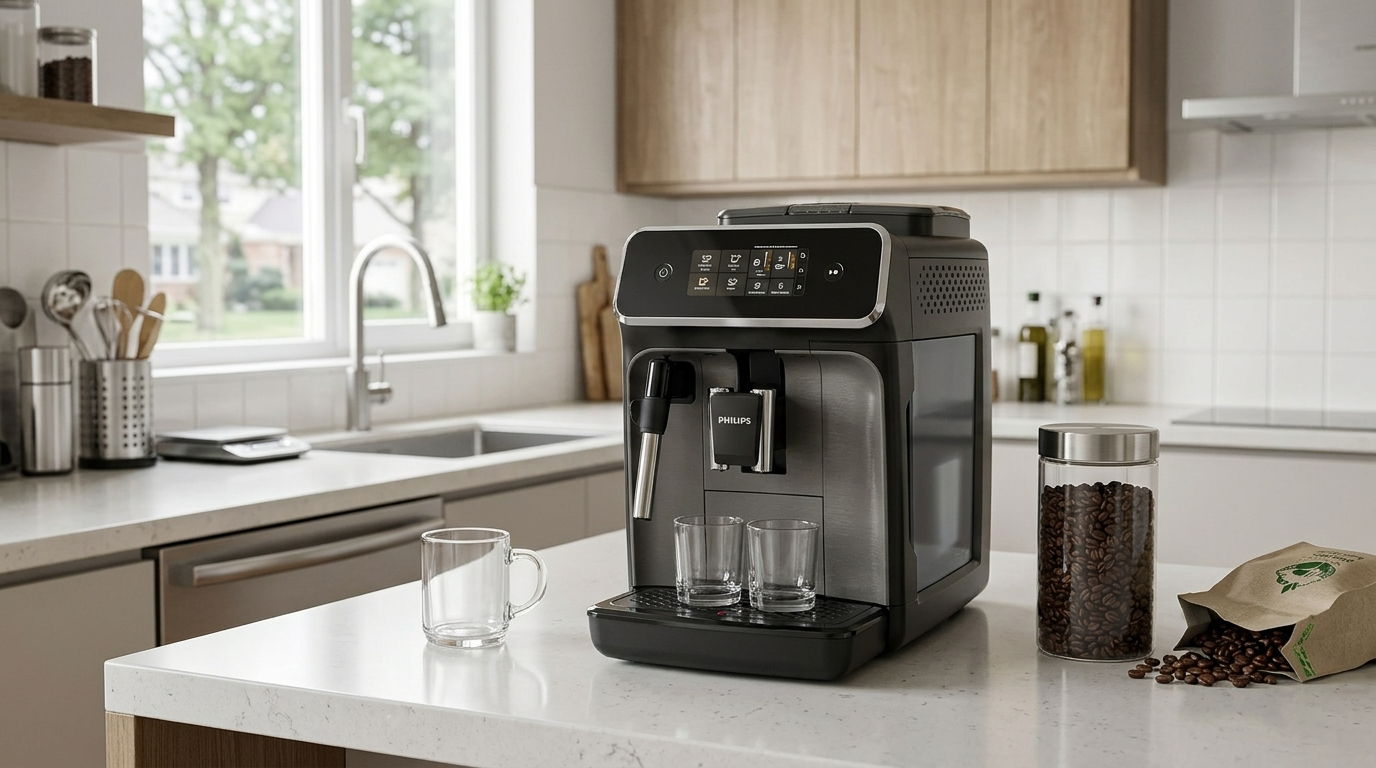
The Philips 2200 is light, compact and blends into most kitchens.
Their layouts differ in one useful way. On the XS, the water tank slides straight out from the front, so you never move the machine. On the Philips, the tank slides out from the side.
On both, the drip tray and grounds drawer pull out from the front, and the spout adjusts to fit most mugs, up to about 5.5 to 5.7 inches.
Height under your cabinets
Both fit under standard wall cabinets; slide them forward to fill the bean hopper.
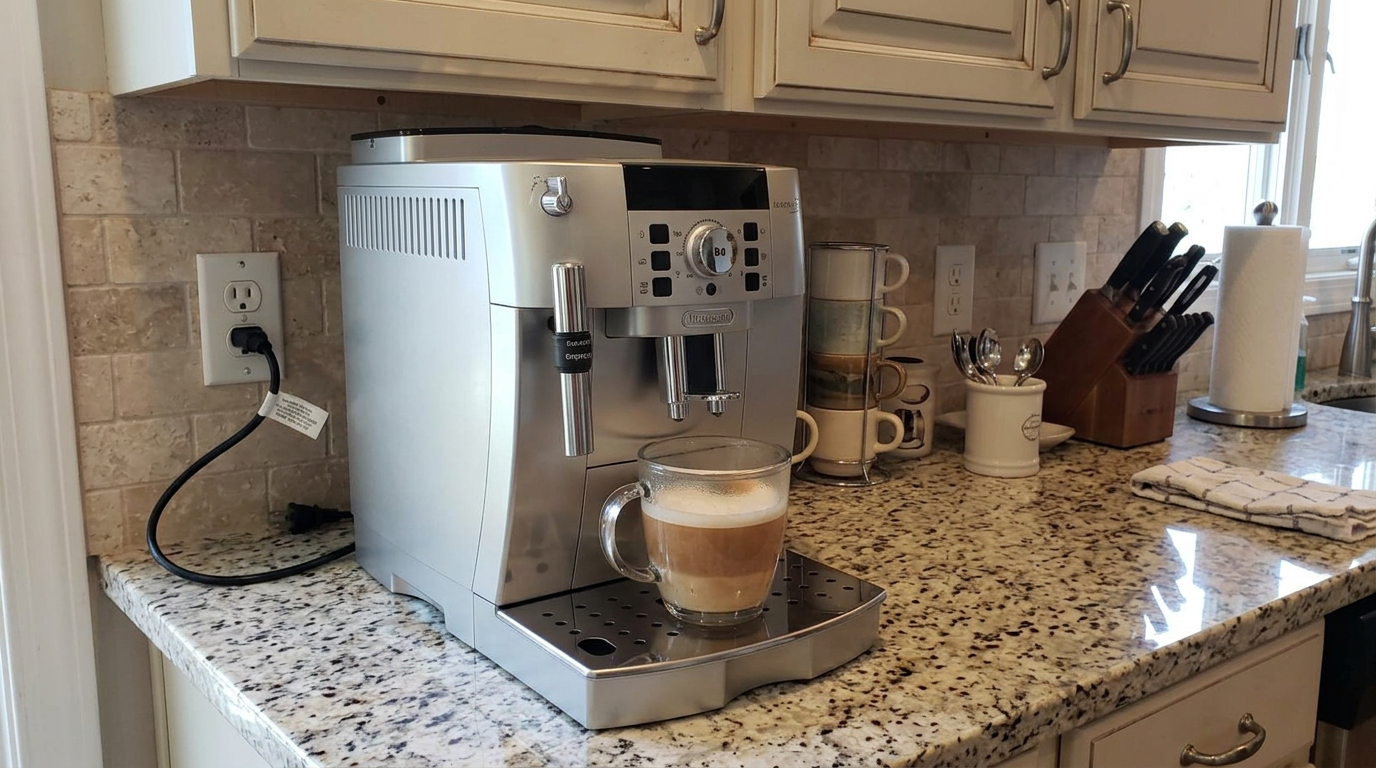
The XS’s front-loading tank means it can stay pushed against the wall.
Our tip: Put a cup under the spout every time you switch either machine on, because both run a short rinse through the coffee outlet.
Setup and the first week
The Philips 2200 came with more in the box: an AquaClean filter, a scoop for pre-ground coffee, a tube of brew group grease and a water hardness strip.
Setting hardness meant holding the strength button for three seconds with the machine off, tapping the right level and confirming. It isn’t a taste setting; it tells the machine how often to remind you to descale.
The De’Longhi Magnifica XS took about 15 minutes too. You rinse the tank, fit a filter if you have one, set hardness with the strip and run water through the circuit.
On both, the first three to five drinks were weaker while the grinder settled. I didn’t change anything until I had pulled five espressos.
| Setup step | Philips 2200 | De’Longhi Magnifica XS |
|---|---|---|
| Water filter | AquaClean, included | Supported, buy separately |
| Water hardness | Hold strength button, tap level | Button sequence from the manual |
| Extras in the box | Scoop, grease, strip, filter | Scoop, strip |
| First change I made | Smallest cup size, strongest | Grind 4, dial near max |
| Time to first good drink | About 5 drinks | About 5 drinks |
Our tip: Prime the AquaClean filter before your first coffee on the Philips, so even the very first cup uses filtered water.
Controls and settings
The Philips 2200’s touch panel is simple: espresso, coffee, hot water, steam, a strength button, a cup-size button and start. Each strength and size has three levels shown as small bars.
The panel doesn’t show volumes, so I measured them. The espresso came out at about 1.01, 1.35 and 2.20 fluid ounces on the small, medium and large sizes.
The De’Longhi Magnifica XS has buttons for espresso, long coffee, two cups, steam and power, plus a rotary strength dial in the middle and a row of warning lights.
Philips 2200 espresso volume by cup size
Average of several measured espressos with fresh medium-dark beans.
Warnings are where the Philips wins clearly. Its icons are easy to read, while some XS warnings blink in patterns that only made sense with the manual open.
| Feature | Philips 2200 | De’Longhi Magnifica XS |
|---|---|---|
| Controls | Touch panel | Buttons and dial |
| Drinks | Espresso, coffee, hot water, steam | Espresso, long coffee, two cups, steam |
| Strength | 3 levels | Rotary dial, mild to extra strong |
| Cup size | 3 levels | Programmable per button |
| Temperature | 3 settings | Settings sequence |
| Warnings | Clear icons | Blinking lights |
| Profiles | None | None |
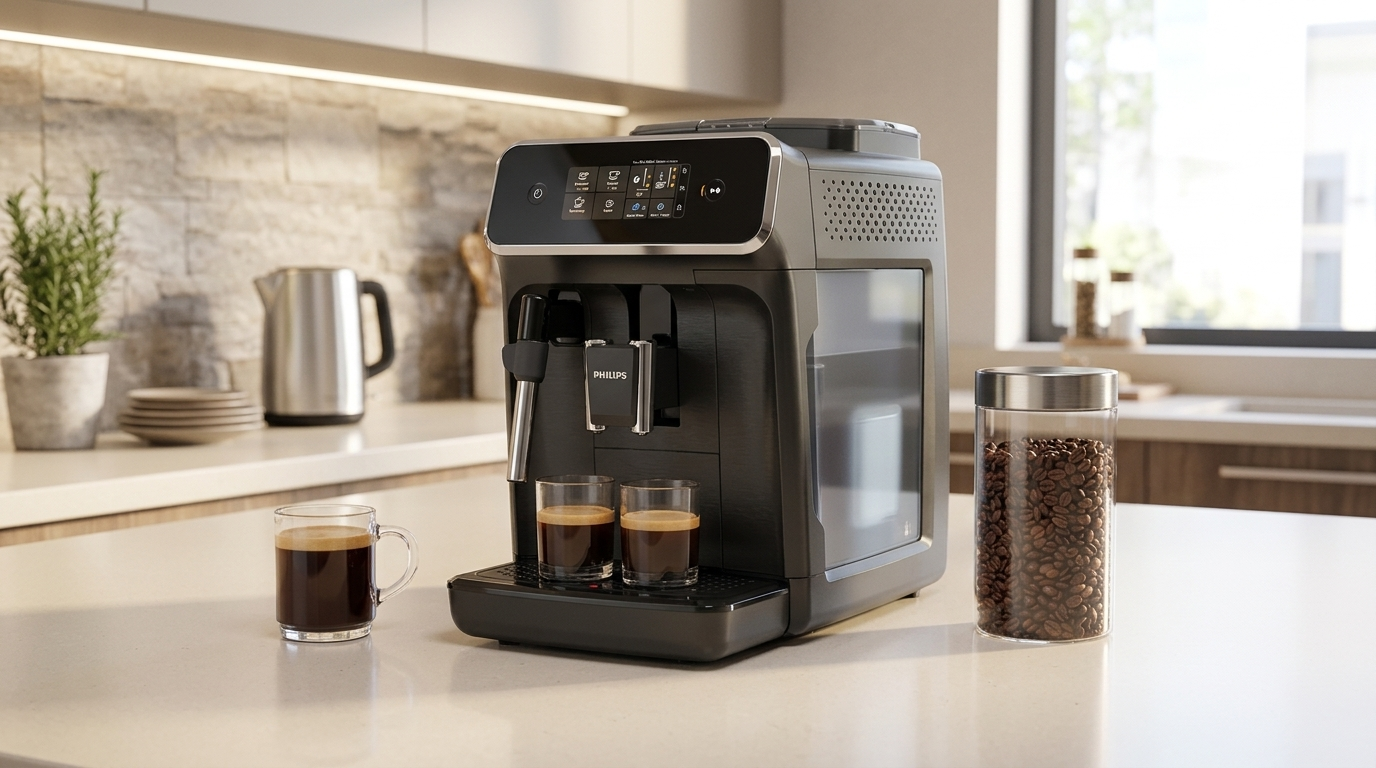
The Philips 2200’s touch panel is the easier of the two to learn.
Our tip: Take a photo of the warning-light page in the XS manual, because some blinking patterns are hard to decode without it.
Grinder and dose
This is the single most important difference between these two machines. The Philips 2200 grinds with 100% ceramic flat burrs with 12 settings, and I weighed the dose by stopping the machine right after grinding.
Even on the strongest setting, it used about 7 grams of coffee. A typical café double uses about 14 to 18 grams.
The De’Longhi Magnifica XS grinds with steel conical burrs✕Conical burrsTwo cone-shaped grinding parts, one inside the other. Beans are crushed between them, and the gap between the burrs sets how fine the coffee is. and 13 settings, feeding the same brew unit De’Longhi uses in machines that cost two or three times as much. Its strength dial controls how much coffee goes in.
Philips 2200 coffee dose by strength
Each figure is the average of several weighed doses.
Brew ratio compared
Longer bars mean more water per gram of coffee, and a lighter cup.
In plain terms, the Philips espresso button makes something closer to a lungo✕LungoA “long” espresso made with more water than a normal shot, so it is lighter and larger, usually around a 1:3 to 1:4 ratio.. The XS has no such limit, and I set it to grind 4 with the dial near maximum for my best shots.
| Grinder detail | Philips 2200 | De’Longhi Magnifica XS |
|---|---|---|
| Burrs | Ceramic, flat | Steel, conical |
| Settings | 12 | 13 |
| Dose | About 6–7 g | Larger, set by the dial |
| Strength | 3 levels | Rotary dial |
| Bean hopper | 9.7 oz | About 8.8 oz |
| Pre-ground | Yes, one scoop | Yes, one scoop |
Our tip: Turn the grind knob only while the grinder is running on either machine, one click at a time, and judge the result two drinks later.
Espresso quality
With a medium-dark blend at grind 4 and the strength dial near maximum, the De’Longhi Magnifica XS made a dense, hazelnut-colored crema✕CremaThe golden, foamy layer on top of a fresh espresso. It forms when pressure pushes oils and gases out of the coffee. that held for a couple of minutes. The body was round and fairly heavy, with dark chocolate, toasted nuts and a little caramel.
On high strength and medium size, the Philips 2200’s shot weighed about 38 grams with a visible layer of crema. It tasted of dark chocolate with a little sweetness at the finish, pleasant and easy, but not thick or syrupy.
I measured the Philips espresso at about 154 to 158°F in the cup, a comfortable drinking temperature. The XS, set to its highest temperature with a warmed cup, was hot enough to sip slowly.
My espresso ratings
My scores out of 10 for body, crema and flavor.
The doubles work differently, too. The Philips double runs the whole grind-and-brew cycle twice, so each cup gets its own dose. The XS’s two-cup button splits one cycle into two lighter shots, so I made two singles back to back when I wanted strength.
| What you taste | Likely cause | Fix on Philips 2200 | Fix on Magnifica XS |
|---|---|---|---|
| Thin and watery | Too much water for the dose | Smallest cup size | Turn the dial up |
| Sour | Under-extraction✕Under-extractionWhen water does not pull enough flavor out of the coffee. The shot tastes sour, thin and watery. | One step finer | One step finer |
| Bitter finish | Volume too large | Drop one size | Shorten the button volume |
| Lukewarm | Cold cup or pipes | Warm the cup with hot water | Run hot water through the wand first |
Long coffee, Americano and hot water
The Philips 2200’s coffee button makes a coffee crema: a longer drink brewed under pressure with a crema layer. On medium size and high strength, I measured about 3.9 fluid ounces at about 162°F.
The De’Longhi Magnifica XS’s long coffee button pushes a larger volume through one puck. At a normal mug size, it was smooth and mild; pushed too far, the end of the pour tasted flat and slightly bitter.
For a big mug, I made Americanos on both: a double espresso topped with hot water. On the Philips, the double runs two doses, which made its Americano the better long drink of the two machines’ long coffee buttons.
My ratings out of 10 for flavor and balance in a mug.
Hot water
Both dispense hot water through the steam wand. On the Philips, I measured about 183°F at the top of the cup, fine for black and herbal tea and a little hot for delicate green tea.
| Use | Philips 2200 at ~183°F | Magnifica XS |
|---|---|---|
| Black tea | Yes, steep 3–5 min | Yes |
| Herbal tea | Yes | Yes |
| Green tea | A bit hot, let it stand | Let it stand |
| Americano | Yes | Yes |
| Warming cups | Fill, wait 20 s, empty | Same |
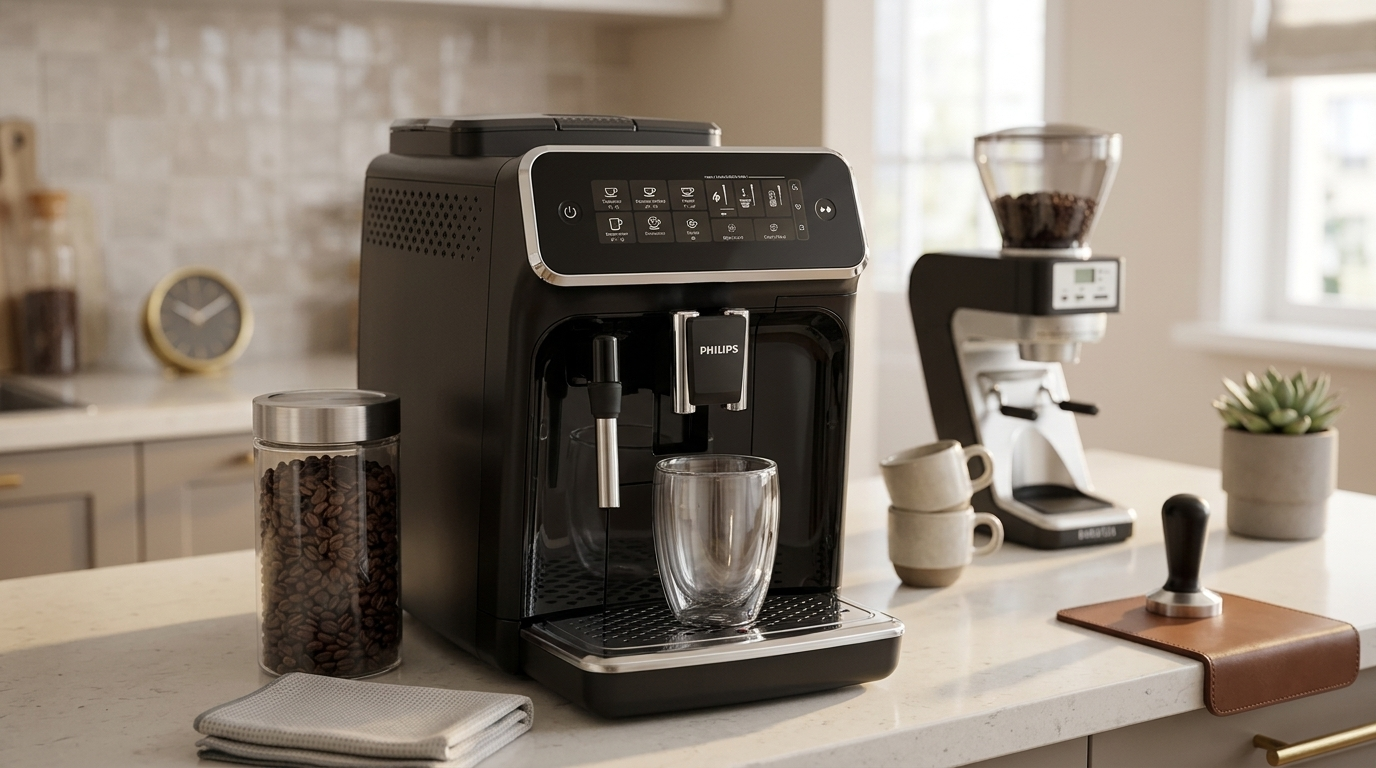
The Philips double runs two full brew cycles, which helps long drinks.
Our tip: Make big black coffees on either machine as a double espresso topped up with hot water, which tastes cleaner than stretching one brew.
Find Out the Price TodayMilk and the steam wands
Both machines leave milk to you, and both come with a Panarello✕Panarello wandA steam wand with a plastic sleeve that has a small air hole. As steam rushes through, the sleeve pulls in air automatically, so milk foams without special technique.-style sleeve that pulls in air automatically. With the sleeve on, both made a big, light cap of foam for a traditional cappuccino.
The best trick on the Philips 2200 is underneath the sleeve: a plain, single-hole steam tip like the one on a manual espresso machine. I held it near the side of the pitcher to start a whirlpool, let in air for two or three seconds, then sank it slightly and let the milk spin.
The milk came out glossy and silky and poured a decent heart. The De’Longhi Magnifica XS’s sleeve slides off too, and its bare tip made glossy flat-white milk by week three.
My latte art progress, bare tip
How my pours improved with daily practice on each machine.
The Philips felt slightly more forgiving with its single-hole tip, which is why I give it the edge for latte art. In milk drinks, though, the XS’s stronger espresso came through the milk far better.
| Milk detail | Philips 2200 | De’Longhi Magnifica XS |
|---|---|---|
| Wand | Sleeve plus single-hole tip | Panarello, sleeve slides off |
| Sleeve-on foam | Big, airy | Big, stiff |
| Bare-tip foam | Glossy microfoam | Glossy microfoam |
| Latte art | Hearts and tulips by week 4 | Hearts by week 4 |
| Coffee flavor in milk | Light, use the double | Strong and clear |
| Milk temperature | Your choice, 140–150°F ideal | Your choice, 140–150°F ideal |
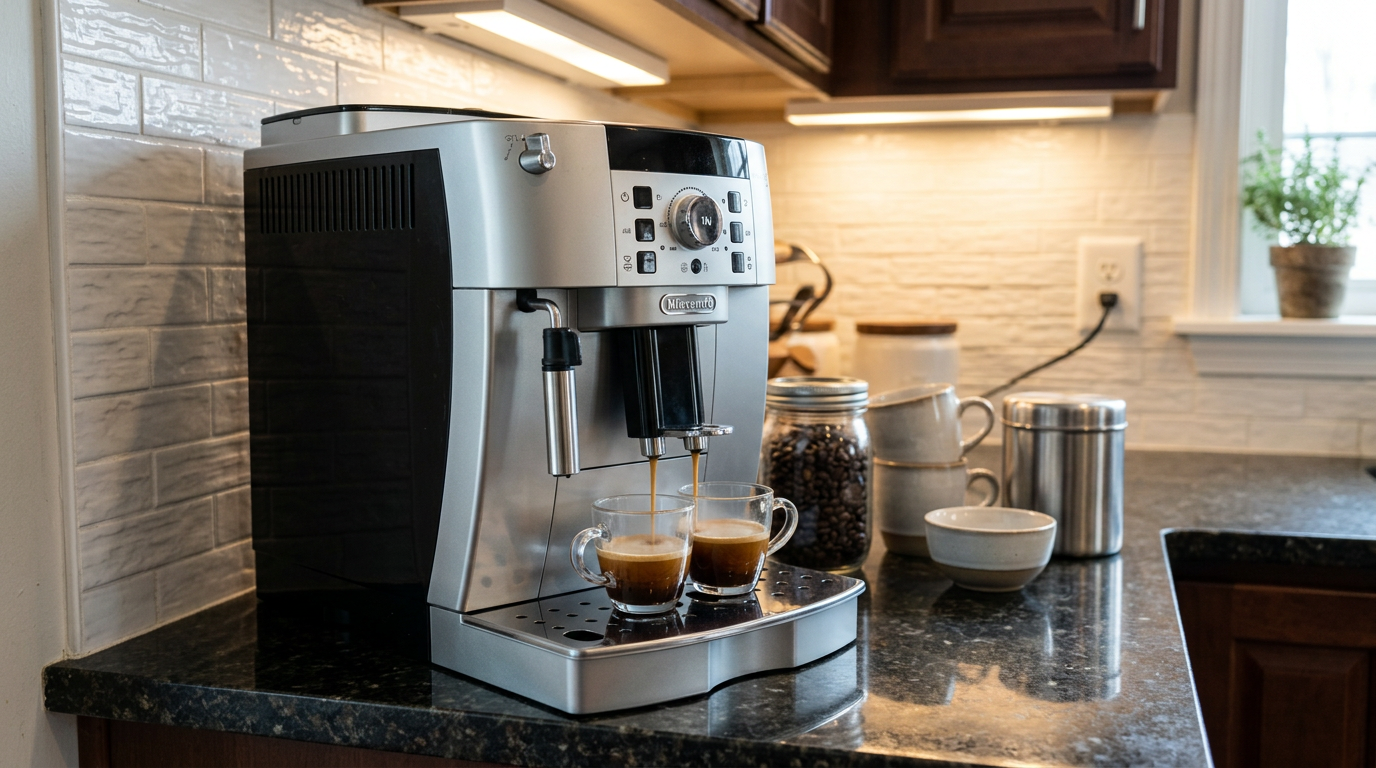
The XS’s espresso cut through milk far better than the Philips.
Our tip: Fill your steaming pitcher only up to the bottom of its spout, so the milk has room to spin and expand without spilling.
Cleaning and upkeep
Cleaning is close to identical. Both have a removable brew group✕Brew groupThe part that compresses the ground coffee, holds it while water passes through and then ejects the used puck. On both machines you can take it out and rinse it. that you take out and rinse under the tap, with no cleaning tablets and no soap.
On the Philips, you remove the tank, open the service flap and slide a lock to free the group. On the XS, it slides out from a side door.
Both rinse themselves at start-up, both need the steam wand purged and wiped after milk, and both need a thin coat of food-grade grease on the brew group rails every couple of months.
My daily hands-on cleaning time
My estimate of hands-on time per day.
| When | Philips 2200 | De’Longhi Magnifica XS |
|---|---|---|
| Every start-up | Rinse into a cup | Rinse into a cup |
| After steaming | Purge and wipe the tip | Purge and wipe the wand |
| Daily | Empty tray and grounds | Empty tray and grounds |
| Weekly | Rinse brew group, run 250 ml rinse cycle | Rinse brew unit, wash wand sleeve |
| Every 2 months | Grease the brew group | Grease every 4–6 months |
| Descaling | Up to 5,000 cups with AquaClean | When the light comes on |
The Philips drip tray is marked dishwasher-safe, which made weekly deep cleans easier. The XS has the long-term edge: owners regularly report seven to ten years of service, and spare parts are widely available.
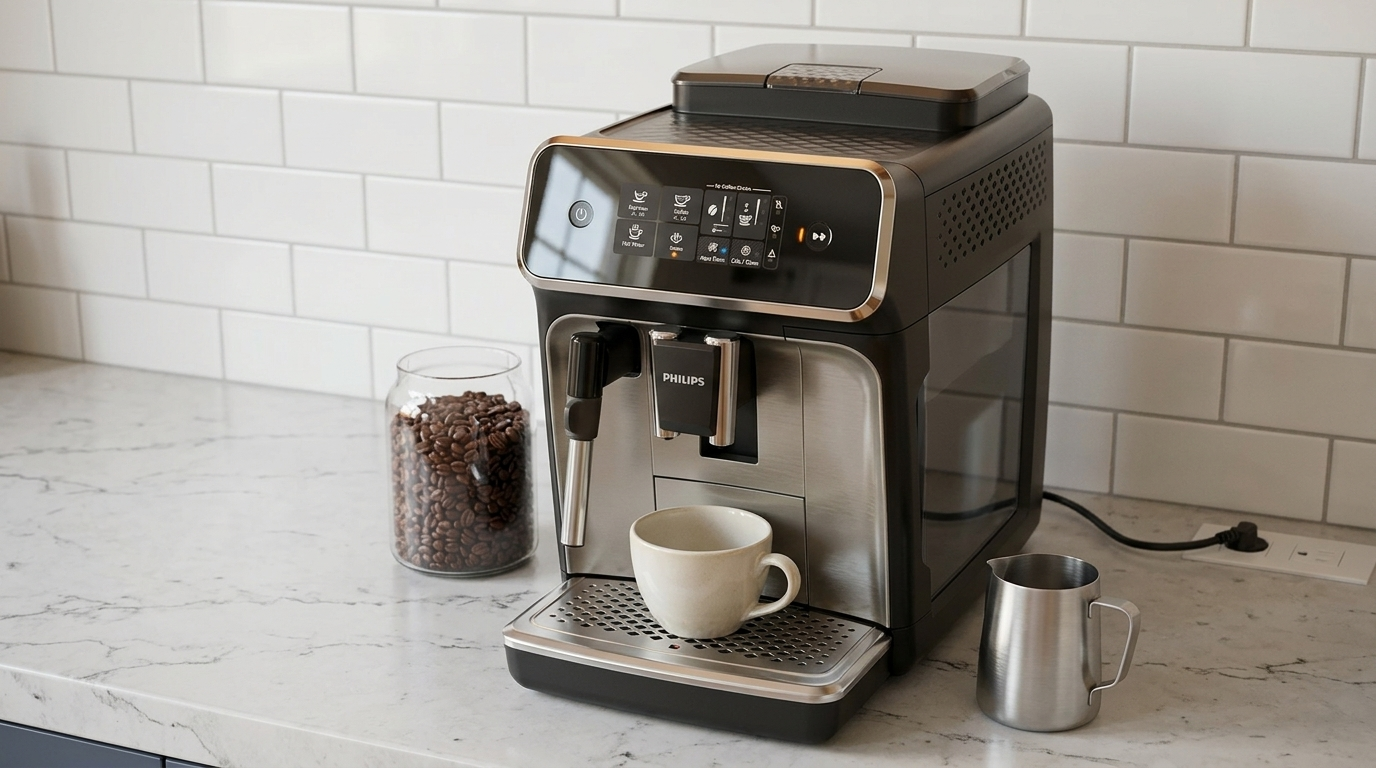
Both brew groups come out and rinse clean under the tap.
Our tip: Never wash either brew group with soap, because it strips the lubricant from the moving parts.
Noise and speed
Both grinders are loud for several seconds, and both steam wands hiss. The XS has no extra sound insulation, and its grinder burst was the sharper of the two.
Speed was similar. An espresso took well under a minute on both, and a flat white with the bare steam tip took about three minutes including the wipe and purge.
Timed after heat-up, including wiping the wand.
Water, beans and supplies
Because the Philips dose is small, your beans do a lot of the work. Fresh, recently roasted espresso beans made the biggest single improvement, and a blend with some Robusta gave more crema and caffeine for milk drinks.
The XS showed off good beans too, but its larger dose was more forgiving of an older bag.
| Bean type | Philips 2200 | De’Longhi Magnifica XS |
|---|---|---|
| Fresh medium-dark blend | Best, chocolate and sweet | Thick crema, grind 4 |
| Arabica-Robusta blend | More crema, cuts through milk | Bold, good in milk |
| Medium roast | Brighter, lighter | Sweeter, grind 3–4 |
| Light roast | Often sour | Grind 2–3, dial max |
| Oily or flavored | Avoid | Avoid |
Drinks per full 60 oz tank
Rough maths allowing for rinses.
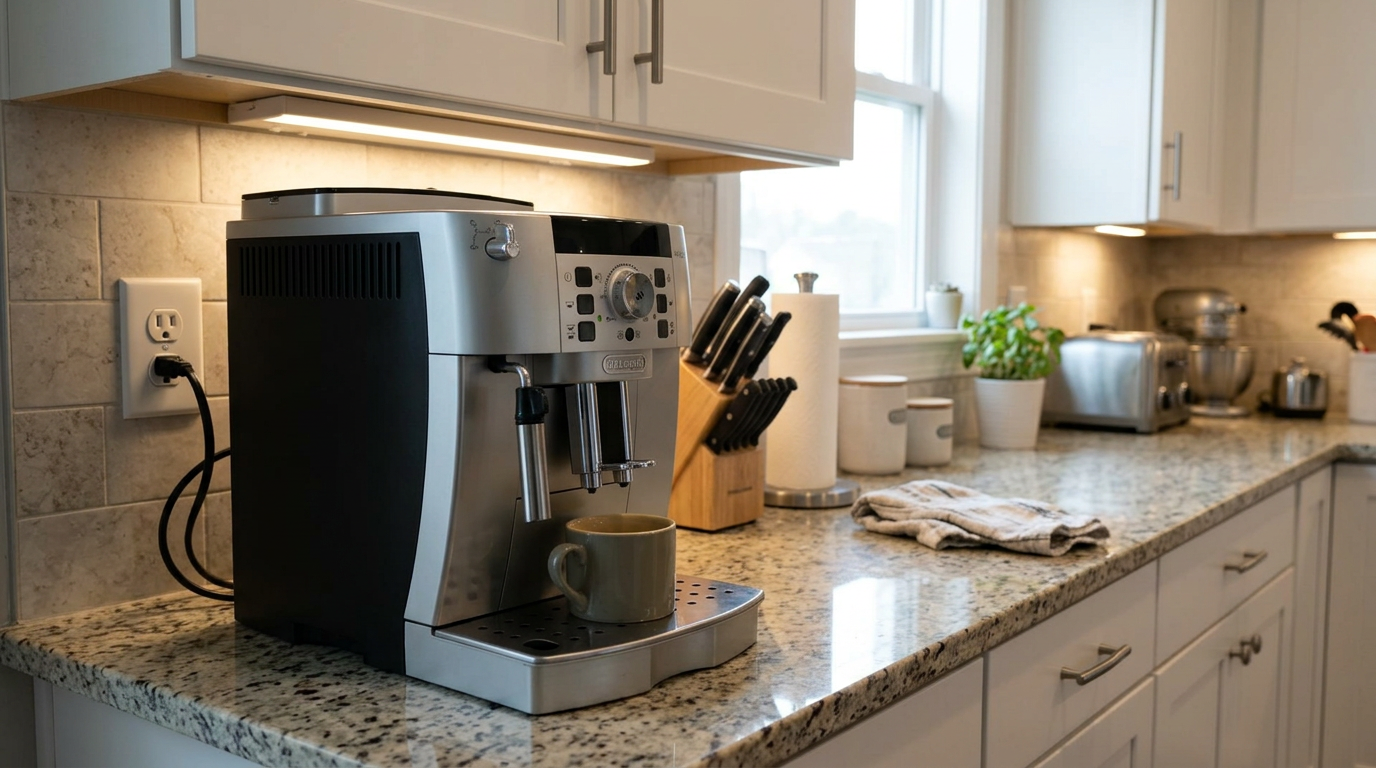
The XS’s larger dose is more forgiving of an older bag of beans.
Our tip: Buy beans with a roast date and finish them within a few weeks, because the Philips’ small dose depends on fresh coffee for flavor.
Four weeks with each, week by week
Week one on the Philips 2200 was about understanding the dose. Once I weighed it and saw how little coffee went in, I switched to the smallest cup size on the strongest setting and the espresso improved straight away.
Week one on the De’Longhi Magnifica XS was about the grinder. Moving from the middle of the range to setting 4 with the dial near maximum transformed the shot.
Weeks two and three were about milk on both. With the sleeves off, my foam went from stiff and dry to glossy and pourable, and the Philips’ single-hole tip got me to clean hearts a little sooner.
Week four was routine and maintenance: weekly brew group rinses, a grease of the rails and, on the Philips, my first AquaClean filter change.
| Week | Philips 2200 | De’Longhi Magnifica XS |
|---|---|---|
| 1 | Smallest size, strongest setting | Grind 4, dial near max |
| 2 | Sleeve on, softer foam | Sleeve on, shallower tip |
| 3 | Sleeve off, clean hearts | Sleeve off, glossy flat whites |
| 4 | Brew group rinse, filter change | Brew group rinse, grease |
My overall satisfaction by week
Our combined feeling about each machine, from our shared notes.
Our tip: Change one setting at a time on either machine and pull two drinks before judging, because the first cup after a change still holds coffee from the old setting.
Real-life scenarios
Specs only go so far. These are the situations where one machine clearly pulled ahead during my testing.
Dense crema and a round, chocolatey body. The Philips shot was pleasant but light.
The single-hole tip under the sleeve was the most forgiving way to learn, and I poured tulips by week four.
The XS’s fuller espresso cut through the milk. On the Philips, I needed the double to get close.
Clear touch icons and readable warnings. The XS’s blinking lights sent me to the manual.
The Philips double runs two full doses, then hot water from the wand made a clean, balanced mug.
The XS platform has a long track record and parts are everywhere.
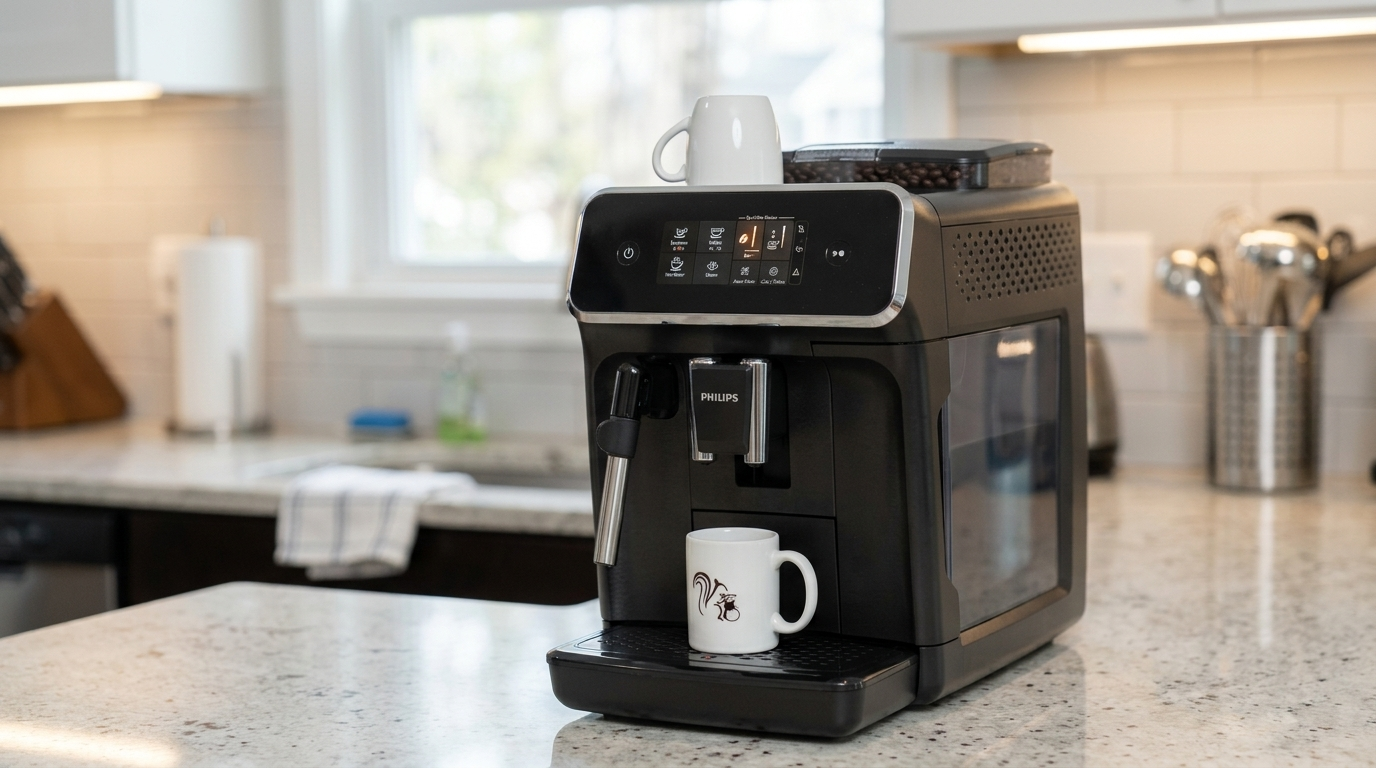
For learning milk steaming, the Philips 2200 was the friendlier teacher.
Long-term ownership
Both machines are built around simple, proven parts, which is a big part of their appeal at this price.
Neither has a milk carafe with electronics or tubes to wear out. Running costs come down to descaler, the odd filter and a tube of food-grade grease.
The De’Longhi Magnifica XS has the stronger history. It has been on sale for years, and replacement brew units, wand sleeves and seals are easy to find. The Philips 2200 uses Philips’ standard removable brew group, the same basic design as its pricier machines, and comes with a two-year limited warranty.
Our tip: Set your water hardness correctly on day one on both machines, because it decides when the descale reminder arrives.
My scorecard
These are my own scores out of 10. The first four come from my single reviews of each machine, and I added latte art and controls because they decide this matchup.
Philips 2200
De’Longhi Magnifica XS
Both scored 7.9 overall in their single reviews. They get there differently: the XS through its espresso, the Philips through ease of use and its steam tip.
See How Much You’ll SaveWhich one is right for you?
4 quick questionsWhich one should you buy?
It comes down to one question: is espresso your main drink, or are you buying a friendly machine to learn on?
For espresso, the XS is the clear choice. For an easy start, a filter in the box and latte art practice, the Philips is the more welcoming machine. Still weighing other options? I rank every model I’ve tested in my guide to the best Philips espresso machines.
If you want milk at one touch instead, my Philips 2200 vs 3200 comparison covers LatteGo, and Magnifica Start vs Magnifica XS shows the XS’s touch-panel sibling.
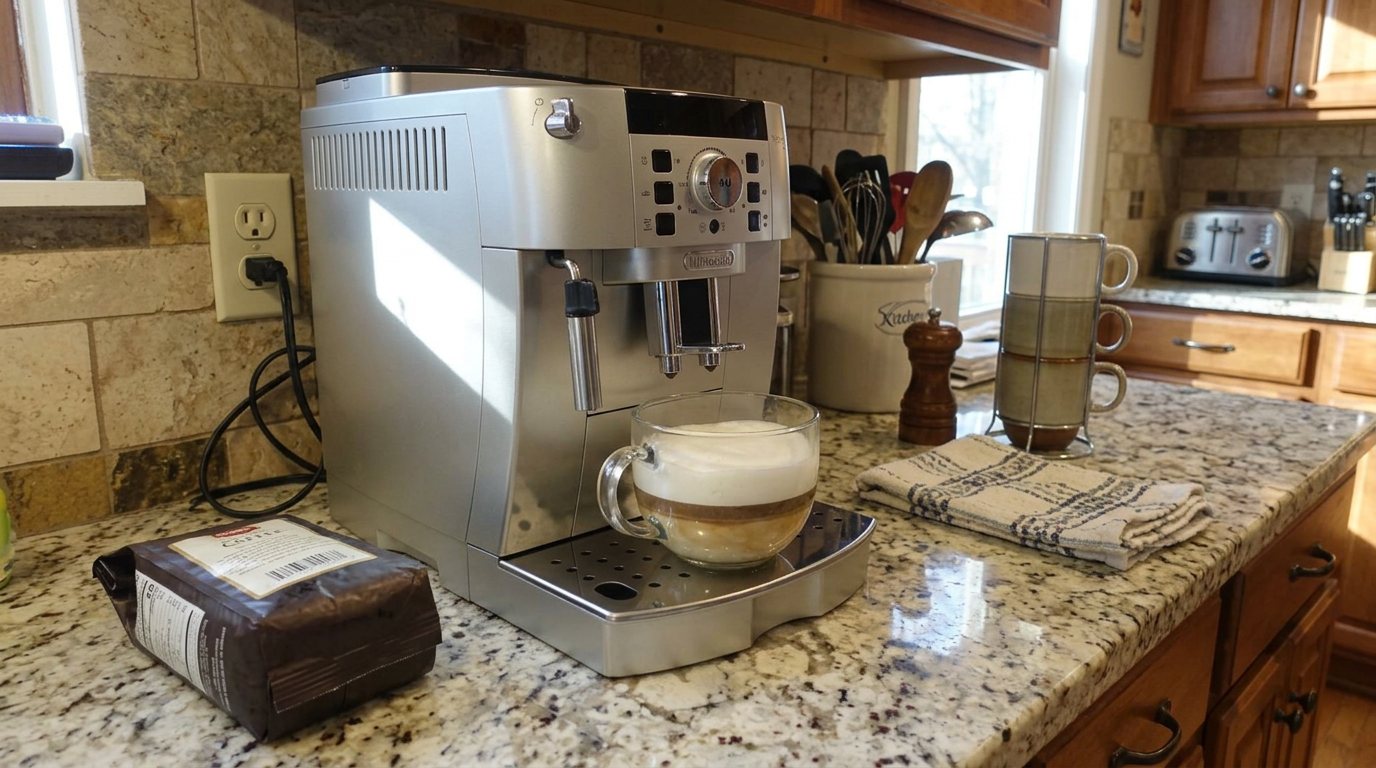
For espresso drinkers on a budget, the XS is hard to beat.
- You want the simplest controls
- You want to learn latte art
- You like smooth Americanos
- You want a filter in the box
- You want dense, short espresso
- You want strong milk drinks
- You want a strength dial
- Espresso is your main drink
- You want stronger milk drinks
- You like a strength dial
- You want a proven design
- You hate decoding warning lights
- You want the easiest setup
- You want a filter included
For most budget buyers, my pick is the De’Longhi Magnifica XS. Its espresso matches machines that cost far more, its milk drinks taste properly of coffee and its simple, proven design rinses clean in the sink.
The Philips 2200 is the smarter buy if you want the easiest start and a reason to learn latte art. Its touch panel is friendlier, the AquaClean filter is in the box and its bare steam tip poured the best hearts in this test. Just use the smallest cup size for espresso.
Whichever you choose, buy fresh beans, slide the wand sleeve off once you’re ready and rinse the brew group weekly. Both machines reward that care with years of good coffee.
Philips 2200 vs De’Longhi Magnifica XS specifications
From manufacturer specifications and my own testing.
| Philips 2200 | De’Longhi Magnifica XS | |
|---|---|---|
| Model | 2200 Series, EP2220 | ECAM22110SB |
| Type | Fully automatic with classic frother | Fully automatic with Panarello wand |
| Drinks | Espresso, coffee, hot water, steam | Espresso, long coffee, two cups |
| Pump | 15 bar | 15 bar |
| Grinder | Ceramic, 12 settings | Steel conical, 13 settings |
| Dose | About 6–7 g measured | Larger, set by the dial |
| Strength | 3 levels | Rotary dial |
| Double | Two full brew cycles | Two spouts, one cycle |
| Controls | Touch panel | Buttons, dial, lights |
| Milk | Sleeve plus single-hole steam tip | Panarello wand |
| Water filter | AquaClean, included | Supported |
| Water tank | 61 fl oz, side | About 60 fl oz, front |
| Bean hopper | 9.7 oz | About 8.8 oz |
| Brew group | Removable, rinse | Removable, rinse |
| Dimensions (W × H × D) | 9.7 × 14.6 × 17 in | 9.4 × 13.8 × 17 in |
| Weight | About 16.5 lb | About 20 lb |
How I tested and compared them
I used each machine as my everyday coffee maker for four weeks, making espresso, doubles, coffee crema or long coffee, Americanos, cappuccinos, flat whites and tea.
I weighed the Philips doses by stopping it after grinding, measured volumes and cup temperatures, worked through both grind ranges and steamed whole, oat and skim milk with the sleeves on and off.
Michael Reynolds and a second HouseholdMe tester shared both machines and wrote the notes together, then compared them with Philips’ and De’Longhi’s specifications and owner documentation.
- Coffee: dose, ratio, crema, body and temperature.
- Milk: foam with and without the sleeve, and latte art.
- Workflow: controls, warnings and setup.
- Ownership: cleaning, filters, longevity and footprint.
Philips 2200 vs De’Longhi Magnifica XS FAQ
Is the Philips 2200 or De’Longhi Magnifica XS better?
For espresso, the Magnifica XS. It shares its brew unit with pricier De’Longhi machines and made a fuller, denser shot. For easy controls, a filter in the box and latte art practice, the Philips 2200 is friendlier.
Why is the Philips 2200 espresso lighter?
Its dose is small. I weighed about 6 to 7 grams per brew, about half a café double, so its espresso is closer to a lungo. Use the strongest strength and smallest cup size.
Can either machine make latte art?
Yes, with practice. Slide the sleeve off either wand to use the bare tip. The Philips single-hole tip was the more forgiving, and I poured hearts and simple tulips by week four.
Do I need cleaning tablets?
No. Both brew groups come out and rinse under the tap. Don’t use soap, and grease the rails every few months.
Which has clearer controls?
The Philips 2200. Its touch panel shows clear icons, while some Magnifica XS warnings blink in patterns that need the manual.
Is a water filter included?
The Philips 2200 includes an AquaClean filter. Philips says replacing it when prompted can stretch descaling to 5,000 cups.
How does the double work on each machine?
The Philips runs two full grind-and-brew cycles. The XS splits one cycle into two lighter shots, so for a strong double I brewed two singles.
Are they the same size?
Nearly. The Philips is about 9.7 inches wide and 14.6 tall; the XS about 9.4 inches wide and 13.8 tall. Both are about 17 inches deep.
How hot is the hot water?
On the Philips, about 183°F at the top of the cup, fine for black and herbal tea and a little hot for green tea.
Which will last longer?
The Magnifica XS has the longer track record, with owners reporting seven to ten years. Both use simple, removable brew groups and widely available parts.

- Our hands-on Philips 2200 Series review
- Our hands-on De’Longhi Magnifica XS review
- Philips and De’Longhi product specifications and owner documentation
- Coffee standards, Specialty Coffee Association
- General espresso brewing and maintenance guidance