Coffee Brewing Methods Compared: French Press, Pour-Over, AeroPress, Moka Pot, Espresso and More
There is no single best way to make coffee, only the best way for you. I've brewed with every method in this guide, most of them daily for years. Here is how each one works, what the coffee tastes like, what it costs you in time and money, and how to pick the one that fits your mornings.
We choose products independently. When you buy through links on HouseholdMe we may earn a commission, at no extra cost to you. Affiliate policy
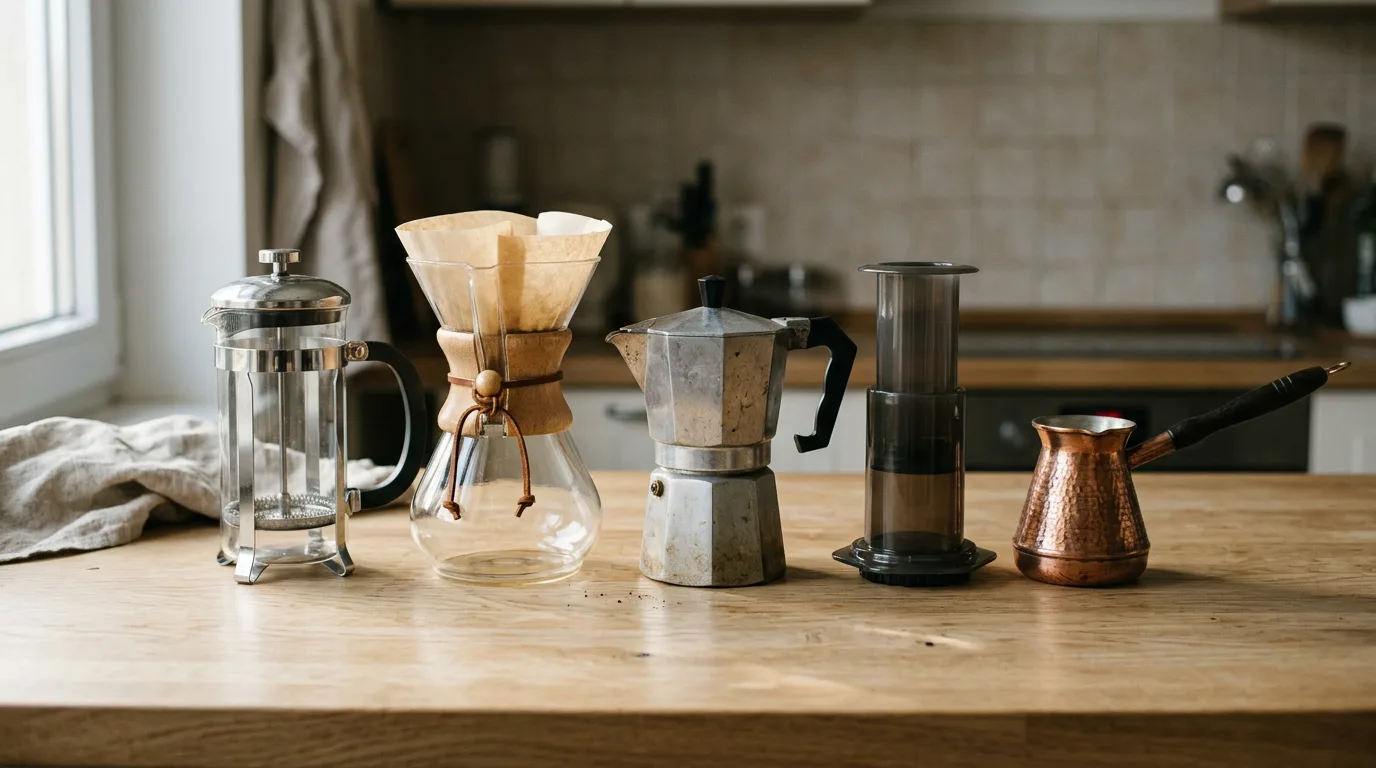
Choose your brewer by what you want in the cup and how much effort you'll put in. For easy, rich, full-bodied coffee, get a French press. For clean, bright, nuanced coffee, use a paper-filter pour-over. For pour-over clarity without the technique, try an immersion dripper. For travel and versatility, the AeroPress. For strong stovetop coffee, a moka pot. For hands-off coffee for several people, a good drip machine. For lattes and cappuccinos, an espresso machine. For pure convenience, capsules. Whatever you pick, fresh beans and a burr grinder will improve your coffee more than any brewer upgrade.
Why I wrote this
My kitchen shelf has, at last count, eleven ways to make coffee. That's an occupational hazard when you test coffee gear for a living.
Friends regularly ask me which one they should buy. The honest answer is always another question: what do you like to drink, and how much fuss are you willing to put up with at 7 a.m.?
This guide is my long answer. I'll walk through each major method: how it works, what it tastes like, what you need, and who it suits. Then I'll compare them side by side and give you a simple way to choose.
I've also tried to be honest about the downsides. Every method has them, whether it's sediment, a learning curve, cleanup or cost per cup, and knowing them up front saves you from buying something that ends up at the back of a cupboard.
One spoiler before we start. The brewer is rarely the main thing holding your coffee back. Fresh beans and a decent grinder matter more. I'll explain why near the end.
Immersion, percolation and pressure
The most important difference between brewing methods is how water meets the coffee. There are three basic approaches.
Immersion soaks the grounds in water for a set time, like making tea. Extraction happens while everything sits together. The French press is the classic example.
Percolation passes water through the coffee, usually with gravity doing the work. Fresh water keeps flowing over the grounds, which tends to extract efficiently and produce clean flavors. Pour-over and drip machines work this way.
Pressure methods push water through finely ground coffee. Espresso uses a pump; the moka pot uses steam; the AeroPress uses your arms.
Some brewers mix approaches. An immersion dripper steeps first and then drains through paper. The AeroPress steeps and then presses.
Along with filtration, grind size and time, these approaches shape the body, clarity, strength and texture of your coffee. Once you understand them, choosing a brewer becomes much easier.
A short history of brewing
For most of coffee's history, brewing meant boiling. Early coffee drinkers in Yemen, the Ottoman Empire and beyond simmered ground coffee with water in a pot, much like Turkish coffee today. The cezve is a direct descendant of those first methods.
In Europe, people experimented with cloth bags and sock-like filters to separate the grounds. Percolators, which recirculate boiling water through the grounds, became popular in the 19th and early 20th centuries, especially in the United States, though they tended to make bitter, over-extracted coffee.
The 20th century brought most of the brewers we use today. In 1908, a German housewife named Melitta Bentz invented the paper coffee filter, which led to modern pour-over and drip brewing. The plunger-style French press was patented in its modern form in the 1920s and 1930s. The moka pot arrived in 1933, and commercial espresso machines with pump or lever pressure took off in Italy after the Second World War.
Electric drip machines spread through homes in the 1970s. Capsule systems became common from the 1990s and 2000s. The AeroPress appeared in 2005 and quickly became a cult favorite.
The last two decades saw a revival of manual methods. Specialty coffee shops brought back pour-over bars, and home brewers rediscovered cone drippers, immersion drippers and even old-fashioned cezves. We've never had more choice.
Brewing methods at a glance
| Method | Type | Body | Clarity | Effort | Best for |
|---|---|---|---|---|---|
| French press | Immersion | Heavy | Low | Low | Rich coffee, several cups |
| Pour-over | Percolation | Light | High | High | Light roasts, flavor nerds |
| Immersion dripper | Hybrid | Medium | High | Low | Easy, clean cups |
| AeroPress | Immersion + pressure | Medium | Medium | Low | Travel, one cup |
| Moka pot | Steam pressure | Heavy | Low | Medium | Strong coffee, milk drinks |
| Turkish coffee | Boiled immersion | Very heavy | Very low | Medium | Intense, traditional |
| Drip machine | Percolation | Light-medium | High | Very low | Households, offices |
| Espresso | Pump pressure | Very heavy | Medium | High | Lattes, cappuccinos |
| Capsules | Pump pressure | Light-medium | Medium | Very low | Speed and convenience |
French press
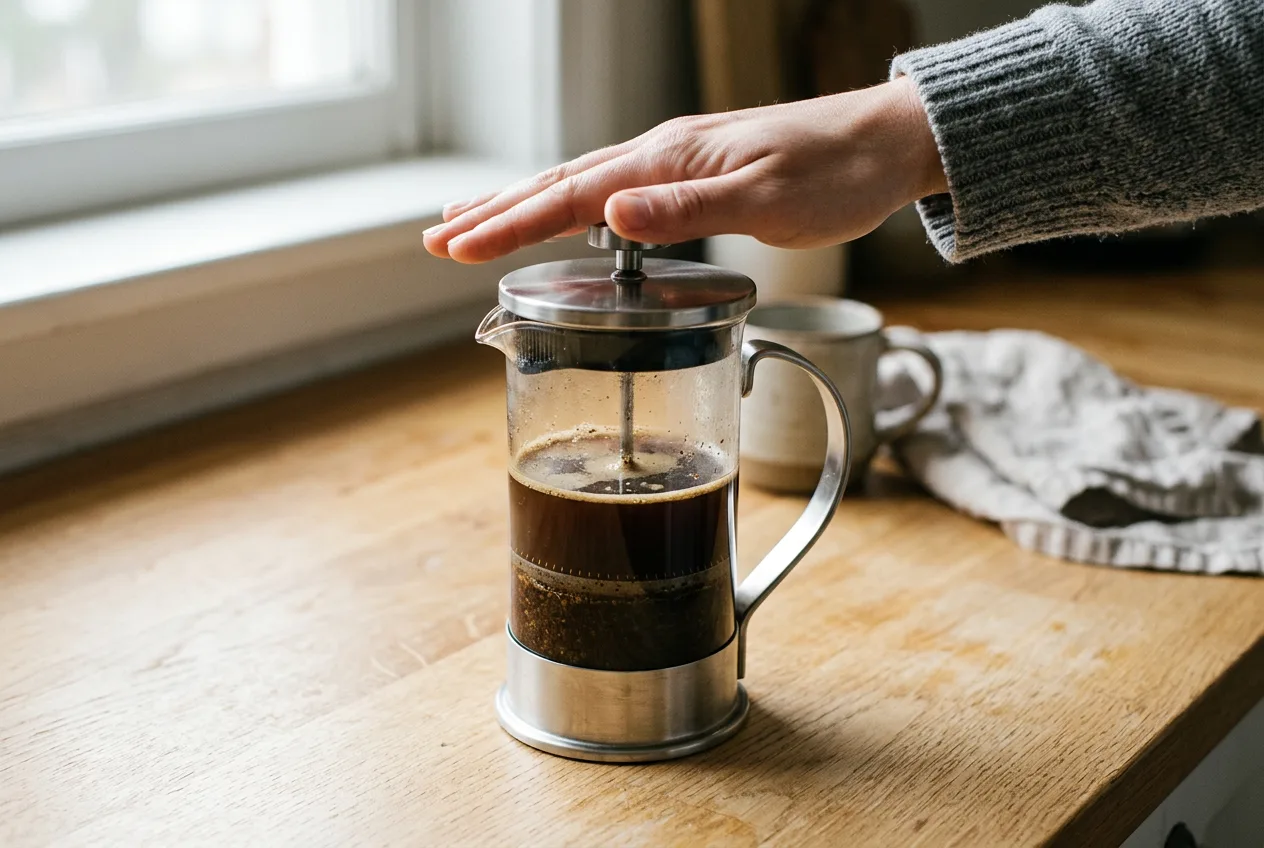
The French press is one of the most popular and approachable ways to brew. It's simple, cheap and makes several cups at once. A typical press is a glass or metal jug with a plunger fitted with a fine metal mesh filter.
How it works
- Add coarse groundsAbout 1 part coffee to 15 or 16 parts water, ground coarse like sea salt.
- Pour hot waterJust off the boil, around 93–96°C (200–205°F). Stir gently.
- SteepUsually about four minutes with the lid on.
- Press slowlyPush the plunger down steadily, then pour all the coffee out so it doesn't keep extracting.
What it tastes like
French press coffee has a fuller body and heavier mouthfeel than paper-filtered coffee. The metal mesh lets through fine particles and natural oils, so the coffee is often a little cloudy with some sediment at the bottom. Flavors feel rounded and blended rather than sharply separated.
The French press is ideal for families, weekend breakfasts and anyone who likes rich, chocolatey coffee without fuss. Cleanup is its weak point: grounds collect around the filter and need rinsing out.
Our tip: For less sludge, let the coffee steep four minutes, break the crust, skim the foam off with two spoons, then wait another five minutes before pressing gently. The fines settle and the cup is much cleaner.
Pour-over
Pour-over is the favorite of many specialty coffee fans because it gives you control and a very clean, transparent cup. Well-known brewers include the conical Hario V60, the flat-bottomed Kalita Wave and the Chemex.
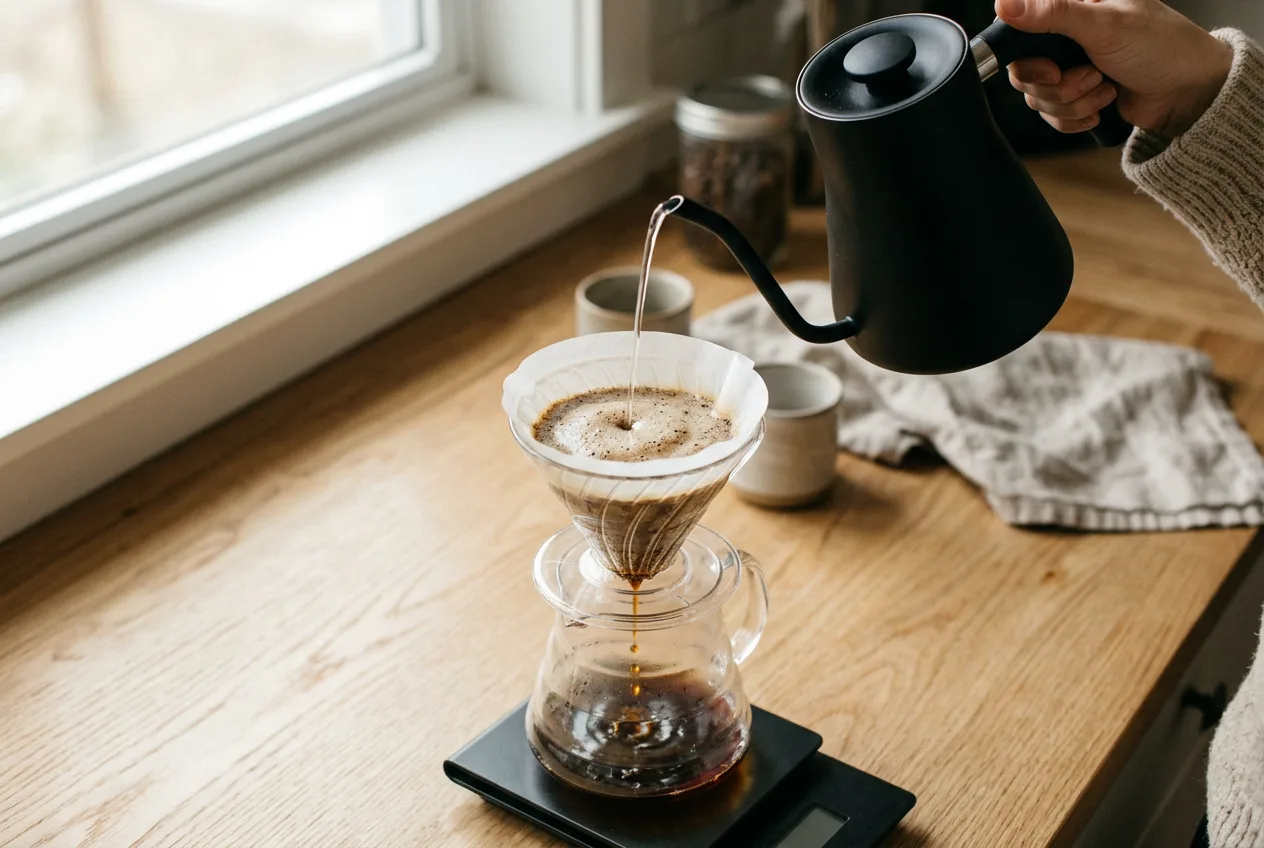
They all work the same way. Ground coffee sits in a filter, you pour hot water over it, and the water drips through the bed into a cup or carafe. Paper filters are most common, though metal and cloth filters exist.
Brew time is usually two to four minutes, depending on the brewer, grind, water temperature, dose and how you pour.
| Brewer | Shape | Material | Character |
|---|---|---|---|
| Hario V60 | Cone, one large hole | Plastic, ceramic, glass, metal | Fast, bright, very technique-sensitive |
| Kalita Wave | Flat bottom, three holes | Mostly metal | Forgiving, even, sweet |
| Chemex | Cone built into carafe | Glass | Thick filter, very clean, larger batches |
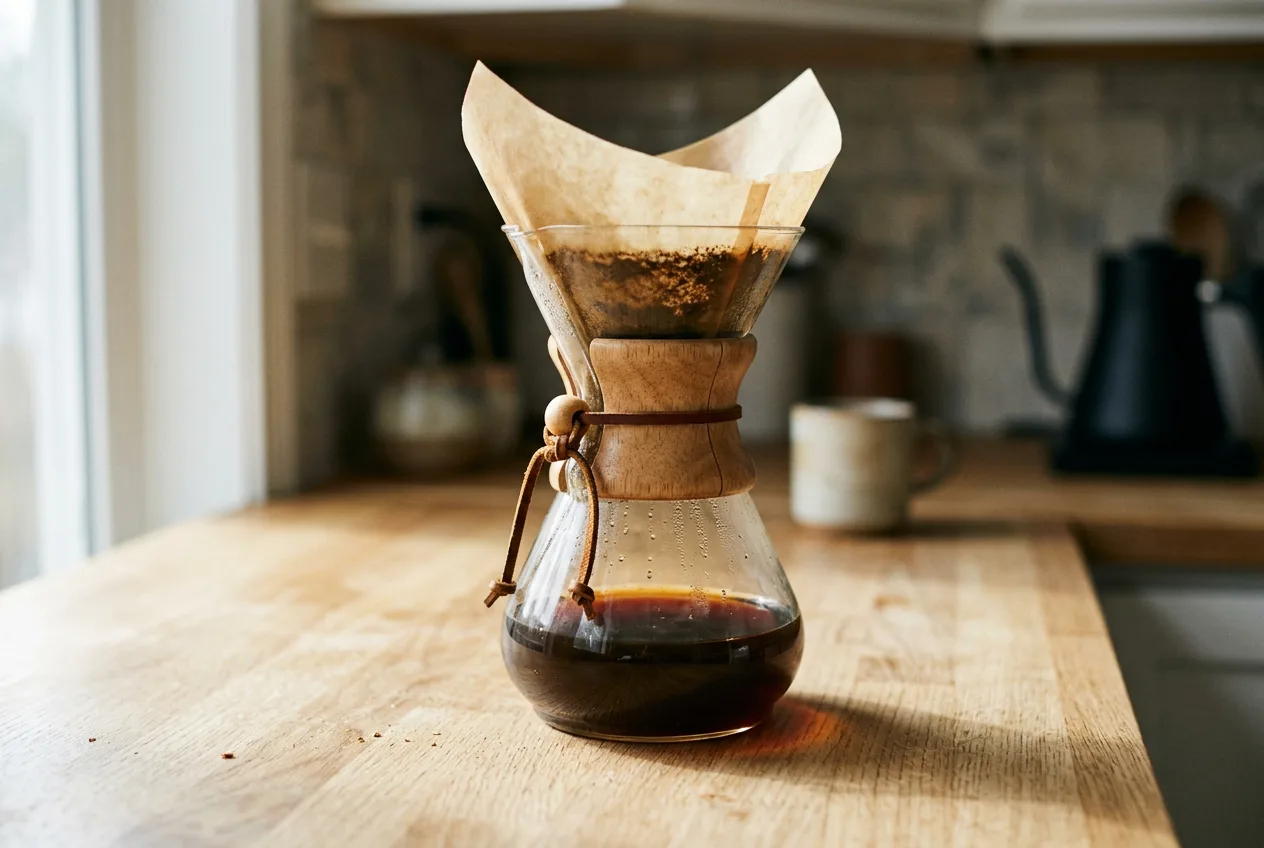
Material affects heat retention and durability. Plastic and metal brewers are tougher than glass and ceramic. Shape affects how water flows: cones drain faster and reward careful pouring, while flat-bottom brewers extract more evenly with less skill.
The biggest advantage of pour-over is clarity. Paper removes most fines and oils, giving a lighter, cleaner cup. That suits light-roasted specialty coffee, where delicate fruity, floral and bright flavors are easy to pick out.
The other advantage is control: pour speed, water distribution, temperature, grind and time can all be adjusted. Many people also love the calm ritual.
A typical recipe starts with a "bloom": you pour just enough water to wet the grounds, wait 30 to 45 seconds while gas escapes, then pour the rest in slow stages. Freshly roasted coffee bubbles up dramatically during the bloom, which is a good sign of freshness.
The catch is that it takes practice. Small changes in pouring or grind consistency make big differences. A gooseneck kettle, a scale and a good grinder all help. Paper filters are an ongoing cost and create a little waste.
Immersion drippers (Clever Dripper and similar)
The Clever Dripper combines immersion with paper filtering. You get much of the French press's simplicity with a cup closer to pour-over.
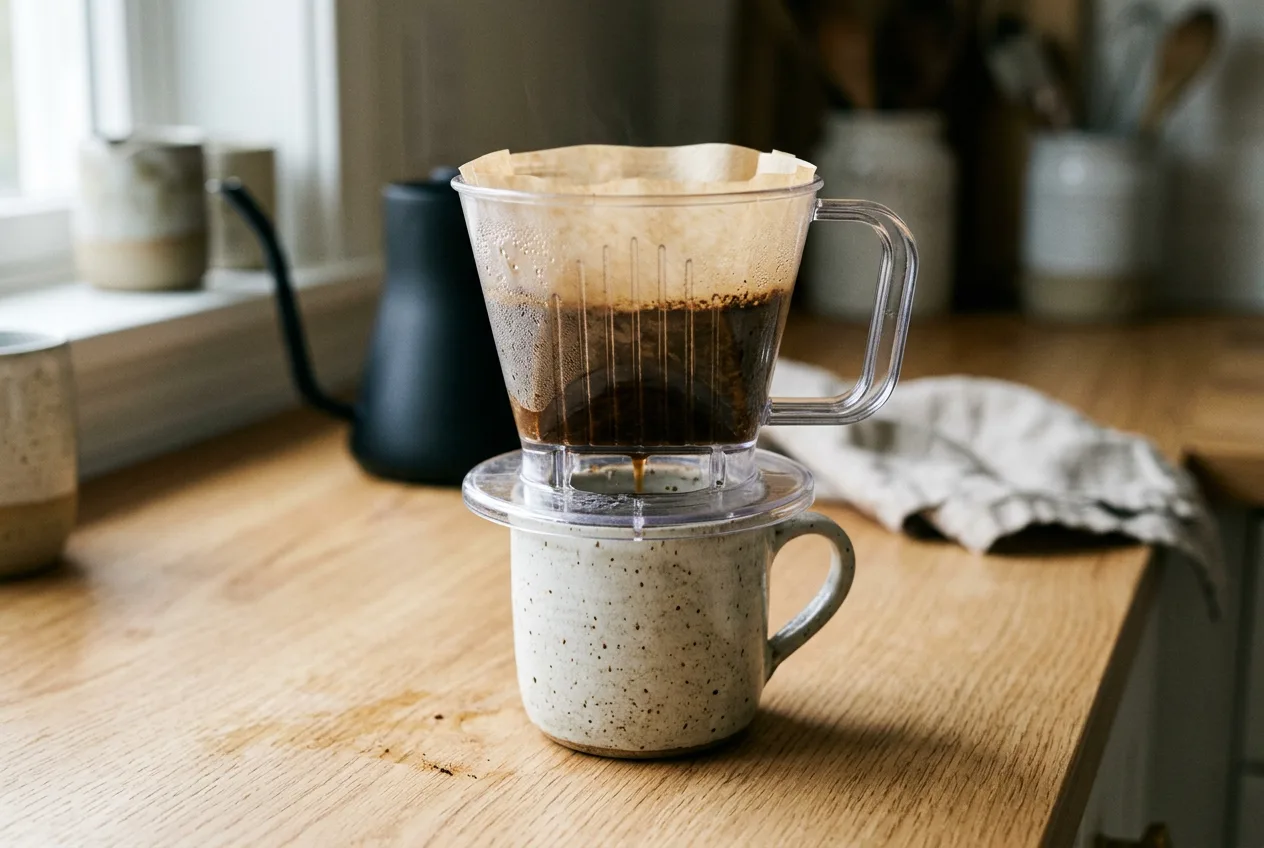
Coffee and hot water go into the brewer together and steep with a closed valve at the bottom. When you set the brewer on a cup or carafe, the valve opens and the coffee drains through the paper filter.
Because the coffee steeps rather than relying on a steady pour, the result depends much less on technique. You can be more relaxed about grind size and pouring. A slightly coarser grind than pour-over is common, and brew time is a bit longer because of the steeping stage.
Similar designs include the Hario Switch and other valve drippers.
Pros: simple, repeatable, forgiving, no special kettle needed, and much cleaner than a French press. Cons: the valve needs cleaning and occasional care, and the plastic look is plain next to glass or ceramic gear.
Our tip: If you want to start with filter coffee and don't want to learn pouring technique, an immersion dripper is the most beginner-friendly brewer I know. It forgives almost everything.
AeroPress
The AeroPress is a compact brewer that steeps coffee and then uses hand pressure to push it through a filter. There's no electric pump; you make the pressure by pressing the plunger.
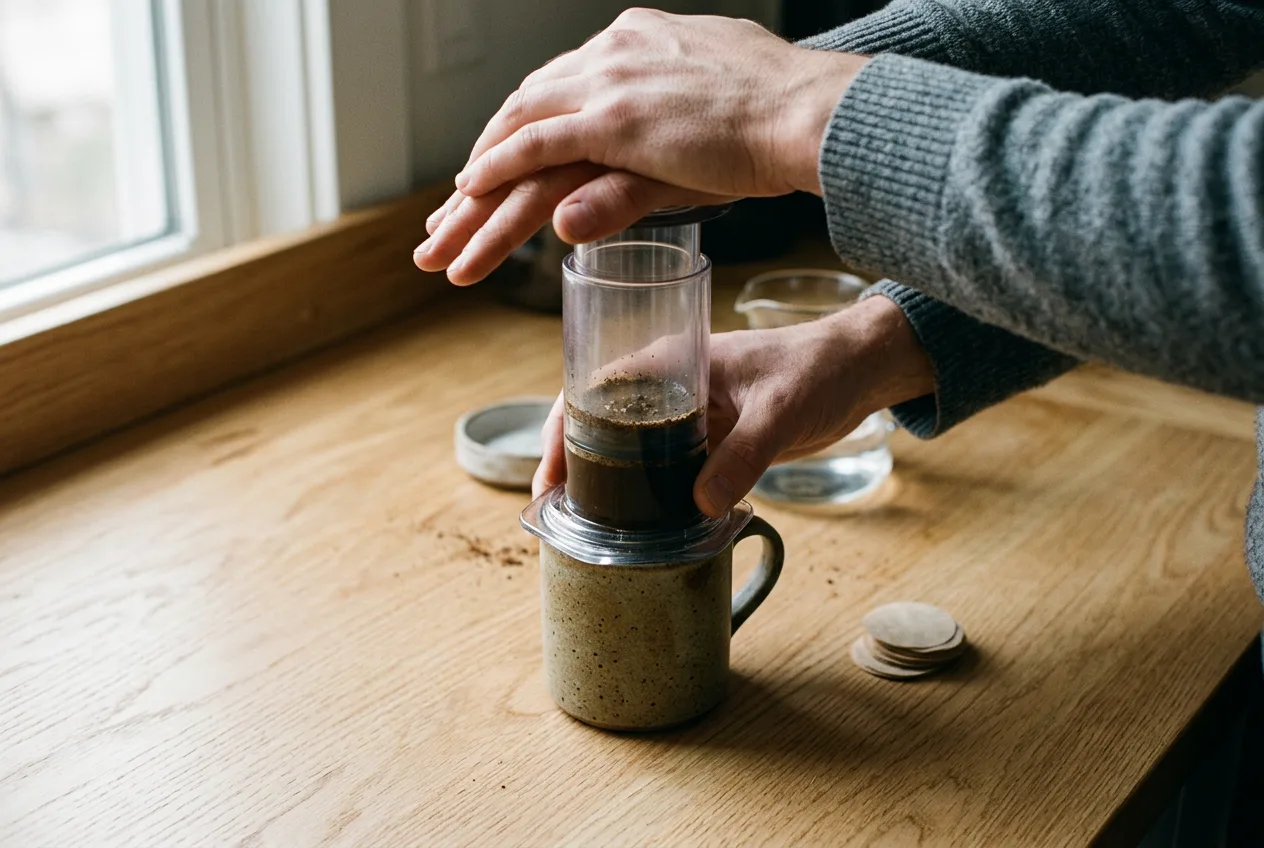
It has three main parts: a brewing chamber, a plunger and a filter cap. Coffee and hot water go into the chamber, then you press the plunger down.
Standard vs inverted
In the standard method, the chamber sits on your cup with the filter at the bottom. You add coffee and water, insert the plunger and press.
In the inverted method, you start with the AeroPress upside down, plunger at the bottom. You add coffee and water, let it steep, attach the filter cap, carefully flip it onto your cup and press.
Neither is better. Both make excellent coffee; it's down to preference. The inverted method avoids drips during steeping but needs care when flipping.
Because pressure and stirring speed things up, most AeroPress recipes take only one or two minutes.
Its strengths are portability, toughness, speed and versatility. It's great for travel and camping as well as everyday use, and it can make anything from a small concentrated shot to a full mug of black coffee. Cleanup is quick: pop out the puck and rinse.
The main limit is capacity: a standard brew makes about 7 to 8 fluid ounces. Beginners can also feel overwhelmed by the sheer number of recipes. And with paper filters it's less clear than pour-over.
Moka pot
The moka pot is the classic Italian stovetop coffee maker, invented in 1933 and made famous by Alfonso Bialetti. Its eight-sided aluminum design is an icon of Italian industrial design.
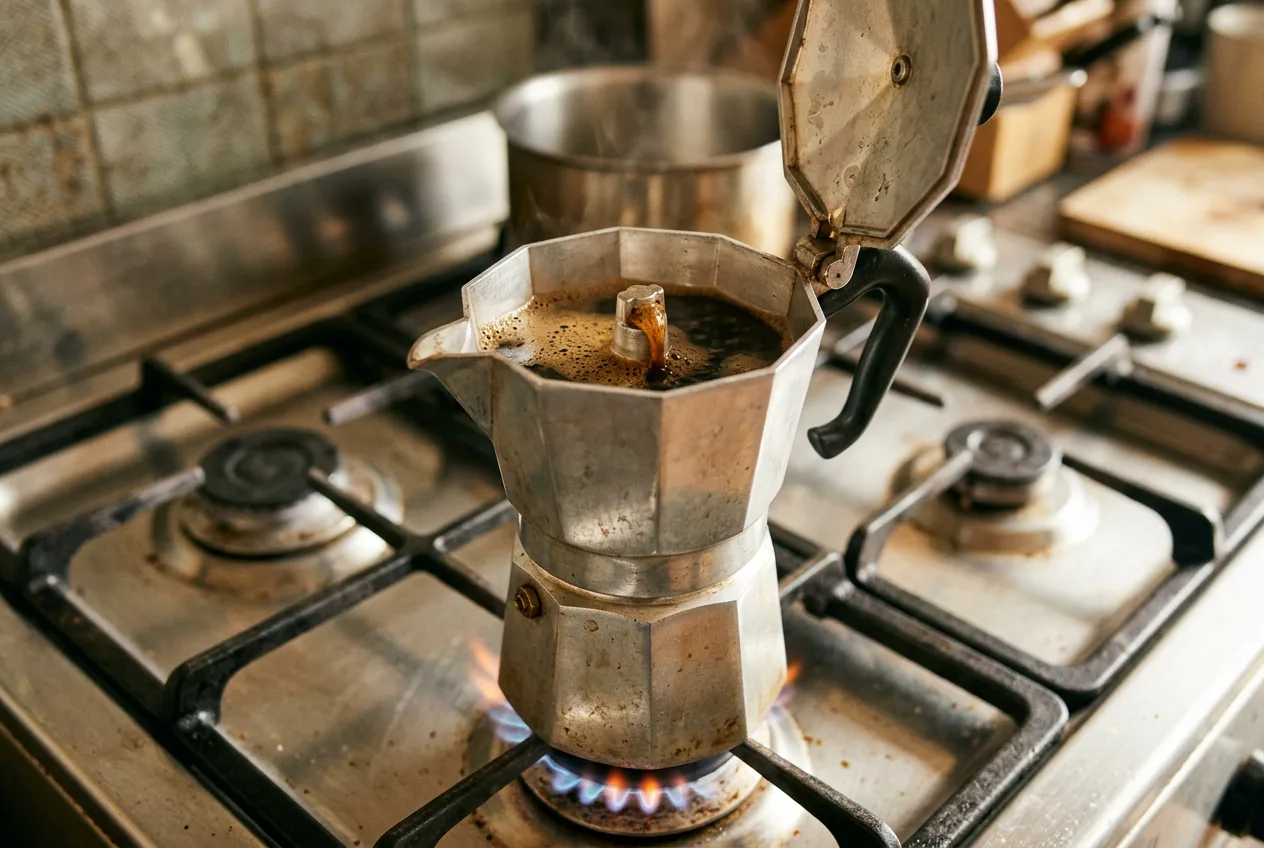
It has three parts: a bottom chamber for water, a funnel basket for ground coffee and a top chamber that collects the brewed coffee.
As the water heats, steam pressure builds in the bottom chamber and pushes hot water up through the coffee and into the top. You'll hear a gurgle when it's done.
The result is strong and concentrated, much stronger than drip coffee, though it's not true espresso, which needs much higher pressure. It's excellent with milk.
Pros: no kettle needed, cheap, durable, portable for camping if you have a heat source, and beautiful. Cons: harder to control, since heat, grind and timing all matter, and it can turn bitter if overheated. It also needs regular cleaning to stop oils building up.
Safety matters because it works under pressure. Don't fill water above the valve, don't tamp the coffee, and never open it while it's hot and pressurized.
Our tip: Start with hot water in the bottom chamber and use medium-low heat. Take it off the burner as soon as the coffee turns pale and starts to sputter. It's far less bitter that way.
Turkish coffee (cezve or ibrik)
The cezve, or ibrik, is one of the oldest ways to make coffee, associated with Turkey, Greece, the Balkans, the Middle East and beyond. It makes a small, intense cup with a thick texture and a lovely ritual.
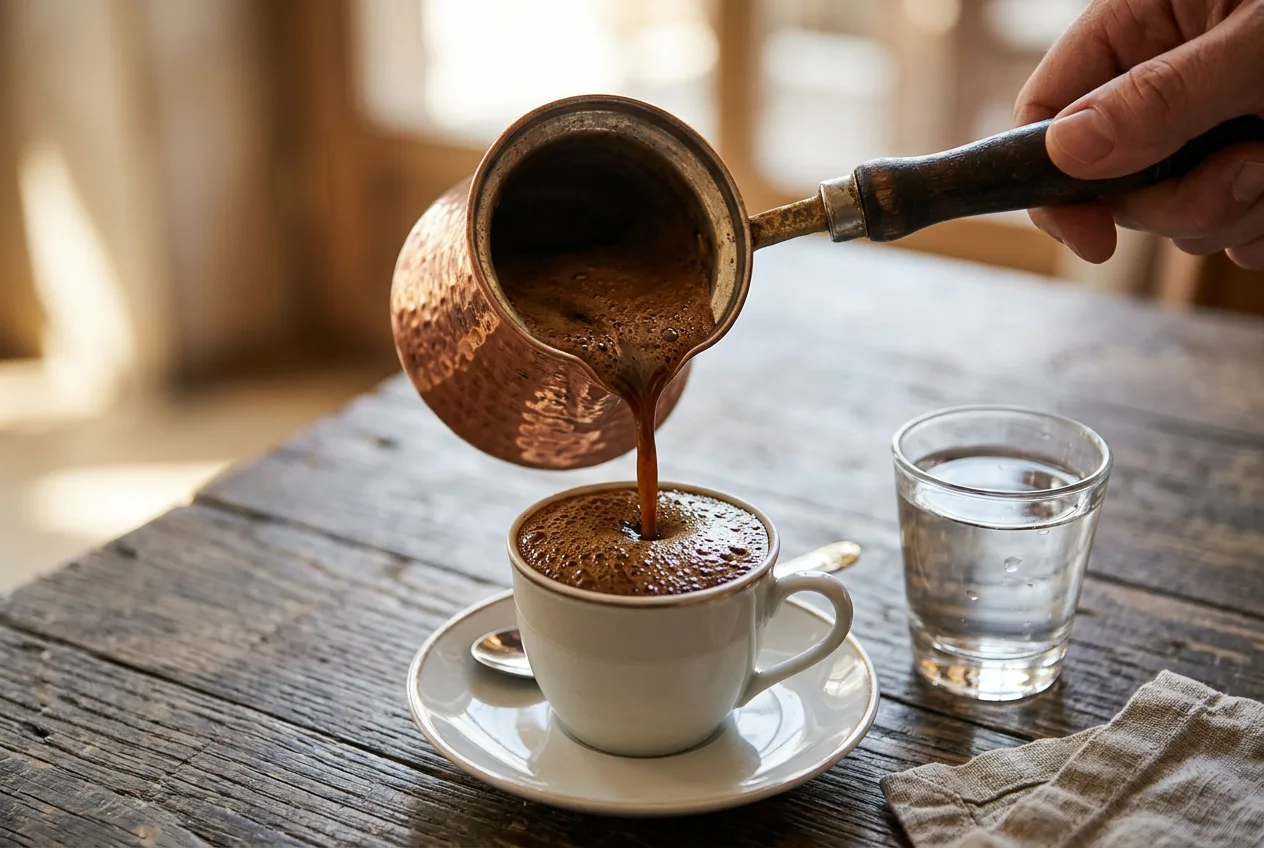
The brewer is a small pot, often copper, with a long handle. Coffee ground to a powder, finer than espresso, goes straight into the pot with cold water, and often sugar.
A common ratio is about 1 part coffee to 10 parts water. The pot is heated slowly until the coffee foams up close to boiling. Traditional methods may let it rise more than once; many modern baristas take it off just before boiling.
Everything is poured into the cup unfiltered. The grounds slowly settle at the bottom, so you sip the top and leave the sludge.
Pros: simple equipment, no filters, beautiful pots and a rich tradition. Cons: you need a grinder that can make a genuine powder, it's easy to over-extract, and it only makes a few small cups. Let it cool briefly; it's served very hot. I'll cover its history in a separate article on Turkish coffee culture.
Automatic drip coffee makers
Drip machines, also called batch brewers, work like pour-over but automate the heating and pouring. Add grounds to the basket, fill the reservoir and press a button.
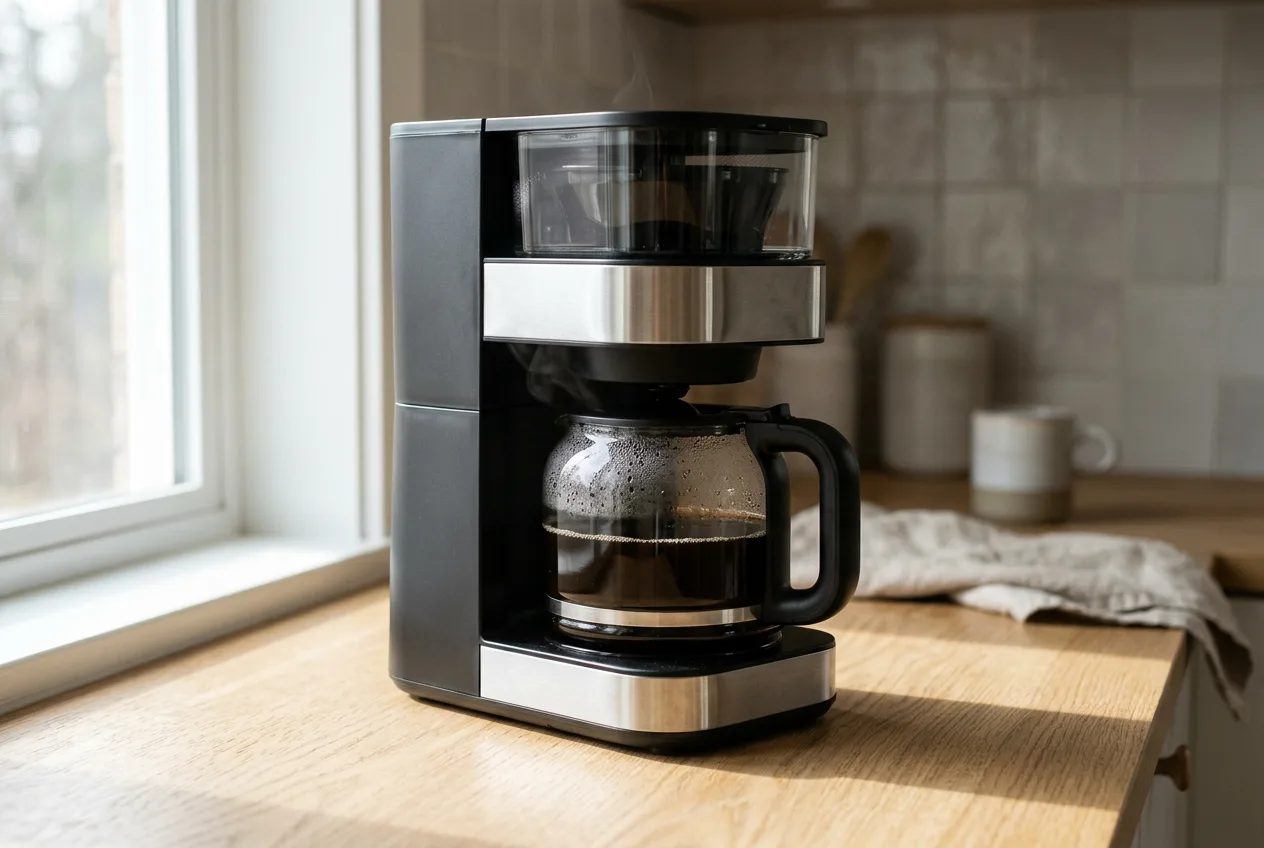
Quality varies a lot. Basic machines often brew too cool or pour unevenly. Better machines heat water to the right temperature and spread it evenly over the coffee. The Technivorm Moccamaster is a well-known example, prized for durability and stable temperature.
The big advantage is convenience. You don't have to do anything once it's running, and a good machine is often more consistent than a person pouring by hand. Large models make enough for a whole household or office.
Downsides: less control than manual brewing, good machines can be pricey, they take up counter space and they need regular cleaning and descaling. Glass carafes on hot plates can also cook the coffee; thermal carafes keep it better.
Don't let anyone tell you drip is inferior. A well-made batch brewer with good beans makes excellent coffee.
Espresso machines
Espresso is a small, concentrated coffee made by forcing hot water through finely ground, tightly packed coffee at high pressure, typically around 9 bar. It has intense flavor, a syrupy body and a layer of crema on top.
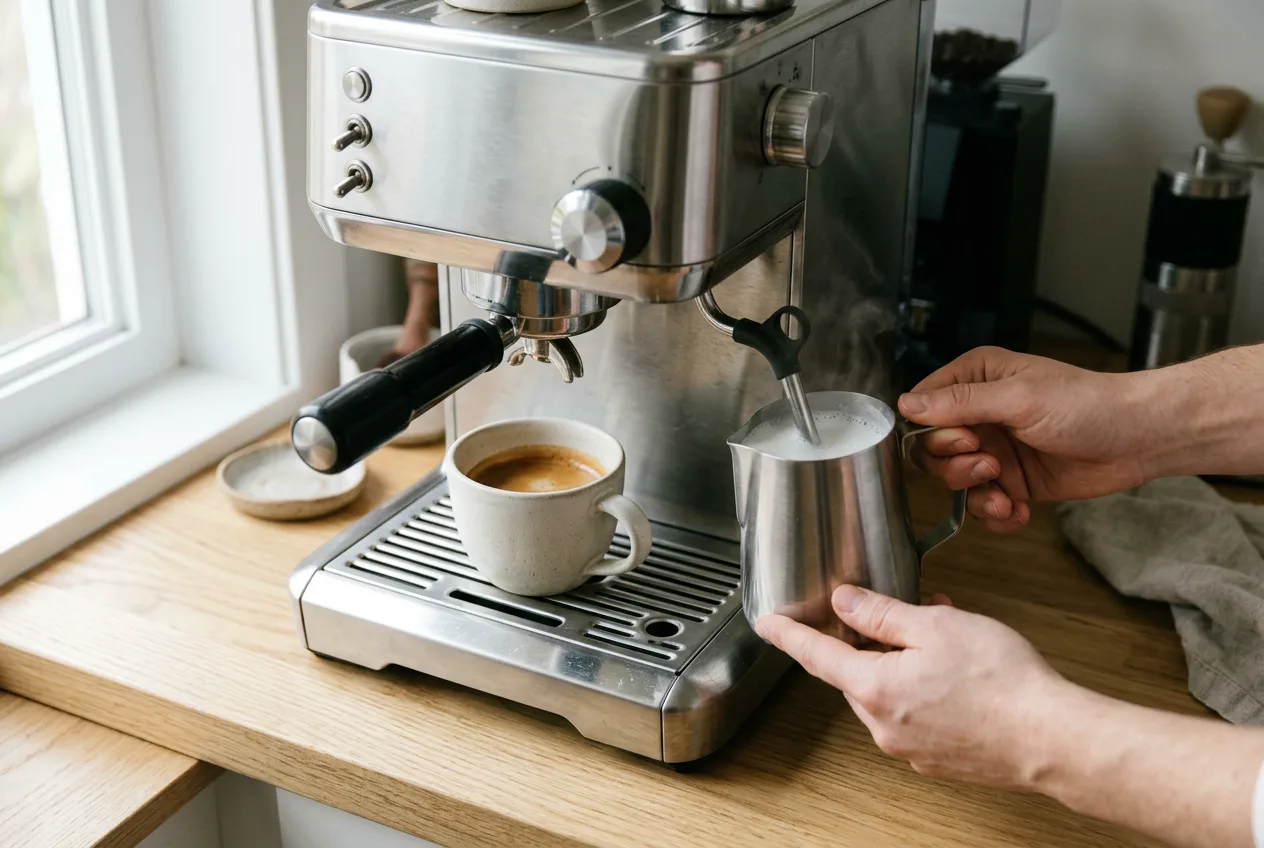
It's one of the most demanding home methods, because grind, dose, tamp, temperature and time all have to work together.
| Type | How it works | Who it suits |
|---|---|---|
| Manual (lever) | You create the pressure by pulling a lever | Enthusiasts who want total control |
| Semi-automatic / automatic | An electric pump creates pressure; you grind, dose and tamp | Most home baristas |
| Super-automatic | Grinds, doses and brews at the press of a button | Convenience lovers |
Machines also differ in how they heat water and steam milk. A single-boiler machine uses one boiler for both, so you wait between pulling a shot and steaming. A heat-exchanger or dual-boiler machine lets you do both at once, which matters if you make several milk drinks in a row. Some higher-end machines add pressure profiling, letting you change pressure during the shot to shape its flavor.
Espresso gear is generally the most expensive. Very cheap machines often struggle with temperature and pressure, giving sour or bitter shots and short lifespans.
The reward is flavor and versatility. A well-pulled shot can be remarkably sweet, intense and complex, and it's the base for cappuccinos, lattes and flat whites. Once warmed up and dialed in, espresso is also fast.
The costs are equipment, a learning curve and maintenance. You need a capable espresso grinder, which can cost as much as the machine. You'll learn to adjust grind, dose and shot time. And you'll need to clean the group head, portafilter and steam wand regularly. I've reviewed dozens of machines in our espresso machine reviews if you're thinking of buying.
Capsule machines
Capsule machines are the easiest way to get a quick single cup. Each capsule holds a pre-measured dose of ground coffee, sealed to keep it fresh.
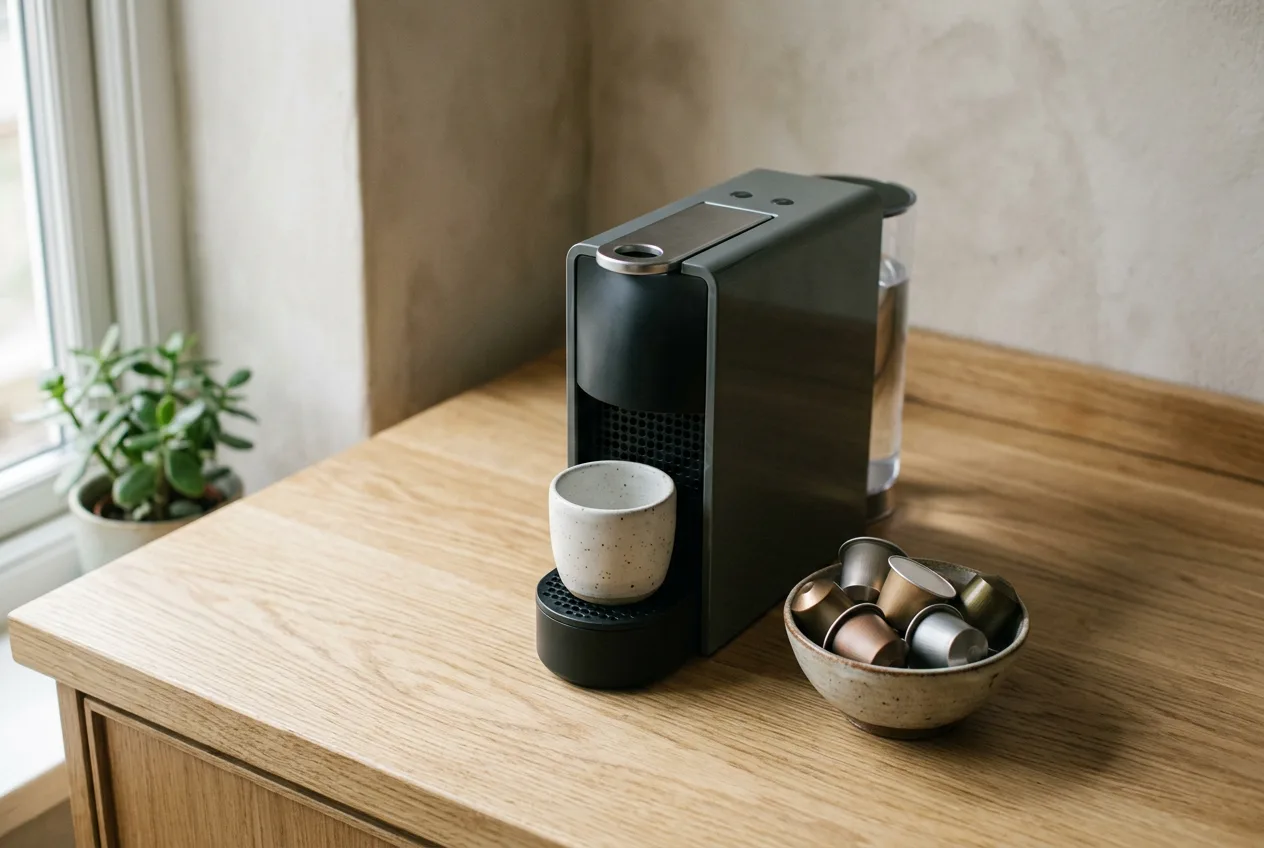
Fill the water tank, turn the machine on, insert a capsule, put a cup underneath and press the button. Hot water is pushed through the capsule into the cup.
They're designed for convenience, not control. No grinding, measuring or filtering. The coffee can resemble an espresso-style drink, though it's usually lighter in body with a thinner crema than freshly made espresso.
Specialty roasters now make capsules too, with distinct origins and roast styles, which has improved the options a lot.
There are also reusable capsules you can fill with your own freshly ground coffee. They cut waste and cost, though results vary by machine and take a little trial and error to get right.
Pros: speed, simplicity and easy cleanup. Cons: freshness, cost and waste. The coffee is ground long in advance, so it loses aroma. Each cup uses a capsule. And per cup, capsules usually cost much more than whole beans. I compared the environmental side in coffee pods and their environmental impact.
A bonus method: cold brew
Cold brew isn't a machine, but it deserves a mention. Coarse grounds steep in cold or room-temperature water for 12 to 24 hours, then are filtered out.
The result is smooth, low in acidity and naturally sweet-tasting, usually made as a concentrate and diluted with water or milk. All you need is a jar and a filter, or a French press.
It's perfect for summer and for people who find hot coffee too acidic. The downside is planning ahead. I compare it with iced coffee in iced coffee vs cold brew.
Side-by-side comparison
| Method | Brew time | Grind | Typical batch | Upfront cost | Ongoing cost |
|---|---|---|---|---|---|
| French press | 4–9 min | Coarse | 1–8 cups | Low | Beans only |
| Pour-over | 2–4 min | Medium-fine | 1–3 cups | Low (plus kettle) | Beans + filters |
| Immersion dripper | 3–5 min | Medium | 1–2 cups | Low | Beans + filters |
| AeroPress | 1–2 min | Fine-medium | 1 cup | Low | Beans + small filters |
| Moka pot | 5–8 min | Fine | 1–6 small cups | Low | Beans only |
| Turkish coffee | 3–5 min | Powder | 1–3 tiny cups | Low | Beans only |
| Drip machine | 5–8 min | Medium | 4–10 cups | Low to high | Beans + filters |
| Espresso | 25–35 s per shot | Fine | 1–2 shots | High (plus grinder) | Beans + maintenance |
| Capsules | Under 1 min | Pre-ground | 1 cup | Low to medium | High per cup |
A budget guide: where to spend your money
You don't need to spend a lot to make great coffee. These are the setups I'd recommend at different levels of commitment:
- Starter setupA French press or immersion dripper, a hand burr grinder and fresh beans. Inexpensive, and already better than most office coffee.
- Enthusiast filter setupAdd a pour-over cone, a gooseneck kettle and a digital scale. This is where flavor exploration really starts.
- Convenience setupA quality drip machine with a good electric burr grinder. Excellent coffee with almost no effort, ideal for households.
- Espresso setupA capable espresso machine plus a dedicated espresso grinder. Budget roughly as much for the grinder as for the machine.
In every case, the grinder is where an extra bit of money does the most good. A great brewer with a poor grinder will always disappoint; a simple brewer with a great grinder rarely does.
Brewing on the go
If you travel, camp or work from different places, some methods are far more practical than others.
The AeroPress is the obvious winner: light, almost unbreakable and quick to clean. A collapsible silicone pour-over cone is another good option. A small moka pot works anywhere there's a stove or camping burner.
Pair any of them with a compact hand grinder and a small bag of beans, and hotel coffee becomes a thing of the past. Glass brewers, espresso machines and drip makers obviously stay at home.
Matching beans to your brewer
There are no strict rules, but some combinations reliably work well:
- Washed Ethiopian or Kenyan light roasts sing in a pour-over or Chemex, where their floral and fruity notes come through clearly.
- Brazilian or other chocolatey medium roasts make lovely French press and moka pot coffee.
- Espresso blends designed for sweetness and body suit espresso machines and milk drinks.
- Natural-processed, fruity coffees are great in an AeroPress or immersion dripper, which bring out their sweetness.
- Dark roasts work well in cold brew, where they taste smooth and chocolatey.
The best way to learn is to brew the same coffee two ways and compare. You'll be surprised how different one bag can taste. My article on coffee growing regions and flavor helps you choose beans.
Which method is right for you?
If you're still unsure, start cheap. A French press or an immersion dripper costs little and teaches you a lot about what you like. You can always add a second brewer later, and most coffee lovers end up with two or three for different moods.
Common mistakes with each method
Most disappointing cups come from a handful of fixable mistakes. These are the ones I see most often:
| Method | Common mistake | Fix |
|---|---|---|
| French press | Grind too fine, leaving coffee in the press | Grind coarse; decant all coffee after pressing |
| Pour-over | Pouring too fast or unevenly | Use a gooseneck kettle; pour in slow circles |
| Immersion dripper | Steeping far too long | Stick to about 2–4 minutes before draining |
| AeroPress | Pressing too hard and fast | Press gently over 20–30 seconds |
| Moka pot | Too much heat, tamping the coffee | Medium-low heat; level, don't press, the grounds |
| Turkish coffee | Letting it boil over | Heat slowly; lift off as the foam rises |
| Drip machine | Leaving coffee on the hot plate | Use a thermal carafe or drink within 30 minutes |
| Espresso | Not adjusting the grind | Dial in grind for a 25–35 second shot |
| Capsules | Never descaling the machine | Descale as the manual recommends |
And one mistake applies to all of them: using stale, pre-ground coffee. Fix that first and every method improves.
Troubleshooting: sour or bitter?
Whatever brewer you use, two problems come up again and again.
Sour, sharp or thin coffee usually means under-extraction: the water didn't pull enough from the grounds. Try a finer grind, hotter water, a longer brew time or a little more coffee.
Bitter, harsh or drying coffee usually means over-extraction: too much was pulled out. Try a coarser grind, slightly cooler water or a shorter brew time.
Change one thing at a time so you know what made the difference. My guide on why coffee tastes bitter or sour walks through it step by step.
Brewing for one vs for a crowd
How many people you make coffee for narrows the choice quickly.
For one person, almost every method works. The AeroPress, a small pour-over, an immersion dripper, an espresso machine or capsules all make a single excellent cup.
For two to four people, a larger French press, a Chemex or a mid-size moka pot works well.
For bigger groups, a good drip machine or a large French press is far easier than brewing cup after cup. Espresso for a crowd is possible, but it means a lot of time at the machine, which is why cafés use powerful commercial equipment.
Our tip: When friends come over, I brew a big batch with a drip machine or a large French press and save the espresso for the one or two people who really want a cappuccino. It keeps me at the table instead of at the counter.
Beans matter more than gear
One of the most important rules in coffee is that no brewer can rescue poor beans. An expensive machine with stale supermarket coffee will lose to a cheap French press with fresh, good beans every time.
Quality, freshness and roast level have a huge effect on what ends up in your cup. Specialty coffee, which focuses on bean quality, careful processing, traceability and skilled roasting, is worth exploring. A good local roaster usually offers fresher beans and more variety. I explain more in what is specialty coffee.
Freshness matters a lot. Coffee slowly loses its aroma after roasting, so check the roast date, buy amounts you'll use within a few weeks and store beans properly.
Roast level interacts with brewing method too. Light roasts often shine in pour-over, where paper filtering and controlled extraction highlight acidity, sweetness and delicate aromas. Medium and darker roasts often suit French press, espresso and moka pot. But these are tendencies, not rules. Your taste comes first.
Why a good grinder matters
Grinding just before brewing is one of the easiest ways to improve your coffee.
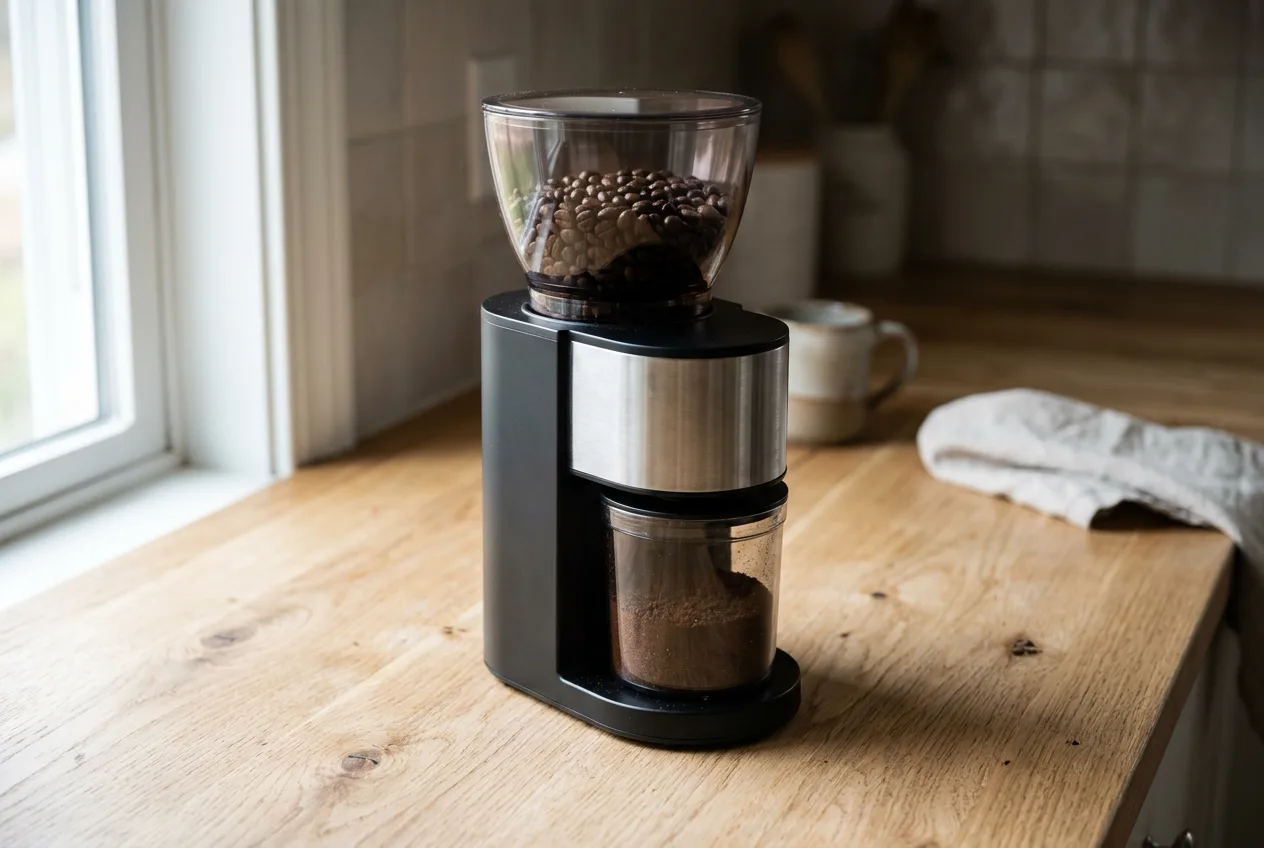
Once beans are ground, their surface area explodes, and the aromatic compounds that make coffee smell and taste wonderful escape quickly. Pre-ground coffee goes stale in days; whole beans last weeks.
Grinding fresh also lets you match the grind to your brewer. And consistency matters as much as size: uneven particles extract at different speeds, giving a muddled cup that's sour, bitter and flat all at once.
That's why a burr grinder is worth it. It crushes beans between two burrs to a consistent size, unlike blade grinders, which chop unevenly. I compare them in burr vs blade grinder.
Manual burr grinders are affordable and portable, great for one or two cups and travel. Electric burr grinders are more convenient for larger amounts or daily espresso. A good grinder improves every brewer you own, which makes it the best-value upgrade in home coffee.
Ratios and grind sizes by method
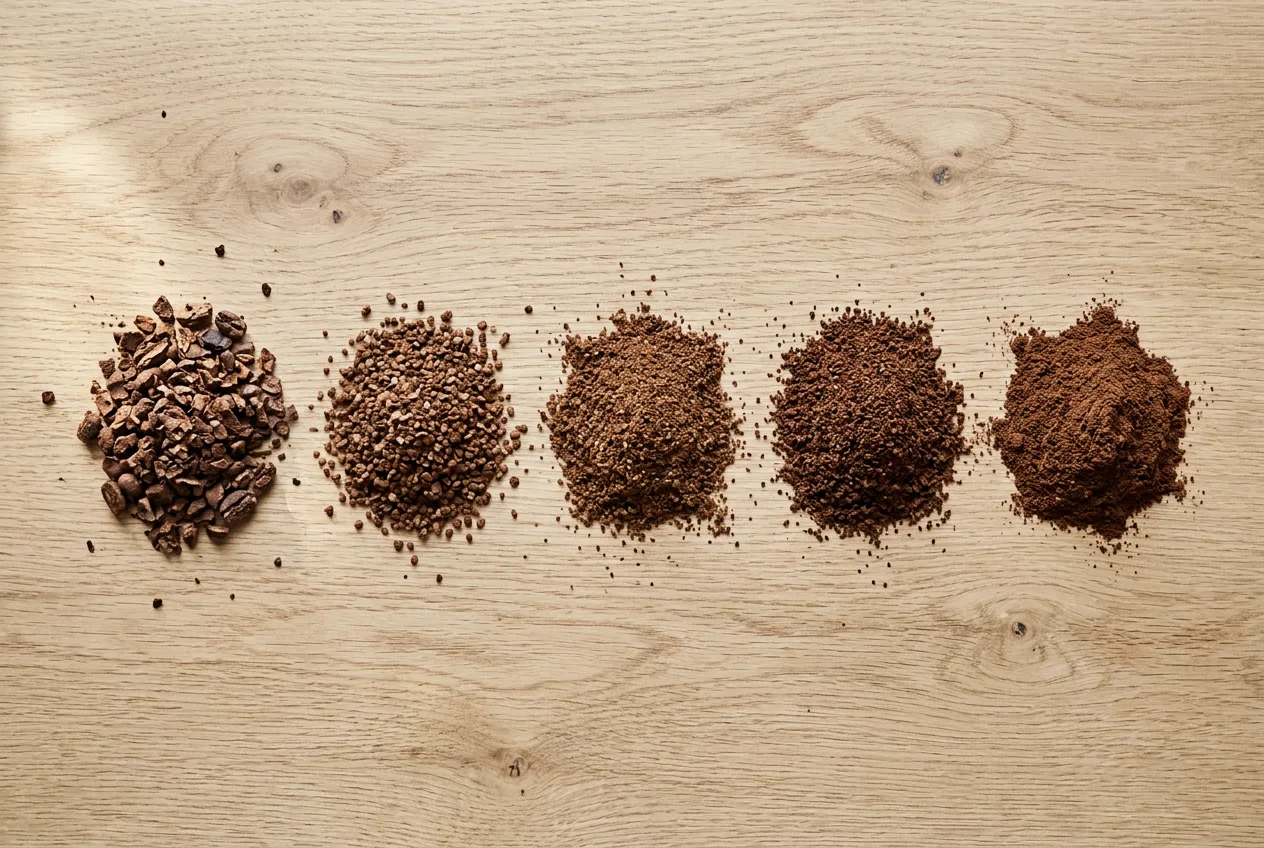
| Method | Grind size | Starting ratio (coffee : water) |
|---|---|---|
| Cold brew | Extra coarse | 1:5 to 1:8 concentrate |
| French press | Coarse | 1:15 to 1:16 |
| Immersion dripper | Medium | 1:15 to 1:16 |
| Drip machine | Medium | 1:15 to 1:17 |
| Pour-over | Medium-fine | 1:15 to 1:17 |
| AeroPress | Fine to medium | 1:12 to 1:16 |
| Moka pot | Fine | About 1:7 to 1:10 |
| Espresso | Fine | 1:2 (e.g. 18 g in, 36 g out) |
| Turkish coffee | Powder | About 1:10 |
Treat these as starting points and adjust to taste. My guide to coffee brewing ratios goes into much more detail.
Water and temperature
Coffee is about 98 percent water, so the water you use matters. If your tap water tastes bad, your coffee will too. Filtered water is a simple fix in many homes.
For most hot methods, aim for water around 90–96°C (195–205°F), just off the boil. Lighter roasts often like the hotter end; darker roasts can taste better slightly cooler. I cover minerals and hardness in water chemistry for coffee.
Cleaning: the overlooked step
Coffee oils build up on every brewer and turn rancid, adding stale, bitter flavors to fresh coffee. Rinse brewers after each use, wash reusable filters regularly, and descale machines according to the manufacturer's instructions. A clean French press or moka pot tastes noticeably better than a neglected one.
A few habits make it easy. Knock out grounds while they're still damp; they slide out far more easily than dried sludge. Give glass and ceramic brewers a wash with mild soap and hot water every few days. Run a descaling solution through drip and espresso machines every one to three months, more often if your water is hard. Backflush espresso machines regularly, and wipe and purge the steam wand after every use so milk never dries on it. Check the moka pot gasket and filter plate once in a while, and replace the gasket when it hardens. Ten seconds after each brew saves you an hour of scrubbing later, and keeps your coffee tasting the way it should.
What I use day to day
Despite everything on my shelf, my daily routine is simple. Weekday mornings, an espresso or flat white from whichever machine I'm testing. Afternoons, a pour-over of something light and fruity, or decaf. Weekends, a big French press for the family. And the AeroPress goes in my bag whenever I travel.
If I could only keep one brewer, it would probably be the AeroPress, for its sheer versatility. But if I could only keep one piece of gear, it would be my burr grinder.
Key takeaways
- Brewers differ mainly in how water meets coffee: immersion, percolation or pressure.
- French press: rich, easy, cheap, but sediment and less clarity.
- Pour-over: clean and nuanced, but needs technique.
- Immersion drippers: pour-over clarity with French press ease.
- AeroPress: fast, portable, versatile; small batches.
- Moka pot: strong stovetop coffee; harder to control.
- Turkish coffee: intense and traditional; needs a powder-fine grind.
- Drip machines: hands-off and great for groups when well made.
- Espresso: the base for milk drinks; costly and demanding.
- Capsules: maximum convenience, higher cost and waste.
- Fresh beans and a burr grinder matter more than the brewer.
The best brewing method is the one that reliably makes coffee you enjoy and fits your routine, budget and time.
Frequently asked questions
What is the best coffee brewing method?
There isn't one best method. French press is best for easy, rich coffee; pour-over for clarity; espresso for milk drinks; drip for groups; capsules for convenience.
What's the easiest way to make good coffee at home?
A French press or an immersion dripper with freshly ground beans. Both are forgiving and cheap.
French press vs pour-over: which is better?
French press gives more body and richness; pour-over gives more clarity and brightness. It depends on your taste.
Is a moka pot the same as espresso?
No. A moka pot makes strong, concentrated coffee using steam pressure, but at much lower pressure than an espresso machine, so it lacks true espresso's body and crema.
Is AeroPress coffee like espresso?
It can make a strong, concentrated coffee, but it doesn't reach espresso pressure. It's closer to a very good, small filter or concentrate.
Are drip coffee makers worse than manual brewing?
Not necessarily. A good drip machine with the right temperature and even water distribution can make excellent, consistent coffee.
Which brewing method has the most caffeine?
Caffeine depends mostly on how much coffee you use. A large mug of drip or French press often contains more total caffeine than a single espresso.
Do I need a grinder?
It's the single best upgrade. Freshly ground coffee tastes far better, and a burr grinder lets you match grind size to your brewer.

- Michael Reynolds, years of home brewing with every method in this guide
- Coffee preparation, Wikipedia
- French press, Wikipedia
- Moka pot, Wikipedia
- AeroPress, Wikipedia
- Turkish coffee, Wikipedia
- Specialty Coffee Association, SCA
Related guides
Coffee brewing ratios explained Burr vs blade grinder Coffee extraction explainedWritten by Michael Reynolds. Last updated November 20, 2026.