De’Longhi La Specialista Opera vs Breville Barista Express Impress
Two all-in-one espresso machines with a grinder and a tamping lever, aimed at people who want real espresso without the mess. The De’Longhi La Specialista Opera adds a superb cool-touch steam wand and a dial of drinks, from Americano to cold brew. The Breville Barista Express Impress adds a dose meter that corrects the next grind by itself. I used each one for four weeks to find out which is the better buy.
We choose products independently. We may earn a commission when you buy through our links. Affiliate policy
Jargon helpNew to espresso? Tap any dotted term to see what it means.
In this comparison
Buy the Breville Barista Express Impress if espresso comes first. Its grinder went fine enough for every roast I tried, its dose meter fixed my dose by itself, and its shots were the better of the two, especially with lighter beans. Buy the De’Longhi La Specialista Opera if you mostly drink lattes and flat whites from medium-dark beans, or want an Americano, Espresso Cool and cold brew at the turn of a dial. Its steam wand made the best milk of the two by a clear margin.
The two machines
Specs checked November 24, 2026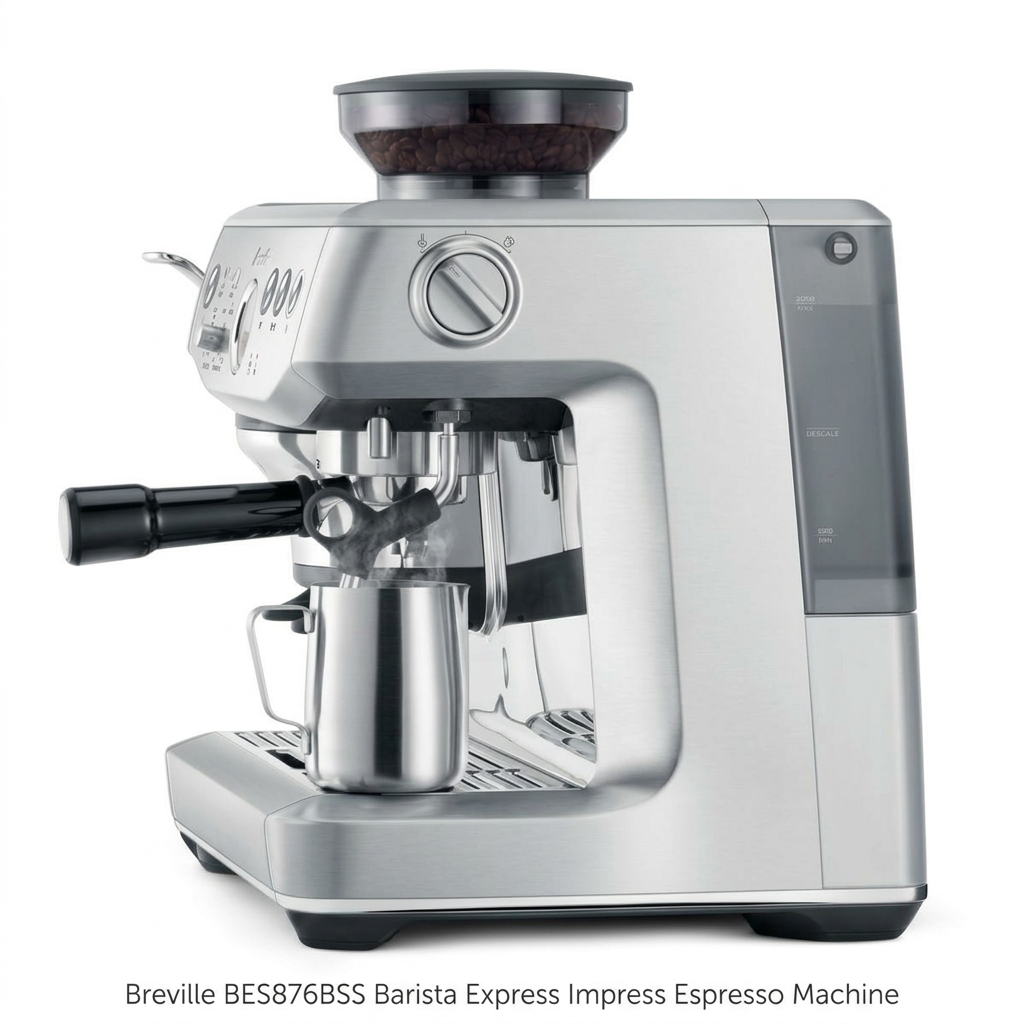
Conical burr grinder with 25 settings and an inner burr, lever tamping with a dose meter that auto-corrects, PID, a pressure gauge and a 54 mm portafilter.
Check price on Amazon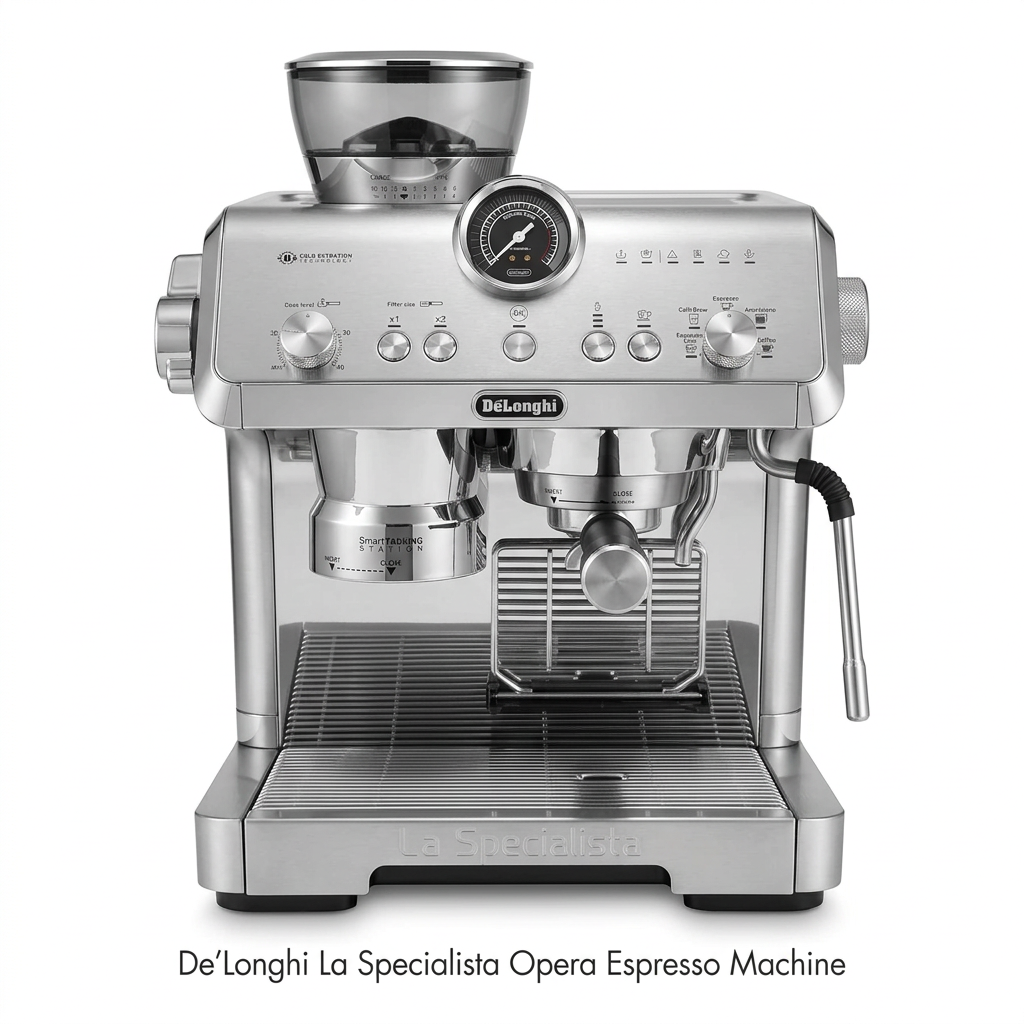
Conical burr grinder with 15 settings, a mess-free tamping lever, a fast cool-touch steam wand and a drink dial with Americano, Espresso Cool and cold brew.
See Today’s PriceLa Specialista Opera vs Express Impress at a glance
- Both grind straight into the portafilter and tamp with a lever, so the counter stays clean.
- The Express Impress made the better espresso, because its grinder and dose correction kept every roast in range.
- The La Specialista Opera made far better milk, switching to steam in about 10 to 12 seconds.
- Choose the Impress if you drink espresso and flat whites from good beans; choose the Opera for lattes, iced drinks and variety.
Head to head
The better result in each row is marked, based on my four weeks with each machine and the manufacturer specs.
This one splits along a clear line. The Express Impress wins the espresso rows; the La Specialista Opera wins the milk and convenience rows.
| Spec | Express Impress | Specialista Opera |
|---|---|---|
| Espressomy tasting, same beans | Sweet, clear, consistent ✓ Best | Rich with dark roasts, sour with light |
| Grinder range | Fine enough for light roasts ✓ Best | Too coarse for light roasts |
| Dosing | Measured, auto-corrects ✓ Best | Timed only |
| Tamping | Lever, with dose meter ✓ Best | Lever, no feedback |
| Milk | Gentle, slower | Fast, silky, cool-touch ✓ Best |
| Heat-up | About a minute | About 15 s ✓ Best |
| Brew to steam | About 15 s | About 10 to 12 s ✓ Best |
| Drink options | Espresso and hot water | Americano, Espresso Cool, cold brew ✓ Best |
| Pressure gauge | Yes ✓ Best | No |
| Footprint | 12.9 in wide, 22 to 23 lb ✓ Best | 15 in wide, 28.5 lb |
| Water tank | About 67 oz | About 67.6 oz |
| Rows won | 6 | 4 |
The tally favors the Impress, but count the rows that matter to you. If you drink mostly lattes, the Opera’s four wins may be worth more than the Impress’s six.
Is It On Sale? Check NowLa Specialista Opera vs Express Impress pros and cons
Breville Barista Express Impress
- Lever tamping makes even, level pucks every time
- Dose meter corrects the next grind automatically
- Grinder handles light and dark roasts
- No low-water sensor on the tank
- Gentle steam takes a while for big jugs
- Auto-off after 30 minutes cannot be changed
De’Longhi La Specialista Opera
- Superb, fast cool-touch steam wand
- Mess-free grinding and tamping lever
- Americano, Espresso Cool and cold brew built in
- Grinder cannot go fine enough for light roasts
- Timed dosing, not real smart dosing
- Very large countertop footprint
Who should buy which machine?
- Espresso and flat white drinkers
- People who buy lighter specialty beans
- Beginners who want feedback on every dose
- Latte and cappuccino lovers
- Fans of medium-dark and dark roasts
- Households that want iced drinks and Americanos
Two ways to assist
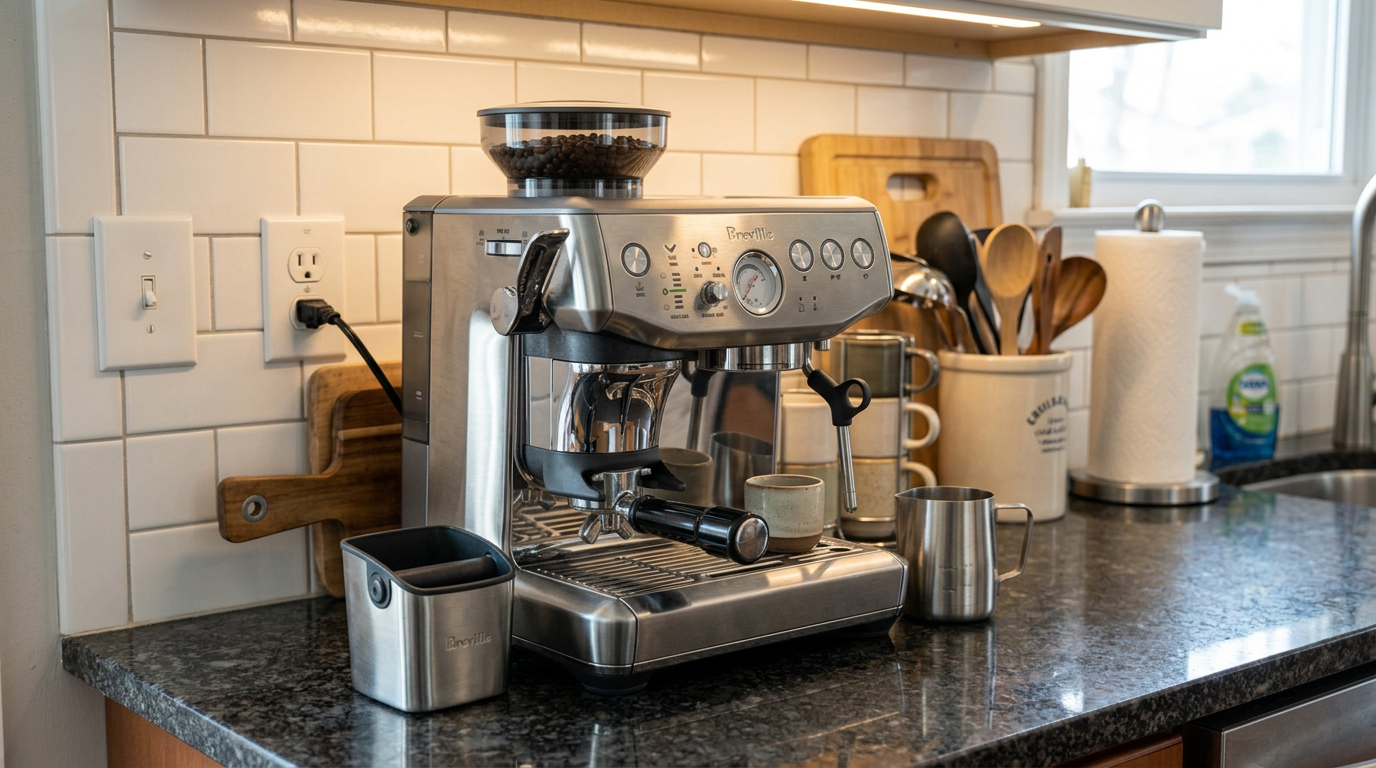
Both are semi-automatic✕Semi-automatic espresso machineA machine where you dose and tamp the coffee into the portafilter yourself, and the machine controls the water and stops the shot. machines with a built-in conical burr grinder. Both grind into the portafilter in a cradle and tamp it with a lever, so you never pick up a loose tamper.
Where they differ is what happens next. The Express Impress measures how full the basket is after tamping, shows whether the dose was low, ideal or high, and changes the next grind time by itself.
The La Specialista Opera tamps to a fixed stop and leaves the judging to you. In return, it adds a fast cool-touch steam wand and a drink dial with a separate hot water spout for Americanos.
In short, the Impress assists your espresso, and the Opera assists your whole menu.
| Feature | Express Impress | Specialista Opera |
|---|---|---|
| Grinder | Conical, 25 settings plus inner burr | Conical, 15 settings |
| Dosing | Timed, corrected by sensor | Timed by dial |
| Tamp | Lever, measured | Lever, fixed stop |
| Drinks | Espresso, hot water | Espresso, coffee, Americano, Espresso Cool, cold brew, hot water |
If you are weighing the Impress against Breville’s classic, read my Barista Express vs Express Impress comparison.
Design, size and build
The La Specialista Opera is big, heavy and handsome: about 15 inches wide, 14.6 inches deep and 17.5 inches tall, and about 28.5 pounds. Brushed metal panels, a bean hopper, a tamping lever on the side and a drink dial on the front make it look like a serious Italian machine.
The Express Impress is more compact for an all-in-one: about 12.9 inches wide, 14.9 inches deep and 16.1 inches tall, at 22 to 23 pounds. Its smooth, rounded panels wiped clean in one sweep.
Both stayed planted when I locked in the portafilter or pulled the tamping lever. Neither ever slid on my counter.
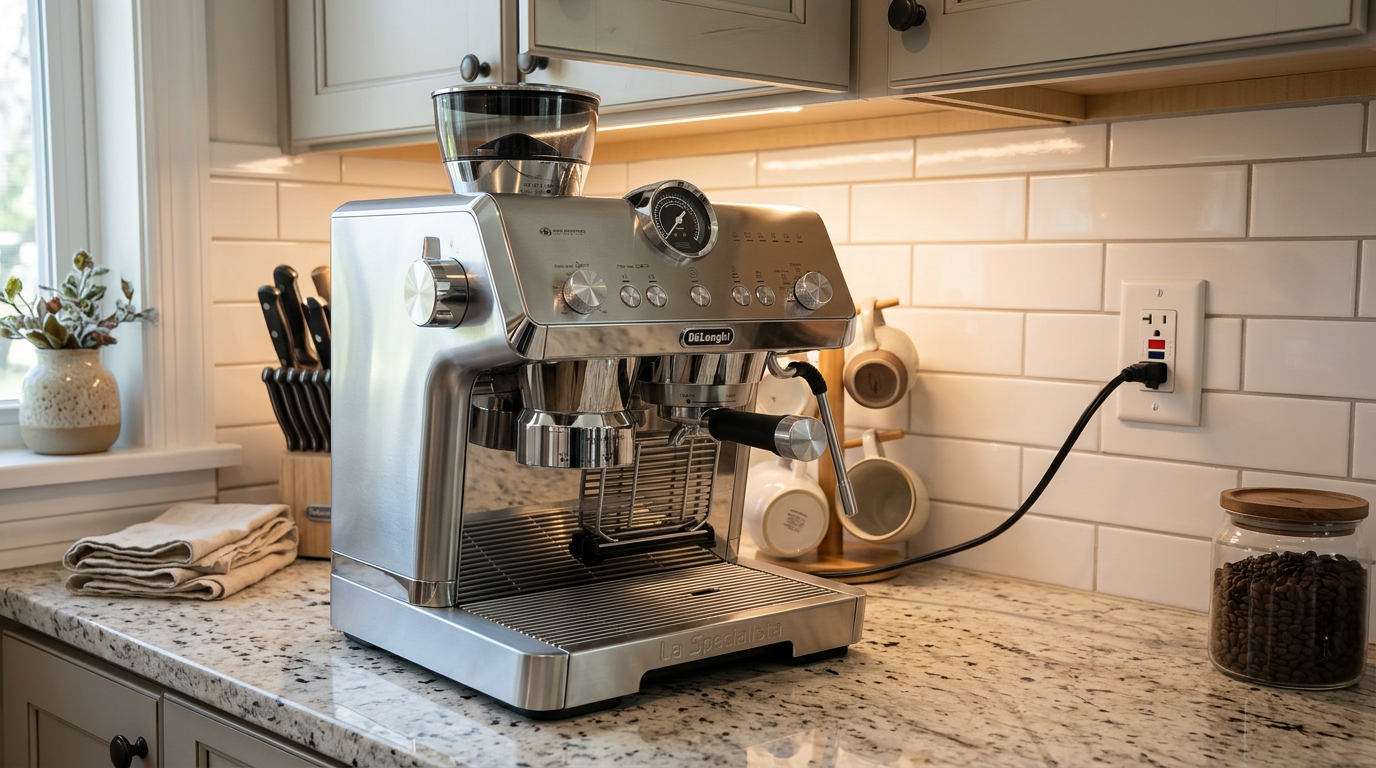
The La Specialista Opera is the bigger machine by about two inches in width and five pounds in weight.
The Opera’s 4.7 inches of cup clearance fit cappuccino cups and smaller travel mugs without removing the drip tray. On the Impress, cups and small mugs fit; for tall glasses, I brewed into a cup and poured.
Our tip: Measure the height under your cabinets with the hopper lid open before you buy; the La Specialista Opera is about 17.5 inches tall.
Setup and first shots
The Express Impress took about 20 minutes. I soaked and fitted the water filter, filled the tank, primed the pump by running hot water through the outlet, flushed the group and filled the hopper.
From the factory, its upper burr was set to 5. With fresh espresso beans, that left the grind too coarse even near the fine end of the wheel, so I moved it to 3. After that, the side wheel had plenty of usable steps.
The La Specialista Opera took about 15 minutes. It heated up in about 15 seconds, and my first medium-dark shot was rich and balanced with a hazelnut crema, with no coffee on the counter.
| Setup step | Express Impress | Specialista Opera |
|---|---|---|
| Time to first shot | About 20 minutes | About 15 minutes |
| Grinder tweak | Inner burr from 5 to 3 | None needed for dark roasts |
| Water filter | Included | Check your box |
| First good shot | Day one, after the burr change | Day one, medium-dark beans |
Our tip: Prime the Impress’s pump by running hot water through the outlet before your first shot, so there is no air in the lines.
The grinders: where they differ most
The Express Impress has stainless conical burrs with 25 settings on a side wheel, plus an inner burr you can move to shift the whole range. With the inner burr at 3, it ground fine enough for every bean I tried, from dark blends to a light single origin.
The La Specialista Opera has a conical burr grinder with 15 settings, up from 8 on older La Specialista models. With a fresh medium-dark blend in the single-wall basket, I needed setting 3 for a proper shot time.
With a light single origin, I reached the finest setting, 1, and the shot still ran too fast and sour. Lighter, denser beans need a finer grind than the Opera can make.
Opera shot time at the finest workable setting
Double basket, 18 g. The Impress hit 25 to 30 seconds with all four beans.
With the pressurized baskets that both machines include, grind range matters less, because the basket builds the pressure. But that also caps the flavor.
For why burr grinders matter so much, see my guide to burr vs blade grinders.
See Today’s PriceDosing and tamping
Both grind by time. On the La Specialista Opera, a dose dial sets how long the grinder runs. There is no scale or sensor, so the weight changed with the beans: switching from a dark blend to a dense medium roast dropped my double by more than a gram.
The Express Impress also grinds by time, but after you pull the tamping lever, a sensor checks how full the basket is. A small meter shows low, ideal or high, and the machine changes the next grind by itself.
That difference showed up every time I opened a new bag. On the Impress, the meter caught it within a shot or two. On the Opera, I weighed the first two shots and turned the dial myself.
| Beans | Opera dose, same dial | Impress dose |
|---|---|---|
| Dark blend | About 18 g | Corrected to ideal |
| Medium-dark blend | About 17.5 g | Corrected to ideal |
| Medium roast, dense | About 16.6 g | Corrected to ideal |
The tamping levers
Both levers press the coffee level inside the portafilter while it sits in the cradle. No coffee on the counter, no tilted pucks.
The Opera’s lever is smooth and presses to a fixed stop. The Impress’s lever adds a final twist that polishes the puck surface, and then it reports the dose.
One shared catch: because tamping happens in the cradle, you cannot easily stir the grounds with a WDT tool✕WDT (Weiss Distribution Technique)Stirring the ground coffee with thin needles to break up clumps before tamping, which helps water flow evenly. before tamping on either.
Espresso quality
With a medium-dark blend, both made rich, balanced espresso. The Opera’s shots had good body and a hazelnut crema. The Impress’s were a touch sweeter and clearer, and they sat in the middle of its pressure gauge’s espresso zone from the first week.
With medium and light roasts, the gap opened up. The Impress pulled bright, juicy shots once I ground a few steps finer and raised the temperature. The Opera could not grind fine enough, so those shots ran fast and sour.
In blind tastings across four different beans, I preferred the Impress in eleven of sixteen cups. With the dark blend alone, it was close to even.
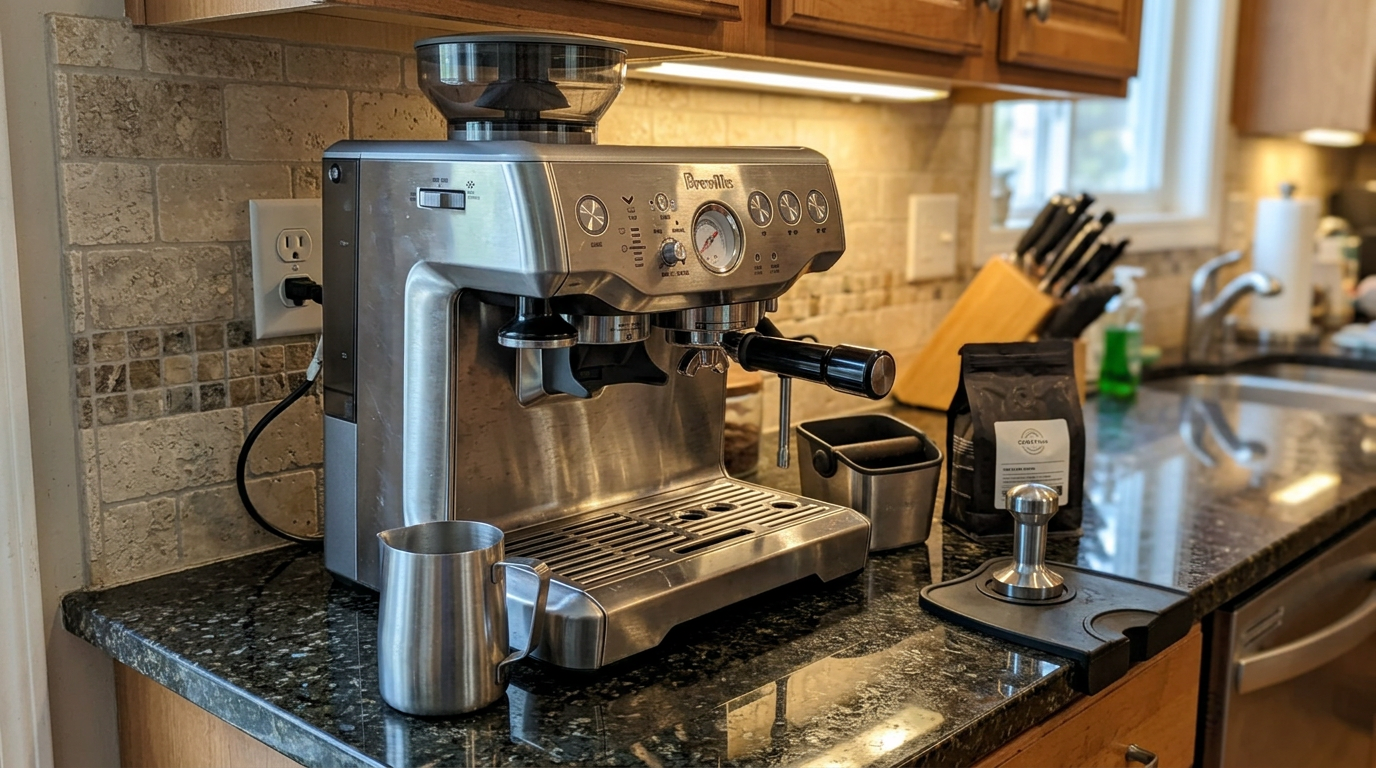
The Express Impress kept every roast I tried in range.
My espresso ratings by roast
Ratings out of 10 from my tasting notes, same beans and dose.
Both use a 15-bar or 19-bar pump with an over-pressure valve that limits brewing to about 9 bar at the coffee, which is what you want.
If you are still choosing beans, my guide to coffee roast levels explains how roast changes the grind.
Reveal Today’s DealLight vs dark roasts
This is the single best question to ask yourself before choosing. What beans do you buy?
If it is supermarket espresso blends, medium-dark or dark, both machines will make you happy, and the Opera’s milk may tip the balance.
If it is lighter specialty coffee from a local roaster, the Impress is the safer machine. Its finer grind and five temperature settings gave me room to make those beans taste sweet instead of sour.
| Bean type | Express Impress | Specialista Opera |
|---|---|---|
| Dark blend | Rich, chocolatey | Rich, great in milk |
| Medium-dark | Sweet, balanced | Balanced, setting 3 |
| Medium roast | Sweet, fruity | A little fast |
| Light single origin | Bright, juicy | Sour, too fast |
Our tip: If you buy light roasts, choose the grinder before the steam wand; no milk system fixes a sour shot.
Temperature control
The Express Impress uses a thermocoil with PID✕PID temperature controlA digital controller that keeps the brew water at a steady, set temperature, shot after shot. control and five brew temperatures from about 195.8°F to 203°F. I used the lower settings for dark roasts and the highest for light ones.
The La Specialista Opera uses a fast thermoblock with active temperature control. It held steady from shot to shot with medium-dark beans, and its Espresso Cool setting deliberately brews cooler and slower for iced drinks.
In practice, the Impress gave me more control for specialty beans, and the Opera gave me more convenience for everyday drinks.
Heat-up and speed
The Opera was ready in about 15 seconds from cold, and it switched to steam in about 10 to 12 seconds after the shot.
The Impress took about a minute to heat and about 15 seconds to switch to steam. It cannot brew and steam at the same time.
For one espresso, the difference hardly mattered. For a latte, the Opera was about a minute quicker, mostly because of its steam.
Switch-on to first sip, one latte
My timings, including grinding, tamping, steaming and a quick wipe.
Milk steaming
This is where the La Specialista Opera shines. Its cool-touch wand stayed cool on the outside, so milk did not bake onto it, and its single-hole tip had plenty of power.
It steamed about 5.75 ounces of milk in roughly 40 seconds and made the silkiest microfoam✕MicrofoamMilk foam with bubbles so small you can barely see them. It looks glossy and is what makes latte art possible. I have had from a machine at this level. I was pouring rosettas by week two.
The Express Impress’s wand is gentler. It made good, pourable milk, but a full jug took longer, and the first week needed patience to build a whirlpool.
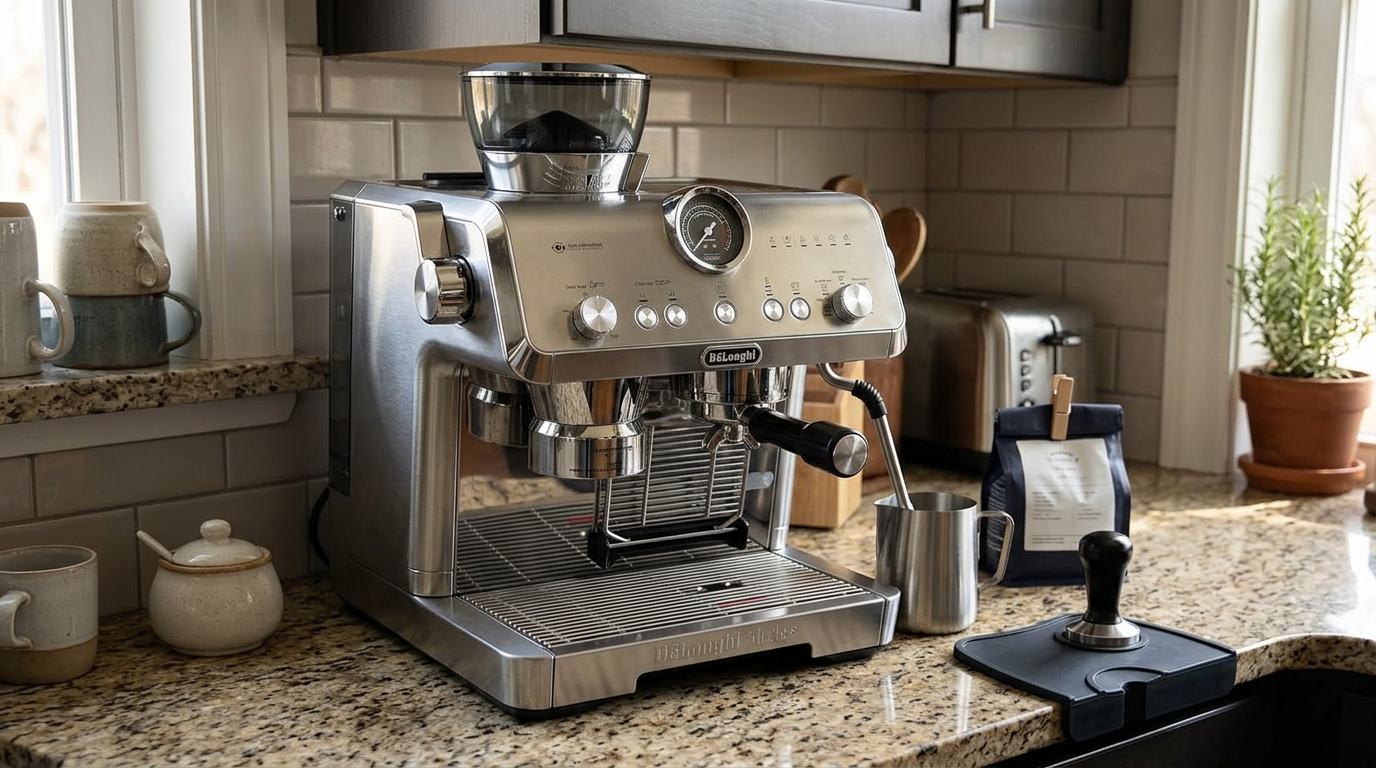
The Opera’s cool-touch wand made the best milk of the two from the first week.
Milk texture over four weeks
My texture ratings out of 10 with cold whole milk.
| Milk feature | Express Impress | Specialista Opera |
|---|---|---|
| Wand | Manual, standard tip | Manual, cool-touch, single-hole |
| Brew to steam | About 15 s | About 10 to 12 s |
| One latte jug | About 60 s | About 40 s |
| Cleaning the wand | Wipe straight away | Easy, stays cool |
| Learning curve | About two weeks | About a week |
Our tip: On the Opera, keep the jug tilted slightly so the milk spins; its wand is strong enough to over-stretch if the tip sits too high.
See How Much You’ll SaveAmericano, Espresso Cool and cold brew
The Opera’s drink dial is a real advantage for households with mixed tastes. Its Americano✕AmericanoEspresso topped up with hot water. Adding the water after the shot keeps more of the crema. pulls an espresso, then adds hot water from a separate spout rather than running extra water through the coffee, which tasted cleaner.
Espresso Cool brews a lower-temperature, slower shot designed for pouring over ice. The cold brew option makes a cold-extracted drink in a few minutes. Both became my partner’s favorites in summer-style weekend drinks.
On the Impress, an Americano means a shot plus water from the hot water outlet, which works well. There is no iced or cold-brew mode.
| Drink | Express Impress | Specialista Opera |
|---|---|---|
| Americano | Shot plus hot water outlet | One turn of the dial |
| Iced latte | Shot over ice | Espresso Cool over ice |
| Cold brew style | Not available | Built in |
| Tea | Hot water outlet | Hot water setting |
If you are new to these drinks, my guide to iced coffee vs cold brew explains the difference.
Cleaning and upkeep
Both keep the counter clean, because grinding and tamping happen inside the machine. The Impress has a three-way valve✕Three-way solenoid valveA valve that releases leftover pressure from the group after the shot, leaving a drier coffee puck. and left dry pucks; its rounded panels wiped clean quickly.
The Opera’s cool-touch wand was the easiest to keep clean, and its pucks knocked out neatly too. Both grinders need a brush around the chute weekly.
| When | Express Impress | Specialista Opera |
|---|---|---|
| After milk | Wipe and purge the wand | Wipe and purge, stays cool |
| Daily | Empty tray, rinse basket | Empty tray and grounds, rinse basket |
| Weekly | Brush grinder chute and gasket | Brush grinder chute and gasket |
| When prompted | Clean cycle with a tablet | Descale |
| Every 2 to 3 months | Replace the water filter | Check your filter |
My daily hands-on cleaning time
My estimates, not counting descaling.
Noise
The Impress was noticeably quiet, both grinding and brewing. The Opera’s grinder was a little louder and higher-pitched, but brief.
Steaming was a steady hiss on both, stronger on the Opera.
How loud each felt, my ranking
Relative loudness from side-by-side use.
Beans, water and long-term care
The tanks are almost the same, about 67 ounces on the Impress and about 67.6 on the Opera. Neither ran dry often, but the Impress has no low-water sensor, so I checked it every morning.
The Impress also switches off after 30 minutes of inactivity, and that cannot be changed. On weekends, I sometimes had to wait for it to heat again.
Use fresh beans roasted within the last few weeks, and avoid very oily dark beans in both grinders. My guide to water chemistry for coffee explains why filtered water helps.
Our tip: Write your grind setting on the coffee bag, so you can return to it after trying a new bean.
Serving guests
Four lattes took me about 12 minutes on the Opera and about 16 minutes on the Impress. The Opera’s faster steam and Americano button made it the better host.
On the Impress, pulling all four shots first, then steaming two jugs, saved a few minutes.
Four lattes, start to finish
Including grinding, tamping, steaming and a quick wipe.
Build quality and long-term ownership
The Opera feels the more premium of the two: heavy, solid and full of brushed metal. Its portafilter has a satisfying weight.
The Impress feels well made, with smooth panels and fewer crevices for coffee dust. It is lighter and easier to slide out for cleaning.
Neither gave me a fault in four weeks. The Impress uses Breville’s common 54 mm size, so baskets and tampers are easy to find.
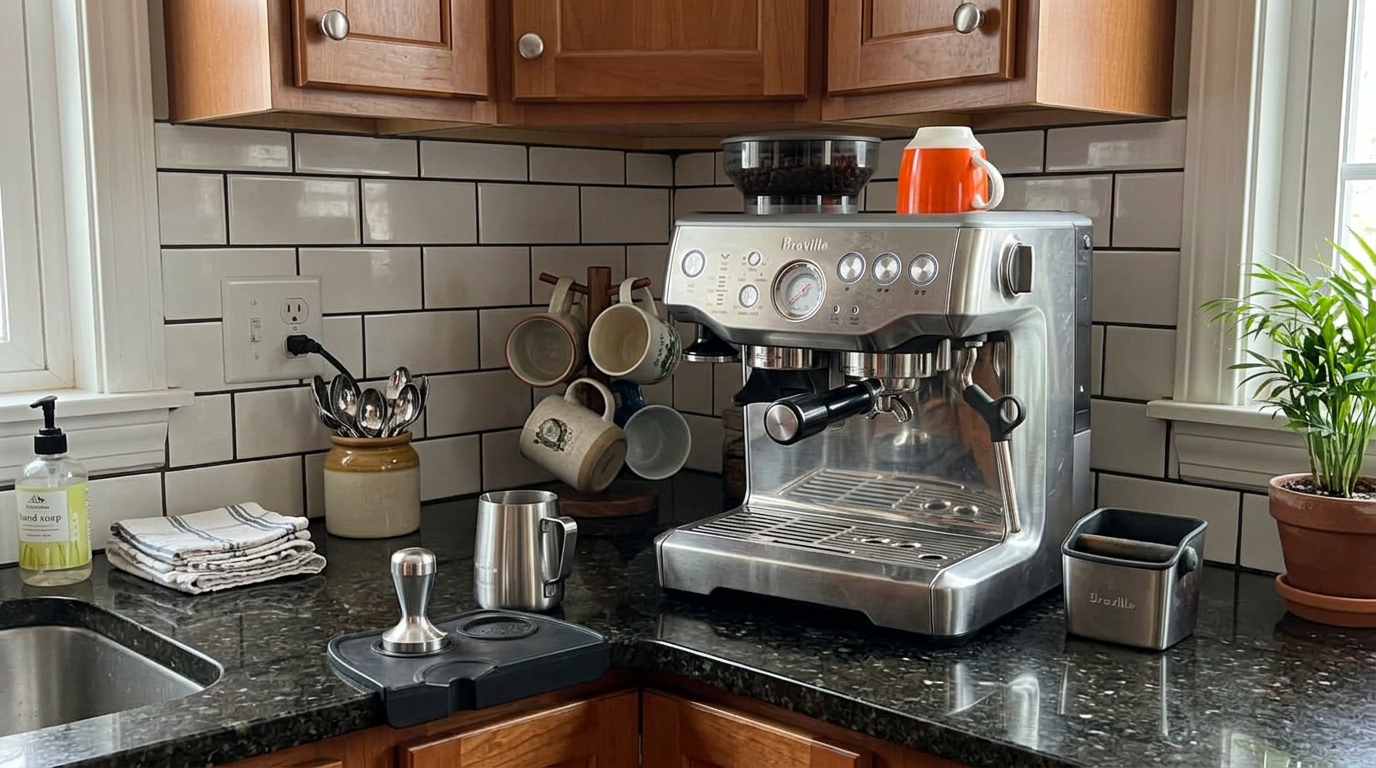
The Impress is about two inches narrower than the Opera.
Mistakes to avoid
Leaving the Impress’s inner burr on the factory setting. The wheel ran out of fine steps. Moving it from 5 to 3 fixed it.
Buying light roasts for the Opera. Even on setting 1, they ran fast and sour.
Trusting the Opera’s dose dial with a new bag. The weight changed. Weigh and adjust.
Forgetting the Impress’s tank. There is no low-water warning.
| Problem | Fix |
|---|---|
| Impress meter says low | Let it correct the next grind |
| Opera shot runs fast | Add dose before tamping harder |
| Big bubbles on the Impress | Start steam before dipping the tip |
| Opera milk too airy | Lower the tip sooner |
A typical morning on each
My weekday routine was a flat white for me and a latte for my partner.
On the Opera, I switched on, ground and tamped, brewed, and steamed within seconds of the shot. Both drinks took about six minutes.
On the Impress, I switched on first, ground and tamped while it heated, brewed both shots, then steamed two jugs. Both drinks took about eight minutes.
| Step | Express Impress | Specialista Opera |
|---|---|---|
| Heat-up | About 1 min | About 15 s |
| Grind and tamp | About 30 s | About 30 s |
| Shot | About 28 s | About 27 s |
| Brew to steam | About 15 s | About 10 to 12 s |
| Steam one jug | About 60 s | About 40 s |
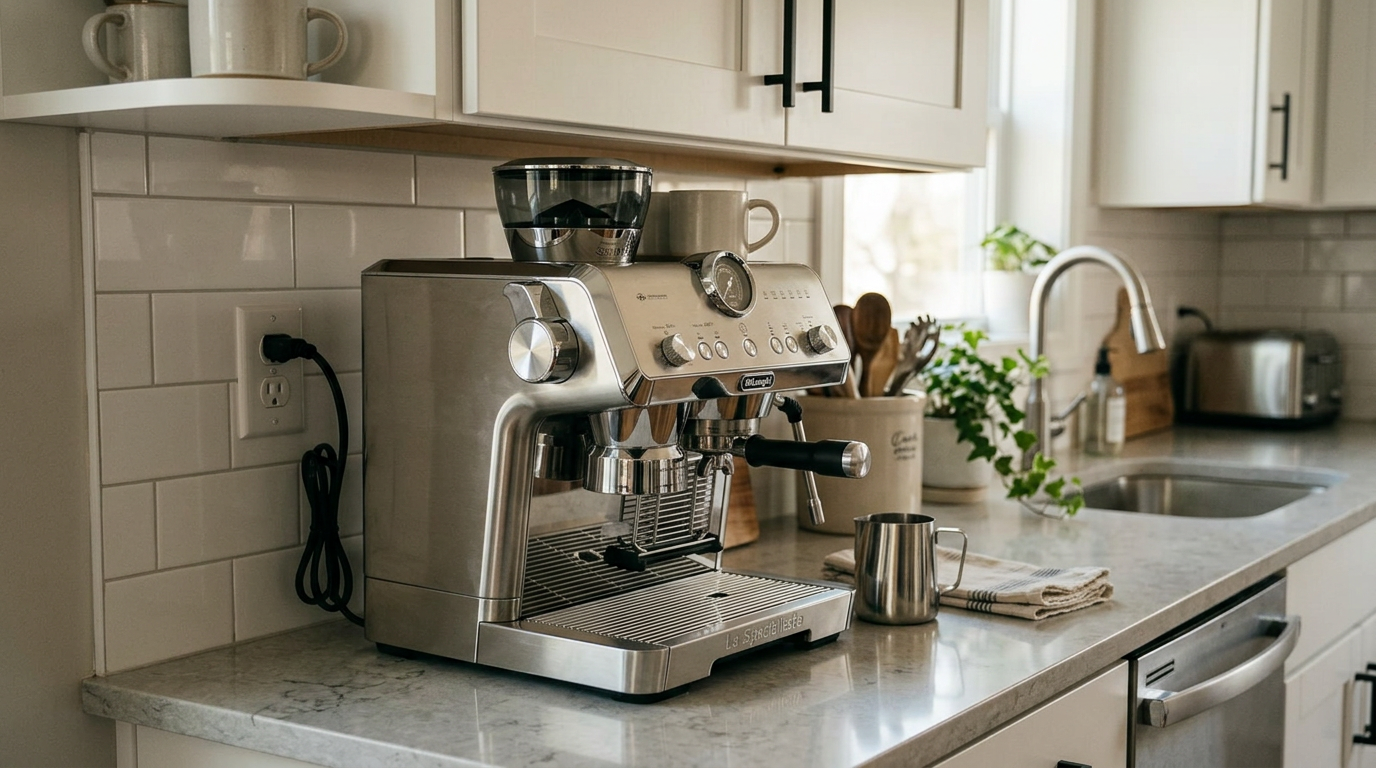
A weekday latte round on the Opera.
Which makes the better first espresso machine?
Both are excellent first machines, because both remove the messiest step. For most beginners, the Express Impress edges it: its dose meter teaches you what a good dose looks like, and its gauge shows what each grind change did.
For a beginner who mostly wants lattes, the Opera is easier, because its milk is so much more forgiving.
| Coming from | Better pick | Why |
|---|---|---|
| Pods, curious about espresso | Express Impress | Dose meter and gauge teach you |
| Café lattes every day | Specialista Opera | Fast, silky milk |
| Specialty light roasts | Express Impress | Grinder goes fine enough |
| Mixed household, iced drinks | Specialista Opera | Drink dial |
Our tip: Give either machine a full week before you judge it; both got noticeably better once I learned their habits.
Small extras worth having
Both come well equipped, but a few extras helped.
A small scale with a timer was the most useful on both, and essential on the Opera for checking the dose after each new bag. A knock box kept the routine tidy.
On the Impress, I kept spare water filters on hand. On the Opera, a second, smaller milk jug made flat whites easier.
| Extra | Express Impress | Specialista Opera |
|---|---|---|
| Scale with timer | Useful to check the meter | Essential for dosing |
| Knock box | Useful | Often in the box |
| Water filters | Replace every 2 to 3 months | Check your model |
| Second milk jug | Nice to have | Great for flat whites |
Still torn between the two?
Start with your beans. Light roasts point firmly to the Impress. Darker blends leave both on the table.
Then think about milk. If most drinks in your home have milk in them, the Opera’s wand will make you smile every morning.
Finally, measure your counter. The Opera needs about two more inches of width and more height under the cabinets.
Our tip: Buy the machine for the drink you make most often, not the one you make on special occasions.
Four weeks with each: my diary notes
These are the notes I kept as each machine settled into my routine.
Breville Barista Express Impress
Week 1: Moved the inner burr from 5 to 3. Level pucks and the gauge in the espresso zone from the first morning.
Week 2: The meter caught a lighter dose with new beans and fixed it by the next shot.
Week 3: A light single origin at the highest temperature: bright and sweet.
Week 4: Milk finally consistent once I started the steam before dipping the tip.
De’Longhi La Specialista Opera
Week 1: Medium-dark blend on setting 3. Silky milk from the first morning.
Week 2: Rosettas in lattes. Started weighing the dose after each new bag.
Week 3: Light roast on setting 1: too fast and sour. Went back to medium-dark.
Week 4: Espresso Cool and cold brew became weekend favorites.
Real-life scenarios
These are the situations where one machine clearly fit better in my four weeks.
Grinds fine enough and lets you raise the temperature.
Steam in seconds, silky milk.
Espresso Cool and cold brew built in.
Dose meter and pressure gauge.
Faster steam and an Americano button.
About two inches narrower.
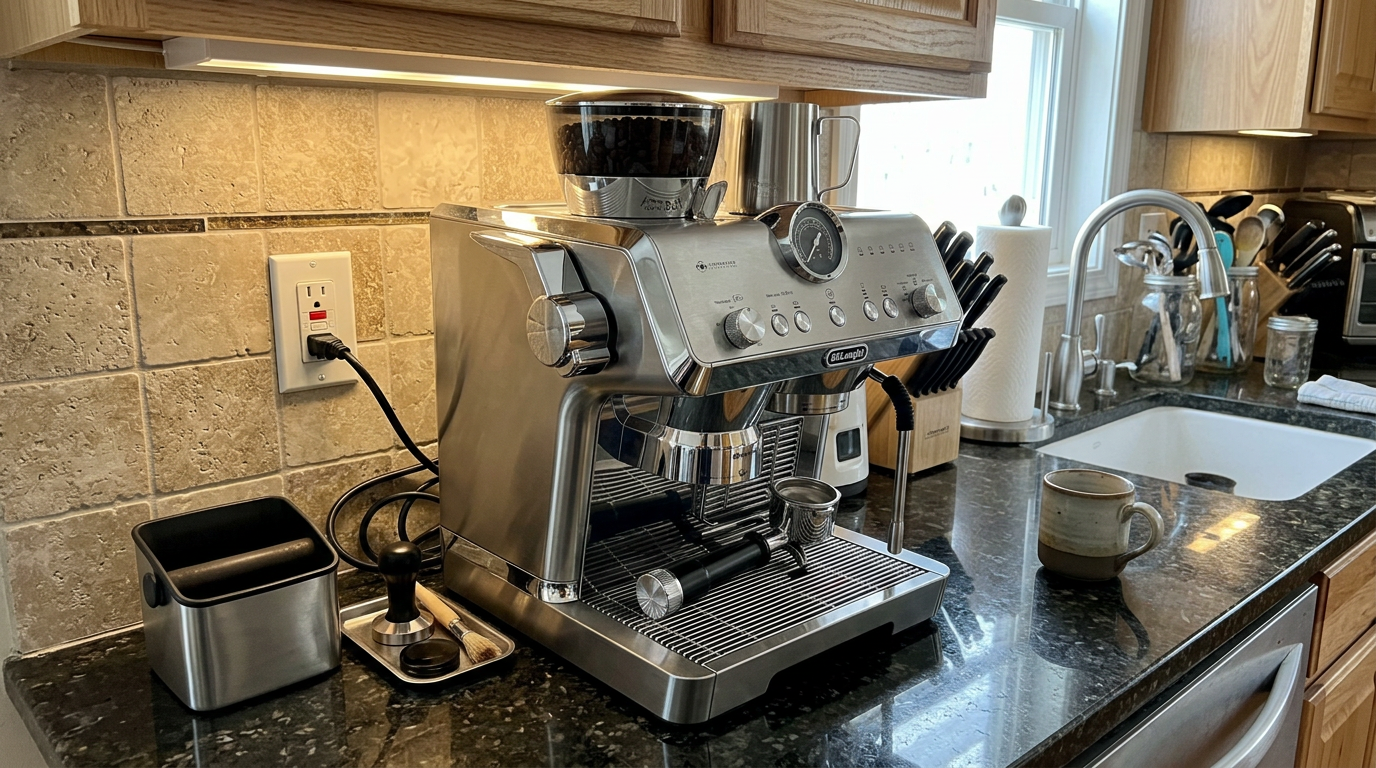
The Opera with its knock box and pitcher: a complete latte station.
My scorecard
These are my scores out of 10 from my single reviews and four weeks of side-by-side use.
Breville Barista Express Impress
De’Longhi La Specialista Opera
Overall, I rate the Express Impress 8.3 and the La Specialista Opera 8.0. If you only use medium-dark beans, the Opera’s espresso score would sit closer to 8.2.
Find Out the Price TodayWhich one is right for you?
4 quick questionsWhich one should you buy?
For most people, the Breville Barista Express Impress. It made the better espresso across every roast, and its dose meter took the guesswork out of each new bag.
For milk lovers with darker beans, the De’Longhi La Specialista Opera. For the full detail, read my Express Impress review and La Specialista Opera review, or my Barista Pro vs Express Impress comparison.
- You drink espresso or flat whites
- You buy lighter specialty beans
- You want feedback on every dose
- You make many milk drinks in a row
- You want iced or cold-brew modes
- You hate checking a water tank
- You drink lattes and cappuccinos most
- You buy medium-dark or dark beans
- You want Americano and iced drinks on a dial
- You buy light roasts
- You want dose feedback
- Your counter is tight
My pick for most people is the Breville Barista Express Impress. Its grinder range, temperature settings and self-correcting dose made the better espresso, with less guesswork.
The De’Longhi La Specialista Opera is the better choice for latte lovers with medium-dark beans. Its cool-touch steam wand was the best of the two by a clear margin, and its drink dial is genuinely useful.
Whichever you choose, use fresh beans, weigh your dose after each new bag and purge the wand after every drink.
La Specialista Opera vs Express Impress specifications
From manufacturer specifications and my own testing.
| Express Impress | Specialista Opera | |
|---|---|---|
| Model | BES876BSS | La Specialista Opera |
| Grinder | Conical burrs, 25 settings plus inner burr | Conical burrs, 15 settings |
| Dosing | Timed, auto-corrected by sensor | Timed by dial |
| Tamping | Lever with dose meter | Lever, fixed stop |
| Heating | Thermocoil with PID | Thermoblock, active temperature control |
| Brew temperatures | 5, about 195.8 to 203°F | Espresso and Espresso Cool modes |
| Pump | 15 bar | 19 bar, limited to about 9 bar |
| Baskets | 54 mm, single-wall and dual-wall | Single-wall and pressurized |
| Steam wand | Manual | Manual, cool-touch |
| Drink options | Espresso, hot water | Espresso, coffee, Americano, Espresso Cool, cold brew, hot water |
| Pressure gauge | Yes | No |
| Water tank | About 67 oz | About 67.6 oz |
| Dimensions (W x D x H) | 12.9 x 14.9 x 16.1 in | 15 x 14.6 x 17.5 in |
| Weight | 22 to 23 lb | About 28.5 lb |
How I tested and compared them
Michael Reynolds here. I used each machine as my everyday espresso maker for four weeks, with the same four beans from dark to light, the same scale and the same cups, and kept detailed notes throughout.
I mapped each grinder’s range, weighed doses after every new bag, ran blind tastings and timed every step from switch-on to sip.
I steamed whole, 2%, barista oat and almond milk on both, and tried every drink on the Opera’s dial.
- Espresso: body, crema, flavor and consistency.
- Milk: foam texture and learning curve.
- Workflow: heat-up, prep and daily routine.
- Ownership: cleaning, noise, water and footprint.
La Specialista Opera vs Express Impress FAQ
What is the difference between the La Specialista Opera and the Barista Express Impress?
Both have a built-in grinder and a tamping lever. The Express Impress adds a dose meter that corrects the next grind, a pressure gauge, PID with five temperatures and a grinder that goes fine enough for light roasts. The La Specialista Opera adds a fast cool-touch steam wand and a drink dial with Americano, Espresso Cool and cold brew.
Which makes better espresso?
The Express Impress, especially with medium and light roasts. With dark blends, the two were close.
Which is better for lattes?
The La Specialista Opera. Its cool-touch wand switched to steam in about 10 to 12 seconds and made the silkiest milk of the two.
Can the La Specialista Opera grind light roasts?
Not reliably. Even on setting 1, my light single origin ran fast and sour.
Does either weigh the coffee?
No. Both grind by time. The Impress checks the tamped dose with a sensor and corrects the next grind; the Opera relies on its dose dial.
How fast do they heat up?
The Opera in about 15 seconds, the Impress in about a minute.
Which is smaller?
The Express Impress, at about 12.9 inches wide and 22 to 23 pounds, against about 15 inches and 28.5 pounds.
Does the Express Impress have a low-water warning?
No. Check the tank before you brew.
What is Espresso Cool?
A lower-temperature, slower extraction on the Opera, designed for pouring over ice.
Can I stir the grounds before tamping?
Not easily on either, because tamping happens in the grinding cradle.

- Our hands-on Breville Barista Express Impress review
- Our hands-on De’Longhi La Specialista Opera review
- Manufacturer specifications and owner documentation
- General espresso brewing and milk steaming guidance