Japanese Kissaten Coffee Culture: Tokyo's Traditional Coffee Shops, Siphons, Thick Toast and Music Cafés
Long before third wave pour-over bars, Japan had the kissaten: quiet, dimly lit coffee shops run by a devoted "master," serving hand-brewed coffee, thick toast and bright green cream sodas. Here is what makes them special, how they brew, what to order and how to enjoy one like a regular.
We choose products independently. When you buy through links on HouseholdMe we may earn a commission, at no extra cost to you. Affiliate policy
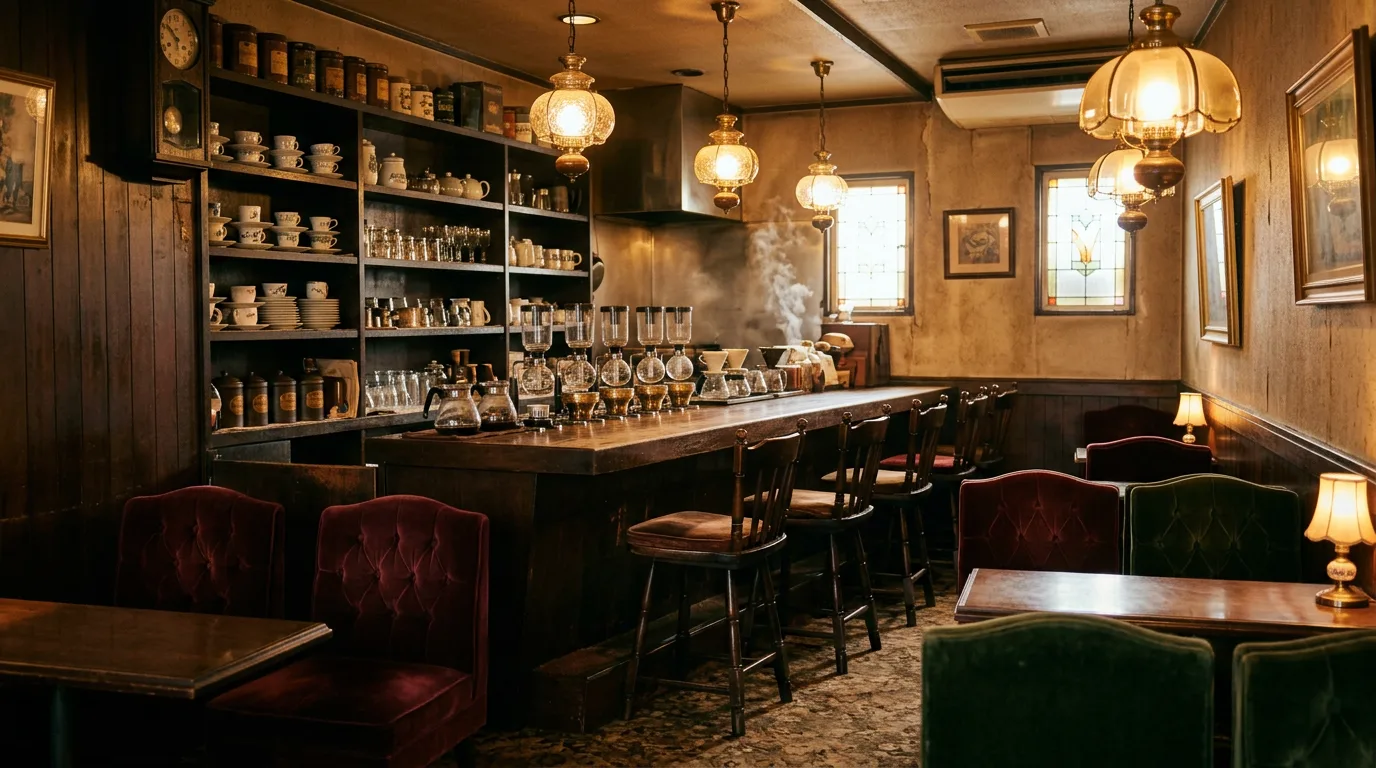
A kissaten is a traditional Japanese coffee shop built around slow, carefully made coffee and a calm place to sit. Unlike fast modern cafés, kissaten are quiet, often retro spaces with wooden counters, velvet chairs and an owner, called the "master," who has a strong personal style. Coffee is usually hand-brewed with flannel drip or a glass siphon, often from a dark, rich house blend. Menus are simple: coffee, tea, thick toast, egg sandwiches and colorful soda floats. Some kissaten are devoted to music, with huge speakers or gramophones. The best way to start is to order the house blend and take your time.
Why I wrote this
The first time I stepped into an old Tokyo kissaten, it felt like walking into a time capsule. Amber lamps, dark wood, a row of glass siphons bubbling on the counter, soft jazz, and an older man in a waistcoat brewing each cup as if nothing else in the world mattered.
Nobody was in a hurry. A salaryman read the newspaper. A student studied. Two older women talked in low voices. My coffee took eight minutes to arrive and was worth every one of them.
Kissaten have influenced coffee far beyond Japan. Many of the drippers, kettles and slow-brewing habits of today's specialty cafés trace back to Japanese coffee culture. Yet outside Japan, few people know what a kissaten actually is.
Since then I've sought out kissaten whenever I can, from tiny six-seat counters run by one person to grand old shops with chandeliers and waistcoated staff. No two have felt the same, and that individuality is exactly what I love about them.
This guide explains their history, how they brew, what to eat and drink, the different kinds you'll find, and how to enjoy one, whether you're visiting Tokyo or just want to bring a little kissaten calm into your own kitchen.
What is a kissaten?
The word kissaten (喫茶店) roughly means "tea-drinking shop," but in practice it refers to a traditional Japanese coffee shop. People often shorten it to kissa.
A kissaten offers an experience centered on coffee, atmosphere and relaxation. Modern cafés often emphasize speed, takeaway cups, big food menus and busy social buzz. A traditional kissaten is designed for sitting down and slowing down.
Many customers stay for a long time, reading, studying, working or simply resting. Conversations are kept low. The space is made for lingering.
Above all, each kissaten has a personality. There's no standard design. The interior, the music, the menu and the brewing method usually reflect the tastes of the owner: antique furniture, stained-glass windows, vintage clocks, old coffee equipment, carefully chosen records.
You'll often spot a kissaten by its look from the street: a small wooden door, a heavy curtain or frosted glass, a hand-painted sign and a window display of plastic food samples showing toast, spaghetti and brightly colored sodas.
Some are elegant and stylish. Some feel like stepping back into the 1960s. Some are almost entirely about listening to music. That variety is a big part of the fun.
A short history of the kissaten
Coffee arrived in Japan through Dutch traders in Nagasaki during the Edo period, but for centuries it remained a curiosity. It only began to spread after Japan opened to the West in the second half of the 19th century.
In 1888, a coffee house called Kahiichakan opened in Tokyo's Ueno district. It's usually remembered as the city's first Western-style coffee shop. It didn't last long, but the idea did.
In the early 20th century, cafés multiplied in Tokyo and Osaka. Some were stylish places where writers and artists met; others became more like bars with hostesses. Over time, the term kissaten came to mean a place focused on coffee and non-alcoholic drinks, distinct from these drinking cafés.
After the Second World War, as coffee imports resumed and the economy grew, kissaten spread across the country. The postwar decades were their golden age. Every neighborhood had one or several, and many developed specialties: jazz kissa with enormous record collections, classical music kissa with reverent listening rooms, siphon specialists, and shops famous for a single blend.
Kissaten numbers peaked around the early 1980s, when estimates put them at well over 100,000 nationwide. After that, many closed. Owners aged, rents rose, and cheaper self-service coffee chains arrived from the 1980s and 1990s onward.
Today, a new generation has rediscovered them. Young people visit "retro kissa" for the atmosphere, the vintage interiors and the photogenic cream sodas, and some new shops deliberately revive the old style.
| Period | What happened |
|---|---|
| Edo period | Coffee reaches Japan via Dutch traders in Nagasaki |
| 1888 | Kahiichakan opens in Ueno, Tokyo |
| Early 1900s | Cafés spread through Tokyo and Osaka |
| 1950s–1970s | Golden age: jazz kissa, music kissa and neighborhood shops boom |
| Early 1980s | Kissaten numbers peak |
| 1980s–2000s | Coffee chains spread; many kissaten close |
| Today | Retro kissa revival among younger visitors |
Kissaten vs modern café
One interesting reason kissaten menus are so simple is licensing. Historically, Japanese food businesses operated under different license categories, and a kissaten license allowed coffee, tea, soft drinks and light food, but not full cooking or alcohol.
So kissaten menus centered on coffee with simple food such as toast and sandwiches. Modern cafés, often operating under broader restaurant licenses, can serve elaborate meals and alcohol.
That simplicity is part of the appeal. A cup of carefully made coffee with a thick slice of toast is a lovely way to start the day, and the setting encourages you to enjoy it rather than gulp it on the way somewhere.
A day in the life of a kissaten
Part of a kissaten's charm is how it changes through the day.
Early morning. Regulars arrive for the morning set: a cup of blend, thick toast, maybe a boiled egg. Office workers read the paper before heading to work. The master knows many of them by name and often by order.
Late morning. Quieter. Retirees, freelancers and students settle in with books or notebooks. This is when the master has time to brew slowly and chat with the counter seats.
Lunch. In shops that serve food, plates of Napolitan spaghetti, pizza toast and sandwiches appear. It gets busier and a little louder.
Afternoon. The coffee-and-dessert hour: pudding, cake, coffee jelly, cream sodas. Friends meet, and younger visitors arrive for the retro atmosphere.
Evening. Many kissaten close relatively early. Those that stay open, especially music kissa, take on a more intimate mood, with lower lights and a record collection that comes into its own.
The quiet atmosphere
Peace and quiet are central to most kissaten. Unlike busy chains where people come and go, kissaten offer a calm space for concentration and rest.
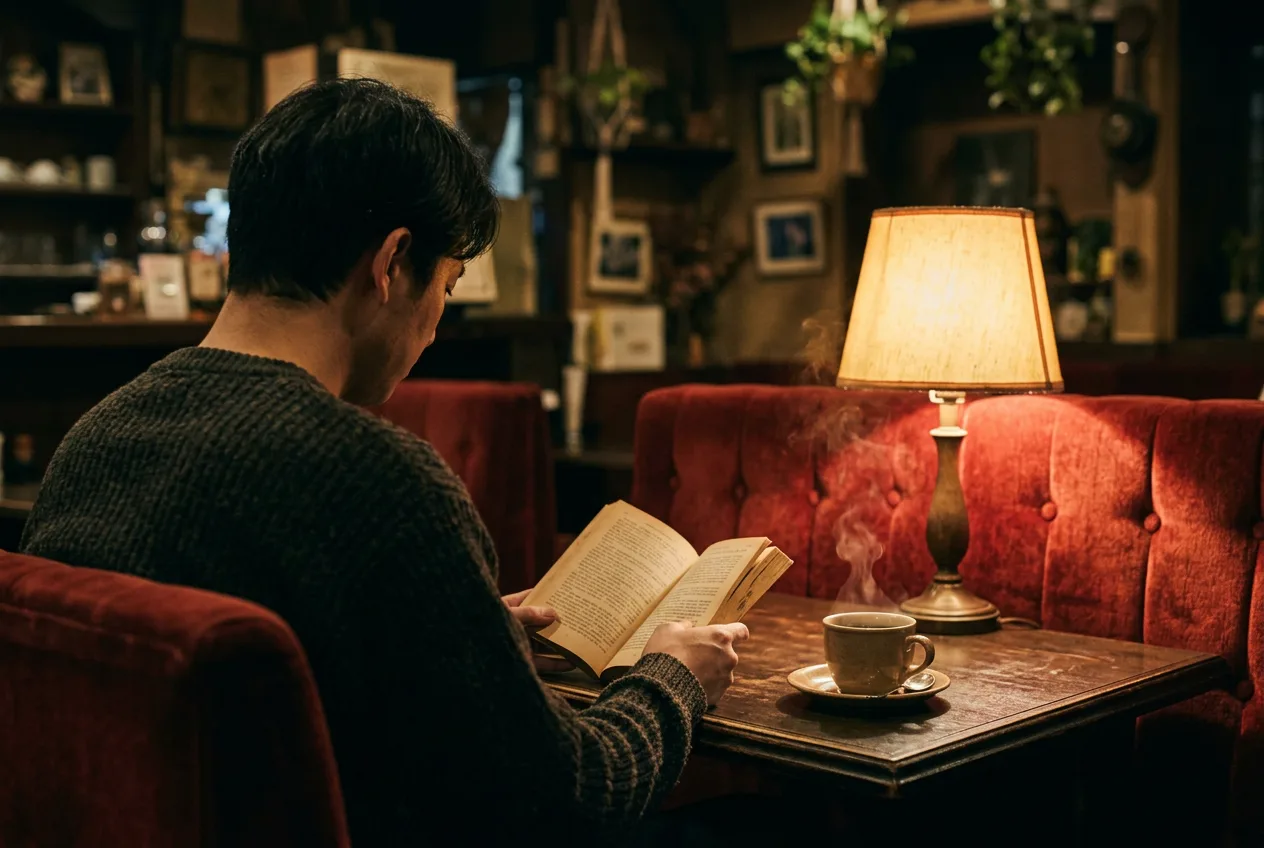
People read, study, work quietly or eat breakfast alone. It's a shared space where you can be on your own without feeling awkward. That makes kissaten popular with students and, I'd add, with anyone learning Japanese who wants a calm place to practice reading.
Some kissaten offer Wi-Fi and power outlets; many older ones don't, and some politely discourage laptops at busy times.
Smoking is worth knowing about. Many older kissaten historically allowed smoking indoors, and it was part of their character. Laws and changing tastes have made smoke-free kissaten far more common, but policies vary, so check if it matters to you.
The master
In Japanese, the owner of a kissaten is often called the "master" (masutā). The master is usually the person who brews the coffee and gives the shop its identity.
Many masters have spent decades refining their craft. Their choices shape everything: the beans, the roast, the blend, the brewing equipment, the cups, the music and the way coffee is served.
Unlike chains, where every drink follows a standard procedure, each kissaten does things its own way. Some masters are happy to explain their blend or why they brew the way they do. Others prefer to let the coffee speak.
That personal touch is what makes kissaten feel so different. You're not just buying a drink; you're tasting one person's idea of what coffee should be.
How kissaten brew coffee
Kissaten are famous for slow, manual brewing, done one cup at a time.
Flannel drip (nel drip)
Nel drip, from "flannel," uses a cloth filter stretched on a wire ring. The master pours hot water in a thin, slow stream, sometimes drop by drop, over a generous dose of coarsely ground coffee.
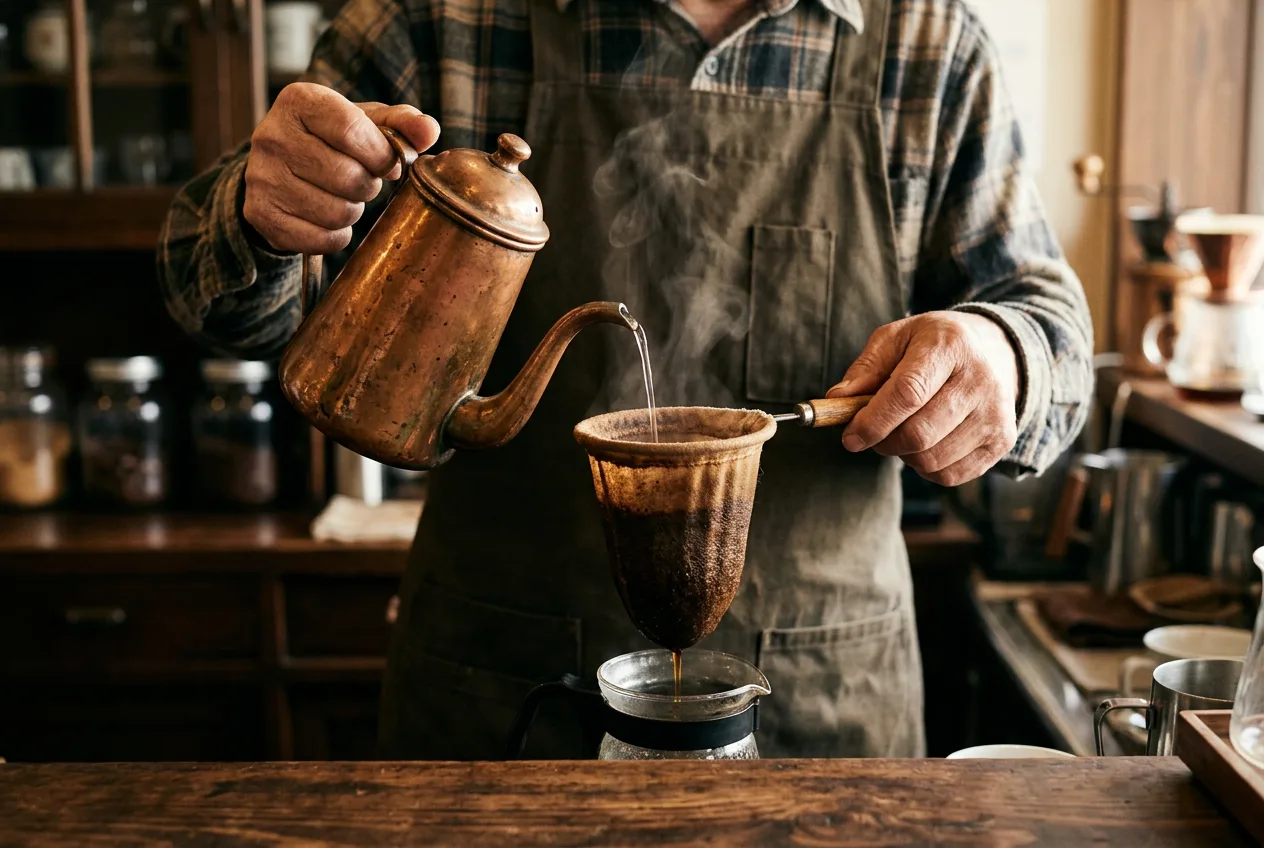
Cloth lets through more oils than paper but holds back the fine particles, producing a rich, smooth, velvety cup with very little bitterness, even with dark roasts. The cloth must be kept damp and refrigerated between uses, which is part of the devotion it demands.
Siphon
The siphon, or vacuum brewer, is the theatrical star of many kissaten. It uses two glass chambers stacked on top of each other with a filter between them.
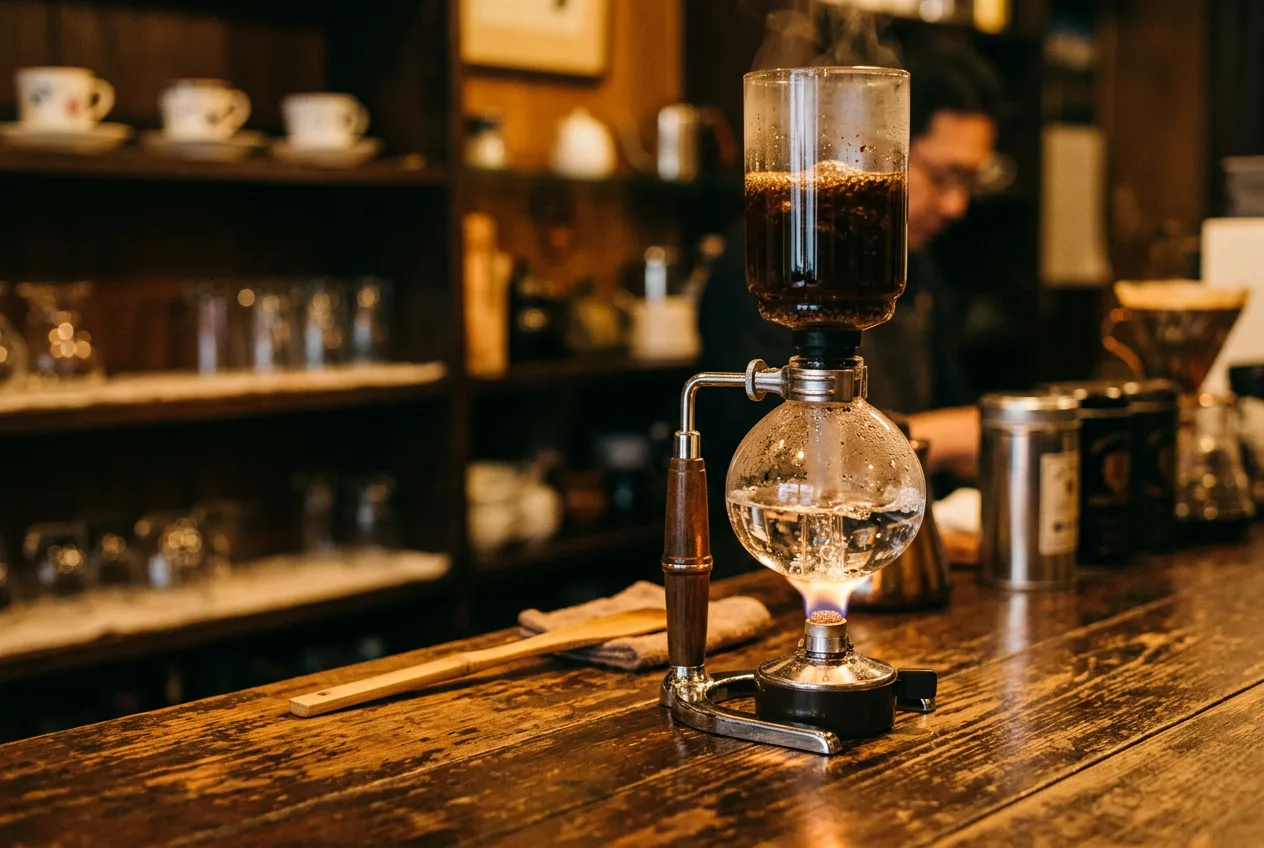
- Heat the waterWater in the lower globe is heated, often over a small burner or halogen lamp.
- Water risesVapor pressure pushes the hot water up into the top chamber, where the coffee waits.
- Brew and stirThe coffee steeps briefly as the master stirs.
- Remove the heatAs the lower globe cools, a vacuum pulls the brewed coffee back down through the filter.
The siphon was invented in Europe in the 19th century, and for a while it was a fashionable way to make coffee in France and Germany. It largely faded in the West, but Japan embraced it in the 20th century, and Japanese manufacturers kept making and refining siphon brewers when few others did. Today, many people around the world associate the siphon with Japanese coffee culture.
It's mesmerizing to watch, and it gives the barista a chance to show skill and precision. Siphon coffee is clean, aromatic and served very hot. I mention it alongside other brewers in coffee brewing methods compared.
Roast and blend
Traditional kissaten tend to favor medium-dark to dark roasts and house blends, often combining beans from Brazil, Colombia and other origins for a rich, balanced, chocolatey cup. This is different from the light, fruity single origins of third wave cafés, and many people find kissaten coffee comforting and deeply satisfying.
Some kissaten roast their own beans in small batches. Others work with a trusted roaster for years.
What to drink
The safest and best first order in any kissaten is the house blend (burendo). It's the coffee the master has built the shop around.
| Drink | What to expect |
|---|---|
| Blend coffee | The house signature, usually rich and balanced |
| Straight coffee | A single origin, such as Brazil, Colombia or Mocha |
| Iced coffee | Often strong, sometimes served with syrup and cream on the side |
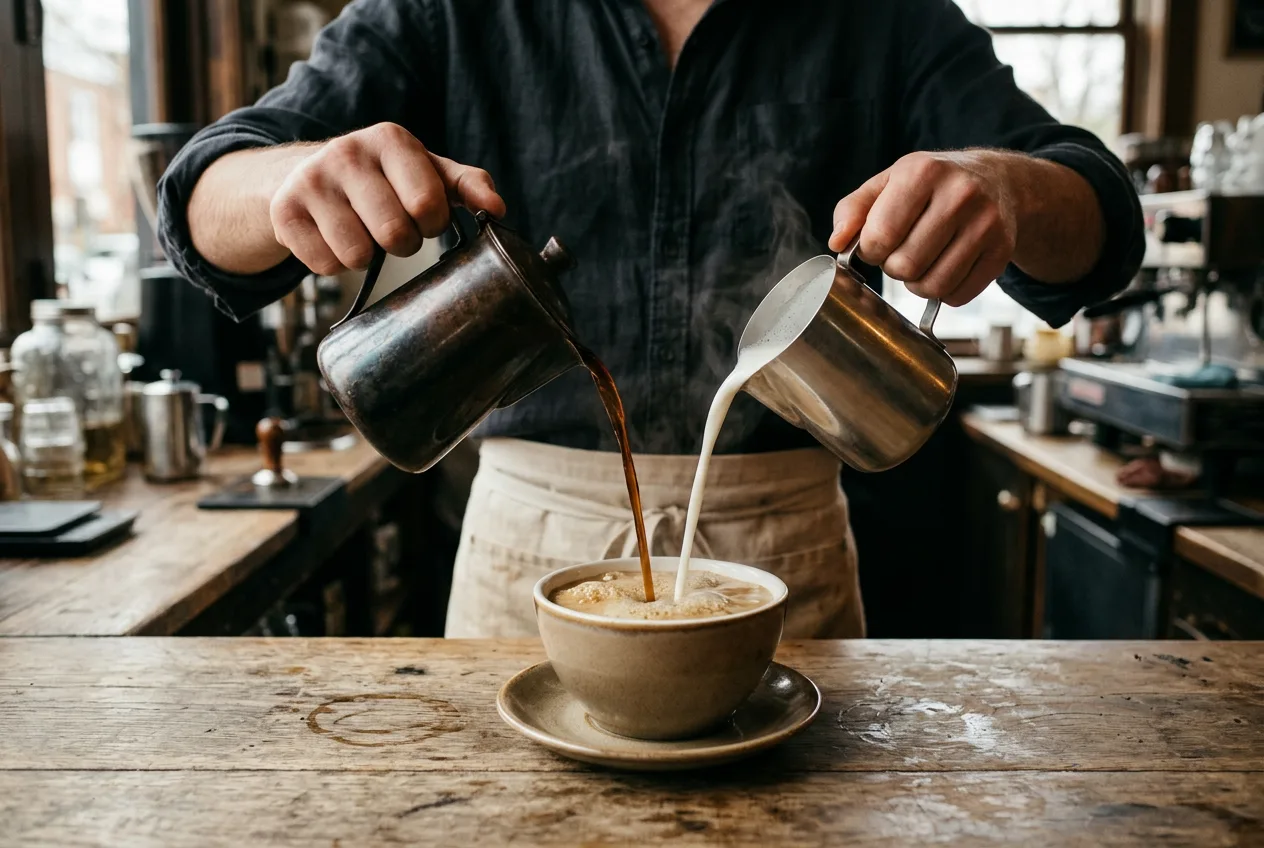
| Café au lait | Coffee and hot milk, sometimes poured theatrically from height |
| Coffee jelly | Cubes of coffee jelly with cream, a classic dessert |
| Milk tea / lemon tea | For non-coffee drinkers |
| Cream soda float | Brightly colored soda topped with ice cream |
Prices can surprise people. A cup of carefully brewed coffee in a kissaten often costs more than at a chain, and premium blends can cost a lot more. You're paying for time, skill and a seat you can keep for an hour.
Thick toast, tamago sando and more
Kissaten food is simple, nostalgic and very satisfying.
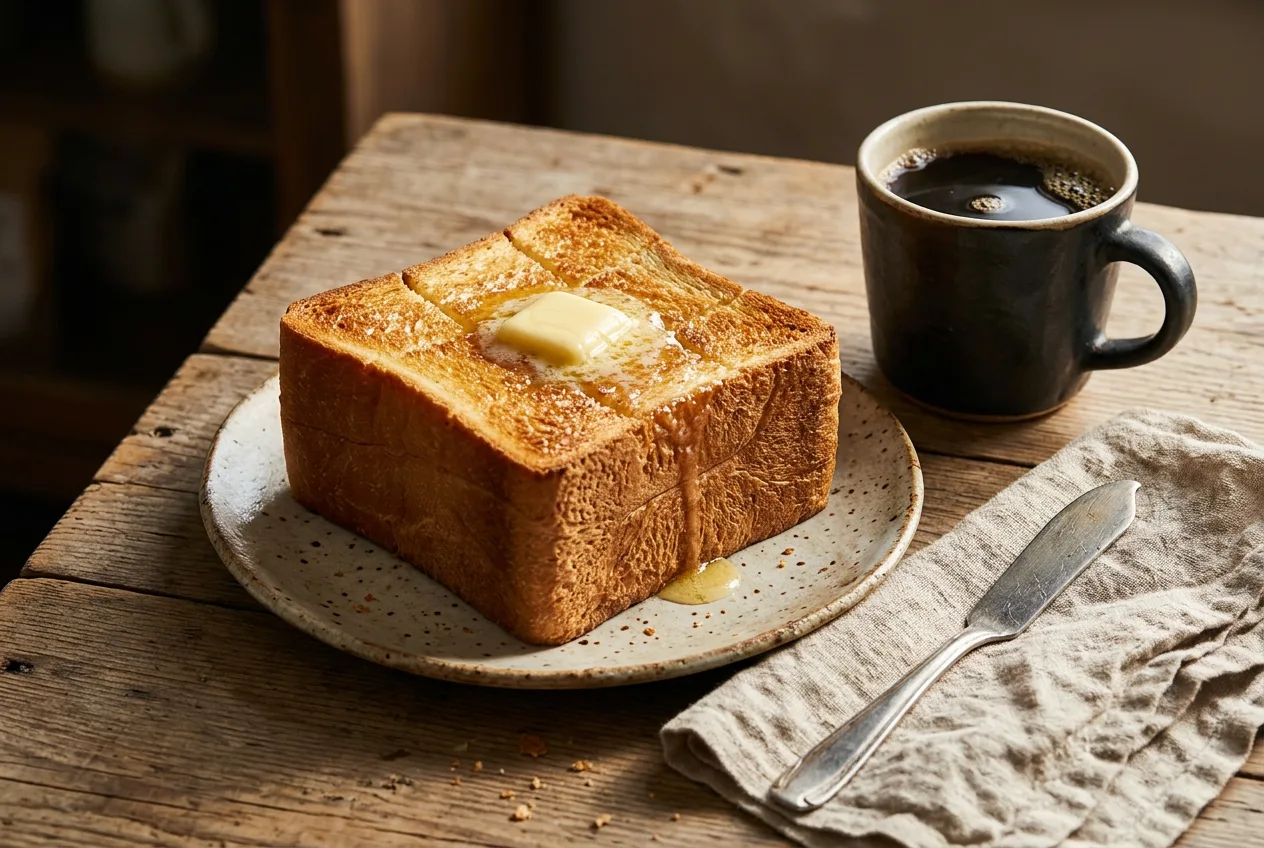
Thick toast. Japanese shokupan bread is soft, fluffy and slightly sweet, and kissaten often cut it astonishingly thick. Toasted golden and served with butter, jam or a dusting of sugar, a single slice can feel like a meal.
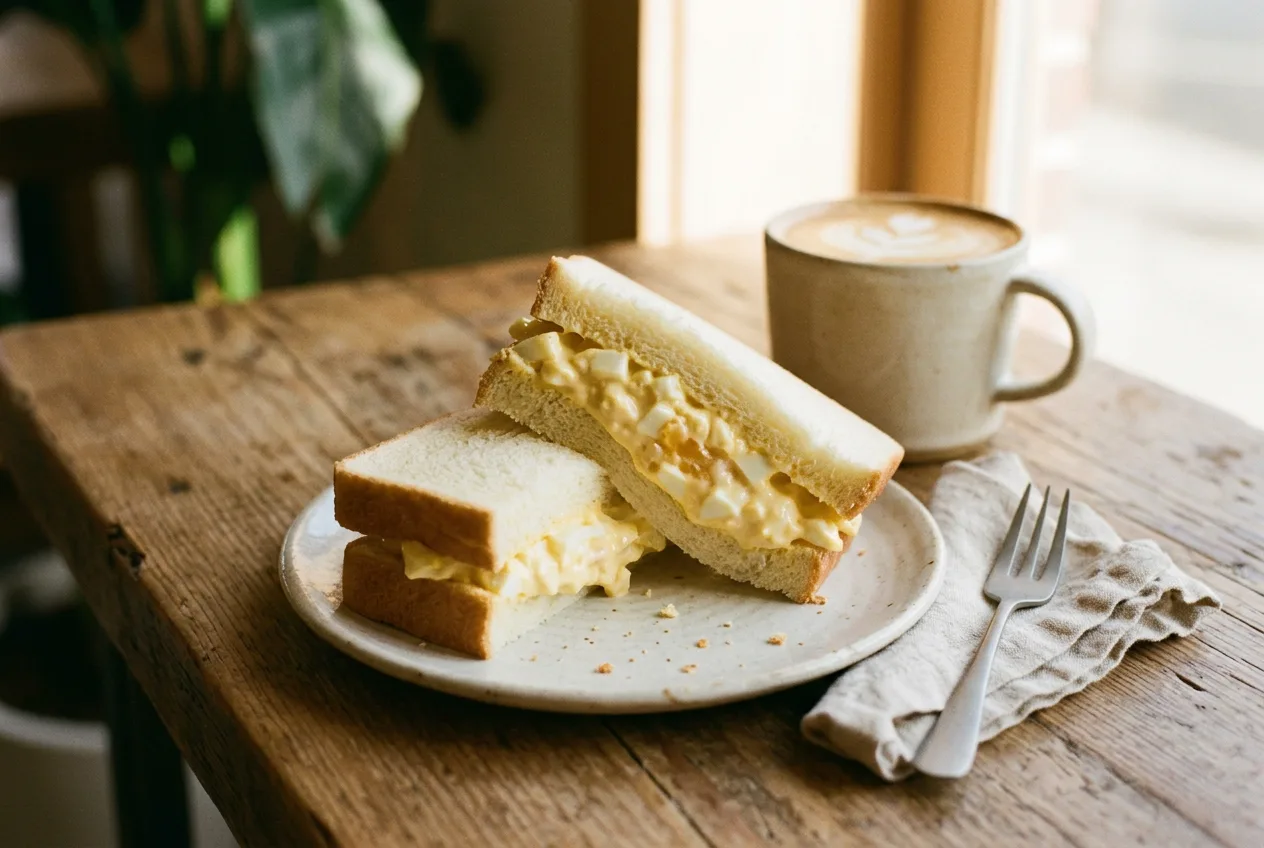
Tamago sando. The Japanese egg sandwich: soft white bread filled with creamy egg salad, or sometimes a thick, fluffy rolled omelet. It's simple and wonderful.
Pizza toast. Thick toast topped with tomato sauce, peppers, sausage and melted cheese. A kissaten classic.
Napolitan spaghetti. A Japanese-Western dish of spaghetti tossed with ketchup, onions, peppers and sausage, served in many old kissaten.
Morning service. Many kissaten offer a breakfast deal, usually toast and a boiled egg with your coffee. In parts of Japan, especially around Nagoya, morning sets can be remarkably generous.
Coffee jelly. Cubes of lightly sweetened coffee set with gelatin, served with cream or a scoop of ice cream. It's a uniquely Japanese café dessert and a perfect match for a hot afternoon.
Fruit sandwiches. Soft white bread with whipped cream and fresh fruit such as strawberries, kiwi and mango, cut to show off the colors. Found in some kissaten and many fruit parlors.
Pudding and cake. A firm, caramel-topped custard pudding is another retro favorite.
The cream soda float
If kissaten have an icon besides the siphon, it's the cream soda: a tall glass of brightly colored soda, most famously melon green, topped with a scoop of vanilla ice cream and a red cherry.
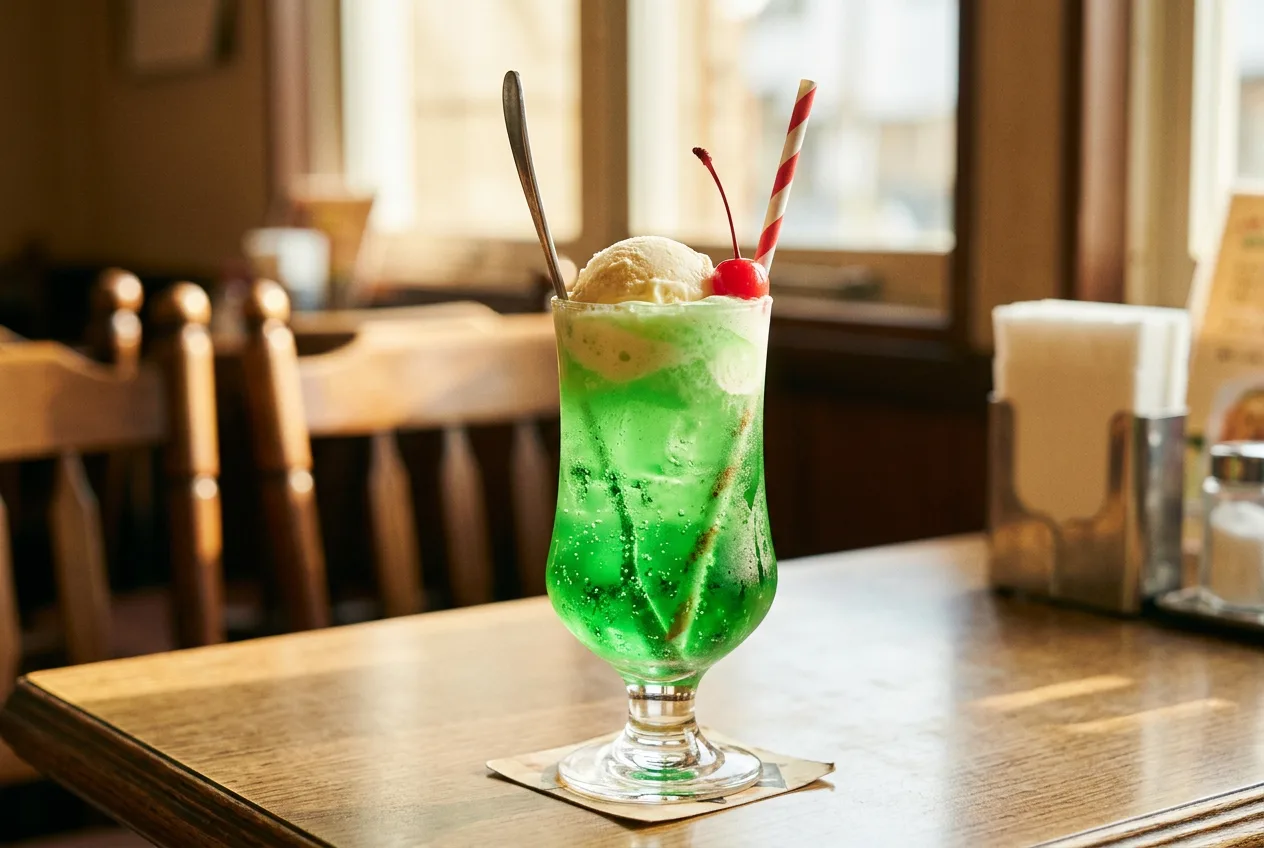
Blue, red and other colors exist too. It's sweet, fizzy, creamy and gloriously retro, and it's become the star of countless photos in the retro kissa revival.
There's also a coffee float, iced coffee topped with ice cream, which is a lovely middle ground if you want caffeine and dessert in one glass.
Floats and teas make kissaten welcoming for people who don't drink coffee. Someone who comes just for the atmosphere can still find something delicious.
The art of the cup
One detail that surprises many visitors is the tableware. Kissaten often have walls of cups and saucers, from fine porcelain to rustic handmade ceramics, and the master may choose a different cup for each customer.
Some masters pick a cup to suit the coffee: a thin-rimmed porcelain cup for a delicate brew, a heavier one for a dark blend. Others choose based on the customer, the season or simply their mood. Regulars sometimes have their "own" cup.
Cups are usually warmed before the coffee is poured, so the first sip is as hot as the master intended. It's a small gesture, but it says a lot about the care that goes into a kissaten cup.
Kissaten beyond Tokyo
Tokyo has thousands of coffee shops, but kissaten culture runs throughout Japan, with regional twists.
Nagoya is famous for its morning culture. Order a coffee before late morning in many Nagoya kissaten and it comes with free extras, often toast, a boiled egg and sometimes salad or a small dessert. Nagoya is also known for ogura toast, thick toast spread with sweet red bean paste and butter.
Kyoto has some of the most atmospheric old kissaten in the country, with long histories, elegant interiors and loyal local followings. Several have been serving the same blend for decades.
Osaka and Kobe have their own strong traditions. Kobe, as an early international port, was one of the first places in Japan where coffee culture took root, and both cities have beloved retro shops.
Wherever you are in Japan, look for a small, old-looking coffee shop with a sample display of toast and cream sodas in the window. Chances are it's a kissaten worth stepping into.
Kissaten in Japanese culture
Kissaten have long been more than places to drink coffee. In the 20th century, they were where writers worked, students debated, musicians listened and couples met.
Jazz kissa in particular played an important role in Japan's music scene, introducing generations of listeners to records they could never have afforded at home. The novelist Haruki Murakami famously ran a jazz café and bar in Tokyo in the 1970s before becoming a full-time writer, and jazz and coffee shops appear throughout his books.
Kissaten show up constantly in Japanese films, TV dramas, manga and novels as places of quiet conversation, chance meetings and reflection. For many Japanese people, the kissaten is a symbol of a particular era, the Showa period, and its mix of modern Western influence and Japanese care.
How kissaten coffee compares with third wave
If you're used to bright, fruity specialty coffee, kissaten coffee can come as a pleasant surprise.
The typical kissaten cup is darker, richer and rounder, with chocolate, caramel and roasted notes and a smooth, heavy body, especially from flannel drip. Acidity is low. It's comforting rather than challenging.
Third wave coffee usually aims for transparency of origin, with lighter roasts and more acidity. Neither is better. They're two different philosophies with the same root idea: coffee deserves care.
In fact, many of today's Japanese specialty roasters learned from kissaten masters, and you'll find shops that blend both worlds, serving light single origins with old-school ceremony.
Kissaten interiors: a design style of their own
Walk into a few classic kissaten and you'll start noticing a shared design language, even though every shop is unique.
- Dark wood everywhere: counters, paneling, beams and heavy tables, often polished by decades of use.
- Velvet or leather seating: deep red, green or brown booths and armchairs built for long stays.
- Warm, low lighting: pendant lamps, amber glass shades and lots of shadow.
- Stained glass: in windows, partitions or lamp shades, adding color without letting in too much daylight.
- Antique clocks and objects: wall clocks, old grinders, coffee tins and curiosities the owner has collected.
- Display cabinets of cups: rows of porcelain waiting to be chosen.
- Plastic food samples: in the window, showing toast, spaghetti and cream sodas.
Many of these interiors date from the 1960s and 1970s and have barely changed since. That's exactly what retro fans love about them, and why so many visitors now arrive with cameras. If you take photos, be discreet and ask first.
Types of kissaten
Kissaten share an identity, but they offer very different experiences.
The term jun-kissa, or "pure coffee shop," originally distinguished genuine coffee shops from cafés that served alcohol or offered hostess entertainment. Today it's used for traditional kissaten that center on coffee and the classic atmosphere.
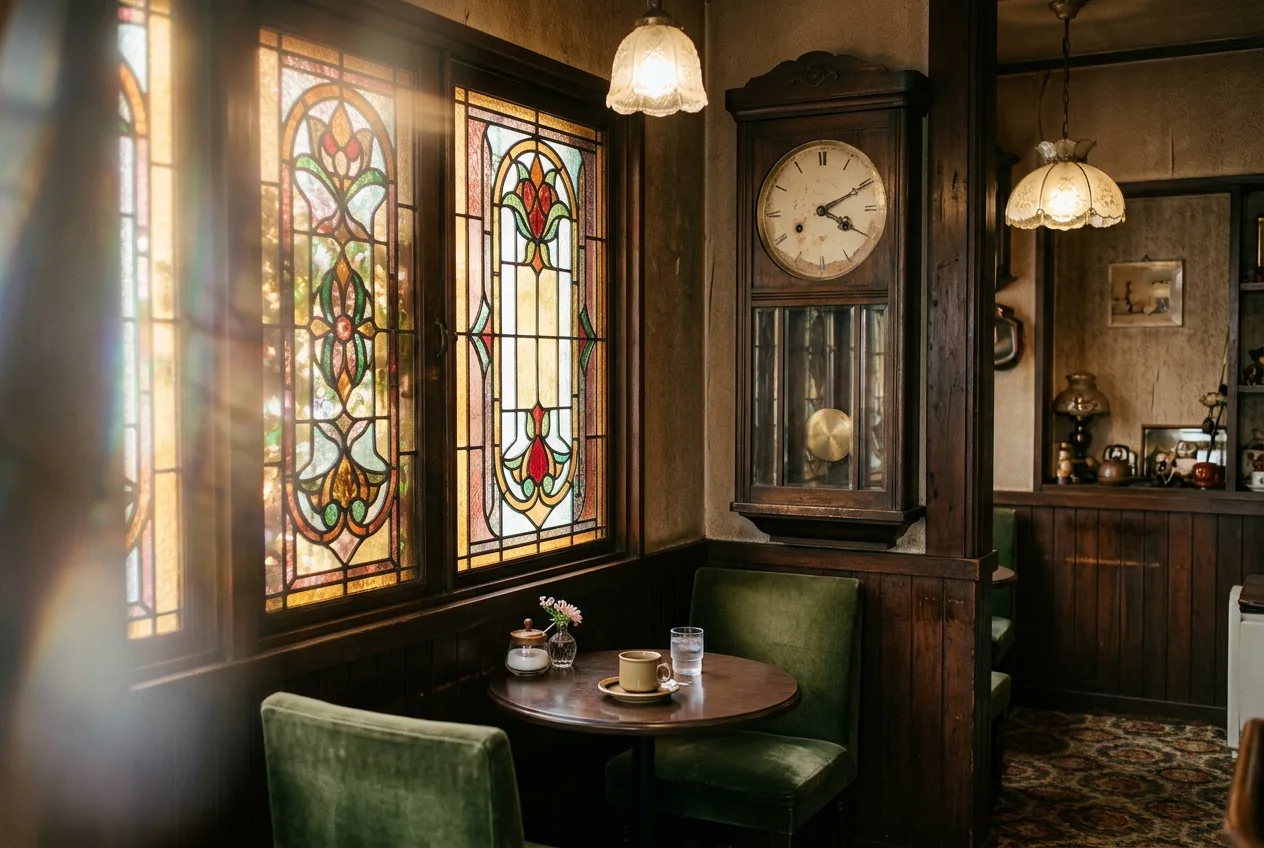
So a kissaten might be a quiet breakfast spot, a siphon specialist, a nostalgic neighborhood shop or a dedicated listening room. There's no single definition, and that's what makes exploring them so rewarding.
Music kissa: coffee as a listening experience
Music kissa are a uniquely Japanese institution. In the postwar decades, records and good audio equipment were expensive. Kissaten that invested in huge record collections and high-end speakers became places where people paid for a coffee to hear music they couldn't afford at home.
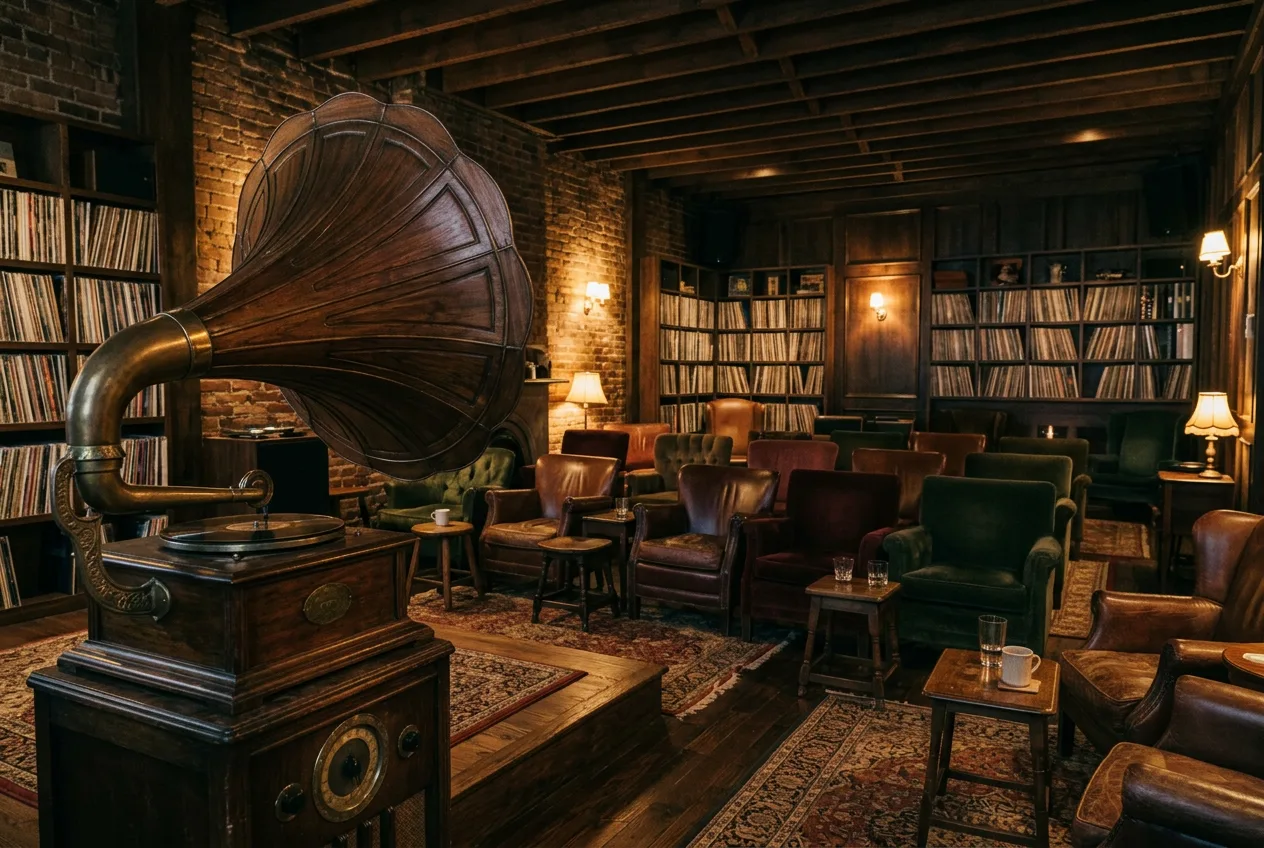
Meikyoku kissa focus on classical music. Jazz kissa focus on jazz. In both, the music is the main event. Volume can be high, and talking is often discouraged in the listening area. You're expected to sit back, maybe close your eyes, and listen.
It can feel more like a concert than a café. For music lovers, it's an extraordinary experience: hearing a familiar record on a carefully tuned system, in a room built for listening, with a good cup of coffee.
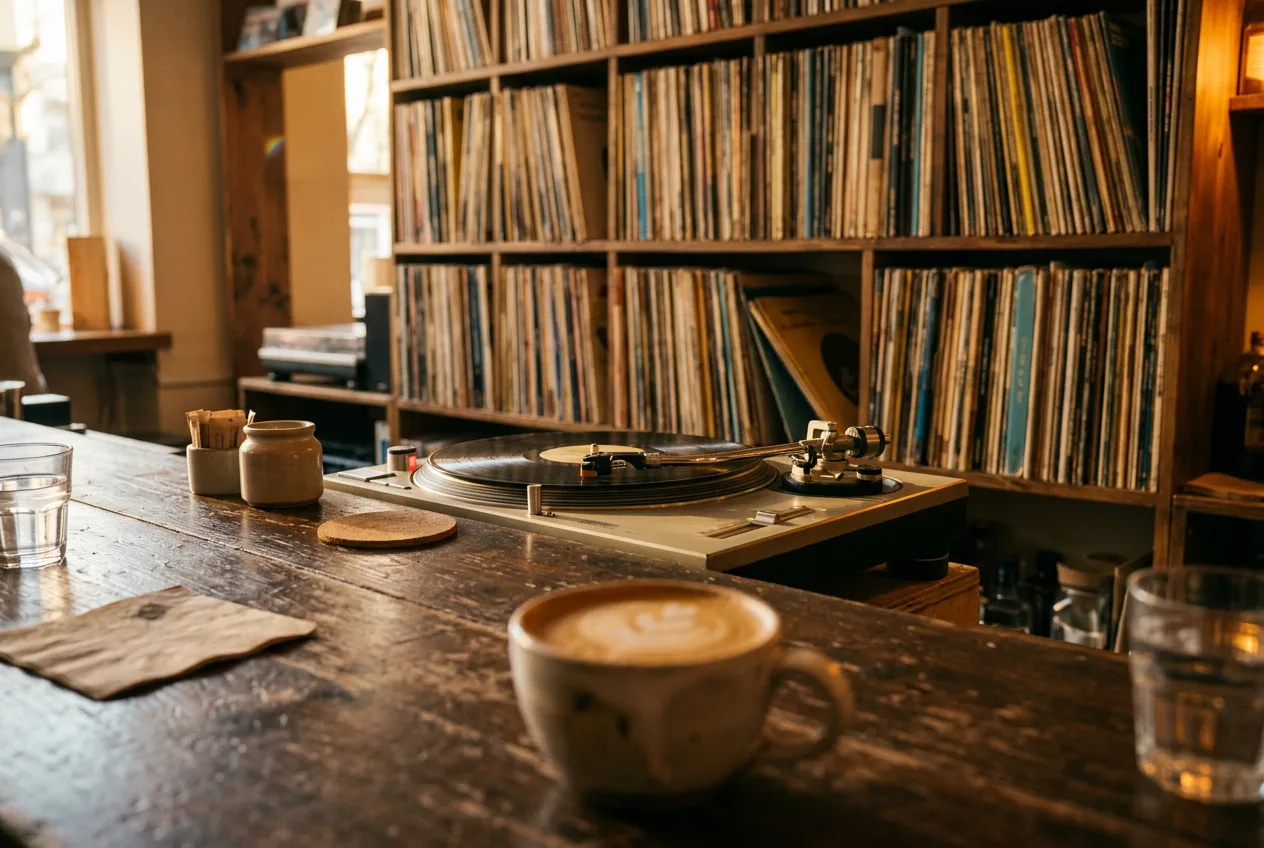
Jazz kissa were especially influential from the 1950s through the 1970s. Serious listeners would sit for hours, sometimes taking notes on records, and the owners were often walking encyclopedias of the music. Several famous jazz kissa are still running today, with sound systems their owners have tuned for decades, and they draw visitors from around the world who come just to listen.
Some music kissa let customers request records or bring their own, and some host live performances. These shops preserve a listening culture that has largely disappeared elsewhere, in a world of earbuds and streaming.
Three Tokyo examples
To show how different kissaten can be, here are three Tokyo shops that each represent a style. Opening hours, prices and policies change, so check the latest information before you go.
Coffee Edinburgh (Coffee Kizoku), Shinjuku
A short walk from Shinjuku-sanchome Station, this stylish shop is known for its house Kizoku blend and siphon brewing. Unusually for a kissaten, it has been known for very long, round-the-clock opening hours.
The menu includes the house blend and a much pricier premium "Royal" blend. Café au lait is poured from separate pots of coffee and foamed milk, sometimes from impressive heights. Food is simple, such as a mozzarella and lettuce bagel, and practical extras like Wi-Fi and outlets make it popular for working or studying.
Cafe Monozuki, Nishi-Ogikubo
Founded in 1975 on a local shopping street near Nishi-Ogikubo Station, Monozuki is the nostalgic neighborhood kissaten at its best. Stained-glass windows, antique clocks and carefully chosen decorations create a world away from modern Tokyo.
Soft jazz and piano music play at a gentle volume. The menu is simple, built around black coffee and a selection of beans and blends, which makes it a great place to ask about the house blend and its mix of origins.
Cafe La Vie en, Asagaya
A short walk from Asagaya Station, this is a music kissa centered on an enormous hand-cranked gramophone. The sound fills the room, and the volume is deliberately higher than in an ordinary café, so the experience is about listening rather than chatting.
Visitors can bring their own classical records to play on the shop's equipment, and the shop hosts live music events. Asagaya's relaxed, local atmosphere makes it a lovely neighborhood to wander before or after.
| Shop | Best for | Highlights |
|---|---|---|
| Coffee Edinburgh | Coffee enthusiasts, late visits | Siphon coffee, house blend, café au lait pour |
| Cafe Monozuki | Nostalgic atmosphere | 1975 interior, stained glass, jazz, simple menu |
| Cafe La Vie en | Music lovers | Huge gramophone, bring your own records, live shows |
What to expect when you walk in
If you've never been to a kissaten, the first few minutes can feel a little uncertain. Here's what usually happens.
A small bell over the door may ring as you enter. Staff will greet you with "irasshaimase" (welcome). In many shops you'll be shown to a seat or invited to sit anywhere; if you're alone, the counter is often the best spot to watch the master work.
You'll usually receive a glass of cold water and sometimes a damp hand towel, an oshibori. The menu may be handwritten and in Japanese only, but many shops have a few English words or pictures, and pointing works perfectly well.
Coffee is made to order, so expect to wait. That's not slow service; it's the point. When it arrives, it's often served on a saucer with a small spoon, with sugar and cream offered separately.
When you're ready to leave, take your bill to the register near the door. Tipping isn't customary in Japan, so a simple thank you, "gochisōsama deshita," is perfect.
Useful phrases for a kissaten
| Japanese | Meaning | When to use it |
|---|---|---|
| Burendo o kudasai | The blend, please | Ordering the house coffee |
| Hotto / aisu | Hot / iced | Choosing your coffee |
| Mōningu setto | Morning set | Breakfast deal before late morning |
| Kurīmu sōda | Cream soda | Ordering the float |
| Okaikei onegaishimasu | The bill, please | Paying |
| Gochisōsama deshita | Thank you for the meal | When leaving |
How to visit a kissaten
- Order the house blendIt's the best introduction to any shop's style.
- Keep your voice downEspecially in music kissa, where listening comes first.
- Take your timeLingering is normal, but be considerate if the shop is full and people are waiting.
- Ask before photographingSome masters don't mind; others prefer no photos of the counter or customers.
- Check smoking and laptop policiesOlder shops vary, and some limit laptops at busy times.
- Bring cashMany traditional kissaten still prefer or only accept cash.
- Try the foodThick toast or a tamago sando is half the experience.
Our tip: Go in the morning on a weekday. Many kissaten offer a morning set, the atmosphere is at its calmest, and you'll see the regulars who keep these places alive.
Bringing kissaten style home
You don't need to fly to Tokyo to enjoy a bit of kissaten spirit. Here's how I recreate it on slow weekend mornings:
- Choose a rich blend. A medium-dark Brazil and Colombia blend gets you close to the classic kissaten cup.
- Brew slowly. Use a pour-over or, if you're adventurous, a flannel filter, and pour in a thin, patient stream. A siphon makes a fun weekend project.
- Warm your cup. Kissaten coffee is served in pre-heated porcelain, often with a saucer.
- Make thick toast. Buy an unsliced milk loaf, cut a slice about an inch and a half thick, toast it and add plenty of butter.
- Put on a record. Jazz or classical, played on decent speakers.
- Put the phone away. The real kissaten ingredient is time.
If you want to try siphon or flannel brewing, start with the basics in my guides on brewing ratios and extraction. The principles are the same; only the equipment changes.
What kissaten taught me about coffee
I spend a lot of my working life measuring things: grams in, grams out, seconds, temperatures. Kissaten reminded me that precision is only half of what makes coffee good.
The other half is attention. A master who has brewed the same blend for thirty years doesn't need a scale to know when it's right. He pays attention to the bloom, the smell, the pace of the drip, the person waiting at the counter.
Kissaten also reminded me that coffee is a reason to stop, not just a way to keep going. Most of the coffee we drink is consumed on the move, between tasks, at a desk. In a kissaten, the coffee is the task.
Since then, I try to make at least one cup a week the kissaten way: slowly, in a warmed cup, with nothing else to do. It's become my favorite coffee of the week.
Why kissaten still matter
Kissaten offer something increasingly rare in modern cities: a place to slow down.
Modern cafés emphasize convenience, speed, takeaway and trendy design. Kissaten value atmosphere, personal service and the simple pleasure of spending time in one place. Their interiors preserve earlier decades: antique furniture, decorative glass, warm lighting and vintage clocks.
Their menus show that coffee, toast, a sandwich, tea and a soda float are enough for a satisfying hour. And the owners give each shop an individuality that big chains can't copy. Some care most about brewing; others about music, vintage equipment or interior design.
Kissaten are also a window into everyday Japanese life beyond the tourist sights. They serve local residents, office workers, students and older regulars, and spending time in one teaches you a lot about how people use shared spaces in Japanese cities.
And they shaped global coffee. Japanese hand-brewing traditions, drippers and kettles, and the idea of the patient, devoted coffee master all fed into the third wave. I explain that link in third wave coffee explained.
The future of the kissaten
Kissaten face real challenges. Many masters are now elderly, and not every shop has someone to take over. Rents in big cities keep rising, and the traditional model, where a customer might spend two hours over one coffee, doesn't make much money.
Each year, some beloved shops close for good, and their interiors and record collections disappear with them.
But there's reason for hope. The retro kissa boom has brought a new generation of customers. Younger owners are opening shops that honor the old style while adding specialty beans or modern touches. Some long-running kissaten have been taken over by staff or regulars determined to keep them alive.
The best thing visitors can do is simple: go, order something, sit for a while and come back. Kissaten survive on regulars.
Key takeaways
- A kissaten is a traditional Japanese coffee shop built for slow coffee and a calm place to sit.
- Tokyo's first Western-style coffee house opened in 1888; kissaten boomed after the war and peaked around the early 1980s.
- Licensing kept kissaten menus simple: coffee, tea, soft drinks and light food.
- The owner, or master, shapes everything from the blend to the music.
- Classic brewing methods are flannel drip and siphon, usually with rich house blends.
- Food favorites include thick toast, tamago sando, pizza toast and Napolitan spaghetti.
- The cream soda float is a retro icon.
- Music kissa turn coffee into a listening experience.
- Order the house blend, keep your voice down and take your time.
Frequently asked questions
What does kissaten mean?
Literally "tea-drinking shop," but it refers to traditional Japanese coffee shops, often shortened to kissa.
How is a kissaten different from a café?
Kissaten are usually quieter, owner-run and retro, with hand-brewed coffee and simple food. Modern cafés tend to be faster, larger and offer bigger menus.
What should I order at a kissaten?
Start with the house blend coffee and thick toast or a tamago sando. If you don't drink coffee, try a cream soda float or milk tea.
What is siphon coffee?
Coffee brewed in a two-chamber glass vacuum brewer: heat pushes water up to the coffee, then cooling pulls the brewed coffee back down through a filter.
What is nel drip?
Flannel drip: coffee brewed slowly through a cloth filter, giving a rich, smooth, low-bitterness cup.
What is a jazz kissa?
A kissaten devoted to jazz records played on high-quality sound systems, where listening comes before conversation.
Can I work on a laptop in a kissaten?
Some allow it and offer Wi-Fi and outlets; many traditional shops don't, or limit laptops at busy times. Ask or look around first.
Do kissaten accept cards?
Increasingly, but many traditional shops still prefer cash, so carry some yen.

- Michael Reynolds, notes on Japanese coffee culture and Tokyo coffee shops
- Kissaten, Wikipedia
- Jazz kissa, Wikipedia
- Vacuum coffee maker, Wikipedia
Related guides
Italian coffee culture Coffee culture around the world Third wave coffee explainedWritten by Michael Reynolds. Last updated November 20, 2026.