Gaggia vs Philips: same family, different machines?
Gaggia and Philips sit under the same roof, share a removable brew group design and both make one-touch milk coffee from fresh beans. So why do they taste so different? I tested four machines for four weeks each, the Gaggia Magenta Prestige and Gaggia Cadorna Prestige against the Philips 3200 and Philips 5500, and lined up the data to find out which brand belongs in your kitchen.
We choose products independently. We may earn a commission through links on this page; your price stays the same. Affiliate policy
Jargon helpNew to espresso? Tap any dotted term to see what it means.
In this comparison
If the taste of the coffee matters most, buy a Gaggia. The Gaggia Magenta Prestige doses up to about 11.5 grams per grind, makes true two-grind doubles and pours a one-touch flat white and cortado that tasted right every time, and the Gaggia Cadorna Prestige adds four profiles for families. If easy cleaning and a long menu matter more, buy a Philips. The Philips 5500 makes 20 hot and iced drinks with a tubeless milk jug that rinses in 10 seconds, and the Philips 3200 is the simplest way into one-touch cappuccinos.
The two brands
Specs checked November 14, 2026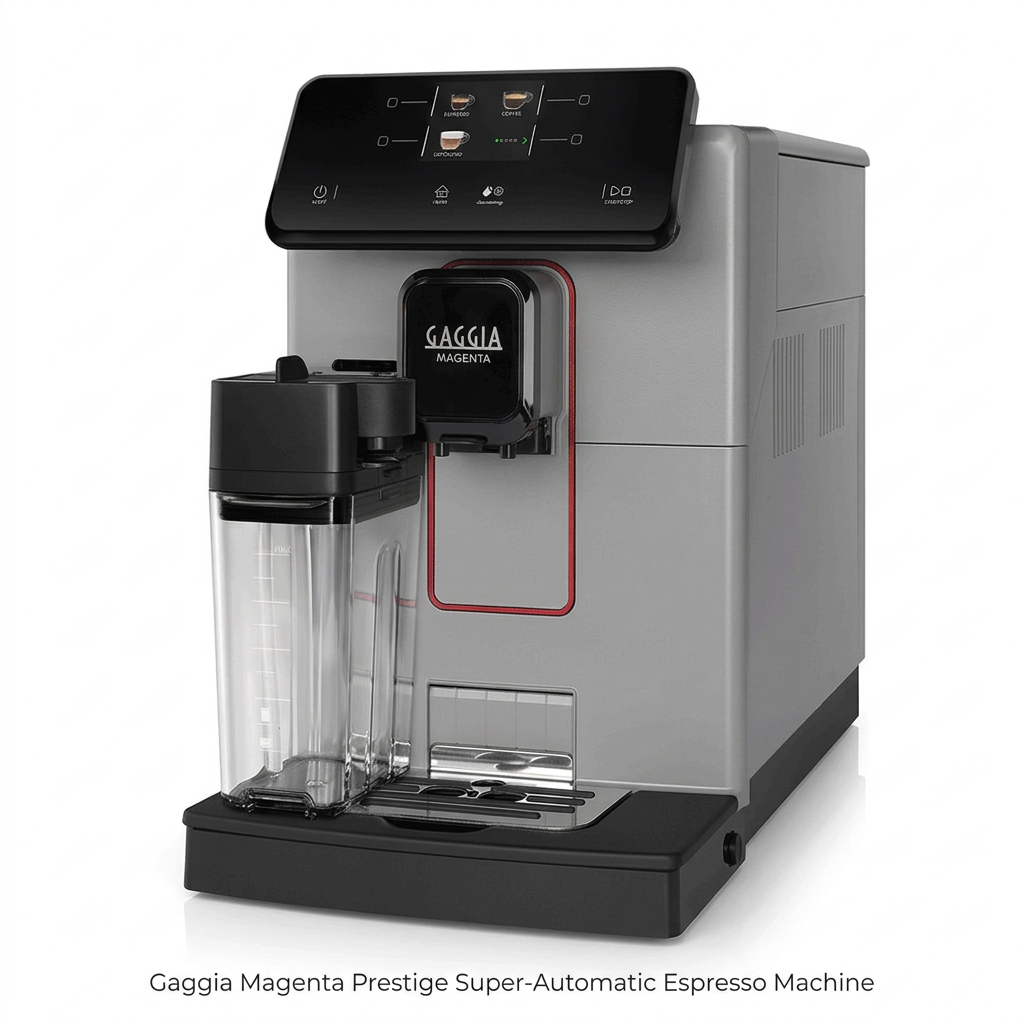
Italian heritage, a stainless steel boiler, bigger doses, true two-grind doubles and a milk carafe that makes flat whites and cortados at one touch.
Check price on Amazon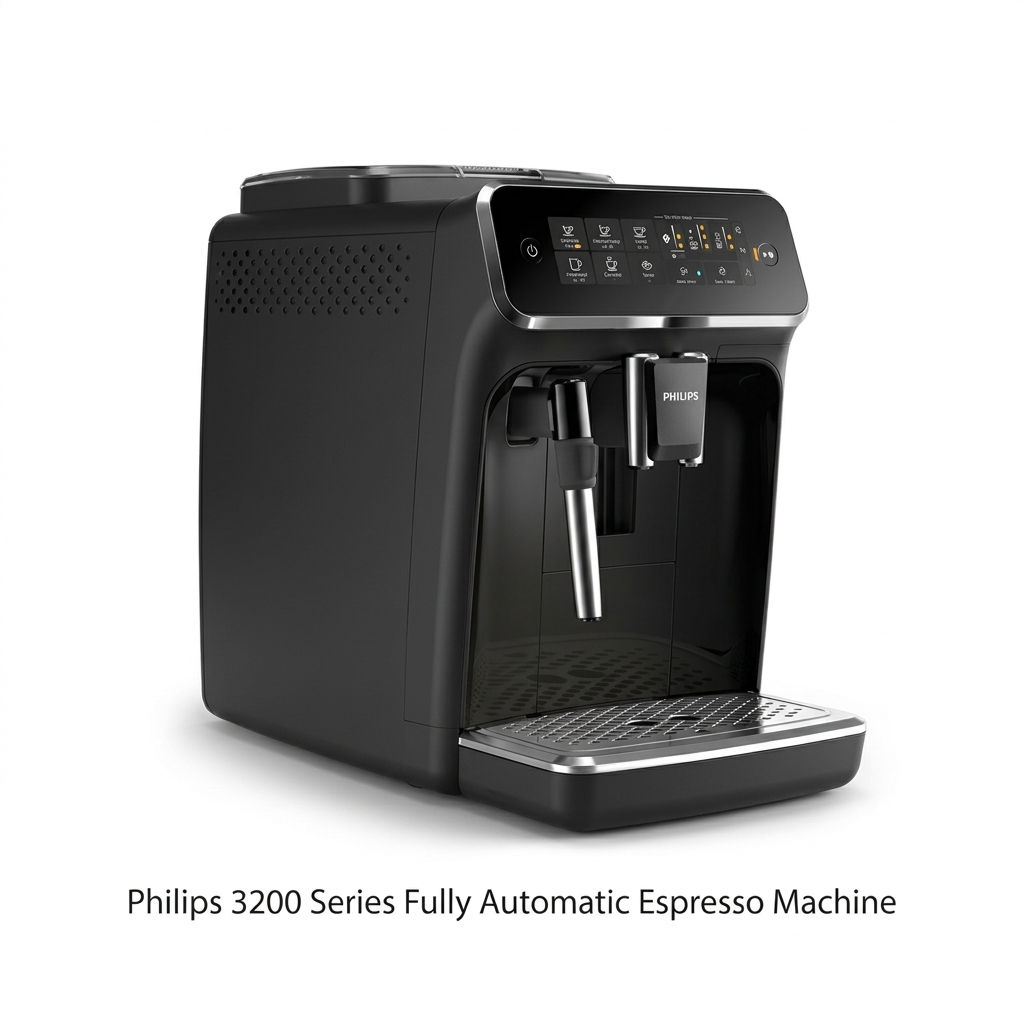
Tubeless LatteGo milk jugs that rinse in seconds, compact bodies and menus that run from five drinks to 20 hot and iced recipes.
Reveal Today’s DealGaggia vs Philips at a glance
- Buy a Gaggia if you want fuller espresso and café-style flat whites and cortados at one touch.
- Buy a Philips if you want the easiest milk cleaning or iced drinks on the menu.
- Both brands use removable brew groups, ceramic burrs and 15-bar pumps, and share the same family tree.
- For families, the Gaggia Cadorna Prestige and Philips 5500 both save four profiles.
Head to head
The better result in each row is marked, based on my testing and the manufacturer specs. Rows where the machines are level have no winner.
Keep in mind that the tally is not my verdict. Some rows matter far more than others, and which ones matter depends on what you drink.
| Spec | Gaggia | Philips |
|---|---|---|
| Espresso bodymy tasting, same beans | Fuller, thick crema ✓ Best | Lighter, smooth |
| Maximum dose | About 11.5 g single grind ✓ Best | About 8 g on the 3200 |
| Heating | Stainless steel boiler | Thermoblock |
| Milk system | Clip-on carafe | Tubeless LatteGo jug |
| Milk clean-upafter each drink | Quick Clean, about 20 sec | Tap rinse, about 10 sec ✓ Best |
| Flat white and cortado | One touch, espresso first ✓ Best | 5500 flat white only |
| Iced drinks | None | 5 on the 5500 ✓ Best |
| Drinks on the menu | 12 to 14 | 5 to 20 |
| User profiles | None or 4 | None or 4 |
| Milk temperaturemy probe readings | About 155°F on the Cadorna | 140–150°F to 167°F |
| Narrowest body | 8.8 in, Magenta ✓ Best | 9.7 in |
| Fits under low cabinets | Cadorna, front-loading | Yes |
| Brew group | Removable | Removable |
| Rows won | 4 | 2 |
Gaggia vs Philips pros and cons
Gaggia
- Fuller espresso from bigger doses and true two-grind doubles
- One-touch flat whites and cortados that taste right
- Italian heritage in slim, well-built bodies
- Milk carafes need a quick clean after every drink and a hand wash every day or two
- No iced drinks on the menu
- Magenta Prestige needs about 17.25 in of height to open the lids
Philips
- Tubeless LatteGo jugs that rinse in about 10 seconds
- From 5 simple drinks to 20 hot and iced recipes
- AquaClean filters and very easy daily upkeep
- Lighter espresso from smaller doses
- Foam is thick and airy, not café-smooth
- Mostly plastic bodies
Who should buy which machine?
- Espresso, flat white and cortado drinkers
- Slim kitchens and low cabinets, depending on the model
- Families who want four profiles and better coffee
- Anyone who hates cleaning milk systems
- Iced coffee drinkers, with the 5500
- First-time owners who want the simplest routine
One family tree
Before the machines, the history, because it explains a lot about why these two brands feel related.
Gaggia goes back to Milan in 1938, when Achille Gaggia patented a steamless espresso machine for his coffee bar. In 1999, fellow Italian maker Saeco bought Gaggia, and in 2009 Philips bought Saeco, Gaggia included.
Today the home super-automatics from both brands share a lot of engineering. You get a removable brew group✕Brew groupThe removable part inside the machine that compresses the ground coffee, holds it while water passes through and then drops the used puck in the drawer. you can rinse under the tap, ceramic burrs and 15-bar pumps on both sides.
Where they part ways is in what they prioritize. In my testing, Gaggia leaned toward fuller coffee and café-style milk drinks, and Philips leaned toward speed, simplicity and the easiest cleaning I have seen.
A short timeline of the family tree.
The four machines I tested
To compare brands fairly, I tested two machines from each at similar levels: a one-touch milk model and a family model with profiles.
From Gaggia, I used the Gaggia Magenta Prestige, a slim machine with a clip-on milk carafe and 12 drinks, and the Gaggia Cadorna Prestige, a front-loading model with four user profiles and 14 drinks.
From Philips, I used the Philips 3200, the best-selling five-drink LatteGo machine, and the Philips 5500, with 20 hot and iced drinks and four profiles.
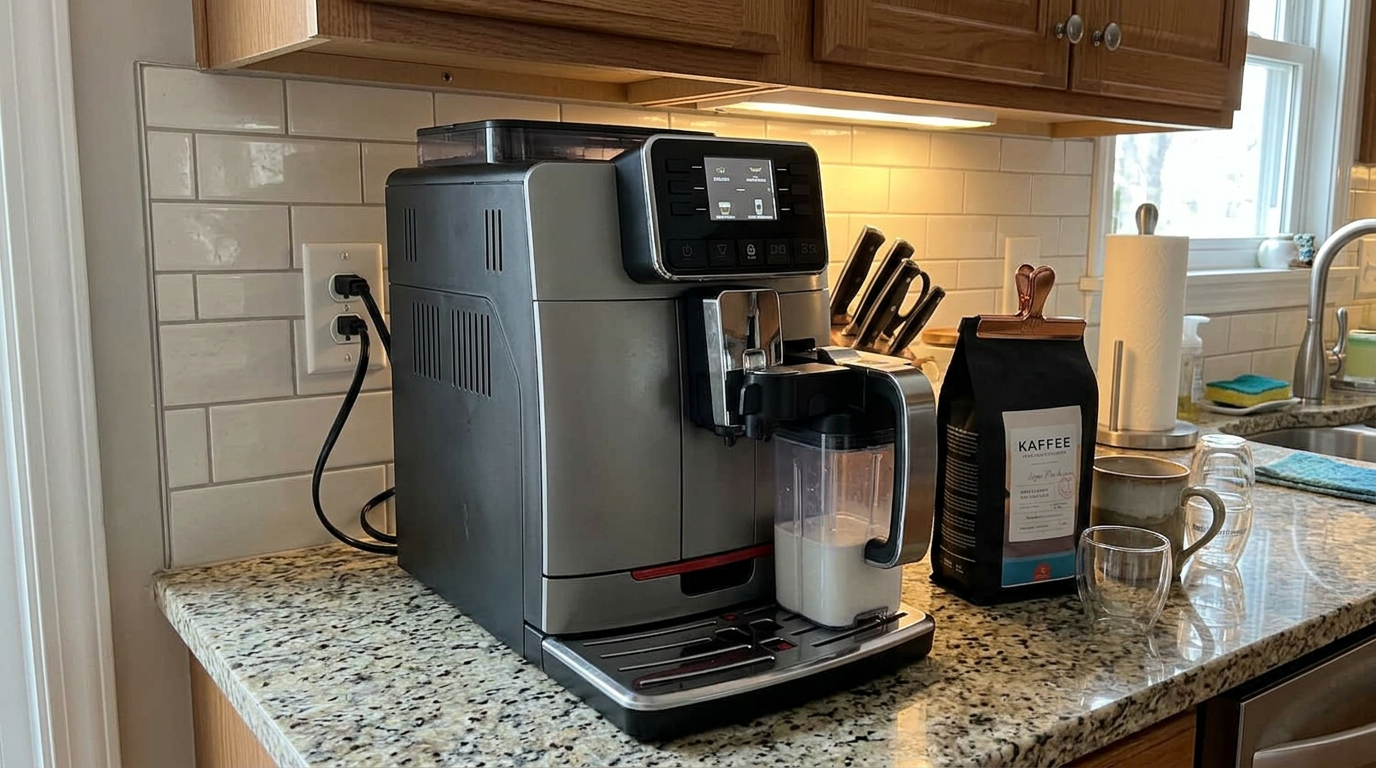
The Gaggia Cadorna Prestige loads from the front, so it fits under the lowest wall cabinets.
| Machine | Drinks | Profiles | Milk system | My score |
|---|---|---|---|---|
| Gaggia Magenta Prestige | 12 | None | Clip-on carafe, 0.5 L | 8.4 |
| Gaggia Cadorna Prestige | 14 | 4 | Clip-on carafe, 0.6 L | 8.6 |
| Philips 3200 | 5 | None | LatteGo, 260 ml | 8.0 |
| Philips 5500 | 20, including iced | 4 plus guest | LatteGo, 260 ml | 8.5 |
Both pairs line up nicely. The Magenta Prestige and the 3200 are the simple one-touch milk machines, and the Cadorna Prestige and the 5500 are the family machines.
Design, size and build
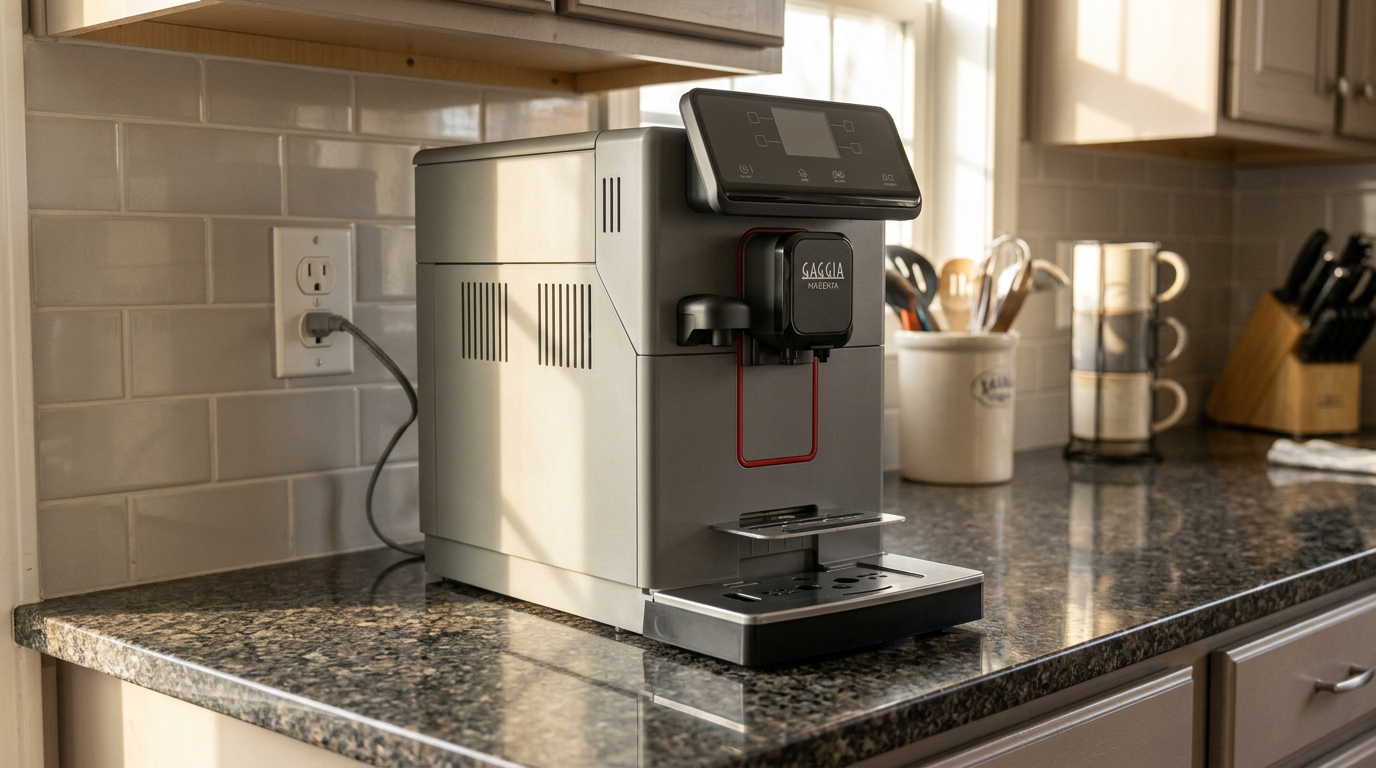
The Gaggia Magenta Prestige is the slimmest machine I tested, at about 8.8 inches wide, 14 inches tall and 17.1 inches deep, plus the carafe in front. It weighs about 17 lb.
The catch is the top. Its bean and water lids open upward and need about 17.25 inches of clearance, so I had to slide it forward from under my wall cabinets.
The Cadorna Prestige solves that. Its water tank and puck drawer load from the front, and I set it under my lowest wall cabinet, where top-loaders don’t fit, and never had to move it.
It is bigger, though, at about 10.2 by 15 by 17.3 inches and about 20.5 lb, and its display tilts up so you can read it standing.
Both Philips machines measure about 9.7 inches wide, 14.6 inches tall and 17 inches deep, at about 17.6 lb. They are mostly plastic, and the 3200 felt tidy but not premium.
Width on the counter
Every machine fits a standard 24-inch-deep counter.
Our tip: Put the Magenta Prestige where you can pull it forward, because its top doors need more than 17 inches of height to open.
How they brew
All four use a 15-bar pump. The Gaggias heat with a stainless steel Quick Heat boiler, ready in under a minute from cold, and the Philips machines use a thermoblock✕ThermoblockA compact heater that warms water on its way through a metal block, instead of keeping a tank of water hot. It heats up fast and switches between tasks quickly..
The 5500 was the fastest to wake up, with QuickStart ready in about 20 to 25 seconds. In practice, every machine had a drink in my cup within a couple of minutes of switching on.
Both Gaggias also run a short pre-infusion✕Pre-infusionA short soak of the ground coffee before full pressure starts, so the water flows through the puck evenly. at the start of each shot. On the Cadorna, coffee extracted at roughly 9 to 12 bar.
| Brewing detail | Gaggia | Philips |
|---|---|---|
| Pump | 15 bar | 15 bar |
| Heater | Stainless steel Quick Heat boiler | Thermoblock, QuickStart on the 5500 |
| Ready from cold | Under a minute | About 20–25 sec on the 5500 |
| Pre-infusion | Yes, short | Not specified |
| Temperature levels | 3 | 3 on the 3200, adjustable on the 5500 |
| Pre-ground bypass | Yes, one scoop | Yes, one scoop |
Grinder and dose
This is where the brands really differ, and it shows up in every cup.
The Magenta Prestige uses flat ceramic burrs✕Ceramic burrsGrinding parts made of ceramic instead of steel. They stay sharp for a long time and produce less heat, which helps protect the coffee’s aroma. with 5 steps, and its 5 strength levels go up to about 11.5 grams, or 0.41 ounces, per grind. The Cadorna has 10 grind settings and doses about 0.23 to 0.4 ounces per grind.
The Philips 3200 topped out at about 8 grams on its strongest setting. Both Philips machines use ceramic burrs with 12 settings.
The Gaggias also make true two-grind doubles. A two-cup espresso or a flat white grinds twice, so a strong flat white on the Magenta used about 0.82 ounces, or 23 grams, of coffee.
Coffee per drink
My measurements with a medium-dark blend. A café double for comparison.
My best grind on the Magenta was step 2 for a medium-dark blend. On the Cadorna, I ended up two steps finer than the factory setting, and on both Philips machines two steps finer worked too.
Espresso quality
With bigger doses, the Gaggias pulled the fuller espresso, and it wasn’t close.
On the Magenta Prestige at strength 3, a 1-ounce single ran in about 25 seconds with a thick, hazelnut-brown crema✕CremaThe golden, foamy layer on top of a fresh espresso. It forms when pressure pushes oils and gases out of the coffee.. When I made four cappuccinos in a row for guests, the last espresso was as full as the first.
The Cadorna at level 4 gave a 1-ounce espresso with dense, tan crema. Three back-to-back shots tasted the same, and the third was as hot as the first, at about 180°F on High.
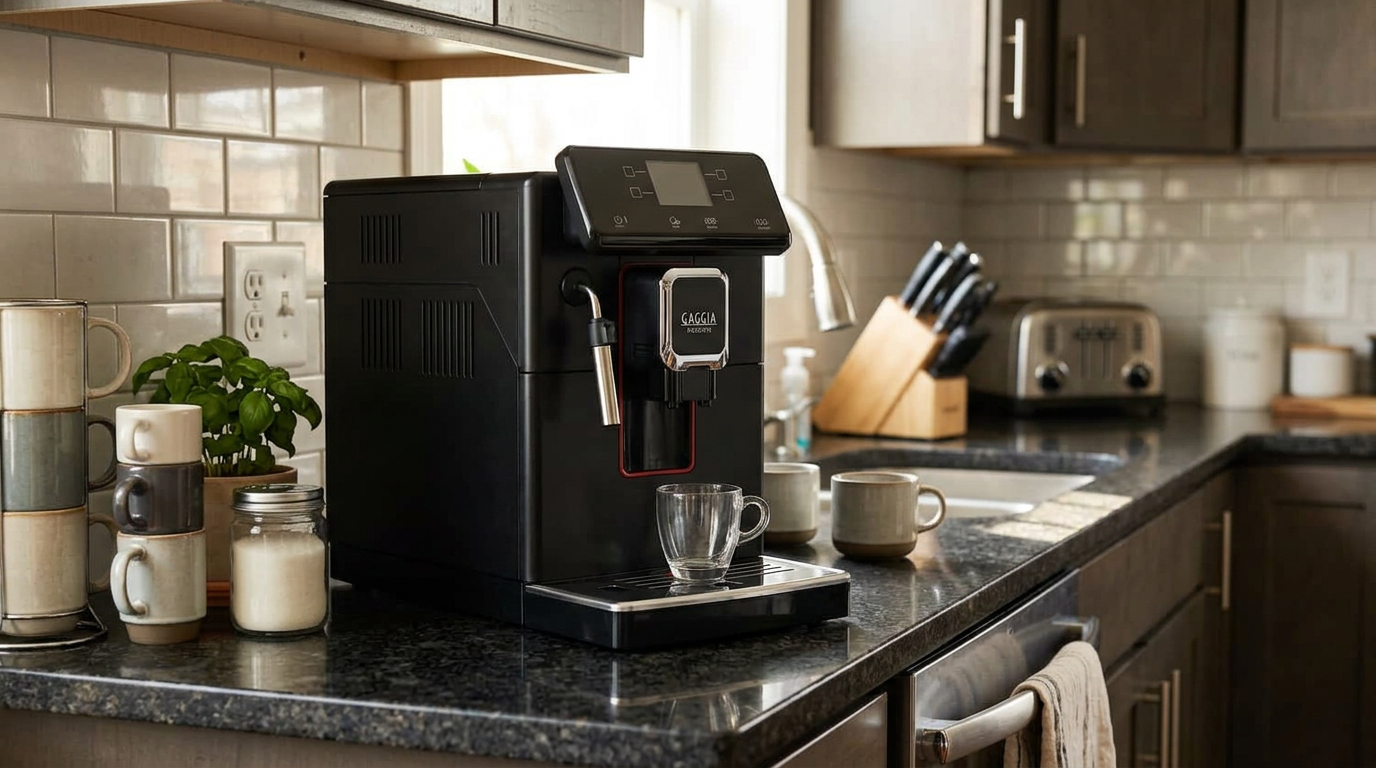
The Gaggia Magenta Prestige pulled a thick, hazelnut-brown crema at strength 3.
The Philips shots were smooth and mild. The 3200’s 8-gram dose made about 1.1 ounces that tasted closer to a lungo✕LungoA long espresso made with more water than usual. It is lighter in body than a classic short shot..
The 5500 was better, at about 176°F, but my refractometer read only 4.5% to 5.5% TDS, against 8% to 12% for a typical portafilter espresso.
My espresso ratings
My scores out of 10 for body, crema, flavor and consistency.
| What you taste | Likely cause | First fix on any of the four |
|---|---|---|
| Sour, thin, watery | Under-extraction✕Under-extractionWhen water does not pull enough flavor out of the coffee. The shot tastes sour, thin and watery. | Grind finer, raise strength |
| Bitter, harsh, drying | Over-extraction | Grind one step coarser |
| Weak in milk drinks | Too little coffee | Gaggia: strength 4–5; Philips 5500: Extra Shot |
| Lukewarm shot | Cold cup | Rinse the cup with hot water first |
Our tip: Rinse the espresso cup with hot water before every shot on all four machines, because a cold cup cools a 1-ounce espresso by several degrees in seconds.
Americano and long coffee
All four have a real americano that brews espresso first and adds hot water afterwards, which avoids the bitter, drying notes of pushing a mug of water through one puck.
The Magenta Prestige’s americano was my daily morning drink. It has no two-cup mode, though, and you can’t make it with pre-ground coffee.
The Cadorna’s americano goes up to about 8 ounces, or 16 as a two-cup, and my two-cup americano in a travel mug tasted as clean as a single.
On the Philips 3200, the biggest coffee setting stretched its small dose too far. Two espressos into one mug tasted fuller, and on the 5500 a double espresso topped with hot water beat its longest coffee.
Our tip: Use the americano button instead of coffee on every machine here, because brewing the shot first and adding water tastes rounder than one long extraction.
Milk drinks: carafe vs LatteGo
This is the biggest everyday difference between the brands.
Gaggia: a clip-on carafe that gets the drinks right
Both Gaggias use a clip-on carafe with a frothing head. Steam creates suction through the Venturi effect✕Venturi effectWhen steam rushes through a narrow channel, it creates suction. The carafe uses it to pull milk up the tube and mix in air. and draws cold milk up from the jug.
The Magenta’s carafe holds about 0.5 liters, enough for 4 to 5 cappuccinos, and the Cadorna’s about 0.6 liters. You can return either to the fridge with milk still inside.
What impressed me was the drink design. Each milk drink can be set to espresso-first or milk-first, and the flat white✕Flat whiteA short milk coffee with a double shot and a thin layer of silky milk. It is stronger and less foamy than a cappuccino. uses a true two-grind double before the milk.
My first drink on the Cadorna was a flat white, and the milk folded into the crema like a café pour. The cortados and flat whites on both Gaggias tasted right in a way the Philips milk drinks didn’t quite match.
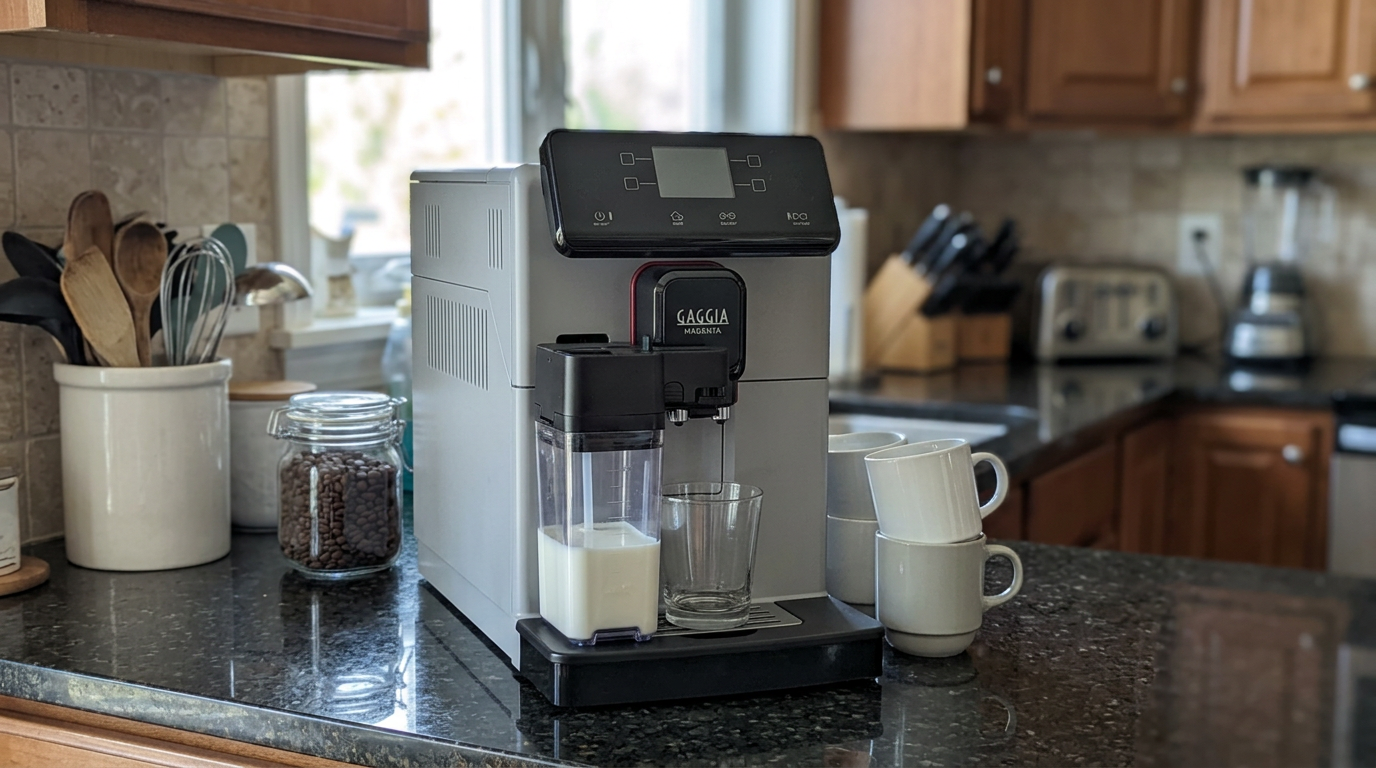
The Gaggia carafe pours a flat white espresso-first, with a true two-grind double.
Philips: LatteGo, built for easy cleaning
Both Philips machines use LatteGo✕LatteGoPhilips’ tube-free milk jug. Milk is pulled up and mixed with steam and air inside the jug itself, so there are no tubes to clean. The parts snap apart and go in the dishwasher., a small tubeless jug of about 260 ml that clips on the front. There are no tubes at all.
The foam is creamy and fairly fine on the 3200, and thick and airy on the 5500. Neither is pourable microfoam, and neither are the Gaggias.
The 3200 makes cappuccino and latte macchiato, and the 5500 adds flat white, caffè latte and iced milk drinks.
Milk temperature
My probe readings. Milk tastes sweetest at about 140 to 150°F.
The Magenta Prestige’s milk was warm rather than scalding. That band is deliberate: research from the University of Camerino found the best foam structure in milk steamed to around 60°C, or 140°F.
How each milk foamed
My ratings out of 10 for texture and stability on the Cadorna Prestige. The Magenta scored within half a point on every milk.
| Milk drink | Gaggia Magenta and Cadorna | Philips 3200 | Philips 5500 |
|---|---|---|---|
| Cappuccino | One touch | One touch | One touch |
| Flat white | One touch, espresso first | No | One touch |
| Cortado | One touch | No | No |
| Latte macchiato | One touch, XL on Cadorna | One touch | One touch |
| Café au lait | One touch | No | One touch |
| Iced milk drinks | No | No | One touch |
Our tip: Use milk straight from the fridge on all four machines, because cold milk foamed noticeably better than milk left on the counter.
Find Out the Price TodayIced drinks
Only one machine here has a real iced menu: the Philips 5500. It makes iced coffee, iced latte, iced cappuccino, iced americano and iced espresso, and tells you how much ice to add.
It brews the coffee warm, at about 140°F, and pours it over ice, so milk drinks get diluted. Iced americanos and iced espressos held up best.
On the Gaggias and the 3200, I pulled a strong shot, let it cool for a minute and poured it over a full glass of ice with cold milk. It works, but it is a manual job.
Our tip: Use large ice cubes and the strongest setting for any iced drink, because warm coffee melts small cubes in seconds.
Cleaning and upkeep
All four have a removable brew group that you rinse weekly under warm water with no soap. The Gaggias want their rails greased monthly, and the Philips machines every couple of months.
The milk side is where Philips wins clearly. After a LatteGo drink, I pulled the jug apart and rinsed it under the tap for about 10 seconds, and once a day it went in the dishwasher.
The Gaggias run a Quick Clean after milk drinks, about 20 seconds of hot water through the frothing head. The Magenta’s carafe head still needed a hand wash every day or two, and on the Cadorna I washed the head and pick-up tube at least weekly.
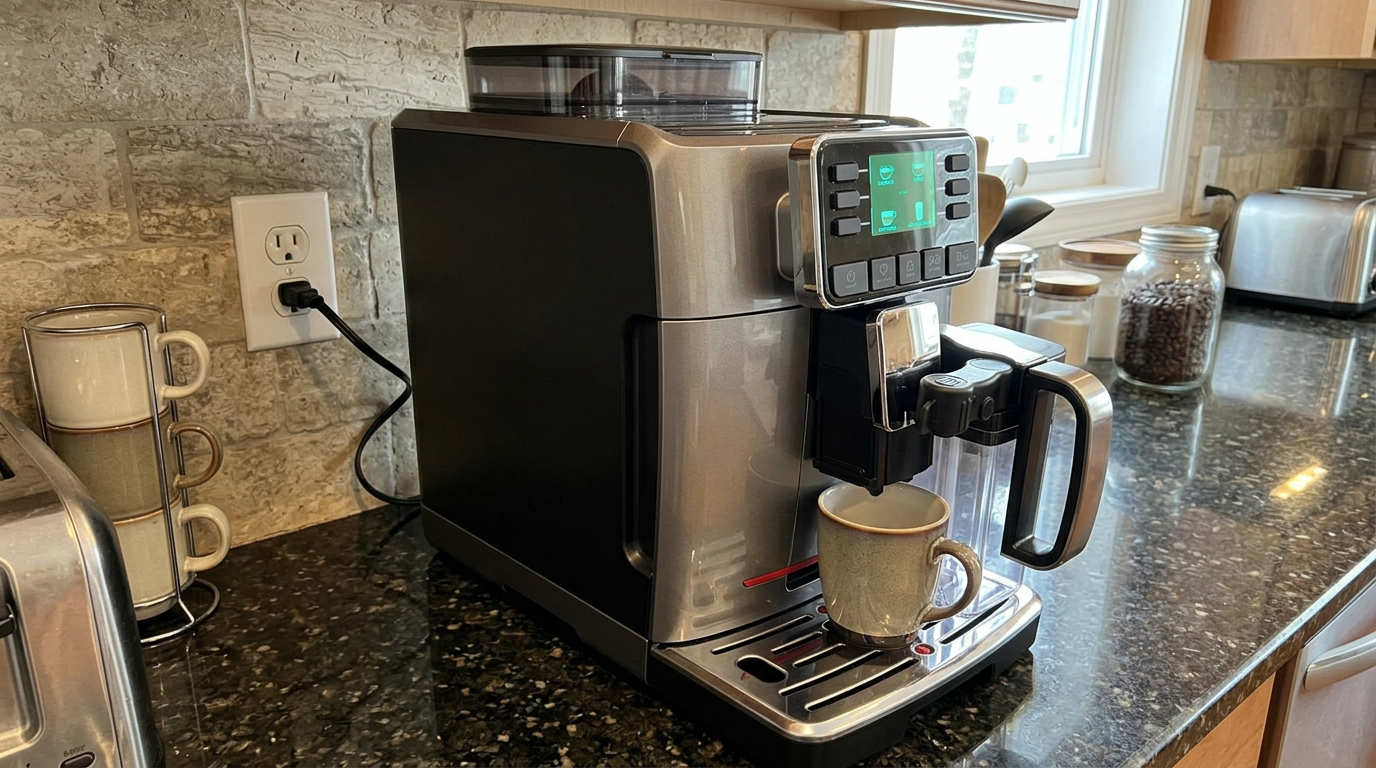
The Gaggia carafes run a Quick Clean after every milk drink.
My estimate of hands-on time per day with milk drinks, not counting automatic rinses.
| When | Gaggia | Philips |
|---|---|---|
| After milk drinks | Quick Clean, about 20 sec | Rinse LatteGo, about 10 sec |
| Daily | Empty tray and drawer, carafe in the fridge | LatteGo in the dishwasher, empty tray and drawer |
| Every 1–2 days | Hand-wash the Magenta carafe head | Nothing extra |
| Weekly | Rinse brew group, wash carafe parts | Rinse brew group |
| Monthly | Grease brew group rails | Every couple of months |
| When prompted | Descale and change the filter | Descale or change AquaClean |
Puck drawers matter in a busy home. The Magenta holds up to 15 pucks and the Philips machines about 12, while the Cadorna holds only about 10, so with three of us I emptied it every day.
Our tip: Empty the Cadorna’s puck drawer with the machine switched on and leave it out for 5 to 10 seconds, or the counter won’t reset.
Noise
Both Gaggias were quiet in daily use. Their grinders make a low, short burst and the frothing is a steady hiss, and neither woke anyone early in the morning.
The Philips 5500 is the quietest of the four on paper. With the hopper lid sealed, its grinder measured about 60 dB at a meter, about the level of a normal conversation.
The Philips 3200 was the loudest, with a short, fairly loud grinder burst and a steady steam hiss.
Relative loudness from my side-by-side use. Shorter bars are quieter.
Water, beans and supplies
The Magenta Prestige and both Philips machines have a 1.8-liter tank. The Cadorna has a smaller 1.5-liter tank that loads from the front.
Here is roughly how far one tank went in my testing, allowing for rinses.
Rough maths from my testing. Your numbers depend on cup size.
For two people, the Magenta’s tank lasted about three days. The Cadorna’s lasted about two days for three of us, and its hopper needed a top-up every four or five days.
Medium and medium-dark blends worked best on all four, ideally within about four weeks of roasting. Light roasts needed a finer grind and the top strength levels.
Avoid very dark, oily or flavored beans on every machine, because they can clog the grinder, and put the used grounds in the compost.
| Bean type | Gaggia | Philips |
|---|---|---|
| Medium-dark blend | Excellent espresso and milk drinks | Best body and sweetness |
| Medium roast | Balanced | Balanced, good long drinks |
| Light roast | Finest grind, strength 4–5 | Thin, fades in milk |
| Very dark, oily | Avoid | Avoid |
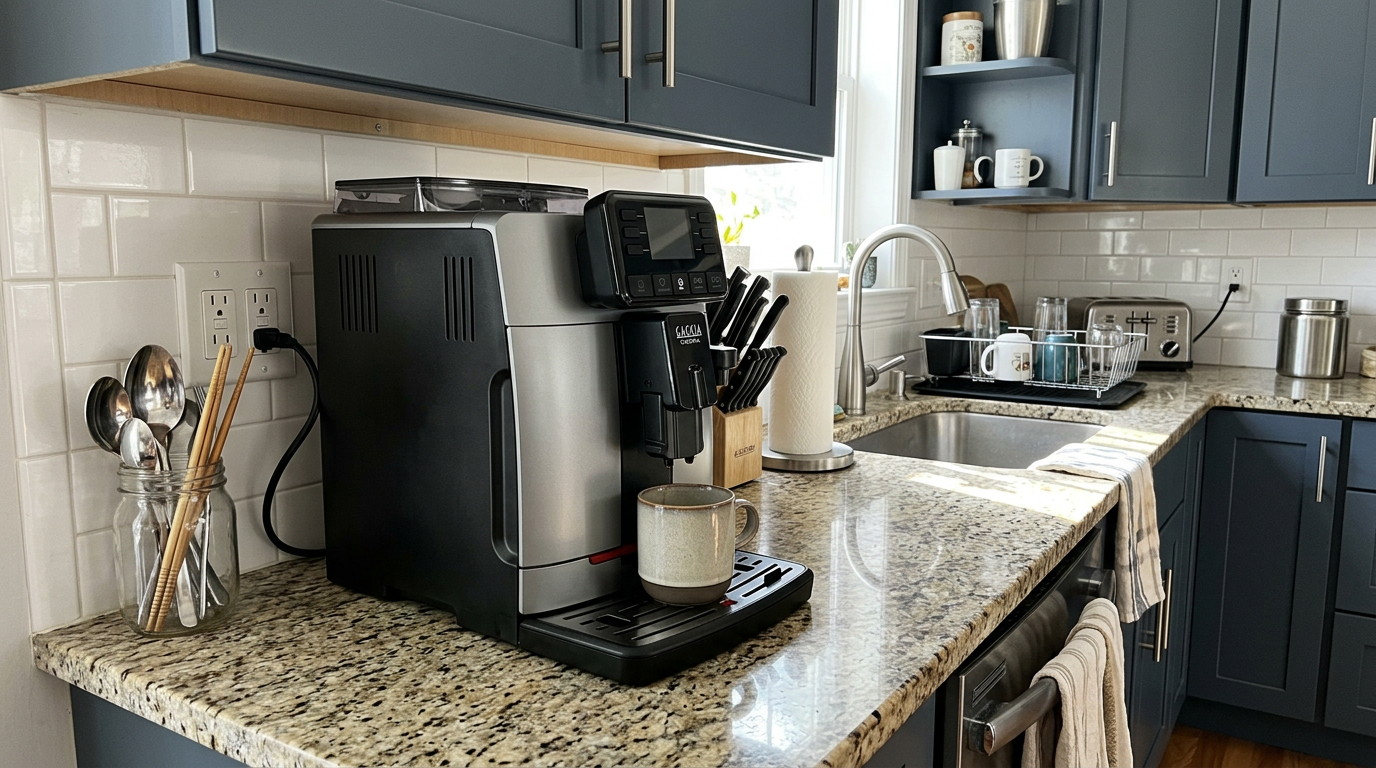
For a family that cares about taste, the Cadorna Prestige was my top machine in this test.
Our tip: Use one level scoop in the pre-ground chute on any of the four, because overfilling it can jam the brew group.
Real-life scenarios
Specs only go so far. These are the situations where one brand clearly pulled ahead during my testing.
Espresso-first, a true two-grind double and milk that folds into the crema.
A 10-second LatteGo rinse and a daily trip through the dishwasher.
Five iced drinks at one touch, with an ice prompt.
Four color-coded profiles, and it fits under the lowest cabinets.
About 8.8 inches wide, as long as you can pull it forward to open the lids.
Five drinks, simple buttons and a cappuccino in just over a minute.
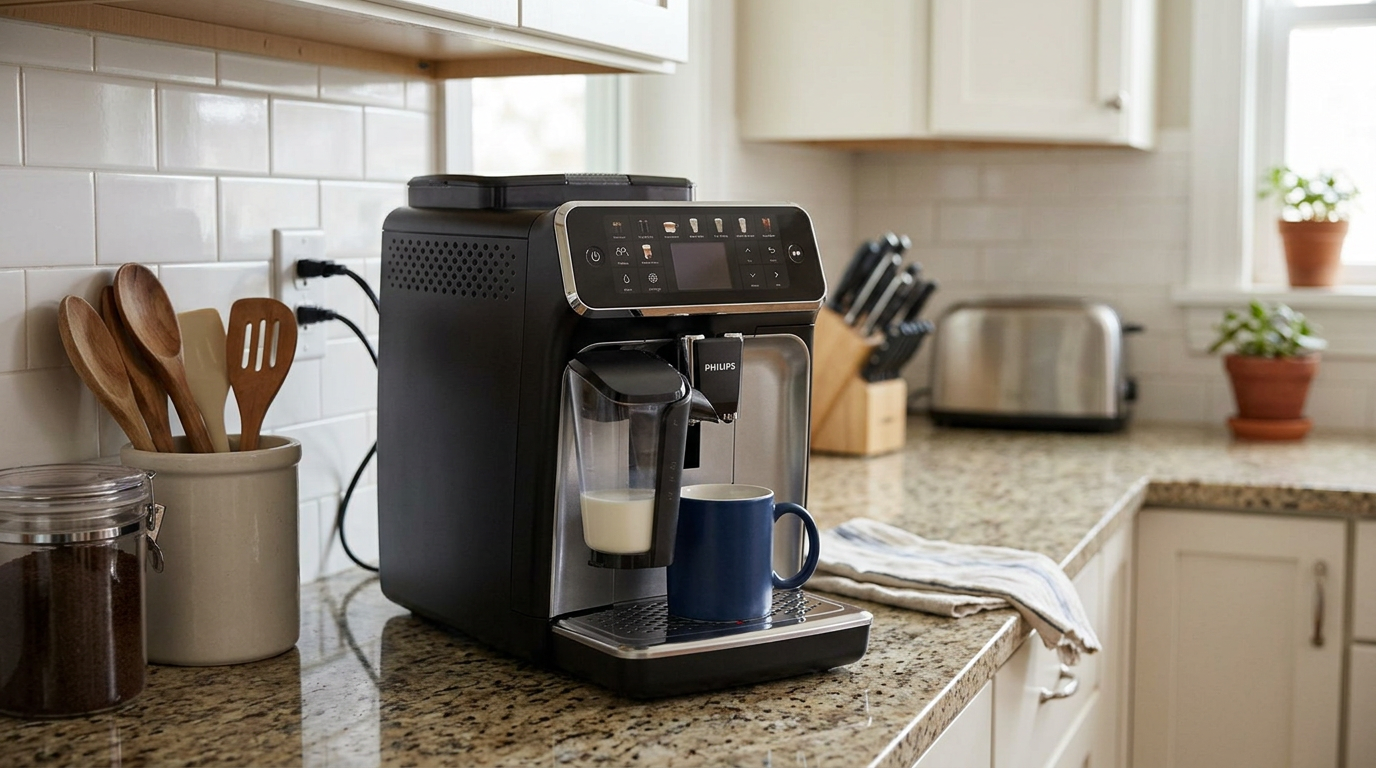
For easy cleaning and iced drinks, Philips is the more convenient brand.
My scorecard
These are my own scores out of 10 from my single reviews of each machine.
Gaggia
Philips
Overall, I rate the Cadorna Prestige 8.6, the 5500 8.5, the Magenta Prestige 8.4 and the 3200 8.0. Gaggia wins on coffee, and Philips wins on cleaning and ease.
See How Much You’ll SaveWhich one is right for you?
4 quick questionsWhich one should you buy?
It comes down to one question: is it the coffee or the cleanup that matters more to you? Gaggia wins the cup, and Philips wins the sink. If none of these is quite right for you, my guide to the best Philips espresso machines covers the rest of the range I’ve tested.
For more detail, read my Gaggia Magenta Prestige review, my Gaggia Cadorna Prestige review, my Philips 3200 review and my Philips 5500 review.
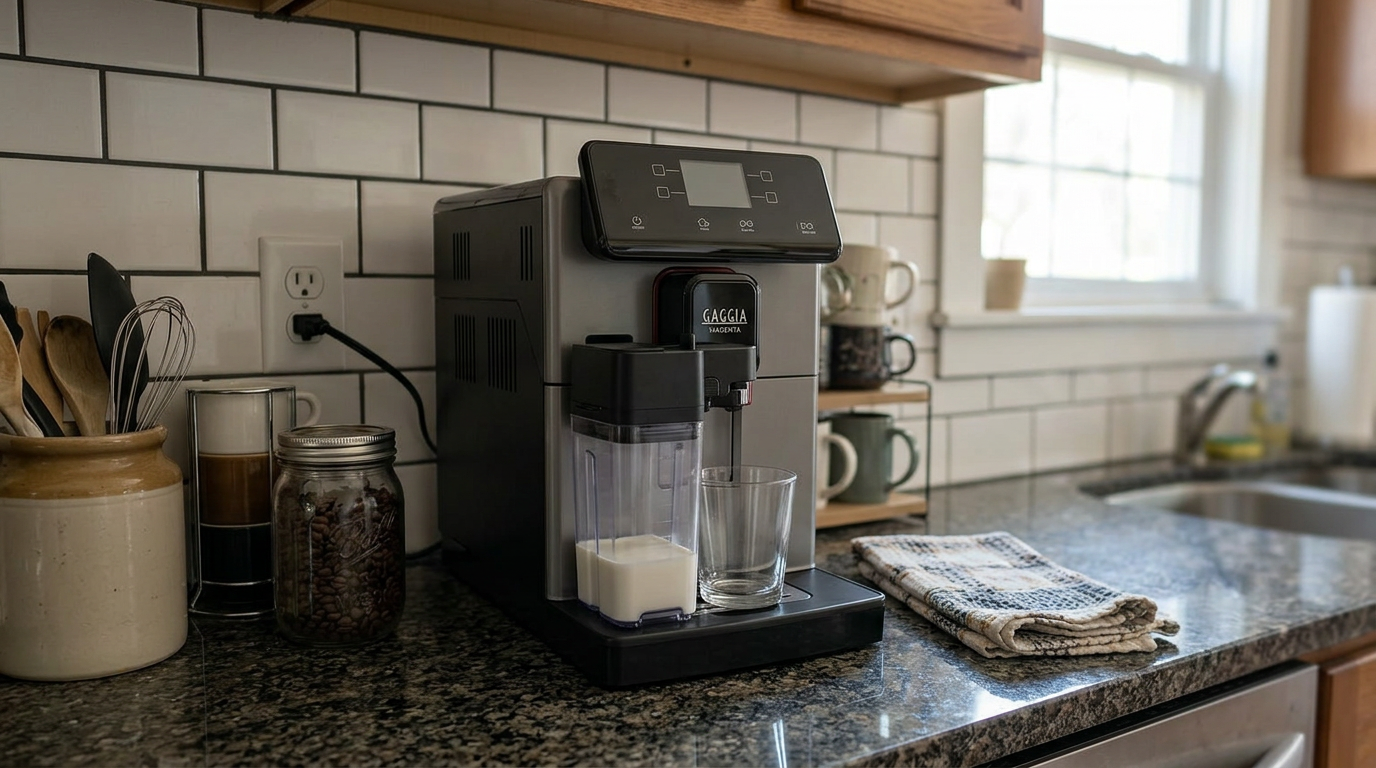
For taste in a slim body, the Magenta Prestige earns its place on the counter.
- You drink espresso, flat whites or cortados
- You want fuller shots from bigger doses
- Your counter space is narrow (Magenta) or your cabinets are low (Cadorna)
- A family wants profiles (Cadorna)
- You want the least milk cleaning possible
- You want iced drinks at one touch
- Your cabinets are low and you want the Magenta
- You hate cleaning milk systems
- You want iced drinks (5500)
- You want a simple first machine (3200)
- Four people need profiles (5500)
- You want a strong, full-bodied espresso
- You drink cortados
- You want café-smooth foam
If taste comes first, my pick is Gaggia, starting with the Gaggia Magenta Prestige. Bigger doses, true two-grind doubles and espresso-first flat whites and cortados made the better coffee in my month of testing, and the Gaggia Cadorna Prestige adds four profiles and front loading for families.
If convenience comes first, choose Philips. The Philips 5500 makes 20 hot and iced drinks with a LatteGo jug that rinses in 10 seconds, and the Philips 3200 is the easiest first machine I know.
Whichever brand you choose, use fresh medium-dark beans, warm your cups and rinse the brew group every week. Same family, different priorities, and all four reward a little care.
Gaggia vs Philips specifications
From manufacturer specifications and my own testing.
| Gaggia Magenta Prestige | Gaggia Cadorna Prestige | Philips 3200 | Philips 5500 | |
|---|---|---|---|---|
| Drinks | 12 | 14 | 5 | 20 hot and iced |
| Profiles | None | 4 | None | 4 plus guest |
| Pump | 15 bar | 15 bar | 15 bar | 15 bar |
| Heater | Steel boiler | Steel boiler | Thermoblock | Thermoblock, QuickStart |
| Grinder | Flat ceramic, 5 steps | Ceramic, 10 settings | Ceramic, 12 settings | Flat ceramic, 12 settings |
| Max single dose | About 11.5 g | About 11 g | About 8 g | Not measured |
| Milk system | Carafe, 0.5 L | Carafe, 0.6 L | LatteGo, 260 ml | LatteGo, 260 ml |
| Water tank | 1.8 L | 1.5 L, front | 1.8 L | 1.8 L |
| Bean hopper | 250 g | 300 g | 275 g | 275 g |
| Puck drawer | Up to 15 | About 10 | About 12 | About 12 |
| Dimensions (W x H x D) | 8.8 x 14 x 17.1 in | 10.2 x 15 x 17.3 in | 9.7 x 14.6 x 17 in | 9.7 x 14.6 x 17 in |
| Weight | About 17 lb | About 20.5 lb | About 17.6 lb | About 17.6 lb |
| My score | 8.4 | 8.6 | 8.0 | 8.5 |
How I tested and compared them
I used four machines as my everyday coffee maker for four weeks each: the Gaggia Magenta Prestige and Cadorna Prestige and the Philips 3200 and 5500, sharing testing with a second HouseholdMe tester.
I weighed doses and yields, measured drink temperatures with a probe thermometer, tested every strength, volume and temperature setting, and timed drinks and cleaning routines.
I foamed whole, 2%, skim, barista oat and almond milk, worked through the grind ranges with several roasts, ran every cleaning routine and compared my notes with each brand’s specifications and owner documentation.
- Coffee: dose, crema, body and consistency.
- Milk: foam texture, temperature and drink range.
- Workflow: controls, menus and daily routine.
- Ownership: noise, cleaning, water care and footprint.
Gaggia vs Philips FAQ
Are Gaggia and Philips the same company?
They share a family tree. Saeco bought Gaggia in 1999, and Philips bought Saeco, including Gaggia, in 2009. The home super-automatics share a lot of engineering, such as removable brew groups and ceramic burrs.
Which brand makes better espresso?
Gaggia, in my testing. The Magenta Prestige doses up to about 11.5 grams per grind and the Cadorna Prestige pulled a dense, tan crema. The Philips 3200 doses about 8 grams and tasted milder.
Which brand is easier to clean?
Philips. Its tubeless LatteGo jug rinses in about 10 seconds and goes in the dishwasher. Gaggia carafes run a 20-second Quick Clean, but the carafe head needs a hand wash every day or two.
Which brand makes iced coffee?
Only the Philips 5500 in this test, with five iced drinks. On the Gaggias and the Philips 3200, you pour a cooled shot over ice yourself.
Can Gaggia or Philips machines make latte art?
No. None of the four makes pourable microfoam. The Gaggia flat white and cortado come closest to café texture.
Which Gaggia should I buy?
The Magenta Prestige for a slim kitchen and one or two people, and the Cadorna Prestige for families who want four profiles and a front-loading tank that fits under low cabinets.
Which Philips should I buy?
The 3200 for a simple first machine with five drinks, and the 5500 for 20 hot and iced drinks and four profiles.
Do both brands have removable brew groups?
Yes. All four machines have a removable brew group you rinse weekly under warm water with no soap.
Which brand is quieter?
The Philips 5500 measured about 60 dB with its lid sealed. Both Gaggias were quiet, with a low, short grinder burst. The Philips 3200 was the loudest.

- Our hands-on Gaggia Magenta Prestige review
- Our hands-on Gaggia Cadorna Prestige review
- Our hands-on Philips 3200 review
- Our hands-on Philips 5500 review
- Gaggia and Philips product specifications, owner documentation and company history
- Effect of milk processing and steam frothing conditions on microfoam formation, University of Camerino
- A living lexicon for brewed coffee, University of Oregon
- Composting and Coffee Grounds, Cornell University