De’Longhi vs Philips: which super-automatic brand is better?
Both brands make fully automatic espresso machines that grind, brew and froth at one touch, and both sit on almost every shortlist. On paper they look interchangeable. In the cup they are not: in my testing the De’Longhi Magnifica Evo and Rivelia ground up to about 15 grams for an espresso, while the Philips 2200 and 3200 used about 7 to 8 grams. I used all four as my daily machine for four weeks each to find out which brand belongs in your kitchen.
We choose products independently. We may earn a commission through links on this page; your price stays the same. Affiliate policy
Jargon helpNew to espresso? Tap any dotted term to see what it means.
In this comparison
If you care about espresso that tastes rich and full rather than mild, buy a De’Longhi; my pick is the De’Longhi Magnifica Evo, whose 15 g top dose and LatteCrema carafe made the best coffee and the densest foam of the four. If you want the easiest milk cleaning, a compact machine and gentle, easy-drinking coffee, buy a Philips; my pick is the Philips 3200 Series, whose two-part LatteGo jug rinses clean in about ten seconds. Households that switch between regular and decaf should look at the De’Longhi Rivelia and its two swappable bean hoppers.
The two brands
Specs checked November 13, 2026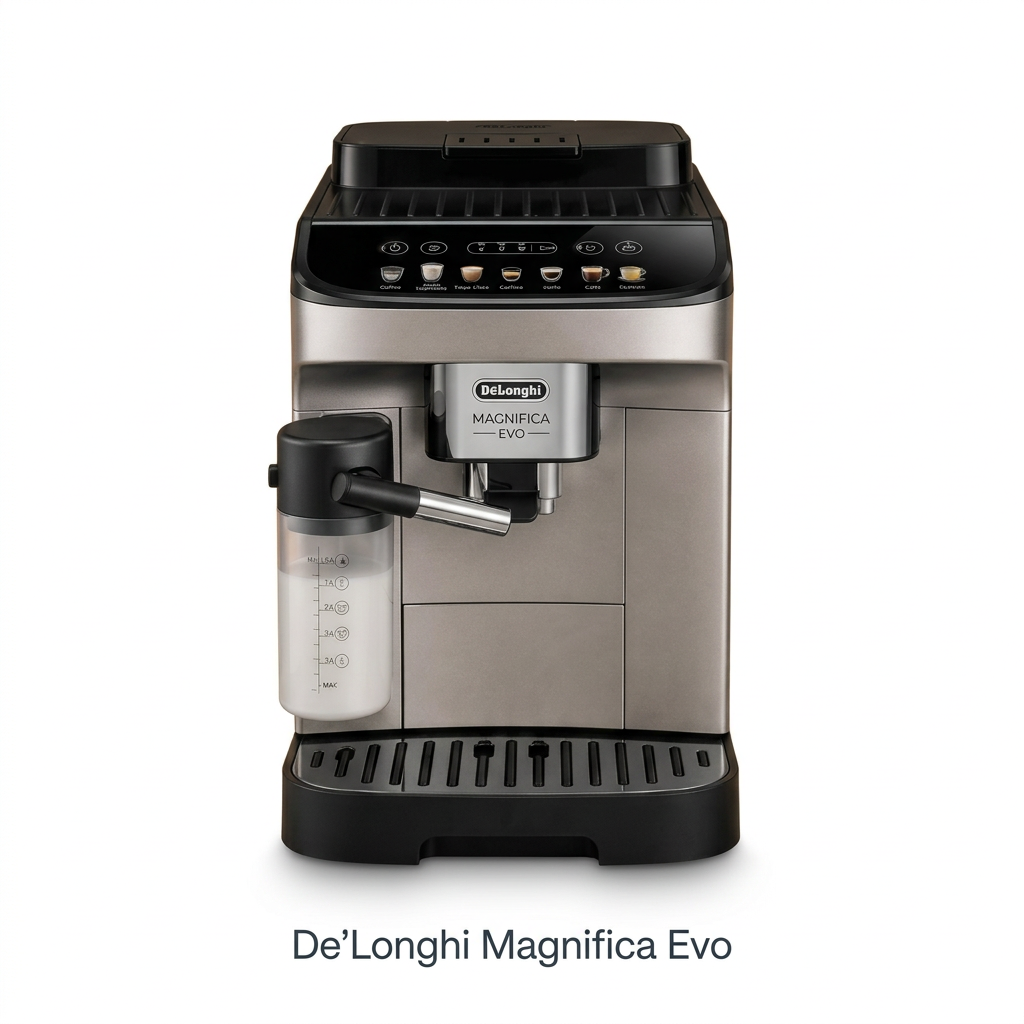
A 15 g top dose, seven one-touch drinks including Over Ice, a LatteCrema carafe for dense, hot foam and a MyLatte button for any cup size.
Check price on Amazon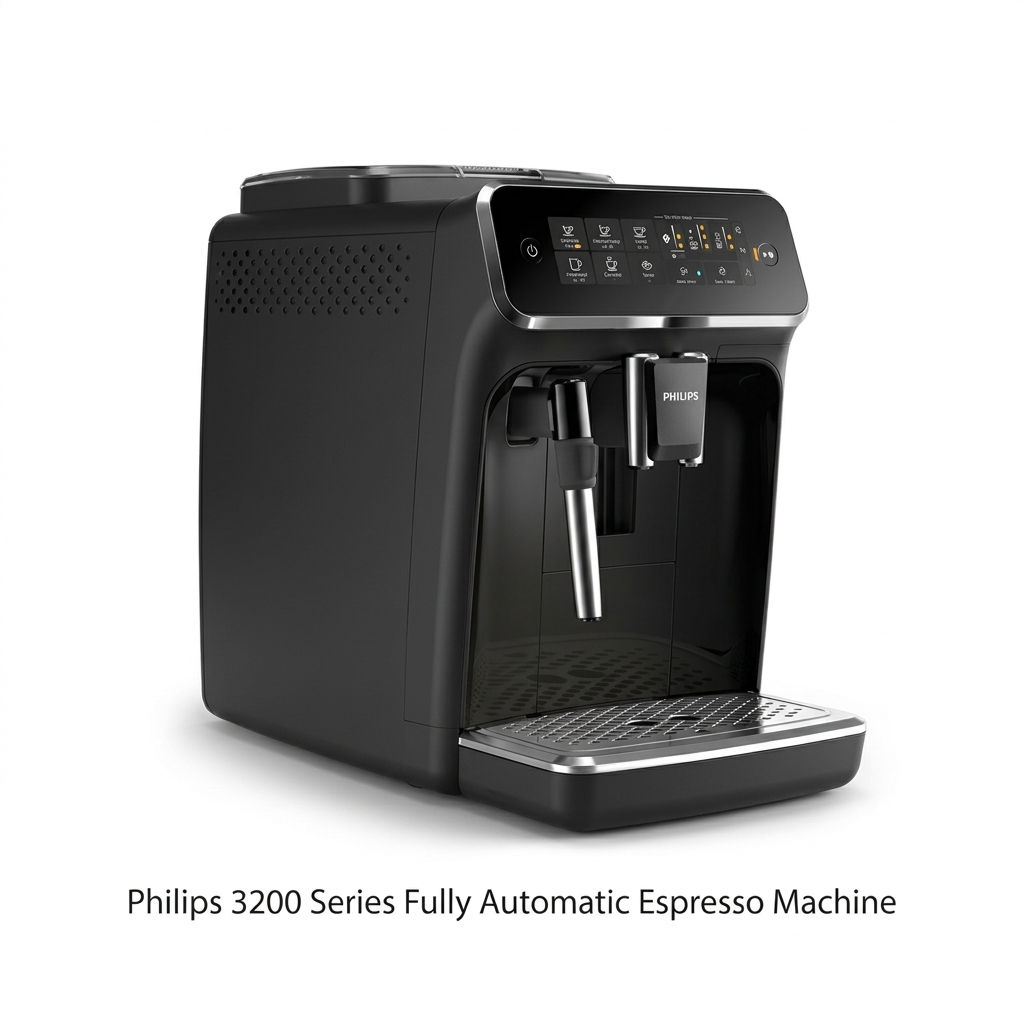
Five one-touch drinks, a tubeless two-part LatteGo jug that rinses clean in seconds, a removable brew group and an AquaClean filter in the box.
Reveal Today’s DealDe’Longhi vs Philips at a glance
- Buy De’Longhi if you want espresso and milk drinks that taste strong and full.
- Buy Philips if you want the easiest milk cleaning and mild, gentle coffee.
- Both brands rinse their brew group under the tap and need no cleaning tablets for it.
- Philips includes an AquaClean filter that can stretch descaling to 5,000 cups.
Head to head
The better result in each row is marked, based on four weeks with each of the four machines and the manufacturer specs.
This is a brand-level table that compares the best of each brand. The rows that matter most depend on whether you care more about flavor or about cleaning.
| Spec | De’Longhi | Philips |
|---|---|---|
| Top espresso doseweighed | About 15 g ✓ Best | About 7–8 g |
| Espresso bodymy tasting | Full, aromatic ✓ Best | Mild, lungo-style |
| Milk foam | Dense, hot, stable ✓ Best | Creamy, fairly fine |
| Milk cleaning | Carafe Clean function, weekly strip-down | Two parts, ~10 s rinse ✓ Best |
| Latte art option | No | 2200 bare steam tip ✓ Best |
| Iced coffee drink | Over Ice (Evo) ✓ Best | No |
| User profiles | Rivelia: 4 ✓ Best | None |
| Two kinds of beans | Rivelia: two hoppers ✓ Best | Pre-ground chute only |
| Water filter in the box | Yes | AquaClean, up to 5,000 cups ✓ Best |
| Width | About 9.5 in | About 9.7 in |
| Weight | About 21 lb | About 16.5–17.6 lb ✓ Best |
| Noisemy meter | Rivelia 66–68 dB ✓ Best | Normal for the class |
| Rows won | 7 | 4 |
De’Longhi vs Philips pros and cons
De’Longhi (Magnifica Evo and Rivelia)
- Rich espresso from a generous 15 g dose
- LatteCrema makes dense, hot, stable foam
- Rivelia adds two bean hoppers and four profiles
- Carafe needs a weekly strip-down
- No latte-art option
- Heavier, and the Evo has no hot milk button
Philips (2200 and 3200)
- LatteGo is the easiest milk system to clean
- Compact, light and simple to use
- AquaClean filter included in the box
- Mild espresso from a small dose
- LatteGo foam is good, not café-smooth
- Mostly plastic body and a small drip tray
Who should buy which machine?
- People who want strong, full-bodied espresso
- Families with different drinks and profiles
- Regular-and-decaf households
- People who prefer mild, easy-drinking coffee
- Anyone who hates cleaning milk systems
- Small kitchens and first-time buyers
The four machines I tested
I picked the two machines from each brand that most buyers cross-shop, and used each one as my only coffee maker for four weeks.
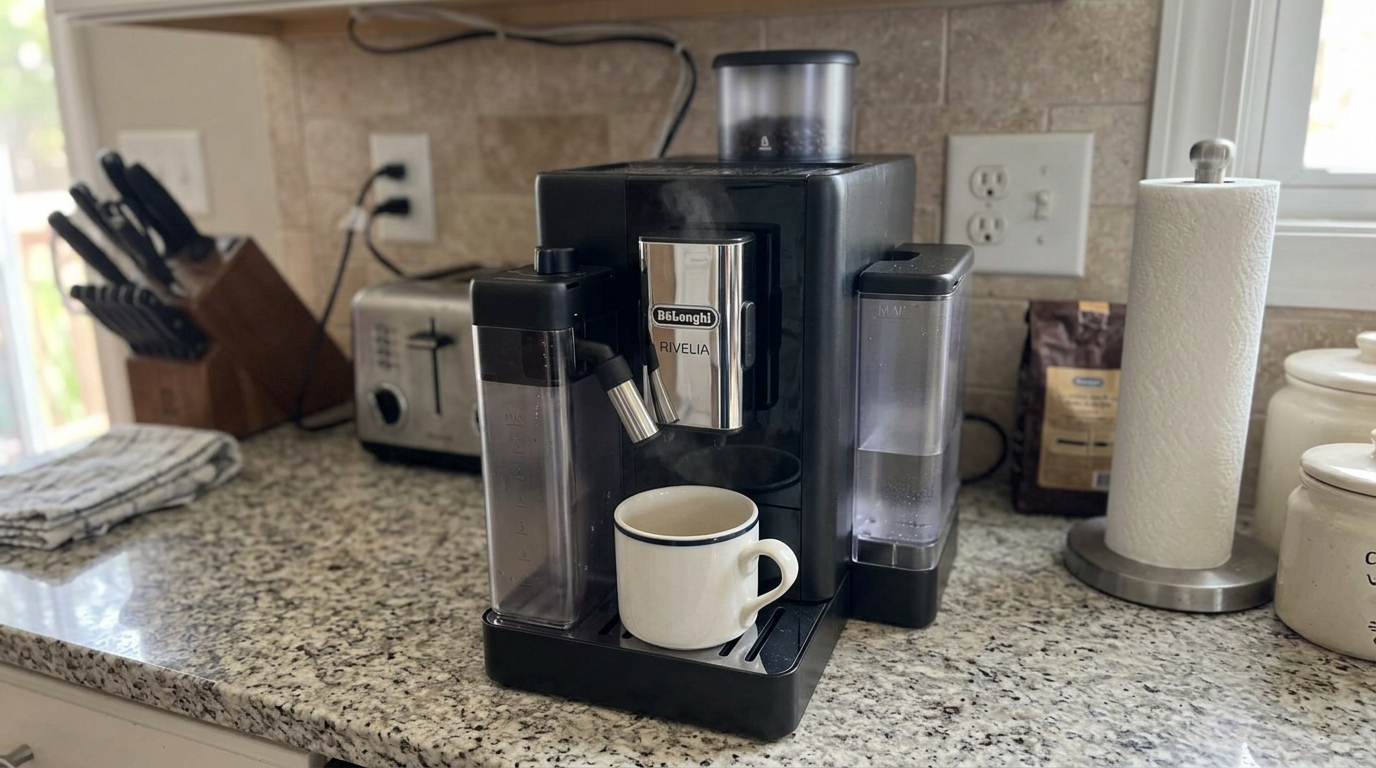
From De’Longhi: the Magnifica Evo, the brand’s sweet-spot automatic with a LatteCrema carafe and seven drinks, and the Rivelia, with a 3.5-inch touchscreen, four profiles and two swappable bean hoppers.
From Philips: the 2200 Series, a simple touch-panel machine whose frother hides a real steam tip, and the 3200 Series, with five one-touch drinks and the tubeless LatteGo jug.
| Machine | Best at | My score |
|---|---|---|
| De’Longhi Magnifica Evo | Rich espresso and dense foam at one touch | 8.3 |
| De’Longhi Rivelia | Two kinds of beans, profiles, quiet | 8.5 |
| Philips 2200 Series | Simple coffee and learning to steam | 7.9 |
| Philips 3200 Series | Easy milk drinks and easy cleaning | 8.0 |
All four work the same basic way. They grind whole beans, dose and press them into a puck, brew under pressure and drop the used puck into an internal drawer, so you never touch a portafilter or a tamper.
That shared design is why ease of use came out almost level. What separates the brands is what happens inside that process: how much coffee goes in, how the milk is frothed, and how much cleaning the milk side needs afterwards.
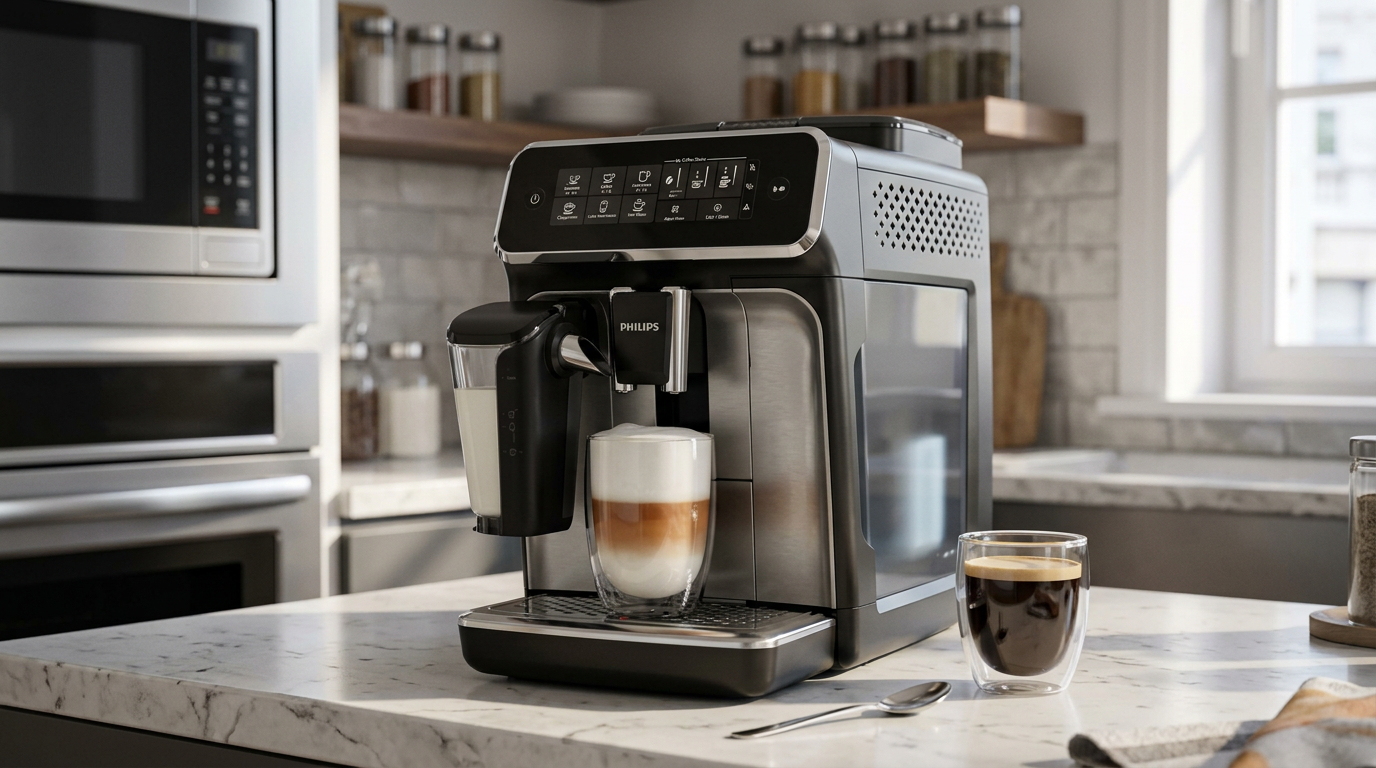
The Philips 3200 makes a layered latte macchiato at one touch with its LatteGo jug.
Dose: the hidden difference
This is the single most important thing in this comparison, and it is not on most spec sheets.
To see what each machine was really brewing, I stopped them right after grinding and weighed the coffee. On the highest strength, the Magnifica Evo used about 15 grams and the Rivelia up to about 15 grams.
The Philips 3200 used about 8 grams on its strongest setting, and the 2200 about 7.1 grams. A typical café double espresso uses 14 to 18 grams.
Coffee dose per espresso, weighed
Each figure is an average of several weighed doses.
In plain terms, the De’Longhis brew real espresso-sized doses, and the Philips machines brew something closer to a lungo✕LungoA longer espresso pulled with more water through the same coffee. It is lighter in body and less intense than a standard shot.. On the 2200’s medium size, about 6.5 grams made about 40 grams of espresso, a brew ratio✕Brew ratioThe weight of coffee in the basket compared with the weight of espresso in the cup. 15 g in and 30 g out is a 1:2 ratio. of roughly 1:6.
On the Rivelia, my go-to recipe of 15 grams in and 30 grams out gave a classic 1:2 ratio. That is the difference you taste in the cup.
Espresso quality
With a medium-dark blend at grind setting 3 and high strength, the Magnifica Evo’s espresso had a consistent crema and a full, aromatic body, with cocoa, toasted nuts and a little dried fruit. A refractometer put my shots at around 8 percent TDS✕TDS (total dissolved solids)The share of the drink that is dissolved coffee, measured with a refractometer. It shows how strong an espresso really is., a balanced result for an automatic.
The Rivelia’s 15-gram shots had the same full body, and its coffee crema became my default first cup of the day.
The Philips espresso was smooth, mild and pleasant. The 2200 tasted of dark chocolate with a little sweetness at the finish; the 3200 of gentle caramel and nuts, with very little bitterness.
If you find café espresso too intense, you may prefer the Philips cup. If you want a punchy, syrupy shot, the De’Longhis are in a different league.
My espresso scores
My scores out of 10 from each machine’s single review.
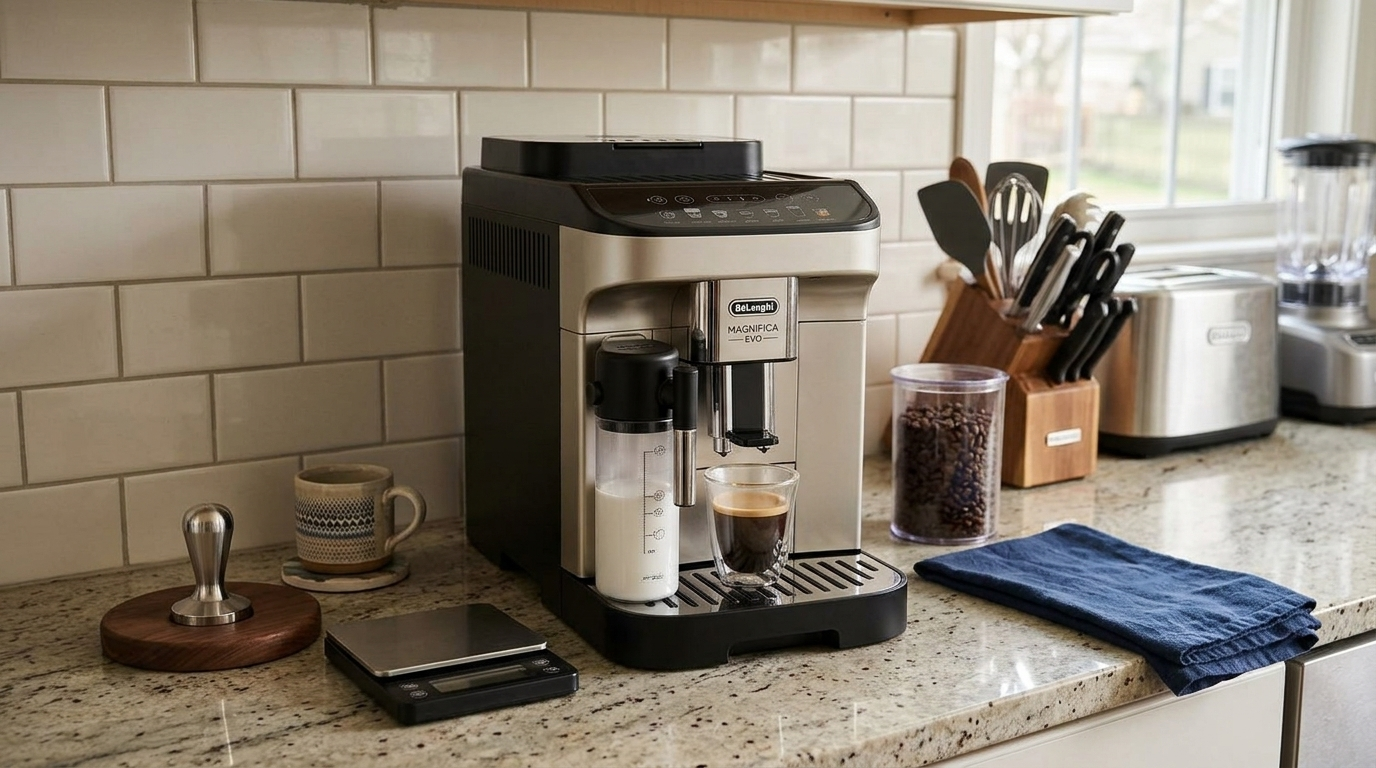
The Magnifica Evo’s 15 g dose gave the fullest espresso of the four.
| What you taste | Likely cause | First fix on any of them |
|---|---|---|
| Thin and watery | Dose too low or cup size too big | Highest strength, smaller cup |
| Sour | Under-extracted✕Under-extractionWhen water does not pull enough flavor out of the coffee. The shot tastes sour, thin and watery., grind too coarse | One step finer while grinding |
| Bitter, dry | Cup size too big or grind too fine | Smaller size or one step coarser |
| Lukewarm first drink | Cold pipes after start-up | Run hot water first |
Grinders and settings
Both De’Longhis use steel conical burrs with 13 settings, adjusted with a knob inside the hopper. Both Philips machines use a 100 percent ceramic grinder with 12 settings, adjusted the same way.
In practice, the grinders were rarely the limiting factor; the dose was. Moving two steps finer than the default gave the best balance on all four.
| Setting | Magnifica Evo | Rivelia | Philips 2200 | Philips 3200 |
|---|---|---|---|---|
| Grinder | Steel, 13 settings | Steel, 13 settings | Ceramic, 12 settings | Ceramic, 12 settings |
| Strength levels | 3 (about 9, 12, 15 g) | 5 intensities | 3 | 3 |
| Temperature | 3 | Adjustable | 3 | 3 |
| Pre-ground chute | Yes | Yes | Yes | Yes |
| Bean Adapt wizard | No | Yes | No | No |
Our tip: On every machine here, turn the grind knob only while the grinder is running, one click at a time, and wait two drinks before judging the change.
Milk: LatteCrema vs LatteGo
Both brands make milk drinks at one touch, but their milk systems take opposite approaches.
De’Longhi’s LatteCrema✕LatteCrema systemDe’Longhi’s automatic milk carafe. It draws cold milk up a tube, mixes it with steam and air, and pours dense foam straight into your cup. carafe draws cold milk up a tube into the lid, where steam and air mix it into foam that pours straight into your cup. On the Evo, the foam was dense, fine and stable, closer to a soft meringue than a bubbly froth.
The carafe can live in the fridge between drinks, and the Evo’s MyLatte button uses exactly the milk you pour in, from a 2-ounce cortado to a full carafe latte.
Philips’ LatteGo✕LatteGoPhilips’ two-part milk jug with no tubes. Steam draws milk into a small chamber in the jug, mixes in air and pours foam directly into the cup. is a two-part jug with no tubes. Steam draws milk into a small chamber, mixes in air and pours foam into your cup; on the 3200 it was creamy and fairly fine, and latte macchiatos came out in clean layers.
The Philips 2200 has no LatteGo. Instead, it has a classic frother whose sleeve comes off to reveal a real steam tip, which made glossy microfoam and latte-art hearts by week three.
Milk scores, my testing
My milk-drink scores out of 10 from each single review.
| Milk detail | De’Longhi LatteCrema | Philips LatteGo |
|---|---|---|
| Foam | Dense, hot, stable | Creamy, fairly fine |
| Milk temperature | About 140–149°F (Rivelia) | Comfortably hot |
| Store in the fridge | Yes, the whole carafe | Yes, with the storage lid |
| After each drink | Run the Clean function | Rinse two parts, ~10 s |
| Weekly | Take the lid apart and wash | Dishwasher daily |
| Tubes | Pickup tube in the carafe | None |
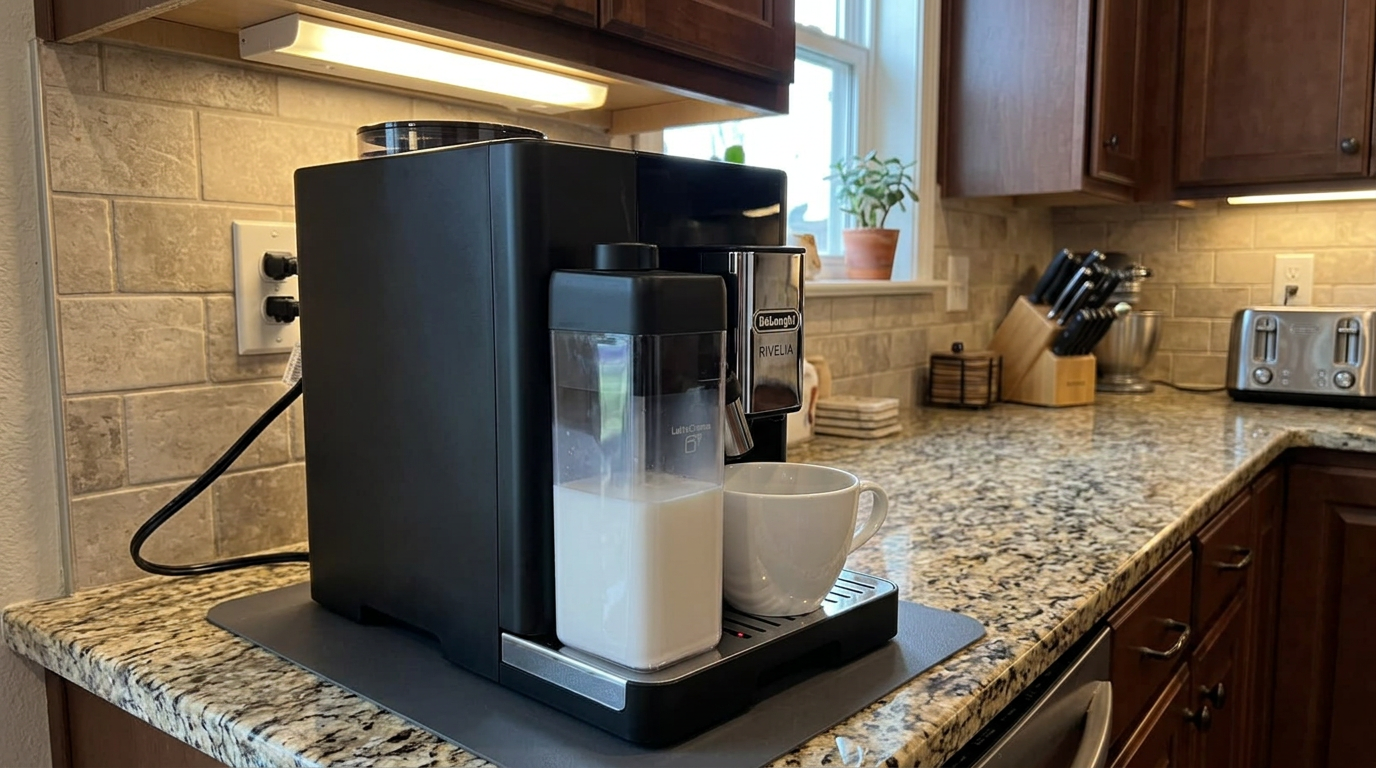
De’Longhi’s carafe makes the denser foam; Philips’ jug is easier to clean.
Our tip: Keep the milk cold until the second you use it on either system, because cold milk makes denser foam and stays fresh longer in the carafe or jug.
Making mild Philips coffee taste stronger
Because the Philips espresso is mild, milk can easily drown it. On the 3200, I always used the strongest aroma for cappuccinos and latte macchiatos, and for a bigger hit I added an extra espresso on top.
On the 2200, I built milk drinks on a double espresso at the smallest size, which runs two full grind-and-brew cycles. That doubled the coffee without stretching one small dose.
On the De’Longhis, none of this was necessary. The high strength level gave a strong coffee core under the foam straight away, which is why their cappuccinos scored higher in my tasting.
Cleaning and upkeep
Here is the good news: all four have a removable brew group✕Brew group (brew unit)The part that compresses the ground coffee, holds it while water passes through and then ejects the used puck. On these machines it slides out for rinsing. that slides out for a weekly rinse under the tap, with no cleaning tablets.
Philips’ brew group needs a thin layer of the included grease every couple of months. De’Longhi suggests checking and greasing the brew unit seals monthly.
The milk side is where they differ. On the Philips 3200, I rinsed the two LatteGo parts in about ten seconds after each milk drink and put them in the dishwasher daily. On the De’Longhis, I ran the carafe Clean function after each drink and took the lid apart for a proper wash once a week.
With the AquaClean filter replaced when prompted, Philips says you can go up to 5,000 cups without descaling✕DescalingRunning a mild acid through the machine to dissolve the mineral scale that hard water leaves behind in the heater and pipes.. A full descale on the Evo took about 45 minutes, most of which I could walk away from.
My hands-on cleaning time per day, with milk drinks
My estimate, not counting automatic rinses.
| When | De’Longhi | Philips |
|---|---|---|
| After milk drinks | Carafe Clean function | Rinse LatteGo or purge the tip |
| Daily | Empty drawer and tray | Empty drawer and small drip tray |
| Weekly | Rinse brew unit, wash carafe lid | Rinse brew group |
| Every 1–2 months | Check and grease seals | Grease the brew group |
| When prompted | Descale, ~45 min on the Evo | Replace AquaClean or descale |
Our tip: Empty the grounds drawer every day or two on any of these, rather than waiting for the alert, because damp pucks grow mold fast.
Noise and speed
I measured the De’Longhis with a sound meter about a foot from the front. The Rivelia was the quietest of the four at 66 to 68 dB while grinding and brewing.
The Evo’s grinder hit 70 to 71 dB for its first five or six seconds, with milk frothing at 60 to 62 dB and the pump at about 60 dB. The Philips grinders were short, fairly loud bursts, normal for the class but noticeable in a quiet kitchen.
Noise I measured on the De’Longhis
Sound meter about a foot from the front of each machine.
On speed, the Evo was ready about 38 seconds after a cold start, and a cappuccino took about a minute from button to cup. On the Philips 3200, a cappuccino took a little over a minute, with almost no hands-on time.
Both brands rinse at start-up, so a cup under the spout is a good habit on all four. On the Evo, running a little hot water before the first espresso made the first shot as hot as the second.
Our tip: Run a few seconds of hot water into your cup before the first espresso of the day on any of these, because the first shot comes through cool pipes.
Size and build
All four are narrow. The Magnifica Evo is about 9.45 inches wide, 17.3 deep and 14.2 tall; the Rivelia about 9.6 by 16.9 by 15.2; and both Philips machines about 9.7 by 17 by 14.6 inches.
The Philips machines are noticeably lighter, at about 16.5 lb for the 2200 and 17.6 lb for the 3200, against about 21 lb for both De’Longhis.
All four are mostly plastic. The Evo has a stainless cup tray and a brushed-look front, the Philips 3200 a stainless drip tray cover, and nothing rattled on any of them in four weeks.
Small practical touches favor De’Longhi: the Evo’s front-loading tank means you never move the machine to refill it, and the Rivelia’s side tank drops in from above. My one Rivelia complaint is that its screen lies flat on top, which is awkward for kids and seated users.
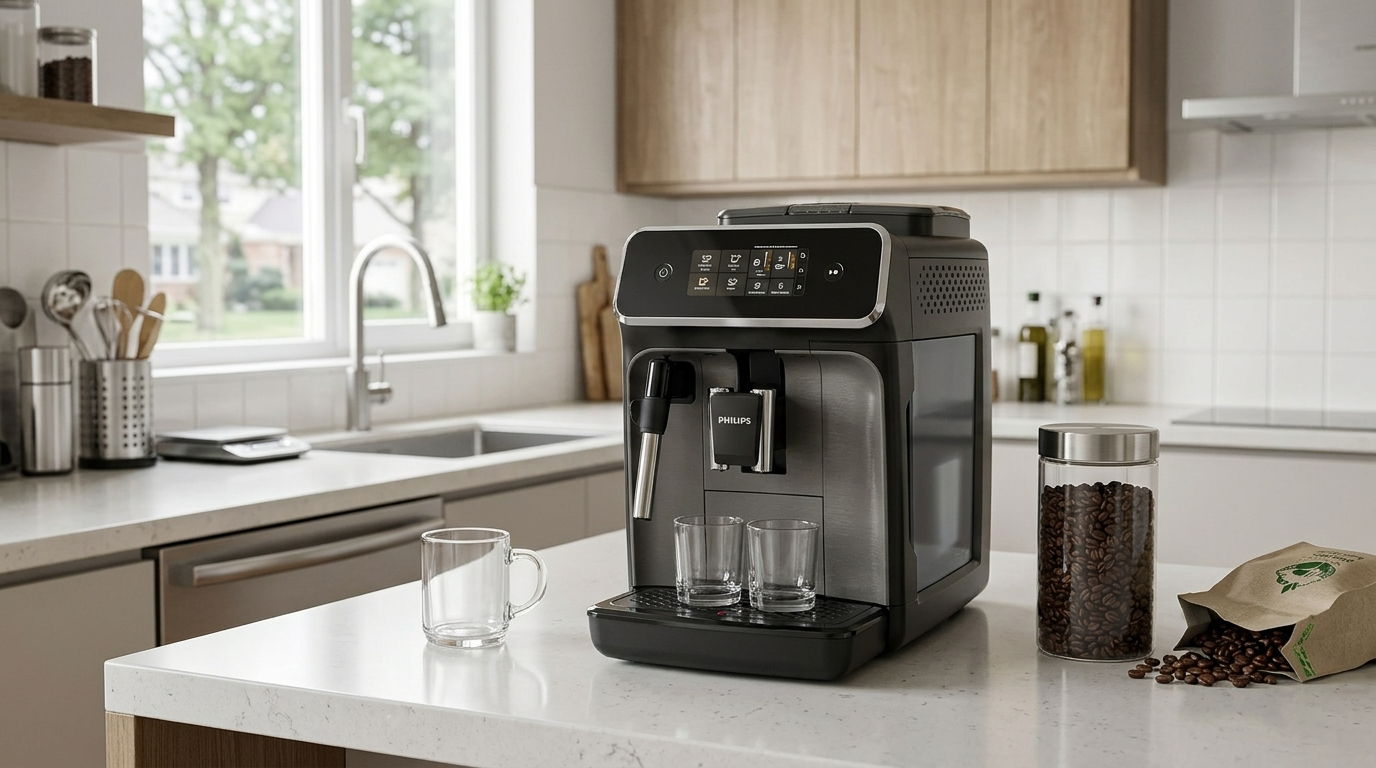
At about 16.5 lb, the Philips 2200 is the lightest machine of the four.
Beans, water and filters
On a small-dose Philips, beans do a lot of the work. Fresh medium-dark blends with chocolate notes suited the gentle extraction best, and a blend with some Robusta added crema and caffeine for milk drinks.
On the De’Longhis, fresh medium and medium-dark roasts gave the best crema and body. Light roasts can taste sour on all four, and very dark, oily beans clog automatic grinders on every brand.
| Bean type | De’Longhi | Philips |
|---|---|---|
| Medium-dark blend | Full body, cocoa, thick crema | Best body and sweetness |
| Medium roast | Brighter and sweet | Balanced, gentle |
| Light roast | Can taste sour, go finer | Bright, thin |
| Arabica-Robusta blend | More crema | More crema and punch |
| Very dark, oily | Avoid | Avoid |
Use fresh, cold water and the filter if your water is hard, and skip distilled water. Philips includes an AquaClean filter in the box; De’Longhi includes a water filter too, and its descale light comes on based on the hardness you set.
Our tip: On a Philips, buy beans with a roast date in the last few weeks, because a small dose cannot hide stale coffee.
Find Out the Price TodayA month with each brand
Super-automatics feel almost identical on day one: unpack, fill, set the water hardness, pour away the first few drinks. The differences show up over the following weeks.
Week one
On the Philips machines, the first few coffees were flat while the grinders settled, and the default espresso tasted mild. On the 3200, the latte macchiato was an instant favorite; on the 2200, I spent the week learning to steam with the sleeve off.
On the De’Longhis, moving the grind from the middle of the range down to setting 3 made the biggest difference on the Evo. On the Rivelia, the Bean Adapt wizard suggested a sensible starting grind and I barely touched it.
Weeks two and three
By week two, I had moved both Philips grinders two steps finer and set the strongest aroma with the smallest volume. The espresso became rounder and sweeter, though still mild.
On the De’Longhis, the routine simply settled. The Evo’s carafe lived in the fridge, MyLatte cortados became a daily habit, and the Rivelia’s decaf hopper went on every afternoon.
Week four
Nothing broke, rattled or leaked on any of the four. The recurring annoyances were small: the Philips 3200’s drip tray needed emptying every day, and the Evo’s lack of a hot milk button came up whenever someone wanted warm milk on its own.
| After four weeks | De’Longhi | Philips |
|---|---|---|
| Best habit | Highest strength, grind 3 | Strongest aroma, smallest size, finer grind |
| Daily chore | Run the carafe Clean | Rinse LatteGo, empty the small tray |
| Biggest strength | Full espresso, dense foam | Effortless milk cleaning |
| Biggest gripe | No hot milk button (Evo) | Mild espresso |
Value and long-term ownership
De’Longhi has used the same removable brew unit design across its automatic range for years, so replacement parts are easy to find. On the LatteCrema carafe, the small rubber O-rings and air holes are the first things to check if foam ever gets thin or sputters.
Philips also uses its standard removable brew group across the range, the same basic design found in much more expensive machines. Its AquaClean filters are an ongoing cost, but they cut descaling dramatically.
| Ownership detail | De’Longhi | Philips |
|---|---|---|
| Brew unit | Removable, rinse with water | Removable, rinse with water |
| Lubrication | Check and grease seals monthly | Grease every couple of months |
| Wear points | Carafe O-rings and air holes | LatteGo parts, small drip tray |
| Filter | Included, replace when prompted | AquaClean, up to 5,000 cups |
| Warranty | Check your model and retailer | 2 years limited (2200 and 3200) |
In value terms, the question is simple. If you would otherwise buy café espresso drinks, the De’Longhis get much closer to café strength. If you mainly want a convenient, mild morning cup and hate cleaning, the Philips machines deliver that for less effort.
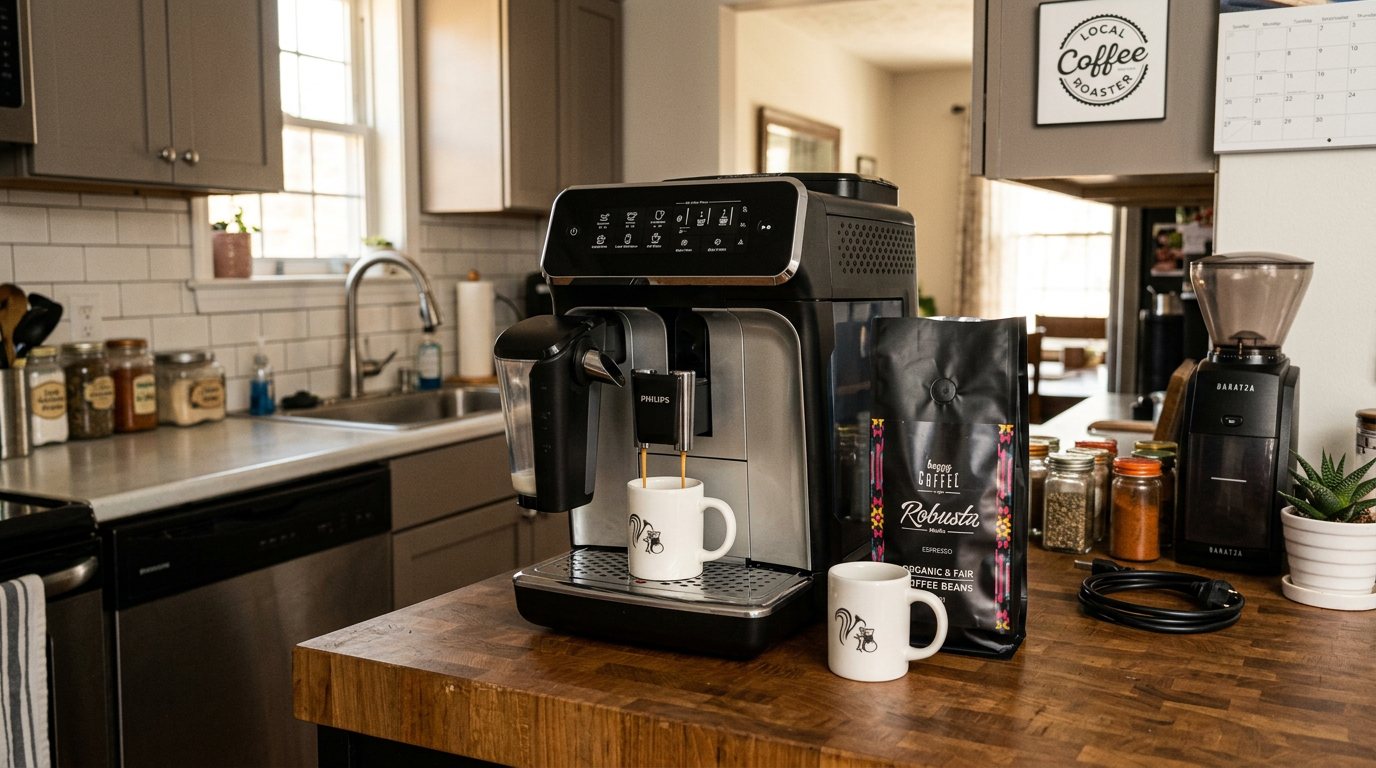
The Philips 3200 trades intensity for convenience, and does that very well.
Our tip: Buy a spare water filter when you buy the machine, so you never skip a change and end up descaling early.
Real-life scenarios
Specs only go so far. These are the situations where one brand clearly pulled ahead across my testing.
A 15 g dose made a full, aromatic shot. The Philips cup was smooth but mild.
LatteGo rinses clean in about ten seconds and has no tubes at all.
The Rivelia swaps bean hoppers in seconds.
Only the 2200’s bare steam tip can make pourable microfoam.
The Evo’s Over Ice drink is made for a full glass of ice.
The 2200 weighs about 16.5 lb and keeps things simple.
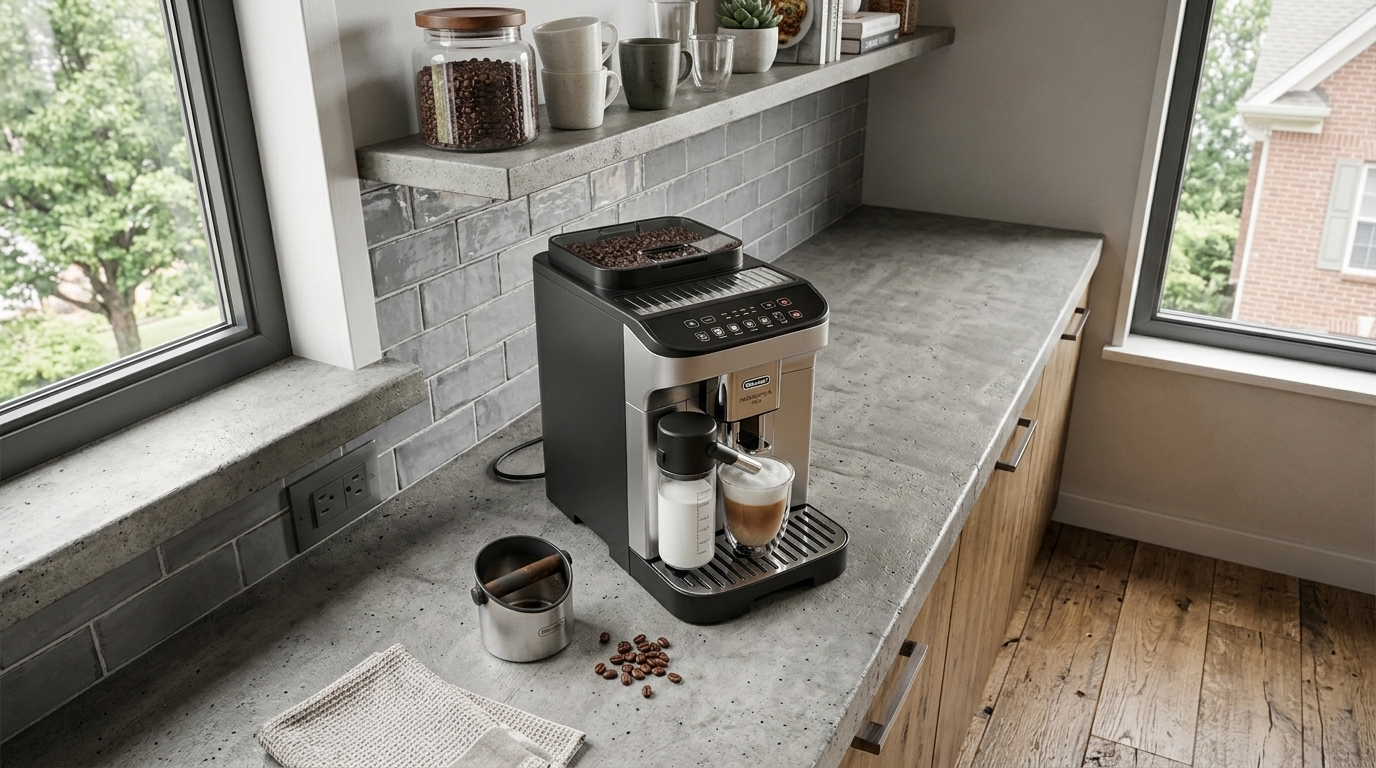
For full-flavored espresso and dense foam, the Magnifica Evo was the one I reached for.
My scorecard
These scores come straight from my single reviews of each machine, all out of 10.
Overall score
Brand averages by category
De’Longhi leads clearly on espresso and milk, and Philips leads on cleaning. Ease of use is a tie: both brands are genuinely simple to live with.
See How Much You’ll SaveWhich one is right for you?
4 quick questionsWhich brand should you buy?
It comes down to one question: what matters more to you, flavor or effortless cleaning? If it is flavor, buy a De’Longhi. If it is cleaning, buy a Philips.
For the detail behind each machine, read my Magnifica Evo, Rivelia, Philips 2200 and Philips 3200 reviews, or my Philips 2200 vs 3200 comparison.
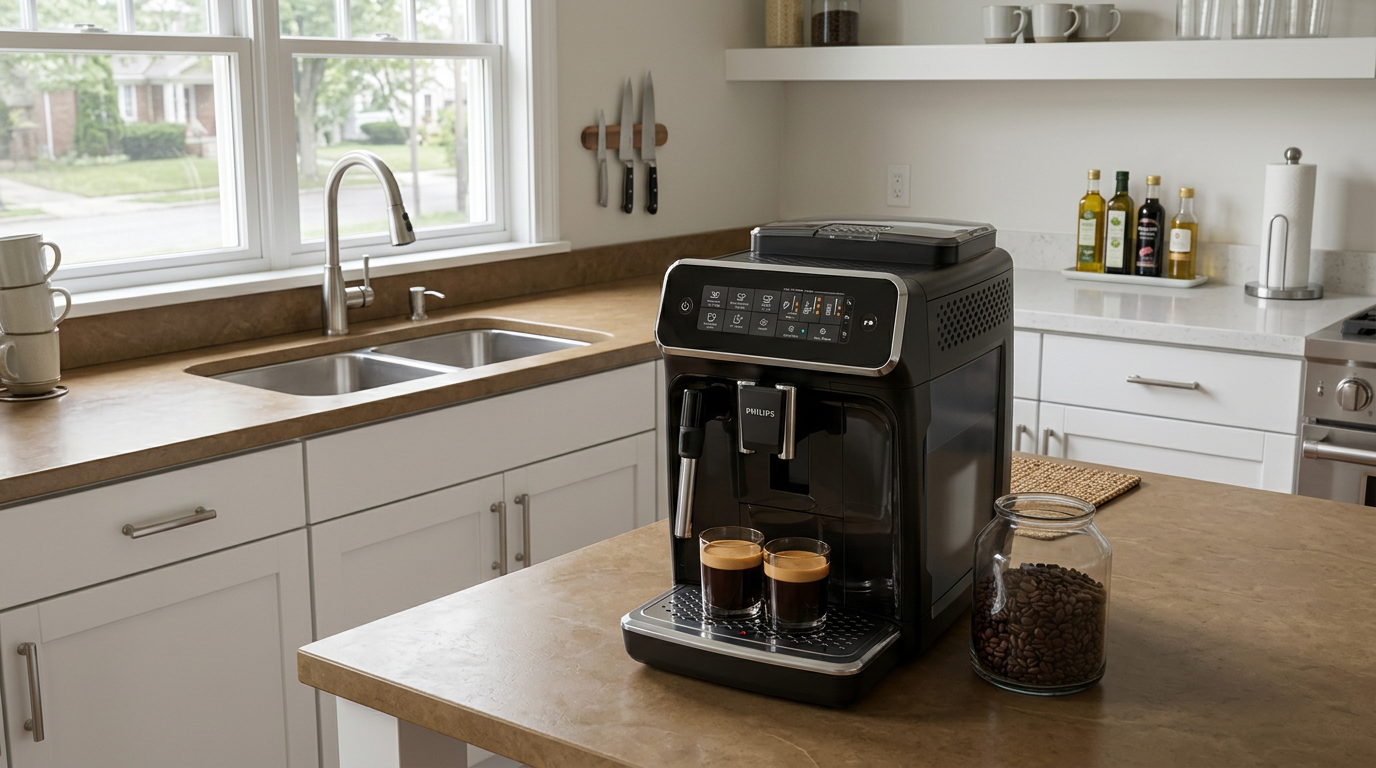
For easy cleaning and mild coffee, the Philips 3200 is the sensible pick.
- You want rich, full-bodied espresso
- You love dense, hot milk foam
- You like iced coffee
- You want a front-loading tank
- You want the easiest milk cleaning
- You need warm milk on its own
- You want latte art
- You prefer mild, gentle coffee
- You hate cleaning milk systems
- Your household wants a mix of drinks
- You want a lighter machine
- You want strong espresso
- You want café-dense foam
- You want profiles or iced drinks
Two more worth knowing: the De’Longhi Rivelia is the pick for regular-and-decaf households and families who want profiles, and the Philips 2200 is the pick if you want to learn to steam milk yourself.
For most people, my pick is a De’Longhi, and specifically the De’Longhi Magnifica Evo. Its 15 g top dose makes espresso that tastes like espresso, its LatteCrema foam is dense and hot, and MyLatte makes any size of milk drink. If you drink regular and decaf, the De’Longhi Rivelia is worth the step up.
The Philips 3200 Series is the smarter buy if you prefer mild coffee and want the easiest milk cleaning of any machine I have tested. Set the strongest aroma and smallest size, and it makes a perfectly pleasant cup with almost no effort.
Whichever brand you choose, use fresh medium or medium-dark beans, keep the filter fresh and rinse the brew group weekly.
De’Longhi vs Philips specifications
From manufacturer specifications and my own testing.
| Magnifica Evo | Rivelia | Philips 2200 | Philips 3200 | |
|---|---|---|---|---|
| Type | Fully automatic | Fully automatic | Fully automatic | Fully automatic |
| Pump | 15 bar | 19 bar | 15 bar | 15 bar |
| Grinder | Steel, 13 settings | Steel, 13 settings | Ceramic, 12 settings | Ceramic, 12 settings |
| Top dose (weighed) | About 15 g | About 15 g | About 7.1 g | About 8 g |
| Milk | LatteCrema carafe | Milk carafe | Frother with removable sleeve | LatteGo jug |
| One-touch drinks | 7 | 18 | 2 | 5 |
| Profiles | No | 4 | No | No |
| Water tank | About 60 oz | 47 oz | 61 oz | 61 oz |
| Size (W x D x H) | 9.45 x 17.3 x 14.2 in | 9.6 x 16.9 x 15.2 in | 9.7 x 17 x 14.6 in | 9.7 x 17 x 14.6 in |
| Weight | About 21 lb | 21.4 lb | About 16.5 lb | About 17.6 lb |
How I tested and compared them
I used each of the four machines as my only coffee maker for four weeks, making espresso, coffee, Americanos, cappuccinos, latte macchiatos and iced drinks. Testing notes were written up together by Michael Reynolds and the HouseholdMe team.
I weighed doses by stopping each machine after grinding, measured drink volumes and temperatures, checked De’Longhi espresso with a refractometer and measured noise with a sound meter.
I followed every rinse, brew group, carafe and filter routine, then compared my notes with De’Longhi’s and Philips’ specifications and owner documentation.
- Coffee: dose, crema, body, flavor and consistency.
- Milk: foam texture, temperature, speed and drink range.
- Workflow: heat-up, controls, guidance and daily routine.
- Ownership: cleaning, water care, noise and footprint.
De’Longhi vs Philips FAQ
Is De’Longhi or Philips better?
For flavor, De’Longhi. The Magnifica Evo and Rivelia ground about 15 g per espresso in my testing, against about 7 to 8 g on the Philips 2200 and 3200, so their coffee tastes much fuller. For the easiest milk cleaning, Philips LatteGo wins.
Why does Philips espresso taste weaker?
Because the dose is small. I weighed about 8 g on the 3200 and about 7.1 g on the 2200 at their strongest settings, roughly half a café double. Use the strongest setting and smallest cup size.
Which milk system is better, LatteCrema or LatteGo?
LatteCrema makes denser, more stable foam; LatteGo is easier to clean, with two parts and no tubes. Choose by whether foam or cleaning matters more to you.
Which brand is easier to clean?
Philips, mainly because LatteGo rinses clean in about ten seconds. Both brands have a removable brew group you rinse under the tap.
Which brand is quieter?
In my testing, the De’Longhi Rivelia was the quietest at 66 to 68 dB. The Evo’s grinder hit 70 to 71 dB for its first few seconds.
Can either make latte art?
Only the Philips 2200, whose frother sleeve comes off to reveal a real steam tip. LatteCrema and LatteGo make foam that is not pourable for art.
Do they come with water filters?
Yes. Philips includes an AquaClean filter that can stretch descaling to 5,000 cups when replaced on time; De’Longhi includes a water filter too.
Which brand has user profiles?
The De’Longhi Rivelia has four. None of the Philips machines I tested has profiles.
Which is smaller?
All four are about 9.5 to 9.7 inches wide. The Philips machines are lighter, at about 16.5 to 17.6 lb against about 21 lb.
Which should I buy for a family?
The De’Longhi Rivelia for profiles and two bean hoppers, or the Philips 3200 if easy milk cleaning matters most.

- Our hands-on De’Longhi Magnifica Evo review
- Our hands-on De’Longhi Rivelia review
- Our hands-on Philips 2200 Series review
- Our hands-on Philips 3200 Series review
- De’Longhi and Philips product specifications and user manuals
- General espresso brewing and maintenance guidance