Breville vs De’Longhi: which espresso brand should you buy?
Both brands sell espresso machines with a grinder built in, and both sit on the shortlist of nearly every first-time buyer. But they want different things from you. Breville’s Barista line, like the Barista Express and Barista Pro, hands you a portafilter, a tamper and a steam wand. De’Longhi’s fully automatic machines, like the Magnifica Evo and Rivelia, grind, tamp, brew and froth at the touch of an icon. I used all four as my daily machine for four weeks each to find out which brand belongs in your kitchen.
We choose products independently. We may earn a commission through links on this page; your price stays the same. Affiliate policy
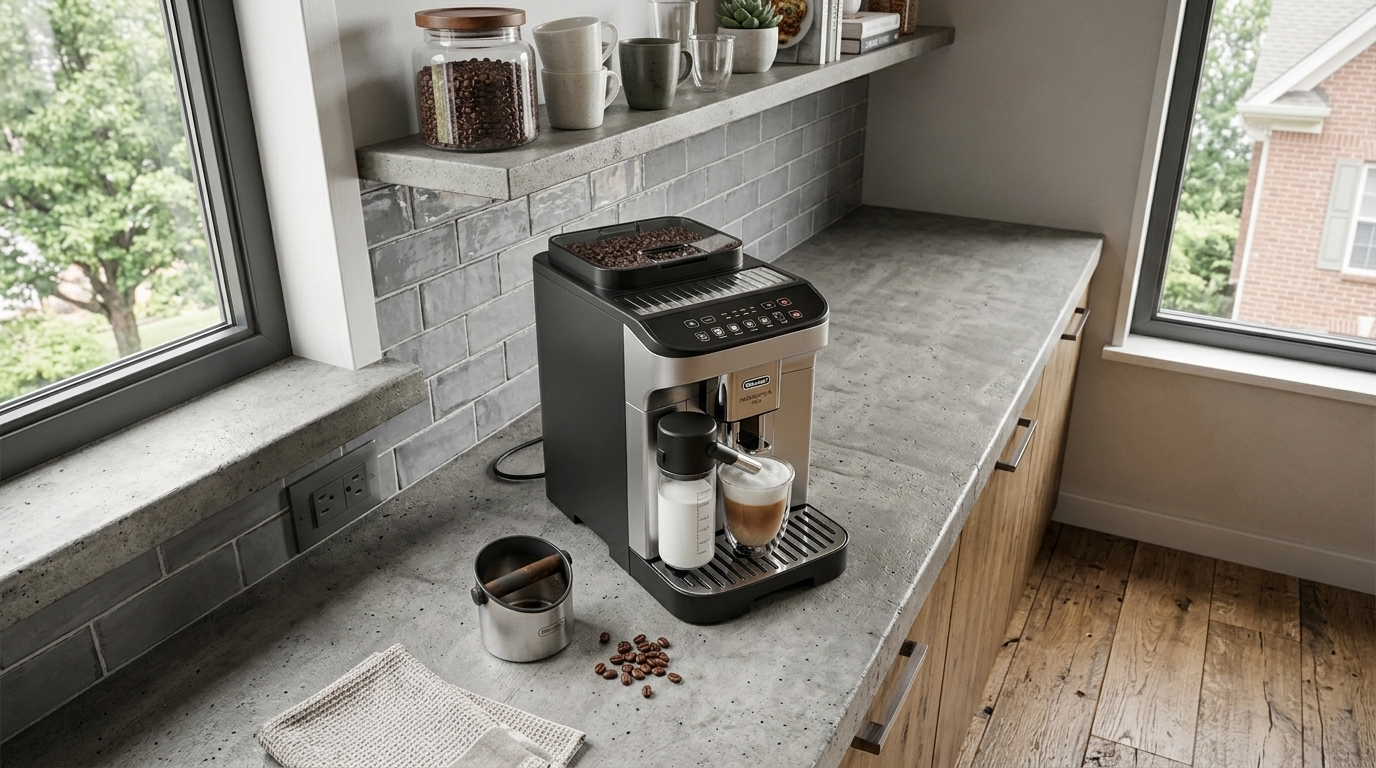
Jargon helpNew to espresso? Tap any dotted term to see what it means.
In this comparison
If you want to make espresso yourself, pour latte art and enjoy a hands-on morning ritual, buy a Breville; my pick is the Breville Barista Pro, which heats up in about three seconds and steams silky milk in about 30. If you want café-style drinks at one touch, with no tamping and no steaming, buy a De’Longhi; my pick is the De’Longhi Magnifica Evo, whose LatteCrema carafe makes dense, hot foam and whose espresso comes from the same brew unit as the brand’s pricier machines. Households that drink regular and decaf should look at the De’Longhi Rivelia and its two swappable bean hoppers.
The two brands
Specs checked November 13, 2026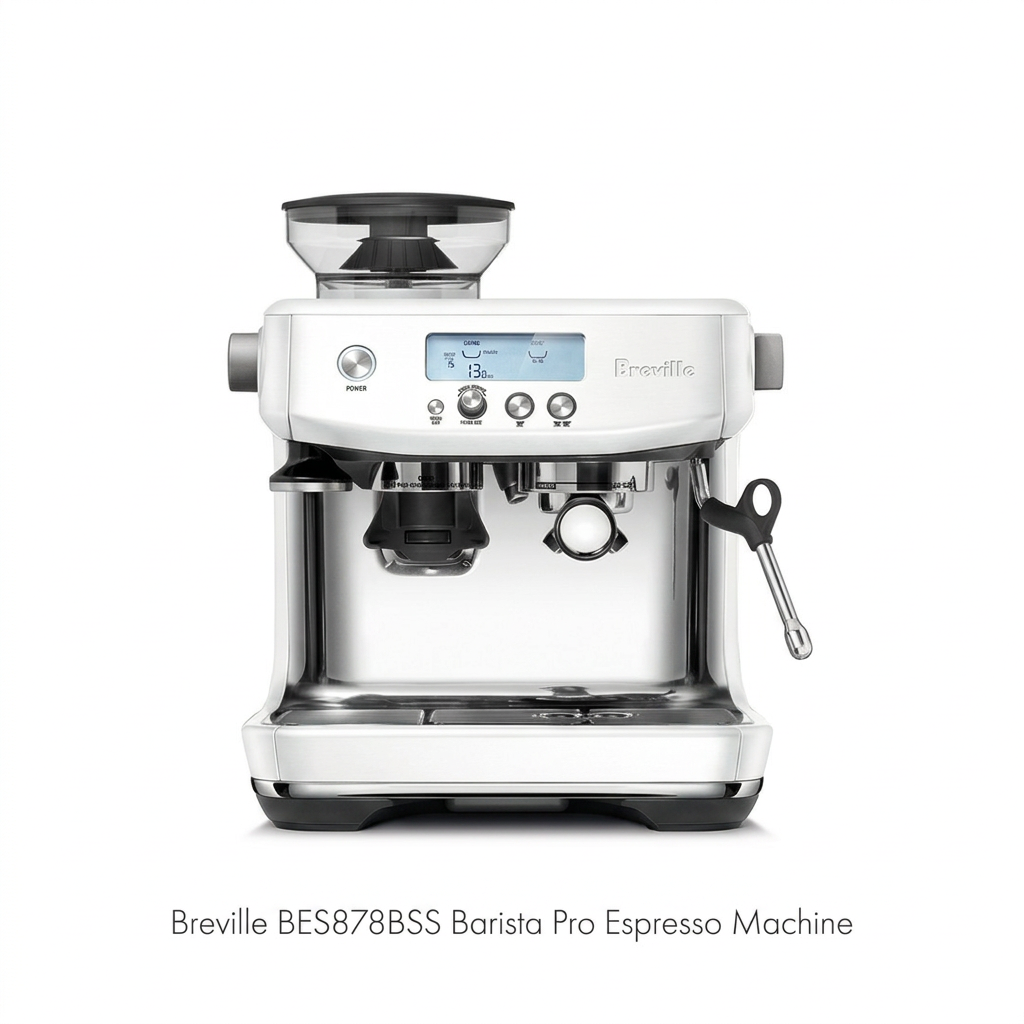
A three-second ThermoJet heat-up, a 30-step grinder, an LCD shot timer and a fast four-hole steam wand for hands-on espresso and latte art.
Check price on Amazon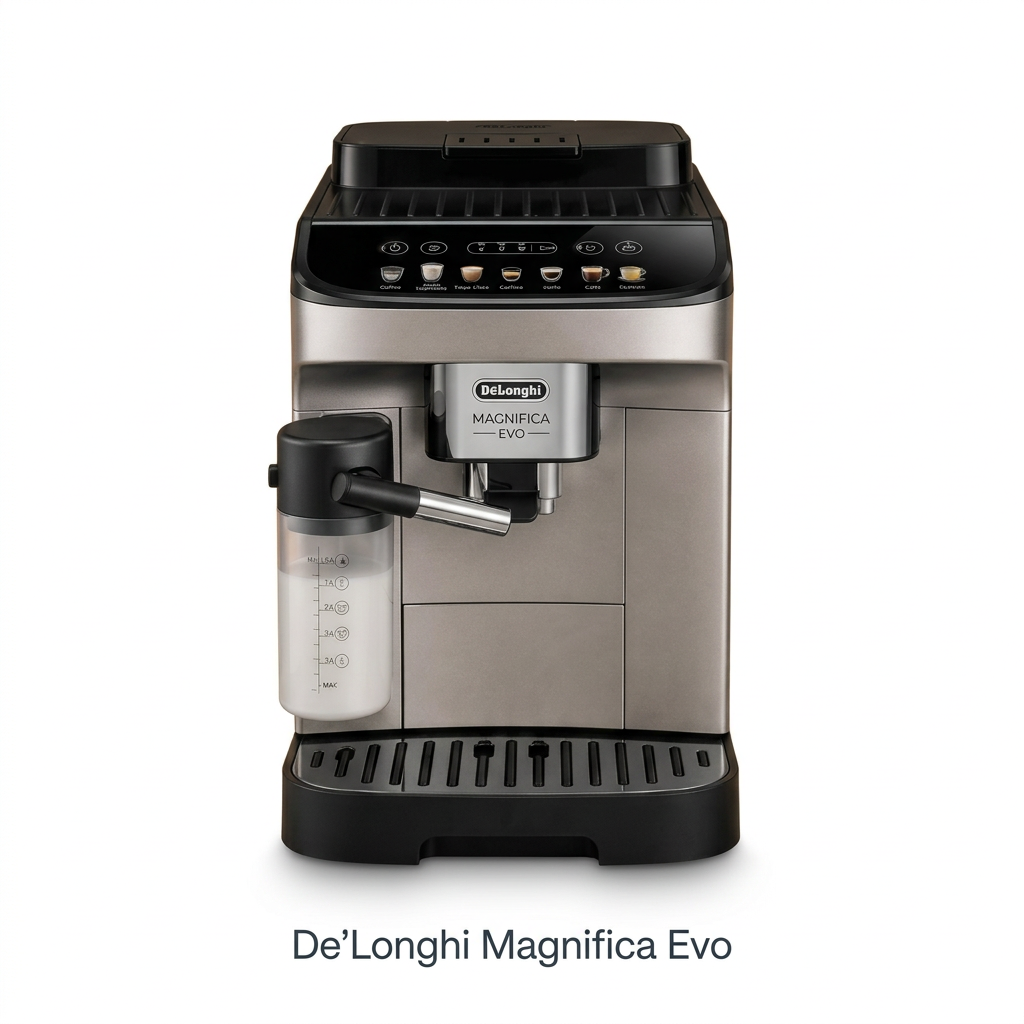
Seven one-touch drinks, a 15 g top dose, a LatteCrema carafe for dense foam and a MyLatte button that uses exactly the milk you pour in.
Reveal Today’s DealBreville vs De’Longhi at a glance
- Pick Breville if you want to learn espresso and steam your own milk.
- Pick De’Longhi if you want café drinks at one touch, from the same brew unit across the range.
- Breville wins on control and milk texture; De’Longhi wins on convenience, cleaning and quiet.
- Both brands make genuinely good espresso; the difference is how much of the work you want to do.
Head to head
The better result in each row is marked, based on four weeks with each of the four machines and the manufacturer specs. Where the brands are effectively level, there is no winner.
Keep in mind this is a brand-level table. Individual models vary, and the rows that matter depend on whether you want to make coffee or press a button for it.
| Spec | Breville (Barista line) | De’Longhi (automatics) |
|---|---|---|
| How you make espresso | Portafilter, grind and tamp by hand | Fully automatic, one touch |
| Espresso controlgrind, temperature, yield | Full control ✓ Best | Strength, grind and volume |
| Learning curve | A few days to a week | Minutes ✓ Best |
| Milk texture | Glossy microfoam, latte art ✓ Best | Dense, hot foam |
| Milk effort | Steam by hand | One touch, auto clean ✓ Best |
| Drinks at one touch | Espresso shots only | 7 to 18 recipes ✓ Best |
| Iced coffee | Espresso over ice by hand | Over Ice drink on Evo ✓ Best |
| Heat-up | About 3 s on the Pro ✓ Best | About 38 s on the Evo |
| Noisemy meter | Grinder and steam hiss | Rivelia 66–68 dB ✓ Best |
| Daily cleaning | Wipe wand, rinse basket | Carafe auto clean ✓ Best |
| Footprint width | 12.5–14 in | About 9.5 in ✓ Best |
| User profiles | None | Rivelia: 4 ✓ Best |
| Rows won | 3 | 8 |
Breville vs De’Longhi pros and cons
Breville (Barista Express and Barista Pro)
- Real café-style espresso with full control
- Steam wands make true latte-art microfoam
- Barista Pro is ready in about three seconds
- Takes days of dialing in and a scale
- You grind, tamp and steam every drink yourself
- More daily mess around the portafilter
De’Longhi (Magnifica Evo and Rivelia)
- One-touch cappuccinos, lattes and iced coffee
- Generous 15 g dose for an automatic machine
- Narrow, quiet and easy to clean
- No latte-art microfoam from the carafe
- Less control over each shot
- Rivelia’s top-mounted screen is hard to see
Who should buy which machine?
- People who want to learn the craft of espresso
- Flat white and latte-art lovers
- Anyone who enjoys a hands-on morning ritual
- Busy households that want drinks at one touch
- Families where everyone drinks something different
- Anyone who never wants to tamp or steam
The four machines I tested
A brand comparison is only as good as the machines behind it, so I picked two from each brand that most buyers actually shortlist.
From Breville, I used the Barista Express, the classic all-in-one with a pressure gauge, and the Barista Pro, its faster sibling with a ThermoJet heater and an LCD.
From De’Longhi, I used the Magnifica Evo, the brand’s sweet-spot automatic with a LatteCrema carafe, and the Rivelia, a newer touchscreen model with two swappable bean hoppers.
| Machine | Type | Best at | My score |
|---|---|---|---|
| Breville Barista Express | Semi-automatic with grinder | Learning espresso with a gauge | 8.0 |
| Breville Barista Pro | Semi-automatic with grinder | Speed and steam power | 8.5 |
| De’Longhi Magnifica Evo | Fully automatic, LatteCrema | One-touch milk drinks | 8.3 |
| De’Longhi Rivelia | Fully automatic, two hoppers | Regular and decaf households | 8.5 |
Each one was my only coffee machine for four weeks. I logged shots, weighed doses, measured temperatures and noise, and followed every cleaning routine, then lined up the numbers here.
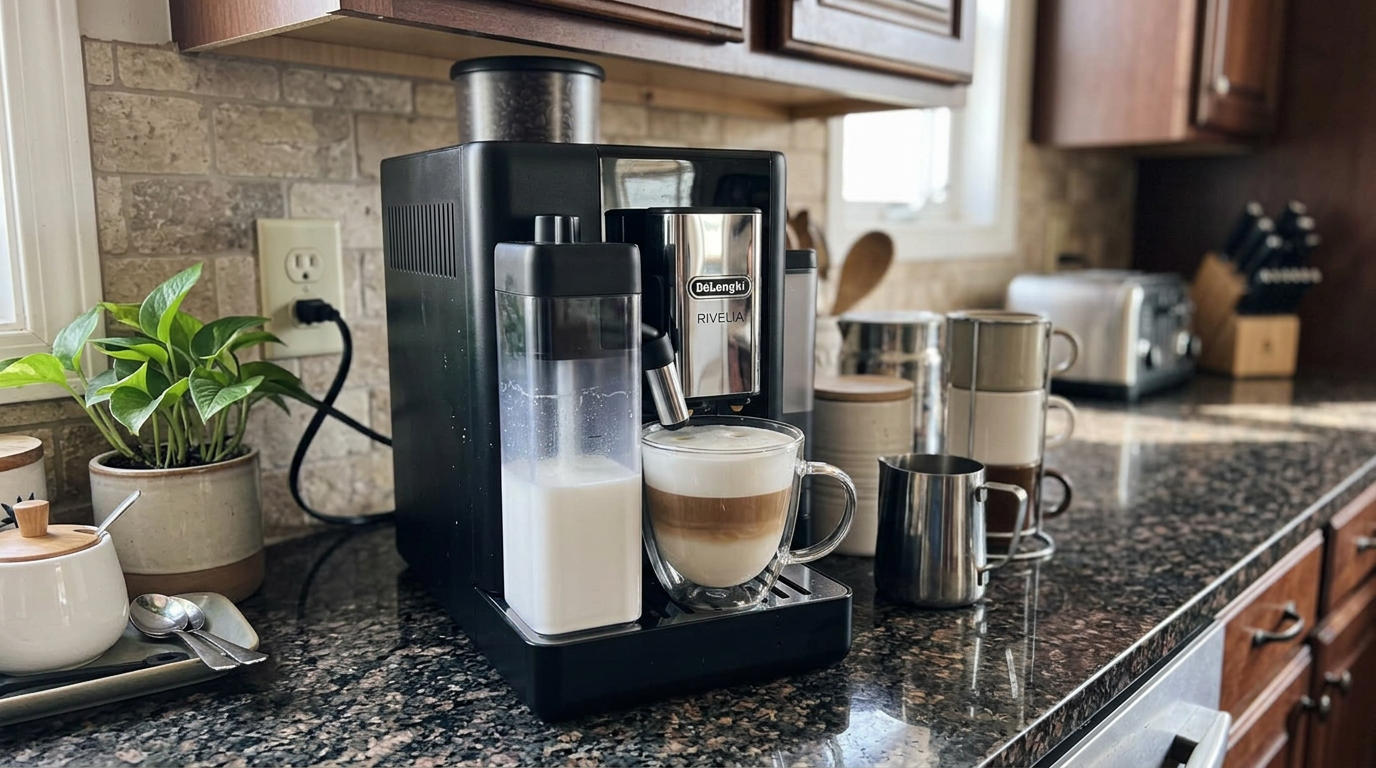
The De’Longhi Rivelia swaps between two bean hoppers in seconds.
Two philosophies: semi-automatic vs fully automatic
This is the real decision, and it matters more than any spec.
Breville’s Barista machines are semi-automatic✕Semi-automaticThe machine controls the water and pressure, but you grind into the portafilter, tamp the coffee, lock it in and steam the milk yourself.. The machine controls the water, but you grind into a 54 mm portafilter, tamp the coffee, lock it in and press a button.
De’Longhi’s Magnifica and Rivelia machines are fully automatic✕Fully automatic (super-automatic)The machine grinds, doses, tamps, brews and ejects the used puck by itself. You choose a drink and press a button.. They grind, dose, press the coffee into a puck, brew and drop the used puck into a drawer, all from one touch.
Neither is better in absolute terms. A semi-automatic gives you a craft to learn and a higher ceiling; a fully automatic gives you the same good drink every morning with no skill at all.
The question I would ask yourself: when you picture your morning coffee, are you enjoying making it, or just enjoying drinking it?
| Step | Breville Barista line | De’Longhi automatics |
|---|---|---|
| Grinding | Into the portafilter, timed | Automatic, set by strength |
| Dosing | You check it on a scale | Automatic, 9–15 g |
| Tamping | By hand | Automatic |
| Brewing | Press a button | Press a button |
| Milk | Manual steam wand | One-touch LatteCrema carafe |
| Puck disposal | Knock box | Internal drawer |
| Typical learning time | A few days to a week | A few minutes |
What that means for a complete beginner
A complete beginner can succeed with either brand, but the first week feels very different. On the Barista Express, my first shot ran thin and pale, and it took an inner-burr adjustment, a scale and about eight shots before it tasted right.
On the Magnifica Evo, my first cappuccino after setup was already good, and moving the grind knob to setting 3 made it very good by the end of week one. The Rivelia went further, with a Bean Adapt wizard that asks about your beans and suggests a starting grind, dose and temperature.
So the trade-off is time now against control later. A Breville asks for a week of patience and pays you back with a skill you keep; a De’Longhi asks for nothing and gives you the same reliable drink for years.
Our tip: If you are torn, picture a busy weekday at 7 a.m. rather than a slow Sunday, because that is when most coffee gets made.
Espresso quality
Here is the good news: both brands make genuinely good espresso. They just get there in different ways.
Once I had moved the inner burr and dialed in, the Barista Express pulled shots that flowed like warm honey, with a deep, velvety crema and sweet, creamy flavor. The Barista Pro reached syrupy, chocolate-and-caramel shots a day sooner, thanks to its better grinder and five easy temperature settings.
On the Magnifica Evo, a medium-dark blend at grind setting 3 and the high strength gave a consistent crema and a full, aromatic body with cocoa, toasted nuts and a little dried fruit. I checked a few shots with a refractometer and they landed at around 8 percent TDS✕TDS (total dissolved solids)The share of the drink that is dissolved coffee. It is measured with a refractometer and shows how strong an espresso really is., a balanced result for an automatic.
The Rivelia grinds up to about 15 grams for its espresso, and my go-to recipe of 15 grams in and 30 grams out gave a classic 1:2 brew ratio✕Brew ratioThe weight of coffee in the basket compared with the weight of espresso in the cup. 15 g in and 30 g out is a 1:2 ratio.. That is a café-sized dose, and it shows in the body.
My espresso scores
My scores out of 10 from each machine’s single review: body, crema, flavor and consistency.
The ceiling is where Breville pulls ahead. With light roasts, the Barista Pro on its High temperature setting turned sour beans into citrus and stone fruit, while the De’Longhis could only go a step finer and pour a shorter shot.
Day to day, though, the De’Longhis were more consistent with zero effort. My Breville logs only reached about 90 percent of shots in the target window by week four.
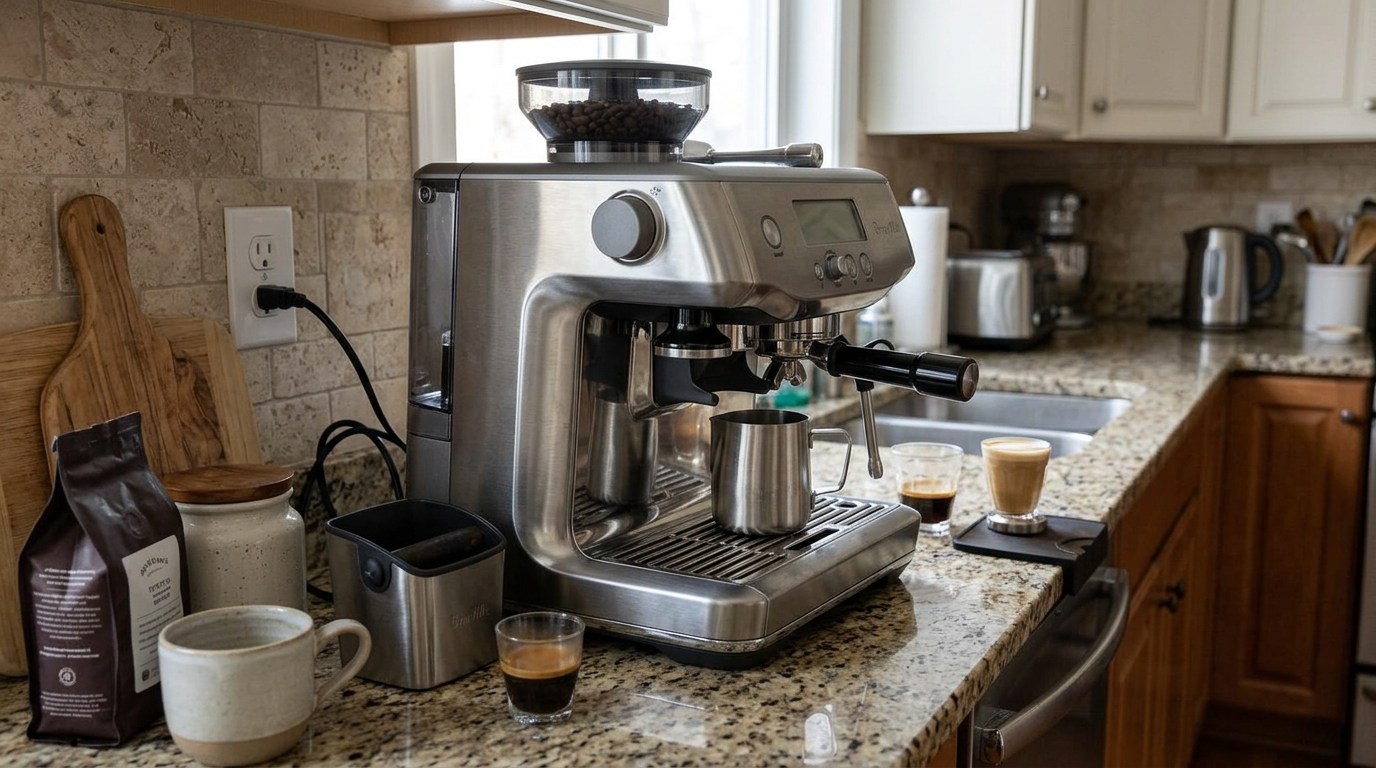
The Barista Pro had the highest espresso ceiling of the four machines.
Grinders and dose
Every machine here has a built-in steel conical burr grinder, but they behave very differently.
The Barista Express has 16 steps on a side dial plus a hidden inner burr; I had to move that inner burr from 6 to 2 before the dial had useful fine steps. The Barista Pro has 30 near-stepless settings with Baratza-designed burrs, and it was ready out of the box.
The Magnifica Evo and Rivelia both have 13 grind settings on a knob inside the hopper. You set fineness once and the strength icons control the dose.
Coffee dose per espresso
Breville doses weighed by me; De’Longhi doses weighed at each strength level.
That top De’Longhi dose is unusually generous for a fully automatic machine. Many automatics use 7 to 10 grams, which is why their espresso tastes thin.
On the Brevilles, dosing is by time, so it drifts a few tenths of a gram as beans age. A 0.1-gram scale is essential; on the De’Longhis you never need one.
Our tip: On any machine here, only turn the grind control while the grinder is running, because turning it on stopped burrs full of beans can jam them.
Milk drinks
This is where most buyers decide, and where the brands are furthest apart.
Breville gives you a manual steam wand. On the Barista Express it has a single-hole tip and took me about 45 seconds for 6 ounces; on the Barista Pro a four-hole tip did it in about 30 seconds, and the milk came out glossy and smooth, like wet paint.
With practice, both pour real latte art. By week two on the Pro I was pouring hearts and simple tulips most mornings.
De’Longhi gives you the LatteCrema✕LatteCrema systemDe’Longhi’s automatic milk carafe. It draws cold milk up a tube, mixes it with steam and air, and pours dense foam straight into your cup. carafe. You fill it with cold milk, clip it on and press Cappuccino or Latte Macchiato, and the foam pours straight into your cup.
The Evo’s foam was dense, fine and stable, closer to a soft meringue than a bubbly froth, and it held its shape all the way down. The Rivelia’s carafe made milk at about 140 to 149°F, a good drinking temperature.
Milk drink scores, my testing
My scores out of 10, weighing texture, speed and convenience together.
The Evo also has a clever MyLatte✕MyLatteA Magnifica Evo button that uses exactly the amount of milk you pour into the carafe, then pulls the espresso on top. Any size, no leftover milk. button that uses exactly the milk you pour in. I made everything from a 2-ounce cortado to a big weekend latte with no leftovers to put back.
The catch: De’Longhi foam is dense rather than pourable, so latte art is out. And neither the Evo nor the Rivelia I tested makes cold foam.
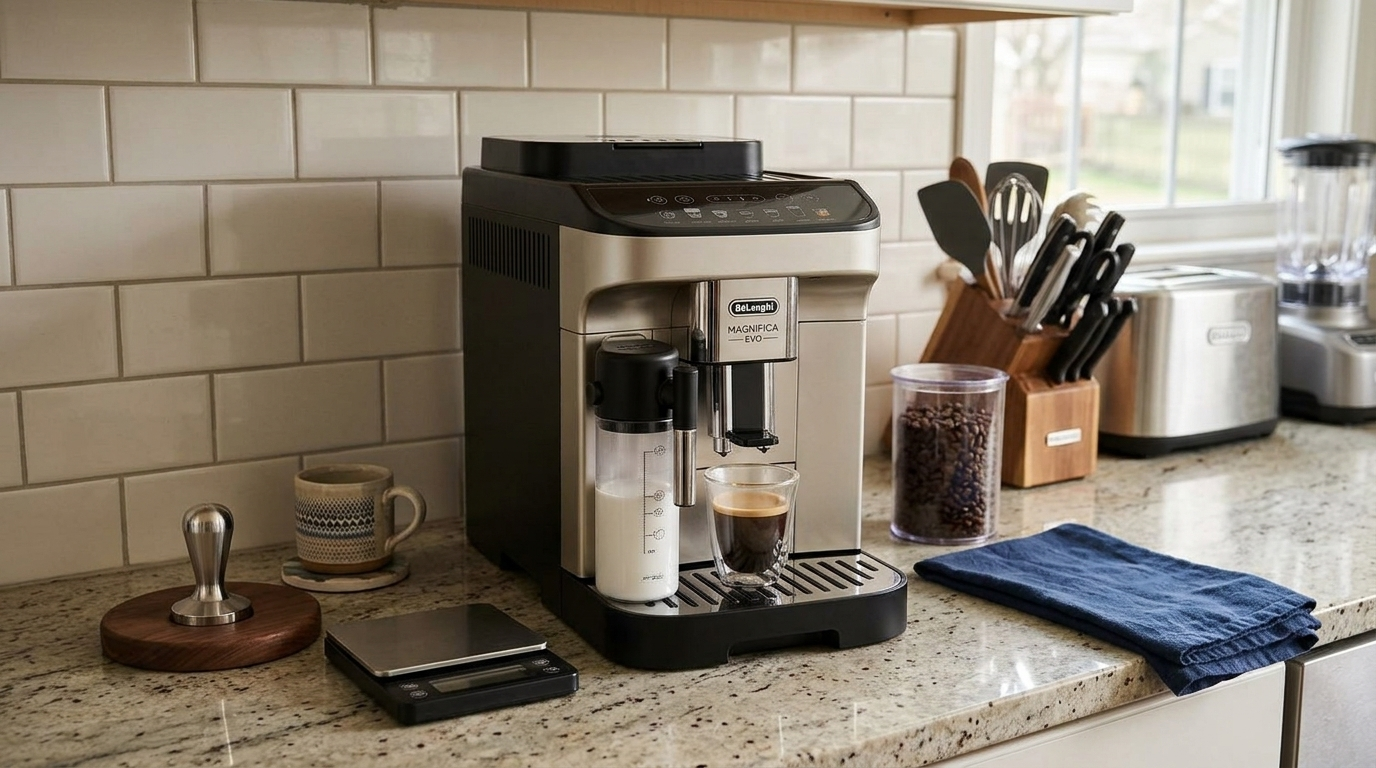
The Magnifica Evo’s LatteCrema carafe can live in the fridge between drinks.
| Milk drink | Breville Barista line | De’Longhi automatics |
|---|---|---|
| Cappuccino | Steam by hand, about 30–45 s | One touch |
| Latte | Steam by hand | One touch, or MyLatte on the Evo |
| Flat white | Best, true microfoam | Short MyLatte, denser foam |
| Latte art | Yes, with practice | No |
| Iced latte | Espresso over ice, cold milk | Over Ice drink plus cold milk |
| Hot milk only | Steam by hand | Not on the Evo; workaround needed |
Our tip: Start every milk drink with cold milk straight from the fridge, because it gives a steam wand more time to texture and a carafe denser foam.
See Today’s PriceEase of use
If you have never made espresso, this section will probably decide it for you.
On the De’Longhis, I was making good drinks within minutes of finishing setup. The Evo’s tilted touch panel shows seven drink icons and a row of bean icons for strength, and the Rivelia adds a 3.5-inch color touchscreen with four user profiles.
On the Brevilles, the first few days are a learning curve. My first Barista Express shot ran thin and pale; by day two, after an inner-burr adjustment and a scale, I was pulling shots that poured like warm honey.
Ease of use scores
My scores out of 10 from each machine’s single review.
The Rivelia’s profiles were the big win for families: each person’s drinks are saved, so nobody resets anyone else’s strength. My one complaint is that its screen lies flat on top of the machine, which is awkward for kids and seated users.
On the Breville side, the Barista Express’s analog pressure gauge✕Pressure gaugeA dial on the front of the machine that shows the pressure building in the basket during a shot. It tells you whether the grind is too coarse or too fine. is a fantastic teacher. The Barista Pro replaces it with an LCD shot timer, which with a scale tells you everything you need.
| Feature | Barista Express | Barista Pro | Magnifica Evo | Rivelia |
|---|---|---|---|---|
| Controls | Dials and gauge | LCD and buttons | Touch icons | 3.5-in touchscreen |
| Profiles | No | No | No | 4 |
| Water-level warning | No | Yes | Yes | Yes |
| Pre-ground chute | Use the basket | Use the basket | Yes | Yes |
| Bean switching | Empty the hopper | Empty the hopper | Empty the hopper | Two hoppers |
Our tip: On a Breville, buy a 0.1-gram scale on the same day as the machine, because it does more for consistency than any setting.
Speed and noise
The fastest machine of the four was the Barista Pro. Its ThermoJet is ready about three seconds after you press the power button, and switching from brewing to steam takes about five seconds.
The Magnifica Evo was ready in about 38 seconds from a cold start, and the Barista Express took about a minute. The Rivelia’s thermoblock needs a moment to switch between milk and espresso temperatures when you make several drinks in a row.
Minutes from switch-on to a latte
Including warm-up and cleaning the milk side.
The De’Longhis need far less hands-on time, even when the machine time is similar. I could empty the dishwasher while the Evo made a cappuccino.
On noise, the Rivelia was the quietest at 66 to 68 dB on my meter. The Evo’s grinder hit 70 to 71 dB for its first five or six seconds, with milk frothing at 60 to 62 dB. The Brevilles’ grinders are loud for a few seconds and their steam wands hiss strongly.
Noise I measured on the De’Longhis
Sound meter about a foot from the front of each machine.
Cleaning and upkeep
Daily cleaning is easier on the De’Longhis. When a milk drink finishes, the Evo’s Clean light comes on; you turn the carafe dial to Clean and it flushes hot water and steam through the milk path.
Both De’Longhis have a removable brew unit✕Brew unitThe part that compresses the ground coffee, holds it while water passes through and then ejects the used puck. that slides out for a weekly rinse under the tap, with no chemical tablets. Once a week, the carafe lid comes apart for a proper wash.
On the Brevilles, I knocked out every puck, rinsed the basket, flushed the group head and wiped and purged the steam wand straight after every milk drink. When the machine asks, you backflush✕BackflushingRunning water backwards through the brew valve with a rubber disc and a cleaning tablet. It dissolves coffee oils that build up inside. with a tablet.
My hands-on cleaning time per day, with milk drinks
My estimate, not counting automatic rinses.
| When | Breville Barista line | De’Longhi automatics |
|---|---|---|
| After milk drinks | Wipe and purge the wand | Run the carafe Clean function |
| After each shot | Knock out, rinse, flush | Nothing, puck goes in the drawer |
| Daily | Empty the drip tray | Empty grounds drawer and drip tray |
| Weekly | Brush gasket and grinder chute | Rinse brew unit, wash carafe lid |
| When prompted | Backflush, descale | Descale, about 45 min on the Evo |
Our tip: Empty a De’Longhi grounds drawer every day or two rather than waiting for the alert, because damp pucks grow mold surprisingly fast.
Size and build
De’Longhi’s automatics are narrow. The Magnifica Evo is about 9.45 inches wide, 17.3 inches deep and 14.2 inches tall; the Rivelia is about 9.6 by 16.9 by 15.2 inches.
Breville’s Barista machines are wider but shallower. The Barista Express is 12.5 by 13.8 by 15.9 inches, and the Barista Pro about 14 by 13 by 16 inches.
Width on the counter
Measure the gap between your sink and wall: width is where these differ most.
The Brevilles are brushed stainless steel and feel more like café equipment; the Barista Pro’s panels are even magnetic, so small tools stick to the side. The De’Longhis are mostly plastic with a brushed-look front and a stainless cup tray, and nothing rattled in four weeks.
Weights are close: about 22 to 23 lb for the Express, 20 lb for the Pro, 21 lb for the Evo and 21.4 lb for the Rivelia.
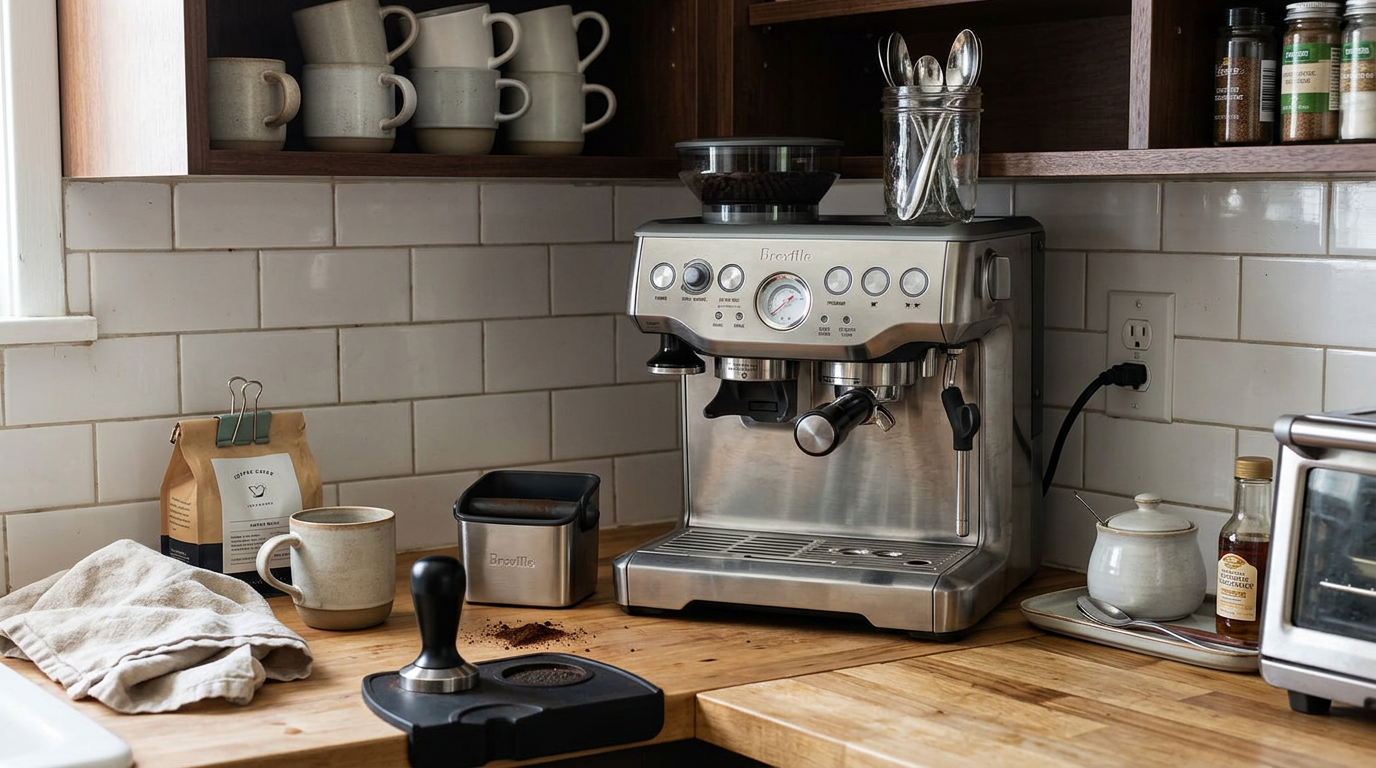
Brushed steel and a round gauge give the Barista Express a real café look.
Our tip: If your counter is shallow, lean Breville; if it is narrow, lean De’Longhi, and leave a few inches above either for refilling beans.
The ranges explained
Both brands sell far more than the four machines I lined up here, so it helps to know where each one sits.
Breville’s Barista line starts with the Barista Express and moves up through the Express Impress, the Barista Pro and the touchscreen Barista Touch models. Above them sits the Oracle line, which automates grinding and tamping while keeping a real portafilter.
De’Longhi’s automatic range starts with the Magnifica Start and Magnifica XS, moves through the Magnifica Evo and Rivelia, and tops out with the Dinamica Plus and Eletta Explore, which add touchscreens, apps and more drinks.
| If you want | Breville | De’Longhi |
|---|---|---|
| The entry point | Barista Express | Magnifica Start or XS |
| The sweet spot | Barista Pro | Magnifica Evo |
| Profiles or two beans | Barista Touch line | Rivelia |
| Most automation | Oracle line | Dinamica Plus, Eletta Explore |
| Latte art | Any Barista model | Models with a manual wand |
If you want the deeper dive on one model, see my Barista Express vs Barista Pro comparison.
Beans, water and long-term ownership
All four machines reward fresh beans more than any setting. Coffee roasted within the last two to four weeks gave the thickest crema and the most even flow, and supermarket beans with no roast date ran thin on every machine.
Medium and medium-dark roasts were the easy choice across both brands. Light roasts favored the Brevilles, and very dark, oily beans were a bad idea everywhere, because the oil builds up in the grinder and chute.
| Bean type | Breville Barista line | De’Longhi automatics |
|---|---|---|
| Medium-dark blend | Rich body, thick crema | Full body, cocoa, thick crema |
| Medium roast | Sweet, easy to dial in | Brighter and sweet |
| Light roast | Very good on the Pro’s High setting | Can taste sour, go finer |
| Decaf | Swap the hopper by hand | Rivelia: second hopper |
| Very dark, oily | Avoid, more burr cleaning | Avoid, sticks in the hopper |
Water and filters
Use filtered or fresh tap water, keep the filter in if your water is hard and skip pure distilled water, because coffee needs some minerals to taste full and the machines’ sensors rely on them.
Breville’s charcoal filter should be replaced every two to three months. On the De’Longhis, the descale light comes on based on the water hardness you set, and a full descale on the Evo took about 45 minutes, most of which I could walk away from.
What lasts, and what to watch
De’Longhi has used the same removable brew unit design across its automatic range for years. You rinse it with water rather than running chemical tablets through it, and replacement parts are easy to find.
On the LatteCrema carafe, the small rubber O-rings and air holes are the first things to check if the foam ever gets thin or sputters. On the Brevilles, the group gasket and the steam tip are the wear points, and the Barista Pro carries a two-year US warranty against one year on the Barista Express.
| Ownership detail | Breville Barista line | De’Longhi automatics |
|---|---|---|
| Wear points | Group gasket, steam tip | Carafe O-rings, brew unit seals |
| Cleaning chemicals | Tablets for backflushing | Descaler only |
| Best extra to buy | A 0.1 g scale and knock box | Spare water filters |
| Warranty (US) | 1 year Express, 2 years Pro | Check your model and retailer |
Our tip: Buy beans in bags you can finish within two to three weeks, so the grind setting you dialed in stays right to the last cup.
Find Out the Price TodayReal-life scenarios
Specs only go so far. These are the situations where one brand clearly pulled ahead across my testing.
The Barista Pro’s four-hole wand made glossy microfoam in about 30 seconds. De’Longhi foam does not pour.
The Rivelia’s profiles and one-touch milk meant nobody needed help or a lesson.
The Rivelia swaps bean hoppers in about three seconds.
The Barista Pro’s High temperature and fine grind turned sourness into fruit.
The Evo’s Over Ice drink brews a concentrated coffee for a full glass of ice.
At about 9.5 inches wide, both automatics fit where the Brevilles would not.
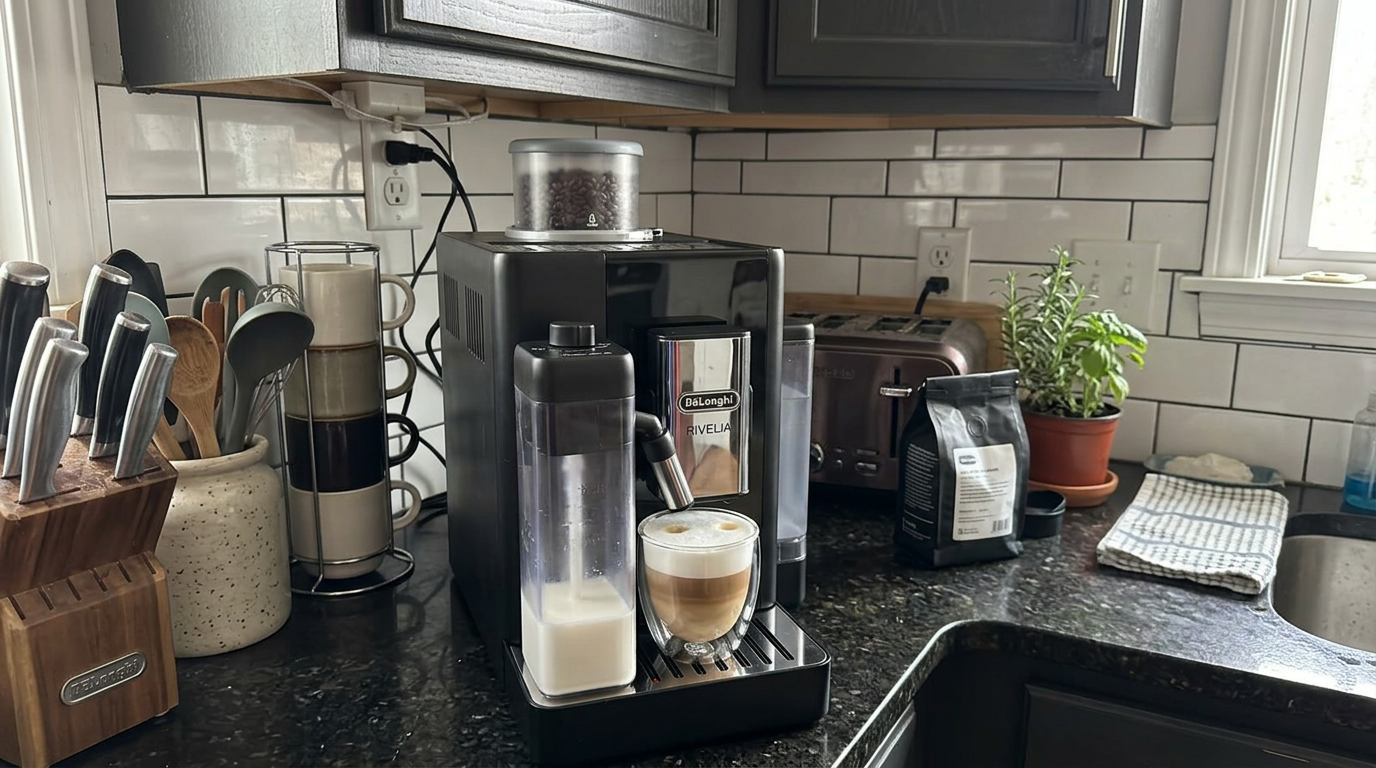
Profiles and one-touch milk make the Rivelia the easiest of the four to share.
My scorecard
These scores come straight from my single reviews of each machine, all out of 10.
Overall score
Brand averages by category
Overall, the brands come out almost level. Breville wins on espresso ceiling and cleaning scores per shot, De’Longhi on convenience and milk at one touch.
See How Much You’ll SaveWhich one is right for you?
4 quick questionsWhich brand should you buy?
It comes down to one question: do you want to make espresso, or do you want espresso made for you? Answer that honestly and the brand chooses itself.
For the detail behind each machine, read my Barista Express, Barista Pro, Magnifica Evo and Rivelia reviews.
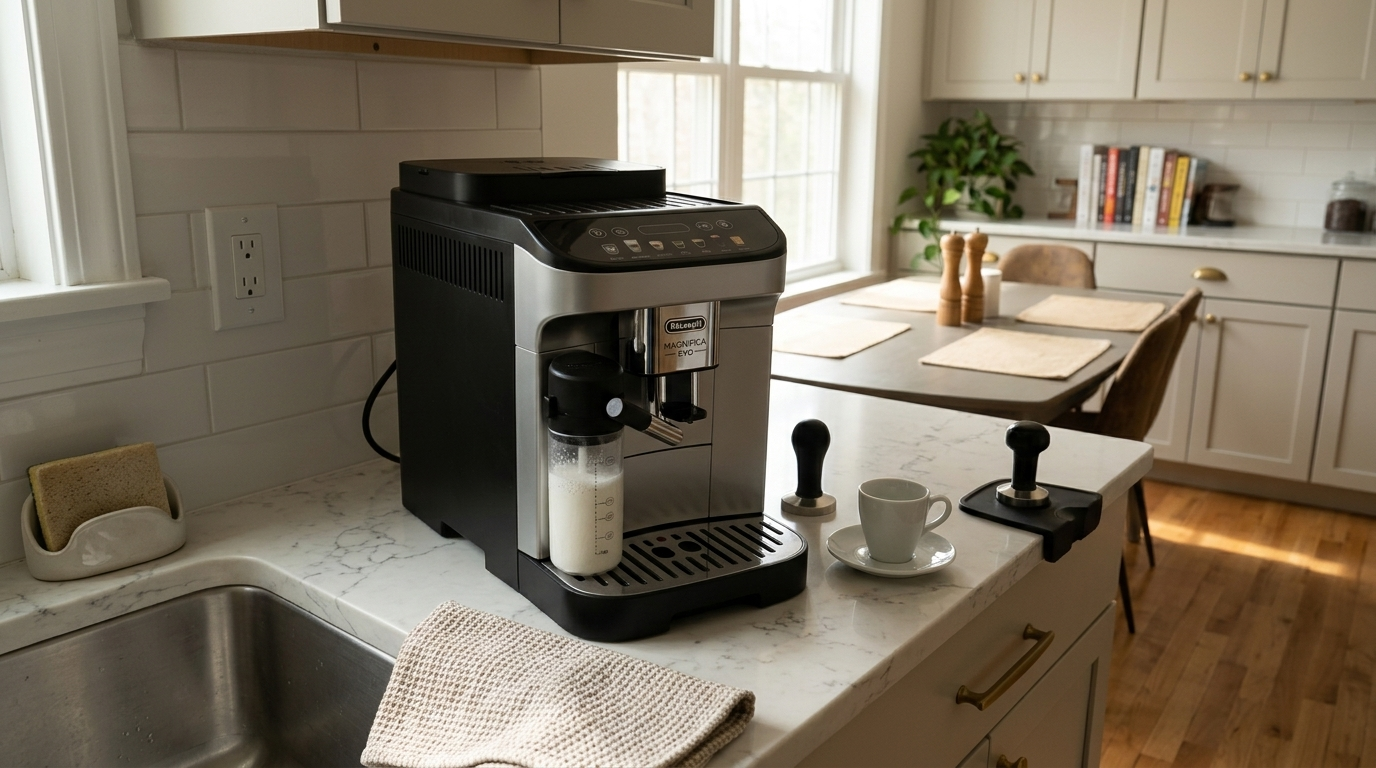
For one-touch milk drinks in a narrow space, the Magnifica Evo is the sensible De’Longhi.
- You want to learn espresso
- You want latte art
- You like light roasts
- You hate waiting for heat-up
- You want one-touch drinks
- Several people share the machine
- Your counter is narrow
- You want cappuccinos at one touch
- You want a narrow machine
- You like iced coffee
- You want easy daily cleaning
- You want latte-art milk
- You need user profiles
- You need warm milk on its own
Two more worth knowing: the Breville Barista Express is the lower entry point into Breville with a great teaching gauge, and the De’Longhi Rivelia is the pick for regular-and-decaf households.
There is no single winning brand, and that is the honest answer. For people who want to make espresso, my pick is the Breville Barista Pro: fast, precise and wonderful with milk once you have practiced for a week.
For people who want café drinks without the craft, my pick is the De’Longhi Magnifica Evo: its 15 g top dose makes rich espresso, its LatteCrema carafe makes dense, hot foam, and it fits in a narrow kitchen. Families who switch to decaf should step up to the De’Longhi Rivelia.
Whichever brand you pick, buy fresh whole beans, use cold milk and keep the milk side clean. All four machines reward a little care with years of good coffee.
Breville vs De’Longhi specifications
From manufacturer specifications and my own testing.
| Barista Express | Barista Pro | Magnifica Evo | Rivelia | |
|---|---|---|---|---|
| Type | Semi-automatic | Semi-automatic | Fully automatic | Fully automatic |
| Heating | Thermocoil | ThermoJet, ~3 s | Thermoblock, ~38 s | Thermoblock |
| Pump | 15 bar | 15 bar | 15 bar | 19 bar |
| Grinder | 16 steps plus inner burr | 30 steps | 13 settings | 13 settings |
| Dose | ~15.4 g (weighed) | ~16 g (weighed) | ~9, 12, 15 g | Up to ~15 g |
| Milk | Manual wand, 1 hole | Manual wand, 4 holes | LatteCrema carafe | Milk carafe |
| One-touch drinks | Shots only | Shots only | 7 | 18 |
| Profiles | No | No | No | 4 |
| Water tank | 67 oz | 67 oz | About 60 oz | 47 oz |
| Width | 12.5 in | About 14 in | About 9.45 in | About 9.6 in |
| Weight | About 22–23 lb | About 20 lb | About 21 lb | 21.4 lb |
How I tested and compared them
I used each of the four machines as my everyday coffee maker for four weeks, making espresso, americanos, cappuccinos, lattes, flat whites and iced drinks. Testing notes were written up together by Michael Reynolds and the HouseholdMe team.
I logged shots and weighed doses with a 0.1-gram scale, measured milk temperatures with a probe, timed heat-up and steaming, measured noise with a sound meter and checked De’Longhi espresso with a refractometer.
I followed every daily, weekly and prompted cleaning routine, then compared my notes with Breville’s and De’Longhi’s specifications and owner documentation.
- Coffee: dose, crema, body, flavor and consistency.
- Milk: foam texture, temperature, speed and drink range.
- Workflow: heat-up, controls, guidance and daily routine.
- Ownership: cleaning, water care, noise and footprint.
Breville vs De’Longhi FAQ
Is Breville or De’Longhi better?
Neither is better overall. Breville’s Barista machines are better if you want to make espresso yourself and pour latte art. De’Longhi’s fully automatic machines are better if you want café drinks at one touch with very little cleaning.
Which brand makes better espresso?
Both make genuinely good espresso. In my testing the Breville Barista Pro scored highest at 8.7, but the De’Longhi Magnifica Evo was close at 8.5 and far easier to get right every morning.
Is De’Longhi easier to use than Breville?
Yes. The Magnifica Evo and Rivelia grind, tamp, brew and froth at one touch. Breville’s Barista machines need you to dose, tamp and steam by hand, and take a few days to learn.
Can De’Longhi machines make latte art?
Not with the LatteCrema carafe, which makes dense foam rather than pourable microfoam. Breville’s manual steam wands can pour latte art with practice.
Which brand is quieter?
In my testing, the De’Longhi Rivelia was the quietest at 66 to 68 dB. The Brevilles’ grinders and steam wands are louder for short bursts.
Which is easier to clean?
De’Longhi. Its carafes have an automatic Clean function and the brew units slide out for a rinse. Breville machines need the basket, group head and steam wand cleaned after each drink.
Which brand takes less counter space?
De’Longhi’s automatics are narrower, at about 9.5 inches wide, but deeper. Breville’s Barista machines are 12.5 to 14 inches wide but shallower.
Do I need a scale?
With a Breville Barista machine, yes, because it doses by time. De’Longhi automatics dose for you.
Which De’Longhi should I buy?
The Magnifica Evo for one-touch milk drinks, or the Rivelia if your household drinks regular and decaf or wants user profiles.
Which Breville should I buy?
The Barista Pro for speed and steam power, or the Barista Express for the lower entry point and its teaching pressure gauge.

- Our hands-on Breville Barista Express review
- Our hands-on Breville Barista Pro review
- Our hands-on De’Longhi Magnifica Evo review
- Our hands-on De’Longhi Rivelia review
- Breville and De’Longhi product specifications and owner documentation
- General espresso brewing, milk frothing and maintenance guidance