The Coffee Flavor Wheel Explained: How to Taste and Describe Coffee Like a Pro
Ever read "cherry, caramel, jasmine" on a bag of coffee and wondered how anyone tastes that? The flavor wheel is how. Here's how it works, the simple inside-out method I use to name flavors, and practical ways to train your palate at home.
We choose products independently. We may earn a commission through links on this page; your price stays the same. Affiliate policy
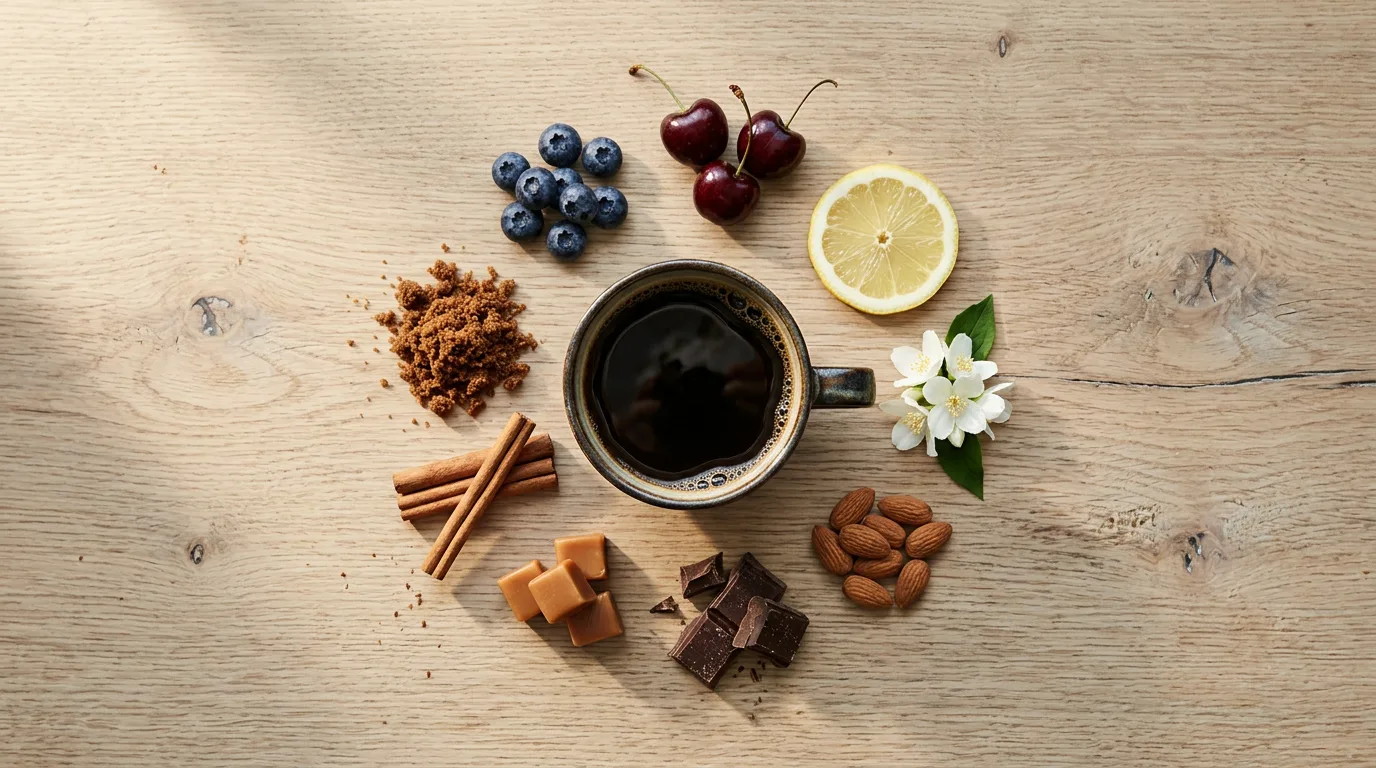
The coffee flavor wheel is a map of the flavors and aromas people notice in coffee, arranged from broad families in the center (like fruity, nutty or sweet) to specific notes on the outside (like cherry, almond or caramel).
Use it inside-out: first decide which broad family your coffee reminds you of, then move outward to find a more precise word. "Nutty" might become "almond." "Fruity" might become "cherry."
It's a memory aid, not an answer key. Two people can taste different things in the same cup and both be right. The goal is to describe what you actually notice, and enjoy it.
Why I wrote this
For years, my tasting notes were three words long: "good," "strong" or "smooth."
Then a roaster handed me two cups at a tasting and asked what I noticed. I said the first was "fruity." She asked, "What kind of fruit?" I had no idea.
She slid a flavor wheel across the table. Fruity. Then berry. Then red fruit. Then... cherry. And suddenly I could taste the cherry. It had been there the whole time. I just didn't have the word.
That's what the flavor wheel does. It doesn't give you a better palate overnight. It gives you a way to find words for what your palate already notices.
What you'll learn
- What the coffee flavor wheel is and where it came from
- How the wheel is organized, from broad families to specific notes
- The inside-out method for naming flavors
- How to taste with attention: smelling, slurping and tasting as it cools
- What common flavor families like nutty, chocolate, fruity and floral really mean
- How to read tasting notes on a bag and use them to choose coffee
- Simple exercises to train your palate at home
What the coffee flavor wheel is
The coffee flavor wheel is a reference tool that organizes the aromas and flavors people may notice in a cup of coffee.
Its main job is to give tasters a shared vocabulary. Instead of vague words like "good," "strong" or "smooth," you can explore more precise descriptions that other people will understand.
A guide, not an answer key
The wheel doesn't tell you what a coffee must taste like. And you don't need to identify every possible flavor in a cup.
Its real purpose is to help you:
- Recognize an impressionNotice that something stands out, even if you can't name it yet.
- Find a categoryPlace that impression in a broad family, like sweet, fruity or nutty.
- Narrow it downMove toward a more specific description that matches what you notice.
Different people, different notes
Tasting involves personal perception and memory. Two people can taste the same coffee and notice different things.
One person picks up a nutty quality. Another notices caramel or fruit. Both can be reasonable. A difference doesn't mean someone is wrong.
The wheel gives you a practical way to compare impressions while leaving room for individual experience.
Where the flavor wheel came from
The first widely used Coffee Taster's Flavor Wheel was published by the Specialty Coffee Association of America in 1995, developed by coffee industry veteran Ted Lingle. For two decades it hung on the walls of roasteries and cupping labs around the world.
By the 2010s, sensory science had moved on, and coffee itself had changed. New processing methods and new origins were producing flavors the old wheel didn't describe well.
The 2016 redesign
In 2016, the Specialty Coffee Association and World Coffee Research released a completely redesigned wheel, built on real sensory research.
One of the clever details is that the lexicon defines each flavor with a physical reference, often a common supermarket product prepared in a specific way. That means a trained taster in Colombia and one in Japan can calibrate "blueberry" or "roasted peanut" against the same thing, so their notes actually mean the same.
That's why the modern wheel feels intuitive. Flavors that sit next to each other really do tend to be confused with each other, or remind people of each other.
Our tip: The official wheel is widely available as a poster and in free digital versions. Keep one on your fridge or saved on your phone, next to where you brew. Having it in sight is half the battle.
How the wheel is laid out
The wheel is made of rings. The inner ring holds broad flavor families. Each family branches outward into more specific groups, and the outer ring holds precise notes.
The colors help too. Each family has its own color, often matching the flavor itself: purples and reds for berries, yellows for citrus, browns for nuts and chocolate.
The main families and what they include
| Inner family | Middle groups | Example outer notes |
|---|---|---|
| Fruity | Berry, dried fruit, other fruit, citrus | Blueberry, raisin, cherry, pomegranate, grapefruit, lemon |
| Floral | Floral, black tea | Jasmine, rose, chamomile |
| Sweet | Brown sugar, vanilla, overall sweet | Molasses, maple syrup, caramelized, honey |
| Nutty / cocoa | Nutty, cocoa | Almond, hazelnut, peanut, chocolate, dark chocolate |
| Spices | Brown spice, pepper, pungent | Cinnamon, clove, nutmeg, anise |
| Roasted | Cereal, burnt, tobacco | Malt, grain, smoky, ashy |
| Sour / fermented | Sour, alcohol / fermented | Sour aromatics, winey, whiskey, overripe |
| Green / vegetative | Olive oil, raw, vegetative, beany | Under-ripe, peapod, fresh, herb-like |
| Other | Papery / musty, chemical | Cardboard, earthy, rubber, medicinal |
Simplified from the structure of the modern Coffee Taster's Flavor Wheel. Not every outer note is listed.
Notice that the wheel includes some flavors you don't want, like papery, rubbery or ashy. That's on purpose. Naming problems clearly is just as useful as naming pleasures.
The inside-out method
The most useful way to use the wheel is to start near the center and work outward.
Step 1: notice the general character
Take a sip and ask a simple question: does this seem more nutty, chocolatey, fruity, floral, sweet, spicy, or something else?
Don't try to name an exact ingredient yet. You're just picking a direction.
Step 2: follow that family outward
Once a broad family stands out, follow that slice of the wheel toward the edge. The more specific words help you decide whether it's closer to almond, cocoa, brown sugar, molasses, caramel, cherry, pomegranate or something else.
Two examples
| Step | Example 1 | Example 2 |
|---|---|---|
| First impression | Nutty, with a rounded sweetness | Fruity, a bit floral |
| Family | Nutty / cocoa, plus sweet | Fruity, plus floral |
| Middle group | Nutty, brown sugar | Other fruit, floral |
| Outer note | Almond, caramel | Cherry, jasmine |
| Final tasting note | "Almond and caramel" | "Cherry with a jasmine finish" |
"Almond and caramel" tells someone far more than "nutty." That's the whole point. And if you get stuck halfway, that's fine too: a middle-ring word like "brown sugar" or "berry" is still more useful than a vague "nice."
The aim isn't to force a perfect match. It's to pick the word that best communicates what you experienced.
Why starting broad works so well
Trying to name a very specific flavor right away is hard. You often sense something familiar but can't quite place it. It's on the tip of your tongue, literally.
The wheel works as a memory aid. It gives you a few directions to explore instead of a blank page.
- Fewer choicesInstead of scanning dozens of flavor words, you first pick from a handful of families. After that, the options shrink to a manageable list.
- A consistent vocabularyMoving from broad to specific every time builds a reliable set of words you'll start using naturally.
- Stronger memoriesBecause words get tied to real tasting experiences, they become easier to recall next time.
- Works at every levelBeginners use the broad families to get started. Experienced tasters use the same structure as a prompt when a note is hard to pin down.
How to taste with attention
Good tasting isn't about producing an impressive list of flavors. It's about paying attention.

Start with aroma
Smell is a huge part of flavor. Before you sip, breathe in over the cup. Does it smell sweet, nutty, floral, fruity, earthy or chocolatey?
Then compare the aroma with what you taste. Sometimes they match. Sometimes the taste brings out something completely different.
Slurp it
Slurping spreads coffee across your whole palate and pushes aroma up to your nose from the inside. It can make some flavors much easier to notice.
You don't need to make a dramatic sound. Just draw the coffee in with a little air.
Notice the whole sip
Give it time and let it cool
Pause between sips. A first impression is often broad, and a later sip makes something specific click.
As coffee cools, flavors shift. Fruit and sweetness often become clearer, while some roasty notes fade. Tasting at more than one temperature gives you a fuller picture of the cup.
Our tip: Some of my best tasting notes come from the last sips of a cup that's gone lukewarm. Don't judge a coffee only while it's piping hot.
Nutty, cocoa and sweet flavors
Many of the most popular coffees have a rounded, comforting character that suggests nuts, cocoa or chocolate.
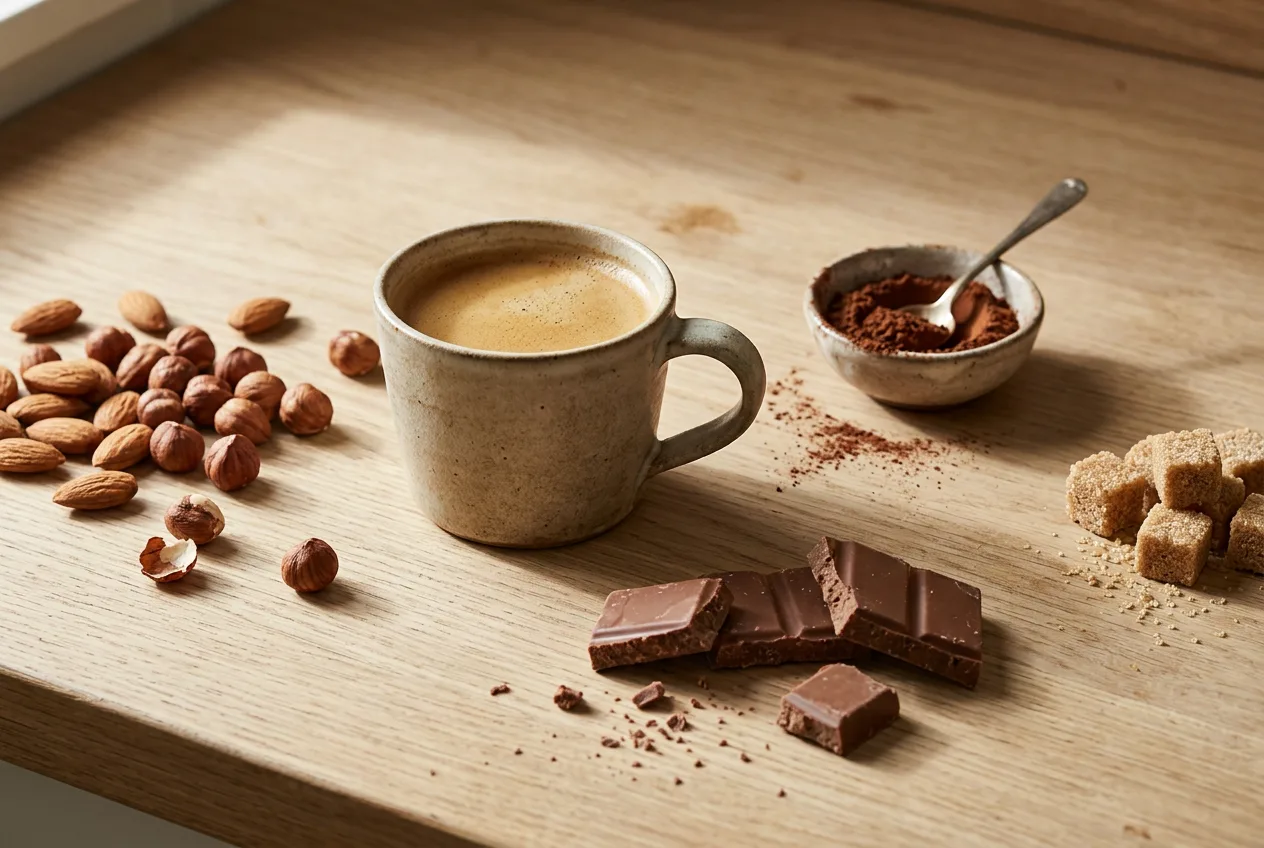
Nutty and cocoa
You might first notice a general nuttiness, then ask whether it's more like almond, hazelnut or peanut. Cocoa-like flavors range from dry cocoa powder to soft milk chocolate to bittersweet dark chocolate.
Telling sweetness apart
Nutty and chocolate notes often come with sweetness. These three words get used a lot, and they're not the same:
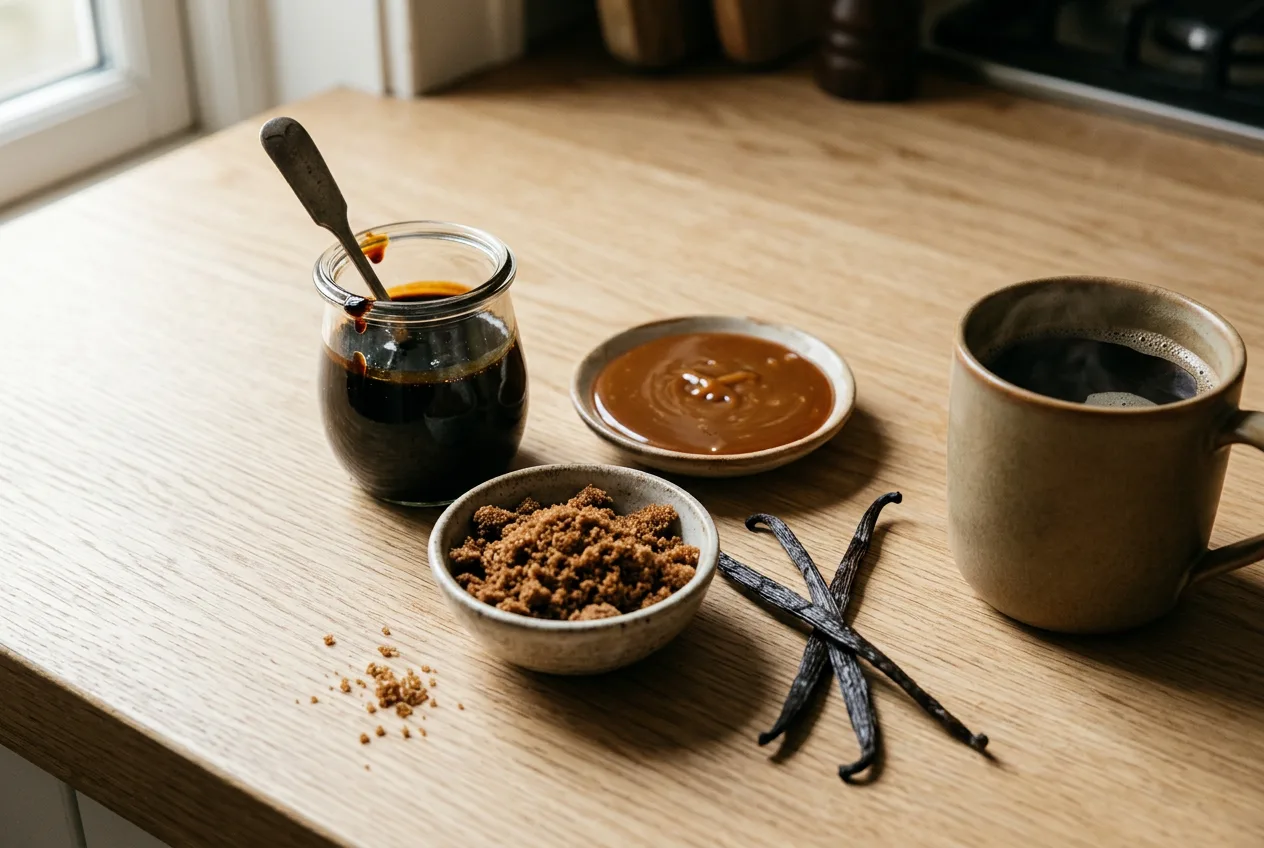
| Note | What it suggests | Where you often find it |
|---|---|---|
| Brown sugar | Familiar, warm, sugary sweetness | Many Central and South American coffees |
| Molasses | Darker, deeper, slightly bitter-sweet | Medium-dark roasts, some naturals |
| Caramel | Cooked sugar, buttery, rounded | Well-developed medium roasts |
| Honey | Floral, light, clean sweetness | Washed and honey-processed coffees |
| Maple syrup | Woody, warm sweetness | Some medium roasts |
A coffee with nutty and chocolate notes might also have a clean finish and a little fruit or citrus in the background. Flavor families overlap. A cup doesn't have to fit in one box.
Our tip: Taste a pinch of brown sugar, a drop of molasses and a bit of caramel side by side. It takes two minutes and makes these three notes much easier to tell apart in coffee.
Fruity and floral flavors
Other coffees stand out because of fruit or floral notes. These are often lighter roasts, and they can be some of the most surprising coffees you'll ever taste.
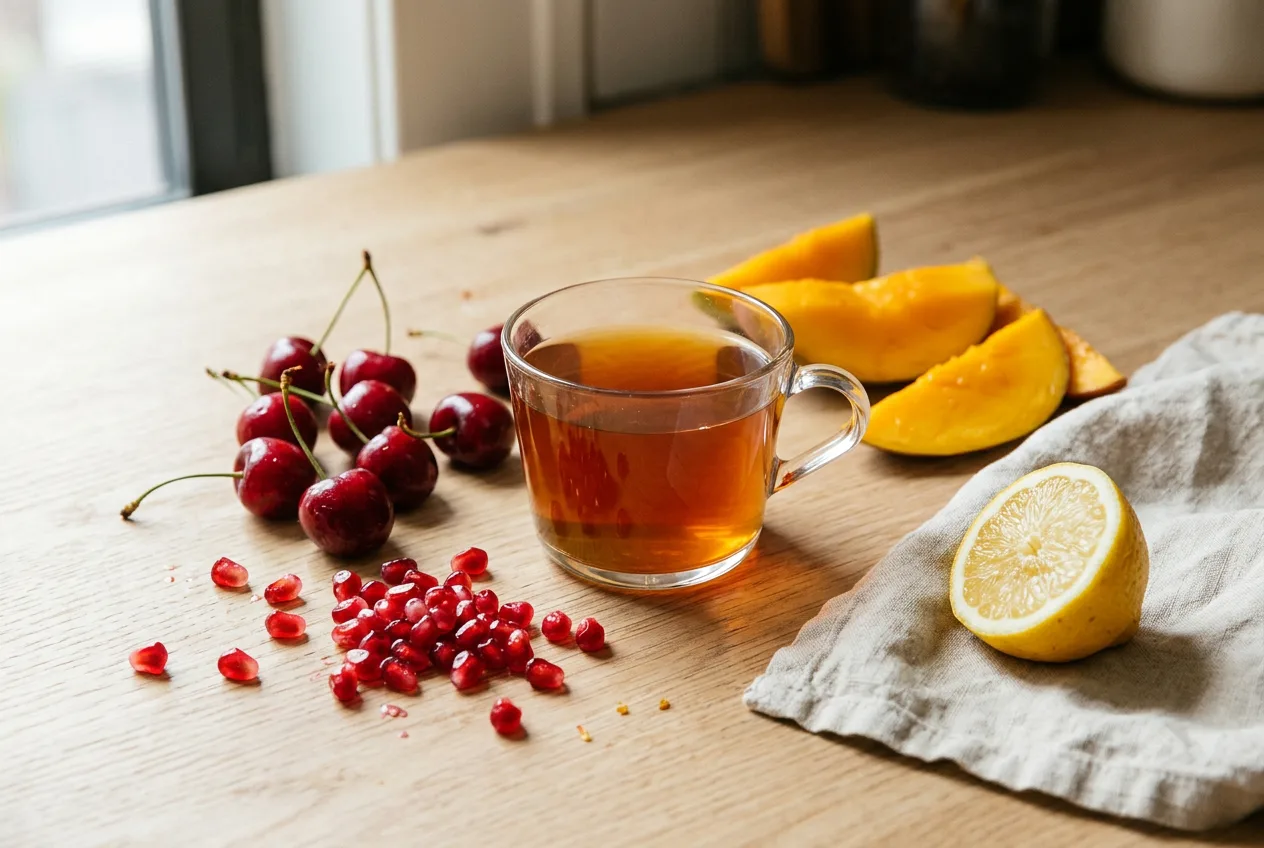
Narrowing down fruit
A broad "fruity" impression can be narrowed by asking which group it's closest to:
Tropical fruit notes often make a coffee feel lively and expressive. Dried fruit notes usually feel deeper and jammier.
Floral notes
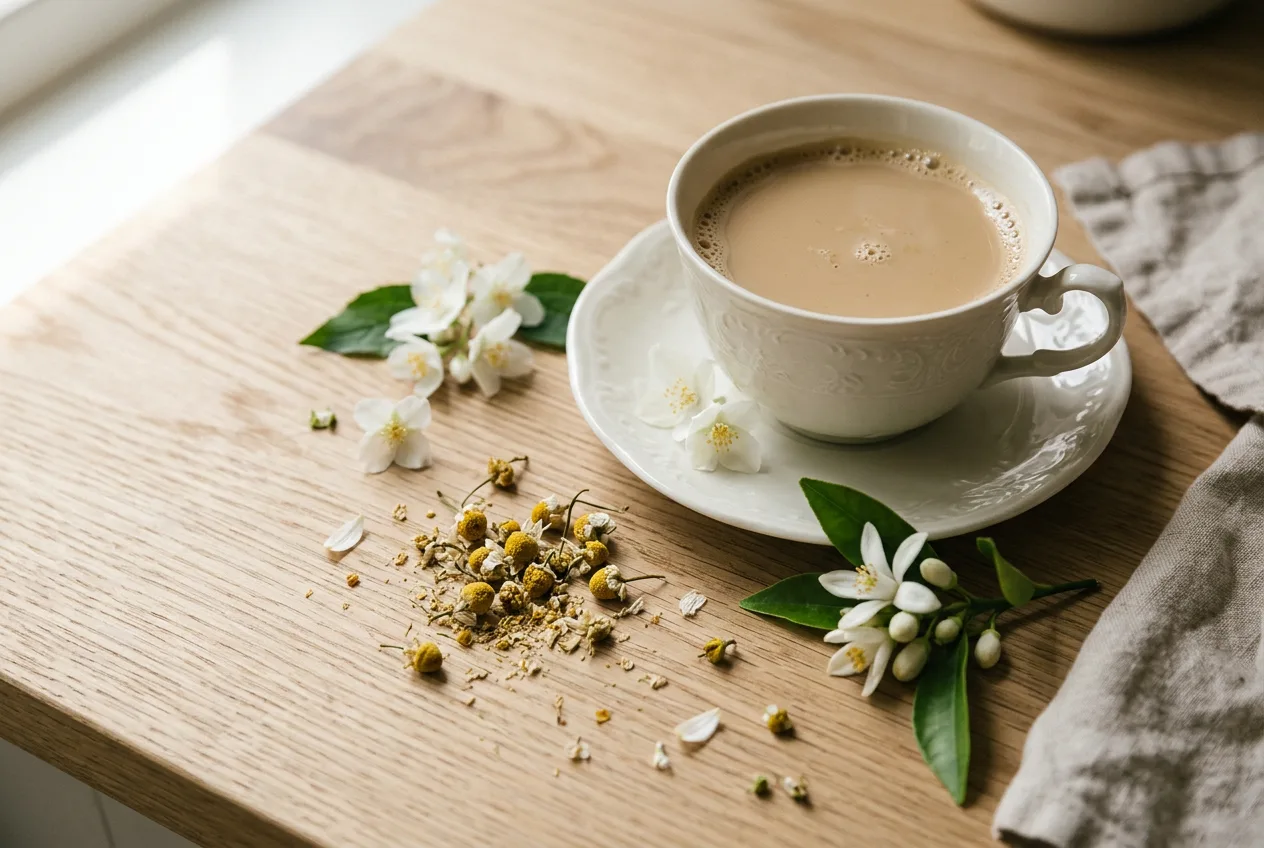
Floral notes like jasmine, rose or chamomile are often subtle. They tend to show up more in the aroma than as a strong taste, and they're easiest to notice when you take your time and pay attention to the finish.
"Cherry" doesn't mean cherry was added
This confuses a lot of people. A tasting note like "cherry" means the coffee reminds the taster of cherry. It doesn't mean there's cherry in the bag, or that the coffee was flavored.
Those flavors come naturally from the coffee's variety, where it was grown, how it was processed and how it was roasted.
Spice, roast and the other families
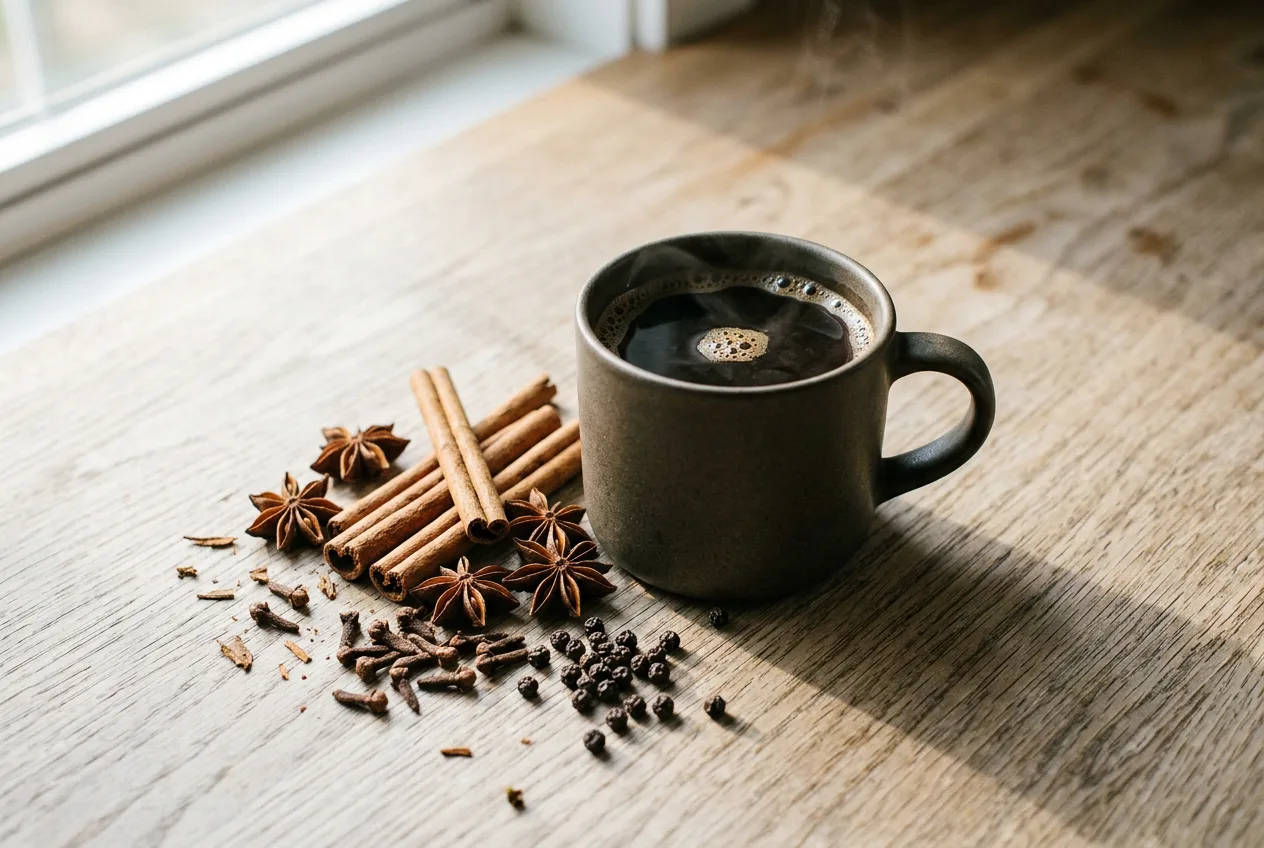
Spices
Brown spices like cinnamon, clove and nutmeg show up in many coffees, especially some from Indonesia, India and certain natural-processed lots. Pepper and anise notes are less common but distinctive.
Roasted
Roasted notes include pleasant cereal, malt and toast flavors, as well as smoky, burnt and ashy ones. A little roast character is normal. A lot usually means a very dark roast or a roasting problem.
Sour and fermented
Winey, boozy or overripe-fruit notes come from this family. In some experimental and natural-process coffees, a controlled winey note is part of the appeal. Too much, and it tastes like a defect.
Green, papery and chemical
Beany, grassy, papery, cardboard, musty and rubbery notes mostly signal problems: under-roasting, old or poorly stored coffee, or processing defects. The wheel includes them so you can name what's wrong.
| Note you taste | Usually a sign of |
|---|---|
| Grassy, peapod, raw | Under-developed or very light roast |
| Smoky, ashy, burnt | Very dark or scorched roast |
| Papery, cardboard, stale | Old coffee or poor storage |
| Musty, earthy (unpleasant) | Moisture or storage problems |
| Vinegar, rotten fruit | Over-fermentation during processing |
If you often get papery or stale notes, the fix may be as simple as buying fresher beans and storing them better. My guide on how to store coffee beans covers that.
Balance, cleanliness and roast character
Flavor notes are only part of the picture. How a coffee feels, and how its flavors work together, matter just as much.
Roast level shapes the overall impression. A medium roast might combine sweetness, nutty or chocolate notes and a touch of fruit or citrus.
A well-balanced cup doesn't need to taste smoky. If smoke or char dominates, name it as its own impression rather than assuming it belongs in every roasted coffee.
A great cup can have several pleasant notes without one overpowering the rest. For example: milk chocolate up front, a little nuttiness in the middle and a light citrus finish. The wheel names the details. Balance explains how they fit together.
My guide to coffee roast levels explains how roasting shifts these flavors.
Acidity and body: the words beyond flavor
The flavor wheel focuses on what a coffee tastes and smells like. But two other qualities shape the experience just as much: acidity and body. Having words for them makes your notes far more useful.
Types of acidity
Coffee contains several natural acids, and each feels a little different on the tongue. You don't need chemistry to use them. Just link each one to a familiar fruit.
| Acidity style | Feels like | Often found in |
|---|---|---|
| Citric | Lemon, orange, grapefruit, zesty and bright | Washed East African and Central American coffees |
| Malic | Green apple, pear, crisp and juicy | Many high-grown washed coffees |
| Tartaric | Grape, wine-like | Some naturals and Kenyan coffees |
| Phosphoric | Sparkling, cola-like brightness | Some Kenyan coffees |
| Acetic | Vinegar-like, sharp | A sign of over-fermentation in large amounts |
Good acidity makes coffee taste alive and juicy. Low acidity makes it feel round and mellow. Neither is better. It's about what you enjoy.
Body and mouthfeel
Body is how heavy or textured the coffee feels in your mouth. Compare it to milk: skim, whole or cream.
How brewing method changes what you taste
The same coffee can land in different parts of the wheel depending on how you brew it. That's one reason you might not find the notes listed on the bag.
| Method | What it highlights | What it can hide |
|---|---|---|
| Paper-filter pour-over | Clarity, fruit, floral notes, acidity | Some body and richness |
| French press | Body, chocolate, nutty and heavy notes | Delicate floral and citrus notes |
| Espresso | Intensity, sweetness, chocolate, caramel | Subtle floral notes, sometimes fruit |
| Cold brew | Chocolate, smoothness, low acidity | Bright fruit and aromatic notes |
| Milk drinks | Caramel, chocolate, nuttiness | Acidity and most fruit notes |
If you want to explore a coffee's full range of flavors, a paper-filter pour-over is usually the clearest window. Roasters often write their tasting notes based on cupping or pour-over for exactly that reason.
Brewing well matters too. An under-extracted cup can make fruit taste sour, and an over-extracted cup can bury sweetness under bitterness. My guide to coffee extraction explains how to fix both.
How I run a tasting session at home
Once a week or so, I line up two or three coffees and taste them side by side. Here's what a recent session looked like, using the inside-out method.
| Coffee | First impression | Family | My notes | Bag said |
|---|---|---|---|---|
| Washed Ethiopian | Bright, light, perfumed | Floral, fruity | Jasmine, lemon, black tea | Jasmine, bergamot, peach |
| Natural Brazilian | Sweet, heavy, comforting | Nutty / cocoa, sweet | Peanut, milk chocolate, brown sugar | Hazelnut, chocolate, caramel |
| Washed Colombian | Juicy, balanced | Fruity, sweet | Red apple, caramel | Cherry, panela, red apple |
Notice that my notes weren't identical to the bags, but they landed in the same families every time. I got "black tea" where the roaster wrote "bergamot," which is the flavor in Earl Grey. I wrote "peanut" where they wrote "hazelnut." Close neighbors on the wheel.
That's exactly how it should work. The families anchor you, and the specific words get sharper with practice.
My setup
- Same brew method and recipe for every coffee
- Small cups, labeled on the bottom so I taste without bias
- A glass of water to rinse between sips
- A printed flavor wheel and a notecard
- Twenty minutes, tasting hot, warm and cool
Our tip: Invite a friend and compare notes after you've each written yours. Hearing someone else's words for the same cup is one of the fastest ways to expand your own vocabulary.
What origin and processing tend to taste like
Where coffee is grown and how it's processed have a huge influence on which part of the wheel it lands in. These are broad tendencies, not rules, but they're a great starting point when you're choosing beans.
| Origin and style | Common flavor families | Typical notes |
|---|---|---|
| Ethiopia, washed | Floral, citrus, tea-like | Jasmine, lemon, bergamot, peach |
| Ethiopia, natural | Fruity, sweet | Blueberry, strawberry, wine-like |
| Kenya | Fruity, bright | Blackcurrant, grapefruit, tomato-like savory acidity |
| Colombia | Sweet, fruity | Caramel, red apple, cherry |
| Brazil, natural | Nutty, cocoa, sweet | Peanut, milk chocolate, brown sugar |
| Central America | Sweet, nutty, mild fruit | Caramel, almond, orange |
| Sumatra | Earthy, spice | Cedar, herbs, dark chocolate, clove |
Processing also shifts flavor. Washed coffees tend to taste cleaner and brighter. Natural coffees, dried with the fruit still on, tend to be fruitier and heavier. Honey processed coffees often sit in between.
I go into this in more depth in my guides on coffee growing regions and flavor and coffee processing methods.
Reading tasting notes on a bag
Flavor descriptions are one of the most useful things printed on a coffee bag. Notes like "caramel, almond, cherry" tell you what the roaster expects you to notice.
Use them to choose
- Love chocolate and nut flavors? Look for words like cocoa, hazelnut, almond, caramel and brown sugar.
- Prefer bright, fruity cups? Look for cherry, berry, citrus, stone fruit or tropical fruit.
- Want something delicate? Look for floral and tea-like notes such as jasmine, black tea or bergamot.
- Like bold and heavy? Look for dark chocolate, molasses, spice and earthy notes.
Guidance, not a guarantee
Printed notes are a guide. What ends up in your cup also depends on your brewing method, water, grinder, freshness, and your own sensitivity and memory.
You might taste the listed notes, notice different ones, or experience the coffee in your own way.
Compare, don't force
Comparing your impressions with the label is fun. If the bag says caramel and almond, taste with those in mind. But don't force yourself to find them.
You might get cocoa, citrus or something else entirely. Your observation still counts.
Our tip: Taste the coffee once before you read the notes, and write down one or two words. Then read the bag. You'll be surprised how often you were close, and it builds confidence fast.
Training your palate
Building a tasting vocabulary takes practice. Experienced tasters have a huge library of sensory memories: fruits, nuts, sweets, spices, flowers. Those memories make it easier to connect a coffee to something familiar.
Nobody starts with that library. You build it.
Start simple, then add detail
- If a coffee tastes sweet, ask: what kind of sweet?
- If it seems fruity, ask: which fruit family is closest?
- If it feels nutty, ask: which nut?
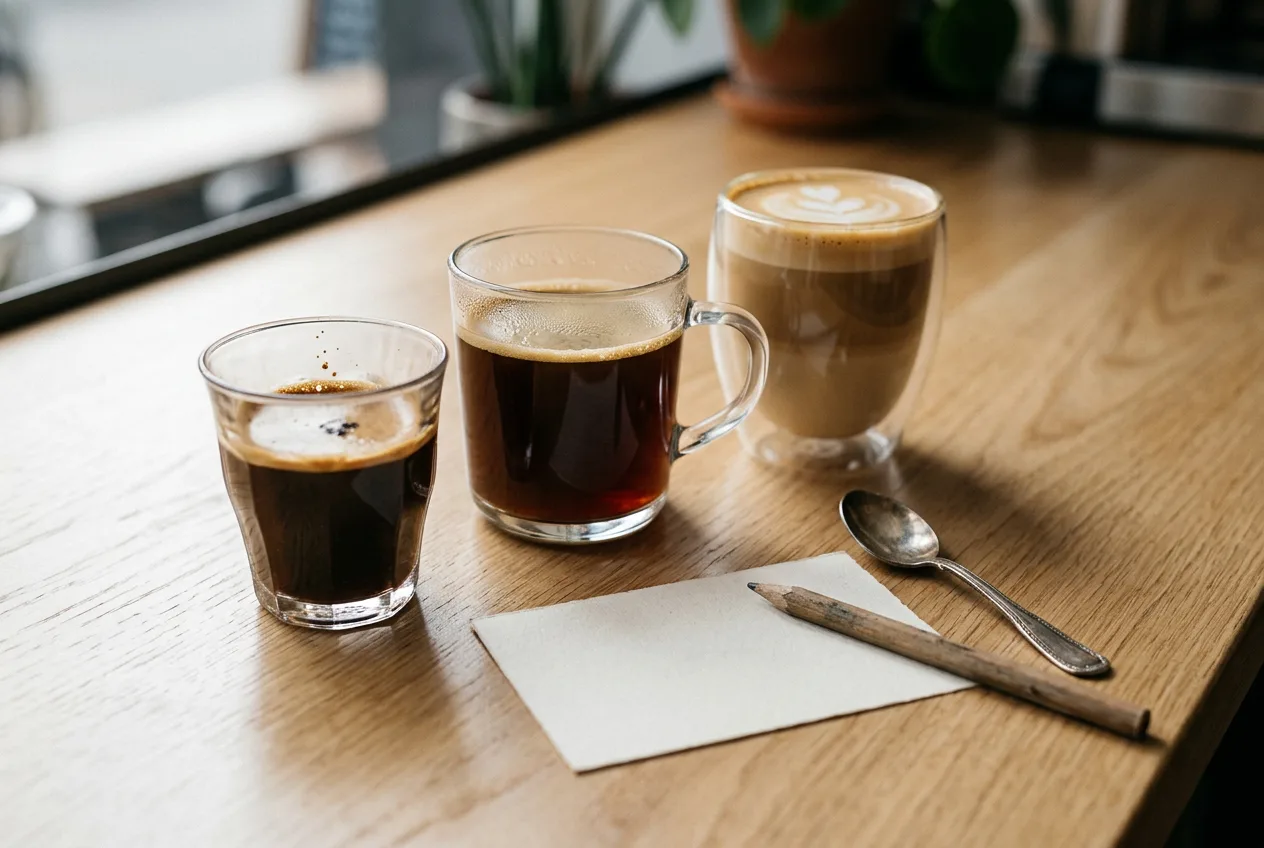
Taste a range of coffees
Tasting different coffees side by side is the fastest way to learn. Try different roast levels, origins and processing styles. Notice what changes.
Raid your kitchen
The best palate training doesn't involve coffee at all. Smell and taste the real things the wheel names:
- Spice drawerSmell cinnamon, clove, nutmeg and black pepper one after another.
- Fruit bowlTaste an apple, a grape, a slice of orange and a few berries with your eyes closed.
- SweetsCompare brown sugar, honey, maple syrup and caramel.
- Nuts and chocolateTaste almonds, hazelnuts, milk chocolate and dark chocolate side by side.
Every reference you taste becomes a word you can find in your next cup. Grocery shopping becomes palate training too: smell the peaches, the oranges and the herbs on your way around the store, and you'll be adding to your library without even trying.
Write short notes
A note like "cocoa, almond, light citrus" is enough. You don't need to fill a page. Over time, your notes show which families you recognize easily and which ones you'd like to explore.
A simple one-week practice plan
| Day | Focus | What to do |
|---|---|---|
| 1 | Aroma | Smell your coffee dry, then brewed. Write one word for each. |
| 2 | Sweetness | Ask only: how sweet is it, and what kind of sweet? |
| 3 | Acidity | Is it bright, soft or sharp? Compare to a fruit. |
| 4 | Body | Is it light like tea, or heavy like milk? |
| 5 | Families | Pick one family from the wheel's center. |
| 6 | Specific notes | Move outward and choose one specific note. |
| 7 | Side by side | Taste two different coffees and compare everything. |
Smell training: build your own aroma kit
Professional tasters often train with aroma kits: small vials of reference scents like lemon, caramel, roasted almond or jasmine. They're excellent, but they can be expensive.
You can build a surprisingly good version at home with a few small jars with lids.
- Pick 8 to 12 referencesChoose a few from each family: lemon zest, orange peel, dried cherries, raisins, almonds, hazelnuts, cocoa nibs, brown sugar, honey, cinnamon, clove and black tea.
- Put each in a jarA small amount is enough. Crush nuts and spices a little to release aroma.
- Number the lidsWrite the answers on the bottom of each jar so you can test yourself.
- Smell blindClose your eyes, smell a jar and guess. Check the bottom. Repeat a few times a week.
- Refresh regularlyReplace the contents every couple of weeks so the aromas stay true.
Within a few weeks, you'll find yourself recognizing these aromas in coffee without trying. It's one of the most enjoyable ways to improve your palate.
Writing tasting notes other people understand
If you share coffee recommendations with friends, write reviews, or simply want your notes to be useful in six months, a little structure helps.
A simple formula
Before and after
Before: "Really nice, smooth, a bit fruity."
After: "Red apple and caramel, with juicy, gentle acidity and a medium body. Clean, sweet finish. An easy everyday coffee I'd happily buy again."
The second note takes ten more seconds to write, and it tells you almost everything you'd want to know before buying the coffee again.
Our tip: Keep your notes in the same place, like a single note on your phone. Looking back over a few months shows you which flavor families you love, which makes choosing your next bag much easier.
The wheel for coffee quality and roasting
Professionals use the flavor wheel to keep coffee consistent. When everyone uses the same categories and words, it's far easier to talk clearly about a coffee.
It helps with:
- Comparing batches: does this week's roast taste like last week's?
- Checking a roast: does it show the qualities the roaster intended?
- Tracking development: how does a coffee change as roast profiles are adjusted?
- Buying green coffee: buyers and sellers can describe lots in shared language.
For someone working on a new roast, the wheel prompts you to consider qualities you might otherwise miss. A coffee that seems simply "sweet" may reveal caramel, brown sugar or fruit on closer attention.
But the wheel doesn't make the judgment for you. It supports observation. Final notes should reflect what you genuinely perceive, not just words that appear on the chart.
Formal cupping takes this even further, which I cover in my guide to coffee cupping.
Tasting is personal, and should be fun
Flavor perception is personal. People have different experiences, preferences and sensitivities.
One person clearly tastes pomegranate. Another notices a general berry-like quality. Someone finds a coffee very chocolatey, while someone else focuses on its sweetness or acidity.
That's normal. The point of tasting notes is to communicate an impression, not to prove everyone should taste the same thing.
The wheel makes the conversation more specific. It should never make coffee tasting stressful.
Biology plays a part too. Some people are far more sensitive to bitterness than others. Some have a sharper sense of smell. Age, a cold, what you just ate and even how tired you are all change what you notice. A coffee can genuinely taste different to you on Monday and Friday.
So if your partner swears a coffee tastes like strawberries and you only get "sweet," neither of you is failing. You're simply two different instruments playing the same piece.
Curiosity works better than pressure. If a word doesn't feel right, pick another. If a flavor stays hard to name, a broad description like "fruity" or "chocolatey" is perfectly fine.
Step by step: using the flavor wheel
- Smell firstStart with a fresh cup and take a moment to notice its aroma.
- Find the broad impressionTake a sip and decide which family stands out: nutty, cocoa, sweet, fruity, floral, spicy or earthy.
- Locate it near the centerFind that family on the inner ring of the wheel.
- Move outwardCompare the more specific words in that slice with what you're tasting.
- Pick one or two wordsChoose descriptors that feel accurate. Don't add words just because they sound nice.
- Notice the rest of the cupSweetness, acidity, body, balance and finish.
- Taste again as it coolsSee whether your first impression holds or something new appears.
- Compare with the bagCheck the listed notes. Treat it as learning, not a test.
- Repeat with other coffeesFamiliarity grows quickly with regular practice.
Common tasting mistakes
| Mistake | Why it's a problem | What to do instead |
|---|---|---|
| Jumping straight to specific notes | Overwhelming, often wrong | Start with the broad family |
| Tasting only when very hot | Heat masks many flavors | Taste again as it cools |
| Forcing the bag's notes | You stop trusting your own palate | Taste first, read the bag second |
| Listing too many notes | Dilutes what actually stands out | Pick the one or two strongest |
| Ignoring aroma | Misses half of flavor | Smell before and during tasting |
| Tasting after strong food | Mint, garlic or spice dull your palate | Taste with a clean palate, rinse with water |
Key takeaways
- The flavor wheel organizes coffee flavors from broad families in the center to specific notes on the outside.
- The modern wheel was redesigned in 2016 by the SCA and World Coffee Research, based on a sensory lexicon of about 110 attributes.
- Use it inside-out: pick a family first, then move outward. Nutty might become almond. Fruity might become cherry.
- Taste with attention: smell first, slurp, notice sweetness, acidity, body and finish, and taste again as it cools.
- Tasting notes describe resemblance. "Cherry" doesn't mean cherry was added.
- Bag notes are guidance. Use them to choose coffees you'll enjoy, but trust your own impressions.
- Build your library by tasting real fruit, nuts, sweets and spices, and by comparing coffees side by side.
- Tasting is personal. Stay curious, use the wheel as a guide, and enjoy it.
If you try just one thing after reading this, make it the inside-out method with your very next cup. Don't aim for a perfect note. Pick a family, move one ring outward, and write down a single word. Do that for a week and you'll notice the difference.
With repeated tasting, the language of coffee becomes familiar, and every cup becomes another chance to discover something new.
Frequently asked questions
What is the coffee flavor wheel?
It is a reference chart that organizes the flavors and aromas found in coffee, from broad families like fruity, nutty and sweet in the center to specific notes like cherry, almond and caramel on the outside.
Who created the coffee flavor wheel?
The original Coffee Taster's Flavor Wheel was published by the Specialty Coffee Association of America in 1995. The current version was redesigned in 2016 by the Specialty Coffee Association and World Coffee Research, based on a scientific sensory lexicon.
How do you read a coffee flavor wheel?
Start in the center by choosing the broad family your coffee reminds you of, then move outward through more specific groups until you find a note that matches what you taste.
Does "blueberry" on a coffee bag mean it is flavored?
No. Tasting notes describe what the coffee naturally reminds tasters of. They come from the coffee's variety, origin, processing and roast, not added flavorings.
Why can't I taste the notes on the bag?
Brewing method, water, freshness, grind and your own palate all affect what you taste. Tasting notes are a guide. With practice and side-by-side tasting, notes usually become easier to find.
How can I improve my coffee palate?
Taste coffees side by side, smell and taste real references like fruit, nuts, sugars and spices, slurp to spread coffee across your palate, taste as the cup cools, and write short notes.
Why do people slurp coffee when tasting?
Slurping sprays coffee across the whole palate and carries aroma to the nose, which makes subtle flavors easier to notice.
What are bad flavors on the coffee flavor wheel?
Notes like papery, cardboard, musty, rubbery, ashy and grassy usually point to stale coffee, storage problems, processing defects or roasting issues.

- Michael Reynolds, home tasting and cupping notes
- Daily Coffee News: SCAA unveils a whole new Coffee Taster's Flavor Wheel
- Spencer et al.: Exploratory methods to design a new Coffee Taster's Flavor Wheel
Related guides
Coffee growing regions and flavor Coffee processing methods Coffee extraction explainedWritten by Michael Reynolds. Last updated November 19, 2026.