Philips 3200 vs 4300 vs 5500: which LatteGo should you buy?
Same body, same grinder, same easy LatteGo milk jug, and three very different menus. The Philips 3200 makes five drinks, the Philips 4300 makes eight with two profiles, and the Philips 5500 makes 20 hot and iced drinks for four people. I used each one every day for four weeks to find out which step up is worth it.
We choose products independently. We may earn a commission through links on this page; your price stays the same. Affiliate policy
Jargon helpNew to espresso? Tap any dotted term to see what it means.
In this comparison
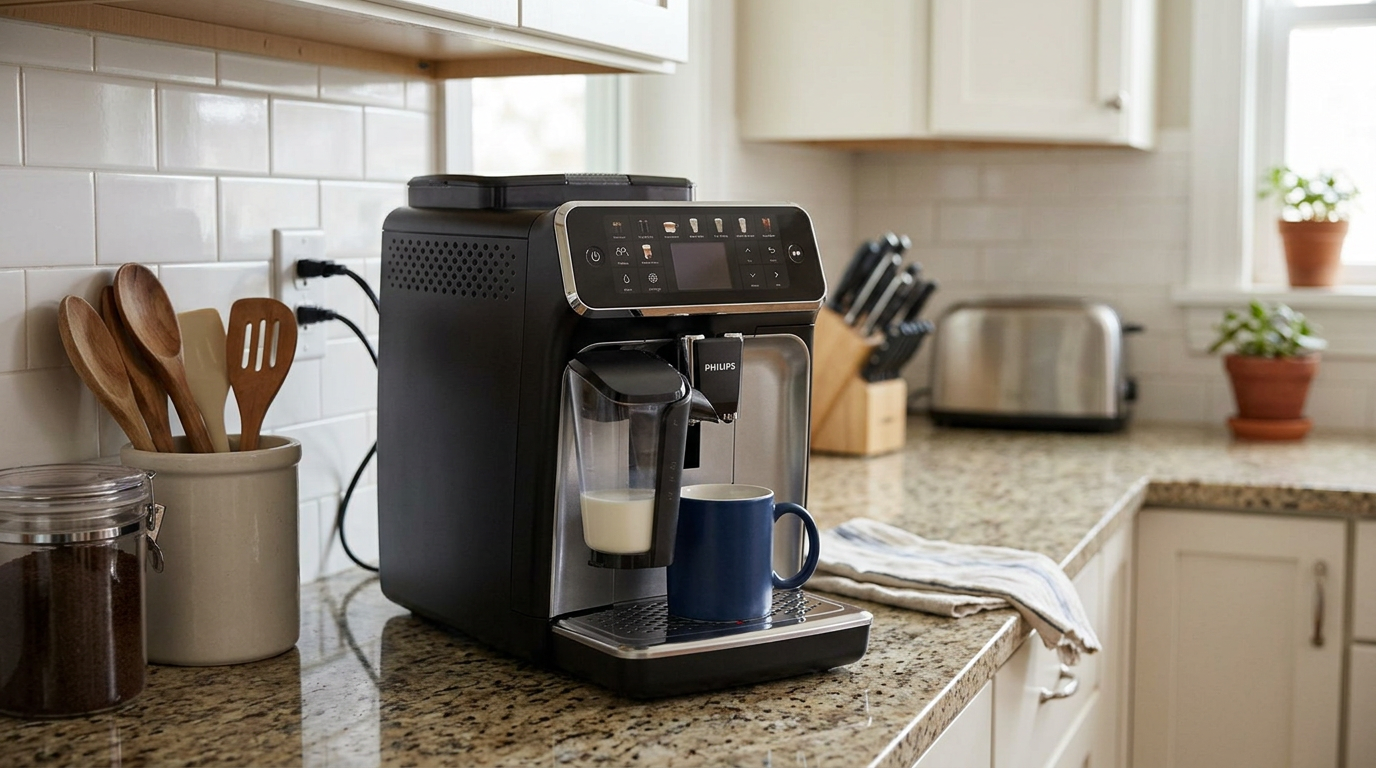
If you want the best Philips for a busy household, buy the Philips 5500. It makes 20 hot and iced drinks, saves four profiles, grinds at about 60 dB with the lid closed and has the easiest LatteGo✕LatteGoPhilips’ two-part milk jug. Steam pulls milk from the jug and mixes in air inside it, so there are no tubes to clean. carafe of the three. If two people share the machine and you want more drinks and real volumes on the display, the Philips 4300 is the smart middle step. The Philips 3200 is still the best value if five one-touch drinks cover your routine.
The three machines
Specs checked November 14, 2026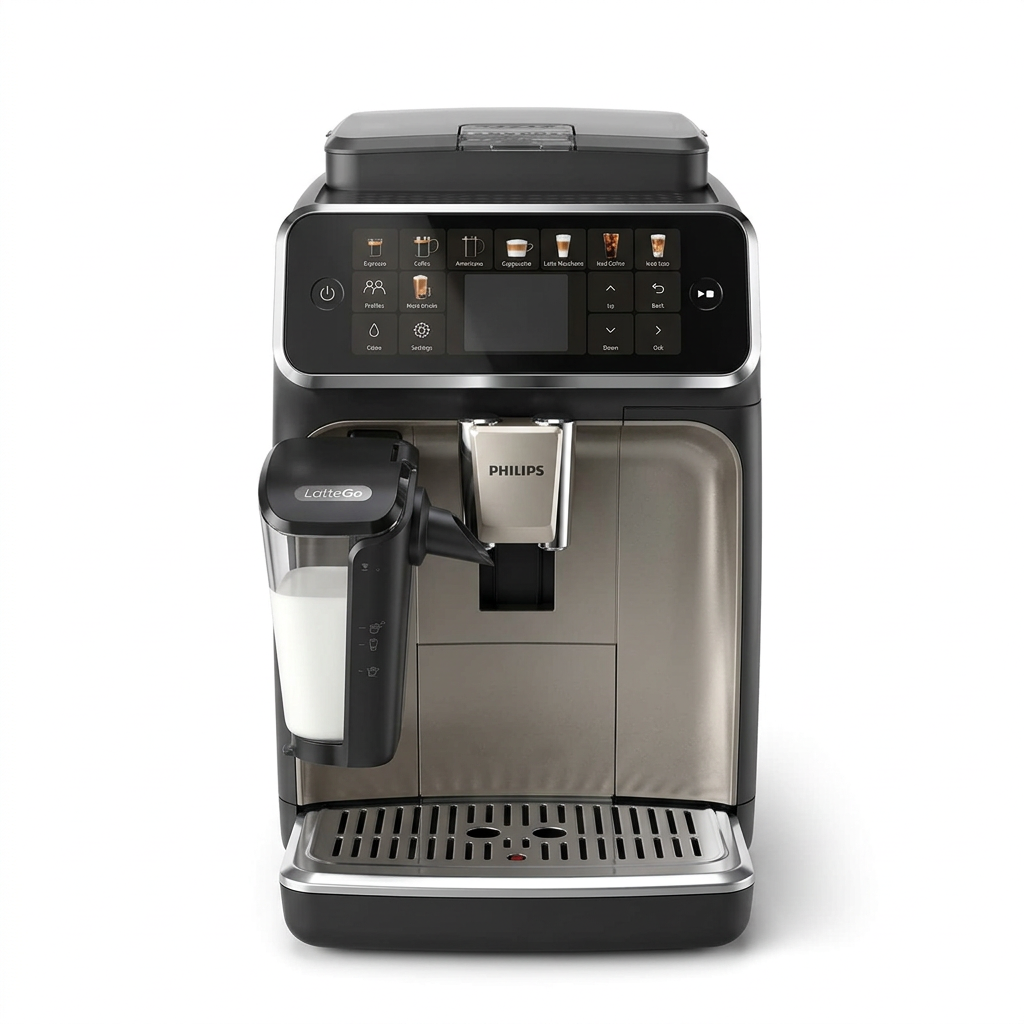
20 hot and iced drinks, four profiles, quiet grinding and a two-part milk carafe that rinses clean in about 10 seconds.
Check price on Amazon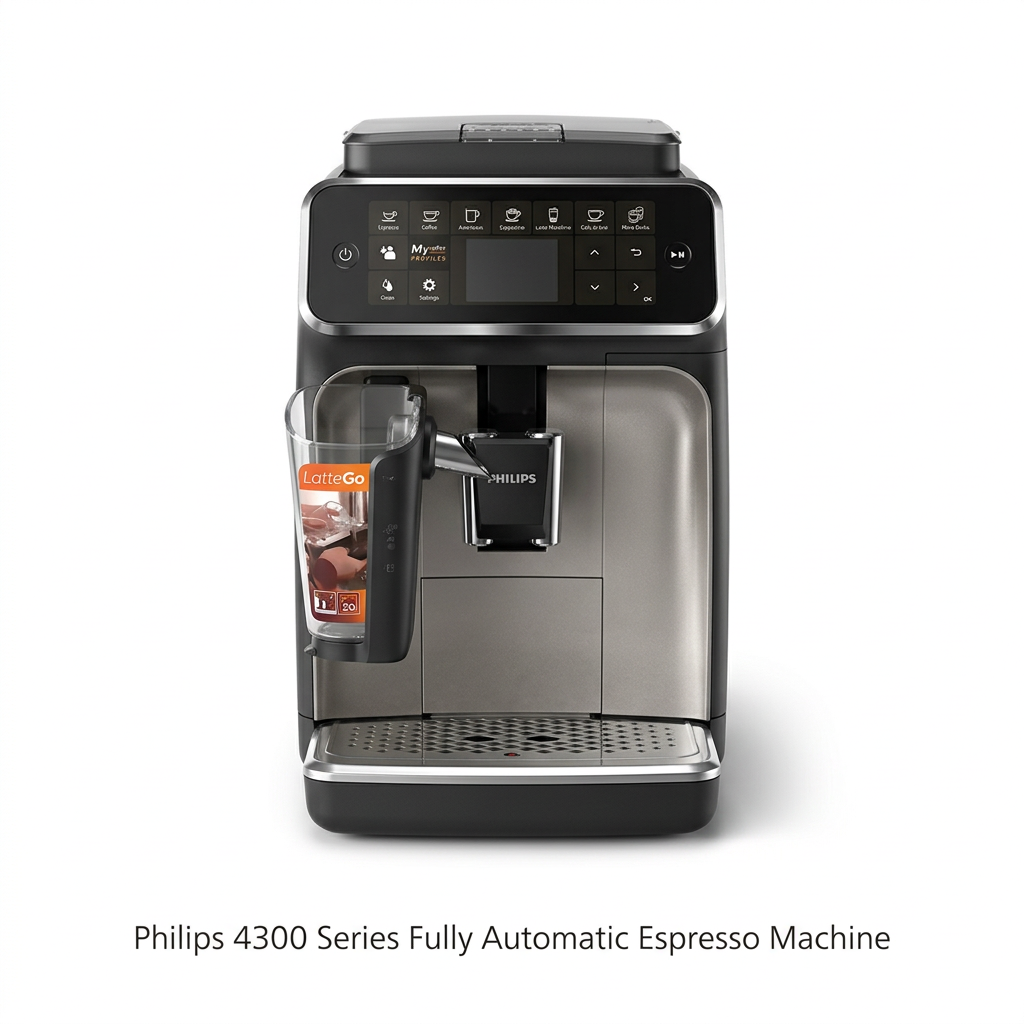
Eight one-touch drinks including ristretto, a color display with real volumes, two profiles and five strength levels.
Reveal Today’s Deal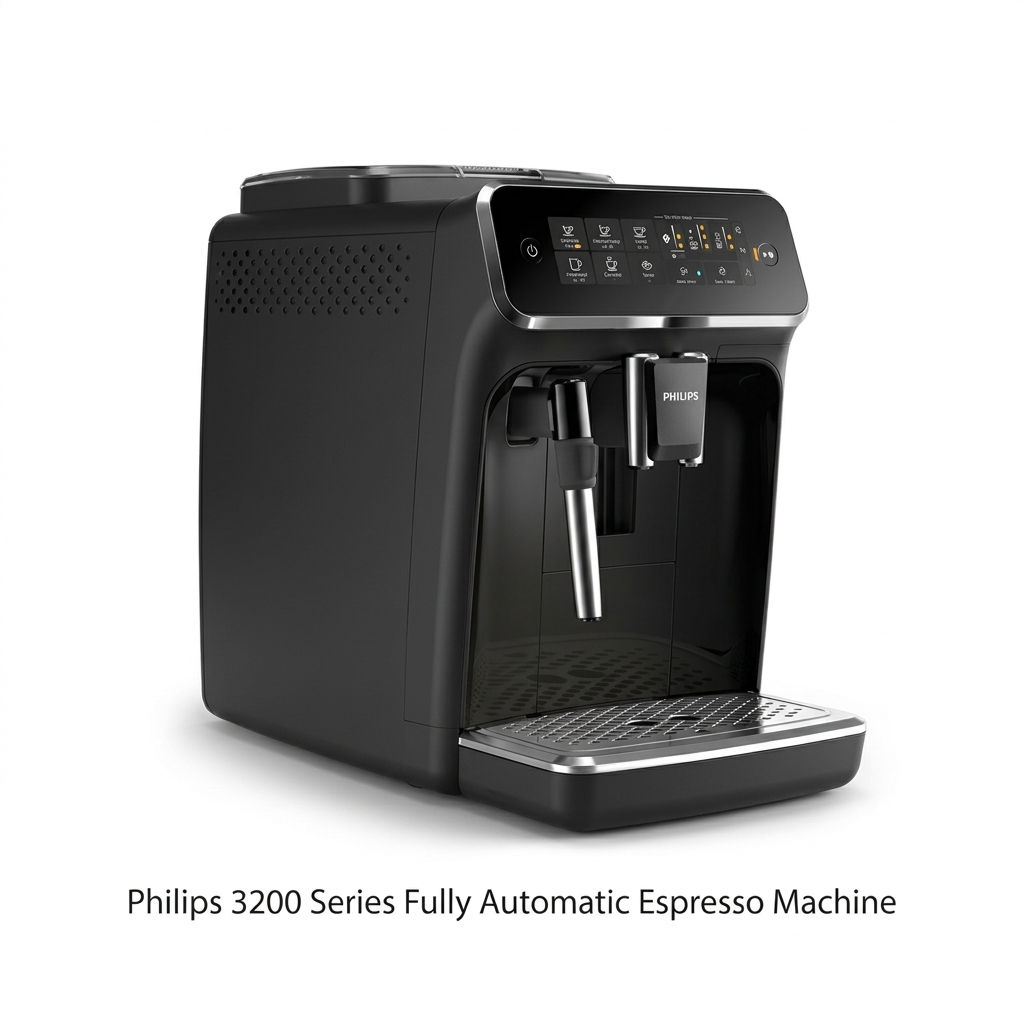
Five one-touch drinks, a ceramic grinder, a removable brew group and the tube-free LatteGo jug.
See Today’s PricePhilips 3200 vs 4300 vs 5500 at a glance
- Buy the 5500 if several people share the machine or you want iced drinks.
- Buy the 4300 if two people want saved drinks and more control over strength and volume.
- Buy the 3200 if espresso, coffee, Americano, cappuccino and latte macchiato are all you need.
- All three share the same footprint, tank, hopper and easy-clean milk system.
Head to head
The best result in each row is marked, based on my four weeks with each machine and Philips’ specs. Rows where they are equal have no winner.
These three share a body, a grinder and a milk system, so the rows that differ are mostly about drinks, display and noise.
| Spec | Philips 3200 | Philips 4300 | Philips 5500 |
|---|---|---|---|
| Espressomy scores | 7.2 | 7.8 | 8.2 ✓ Best |
| Milk drinksmy scores | 7.8 | 8.0 | 8.8 ✓ Best |
| Ease of usemy scores | 8.8 | 9.0 | 9.3 ✓ Best |
| Cleaningmy scores | 8.5 | 8.2 | 9.2 ✓ Best |
| One-touch drinks | 5 | 8 | 20, hot and iced ✓ Best |
| User profiles | None | 2 plus guest | 4 ✓ Best |
| Strength levels | 3 | 5 | 5, plus Extra Shot ✓ Best |
| Display | Touch icons | Color, real volumes | Color, real volumes |
| Iced drinks | No | No | Yes ✓ Best |
| Grinding noise | Moderate | Moderate | About 60 dB, lid closed ✓ Best |
| Ristretto | No | Yes | Yes |
| Footprint | 9.7 x 17 in | 9.6 x 17 in | 9.7 x 17 in |
| Rows won | 0 | 0 | 9 |
Philips 3200 vs 4300 vs 5500 pros and cons
Philips 3200
- Five one-touch drinks, including latte macchiato
- LatteGo jug has no tubes and rinses clean fast
- Removable brew group and AquaClean filter included
- Mild espresso from a small dose of about 8 g
- No profiles and only three strength levels
- Mostly plastic body and a small drip tray
Philips 4300
- Eight one-touch drinks, including ristretto and café au lait
- Display shows real volumes; two profiles plus guest
- Step-by-step guided descaling
- Extra shot not available for milk drinks
- Milk drinks take almost three minutes with cleanup
- No clear prompt to rinse the milk system
Philips 5500
- 20 hot and iced drinks with four saved profiles
- Two-part milk carafe cleans in about 10 seconds
- Quiet grinding at around 60 dB with the lid closed
- Espresso is lighter than a café shot
- Iced drinks use warm coffee poured over ice
- Fixed milk spout means cup placement matters
Who should buy which machine?
Philips 3200
- One or two people with simple routines
- Budget-minded first-time owners
- Latte macchiato and mild coffee drinkers
- Households that need profiles
- Strong espresso fans
- Iced coffee drinkers
Philips 4300
- Couples who want saved drinks
- Ristretto and café au lait fans
- People who like to see real volumes
- Daily double-shot cappuccino drinkers
- Big families of four
- Iced drink lovers
Philips 5500
- Busy households of three or four
- Anyone who hates cleaning milk tubes
- Open-plan homes and early risers
- Dense, syrupy espresso fans
- True cold brew drinkers
- Latte art enthusiasts
Design, size and build
From the side, these three are the same machine. All measure about 9.7 inches wide, 14.6 inches tall and 17 inches deep, and all weigh around 17.6 pounds.
The fronts are where they differ. The Philips 3200 has a flat touch panel with five drink icons. The 4300 adds a color display that shows strength and volume as real numbers, and the 5500 adds a larger color display with a scrolling menu for its 20 drinks.
All three load from the front: the water tank, grounds drawer and drip tray slide out without moving the machine, which makes them great under low wall cabinets.
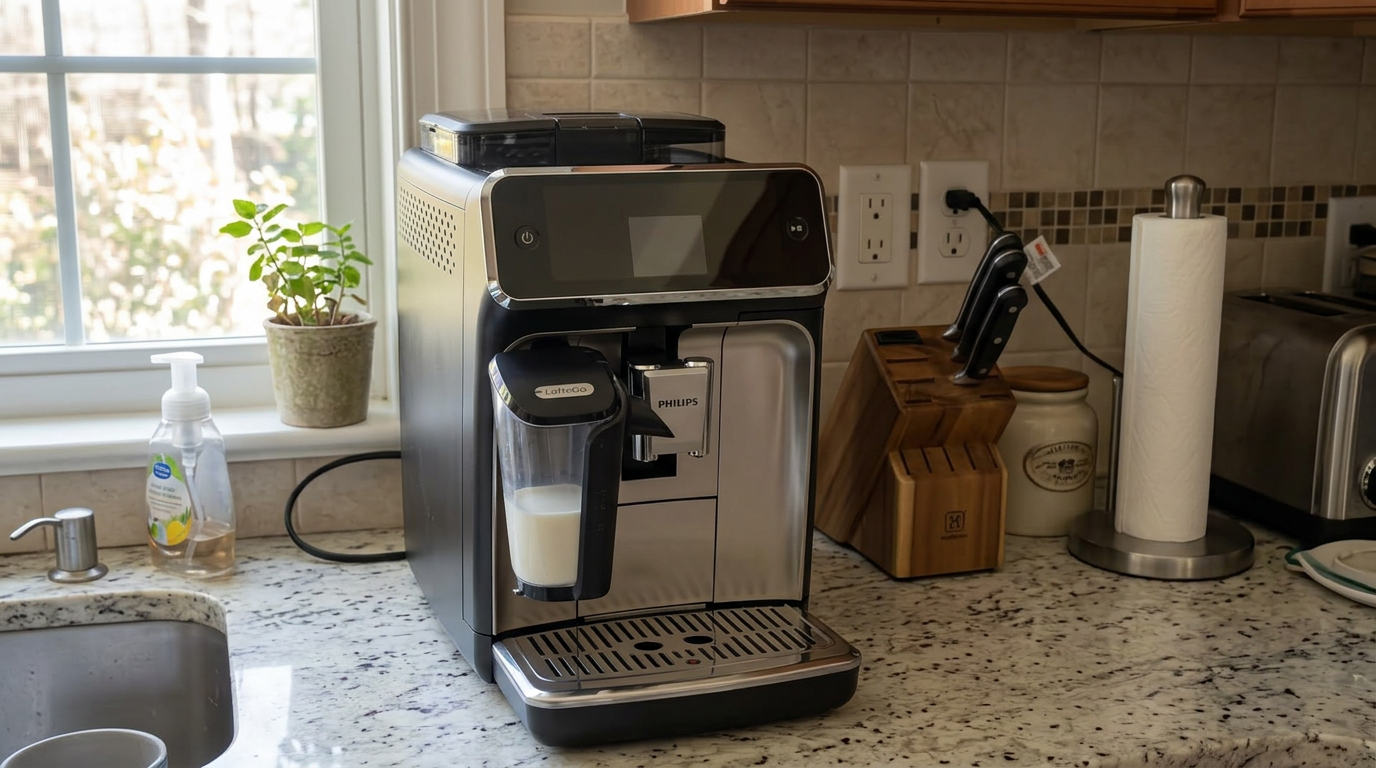
The 5500 shares its footprint with the 3200 and 4300, with a larger color display.
Build quality is similar across the line, with glossy plastic panels and a chrome-look trim. None feels premium, but none felt flimsy in a month of daily use.
The 5500’s housing stayed cool to the touch even after 20 minutes of making drinks back to back.
Our tip: Slide any of these forward a few inches when you refill beans, because the hopper lid opens upward and low cabinets get in the way.
Setup and the first week
Setup is nearly identical on all three. You test your water hardness with the included strip, fit the AquaClean✕AquaCleanPhilips’ water filter. Replace it when the machine asks, and Philips rates it for up to 5,000 cups without descaling. filter, fill the tank and hopper and run a rinse. The first drink was a few minutes away on each.
The 4300 and 5500 walk you through it on their color displays, which made it a little easier to follow than the 3200’s icon panel and quick-start guide.
On every machine, the first few drinks tasted flat while the grinder cleared out factory test coffee. I didn’t judge anything until about the fifth cup.
| Setup step | 3200 | 4300 | 5500 |
|---|---|---|---|
| Water hardness | Strip, set in menu | Strip, guided on screen | Strip, guided on screen |
| AquaClean filter | Included | Included | Included |
| Profiles to set up | None | 2 plus guest | 4 |
| Time to first drink | A few minutes | A few minutes | A few minutes |
Drinks, display and profiles
This is the real difference between the three, and for most buyers it decides everything.
The 3200 makes five drinks at one touch: espresso, coffee, Americano, cappuccino and latte macchiato, plus hot water. There are three strength levels and no profiles.
The 4300 adds ristretto, café au lait and more, for eight drinks. Its display shows real volumes as you adjust them, so instead of guessing what three bars means, you know you’re getting a 40 ml espresso or a 150 ml coffee. Two profiles plus guest keep each person’s settings.
The 5500 goes to 20 hot and iced drinks, adds an Extra Shot option and four profiles. It’s the only one of the three that is genuinely easy to share with a family.
One-touch drinks
Counted from each machine’s menu, not including hot water.
| Feature | 3200 | 4300 | 5500 |
|---|---|---|---|
| Display | Touch icons | Color, real volumes | Larger color, menu |
| Strength levels | 3 | 5 | 5, plus Extra Shot |
| Profiles | None | 2 plus guest | 4 |
| Ristretto | No | Yes | Yes |
| Iced drinks | No | No | Yes |
| Extra shot in milk drinks | No | No | Yes |
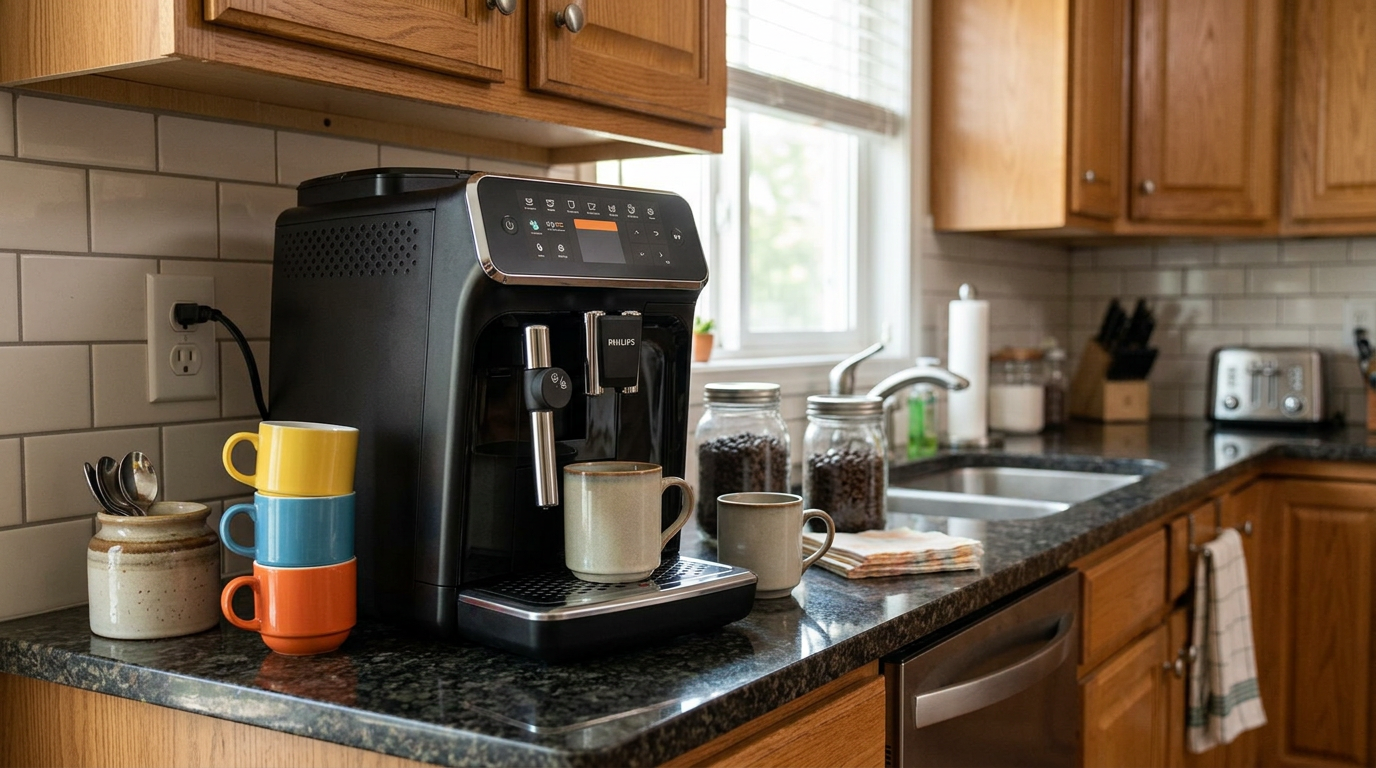
The 4300’s display shows real volumes, which makes adjusting drinks easy.
Our tip: Set up a profile for each person on the 4300 or 5500 on day one, so nobody changes anyone else’s strength or size.
Grinder and dose
All three use ceramic burrs✕Ceramic burrsGrinding discs made of ceramic instead of steel. They stay cool and keep their edge for years, but usually offer fewer grind steps. with 12 settings, adjusted with a knob inside the bean hopper. Philips rates the 4300’s burrs for about 20,000 cups.
The dose✕DoseThe weight of dry ground coffee used for one drink. A café double espresso usually uses 14 to 18 grams. is the limit on all three. On the 3200, I measured about 8 grams per drink at the strongest setting, and the 4300 and 5500 are built on the same principle with more strength steps.
That small dose is why Philips coffee tastes smooth and mild. My 5500 espresso read between 4.5% and 5.5% TDS✕TDS (total dissolved solids)The share of the drink that is dissolved coffee. A higher percentage means a stronger, more concentrated cup., while a typical portafilter espresso lands around 8% to 12%.
Espresso strength, TDS
My refractometer readings on the 5500, compared with a typical café shot.
On every machine, I turned the grinder two steps finer than the default while it was running. It added body without bitterness, and I never needed to touch it again.
The 3200 has three strength levels, the 4300 and 5500 have five. Those two extra steps made the biggest difference on the 4300’s ristretto, which was the boldest short drink of the three.
| Grind setting | What it tasted like |
|---|---|
| Finest settings | Bold ristretto, slow flow |
| Two steps finer than default | Best espresso, my pick |
| Default | Balanced, good for long coffee |
| Coarse settings | Light, can taste sour |
Espresso and black coffee
With the same medium-dark beans, the 5500 made the best espresso of the three, the 4300 came second and the 3200 third. The differences are small, and none of them tastes like a café shot.
On the 3200, the strongest espresso came out at about 1.1 fluid ounces from roughly 8 grams of coffee. It was smooth, clean and never bitter, but light in body.
The 4300’s extra strength steps and ristretto button gave a bolder, shorter drink. The 5500 added heat: on its hottest setting, espresso reached about 80°C, or 176°F, at the spout, and its Extra Shot option gave long drinks more backbone.
My espresso ratings
My scores out of 10 for body, crema, flavor and consistency.
Black coffee in a mug was good on all three. Each makes a real Americano✕AmericanoEspresso topped up with hot water. Done properly, the water is added after the shot instead of being pushed through the coffee. by brewing a shot and adding water afterward, which tastes cleaner than pushing a whole mug of water through the grounds.
A full tank gave me about 13 mugs of coffee on each machine.
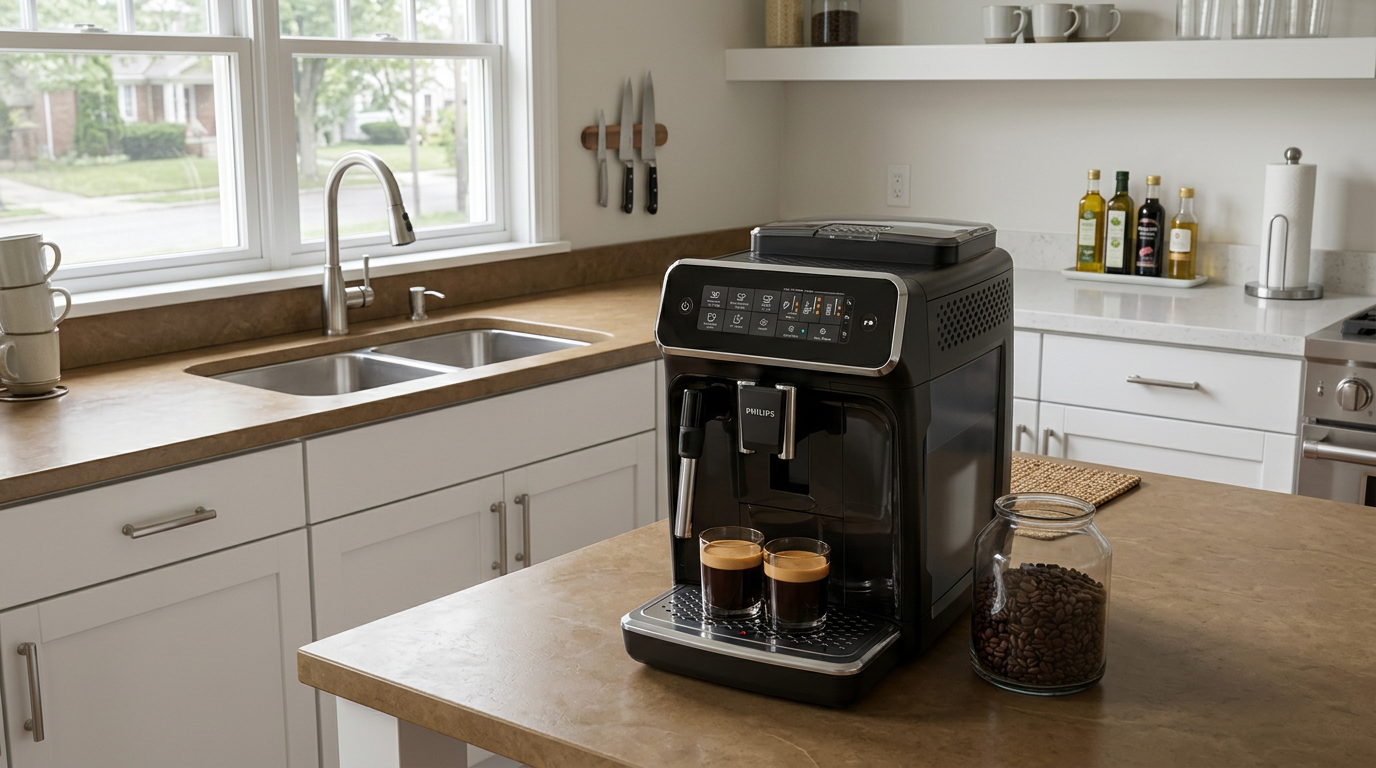
All three make a proper Americano by adding water after the shot.
| Drink | 3200 | 4300 | 5500 |
|---|---|---|---|
| Espresso | Mild, smooth | Bolder, 5 strengths | Best, hottest |
| Ristretto | No | Yes, boldest | Yes |
| Americano | Yes | Yes | Yes, with Extra Shot |
| Coffee in a mug | Smooth | Smooth | Smooth, stronger option |
| Black coffee from switch-on | About 2 minutes | About 1:56 | About 20–25 s to ready |
Milk drinks and LatteGo
All three use Philips’ LatteGo: a two-part milk jug with no tubes. Steam pulls milk into the jug’s chamber, mixes in air and pours foam straight into your cup.
The 5500’s version was the best. Its milk came out at about 75°C, or 167°F, hot without tasting scalded, and its foam was the thickest and most consistent. Its two-part carafe rinsed clean in about 10 seconds and went straight back on.
The 3200 and 4300 made good foam, airy rather than silky. Neither can make microfoam✕MicrofoamMilk foam with bubbles so small you can barely see them. It feels silky and pours into latte art. for latte art, and neither lets you change the texture.
Milk drink ratings
My scores out of 10 for foam, layering and temperature.
Speed was the 4300’s weak spot. A cappuccino took about 2 minutes and 57 seconds including fitting the jug, the milk rinse and putting it away. It also has no clear prompt to rinse the milk system, which is easy to forget.
The 5500 lets you add an Extra Shot to milk drinks, which the 4300 doesn’t. For daily cappuccino drinkers, that one feature fixes the mild-coffee problem.
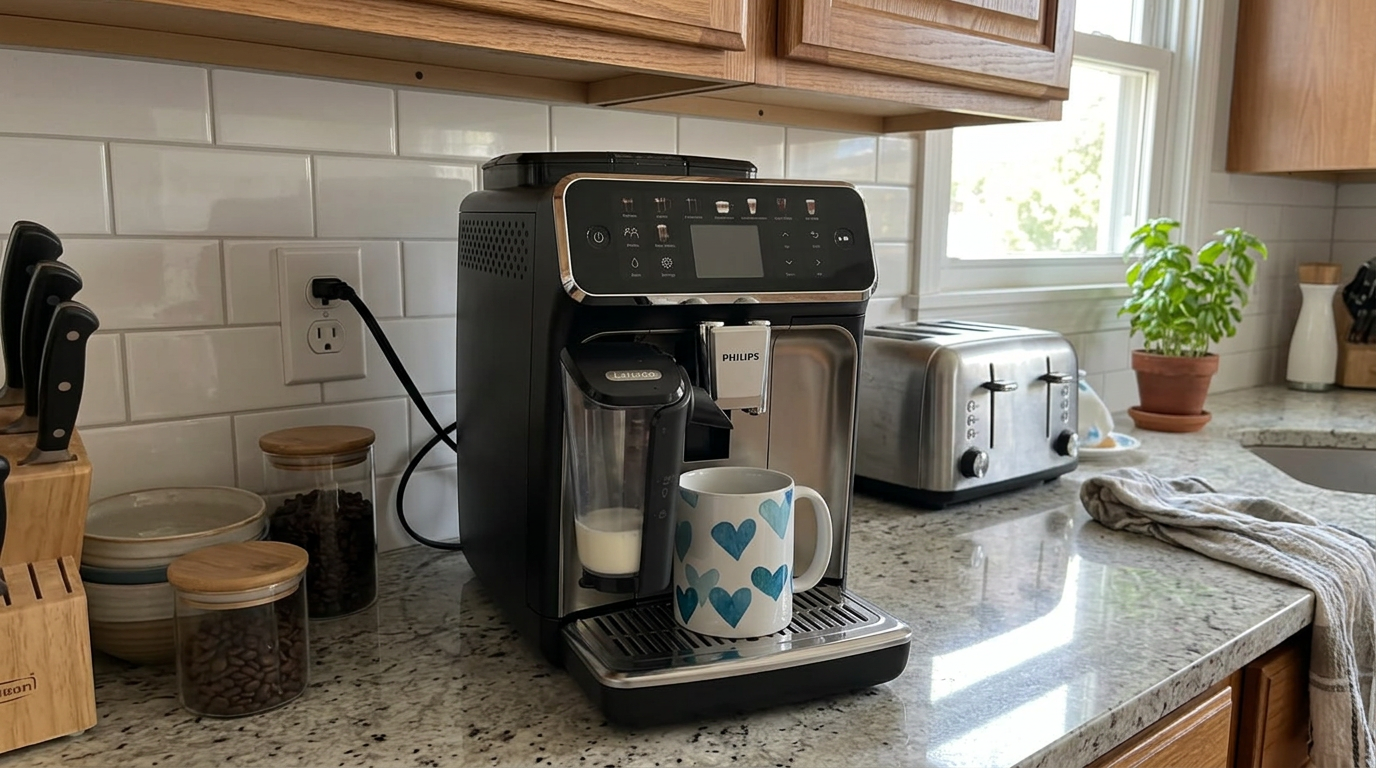
The 5500’s carafe made the hottest, most consistent foam of the three.
Iced drinks on the 5500
Only the 5500 makes iced drinks, and it’s worth understanding how. Instead of true cold brew, it lowers its brewing temperature to about 60°C, or 140°F, compared with about 80°C for hot espresso, then pours over ice.
That made pleasant iced Americanos and iced espressos, but the ice melts and dilutes the drink. I scored the iced drinks 7.0, the lowest of the 5500’s categories.
| On the 5500 | Hot drinks | Iced drinks |
|---|---|---|
| Brew temperature | About 80°C / 176°F | About 60°C / 140°F |
| Dilution | None | Some, from melting ice |
| Milk foam | Thick and airy | Thinner cold foam |
| Best drinks | Cappuccino, flat white, latte macchiato | Iced Americano, iced espresso |
| My tip | Pre-warm the cup | Big ice cubes and Extra Shot |
Our tip: Use big ice cubes for iced drinks on the 5500, because they melt slower and keep the coffee from tasting watery.
Hot water and tea
All three dispense hot water through the same spout as coffee, and all three let you set the amount. For green and white tea, it was perfect straight away.
For black tea, I set the highest temperature on each machine and pre-warmed the mug. It was hot enough for a good cup, though not quite as hot as a kettle at a full boil.
The 4300 and 5500 show the water amount on the display, which made it easy to fill the same mug the same way every time. On the 3200, I adjusted it by holding the button and saving the length.
| Tea type | Ideal water | All three Philips |
|---|---|---|
| Green tea | 158–176°F | Excellent |
| White tea | 167–185°F | Excellent |
| Herbal tea | 194–212°F | Good, highest setting |
| Black tea | 203–212°F | Good, warm the mug first |
Cleaning and upkeep
All three are among the easiest bean-to-cup machines to keep clean. The LatteGo jug has no tubes, the brew group✕Brew groupThe removable part that presses the ground coffee, holds it while water passes through and then ejects the used puck. slides out from the side for a weekly rinse, and the drip tray and jug are dishwasher safe.
The 5500 scored highest for cleaning, at 9.2. Its carafe rinsed clean in about 10 seconds, and it reminded me to do it. The 4300’s lack of a rinse prompt cost it points, because a forgotten jug dries on.
The 4300 and 5500 guide descaling✕DescalingRunning a mild acid through the machine to dissolve the mineral scale that hard water leaves in the heater and pipes. step by step on the display. It takes about 30 minutes, mostly waiting.
Cleaning scores
My scores out of 10 from my single reviews.
With the AquaClean✕AquaCleanPhilips’ water filter. Replace it when the machine asks, and Philips rates it for up to 5,000 cups without descaling. filter fitted and replaced on time, Philips rates all three for up to 5,000 cups without descaling. Without the filter, my rough guide was every month with very hard water, every two to three months with medium water and every three to four with soft water.
| When | All three |
|---|---|
| After milk | Rinse LatteGo under the tap, about 10 seconds |
| Daily | Empty grounds drawer and drip tray |
| Weekly | Rinse the brew group |
| Monthly | Grease the brew group, cleaning tablet |
| When prompted | Replace AquaClean, or descale |
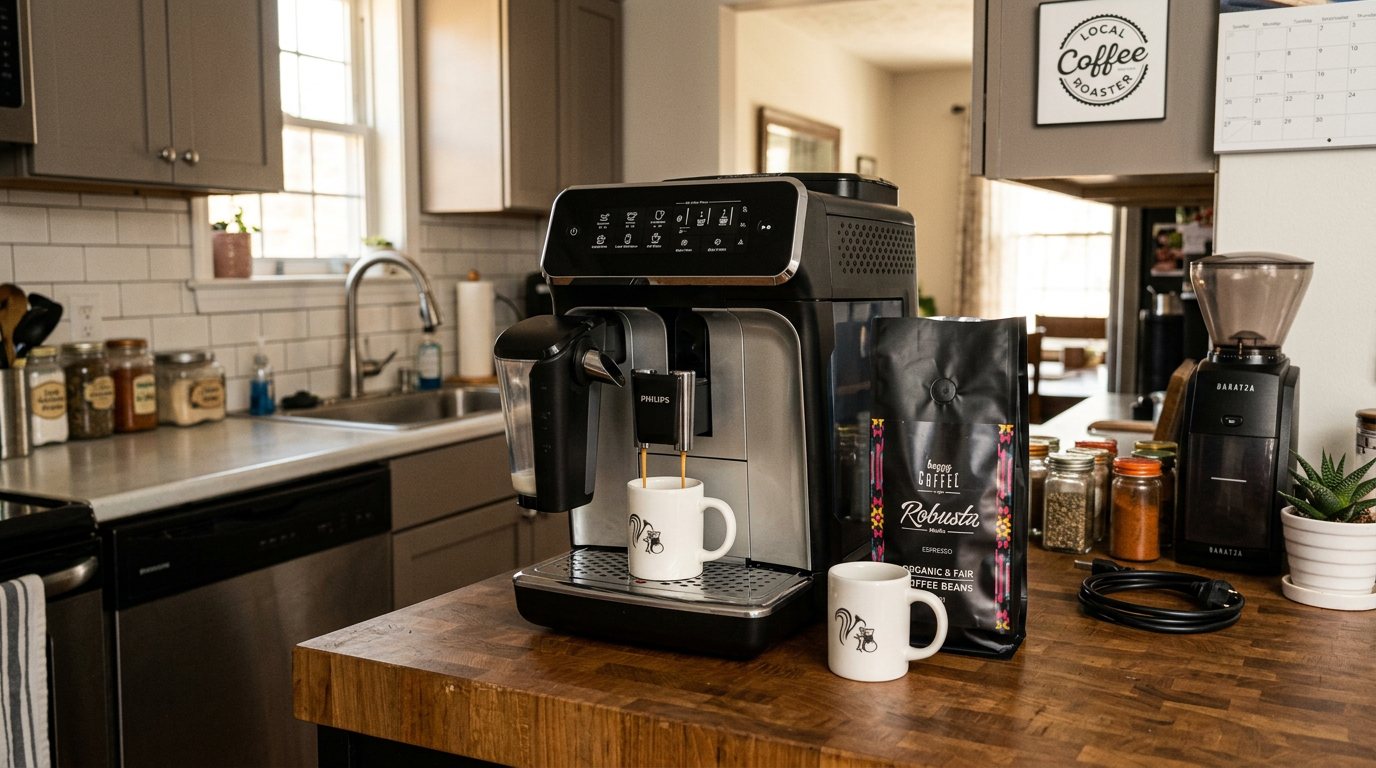
The brew group slides out of all three for a weekly rinse.
Our tip: Rinse the LatteGo jug while the drink is still pouring, because milk that dries on takes minutes to clean instead of seconds.
Noise and speed
The 5500 is the quiet one. With the bean hopper lid closed, grinding peaked at 59 to 60 dB on my meter, about the level of a normal conversation. With the lid off, the same grind jumped to about 71 dB, which shows how much the rubber seal does.
The pump hummed at about 58 dB during extraction and frothing stayed around 60 dB. The 3200 and 4300 were noticeably louder while grinding.
5500 noise, measured
Each 10 dB step sounds roughly twice as loud to the human ear.
The 5500 was also the fastest to get going. Its thermoblock skips the slow warm-up, and it was ready to brew in about 20 to 25 seconds after switching on.
On the 4300, a black coffee from switching on took about 1 minute 56 seconds, and a cappuccino with cleanup about 2 minutes 57 seconds.
Water, beans and supplies
All three share a 1.8-liter tank, about 61 ounces, and a 275-gram bean hopper, so refills come around at the same pace.
Drinks per full tank
Rough maths allowing for rinse water; similar on all three.
Medium and medium-dark blends tasted best on all three, because they give the small dose more flavor. Avoid shiny, oily beans, which build up in the ceramic grinder and chute over time.
Use cold milk straight from the fridge, filled to the line. Warm or skim milk gave me big, loose bubbles on every LatteGo jug.
| Bean type | All three Philips |
|---|---|
| Medium-dark blend | Best all-rounder |
| Medium single origin | Brighter Americanos |
| Light roast | Thin and sour at the default grind |
| Very dark, oily | Avoid |
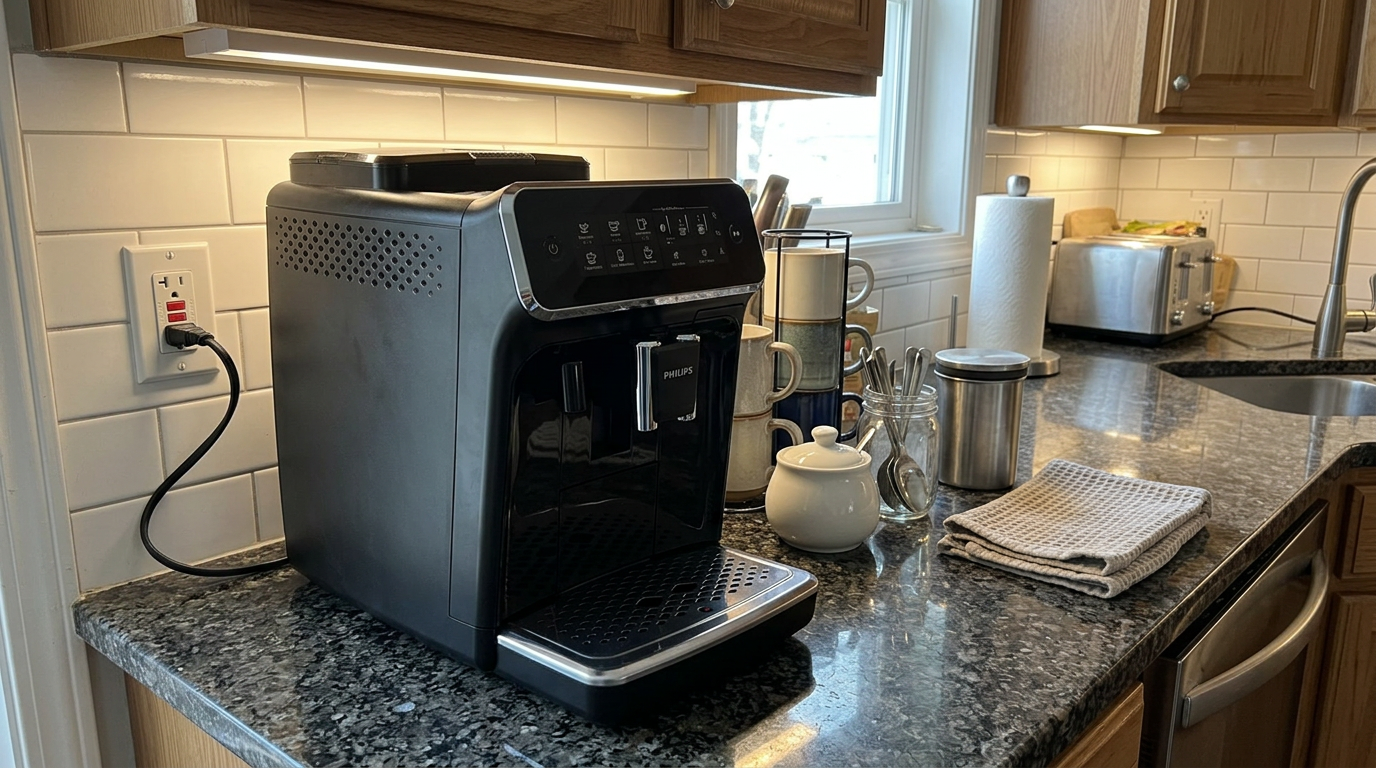
All three share a 275-gram hopper with an Aroma Seal lid.
Four weeks with each, week by week
After a month with each machine, the differences felt bigger than the spec sheets suggest.
| Week | 3200 | 4300 | 5500 |
|---|---|---|---|
| Week 1 | Easy, a bit flat | Fun, a bit messy | Profiles set, quiet mornings |
| Week 2 | Dialed in | Dialed in, ristretto favorite | Iced Americanos most afternoons |
| Week 3 | Smooth routine | Smooth routine | Extra Shot on every cappuccino |
| Week 4 | Reliable, mild coffee | Reliable | Easiest machine to share |
The 3200 settled into a simple routine almost immediately. Five drinks covered everything my household asked for, and nobody missed the extras.
The 4300’s display made exploring fun. Seeing real volumes changed how I adjusted drinks, and its ristretto became my morning espresso.
The 5500 was the machine everyone used without asking me anything. Four profiles, quiet grinding and the fastest milk cleanup made it the easiest to live with.
Our tip: On any Philips, shorten the espresso to about 1 ounce and save it, because a shorter drink tastes noticeably stronger from the same small dose.
Is each upgrade worth it?
Because these three share so much, it helps to look at exactly what each step up adds, and who will notice it.
From the 3200 to the 4300
You gain three drinks, including ristretto and café au lait, two more strength levels, a color display with real volumes, two profiles plus guest and guided descaling.
In daily use, the profiles and real volumes were what I noticed most. My partner and I stopped changing each other’s settings, and adjusting a drink became a matter of reading a number instead of guessing at bars.
What you don’t gain is better milk or stronger milk drinks. The 4300’s cappuccino was only slightly better than the 3200’s, and it has no extra shot.
From the 4300 to the 5500
You gain 12 more drinks, iced options, two more profiles, an Extra Shot for milk drinks, a hotter espresso, quieter grinding and a rinse reminder for the milk carafe.
This step changed more about daily life than the first. The Extra Shot fixed the mild cappuccino, the quiet grinder made early mornings calmer, and four profiles made it a genuine family machine.
Overall score at each step
My overall scores out of 10 from my single reviews.
If you’re choosing between two of them, my rule is simple: skip the middle step only if you know you need iced drinks or more than two profiles. Otherwise, the 4300 is the sensible upgrade from the 3200.
Three households, three picks
After a month with each, I could picture exactly who each machine is for. These are the three households I’d recommend them to.
The couple with simple tastes: Philips 3200
Two people, a latte macchiato and a mug of coffee each morning, maybe an espresso after dinner. The 3200 does all of that at one touch, and its LatteGo jug is just as easy to clean as on the pricier models.
Spending more would buy features this household never touches.
The couple who like to fine-tune: Philips 4300
Two people with different strengths and sizes in mind, who enjoy adjusting drinks and seeing exactly what they changed. The 4300’s real volumes and two profiles were made for this.
Its ristretto also suits anyone who wants the boldest short drink Philips makes.
The busy family: Philips 5500
Three or four people, different drinks, a rushed morning and someone who wants an iced coffee in the afternoon. The 5500’s four profiles, 20 drinks and quiet grinder handled this better than anything else in the range.
It’s also the one I’d recommend for an open-plan home where someone is still asleep at 6 a.m.
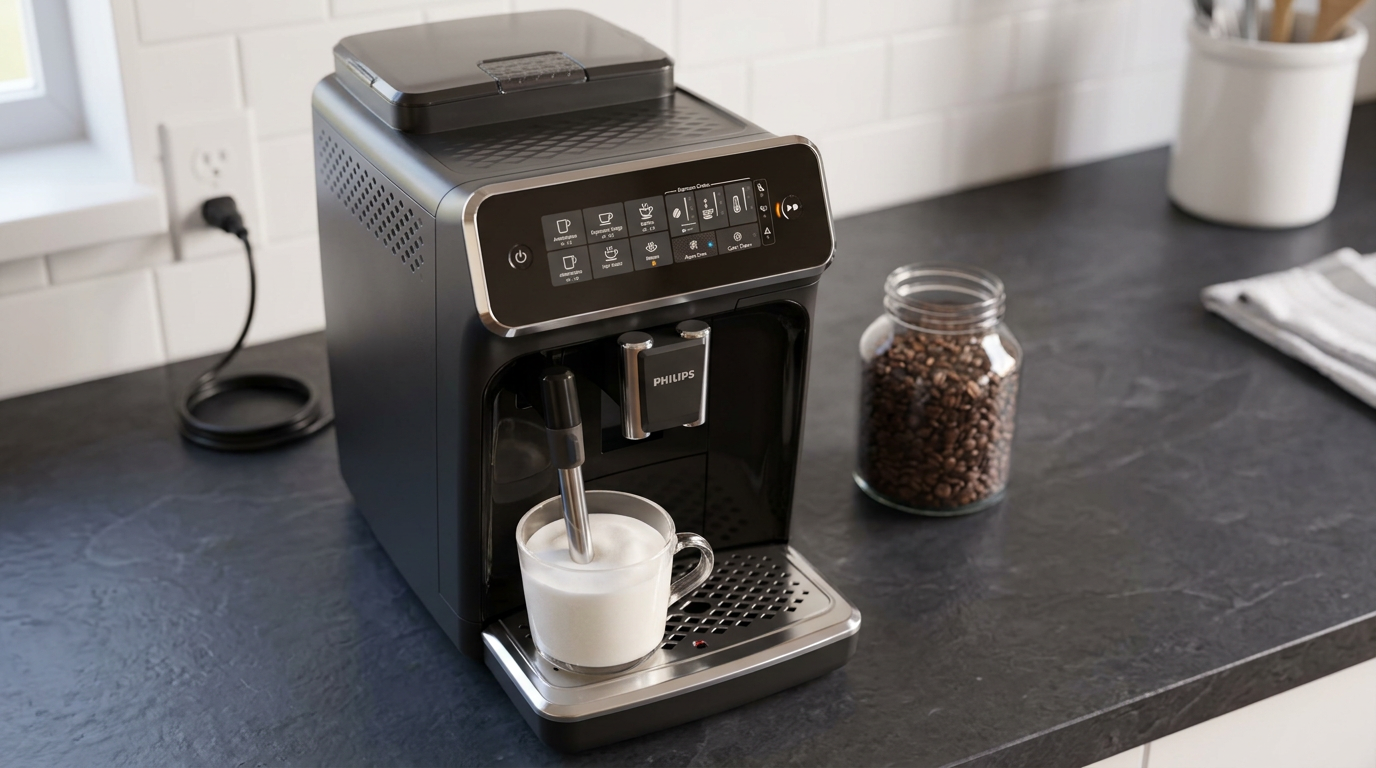
For simple routines, the 3200 does everything a couple needs.
Our tip: Count the drinks your household actually makes in a week before you buy, because most people use fewer than six.
Common mistakes to avoid
These were the habits that cost me the most flavor and the most cleaning time across all three Philips machines.
| Mistake | What happens | Fix |
|---|---|---|
| Leaving the default grind | Light, slightly sour coffee | Two steps finer, while grinding |
| Forgetting to rinse LatteGo | Dried milk, slow cleanup | Rinse right after the drink |
| Grinding with the lid open on the 5500 | About 71 dB instead of 60 | Keep the Aroma Seal lid closed |
| Skipping the brew group rinse | Stale, bitter taste builds up | Rinse it weekly |
| Ignoring the AquaClean prompt | Scale builds, drinks cool down | Replace the filter on time |
The one I made most often was on the 4300: forgetting to rinse the milk jug because nothing reminded me. A sticky note on the machine fixed it in a day.
What I’d change on each one
On the 3200, I’d add a fourth strength level. Its three steps all taste mild, and one stronger option would fix its biggest weakness.
On the 4300, I’d add a milk rinse reminder and an extra shot for cappuccinos. Both exist on the 5500, and both made a real difference in daily use.
On the 5500, I’d add true cold extraction. Its iced drinks are pleasant, but brewing warm over ice will never taste like cold brew.
Real-life scenarios
These are the moments where one machine clearly pulled ahead in my kitchen.
Four profiles meant nobody changed anyone else’s settings.
Two profiles and real volumes covered both of us perfectly.
It makes it at one touch for the least money.
Grinding at about 60 dB with the lid closed didn’t wake anyone.
The only one of the three with iced drinks.
Its ristretto and five strength levels made the boldest short drink.
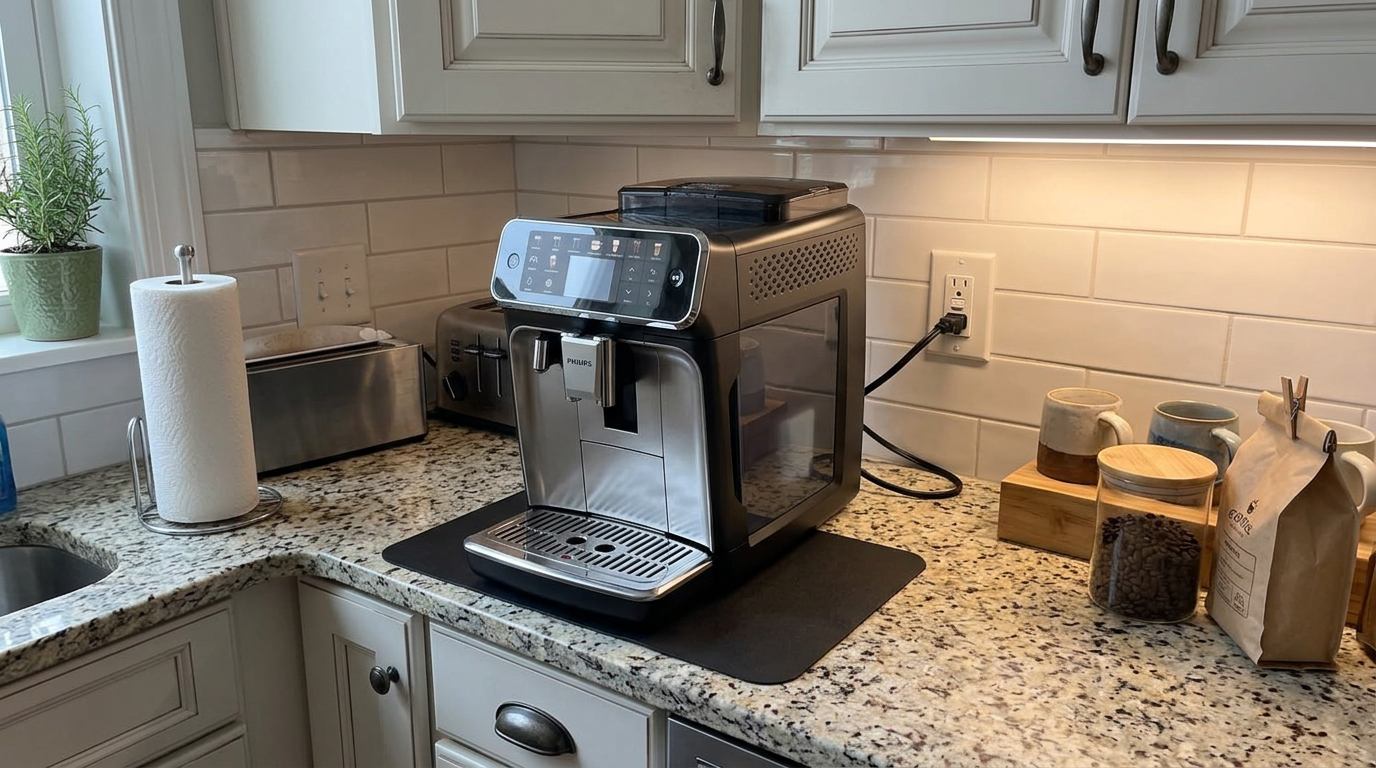
In a busy household, the 5500 was the machine nobody needed help with.
My scorecard
These are my scores out of 10 from my single reviews of each machine.
Philips 3200
Overall: 8.0
Philips 4300
Overall: 8.3
Philips 5500
Overall: 8.5
The 5500 wins every category, which is unusual in a comparison. The question is whether you need what it adds, not whether it’s better.
See How Much You’ll SaveWhich one is right for you?
4 quick questionsWhich one should you buy?
Count the people and count the drinks. One or two people with five favorite drinks are well served by the 3200. Two people who want to fine-tune strength and size should buy the 4300. Three or more people, or anyone who wants iced drinks and quiet mornings, should buy the 5500. If none of these is quite right for you, my guide to the best Philips espresso machines covers the rest of the range I’ve tested.
For a closer two-way look, see my Philips 3200 vs 5500 and Philips 4300 vs 5500 comparisons.
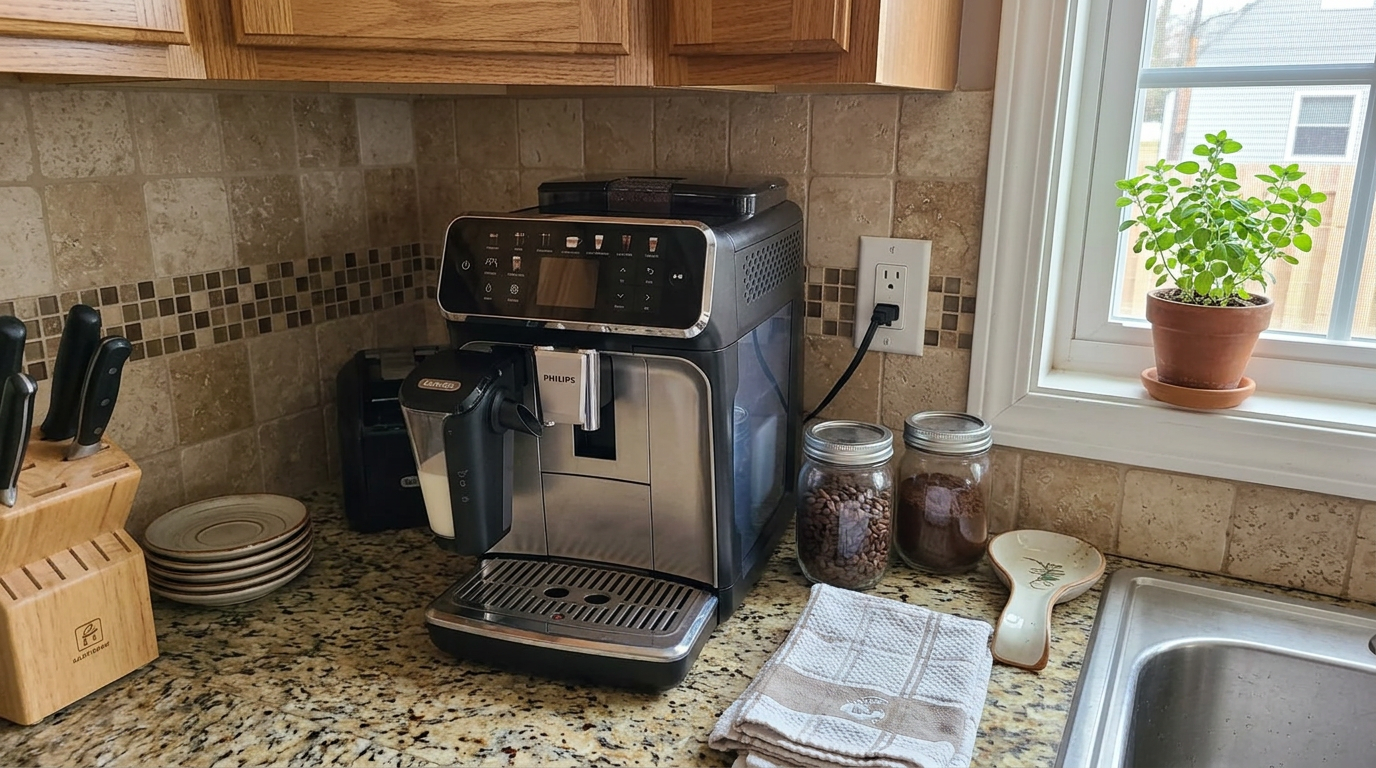
For busy households, the 5500 earns its place on the counter.
- Three or more people share it
- You want iced drinks
- You want the quietest grinder and easiest cleaning
- You want dense, café-style espresso
- You need true cold brew
- Five drinks are all you ever make
- Two people want saved drinks
- You like seeing real volumes
- You want ristretto
- You want an extra shot in cappuccinos
- You make milk drinks in a hurry
- You want iced drinks
- Five drinks cover your routine
- You want the lowest cost
- You want the easiest milk jug
- You need profiles
- You want stronger espresso
- You want a quieter grinder
For most households, my pick is the Philips 5500. It made the best coffee and milk of the three, it’s the quietest and easiest to clean, and four profiles make it the easiest machine to share.
Choose the Philips 4300 if two people want saved favorites and more control, and you don’t need iced drinks. Choose the Philips 3200 if five one-touch drinks are all you need and value matters most.
Whichever you buy, turn the grinder two steps finer, shorten the espresso and rinse the LatteGo jug right after every milk drink.
Philips 3200 vs 4300 vs 5500 specifications
From manufacturer specifications and my own testing.
| Philips 3200 | Philips 4300 | Philips 5500 | |
|---|---|---|---|
| Type | Fully automatic | Fully automatic | Fully automatic |
| One-touch drinks | 5 | 8 | 20, hot and iced |
| Pump | 15 bar | 15 bar | 15 bar |
| Heating | Thermoblock | Thermoblock | Thermoblock, ready in 20–25 s |
| Grinder | Ceramic, 12 settings | Ceramic, 12 settings | Ceramic, 12 settings |
| Strength levels | 3 | 5 | 5, plus Extra Shot |
| Temperature settings | 3 | 3 | 3 |
| Display | Touch icons | Color, real volumes | Color, larger |
| Profiles | None | 2 plus guest | 4 |
| Milk system | LatteGo | LatteGo | LatteGo, 260 ml |
| Water tank | 1.8 L, about 61 oz | 1.8 L, about 61 oz | 1.8 L, about 61 oz |
| Bean hopper | 275 g | 275 g | 275 g |
| Size (W x D x H) | 9.7 x 17 x 14.6 in | 9.6 x 17 x 14.6 in | 9.7 x 17 x 14.6 in |
| Weight | About 17.6 lb | About 17.6 lb | About 17.6 lb |
How I tested and compared them
I used each machine as my everyday coffee maker for four weeks, making every one-touch drink on its menu, with espresso, Americanos, cappuccinos and latte macchiatos every day, plus iced drinks on the 5500.
I measured coffee and milk temperatures with a probe thermometer, espresso strength with a refractometer and noise with a phone meter, timed drinks from switch-on, and foamed whole, semi-skimmed, skim and oat milk.
I ran every cleaning, AquaClean and descaling routine, then compared my notes with Philips’ specifications, owner documentation and published test data.
- Coffee: strength, temperature, body and consistency.
- Milk: foam, temperature and cleanup.
- Workflow: drinks, display, profiles and speed.
- Ownership: cleaning, noise and capacity.
Philips 3200 vs 4300 vs 5500 FAQ
What is the main difference between the Philips 3200, 4300 and 5500?
The drink menu and profiles. The 3200 makes 5 drinks with no profiles, the 4300 makes 8 with two profiles and real volumes on the display, and the 5500 makes 20 hot and iced drinks with four profiles and quieter grinding.
Which Philips makes the best espresso?
The 5500, by a small margin. It brews hottest, at about 176°F on its highest setting, and offers an Extra Shot. All three make mild espresso compared with a café shot.
Do all three use LatteGo?
Yes. All three use the two-part, tube-free LatteGo milk system, and it rinses clean in about 10 seconds on each.
Can the Philips 4300 make iced coffee?
Not at one touch. Only the 5500 has iced drinks, brewed at about 140°F and poured over ice.
Are they the same size?
Almost exactly. All three are about 9.7 inches wide, 17 inches deep and 14.6 inches tall, and weigh about 17.6 pounds.
Which is quietest?
The 5500, at about 60 dB while grinding with the bean lid closed.
Is the 4300 worth it over the 3200?
Yes, if two people want saved drinks or you want ristretto and finer control over strength and volume.
Is the 5500 worth it over the 4300?
Yes, for three or more people, for iced drinks, or for an extra shot in milk drinks.
Do they need descaling?
With the AquaClean filter replaced on time, Philips rates them for up to 5,000 cups without descaling. The 4300 and 5500 guide the process on screen.
Which is easiest to clean?
The 5500, which scored 9.2 for cleaning and reminds you to rinse the milk carafe.

- Our hands-on Philips 3200 Series review
- Our hands-on Philips 4300 Series review
- Our hands-on Philips 5500 Series review
- Philips product specifications and owner documentation
- General espresso brewing and maintenance guidance