Hand Grinder vs Electric Grinder: Grind Quality, Espresso, Convenience and Value
Many people assume great espresso needs an expensive electric grinder. In reality, a well-made hand grinder can match or beat electric grinders that cost far more. I've ground thousands of doses on both. Here's why hand grinders punch above their weight, when electric is worth it, and how roast level decides how much grinder you actually need.
We choose products independently. We may earn a commission through links on this page; your price stays the same. Affiliate policy
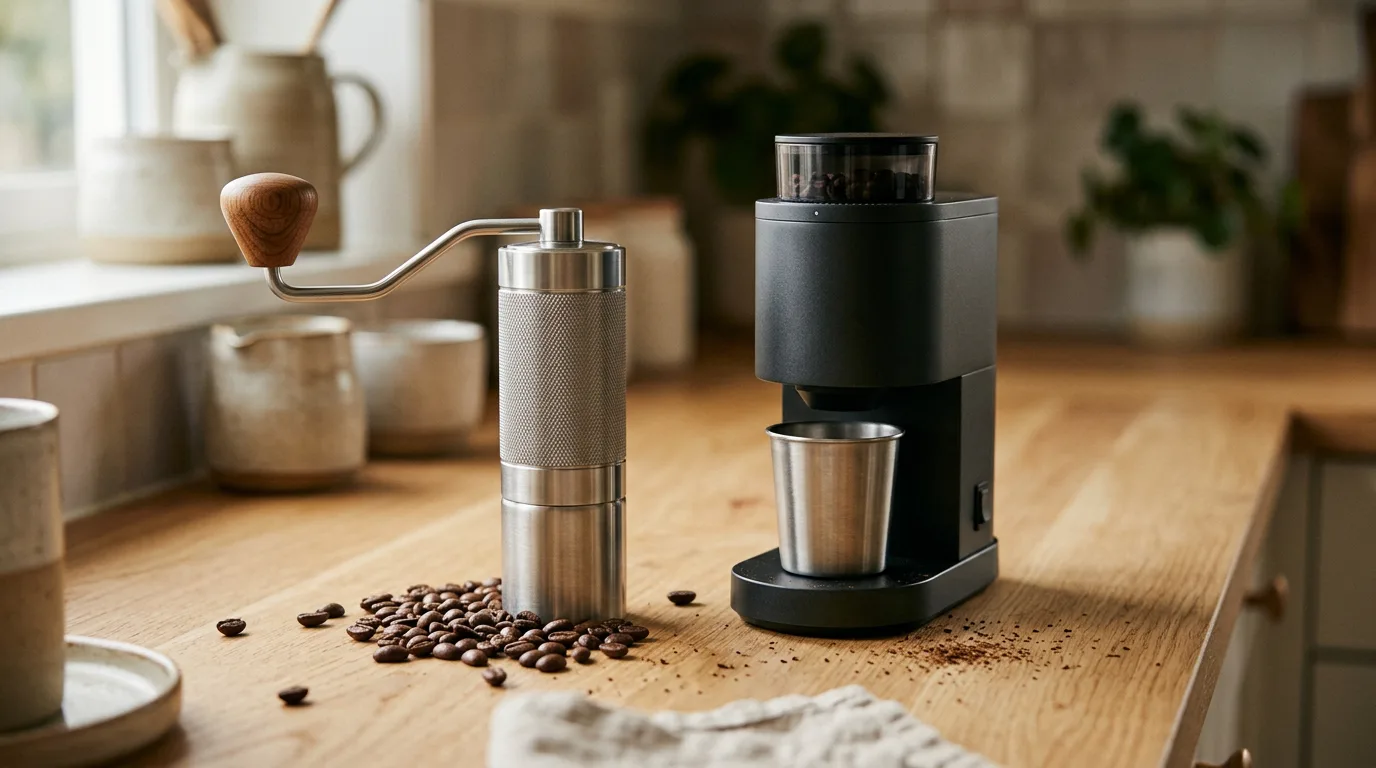
For the money, a good hand grinder gives better grind quality than an electric grinder at the same price, because every bit of the budget goes into burrs and alignment instead of motors and electronics. An electric grinder mostly buys you convenience: speed, no effort and easy repeated dosing. If you drink one or two coffees a day, travel, or are on a budget, a hand grinder is a smart choice. If you make several drinks daily, share the grinder or love light roasts at the highest level, an electric grinder is worth it.
Why I compared them
A grinder matters more than almost any other piece of coffee gear, especially for espresso. So the question of hand vs electric comes up constantly.
There's a persistent belief that top-tier espresso requires a big, expensive electric grinder. After years of using both, I think that belief is half right at best.
For this comparison, I used several hand grinders with conical and flat burrs, a popular entry-level flat-burr electric grinder, a well-known conical single-dose electric grinder, and, for reference, a large high-end flat-burr electric grinder.
I pulled traditional espresso with medium-dark roasts and modern shots with light roasts, and brewed pour-over with each grinder that could handle it. I tasted blind where possible.
I also paid attention to the less glamorous parts of ownership: how easy each grinder was to clean, how much coffee stayed inside, how loud it was at six in the morning and how my wrists felt after a week of light roasts.
Those everyday details often matter more than spec sheets. A grinder you enjoy using is one you will use well, and a grinder that annoys you will end up producing worse coffee simply because you rush it.
The answer depends heavily on what you brew, how much you brew and which roast you love. Let's go through it.
Hand vs electric grinder at a glance
| Feature | Hand grinder | Electric grinder |
|---|---|---|
| Grind quality for the money | Excellent | Good |
| Time per espresso dose | 30-60 seconds of cranking | A few seconds, hands-free |
| Effort | Physical, especially for light roasts | None |
| Multiple drinks in a row | Tiring | Easy |
| Noise | Quiet | Louder |
| Portability | Excellent | Poor |
| Retention | Usually very low | Varies by design |
| Upgrade potential | Limited | Some models accept new burrs |
| Best for | 1-2 drinks a day, budget, travel | Several drinks a day, shared use |
A short history of hand and electric grinders
For most of coffee's history, every grinder was a hand grinder. Ottoman brass mills produced the powder-fine grind for Turkish coffee, and wooden box mills with a crank on top sat in kitchens across Europe and America for generations.
Electric grinders took over in the twentieth century, first in shops and cafés, then in homes. Blade grinders made home grinding cheap and common, while burr grinders gradually came down in price.
The modern hand grinder renaissance started when specialty coffee met travel and home espresso. Makers began building compact, precise grinders with steel burrs and dual bearings that could rival café equipment.
Today, hand grinders aren't the old-fashioned option. Many are among the most precisely engineered grinders you can buy.
Why hand grinders are such good value
The reason comes down to where the money goes when a grinder is built.
No electrical overhead
An electric grinder has to pay for a motor, gearbox, circuit boards, switches, wiring, safety certifications and a sturdy housing to hold it all. Those parts eat a big share of the budget before a single burr is chosen.
Everything goes into precision
A hand grinder at the same production budget can spend almost all of it on what actually affects the grind: high-quality burrs, a rigid body, precise bearings and fine adjustment.
Better alignment
Electric motors introduce vibration, heat and complex mounting. A hand grinder's simple, compact design with bearings top and bottom makes it easier to keep the burrs perfectly centered and parallel, and alignment is one of the biggest factors in grind consistency.
Put simply: at the same price, a hand grinder usually has better burrs and better alignment than an electric one.
What you really pay for with an electric grinder
Moving from a high-end hand grinder to an electric grinder at a similar or even higher price is mostly a purchase of convenience, not better grind quality.
That convenience is real and valuable: no cranking, faster dosing, easy back-to-back drinks and a grinder anyone in the house can use.
Only at the higher end, with large precision flat burrs, do electric grinders start offering grind quality that hand grinders can't match, and mainly for light roasts.
Our tip: Be honest about how many doses you grind a day. One or two doses by hand is pleasant; five or six becomes a workout.
Conical vs flat burrs
Both hand and electric grinders come with either conical or flat burrs, and the burr type often matters more than whether there's a motor.
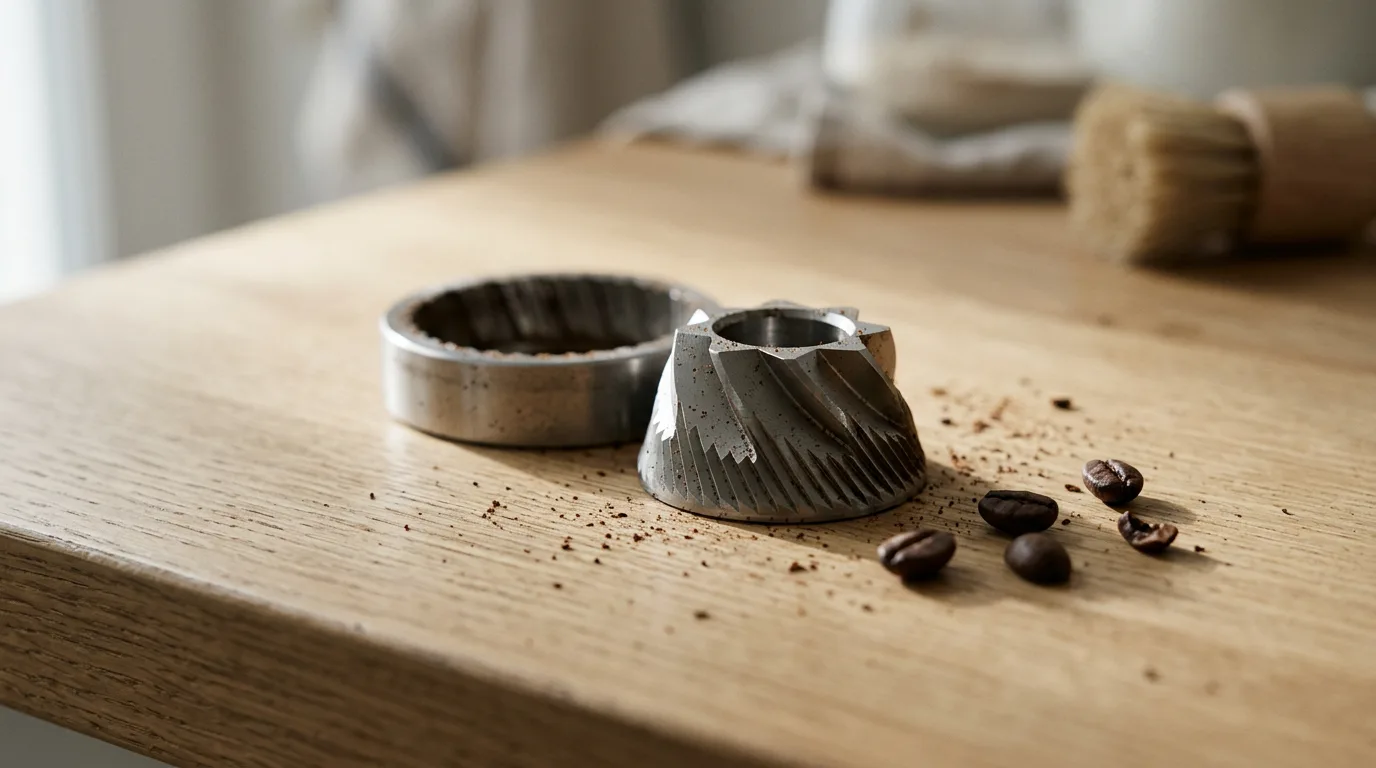
Conical burrs
A cone-shaped inner burr turns inside a ring-shaped outer burr. Conical burrs tend to produce a wider spread of particle sizes, including more fines. In espresso, that usually means heavier body, a thick, syrupy texture and a classic chocolatey profile.
Most hand grinders use conical burrs because they work well at low speeds and fit a compact cylindrical body.
Flat burrs
Two flat, ring-shaped burrs face each other. Flat burrs tend to produce a more uniform grind with fewer fines. In espresso, that usually means more clarity, brighter acidity and more separated flavors, especially with light roasts.
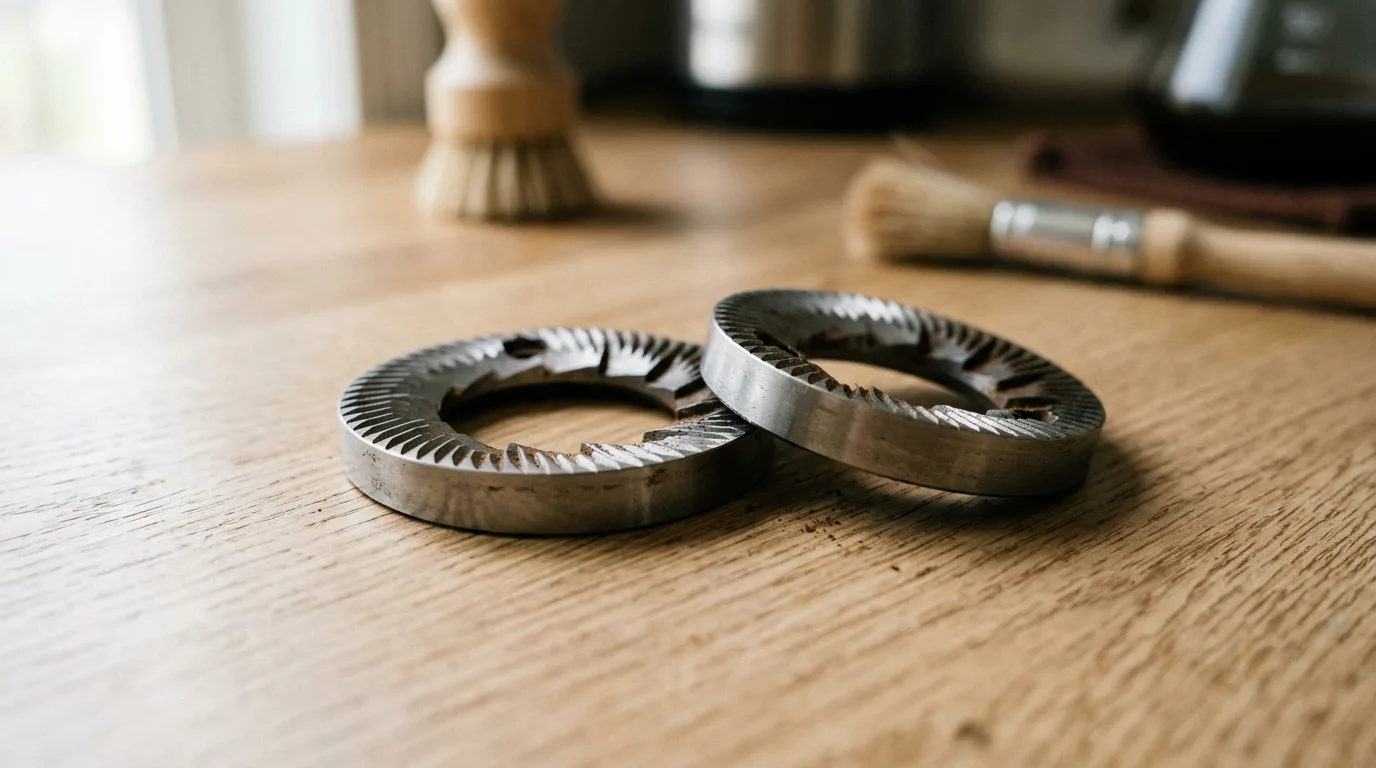
Neither is better. They suit different styles. Conical burrs shine with traditional dark-roast espresso; large flat burrs shine with light roasts and modern recipes.
Espresso styles decide which grinder you need
Modern espresso isn't one thing. The style you pull changes what you need from a grinder.
- Traditional espresso (1:2): medium-dark to dark roasts at standard pressure. The goal is body, sweetness and texture.
- Allongé (around 1:5): a longer shot at a controlled flow, highlighting clarity and acidity in light roasts.
- Turbo shots: fast shots at lower pressure through a coarser bed, for clarity and sweetness with less channeling.
- Low-contact profiles: specialized recipes for ultra-light roasts, often with longer ratios and lower flow.
- Blooming espresso: a very fine grind with a long pre-infusion soak before full pressure.
Conical and traditional espresso burrs excel at the first style. Large, precise flat burrs excel at the modern, light-roast styles. Knowing which end you live at is the key to choosing well.
Notable hand grinders and what they're good at
1Zpresso J-Max
Conical burrs optimized for traditional espresso, with an external adjustment ring and extremely fine steps. It excels at thick, syrupy shots with dark and medium-dark roasts. In my tastings, it gave more mouthfeel than some well-loved electric conical grinders. It's not the right tool for pour-over or bright light-roast espresso.
Kinu M47 series
Heavy-duty conical burrs shared across the range. Built like a tank and designed for rich, sweet traditional espresso, with a slight edge in sweetness and balance. The internal top-mounted adjustment is less convenient if you switch between espresso and filter.
1Zpresso K-Ultra
Versatile conical burrs that bridge espresso and filter. It's the jack-of-all-trades: pleasant body for darker espresso, good clarity for pour-over, and the easiest to travel with. In my tests it edged out some classic hand grinders in cup cleanliness.
Flat-burr hand grinders
A newer category uses flat burrs in a hand grinder. Some, built in small batches by independent makers, deliver exceptional clarity for light roasts. Others use vertical flat burrs and produce rich, full-bodied espresso with a cleaner finish than many conical grinders.
The catch is effort. Grinding light roasts fine enough for espresso through flat burrs by hand can be hard work; some owners even use a cordless drill to turn the crank.
Notable electric grinders and what they're good at
Entry-level flat-burr single-dose grinders
Grinders on the popular 64 mm flat-burr platform, such as the DF64 family and similar models, offer a sturdy metal body and solid stock burrs built for espresso. They're a great value step into electric single dosing.
Their stock burrs create quite a lot of fines at higher speeds, which can make pour-over muddy. A big selling point is the ability to fit aftermarket burrs, but that upgrade path adds cost quickly.
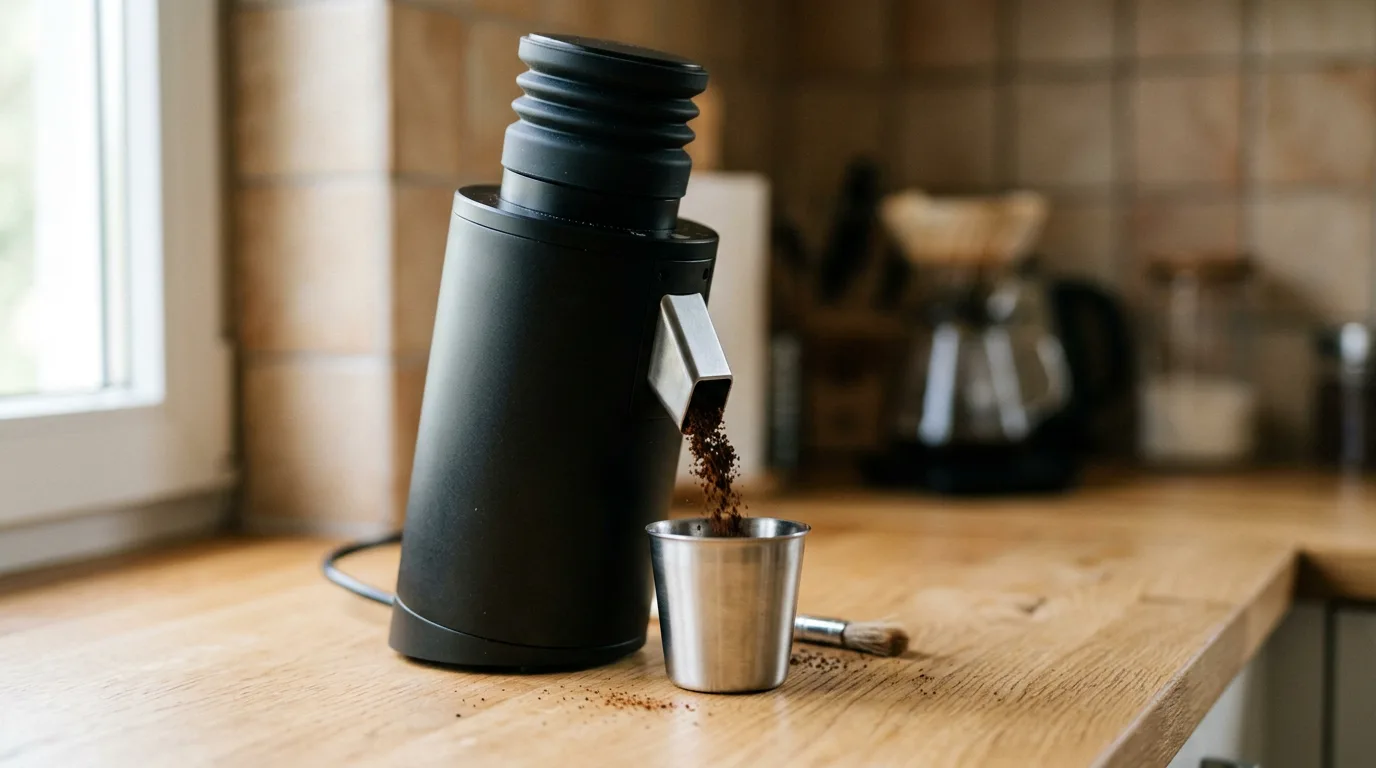
Niche Zero
A 63 mm conical burr grinder that popularized single dosing at home. It's quiet, easy to use and very low in retention. It has a reputation as a "chocolate bomb" for traditional espresso, though in my side-by-side tastings some hand grinders gave smoother texture.
Electric conical and flat grinders for traditional espresso
Hopper-style grinders like the Eureka Mignon Specialita produce rich, full espresso and are convenient for households making several drinks a day.
High-end large flat-burr grinders
At the top, precision-machined grinders with very large flat burrs, like the Kafatek Monolith Max, represent the endgame for light-roast clarity. They're built in small numbers to extremely tight tolerances and priced accordingly.
The dark roast ceiling
Understanding where diminishing returns kick in is the most useful thing you can know when budgeting for a grinder.
If you mostly drink medium-dark to dark roasts at a traditional 1:2 ratio, cup quality peaks early. A good hand grinder or a solid mid-range electric grinder gets you close to the ceiling.
The reasons are physical:
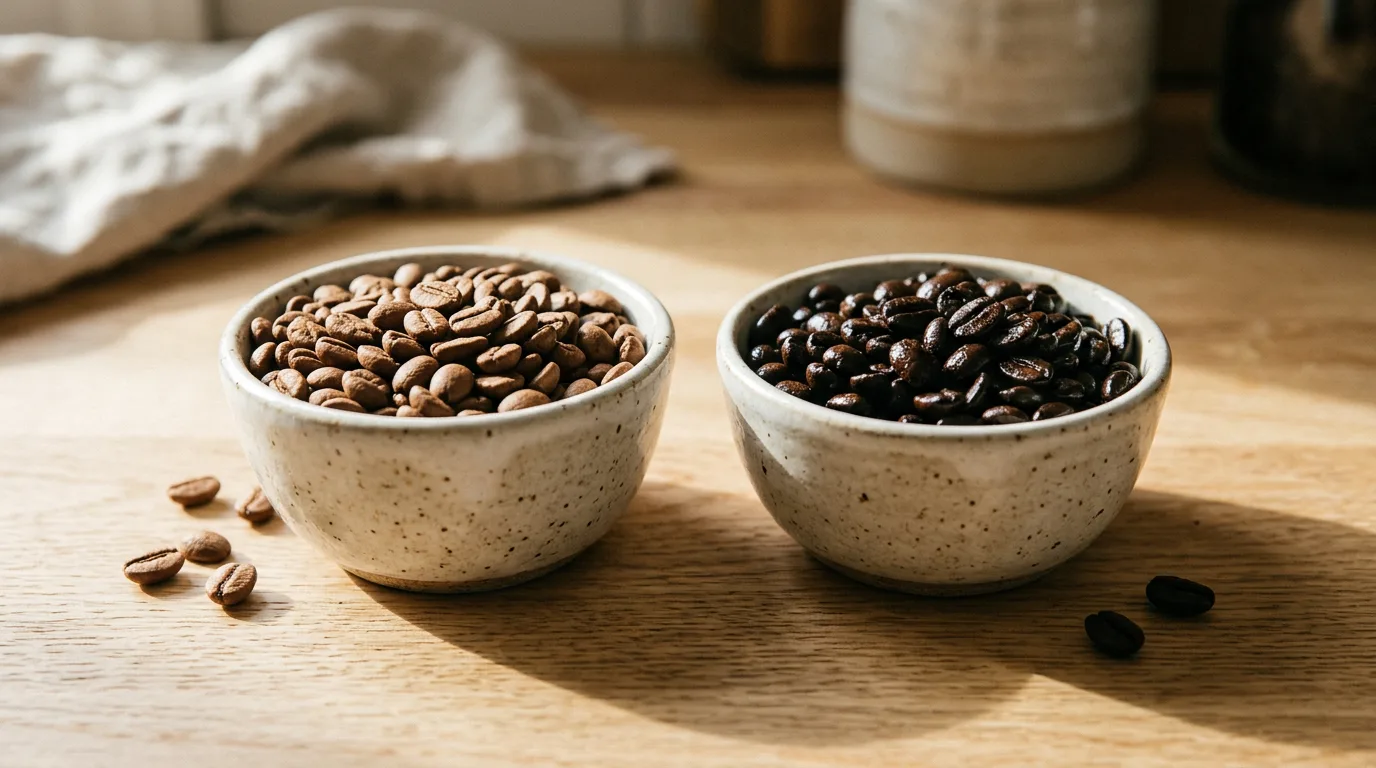
- Brittle beans. Dark roasting breaks down the bean's structure, making it very brittle.
- Unavoidable fines. Brittle beans shatter in any grinder, producing lots of fines regardless of burr quality.
- Forgiving extraction. Those fines add heavy body and syrupy texture, and the short ratio hides small differences.
In blind tastings with a dark roast, I genuinely struggled to tell a good hand grinder from an electric grinder several times its price.
The light roast frontier
Light roasts are where grinders separate. If you love light and ultra-light roasts and modern shots like turbos, allongés and blooming espresso, larger and better burrs do make a real difference.
Some manufacturers suggest big burrs only add speed and throughput. My experience says otherwise, for three reasons:
- More cutting surfaceLarge burrs have far more cutting area, so beans are broken down more gradually and evenly.
- Less crowdingIn small burr chambers, grounds pile up and rub against each other, creating extra fines and heat. Bigger chambers reduce these traffic jams.
- Better control with dense beansLight roasts are hard and less brittle. Precise, large flat burrs cut them cleanly rather than shattering them, giving more uniform particles and more clarity.
In practice, light-roast espresso from a large flat-burr electric grinder tasted clearer, sweeter and more layered than from any hand grinder I used, except the best flat-burr hand grinders, which came surprisingly close.
What my blind tastings showed
I set up simple blind tastings at home: the same beans, the same machine, the same recipe, with only the grinder changing. A friend prepared the cups so I didn't know which was which.
With a medium-dark espresso blend at a 1:2 ratio, a conical espresso hand grinder and a popular electric conical grinder were almost impossible to separate. If anything, the hand grinder gave a slightly smoother, more syrupy texture.
With the same blend, an entry-level electric flat-burr grinder produced a slightly brighter, less heavy shot. Some tasters preferred it, others didn't. The differences were small.
With a light-roast washed Ethiopian, things changed. The large flat-burr electric grinder produced a clearly sweeter, more floral and more layered shot. The versatile hand grinder came second, and the traditional espresso hand grinder made a heavier, muddier cup that hid the coffee's character.
For pour-over, the versatile hand grinder and the filter-capable electric grinder were very close. The espresso-focused grinders both made noticeably muddier filter coffee.
The pattern matched what I expected from the physics: for dark roasts, grinder quality plateaus early; for light roasts, burr size and precision really matter.
Effort and speed
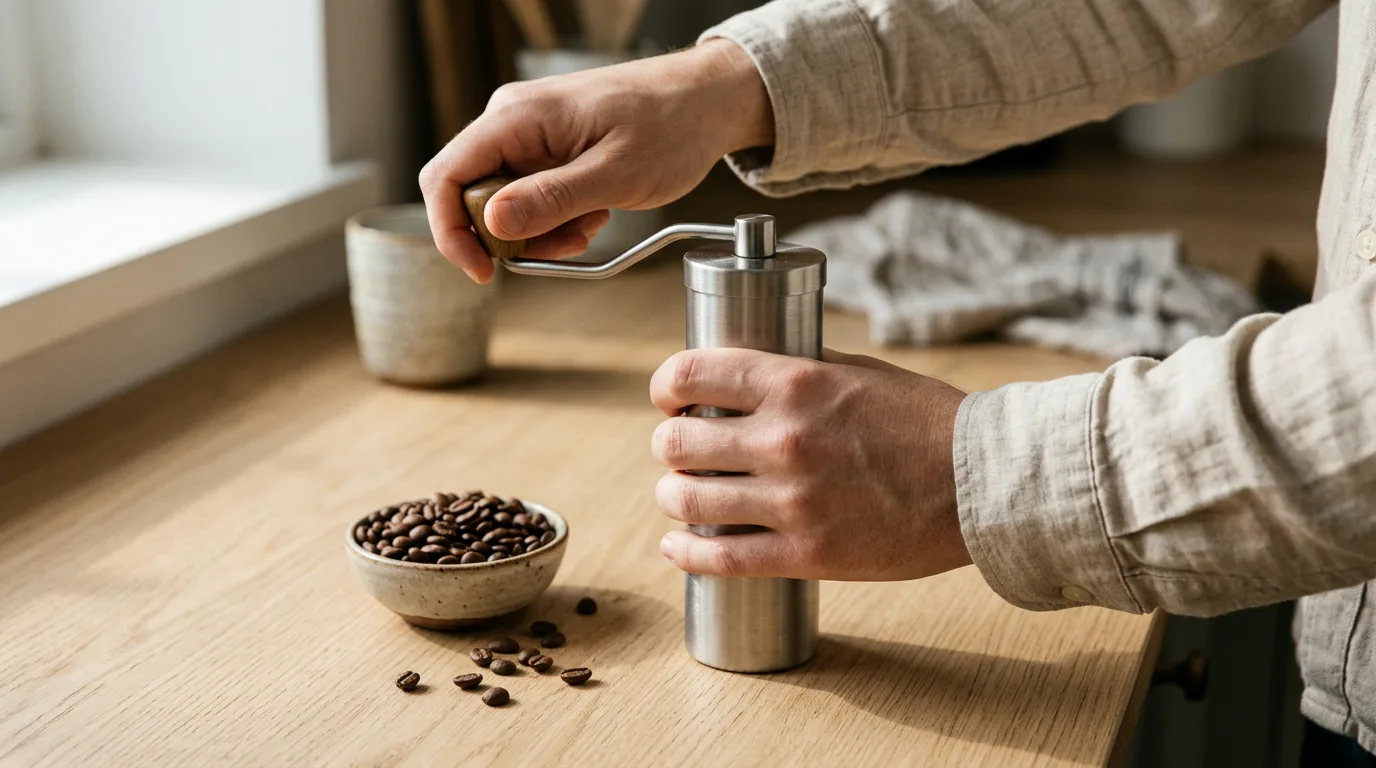
This is the biggest practical difference. Hand grinding an espresso dose takes about 30 to 60 seconds of steady cranking, depending on the grinder, the bean and how fine you go.
Medium and dark roasts grind easily. Light roasts are denser and noticeably harder work, especially at espresso fineness.
An electric grinder does the same job in a few seconds while you prepare the portafilter or steam milk.
My experience grinding one espresso dose
For one morning espresso, I genuinely enjoyed hand grinding. For four cappuccinos when friends visited, I always reached for the electric.
A morning with each grinder
Hand grinder routine
- Weigh the beansMeasure your dose, for example 18 grams, straight into the grinder.
- Mist the beansA tiny spritz of water cuts static.
- GrindBrace the grinder against your body or the counter and crank steadily for 30 to 60 seconds.
- Tip into the portafilterTap the catch cup, distribute and tamp.
Electric grinder routine
- Weigh and loadDrop your dose into the single-dose hopper, or use the timer on a hopper grinder.
- Press startGrind for a few seconds while you do something else.
- Clear the chutePuff the bellows or tap the grinder to release the last grounds.
- Dose and tampDistribute and tamp as usual.
The difference is small for one drink and large for several. That's really the whole story of hand vs electric in daily life.
Hand grinding technique that saves effort
Hand grinding gets much easier with a few simple techniques. These made the biggest difference for me.
- Brace the grinder. Hold it against your chest or rest the base on the counter so your arms don't fight each other.
- Use your whole arm. Turn from the shoulder and elbow, not just the wrist.
- Find a steady rhythm. A smooth, moderate pace is less tiring and gives a more consistent grind than fast bursts.
- Switch hands. Alternate which hand cranks and which holds, especially for light roasts.
- Start the beans first. The first few turns, when beans are whole, are the hardest; once they break, it gets easier.
- Keep the grinder clean. Built-up grounds add friction and make every turn harder.
After a couple of weeks, grinding a dose becomes as automatic as stirring a cup of tea. Many people, me included, come to enjoy the quiet minute it gives the morning.
If you share a home with light sleepers, it is also the only way to grind fresh coffee at six in the morning without waking anyone up.
Adjustment and switching between methods
Good hand grinders often have very fine adjustment steps, sometimes just a few microns each, which is ideal for dialing in espresso.
External adjustment rings, where you turn a dial under the handle, are quick and easy to read. Internal adjustments, where you remove the handle and turn a dial on top, are more fiddly to change and track.
If you switch between espresso and pour-over every day, look for a grinder with a clear numbered scale and enough range to cover both. Some hand grinders do this beautifully; many electric espresso grinders don't go coarse enough for filter without a lot of turning.
Our tip: Note your espresso and filter settings on a small sticker inside a cupboard door. Switching becomes instant and you won't lose your place.
What to look for in a hand grinder
- Burr quality and type. Steel burrs designed for your main brewing style.
- Dual bearings. Bearings at both ends of the shaft keep the burrs stable and aligned.
- Adjustment. Fine steps for espresso, a readable scale and an external ring if you switch methods.
- Grip and size. A body you can hold comfortably; textured grips help a lot.
- Handle length. Longer handles give more leverage for light roasts.
- Capacity. Enough for your typical dose, ideally a double espresso or a large pour-over.
- Catch cup fit. Magnetic or threaded catch cups that don't loosen while grinding.
- Ease of cleaning. Tool-free disassembly is a real convenience.
The best hand grinders feel smooth and solid, with no wobble in the crank. If a grinder feels loose in the store, it'll grind unevenly at home.
Retention and single dosing
Hand grinders are naturally single-dose tools. You weigh the beans, grind them all and get almost exactly the same weight out. Retention is usually near zero.
Electric grinders vary a lot. Hopper grinders keep beans on top and can hold several grams inside. Single-dose electric grinders are designed for low retention, often helped by a bellows you press to puff out the last grounds.
Low retention means fresher coffee in every dose and easy switching between beans, which is especially nice if you drink decaf in the afternoon or rotate several coffees.
What to look for in an electric grinder
- Burr size and type. Larger flat burrs for clarity, conical for body; match it to your roast.
- Low retention. Especially if you switch beans often.
- Adjustment. Stepless or micro-stepped for espresso.
- Motor speed. Some grinders let you vary speed; slower often means fewer fines for filter.
- Noise. Low-speed motors are noticeably quieter.
- Build and alignment. A rigid, well-machined burr carrier matters more than burr size.
- Footprint. Check height under cabinets, especially with a bellows or hopper.
Our tip: If you're torn between two electric grinders, choose the one known for good alignment and low retention over the one with bigger burrs.
What about filter coffee?
For pour-over and other filter methods, the picture changes a little. Filter coffee is very sensitive to fines, which muddy the cup and reduce clarity.
Grinders tuned for traditional espresso, both hand and electric, can produce too many fines for great filter coffee. Versatile hand grinders built for filter, or flat-burr grinders with filter-oriented burrs, do much better.
Some entry-level electric flat-burr grinders running at high speed with stock espresso burrs also struggle here. If filter is a big part of your routine, check that the grinder is good at it before buying.
If you're choosing a brewer too, my pour-over vs drip coffee comparison may help.
Hand grinding for every brewing method
How hard hand grinding feels depends a lot on the method.
- Espresso: the finest grind and the most effort, especially with light roasts. Expect 30 to 60 seconds per dose.
- Moka pot: slightly coarser than espresso, so a little easier.
- AeroPress and pour-over: medium-fine to medium grinds go quickly, often in 20 to 30 seconds.
- French press: a coarse grind is very easy by hand, but a large dose for several people takes a while.
- Cold brew: big batches of coarse coffee are where hand grinding gets tedious; an electric grinder or pre-ground from a good roaster is more practical.
If you mostly brew small cups of filter coffee, hand grinding is quick and easy. If you make big batches, an electric grinder saves a lot of effort. My guide to coffee grind size lists the right grind for each brewer.
Travel and small spaces
Hand grinders win easily here. They're compact, need no power and fit in a bag or drawer.
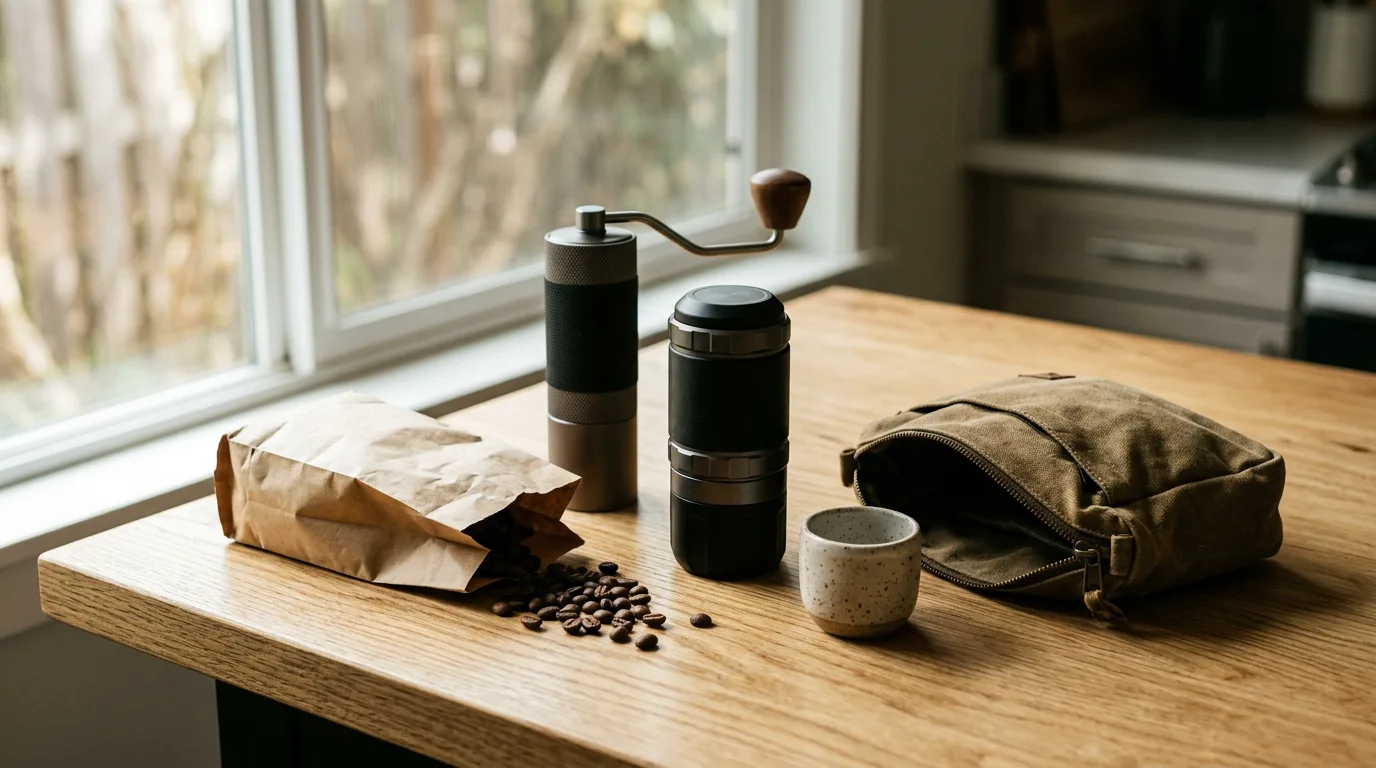
I've taken a hand grinder on holidays, to cabins without reliable power and to the office. Paired with a portable brewer, it means great coffee anywhere.
In a small kitchen, a hand grinder can live in a cupboard, while an electric grinder needs permanent counter space and a socket.
Noise, mess and cleaning
Hand grinders are quiet: a soft crunch rather than a whine. That's a big plus if you get up before the rest of the household.
Electric grinders range from fairly quiet low-speed conical designs to loud high-speed flat burrs. None are silent.
Static and mess affect both. A drop of water on the beans before grinding (often called RDT) reduces static and keeps grounds from clinging and spraying.
Cleaning is simple for both: brush out the burrs regularly, and occasionally take them apart for a deeper clean. Hand grinders are usually quicker to disassemble.
Our tip: Never wash burrs in water unless the manufacturer says it's fine. A dry brush and a blower are usually all you need.
Pairing your grinder with your machine
Your grinder should match the rest of your setup. A grinder that's far better or far worse than your machine wastes money one way or the other.
With an entry-level espresso machine that uses pressurized baskets, an expensive grinder adds little, because the basket creates the resistance rather than the grind. A capable hand grinder is more than enough.
With a mid-range machine and standard baskets, grind quality starts to matter a lot. This is where a good hand grinder or a solid electric single-doser shines.
With a high-end machine with temperature and flow control, you're probably chasing nuance, often with lighter roasts. That's when a larger flat-burr grinder starts to earn its place.
If you're still choosing a machine, my guide to espresso machine types and my comparison of super-automatic vs semi-automatic machines may help.
Alignment matters more than size
Burr alignment means how perfectly centered and parallel the two burrs are. Even small misalignment makes particle sizes uneven, which affects flavor.
As burrs get bigger, alignment becomes even more critical. A large, poorly aligned burr set can perform worse than a small, perfectly aligned one.
This is one more reason good hand grinders do so well. Their small, rigid construction makes precise alignment easier to achieve and maintain.
Durability and long-term cost
Hand grinders are simple machines with few parts to fail. With occasional cleaning, a well-made one can last for many years. The main wear item is the burr set, which lasts a very long time at home volumes.
Electric grinders add motors, switches and electronics. Good ones are durable too, but there's more that can go wrong, and repairs can be more involved.
Upgrade paths differ. Some electric grinders accept aftermarket burrs, which is exciting but expensive; it's easy to end up spending far more than you planned. Hand grinders are mostly what you buy, which keeps costs predictable.
Resale value is good for well-known models of both types, so a careful purchase is rarely a total loss if your needs change.
Tips for better grinding with either type
- Weigh every dose. Volume scoops vary too much for espresso.
- Use a drop of water. A light spritz on the beans reduces static and mess.
- Grind just before brewing. Ground coffee loses aroma within minutes.
- Keep a steady pace by hand. Even cranking gives a more consistent grind than bursts of speed.
- Clean regularly. Old oils and grounds go rancid and affect flavor.
- Write down settings. One line per coffee saves a lot of dialing in.
These small habits matter as much as the grinder itself. With them, even a modest grinder performs above its price.
They also make it much easier to compare grinders fairly. If you ever upgrade, keep the same habits and the same recipe for a week, so you can taste what the new grinder really changes rather than what your routine changed.
Beans come first
No grinder, however expensive, can fix stale, low-quality or poorly roasted coffee. In fact, the best grinders reveal flaws more clearly.
Before spending big on a grinder, make sure you're buying fresh, well-roasted beans from a roaster that prints the roast date. My guide on how to choose coffee beans covers what to look for.
A good hand grinder with excellent beans will beat an endgame grinder with mediocre beans every time.
Why many coffee lovers own both
After years of switching between them, I've settled on owning both, and I know plenty of home baristas who do the same.
The electric grinder handles busy mornings, guests and back-to-back milk drinks. The hand grinder handles travel, decaf or a second coffee without re-dialing the main grinder, and quiet early mornings.
If you start with a hand grinder, it never becomes useless when you add an electric one. It just becomes your travel and backup grinder. That makes a hand grinder a low-risk first purchase.
Real-world scenarios
The single espresso drinker
One or two shots a day, mostly medium or darker roasts. A conical espresso hand grinder gives café-level shots for a fraction of the cost of a comparable electric grinder.
The couple who love cappuccinos
Two milk drinks every morning, maybe more on weekends. Hand grinding two doses is fine for most people, but a mid-range electric grinder makes mornings smoother.
The busy family
Several drinks a day, made by different people. An electric grinder, ideally a low-retention one, is the practical choice.
The traveler
Coffee on the road, in hotels or at a cabin. A versatile hand grinder that handles both espresso and filter is the obvious pick.
The light roast enthusiast
Buys bright single origins and experiments with modern espresso. A flat-burr hand grinder is the budget route to clarity; a large precision flat-burr electric grinder is the endgame.
Anyone with wrist or hand discomfort
If gripping and turning is uncomfortable, choose an electric grinder. No grind quality is worth daily pain.
Which should you buy?
Choose a hand grinder if
- You make one or two espressos or filter coffees a day.
- You want the best grind quality for your budget.
- You travel, or have limited counter space.
- You mostly drink traditional, darker espresso.
- You like a quiet, hands-on routine.
Choose an electric grinder if
- You make several drinks a day, or for several people.
- Others in your home will use the grinder.
- Grinding by hand is uncomfortable for you.
- You want top-level light-roast clarity and are ready to invest in large flat burrs.
Grinder glossary
Common mistakes
- Spending on the machine and skimping on the grinder. The grinder shapes the cup more.
- Buying a huge grinder for dark roasts. Returns diminish early for traditional espresso.
- Buying an espresso-only grinder for mostly filter coffee. Too many fines muddy filter cups.
- Underestimating hand-grinding effort. Light roasts at espresso fineness take real work.
- Chasing burr upgrades too soon. Learn the grinder first; upgrades add up quickly.
- Ignoring bean quality. Better beans improve the cup more than a better grinder.
Myths
"Hand grinders can't do espresso"
Good espresso-focused hand grinders produce excellent espresso, often better than electric grinders at the same price.
"Bigger burrs only grind faster"
For light roasts, larger precise burrs genuinely improve clarity and uniformity, not just speed.
"Electric always means better"
Electric means more convenient. Better depends on burrs, alignment and what you brew.
"An expensive grinder fixes cheap beans"
It does the opposite: it makes their flaws easier to taste.
The verdict
For most home baristas who drink one or two coffees a day, a high-quality hand grinder is the best value in coffee. It gives grind quality that rivals much more expensive electric grinders, especially for traditional espresso.
An electric grinder is worth it when convenience matters: several drinks a day, a shared kitchen, or a physical reason to avoid cranking. And at the very top, large precision flat-burr electric grinders are the best tools for light-roast clarity.
If you are new to espresso, I would start with a good hand grinder almost every time. It costs less, teaches you what grind changes do, and never becomes useless, even if you later add an electric grinder for convenience.
Decide what you brew, how much you brew and which roast you love. Then put your money where it actually improves your cup.
Frequently asked questions
Is a hand grinder good enough for espresso?
Yes. Espresso-focused hand grinders produce excellent espresso, often better than electric grinders at a similar price.
How long does it take to hand grind for espresso?
About 30 to 60 seconds per dose, longer for light roasts.
Why are hand grinders better value?
No motor or electronics, so the budget goes into burrs, bearings and alignment.
Conical or flat burrs?
Conical burrs favor body and texture; flat burrs favor clarity. Both can be excellent.
Do I need an expensive grinder for dark roasts?
No. Quality peaks early for dark roasts; a good hand or mid-range electric grinder is enough.
Can one grinder do espresso and pour-over?
Some versatile grinders do both well. Espresso-focused grinders often make muddy filter coffee.
Are electric grinders loud?
Some are; low-speed conical grinders are quieter. Hand grinders are the quietest.
What is single dosing?
Weighing and grinding just the beans for one drink, with very little coffee left inside the grinder.

- Michael Reynolds, years of grinding with manual and electric grinders
- Burr mill, Wikipedia
- Coffee grinder, Wikipedia
- Coffee roasting, Wikipedia
Related guides
Coffee grind size explained Burr vs blade grinder Coffee roast levels explainedWritten by Michael Reynolds. Last updated November 20, 2026.