Gaggia vs De'Longhi: which Italian super-automatic brand should you buy?
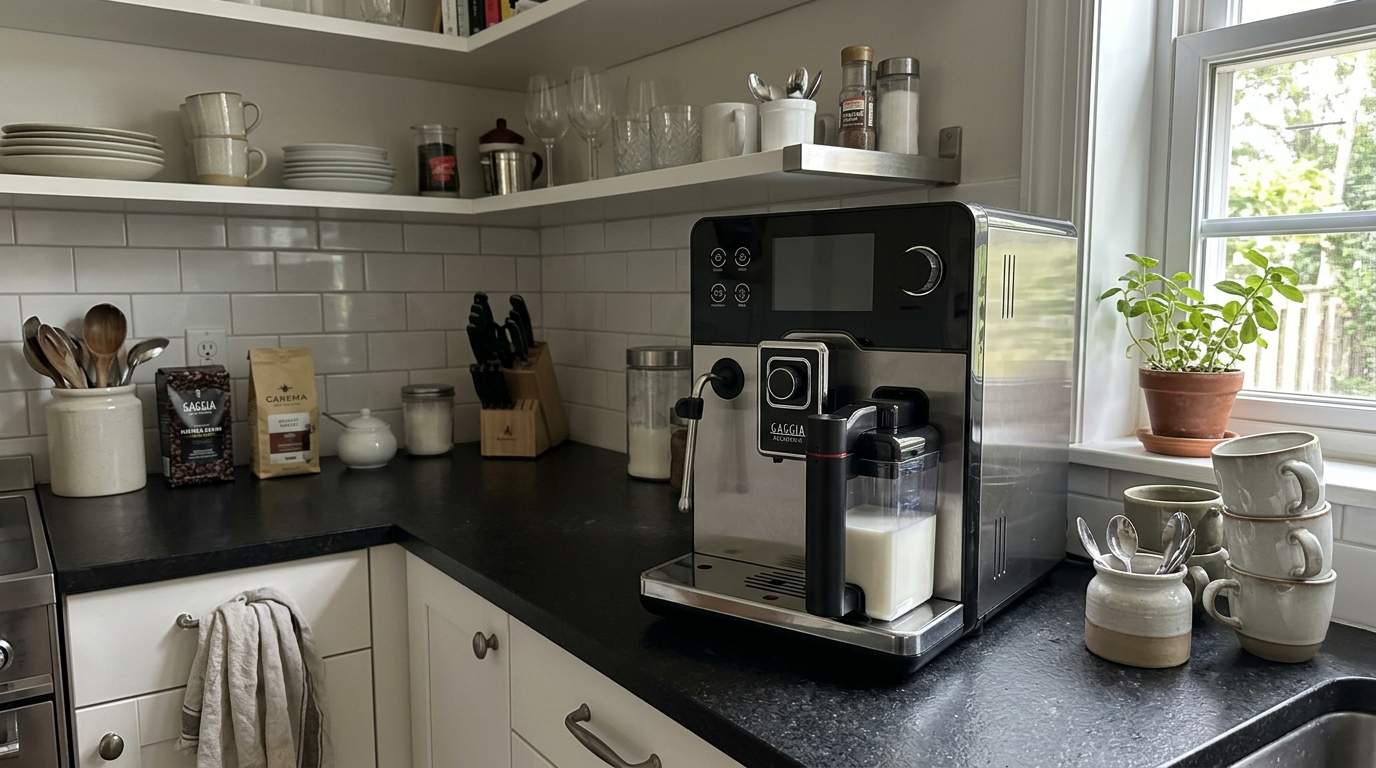
Gaggia and De'Longhi are the two Italian names you will see most often when you shop for a bean-to-cup machine, and their ranges overlap almost model for model. I tested six Gaggia machines and seven De'Longhi machines for four weeks each, from the simplest steam-wand models to the flagships. This comparison pulls the data together: how each brand makes espresso, handles milk, uses space and asks to be cleaned, plus the two machines from each brand I would actually buy, from the Gaggia Magenta Prestige and Gaggia Accademia to the De'Longhi Magnifica Evo and De'Longhi Eletta Explore.
We choose products independently. We may earn a commission through links on this page; your price stays the same. Affiliate policy
Jargon helpNew to espresso? Tap any dotted term to see what it means.
In this comparison
For most households, De'Longhi is the safer brand to buy. Its machines dose more coffee per shot, its LatteCrema milk is consistent across the range, and it offers things Gaggia simply doesn't, like cold brew, cold foam and swappable bean hoppers. Start with the De'Longhi Magnifica Evo, or the Eletta Explore if you want iced drinks. Gaggia is the better brand if you want a very slim machine, a true Americano, a proper steam wand or the most refined flagship I tested. The Gaggia Magenta Prestige is the one I'd recommend to most people, and the Gaggia Accademia made the best coffee and milk of either brand.
Two machines from each brand
Specs checked November 14, 2026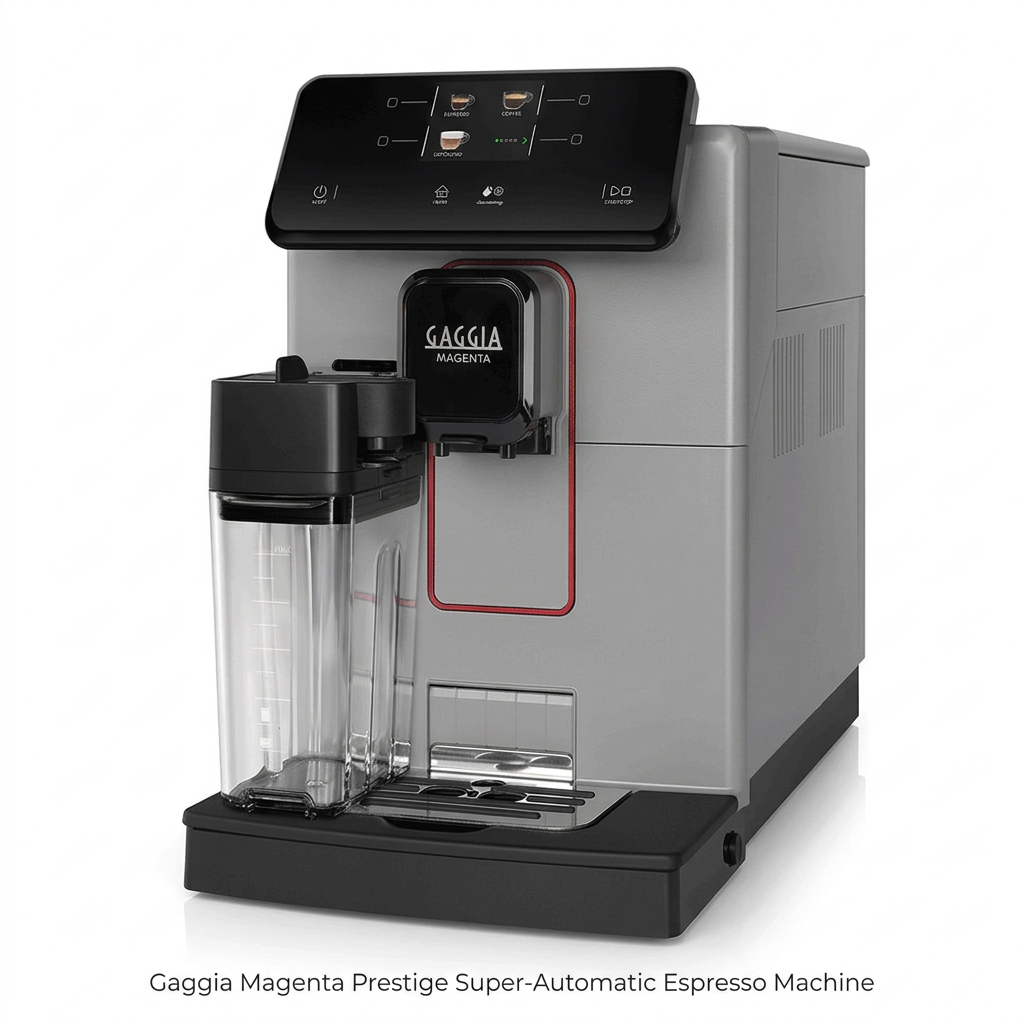
The slim 8.8-inch Magenta body, a smart one-touch milk carafe, 11 drinks and a true double-shot flat white.
Check price on Amazon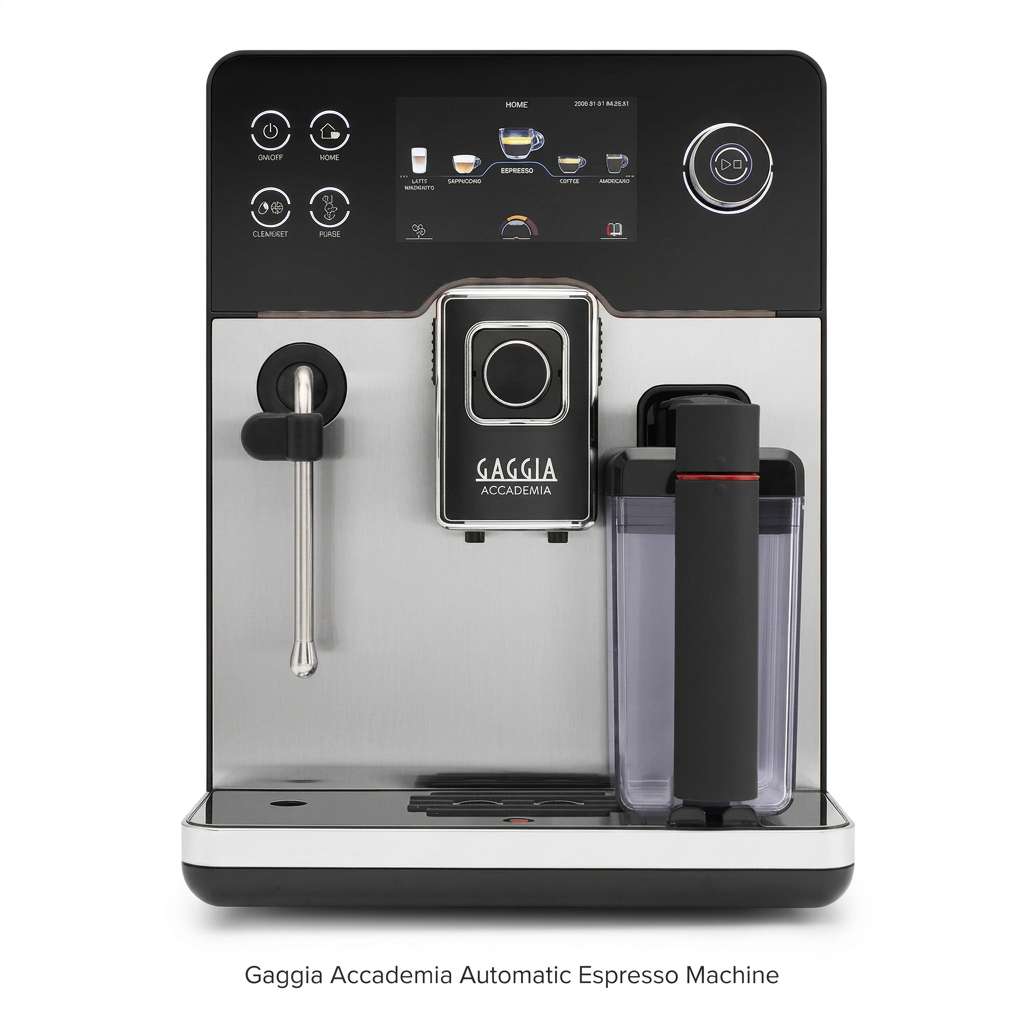
A glass-fronted flagship with flow control, Coffee Boost, a four-level milk carafe and a real steam wand.
See Today’s Price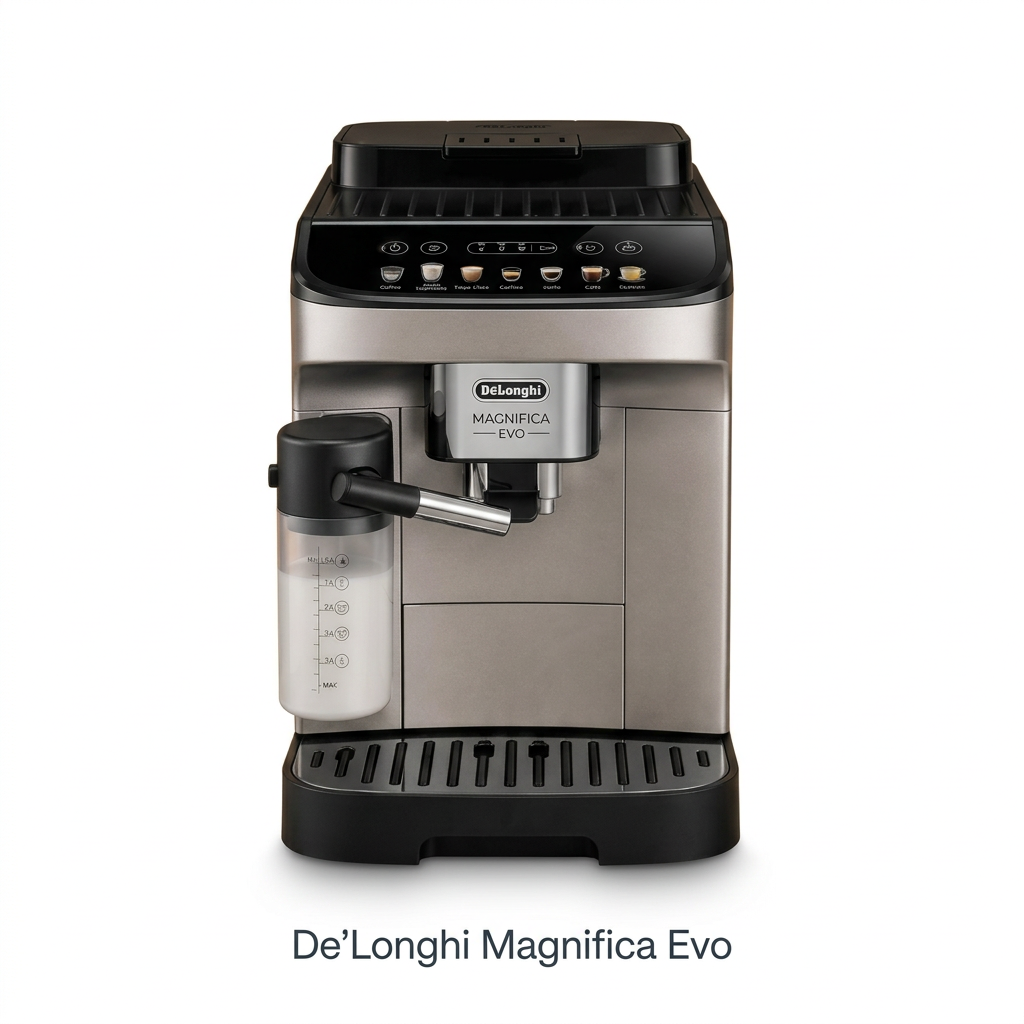
The proven De’Longhi brew unit with a LatteCrema carafe, a 15-gram dose, MyLatte and Over Ice coffee.
Reveal Today’s Deal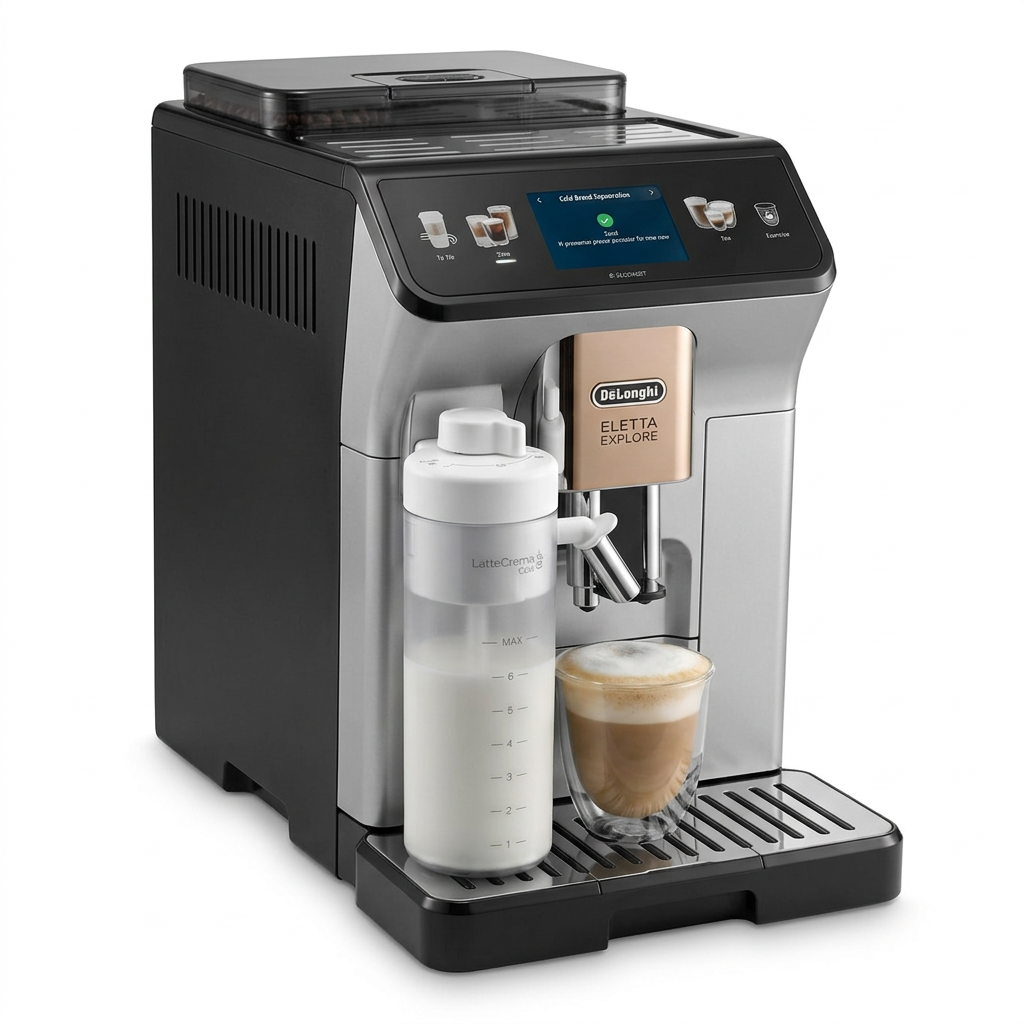
Two LatteCrema carafes for hot and cold foam, a three-minute cold brew, 50-plus recipes and a grinder that stays under 65 dB.
Is It On Sale? Check NowGaggia vs De'Longhi at a glance
- Buy De'Longhi for bigger doses, consistent one-touch milk, cold drinks and features like profiles and Bean Adapt.
- Buy Gaggia for slim bodies, a true Americano, real steam wands and the most refined flagship.
- Both brands use removable brew units that rinse under the tap, so long-term care is similar.
- My four picks: Magenta Prestige and Accademia from Gaggia, Magnifica Evo and Eletta Explore from De'Longhi.
Head to head
The better result in each row is marked, based on my testing and each brand's specifications. With four machines, rows often go to the premium models, so read the everyday pair against each other too.
Keep in mind that the tally is not my verdict. A flagship should win more rows; the real question is which brand's approach fits your kitchen.
| Spec | Magenta Prestige | Gaggia Accademia | Magnifica Evo | Eletta Explore |
|---|---|---|---|---|
| Espressomy rating | 8.5 | 9.0 ✓ Best | 8.5 | 8.4 |
| Milk drinksmy rating | 8.4 | 9.1 ✓ Best | 8.4 | 9.1 |
| Ease of usemy rating | 8.7 ✓ Best | 8.5 | 8.4 | 8.4 |
| Cleaningmy rating | 7.9 | 8.3 ✓ Best | 8.0 | 7.6 |
| Strongest dose | True double, two pucks | About 11 g per cycle, Coffee Boost | About 15 g | 13.6–16 g ✓ Best |
| Grinder | Ceramic flat, 5 steps | Ceramic flat | Steel conical, 13 steps | Steel conical, 13 steps |
| Milk system | One-touch carafe | Carafe plus steam wand ✓ Best | LatteCrema carafe | LatteCrema hot and cold |
| Cold drinks | No | No | Over Ice coffee | Cold foam and cold brew ✓ Best |
| Width | 8.8 in ✓ Best | 11.1 in | 9.45 in | 10.2 in |
| Puck drawer | About 15 | About 14 | About 14 | About 14 |
| Water tank | 60 oz | 54 oz | 60 oz | About 61 oz |
| Profiles or app | No | On-screen help | No | 4 profiles and app ✓ Best |
| Rows won | 2 | 4 | 0 | 3 |
Gaggia vs De'Longhi pros and cons
Magenta Prestige
- Same sweet espresso in a body under 9 inches wide
- Smart carafe pours milk or coffee first as each drink needs
- 11 one-touch drinks, including a true double flat white
- Carafe needs daily attention
- No cold drinks or profiles
- Flat whites fill the 15-puck drawer fast
Gaggia Accademia
- The best espresso and milk of any machine I tested from either brand
- Flow control and Coffee Boost for stronger drinks
- Both a four-level carafe and a real steam wand
- About 30 pounds and 11 inches wide
- Steeper learning curve than the others
- No cold drinks
Magnifica Evo
- Rich 15-gram espresso from a proven brew unit
- MyLatte makes any size of milk drink
- Clear touch panel and fast 38-second warm-up
- No hot milk button and no profiles
- X2 makes two coffees, not two milk drinks
- Carafe adds a daily cleaning step
Eletta Explore
- Real cold foam and a three-minute cold brew
- Grinder stayed under 65 dB in my kitchen
- Four profiles, 50-plus recipes and an app
- Two carafes mean more cleaning
- App is slow to connect
- Almost 18 inches deep
Who should buy which machine?
- Small kitchens and narrow gaps
- Families who want one-touch flat whites
- Gaggia fans who want the everyday pick
- Coffee lovers who want the very best cup
- People who like a steam wand and a carafe
- Kitchens with room for a flagship
- First-time super-automatic buyers
- Daily cappuccino drinkers
- Anyone who wants strong espresso simply
- Iced latte and cold brew fans
- Families who need profiles
- Light sleepers and early risers
Two Italian brands, two philosophies
On paper, Gaggia and De'Longhi look like they make the same machines. Both build bean-to-cup espresso machines with a grinder, a removable brew unit and either a steam wand or a milk carafe.
After testing 13 of them, I can tell you they feel different. Gaggia leans traditional: slim bodies, ceramic grinders, true Americanos and real steam wands. De'Longhi leans toward convenience and features: bigger doses, one consistent milk system, profiles, apps and cold drinks.
Here is every machine I tested from both brands, ranked by my overall score:
My overall scores, all 13 machines
Each machine was tested for four weeks. Gaggia machines are highlighted.
Averaged out, De'Longhi scored 8.3 and Gaggia 8.2. That is closer than the marketing suggests, and it means the right model matters more than the badge.
Our tip: Pick the model before the brand, because the gap between a brand's entry machine and its flagship is far bigger than the gap between the two brands.
How the ranges line up
Both brands build a ladder from simple to sophisticated. Lining them up rung by rung is the easiest way to see where each brand is stronger.
| Tier | Gaggia | De'Longhi | Who wins |
|---|---|---|---|
| Simple, steam wand | Brera 7.6, Magenta Plus 8.0 | Magnifica Start 7.8, Magnifica XS 7.9 | Gaggia Magenta Plus |
| One-touch milk | Naviglio Milk 7.7, Magenta Prestige 8.4 | Magnifica Evo 8.3, Dinamica Plus 8.6 | De'Longhi Dinamica Plus |
| Family and profiles | Cadorna Prestige 8.6 | Rivelia 8.5 | Gaggia Cadorna Prestige |
| Hot and cold drinks | None | Magnifica Duo 8.6, Eletta Explore 8.6 | De'Longhi |
| Flagship | Accademia 8.8 | Eletta Explore 8.6 | Gaggia Accademia |
At the simple end, Gaggia's Magenta platform impressed me most: same espresso as the pricier models in a body under 9 inches wide. De'Longhi's simple machines pull strong espresso too, but their controls feel older.
In the middle, De'Longhi pulls ahead. Its LatteCrema carafe made consistently dense foam on every machine, and the Magnifica Evo and Dinamica Plus offer more for everyday milk drinkers.
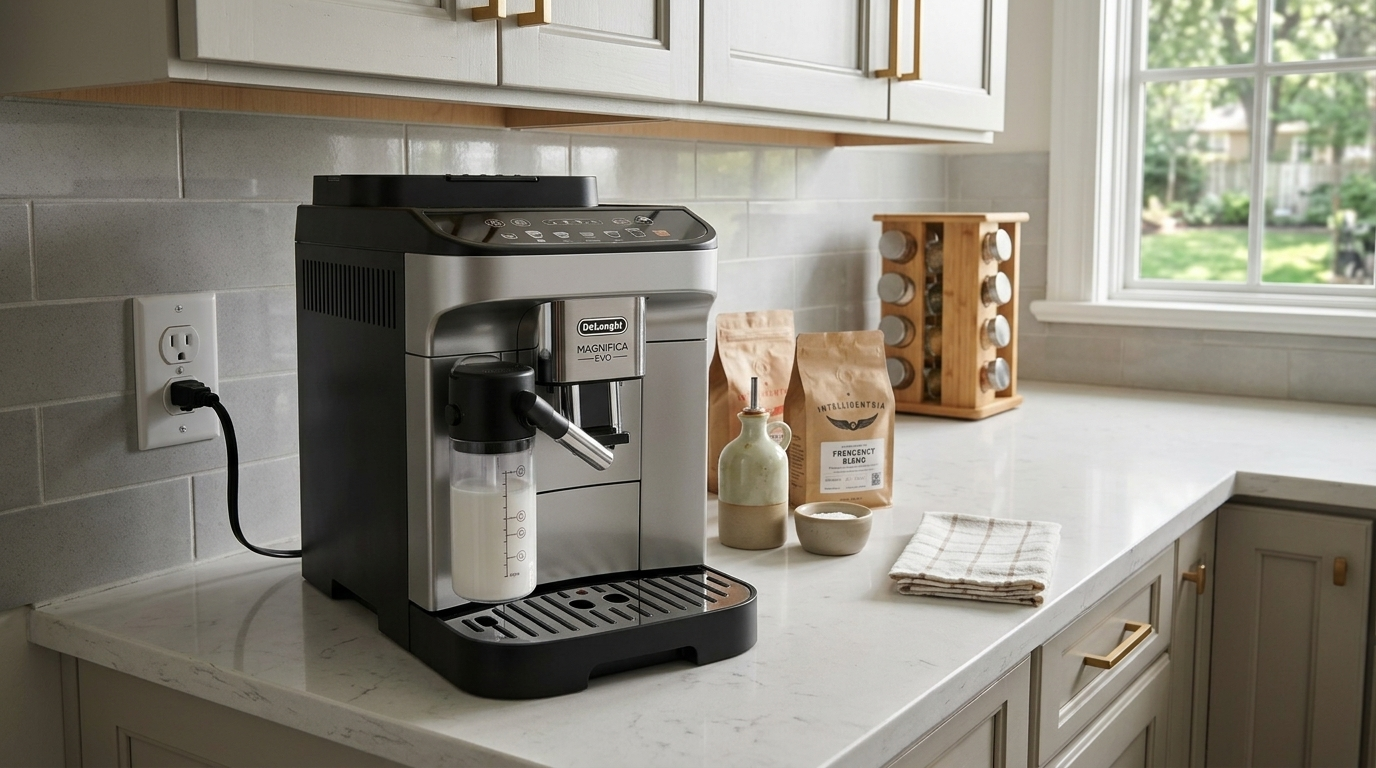
De'Longhi's LatteCrema carafe was consistent across every machine I tested.
At the top, it splits by taste. The Gaggia Accademia is the better coffee machine, while the Eletta Explore is the more versatile one.
Our tip: If you want iced drinks, skip straight to De'Longhi's cold-brew models, because no Gaggia I tested makes cold foam or cold brew.
Design, size and build
Gaggia's biggest practical advantage is width. The Magenta Plus and Magenta Prestige are about 8.8 inches wide, the slimmest bean-to-cup machines I have tested.
De'Longhi's everyday machines are a little wider, around 9.4 to 9.6 inches, and the cold-brew models grow to about 10.2 inches. Most De'Longhis are around 17 inches deep.
At the top end, the Gaggia Accademia is a different animal. It measures about 11.1 inches wide and 16.5 inches deep and weighs about 30.4 pounds, with a real glass front and metal knobs.
The Accademia's glass front and metal knobs feel a class above the rest.
Width of the four machines I'd buy
Measured or from manufacturer specs.
Build quality is close in the everyday range: mostly plastic bodies that feel solid. Gaggia's matte finishes felt a little more premium, and De'Longhi's touch panels a little more modern.
Our tip: Measure the height to your wall cabinets before ordering a Magenta, because its top water door needs about 17.25 inches to open fully.
Grinders and dose
This is the most important technical difference between the brands, and it shapes how their espresso tastes.
Gaggia uses ceramic flat burrs✕Ceramic flat burrsTwo flat grinding discs made of ceramic. They stay cooler than steel and keep their edge for a very long time. with five grind steps on most models. Ceramic stays cool and keeps its edge, and Gaggia rates the Magenta grinder for around 15,000 shots.
De'Longhi uses steel conical burrs✕Conical burrsTwo cone-shaped grinding parts, one inside the other. Beans are crushed between them, and the gap sets how fine the coffee is. with 13 settings. That gives more fine-tuning room, which I found useful with light roasts.
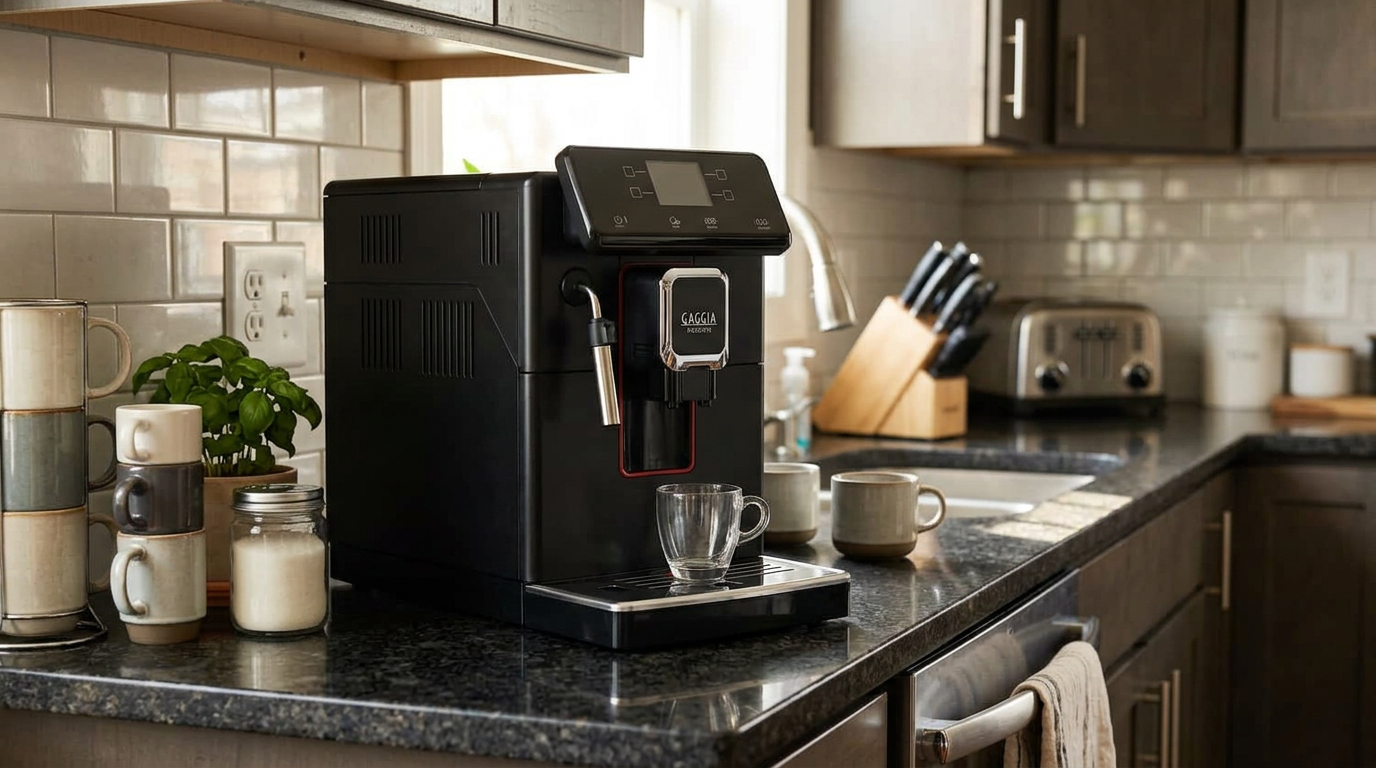
Gaggia's ceramic grinder has five steps; step 2 suited most medium-dark beans.
The dose differs too. Most De'Longhi machines I weighed reached about 15 grams in a single strong shot, and the Eletta Explore's Doppio+ packed 15 to 16 grams.
Gaggia tends to grind less per cycle and make doubles from two pucks. The Accademia, for example, doses up to about 11 grams per grind cycle, then adds Coffee Boost, a second grind, for stronger drinks.
| Grinder detail | Gaggia | De'Longhi |
|---|---|---|
| Burrs | Ceramic, flat | Steel, conical |
| Settings | 5 on most models | 13 |
| Strong single dose | Around 10–11 g | Around 15 g |
| Doubles | Two grind cycles | One bigger dose or Doppio+ |
| Best for | Medium and medium-dark roasts | Wider range, incl. light roasts |
Our tip: On any Gaggia, start at grind step 2 and strength 3, and on any De'Longhi at setting 3 to 4 and high strength, because those were the sweet spots across every model I tested.
Espresso style
With the same beans, the two brands make recognizably different espresso.
Gaggia shots were shorter and sweeter, with a thick, hazelnut-colored crema✕CremaThe golden, foamy layer on top of a fresh espresso. It forms when pressure pushes oils and gases out of the coffee. and a cocoa finish. On the Magenta machines, my 1-ounce shots ran in about 25 seconds at strength 3 and grind step 2.
De'Longhi shots had more body thanks to the bigger dose. The Magnifica Evo at grind 3 and high strength gave a full, aromatic espresso at around 8 percent TDS✕Total dissolved solids (TDS)The share of the drink that is dissolved coffee. Most espresso falls between about 8 and 12 percent; higher means stronger..
Espresso scores of the four machines I'd buy
My scores out of 10 for body, crema, flavor and consistency.
The best shot of either brand came from the Gaggia Accademia. With a medium-dark blend at strength 4, slow flow and medium pre-brewing✕Pre-brewingA short soak of the ground coffee before full pressure starts, so water flows through the puck evenly., it tasted like a café espresso.
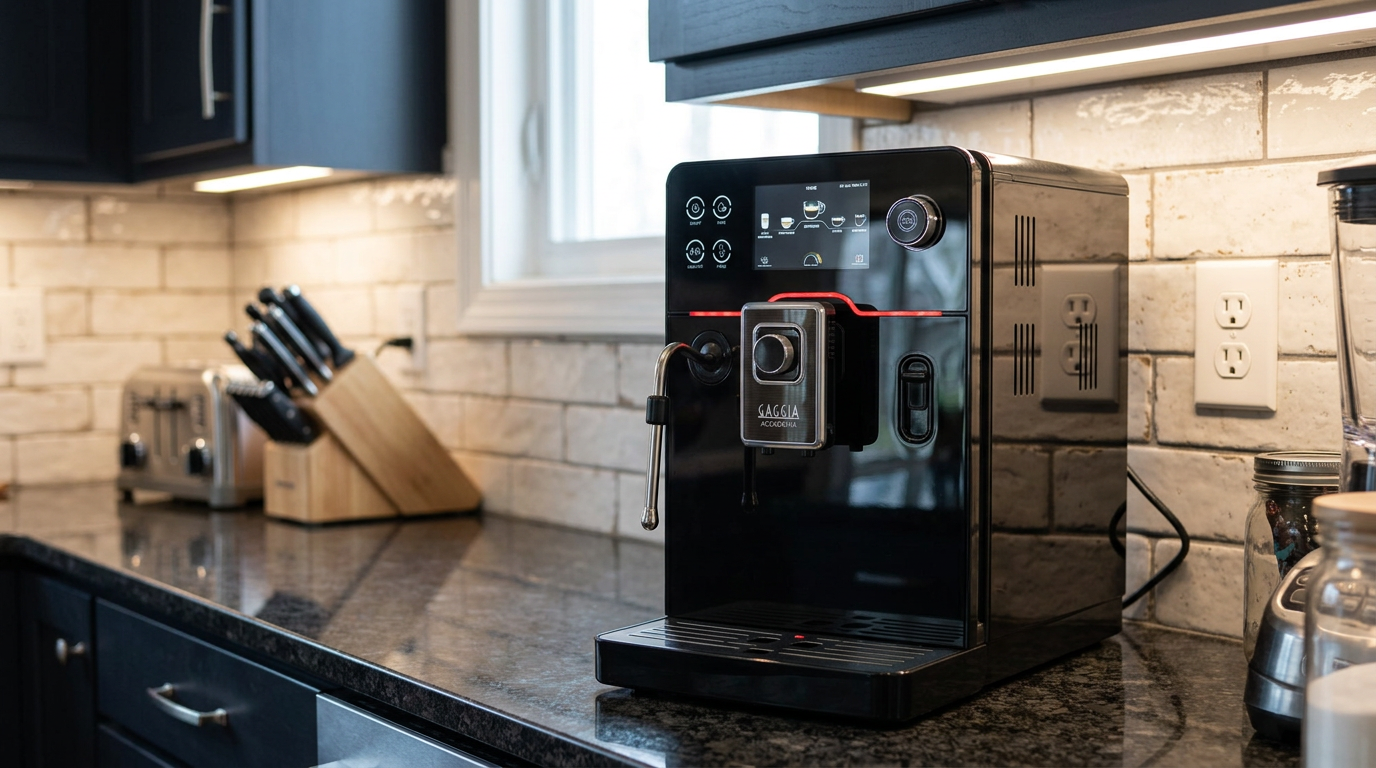
With slow flow and pre-brewing, the Accademia pulled the best espresso of either brand.
Americano and long coffee
If you drink big mugs of black coffee, Gaggia has the edge.
A proper Americano pulls a short shot and adds hot water afterward. Pushing a whole mug of water through the coffee instead tends to over-extract it and taste bitter.
Every Gaggia I tested with an Americano button did it properly. On the Magenta machines, a 10-ounce Americano took about 50 seconds and tasted clean to the last sip.
On the De'Longhi side, it depends on the model. The Magnifica Start has a true one-touch Americano, the best big cup in the De'Longhi range, while the Magnifica Evo's Coffee button brews long through the grounds.
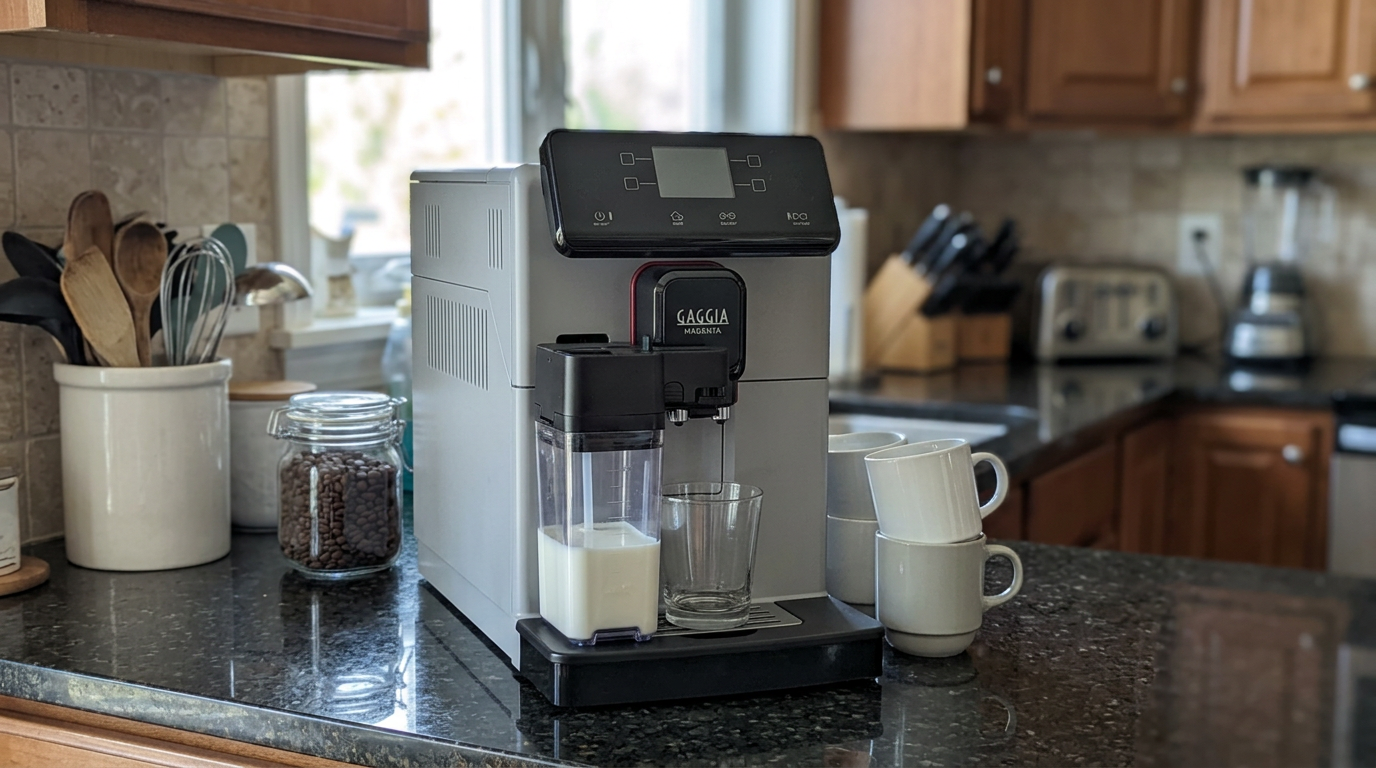
Gaggia's Americano adds water to a short shot, so big mugs taste clean.
Our tip: On a De'Longhi without an Americano button, brew a double espresso and add hot water yourself, because it tasted far cleaner than the long coffee button in my testing.
Milk systems
Both brands offer both kinds of milk system, but they approach them differently.
Steam wands
Gaggia's entry machines use either a Pannarello✕Pannarello wandA steam wand with a sleeve that pulls in air for you. It makes easy, bubbly cappuccino foam but gives less control than a plain wand. wand or a commercial-style wand. The Magenta Plus wand made café-grade microfoam once I learned it, with 4 ounces taking 40 to 50 seconds.
De'Longhi's entry machines use a steam wand with a frothing sleeve. On the Magnifica XS, my foam went from 5.0 out of 10 in week one to 8.6 by week four, once I took the sleeve off.
Carafes
Gaggia's carafes vary by model. The Magenta Prestige pours milk first or espresso first depending on the drink, and the Accademia's carafe has four froth levels.
De'Longhi uses LatteCrema✕LatteCrema systemDe'Longhi's automatic milk system. A carafe clicks onto the front, the machine draws milk in, heats it with steam and mixes in air. across the range. It was the most consistent carafe system I tested: dense foam at about 140°F on every machine.
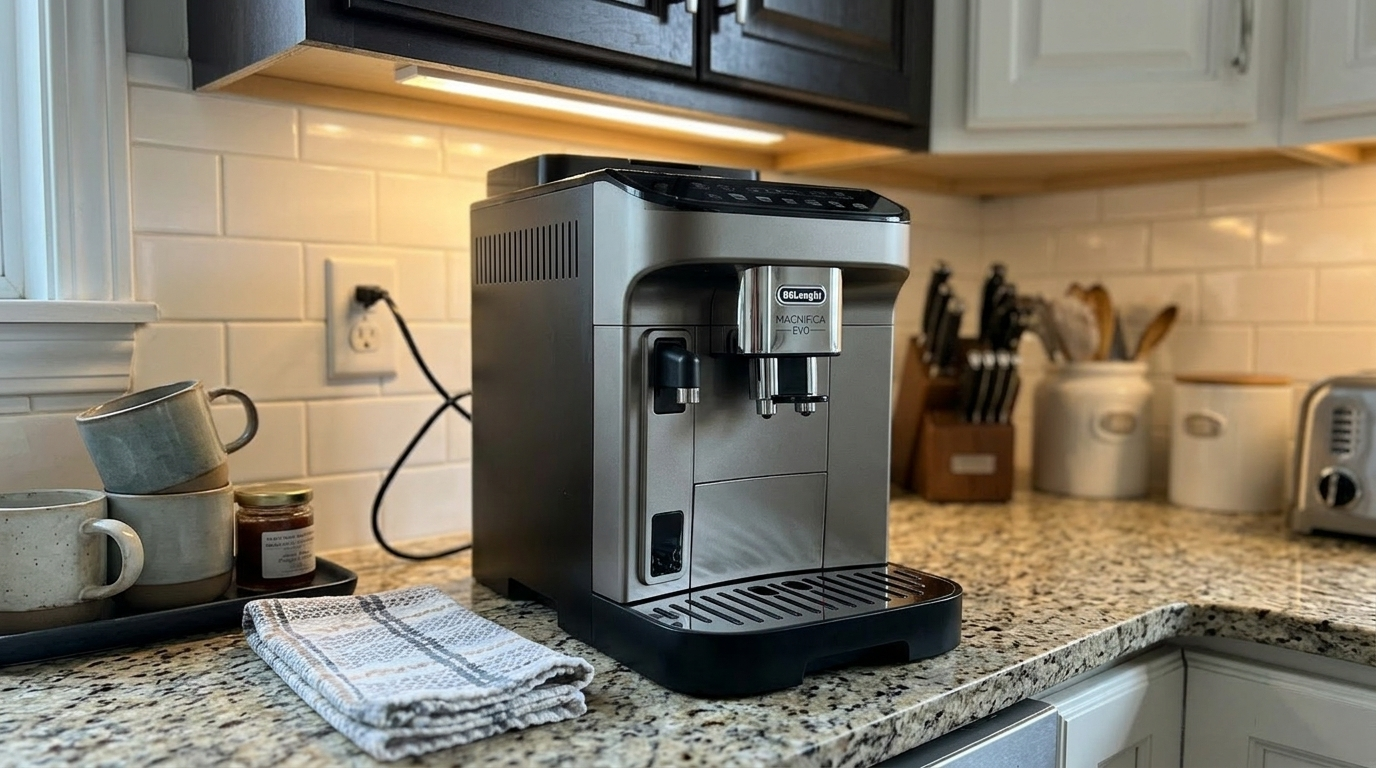
LatteCrema made dense foam at about 140°F on every De'Longhi I tested.
Milk drink scores of the four machines I'd buy
My scores out of 10 for foam texture, temperature and ease.
The Gaggia Accademia is the only machine of the 13 with both a one-touch carafe and a proper steam wand. I used the carafe on weekdays and the wand on weekends.
| Milk feature | Gaggia | De'Longhi |
|---|---|---|
| Entry milk | Pannarello or commercial-style wand | Wand with frothing sleeve |
| One-touch carafe | Varies by model | LatteCrema on all carafe models |
| Cold foam | No | Yes, on cold-brew models |
| Carafe plus wand | Accademia | No |
| Milk-first drinks | Yes, Magenta Prestige | Yes, latte macchiato |
Our tip: Use cold milk straight from the fridge on any carafe from either brand, because warm milk makes big, loose bubbles every time.
Iced drinks and cold brew
This is the one category where only one brand competes.
None of the six Gaggia machines I tested makes cold foam or cold brew. You can pour espresso over ice, but that's it.
De'Longhi has two answers. The Magnifica Evo has an Over Ice button that brews a stronger coffee for a glass of ice. I rated it 7.8 out of 10.
The Eletta Explore and Magnifica Duo go much further, with a dedicated cold foam carafe and a cold brew✕Cold brewCoffee made with cool water instead of hot. It tastes smoother and less acidic, but by hand it takes 12 hours or more. mode that takes about three minutes.
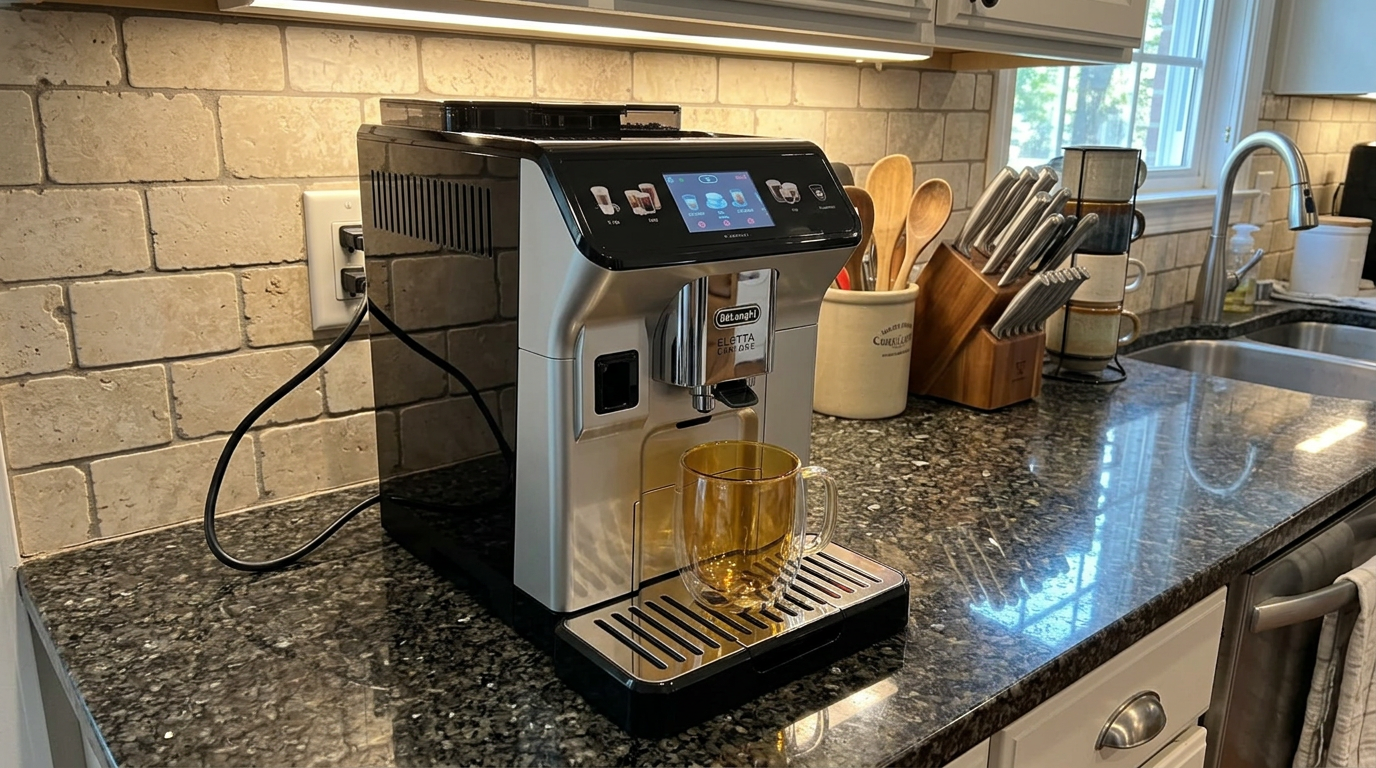
The Eletta Explore's cold foam and three-minute cold brew have no Gaggia equivalent.
Eletta Explore drink temperatures I measured
My own probe readings.
If iced lattes are part of your summer, that alone decides the brand.
Screens, profiles and apps
De'Longhi offers more smart features across its range. Its mid and upper models have 3.5-inch color touchscreens, up to four user profiles, Bean Adapt setup and, on some models, the Coffee Link app.
Gaggia keeps things simpler. The Magenta machines use flat touch displays without profiles, while the Cadorna Prestige adds four profiles and the Accademia a fast 5-inch touchscreen with on-screen help.
| Feature | Gaggia Magenta Prestige | Gaggia Accademia | De'Longhi Magnifica Evo | De'Longhi Eletta Explore |
|---|---|---|---|---|
| Display | Color touch display | 5-inch touchscreen | Touch panel | 3.5-inch touchscreen |
| Profiles | No | Saved drink settings | No | 4 |
| App | No | No | No | Coffee Link |
| Bean Adapt | No | No | No | Yes |
| Cup warmer | No | Yes, scheduled | Top surface warms | No |
I didn't miss an app on any machine. Profiles mattered more: in a family of four, a machine without them meant someone always had to adjust settings.
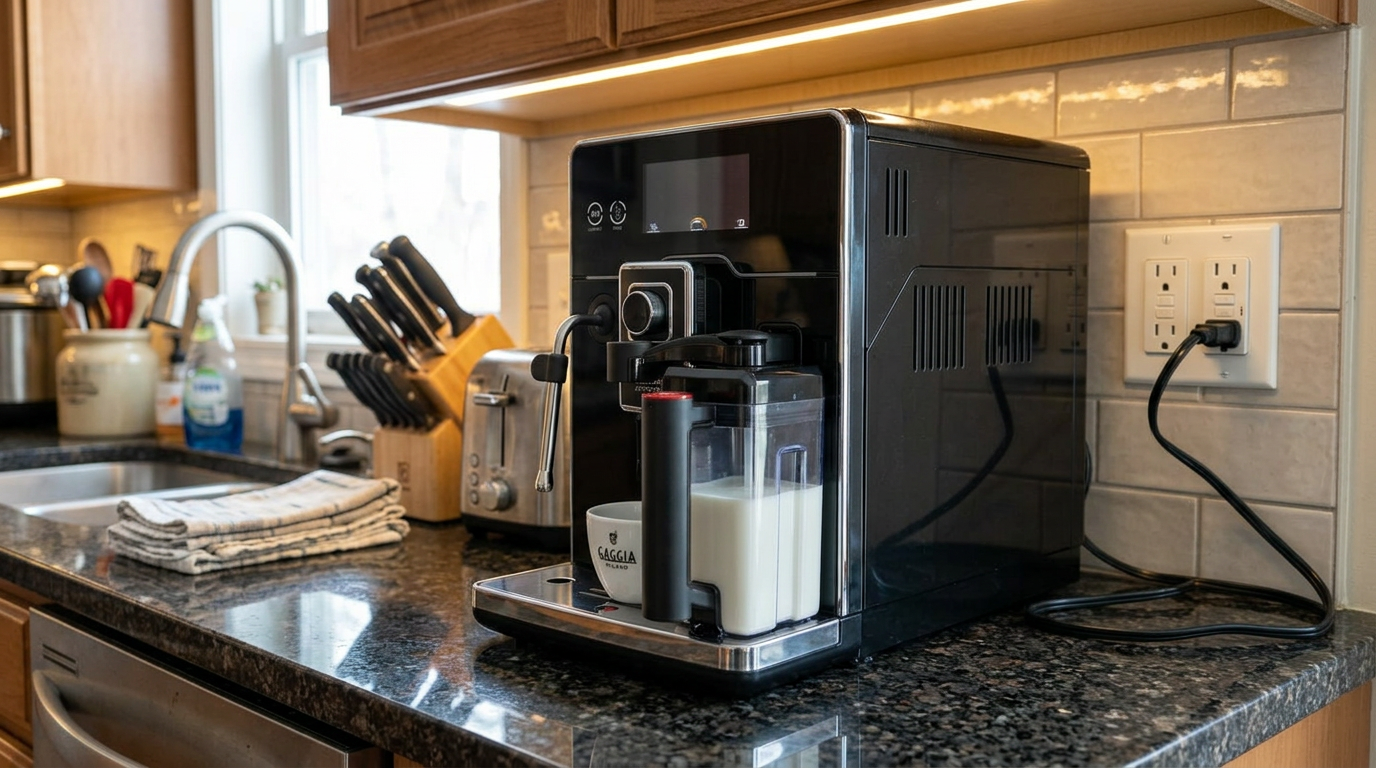
The Accademia's 5-inch touchscreen was the fastest and clearest of the four.
Our tip: Schedule the Accademia's cup warmer about 20 minutes before your first coffee, because warm cups made a noticeable difference to every drink.
Cleaning and upkeep
The good news: both brands use removable brew units✕Brew unitThe part that compresses the ground coffee, holds it while water passes through and then ejects the used puck. On both brands it slides out for rinsing. that slide out and rinse under the tap. That's the single most important feature for long-term hygiene, and both got it right.
Daily cleaning depends far more on the milk system than the brand. Steam wands are quickest; carafes need a clean cycle after each session and a hand wash every day or two.
My daily hands-on cleaning time
My estimates for a mix of black coffee and milk drinks.
Gaggia's Prestige-style carafes have a quick 20-second clean. De'Longhi's LatteCrema carafes have a Clean dial that runs hot water and steam through the milk path.
| When | Gaggia | De'Longhi |
|---|---|---|
| After milk | Quick Clean or wipe the wand | Clean dial or wipe the wand |
| Weekly | Rinse the brew group | Rinse the brew unit |
| Monthly | Lubricate the brew group | Lubricate seals if needed |
| Descaling | When prompted | Every 2–4 months, when prompted |
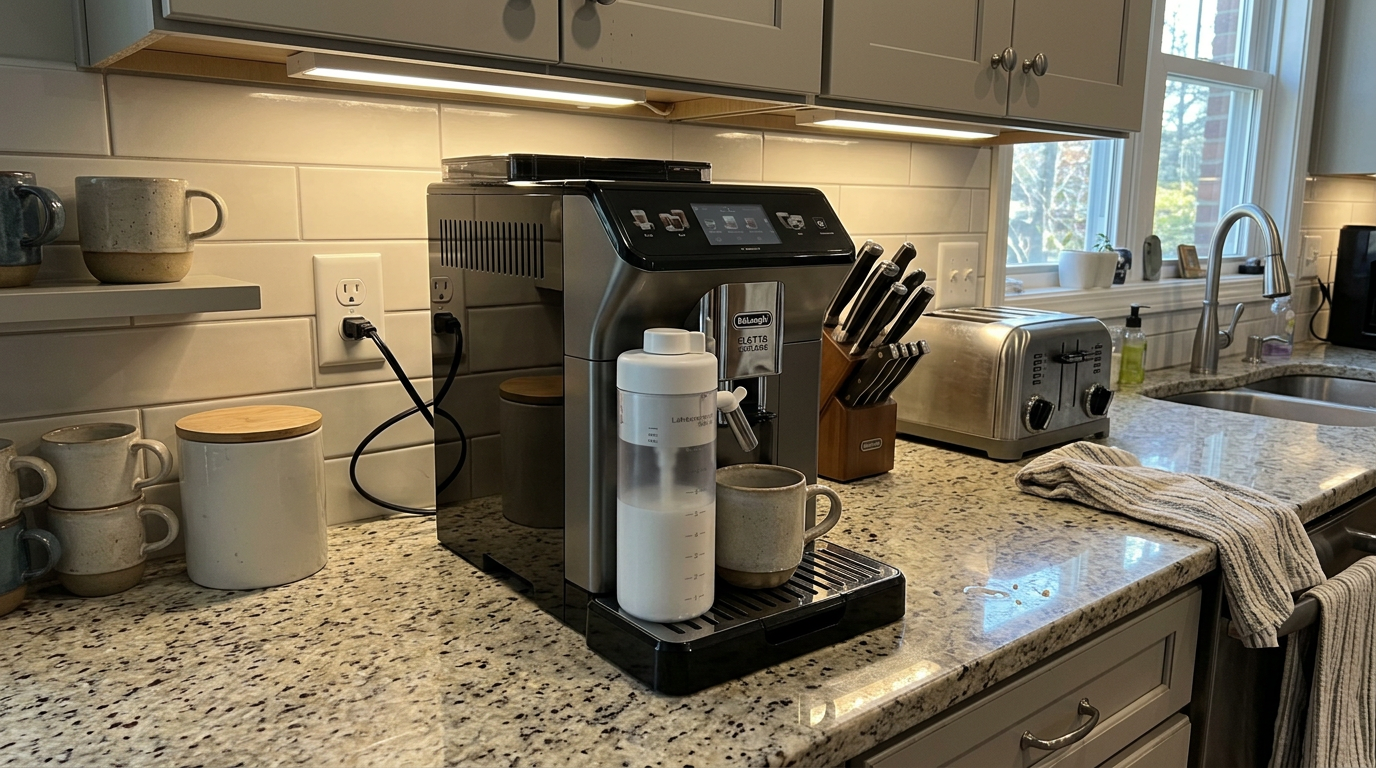
Two carafes on the Eletta Explore mean the most cleaning of the four.
Spent pucks from either brand make a useful addition to a compost pile in small amounts.
Noise
Neither brand is consistently louder. It depends on the model.
The quietest machine of the 13 was De'Longhi's Eletta Explore, at under 65 dB while grinding. The Rivelia measured 66 to 68 dB, and the Magnifica Evo's grinder hit 70 to 71 dB for its first few seconds.
Gaggia's Magenta machines were quiet for super-automatics, and neither woke anyone in my house at 6:30 a.m. The steam wands on both brands add the classic hiss.
Grinder noise I measured
About a foot from the machine. Lower is quieter.
Water, beans and supplies
Tanks are similar across the two brands, mostly between 54 and 61 ounces. The Magenta machines and the Magnifica Evo hold about 60 ounces, the Accademia about 54 and the Eletta Explore about 1.8 liters.
Hoppers differ more. Gaggia's Magenta hoppers hold about 8.8 ounces, the Accademia about 12.3 ounces and De'Longhi's everyday machines about 8.8 ounces.
Water tank by machine
Manufacturer capacities.
Both brands sell their own water filters and descalers. Using a filter cut descaling reminders noticeably on every machine I tested.
Medium and medium-dark roasts worked best on both. Avoid very oily or flavored beans, which can clog ceramic and steel burrs alike.
Our tip: Fit the water filter from day one on either brand, because it is the cheapest way to cut descaling and keep the coffee tasting clean.
Real-life scenarios
Specs only go so far. These are the situations where one brand, and one machine, clearly pulled ahead during my testing.
At 8.8 inches wide, it fit where no De'Longhi I tested would.
Real cold foam and a three-minute cold brew. No Gaggia does this.
Slow flow and pre-brewing made a café-quality shot.
Strong 15-gram espresso, one-touch cappuccinos and a 38-second warm-up.
A true Americano on every Magenta model.
Four profiles and 50-plus recipes kept everyone happy.
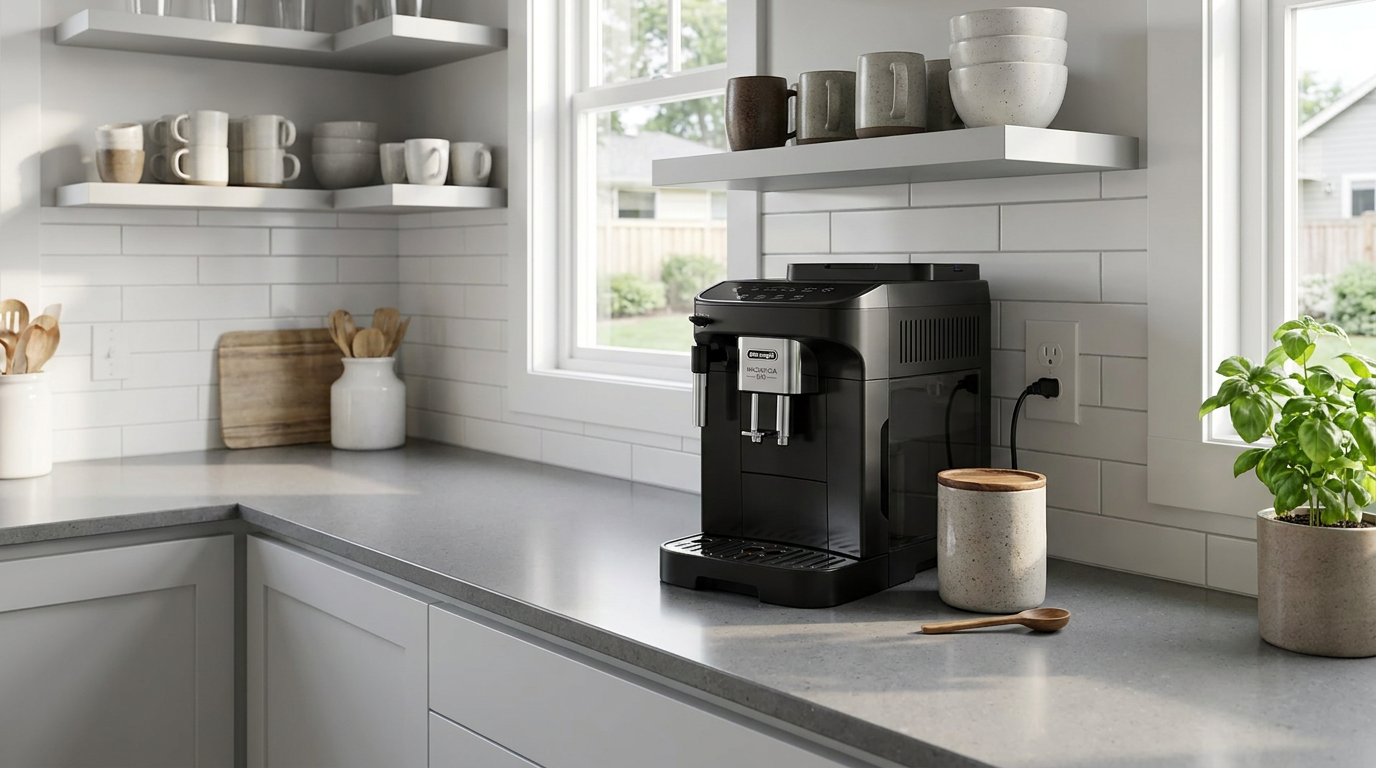
For most first-time buyers, the Magnifica Evo is the easy place to start.
My scorecard
These are my own scores out of 10 for the four machines I'd buy. The first four come from my single reviews, and I added versatility and footprint because they separate the brands.
Magenta Prestige
Gaggia Accademia
Magnifica Evo
Eletta Explore
Overall, I rate the Magenta Prestige 8.4, the Accademia 8.8, the Magnifica Evo 8.3 and the Eletta Explore 8.6. Across all 13 machines I tested, De'Longhi averaged 8.3 and Gaggia 8.2.
See How Much You’ll SaveWhich one is right for you?
4 quick questionsWhich one should you buy?
It comes down to two questions: do you want iced drinks, and how much counter space do you have? Answer those and the brand mostly picks itself. Still weighing other options? I rank every model I’ve tested in my guide to the best super-automatic espresso machines.
For every model ranked within each brand, see my guides to the best Gaggia super-automatic and the best De'Longhi super-automatic machines.
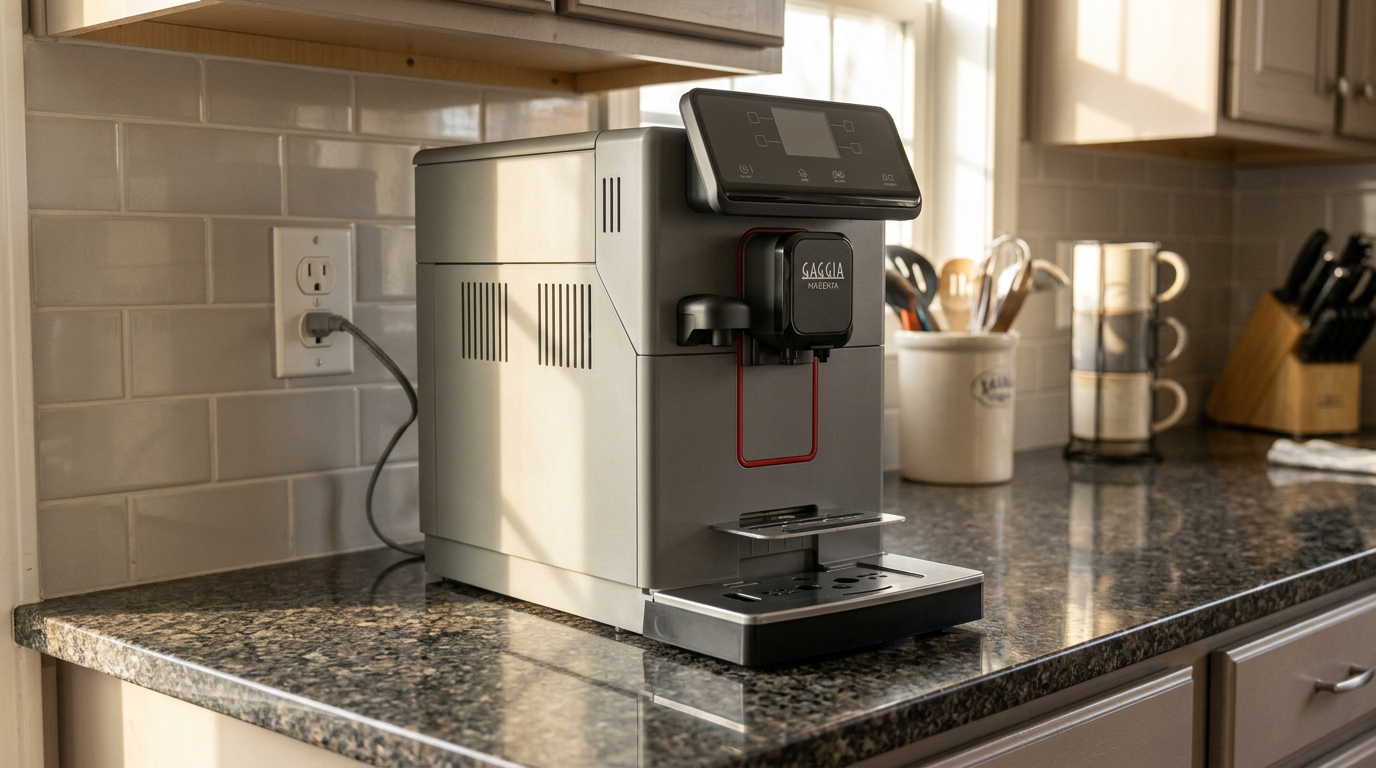
For slim spaces and classic espresso, Gaggia's Magenta Prestige earns its place.
- You need a machine under 9 inches wide
- You want one-touch flat whites
- You like a true Americano
- You prefer classic, short espresso
- You want iced drinks
- You need user profiles
- You hate washing a carafe
- You want the best cup from either brand
- You want a carafe and a steam wand
- You have room for a 30-pound machine
- You enjoy fine-tuning
- Your counter is tight
- You want iced drinks
- You want the simplest routine
- This is your first super-automatic
- You want strong 15-gram espresso
- You drink cappuccinos daily
- You want a quick warm-up
- You want profiles
- You want two milk drinks at once
- You want cold brew
- You drink iced lattes or cold brew
- Several people need profiles
- You want a quiet grinder
- You like lots of recipes
- You hate cleaning milk parts
- Your counter is under 18 inches deep
- You want the slimmest machine
For most households, De'Longhi is the brand I'd choose, and the Magnifica Evo is the place to start. It doses more coffee, its LatteCrema milk is consistently good and it's simple for anyone to use. If you want iced drinks, step up to the Eletta Explore.
Gaggia is the better brand if space is tight or you want classic, short espresso and a true Americano. The Magenta Prestige is the Gaggia I'd recommend to most people, and the Gaggia Accademia made the best coffee and milk of all 13 machines I tested.
Whichever brand you choose, buy fresh beans, fit the water filter and rinse the brew unit weekly. Both brands build machines that last years with that little bit of care.
Gaggia vs De'Longhi specifications
From manufacturer specifications and my own testing.
| Magenta Prestige | Gaggia Accademia | Magnifica Evo | Eletta Explore | |
|---|---|---|---|---|
| Brand | Gaggia | Gaggia | De'Longhi | De'Longhi |
| Type | Super-automatic, carafe | Super-automatic, carafe and wand | Fully automatic, carafe | Fully automatic, hot and cold carafes |
| One-touch drinks | 11 plus hot water | Wide menu | 7 | 50-plus |
| Grinder | Ceramic flat, 5 steps | Ceramic flat | Steel conical, 13 steps | Steel conical, 13 steps |
| Strong dose | True double, two pucks | About 11 g per cycle, Coffee Boost | About 15 g | 13.6–16 g |
| Cold drinks | No | No | Over Ice coffee | Cold foam and cold brew |
| Display | Color touch display | 5-inch touchscreen | Touch panel | 3.5-inch touchscreen |
| Water tank | About 60 oz | About 54 oz | About 60 oz | About 1.8 L |
| Bean hopper | About 8.8 oz | About 12.3 oz | About 8.8 oz | About 10.6 oz |
| Brew unit | Removable | Removable | Removable | Removable |
| Dimensions (W x D x H) | About 8.8 x 17.1 x 14 in | About 11.1 x 16.5 x 15.2 in | About 9.45 x 17.3 x 14.2 in | About 10.2 x 17.7 x 15.2 in |
How I tested and compared them
I tested 13 super-automatic machines from the two brands, six from Gaggia and seven from De'Longhi, using each as my everyday coffee maker for four weeks.
I weighed doses, timed shots and drinks, measured espresso, milk and cold brew temperatures with a probe thermometer, took decibel readings and ran every cleaning routine. This comparison pulls together those notes, written up by Michael Reynolds, and compares them with each brand's specifications and owner documentation.
The four machines in the lineup are the ones I would buy from each brand: an everyday pick and a premium pick.
- Coffee: dose, crema, body and consistency.
- Milk: foam texture, temperature, hot and cold.
- Workflow: controls, menus, profiles and apps.
- Ownership: size, noise, cleaning and water care.
Gaggia vs De'Longhi FAQ
Is Gaggia or De’Longhi better?
Across the 13 machines I tested, De’Longhi averaged 8.3 and Gaggia 8.2, so they are very close. De’Longhi is better for bigger doses, consistent one-touch milk and iced drinks. Gaggia is better for slim bodies, a true Americano and the best flagship.
Which brand makes stronger espresso?
De’Longhi, in most models. Its machines reached about 15 grams in a single strong shot. Gaggia tends to grind about 10 to 11 grams per cycle and makes doubles from two pucks.
Does any Gaggia make cold brew?
No. None of the six Gaggia machines I tested makes cold foam or cold brew. De’Longhi’s Eletta Explore and Magnifica Duo do both.
Which brand has the slimmest machines?
Gaggia. The Magenta Plus and Magenta Prestige are about 8.8 inches wide.
What is the best Gaggia machine?
The Accademia made the best coffee and milk I tested from either brand. For most people, the Magenta Prestige is the better everyday pick.
What is the best De’Longhi machine?
For most people, the Magnifica Evo. For iced drinks and cold brew, the Eletta Explore.
Do both brands have removable brew units?
Yes. Every machine I tested from both brands has a brew unit that slides out and rinses under the tap.
Which brand is easier to clean?
It depends on the milk system, not the brand. Steam wand models are quickest; carafe models need a short clean after each session and a hand wash every day or two.
Which brand is quieter?
It varies by model. De’Longhi’s Eletta Explore was the quietest of all 13, at under 65 dB. Gaggia’s Magenta machines were also quiet for super-automatics.
Which brand has user profiles?
De’Longhi offers profiles on more models, including four on the Eletta Explore and Rivelia. On the Gaggia side, the Cadorna Prestige has four.

- Our hands-on Gaggia Magenta Prestige review
- Our hands-on Gaggia Accademia review
- Our hands-on De'Longhi Magnifica Evo review
- Our hands-on De'Longhi Eletta Explore review
- Our reviews of the Gaggia Brera, Magenta Plus, Naviglio Milk and Cadorna Prestige, and De'Longhi Magnifica Start, Magnifica XS, Dinamica Plus, Rivelia and Magnifica Duo
- Gaggia and De'Longhi product specifications and owner documentation
- Composting and Coffee Grounds, Cornell University
- A living lexicon for brewed coffee, University of Oregon