Breville vs De’Longhi vs Philips: best espresso machine brand?
undefined
We choose products independently. We may earn a commission through links on this page; your price stays the same. Affiliate policy
Jargon helpNew to espresso? Tap any dotted term to see what it means.
In this comparison
Pick the brand by how you want to make coffee. If you want to learn real espresso and enjoy the ritual, Breville is the one, and the Breville Barista Express pulled the richest shots of my test. If you want push-button coffee that still tastes strong, De’Longhi is my pick for most homes: the De’Longhi Magnifica Evo made fuller espresso than the Philips and dense LatteCrema foam at one touch. If easy cleaning matters most, Philips wins: the Philips 3200 Series’s LatteGo milk system rinses clean in about 15 seconds, though its espresso was the lightest of the three.
The three brands, through their best sellers
Specs checked November 14, 2026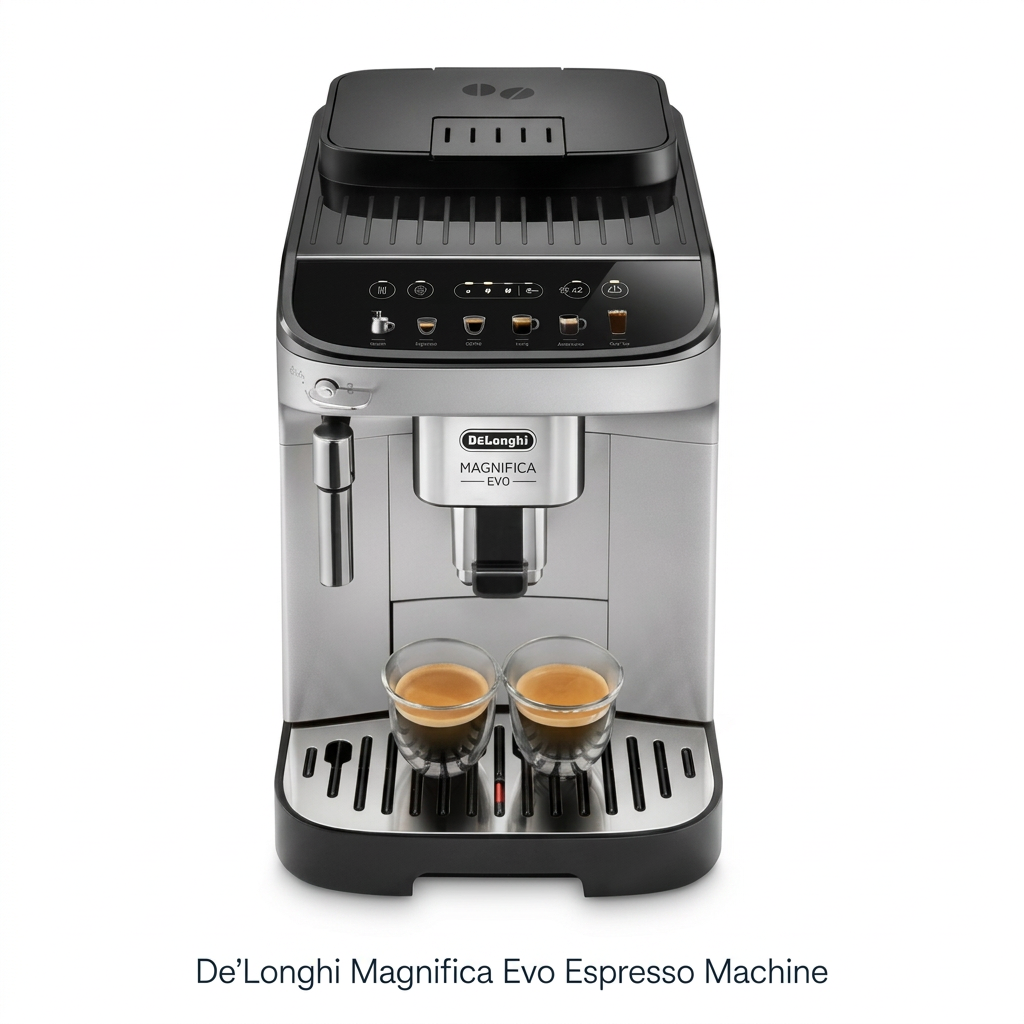
De’Longhi’s one-touch machine: seven drinks, a 15-gram top dose for strong espresso and the LatteCrema carafe for dense foam.
Check price on Amazon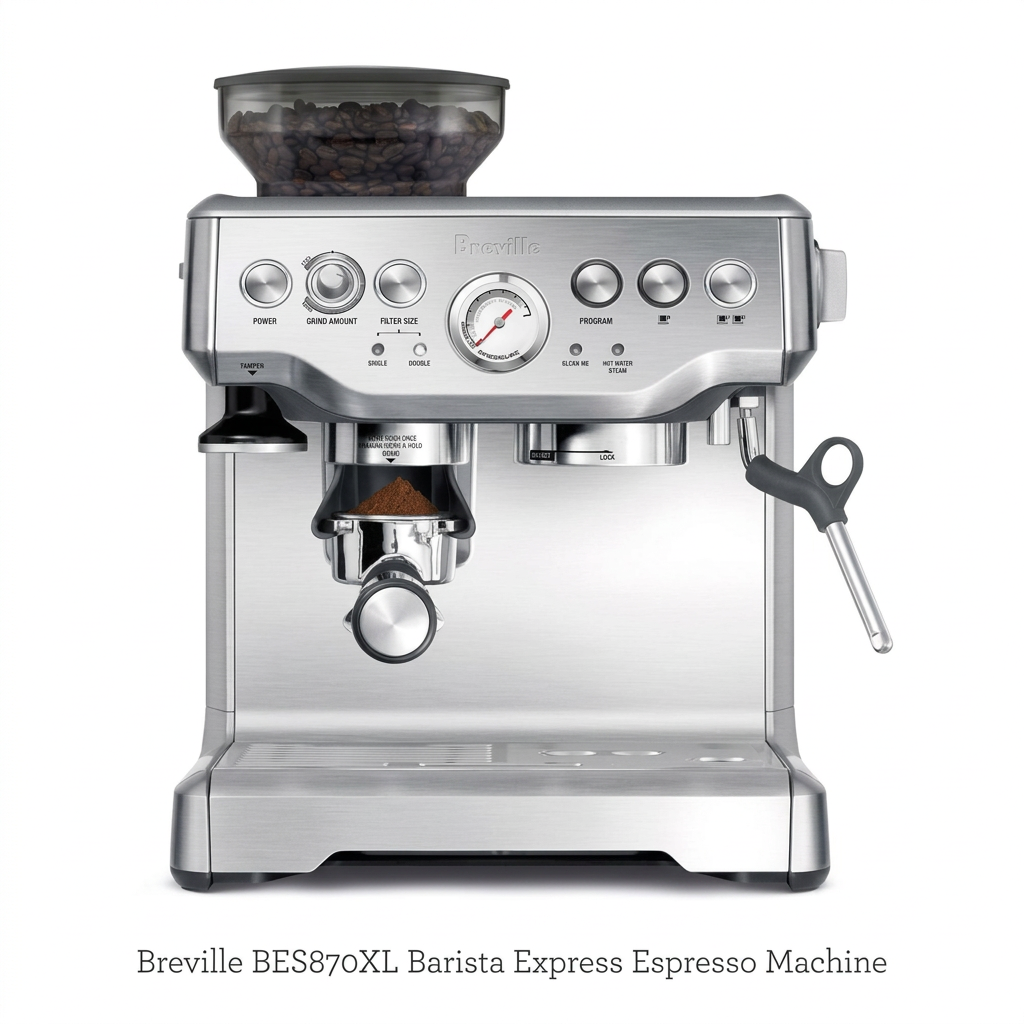
Breville’s classic semi-automatic with a built-in grinder, a pressure gauge and a manual steam wand for latte art.
Reveal Today’s Deal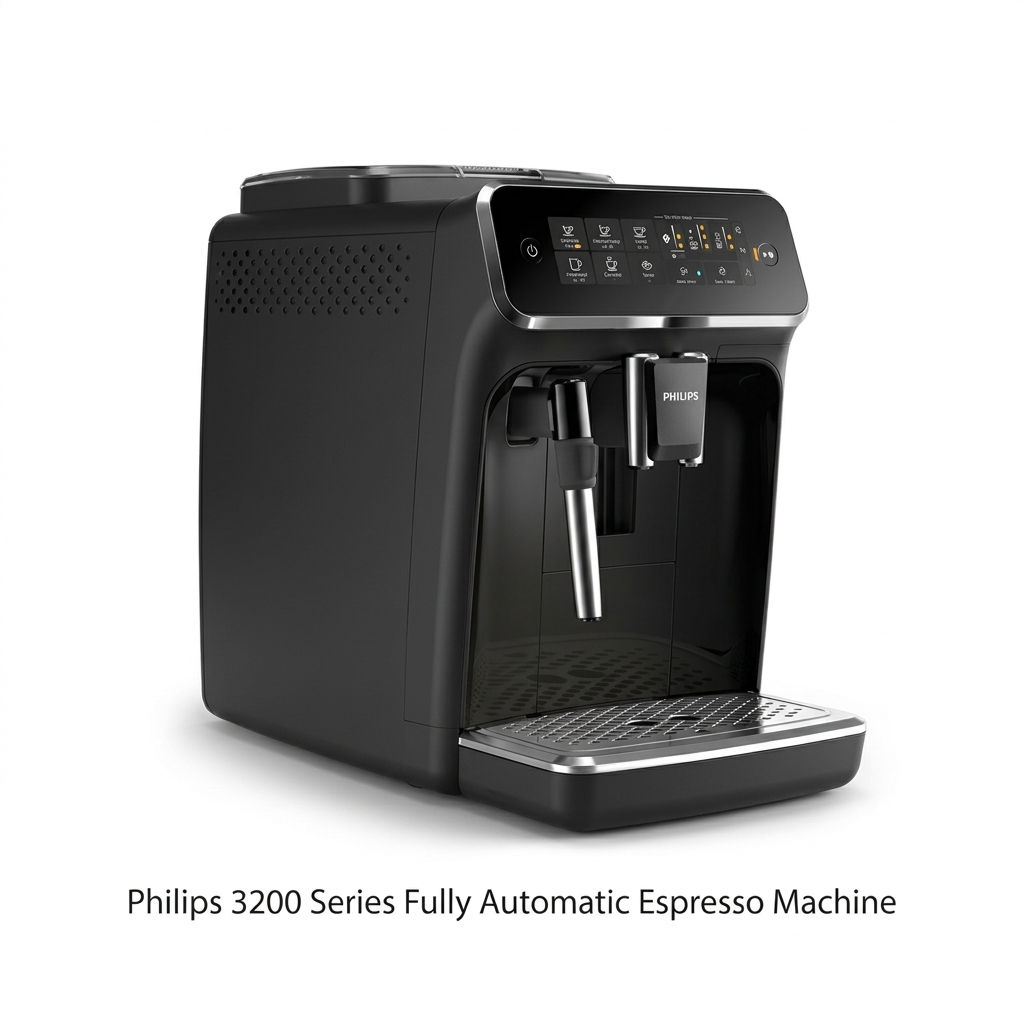
Philips’ one-touch machine with the two-part LatteGo milk system, five drinks and the quickest cleanup of the three.
See Today’s PriceBreville vs De’Longhi vs Philips at a glance
- Breville makes semi-automatic machines for people who want to make espresso themselves.
- De’Longhi and Philips make fully automatic machines that do everything at one touch.
- De’Longhi made stronger espresso; Philips made cleaning far easier.
- Choose the brand by your routine first, then pick the model within it.
Head to head
I compared each brand through its best-selling machine at a similar level: the Breville Barista Express, the De’Longhi Magnifica Evo and the Philips 3200 Series. The better result in each row is marked.
The tally is not my verdict. Effort and cleaning matter far more to some households than espresso body.
| Spec | Breville | De’Longhi | Philips |
|---|---|---|---|
| Espresso flavormy tasting, same beans | Richest, most syrupy ✓ Best | Rich and smooth | Light, a bit thin |
| Effort per drink | Grind, tamp, brew, steam | One touch | One touch |
| Maximum dose | About 18 g, by hand ✓ Best | About 15 g | About 8 g |
| Milk system | Manual steam wand | LatteCrema carafe | LatteGo, two parts |
| Latte art | Yes, with practice ✓ Best | No | No |
| Milk cleanup | Wipe and purge the wand | Carafe clean function | Rinse two parts, about 15 s ✓ Best |
| One-touch drinks | None | 7 ✓ Best | 5 |
| Iced coffee | By hand | Over Ice button ✓ Best | By hand |
| Learning curve | A week or two | Almost none | Almost none |
| Daily cleaning time | About 7 minutes | About 2 minutes | About 1.5 minutes ✓ Best |
| Width | 12.5 in | 9.45 in ✓ Best | 9.7 in |
| Weight | About 22 lb | About 21 lb | About 17.6 lb ✓ Best |
| Rows won | 3 | 3 | 3 |
Pros and cons
De’Longhi Magnifica Evo
- Strong, rich espresso at one touch
- Dense LatteCrema foam that holds its shape
- Over Ice button for easy iced coffee
- No screen or user profiles
- Carafe needs more washing than LatteGo
- No hot-milk-only button
Breville Barista Express
- Richest, most tunable espresso of the three
- Manual wand for real microfoam and latte art
- Pressure gauge teaches you how espresso works
- Takes practice and effort for every drink
- The messiest and slowest routine
- No one-touch drinks at all
Philips 3200 Series
- LatteGo is the easiest milk system to clean
- Simple, quiet and light
- AquaClean filter keeps descaling rare
- Lightest espresso, with an 8 g top dose
- Only five one-touch drinks
- No iced coffee button
Who should buy which brand?
- People who want strong coffee at one touch
- Daily cappuccino and latte drinkers
- Iced coffee fans who want it simple
- Hobbyists who want to learn espresso
- Latte art fans
- People who enjoy a morning ritual
- Anyone who hates cleaning milk systems
- Milder coffee and latte drinkers
- Small households that want a light, quiet machine
Three brands, three philosophies
These three names come up together in almost every espresso conversation, but they are not really competing for the same buyer.
Breville builds semi-automatic✕Semi-automatic espresso machineA machine where you handle the coffee yourself: you fill a portafilter, tamp it and lock it in, and the machine controls the water and pressure. machines for people who want to make espresso themselves. You grind, tamp, brew and steam, and the machine gives you the tools and feedback to get better.
De’Longhi and Philips mostly build fully automatic✕Fully automatic (bean-to-cup)A machine that grinds, doses, tamps, brews and ejects the used coffee on its own. You press a button and it does the whole job inside the machine. machines. Beans go in the top, you press a button and a drink comes out.
Between those two, the difference is priorities. De’Longhi leans toward stronger espresso and creamy, carafe-based milk. Philips leans toward simplicity, with the LatteGo milk system that has no tubes and rinses clean in seconds.
| Brand trait | Breville | De’Longhi | Philips |
|---|---|---|---|
| Main machine type | Semi-automatic | Fully automatic | Fully automatic |
| Your job | Grind, tamp, brew, steam | Press a button | Press a button |
| Espresso style | Rich, tunable | Strong, full | Lighter, gentler |
| Milk approach | Manual steam wand | LatteCrema carafe | LatteGo, no tubes |
| Signature strength | Control and latte art | Strong one-touch coffee | Easy cleaning |
| Learning curve | Real | Minimal | Minimal |
It also helps to know where each brand puts its engineering effort. Breville spends it on temperature control, grinders and steam power, the things that matter when you are making espresso by hand. De’Longhi spends it on its brew unit and milk carafes, so a one-touch drink tastes as close to a café drink as possible.
Philips spends it on daily convenience: quiet ceramic grinders, the tube-free LatteGo and long-lasting water filters. Once you see those priorities, each brand’s strengths and weaknesses in my testing make complete sense.
Our tip: Decide first whether you want to make coffee or just drink it, because that single choice narrows these three brands down to one or two.
How the three ranges line up
Each brand sells a ladder of machines. These are the steps I have tested and how they roughly line up.
Breville’s line runs from the Barista Express to the Barista Pro, with its 3-second heat-up, and up to the Oracle Touch, which grinds, doses and tamps for you.
De’Longhi’s runs from the Magnifica Evo to the Dinamica Plus with a touchscreen and the Rivelia with swappable bean hoppers. Philips runs from the 2200 Series to the 3200 and up to the 5500 Series, with more drinks and quieter brewing.
| Level | Breville | De’Longhi | Philips |
|---|---|---|---|
| Entry | Barista Express | Magnifica Start | 2200 Series |
| Best seller | Barista Express | Magnifica Evo | 3200 Series |
| Step up | Barista Pro | Dinamica Plus | 4300 Series |
| Premium | Oracle Touch | Rivelia, Eletta Explore | 5500 Series |
My overall scores, best sellers
Overall scores out of 10 from my single reviews.
Across the ranges, the pattern held. Breville gave me the most control, De’Longhi the strongest push-button coffee and Philips the easiest daily life.
Design, size and build
The Breville is the odd one out on the counter. It is a brushed steel box with a portafilter, a grinder cradle, a gauge and a steam wand, about 12.5 inches wide and 22 lb.
The De’Longhi and Philips are narrow boxes. The Evo is about 9.45 inches wide and 21 lb, and the Philips 3200 about 9.7 inches wide and 17.6 lb, the lightest of the three.
All three slide under standard wall cabinets. The Philips and De’Longhi load water from the front, which makes life under cabinets easier.
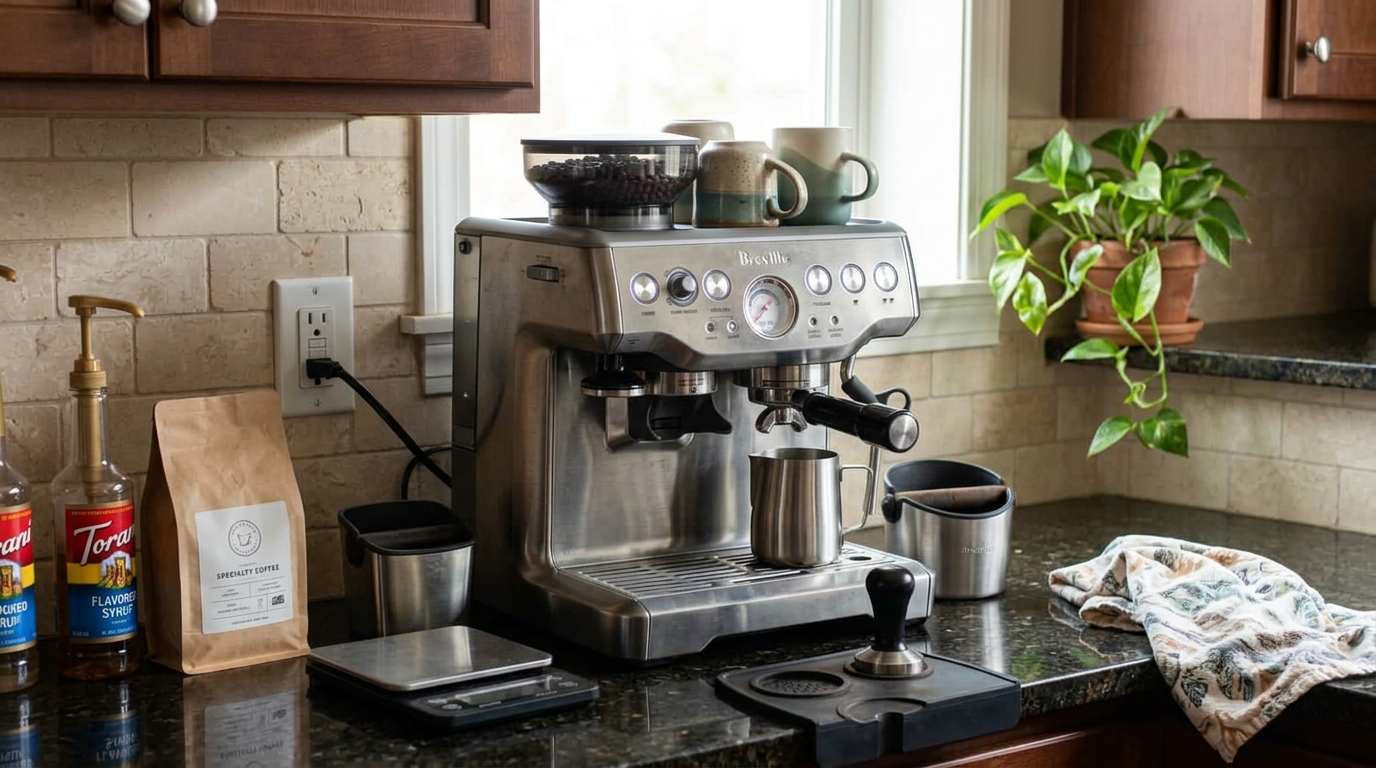
The Breville looks like a small café machine, with a gauge and steam wand on the front.
Width on the counter
Plus space for a knock box and milk jug next to the Breville.
Our tip: Budget a little extra counter space next to the Breville for a knock box and tamping mat, because you will use both every day.
Effort per drink
This is the real difference between these brands, more than any spec.
A latte on the Breville meant grinding into the portafilter, tamping, locking in, pulling the shot, then steaming milk by hand and pouring. It took me about three minutes, plus a little cleanup.
On the De’Longhi and Philips, a latte was one press. I walked away and came back to a finished drink about a minute and a half later.
Hands-on time per latte
Active time only. Waiting while a one-touch machine brews is not counted.
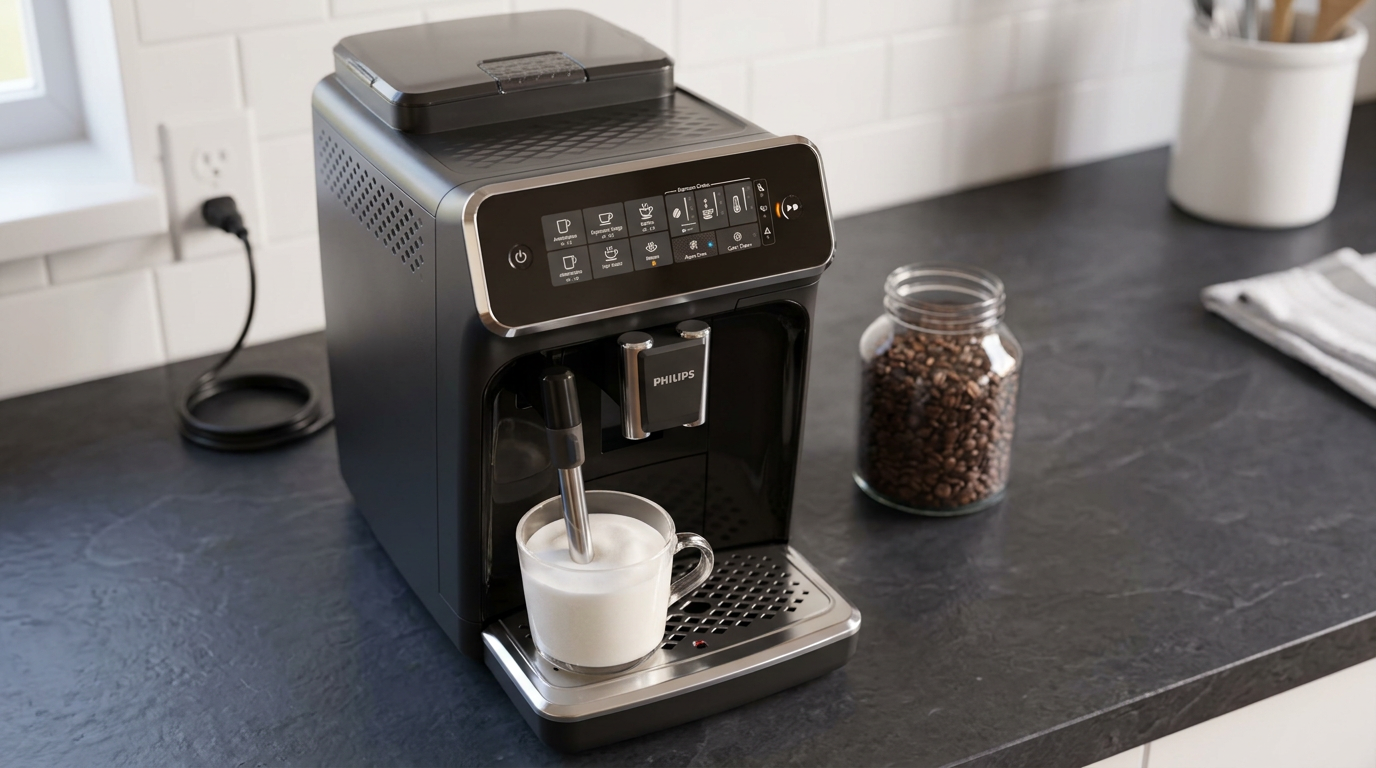
On the Philips, every drink is one touch on a simple icon panel.
That does not make the Breville worse. For many people the ritual is the point, and the result in the cup was the best of the three. But if your mornings are rushed, be honest about it.
Grinders
The Breville uses stainless steel conical burrs✕Conical burrsTwo cone-shaped grinding parts, one inside the other. Beans are crushed between them, and the gap between the burrs sets how fine the coffee is. with 16 settings and timed dosing. I ground about 18 grams for a double, weighed on a kitchen scale.
The De’Longhi uses steel conical burrs with 13 settings and three dose levels of about 9, 12 and 15 grams. The Philips uses ceramic burrs✕Ceramic burrsGrinding parts made of ceramic instead of steel. They stay cooler, run quieter and keep a sharp edge for many years. with 12 settings, and its largest dose measured only about 8 grams.
That dose gap explains a lot of what I tasted. More coffee in the brew unit means more body in the cup.
Maximum dose per espresso
Measured on my kitchen scale.
Our tip: Use the strongest aroma setting and the finest grind on the Philips, because its small dose needs every bit of help to taste full.
Espresso quality
I used the same medium-roast blend in all three machines for most of my testing.
The Breville pulled the best espresso once I had dialed it in. At about 18 grams in and 36 grams out, the shot was sweet, syrupy and full, with a thick crema✕CremaThe golden, foamy layer on top of a fresh espresso. It forms when pressure pushes oils and gases out of the coffee.. Its pressure gauge helped me see when a shot was going wrong.
The De’Longhi’s espresso at its strongest dose was rich and smooth, with real sweetness and very little bitterness. It was the best push-button shot of the three.
The Philips made a pleasant but light espresso. With only about 8 grams of coffee, the body was thin and the crema faded fast, though it tasted clean and never bitter.
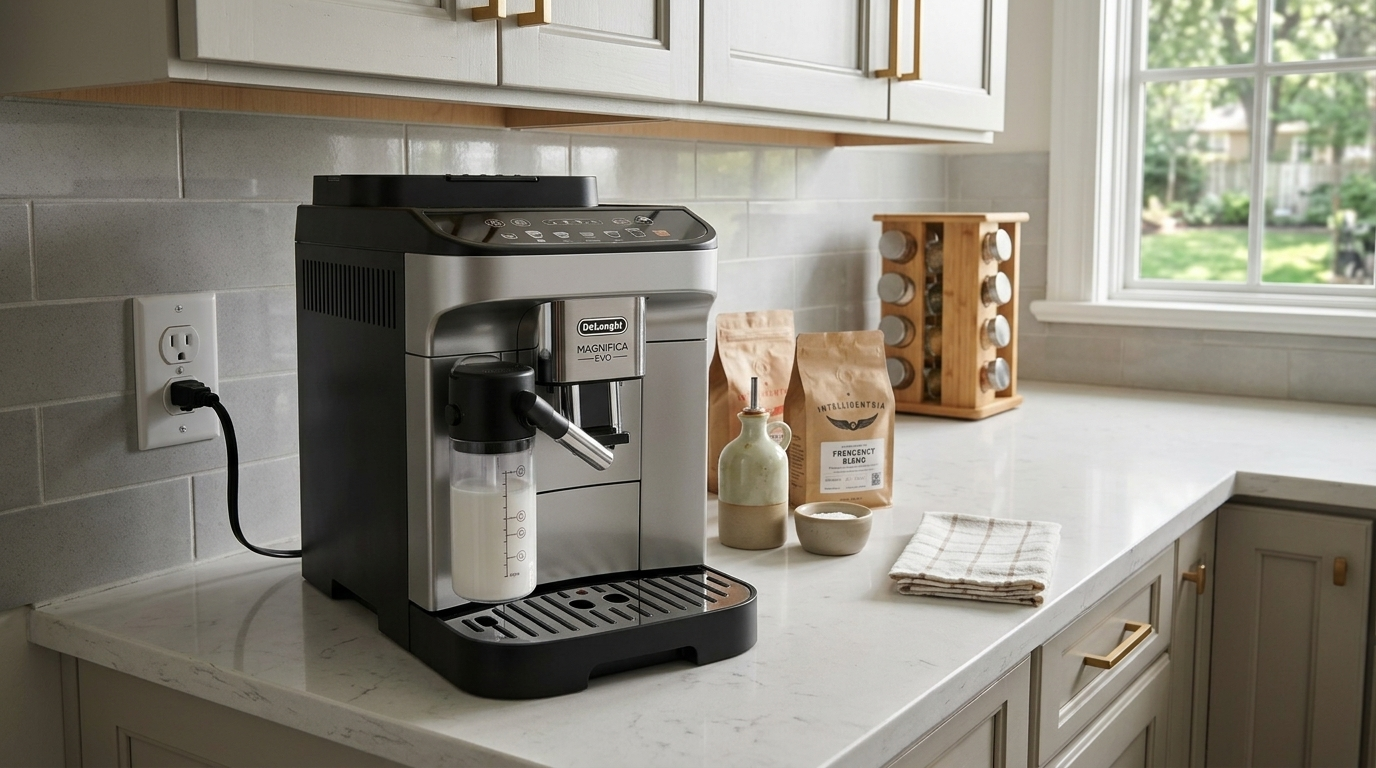
The De’Longhi made the strongest one-touch espresso of the three.
My espresso ratings
My single-review scores out of 10. The De’Longhi scored slightly higher for consistency; the Breville’s best shots tasted richest.
| What you taste | Likely cause | First fix |
|---|---|---|
| Sour, thin, watery | Under-extracted✕Under-extractionWhen water does not pull enough flavor out of the coffee. The shot tastes sour, thin and watery. | Grind finer or raise the dose |
| Bitter, harsh, drying | Over-extraction | Grind coarser |
| Pale crema that fades fast | Stale beans or small dose | Fresh beans, strongest setting |
| Lukewarm shot | Cold cup | Warm the cup first |
If straight espresso is your main drink and you are willing to learn, the Breville gives you the best cup. If you want strong espresso without learning, choose the De’Longhi.
Black coffee
For a mug of black coffee, I made an americano✕AmericanoEspresso topped up with hot water. Because the water is added afterwards instead of being pushed through the coffee, it keeps more sweetness and less bitterness. on each machine.
The Breville’s americano, made from a double shot and its hot water outlet, was the richest. The De’Longhi’s americano and long coffee were round and pleasant. The Philips has a one-touch americano and coffee, and both were smooth and easy-drinking, if mild.
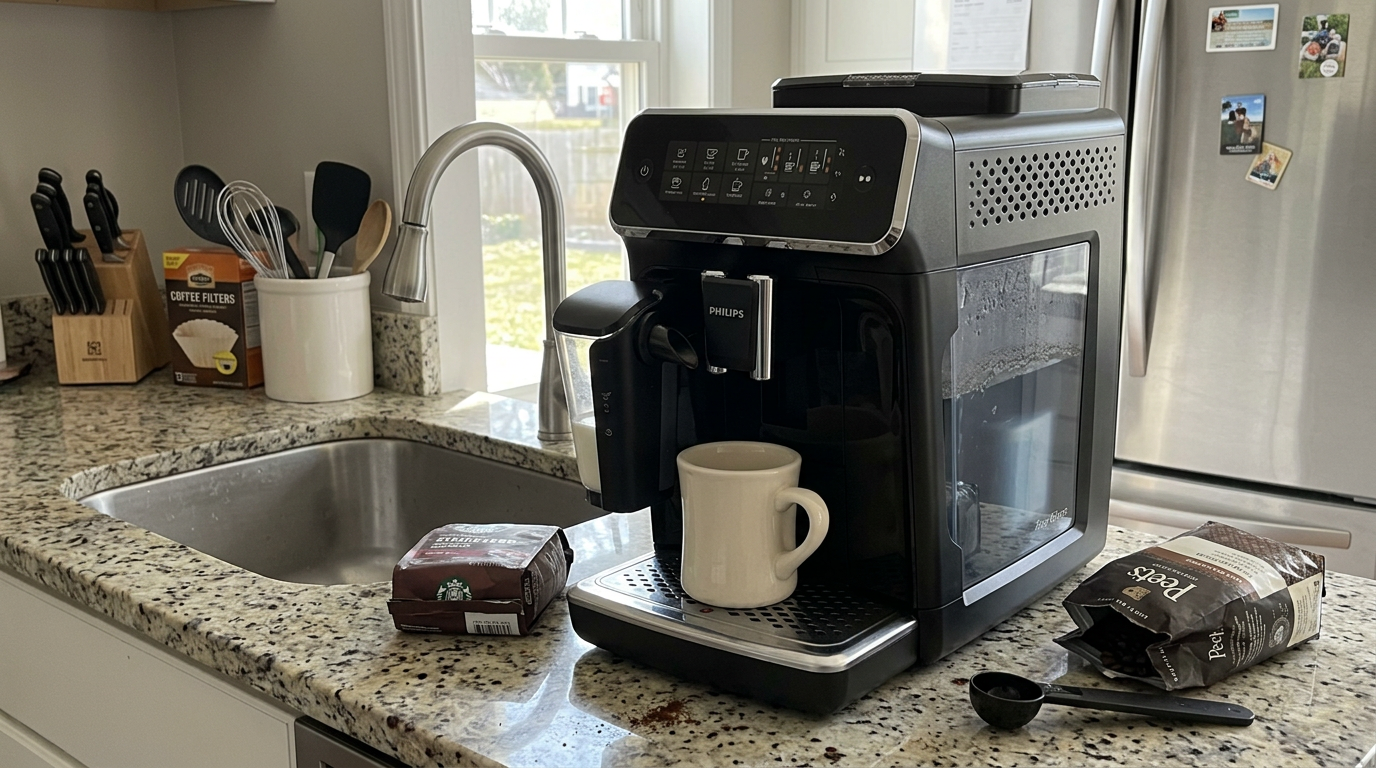
The Philips made a smooth, mild mug that suited everyday drinkers.
Find Out the Price TodayMilk drinks
Each brand has its own milk system, and each has a clear strength.
Breville: a manual steam wand
The Barista Express has a classic steam wand. You stretch and spin the milk yourself into microfoam✕MicrofoamMilk foam with bubbles so small you can barely see them. It feels silky and glossy, which is what latte art needs., and with practice you can pour latte art. It takes skill, and its wand is on the gentle side.
De’Longhi: LatteCrema carafe
The Evo’s LatteCrema carafe pours dense, creamy foam straight into the cup at one touch. It held its shape to the bottom of the cup, and milk came out at about 140°F.
Philips: LatteGo
Philips’ LatteGo✕LatteGoPhilips’ milk system. Milk sits in a small two-part jug that clips onto the front, and it froths in a chamber with no tubes, so it rinses clean in seconds. uses a small two-part jug with no tubes. The foam was airy and pleasant, a little lighter than the De’Longhi’s, and cleanup was the fastest of the three by far.
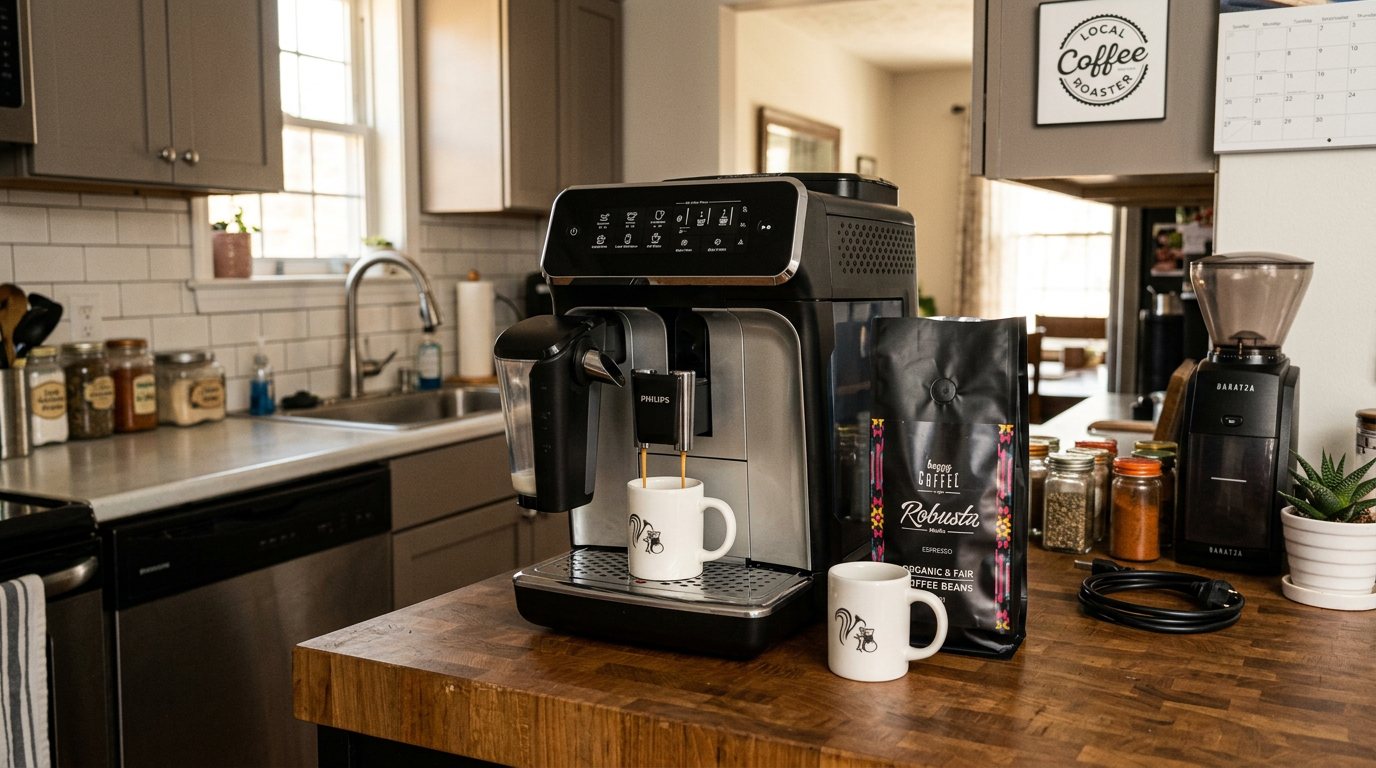
LatteGo has no tubes, so it rinses clean in about 15 seconds.
Milk drinks, my ratings
My single-review scores out of 10 for texture, temperature and ease.
| Milk feature | Breville | De’Longhi | Philips |
|---|---|---|---|
| System | Manual wand | LatteCrema carafe | LatteGo jug |
| One-touch cappuccino | No | Yes | Yes |
| Latte art | Yes | No | No |
| Milk storage | Pour back | Carafe in the fridge | Small jug, about 8.8 oz |
| Cleanup | Purge and wipe | Clean function, wash weekly | Rinse two parts |
Our tip: Use cold whole milk on all three machines, because it made the densest, sweetest foam in every test I ran.
Cleaning and upkeep
Philips won this round easily. Its brew group slides out for a weekly rinse, its LatteGo has no tubes and its AquaClean filter kept descaling prompts far away.
The De’Longhi was a close second. Its brew unit✕Brew unitThe part inside a super-automatic that compresses the ground coffee, holds it while water passes through and then ejects the used puck. also slides out, and its carafe cleans its spout with a quick function after each milk drink.
The Breville asked the most. Knock out the puck, rinse the basket, purge and wipe the wand, wipe the counter, and run a cleaning cycle with a tablet when the light comes on.
My daily hands-on cleaning time
With two milk drinks a day, including wiping the counter.
| When | Breville | De’Longhi | Philips |
|---|---|---|---|
| After each milk drink | Purge and wipe the wand | Run the clean function | Rinse LatteGo |
| Daily | Knock box, tray, counter | Tray and drawer | Tray and drawer |
| Weekly | Wash baskets | Rinse brew unit | Rinse brew group |
| When prompted | Clean cycle, filter change | Descale | AquaClean filter change |
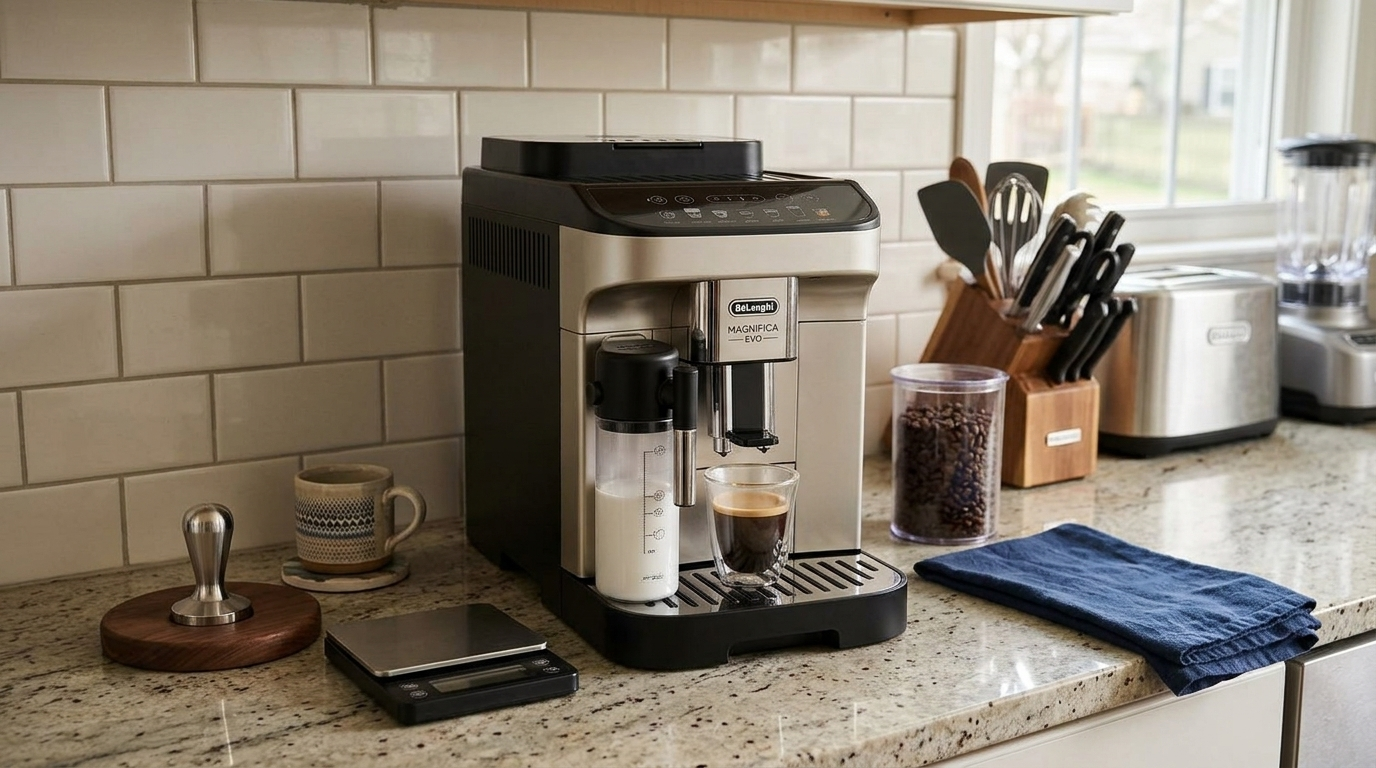
Everything you clean on the De’Longhi slides out from the front.
Our tip: Keep a damp cloth next to the Breville and wipe the steam wand the second you finish, because milk bakes onto the hot metal within a minute.
Noise
The Philips was the quietest of the three, with a soft ceramic grinder and gentle brewing sounds.
The De’Longhi made a moderate grind and a mechanical whir. The Breville’s grinder was quick but sharp, and its steam wand hissed loudly while frothing.
How loud each felt, my ranking
Relative loudness from side-by-side use. Shorter bars are quieter.
Iced drinks
Iced coffee is now a year-round drink in many homes, and the three brands handle it differently.
The De’Longhi has an Over Ice button. It brews a stronger, smaller coffee designed to be poured straight onto ice, so the drink does not turn watery as the ice melts. It was the easiest iced coffee of my test.
On the Breville, I pulled a double shot into a small cup and poured it over a glass full of ice with cold milk. It tasted excellent, because the espresso was so rich, but it took more steps.
The Philips 3200 has no iced setting. I made iced lattes from a strong espresso over ice and cold milk, and they were fine but milder than the others.
| Iced drink | Breville | De’Longhi | Philips |
|---|---|---|---|
| Iced coffee | Double shot over ice | Over Ice button | Espresso over ice |
| Iced latte | Double shot plus cold milk | Over Ice plus cold milk | Espresso plus cold milk |
| Strength over ice | Strongest | Strong | Mild |
| Cold foam | No | No | No |
Our tip: Fill your glass right to the top with ice before pouring any hot coffee over it, because more ice melts more slowly and keeps the drink strong.
Water, beans and long-term care
Owning these machines for years looks quite different by brand.
The Breville is the simplest mechanically. Its parts are on the outside, so the main jobs are keeping the grinder clean, changing the water filter every couple of months and running a cleaning cycle when the light comes on.
The De’Longhi and Philips both have removable brew units, so a weekly rinse under the tap keeps the inside healthy. Philips’ AquaClean filter is the standout here: with it fitted, the machine can go a very long time between descaling prompts.
All three like fresh beans. The Breville is the most sensitive to bean freshness, because you see every change in the shot. The Philips was the most forgiving, partly because its milder espresso hides small differences.
How sensitive each was to bean changes, my ranking
How much I had to adjust when switching to a new bag of beans.
| Long-term item | Breville | De’Longhi | Philips |
|---|---|---|---|
| Water filter | In the tank, change every 2 to 3 months | In the tank | AquaClean, long-lasting |
| Inside cleaning | Cleaning tablets | Rinse brew unit weekly | Rinse brew group weekly |
| Grinder care | Brush the chute weekly | Occasional vacuum of the chute | Occasional vacuum of the chute |
| Bean sensitivity | High | Medium | Low |
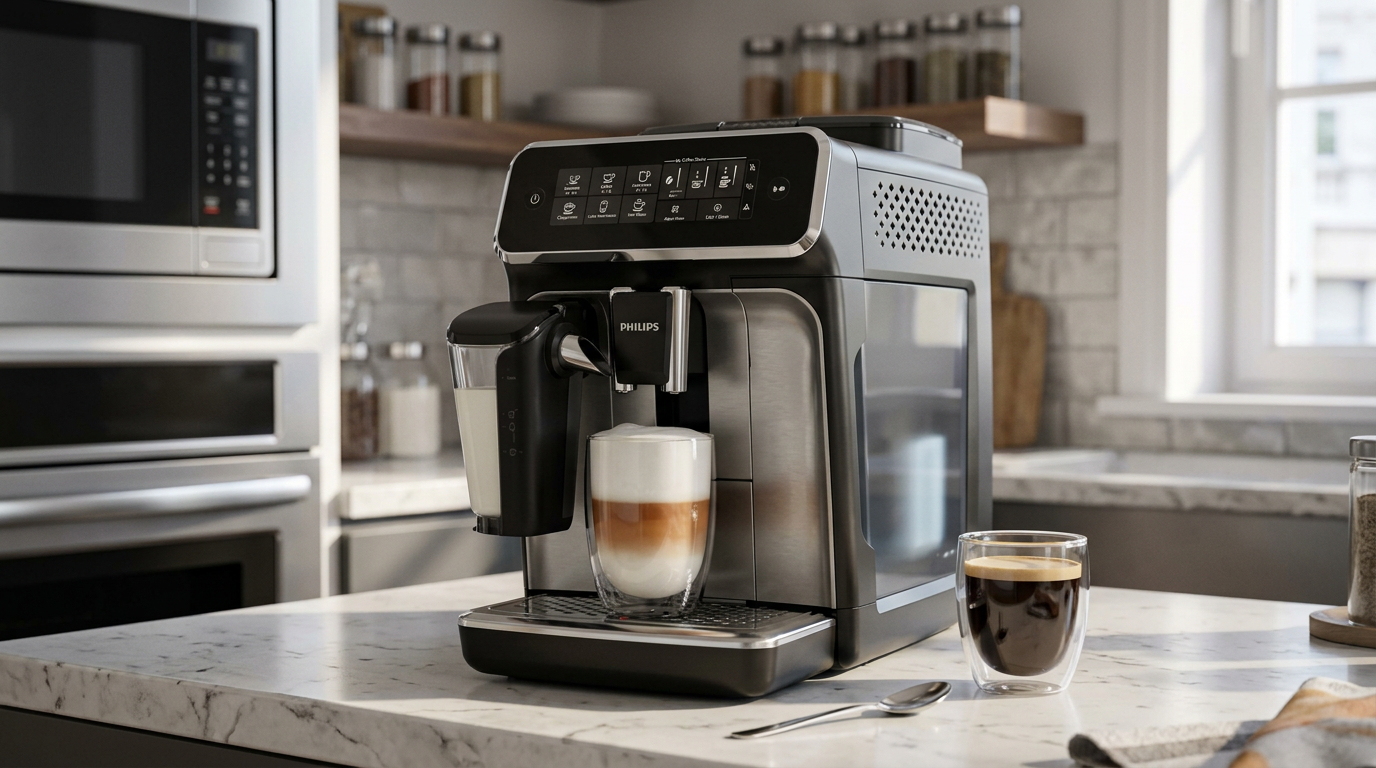
Philips’ AquaClean filter kept descaling prompts far away during my month.
Our tip: Buy beans with a roast date on the bag and finish them within three weeks, because stale beans hurt every machine and the Breville most of all.
Extras worth adding
The two one-touch machines need nothing extra. A spare carafe or jug can be handy if you use different milks, but that is all.
The Breville is happier with a few small additions. A kitchen scale turns its timed dosing into weighed dosing, a knock box keeps the counter tidy and a smaller 12-ounce milk jug makes single lattes easier to steam.
If you think you will outgrow the Breville’s manual workflow, the Barista Pro adds a 3-second heat-up, and the Oracle Touch grinds, doses, tamps and steams for you while keeping the portafilter experience.
| Extra | Breville | De’Longhi | Philips |
|---|---|---|---|
| Kitchen scale | Very useful | Not needed | Not needed |
| Knock box | Essential | Not needed | Not needed |
| Spare milk jug or carafe | Useful | Optional | Optional |
| Descaler | As prompted | As prompted | Rarely with AquaClean |
If you are still torn between two brands
Breville or De’Longhi? Think about your slowest and fastest mornings. If your fastest morning still leaves five minutes for coffee, the Breville will reward you with better espresso. If it does not, the De’Longhi will make you a strong cappuccino while you pack lunches.
De’Longhi or Philips? Taste matters most here. If you drink espresso or strong americanos, the De’Longhi’s bigger dose is worth the extra milk cleaning. If you mostly drink lattes and want the simplest possible routine, Philips’ LatteGo is hard to beat.
Breville or Philips? These two are the furthest apart. One is a hobby, the other an appliance. In my house, the people who loved the Breville were the ones who also enjoyed cooking from scratch, and the people who loved the Philips just wanted a good latte without thinking about it.
There is no wrong answer, only a wrong match. All three brands make machines that will give years of good coffee to the right person.
Four weeks with each: my diary notes
These are the notes I kept as each brand’s machine settled into my real routine.
Breville Barista Express
Week 1: Three days of dialing in. The gauge showed me why my first shots ran fast, and by day four they tasted great.
Week 2: I learned to steam milk properly and poured my first rough heart.
Week 3: On weekdays the routine felt long, so I saved lattes for weekends and drank americanos before work.
Week 4: The best espresso of my month, but also the most counter-wiping.
De’Longhi Magnifica Evo
Week 1: Everyone used it without help. Cappuccino was the most-pressed button.
Week 2: I set the strongest dose as default for espresso, and it stayed there.
Week 3: Over Ice coffee became an afternoon habit.
Week 4: A steady, strong cup every day, with very little thought.
Philips 3200 Series
Week 1: LatteGo won the family over in the first two days. Nobody minded rinsing it.
Week 2: I noticed the espresso tasting light next to the De’Longhi and moved everything to the strongest setting.
Week 3: Lattes and americanos were the drinks that suited it best.
Week 4: The calmest, cleanest machine to live with.
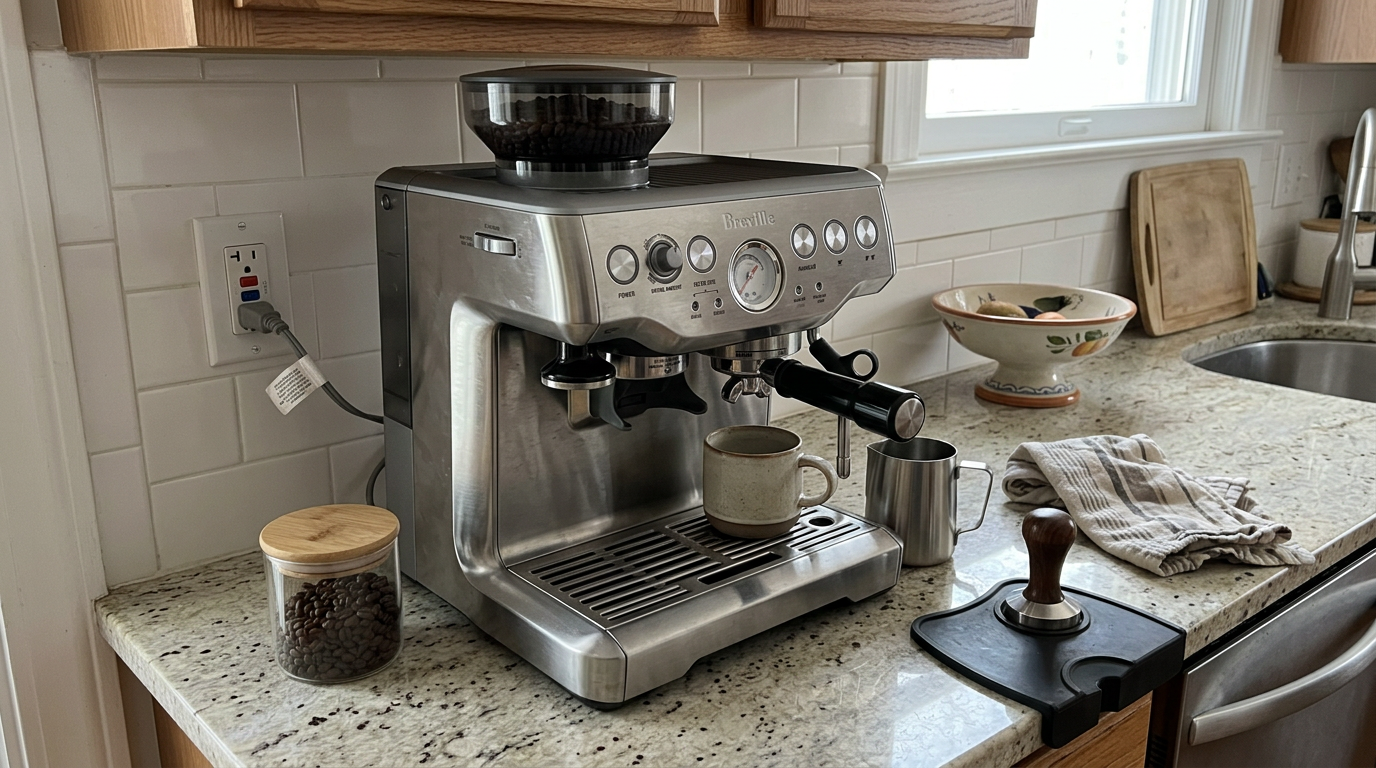
The Breville gave me my best coffee of the month, and my longest mornings.
Real-life scenarios
These are the situations where one brand clearly pulled ahead during my testing.
Only the manual wand can make microfoam glossy enough to pour a pattern.
The 15-gram dose made the fullest push-button shot.
LatteGo rinses in seconds, with no tubes to forget about.
The Over Ice button makes it one touch.
The gauge and manual controls teach you as you go.
The softest grinder and gentlest sounds of the three.
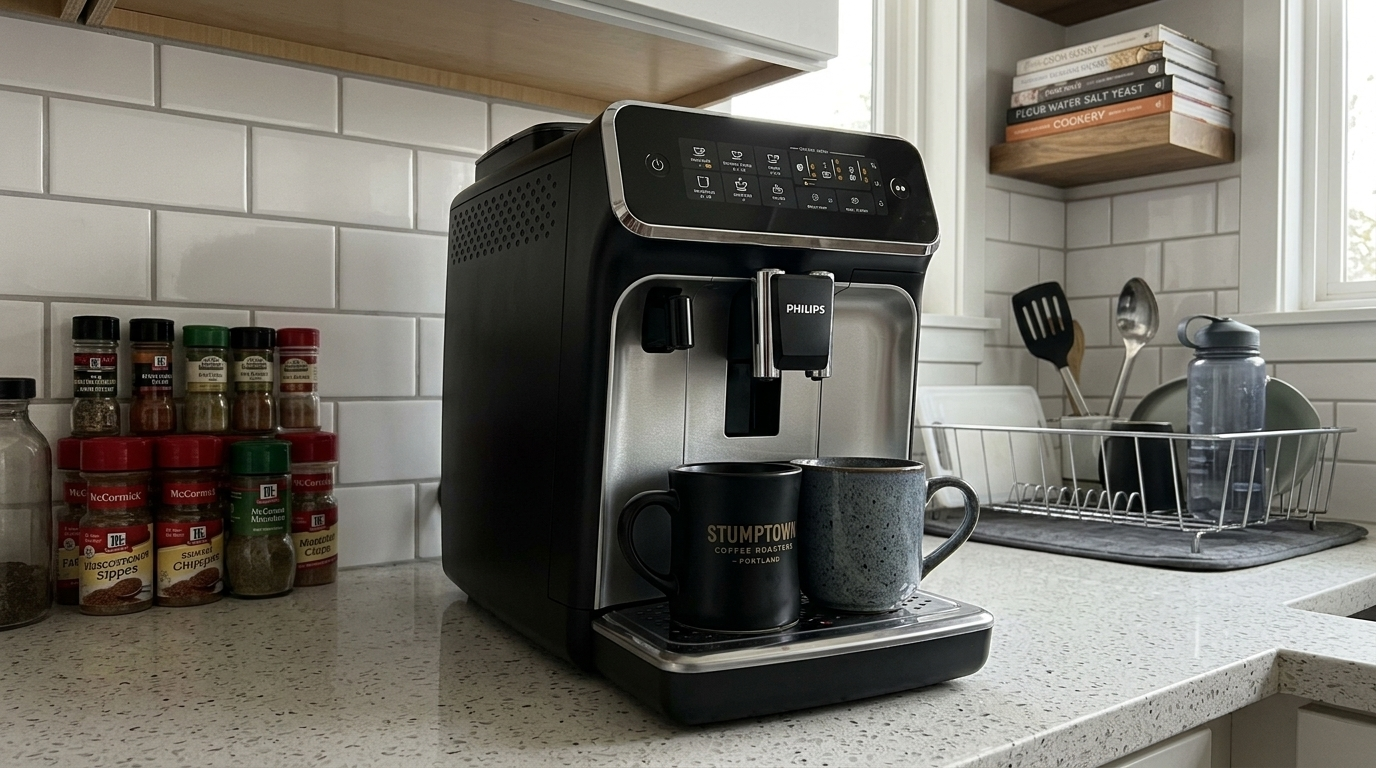
For low-effort mornings, the Philips is the calmest machine of the three.
My scorecard
These are my own scores out of 10, from my single reviews of each machine, plus effort because it decides this brand matchup.
De’Longhi Magnifica Evo
Breville Barista Express
Philips 3200 Series
Overall, I rate the De’Longhi 8.3, the Breville 8.0 and the Philips 8.0. The De’Longhi is the best all-rounder; the Breville the best for craft; the Philips the easiest to live with.
See How Much You’ll SaveWhich one is right for you?
4 quick questionsWhich one should you buy?
Start with the type. If you want to make espresso by hand, Breville is the brand. If you want one-touch coffee, choose between De’Longhi for strength and Philips for easy cleaning. For the wider picture beyond this matchup, see my guide to the best Philips espresso machines.
For deeper head-to-heads, see my De’Longhi vs Philips, Breville vs Philips and Magnifica Evo vs Barista Express comparisons, plus Philips 3200 vs Magnifica Evo.
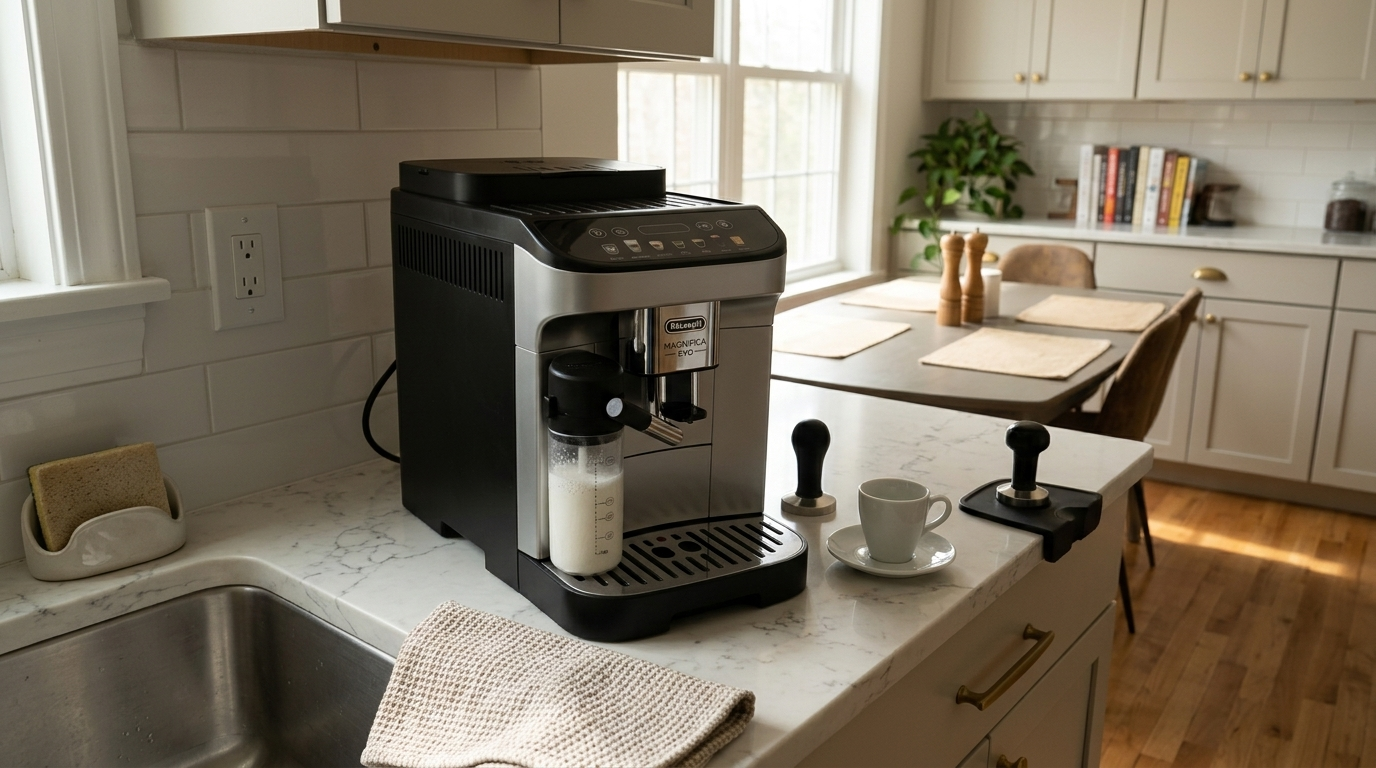
For strong coffee at one touch, De’Longhi earns its place on the counter.
- You want strong coffee at one touch
- You drink cappuccino or latte most days
- You want iced coffee at one touch
- You want to learn latte art
- You want the least milk cleaning
- You want a touchscreen
- You want to learn real espresso
- You want latte art
- You enjoy a morning ritual
- You are short on time
- You hate cleaning the counter
- Several people need coffee fast
- You hate cleaning milk systems
- You like a mild, smooth cup
- You want a light, quiet machine
- You want strong espresso
- You want iced coffee at one touch
- You want lots of drinks
For most homes, my pick is De’Longhi, starting with the De’Longhi Magnifica Evo. It made the strongest push-button espresso and the creamiest one-touch milk of the three brands, and it cleans up in about two minutes.
Choose Breville, with the Breville Barista Express, if you want to make espresso yourself and enjoy learning. Choose Philips, with the Philips 3200 Series, if easy cleaning and a calm routine matter more than strength.
Whichever brand you pick, buy fresh beans, use cold milk and keep up with the small daily cleanup.
Specifications compared
From manufacturer specifications and my own testing.
| Breville Barista Express | De’Longhi Magnifica Evo | Philips 3200 Series | |
|---|---|---|---|
| Type | Semi-automatic with grinder | Fully automatic | Fully automatic |
| One-touch drinks | None | 7 | 5 |
| Pump | 15 bar | 15 bar | 15 bar |
| Heating | Thermocoil, PID | Thermoblock | Thermoblock |
| Grinder | Steel conical, 16 settings | Steel conical, 13 settings | Ceramic, 12 settings |
| Max dose (measured) | About 18 g | About 15 g | About 8 g |
| Milk system | Manual steam wand | LatteCrema carafe | LatteGo |
| Bean hopper | About ½ lb | About 8.8 oz | About 9.7 oz |
| Water tank | 67 oz | About 60 oz | About 61 oz |
| Water filter | Yes | Yes | AquaClean |
| Dimensions (W x D x H) | 12.5 x 13.8 x 15.9 in | 9.45 x 17.3 x 14.2 in | 9.7 x 17 x 14.6 in |
| Weight | About 22 lb | About 21 lb | About 17.6 lb |
How I tested and compared them
Michael Reynolds here. I used each brand’s best seller as my everyday coffee maker for four weeks, making espresso, americanos, cappuccinos, lattes and iced coffee.
I weighed doses, timed every drink, measured milk temperatures with a probe thermometer and foamed whole, semi-skimmed and oat milk on each milk system.
I ran every cleaning routine and compared my notes with each brand’s specifications and owner documentation.
- Coffee: dose, crema, body and consistency.
- Milk: foam texture, temperature and cleanup.
- Workflow: effort per drink and learning curve.
- Ownership: noise, cleaning, water care and footprint.
Breville vs De’Longhi vs Philips FAQ
Which is better, Breville, De’Longhi or Philips?
It depends on how you want to make coffee. Breville is best if you want to make espresso by hand. De’Longhi is best for strong coffee at one touch. Philips is best if easy cleaning matters most.
Is Breville better than De’Longhi?
For hands-on espresso, yes: the Barista Express made the richest shots once dialed in. For convenience, the De’Longhi Magnifica Evo is better, with one-touch drinks and a two-minute cleanup.
Is De’Longhi better than Philips?
For espresso strength, yes. The Magnifica Evo’s 15-gram dose made a fuller shot than the Philips 3200’s 8 grams. For easy milk cleaning, Philips wins with LatteGo.
Which brand is easiest to clean?
Philips. Its LatteGo milk system has two parts and no tubes and rinsed clean in about 15 seconds in my testing.
Which brand makes the strongest espresso?
Breville, if you grind and tamp it yourself. Among one-touch machines, De’Longhi made the stronger espresso.
Can you make latte art with De’Longhi or Philips?
Not with their one-touch carafes. For latte art, you need a manual steam wand like the Breville’s.
Which brand is the quietest?
Philips, in my testing. Its ceramic grinder was the softest of the three.
Do De’Longhi and Philips have removable brew units?
Yes. Both slide out so you can rinse them under the tap. Breville machines use a portafilter instead.
Which brand is best for beginners?
For zero learning curve, De’Longhi or Philips. If you want to learn espresso, Breville is a great teacher.
Which brand is best for iced coffee?
De’Longhi, because the Magnifica Evo has an Over Ice button. On the Breville and Philips, you pour espresso over ice by hand.

- Our hands-on Breville Barista Express review
- Our hands-on De’Longhi Magnifica Evo review
- Our hands-on Philips 3200 Series review
- Breville, De’Longhi and Philips product specifications and owner documentation