De’Longhi Magnifica Evo vs Breville Barista Express: which is easier?
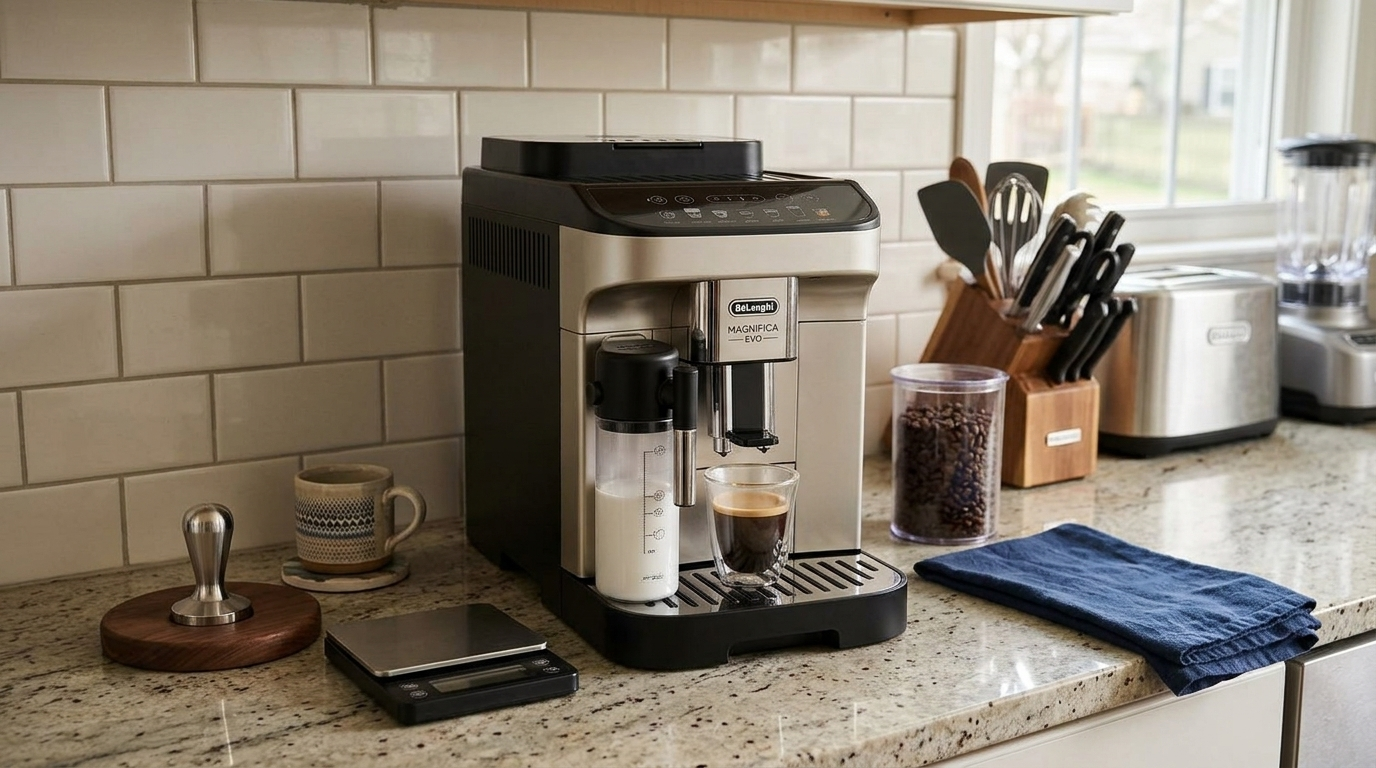
Shoppers cross-shop these two all the time, and on paper they barely compete. The De’Longhi Magnifica Evo is a one-touch machine with a milk carafe, and the Breville Barista Express is a hands-on portafilter machine with a steam wand. In a real kitchen, though, they are chasing the same person: someone who wants better coffee than pods. I lived with each for four weeks, timed every morning and weighed every shot to find out which is easier and which is worth the effort.
We choose products independently. We may earn a commission through links on this page; your price stays the same. Affiliate policy
Jargon helpNew to espresso? Tap any dotted term to see what it means.
In this comparison
If you want the easier machine, it’s the De’Longhi Magnifica Evo, and it isn’t close. It made a rich, repeatable espresso and a hot, dense cappuccino at one touch from day one, and its daily cleanup took about half as long. Buy the Breville Barista Express only if you want to learn espresso as a craft: once dialed in, it pulled the sweeter, more syrupy shot and the only milk I could pour latte art with, but it took me a week and a scale to get there.
The two machines
Specs checked November 14, 2026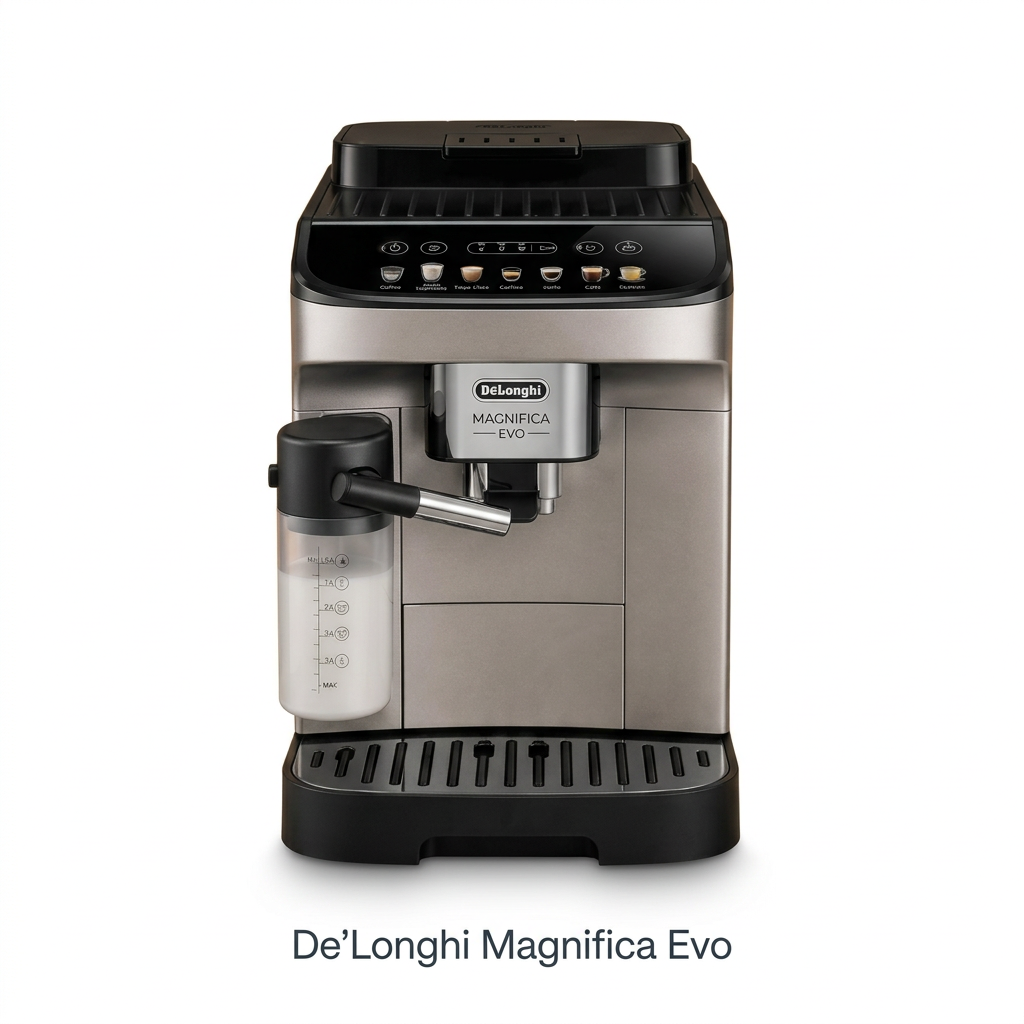
Seven one-touch drinks including iced coffee, a 15 g top dose, MyLatte and a LatteCrema carafe that makes hot, dense foam.
Check price on Amazon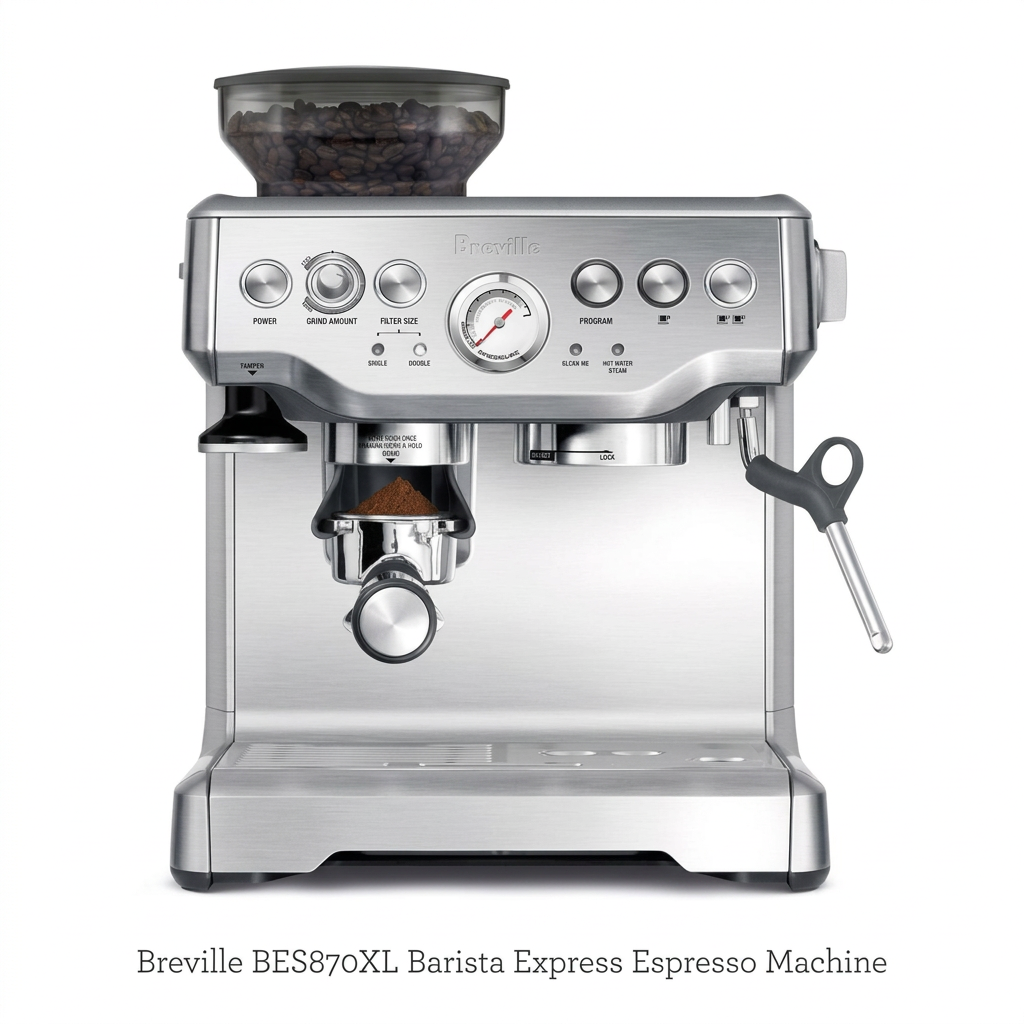
A built-in 16-step grinder, a 54 mm portafilter, a real pressure gauge and a manual steam wand that can pour latte art once you practice.
See Today’s PriceMagnifica Evo vs Barista Express at a glance
- The Evo is far easier: one touch, no tamping, no knock box and half the cleanup.
- The Breville makes the better espresso and milk, but only after you learn it.
- Their doses are surprisingly close, which is why the Evo’s espresso holds up so well.
- Buy for your mornings: busy weekdays favor the Evo, slow weekends favor the Breville.
Head to head
The better result in each row is marked, based on my testing and the manufacturer specs. Rows where they are equal have no winner.
The tally is not my verdict. If ease is your priority, the first few rows outweigh everything else.
| Spec | De’Longhi Magnifica Evo | Breville Barista Express |
|---|---|---|
| Time to a good first drink | First cup ✓ Best | About a week |
| Steps per cappuccino | One press ✓ Best | Grind, tamp, brew, steam |
| Espresso flavormy tasting, same beans | Full and repeatable | Sweeter and more syrupy ✓ Best |
| Dose | Up to about 15 g, automatic | About 15.4 g, timed by you |
| Milk | LatteCrema carafe, one touch ✓ Best | Manual steam wand |
| Latte art | No | Yes, with practice ✓ Best |
| Iced coffee | Over Ice button ✓ Best | By hand |
| Control | Strength and size | Grind, dose, ratio, temperature ✓ Best |
| Heat-up | About 38 s ✓ Best | About 1 min |
| Daily cleaningwith milk drinks | About 3.5 min ✓ Best | About 6 min |
| Width | About 9.45 in ✓ Best | About 12.5 in |
| Water tank | About 60 oz | About 67 oz ✓ Best |
| Rows won | 7 | 4 |
Magnifica Evo vs Barista Express pros and cons
De’Longhi Magnifica Evo
- Rich, repeatable espresso with a 15 g top dose
- Hot, dense LatteCrema foam at one touch
- MyLatte uses exactly the milk you pour in
- No hot milk button without a workaround
- No screen or user profiles
- Passive cup warmer means a cooler first drink
Breville Barista Express
- Sweet, syrupy espresso once dialed in
- Pressure gauge makes dialing in easy to learn
- Steam wand can make real latte-art microfoam
- Grinder needs an inner-burr tweak out of the box
- Slow steam and a wait between brewing and frothing
- No low-water sensor on the tank
Who should buy which machine?
- Busy households that want one-touch drinks
- Cappuccino and latte drinkers
- Anyone who wants no learning curve
- People who want to learn espresso
- Latte art practice
- Espresso drinkers who chase the best cup
What “easier” really means here
Easy is not one thing. A machine can be easy to set up, easy to use every morning, easy to get great results from or easy to clean, and these two win different parts.
The De’Longhi Magnifica Evo is a super-automatic✕Super-automaticA machine that grinds, doses, tamps, brews and usually froths milk at the press of a button, with no portafilter to handle.. It grinds, doses, tamps, brews and froths inside the case, so the only skill you need is pressing the right picture.
The Breville Barista Express is a semi-automatic✕Semi-automaticA machine where you grind, dose and tamp into a portafilter yourself, and the machine controls the water and pressure. with a built-in grinder. You dose into a portafilter✕PortafilterThe handle with a metal basket that holds the ground coffee. You lock it into the machine to brew., tamp by hand, start and stop the shot and steam milk with a wand.
| Kind of easy | Magnifica Evo | Barista Express |
|---|---|---|
| Setup | About 15 minutes | About 15 minutes, plus a week of dialing in |
| Daily use | One press | Four or five steps per drink |
| Great results | Good from day one | Better, after practice |
| Cleaning | Drawer, tray and carafe Clean | Puck, basket, wand and backflush |
| Fixing a bad cup | Change strength or grind | Weigh, adjust, re-tamp |
So the honest answer is that the Evo is easier at almost everything. The Breville is only easier in one way: once you know it, it’s easier to make the exact cup you want.
There’s also a mental kind of easy. With the Evo, nobody in my house worried about doing it wrong; with the Breville, my partner wouldn’t touch it until I’d written the settings on a sticky note.
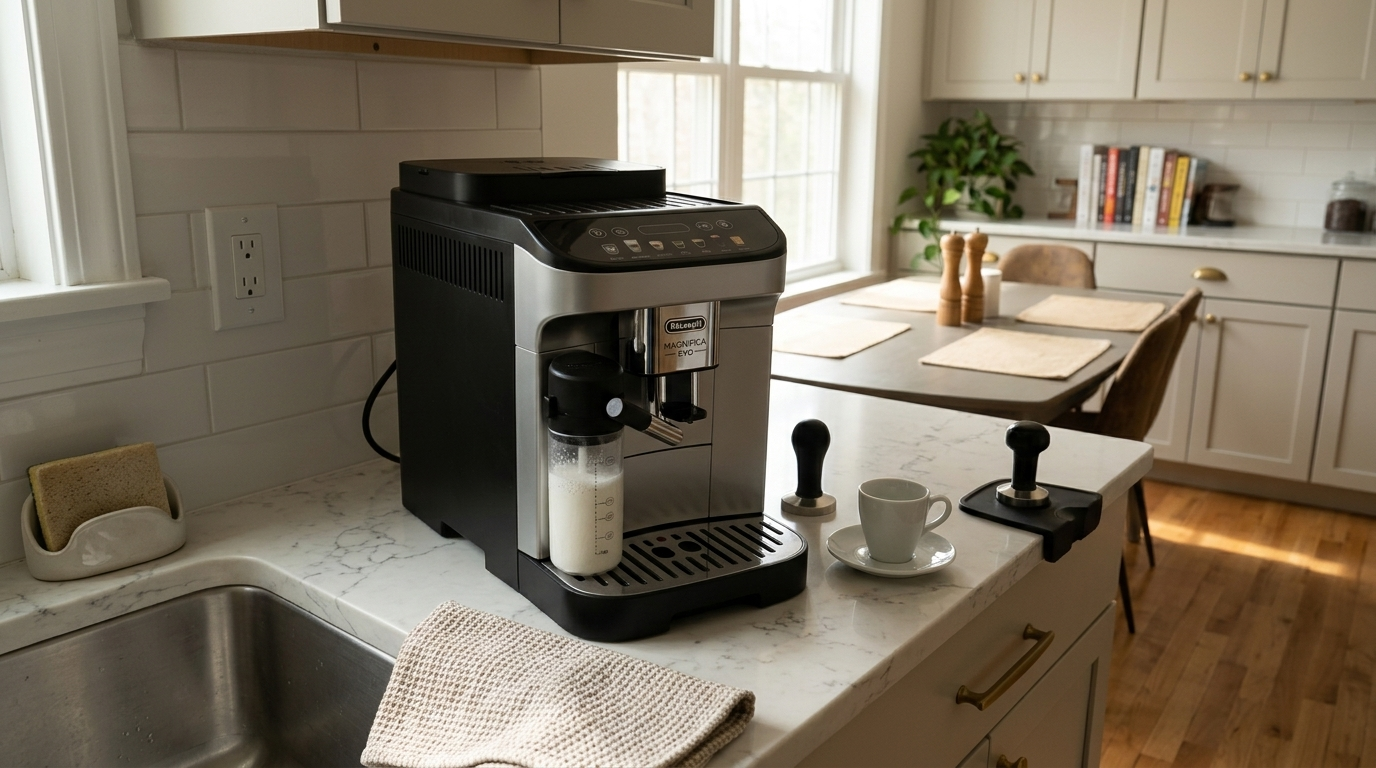
The Magnifica Evo turns a cappuccino into a single button press.
Our tip: Count the steps in your ideal morning coffee before you buy, because every manual step is fun on Sunday and a chore on a rushed Tuesday.
Design, size and build
The Evo is a slim, mostly plastic box with a row of backlit drink icons and a carafe that clicks onto the front. It measures about 9.45 inches wide, 17.3 deep and 14.2 tall, and weighs around 21 pounds.
The Breville is brushed steel with a big pressure gauge, a steam wand on the side and the grinder hopper on top. It measures about 12.5 inches wide, 13.8 deep and 15.9 tall with the hopper on.
Width on the counter
The Evo is narrower but deeper; the Breville needs room for accessories.
In practice, the Breville takes more space than its footprint suggests. A knock box, a milk jug, a tamping mat and a scale all end up beside it.
The Evo keeps the counter clear. Pucks drop into an internal drawer, and the carafe can live in the fridge.
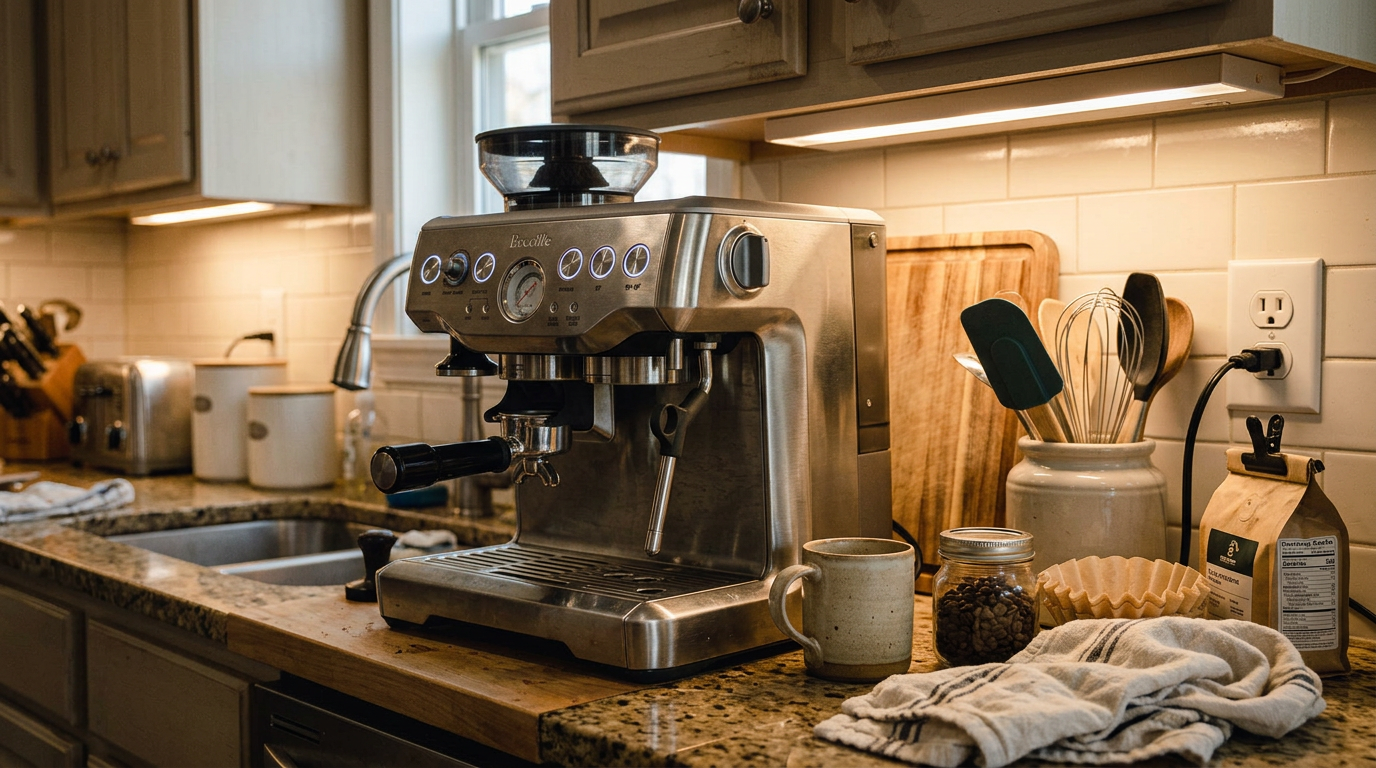
The Barista Express looks and feels like a small café machine.
The Evo’s coffee spouts slide up and down, from small espresso cups to mugs up to about 5.5 inches tall. The Breville’s clearance under the portafilter suits espresso cups and small mugs, so big travel mugs need the espresso poured over afterward.
Build quality favors the Breville. The steel body and heavy portafilter feel premium, while the Evo’s plastic panels are practical and light.
Our tip: Leave about 2 inches above both machines, because you need room to lift the bean hopper lid without sliding the machine forward.
Setup and the learning curve
This is where the gap between them is widest. The Evo was making good drinks in the first hour, and the Breville took me most of a week.
Magnifica Evo: first cup
Setup is a water hardness strip, the filter, a rinse and you’re done. From a cold start it was ready in about 38 seconds, including a short automatic rinse.
The only change I made was moving the grind from the middle of the range down to setting 3, with the high strength level. That single change made the biggest difference all month.
Barista Express: a week
The Breville’s grinder ran too coarse from the factory. I emptied the hopper, lifted out the upper burr and moved it from 6 to 2, so the side dial had fine steps left.
My first double gave me only about 8 grams. I adjusted until the scale read about 15.4 grams every time, then aimed for 30 grams out in 25 to 30 seconds.
How confident I felt, by week
My own rating of how reliably I got the drink I wanted.
Grinder and dose
Here’s the surprise that explains why the Evo’s coffee holds up so well. The two doses are almost the same.
The Evo grinds up to about 15 grams at its strongest setting. That is unusually generous for a fully automatic machine, and you can taste it.
The Breville’s double basket wants 15 to 15.5 grams. The difference is that you choose the grind, check the dose and tamp it yourself.
Coffee per strong espresso
Weighed on my scale.
Both use steel conical burrs✕Conical burrsA cone-shaped burr that turns inside a ring-shaped burr. The gap between them sets how fine the coffee is ground.. The Evo has 13 settings, and the Breville has 16 on the side dial plus the inner burr.
| Grinder detail | Magnifica Evo | Barista Express |
|---|---|---|
| Burrs | Steel, conical | Steel, conical |
| Settings | 13 | 16, plus inner burr |
| How it doses | Automatic, by strength | By time, you check |
| Top dose | About 15 g | About 15.4 g, my target |
| Adjust while | Grinding | Grinding |
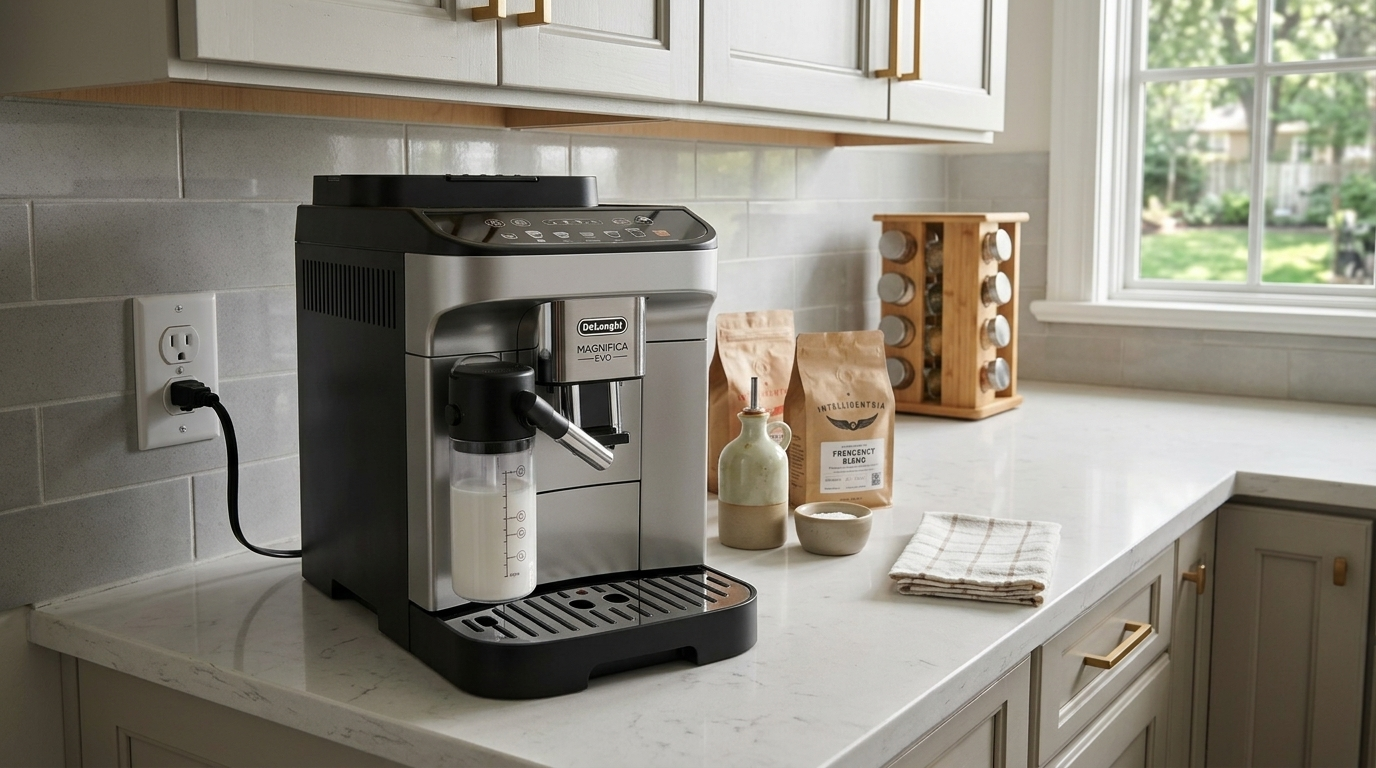
The Evo grinds up to about 15 g, a generous dose for a one-touch machine.
Our tip: Use the high strength level on the Evo for every milk drink, because medium strength made cappuccinos taste thin and milky.
Espresso quality
With the same medium roast, the Breville made the better espresso. The margin was smaller than I expected.
Dialed in at 15.4 grams and step 7, the Breville Barista Express pulled sweet, syrupy shots with a thick crema✕CremaThe golden, foamy layer on top of a fresh espresso. It forms when pressure pushes oils and gases out of the coffee.. Most landed between 26 and 30 seconds for 30 grams out, with the gauge in the espresso zone.
The De’Longhi Magnifica Evo made a full, aromatic espresso with a consistent layer of crema. My shots measured around 8 percent TDS✕TDS (total dissolved solids)The share of the drink that is dissolved coffee. Espresso usually lands somewhere around 8 to 12 percent., a balanced result for an automatic machine.
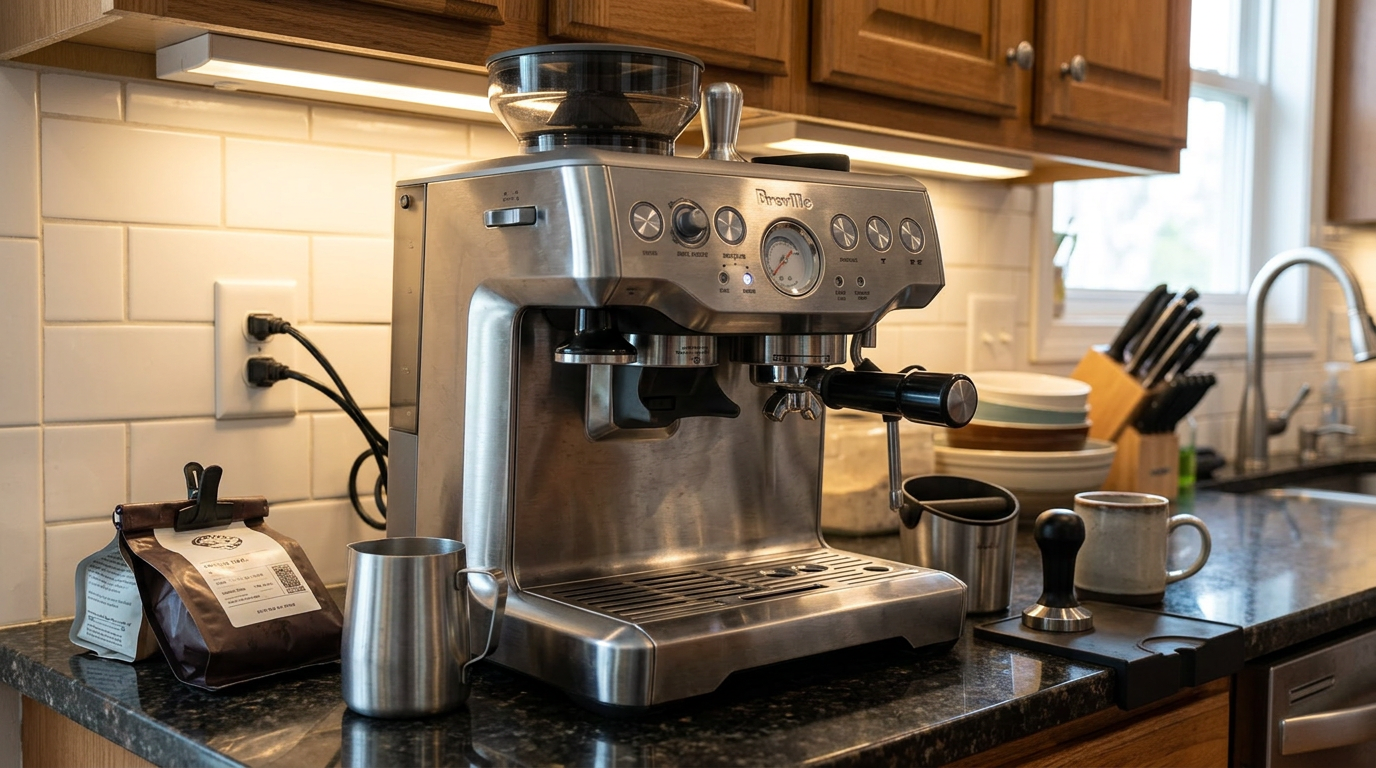
Once dialed in, the Barista Express pulled the sweeter, more syrupy shot.
My espresso ratings
Scores out of 10 for body, sweetness, crema and consistency.
A quick blind test made the point. I served both espressos to two people who drink coffee daily but don’t care about gear; both picked the Breville’s shot straight, and neither could tell them apart once I added milk.
Consistency told the opposite story. Every Evo espresso tasted the same, while the Breville drifted whenever I stopped weighing for a few days.
Light roasts were easier on the Breville, which goes finer and lets you raise the temperature. On the Evo, light roasts could taste sour even at setting 2.
| What you taste | Evo fix | Breville fix |
|---|---|---|
| Sour, thin | Grind finer, high strength | One step finer |
| Bitter | Grind coarser, shorter size | One step coarser |
| Weak in milk | High strength | Double basket |
| Lukewarm | Warm the cup with hot water | Warm cup and portafilter |
Milk drinks
This is where ease of use matters most. Milk drinks are the hardest thing to do well by hand and the easiest thing to automate.
Evo: LatteCrema at one touch
You fill the LatteCrema✕LatteCremaDe’Longhi’s milk carafe system. It draws cold milk from the carafe and froths it automatically for one-touch milk drinks. carafe, click it on and press Cappuccino. The Evo pours dense, hot foam into the cup, and milk came out at about 140°F, the range where milk tastes sweetest.
That temperature matters. Research from the University of Camerino found milk foam is most stable at around 60°C, or 140°F.
MyLatte uses exactly the milk you pour in. I poured 2 to 3 fluid ounces for a cortado✕CortadoA small drink of espresso cut with roughly the same amount of warm milk, with very little foam. and a full carafe for a big weekend latte, and both worked.
Breville: real microfoam, by hand
The Breville’s steam wand✕Steam wandA metal pipe that blows steam into a jug of milk. You control the air and the spin, so you can make real microfoam. builds steam in about 15 seconds. After about 40 seconds of steaming, my milk looked like glossy paint, and by week three I could pour a heart.
It’s more work and slower: two milk drinks took about six minutes because of the switch from brewing to steaming.
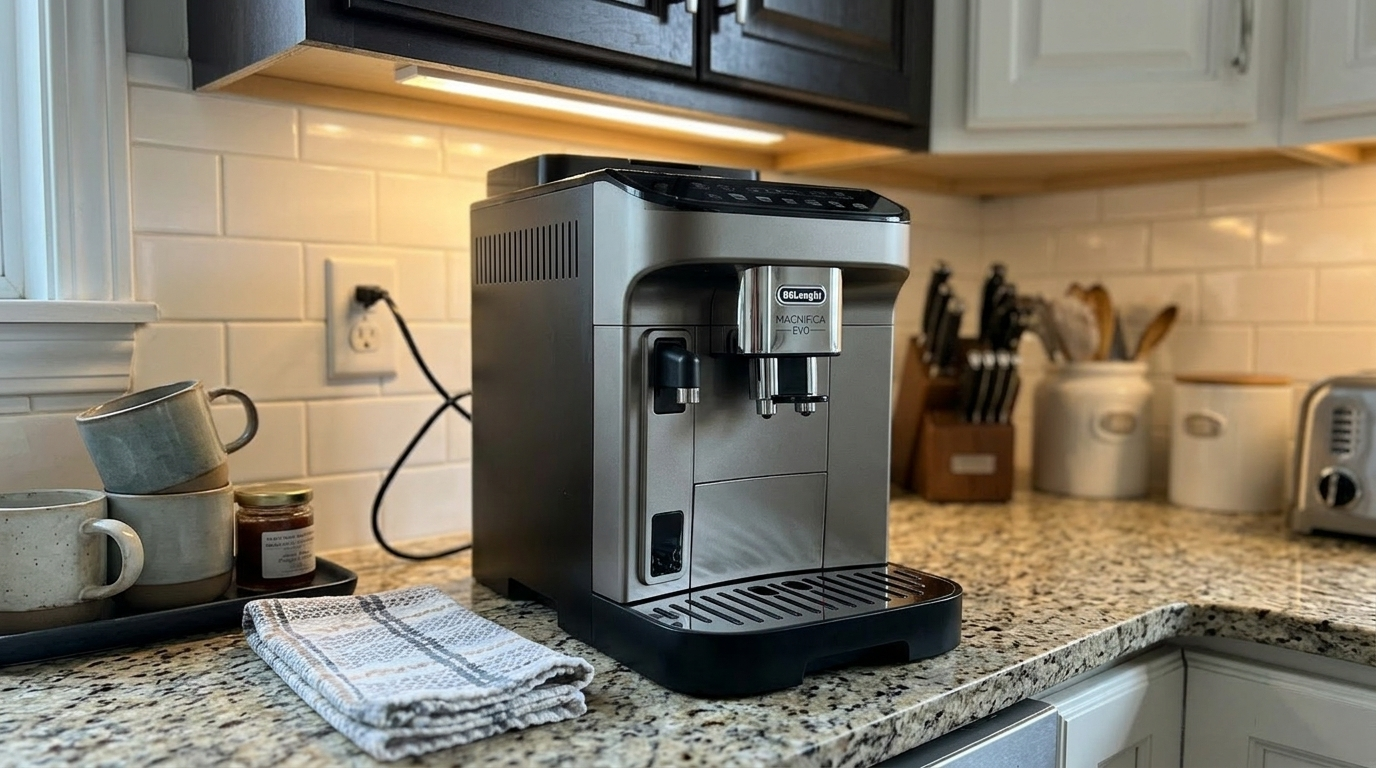
LatteCrema made hot, dense foam with one press, every time.
Evo drinks, my scores
Scores out of 10 from my single review of the Evo.
| Milk drink | Magnifica Evo | Barista Express |
|---|---|---|
| Cappuccino | One touch | By hand |
| Latte | One touch or MyLatte | By hand |
| Flat white✕Flat whiteA short milk coffee with a double shot and a thin layer of silky microfoam. Stronger and less foamy than a cappuccino. | MyLatte, small pour | By hand, best texture |
| Latte art | No | Yes |
| Hot milk only | Needs a workaround | Yes |
| Two milk drinks | About 3 min | About 6 min |
A morning with each
I timed real mornings, from switch-on to the first sip, for a cappuccino and an espresso.
On the Evo: switch on, put a cup under the spouts for the 38-second rinse, take the carafe from the fridge and press Cappuccino. About two minutes later, I was drinking it.
On the Breville: switch on, run a blank shot to warm the group, grind, weigh, tamp, brew, switch to steam, steam, pour, then purge the wand and knock out the puck. It took four to five minutes.
| Step | Magnifica Evo | Barista Express |
|---|---|---|
| Heat-up | About 38 s | About 1 min |
| Make the coffee | One press | Grind, tamp, brew |
| Milk | Part of the press | About 40 s steaming |
| Clean up | Press Clean | Purge, wipe, knock out |
| Total, one cappuccino | About 2 min | About 4–5 min |
Switch-on to first sip, one cappuccino
Average of my weekday mornings.
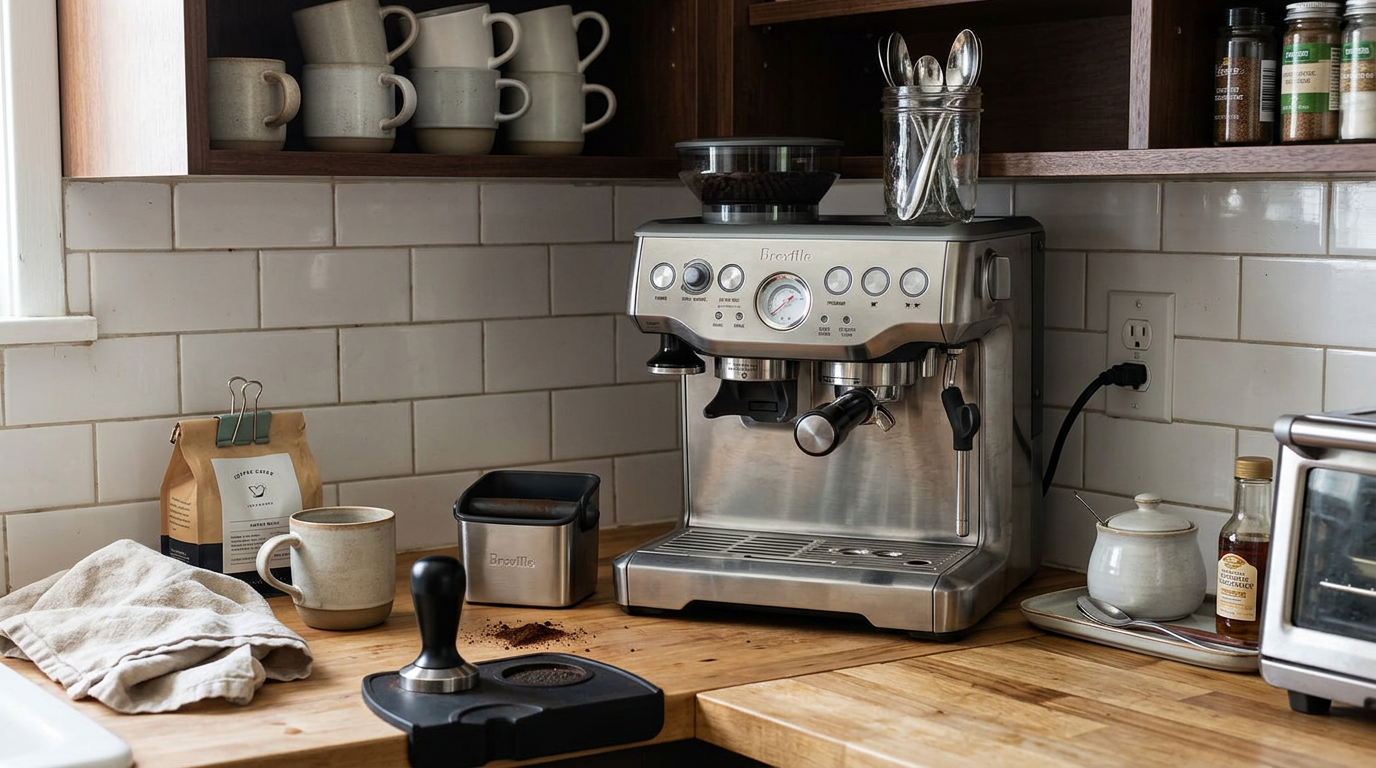
The Breville routine is slower, but on a slow morning it’s part of the pleasure.
Our tip: Fill the Breville’s tank the night before, because it has no low-water sensor and running dry mid-shot is the worst way to start the day.
Cleaning and upkeep
The Evo’s daily cleaning is mostly automatic. It rinses on startup and shutdown, drops pucks into a drawer that holds about 14 and cleans the carafe at the press of a button.
I measured about 1.9 fluid ounces of water used on startup and about 0.6 on shutdown. That rinse water goes into the drip tray, so empty it daily.
The Breville needs a minute or two after every drink, and a backflush✕BackflushRunning water backwards through the group head with a blank basket and cleaning tablet to clear coffee oils from the valve. with a cleaning tablet when prompted. Weekly, I brushed the group gasket and grinder chute.
My daily hands-on cleaning time
My estimate of hands-on time per day, not counting automatic rinses.
| When | Magnifica Evo | Barista Express |
|---|---|---|
| After milk | Press Clean | Wipe and purge the wand |
| Daily | Empty drawer and tray | Empty tray, wipe the shower screen |
| Weekly | Rinse brew unit, wash carafe lid and tubes | Brush gasket and grinder chute |
| When prompted | Descaling✕DescalingRunning a mild acid through the machine to dissolve the mineral scale that hard water leaves in the heater and pipes., about 45 min | Backflush with a tablet |
| Every 2–3 months | Replace the filter | Replace the filter |
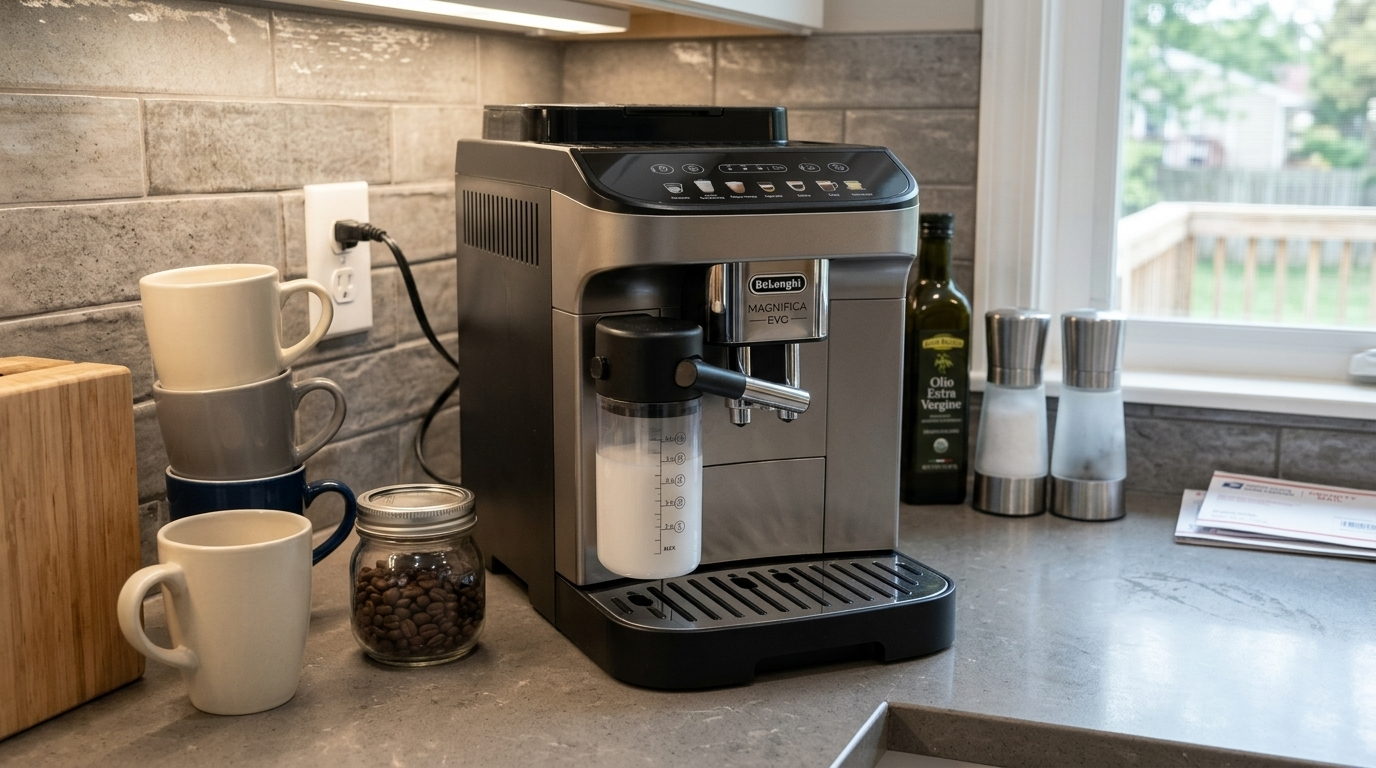
The Evo’s pucks go into a drawer, so there’s no knock box on the counter.
Our tip: Take the Evo’s carafe lid apart once a week and wash the small tubes, because the Clean button alone doesn’t clear milk fat from every passage.
Noise
The Evo’s grinder peaked at about 70 to 71 dB in the first five or six seconds, with milk frothing around 60 to 62 dB and the pump at about 60 dB.
The Breville makes classic espresso noises: a vibration-pump buzz, a hissing wand and the thud of a puck in the knock box. It’s not louder overall, just busier.
Noise I measured on the Evo
Readings from my meter about 3 feet away.
Neither woke anyone in my house. In a small open-plan apartment, the Evo’s shorter routine meant less noise overall.
Water, beans and supplies
The Evo’s 60-ounce tank lasted about two days for two of us, and its drawer needed emptying every couple of days. The Breville’s 67-ounce tank has a lid on top for topping up with a jug.
Bean use is close, because the doses are close. Both did best with fresh medium and medium-dark roasts.
| Bean type | Magnifica Evo | Barista Express |
|---|---|---|
| Medium-dark blend | Full body, grind 3 | Rich body, thick crema |
| Medium roast | Brighter and sweet | Sweet, chocolatey |
| Light roast | Can taste sour | Finer, a little hotter |
| Very dark, oily | Not recommended | Coarser, more cleaning |
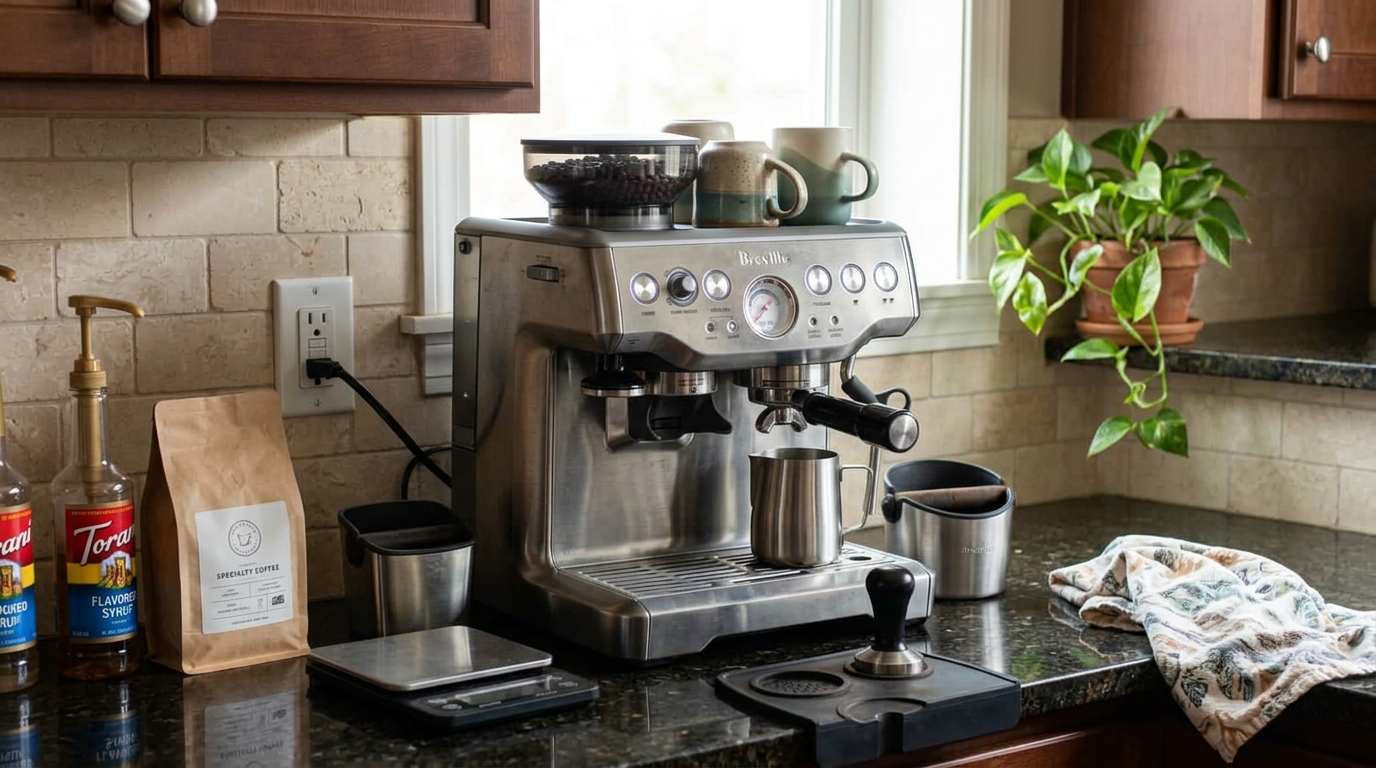
Both machines use about the same amount of coffee per strong espresso.
Used pucks from either machine make a good addition to compost when mixed with other materials.
Our tip: Avoid very oily beans in the Evo, because they stick in the hopper and can clog the grinder path over time.
How four weeks went
First impressions can mislead. Here is how my view of each machine changed over a month of daily use.
| Week | Magnifica Evo | Barista Express |
|---|---|---|
| 1 | Grind moved to 3; cappuccinos great from day one | Inner burr moved; shots sour until day five |
| 2 | MyLatte cortados became my afternoon drink | Gauge in the espresso zone almost every shot |
| 3 | Weekly carafe strip-down became routine | First latte-art heart; steaming got faster |
| 4 | Machine faded into the background, in a good way | Weighing every few days kept shots consistent |
By the end, my household had split along predictable lines. Everyone used the Evo on weekdays, and I used the Breville on weekends, when making the coffee was part of the point.
If you can only have one, be honest about which of those mornings you have more of. Most people have more rushed Tuesdays than slow Sundays.
Getting the most from each
- Evo: grind setting 3, high strength and a pre-warmed cup for espresso.
- Evo: keep the carafe in the fridge and press Clean after every milk drink.
- Breville: weigh 15 to 15.5 grams and aim for about 30 grams out in 25 to 30 seconds.
- Breville: steam cold whole milk in a small jug and stop when it’s too hot to hold.
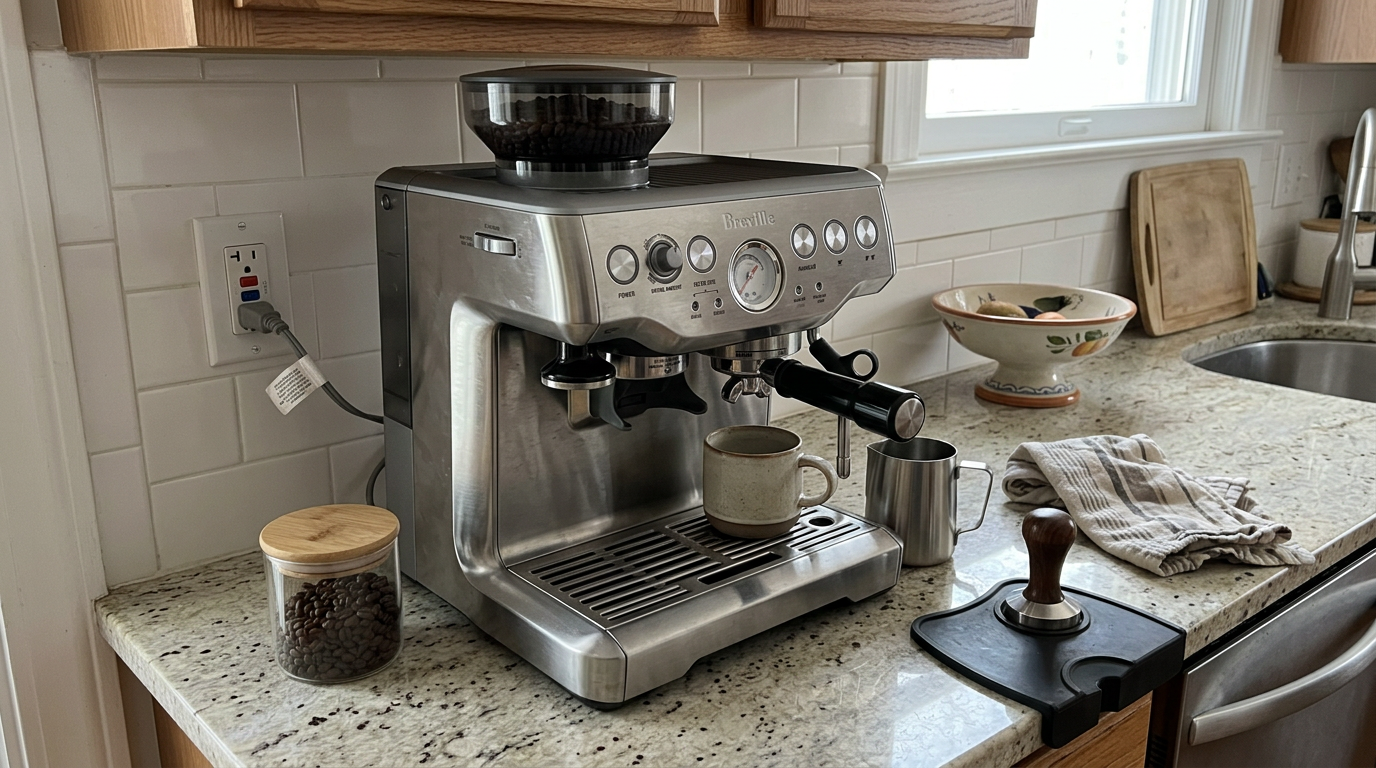
On slow weekends, the Breville’s ritual is part of the pleasure.
Our tip: Pre-warm your cup with hot water before a cappuccino on the Evo, because its passive cup warmer leaves the first drink of the day a little cool.
Mistakes to avoid on each
Each machine has its own traps. These were the habits that held them back most during my test.
| Machine | Mistake | Better habit |
|---|---|---|
| Magnifica Evo | Leaving strength on medium | Use the high strength level |
| Magnifica Evo | Skipping the Clean function | Clean after every milk drink |
| Magnifica Evo | Relying on the cup warmer | Warm cups with hot water |
| Magnifica Evo | Pouring over a few ice cubes | Use Over Ice with a full glass |
| Barista Express | Factory inner burr setting | Move the upper burr finer once |
| Barista Express | Guessing the dose | Weigh at least weekly |
| Barista Express | Tilted tamp | Tamp level and firm |
| Barista Express | Forgetting the tank | Check the water every morning |
On the Evo, medium strength was the biggest trap. It made cappuccinos taste thin and milky, while the high strength level brought the coffee back.
On the Breville, the inner burr is the trap almost everyone hits. Until you move it, the side dial runs out of fine steps and no amount of tweaking fixes sour shots.
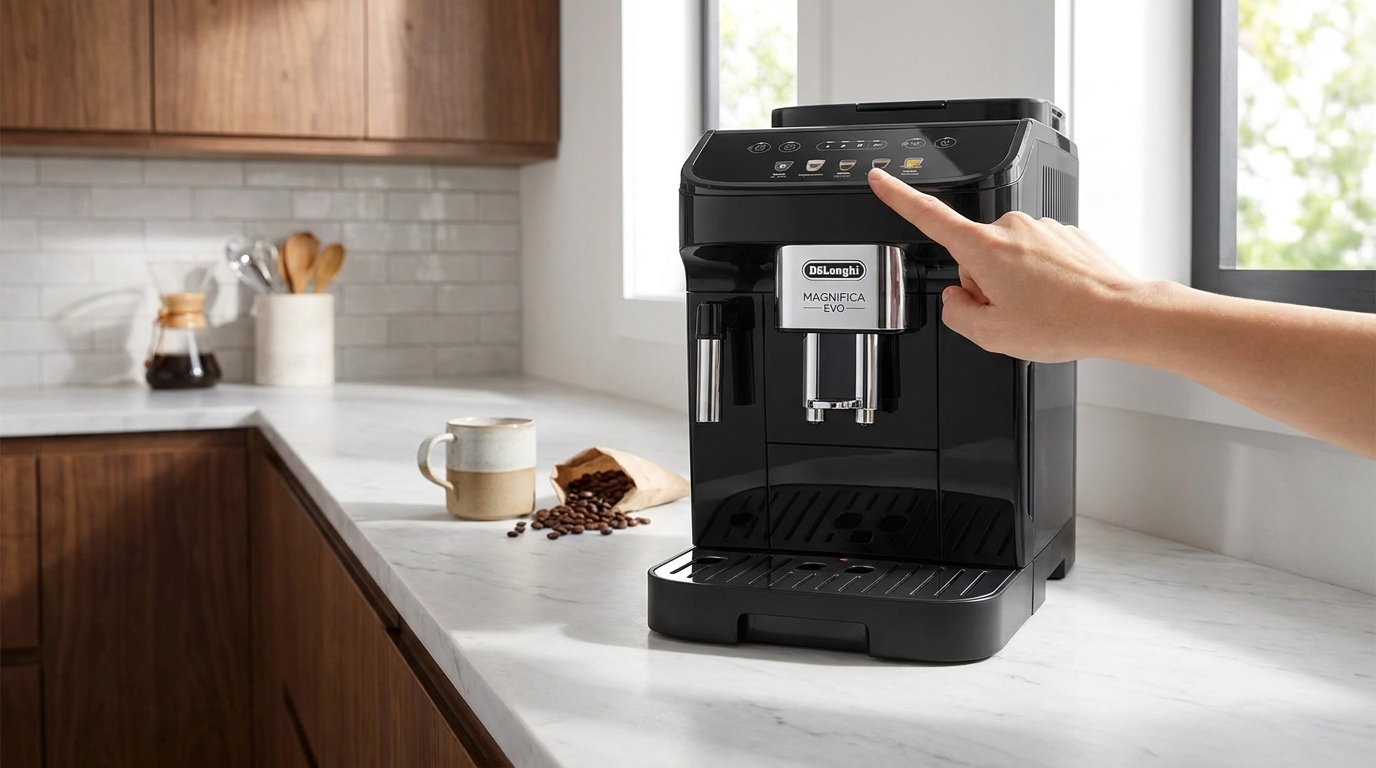
Use a full glass of ice with Over Ice for a less watery iced coffee.
Our tip: Only turn the grind knob while the grinder is running on both machines, because turning it while stopped can jam the burrs.
Real-life scenarios
Specs only go so far. These are the situations where one machine clearly pulled ahead during my testing.
One press, about two minutes from switch-on. The Breville took more than twice as long.
Grinding, tamping and watching the gauge is half the fun. The Breville’s shot was the sweeter of the two.
Only the Breville’s steam wand makes milk fine enough to pour a heart.
Espresso, cappuccino and an iced coffee, all one touch. Nobody needed a lesson.
Press Clean on the carafe and empty a drawer. No knock box, no wand to purge.
The Breville goes finer and lets you raise the temperature, which tamed the sourness.
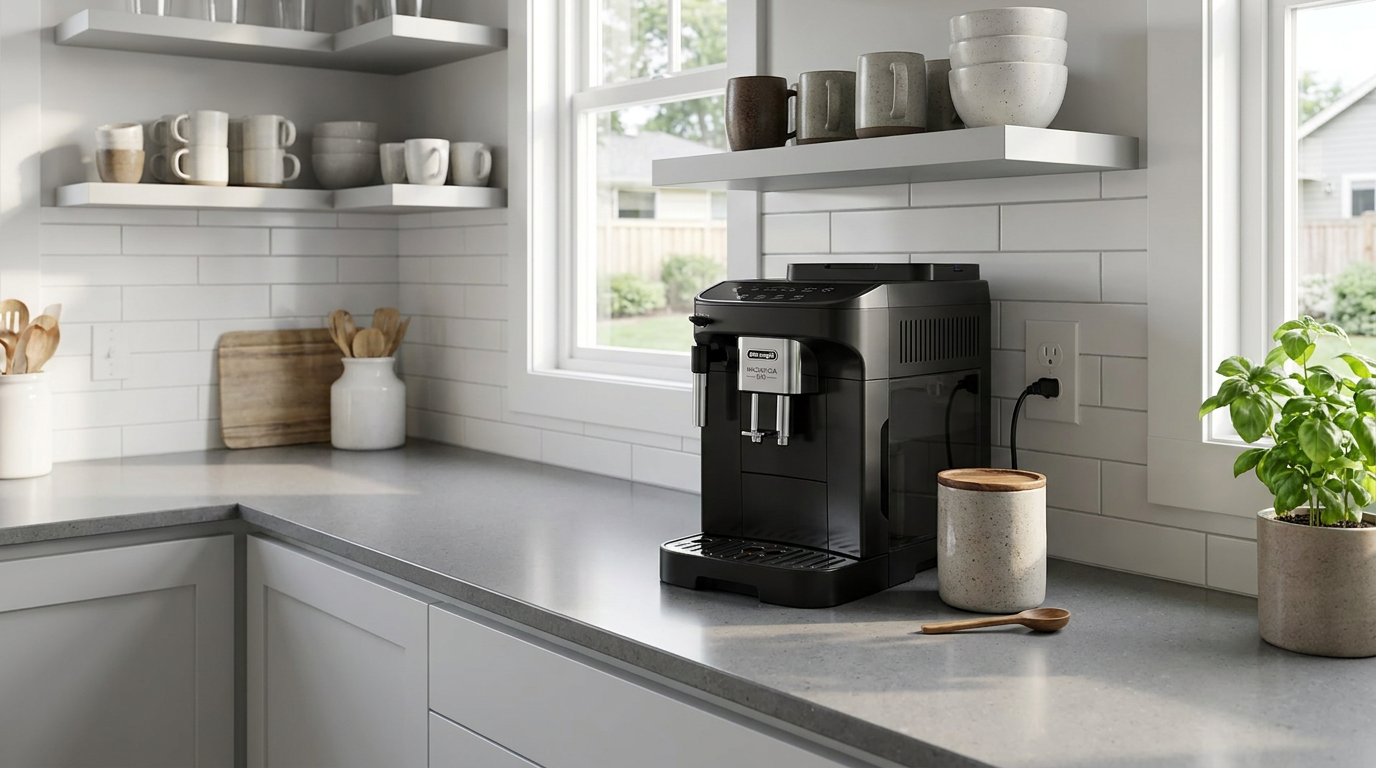
On busy weekdays, the Evo was the machine my household reached for.
My scorecard
These are my own scores out of 10 after four weeks with each machine. I weighted ease of use and daily cleaning because they are what this question is really about.
De’Longhi Magnifica Evo
Breville Barista Express
Overall, I rate the Magnifica Evo 8.4 and the Barista Express 8.0. The Evo wins because ease is the reason most people ask this question. The Breville wins the cup, if you put in the work.
Is It On Sale? Check NowWhich one is right for you?
4 quick questionsWhich one should you buy?
It comes down to one question: do you want to make coffee, or just drink it? Answer that and the choice makes itself.
Think about who else will use it, too. In a shared house, the Evo is the machine anyone can walk up to, while the Breville tends to become one person’s hobby. If none of these is quite right for you, my guide to the best De’Longhi super-automatic machines covers the rest of the range I’ve tested.
For a close push-button rival, see my Philips 3200 vs Magnifica Evo comparison. For more detail, read my Magnifica Evo review and Barista Express review.
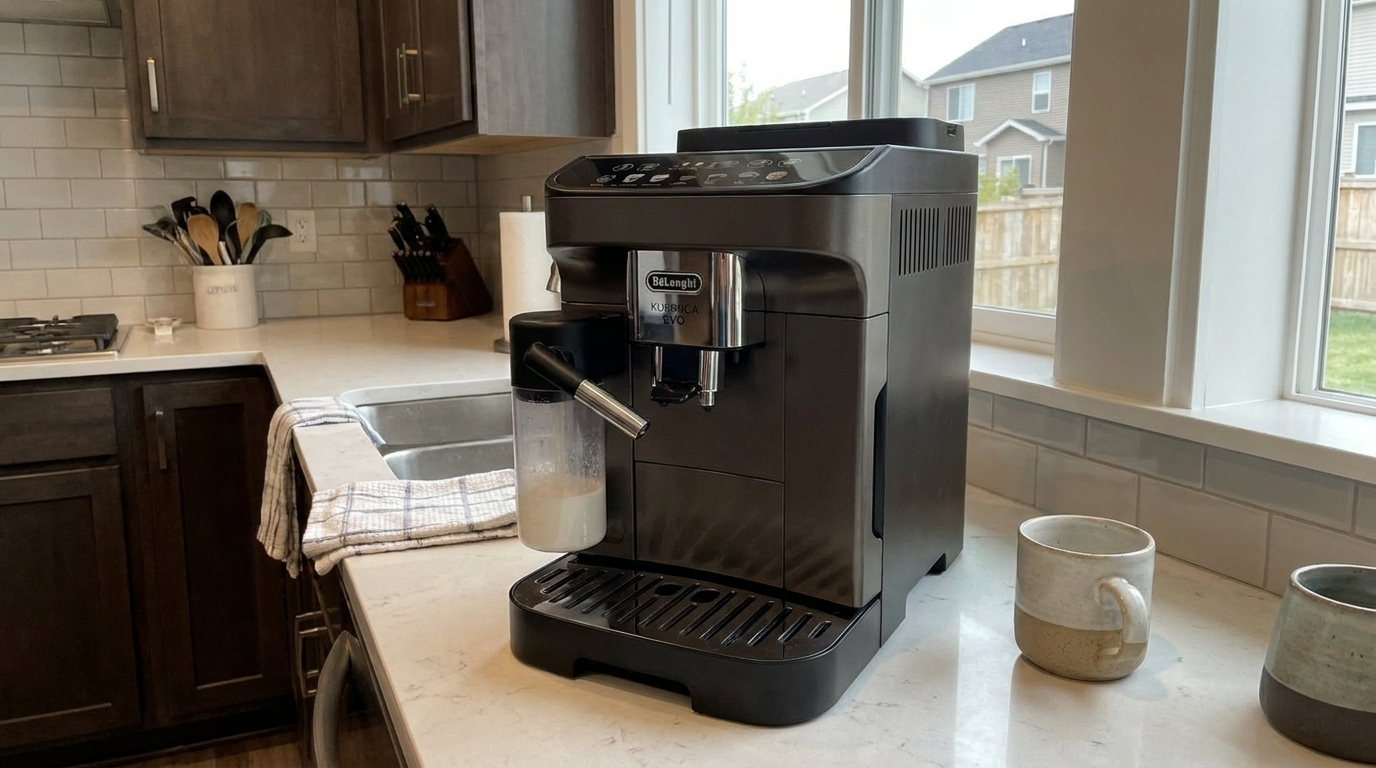
For most busy homes, the Evo is the easier and smarter choice.
- You want one-touch cappuccinos and lattes
- Several people share the machine
- You want minimal cleanup
- Counter width is tight
- You want to learn espresso
- You want latte art
- You drink mostly light roasts
- You want to learn espresso
- You want latte art
- You chase the best possible shot
- You enjoy a slow morning ritual
- You want speed on weekdays
- You hate daily cleanup
- You won’t use a scale
If you’re asking which is easier, my pick is the De’Longhi Magnifica Evo. It makes rich espresso and hot, dense foam at one touch from day one, takes about two minutes for a cappuccino and roughly half the daily cleanup.
The Breville Barista Express is the better buy only if you want to learn. Once dialed in, its shots were sweeter and its milk could pour latte art, but it took a week, a scale and more time every morning.
Whichever you choose, use fresh beans and cold milk. Both reward that with good coffee for years.
Magnifica Evo vs Barista Express specifications
From manufacturer specifications and my own testing.
| De’Longhi Magnifica Evo | Breville Barista Express | |
|---|---|---|
| Model | ECAM29084SB | BES870XL |
| Type | Fully automatic | Semi-automatic |
| Pump | 15 bar | 15 bar |
| Heating | Thermoblock, about 38 s | 1600 W thermocoil |
| Grinder | Steel conical, 13 settings | Steel conical, 16 settings |
| Dose | Up to about 15 g | About 15.4 g double |
| Tamping | Automatic | By hand |
| One-touch drinks | 7, including Over Ice | None |
| Milk system | LatteCrema carafe | Manual steam wand |
| Water tank | About 60 oz | About 67 oz |
| Grounds | Internal drawer, about 14 pucks | Knock out by hand |
| Dimensions (W x D x H) | 9.45 x 17.3 x 14.2 in | 12.5 x 13.8 x 15.9 in |
| Weight | About 21 lb | About 22–23 lb |
How I tested and compared them
I used each machine as my everyday coffee maker for four weeks, making espresso, americanos, cappuccinos, lattes and flat whites, plus MyLatte and Over Ice drinks on the Evo.
I weighed doses and yields, timed shots and whole mornings, measured milk temperature with a probe thermometer and logged noise with a meter.
I ran every cleaning routine and compared my notes with De’Longhi and Breville specifications, owner documentation and published coffee research.
- Ease: setup, learning curve and steps per drink.
- Coffee: dose, crema, body and consistency.
- Milk: foam texture, temperature and cleanup.
- Ownership: noise, cleaning, water care and footprint.
Magnifica Evo vs Barista Express FAQ
Is the De’Longhi Magnifica Evo easier than the Breville Barista Express?
Yes, by a wide margin. The Evo makes espresso and milk drinks at one touch. The Breville needs you to dose, tamp, brew and steam by hand, and took me about a week to master.
Which makes better espresso?
The Breville Barista Express, once dialed in. Its shots were sweeter and more syrupy. The Evo made a full, consistent espresso with no effort.
Do they use the same amount of coffee?
Almost. The Evo grinds up to about 15 grams, and the Breville’s double basket wants about 15 to 15.5 grams.
Can the Magnifica Evo make latte art?
No. Its LatteCrema carafe makes hot, dense foam automatically, which is great for cappuccinos but not for pouring patterns.
How hot is the milk on the Magnifica Evo?
I measured about 140°F, the range where milk tastes sweetest.
Which is faster in the morning?
The Evo. A cappuccino took about two minutes from switch-on, against four to five minutes on the Breville.
Which is easier to clean?
The Evo. It rinses itself, drops pucks into a drawer and cleans the carafe with a button. The Breville needs the puck knocked out and the wand purged after every drink.
Does the Breville Barista Express need a scale?
I strongly recommend one. Its grinder doses by time, so weighing is the best way to keep the double at 15 to 15.5 grams.
Can the Evo make iced coffee?
Yes, it has an Over Ice button. Use it with a full glass of ice for the best result.
Which is better for a beginner?
A beginner who just wants good coffee should buy the Evo. A beginner who wants to learn espresso should buy the Breville.
Does the Magnifica Evo have a hot water option?
Yes, through a hot water function, though there is no dedicated hot milk button without a workaround.
Can I use pre-ground coffee in the Evo?
Yes, it has a pre-ground chute for a single scoop, which is handy for decaf.

- Our hands-on De’Longhi Magnifica Evo review
- Our hands-on Breville Barista Express review
- De’Longhi and Breville product specifications and owner documentation
- Effect of milk processing and steam frothing conditions on microfoam formation, University of Camerino
- Composting and Coffee Grounds, Cornell University