Breville Oracle vs Oracle Touch vs Oracle Jet: which Oracle should you buy?
All three grind, dose and tamp into a 58 mm portafilter for you. Then they split: the Breville Oracle keeps buttons and dials, the Breville Oracle Touch adds a touchscreen and the best hands-free milk, and the Breville Oracle Jet swaps the boilers for ThermoJet heating and adds cold brew. I used each one every day for four weeks, measured what matters and lined up the data to find out which Oracle belongs in your kitchen.
We choose products independently. We may earn a commission through links on this page; your price stays the same. Affiliate policy
Jargon helpNew to espresso? Tap any dotted term to see what it means.
In this comparison
For most people, the Breville Oracle Touch is the Oracle to buy. It automates grinding, dosing and tamping, brews and steams at the same time on two boilers, and its hands-free milk hit the same temperature every single time. Pick the Breville Oracle Jet if you want the best straight espresso, cold brew in under three minutes and you are happy to steam milk by hand. The original Breville Oracle is still a superb machine for anyone who prefers real buttons and dials, and its one-press americano is a lovely touch.
The three machines
Specs checked November 14, 2026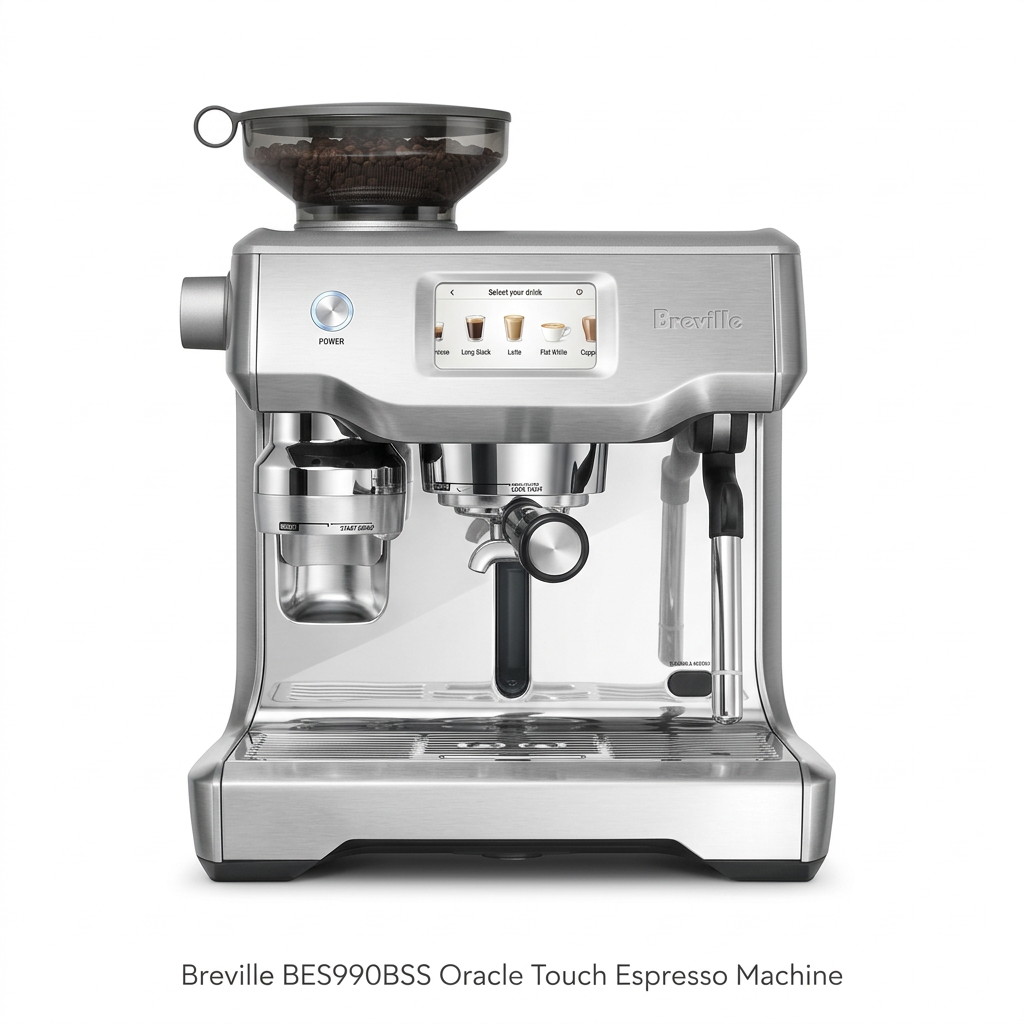
Dual boilers, automatic grind, dose and tamp, hands-free milk with a temperature sensor and eight saved drinks on a touchscreen.
Check price on Amazon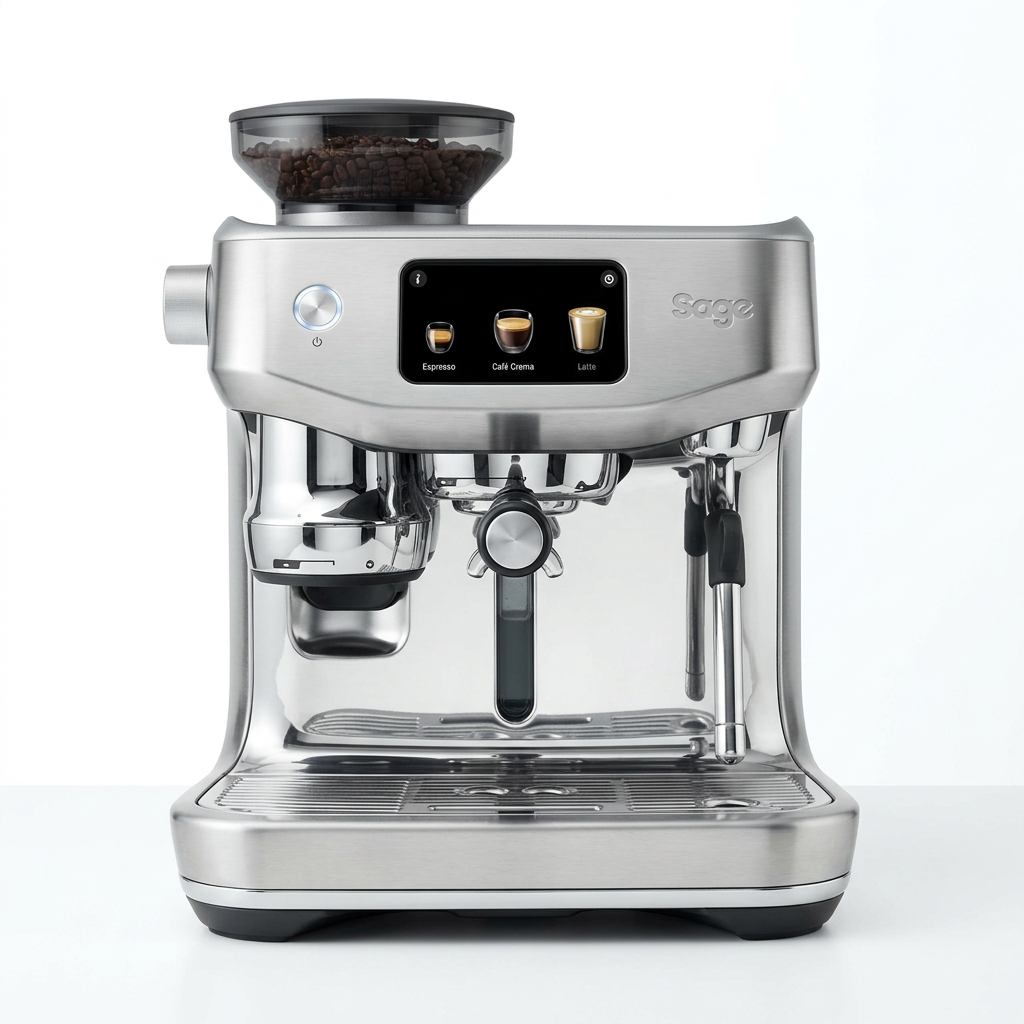
Automatic grind, distribute and tamp into 58 mm, superb manual steam, cold brew in under 3 minutes and a stepless 45-step grinder.
Reveal Today’s Deal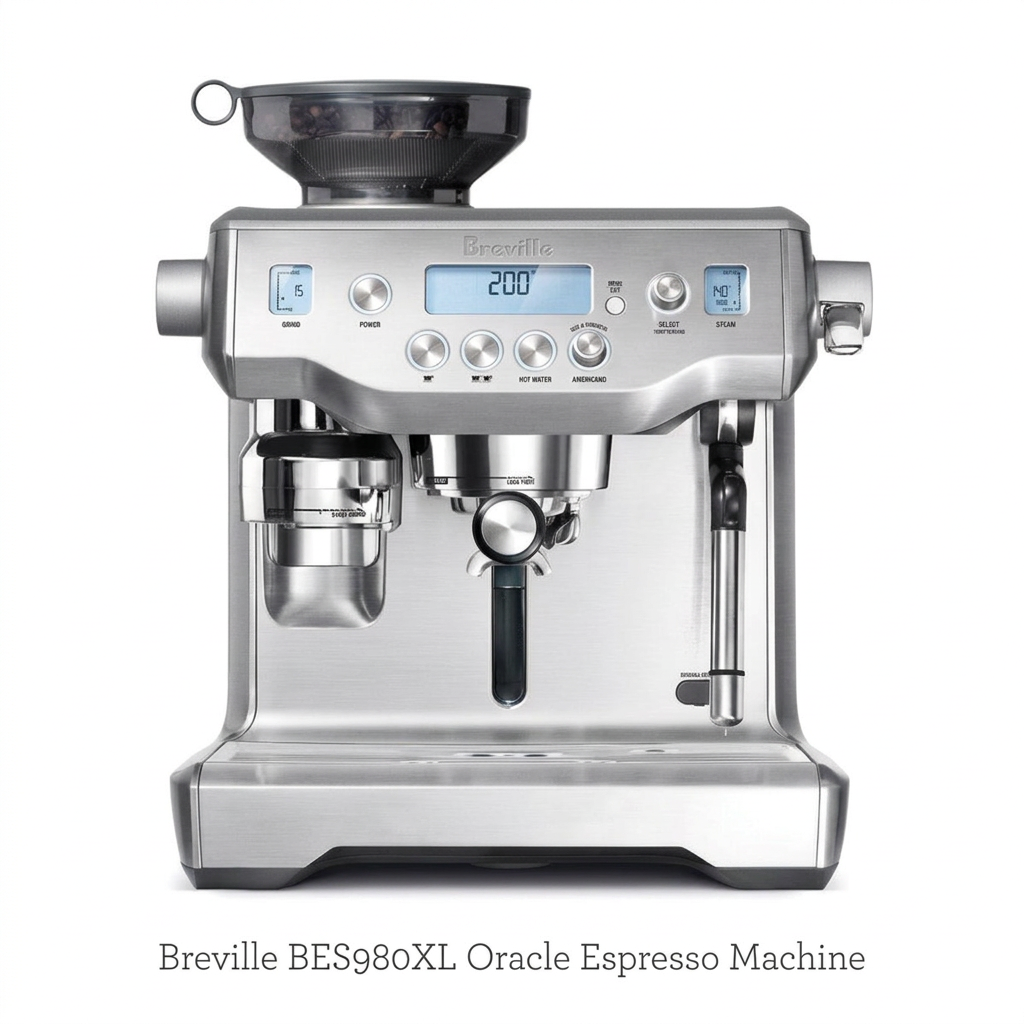
Dual boilers, automatic tamping, a hands-free wand set from 130 to 170°F and a one-press americano, all on physical controls.
See Today’s PriceOracle vs Oracle Touch vs Oracle Jet at a glance
- The Oracle Touch is the best all-rounder: excellent shots, the best automatic milk and the easiest screen.
- The Oracle Jet makes the best espresso and adds cold brew, but steam milk by hand for the best results.
- The original Oracle matches the Touch on espresso and uses physical buttons, but it takes about five minutes to heat.
- All three automate the puck: grinding, dosing and tamping into a commercial-size 58 mm portafilter.
Head to head
The better result in each row is marked, based on my testing and the manufacturer specs. Rows where the machines are identical have no winner.
Keep in mind that the tally is not my verdict. Some rows matter far more than others, and which ones matter depends on what you drink.
| Spec | Breville Oracle | Breville Oracle Touch | Breville Oracle Jet |
|---|---|---|---|
| Espressomy tasting, same beans | 8.9, rich and even | 8.9, rich and even | 9.0, syrupy once warm ✓ Best |
| Automatic milk | Silky, dial-set | Silky, exact temperature ✓ Best | Coarse and bubbly |
| Manual milk | Good | Good | Superb microfoam ✓ Best |
| Heating | Dual boilers | Dual boilers | Dual ThermoJet |
| Brew and steam at once | Yes | Yes | Yes |
| Time to heat from cold | About 5 minutes | A few minutes | Seconds, plus flushes ✓ Best |
| Puck prep | Grind, dose, tamp | Grind, dose, tamp | Grind, distribute, tamp, polish ✓ Best |
| Grinder | Stepped dial | 45 settings | 45 settings, stepless ✓ Best |
| Controls | Buttons and dials | Touchscreen | Touchscreen |
| Saved drinks | None | 8 | 20+ ✓ Best |
| Cold brew and cold espresso | No | No | Yes ✓ Best |
| Water tank | 84 oz ✓ Best | 84 oz ✓ Best | 77 oz |
| Dose consistency | Steady ✓ Best | Steady ✓ Best | Drifts about 0.5 g |
| Weight | About 35 lb | About 35 lb | About 27 lb ✓ Best |
| Ease of usemy score | 8.6 | 9.1 ✓ Best | 8.3 |
| Rows won | 2 | 4 | 8 |
Oracle vs Oracle Touch vs Oracle Jet pros and cons
Breville Oracle
- Automatic grind, dose and tamp with a polished puck
- Brews and steams at once on two boilers
- Physical buttons and dials that are quick to use
- About five minutes to heat from cold
- No saved user drinks
- Heavy, deep body at about 35 pounds
Breville Oracle Touch
- Hands-free milk that stops at your set temperature
- Touchscreen with eight saved drinks
- Dual boilers for café-style workflow
- Large footprint and heavy body
- Takes a few minutes to heat up
- Steam wand and group need daily care
Breville Oracle Jet
- Best espresso of the three once warm
- Superb manual steam, plus cold brew and cold espresso
- Lighter body with a 12-ounce hopper
- Automatic milk makes coarse, bubbly foam
- Dose drifts as the hopper empties
- High water use and frequent tray emptying
Who should buy which machine?
- Households that want café drinks at one tap
- Anyone who wants perfect milk without learning to steam
- Several people with their own saved drinks
- Espresso purists who steam milk by hand
- Iced coffee and cold brew fans
- Kitchens that need a lighter, quicker-heating machine
- People who prefer buttons and dials to screens
- Americano drinkers who love a one-press long black
- Owners who leave the machine on through the morning
Design, size and build
All three are big, serious machines. They are brushed stainless steel, built around a commercial-size 58 mm portafilter✕PortafilterThe handle with a metal basket that holds the ground coffee. You lock it into the machine’s group head to brew. 58 mm is the size used on most café machines., and none of them is something you will want to move often.
The original Breville Oracle is the widest at about 16.1 inches, with the deepest presence on the counter. The Oracle Touch slims that down to about 14.5 inches wide, and the Oracle Jet matches its width but is shorter at about 16.7 inches tall.
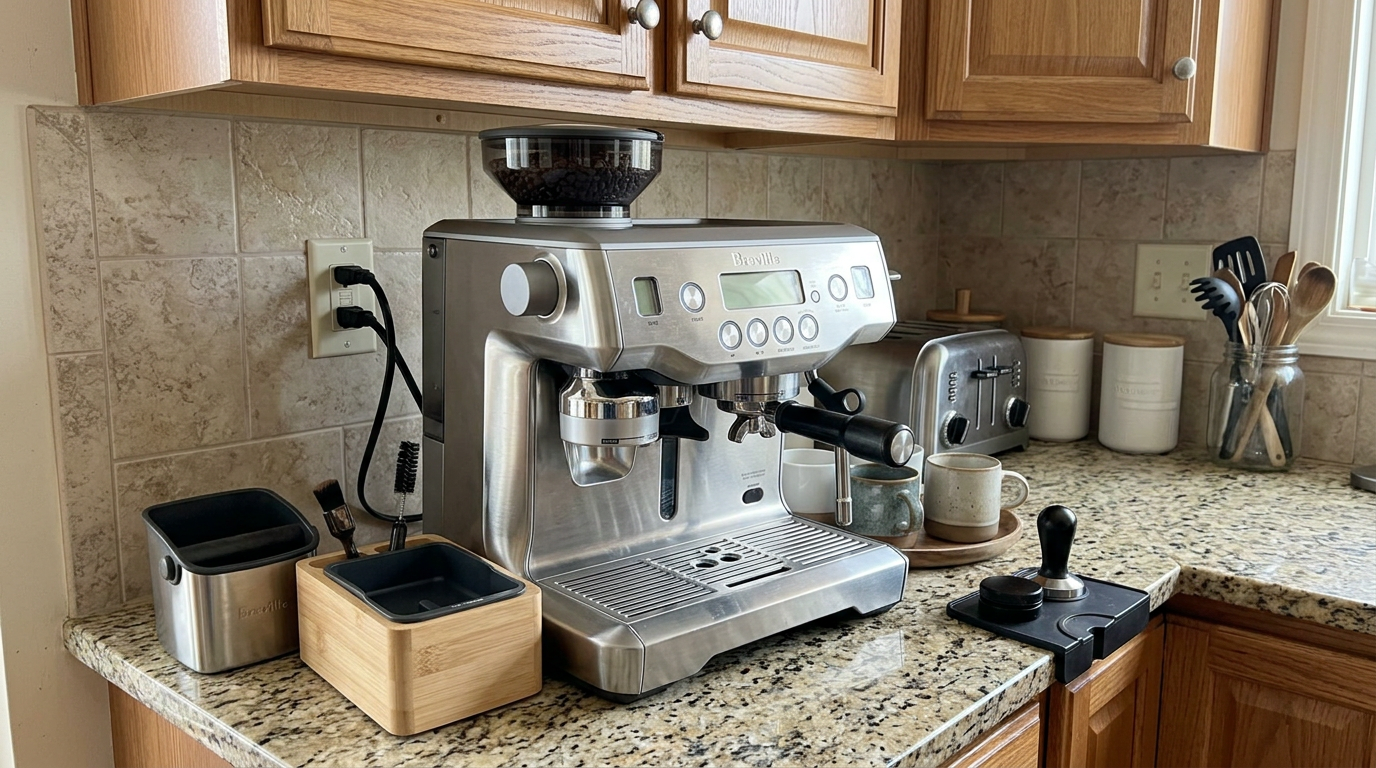
The original Oracle is the widest and most traditional-looking of the three.
Weight
The Jet drops the two boilers, which saves about 8 pounds.
Weight is where the Jet stands apart. Dropping the two stainless boilers for ThermoJet heating saves about 8 pounds, and you notice it every time you pull the machine forward.
Breville helps on all three. The Oracle has a roller wheel underneath, and the Jet has a roller mobility lever, so sliding them out to clean behind is easier than the weight suggests.
Build quality is excellent on all three. The steel panels, heavy portafilters and solid steam knobs feel like they will last for many years.
The Oracle Jet’s hopper has a clever gate that closes when you lift it off, so beans don’t spill when you swap bags. It holds about 12 ounces, half again as much as the older two.
Our tip: Check the height under your wall cabinets with the hopper lid off, because all three stand between 16.7 and 17.8 inches tall.
Heating: two boilers or ThermoJet?
The Oracle and Oracle Touch use two stainless steel boilers✕Dual boilersTwo separate water heaters: one keeps brew water at espresso temperature, the other makes steam. You can pull a shot and steam milk at the same time without waiting., one for brewing and one for steam, both controlled by PID✕PID temperature controlA digital controller that keeps water at a steady, set temperature instead of letting it swing up and down.. That is the same layout you find on serious café machines.
The benefit is simple: you can pull a shot and steam milk at the same moment. On the Oracle, two cappuccinos took about 90 seconds, and the boilers never sagged.
The cost is warm-up time. The original Oracle needed about five minutes from cold, and the Oracle Touch a few minutes, before I trusted the shot temperature.
The Breville Oracle Jet switches to Breville’s ThermoJet system with a heated group head. It is ready almost immediately, and it draws only about 4 to 5 watts on standby in my measurements, but the portafilter still needs warming.
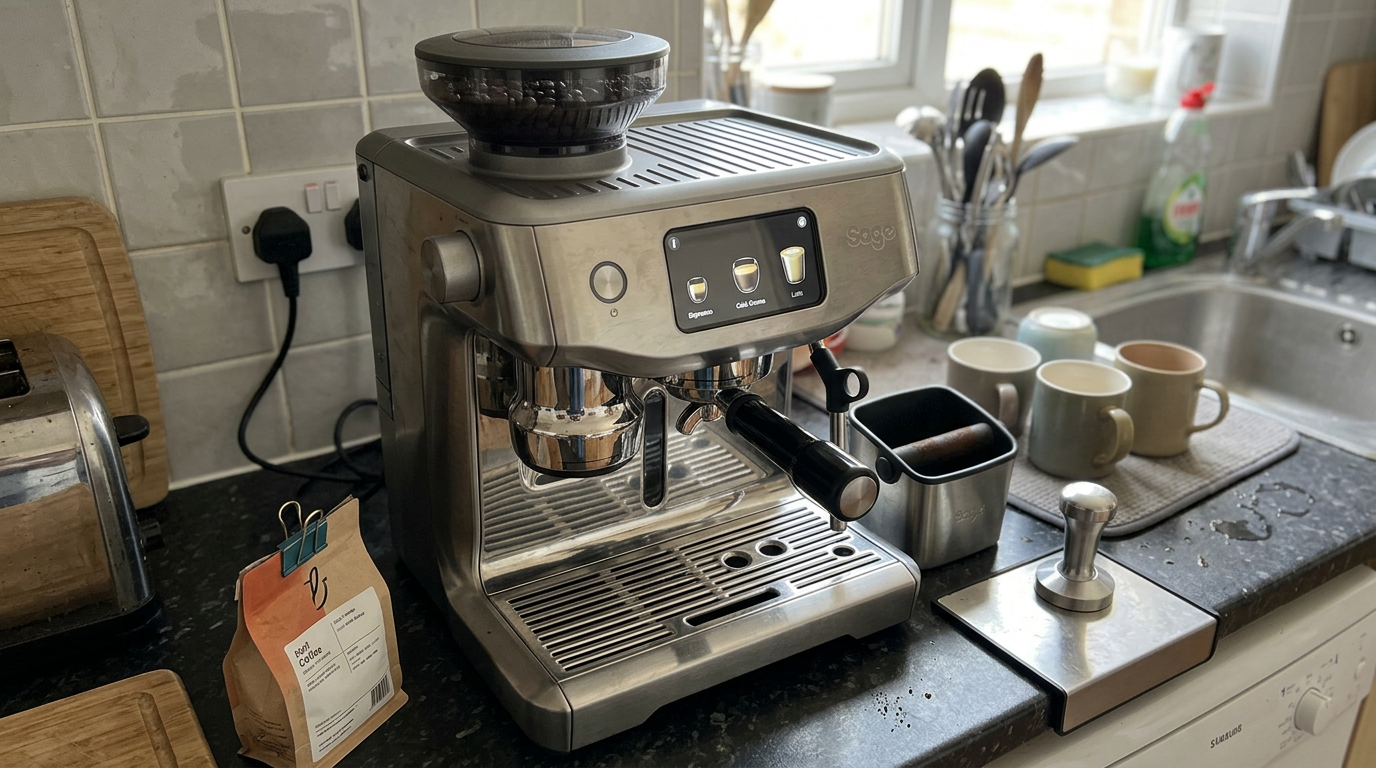
The Oracle Jet heats in seconds, but its portafilter still likes a warm-up flush.
Warm-up before my first good shot
My experience from a cold machine. The Jet’s time includes three hot water flushes.
If you use the auto-start timer on the Oracle or Oracle Touch, the warm-up stops mattering. I set mine for ten minutes before I usually come downstairs, and the machine was always ready.
Our tip: Set the auto-start timer on the Oracle or Oracle Touch for your usual wake-up time, so the boilers are hot before you reach the kitchen.
Screens, buttons and saved drinks
The original Breville Oracle uses a backlit LCD with physical buttons and dials. You press the shot button, turn a dial for milk temperature and another for texture, and that is it.
I loved how quick it felt. There is no menu to swipe through, and nobody in my house needed instructions after the first day.
The Breville Oracle Touch replaces the buttons with a color touchscreen. You swipe to a drink, such as a latte or flat white, and tap to start. It has five café drinks plus eight saved custom drinks.
I saved a "Morning flat white" with a double shot, milk at 140°F and slightly finer foam. My partner saved her own, and we never touched each other’s settings again.
The Oracle Jet has the most capable screen, with Barista Guidance and more than 20 custom drinks. It is also the slowest to navigate, because there are more menus between you and the coffee.
| Control | Oracle | Oracle Touch | Oracle Jet |
|---|---|---|---|
| Display | Backlit LCD | Color touchscreen | Color touchscreen |
| Main controls | Buttons and dials | Touch | Touch |
| Saved drinks | None | 8 custom | 20+ custom |
| Guidance | None | Drink pictures | Barista Guidance |
| Americano program | Yes, one press | Yes | Yes |
| Auto start and off | Yes | Yes | Yes |
Our tip: Save each person’s drink on the Touch or Jet in the first week, because it stops people changing each other’s grind and milk settings.
Grinder and puck prep
All three Oracles grind, dose and tamp for you. That is the whole point of the line, and it is the reason they make better espresso than most people manage by hand.
You lock the portafilter under the grinder, press a button, and the machine grinds into the basket, then tamps✕TampingPressing the ground coffee into a firm, flat puck. An even tamp helps water flow through all the coffee at the same rate. with a polishing twist. You then move the portafilter to the group head yourself.
The Oracle and Oracle Touch use hardened steel conical burrs✕Conical burrsTwo cone-shaped grinding parts, one inside the other. Beans are crushed between them, and the gap between the burrs sets how fine the coffee is.. The Touch has 45 grind settings, while the original uses a stepped dial with a little less fine control.
The Breville Oracle Jet goes further. It clears the basket, distributes the grounds, tamps and polishes, and its stepless grinder has 45 settings.
Its weak spot is the dose. Out of the box it targets around 22 grams, and bringing it down to 18 or 19 grams meant a mechanical adjustment with the included 2 mm Allen key.
Even then, a target of 17.5 grams crept to 18.0, 18.3 or 18.5 grams over several shots, then dropped as the hopper emptied. The older Oracles were steadier.
Grind settings
More settings make it easier to dial in light roasts and new bags.
| Puck prep | Oracle | Oracle Touch | Oracle Jet |
|---|---|---|---|
| Grind | Automatic | Automatic | Automatic |
| Distribute | No | No | Yes |
| Tamp | Automatic, adjustable force | Automatic, polishing twist | Automatic, polishing twist |
| Default dose | Double basket | Double basket | About 22 g |
| Dose consistency | Steady | Steady | Drifts about 0.5 g |
| Bean hopper | About ½ lb | About ½ lb | About 12 oz, with gate |
Our tip: Double-tap the grinder icon on the Oracle Jet before the first shot of the day, because it purges about 3 grams of stale grounds from the chute.
Espresso quality
All three make genuinely excellent espresso, better than most automatic machines I have tested. The differences are small and come down to the puck and the temperature.
The Breville Oracle Jet scored highest at 9.0. Once the portafilter was warm and the dose was down to about 18 grams, its shots were rich and syrupy, with a long, sweet finish.
The Oracle and Oracle Touch both scored 8.9. Their shots were rich and remarkably consistent, with most landing between 27 and 32 seconds without me touching anything.
On the original Oracle, my standard was a double of about 2 fluid ounces in 25 to 30 seconds. I used about 198 to 200°F for light single origins and 190 to 193°F for oily dark roasts.
My espresso ratings
My scores out of 10 for body, crema, flavor and consistency.
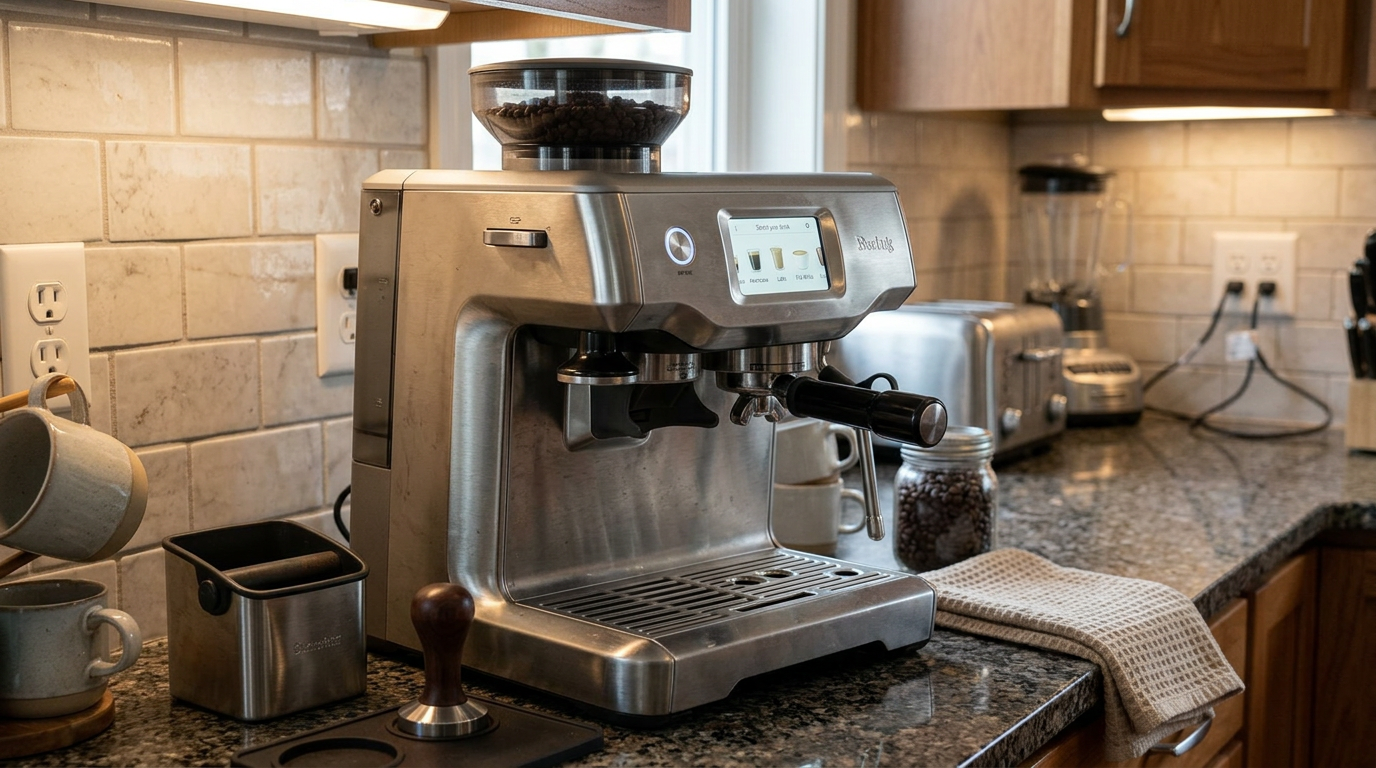
The Oracle Touch pulled consistent shots between 28 and 32 seconds almost every time.
Temperature control helps with lighter beans on all three. The Jet adjusts its heated group head in one-degree steps, and I brewed between 194 and 203°F, with light roasts near 203°F.
Every Oracle also runs pre-infusion✕Pre-infusionA short, low-pressure soak of the ground coffee before full pressure starts, so the water flows through the puck evenly. before full pressure. On the original Oracle it is programmable, with 3 seconds by default.
| Bean type | Oracle | Oracle Touch | Oracle Jet |
|---|---|---|---|
| Light roast | 198–200°F, finer grind | Two steps finer | About 203°F, finer |
| Medium roast | Default settings | Default settings | 194–200°F |
| Dark, oily roast | 190–193°F | Two steps coarser | Around 194°F |
| Shot time target | 25–30 seconds | 28–32 seconds | 27–32 seconds |
Milk drinks
This is where the Oracle Touch pulls ahead, and where the Oracle Jet stumbles.
The Breville Oracle Touch has an automatic steam wand with a temperature sensor. You put the jug under the wand, choose a drink, and it textures the milk and stops at exactly your set temperature, then purges itself.
My flat white default was 149°F at foam level 4. With 2% milk, level 5 gave a slightly thicker, creamier texture that was easier to pour, and the result was silky every time.
The original Oracle works the same way but with dials. Milk temperature runs from about 130°F to 170°F, with 150°F as the default, and the texture dial sets how much foam you get.
The Breville Oracle Jet is the odd one out. Its automatic mode made coarse, bubbly foam in my testing, but its manual mode made some of the best microfoam✕MicrofoamMilk foam with bubbles so small you can barely see them. It feels silky and glossy, which is what a good latte or flat white needs. I have had from a home machine.
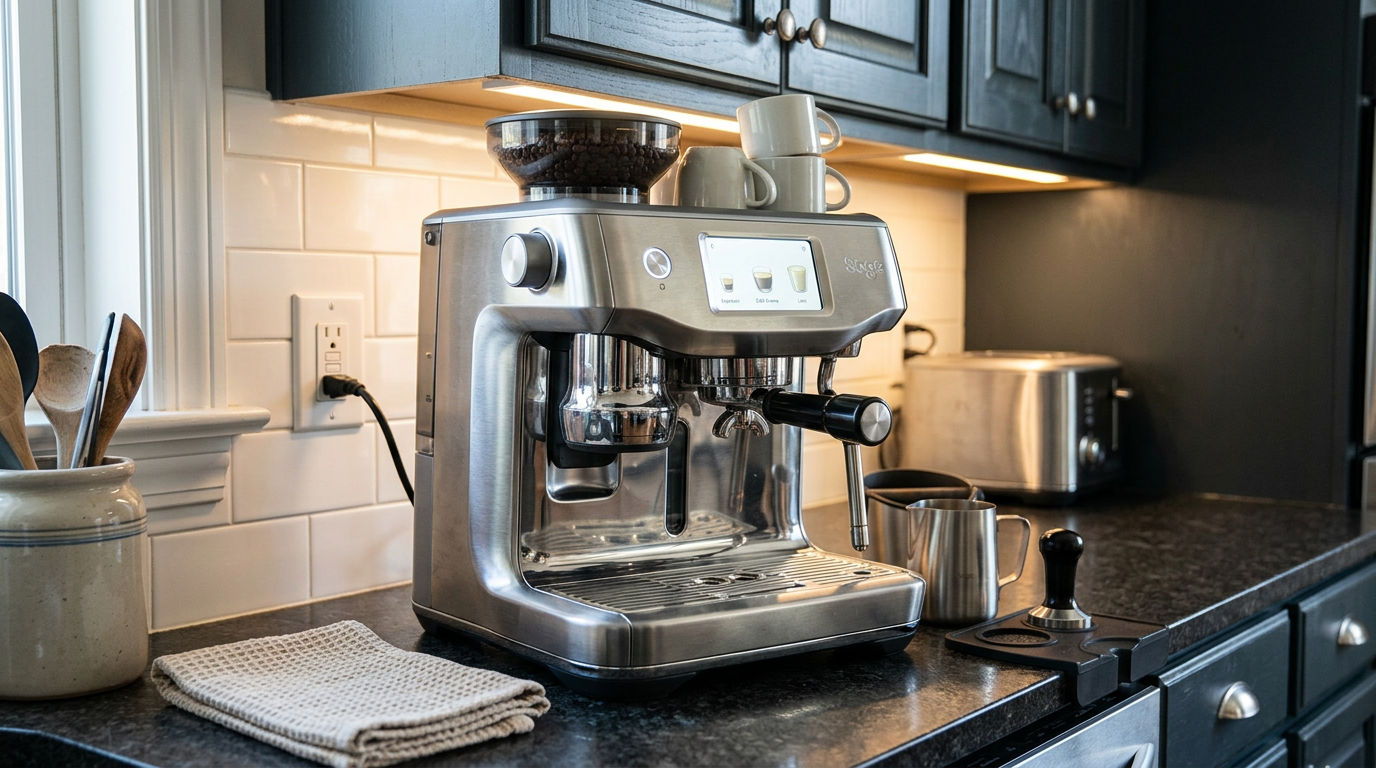
In manual mode, the Oracle Jet’s steam wand made superb, glossy microfoam.
Milk-drink ratings
My scores out of 10, using each machine’s automatic milk mode.
| Milk feature | Oracle | Oracle Touch | Oracle Jet |
|---|---|---|---|
| Hands-free steaming | Yes | Yes | Yes, but coarse |
| Temperature range | About 130–170°F | Set per drink | Down to 140°F |
| Texture control | Dial | Foam levels | Levels, default 5 |
| Manual steaming | Yes | Yes | Yes, superb |
| Auto purge | Yes | Yes | Yes |
Our tip: Lower the milk temperature to about 140°F on any Oracle if you want sweeter milk, because sweetness drops as milk gets hotter.
Cold brew and iced drinks
Only the Breville Oracle Jet makes cold drinks, and it does them well.
For cold modes, it bypasses the main heater and pumps water at around 122°F, much cooler than a normal shot. Cold brew takes under three minutes and cold espresso about one minute.
I poured both over ice most afternoons in my second week. The cold brew was smooth, low in bitterness and nothing like hot coffee poured over ice, which always tastes thin to me.
On the Oracle and Oracle Touch, the best you can do is a hot shot over a full glass of ice. It works, but it melts more ice and tastes more diluted.
Time to a cold coffee
Cold modes on the Oracle Jet. The other two Oracles have no cold extraction.
Our tip: Chill your glass and use large ice cubes for the Jet’s cold brew, because small cubes melt fast and water down the drink.
Americanos, hot water and tea
All three have a dedicated hot water outlet, so you can build an americano properly: espresso plus hot water, rather than a whole mug of water forced through the puck.
The original Breville Oracle does it best, with americano programs that pour the shot and the water in one press. It became my favorite way to make a big mug of black coffee.
The Oracle Jet’s hot water spout delivered water at about 194°F, which is perfect for tea and just inside the 195 to 205°F range the National Coffee Association recommends for brewing.
The Oracle Touch also has a hot water outlet. I used it to pre-heat cups, which made a noticeable difference to the last sip of a flat white.
Our tip: Pre-heat your cup with hot water from the outlet before every milk drink, because a cold cup can drop a flat white by several degrees in seconds.
Cleaning and upkeep
These are semi-automatic machines at heart, so cleaning takes a little more effort than a super-automatic. Expect a few minutes a day.
After each session, I knocked out the puck, rinsed the basket, wiped the steam wand and let it purge. The machines prompt for a cleaning cycle with a tablet and for descaling based on your water hardness.
The Oracle Jet uses more water than the others, because the warm-up flushes add up. Its drip tray needed emptying more often in my kitchen, sometimes twice a day.
On the Oracle and Oracle Touch, the group head needs a quick wipe daily to remove grounds around the gasket, and a weekly backflush✕BackflushA cleaning routine where water is pushed back through the group head into a blank basket, flushing out coffee oils and grounds. keeps the shots clean.
My daily hands-on cleaning time
My estimate with two or three milk drinks a day, including emptying the drip tray.
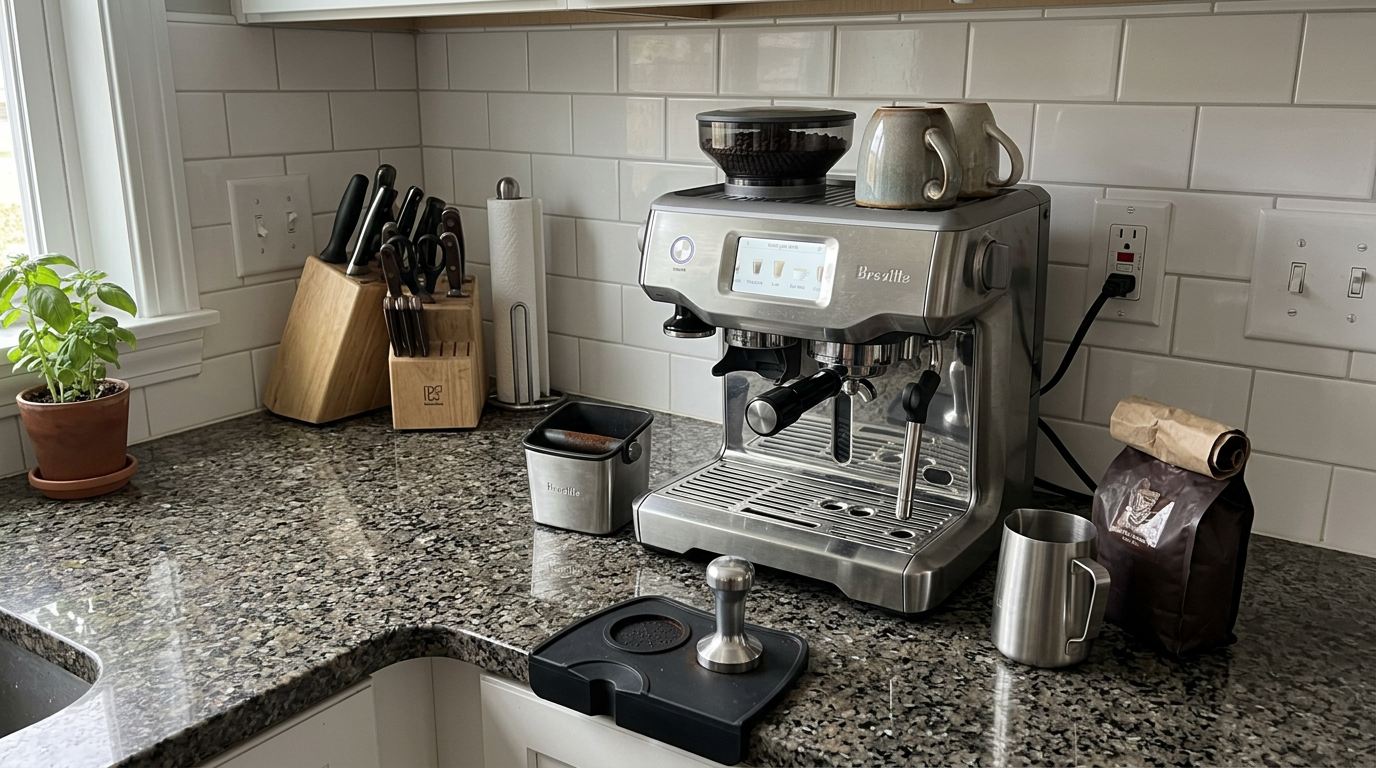
Wipe and purge the steam wand after every milk drink on all three.
| When | Oracle | Oracle Touch | Oracle Jet |
|---|---|---|---|
| After milk | Wipe and purge wand | Wipe, auto purge | Wipe, auto purge |
| Daily | Rinse basket, wipe group | Rinse basket, wipe group | Rinse basket, empty tray |
| Weekly | Backflush | Backflush | Cleaning cycle when prompted |
| When prompted | Clean and descale | Clean and descale | Clean and descale |
| Every 2–3 months | Water filter | Water filter | Water filter |
Our tip: Wipe the steam wand with a damp cloth within a minute of frothing, before milk bakes onto the tip.
Water, beans and capacity
The Oracle and Oracle Touch share an 84-ounce tank that you can fill from the front or the back. The Oracle Jet holds 77 ounces and fills through a top funnel or the rear tank.
Bean capacity flips the other way. The Jet’s hopper holds about 12 ounces, while the older two hold about half a pound.
Water tank size
From manufacturer specifications. Flushes on the Jet use more of its tank.
Use fresh whole beans within about four weeks of the roast date on all three. The automatic tamping is consistent, but it can’t rescue stale coffee with pale, fading crema.
Use the water filter if your water is moderately hard. Scale is the enemy of boilers and thermoblocks alike, and it is far easier to prevent than to remove.
Our tip: Keep the hopper at least a quarter full on the Oracle Jet, because its dose drops as the hopper empties.
Power, noise and everyday running
Two boilers are wonderful for workflow, but they keep a lot of water hot. The Oracle and Oracle Touch are rated at 1,800 watts, and they are happiest left on through the morning with auto-off doing the rest.
The Breville Oracle Jet is far thriftier. In my measurements it drew about 1,300 watts while brewing, 55 to 65 watts in cold modes and just 4 to 5 watts on standby.
Power while brewing
The Jet figure is my measurement; the boiler models are rated power.
Noise was similar across the three. The grinders run for a short burst, the pumps hum during the shot, and the steam wands hiss the way every café wand does.
What you will notice is the rhythm. On the boiler models, the shot and the milk happen at once, so the noise is over quickly. On the Jet, the three warm-up flushes add a little extra pump noise before the first coffee.
Our tip: Use the auto-off setting on the Oracle and Oracle Touch, because keeping two boilers hot all day wastes far more energy than reheating them.
Mistakes I made, and how to avoid them
Even with all this automation, I made a few mistakes in the first week. Each Oracle punished them a little differently.
| Mistake | What happened | How to avoid it |
|---|---|---|
| First shot without flushing on the Jet | Sour, thin espresso | Run three hot water flushes first |
| Leaving the Jet on its 22 g default | Heavy, over-strong shots | Bring the dose down to 18–19 g |
| Grinding too fine on the Touch | Shots over 35 seconds | Go two settings coarser |
| Warm milk from the counter | Big bubbles on all three | Use milk straight from the fridge |
| Letting the hopper run low on the Jet | Dose dropped, shot ran fast | Keep it at least a quarter full |
| Skipping the weekly backflush | Bitter edge to shots | Backflush the boiler models weekly |
None of these are serious, and all three machines tell you a lot through the shot timer on the screen. Watch the seconds, taste the cup and change one thing at a time.
Real-life scenarios
Specs only go so far. These are the situations where one machine clearly pulled ahead during my testing.
Shot and milk ran together on two boilers, and the sensor stopped the milk at exactly 140°F for both.
Cold brew in under three minutes, smooth and sweet, with no hot shot melting the ice.
One press poured the shot and the hot water, and the physical dials meant no menus at all.
Eight saved drinks meant everyone had their own button and nobody changed my grind.
The manual wand made the glossiest microfoam of the three.
Buttons and dials that work instantly, with wet hands, every time.
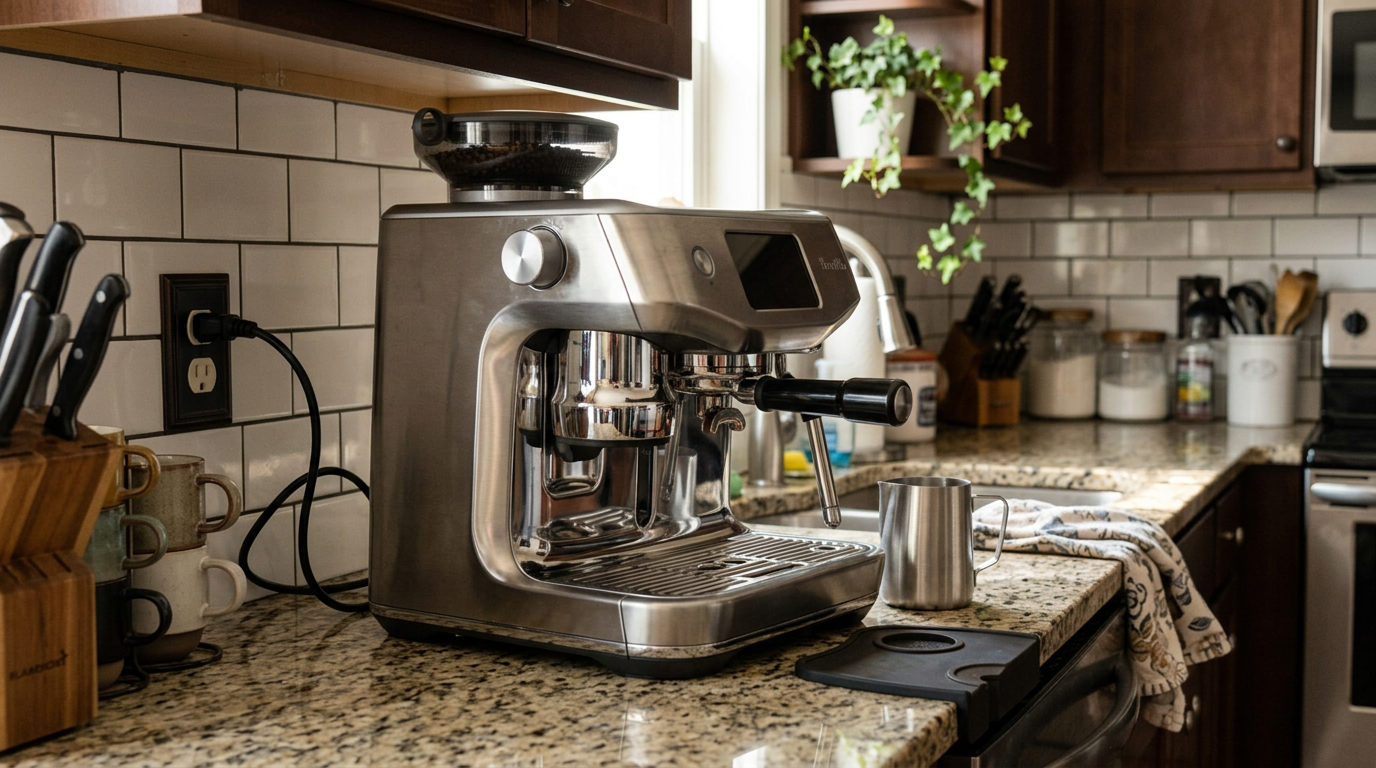
On hot days, the Oracle Jet was the only Oracle anyone reached for.
My scorecard
These are my own scores out of 10. The first four come from my single reviews of each machine, and I added versatility because cold drinks matter to many buyers.
Breville Oracle Touch
Breville Oracle Jet
Breville Oracle
Overall, I rate the Oracle Touch 8.8, the Oracle 8.6 and the Oracle Jet 8.4. The Jet would top the list if its automatic milk matched its espresso.
See Today’s PriceWhich one is right for you?
4 quick questionsWhich one should you buy?
It comes down to two questions: how do you want to make milk, and do you want cold drinks? For the wider picture beyond this matchup, see my guide to the best Breville espresso machines.
For a closer look at two of these, read my Oracle Jet vs Oracle Touch and Oracle Jet vs original Oracle head-to-heads. If you are weighing the whole Breville range, start with Barista Touch vs Oracle Touch.
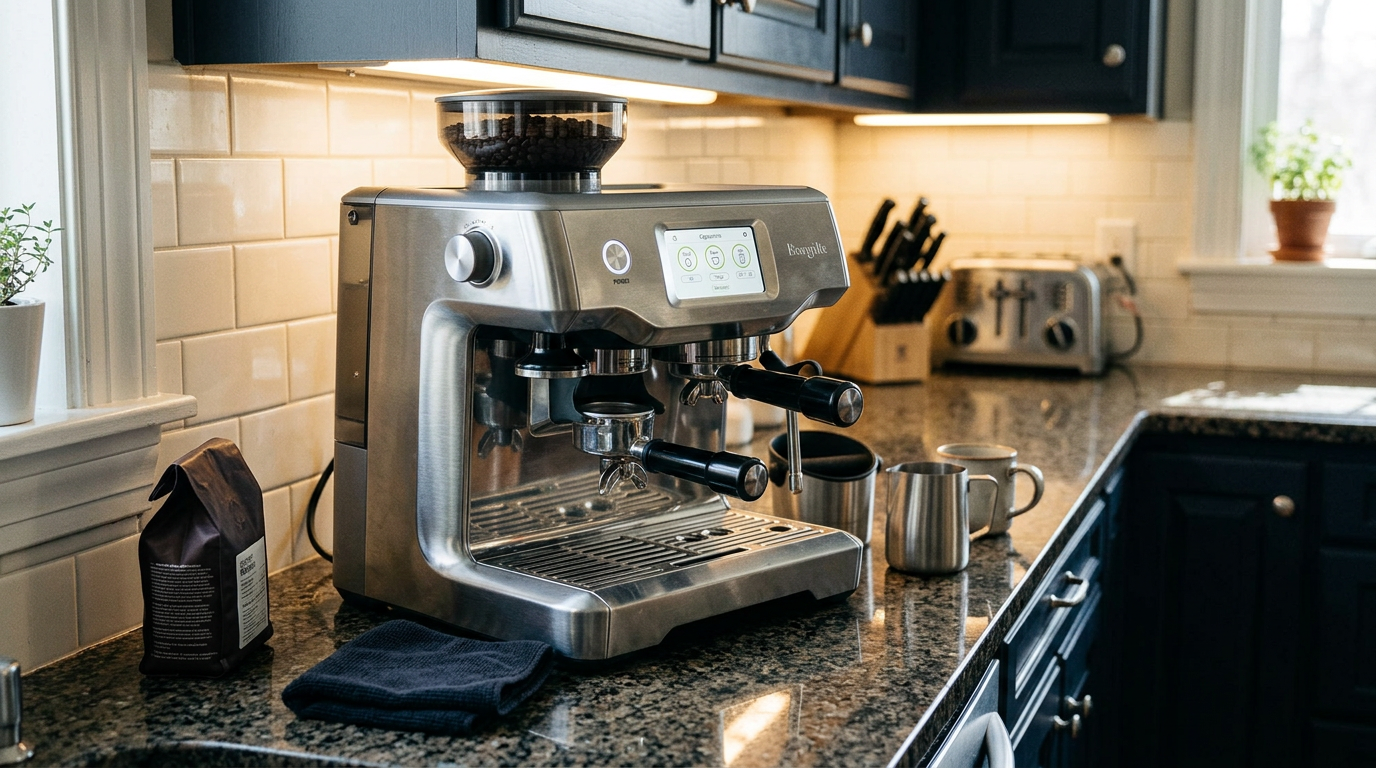
For most households, the Oracle Touch is the Oracle to own.
- You want perfect hands-free milk
- Several people share the machine
- You want to brew and steam at once
- You like a simple touchscreen
- You want cold brew
- Your counter is shallow
- You want the lightest machine
- Straight espresso is your main drink
- You want cold brew and cold espresso
- You like steaming milk by hand
- You want a lighter machine
- You want great automatic milk
- You want a perfectly steady dose
- You hate emptying drip trays
- You prefer buttons and dials
- You love americanos
- You use an auto-start timer
- You want saved drinks
- You need a quick warm-up
- You want cold drinks
For most homes, my pick is the Breville Oracle Touch. It automates the hardest parts of espresso, brews and steams at once on two boilers, and its hands-free milk was the best of the three. Eight saved drinks make it easy for a whole household.
Choose the Oracle Jet if espresso and iced coffee are your main drinks and you are happy to steam milk by hand. Its shots were the best here, and cold brew in under three minutes is a genuine bonus.
The original Oracle is still a superb choice for anyone who prefers buttons to screens. Set the auto-start timer and its long warm-up disappears.
Oracle vs Oracle Touch vs Oracle Jet specifications
From manufacturer specifications and my own testing.
| Breville Oracle | Breville Oracle Touch | Breville Oracle Jet | |
|---|---|---|---|
| Model | BES980XL | BES990BSS | BES985BSS |
| Heating | Dual boilers, PID | Dual boilers, PID | Dual ThermoJet, heated group |
| Portafilter | 58 mm | 58 mm | 58 mm |
| Grinder | Conical burrs, stepped dial | Conical burrs, 45 settings | Stepless, 45 settings |
| Puck prep | Grind, dose, tamp | Grind, dose, tamp | Grind, distribute, tamp, polish |
| Bean hopper | About ½ lb | About ½ lb | About 12 oz |
| Water tank | 84 oz | 84 oz | 77 oz |
| Milk | Hands-free, 130–170°F | Auto with sensor | Auto or manual |
| Cold drinks | No | No | Cold brew, cold espresso |
| Display | LCD, buttons and dials | Color touchscreen | Color touchscreen |
| Saved drinks | None | 8 | 20+ |
| Power | 1,800 W | 1,800 W | About 1,300 W brewing |
| Dimensions (W × D × H) | 16.1 × 14.7 × 17.8 in | 14.5 × 14.7 × 17.6 in | 14.5 × 15 × 16.7 in |
| Weight | About 35 lb | About 35 lb | About 27 lb |
How I tested and compared them
I used each Oracle as my everyday espresso machine for four weeks, making espresso, americanos, flat whites, cappuccinos and lattes, plus cold brew and cold espresso on the Jet.
I weighed doses and yields, timed shots, measured milk, hot water and cold-brew water temperatures with a probe, and steamed whole, 2%, oat, almond and soy milk at different settings.
I followed every daily, prompted and descaling routine, then wrote up my notes and measurements together and checked them against Breville’s specifications and owner documentation.
- Espresso: dose, consistency, shot time and taste
- Milk: automatic and manual texture and temperature
- Workflow: warm-up, controls and saved drinks
- Ownership: cleaning, water use and footprint
Oracle vs Oracle Touch vs Oracle Jet FAQ
Which Oracle is best: Oracle, Oracle Touch or Oracle Jet?
For most people, the Oracle Touch. It combines dual boilers, automatic grind, dose and tamp, the best automatic milk of the three and an easy touchscreen with eight saved drinks. Choose the Oracle Jet for the best espresso and cold brew, and the original Oracle if you prefer buttons and dials.
What is the difference between the Oracle and the Oracle Touch?
The controls and the grinder. Both have dual boilers and automatic tamping, but the Oracle uses buttons and dials, while the Oracle Touch adds a color touchscreen, eight saved drinks and a 45-setting grinder. Espresso quality was identical in my testing.
Is the Oracle Jet better than the Oracle Touch?
For espresso and cold drinks, yes. The Jet scored 9.0 for espresso and makes cold brew in under three minutes. For milk drinks, no: its automatic milk was coarse, while the Oracle Touch’s was silky and exact.
Does the Oracle Jet have dual boilers?
No. It uses Breville’s dual ThermoJet heating with a heated group head instead. It heats in seconds and weighs about 27 pounds, against about 35 for the boiler models.
How long do the Oracles take to heat up?
The original Oracle took about five minutes from cold and the Oracle Touch a few minutes. The Oracle Jet heats almost immediately, but I ran three hot water flushes, about 30 seconds, to warm the portafilter.
Do all three use a 58 mm portafilter?
Yes. All three use a commercial-size 58 mm stainless steel portafilter, so standard café baskets and accessories fit.
Which Oracle makes the best milk?
The Oracle Touch for hands-free milk, and the Oracle Jet for manual steaming. The Touch’s sensor stopped at exactly my set temperature every time, while the Jet’s manual wand made the glossiest microfoam.
Can the Oracle Touch make cold brew?
No. Only the Oracle Jet has cold brew and cold espresso modes. On the Oracle and Oracle Touch, you can pour a hot shot over ice.
How heavy are the Breville Oracles?
The Oracle and Oracle Touch weigh about 35 pounds each. The Oracle Jet weighs about 27 pounds.
Which Oracle is easiest to clean?
They are similar. All three need the steam wand wiped and purged after milk, the drip tray emptied and a cleaning cycle when prompted. The Oracle Jet uses more water for flushes, so its drip tray fills faster.

- Our hands-on Breville Oracle review
- Our hands-on Breville Oracle Touch review
- Our hands-on Breville Oracle Jet review
- Breville product specifications and owner documentation
- How to Brew Coffee, National Coffee Association