Breville Oracle Jet vs Oracle Touch: new flagship or proven dual boiler?
Both grind and tamp for you into a 58 mm portafilter, and both run on a color touchscreen. Then they split: the Breville Oracle Jet heats with fast ThermoJets, adds cold brew and has a superb manual steam wand, while the Breville Oracle Touch uses two boilers to brew and steam at once and makes silky milk hands-free. I used each one every day for four weeks to find out which flagship belongs in your kitchen.
We choose products independently. We may earn a commission through links on this page; your price stays the same. Affiliate policy
Jargon helpNew to espresso? Tap any dotted term to see what it means.
In this comparison
If your household drinks lattes and flat whites and wants them with no skill at all, buy the Oracle Touch. Its dual boilers brew and steam at once, its dose stays steady and its hands-free milk is silky every time. If espresso comes first, you like cold coffee and you’re happy to steam milk by hand, the Oracle Jet is the more exciting machine: slightly better shots, superb light roasts, outstanding manual microfoam and cold brew in under three minutes.
The two machines
Specs checked November 14, 2026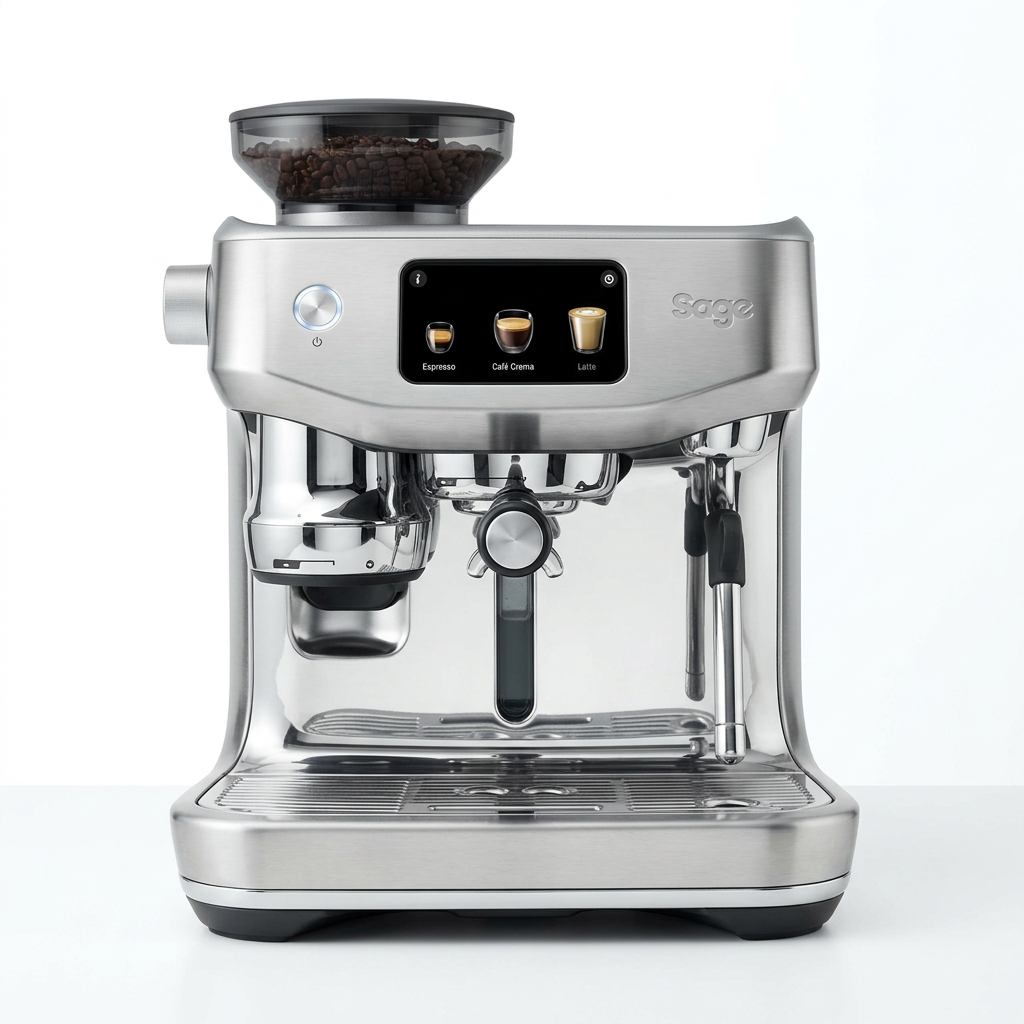
Auto grind, distribute and tamp into 58 mm, fast ThermoJet heating, cold brew in minutes and superb manual steam.
Check price on Amazon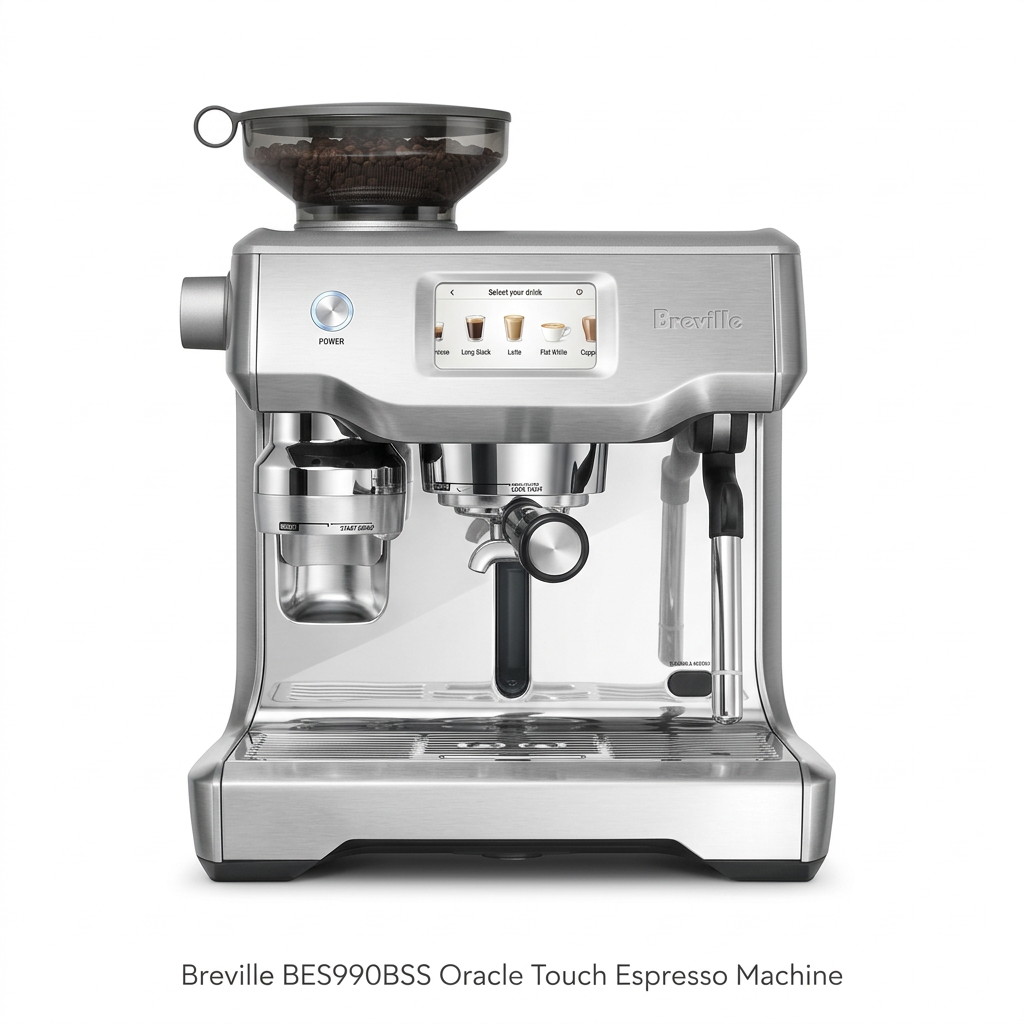
Dual boilers, auto grind and tamp into 58 mm, simultaneous brewing and steaming and silky hands-free milk.
Reveal Today’s DealOracle Jet vs Oracle Touch at a glance
- Buy the Oracle Jet if espresso is your priority, you like cold coffee and you’re happy to steam milk by hand.
- Buy the Oracle Touch if you want café lattes and flat whites with no skill at all, for a whole household, from proven dual boilers.
- Both grind and tamp automatically into a 58 mm portafilter, both run on a touchscreen and both have 45 grind settings.
- The Jet is the newer, faster, more versatile machine; the Touch is the more reliable hands-free milk machine.
Head to head
The better result in each row is marked, based on four weeks with each machine and Breville’s specs. Rows where they’re the same have no winner.
The tally isn’t my verdict. One row, automatic milk, decides this matchup for most latte drinkers.
| Spec | Oracle Jet | Oracle Touch |
|---|---|---|
| Espressomy tasting | 9.0, syrupy once warm ✓ Best | 8.9, sweet and consistent |
| Light roasts | Berry and chocolate, 8.8 ✓ Best | Good with a finer grind |
| Heating | Dual ThermoJet | Dual boilers, PID |
| Heat-up | Seconds, plus portafilter flushes ✓ Best | A few minutes, auto-start helps |
| Brew and steam at once | One after the other | Yes, simultaneously ✓ Best |
| Puck prep | Grind, distribute, tamp, polish ✓ Best | Grind, tamp, 360° polish |
| Dose consistency | Drifts about 0.5 g | Very steady ✓ Best |
| Automatic milk | Coarse, bubbly foam | Silky, consistent ✓ Best |
| Manual steam | Superb microfoam ✓ Best | Limited |
| Cold brew and cold espresso | Yes ✓ Best | No |
| Saved drinks | 20+ ✓ Best | 8 |
| Water tank | 77 oz | 84 oz ✓ Best |
| Weight | About 27 lb ✓ Best | About 35 lb |
| Energy use | 4–5 W standby, low idle ✓ Best | Two boilers to keep hot |
| Rows won | 9 | 4 |
Oracle Jet vs Oracle Touch pros and cons
Oracle Jet
- Automatic grind, distribute and tamp into 58 mm
- Excellent espresso and superb manual steam
- Cold brew and cold espresso in minutes
- Automatic milk makes coarse, bubbly foam
- Dose drifts as the hopper empties
- High water use and frequent drip tray emptying
Oracle Touch
- Automatic grind, dose and tamp with a polished puck
- Brews and steams at the same time on two boilers
- Hands-free milk that stops at your set temperature
- Large footprint and heavy body
- Dual boilers take a few minutes to heat
- Steam wand and group need daily cleaning
Who should buy which machine?
- Espresso lovers who will steam milk by hand
- Cold brew and iced coffee drinkers
- Light-roast fans who want a capable grinder
- Latte and flat white households who want hands-free milk
- Families making several drinks in a row
- Anyone who wants proven dual-boiler stability
Design, size and build
Both are brushed stainless steel with a 58 mm group head in the middle, a grinding collar on the left and a steam wand on the right. Both run through a color touchscreen.
The Oracle Touch is the bigger, heavier machine: about 14.5 inches wide, 14.7 deep and 17.6 tall, at around 35 pounds. Once I placed it, I left it there.
The Oracle Jet is the same width but a little lower at 16.7 inches, about 15 inches deep, and weighs around 27 pounds. Its touchscreen sits on top above the group head, and its smooth, bevelled panels wiped clean in one sweep.
The Jet also has a clever lever underneath. Flip it, and two rear rollers touch the counter so the whole machine wheels forward for cleaning behind it.
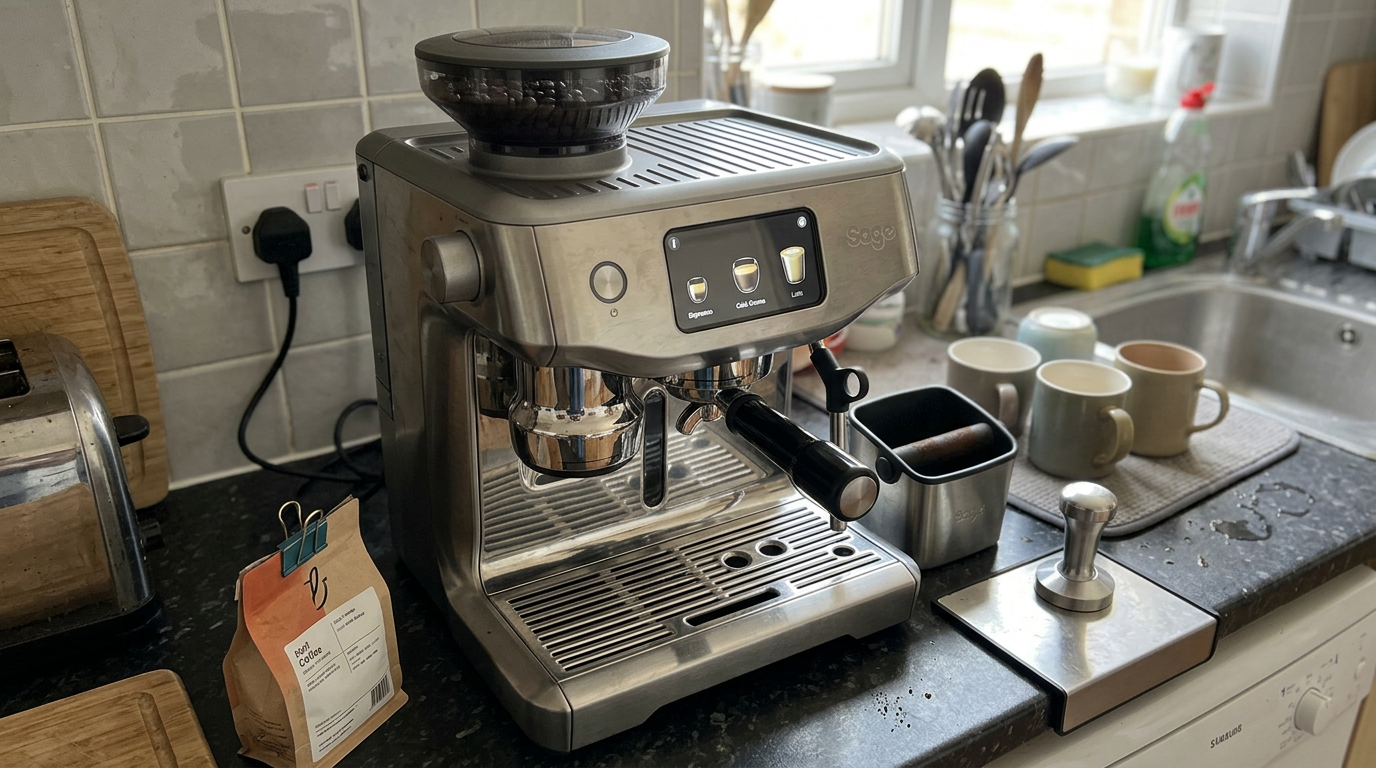
The Oracle Jet’s touchscreen sits on top, and its body is lighter and easier to wipe.
Both can be filled from the front. The Touch has a flip-top lid at the front plus a rear tank that slides out, while the Jet has a funnel on top that feeds a rear tank with a release lever.
Neither fits a tall travel mug on the drip tray under the group head. Plan on normal mugs and cups.
Weight
The Jet’s rollers make it far easier to move for cleaning.
Our tip: Leave room above either machine for the wide hopper collar, because you’ll be lifting the lid every few days.
Heating: ThermoJets vs dual boilers
This is the biggest engineering difference between them.
The Oracle Touch has two stainless steel boilers✕BoilerA tank that keeps water at a set temperature. Dual-boiler machines have one for brewing and one for steam, so both are ready at the same time., each controlled by PID✕PID controlAn electronic controller that holds water temperature within a narrow band, so shots don’t swing between too hot and too cool.. One heats espresso water, the other makes steam, so you can brew and steam at the same time with no drop in pressure.
The Oracle Jet isn’t a dual-boiler machine, despite having two heaters. A main ThermoJet✕ThermoJetBreville’s fast heating element. Water is heated as it flows through, so the machine is ready in seconds instead of minutes. of about 1,300 watts heats brew water on demand, and a small heater of about 25 watts warms the group head.
The trade-off cuts both ways. The Touch needs a few minutes to heat from cold, so I used its auto-start to have it ready when I came downstairs. The Jet heats in seconds, but its heavy 58 mm portafilter still needs warming.
What my first Oracle Jet shot tasted like
My ratings out of 10. Three hot water flushes fixed the cold-portafilter problem.
Energy use
I measured the Jet in every mode. It drew 4 to 5 watts in standby, about 27 watts idle, 140 to 150 watts grinding and about 1,300 watts brewing. In cold modes, it dropped to 55 to 65 watts.
Two boilers full of hot water use more energy to keep warm. If efficiency matters to you, on-demand ThermoJet heating is the greener choice.
| Mode | Oracle Jet, measured |
|---|---|
| Standby | 4 to 5 W |
| Idle, switched on | About 27 W |
| Grinding | 140 to 150 W |
| Hot espresso | About 1,300 W |
| Cold brew or cold espresso | 55 to 65 W |
| Steaming | 400 to 1,300 W |
Our tip: Switch the Jet off between coffees, because it heats in seconds and idles at only about 27 watts anyway.
Grinder and automatic puck prep
Both grind, dose and tamp into a 58 mm basket, the size used by most café machines. Both show 45 grind settings on the screen.
The Touch uses hardened stainless steel conical burrs✕Conical burrsTwo cone-shaped grinding parts, one inside the other. Beans are crushed between them, and the gap sets how fine the coffee is.. It grinds straight into the basket, tamps with about 30 pounds of force and finishes with a 360-degree polishing twist. The puck came out perfectly flat, with no loose grounds on the rim.
The Jet uses Baratza-designed burrs on a stepless dial, driven by a belt and gears, with a sensor that shows the position as one of 45 settings. Inside the cradle, a spinner clears the chute, spreads the coffee evenly as it fills, then a sensor stops the grind at the target resistance before a final polish.
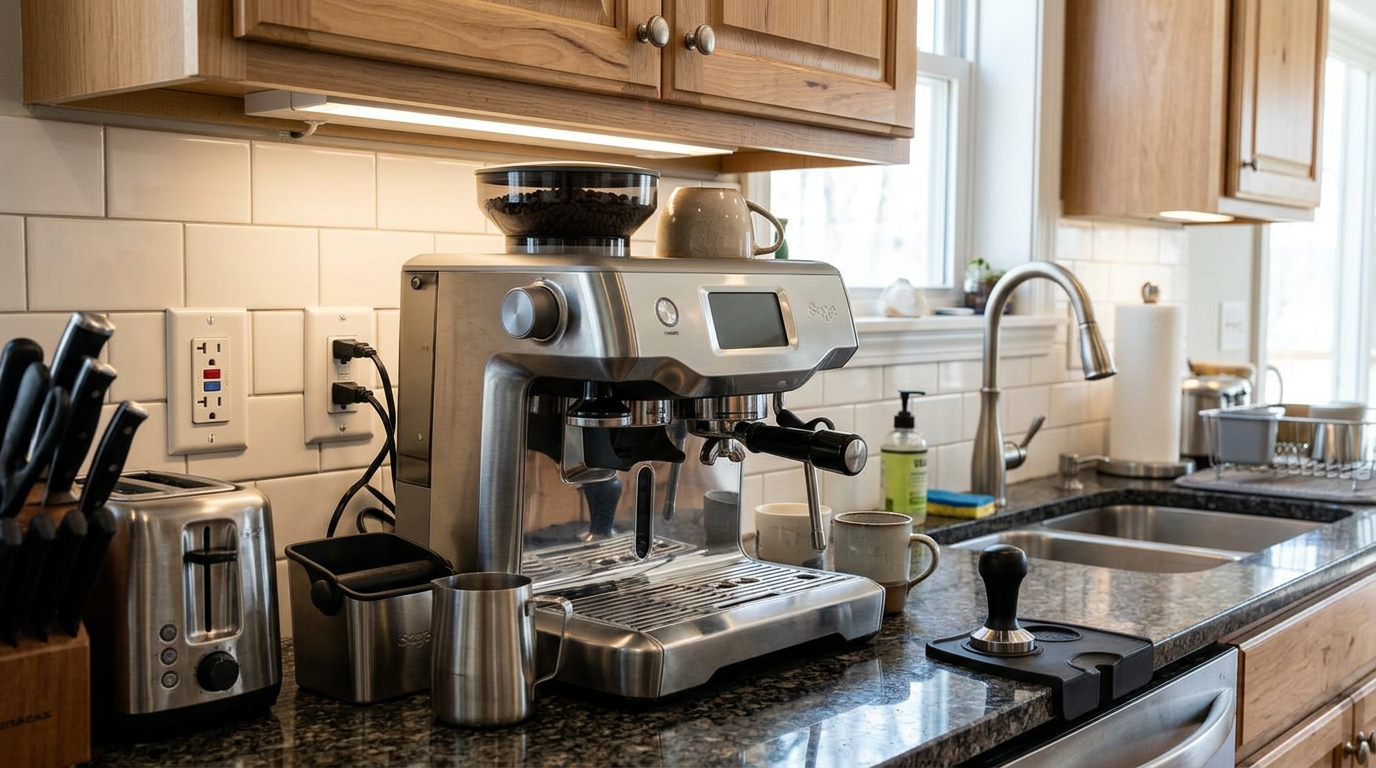
The Touch grinds, tamps and polishes the puck with almost no mess on the counter.
The dose: steady vs drifting
This was the Touch’s quiet advantage. Its dose barely moved, and my shot log showed it: about 90 percent of shots in my target window in weeks two and three.
The Jet’s default dose of about 22 grams was too big for my taste, and bringing it to 18 or 19 needed the included 2 mm Allen key plus a software confirmation. Even then, a 17.5-gram target drifted between about 17 and 18.5 grams, and it got lighter as the hopper emptied.
About once every 20 shots, the Jet didn’t finish its polishing pass. I gave those pucks a light tamp by hand.
Oracle Jet dose drift, 17.5 g target, 20 shots
The Touch’s dose stayed visibly steadier in my testing.
Shots in my target window
From my four-week shot logs.
| Puck prep | Oracle Jet | Oracle Touch |
|---|---|---|
| Grinder | Baratza-designed burrs, stepless, 45 shown | Steel conical burrs, 45 settings |
| Distribution | Spinner spreads coffee as it fills | Even fill from the chute |
| Dose control | Resistance sensor, mechanical calibration | Set dose per drink |
| Tamp | Automatic with polish | About 30 lb with 360° polish |
| Dose steadiness | Drifts about 0.5 g | Very steady |
| Hopper | About 12 oz, shut-off gate | About ½ lb, shut-off |
Our tip: Keep the Jet’s hopper at least half full, because its dose gets lighter as the beans run low.
See Today’s PriceEspresso quality
Both make some of the best espresso I’ve had from an automated home machine. The Jet edges it, but only once you’ve learned its habits.
On the Touch, a low-pressure pre-infusion✕Pre-infusionA short soak of the ground coffee at low pressure before full pressure arrives, so water flows evenly through the puck. brought the first drops after four to seven seconds, then full 9-bar pressure poured a steady stream like warm honey. With a medium blend, the crema✕CremaThe golden, foamy layer on top of a fresh espresso. was dense and golden with tiger striping, and it tasted of milk chocolate, toasted nuts and a soft fruit note.
On the Jet, once the portafilter was warm, flow settled at about 1.7 to 2.0 milliliters per second. Brewing at 194 to 203°F, the shots were sweet, full-bodied and silky, with milk chocolate, caramel and toasted nuts under a crema that lasted minutes.
Light roasts were where the Jet really shone. With a fine grind and a temperature near the top of its range, I tasted berry marmalade with a surprising undertone of dark chocolate.
My espresso ratings
My scores out of 10 from the single reviews.
Oracle Jet light roast while dialing in
My taste scores out of 10.
| What you taste | Likely cause | First fix |
|---|---|---|
| Flat, muted first shot | Cold portafilter | Jet: three flushes. Touch: auto-start |
| Sour and thin | Too coarse, or Jet dose drifted low | Go finer, check hopper level |
| Bitter and slow | Grind too fine | Go coarser |
| Rough puck surface (Jet) | Polish didn’t finish | Light hand tamp |
Our tip: On both machines, trust your taste over the on-screen grind suggestions when dialing in a light roast.
Milk drinks: the deciding factor
This is where the Touch wins clearly, and for most latte households it decides everything.
The Touch’s automatic wand injects air at the start, then creates a swirling vortex to fold it into the milk. A sensor in the drip tray reads the jug through its base and stops the steam at your target. It never scalded the milk once in four weeks, and at foam levels 4 and 5 I poured hearts and simple tulips.
Because the boilers are separate, I pressed Brew and Milk together and both finished within seconds of each other. A flat white took about 35 seconds from start to both parts done.
The Jet’s automatic mode struggled. Across more than 50 cycles with different jugs, milks and positions, the wand rarely built a proper rolling whirlpool, leaving coarse, bubbly foam on top. Fine for a cappuccino, poor for a flat white.
Automatic milk by drink
My ratings out of 10. The Touch figures are its overall milk score; the Jet’s are per drink.
Flip the Jet’s wand up into manual mode, though, and it becomes a different machine. The steam is strong but controllable, the tip has a temperature probe, and I made creamy, glossy microfoam✕MicrofoamMilk foam with bubbles so small you can barely see them. It feels silky and glossy, and it’s what you need for latte art. and clean rosettas with ease.
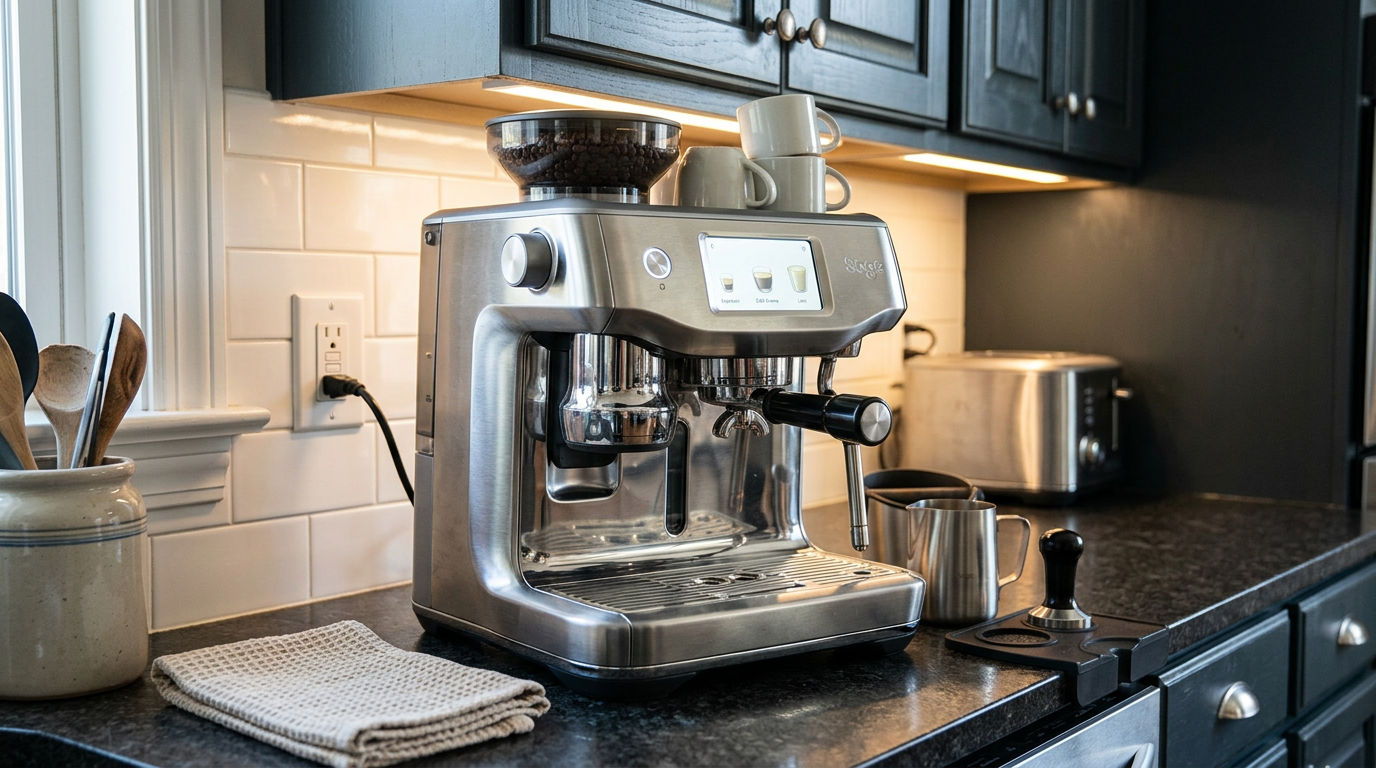
In manual mode, the Jet’s wand made some of the best microfoam I’ve made at home.
| Milk feature | Oracle Jet | Oracle Touch |
|---|---|---|
| Automatic texture | Coarse, bubbly | Silky, consistent |
| Manual steam | Superb | Limited |
| Temperature control | Probe in the wand tip | Sensor in the drip tray |
| Brew and steam together | One after the other | Yes |
| Lowest milk temperature | 140°F | Set in degrees |
| Latte art | Excellent in manual | Good at levels 4 to 5 |
Our tip: For a sweeter flat white on either machine, drop the milk to about 140°F, because milk tastes less sweet when it’s very hot.
Reveal Today’s DealCold brew and other drinks
This is the Jet’s party trick, and the Touch has nothing like it.
For cold drinks, the Jet bypasses the main heater and pumps water at around 122°F. Cold espresso took just over a minute and came out with a layer of crema and a smooth, rounded flavor with very little acidity.
Cold brew took under three minutes. Traditional cold brew takes 12 hours or more, so this was a big convenience on hot afternoons. It tasted lighter than a true overnight batch, but smooth and refreshing over ice.
Both machines make espresso, long black, americano, latte, flat white and cappuccino. The Jet adds a coffee crema setting, a longer extraction of around 150 milliliters, and tea water at about 194°F.
| Drink | Oracle Jet | Oracle Touch |
|---|---|---|
| Espresso | Yes | Yes |
| Long black and americano | Yes | Yes, separate hot water outlet |
| Coffee crema | Yes, about 150 ml+ | No |
| Cold espresso | About 1 minute | No |
| Cold brew | Under 3 minutes | No |
| Flat white, latte, cappuccino | Yes | Yes |
| Saved custom drinks | 20+ | 8, with names |
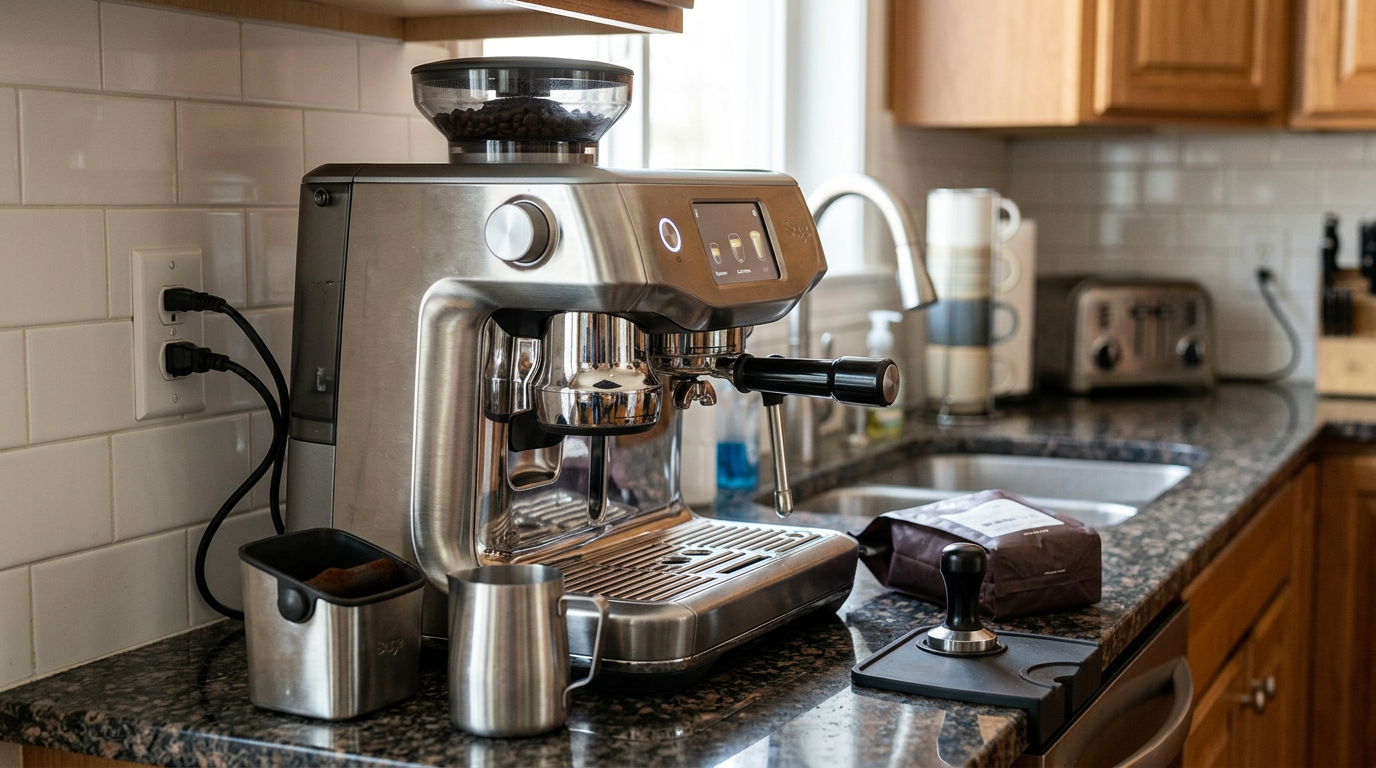
Cold brew in under three minutes made the Jet a summer favorite.
Our tip: Pour the Jet’s cold espresso over ice with a splash of milk for a quick iced latte, with no waiting for anything to cool.
Touchscreen and saved drinks
Both run on a bright color touchscreen with a carousel of drinks, and both made it easy for my whole household to use a 58 mm portafilter machine.
The Touch’s five presets are Espresso, Long Black, Latte, Flat White and Cappuccino. You can save up to eight custom drinks with names typed on a built-in keyboard, each recalling the shot, milk temperature and foam level.
The Jet stores more than 20 custom drinks, and its animated guides for backflushing, descaling and wand cleaning are excellent. Its menus are slower for multitasking, though: to change milk settings from the espresso screen, you go back and pick another drink, and you can’t start the grinder from the idle screen.
| Feature | Oracle Jet | Oracle Touch |
|---|---|---|
| Screen position | On top | Front panel, eye level |
| Saved drinks | 20+ | 8, named |
| Shot guidance | Barista Guidance | Finer/Slower, Coarser/Faster |
| Maintenance guides | Animated, very clear | Guided routines |
| Multitasking | Slower menus | Simple drink screens |
| Auto-start | Not needed | Yes, recommended |
Our tip: Put your favorite drink first in either menu, so you spend less time swiping in the morning.
Speed and daily routine
On the Touch, the auto-start had the machine warm when I got up. I swiped to my drink, ground and tamped, brewed and steamed at the same time, and poured. A flat white took under two minutes from start to first sip.
On the Jet, a flat white took about three minutes: three flushes, auto grind and tamp, brew, then manual steam. An automatic-milk cappuccino was closer to two and a half minutes.
For a round of drinks, the Touch is faster, because you can grind the next shot while one brews and the milk steams.
Power on to first sip
My timings. The Touch figure assumes auto-start has already warmed it.
Our tip: On the Touch, grind the next shot while the current one brews, and a round of four flat whites takes barely five minutes.
Cleaning and upkeep
Both guide you through every maintenance job on screen, and both still need daily care.
On the Jet, three double-tap purges save time: the grinder icon purges about 3 grams of stale grounds, the group head icon flushes the shower screen and the milk icon purges the wand. Weekly, I removed the spinner with its magnetic tool and brushed it.
The Jet drinks a lot of water. Between brewing, steam, rinses and purges, its 77-ounce tank lasted two people about a day and a half, and I emptied the drip tray daily.
On the Touch, the wand purges itself when you lower it, and the 84-ounce tank lasted about three days. I backflushed with a tablet when prompted and ran the guided two-boiler descale.
Daily hands-on cleaning time
My estimates from the single reviews.
Days per full tank, two people
The Jet’s frequent purges use more water.
| When | Oracle Jet | Oracle Touch |
|---|---|---|
| After milk drinks | Wipe, double-tap purge | Wipe, auto purge |
| Daily | Empty tray, refill tank, group flush | Empty tray and drawer, rinse basket |
| Weekly | Brush the spinner | Brush the hopper and burr now and then |
| When prompted | Backflush and descale | Backflush and guided descale |
| Every 2 to 3 months | Replace water filter | Replace water filter |
Our tip: Top up the Jet’s tank every morning, because its purges use more water than you’d expect.
Water, beans and supplies
Both use unpressurized single-wall baskets, so both need fresh beans. Whole beans used within a few weeks of the roast date gave the best crema and the steadiest timing.
Both handled light to dark roasts. On the Touch, my medium blend sat around 20 to 24 on the dial; on the Jet, around 20 to 23. Light roasts went a few steps finer on both.
For water, the Specialty Coffee Association’s brewing standard targets about 150 ppm of total dissolved solids. Use the filter, avoid pure distilled water, and remember the Touch’s boilers rely on some minerals to sense water level.
| Bean type | Oracle Jet | Oracle Touch |
|---|---|---|
| Light roast | 15 to 18, near 203°F | 16 to 19, slightly hotter |
| Medium roast | 20 to 23, 196 to 200°F | 20 to 24 |
| Medium-dark | About 24, 194 to 198°F | 24 to 27 |
| Dark roast | 25 to 28, 194 to 196°F | 27 to 30 |
Roughly how far one tank goes
Rough maths allowing for flushes and purges.
Our tip: Write the grind number on each coffee bag once it’s dialed in, so the next bag of the same beans starts in the right place.
Living with each one as a household
Both Oracles turned out to be machines everyone in my house could use, which is rare for a portafilter machine.
On the Touch, the steps fit in one sentence: lock the handle in on the left, tap your drink, move the handle to the middle, put the jug under the wand and press start. By day two, everyone made their own drinks, and saved names meant nobody lost their settings. The only habits to teach were sitting the jug flat on the sensor and wiping the wand.
On the Jet, everyone could make an espresso from day one, because the automation removed the parts that usually need teaching. Milk was the dividing line: family members who wanted effortless milk used automatic mode and were happy with cappuccinos, but for flat whites I ended up steaming manually for everyone.
The Jet’s cold drinks were the surprise hit. Cold espresso and cold brew won over people who rarely drink hot espresso at all.
| Household member | Oracle Jet | Oracle Touch |
|---|---|---|
| Espresso lover | Best shots, especially light roasts | Excellent, very consistent |
| Latte drinker who won’t steam | Automatic cappuccinos only | Perfect, one tap |
| Iced coffee fan | Cold brew in minutes | Pour a hot shot over ice |
| Latte art enthusiast | Superb manual wand | Good at foam levels 4 to 5 |
Our tip: Save one drink per person on either Oracle, named after them, so nobody ever edits someone else’s favorite.
Real-life scenarios
These are the moments where one Oracle clearly pulled ahead during my testing.
Brew and steam together, grind the next while one runs, silky milk with no effort. About five minutes for four.
Berry marmalade and dark chocolate, the kind of shot I usually only get from expensive manual setups.
Cold brew in under three minutes, cold espresso in about one.
Tap their saved drink, press Milk, done. The Jet’s automatic foam would disappoint.
Its manual wand makes glossy, controllable microfoam.
Ready in seconds, with three quick flushes. The Touch needs auto-start planning.
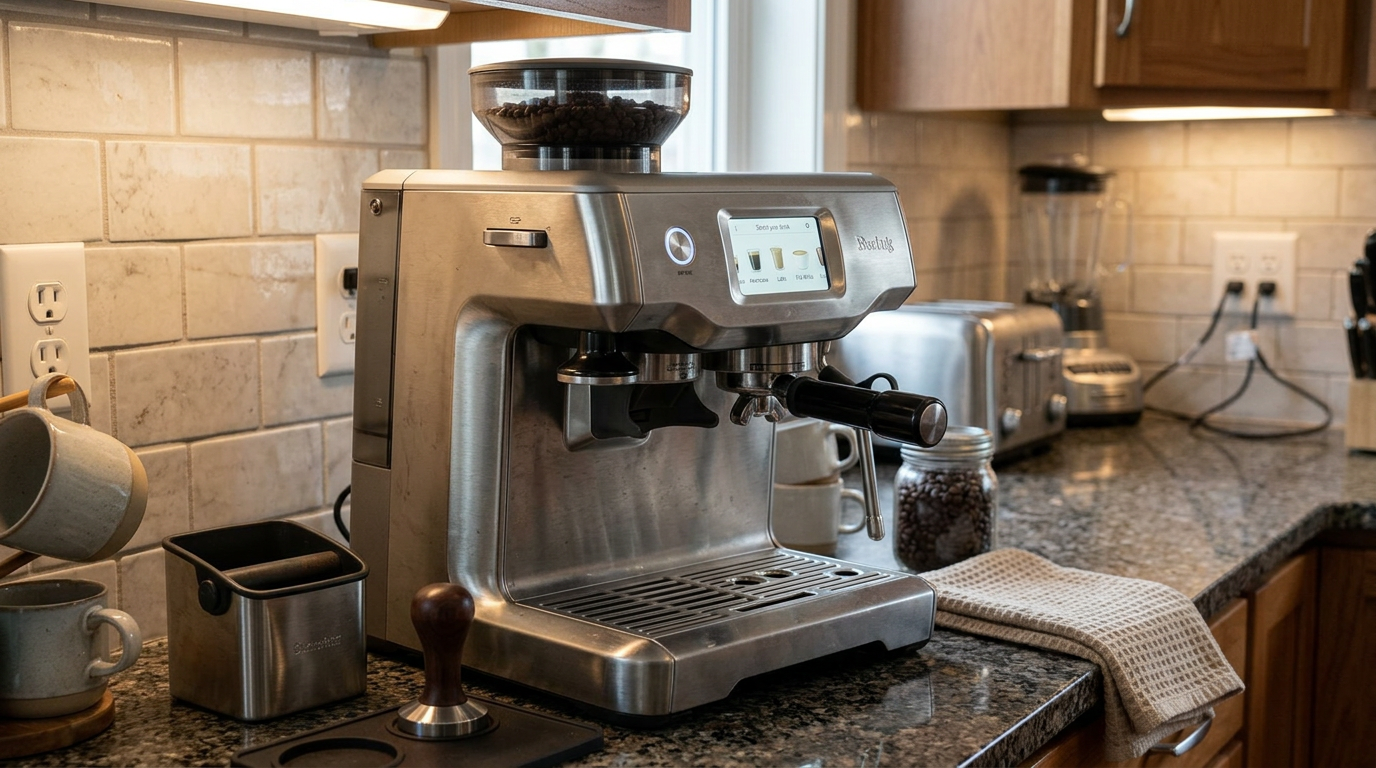
For hands-free lattes in a busy household, the Touch is the safer bet.
My scorecard
These are my scores out of 10. The first four come from my single reviews; I added versatility and hands-free milk because they decide this matchup.
Breville Oracle Jet
Breville Oracle Touch
Overall, I rate the Jet 8.4 and the Touch 8.8. The Touch is the more complete one-touch café; the Jet is the more exciting espresso machine for someone who’ll steam by hand.
See How Much You’ll SaveWhich one is right for you?
4 quick questionsWhich one should you buy?
It comes down to one question: will you steam milk by hand? If yes, the Jet is the more exciting and versatile machine. If no, the Touch is the one that will make your household happy every morning. For the wider picture beyond this matchup, see my guide to the best Breville espresso machines.
If you’re also considering the original button-controlled Oracle, see my Breville Oracle review. For a smaller machine with assisted tamping, read my Barista Touch vs Touch Impress comparison, and for the whole range, my Breville espresso machine comparison.
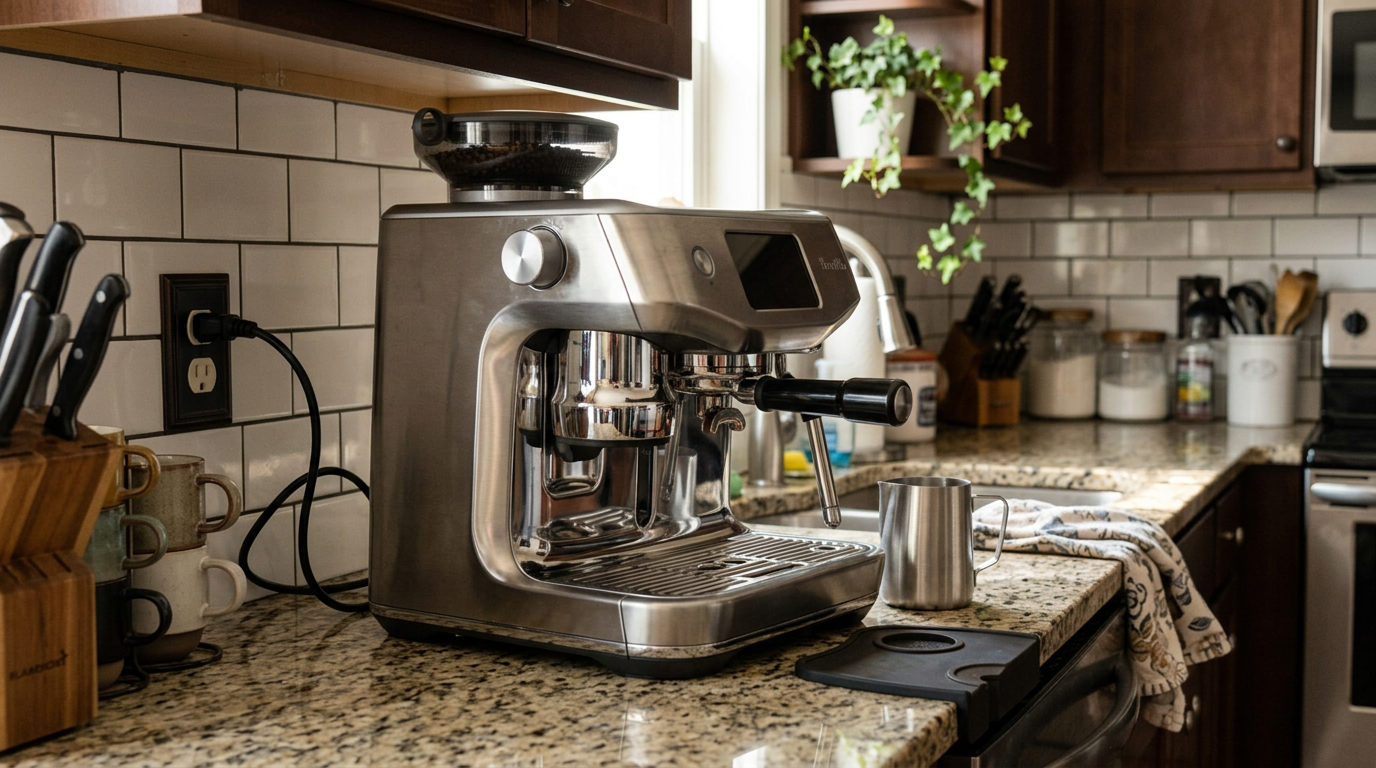
For espresso lovers who like cold coffee, the Jet is the more exciting machine.
- Espresso quality is your top priority
- You like cold brew and iced drinks
- You’ll steam milk by hand
- You want fast heat-up and low energy use
- You want perfect hands-free milk
- You hate refilling water daily
- You prefer a steady, set-and-forget dose
- You drink lattes and flat whites daily
- Several people make drinks in a row
- You want to brew and steam at once
- You value proven dual-boiler stability
- Your counter is small
- You want cold brew
- You want instant heat-up without planning
For most households that drink milk drinks, my pick is the Breville Oracle Touch. Dual boilers that brew and steam at once, a rock-steady dose and silky hands-free milk make it the easiest true café machine I’ve lived with.
The Breville Oracle Jet is the better buy for espresso lovers who’ll steam by hand. Its shots are a touch better, its light-roast performance is superb, its manual wand is outstanding, and cold brew in under three minutes is a genuine extra. Just don’t rely on its automatic milk for flat whites.
Whichever you choose, use fresh beans, warm the portafilter properly and wipe the wand after every milk drink.
Oracle Jet vs Oracle Touch specifications
From manufacturer specifications and my own testing.
| Oracle Jet | Oracle Touch | |
|---|---|---|
| Model | Breville BES985BSS | Breville BES990BSS |
| Heating | Dual ThermoJet, heated group head | Two stainless boilers, PID |
| Power | About 1,300 W brewing (measured) | 1,800 W |
| Portafilter | 58 mm | 58 mm |
| Grinder | Baratza-designed burrs, 45 settings, stepless | Steel conical burrs, 45 settings |
| Puck prep | Auto clear, distribute, tamp, polish | Auto grind, dose, tamp, 360° polish |
| Bean hopper | About 12 oz | About ½ lb |
| Water tank | 77 oz, top funnel or rear | 84 oz, front lid or rear |
| Cold modes | Cold brew and cold espresso | None |
| Milk | Auto or manual wand, probe in tip | Auto wand, tray sensor, auto purge |
| Saved drinks | 20+ | 8 |
| Dimensions (W × D × H) | 14.5 × 15 × 16.7 in | 14.5 × 14.7 × 17.6 in |
| Weight | About 27 lb | About 35 lb |
| Warranty (US) | 2 years limited | 2 years limited |
How I tested and compared them
I used each Oracle as my household’s everyday coffee machine for four weeks. The testing notes were written up together by Michael Reynolds and the HouseholdMe team.
I logged every double espresso, calibrated the Jet’s dose, dialed in light, medium and dark roasts, measured the Jet’s power draw and ran more than 50 automatic milk cycles on the Jet alongside manual steaming.
On the Touch, several people saved and used their own drinks, I tested every foam level with five milks and followed every guided cleaning routine on both.
- Coffee: body, crema, light-roast performance and consistency.
- Milk: automatic and manual texture, temperature and speed.
- Workflow: heat-up, touchscreen, saved drinks and cold modes.
- Ownership: water use, cleaning, energy and footprint.
Oracle Jet vs Oracle Touch FAQ
What is the difference between the Oracle Jet and Oracle Touch?
The Jet uses fast ThermoJet heating, adds cold brew and cold espresso, distributes the coffee with a spinner and has an excellent manual steam mode. The Touch uses two boilers, brews and steams at the same time and makes better hands-free milk.
Is the Oracle Jet a dual-boiler machine?
No. It has a main ThermoJet of about 1,300 W for brewing and a small heater for the group head. The Oracle Touch has two stainless steel boilers.
Which makes better espresso?
Very close. I scored the Jet 9.0 and the Touch 8.9. The Jet was especially good with light roasts, while the Touch was more consistent thanks to its steady dose.
Which has better milk?
For hands-free milk, the Oracle Touch, clearly. The Jet’s automatic mode made coarse, bubbly foam in my testing, but its manual steam mode made some of the best microfoam I’ve tested.
Can the Oracle Touch make cold brew?
No. Only the Oracle Jet has cold brew, in under three minutes, and cold espresso, in about one.
Which heats up faster?
The Jet, in seconds, though I ran three hot water flushes to warm its portafilter. The Touch needs a few minutes, so I used its auto-start.
Do both tamp automatically?
Yes, both grind, dose and tamp into a 58 mm portafilter. The Jet also spreads the grounds with a spinner; the Touch finishes with a 360° polishing twist.
Which uses more water?
The Jet. Its 77 oz tank lasted two people about a day and a half because of frequent purges. The Touch’s 84 oz tank lasted about three days.
How many drinks can I save?
More than 20 on the Jet and 8 named drinks on the Touch.
Which is heavier?
The Touch, at about 35 lb, against about 27 lb for the Jet, which also has built-in rollers.

- Our hands-on Breville Oracle Jet review
- Our hands-on Breville Oracle Touch review
- Breville product specifications and owner documentation
- Specialty Coffee Association brewing water guidance
- General espresso brewing and milk texturing guidance