Barista Touch vs Oracle Touch: do you need the Oracle’s automation?
These two share a touchscreen layout, a drink menu and an automatic steam wand, so they feel like relatives the moment you swipe. Under the skin, they are very different machines. The Breville Barista Touch is a compact single-heater machine where you dose and tamp by hand into a 54 mm basket. The Breville Oracle Touch grinds, doses and tamps for you into a café-size 58 mm portafilter and runs two boilers so it can brew and steam at the same time. I used each one for four weeks and timed, weighed and tasted everything to find out whether the Oracle's automation is worth it for you.
We choose products independently. We may earn a commission through links on this page; your price stays the same. Affiliate policy
Jargon helpNew to espresso? Tap any dotted term to see what it means.
In this comparison
If you want café-quality espresso with almost no technique and no mess, and you have the counter space, buy the Breville Oracle Touch. It doses and tamps perfectly every time, brews and steams at once and made the best espresso of the two. If you don't mind dosing and tamping yourself, or your kitchen is short on space, the Breville Barista Touch gets you surprisingly close. It heats in about 3 seconds, makes the same hands-free milk and, once I had a routine, pulled shots I'd happily serve to guests.
The two machines
Specs checked November 14, 2026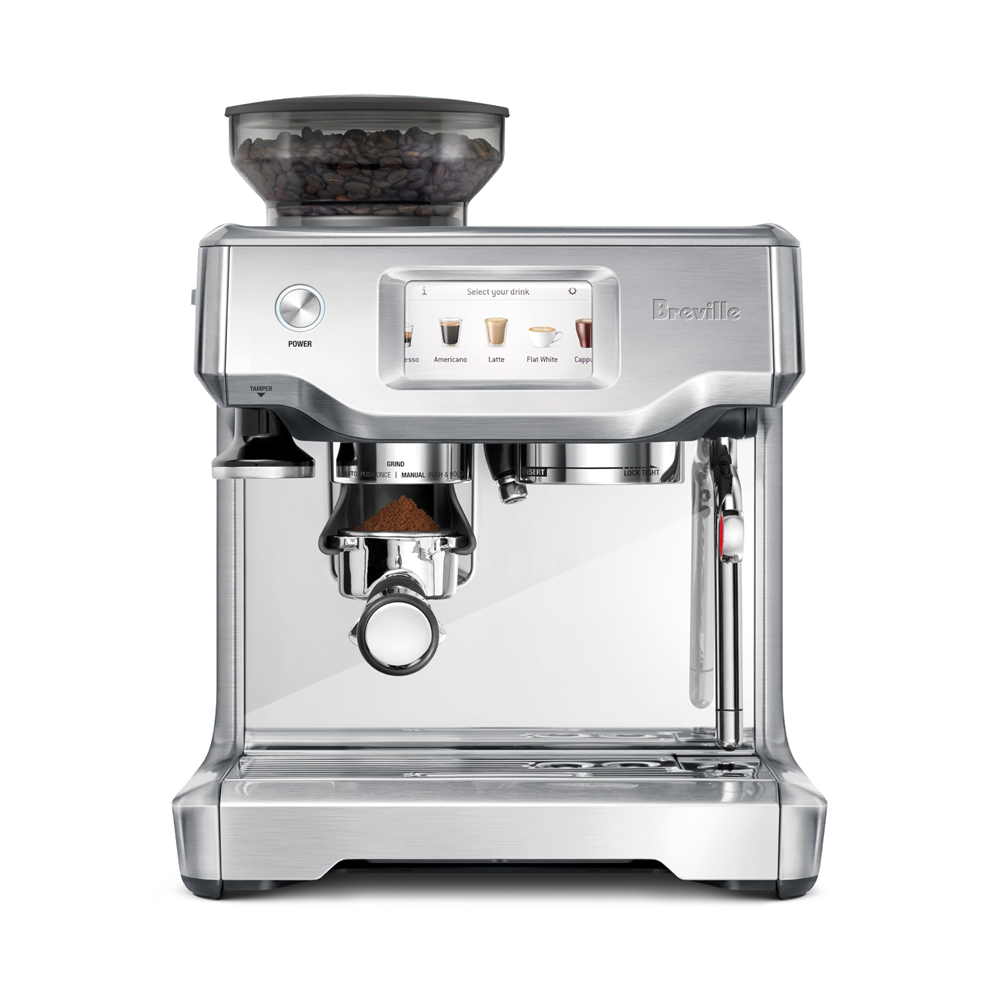
A simple touchscreen, 3-second ThermoJet heat-up, 30 grind settings and hands-free milk in a compact body. You dose and tamp yourself.
Check price on Amazon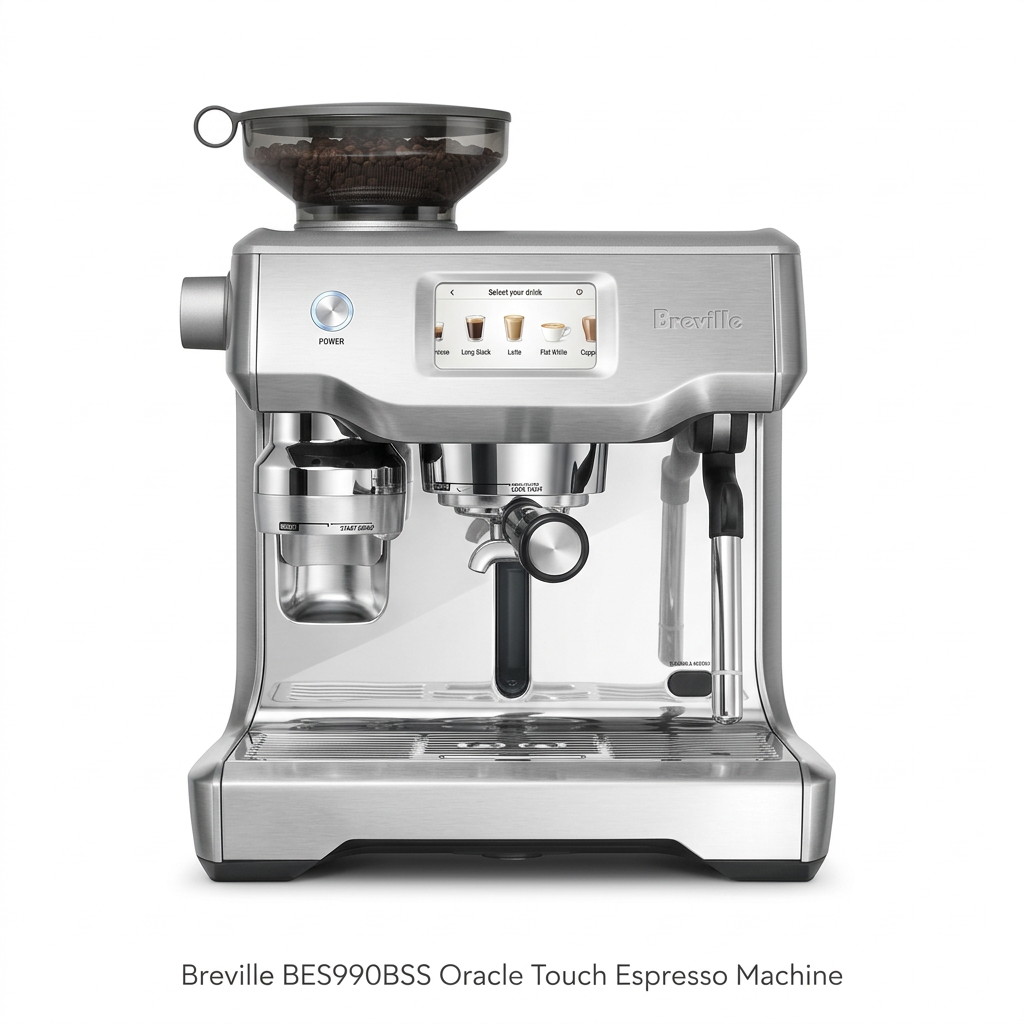
Automatic grinding, dosing and tamping into a 58 mm portafilter, dual boilers that brew and steam at once, and hands-free milk.
Reveal Today’s DealBarista Touch vs Oracle Touch at a glance
- Buy the Oracle Touch if you want the best espresso with the least technique and you have room for a 35-pound machine.
- Buy the Barista Touch if you are happy to dose and tamp and want a smaller, quicker-to-heat machine.
- Both have the same style of touchscreen, saved drinks and automatic steam wand with adjustable foam and temperature.
- The Oracle wins on consistency, speed for milk drinks and tank size; the Barista Touch wins on size and warm-up.
Head to head
The better result in each row is marked, based on my testing and Breville's specifications. Rows where the two machines are identical have no winner.
Keep in mind that the tally is not my verdict. The Oracle should win more rows as the flagship; the question is whether those rows matter in your kitchen.
| Spec | Barista Touch | Oracle Touch |
|---|---|---|
| Espressomy tasting, same beans | Chocolate and nuts, very good | Sweeter, clearer, café-like ✓ Best |
| Dosing and tamping | By hand, 54 mm basket | Automatic, about 30 lb tamp with twist ✓ Best |
| Portafilter | 54 mm | 58 mm, café size ✓ Best |
| Heating | ThermoJet, about 3 s | Dual boilers |
| Brew and steam at once | No | Yes ✓ Best |
| Warm-up from cold | About 3 seconds ✓ Best | Several minutes, or use auto-start |
| Grind settings | 30 | 45 ✓ Best |
| Shots in my 28–32 s windowweek 2 | 75% | 90% ✓ Best |
| Automatic milk | Yes, 8 foam levels | Yes, 8 foam levels |
| Water tank | 67 oz | 84 oz ✓ Best |
| Weight | About 22 lb ✓ Best | About 35 lb |
| Width | About 12.7 in ✓ Best | About 14.5 in |
| Saved drinks | 8 custom | Custom drinks |
| Rows won | 3 | 7 |
Barista Touch vs Oracle Touch pros and cons
Barista Touch
- About 3-second heat-up and quick brew-to-steam switch
- Same hands-free milk with adjustable foam and temperature
- Compact and about 13 pounds lighter
- You dose and tamp by hand
- Can not brew and steam at the same time
- Small drip tray fills up fast
Oracle Touch
- Grinds, doses and tamps perfectly into a 58 mm basket
- Dual boilers brew and steam at once
- Most consistent shots I recorded on any Breville
- Big and heavy at about 35 pounds
- Takes minutes to heat unless you set auto-start
- Still asks for regular cleaning of the grinder collar and wand
Who should buy which machine?
- People happy to learn dosing and tamping
- Kitchens short on space
- One or two drinkers who want speed from cold
- Anyone who wants café espresso with no technique
- Busy mornings with several milk drinks
- Kitchens with room for a big machine
Design, size and build
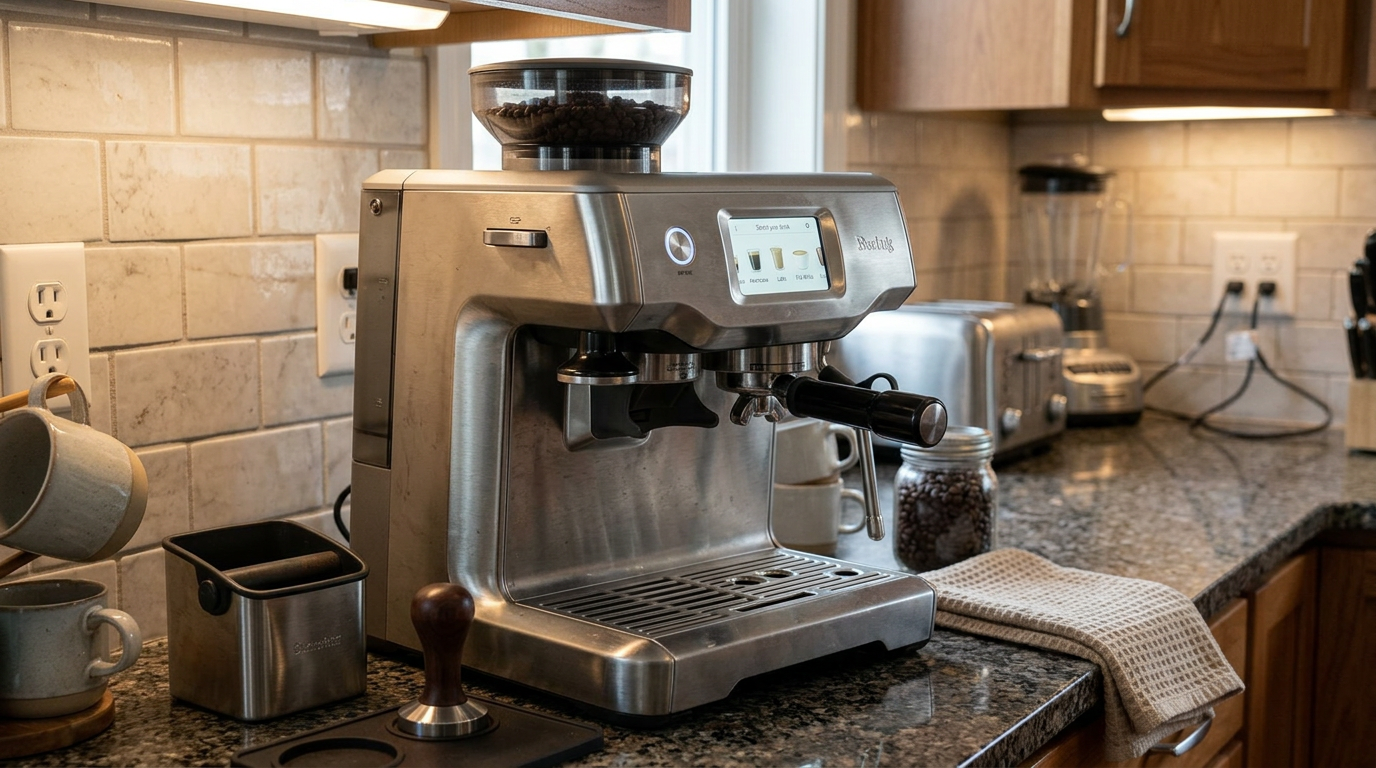
From the front, the family resemblance is obvious: brushed stainless steel, a color touchscreen in the middle, a grinder on the left and a steam wand on the right.
The difference is scale. The Barista Touch measures about 12.7 inches wide and weighs around 22 pounds. The Oracle Touch measures about 14.5 inches wide, 14.7 inches deep and 17.6 inches tall, and weighs around 35 pounds.
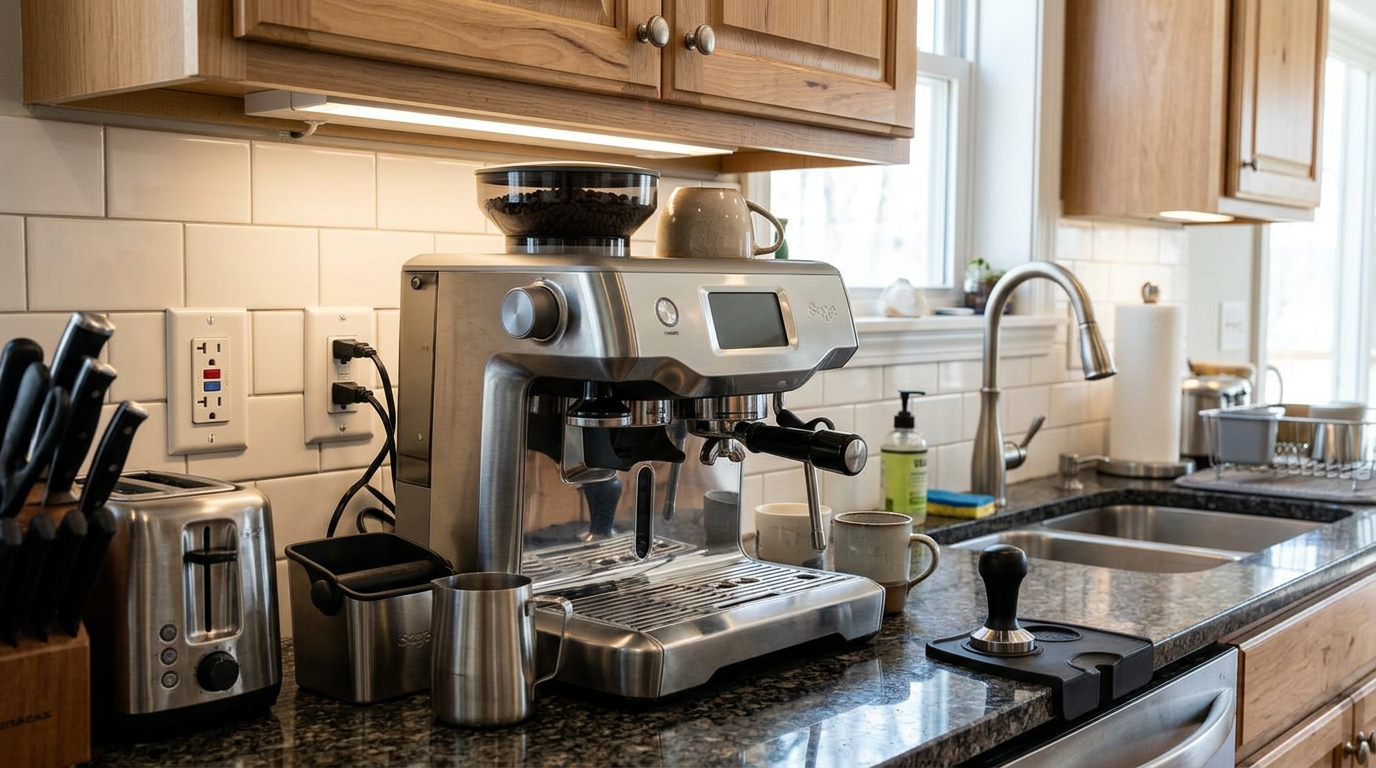
The Oracle Touch is a big, heavy machine that needs a permanent spot.
That extra size buys you two boilers, a larger 84-ounce tank and a café-size 58 mm group head. It also means the Oracle needs a permanent spot. You won't be sliding it around to wipe the counter.
Both tanks come out of the back. The Oracle's slides out on a lock, so you can refill it at the sink, while the Barista Touch's lifts out by a handle.
Weight
The Oracle's weight keeps it planted when you lock in the portafilter, but you won't move it often.
Our tip: Measure the height under your cabinets before buying the Oracle Touch, because at about 17.6 inches it won't fit under some lower kitchen cabinets.
Heating: ThermoJet vs dual boilers
This is the engineering difference that shapes how each machine feels every morning.
The Barista Touch uses Breville's 1680-watt ThermoJet✕ThermoJetBreville's fast heating system. It reaches brewing temperature in about 3 seconds and switches to steam almost instantly. heater. It was ready about 3 seconds after I pressed power, and switching from brew to steam took about 5 seconds.
The Oracle Touch uses two stainless steel boilers✕Dual boilerTwo separate heaters: one keeps water at brewing temperature, the other makes steam. You can pull a shot and steam milk at the same time.. One holds brewing water at a steady temperature and the other makes steam, so you can pull a shot and steam milk at the same time.
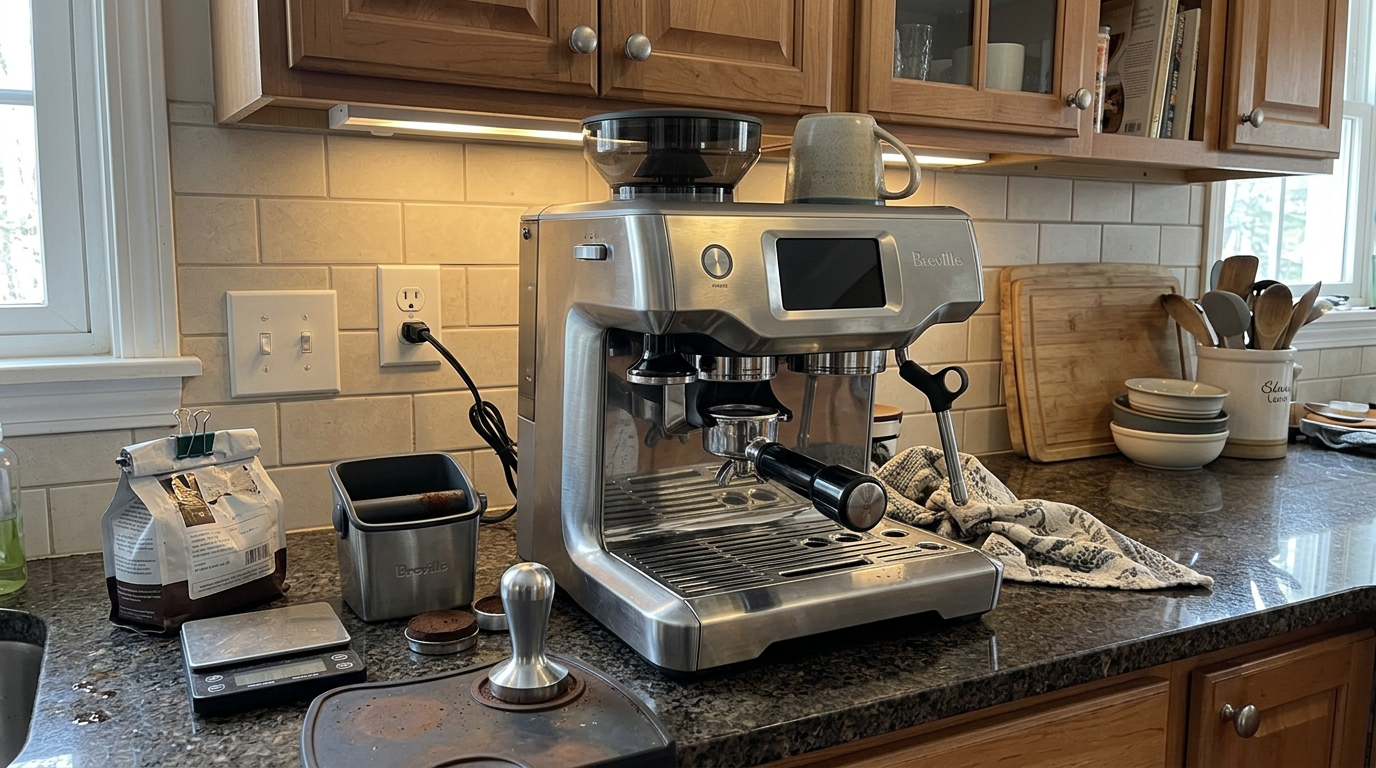
The Barista Touch was ready to brew about 3 seconds after I pressed power.
The trade-off is warm-up. From cold, the boilers take several minutes to be fully ready, while the ThermoJet is instant.
Breville solves that with an auto-start timer on the Oracle. I set it for 15 minutes before my usual coffee, and the machine was fully warm when I walked into the kitchen.
Time for a flat white, start to both parts done
My timings once each machine was warm.
| Timing | Barista Touch | Oracle Touch |
|---|---|---|
| Power on to ready | About 3 s | Several minutes, or auto-start |
| Brew to steam | About 5 s | No wait, simultaneous |
| Blank shot to warm portafilter | About 15 s | Not needed when warm |
| Temperature stability | Very good | Excellent |
Our tip: Set the Oracle Touch auto-start for 15 minutes before you usually make coffee, because the boilers and the heavy 58 mm portafilter then reach full temperature.
Grinding, dosing and tamping
This is the headline difference, and the reason the Oracle exists.
On the Barista Touch, you grind into the portafilter✕PortafilterThe handle with a metal basket that holds the ground coffee. It locks into the machine, where hot water is pushed through the coffee. and then tamp✕TampingPressing the ground coffee into a firm, flat puck. An uneven or weak tamp lets water find gaps and the shot tastes sour or harsh. it yourself. Its grinder has 30 settings, and I used 17.5 grams in the double basket.
On the Oracle Touch, you lock the portafilter under the grinding collar and press. It grinds, doses and then tamps with roughly 30 pounds of force, finishing with a 360-degree polishing twist.
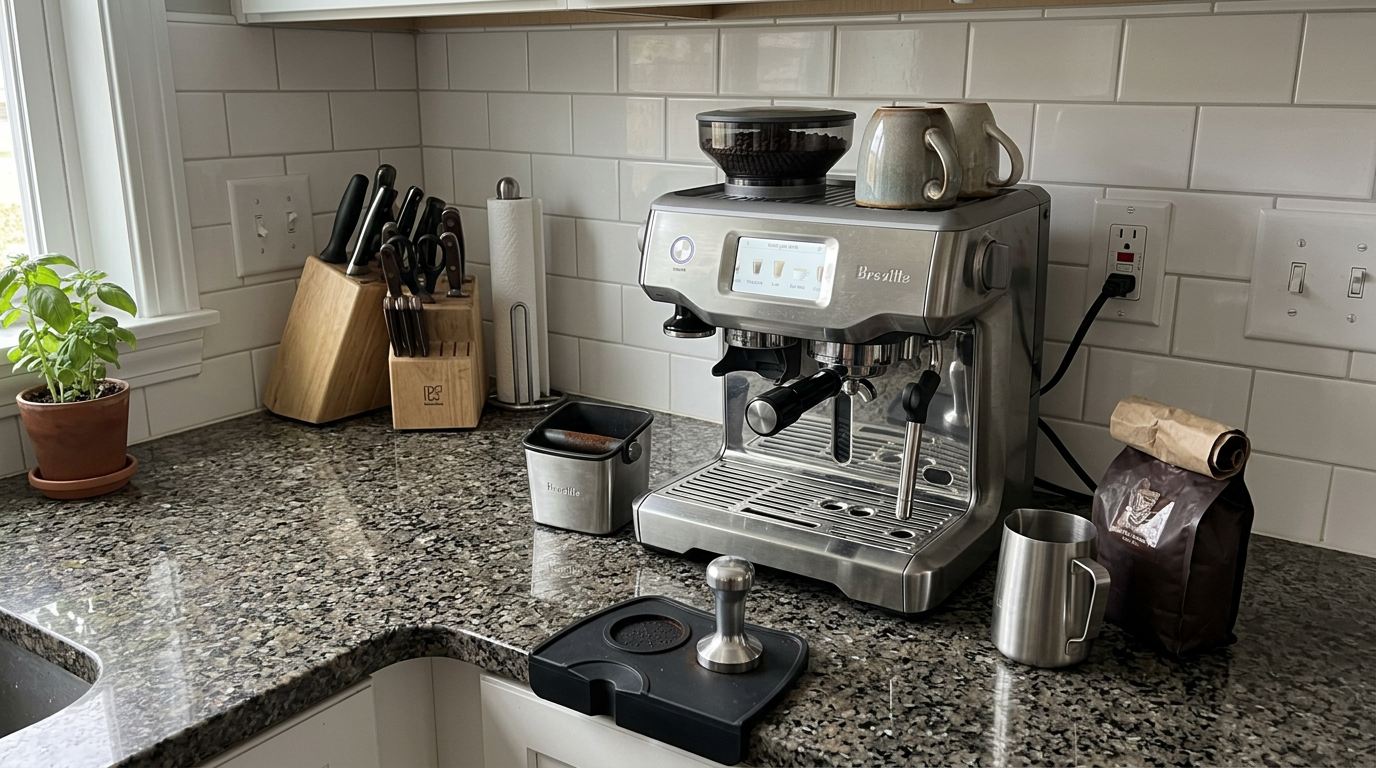
The Oracle doses and tamps for you, with a 360-degree polishing twist.
The Oracle's grinder has 45 settings. With a fresh medium roast, my sweet spot was in the low 20s, and from there the timer barely moved.
| Bean type | Barista Touch, 1–30 | Oracle Touch, 1–45 |
|---|---|---|
| Light roast | 6 to 9 | 16 to 19 |
| Medium roast | 10 to 13 | 20 to 24 |
| Medium-dark roast | 13 to 15 | 24 to 27 |
| Dark roast | 14 to 17 | 27 to 30 |
Shots needed to dial in each new bag on the Oracle Touch
My average over four weeks. On the Barista Touch, add one or two more.
Espresso quality
Both machines made genuinely good espresso. The Oracle's was better, and more consistent.
On the Barista Touch, my recipe was 17.5 grams in and 40 grams out, a brew ratio✕Brew ratioThe weight of dry coffee compared with the weight of liquid espresso in the cup. A 1:2.3 ratio means 17.5 g of coffee makes about 40 g of espresso. of about 1 to 2.3. With a medium roast, that ran in 28 to 32 seconds and tasted of chocolate and nuts at the default 200 to 202°F.
Light roasts needed 204 to 206°F, a finer grind and about 44 grams out. Dark roasts were best at 198 to 200°F with a slightly coarser grind.
On the Oracle Touch, the default double shot runs for about 30 seconds after a short pre-infusion✕Pre-infusionA short soak of the ground coffee before full pressure starts, so water flows through the puck evenly.. Then full 9-bar pressure took over, and the shot poured in a steady stream like warm honey.
The 58 mm basket and level puck gave the Oracle a clarity I rarely get from all-in-ones.
The 58 mm basket and the perfectly level puck gave a clarity I rarely get from all-in-one machines. Flavors were more separate and the finish was sweeter.
Shots inside my 28–32 second window, by week
Barista Touch first, Oracle Touch second.
By week four, my hand-tamped shots on the Barista Touch were as consistent as the Oracle's. The Oracle's dip in week four came from a new bag of beans, which took a couple of shots to adjust.
My espresso ratings
My scores out of 10 for body, crema, flavor and consistency.
| What you taste | Likely cause | First fix on either machine |
|---|---|---|
| Sour, thin, under 25 s | Under-extracted✕Under-extractionWhen water does not pull enough flavor out of the coffee. The shot tastes sour, thin and watery. | Go two settings finer |
| Bitter, over 35 s | Over-extracted | Go two settings coarser |
| Sour but on time | Water too cool for the roast | Raise brew temperature |
| Spurts on the Barista Touch | Channeling✕ChannelingWhen water finds a crack or weak spot in the puck and rushes through it. | Distribute evenly and tamp level |
Milk drinks
Both machines use Breville's automatic steam wand, and in daily use they felt almost identical. You fill the jug, set it on the drip tray and pick a temperature and a foam level from 1 to 8.
The wand stops itself when the milk hits your temperature. On the Barista Touch, the default is 150°F, and I lowered it to 140°F for most drinks. On the Oracle, the flat white default is 149°F at level 4.
Milk tastes sweeter at about 140°F, because its natural sweetness fades as it gets hotter. Both machines made that easy to dial in.
Foam levels I used on both machines
Higher levels add more air.
At level 3 to 5, both made fine, liquid microfoam✕MicrofoamMilk foam with bubbles so small you can barely see them. It feels silky and glossy, which is what latte art needs. that poured hearts and simple tulips. At 7 to 8, the foam was dense and dry, which is right for a classic cappuccino.
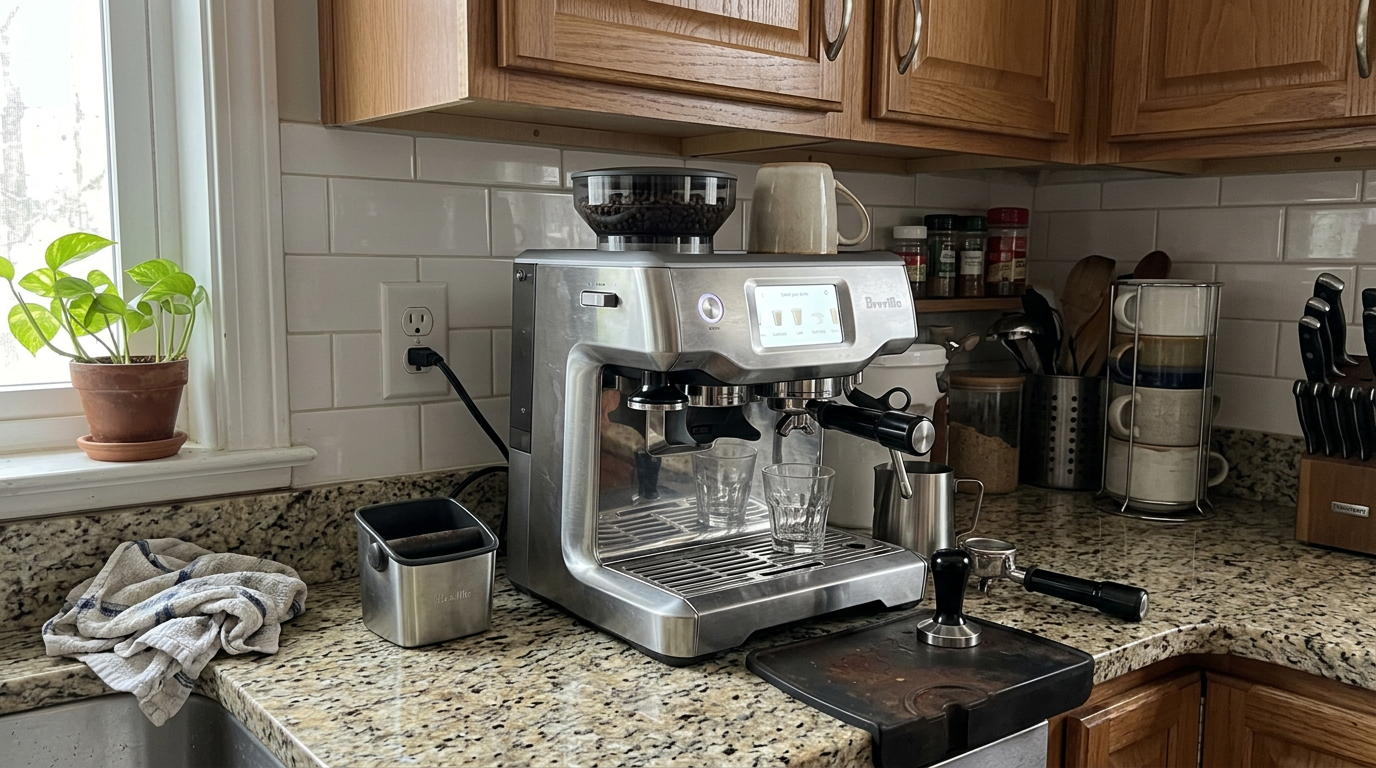
Both machines use the same automatic steam wand with adjustable foam and temperature.
The real difference is timing. The Oracle steams while it brews, so a flat white was done in about 35 seconds. The Barista Touch brews first and steams second, which took a little longer.
About 5 ounces of cold milk gave the best results in the Barista Touch jug. The Oracle comes with a 16-ounce jug, which handled two drinks at once.
Our tip: Use about 5 ounces of cold milk in the smaller jug, because the automatic wand needs enough depth to spin the milk properly.
Americano, long black and hot water
Both machines have a dedicated hot water outlet, so neither has to run a mug of water through the coffee. That matters, because pushing extra water through a puck tends to over-extract it and taste bitter.
Both touchscreens include an Americano and a long black✕Long blackHot water first, with a double espresso poured on top. It keeps more crema and tastes a little stronger than an Americano.. The long black pours water first and the shot second, which keeps the crema on top.
On the Barista Touch, an Americano took about 2.5 minutes from power-on. On the Oracle, the water and the shot came together faster once it was warm.
The Oracle's bigger tank also made a difference here. Long drinks use far more water than espresso, and the 84-ounce tank simply needed fewer refills.
Our tip: Choose long black over Americano on either machine, because pouring the shot onto the water kept more crema and tasted rounder in every side-by-side cup I made.
Touchscreen and saved drinks
The touchscreens work the same way. You swipe through espresso, Americano, long black, latte, flat white and cappuccino, tap one and follow the prompts.
Each drink can be tweaked and saved under your own name and picture. The Barista Touch stores up to 8 custom drinks, and the Oracle lets you save your own drinks the same way.
I saved a "Morning flat white" on the Oracle with a double shot, milk at 140°F and a slightly finer foam. After that, my weekday routine was two taps.
| Feature | Barista Touch | Oracle Touch |
|---|---|---|
| Display | Color touchscreen | Color touchscreen |
| Preset drinks | Espresso, Americano, long black, latte, flat white, cappuccino | Same menu |
| Saved custom drinks | Up to 8 | Yes |
| Shot settings in presets | Same shot for every drink | Adjustable per drink |
| Auto-start timer | No | Yes |
| Milk temperature and foam | Per drink | Per drink |
One weakness on the Barista Touch: its presets all brew the same shot. You change the milk and water, but not the coffee recipe per drink.
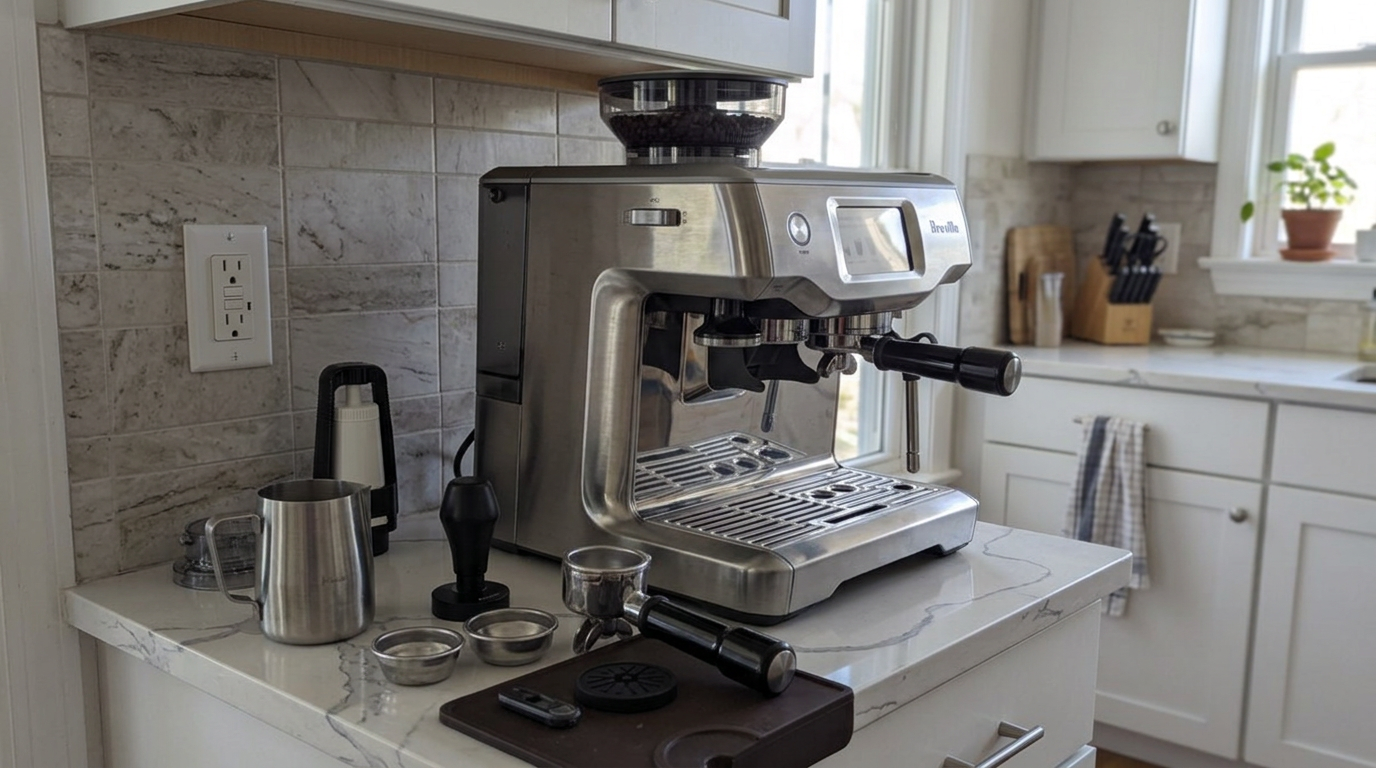
The Barista Touch presets all brew the same shot; only milk and water change.
Our tip: Save a separate drink for each person on either machine, with their name on it, because it stops the morning debate over whose settings are on screen.
See Today’s PriceSpeed and daily workflow
From cold, the Barista Touch wins easily. It was ready in about 3 seconds, so an espresso took about 2 minutes from pressing power.
Once warm, the Oracle wins. It brews and steams at once, and it doses and tamps without me touching the coffee.
Power on to first sip, Barista Touch
My timings, including a blank shot to warm the portafilter.
On the Oracle, with auto-start set, a flat white was about 35 seconds from pressing start to both parts done, plus a few seconds to lock in the portafilter and pour.
Here's what each step asked of me:
| Step | Barista Touch | Oracle Touch |
|---|---|---|
| Grind | Press, into the portafilter | Press, into the portafilter |
| Dose | Check by eye or scale | Automatic |
| Tamp | By hand | Automatic, with twist |
| Brew | One tap | One tap |
| Steam | After the shot | At the same time |
| Clean up | Knock out, wipe wand | Knock out, wipe wand |
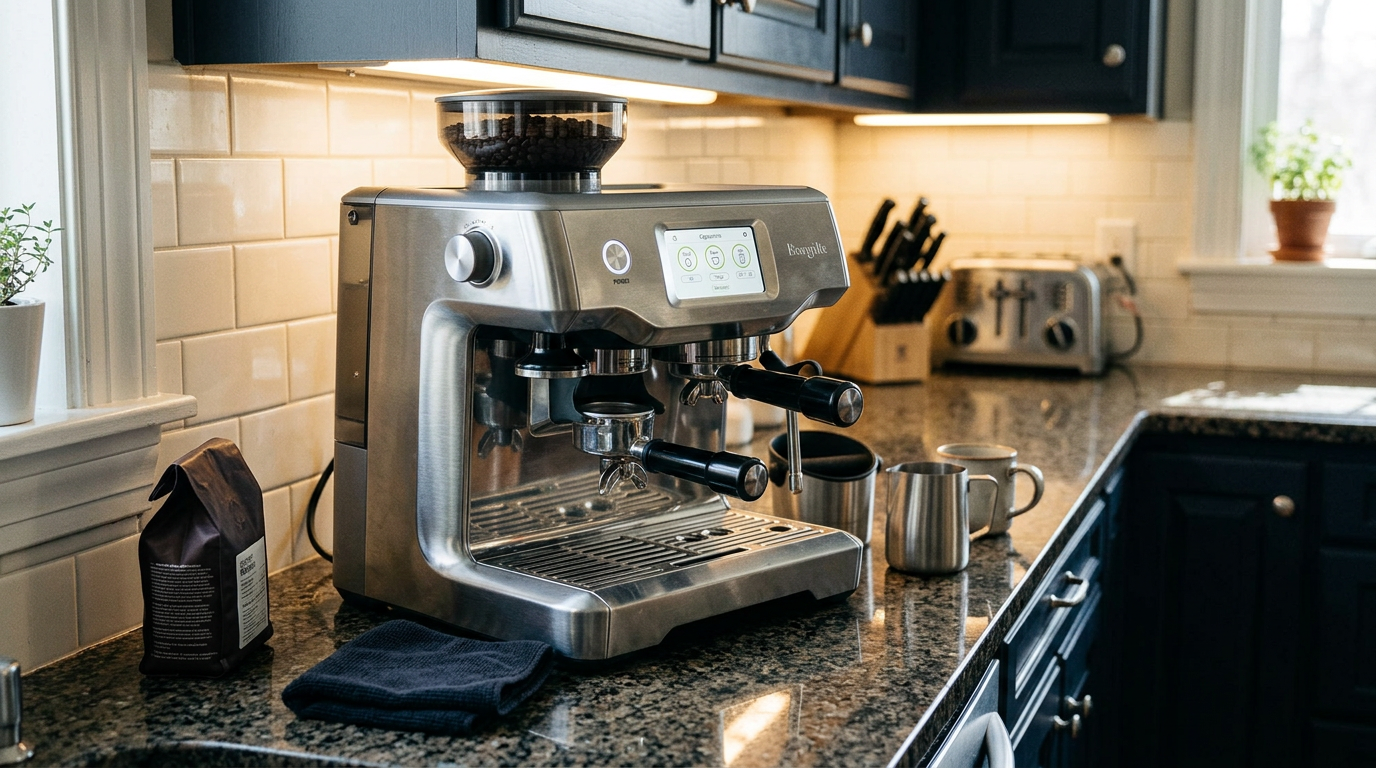
With auto-start, the Oracle had a flat white ready in about 35 seconds.
Cleaning and upkeep
Daily cleaning is similar on both: knock out the puck, rinse the basket, wipe the steam wand and empty the drip tray.
The Oracle makes less mess because it tamps inside the grinding collar. There were almost no grounds on the counter all month.
The Barista Touch's compact drip tray filled up fast, especially with blank shots and wand purges. I emptied it every day.
| When | Barista Touch | Oracle Touch |
|---|---|---|
| After every shot | Knock out, rinse, flush | Knock out, rinse, flush |
| After milk | Wipe, auto-purge | Wipe, auto-purge |
| Daily | Empty the small drip tray | Empty drip tray |
| Weekly | Clean the grinder chute | Brush the grinding collar |
| When prompted | Cleaning cycle with tablet | Cleaning cycle with tablet |
| Every 2–3 months | Replace water filter | Replace water filter |
My daily hands-on cleaning time
My estimate for two milk drinks and one espresso a day.
Water matters for both. Water is over 98 percent of an espresso, and a good target is around 120 to 150 ppm of total dissolved solids, with calcium hardness around 50 to 80 ppm. Both machines include a water filter.
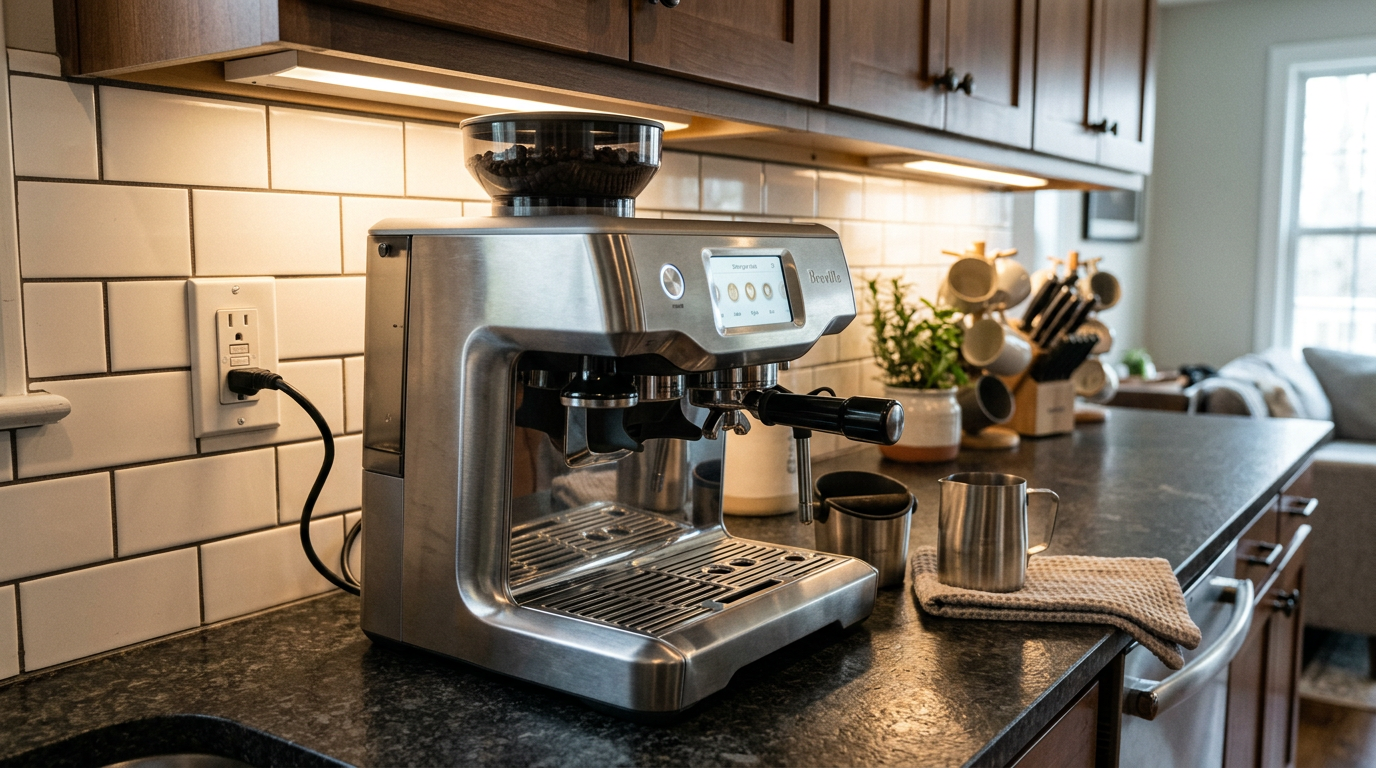
The Barista Touch's compact drip tray needed emptying every day.
Our tip: Keep a container that holds at least 30 ounces handy for cleaning cycles, because it needs to sit under the group head and the steam wand at the same time.
Noise
Both grinders hum rather than whine, and neither was loud by espresso standards.
The Oracle's internal tamping adds a short mechanical whirr after grinding. The steam wand on both makes the usual hiss while it texturizes milk.
How loud each felt, my ranking
Relative loudness from my side-by-side use. Shorter bars are quieter.
The Oracle's boilers also click quietly as they hold temperature through the day. I only noticed it in a silent kitchen.
Water, beans and supplies
The Oracle's 84-ounce tank lasted about three days for two people. The Barista Touch's 67-ounce tank lasted about two days.
Drinks per full tank
Rough maths allowing for flushes and purging.
The 58 mm portafilter on the Oracle is the size used in most café machines, so it works with a wide range of commercial accessories. The Barista Touch's 54 mm basket is standard across Breville's home machines but limits some third-party tools.
Use fresh beans within a few weeks of the roast date on both. The Oracle's consistency made stale beans easy to spot: shots ran fast and pale no matter what.
The Oracle's 58 mm portafilter works with most café accessories.
Spent pucks from either machine make a useful addition to a compost pile in small amounts.
Real-life scenarios
Specs only go so far. These are the situations where one machine clearly pulled ahead during my testing.
Ready in about 3 seconds. The Oracle needs auto-start or a few minutes.
Brewing and steaming at once, with perfect tamping every time.
It grinds, doses and tamps in the collar. Almost no mess.
About 12.7 inches wide and 16 inches tall, against 14.5 and 17.6.
Dosing and tamping by hand taught me what the Oracle does for you.
The 58 mm basket and level puck gave the clearest, sweetest espresso.
For café-quality drinks with no technique, the Oracle Touch was in a class of its own.
My scorecard
These are my own scores out of 10. The first four come from my single reviews of each machine, and I added consistency and footprint because they decide this matchup.
Barista Touch
Oracle Touch
Overall, I rate the Barista Touch 8.4 and the Oracle Touch 8.8. The Oracle is the better machine on every coffee measure; the Barista Touch is the more practical one for smaller kitchens and people happy to tamp.
See How Much You’ll SaveWhich one is right for you?
4 quick questionsWhich one should you buy?
It comes down to one question: do you want to tamp, and do you have room for a 35-pound machine? Answer that honestly and the choice makes itself. If none of these is quite right for you, my guide to the best Breville espresso machines covers the rest of the range I’ve tested.
For the full lineup, my Breville espresso machine comparison ranks every model, and my Barista Pro vs Barista Touch comparison covers the step down.
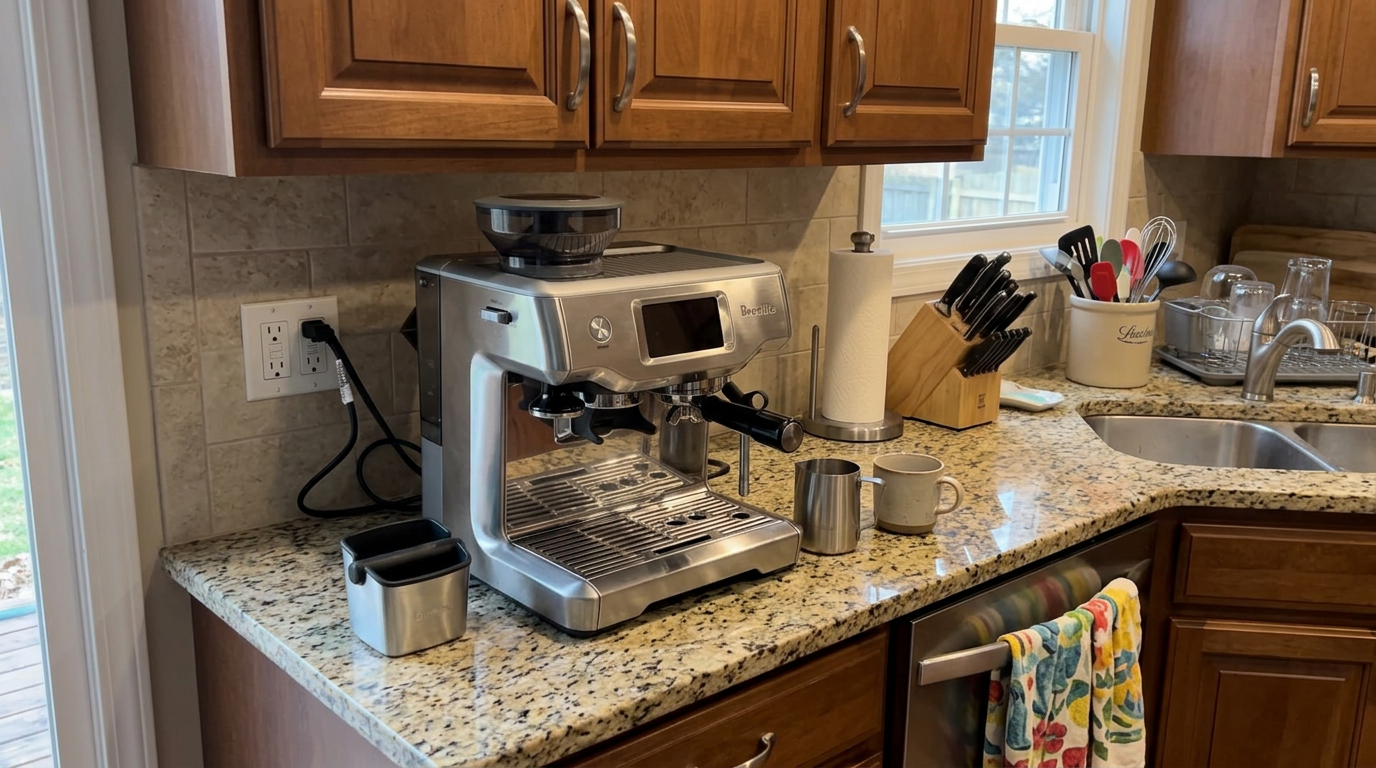
For compact kitchens and hands-on learners, the Barista Touch earns its place.
- You are happy to dose and tamp
- Your kitchen is short on space
- You want instant warm-up
- You mostly make one or two drinks
- You never want to tamp
- You make lots of drinks back to back
- You want a 58 mm portafilter
- You want the best espresso with no technique
- You make several milk drinks at once
- You want almost no mess
- You have room for a big machine
- Your cabinets are low
- You want coffee seconds after power-on
- You want to learn espresso by hand
If you have the space, my pick is the Oracle Touch. It grinds, doses and tamps perfectly into a café-size 58 mm basket, brews and steams at once, and made the best and most consistent espresso of the two. It's the closest thing to a café machine that asks almost nothing of you.
The Barista Touch is the smarter buy for smaller kitchens and for people who don't mind a little technique. It heats in about 3 seconds, makes the same hands-free milk, and by week four my hand-tamped shots were nearly as consistent as the Oracle's.
Whichever you choose, use fresh beans, drop the milk temperature to 140°F and keep the steam wand clean. Both machines reward that with years of excellent coffee.
Barista Touch vs Oracle Touch specifications
From manufacturer specifications and my own testing.
| Barista Touch | Oracle Touch | |
|---|---|---|
| Model | Breville BES880BSS | Breville BES990BSS |
| Type | Semi-automatic with grinder | Automatic grind, dose and tamp |
| Heating | ThermoJet, 1680 W | Dual stainless steel boilers |
| Heat-up | About 3 s | Several minutes, auto-start |
| Brew and steam together | No | Yes |
| Pump | 15 bar | 9-bar extraction |
| Grinder | Steel conical burrs, 30 settings | Conical burrs, 45 settings |
| Tamping | Manual | Automatic, about 30 lb with twist |
| Portafilter | 54 mm | 58 mm |
| Milk | Automatic steam wand, 8 foam levels | Automatic steam wand, 8 foam levels |
| Saved drinks | Up to 8 | Custom drinks |
| Water tank | About 67 oz | About 84 oz |
| Dimensions (W x D x H) | About 12.7 x 15.5 x 16 in | About 14.5 x 14.7 x 17.6 in |
| Weight | About 22 lb | About 35 lb |
How I tested and compared them
I used each machine as my everyday espresso maker for four weeks, making espresso, Americanos, long blacks, flat whites, lattes and cappuccinos with light, medium and dark roasts.
I weighed doses and yields on a 0.1-gram scale, logged every shot time, timed full drinks from power-on and measured milk temperatures with a probe thermometer. I tested every foam level with whole, 2%, oat, almond and soy milk.
I ran every cleaning routine and compared my notes with Breville's specifications and owner documentation. Michael Reynolds wrote up the notes from both test periods.
- Coffee: dose, shot time, crema, body and consistency.
- Milk: foam texture, temperature and speed.
- Workflow: warm-up, tamping, touchscreen and timings.
- Ownership: size, noise, cleaning and water care.
Barista Touch vs Oracle Touch FAQ
Is the Oracle Touch worth it over the Barista Touch?
If you want café-quality espresso with no technique and have room for a 35-pound machine, yes. It grinds, doses and tamps for you into a 58 mm basket and brews and steams at once. If you’re happy to tamp, the Barista Touch gets close for far less counter space.
What is the main difference between the Barista Touch and Oracle Touch?
Automation and heating. The Oracle Touch doses and tamps automatically and has dual boilers. The Barista Touch has a single ThermoJet heater and you dose and tamp by hand.
Which makes better espresso?
The Oracle Touch. Its 58 mm basket and perfectly level tamp gave sweeter, clearer shots. I rated it 8.9 against 8.5.
Does the Barista Touch steam milk automatically?
Yes. Both machines use an automatic steam wand with 8 foam levels and adjustable temperature.
How fast does each one heat up?
The Barista Touch is ready in about 3 seconds. The Oracle Touch takes several minutes from cold, so I used its auto-start timer.
Can the Barista Touch brew and steam at the same time?
No. It brews first and switches to steam in about 5 seconds. The Oracle Touch does both at once.
What size portafilter do they use?
The Barista Touch uses 54 mm, and the Oracle Touch uses a café-size 58 mm.
How big are they?
The Barista Touch is about 12.7 inches wide and 22 pounds. The Oracle Touch is about 14.5 x 14.7 x 17.6 inches and 35 pounds.
Which holds more water?
The Oracle Touch, at about 84 ounces against 67 on the Barista Touch.
Which one makes less mess?
The Oracle Touch, because it doses and tamps inside the grinding collar.

- Our hands-on Breville Barista Touch review
- Our hands-on Breville Oracle Touch review
- Breville product specifications and owner documentation
- General espresso brewing and water quality guidance
- Composting and Coffee Grounds, Cornell University