Why Coffee Prices Are Rising: Why Store Prices Stay High Even When Bean Prices Fall
Coffee got expensive fast. Here is what actually pushed bean prices to records in 2025, why the bag on the supermarket shelf kept getting pricier after the market cooled, how little of your latte is really coffee, and how much of it reaches the farmer.
We choose products independently. When you buy through links on HouseholdMe we may earn a commission, at no extra cost to you. Affiliate policy
Coffee prices rose because the raw bean got much more expensive in 2025, and the price you pay at the store moves months behind the bean market. A severe drought in Brazil, fears of a smaller harvest and a 50 percent US tariff on Brazilian coffee pushed Arabica futures to record highs. Bean prices have since fallen by about a third as tariffs were lifted and record harvests were forecast. But roasters were still selling coffee they bought at the peak, and labor, rent, packaging and shipping didn't get cheaper. So the grocery price kept climbing into 2026. The bean is only one part of the price.
Why I wrote this
I buy a lot of coffee. Beans for testing espresso machines, beans for grinders, supermarket bags to compare against specialty roasts, and far too many flat whites while I'm out.
Over the past two years I watched my regular bags creep up a dollar, then two, then three. My local café raised its prices twice in a year.
Then something odd happened. I read in the business news that coffee bean prices had dropped sharply. I expected my next bag to be cheaper. It wasn't. It was more expensive.
That gap between the headlines and my receipt is what this article is about. I went through harvest estimates, price data, tariff announcements and company reports to work out what's really going on.
The short version is that there are two different prices people call "the price of coffee." One is the commodity price of raw green beans, set on futures markets. The other is the retail price of a finished bag or a drink.
They are connected, but loosely, and with a long delay. Once you see how they connect, the strange price behavior of the last two years makes a lot more sense.
Two prices, two speeds
- The commodity price is what traders pay for unroasted Arabica or Robusta beans. It reacts within hours to weather forecasts, harvest estimates and trade news.
- The retail price is what you pay for a bag or a cup. It includes roasting, packaging, shipping, wages, rent and margins, and it adjusts over months.
- The link between them runs through inventory and contracts. Roasters buy beans months ahead, so today's shelf price reflects yesterday's bean price.
Who grows the world's coffee
To understand why coffee prices can jump so quickly, it helps to start at the farm. Coffee isn't grown mostly by giant corporations on huge estates.
Roughly 25 million smallholder farmers produce about 80 percent of the world's coffee beans. More than 125 million people depend on the coffee supply chain for at least part of their income.
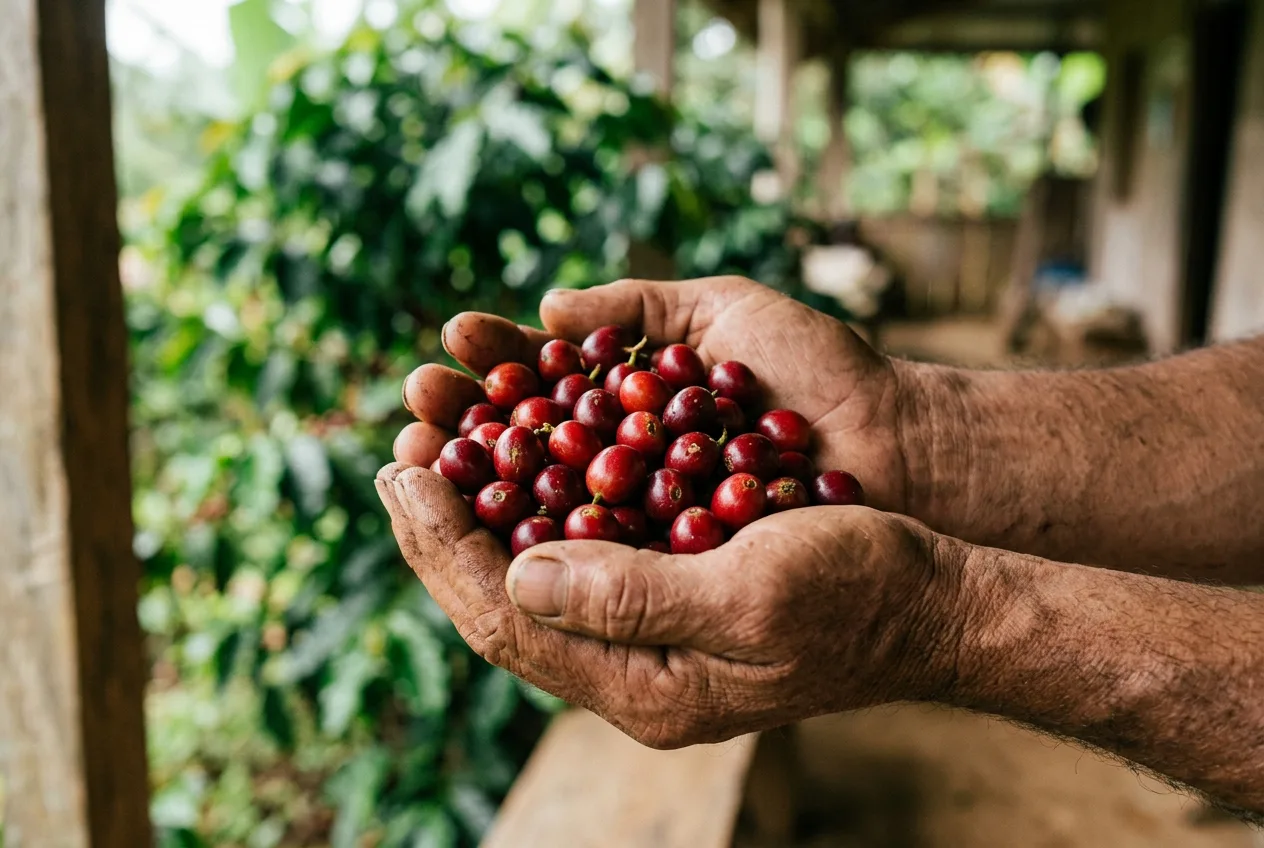
Many of those farms are small plots where coffee is the family's main cash crop. That makes growers very exposed to things they can't control: weather, yields, fertilizer prices, labor costs and what buyers are willing to pay that year.
There's another detail that surprised me. A single coffee tree produces surprisingly little. Depending on the variety and conditions, one tree gives roughly 1.1 to 2 pounds of roasted coffee a year.
That's about one or two bags of coffee per tree, per year. Your weekly bag at home represents the annual output of a whole tree.
Why supply can't just grow when prices rise
In most markets, high prices attract more production. If something becomes profitable, people make more of it.
Coffee doesn't work like that, at least not quickly. A newly planted coffee tree can take up to seven years to produce reliably.
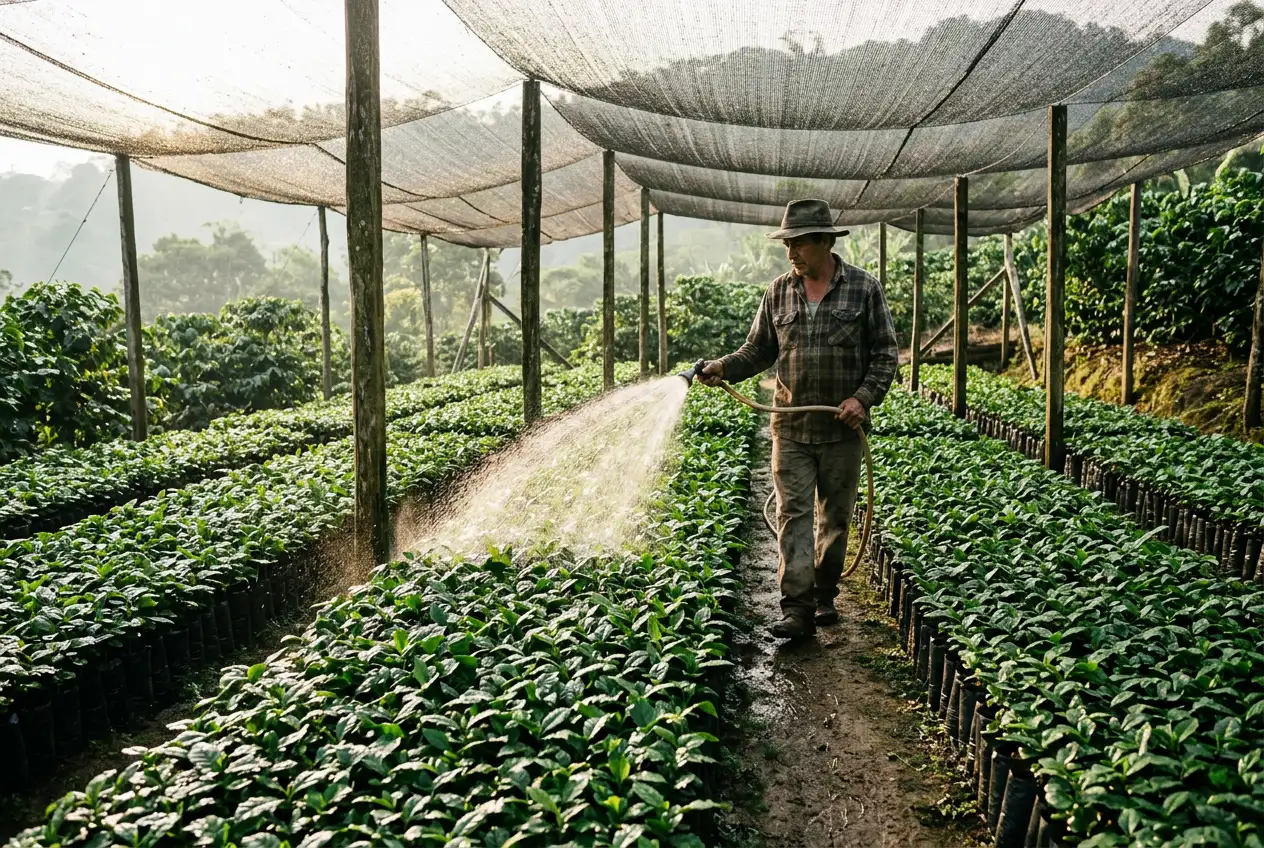
So when prices spike, a farmer can't simply plant more trees and harvest them next season. They need suitable land, seedlings, labor, money to invest and, above all, time.
A decision made in a high-price year might only add coffee to the market many years later. By then, prices may have fallen again. This slow supply response is one reason coffee prices swing so hard.
Our tip: When you read that "coffee production will rise to meet demand," remember the timeline. New plantings take years. Short-term price relief almost always comes from good weather in existing farms, not from new trees.
How little coffee is actually in your cup
This is the part that changed how I think about coffee prices. When you pay for a drink at a café, the beans are a small slice of what you're paying for.
A typical double espresso uses about 0.63 ounces of ground coffee, roughly 18 grams. That's the dose I use at home for most of my espresso testing.
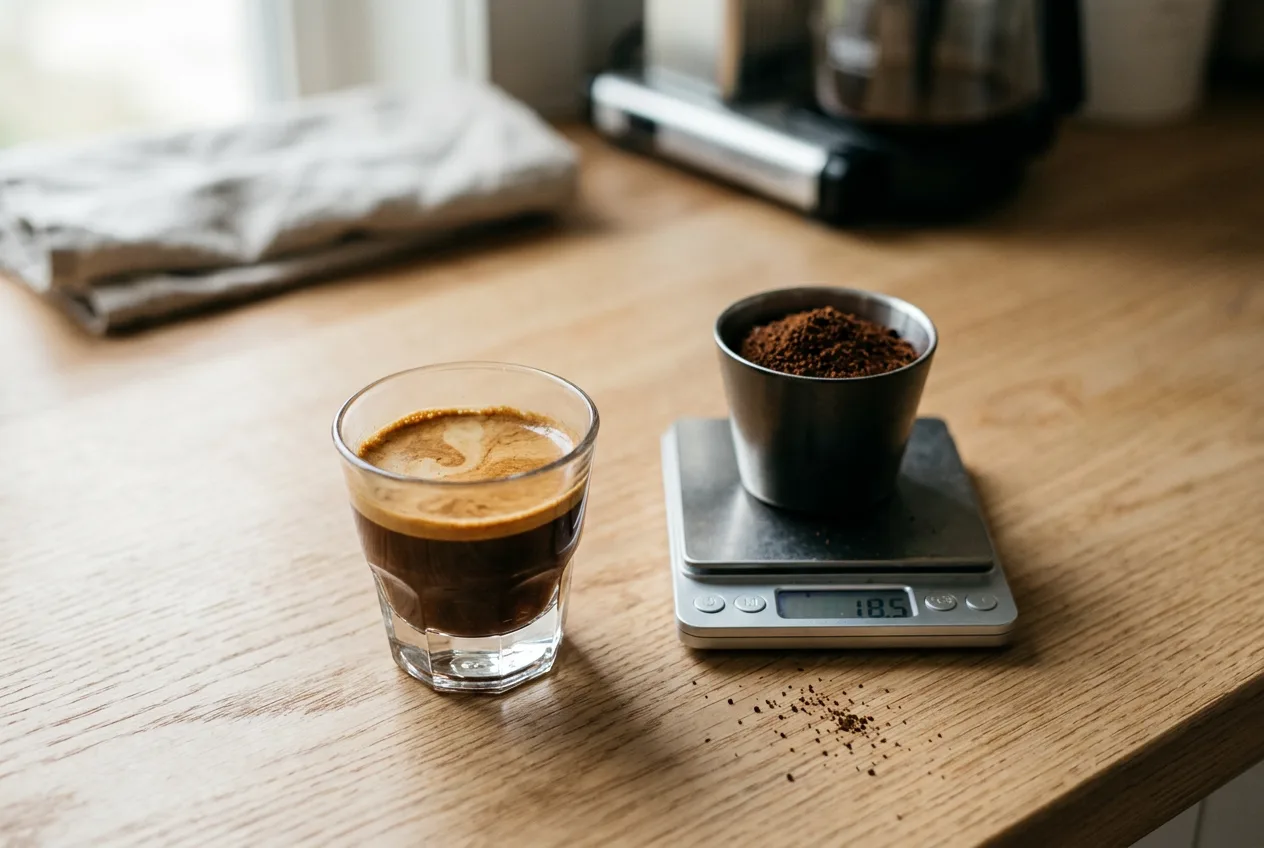
At an Arabica price of around $2.92 per pound, where the market was in October 2026, those 18 grams of raw beans are worth about 12 cents.
During the 2025 spike, when Arabica went above $4.30 per pound, the same dose was worth about 17 cents. So the record bean price added roughly a nickel to the raw-material value of your double shot.
| Arabica price per pound | Raw-bean value of a double espresso (0.63 oz) | Raw-bean value of a 12 oz bag |
|---|---|---|
| $2.00 | about 8¢ | about $1.50 |
| $2.92 (October 2026) | about 12¢ | about $2.19 |
| $4.30 (October 2025 peak) | about 17¢ | about $3.23 |
The bag figures are simple multiplication of the green-bean price. In reality a roaster needs a little more green coffee than the finished weight, because beans lose around 15 to 20 percent of their weight in the roaster, mostly as water.
Even with that adjustment, the raw beans in a supermarket bag are worth a few dollars, while the bag sells for far more. The rest is everything that happens between the farm and your kitchen.
What else is in a latte
A latte is mostly milk. One industry pricing estimate puts the milk in a typical latte at about 35 to 50 cents. The cup and lid add roughly 15 to 25 cents.
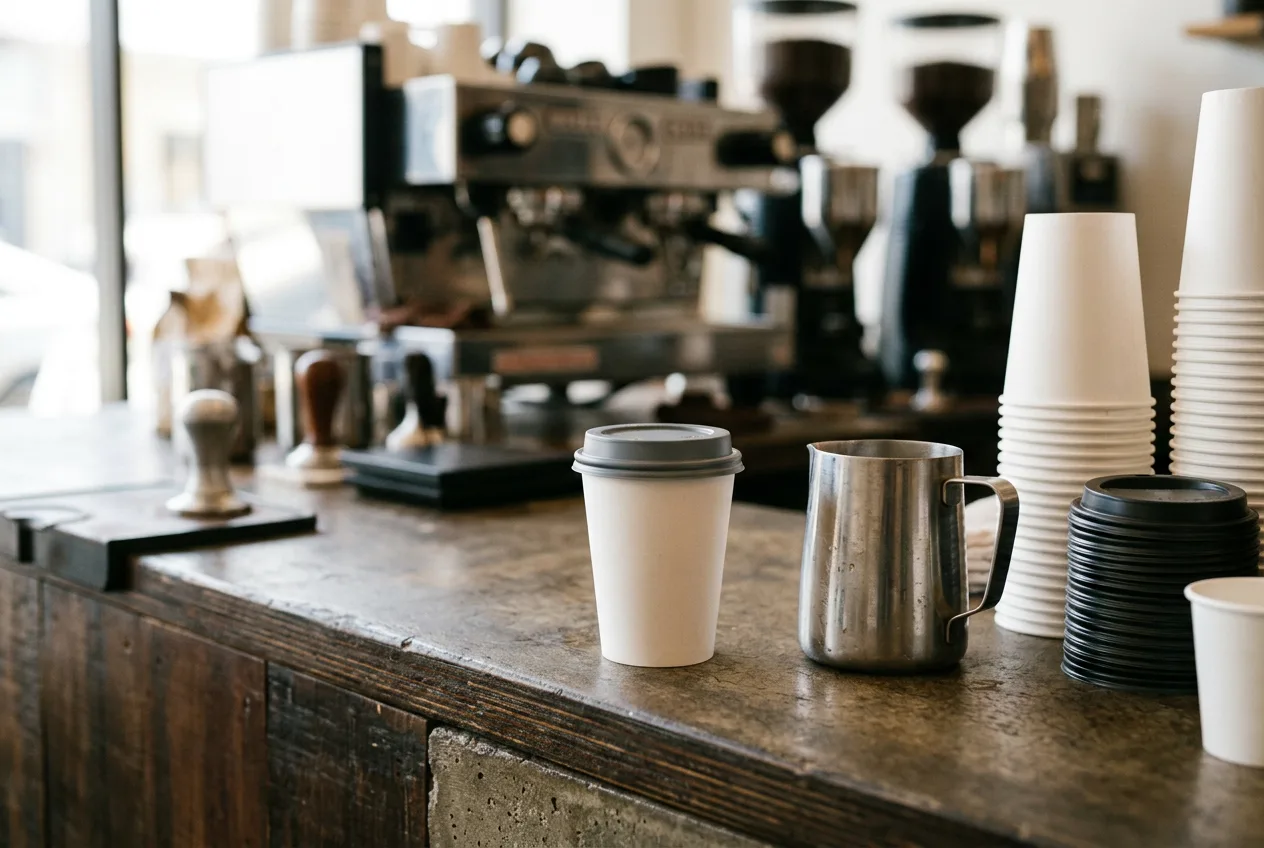
So before anyone has been paid, the milk and the cup already cost several times more than the coffee in it.
Rough ingredient and supply cost of a takeaway latte
Then there's everything else a coffee shop pays for. Staff wages, rent, electricity, water, the espresso machine and grinder, insurance, maintenance and card-payment fees.
The shop also covers waste, unsold pastries, training, management and the cost of keeping the doors open during quiet afternoons when hardly anyone comes in.
So the price of a cup isn't the cost of beans plus a small markup. It's the cost of running a whole business that turns a farm commodity into a drink handed to you in under five minutes.
Our tip: If you want to judge whether a price rise is "about coffee," look at the milk and the wages, not the beans. A 10 percent rise in milk prices or the local minimum wage moves a latte far more than a 10 percent rise in Arabica.
Why coffee prices surged in 2025
Even if beans are a small part of a café drink, they're a much bigger part of a bag of coffee at the supermarket. And in 2025 the bean price went wild.
Arabica coffee futures hit a record high in early February 2025, after 12 trading days in a row of gains. That kind of streak is unusual for any commodity.
Brazil's drought
The biggest driver was Brazil. Brazil is the world's leading coffee producer by a wide margin, so anything that threatens its harvest shakes the whole market.
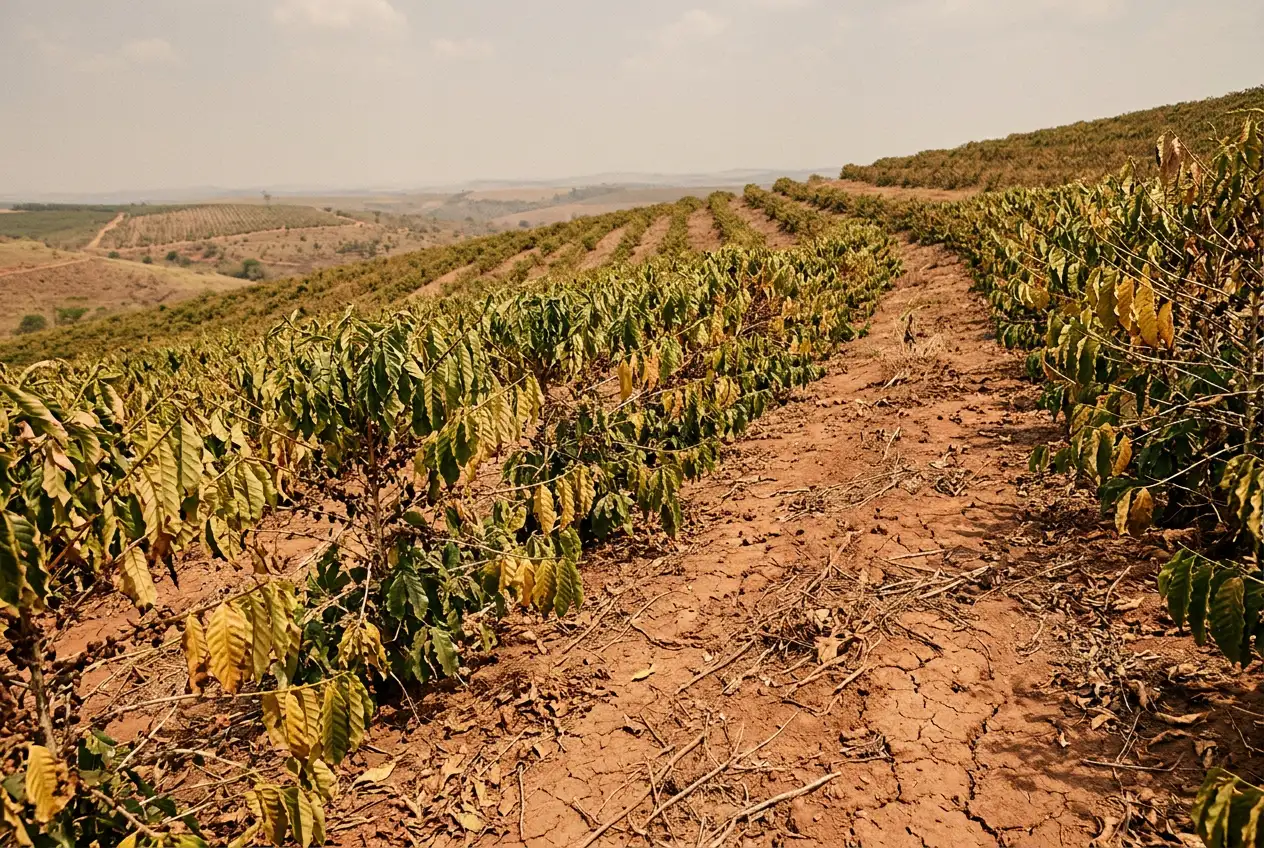
Brazil went through exceptionally dry conditions, identified as its driest period since 1981. The country's crop agency also projected a smaller harvest.
Weather matters so much because coffee production is concentrated in a few growing regions. A drought, a frost, too much rain or bad conditions during flowering and fruit development can all cut yields.
Futures markets look ahead. When traders expect a smaller harvest, they bid prices up before anyone knows exactly how much coffee will actually be missing.
That's why prices can spike on a forecast. The coffee hasn't disappeared yet, but buyers are paying for the risk that it will.
A second wave in late 2025
Prices didn't stay at the February high, but they came roaring back later in the year. By late October 2025, Arabica was above $4.30 per pound, more than 50 percent higher than it had been in August.
Arabica futures price per pound (approximate)
The August figure is implied by the "more than 50 percent" rise. Drought worries in Brazil were part of that second surge. But there was a new ingredient this time: trade policy.
Tariffs and Brazil: the policy shock
In July 2025, the United States announced a 40 percent tariff on Brazilian goods. Combined with existing duties, that brought the total tariff on Brazilian coffee to 50 percent.
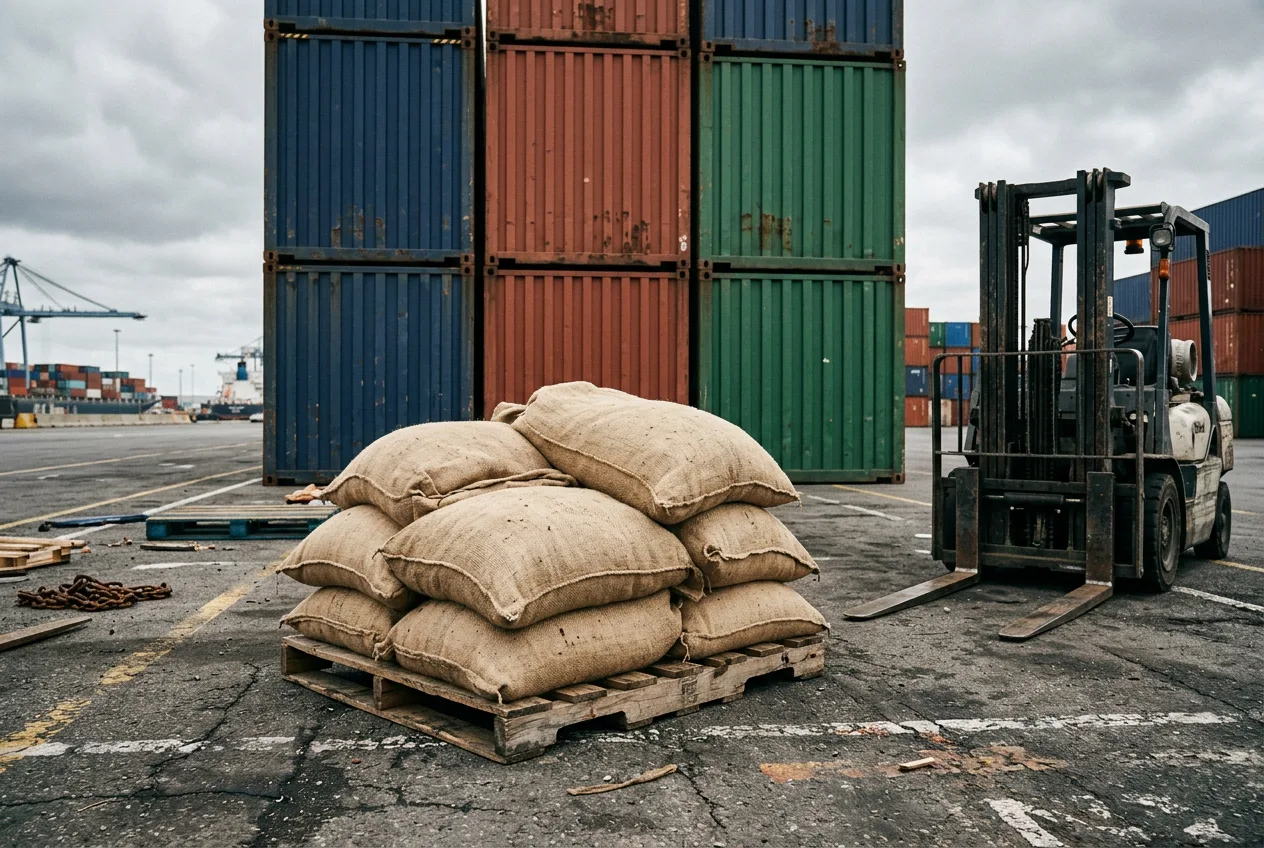
This hit coffee harder than many other goods. The US drinks an enormous amount of coffee but grows very little of it, essentially only small amounts in Hawaii and Puerto Rico.
That means almost every bean in an American cup is imported. A big tariff on the largest supplier raises the expected cost of bringing coffee in, disrupts long-standing trade relationships and leaves buyers unsure what they'll pay next season.
How tariffs move prices before they bite
Tariffs don't only affect the shipments they're charged on. They change behavior across the market almost immediately.
- Importers rush to buy before duties take effect, pulling demand forward.
- Buyers hunt for other origins, such as Colombia, Central America or East Africa, which pushes up prices there too.
- Roasters change their blends and contracts, sometimes at a higher cost.
- Uncertainty itself costs money. When nobody knows the rules next month, sellers ask for more and buyers hedge more.
All of this added volatility to a market that was already nervous about Brazil's weather. Drought and tariffs together explain most of why 2025 was such an extreme year for coffee prices.
Why bean prices fell again
The tide turned in November 2025. Most imported coffee was exempted from the new tariffs, and the remaining 40 percent tariff on Brazil was removed.
Customs authorities were also allowed to refund duties that had already been collected. That lifted one big source of cost and uncertainty for importers almost overnight.
A record harvest on paper
Supply expectations improved too. In December 2025, the US Department of Agriculture estimated world coffee production for the 2025–2026 season at a record 178.8 million bags.
Global consumption was estimated at 173.9 million bags. That left a projected surplus of 4.9 million bags. (A "bag" in coffee statistics is a standard 60-kilogram sack of green coffee.)
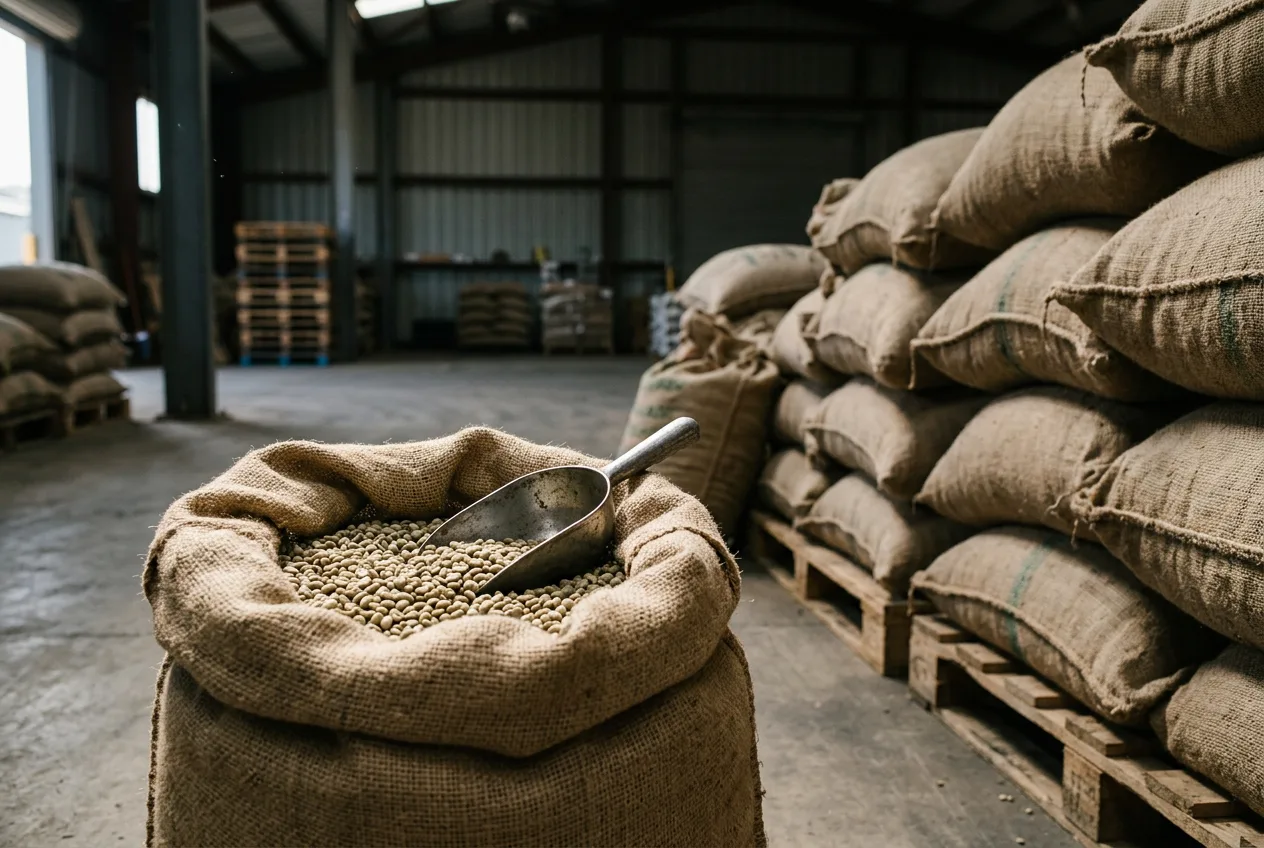
A surplus sounds like a coffee mountain, but it isn't quite that. It means expected production is a bit higher than expected consumption over the season.
It doesn't mean every buyer can get any grade of coffee they want right away. Specific origins and qualities can still be tight. But it does ease the overall balance between supply and demand, and that pushes futures prices down.
Brazil's 2026 harvest was estimated at 67.6 million bags, nearly 20 percent bigger than the previous crop. With the largest producer bouncing back and tariffs gone, Arabica had fallen to around $2.92 per pound by October 2026.
That's a drop of roughly a third from the peak. It shows how quickly a commodity market can change its mind when the outlook for harvests, trade and inventories improves.
What it doesn't do is guarantee you a cheaper bag at the supermarket next week. That's the next part of the puzzle.
Why grocery prices kept rising anyway
Here's the bit that confused me as a shopper. Retail coffee prices kept going up even while futures were falling.
The average US price for a pound of roasted ground coffee was about $9.14 in September 2025, around 41 percent higher than a year earlier.
By April 2026, the average reached $9.72 per pound. That's the highest level since the Bureau of Labor Statistics started tracking the series in 1980, and about 29 percent above the year before.
US average retail price, ground coffee per pound
The two earlier figures are worked back from the reported year-on-year increases, so treat them as approximate. The trend is the point: retail kept climbing for months after the bean market peaked.
Reason 1: the inventory lag
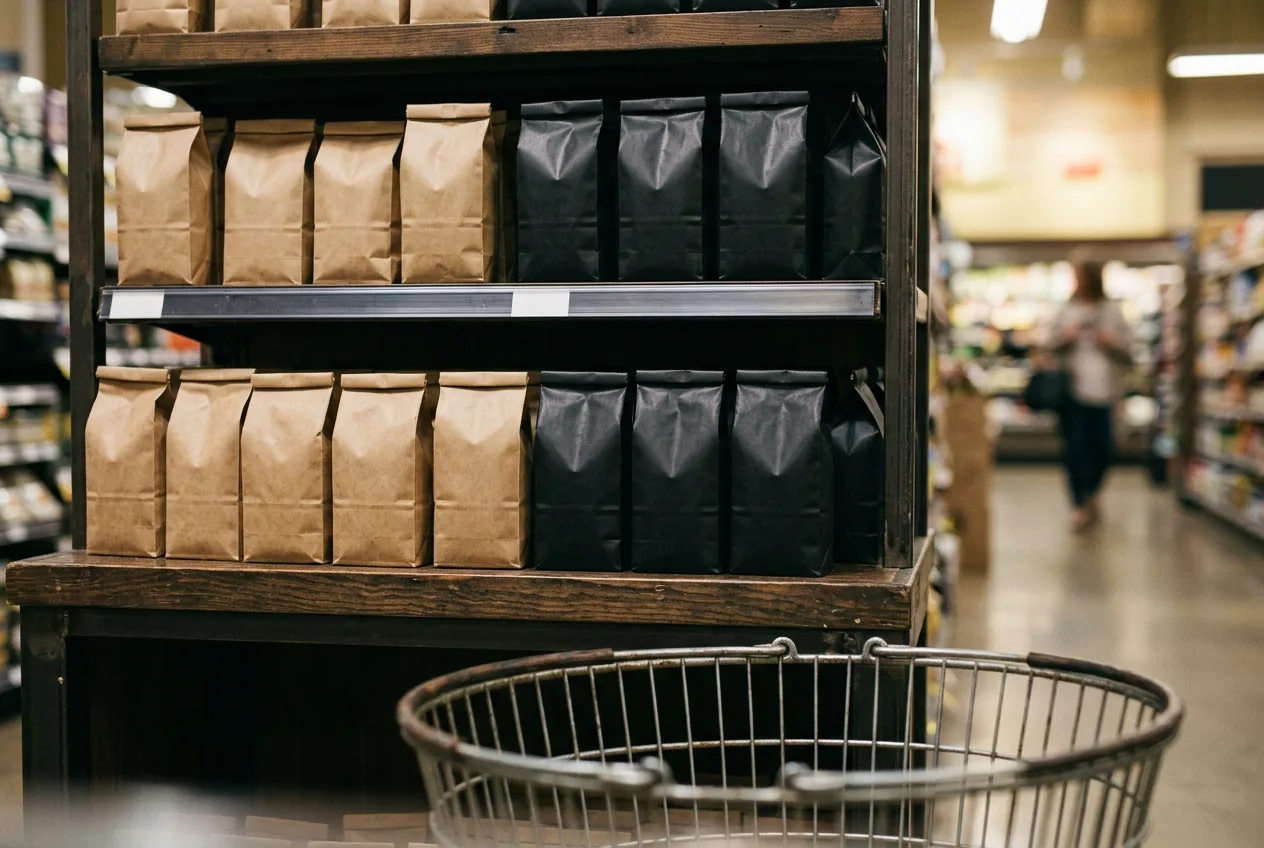
The biggest reason is timing. Roasters and retailers buy green beans months before that coffee is roasted, packed and put on a shelf.
So the bag you buy today may contain beans that were bought when prices were near their peak. A lower futures price this week doesn't change what the roaster already paid for the coffee sitting in its warehouse.
- Month 0: the roaster buysGreen coffee is contracted, often for delivery several months later, at that day's price plus a premium for quality and origin.
- Months 1–3: shipping and storageBeans travel by container ship, clear customs and sit in a warehouse until the roaster needs them.
- Months 3–5: roasting and packingThe coffee is roasted, packed and shipped to distribution centers and stores.
- Months 4–8: on the shelfYou buy it. The price reflects what the beans cost back at month 0, not today's market.
Reason 2: contracts and hedging
Big companies try not to be at the mercy of every daily price swing. Some coffee is bought far in advance at fixed prices. Some is bought closer to delivery. Many buyers also hedge with futures.
The result is that a company's average cost reflects several months of market conditions blended together. It's a moving average, not the latest headline number.
Reason 3: prices go up faster than they come down
Retailers and roasters also need time to sell old stock, renegotiate contracts, reprint price labels and decide how much margin they want.
A company may hold its price until cheaper beans actually reach production, or until a competitor cuts first. Economists call the habit of prices rising quickly but falling slowly "rockets and feathers," and you see it in fuel and food as well as coffee.
So there's a built-in difference in speed. Futures can move in days. Shelf prices often take several months to respond. The bean price is an early signal of where retail might go, not a live reading of what you'll pay.
Our tip: If you see a big drop in coffee futures in the news, expect any relief at the supermarket roughly two to three seasons later, and expect it to show up first as promotions and multi-buy deals rather than lower list prices.
What's inside the price of a bag of coffee
Raw beans are only the starting point. Before coffee reaches you, it has to be shipped from the growing region, inspected, stored, roasted, packed and distributed.
Every step needs equipment, buildings, workers, energy and logistics. Each of those has its own price, and most of them have nothing to do with the coffee market.
| Stage | What it costs money for | Falls when beans fall? |
|---|---|---|
| Green beans | The commodity itself, plus quality and origin premiums | Yes, with a lag |
| Export and shipping | Fuel, container freight, ports, insurance, customs | No |
| Roasting | Roasters, gas or electricity, quality control, skilled staff | No |
| Weight loss | Beans lose 15–20% of their weight during roasting | Partly |
| Packaging | Bags, one-way valves, labels, nitrogen flushing | No |
| Distribution | Warehouses, trucks, drivers | No |
| Retail | Store rent, staff, energy, shrinkage, margin | No |
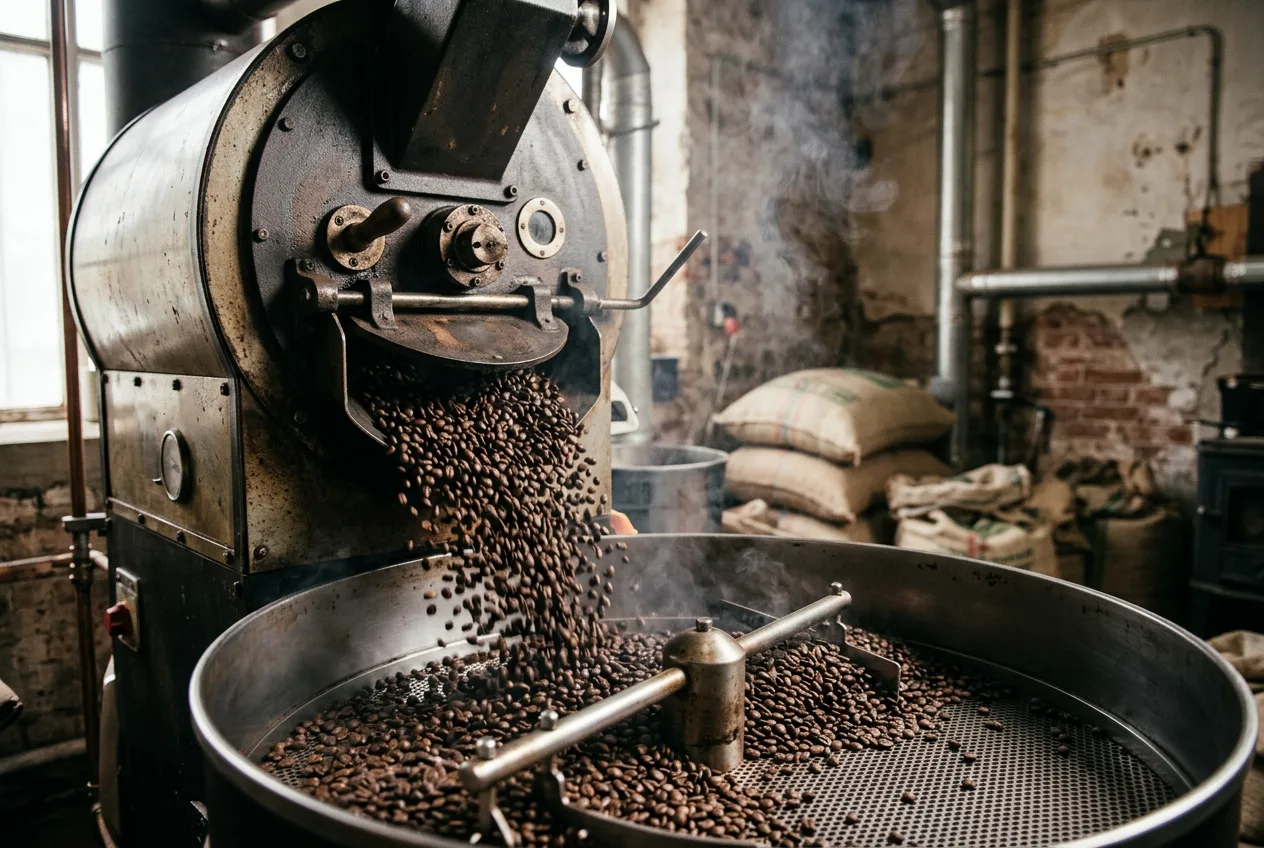
Roasting physically changes the product and needs specialized machines and careful quality control. Packaging keeps the coffee fresh and pays for the bag, the valve and the label.
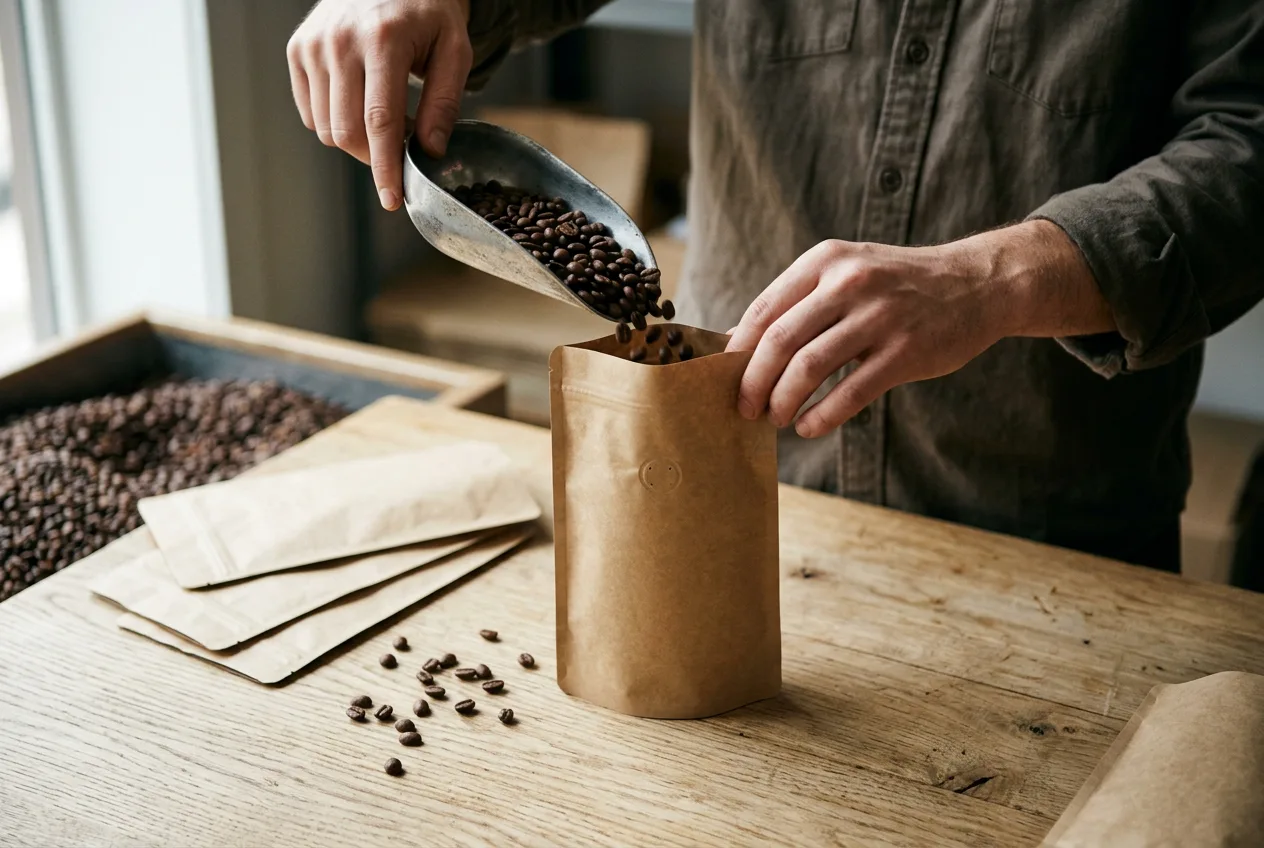
Shipping costs depend on fuel, freight capacity, ports, warehouses and delivery networks. Retailers then add their own operating costs and margins on top.
Costs that don't fall with the bean
Many of these costs stay high even when coffee futures drop. Wages, commercial rents, electricity, packaging materials, insurance and transport don't follow the coffee market.
If those costs rise at the same time, they can eat up the savings from cheaper beans. In that case the roaster's total cost per bag might barely move, even with a big drop in Arabica.
Business decisions
Retail prices also reflect choices. After a period of squeezed margins, a company may hold prices to rebuild profits, recover earlier losses or wait to see whether lower bean prices will last.
Competition pushes the other way. If one big brand cuts its price, others usually follow. But how fast and how far varies a lot by brand and by store.
The wider US "coffee and tea" price category rose 11.8 percent in 2025, after a 3.5 percent rise in 2024. That's a clear sign that consumer price increases can carry on well after the original commodity shock has started to fade.
The farmer's share of the final price
If you pay more for coffee, it's natural to assume the farmer is earning more. Sometimes a little. Usually not much.
Research cited by the University of Melbourne estimated that farmers receive around 7 to 15 percent of the retail value of a standard cup of coffee. After intermediaries take their share, it can be even lower.
One example suggests a farmer might get as little as 40 cents from a cup sold for six Australian dollars. The rest is spread across everyone who moves, processes, prepares and sells the coffee.
Farmer's share of a café coffee's retail value (estimates)
That doesn't mean every middleman is getting rich. Exporters, importers, processors, roasters, distributors and retailers all carry real costs and real risks.
But it does show how little influence most growers have over the price you pay. The farmer sells a raw commodity into a global market. Most of the value is added, and captured, much further down the chain.
Farmers' costs are rising too
A Fairtrade review gathered data from 57 cooperatives in 13 countries for the 2023 and 2024 crops. It found rising fertilizer and labor costs.
Production costs also varied by region. In that data, Latin America was generally more expensive to grow coffee in and Africa generally cheaper.
When the market price falls but costs stay high, farmers get squeezed from both sides. They can't simply skip fertilizer or cut labor without hurting the health of their trees, and with it the size and quality of future harvests.
That's an uncomfortable irony of the 2026 price drop. It's good news for roasters and, eventually, shoppers. For many smallholders it means less money just as their own bills are going up.
Fairtrade minimum prices and their limits
Fairtrade minimum prices are designed as a safety net for when the market collapses. Certified cooperatives are guaranteed at least the minimum, no matter how low the market goes.
From December 1, 2026, the Fairtrade minimum price for washed Arabica is scheduled to rise from $1.80 to $2.00 per pound. The extra Fairtrade Premium stays at 20 cents per pound.
A minimum price isn't what farmers get in every market. When the market price is above the minimum, as it is now, the market price applies. The floor matters when prices crash below it.
The minimum protects producers from the worst downturns, but it doesn't guarantee a good income. Farmers still have to cover their costs, and the price only makes sense when you compare it with what it costs to grow the coffee.
Who keeps the premium?
How the extra money is shared is a fair question. A 2019 study from the German Institute for Economic Research (DIW Berlin) found that coffee farmers received about one fifth of the premium consumers paid for Fairtrade coffee. Much of the rest went to the roaster's margin.
That doesn't make certification useless. It does show that paying more at the till isn't the same as paying the farmer more.
Fairer pricing depends on more than a minimum. Transparency, bargaining power, reliable contracts, access to credit and a clear picture of real production costs all decide whether growers earn a sustainable living.
Our tip: If you want more of your money to reach the farm, look for roasters that publish the price they paid for the green coffee (often called "transparent" or "direct trade" pricing), not just a certification logo.
Coffee shop economics: why your latte costs what it does
Coffee shops have to cover a much longer list of costs than the beans. Labor is one of the biggest. Staff make the drinks, serve customers, clean the machines, restock and keep the place running.
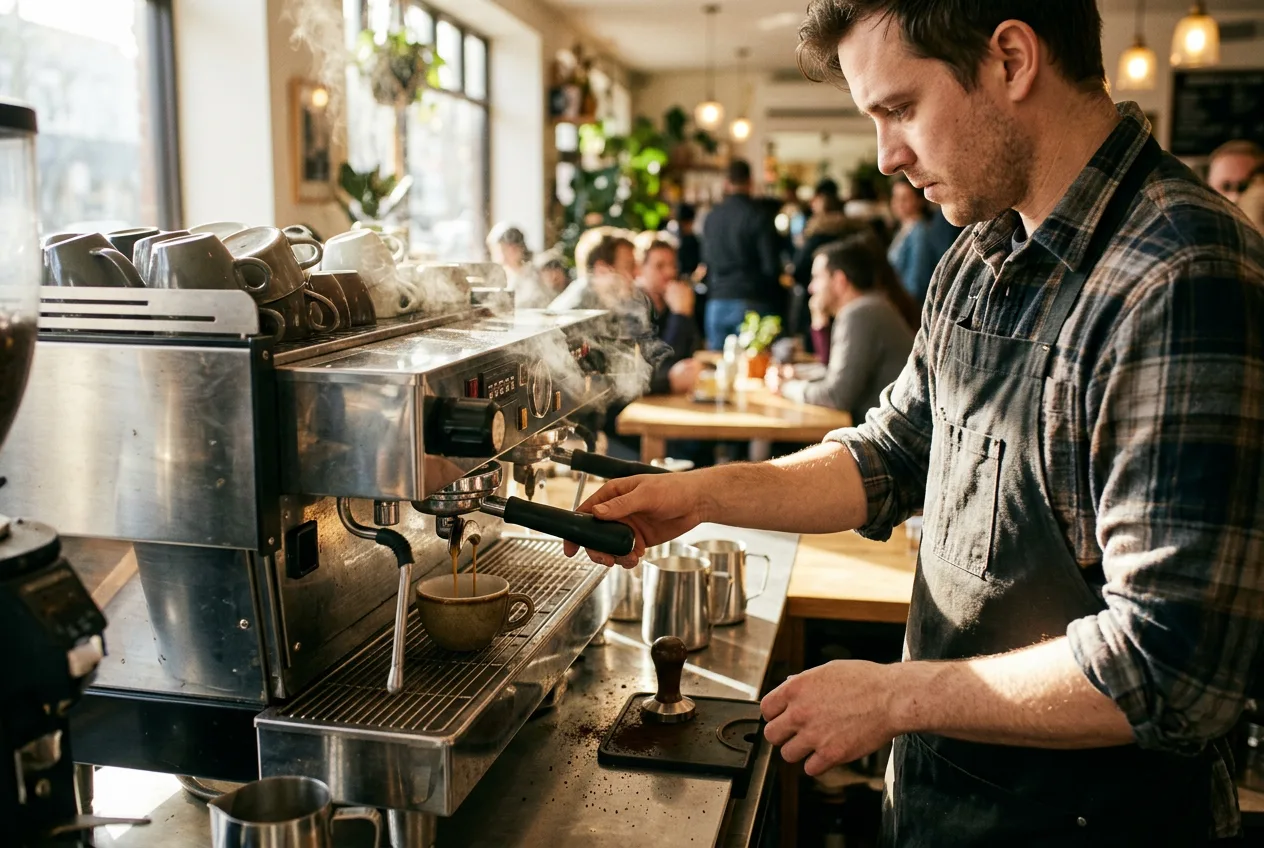
Rent and utilities have to be paid whether the shop sells 50 drinks that day or 500. Milk and plant milks, cups, lids, napkins, syrups and food all add to each sale.
Then there's the equipment. A commercial espresso machine, grinders, fridges, furniture, the till system, repairs and staff training all cost real money and wear out.
What the biggest chain's numbers show
Starbucks, the largest coffeehouse chain, ended fiscal 2025 with nearly 41,000 stores and $37.2 billion in revenue. Its reported operating margin was 7.9 percent, seven percentage points lower than a year earlier.
In other words, out of every dollar of sales, less than eight cents was left as operating profit. Huge revenue doesn't automatically mean huge margins.
| Starbucks figure | Value |
|---|---|
| Stores at end of fiscal 2025 | Nearly 41,000 |
| Revenue, fiscal 2025 | $37.2 billion |
| Operating margin, fiscal 2025 | 7.9% (down 7 points) |
| Comparable sales growth, quarter to June 28, 2026 | 7.9% |
| Transactions / average ticket, same quarter | +4.2% / +3.5% |
| Operating margin, same quarter (reported / adjusted) | 10.5% / 14.4% |
In the quarter ending June 28, 2026, Starbucks reported comparable sales growth of 7.9 percent. Transactions rose 4.2 percent and the average ticket rose 3.5 percent, so people were both visiting more and spending a bit more each time.
The company also booked tariff-relief refunds that largely offset tariffs it had paid earlier in the year. It's another reminder that trade policy shows up in coffee companies' results, not just in farm-gate prices.
The bottom line is that a latte is the price of a service, not just a commodity. Cheaper beans help a café a little. Wages, rent and milk matter a lot more.
This has happened before: a short history of coffee price shocks
The 2025 spike felt unprecedented, but coffee has a long history of boom and bust. Looking back helped me understand that the current cycle is extreme, not unique.
In 1975, a severe frost in Brazil destroyed a huge share of the country's coffee trees. World prices roughly tripled over the following two years, and shoppers in Europe and North America saw some of the steepest coffee price rises they had ever experienced.
In 1994, two frosts in Brazil caused another sharp jump. Prices doubled within months, and supermarkets raised shelf prices in the months after, just as they did in 2025.
Then came the opposite problem. Around 2001 to 2004, expanding production, especially from Vietnam's fast-growing Robusta farms, flooded the market. Prices fell to their lowest level in decades in real terms, and many farmers sold coffee for less than it cost to grow. That period is often called the coffee crisis.
Prices rose sharply again in 2011, when tight supplies of high-quality Arabica pushed futures above $3 per pound for the first time in decades. They then fell back for most of the following decade.
| Period | What happened |
|---|---|
| 1975–1977 | Brazilian frost destroys trees; world prices roughly triple |
| 1994 | Two Brazilian frosts; prices double within months |
| 2001–2004 | Oversupply and the "coffee crisis"; farm prices below production costs |
| 2011 | Tight Arabica supply pushes futures above $3 per pound |
| 2025 | Drought and tariffs push Arabica to records above $4.30 |
| 2026 | Tariffs lifted, record harvest forecast; Arabica falls to about $2.92 |
The pattern repeats. A weather shock in a major producer sends prices up. High prices encourage planting, which arrives years later and helps push prices down. Low prices then discourage investment, setting up the next shortage.
What's different this time is the size of the move and the role of trade policy. Tariffs added a political layer on top of the usual weather risk, and climate change is making extreme weather in growing regions more common. I covered that side in more depth in my article on climate change and the future of coffee.
Arabica and Robusta don't always move together
Most headlines quote Arabica, the higher-quality species used in most specialty and many supermarket coffees. Robusta, used in instant coffee, many espresso blends and cheaper ground coffee, trades on its own market in London.
The two usually trend in the same direction, but not always by the same amount. Robusta depends heavily on Vietnam's harvest, while Arabica depends most on Brazil and Colombia. So the price of your instant coffee and the price of your single-origin beans can follow different paths.
What could happen to coffee prices next
Nobody can forecast coffee prices reliably, and I won't pretend to. But it's worth knowing which risks the market is watching.
El Niño and Brazil's flowering
There are worries about a possible El Niño pattern. One concern is that it could delay rainfall during Brazil's flowering season for the 2026–2027 crop.
Flowering is when the coffee plant sets the cherries that will be harvested many months later. Poor rain at that moment can shrink a crop long before anyone picks it.
Low certified stocks
Certified Arabica stocks on the Intercontinental Exchange were near a 27-year low in September. Certified stocks aren't all the coffee in the world, but they're the beans that can actually be delivered against futures contracts.
When those stocks are thin, prices become more sensitive to surprises. A bad weather report can move the market more than it would if warehouses were full.
Weaker crops elsewhere
Colombia's output fell 15 percent to 12.65 million bags last season. A strong Brazilian harvest helps the global balance, but weaker production elsewhere shows how fragile supply can be.
Coffee grows in places where weather, plant disease, labor shortages and infrastructure can all hit the harvest. A great crop in one big country doesn't cancel the risks in the others.
- Could push prices down: a big Brazilian harvest, a global surplus, no new tariffs, weaker demand.
- Could push prices up: dry or delayed flowering in Brazil, low certified stocks, poor crops in Colombia or Vietnam, new trade barriers.
- What it means for shoppers: any change at the bean level reaches store shelves months later, if at all.
How I keep my own coffee costs down
Understanding why coffee is expensive doesn't make my bags cheaper. So here's what I actually do at home to keep the cost per cup sensible without drinking worse coffee.
- Brew at home most daysA café latte costs several dollars. The beans for a double shot at home cost well under a dollar even at today's retail prices, and milk adds less than you'd think.
- Buy whole beans and store them wellWhole beans stay fresh far longer than ground coffee, so less goes stale and gets thrown out. I keep them in an airtight, opaque container away from heat. My guide on how to store coffee beans covers the details.
- Weigh your doseMost people use more coffee than they need. A cheap kitchen scale and a fixed brew ratio stop waste and make every cup taste the same.
- Buy bigger bags you'll finish in timeLarger bags are usually cheaper per pound. Just don't buy more than you can drink within a few weeks of opening.
- Stock up on promotionsWhen bean prices fall, retailers tend to run deals before they cut list prices. Unopened, valve-sealed bags keep well, so a deal is worth catching.
None of this changes the global price of coffee. But it can easily halve what you spend on it, which matters more to most households than the futures market.
The main takeaways
- The bean is a small part of a café drink. A double espresso holds about 12 cents of raw coffee at $2.92 per pound. The rest of the price covers milk, cups, labor, rent, equipment and running the business.
- 2025's spike had three causes. Brazil's worst drought since 1981, expectations of a smaller harvest and a 50 percent US tariff on Brazilian coffee pushed Arabica to record highs.
- Bean prices fell when the outlook improved. Tariffs were lifted in November 2025 and forecasts pointed to record world production and a much bigger Brazilian crop.
- Store prices lag by months. Roasters were still selling beans bought at the peak, and roasting, packaging, shipping, wages and rent didn't get cheaper. US ground coffee hit a record $9.72 per pound in April 2026.
- Farmers get a small slice. Roughly 7 to 15 percent of a cup's retail value, while their fertilizer and labor costs are rising. New trees take years, so they can't quickly grow more.
- The future depends on weather and stocks. Good harvests push prices down; low certified stocks or a dry Brazilian flowering can push them back up quickly.
Conclusion: the bean is only one part of the price
Coffee travels a long and complicated road from farm to cup. The price of green beans matters, but it doesn't set the retail price by itself.
Commodity prices can fall well before cheaper beans work their way through warehouses and contracts. Meanwhile processing, packaging, transport, wages and rent keep pushing the final price up.
For shoppers, that explains why falling bean prices don't mean an instant discount at the store or the café. For farmers, it shows how hard it is to earn a decent living when their share is small and their costs are rising.
And for anyone who loves coffee, it's a useful reminder. When you look at the price of your next bag, you're paying for a whole supply chain, and the bean is only one part of it.
Frequently asked questions
Why is coffee so expensive right now?
Bean prices hit records in 2025 because of Brazil's drought, fears of a smaller harvest and US tariffs on Brazilian coffee. Store prices lag the bean market by months, and other costs such as labor, rent, packaging and shipping have also risen.
Will coffee prices go down in 2026 or 2027?
Bean prices have already fallen by about a third from their peak. Retail prices usually follow slowly, so relief tends to arrive months later, often as promotions first. Weather in Brazil and low certified stocks could still push prices back up.
Why didn't my coffee get cheaper when bean prices fell?
Roasters buy beans months in advance and use contracts and hedges, so the bag on the shelf reflects older, higher bean prices. Many other costs in the bag don't fall when beans do.
How much of a cup of coffee is the actual coffee?
Very little. A double espresso uses about 0.63 ounces of coffee, worth around 12 cents at $2.92 per pound. In a latte the milk and the cup each cost more than the beans.
Did tariffs make coffee more expensive in the US?
Yes, for a while. In July 2025 the total US tariff on Brazilian coffee reached 50 percent, adding cost and uncertainty for importers. Most coffee tariffs were removed in November 2025 and refunds of collected duties were authorized.
How much do coffee farmers earn from a cup?
Estimates suggest farmers receive roughly 7 to 15 percent of the retail value of a café coffee, and sometimes less, while their own costs for fertilizer and labor have been rising.
Does Fairtrade guarantee farmers a good price?
It guarantees a minimum, rising to $2.00 per pound for washed Arabica from December 1, 2026, plus a 20-cent premium. When market prices are higher, the market price applies. It's a safety net, not a guarantee of profit.
Why can't farmers just grow more coffee when prices are high?
A new coffee tree can take up to seven years to produce reliably, and each tree only yields about 1.1 to 2 pounds of roasted coffee a year. Supply responds slowly to price.

- Michael Reynolds, notes from years of buying and testing coffee at home
- Coffee: World Markets and Trade, USDA Foreign Agricultural Service
- Consumer Price Index and average price data, US Bureau of Labor Statistics
- Coffee "C" Futures, Intercontinental Exchange
- Fairtrade International, minimum price and premium for coffee
- German Institute for Economic Research (DIW Berlin)
- Starbucks investor relations, fiscal 2025 and Q3 fiscal 2026 results
- Economics of coffee, Wikipedia
Related guides
Climate change and the future of coffee How coffee is roasted Coffee growing regions and flavorWritten by Michael Reynolds. Last updated November 20, 2026.