Philips 3200 vs De’Longhi Magnifica Evo vs Breville Barista Express
These are three of the most popular espresso machines in the same price range, and they could hardly be more different. The Philips 3200 and the De’Longhi Magnifica Evo are push-button machines that grind, brew and froth at one touch. The Breville Barista Express hands you a portafilter, a pressure gauge and a steam wand, and asks you to learn. I used each every day for four weeks to find the right one for your mornings.
We choose products independently. We may earn a commission through links on this page; your price stays the same. Affiliate policy
Jargon helpNew to espresso? Tap any dotted term to see what it means.
In this comparison
For most people who want great coffee at the press of a button, buy the De’Longhi Magnifica Evo. It scored highest of the three in my testing, with richer espresso than the Philips and dense, hot foam from its LatteCrema carafe. Buy the Philips 3200 if easy cleaning and a mild coffee suit you, because its tube-free LatteGo jug rinses clean in about ten seconds. Buy the Breville Barista Express if you want to learn real espresso: once dialed in, it pulled sweet, syrupy shots and steamed milk silky enough for latte art.
The three machines
Specs checked November 14, 2026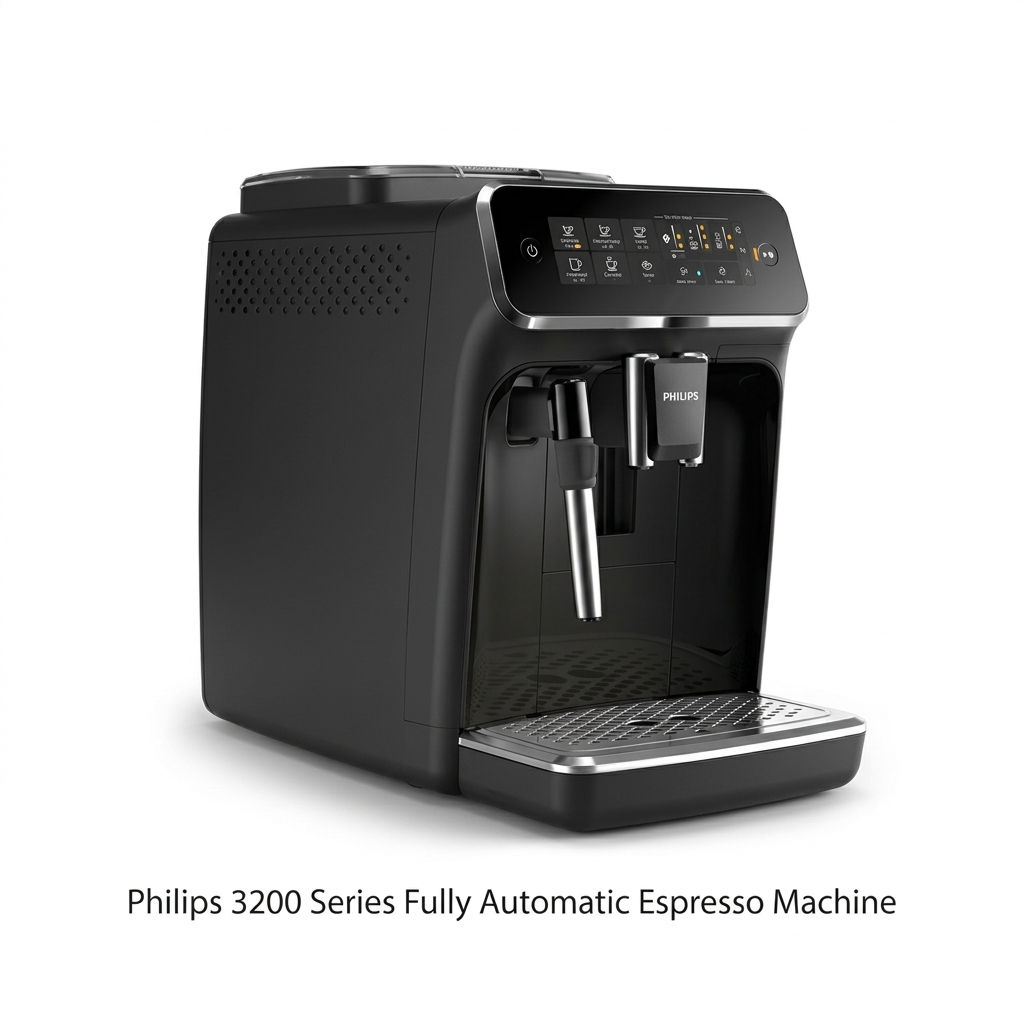
Five one-touch drinks, a tube-free LatteGo jug that rinses in seconds, a removable brew group and an AquaClean filter in the box.
Check price on Amazon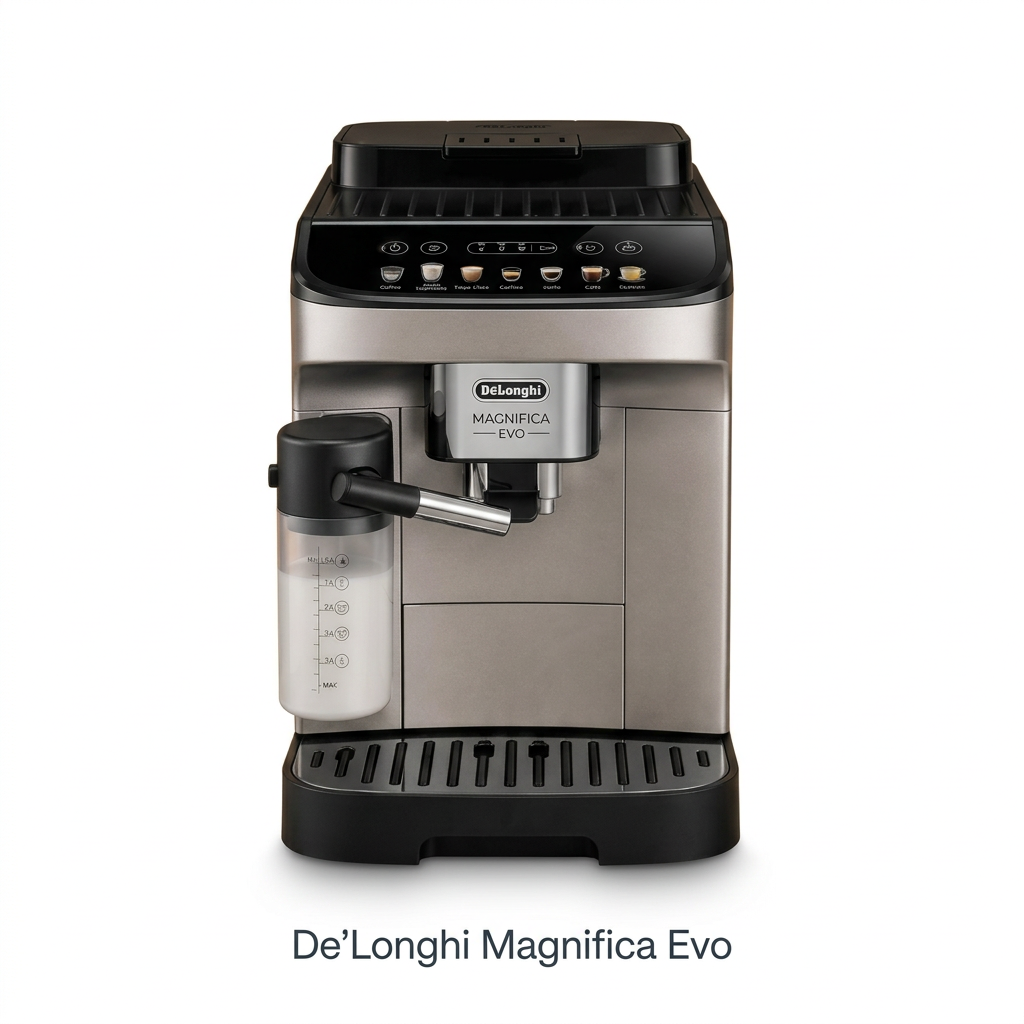
Seven one-touch drinks, a 15 g top dose, the LatteCrema carafe and an Over Ice button.
Reveal Today’s Deal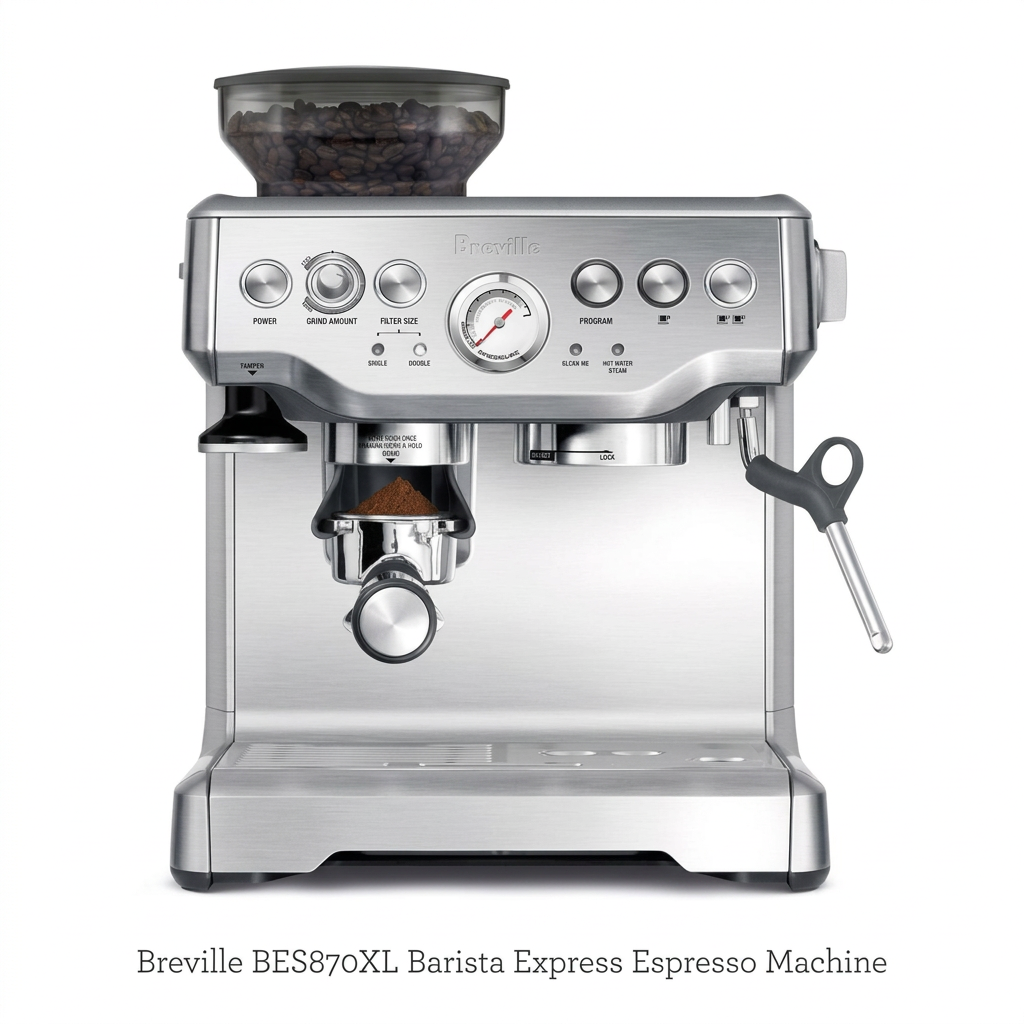
A built-in conical burr grinder, 54 mm portafilter, pressure gauge and manual steam wand for real, hands-on espresso.
See Today’s PricePhilips 3200 vs Magnifica Evo vs Barista Express at a glance
- The Philips and De’Longhi are super-automatic: press a button, get a drink. The Breville is semi-automatic: you dose, tamp and steam.
- The Evo’s 15-gram dose made richer espresso than the Philips’ mild 8-gram shot.
- The Barista Express has the highest ceiling, but only after you’ve learned to dial it in.
- For milk, the Philips is easiest to clean, the Evo makes the best one-touch foam and the Breville makes the best foam by hand.
Head to head
The best result in each row is marked, based on my testing and the manufacturer specs. Where machines tie, both are marked.
The tally is not my verdict. Whether you want to push a button or learn a skill matters more than any single row.
| Spec | Philips 3200 | Magnifica Evo | Barista Express |
|---|---|---|---|
| Espresso score | 7.2, mild | 8.5 ✓ Best | 8.4, once dialed in |
| Milk drinks score | 7.8 | 8.4 ✓ Best | 7.8, by hand |
| Ease of use score | 8.8 ✓ Best | 8.4 | 7.5 |
| Cleaning score | 8.5 ✓ Best | 8.0 | 8.1 |
| Type | Super-automatic ✓ Best | Super-automatic ✓ Best | Semi-automatic |
| One-touch drinks | 5 plus hot water | 7, including Over Ice | None, you make each drink |
| Coffee dose | About 8 g max | About 9, 12 or 15 g ✓ Best | About 15–15.5 g, by you ✓ Best |
| Milk system | LatteGo, tube-free | LatteCrema carafe | Manual steam wand |
| Latte art potential | No | No | Yes, real microfoam ✓ Best |
| Grinder | Ceramic, 12 settings | Steel conical, 13 settings | Steel conical, 16 settings plus inner burr ✓ Best |
| Brew unit | Removable brew group | Removable brew unit | Portafilter, nothing hidden |
| Water tank | 61 oz | 60 oz | 67 oz ✓ Best |
| Width | 9.7 in | 9.45 in ✓ Best | 12.5 in |
| Weight | About 17.6 lb ✓ Best | About 21 lb | About 22–23 lb |
| Rows won | 4 | 5 | 4 |
Philips 3200 vs Magnifica Evo vs Barista Express pros and cons
Philips 3200
- Five one-touch drinks, including latte macchiato
- LatteGo jug has no tubes and rinses clean fast
- Removable brew group and AquaClean filter included
- Mild espresso from a small coffee dose
- Milk foam is good, not café-smooth
- Mostly plastic body and a small drip tray
De’Longhi Magnifica Evo
- Rich, repeatable espresso with a 15 g top dose
- LatteCrema makes dense, hot foam at one touch
- MyLatte uses exactly the milk you pour in
- No hot milk button without a workaround
- No screen or user profiles
- Passive cup warmer and a cooler first drink
Breville Barista Express
- Sweet, syrupy espresso once dialed in
- Pressure gauge makes dialing in easy to learn
- Steam wand can make real latte-art microfoam
- Grinder needs an inner-burr tweak out of the box
- Slower steam and a wait between brewing and frothing
- No low-water sensor on the tank
Who should buy which machine?
- Evo: anyone who wants rich espresso and lattes at one touch
- Philips: households that want the easiest milk cleaning
- Both: busy mornings and shared kitchens
- People who want to learn real espresso
- Latte art fans who want to steam milk by hand
- Anyone who enjoys the ritual as much as the coffee
Push-button vs hands-on: the real choice
Before comparing features, decide which kind of machine you want, because that decides more than anything else.
The Philips 3200 and Magnifica Evo are super-automatic. You press a button and the machine grinds, doses, presses, brews and, with milk drinks, froths. A brew unit inside does the work, and you never touch the coffee.
The Barista Express is semi-automatic. It grinds into a portafilter✕PortafilterThe handle with a metal basket that holds the ground coffee. It locks into the machine, and hot water is pushed through the coffee inside it., then you tamp✕TampingPressing the ground coffee flat and firm in the basket, so water flows through it evenly instead of finding weak spots., lock it in, brew and steam milk yourself. Its pressure gauge tells you whether your grind and dose are right.
That learning curve is the whole point of the Barista Express. If you enjoy it, you’ll make better espresso than either push-button machine. If you don’t, it will frustrate you every morning.
| Step | Philips 3200 | Magnifica Evo | Barista Express |
|---|---|---|---|
| Grind | Automatic | Automatic | Into the portafilter, timed |
| Dose | Set by aroma strength | Set by dose level | You weigh and adjust |
| Tamp | Inside the machine | Inside the machine | By hand |
| Brew | One touch | One touch | Button, watch the gauge |
| Milk | LatteGo, one touch | LatteCrema, one touch | Steam wand, by hand |
Our tip: Be honest about how much time you have on a weekday morning, because that answers the push-button vs hands-on question better than any spec.
Design, size and build
The two push-button machines are slim and upright. The Philips 3200 is about 9.7 inches wide, 14.6 inches tall and 17 inches deep, and about 17.6 lb. The Evo is about 9.45 inches wide, 14.2 inches tall and 17.3 inches deep, at about 21 lb.
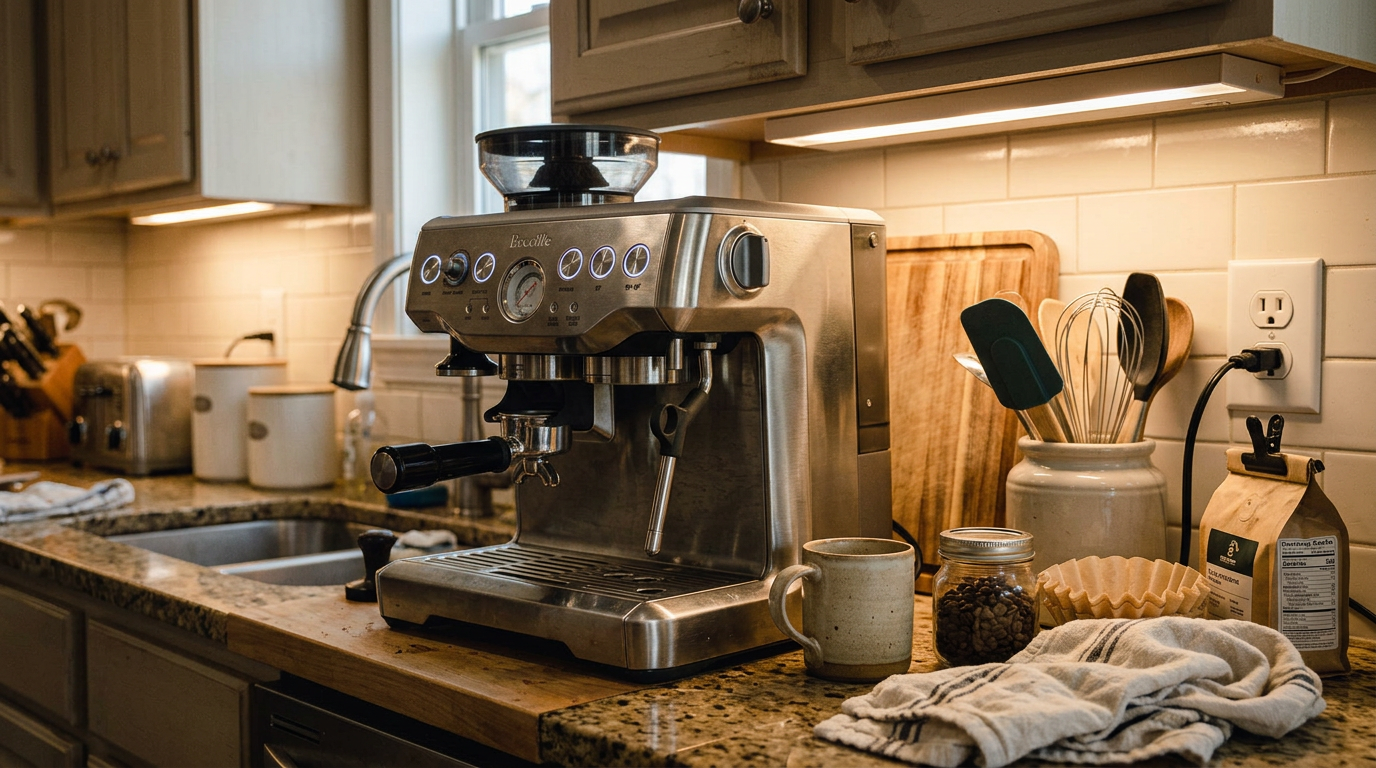
The Barista Express is wider and shallower, at about 12.5 inches wide, 13.8 inches deep and 15.9 inches tall, and about 22 to 23 lb. Its brushed stainless steel body, round pressure gauge and chunky dials give it a proper café look.
The Philips is mostly plastic, with a small drip tray. The Evo is plastic too, with a clean touch panel. The Breville feels the most solid of the three.
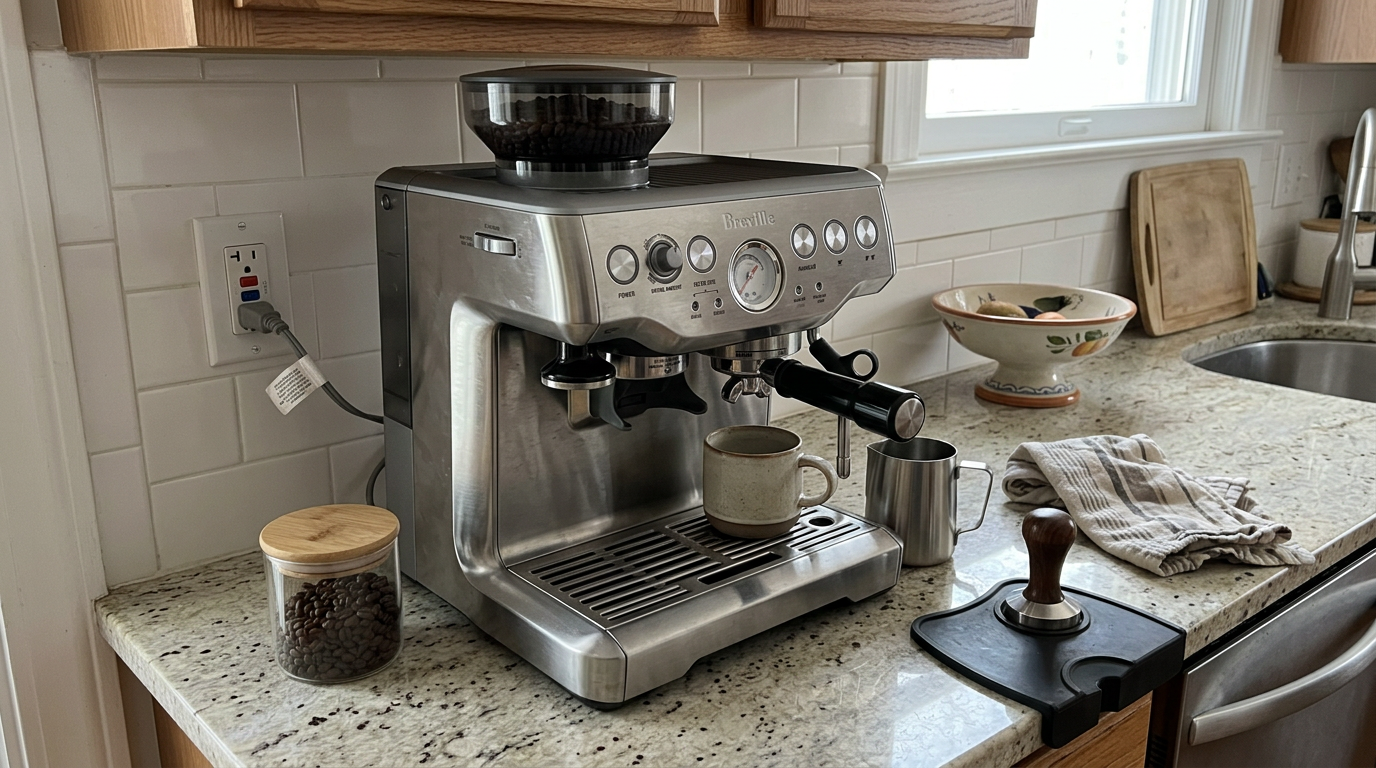
The Barista Express has a proper café look, with a gauge in the middle.
Width on the counter
The two push-button machines are about 3 inches narrower than the Breville.
Build and finish
Over four weeks, the Breville’s steel body, gauge and dials felt the most premium, and they still looked new at the end of the test.
The Philips is mostly plastic, but it wipes clean easily, and its LatteGo jug clicks on and off with a satisfying, simple action. The Evo sits in between, with a plastic body and a smart flat touch panel.
On the Philips, the small drip tray was the one part that felt built to a price, because it filled faster than I wanted on busy mornings.
Setup and the first week
The push-button machines took about 15 minutes each: rinse, fit the filter, test the water hardness and prime. The Philips comes with an AquaClean filter, a water hardness strip, brew group grease and a storage lid for the LatteGo jug.
The Barista Express took longer, and its first week was a learning project. My first attempt at its dose step produced only about 8 grams in the double basket.
I ground, weighed, adjusted and repeated until the scale read about 15.4 grams every time. Out of the box, the grinder also needed an inner-burr tweak before it went fine enough.
By the end of week one, the push-button machines were routine and the Breville was just starting to sing.
| First week | Philips 3200 | Magnifica Evo | Barista Express |
|---|---|---|---|
| Setup time | About 15 minutes | About 15 minutes | About 30 minutes with dialing in |
| First good drink | Day one | Day one | A few days in |
| Biggest adjustment | Stronger aroma setting | Finer grind | Inner burr, dose and grind |
| Kit you need | Nothing extra | Nothing extra | A scale helps a lot |
Our tip: Buy a small kitchen scale with the Barista Express, because weighing your dose and shot is the fastest way through its learning curve.
Controls
The Philips 3200 puts five drinks on simple touch icons, with three aroma strengths and three temperature settings. It can make two espressos or two coffees at once.
The Evo uses a clean touch panel with seven drinks, three dose levels of about 9, 12 and 15 grams and three temperatures. Neither push-button machine has a screen or user profiles.
The Barista Express uses dials and buttons: a Grind Amount dial for the dose, one-cup and two-cup buttons you can program, a steam dial and the pressure gauge front and center. I set the two-cup button to stop at about 30 grams of espresso, so I only had to glance at the scale.
| Control | Philips 3200 | Magnifica Evo | Barista Express |
|---|---|---|---|
| Interface | Touch icons | Touch panel | Dials, buttons and gauge |
| Strength | 3 aroma levels | About 9, 12 or 15 g | Grind Amount dial |
| Temperature | 3 settings | 3 settings | PID controlled |
| Two drinks at once | Espresso and coffee | — | Two-cup basket |
| Profiles | No | No | No |
The Barista Express learning curve
If you’re weighing the Barista Express against the push-button machines, this is what the first two weeks actually looked like.
On day one, the dose step produced only about 8 grams in the double basket. I raised the Grind Amount dial, ground, weighed and repeated until the scale read about 15.4 grams every time.
My first properly dosed shot hit 30 grams in 27 seconds, which looked fine on paper but tasted a little sharp. I kept the dose locked at 15.4 grams and moved the grind dial two steps finer, and the next shots turned sweet and syrupy.
From then on, most shots landed between 26 and 30 seconds for 30 grams out, and the gauge sat in the espresso zone almost every time.
| Stage | What I did | Result |
|---|---|---|
| Day 1 | Default grind and dose | About 8 g in the basket, too little |
| Days 2–3 | Raised Grind Amount, weighed every dose | Steady at about 15.4 g |
| Days 4–5 | Locked dose, two grind steps finer | Sweet, syrupy shots |
| Week 2 | Programmed the two-cup button to about 30 g | 26–30 s, gauge in the zone |
| Week 3 | Practiced steaming | Silky microfoam for latte art |
Our tip: Change only one thing at a time on the Barista Express, either the dose or the grind, so you always know what made the shot better.
Grinder and dose
The dose explains most of the espresso difference in this comparison.
The Philips 3200 grinds with ceramic burrs and 12 settings. Its maximum dose measured only about 8 grams, which is why its espresso is mild.
The Evo grinds with steel conical burrs✕Conical burrsTwo cone-shaped grinding parts, one inside the other. Beans are crushed between them, and the gap sets how fine the coffee is. and 13 settings, with a top dose of about 15 grams. That’s nearly twice the coffee of the Philips, and you can taste it.
The Barista Express grinds with stainless steel conical burrs, 16 settings plus an inner burr adjustment. For the double basket, 15 to 15.5 grams was the sweet spot.
Top coffee dose
Measured on my scale. More coffee in the same drink means more body and flavor.
Our tip: Set the Philips to its strongest aroma and smallest volume for espresso, because its small dose tastes weak at the default settings.
Espresso quality
The Evo made the best one-touch espresso of the two push-button machines, scoring 8.5. At its 15-gram dose, the shot had real body and sweetness, and it was repeatable every morning.
The Philips scored 7.2. Its espresso was mild because the dose is small, and even on the strongest setting it was lighter than the Evo’s.
The Barista Express scored 8.4, but that score comes with a condition. Once dialed in, it pulled sweet, syrupy espresso: about 15.4 grams in, 30 grams out, in 25 to 30 seconds, with the gauge sitting in the espresso zone. Getting there took practice.
My espresso scores
My scores out of 10 for body, crema, flavor and consistency, same medium-dark beans.
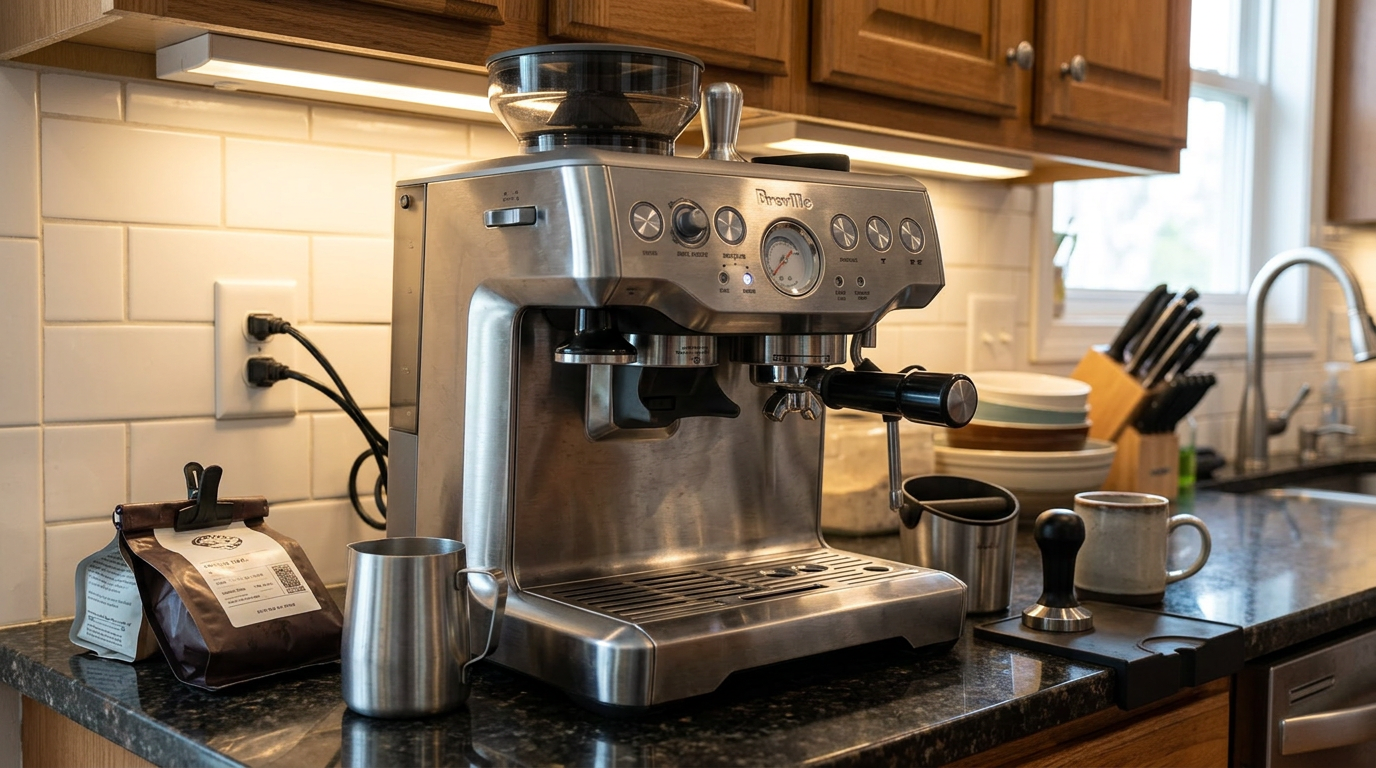
Once dialed in, the Barista Express pulled sweet, syrupy shots.
| What you taste | Likely cause | First fix |
|---|---|---|
| Sour, thin, watery | Under-extraction✕Under-extractionWhen water doesn’t pull enough flavor from the coffee, so the shot tastes sour, thin and watery. | Grind finer, or raise strength on the push-button machines |
| Bitter, harsh | Over-extraction | Grind one step coarser |
| Mild, weak espresso on the Philips | Small dose | Strongest aroma, smallest volume |
| Gauge below the zone on the Breville | Grind too coarse or dose too low | Grind finer, check the dose |
Coffee and Americano
For a big mug, the push-button machines are more convenient, and the Evo makes the stronger cup.
The Philips has a one-touch Americano that adds hot water to espresso. Because its base espresso is mild, the Americano is very gentle. For a bolder cup, I used the strongest aroma and the smallest volume.
The Evo has a long coffee button and a Hot Water button, so an Americano is two presses. Its 15-gram espresso made a fuller long cup.
On the Barista Express, I pulled a double and added water from the dedicated hot water outlet. It made the most flavorful Americano of the three, once the shot was right.
Big black coffee, side by side
Relative body and flavor from my side-by-side tasting with the same beans.
Our tip: Make an Americano rather than a long coffee for big mugs on the push-button machines, because it keeps the cup cleaner and less bitter.
Find Out the Price TodayMilk drinks
Three machines, three completely different milk systems.
The Philips 3200’s LatteGo jug has no tubes. It froths milk and pours it straight into the cup, and after each milk drink I rinsed its two parts under the tap in about ten seconds. The foam was good rather than café-smooth, and it felt comfortably hot.
The Evo’s LatteCrema carafe made dense, hot foam at one touch, at about 140°F, which is where research on cappuccino milk finds milk tastes sweetest. MyLatte uses exactly the milk you pour in.
The Barista Express has a manual steam wand✕Steam wandA metal pipe that blows steam into a jug of milk to heat and froth it. In skilled hands, it makes the silky microfoam used for latte art.. It’s slower, and there’s a wait between brewing and frothing, but it made genuinely silky microfoam✕MicrofoamMilk foam with bubbles so small you can barely see them. It feels silky and glossy, which is what latte art needs. for latte art once I had the technique.
My milk drink scores
My scores out of 10, weighing convenience and consistency as well as foam.
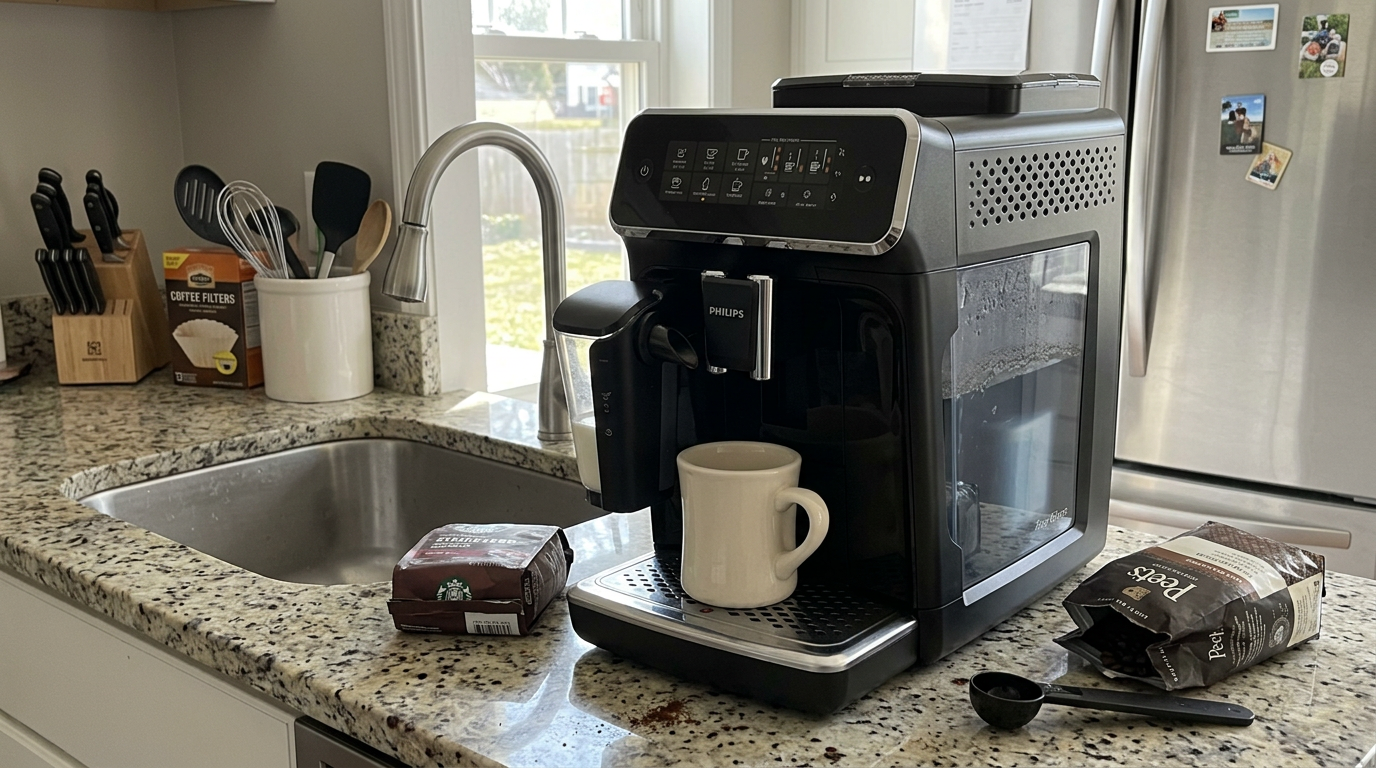
The LatteGo jug has no tubes and rinses clean in about ten seconds.
| Milk detail | Philips 3200 | Magnifica Evo | Barista Express |
|---|---|---|---|
| System | LatteGo, tube-free | LatteCrema carafe | Manual steam wand |
| One-touch drinks | Cappuccino, latte macchiato | Cappuccino, latte macchiato, MyLatte | None |
| Latte art | No | No | Yes |
| Milk cleanup | Two parts, about 10 s | Auto Clean, then refrigerate | Purge and wipe the wand |
Our tip: Use cold milk straight from the fridge on all three, because warm milk makes big, loose bubbles that collapse fast.
Temperature and heat-up
The Evo was ready in about 38 seconds from cold, including a short rinse, and the Philips was similarly quick. Both offer three temperature settings.
The Barista Express heats with a 1,600-watt thermocoil and uses PID temperature control, which keeps the brew water steady shot after shot. It also starts each shot with low-pressure pre-infusion✕Pre-infusionA short, gentle soak of the coffee before full pressure, so water flows through the puck evenly..
The trade-off is steam. On the Breville, I waited a little between pulling the shot and steaming the milk, while the push-button machines handled both in one go.
| Heat detail | Philips 3200 | Magnifica Evo | Barista Express |
|---|---|---|---|
| Heating | Fast, thermoblock-style | Thermoblock, about 38 s | Thermocoil with PID |
| Temperature settings | 3 | 3 | PID controlled |
| Milk temperature | Comfortably hot | About 140°F | Up to you |
| Brew to milk | One drink, one touch | One drink, one touch | Short wait to steam |
Our tip: Warm your cup with hot water before espresso on any of the three, because a cold cup cools a small drink in seconds.
Iced coffee and hot water
Only the Evo has an iced coffee button. Over Ice brews a coffee meant to be poured over a full glass of ice.
On the Philips and Breville, I pulled a strong espresso straight over ice and added cold milk or water.
For hot water, the Philips has a one-touch option, the Evo has a Hot Water button and the Breville has a dedicated hot water outlet.
| Drink | Philips 3200 | Magnifica Evo | Barista Express |
|---|---|---|---|
| Iced coffee | Espresso over ice | One-touch Over Ice | Double over ice |
| Iced latte | Espresso over ice, cold milk | Over Ice plus cold milk | Double over ice, cold milk |
| Hot water | Yes | Hot Water button | Dedicated outlet |
Cleaning and upkeep
The Philips 3200 was the easiest to keep clean. Its LatteGo jug rinses in about ten seconds, and its brew group comes out for a rinse. It scored 8.5 for cleaning.
The Barista Express scored 8.1. There’s nothing hidden inside: you knock out the puck, rinse the basket, purge the wand and wipe it. The catch is that the tank has no low-water sensor, so you need to keep an eye on it.
The Evo scored 8.0. Its brew unit slides out for a weekly rinse, and the LatteCrema carafe runs an automatic Clean, but there are more carafe parts to wash than on the Philips.
My cleaning scores
My scores out of 10 for daily effort, parts and prompts.
| When | Philips 3200 | Magnifica Evo | Barista Express |
|---|---|---|---|
| After milk | Rinse LatteGo, about 10 s | Auto Clean, refrigerate carafe | Purge and wipe wand |
| After each drink | Nothing | Nothing | Knock out puck, rinse basket |
| Weekly | Rinse the brew group | Rinse the brew unit | Clean shower screen |
| When prompted | AquaClean filter or descale | Descale | Cleaning cycle, descale |
Our tip: Rinse the push-button machines’ brew unit under the tap once a week, because coffee oils build up quickly and it takes less than a minute.
Capacity, beans and supplies
The Breville has the biggest tank at about 67 ounces, but no low-water sensor. The Philips holds about 61 ounces and the Evo about 60.
Hoppers are similar: about 9.7 ounces on the Philips and about 8.8 ounces on the Evo and Breville.
Water tank size
Manufacturer capacities.
Use fresh whole beans within a few weeks of the roast date on all three. The Barista Express rewards fresh, medium roasts most, because stale beans make dialing in much harder. Spent pucks are great for the compost.
Our tip: Check the Barista Express water level every morning, because it has no low-water sensor and will happily pull air.
A morning with each machine
Here’s what a weekday with two coffees looked like on each, a cappuccino for my partner and an espresso for me.
On the Philips, I clicked on the LatteGo jug, pressed cappuccino, then espresso, and rinsed the jug. About three minutes, start to finish.
On the Evo, I took the LatteCrema carafe out of the fridge, pressed cappuccino and espresso, let it Clean and put the carafe back. About three minutes too, with richer coffee.
On the Barista Express, I ground and weighed, tamped, pulled two shots, steamed milk in a jug and cleaned up. About six minutes, but it was the best cappuccino of the three on a good day.
Hands-on time for one cappuccino and one espresso
My typical weekday timings, including cleanup.
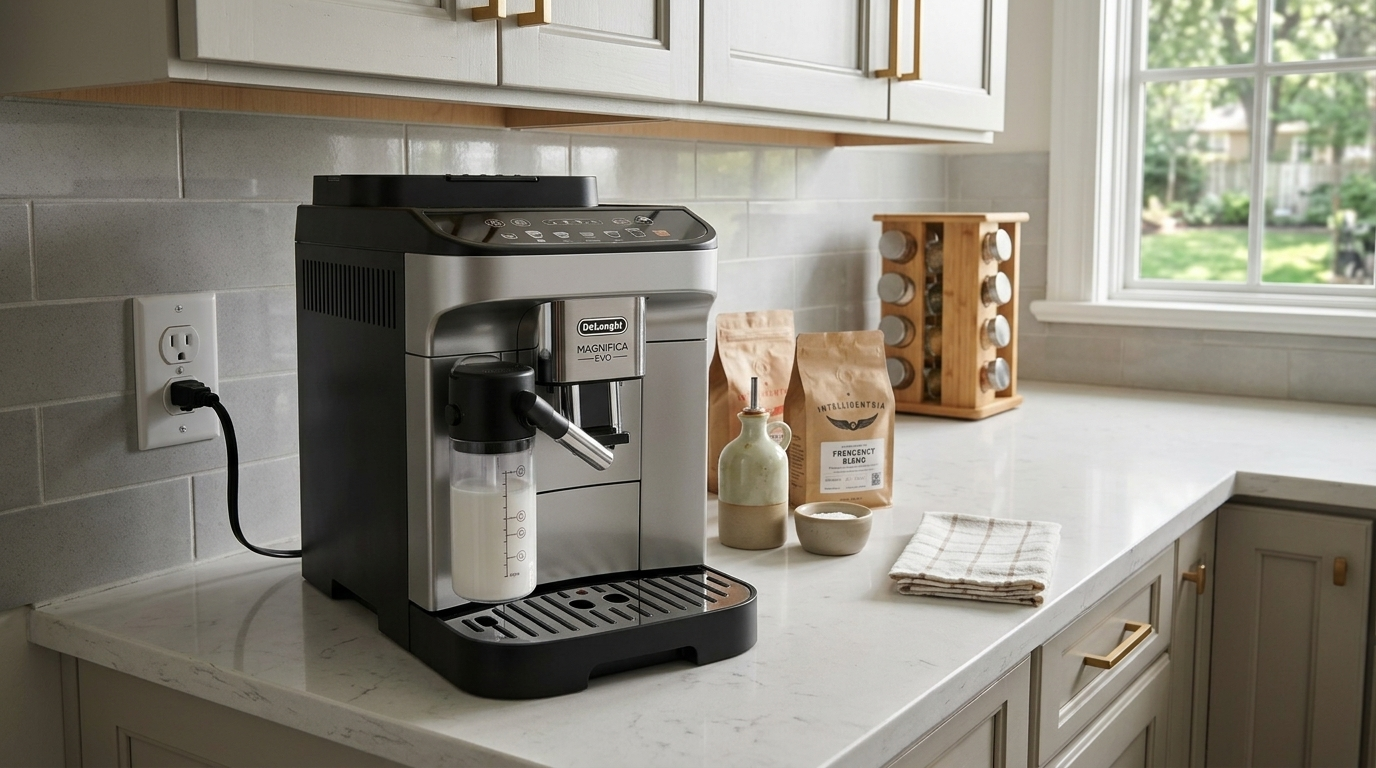
On busy mornings, the Evo made the best coffee for the least effort.
Mistakes to avoid
The push-button machines are hard to get wrong, but each of the three has a trap.
On the Philips, it’s judging the espresso at default settings. Turn the aroma up and the volume down.
On the Evo, it’s leaving the LatteCrema carafe out on the counter after the Clean cycle.
On the Barista Express, it’s changing the dose and the grind at the same time. Lock the dose, then adjust only the grind.
| Mistake | What happens | Better habit |
|---|---|---|
| Default settings on the Philips | Weak espresso | Strongest aroma, smallest volume |
| Carafe left out on the Evo | Warm milk, weaker foam | Back in the fridge after Clean |
| Changing dose and grind together | Can’t tell what fixed it | Lock the dose, adjust the grind |
| Skipping the Breville inner-burr tweak | Grind not fine enough | Adjust it on day one |
| Stale beans on the Breville | Shots run fast and sour | Fresh beans within a few weeks of roast |
| Forgetting the Breville tank | Pump pulls air | Check the level every morning |
My four weeks, week by week
Week one: the push-button machines were routine within a day, while the Breville was a project.
Week two: espresso. The Evo’s 15-gram shot was the best at one touch, and the Breville caught up once dialed in. The Philips needed its strongest aroma to taste like espresso.
Week three: milk. The LatteGo jug won on cleanup, the LatteCrema carafe on foam, and the Breville’s wand on texture once I had the technique.
Week four: routine. I timed every morning, rinsed every brew unit and settled on which machine I’d recommend to whom.
| Week | Focus | Leader |
|---|---|---|
| 1 | Setup and first drinks | Philips and Evo, easiest start |
| 2 | Espresso | Evo at one touch, Breville by hand |
| 3 | Milk | Evo for foam, Philips for cleanup, Breville for latte art |
| 4 | Daily routine | Philips and Evo, about 3 minutes |
Real-life scenarios
These are the moments where one machine clearly pulled ahead during my testing.
Its 15-gram dose made the fullest push-button shot.
Two LatteGo parts under the tap, about ten seconds.
The steam wand made real microfoam once I had the technique.
The only machine here with an Over Ice button.
Gentle espresso, easy latte macchiatos and almost no cleanup.
Weighing, tamping and watching the gauge was half the fun.
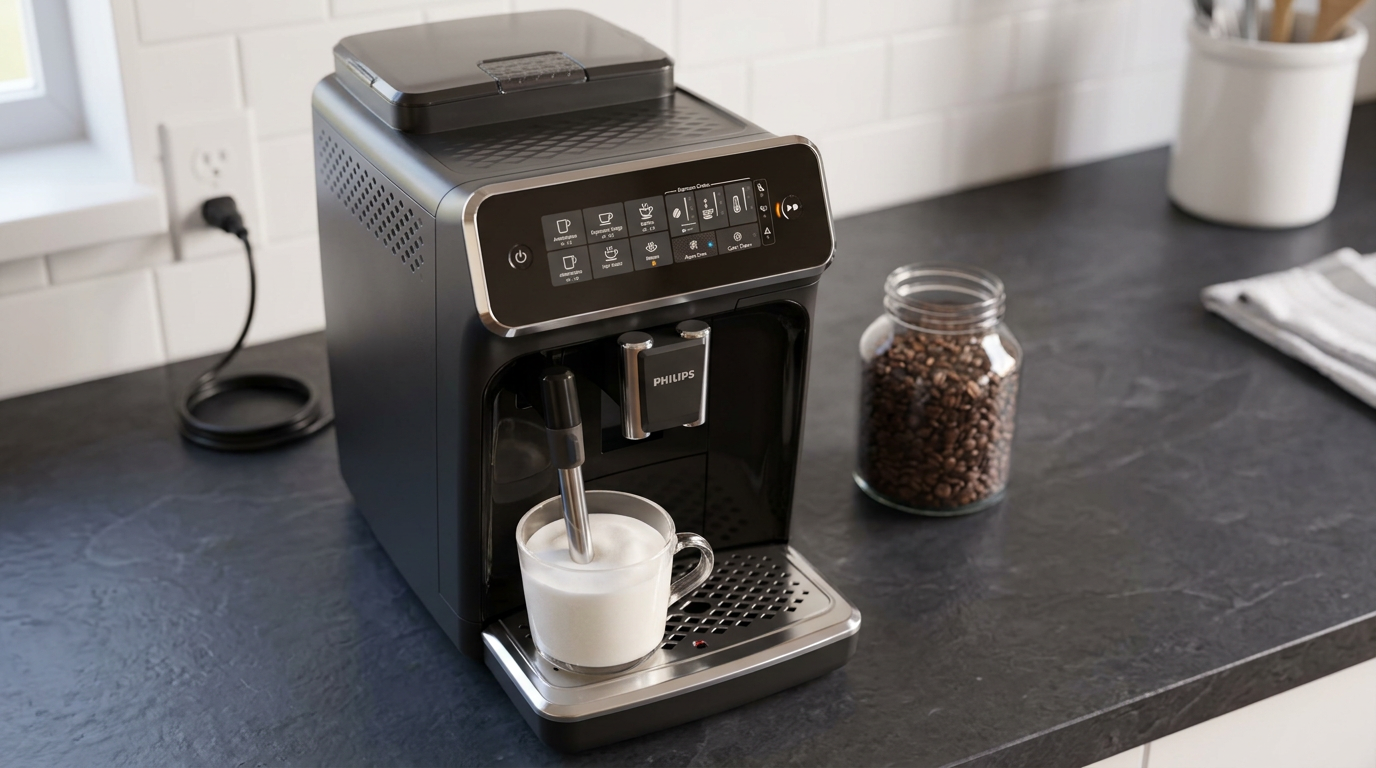
For mild, milky coffee and the easiest cleanup, the Philips 3200 is hard to beat.
My scorecard
These are my own scores out of 10, from my single reviews of each machine after four weeks of daily use.
| Score | Philips 3200 | Magnifica Evo | Barista Express |
|---|---|---|---|
| Espresso | 7.2 | 8.5 | 8.4 |
| Milk drinks | 7.8 | 8.4 | 7.8 |
| Ease of use | 8.8 | 8.4 | 7.5 |
| Cleaning | 8.5 | 8.0 | 8.1 |
| Overall | 8.0 | 8.3 | 8.0 |
Overall scores
My overall editorial scores.
The Evo wins overall because it combines strong espresso with good one-touch milk. The Philips is the easiest to live with but makes the mildest coffee. The Barista Express has the highest ceiling and the steepest learning curve.
See How Much You’ll SaveWhich one is right for you?
4 quick questionsWhich one should you buy?
Start with the push-button vs hands-on question.
If you want to press a button, choose between the Evo for richer coffee and the Philips for the easiest cleanup. If you want to learn, the Barista Express will reward you with the best drinks of the three, once you’ve put in the practice. For the wider picture beyond this matchup, see my guide to the best Philips espresso machines.
For two-way versions of this matchup, see my Philips 3200 vs Magnifica Evo, Philips 3200 vs Barista Express and Magnifica Evo vs Barista Express comparisons.
Living with them long term
The push-button machines need a weekly brew unit rinse, descaling when prompted and a clean milk system. The Philips adds AquaClean filter changes. The Barista Express needs a daily puck knock-out, a wiped wand and the occasional shower screen clean, with nothing hidden inside.
What I would change: a bigger dose on the Philips, a hot milk button on the Evo, and a low-water sensor and faster steam on the Breville.
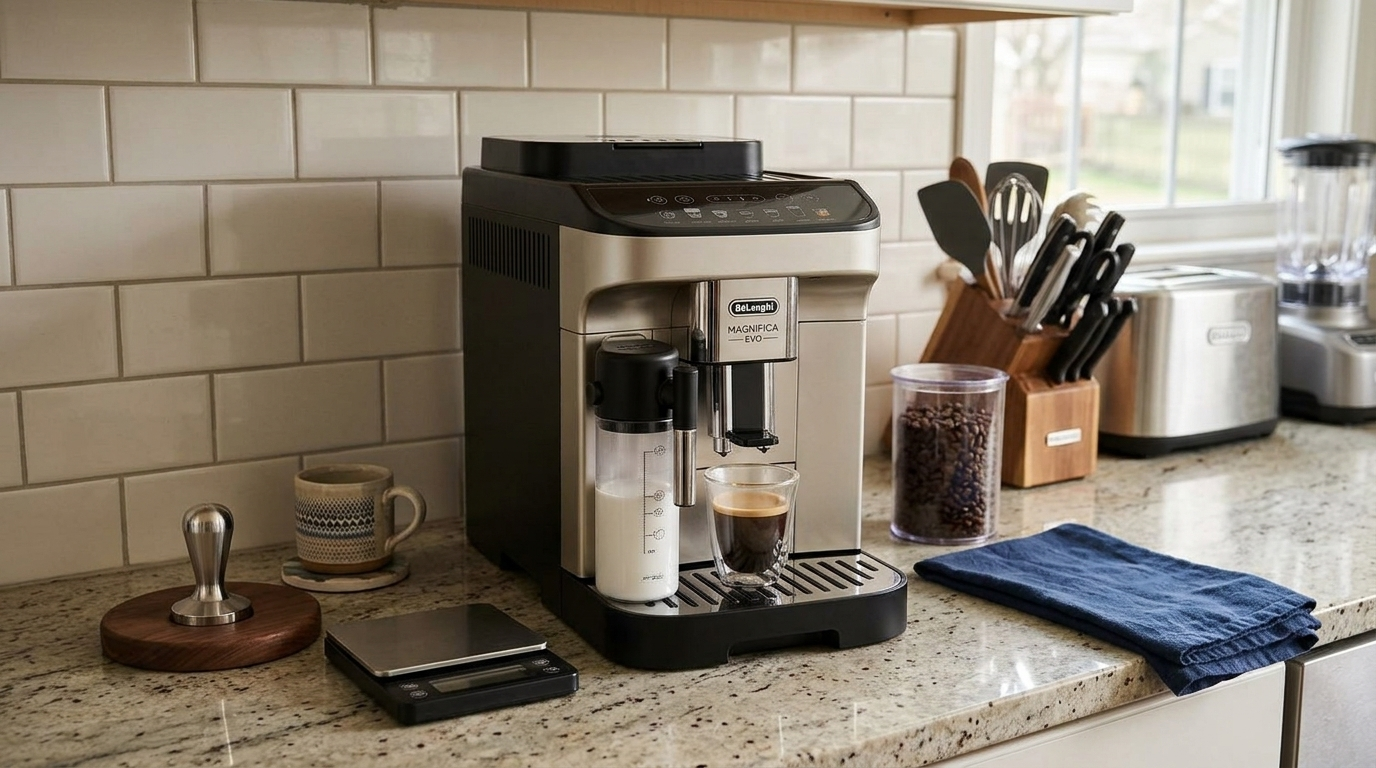
For most push-button buyers, the Evo is the one to get.
If you’re torn, remember that the push-button machines will make the same drink every day with no effort, while the Barista Express will make a better drink on the days you give it your attention.
- You want rich espresso at one touch
- You drink lattes and cappuccinos
- You want one-touch iced coffee
- You want the easiest milk cleanup
- You want latte art
- You like mild, smooth coffee
- You want the quickest milk cleanup
- You want two espressos at once
- You want strong espresso
- You want café-smooth foam
- You want to learn real espresso
- You want to pour latte art
- You enjoy the ritual
- You want one-touch drinks
- You’re always short on time
For most people who want great coffee at one touch, my pick is the De’Longhi Magnifica Evo. Its 15-gram dose makes rich, repeatable espresso, its LatteCrema carafe makes dense, hot foam and it adds an Over Ice button.
The Philips 3200 is the smarter buy if you like mild coffee and want the easiest possible cleanup. The Breville Barista Express is for people who want to learn: once dialed in, it made the best espresso and milk of the three by hand.
Whichever you choose, use fresh beans, cold milk and a little patience in the first week.
Philips 3200 vs Magnifica Evo vs Barista Express specifications
From manufacturer specifications and my own testing.
| Philips 3200 | Magnifica Evo | Barista Express | |
|---|---|---|---|
| Model | EP3241/54 | Magnifica Evo with LatteCrema | BES870XL |
| Type | Super-automatic | Super-automatic | Semi-automatic with grinder |
| Drinks | 5 one-touch plus hot water | 7 one-touch | Made by hand |
| Pump | 15 bar | 15 bar | 15 bar vibration pump |
| Heating | Fast heat-up | Thermoblock, under 40 s | 1,600 W thermocoil, PID |
| Grinder | Ceramic, 12 settings | Steel conical, 13 settings | Steel conical, 16 settings plus inner burr |
| Dose | About 8 g max | About 9, 12 or 15 g | About 15–15.5 g, by you |
| Milk | LatteGo jug, 8.8 oz | LatteCrema carafe | Manual steam wand |
| Water filter | AquaClean, included | Supported | Supported |
| Bean hopper | About 9.7 oz | About 8.8 oz | About 8.8 oz |
| Water tank | About 61 oz | About 60 oz | About 67 oz |
| Dimensions (W x D x H) | 9.7 x 17 x 14.6 in | 9.45 x 17.3 x 14.2 in | 12.5 x 13.8 x 15.9 in |
| Weight | About 17.6 lb | About 21 lb | About 22–23 lb |
How I tested and compared them
I used each machine as my everyday coffee maker for four weeks, making espresso, Americanos, cappuccinos, latte macchiatos and iced coffee. A second HouseholdMe tester shared the machines, and we wrote the notes together.
On the Barista Express, I weighed every dose and yield for the first two weeks, adjusted the inner burr and grind, and learned to steam milk by hand. On the push-button machines, I tested every strength, dose and temperature setting.
I ran every cleaning prompt and then checked my notes against each manufacturer’s specifications and owner documentation.
- Coffee: dose, body, crema and consistency.
- Milk: foam, temperature and cleanup.
- Workflow: controls, learning curve and speed.
- Ownership: cleaning, capacity and footprint.
Philips 3200 vs Magnifica Evo vs Barista Express FAQ
Which is better, the Philips 3200, Magnifica Evo or Barista Express?
For push-button coffee, the Magnifica Evo, which scored 8.3 overall in my testing. The Philips 3200 and Barista Express both scored 8.0: the Philips for easy living, the Breville for hands-on espresso.
Is the Philips 3200 or Magnifica Evo better?
The Evo made richer espresso, thanks to a top dose of about 15 grams against the Philips’ 8 grams, and its LatteCrema foam was denser and hotter. The Philips was easier to clean.
Is the Barista Express good for beginners?
Yes, if you want to learn. Its pressure gauge makes dialing in easier to understand, but expect a week of practice. If you just want coffee at a button press, choose a super-automatic.
Which makes the best espresso?
The Magnifica Evo at one touch, scoring 8.5. The Barista Express scored 8.4 once dialed in and pulled sweet, syrupy shots. The Philips scored 7.2.
Which is easiest to clean?
The Philips 3200. Its LatteGo jug has no tubes and rinses clean in about ten seconds.
Can I make latte art with these machines?
Only with the Barista Express. Its manual steam wand makes real microfoam. The Philips and Evo froth milk automatically.
Which one makes iced coffee?
The Magnifica Evo has a one-touch Over Ice button. On the others, pull espresso over ice by hand.
Why is the Philips 3200 espresso mild?
Its maximum dose measured only about 8 grams. Use the strongest aroma and the smallest volume for a bolder shot.
Do I need a scale for the Barista Express?
It helps a lot. Weighing about 15.4 grams in and 30 grams out was the fastest way to dial it in.
Which is the smallest?
The Magnifica Evo and Philips 3200 are both under 10 inches wide. The Barista Express is about 12.5 inches wide but shallower.

- Our hands-on Philips 3200 review
- Our hands-on De’Longhi Magnifica Evo review
- Our hands-on Breville Barista Express review
- Manufacturer specifications and owner documentation
- Cappuccino quality and milk foaming temperature, University of Camerino
- Composting and Coffee Grounds, Cornell University