Philips 1200 vs 2200: the cheapest Philips super-automatics compared
undefined
We choose products independently. We may earn a commission through links on this page; your price stays the same. Affiliate policy
Jargon helpNew to espresso? Tap any dotted term to see what it means.
In this comparison
Buy the Philips 2200 Series. It shares the 1200’s body, grinder and simple two-drink menu, but adds two things that matter every day: an AquaClean water filter in the box and a milk frother with a removable sleeve, so you can make big foamy cappuccinos or, with the sleeve off, glossy microfoam for lattes. The Philips 1200 Series is fine if you only drink black coffee and value its sealed, tinted bean hopper, but its Panarello frother only makes airy foam, and you have to buy the filter separately.
The two machines
Specs checked November 14, 2026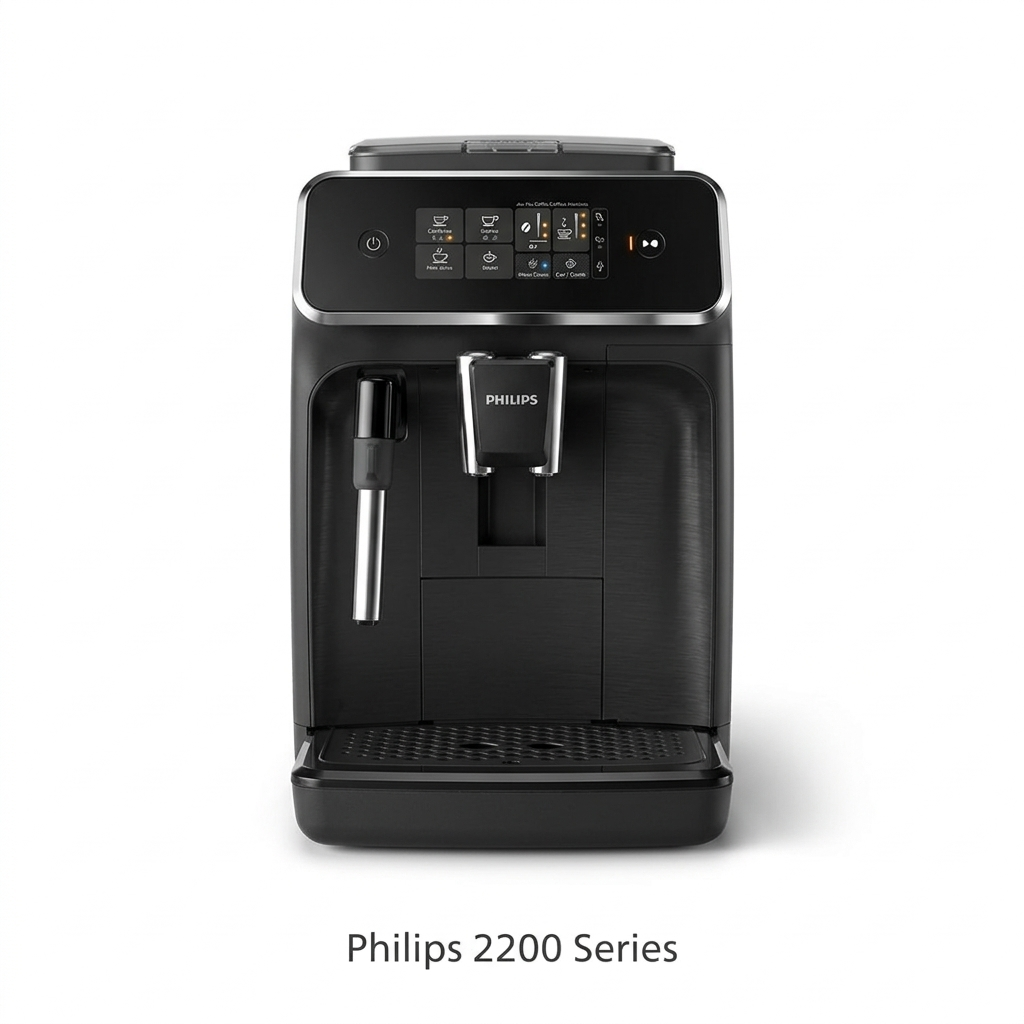
Espresso and coffee at one touch, three strengths and sizes, AquaClean included, and a two-way frother that can make silky microfoam.
Check price on Amazon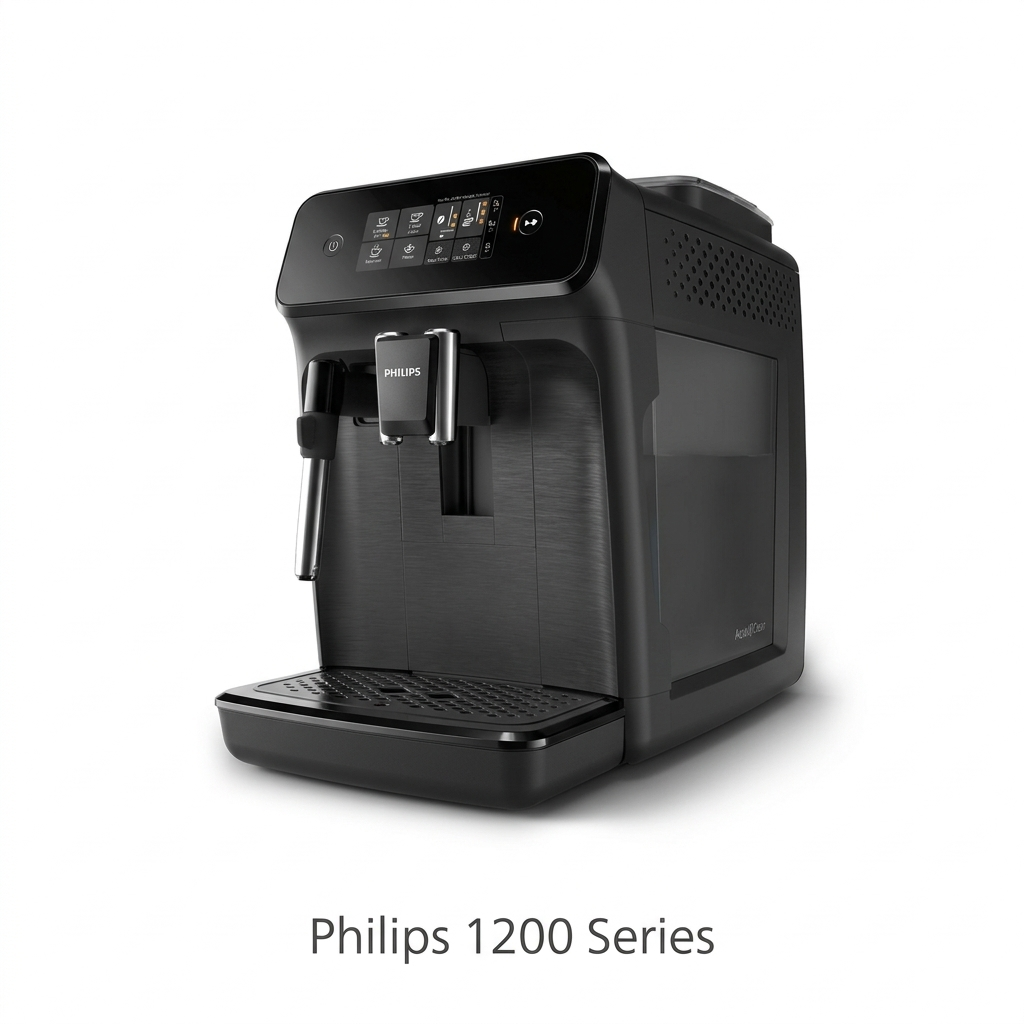
Espresso and coffee from a clear touch panel, a sealed and tinted bean hopper, tall cup clearance and a Panarello frother for airy foam.
Reveal Today’s DealPhilips 1200 vs 2200 at a glance
- These two are close siblings: same size, same ceramic grinder, same espresso and coffee buttons.
- The 2200 adds a better frother and an AquaClean filter in the box.
- The 1200 has a sealed, tinted bean hopper lid and a clear touch panel.
- For most people, the 2200 is the better buy; the 1200 suits black coffee only.
Head to head
The better result in each row is marked, based on four weeks with each machine and the manufacturer specs. Rows where they are identical have no winner.
The tally is not my verdict, but in this matchup most of the differences point to the 2200.
| Spec | Philips 1200 | Philips 2200 |
|---|---|---|
| Espressomy tasting, same beans | Smooth, light | Smooth, slightly fuller ✓ Best |
| Milk frother | Panarello, airy foam only | Sleeve on or off, microfoam possible ✓ Best |
| Latte art | No | Yes, with practice ✓ Best |
| AquaClean filter | Sold separately | Included ✓ Best |
| Bean hopper lid | Sealed and tinted ✓ Best | Standard |
| One-touch drinks | Espresso, coffee | Espresso, coffee |
| Strength levels | 3 plus pre-ground | 3 plus pre-ground |
| Temperature settings | 3 | 3 |
| Double drinks | x2 for espresso and coffee | Two full brew cycles |
| Grinder | Ceramic, 12 settings | Ceramic, 12 settings |
| Cup clearance | 3.3 to 5.7 in | 3.3 to 5.7 in |
| Weight | About 16.5 lb | About 16.5 lb |
| Rows won | 1 | 4 |
Philips 1200 vs 2200 pros and cons
Philips 2200 Series
- Steam tip can make silky microfoam for latte art
- AquaClean filter included and brew group comes out
- Simple touch panel with three strength and size levels
- Small dose makes espresso closer to a lungo
- Only two coffee drinks on the menu
- Steaming takes practice to get the best texture
Philips 1200 Series
- Touch panel is clear and remembers your settings
- Sealed, tinted bean hopper keeps beans fresher
- Tall cup clearance fits big mugs
- Only two coffee drinks on the menu
- Frother makes airy foam, not microfoam
- AquaClean filter is sold separately
Who should buy which machine?
- Latte and flat white drinkers who will learn to steam
- Anyone who wants a filter in the box
- First-time bean-to-cup buyers
- Black coffee and espresso drinkers
- People who buy beans in bulk
- Anyone who only wants foamy cappuccinos now and then
Where they sit in the Philips range
These are the two entry points to Philips’ fully automatic✕Fully automatic (bean-to-cup)A machine that grinds, doses, tamps, brews and ejects the used coffee on its own. You press a button and it does the whole job inside the machine. range. Both grind fresh beans, brew espresso or coffee at one touch and use a manual frother for milk.
Above them sit the Philips 2300 Series and the Philips 3200 Series, which add more drinks and, on the 3200, the LatteGo one-touch milk system. If you want cappuccinos at one touch, that is where to look.
Between the 1200 and 2200, the coffee side is almost identical. The real differences are the frother, the water filter in the box and the bean hopper lid.
| Model | Coffee drinks | Milk | AquaClean in the box |
|---|---|---|---|
| 1200 Series | Espresso, coffee | Panarello frother | No |
| 2200 Series | Espresso, coffee | Frother with removable sleeve | Yes |
| 3200 Series | Five drinks | LatteGo, one touch | Yes |
Our tip: Decide whether you want one-touch milk before choosing between these two, because if you do, neither is the right machine and the 3200 is the next step.
Design, size and build
These two are built on the same body. Both measure about 9.7 inches wide, 14.6 inches tall and 17 inches deep, and both weigh about 16.5 lb.
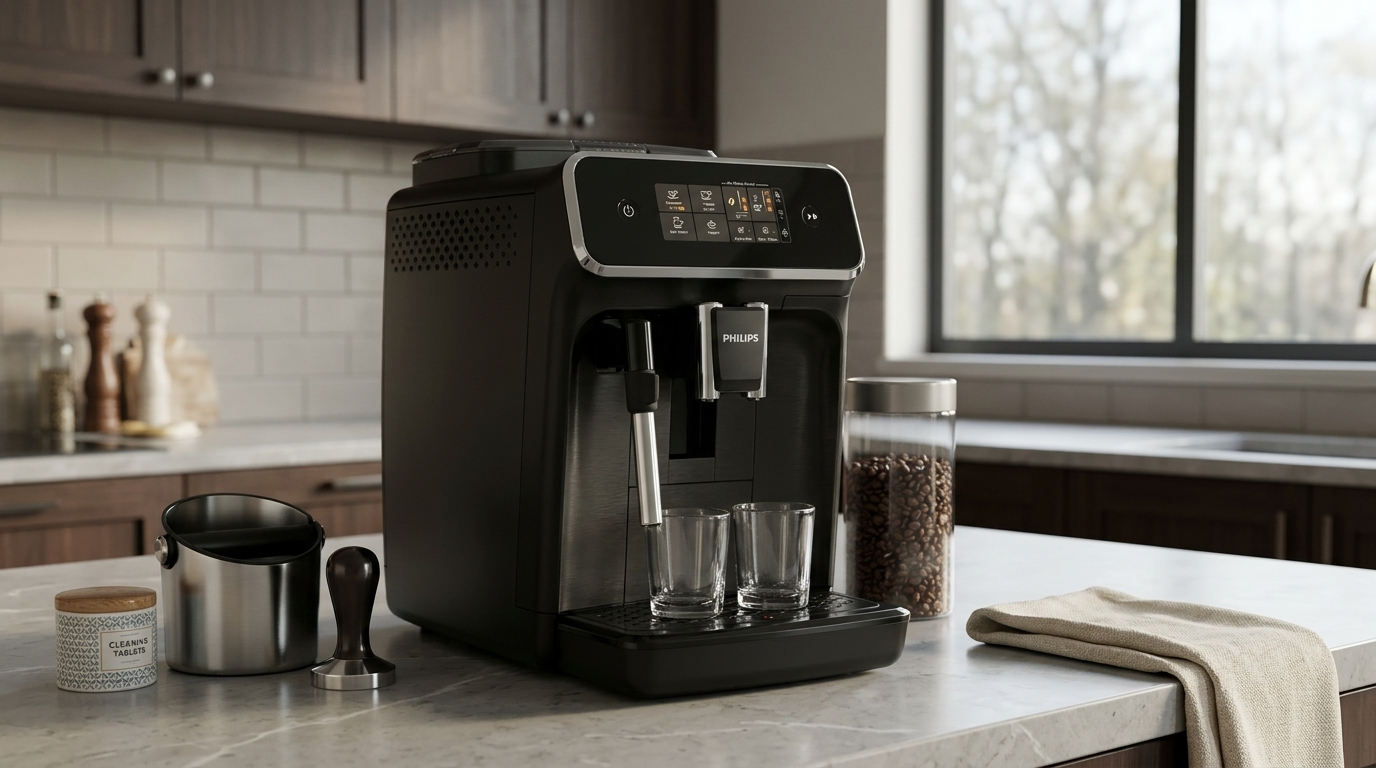
From the front, you would struggle to tell them apart. Both have a black front with a touch panel, height-adjustable spouts that fit cups from about 3.3 to 5.7 inches, and a frother on the side.
The 1200’s bean hopper has a sealed, tinted lid that keeps light and air away from your beans. The 2200’s is a standard lid.
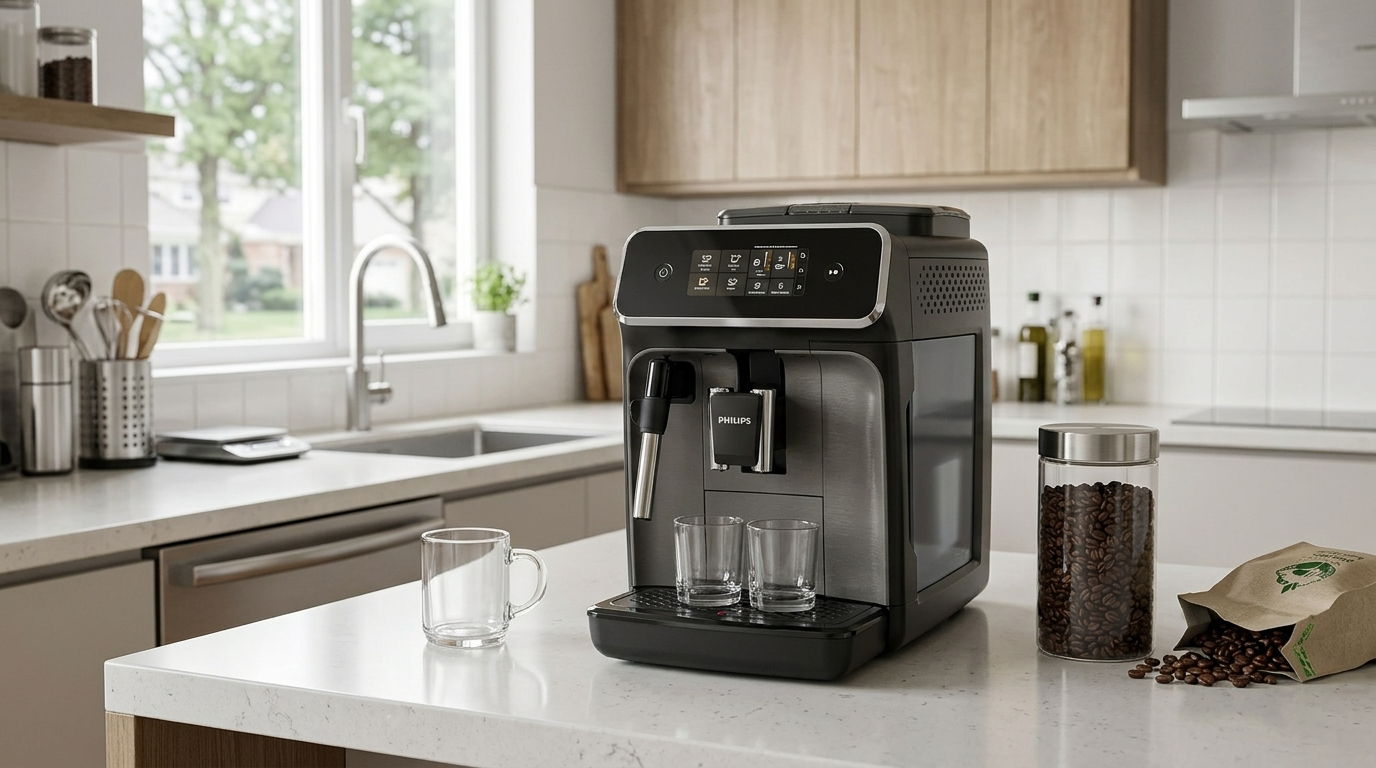
The 2200 shares the 1200’s compact body and simple touch panel.
Both are light enough to slide forward for cleaning and narrow enough for small kitchens. They are mostly plastic, but neither flexed or creaked during my month with each.
Our tip: Leave a little room on the right for the frother, because you need space to hold a jug under it.
Setup and AquaClean
Setup took me about ten minutes on each: rinse the parts, fill the tank and hopper, set the water hardness and run a first rinse.
The 2200 comes with an AquaClean✕AquaClean filterPhilips’ water filter cartridge. It softens and cleans the water, so the machine needs descaling far less often. filter in the box. With it fitted and activated, Philips says the machine can go a very long time between descales, and it never asked me to descale during my test.
On the 1200, the filter is sold separately. You can run the machine without it, but you will descale more often, especially with hard water.
| Setup step | Philips 1200 | Philips 2200 |
|---|---|---|
| Time to first drink | About 10 minutes | About 10 minutes |
| AquaClean filter | Sold separately | In the box |
| Water hardness setting | Yes | Yes |
| Drinks until it tasted right | 3 to 4 | 3 to 4 |
Our tip: Buy and fit an AquaClean filter from day one if you choose the 1200, because it saves far more descaling time than it takes to install.
Touch panel and settings
Both use a simple touch panel with icons for espresso and coffee, a strength button, a size button and an x2 button for doubles.
The 1200’s panel remembers your strength and cup size, which made my usual coffee a single tap. The 2200 offers three strength and three size levels with the same idea.
Neither has a screen or profiles. That keeps them simple, but it means everyone shares the same settings.
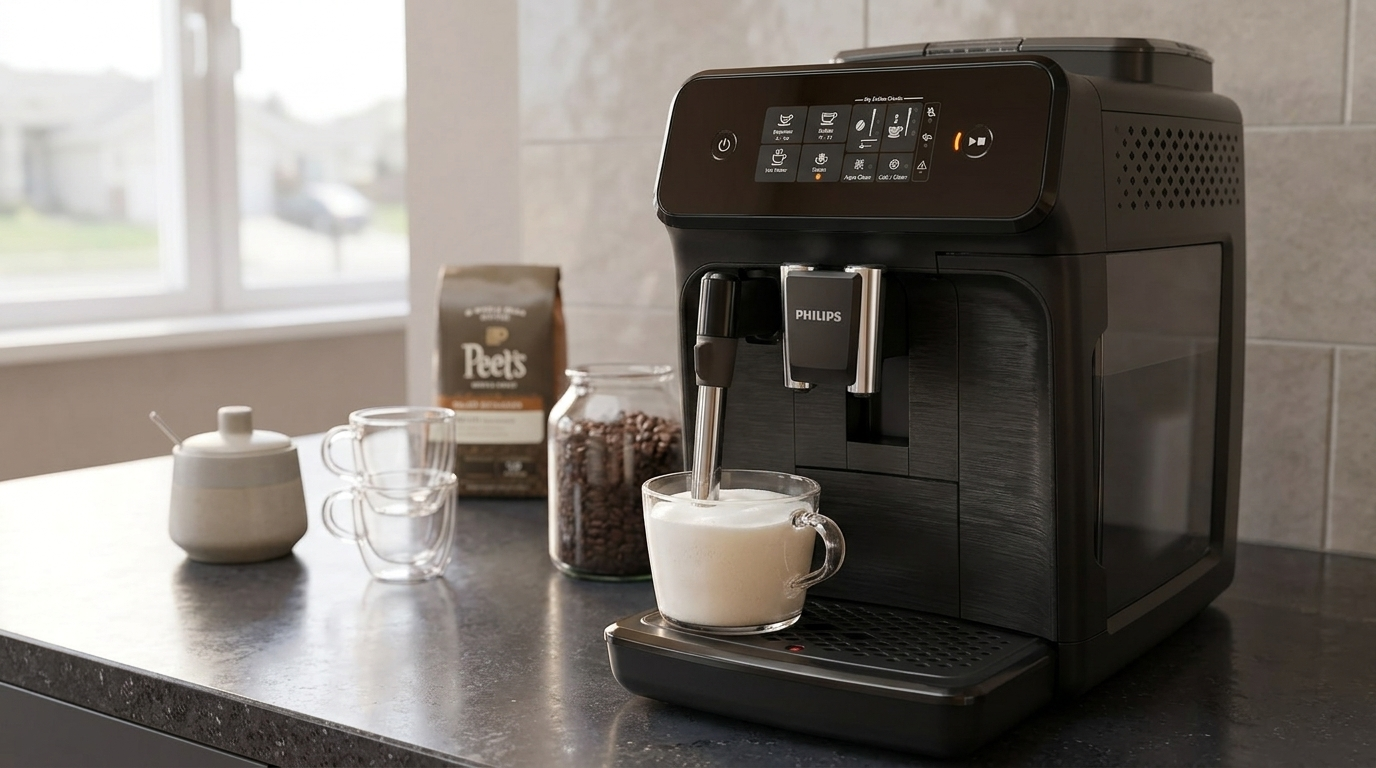
The 1200’s touch panel is clear and remembers your strength and size.
| Setting | Philips 1200 | Philips 2200 |
|---|---|---|
| Strength | 3 levels plus pre-ground | 3 levels plus pre-ground |
| Size | Adjustable | 3 levels |
| Temperature | 3 settings | 3 settings |
| Doubles | x2 for espresso and coffee | Two full brew cycles |
| Profiles | None | None |
Grinder and dose
Both use ceramic burrs✕Ceramic burrsGrinding parts made of ceramic instead of steel. They stay cooler, run quieter and keep a sharp edge for many years. with 12 settings, adjusted with a dial inside the bean hopper.
The dose is small on both. On the 2200, I measured about 6.0 to 7.1 grams per espresso across the strength levels, which is less than many fully automatics use.
That small dose is the main reason the espresso on both tastes closer to a lungo than a short, syrupy shot.
Coffee dose per espresso
Measured on the 2200 with my kitchen scale. The 1200 felt very similar.
| Grinder detail | Philips 1200 | Philips 2200 |
|---|---|---|
| Burrs | Ceramic | Ceramic |
| Settings | 12 | 12 |
| Bean hopper | About 9.7 oz, sealed tinted lid | About 9.7 oz |
| Pre-ground option | Yes | Yes |
Our tip: Turn the grind dial only while the grinder is running, and move one notch at a time, so beans never jam between the ceramic burrs.
Espresso quality
With the same medium-dark blend on the finest grind and strongest setting, both made smooth, easy-drinking espresso. Neither made a thick, syrupy shot.
The 2200’s espresso was slightly fuller and hotter. I measured it at about 154 to 158°F in the cup, with a light, even crema.
The 1200’s espresso was smooth and clean too, but a touch lighter in body. With the smallest cup size, both tasted noticeably stronger.
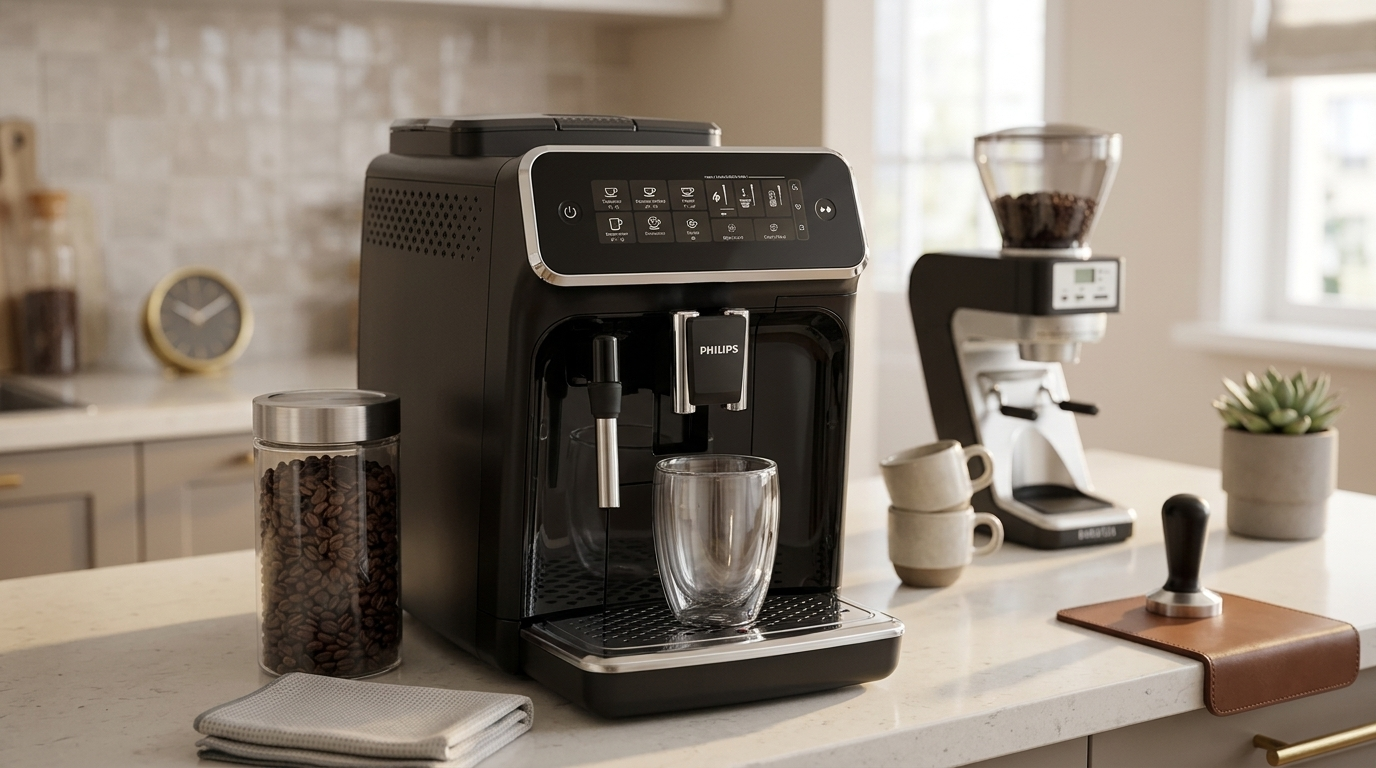
The 2200’s espresso is smooth and hot, if lighter than a café shot.
My espresso ratings
My single-review scores out of 10.
| What you taste | Likely cause | First fix on both |
|---|---|---|
| Sour, thin, watery | Under-extracted✕Under-extractionWhen water does not pull enough flavor out of the coffee. The shot tastes sour, thin and watery. | Finest grind, smallest size |
| Bitter, harsh | Over-extraction | Grind one step coarser |
| Pale crema that fades fast | Stale beans | Use beans within a few weeks of roasting |
| Lukewarm shot | Cold cup | Warm the cup first |
Coffee and big mugs
Both machines are at their best with a cup of coffee. The 2200’s long coffee came out at about 162°F with a nice crema on top, and the 1200’s was just as smooth.
Neither has a dedicated americano✕AmericanoEspresso topped up with hot water. Because the water is added afterwards instead of being pushed through the coffee, it keeps more sweetness and less bitterness. button, but you can make one by brewing an espresso and adding hot water from the frother.
For a strong big mug, I used the x2 button on coffee, which brews twice. It gave a fuller cup than a single large coffee.
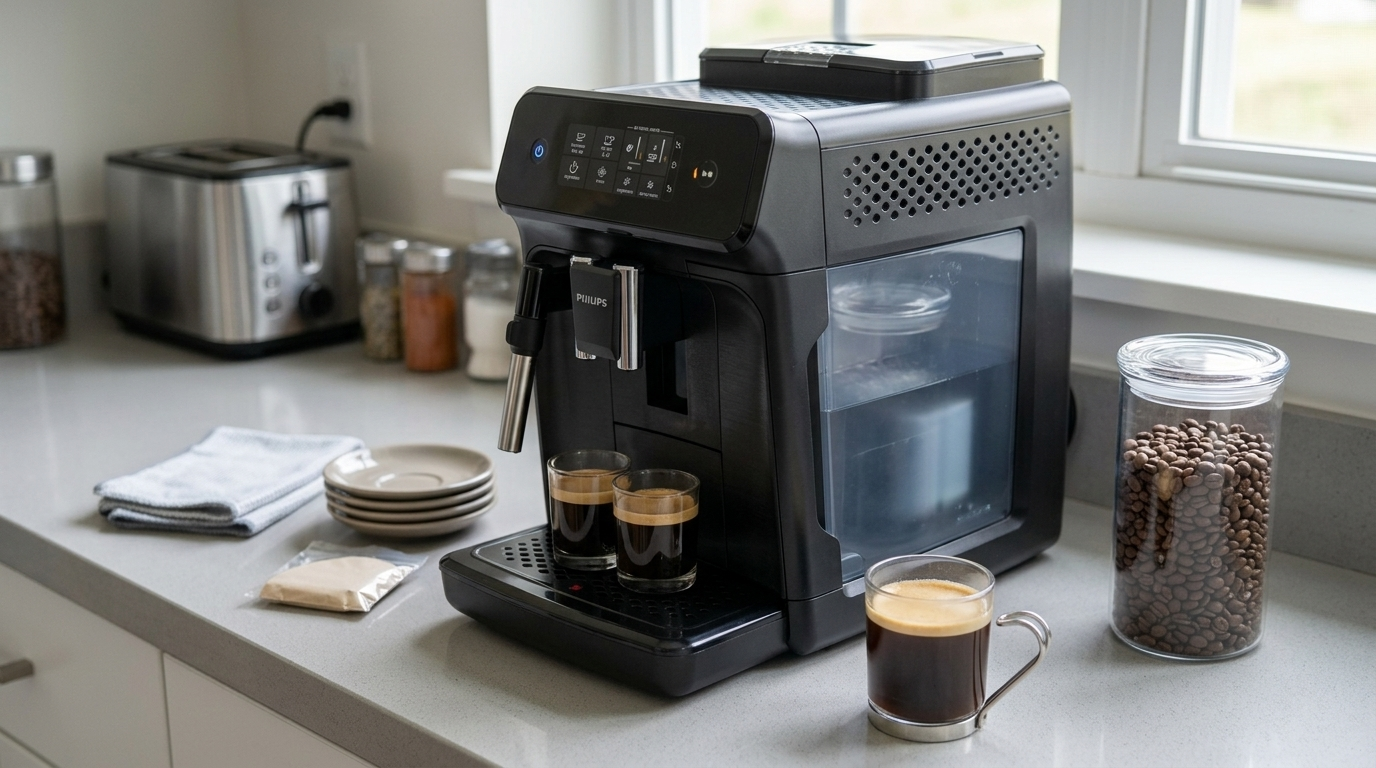
Both machines fit tall mugs and make a smooth, easy cup of coffee.
Find Out the Price TodayMilk frothing
This is the biggest difference between the two, and the main reason I recommend the 2200.
Philips 1200: Panarello frother
The 1200 uses a Panarello✕Panarello frotherA steam wand with a sleeve that sucks in air automatically. It makes big, fluffy foam with little skill, but it cannot make the fine microfoam baristas use for latte art.-style frother. You hold a jug of milk under it, and the sleeve pulls in air to make big, fluffy cappuccino foam.
It is easy, but it only makes airy foam. Lattes and flat whites, which need silky milk, were not really possible.
Philips 2200: sleeve on or off
The 2200’s frother has a removable sleeve. With the sleeve on, it works like the 1200 and makes big, foamy cappuccinos.
With the sleeve off, the bare steam tip can make glossy microfoam✕MicrofoamMilk foam with bubbles so small you can barely see them. It feels silky and glossy, which is what a good flat white or latte needs.. It took me a few days of practice, but by week two I was pouring simple latte art.
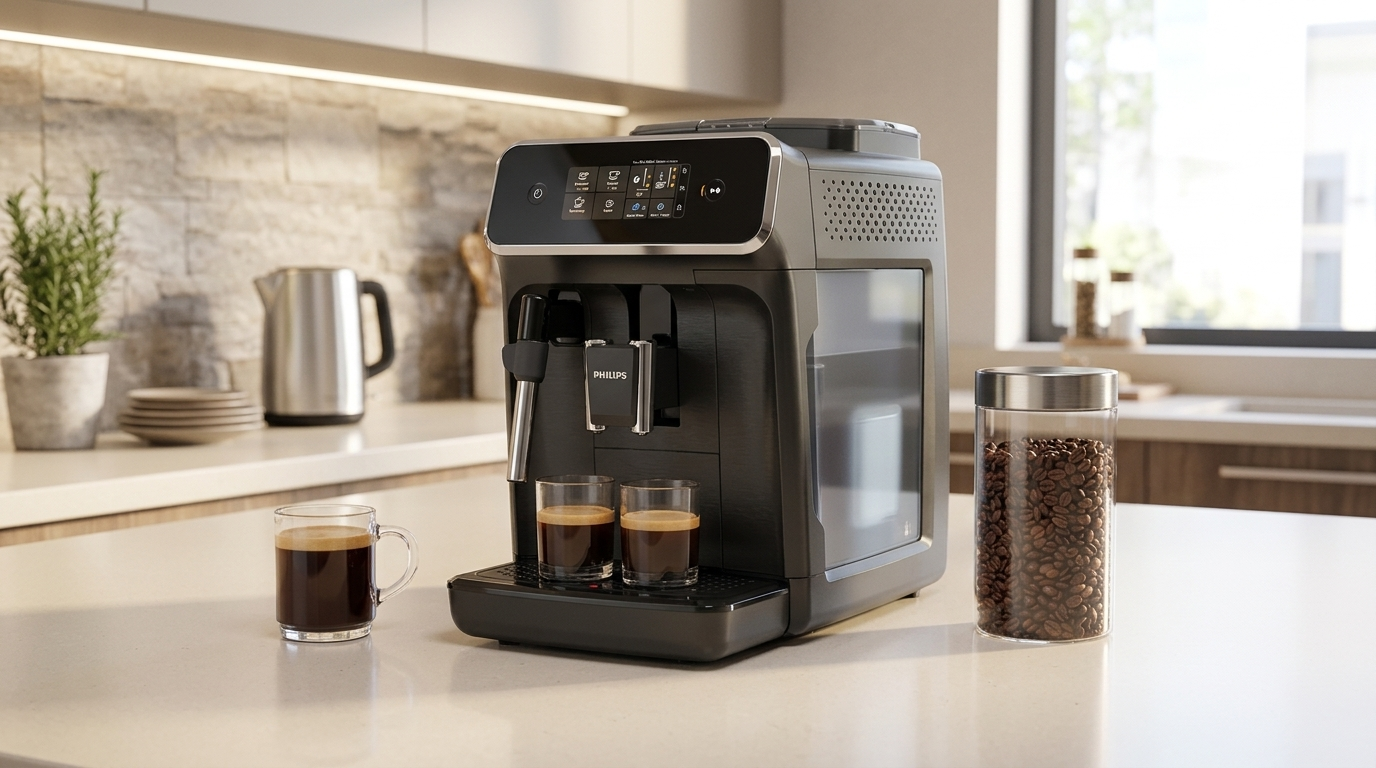
With the sleeve off, the 2200’s steam tip can make glossy microfoam.
Milk, my ratings
My scores out of 10 for texture, temperature and versatility.
| Milk feature | Philips 1200 | Philips 2200 |
|---|---|---|
| Frother type | Panarello | Removable sleeve, bare steam tip |
| Foamy cappuccino | Yes | Yes, sleeve on |
| Silky latte microfoam | No | Yes, sleeve off |
| Latte art | No | Yes, with practice |
| Learning curve | None | A few days for microfoam |
Our tip: Purge the steam tip for a second before and after every jug on both machines, because it clears water and stops milk drying inside.
Hot water and tea
Both dispense hot water from the frother. On the 2200, it came out at about 183°F at the top of the cup, which suits green, white and most herbal teas.
For strong black tea, it is a little cool. A kettle will still do a better job for that.
| Tea type | Ideal water | Both machines |
|---|---|---|
| Green tea | 158–176°F | Good |
| White tea | 167–185°F | Good |
| Herbal tea | 194–212°F | Fair |
| Black tea | 203–212°F | A bit cool |
Cleaning and upkeep
Both have a removable brew group✕Brew groupThe part inside a super-automatic that compresses the ground coffee, holds it while water passes through and then ejects the used puck. that slides out from the side. I rinsed it under the tap once a week on each.
Daily cleaning is quick on both: empty the drip tray and grounds container, which holds about 12 pucks, and wipe the frother.
The 2200’s AquaClean filter is the real difference over time. With it, descaling becomes rare. Without one on the 1200, expect descaling prompts more often.
My daily hands-on cleaning time
With one milk drink a day, not counting automatic rinses.
| When | Philips 1200 | Philips 2200 |
|---|---|---|
| After milk | Purge and wipe the frother | Purge and wipe the steam tip |
| Daily | Empty tray and grounds | Empty tray and grounds |
| Weekly | Rinse the brew group | Rinse the brew group |
| Descaling | More often without a filter | Rare with AquaClean |
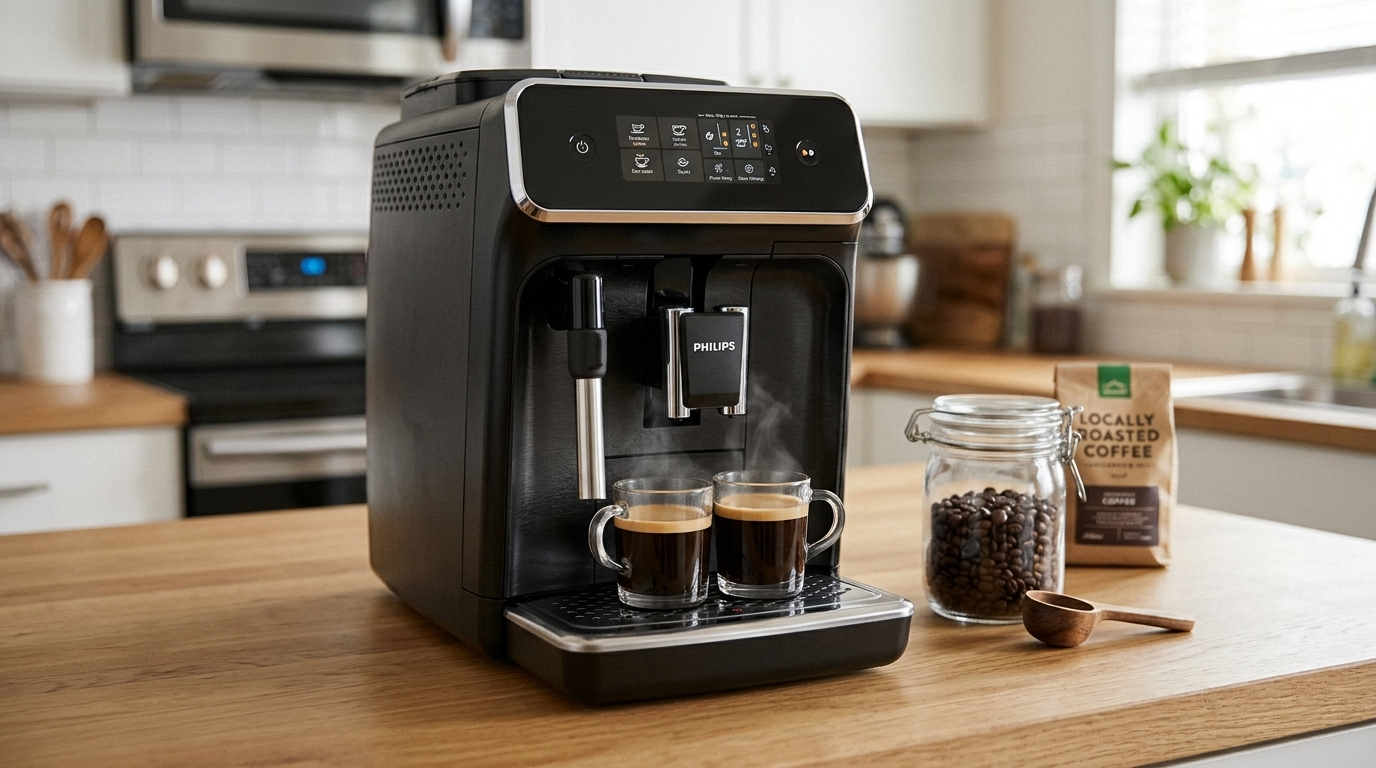
Daily cleaning on both is a two-minute job.
Noise
Both are fairly quiet for fully automatics, thanks to their ceramic grinders. The grind is short and soft, followed by a gentle whir from the brew group.
The frothers are the loudest part of both, with a hiss while steaming.
How loud each felt, my ranking
Relative loudness from side-by-side use. Shorter bars are quieter.
Water, beans and long-term care
Both have a 61 oz water tank at the front and a 9.7 oz bean hopper. With two coffee drinkers, I refilled the tank about every three days on each.
The 1200’s sealed, tinted hopper lid is a small but real advantage if you buy beans in bulk, because it keeps light and air away. On the 2200, I kept only a few days of beans in the hopper.
Both prefer fresh, medium to medium-dark beans. Very oily beans can stick in the grinder, so avoid them on both.
Drinks per full water tank, rough maths
The same on both. Allowing for rinse water.
| Bean type | Philips 1200 | Philips 2200 |
|---|---|---|
| Medium-dark blend | Best | Best |
| Medium roast | Smooth | Smooth |
| Light roast | Thin | Thin |
| Very oily beans | Avoid | Avoid |
Our tip: Store spare beans in an airtight container and keep the hopper only part full, especially on the 2200 with its standard lid.
Mistakes to avoid on both
A month with each taught me a few lessons that apply to both machines.
Using the default espresso size. With a 6 to 7 gram dose, the default size tasted thin. The smallest size was much better.
Steaming warm milk. Milk that had been out of the fridge foamed with big, loose bubbles on both frothers. Cold milk was far better.
Skipping the filter on the 1200. Without AquaClean, the descaling prompt came around sooner. Fitting a filter is worth it.
Leaving the 2200’s sleeve on for lattes. With the sleeve on, you only get airy foam. Take it off for silky latte milk.
| Problem | Fix on both |
|---|---|
| Thin espresso | Smallest size, strongest setting, finest grind |
| Bubbly foam | Cold milk, purge first |
| Frequent descaling | Fit and activate AquaClean |
| Weak big mug | Use the x2 button |
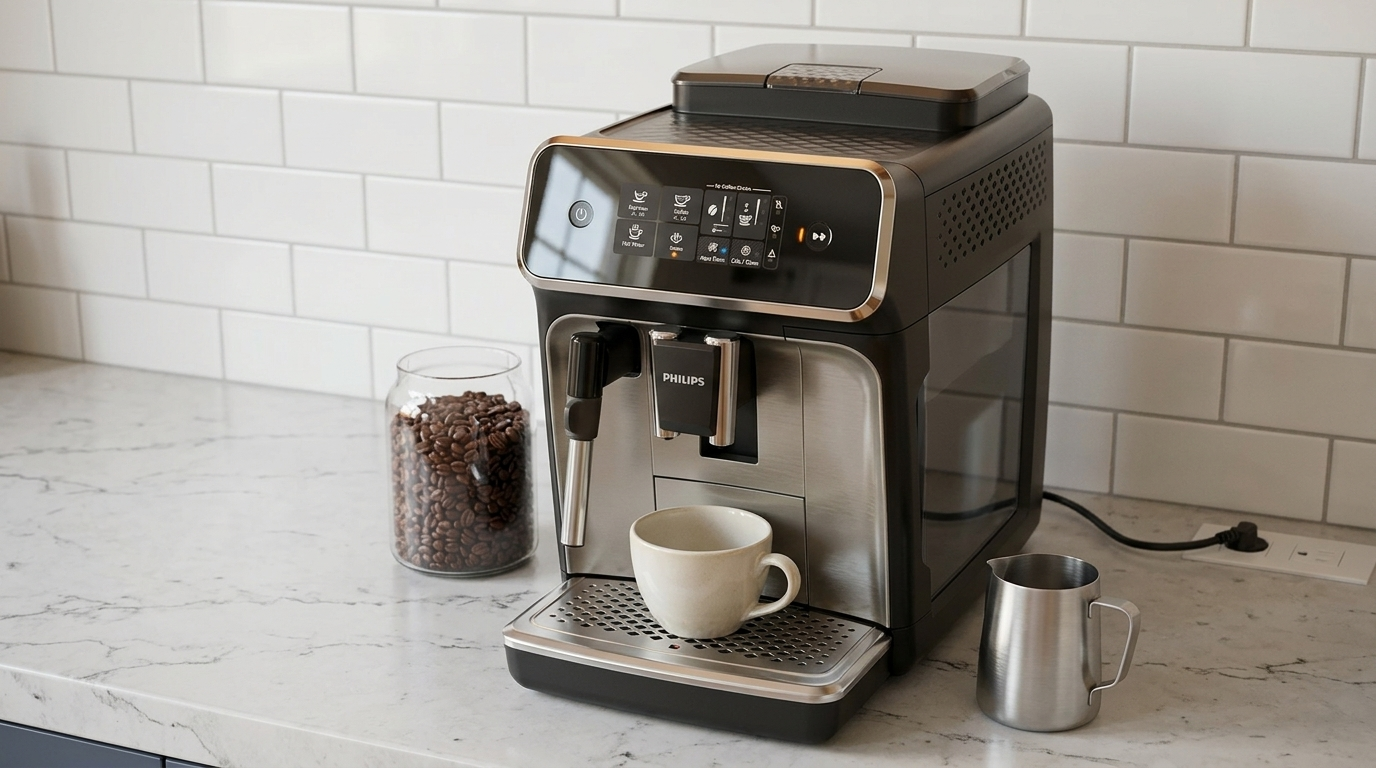
Small habits like the smallest espresso size made a big difference on both.
A typical morning on each
This was my real weekday routine in week three, making a coffee for me and a milk drink for my partner.
On the 1200, I tapped coffee with my saved strength and size, then made a cappuccino by brewing an espresso and frothing milk with the Panarello. About four minutes in all, including a quick wipe of the frother.
On the 2200, the coffee was the same single tap. For the milk drink, I took the sleeve off and steamed a small jug of milk for a latte. It took about a minute longer while I was learning, and about the same time once I had the hang of it.
Both routines were short and calm. The 2200 simply gave me a better milk drink for the same effort.
Time per morning, two drinks
Including frothing and a quick wipe. The gap closed once I learned to steam.
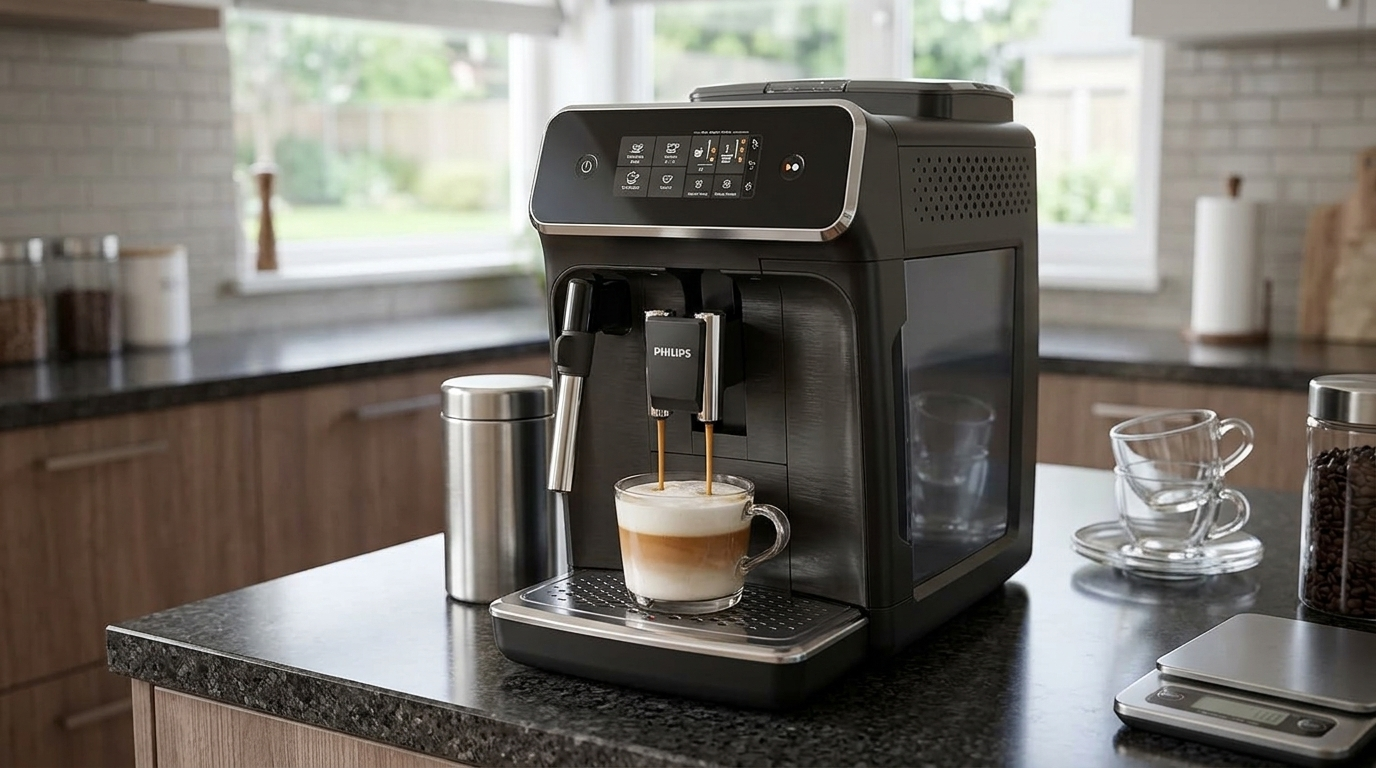
The 1200’s routine is about as simple as fresh-bean coffee gets.
Are these the right first machine for you?
Both of these are often bought as a first step up from pods or a drip coffee maker, and they are good at that job.
Compared with pods, you get fresh-ground beans, far less packaging waste and a cup that tastes noticeably fresher. Compared with a drip machine, you get espresso and the option of real milk drinks.
What you do not get is one-touch milk or a big drink menu. If those matter, it is worth looking one step up the range before you buy, because the jump from these to a LatteGo machine is the one that changes daily life most.
| Coming from | What improves | What to know |
|---|---|---|
| Pods | Fresher coffee, less waste | You will clean a brew group weekly |
| Drip coffee | Espresso and milk drinks | Big mugs need the x2 button |
| Manual espresso | Far less effort | Espresso is milder and lighter |
For a first bean-to-cup machine, I would choose the 2200 almost every time. It costs you nothing in simplicity, and it leaves room to grow into proper milk drinks.
Our tip: Give yourself a week before judging either machine, because the first few days are spent finding your favorite strength, size and grind.
Small extras worth having
Neither machine needs much, but three small things made life easier during my test.
A 12-ounce stainless milk jug made steaming much easier than using a mug, especially on the 2200 with its sleeve off. A small brush helped keep the coffee chute clean, and an airtight container kept spare beans fresh.
On the 1200, an AquaClean filter is the one extra I would buy on day one. It is the difference between descaling every few weeks with hard water and barely thinking about it.
| Extra | Philips 1200 | Philips 2200 |
|---|---|---|
| AquaClean filter | Buy one | Included |
| 12 oz milk jug | Useful | Very useful |
| Airtight bean container | Optional | Useful |
| Cleaning brush | Useful | Useful |
Still torn between the two?
Ask yourself one question: will anyone in your home ever want a latte or flat white with silky milk? If the answer is yes, even occasionally, buy the 2200. Its frother is the only meaningful upgrade between these two, and it is a big one.
If every cup in your house is black coffee or espresso, the two machines are close to identical in daily use. In that case, the 1200’s sealed hopper is a nice touch, and you can add an AquaClean filter yourself.
It is also worth thinking a year ahead. Many people who buy an entry-level machine for black coffee end up curious about milk drinks once they have fresh espresso on tap. The 2200 leaves that door open; the 1200 mostly closes it.
Finally, consider water. In a hard-water area, having AquaClean in the box from day one means the 2200 will ask for far less maintenance over its life, and that alone tips the balance for many households.
Either way, these are honest, simple machines. They make a smooth cup with fresh beans at one touch and ask for very little in return.
One last practical point: because the two machines share the same body, spouts and brew group, accessories and spare parts like the brew group grease, drip tray and filters work the same way on both. Whatever you choose, the ownership routine will feel identical.
That also makes the decision refreshingly simple. You are not choosing between two different machines so much as choosing whether you want the better frother and the filter in the box. For most homes, that is an easy yes.
If you are buying as a gift, the 2200 is also the safer choice. It covers black coffee as well as the 1200 does, and it gives the person receiving it room to explore lattes, flat whites and simple latte art without buying a second machine later.
Four weeks with each: my diary notes
These are the notes I kept as each Philips settled into my routine.
Philips 1200 Series
Week 1: Set up in ten minutes, and the touch panel needed no explanation.
Week 2: I switched to the smallest espresso size, which helped a lot.
Week 3: Cappuccinos with the Panarello were fun at weekends, but I missed proper latte milk.
Week 4: A simple, pleasant black coffee machine.
Philips 2200 Series
Week 1: Fitted the included AquaClean and forgot about descaling.
Week 2: Took the sleeve off and started learning to steam.
Week 3: Poured my first rough heart in a latte.
Week 4: The better all-rounder, especially for milk drinks.
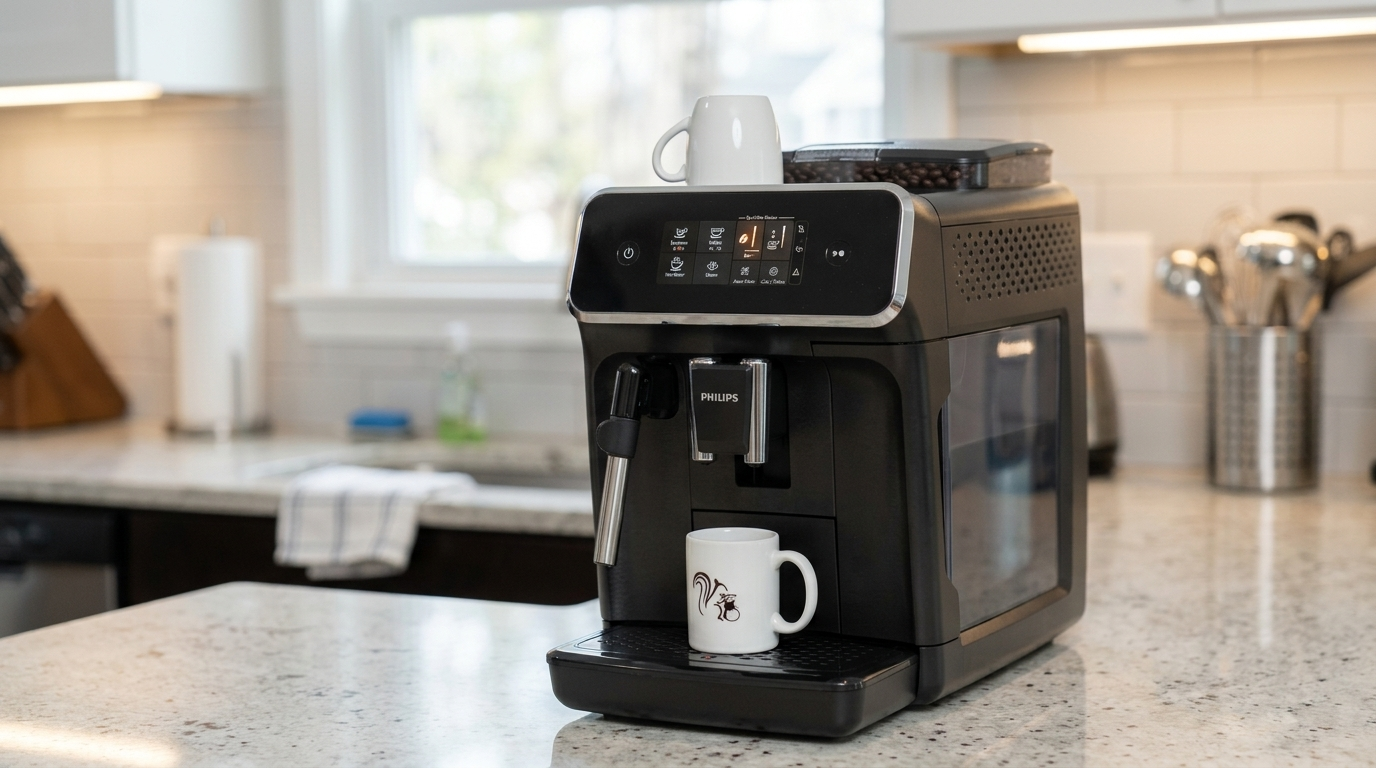
By week four, the 2200 was making lattes I was genuinely proud of.
Real-life scenarios
These are the situations where one machine clearly pulled ahead during my testing.
With the sleeve off, its steam tip makes real microfoam.
Both make the same smooth coffee at one touch.
Its sealed, tinted hopper keeps beans fresher.
AquaClean is in the box and keeps descaling rare.
The 1200’s Panarello and the 2200 with its sleeve on both do it easily.
A bean-to-cup machine that still lets you practice steaming.
For black coffee drinkers, the 1200 is a simple and pleasant machine.
My scorecard
These are my own scores out of 10, from my single reviews of each machine, plus versatility because it decides this matchup.
Philips 2200 Series
Philips 1200 Series
Overall, I rate the 2200 7.9 and the 1200 7.6. The coffee is almost the same; the 2200 wins on milk and the filter in the box.
See How Much You’ll SaveWhich one is right for you?
4 quick questionsWhich one should you buy?
For most people, the 2200. It makes the same smooth coffee as the 1200, plus silky latte milk with the sleeve off, and the AquaClean filter is included. For the wider picture beyond this matchup, see my guide to the best Philips espresso machines.
The 1200 makes sense if you drink black coffee and value its sealed hopper. If you want one-touch cappuccinos, skip both and look at my Philips 2200 vs 3200 comparison, which covers the Philips 3200 Series with LatteGo. My Philips 2200 vs 2300 comparison covers the newer step up.
For most first-time buyers, the 2200 is the better entry-level Philips.
- You want lattes and flat whites
- You will learn to steam milk
- You have hard water
- You want a filter in the box
- You want one-touch milk drinks
- You want strong, syrupy espresso
- You want more than two coffee drinks
- You drink espresso and coffee black
- You buy beans in bulk
- You want the simplest panel
- You want silky latte milk
- You want a filter in the box
- You want one-touch milk
My pick is the Philips 2200 Series. It makes the same smooth espresso and coffee as the 1200, but its two-way frother lets you make silky latte milk as well as foamy cappuccinos, and the AquaClean filter in the box keeps descaling rare.
The Philips 1200 Series is a fine choice if you drink black coffee and value its sealed, tinted bean hopper. Fit an AquaClean filter from day one and it will serve you well.
Whichever you choose, use the smallest espresso size, cold milk and fresh beans, and rinse the brew group weekly.
Philips 1200 vs 2200 specifications
From manufacturer specifications and my own testing.
| Philips 1200 Series | Philips 2200 Series | |
|---|---|---|
| Model | EP1220 | EP2220 |
| Type | Fully automatic with manual frother | Fully automatic with manual frother |
| Drinks | Espresso, coffee, hot water, steam | Espresso, coffee, hot water, steam |
| Doubles | x2 for espresso and coffee | Two full brew cycles |
| Controls | Touch panel with icons | Touch panel with icons |
| Pump pressure | 15 bar | 15 bar |
| Grinder | Ceramic, 12 settings | Ceramic, 12 settings |
| Strength | 3 levels plus pre-ground | 3 levels plus pre-ground |
| Temperature | 3 settings | 3 settings |
| Milk frother | Panarello | Removable sleeve, steam tip |
| Bean hopper | About 9.7 oz, sealed tinted lid | About 9.7 oz |
| Water tank | About 61 oz | About 61 oz |
| Grounds container | About 12 pucks | About 12 servings |
| AquaClean filter | Sold separately | Included |
| Cup clearance | About 3.3 to 5.7 in | About 3.3 to 5.7 in |
| Power | 1,500 watts | 1,500 watts |
| Dimensions (W x H x D) | 9.7 x 14.6 x 17 in | 9.7 x 14.6 x 17 in |
| Weight | About 16.5 lb | About 16.5 lb |
| Warranty | 2 years limited | 2 years limited |
How I tested and compared them
Michael Reynolds here. I used each machine as my everyday coffee maker for four weeks, making espresso, coffee, americanos, cappuccinos and lattes, and kept notes every week.
I weighed doses, measured espresso, coffee and hot water temperatures with a probe thermometer, tried every strength and size, and steamed whole, semi-skimmed and oat milk on both frothers.
I rinsed both brew groups weekly, ran the AquaClean setup and compared my notes with Philips’ specifications and owner documentation.
- Coffee: dose, crema, body and temperature.
- Milk: foam texture and versatility.
- Workflow: touch panel and daily routine.
- Ownership: noise, cleaning, water care and footprint.
Philips 1200 vs 2200 FAQ
What is the difference between the Philips 1200 and 2200?
The milk frother, the water filter and the bean hopper lid. The 2200 has a frother with a removable sleeve that can make silky microfoam, and an AquaClean filter in the box. The 1200 has a Panarello frother for airy foam, a sealed and tinted hopper lid, and the filter is sold separately.
Is the Philips 2200 worth it over the 1200?
For most people, yes. The coffee is almost the same, but the 2200 can make silky latte milk and includes the AquaClean filter.
Do the Philips 1200 and 2200 make the same coffee?
Very nearly. Both use the same ceramic grinder and make smooth espresso and coffee. The 2200’s espresso was slightly fuller and hotter in my testing.
Can the Philips 2200 make latte art?
Yes, with practice. Take the sleeve off the frother and the bare steam tip can make glossy microfoam.
Does the Philips 1200 come with an AquaClean filter?
No, it is sold separately. The 2200 includes one in the box.
Why is the espresso weak on the Philips 1200 and 2200?
The dose is small, about 6 to 7 grams. Use the smallest cup size, the strongest setting and the finest grind for a stronger shot.
Do they have a removable brew group?
Yes, both. I rinsed each under the tap once a week.
Are the Philips 1200 and 2200 the same size?
Yes. Both are about 9.7 x 14.6 x 17 inches and weigh about 16.5 lb.
Can either make a one-touch cappuccino?
No. Both use a manual frother. For one-touch milk drinks, look at the Philips 3200 with LatteGo.
Which is better for tea?
They are the same. Hot water came out at about 183°F, good for green and herbal tea but a little cool for black tea.

- Our hands-on Philips 1200 Series review
- Our hands-on Philips 2200 Series review
- Philips product specifications and owner documentation
- General espresso brewing and milk frothing guidance