Philips 2200 vs 2300: is the newer model worth it?
They share a grinder, a water tank, a bean hopper and almost the same slim body. Then they split: the Philips 2200 gives you a real steam tip that can pour latte art, while the Philips 2300 swaps it for a one-touch LatteGo cappuccino, a quieter SilentBrew grinder and dishwasher-safe milk parts. I used both every day for four weeks, measured what matters and lined up the data to find out which one belongs in your kitchen.
We choose products independently. We may earn a commission through links on this page; your price stays the same. Affiliate policy
Jargon helpNew to espresso? Tap any dotted term to see what it means.
In this comparison
If you want cappuccinos at the touch of a button and hate cleaning milk tubes, buy the Philips 2300. Its LatteGo jug made a creamy cappuccino in about 72 seconds, it rinses clean in 10 seconds and the whole machine was easier for everyone in my house. If you would rather learn to steam milk properly, pour flat whites and get slightly hotter espresso and tea water, the Philips 2200 is the better buy. Its frother sleeve pops off to reveal a single-hole steam tip, and by week four I was pouring tulips.
The two machines
Specs checked November 14, 2026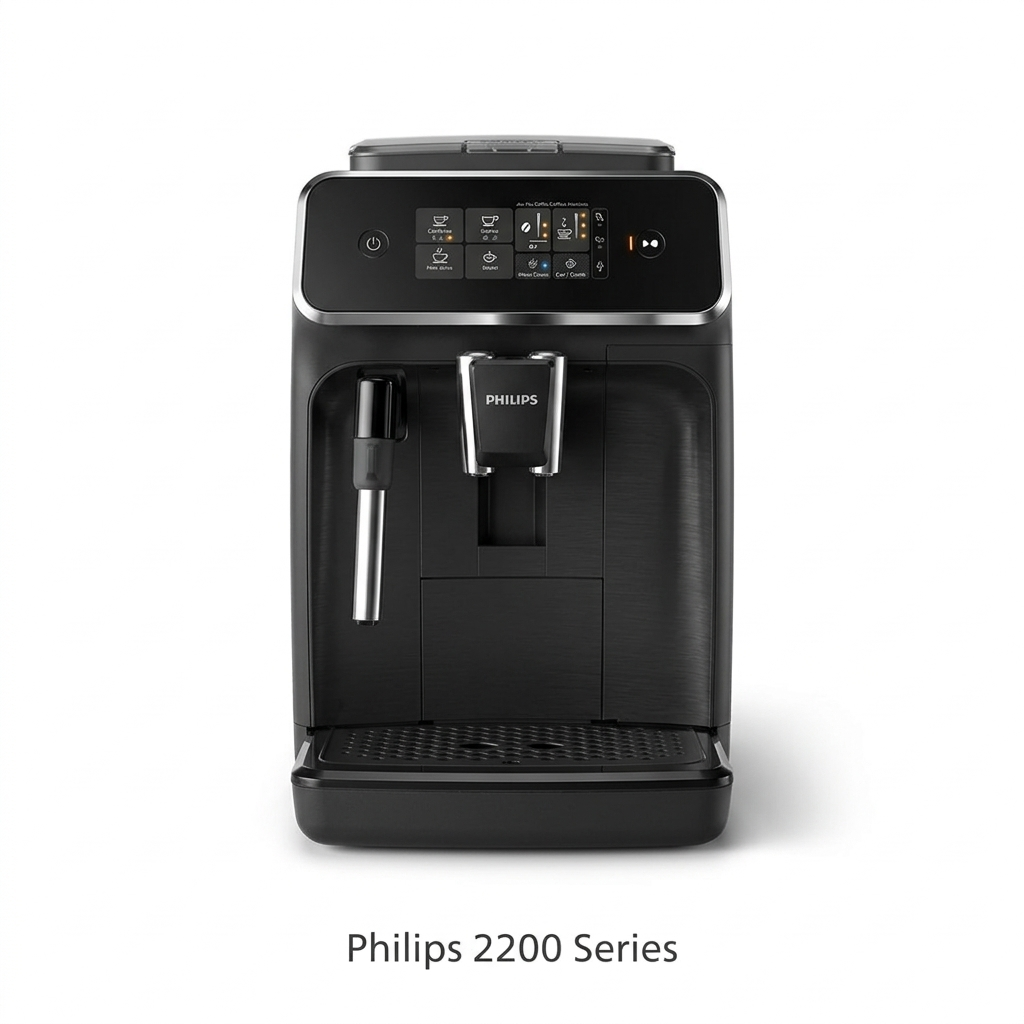
A classic frother with a removable sleeve, three strength and size levels, hotter espresso and the AquaClean filter in the box.
Check price on Amazon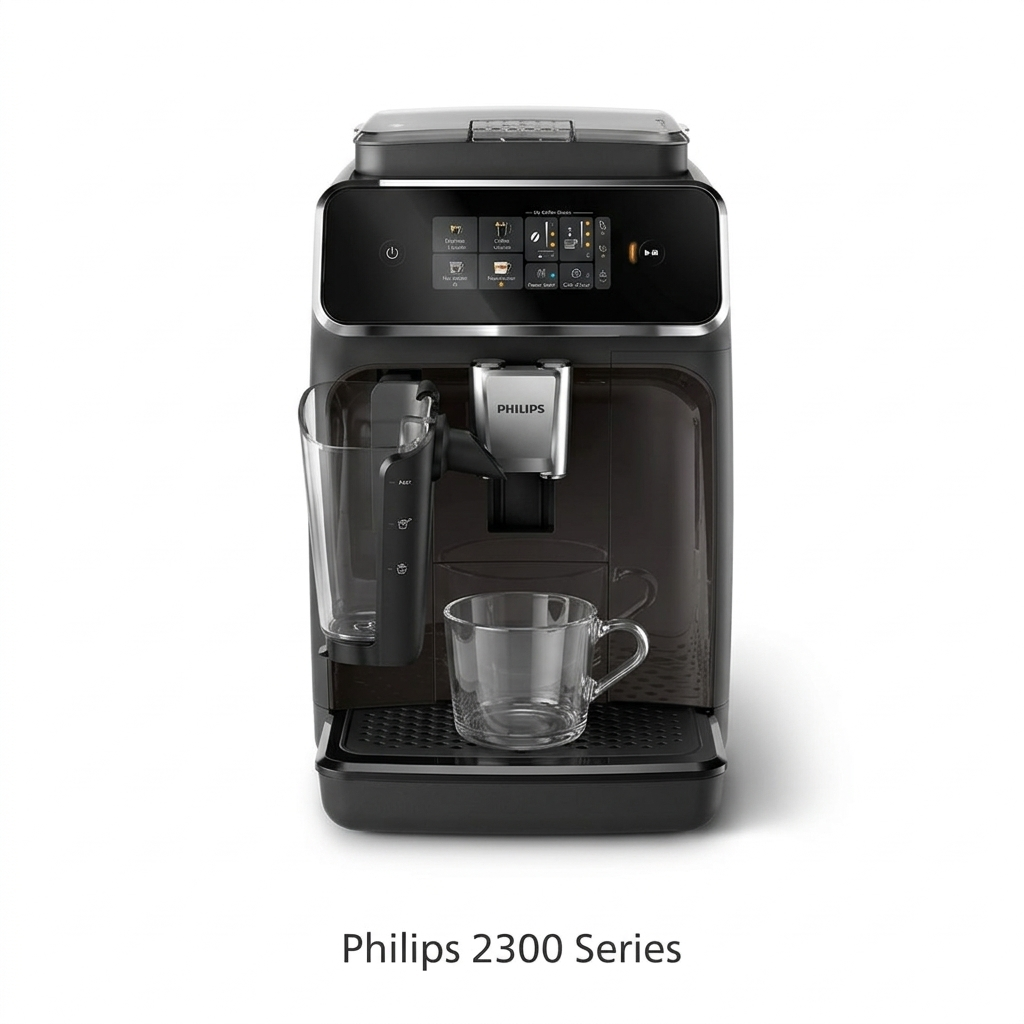
One-touch cappuccino from a two-part LatteGo jug with no tubes, a quieter SilentBrew grinder and fast, simple controls.
Reveal Today’s DealPhilips 2200 vs 2300 at a glance
- Buy the 2300 if you want one-touch cappuccinos and the fastest possible milk clean-up.
- Buy the 2200 if you want to learn milk steaming, pour flat whites or drink tea from the machine.
- Under the hood they are close: same 12-step ceramic grinder, 1.8-liter tank, 275-gram hopper and 15-bar pump.
- The 2300 is quieter when grinding, but its LatteGo frothing is the loudest thing either machine does.
Head to head
The better result in each row is marked, based on my testing and the manufacturer specs. Rows where the machines are level have no winner.
Keep in mind that the tally is not my verdict. Some rows matter far more than others, and which ones matter depends on what you drink.
| Spec | Philips 2200 | Philips 2300 |
|---|---|---|
| One-touch milk drink | No, steam by hand | Cappuccino ✓ Best |
| Latte art and flat whitesmy month of practice | Yes, bare steam tip ✓ Best | No, foam only |
| Coffee recipes | Espresso, coffee | Espresso, coffee, cappuccino ✓ Best |
| Espresso temperaturecold cup, default | About 154–158°F ✓ Best | About 149°F |
| Hot water for tea | About 183°F | Hot water button |
| Grinder noise | Loud 10-second burst | About 71 dB, SilentBrew ✓ Best |
| Milk frothing noise | Steam hiss, quieter ✓ Best | About 79 dB |
| Milk clean-updaily, my estimate | About 3.5 min | About 3 min, 10-second rinse ✓ Best |
| Dishwasher-safe milk parts | Sleeve and tip by hand | LatteGo jug ✓ Best |
| Grinder | Ceramic, 12 settings | Ceramic, 12 settings |
| Water tank / bean hopper | 1.8 L / 275 g | 1.8 L / 275 g |
| Width on the counter | 9.7 in | 9.4 in ✓ Best |
| AquaClean filter | Included ✓ Best | Compatible |
| Rows won | 4 | 6 |
Philips 2200 vs 2300 pros and cons
Philips 2200
- Steam tip can make silky microfoam for latte art
- Hotter espresso and hot water for tea
- AquaClean filter in the box and a removable brew group
- Small dose makes the espresso closer to a lungo
- Only two coffee drinks on the menu
- Steaming takes practice to get the best texture
Philips 2300
- One-touch cappuccino from a two-part jug with no tubes
- Fast drinks, with an espresso in about 32 seconds
- Quieter grinder and dishwasher-safe milk parts
- Milk frothing is loud, about 79 dB
- Foam is creamy but not true microfoam
- Only three coffee recipes, and no latte or flat white button
Who should buy which machine?
- Beginners who want to learn latte art at home
- Flat white, cortado and latte drinkers
- Homes where someone drinks tea every day
- Daily cappuccino drinkers who want one touch
- Busy households that hate cleaning milk tubes
- Anyone who wants the slimmest, simplest machine
Design, size and build
Put the two machines side by side and you would struggle to tell which is which from across the room.
Both are slim, upright bean-to-cup✕Bean-to-cupA machine that grinds whole beans, doses, tamps and brews the coffee for you, all in one box. You press a button and fresh coffee comes out. machines about 14.6 inches tall and 17 inches deep. The Philips 2300 is a touch narrower at about 9.4 inches, against roughly 9.7 inches for the 2200.
That 0.3 of an inch sounds like nothing. In practice, the 2300 took about as much counter space as a toaster, and it slotted between my kettle and the wall where the 2200 was a squeeze.
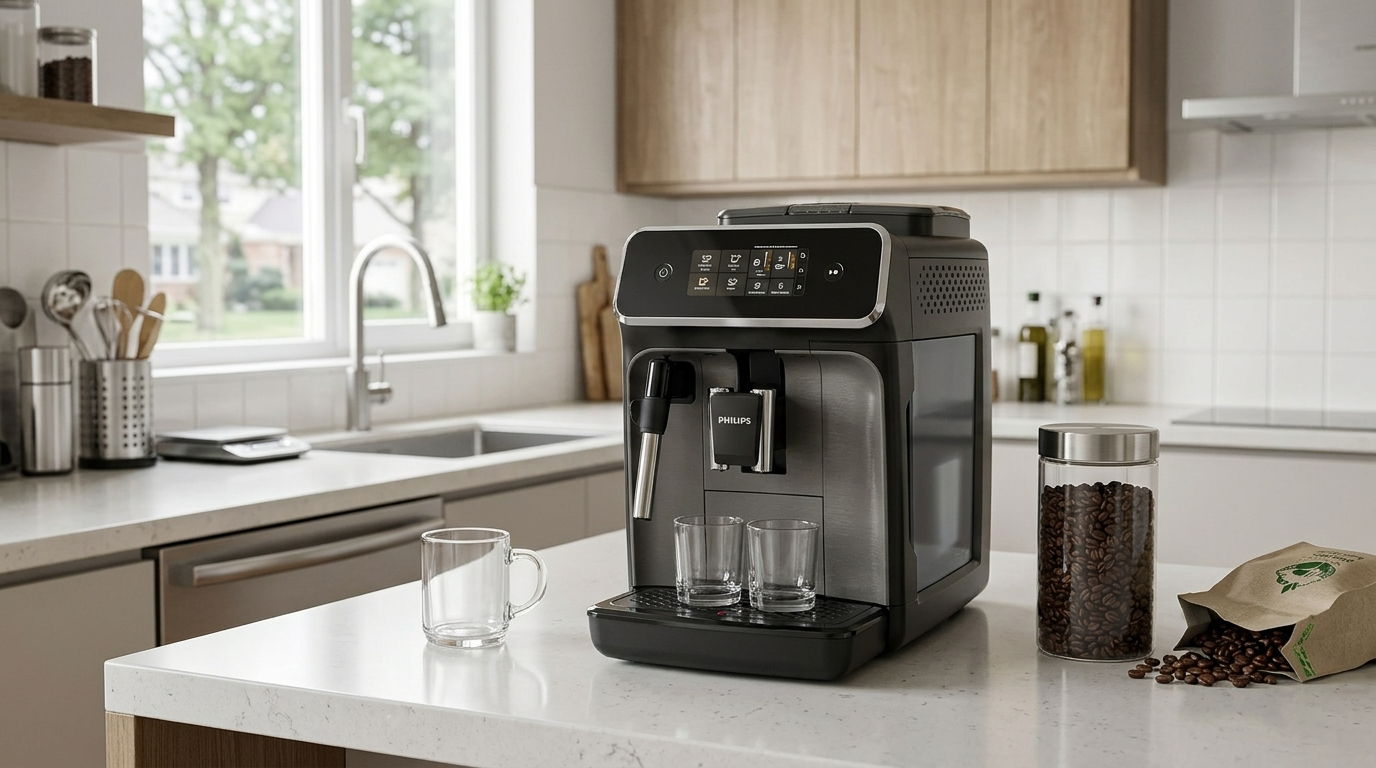
The 2200 keeps a classic frother on the side, with a sleeve that pulls off to reveal a steam tip.
The real difference is on the right-hand side. The 2200 has a classic frother arm with a plastic sleeve, and the 2300 has a flat docking point where the LatteGo jug clicks in.
Both are mostly plastic, and both felt solid enough for daily use. The 2200 weighs about 16.5 lb, and the 2300 felt very similar in the hand when I lifted it to clean behind it.
The water tank slides out from the front on both, which I liked. Nothing needs to come off the top, so you can tuck either machine under a wall cabinet.
Width on the counter
Both fit a standard 24-inch-deep counter with room to spare.
Our tip: Leave about 2 inches above the bean hopper on either machine, so you can lift the lid without sliding the machine forward.
Setup and the first week
Setup is quick on both and follows the same pattern. You rinse the tank, test your water with the included strip, set the hardness level and prime the AquaClean✕AquaClean filterPhilips’ water filter cartridge. It sits in the tank, softens the water and, if you change it when the machine asks, Philips says you can go up to 5,000 cups before you need to descale. filter.
On the 2200, you set the hardness by holding the strength button for about 3 seconds with the machine off. My water is very hard, so I went straight to the highest level.
The 2300 was even faster to get going. I had my first cappuccino within twenty minutes of opening the box, and that included reading the quick-start guide.
On both, the first few drinks tasted flat. The grinder needs a few cycles to settle, so I poured away the first three or four before I judged anything.
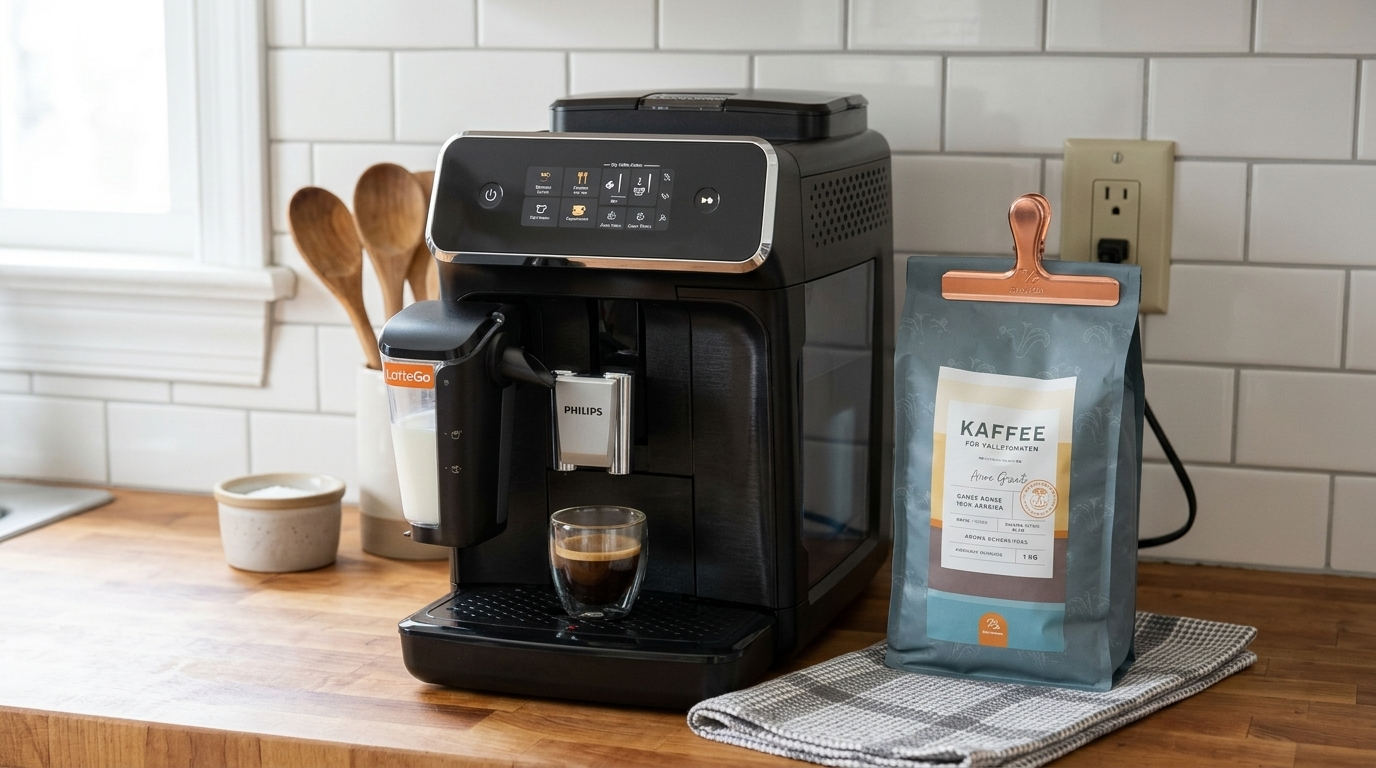
The 2300 was the faster of the two to unbox and get brewing.
| Setup step | Philips 2200 | Philips 2300 |
|---|---|---|
| Water hardness test | Strip, set with the strength button | Strip, set on the panel |
| Filter | AquaClean in the box | AquaClean compatible |
| Time to first drink | A few minutes | A few minutes |
| Drinks to pour away | 3 or 4 | 3 or 4 |
| In the box | Scoop, grease, test strip, filter | Scoop, grease, test strip, LatteGo |
Our tip: Switch the machine on as soon as you walk into the kitchen, because the start-up rinse adds almost a minute before your first drink.
Controls and the drink menu
Neither machine has a screen. Both use a flat touch panel with drink icons, a strength button and a size button, each with three levels.
The middle level is the default for both strength and size. Nobody in my house needed instructions, and both panels worked fine with damp fingers.
The menu is where they part ways. The Philips 2200 makes espresso, coffee, hot water and steam. That is it, and you build every milk drink by hand.
The 2300 makes espresso, coffee, a one-touch cappuccino and hot water. It still has no latte, flat white or americano button, which surprised me at this point in the range.
Drinks on the panel
Counted from each machine’s control panel. Steam is counted as a function, not a drink.
Both can make two espressos or two coffees at once. On the 2300, cappuccinos come one at a time, which matters if two of you want milk drinks at the same moment.
Both also take pre-ground coffee through a small chute. Use one level scoop and never more, or you risk clogging the brew group✕Brew groupThe removable part inside the machine that compresses the ground coffee, holds it while water passes through and then drops the used puck in the drawer..
| Function | Philips 2200 | Philips 2300 |
|---|---|---|
| Espresso | Yes | Yes |
| Coffee | Yes | Yes |
| Cappuccino | By hand | One touch |
| Hot water | Yes | Yes |
| Steam | Yes, steam tip | No |
| Strength and size levels | 3 and 3 | 3 and 3 |
| Two cups at once | Espresso and coffee | Espresso and coffee |
| Pre-ground option | Yes, one scoop | Yes, one scoop |
Grinder and dose
Both machines use the same 100% ceramic burrs✕Ceramic burrsGrinding discs made of ceramic instead of steel. They stay sharp for a long time and produce less heat, which helps protect the coffee’s aroma. with 12 grind settings. The knob sits inside the bean hopper, and lower numbers are finer.
On the 2200, I weighed the dose at each strength level. Low gave about 6.0 grams, medium about 6.5 grams and high about 7.1 grams.
A typical café double uses 14 to 18 grams, so these machines use roughly half. That small dose is the single biggest reason both make a lighter, smoother espresso rather than a thick, syrupy one.
The 2300 shares the same grinder and dose design, and its shots tasted similar in weight. I ended up about two steps finer than the default for espresso and cappuccino on both.
Dose per strength level on the 2200
My measurements with a medium-dark blend. A café double for comparison.
| Grind setting | What I tasted | Best use |
|---|---|---|
| 1–3, finest | Bold, can run slow | Espresso with dark roasts |
| 4–6 | Full and sweet | Espresso and cappuccino |
| 7–9 | Balanced, lighter | Long coffee |
| 10–12, coarsest | Thin, sour risk | Rarely worth it |
Espresso quality
This is where the two are closest, and where the 2200 sneaks a small win.
On the 2200, the strongest setting with the medium size gave about 38 grams, or 1.34 ounces, with visible crema✕CremaThe golden, foamy layer on top of a fresh espresso. It forms when pressure pushes oils and gases out of the coffee.. I tasted dark chocolate with a slightly sweet finish.
At the medium size, the ratio was about 1:6, which is closer to a lungo✕LungoA long espresso made with more water than usual. It is lighter in body and a little more bitter than a classic short shot. than a classic 1:2 espresso. The smallest size got me to about 1:4.5 and was the most flavorful setting in every test.
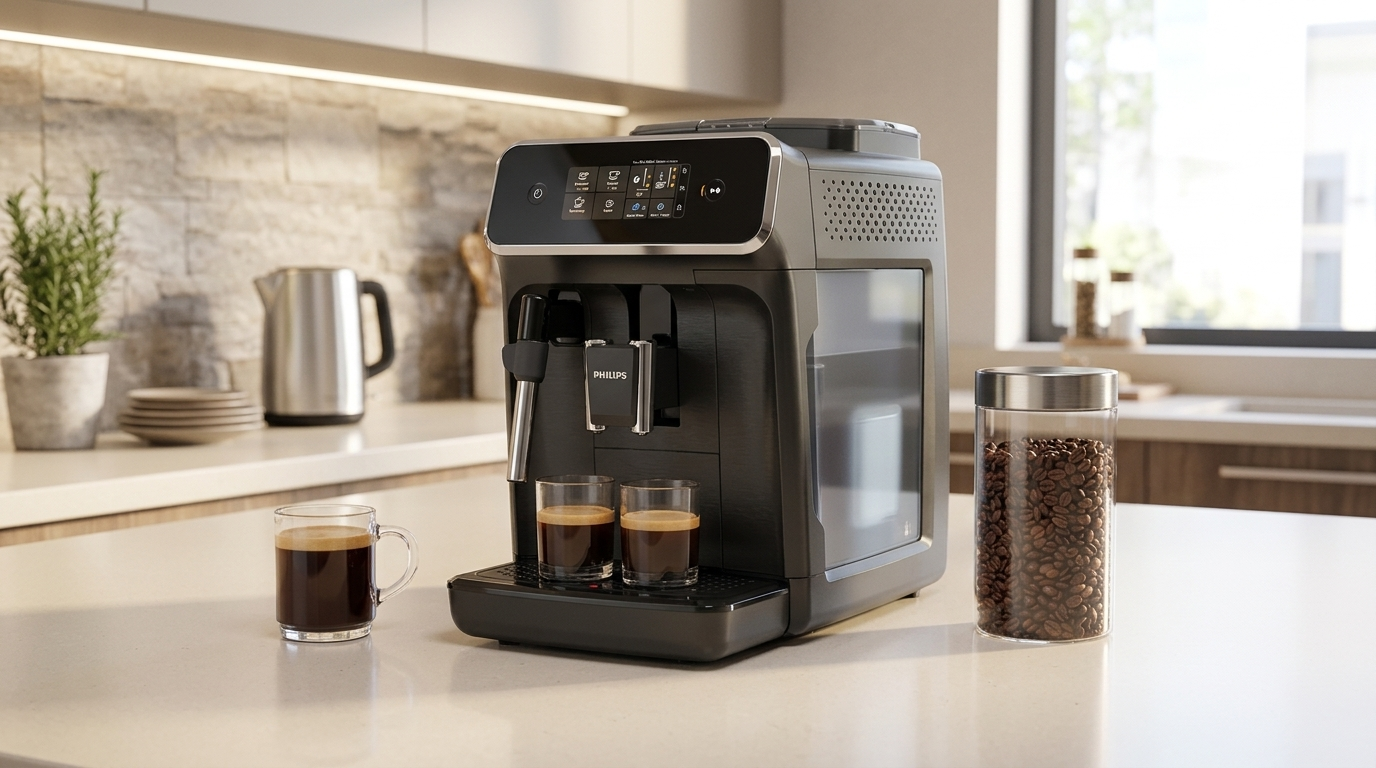
The 2200’s smallest, strongest shot was its most flavorful espresso.
The 2300 made a smooth, balanced shot with the same easy-drinking character. Its crema faded a little faster than I expected, but the puck stayed consistent through all four weeks.
Temperature was the clearer difference. With a cold cup at default settings, the 2300’s espresso measured about 149°F at the top, while the 2200’s landed around 154 to 158°F.
Neither is scalding, and that is fine for flavor. If you like your espresso piping hot, though, you will notice it on the 2300 unless you warm the cup first.
Espresso temperature at the top of the cup
Measured right after brewing, cold cup, default temperature.
My espresso ratings
My scores out of 10 for body, crema, flavor and consistency.
The 2300 scored a hair higher overall because its shots were a little more consistent day to day. The 2200 still made the slightly hotter, richer small shot when I dialed it in.
| What you taste | Likely cause | First fix on either machine |
|---|---|---|
| Sour, thin, watery | Under-extraction✕Under-extractionWhen water does not pull enough flavor out of the coffee. The shot tastes sour, thin and watery. | Grind one step finer, smallest size |
| Bitter, harsh, drying | Over-extraction | Grind one step coarser |
| Pale crema that fades fast | Stale beans | Use beans within a few weeks of roasting |
| Lukewarm shot | Cold cup | Rinse the cup with hot water first |
Our tip: Use the strongest setting with the smallest size on both machines, because that combination gave me the fullest, sweetest espresso every time.
Long coffee and americano
Neither machine has an americano button, so the question is how good the long coffee is and how easily you can fake an americano.
The coffee button on both pushes more water through the grounds. On the 2200, the medium size with the strongest setting gave about 115 ml, or 3.9 ounces, with a crema on top.
It was smooth and easy to drink, but with only about 7 grams of coffee in the chamber, the bigger sizes started to taste thin. That is a dose problem, not a recipe problem.
My fix on both machines was the same. I pulled a double espresso at the smallest size, then topped it up with about 120 ml of hot water from the spout.
That keeps the extraction short and sweet and only adds water afterwards. It tasted rounder than the long coffee every single time and avoids the bitter, drying notes you get from pushing too much water through too little coffee.
The 2300 is a little quicker here, because its double espresso took about 1 minute 25 seconds and its single coffee about 48 seconds, timed with a stopwatch on a warm machine.
Our tip: Make big black coffees as a double espresso topped up with hot water, because it tastes fuller than the long coffee button on either machine.
Milk drinks: steam tip vs LatteGo
This is the whole comparison in one section. Everything else is close, and here the two machines take completely different approaches.
Philips 2200: a frother you can learn on
The 2200’s frother looks like a basic Panarello✕Panarello wandA steam wand with a plastic or metal sleeve that sucks in air through a small hole, so it makes big, airy foam with almost no skill needed. wand. With the sleeve on, it pulls air in through a hole at the top and makes big, airy foam with almost no skill.
Pull the sleeve off, and you find a single-hole steam tip underneath. That is the trick nobody tells you about, and it turned this budget machine into my favorite way to make a flat white at home.
With the bare tip, I aimed just off center to start a whirlpool, let in air for only 2 to 3 seconds, then lowered the tip slightly and let the milk spin. I stopped at 60 to 65°C, or 140 to 150°F, when the pitcher got too hot to hold.
The result was real microfoam✕MicrofoamMilk foam with bubbles so small you can barely see them. It feels silky and glossy, which is what a good flat white or latte needs., glossy enough to pour. My progress over four weeks of daily practice went like this.
My latte art progress on the 2200’s bare steam tip, daily practice.
A flat white with the bare tip took me about 3 minutes, including wiping and purging the wand. It is a ritual, not a shortcut.
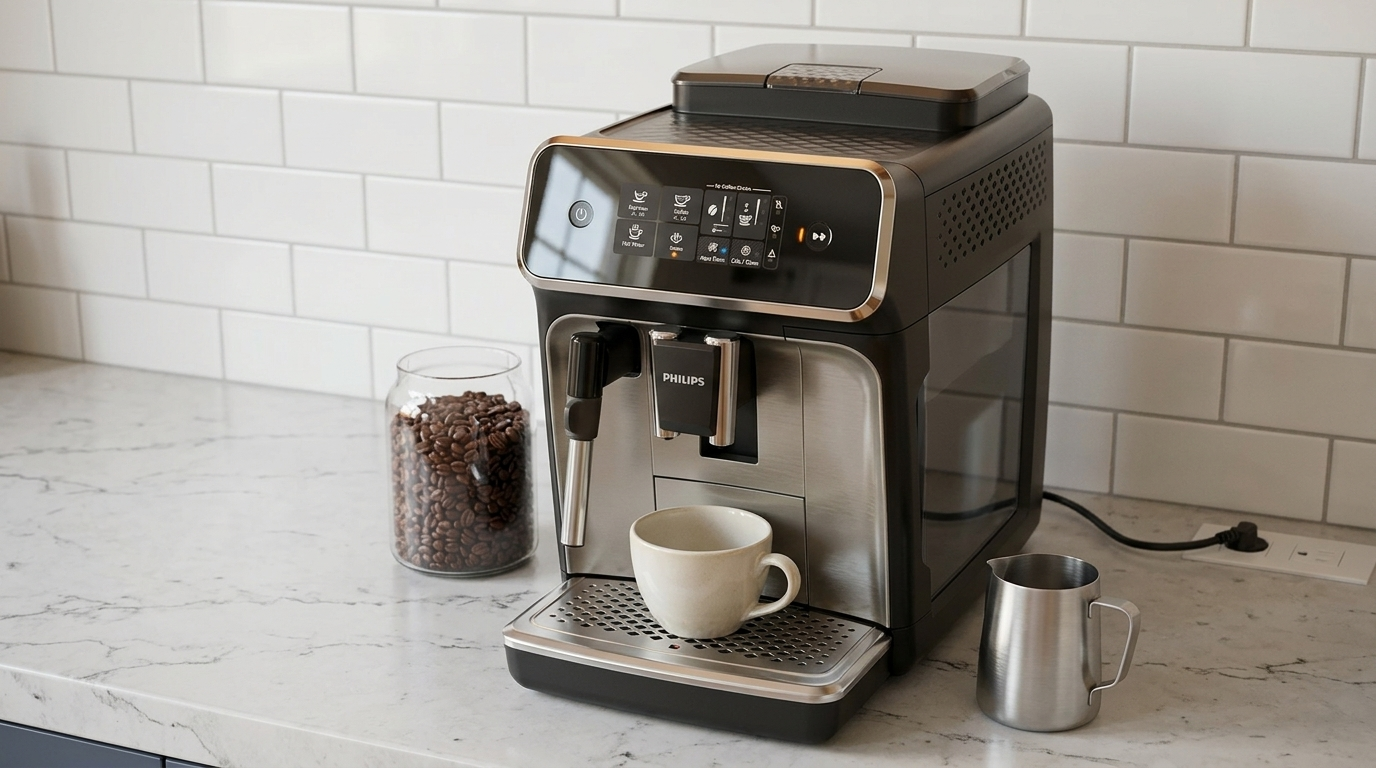
With the sleeve off, the 2200’s steam tip can make silky microfoam for flat whites.
Philips 2300: one touch and done
The Philips 2300 uses the LatteGo✕LatteGoPhilips’ two-part milk jug. Milk is pulled up and mixed with steam and air inside the jug itself, so there are no tubes to clean. The parts snap apart and go in the dishwasher. system. You fill the jug, click it onto the front, press the cappuccino icon and walk away.
My cappuccino took about 72 seconds from a warm machine. The milk landed in the 140 to 150°F band that tastes sweetest, and the foam was creamy and fairly fine.
It is not true microfoam, though. It is a little thicker and airier than what I could steam by hand on the 2200, so you get a café-style cappuccino rather than a silky flat white.
The jug holds about 260 ml, or 8.8 ounces. Fill it only to the line for the drinks you are making, and store any leftover milk in the fridge with the lid on.
How each milk foamed
My ratings out of 10 for texture and stability on the 2300’s LatteGo. On the 2200’s bare tip, whole milk was easiest, oat close behind and skim hardest.
Why does temperature matter so much? Research from the University of Camerino found the best-distributed bubbles in pasteurised milk foam at around 60°C, which is right where both of these machines landed in my cups.
| Milk drink | Philips 2200 | Philips 2300 |
|---|---|---|
| Cappuccino | Sleeve on, about 150 ml milk | One touch, about 72 seconds |
| Flat white | Bare tip, about 120 ml milk | Not possible |
| Latte | Bare tip, about 200 ml milk | Cappuccino plus extra milk |
| Cortado | Bare tip, about 60 ml milk | Not possible |
| Latte art | Yes, with practice | No |
| Foam texture | Your choice, airy to silky | Creamy, fairly fine |
Our tip: Keep the 2200’s sleeve for quick cappuccinos and pull it off for flat whites, because the bare tip is what makes milk silky enough to pour.
Find Out the Price TodayHot water and tea
Both have a hot water function, and both are fine for a cup of tea or topping up an americano.
On the 2200, I measured the hot water at about 183°F at the top of the cup. That suits black and herbal tea, and it is a little hot for green tea.
The 2300’s hot water button behaves the same way for everyday use. I used it for americanos and for rinsing cups, which is the trick that fixed its slightly cool espresso.
| Tea type | Ideal water | Philips 2200 | Philips 2300 |
|---|---|---|---|
| Green tea | 158–176°F | A bit hot, let it cool | Fine for most |
| White tea | 167–185°F | Yes | Yes |
| Herbal tea | 194–212°F | Fair | Fair |
| Black tea | 203–212°F | A touch cool | A touch cool |
If tea is a big part of your day, neither replaces a kettle. For a quick cup, both do the job.
Speed
The 2300 is the faster machine for milk drinks by a wide margin, simply because it does the milk for you.
Stopwatch times on a warm machine. The 2200 flat white includes steaming, wiping and purging.
For a single espresso, the two felt the same. For a cappuccino before work, the 2300 saved me about two minutes a day.
Cleaning and upkeep
On the coffee side, both are identical and easy. Each rinses itself when it starts and shuts down, and each has a removable brew group that you rinse under cold water with no soap.
To pull it out, you remove the tank, open the service flap, slide the lock and lift. Philips recommends a weekly rinse and a little food-safe grease on the rails every couple of months, and the grease comes in the box.
Neither machine reminds you to do this, so I set a weekly phone alarm. The grounds drawer holds about 12 pucks on both.
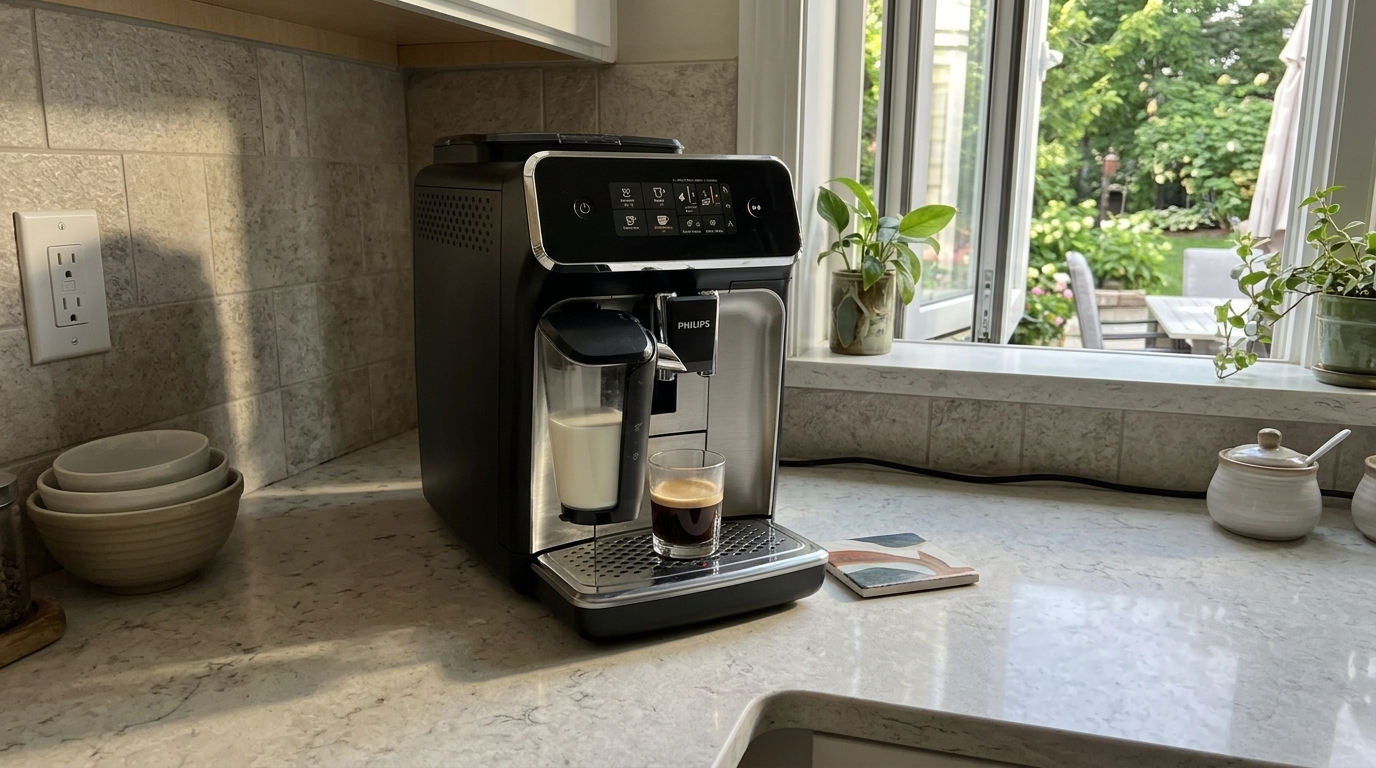
The LatteGo jug comes apart in two pieces and goes straight in the dishwasher.
The milk side
This is where the 2300 earns its keep. After each cappuccino, I rinsed the LatteGo jug under the tap for about 10 seconds, and at the end of the day the two parts went in the dishwasher.
On the 2200, I wiped the steam tip straight after every drink and purged it for a second. Once a day I pulled the sleeve off and rinsed it, because dried milk inside the air hole ruins the foam.
Neither has milk tubes to clean, which is the real time saver. A machine with a tube-and-carafe system took me about 8 minutes a day in comparison.
My estimate of hands-on time per day, not counting automatic rinses.
| When | Philips 2200 | Philips 2300 |
|---|---|---|
| After milk drinks | Wipe and purge the tip | 10-second jug rinse |
| Daily | Empty tray, drawer, sleeve rinse | Empty tray, drawer, jug in dishwasher |
| Weekly | Rinse the brew group | Rinse the brew group |
| Every 2 months | Grease the brew group | Grease the brew group |
| When prompted | Change AquaClean or descale | Change AquaClean or descale |
With the AquaClean filter swapped when the machine asks, Philips says you can go up to 5,000 cups before descaling✕DescalingRunning a mild acid through the machine to dissolve the mineral scale that hard water leaves behind in the heater and pipes.. Without it, expect hundreds of cups on soft water and far fewer on very hard water.
Our tip: Set a weekly phone reminder to rinse the brew group, because neither machine will ask you and a dirty group is the fastest way to stale-tasting coffee.
Noise
The 2300 has Philips’ SilentBrew✕SilentBrewPhilips’ name for extra sound insulation around the grinder and pump. Philips claims it is about 40% quieter than its earlier machines. technology, and you can hear it. Its grinder measured about 71 dB on a sound meter app at half a meter.
The 2200’s grinder is the louder of the two by ear, a sharp burst of about 10 seconds that cut through the whole apartment in the morning.
The twist is the milk. The 2300’s LatteGo frothing hit about 79 dB, louder than anything else either machine does. The 2200’s steam tip makes a hiss that rises as the milk heats, but it never felt as harsh.
Measured with a sound meter app at about 20 inches. A normal conversation is about 60 dB.
So the quietest morning routine depends on what you drink. Espresso drinkers get the calmer start on the 2300, and cappuccino drinkers get a loud 72 seconds either way.
Our tip: Make your espresso first and your cappuccino last on the 2300, or close the kitchen door while the milk runs, because frothing is the loudest part of its day.
Water, beans and supplies
Both machines use the same 1.8-liter tank, the same 275-gram hopper and the same AquaClean filters, so running costs are almost identical.
Here is roughly how far one full tank went in my testing, allowing for rinse water.
Rough maths from my testing. Your numbers depend on cup size.
In my two-person household, a tank lasted about two days on both machines. The tank slides out from the front, so refilling took seconds.
Fresh beans made the biggest difference of anything I tried. Medium and medium-dark espresso blends suited both grinders, and a blend with a little Robusta gave the 2300 more crema.
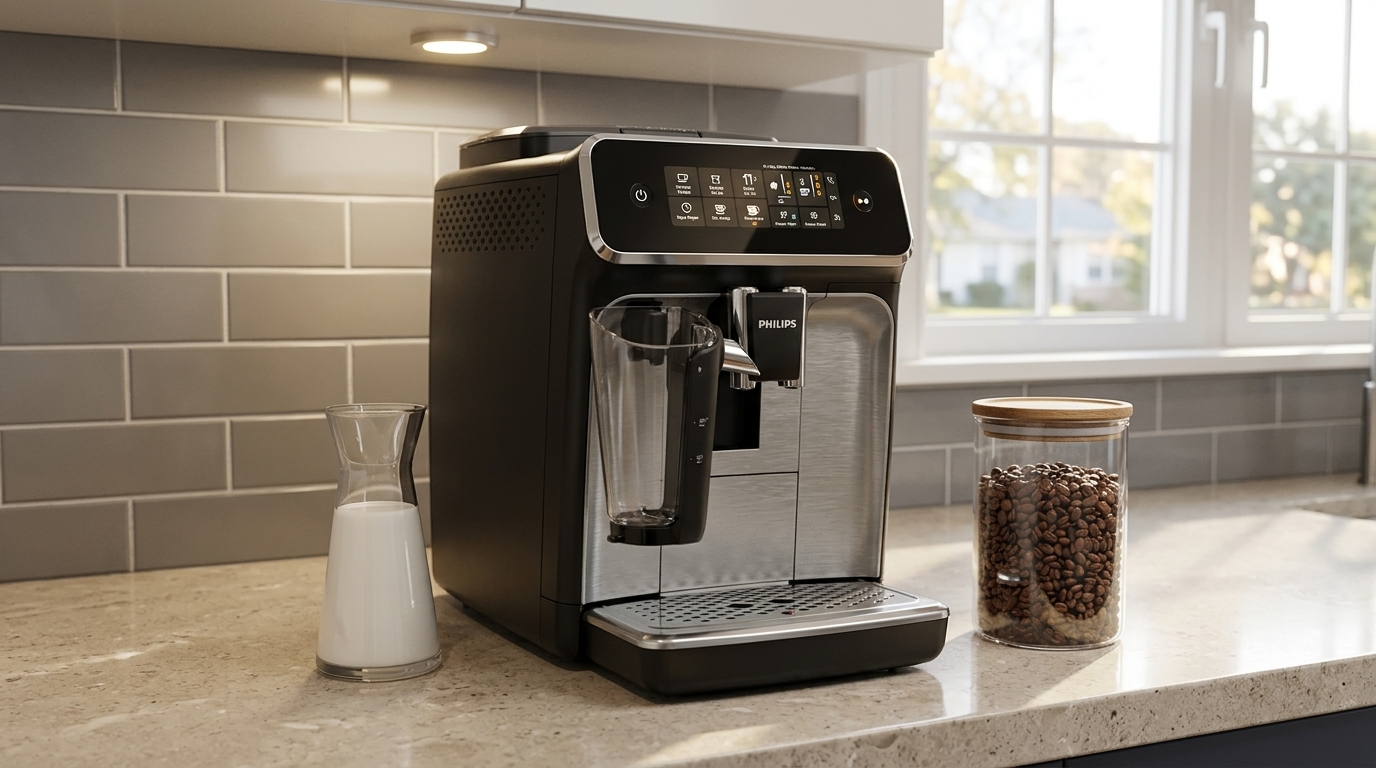
Same tank, same hopper, same filters: running costs are almost identical.
| Bean type | Philips 2200 | Philips 2300 |
|---|---|---|
| Medium-dark blend | Best all-rounder, setting 4–6 | Best espresso and cappuccino |
| Medium single origin | Brighter americanos | Good long coffee at default grind |
| Light roast | Sour unless ground fine | Sour unless ground fine |
| Very dark, oily | Avoid | Avoid |
Avoid oily or flavored beans on either machine. They gum up ceramic burrs and the brew group over time, and the spent grounds make a good addition to the compost bin instead of the trash.
Our tip: Push the water tank fully home after every refill, because both machines refuse to draw water if it sits even slightly proud.
Real-life scenarios
Specs only go so far. These are the situations where one machine clearly pulled ahead during my testing.
The bare steam tip made silky microfoam that poured cleanly. The 2300 simply cannot make one.
Press one icon, about 72 seconds, rinse the jug for 10 seconds. The 2200 took about three minutes with cleanup.
By week four I was pouring hearts and simple tulips. A stainless pitcher was the only extra I needed.
One-touch and consistent, though cappuccinos come one at a time.
Slightly narrower and tidier, with no frother arm sticking out to the side.
Its hot water came out at about 183°F, which is a little hot but easy to let cool, and the steam arm gave me more control overall.
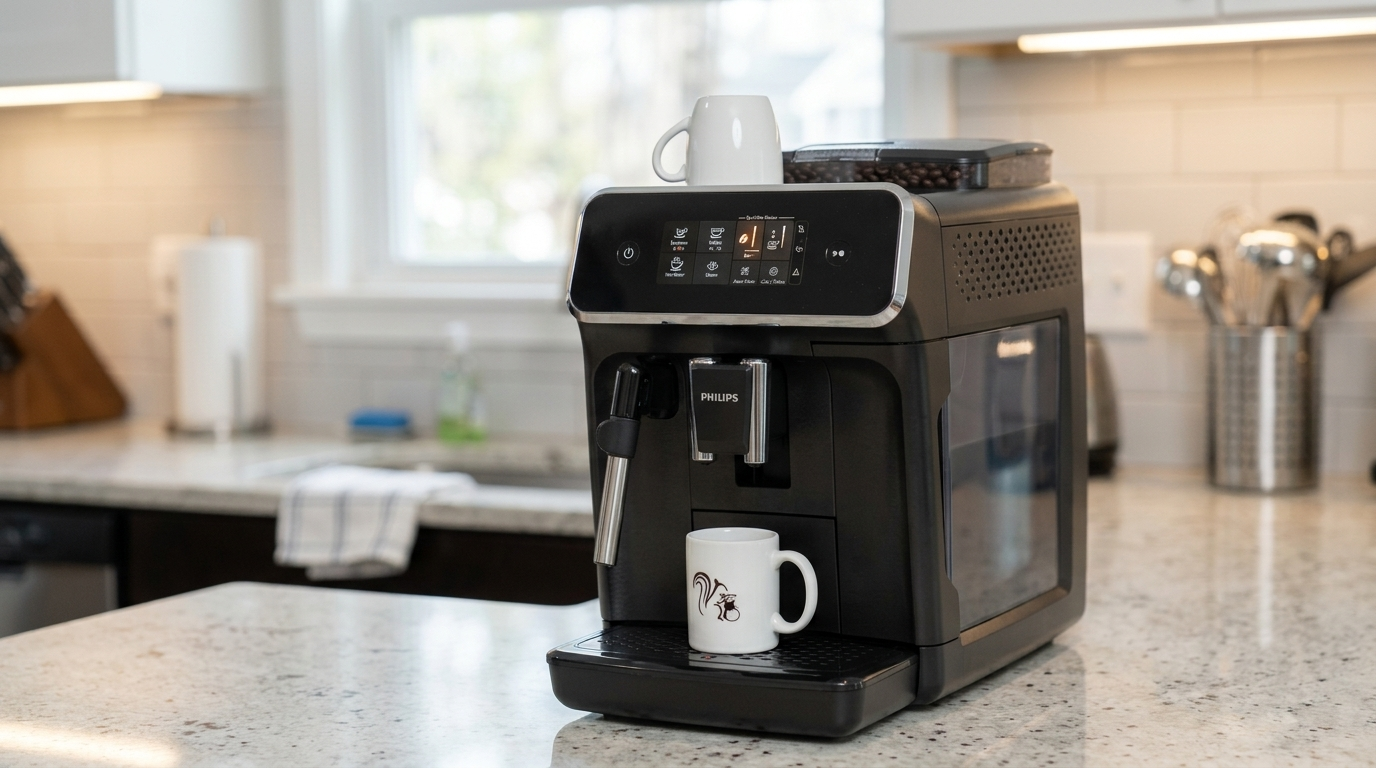
For hands-on milk drinkers, the 2200 is the more rewarding machine.
My scorecard
These are my own scores out of 10 from my single reviews of each machine.
Philips 2200
Philips 2300
Overall, I rate the 2300 8.2 and the 2200 7.9. The 2300 is easier for more people, and the 2200 is more rewarding for one person who enjoys the craft.
See How Much You’ll SaveWhich one is right for you?
4 quick questionsWhich one should you buy?
It comes down to one question: do you want to make milk drinks, or do you want the machine to make them for you? Answer that honestly and the choice makes itself. If none of these is quite right for you, my guide to the best Philips espresso machines covers the rest of the range I’ve tested.
If you are still weighing up the wider Philips range, see my Philips 2200 vs 3200 comparison, or read my full Philips 2200 review and Philips 2300 review.
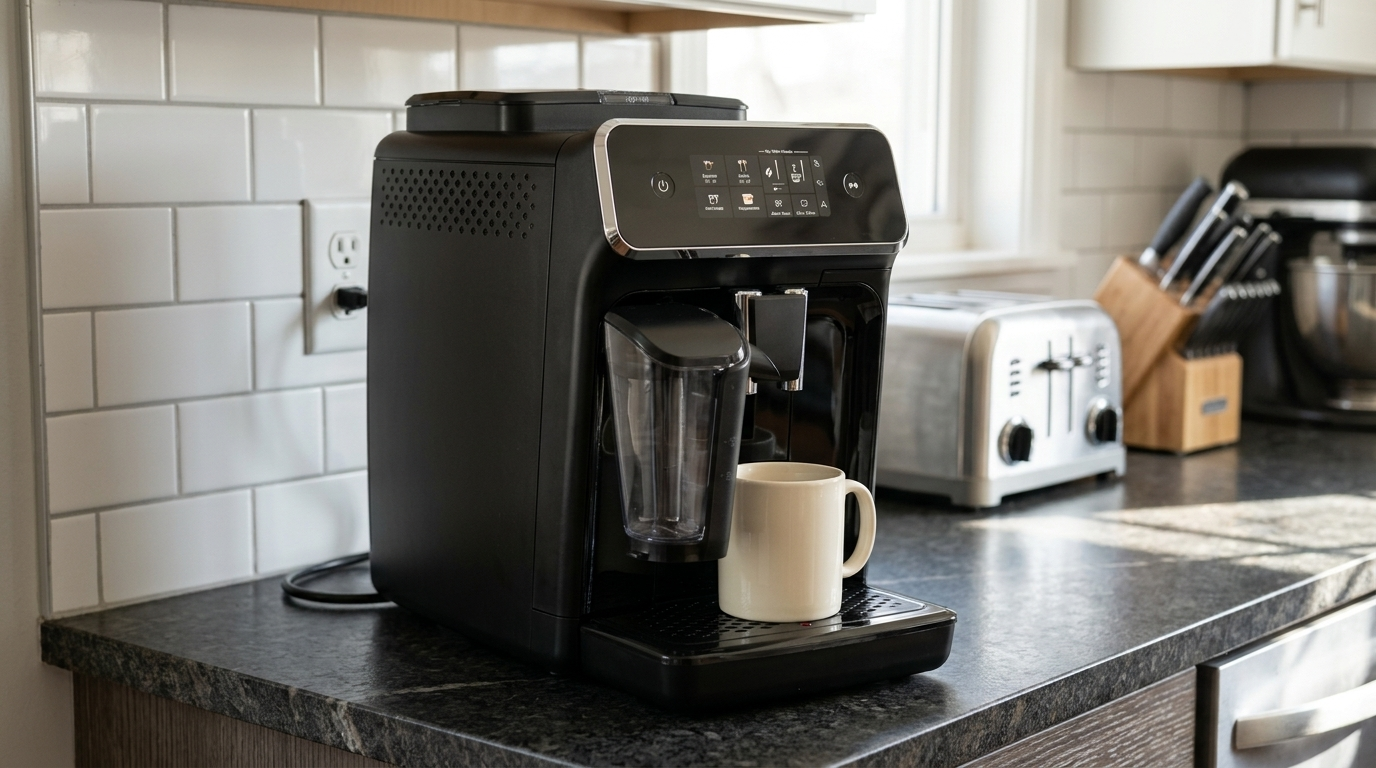
For one-touch cappuccinos in a busy home, the 2300 earns its place on the counter.
- You want to learn milk steaming and latte art
- You drink flat whites, cortados or lattes
- You like your espresso a little hotter
- You want the AquaClean filter in the box
- You want a one-touch milk drink
- You never want to handle a milk pitcher
- You want the quietest grinder
- You drink a cappuccino most days
- You hate cleaning milk tubes and wands
- Several people share the machine
- You want the slimmest footprint
- You want silky microfoam for latte art
- Frothing noise would wake someone
- You want a latte or flat white button
For most homes, my pick is the Philips 2300. The one-touch LatteGo cappuccino, the quieter grinder and the 10-second jug rinse make it the easier machine to live with, and it is the one my household reached for most. Use a wide cup and warm it first, and you fix its two small weaknesses.
The Philips 2200 is the smarter buy if you want to learn the craft. Pull the sleeve off its frother and you get a real steam tip that makes silky microfoam, hotter espresso and a proper flat white. For that drinker, the 2300’s one-touch button takes away the fun part.
Whichever you choose, buy fresh beans, use the smallest, strongest espresso setting and rinse the brew group every week. Both machines reward a little care with years of good coffee.
Philips 2200 vs 2300 specifications
From manufacturer specifications and my own testing.
| Philips 2200 | Philips 2300 | |
|---|---|---|
| Model | Philips 2200, EP2220/14 | Philips 2300, EP2330/10 |
| Type | Fully automatic, classic frother | Fully automatic, LatteGo |
| Drinks | Espresso, coffee, hot water, steam | Espresso, coffee, cappuccino, hot water |
| Pump pressure | 15 bar | 15 bar |
| Grinder | 100% ceramic, 12 settings | 100% ceramic, 12 settings |
| Strength levels | 3, plus pre-ground | 3, plus pre-ground |
| Dose measured | About 6.0–7.1 g | Same brew group design |
| Milk system | Frother with removable sleeve | LatteGo, about 260 ml jug |
| Noise | Grinder loud by ear | About 71 dB grinder, 79 dB frothing |
| Water filter | AquaClean, included | AquaClean compatible |
| Bean hopper | 275 g, 9.7 oz | 275 g, 9.7 oz |
| Water tank | 1.8 L, about 61 fl oz | 1.8 L, about 61 fl oz |
| Grounds container | About 12 servings | About 12 servings |
| Spout height | About 3.3–5.7 in | About 3.3–5.7 in |
| Dimensions (W x H x D) | 9.7 x 14.6 x 17 in | 9.4 x 14.6 x 16.9 in |
| Weight | About 16.5 lb | Similar |
| Warranty | 2 years limited | 2 years limited |
How I tested and compared them
I used each machine as my everyday coffee maker for four weeks, making espresso, long coffee, americanos and tea water on both, cappuccinos on the 2300 and hand-steamed flat whites, lattes and cortados on the 2200.
I weighed doses and yields, measured espresso, milk and hot water temperatures with a probe thermometer, timed drinks with a stopwatch and measured noise with a sound meter app at about half a meter.
I worked through the grind range with three roasts, foamed whole, semi-skimmed, almond and barista oat milk, ran every cleaning routine and then compared my notes with Philips’ specifications and owner documentation.
- Coffee: dose, crema, body and consistency.
- Milk: foam texture, temperature and drink range.
- Workflow: controls, menus and daily routine.
- Ownership: noise, cleaning, water care and footprint.
Philips 2200 vs 2300 FAQ
Is the Philips 2300 worth it over the 2200?
Yes, if you want one-touch cappuccinos and easy cleaning. The 2300 adds a LatteGo cappuccino, a quieter SilentBrew grinder and dishwasher-safe milk parts. If you would rather steam milk yourself for flat whites and latte art, the 2200 is the better buy.
What is the main difference between the Philips 2200 and 2300?
The milk system. The 2200 has a classic frother with a sleeve that pulls off to reveal a steam tip. The 2300 has a two-part LatteGo jug that makes a cappuccino at one touch. The grinder, tank, hopper and pump are the same.
Can the Philips 2200 make latte art?
Yes. Take the sleeve off the frother and use the bare steam tip. In my testing I went from blobs in week one to hearts and simple tulips by week four.
Can the Philips 2300 make a latte or flat white?
Not at one touch. It makes a cappuccino, and the foam is creamy but too thick for latte art or a true flat white.
Which makes better espresso?
They are very close. The 2300 was slightly more consistent, and the 2200’s shots were a little hotter, at about 154 to 158°F against 149°F. On both, the smallest, strongest setting tasted best.
Which one is quieter?
The 2300 has the quieter grinder, at about 71 dB. Its LatteGo frothing is the loudest thing either machine does, at about 79 dB.
Are the Philips 2200 and 2300 the same size?
Almost. Both are about 14.6 inches tall and 17 inches deep. The 2300 is about 9.4 inches wide and the 2200 about 9.7 inches.
Can you remove the brew group?
Yes, on both. Rinse it weekly under cold water with no soap and grease the rails every couple of months.
Do they use the same water filter?
Yes, both use Philips AquaClean filters. The 2200 comes with one in the box.
Which is easier to clean?
The 2300. The LatteGo jug needs a 10-second rinse after each drink and goes in the dishwasher. The 2200’s steam tip needs a wipe and purge after every drink.

- Our hands-on Philips 2200 review
- Our hands-on Philips 2300 review
- Philips product specifications and owner documentation
- General espresso brewing and maintenance guidance
- Effect of milk processing and steam frothing conditions on microfoam formation, University of Camerino
- A living lexicon for brewed coffee, University of Oregon
- Composting and Coffee Grounds, Cornell University