Can You Freeze Coffee? The Right Way to Freeze, Thaw and Brew Coffee Beans
Too many open bags and a special coffee you want to save for later? Freezing is the best answer I've found, but done badly it can do more harm than good. I've been freezing coffee for years, from everyday beans to rare lots. Here's why freezing works, the biggest mistake to avoid and the best methods to freeze, thaw and brew coffee.
We choose products independently. We may earn a commission through links on this page; your price stays the same. Affiliate policy
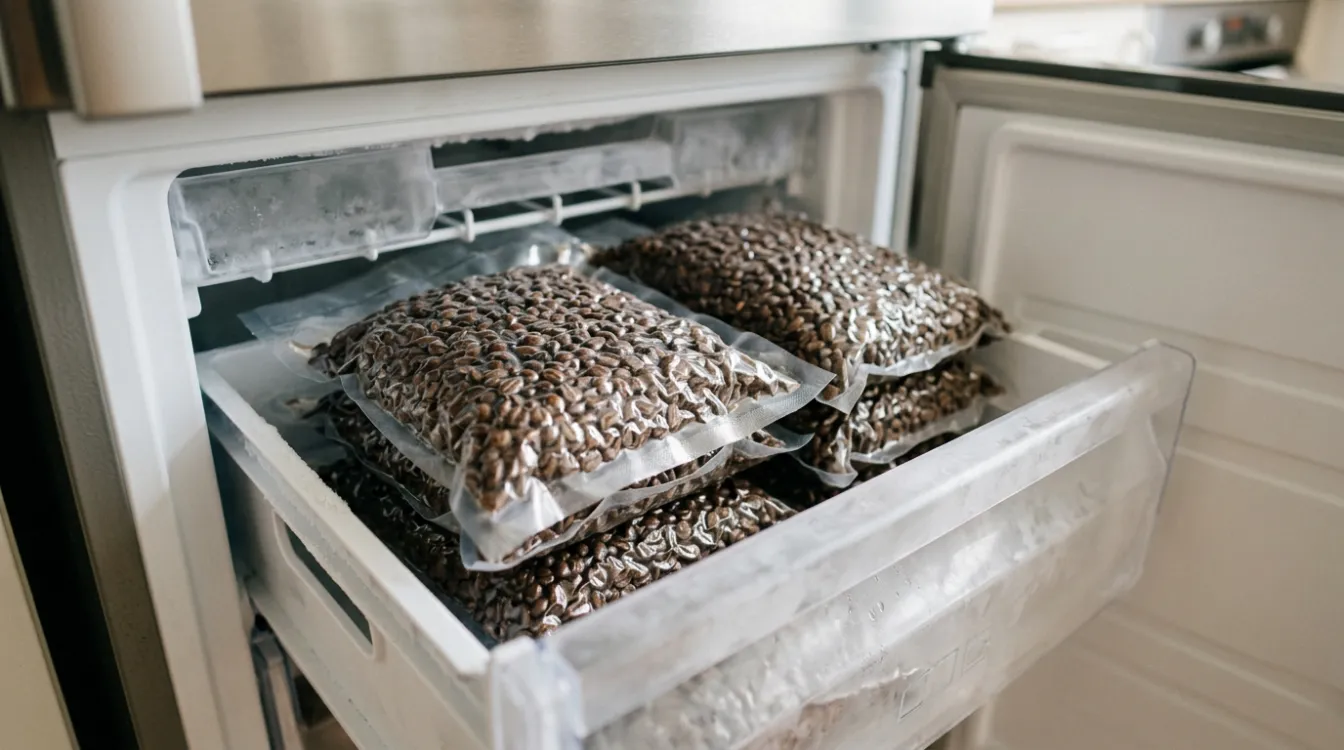
Yes, you can freeze coffee, and it's one of the best ways to keep beans fresh for weeks or months. The biggest enemy is condensation, which forms when cold beans meet warm, humid air, so freeze whole beans in airtight portions and avoid taking the same bag in and out. The best methods are vacuum-sealed portions or single-dose tubes. Keep coffee sealed until it reaches room temperature, or grind it straight from frozen. Avoid the fridge, protect coffee from freezer odors and keep a brewing record so you can brew it well later.
Why freeze coffee at all?
There's a moment every coffee lover knows: you have three open bags on the counter, a new delivery on the way and a special coffee you'd love to save for later. Something is going to go stale.
Freezing is the best answer I've found. Done properly, it slows coffee's aging dramatically and keeps flavor and aroma close to how they were when you froze it. Done badly, it can do more harm than leaving the beans in the cupboard.
I've been freezing coffee for years, from everyday beans to rare lots I wanted to stretch out over months. In this guide I'll explain why freezing works, the biggest mistake to avoid, the best methods from simplest to most precise, and how to thaw and brew frozen coffee for great results.
Freezing coffee at a glance
| Question | Short answer |
|---|---|
| Can you freeze coffee? | Yes, it's one of the best ways to keep it fresh long-term |
| Whole beans or ground? | Whole beans are best |
| Biggest enemy? | Condensation from temperature changes |
| Best packaging? | Airtight portions: vacuum bags, tubes or sealed containers |
| How to thaw? | Keep it sealed until it reaches room temperature, or grind straight from frozen |
| Refreezing? | Avoid repeated freezing and thawing |
| Fridge? | Not recommended; it's humid and full of odors |
Why coffee goes stale, and why freezing helps
After roasting, coffee starts changing immediately. It releases carbon dioxide, loses volatile aroma compounds and slowly reacts with oxygen. Heat, moisture and light speed all of this up.
At room temperature, most roasted coffee tastes best within a few weeks of roasting. After that, it gradually becomes flat, papery and less aromatic. My guide on how to store coffee beans covers everyday storage.
Freezing slows these chemical reactions dramatically. Cold temperatures reduce the movement of molecules, so aromas escape more slowly and oxidation happens at a crawl. That's why well-frozen coffee can taste surprisingly fresh after weeks or even months.
The biggest enemy: condensation
Simply putting a bag of coffee in the freezer isn't enough, and the reason is condensation.
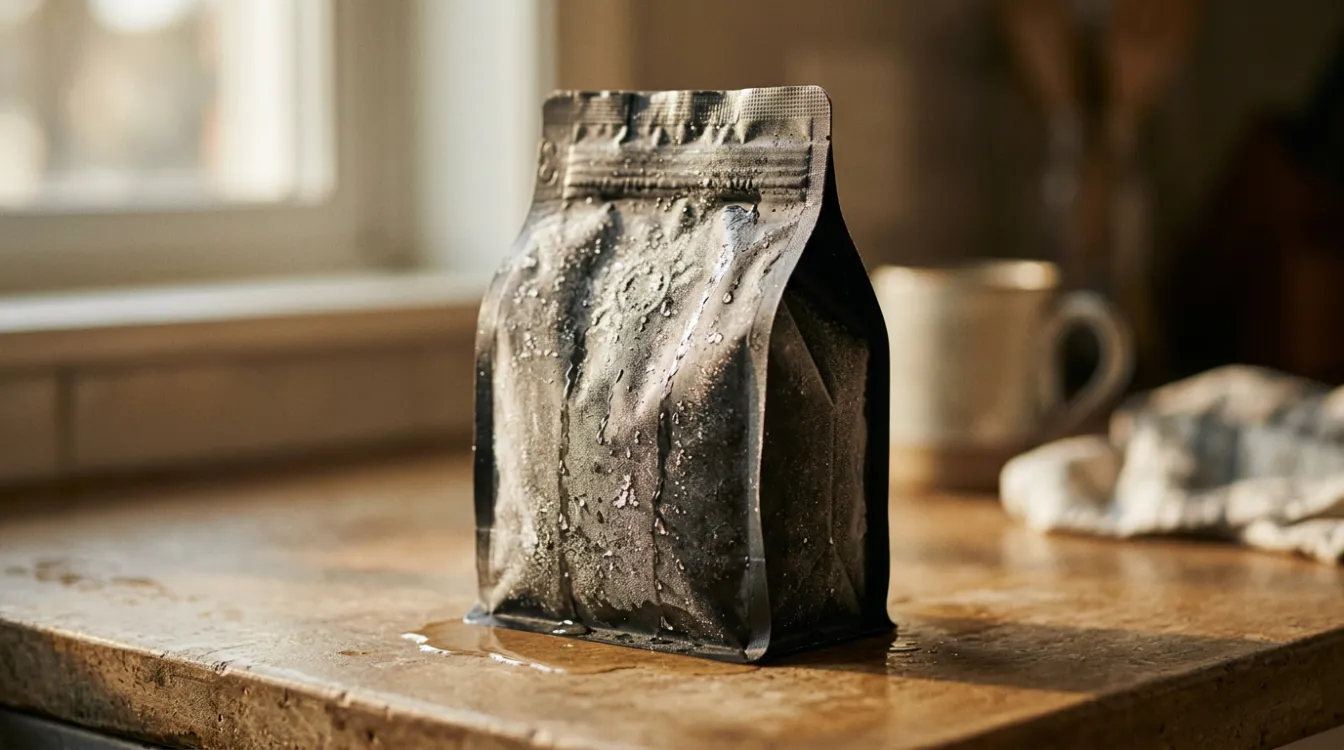
When cold beans meet warmer, humid air, moisture condenses on them, just like water forming on a cold glass on a summer day. That moisture can damage flavor, encourage staling and, in the worst cases, create conditions for mold.
The most common mistake I see is people taking a bag out of the freezer every morning, scooping some beans and putting it back. Each time, the beans warm slightly, moisture condenses and the cycle repeats. After a few weeks, that coffee can taste worse than if it had been left in the cupboard.
Key principles to avoid it:
- Keep coffee protected from moisture.
- Minimize air in the packaging.
- Use airtight containers or bags.
- Avoid repeated temperature changes.
- Divide coffee into portions before freezing.
- Protect it from freezer odors.
- Let frozen coffee reach room temperature before opening, unless you grind it straight from frozen.
The good news is that avoiding condensation is easy once you know the rule: what goes into the freezer should come out only once, in a portion you'll use completely. Everything else in this guide builds on that idea.
Prepare your freezer first
It sounds fussy, but the condition of your freezer matters. Ice building up on the walls and floor is a sign of excess moisture, and that moisture can find its way into packaging that isn't perfectly airtight.
If your freezer has a lot of ice buildup, defrosting it first is worthwhile:
- Turn it offSwitch off the freezer and remove all items.
- Keep food coldStore frozen food in coolers or insulated bags with ice packs.
- Speed up meltingPlace a bowl of hot water inside and leave the door open.
- Remove ice and waterClear away melted ice and wipe everything down.
- Dry completelyMake sure the interior is dry before turning it back on.
Once the freezer is clean, dry and cold, it's ready for coffee.
Method 1: freezing coffee in its original bag
The simplest method is to freeze an unopened bag of coffee as it is. Many specialty coffee bags are fairly airtight, with a one-way valve and a sealed top.
This works well when:
- You have an extra bag you won't open for a while.
- You'll use the whole bag fairly quickly once you take it out.
If the bag has been opened, press out as much air as possible and reseal it tightly. If it doesn't reseal well, put it inside a freezer bag or airtight container.
The key rule: once you take the bag out to use it, don't put it back. Let it come to room temperature while still sealed, then use it like a fresh bag over the following couple of weeks.
This method is cheap and easy, but it's not ideal if you like to drink several coffees in rotation or only use a particular coffee occasionally.
Method 2: single-dose tubes
My favorite method for espresso is to divide coffee into single doses before freezing. Small airtight tubes, each holding around 0.8 ounces of beans, are perfect for a single espresso.
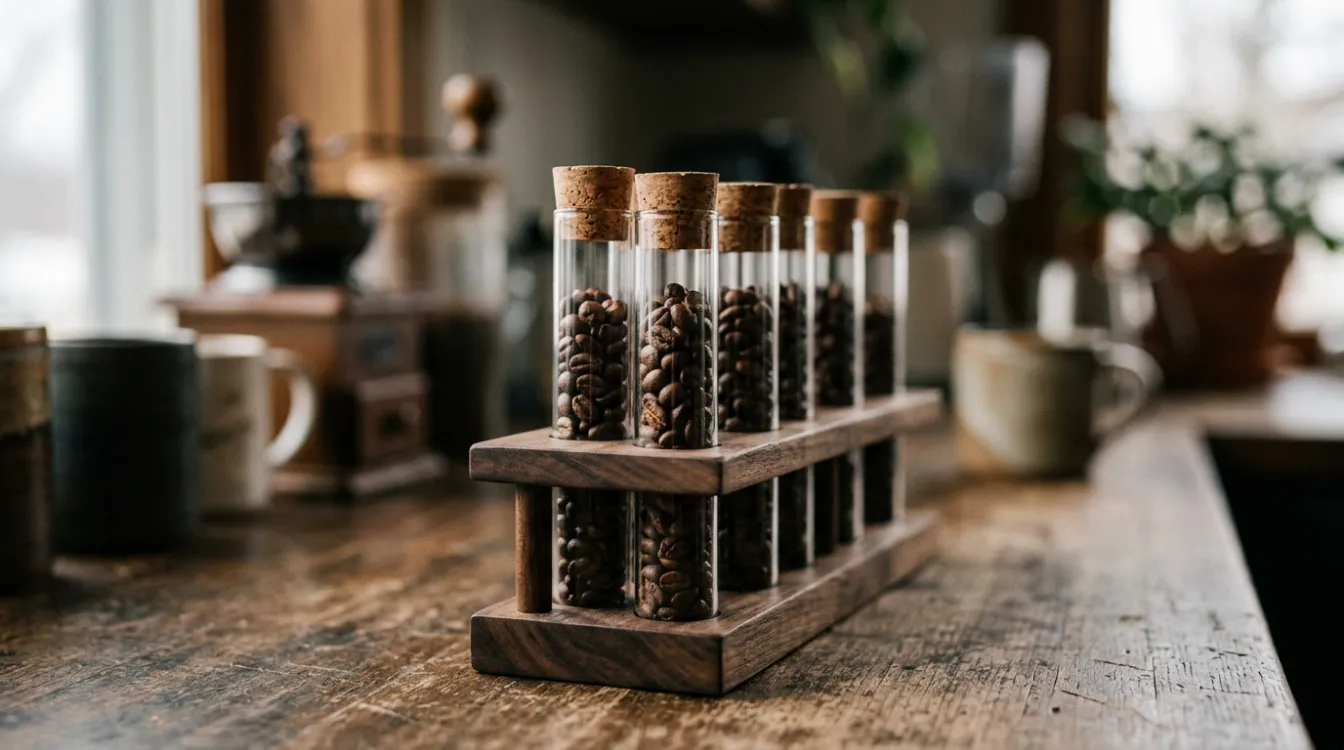
The big advantage is that each dose stays sealed until you need it. You take out exactly one tube, and the rest of the coffee never sees a temperature change.
This is especially useful for decaf. If you mostly drink regular coffee but enjoy the occasional decaf in the evening, keeping a whole open bag of decaf means it goes stale. Frozen single doses solve that problem. My guide on whether decaf coffee is healthy explains why it's worth keeping a good decaf around.
How I do it:
- Choose the coffeePick beans you want to keep for later.
- Weigh the dosesWeigh each portion to your usual espresso dose.
- Fill the tubesUse clean, completely dry, airtight tubes.
- Seal tightlyMake sure every lid is properly closed.
- Organize and labelKeep coffees grouped together in a rack or box.
- FreezeStore them in the coldest, most stable part of the freezer.
A small rack or organizer makes this system easy to manage. You don't need to label every tube; labeling the first tube in a row of the same coffee is enough if you keep things organized.
Why single doses are worth the effort
Portioning coffee into tubes takes about ten minutes for a whole bag, and it pays off every time you brew. There's no guessing, no weighing in the morning and no repeated exposure to air and moisture. It's also a great way to keep a "library" of coffees: a few doses each of several origins, ready whenever you feel like a change. For anyone who enjoys trying different coffees but can't drink a full bag of each before it fades, this is the method I recommend most.
Method 3: vacuum-sealed portions
For long-term storage, vacuum sealing is one of the most effective options. A vacuum sealer removes most of the air from a bag before sealing it, which dramatically reduces oxidation.
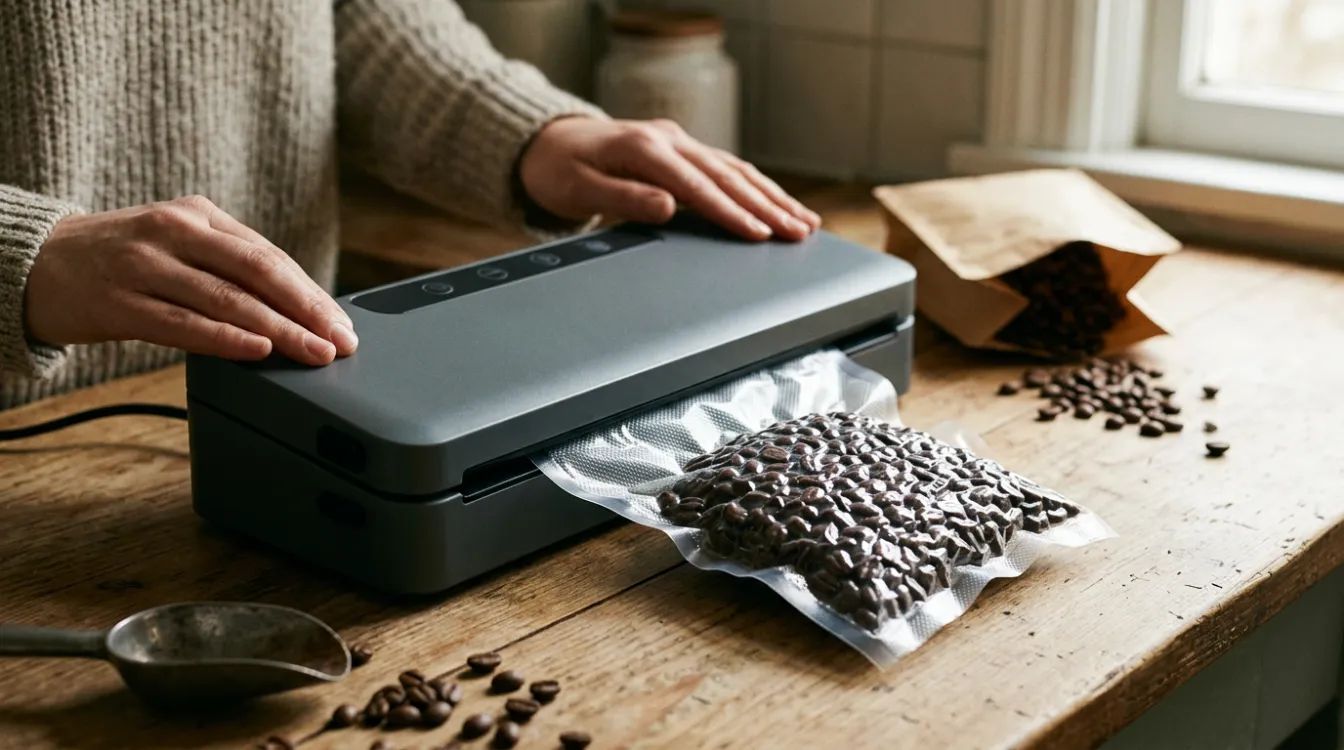
Vacuum sealers are fairly affordable, and you can buy bags in different sizes. Small bags work best for coffee, because they let you portion it into practical amounts.
- Pick your coffeeChoose the beans you want to preserve.
- Decide your doseWork out your usual brewing dose first.
- Weigh portionsDivide the beans into portions, for example three or four espresso doses per bag.
- Bag and sealPlace each portion in a vacuum bag, remove the air and seal.
- LabelWrite the coffee name, roast date and your best recipe.
- FreezeStore flat in the freezer.
Portioning several doses per bag avoids opening and resealing. When you take a bag out, you use it all within a day or two.
Why dose matters before freezing
Different coffees have different densities, so the same weight can take up different volumes in your espresso basket. That affects headspace, the gap between the coffee and the shower screen, especially on traditional pump machines. Working out the right dose for each coffee before freezing saves you time and wasted beans later.
Method 4: air-removing coffee containers
If you prefer reusable equipment to disposable bags, some coffee containers are designed to push air away from the beans, either with an internal plunger or a one-way valve system.
These can work well in the freezer as long as the seal is good. I froze a Brazilian coffee in one of these containers for about a month, and it still tasted sweet, nutty and lively when I brewed it, very close to how it was when I froze it.
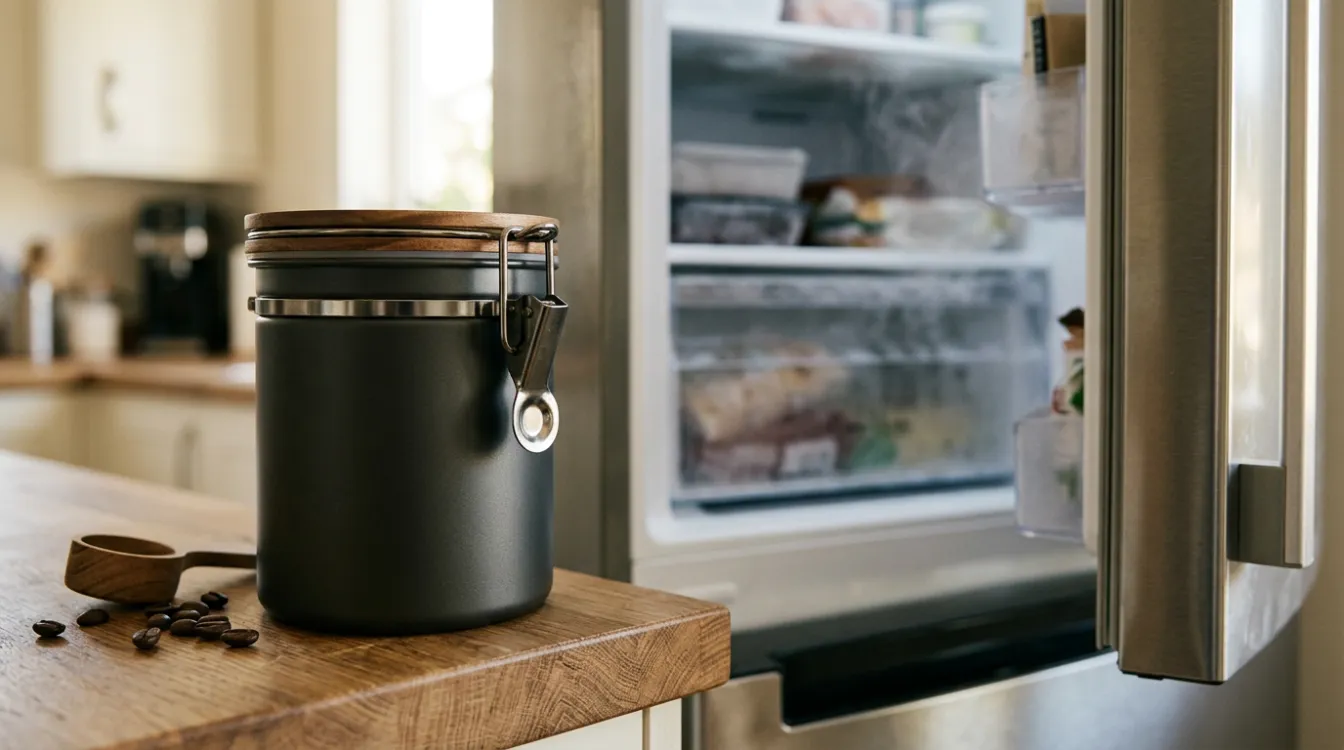
The same rule applies: avoid opening the container while the beans are cold, and don't keep moving it in and out of the freezer. These containers are best for coffee you'll use all at once after thawing.
Protecting coffee from freezer odors
Coffee absorbs smells easily. A freezer full of fish, meat, onions or leftovers can give poorly sealed coffee some very strange flavors. Nobody wants a garlic-scented espresso.
To protect it:
- Use truly airtight packaging.
- Put coffee portions inside a larger sealed plastic food container for an extra barrier.
- Keep coffee away from strongly scented foods.
- Clean up spills in the freezer promptly.
Some enthusiasts go as far as buying a small freezer just for coffee. It's a nice luxury but not necessary; good packaging does the job in a normal freezer.
How to thaw frozen coffee correctly
How you take coffee out of the freezer matters as much as how you put it in.
Option 1: thaw sealed
Take out the portion you need and leave it sealed until it reaches room temperature. This usually takes an hour or two for small portions. Once it's at room temperature, open and use it normally. This prevents condensation forming on cold beans.
Option 2: grind from frozen
Many coffee professionals and home baristas now grind beans straight from the freezer. Because the beans are sealed until the moment you pour them into the grinder, condensation has little chance to form before grinding. Some research suggests colder beans can even produce a slightly more uniform grind.
If you grind from frozen, you may need to adjust your grind setting slightly, as frozen beans can grind a little differently. Work quickly, and don't let frozen beans sit open on the counter.
Avoid refreezing
Coffee can technically be refrozen, but each freeze-thaw cycle adds handling and moisture risk. It's far better to freeze portions that you'll use completely once thawed.
The science behind freezing and grinding
Coffee researchers have studied what happens when beans are cooled before grinding. A study published in Scientific Reports in 2016 found that colder beans tended to produce a finer, more uniform grind, with a narrower spread of particle sizes. More uniform particles can mean more even extraction and, in some cases, better flavor clarity.
Since then, some specialty cafés and competition baristas have experimented with freezing single doses and grinding them cold. Not everyone finds a dramatic difference, but it's one reason grinding straight from frozen has become popular rather than frowned upon.
Freezing also slows the loss of volatile aroma compounds. Many of the molecules that give coffee its fruity, floral and sweet aromas are small and evaporate easily. At freezer temperatures, they escape much more slowly, which helps explain why well-frozen coffee can taste so fresh.
What freezer temperature is best?
A standard home freezer set to around 0°F is perfect for coffee. What matters more than the exact temperature is stability:
- Avoid storing coffee in the door, where temperatures swing each time it opens.
- Place coffee toward the back or bottom, where it stays coldest and most stable.
- Don't overload the freezer with warm food next to your coffee.
- If your freezer has a frost-free cycle, sealed packaging becomes even more important, because these cycles cause small temperature fluctuations.
Equipment for freezing coffee
| Item | Why it helps | Essential? |
|---|---|---|
| Airtight containers or resealable freezer bags | Basic protection from moisture and odors | Yes |
| Vacuum sealer and bags | Removes air for long-term storage | Recommended |
| Single-dose tubes and a rack | Perfect espresso portions | Optional |
| Large sealed plastic box | Extra odor barrier | Recommended |
| Kitchen scale | Accurate portions | Yes |
| Labels and a marker | Track coffee name, roast date and recipe | Yes |
| Notebook or brewing app | Keep your brewing ledger | Recommended |
You don't need everything at once. Start with airtight containers, a scale and labels, then add a vacuum sealer if you freeze coffee regularly.
Does roast level affect freezing?
All roast levels freeze well, but there are small differences:
- Light roasts are dense and age a little more slowly, and they often need more rest before they taste their best. Freezing after a week or two of rest works well.
- Medium roasts are easy to freeze at almost any point after resting.
- Dark roasts release oils and stale faster at room temperature, so freezing them sooner is especially helpful.
Whatever the roast, airtight packaging and minimal temperature swings matter far more than the roast level.
What about pods and instant coffee?
Coffee capsules and pods are already sealed in airtight, often nitrogen-flushed packaging, so they don't need freezing. Keep them in a cool, dry cupboard and use them before the best-before date.
Instant coffee is very dry and stable. It doesn't need freezing either; just keep the lid tight so it doesn't absorb moisture and clump.
How long does frozen coffee stay fresh?
There's no exact expiry date, because results depend on the coffee, the packaging and how stable your freezer is. But in my experience:
| Storage | Typical peak flavor window |
|---|---|
| Open bag in a cupboard | About 2-4 weeks after roasting |
| Sealed bag in a cupboard | A bit longer, depending on packaging |
| Original bag in the freezer | Several weeks to a few months |
| Vacuum-sealed portions in the freezer | Several months, often with little noticeable change |
| Single-dose tubes in the freezer | Several months if tightly sealed |
Freezing doesn't stop aging completely, so very long storage will still slowly dull a coffee. But I've brewed vacuum-sealed coffees after several months that tasted remarkably close to when I froze them.
When should you freeze coffee?
Timing matters. Freshly roasted coffee releases a lot of carbon dioxide for the first several days. Many roasters recommend letting coffee rest before brewing, especially for espresso.
My approach:
- For filter coffee: freeze after a few days of rest, once the coffee is tasting good.
- For espresso: freeze after one to two weeks of rest, when the coffee is at its best.
- For very fresh coffee you won't open soon: freezing early is still much better than letting it go stale.
The best time to freeze is when the coffee tastes the way you want to remember it.
Can you freeze ground coffee?
You can, but whole beans freeze better. Ground coffee has much more surface area, so it absorbs moisture and odors more easily and stales faster once thawed.
If you only have ground coffee:
- Freeze it in small airtight portions.
- Use each portion completely after thawing.
- Don't take a container of ground coffee in and out of the freezer.
Freezing green coffee for home roasting
Home roasters sometimes freeze green coffee to keep special lots fresh for longer. Green coffee is more stable than roasted coffee, but over many months it can lose some brightness and develop "baggy" or papery flavors.
If you freeze green coffee, vacuum seal it, let it return to room temperature before opening and roast it reasonably soon after thawing. For most home roasters, buying smaller amounts more often is simpler.
Freezing cold brew and concentrate
Cold brew concentrate freezes well, especially in ice cube trays. Frozen concentrate cubes are great for quick iced coffees: put a few in a glass and top with milk or water. They also make a good backup when you run out of fresh cold brew. My guide to the science of cold brew explains how to make it.
One more tip: when you thaw a portion of filter coffee, give it a short rest after opening, about the time it takes to boil your kettle, and brew as normal. If it tastes slightly flat compared with when you froze it, grind a touch finer or use a slightly hotter water temperature to bring back some sweetness and brightness. Small adjustments like this help frozen coffee taste its best.
Keep a brewing record for frozen coffee
Freezing preserves beans, but you also want to preserve the knowledge of how to brew them well. Different coffees need different grind settings, doses and times, and you might not brew a frozen coffee again for weeks or months.
I keep a simple brewing ledger with:
- Coffee name and roaster.
- Origin and process.
- Roast date and freeze date.
- Brewer and basket.
- Grinder and grind setting.
- Dose.
- Shot time and yield.
- Tasting notes.
- Any adjustments.
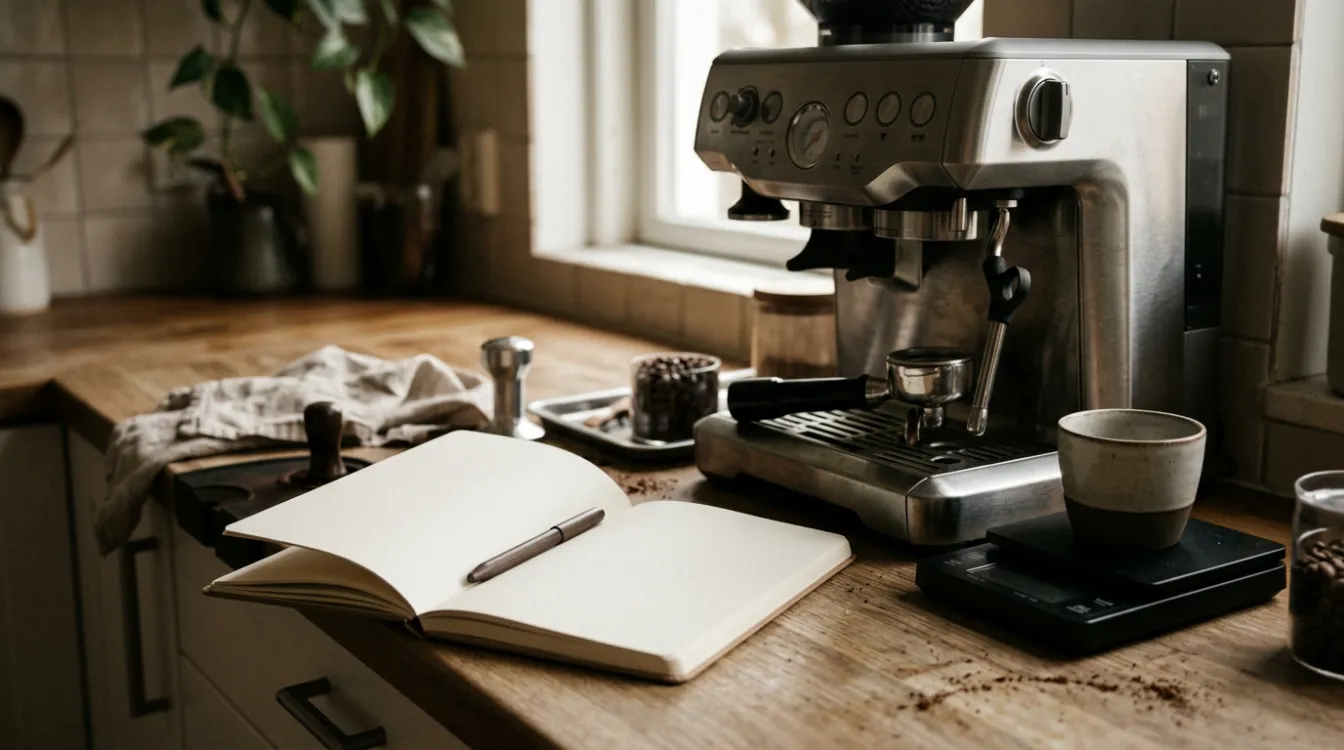
For example, I once froze portions of a decaf from a small roastery that pulled an especially sweet shot at a particular grind setting with a dose of about three-quarters of an ounce. Because I'd written it down, I could reproduce that shot months later in a couple of tries instead of wasting several doses. A ledger is even more valuable if you change grinders, burrs or baskets.
My guide to espresso brew time explains how dose, yield and time work together when dialing in.
Freezing brewed coffee: coffee ice cubes
Another way to freeze coffee is to freeze brewed coffee or espresso in ice cube trays or silicone molds. Some molds even make cubes shaped like coffee beans.
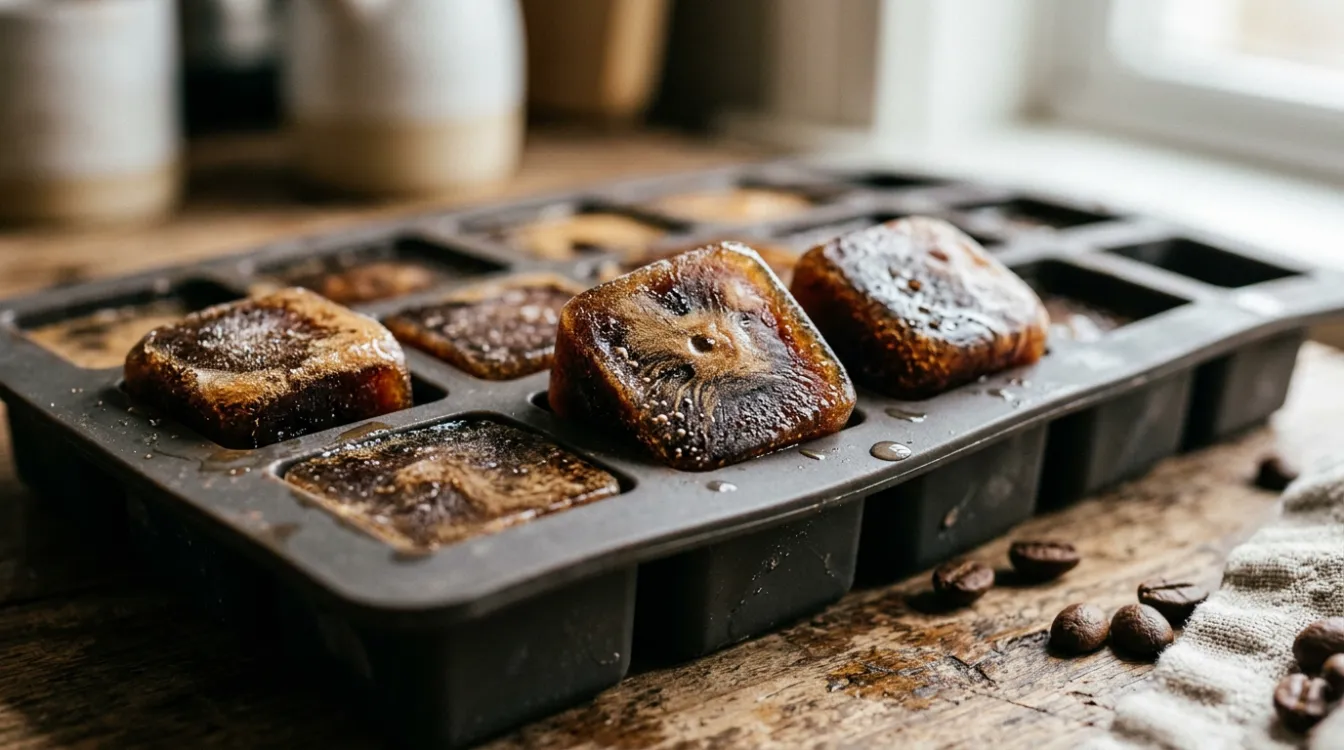
Coffee ice cubes are useful in:
- Iced coffee and iced lattes: they chill the drink without watering it down.
- Americanos over ice: adding coffee flavor as they melt.
- Blended drinks and smoothies.
They do have limits. Frozen espresso doesn't taste like fresh espresso; it loses some of its aroma and intensity. Cubes also melt slowly, which isn't ideal if you want a drink quickly.
One fun trick: put a few frozen espresso cubes in a milk pitcher and heat them with your machine's steam wand. The steam melts and aerates the coffee, creating a light, foamy texture a bit like an Aerocano, which is espresso, water and air whipped together. It's a nice way to use leftover espresso, but it's not a substitute for freezing beans if you want to preserve a special coffee.
Why the fridge is a bad idea
People sometimes store coffee in the fridge, thinking it's a gentler option than the freezer. In my experience, it's the worst of both worlds.
- Fridges are humid, so condensation is more likely.
- They're full of odors that coffee absorbs easily.
- They're opened constantly, causing temperature swings.
- They aren't cold enough to slow aging as much as a freezer.
For coffee you'll use within a few weeks, a cool, dark cupboard is better. For longer storage, use the freezer properly.
Which freezing method is best for you?
| Method | Best for | Pros | Cons |
|---|---|---|---|
| Original bag | Whole unopened bags | Simple, no extra equipment | Must use the whole bag after thawing |
| Single-dose tubes | Espresso, decaf, rotating coffees | Perfect portions, no repeated exposure | Needs tubes and organization |
| Vacuum-sealed bags | Long-term storage, bulk buys | Best protection from oxygen | Requires a vacuum sealer and bags |
| Air-removing containers | Reusable storage | Less waste, easy to use | Seal quality varies |
| Coffee ice cubes | Iced drinks | Prevents dilution | Not a way to preserve beans |
For most home brewers, vacuum-sealed portions or single-dose tubes are the most practical and give the best results.
Freezing tips for different brew methods
- Espresso: freeze single doses or small multi-dose bags, and grind straight from frozen or after thawing sealed. Frozen beans may need a slightly different grind setting, so check your first shot.
- Pour-over: portion beans by your usual dose, for example enough for one or two cups. Frozen portions make it easy to rotate between coffees without opening several bags. My guide to pour over vs drip coffee covers pour-over recipes.
- Drip coffee: freeze larger portions sized for a full pot.
- French press: coarse grinding from frozen works well; just keep portions sealed until use.
- Cold brew: freeze portions of whole beans sized for one batch, or freeze concentrate as ice cubes.
From delivery to cup: a step-by-step routine
- Receive your coffeeNote the roast date.
- Let it restA few days for filter, one to two weeks for espresso.
- Brew and tasteDial in your recipe and write it down.
- PortionDivide the rest into airtight portions.
- Remove air and sealVacuum seal or press out as much air as possible.
- LabelCoffee name, roast date, freeze date and recipe.
- FreezePlace portions in a sealed box at the back of the freezer.
- Use one portion at a timeGrind from frozen or thaw sealed, then use the whole portion.
When you don't need to freeze coffee
Freezing isn't always necessary. You probably don't need it if:
- You finish each bag within two to three weeks of roasting.
- You buy small amounts frequently from a local roaster.
- You drink mainly pods or instant coffee.
- You have no space or packaging to freeze coffee properly.
In those cases, an airtight canister in a cool, dark cupboard is enough. Freezing becomes valuable when you have more coffee than you can drink while it's fresh, or when you want to save a special coffee for later.
Common freezing mistakes to avoid
These are the mistakes I see most often, and the ones I made myself when I started freezing coffee:
- Freezing a big open bag and dipping into it daily: the classic condensation trap.
- Opening cold coffee straight away: moisture forms instantly on cold beans.
- Using thin sandwich bags: they let in air and odors.
- Leaving lots of air in the bag: more air means more oxidation.
- Storing coffee next to strong-smelling food: coffee picks up odors easily.
- Forgetting to label: months later, you won't remember which coffee is which or when it was roasted.
- Freezing stale coffee: freezing preserves what's there; it can't bring old coffee back to life.
- Storing in the freezer door: temperatures swing every time it's opened.
Avoid these, and freezing becomes simple and reliable.
Freezing coffee for travel and gifts
Freezing can also help when you travel or want to share coffee.
- Before a trip: if you won't finish a bag before leaving, freeze it in portions so it's fresh when you return.
- Traveling with coffee: take sealed portions out of the freezer just before leaving; they'll thaw on the way and stay sealed until you use them.
- Gifts: vacuum-sealed portions of a special coffee, labeled with tasting notes and a recipe, make a thoughtful gift for a coffee-loving friend. My guide to gifts for coffee lovers has more ideas.
Quick answers to common questions
- Does freezing change caffeine? No, caffeine is stable and unaffected by freezing.
- Can I freeze coffee in a mason jar? Yes, if it's airtight and you fill it close to the top to reduce air. Let it reach room temperature before opening.
- Should I freeze coffee with a one-way valve bag? Yes, but seal the bag in a freezer bag or container too, as valves aren't designed for long-term freezer storage.
- Will frozen beans damage my grinder? No, most grinders handle frozen beans fine, though you may need to adjust the setting.
- Is freezer-burned coffee safe? It's not unsafe, but it will taste flat and stale. Better packaging prevents it.
Staying organized when you freeze several coffees
Once you start freezing coffee, it's easy to end up with a drawer full of mystery bags. A little organization keeps the system useful.
- Group by coffee: keep all portions of the same coffee together in one row or box.
- Use first in, first out: put newer coffees at the back and use older ones first.
- Keep a simple list: a note on the freezer door or a list on your phone showing what's inside and when it was frozen.
- Limit the collection: freezing works best for a handful of coffees at a time, not dozens.
- Review monthly: check what you have and plan which coffee to thaw next.
I keep a small whiteboard note inside a kitchen cupboard listing every coffee in the freezer, its freeze date and how many portions are left. It takes seconds to update and stops me from forgetting a special bag at the bottom of the drawer until it's past its best.
Organization also makes freezing more fun. Having several coffees ready means you can choose based on your mood, the weather or what you're eating, almost like having a small coffee cellar at home.
My blind test: frozen vs fresh
To check whether freezing really works, I ran a simple test. I split a fresh bag of a washed Colombian coffee into two halves. One half went into vacuum-sealed portions in the freezer; the other stayed in its sealed bag in the cupboard.
Four weeks later, I brewed both as pour-over, side by side, and asked my partner to serve them blind.
- Cupboard coffee: still decent, but flatter, with less aroma and a slightly papery finish.
- Frozen coffee: noticeably brighter and sweeter, with clear caramel and red-apple notes, close to how the coffee tasted when it was fresh.
I picked the frozen coffee as better in every round. It convinced me that freezing in airtight portions is worth the small effort, especially for coffees I really care about.
A smart system for bulk buying
If you buy coffee in larger amounts, for example a big bag or a subscription that delivers more than you can drink, freezing turns it from a staling problem into an advantage.
- Rest the coffeeLet it rest for a few days after roasting.
- Keep one portion outKeep about one to two weeks' worth in an airtight canister.
- Portion the restDivide it into vacuum bags or tubes sized for a few days of brewing.
- Freeze flatStore portions flat and organized.
- RotateWhen the canister runs low, thaw the next portion.
This way, every batch you brew is close to its peak, and nothing goes stale.
My own coffee freezer system
After years of trial and error, this is how I handle coffee:
- My everyday coffee lives in an airtight canister in a cupboard and is finished within two to three weeks.
- Special coffees go into vacuum-sealed bags of three or four espresso doses, labeled with the name, roast date and my best recipe.
- Decaf lives in single-dose tubes, because I only drink one or two decafs a week.
- Everything frozen sits inside a larger sealed plastic box to protect it from food odors.
- I grind most frozen espresso doses straight from the freezer and keep thawed filter coffee sealed until it reaches room temperature.
It took a little effort to set up, but now I rarely waste coffee, and I can enjoy a special bag over several months instead of rushing through it.
Myths about freezing coffee
"Freezing ruins coffee"
Freezing in airtight portions preserves coffee well. Problems come from condensation and repeated thawing.
"The fridge is better than the freezer"
The fridge is humid and smelly, and not cold enough to slow aging much.
"You must always thaw beans before grinding"
Many people grind straight from frozen with excellent results.
"Freezing keeps coffee fresh forever"
It slows aging a lot, but very long storage will still dull flavors.
"Any bag works in the freezer"
Loose or poorly sealed bags let in moisture and odors.
The verdict: can you freeze coffee?
Yes, and it's one of the best ways to keep coffee fresh when you have more than you can drink in a few weeks. The secret isn't just keeping coffee cold; it's protecting it from moisture, condensation, oxygen and odors.
Freeze whole beans in airtight portions, ideally vacuum-sealed bags or single-dose tubes. Don't keep taking the same bag in and out. Let sealed portions reach room temperature before opening, or grind straight from frozen. Avoid the fridge, and keep a brewing record so you can enjoy each coffee at its best months later.
Frequently asked questions
Can you freeze coffee beans?
Yes. Freezing whole beans in airtight portions keeps them fresh for much longer.
Should I freeze ground coffee?
Whole beans freeze better, but ground coffee can be frozen in airtight portions if needed.
How long can you freeze coffee?
Well-sealed beans can keep good flavor for weeks to months.
Do you need to thaw coffee before grinding?
No. You can grind straight from frozen, or let sealed portions reach room temperature first.
Can you refreeze coffee?
It's best to avoid repeated freezing and thawing.
Is it OK to store coffee in the fridge?
Not recommended; fridges are humid and full of odors.
What's the best way to freeze coffee?
Vacuum-sealed portions or airtight single-dose tubes.
Can you freeze brewed coffee?
Yes, as ice cubes for iced drinks, but it won't taste like fresh coffee.

- Michael Reynolds, years of freezing coffee at home
- Coffee preparation, Wikipedia
- Condensation, Wikipedia
- Vacuum packing, Wikipedia
- Coffee roasting, Wikipedia
Related guides
How to store coffee beans Mold and mycotoxins in coffee Is decaf coffee healthy?Written by Michael Reynolds. Last updated November 20, 2026.