Breville vs Ninja espresso machines: every matchup compared
Ninja arrived in espresso with one big idea: let the machine weigh, tamp and coach you, so a beginner gets a good shot on day one. Breville has spent years refining the opposite idea: give you a real portafilter, a steam wand and the feedback to learn the craft. I used the Breville Barista Express, the Breville Barista Pro, the Ninja Luxe Café Premier and the Ninja Luxe Café Pro as my only machine for four weeks each, then lined them up head to head.
We choose products independently. We may earn a commission through links on this page; your price stays the same. Affiliate policy
Jargon helpNew to espresso? Tap any dotted term to see what it means.
In this comparison
If you want good espresso and milk drinks from the first week with almost nothing to learn, buy a Ninja; my pick is the Ninja Luxe Café Pro, which grinds, weighs and tamps in one cradle, has a non-burn wand, a hot water spout and excellent cold foam. If you want to learn espresso properly, pour latte art and keep the option to explore lighter roasts, buy a Breville; my pick is the Breville Barista Pro, which heats up in about three seconds, has a 30-step grinder and steams silky microfoam in about 30 seconds. On a tighter budget, the Ninja Premier and Breville Barista Express are the sensible steps down.
The two brands
Specs checked November 13, 2026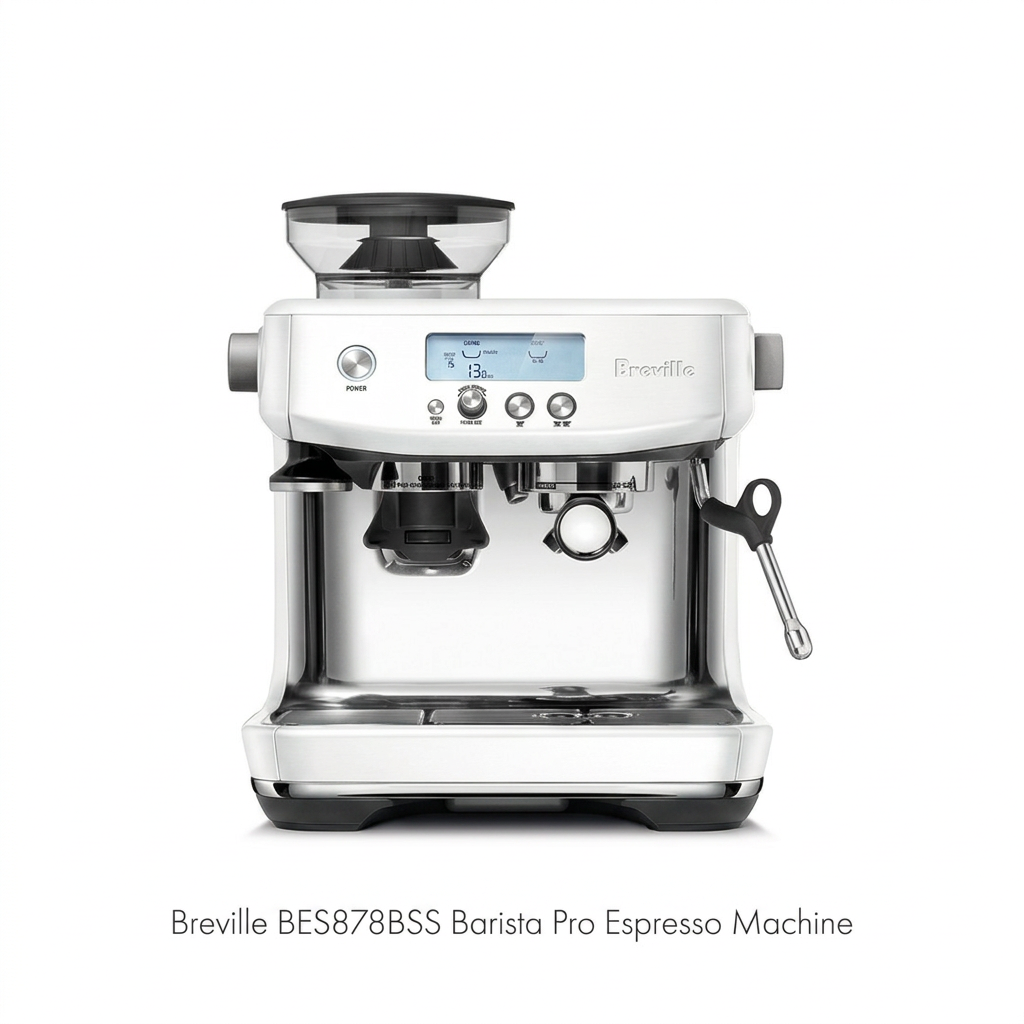
A three-second ThermoJet, a 30-step grinder, five temperatures, an LCD shot timer and a fast four-hole steam wand for hands-on espresso.
Check price on Amazon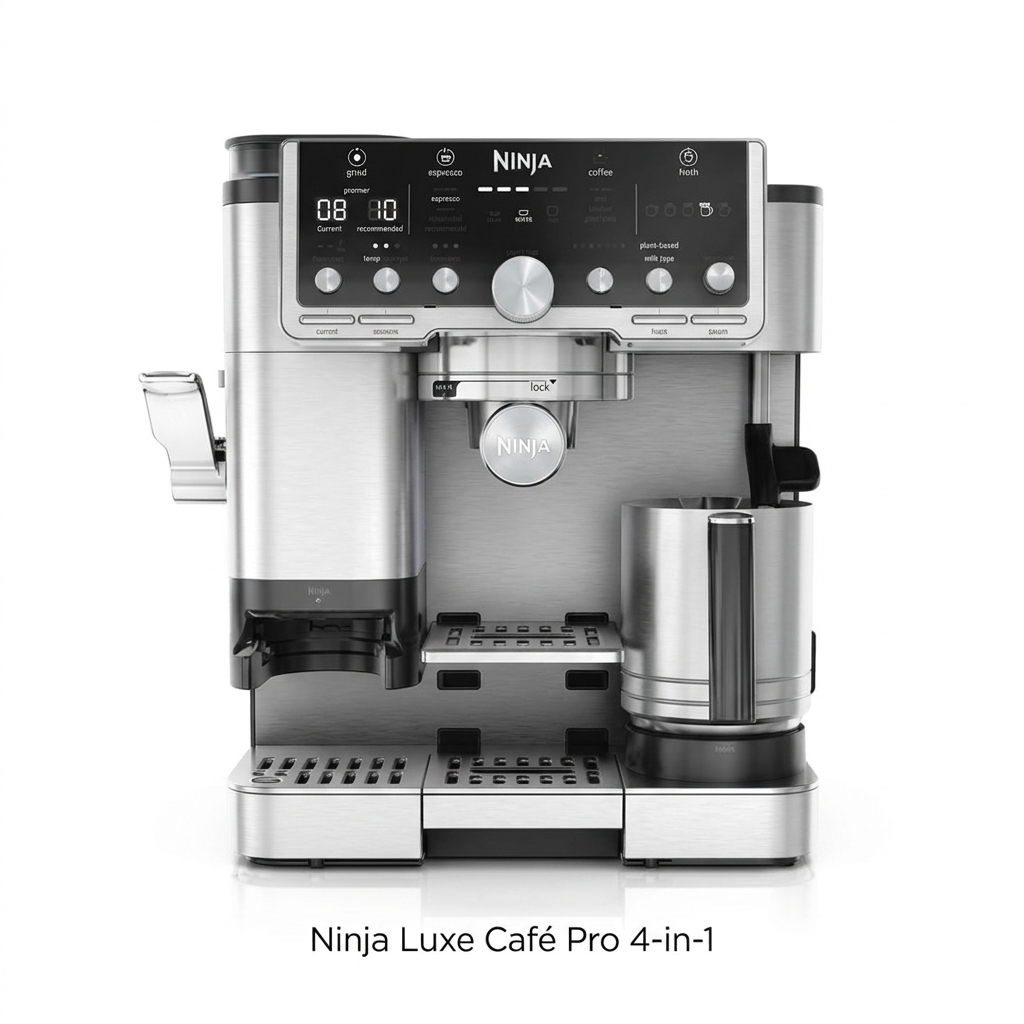
Grinds, weighs and tamps in one cradle, with Barista Assist, a non-burn steam wand, cold foam, cold press and a three-temperature hot water spout.
Reveal Today’s DealBreville vs Ninja at a glance
- Pick Ninja if you want café-style drinks fast, with guidance at every step and very little mess.
- Pick Breville if you want to learn the craft, pour latte art and grow into specialty beans.
- With medium and dark roasts, the espresso is close; with light roasts, Breville pulls ahead.
- Ninja wins on iced drinks and cold foam; Breville wins on steam power and milk texture.
Head to head
The better result in each row is marked, based on four weeks with each of the four machines and the manufacturer specs.
This is a brand-level table: it compares the best of each brand on each row. Individual models differ, which I cover in the matchups below.
| Spec | Breville (Barista line) | Ninja (Luxe Café) |
|---|---|---|
| Learning curve | A few days to a week | Two or three shots ✓ Best |
| Dosing | By time, needs a scale | By weight, built-in scale ✓ Best |
| Tamping | By hand | Lever or integrated ✓ Best |
| Shot feedback | Gauge or shot timer ✓ Best | Finer or coarser prompts |
| Light-roast espressomy tasting | Good to very good ✓ Best | Often sour |
| Milk texture | Glossy microfoam, latte art ✓ Best | Good, stiffer on auto |
| Milk effort | Steam by hand | Automatic presets ✓ Best |
| Cold foam | No | Yes, one touch ✓ Best |
| Heat-upfastest model | About 3 s (Barista Pro) ✓ Best | About 1 min |
| Hot water spout | Yes, all models | Pro only (US) |
| Counter mess | Some grounds | Very little ✓ Best |
| Water use | Moderate ✓ Best | High on the Pro |
| Rows won | 5 | 6 |
Breville vs Ninja pros and cons
Breville (Barista Express and Barista Pro)
- Café-quality espresso with full control
- Manual steam wands make latte-art microfoam
- Handles light roasts far better
- Takes days of dialing in and a scale
- You tamp and steam every drink yourself
- No cold foam or iced-drink presets
Ninja (Luxe Café Premier and Pro)
- Good espresso in two or three shots
- Weighs, tamps and froths with almost no mess
- Excellent one-touch cold foam
- Grinders struggle with light roasts
- Large-basket coffees taste weak
- Pro uses a lot of water; Premier has no hot water spout
Who should buy which machine?
- People who want to learn espresso properly
- Latte-art and flat white lovers
- Future specialty and light-roast drinkers
- First-time buyers who want good drinks fast
- Iced latte and cold foam fans
- Households where several people use one machine
The four machines I tested
I picked the two machines from each brand that most buyers actually cross-shop, and used each one as my only coffee maker for four weeks.
From Breville: the Barista Express, the classic all-in-one with an analog pressure gauge, and the Barista Pro, its faster sibling with a ThermoJet heater and LCD shot timer.
From Ninja: the Luxe Café Premier, with Barista Assist, a built-in scale and a funnel-and-lever tamper, and the Luxe Café Pro, which tamps in the cradle and adds a non-burn wand and hot water spout.
| Machine | Best at | My score |
|---|---|---|
| Breville Barista Express | Learning with a pressure gauge | 8.0 |
| Breville Barista Pro | Speed, steam and light roasts | 8.5 |
| Ninja Luxe Café Premier | Guided espresso and cold foam | 8.1 |
| Ninja Luxe Café Pro | Least effort per cup | 8.6 |
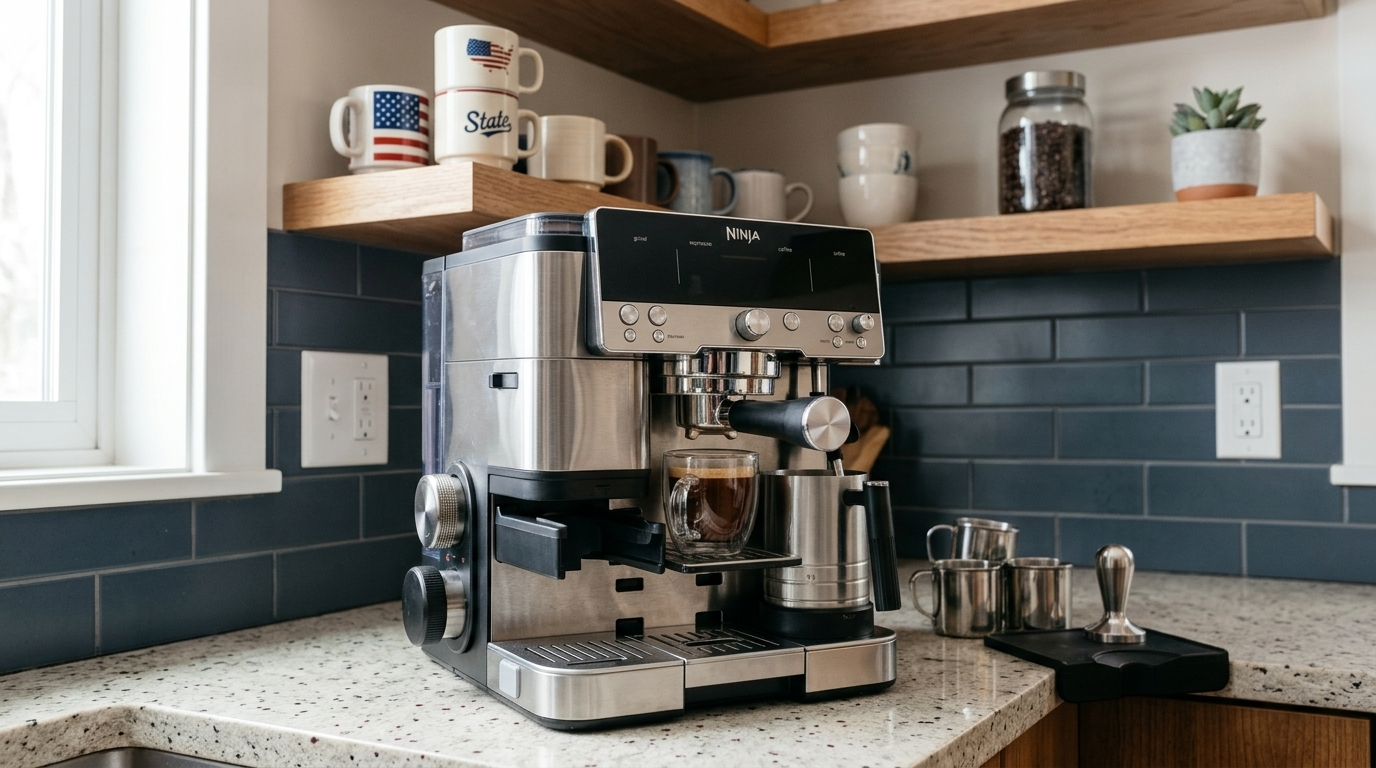
The Ninja Luxe Café Premier coaches you to a good shot in two or three tries.
Every matchup at a glance
Because people rarely compare whole brands, here is how each Breville stacks up against each Ninja, with my pick for most buyers in each pair.
The pattern is consistent: Ninja wins on ease, mess and iced drinks, and Breville wins on control, milk texture and espresso ceiling.
| Matchup | Ninja wins on | Breville wins on | My pick for most |
|---|---|---|---|
| Barista Express vs Luxe Café Premier | Guidance, dosing, cold foam, mess | Latte art, hot water spout, light roasts | Premier for beginners |
| Barista Express vs Luxe Café Pro | Guidance, hot water styles, cold foam, mess | Latte art, light roasts, water use | Luxe Café Pro |
| Barista Pro vs Luxe Café Premier | Guidance, cold foam, mess | Heat-up, steam power, latte art, hot water | Barista Pro for milk lovers |
| Barista Pro vs Luxe Café Pro | Guidance, tamping, cold foam | Heat-up, steam power, light roasts | Depends on how hands-on you want to be |
For a full head-to-head on the most popular pairing, see my Ninja Luxe Café vs Breville Barista Express comparison. Within each brand, I also compared the Barista Express vs Barista Pro and the Luxe Café Premier vs Pro.
What the brands share
It is easy to focus on the differences, so it is worth saying what is the same. All four machines grind fresh beans straight into a real portafilter basket, brew under pressure with pre-infusion, and have a steam wand of some kind for milk.
That means every one of them makes genuine espresso, not a pod or capsule imitation. The choice between them is about workflow, not about whether the coffee is real.
It also means they share the same basic needs: fresh beans, filtered water, a warm cup and a clean milk system. Get those right and the brand matters less than you might think.
Our tip: Decide whether you want to make espresso or just drink it before you compare models, because that one answer settles most of these matchups.
Guidance vs a gauge
This is the heart of the brand difference.
Ninja’s Barista Assist✕Barista AssistNinja’s guided system. It recommends a grind setting for your drink, then tells you after each shot whether to grind finer or coarser. recommends a grind setting for your drink, then tells you after each shot whether to go finer or coarser. On the Premier, that got me from a sour, watery shot to a balanced one in three tries with a medium roast, with no scale, timer or espresso knowledge.
Breville gives you information instead of instructions. The Barista Express has an analog pressure gauge that shows whether the puck is resisting the water; the Barista Pro has an LCD shot timer that, with a scale, tells you everything you need.
Shots to a balanced medium-roast espresso
My week-one dial-in with fresh beans; the Express also needed its inner burr moved.
There is a long-term trade-off. After a month on a Breville, I understood why a shot went wrong and could fix it on any machine. After a month on a Ninja, I made great drinks, but mostly by following prompts.
Grinders and dosing
All four machines have a built-in conical burr✕Conical burrsTwo cone-shaped grinding parts, one inside the other. Beans are crushed between them, and the gap sets how fine the coffee is. grinder, but they dose very differently.
Both Ninjas have a built-in scale and dose by weight. In my tests, the dose stayed within a few tenths of a gram from shot to shot, even as the hopper emptied.
Both Brevilles dose by time. The Barista Express needed its inner burr moved from 6 to 2 and its timer adjusted before it gave about 15.4 grams reliably; the Barista Pro gave about 16 grams with 0.2 to 0.4 grams of drift between grinds.
| Grinder detail | Barista Express | Barista Pro | Luxe Café Premier | Luxe Café Pro |
|---|---|---|---|---|
| Settings | 16 plus inner burr | 30, near-stepless | 25 | 25 |
| Dosing | Timed | Timed, 0.1 s steps | By weight | By weight |
| Typical double dose | ~15.4 g | ~16 g | By drink | ~18 g |
| Tamping | By hand | By hand | Lever with funnel | In the cradle |
| Needs a scale? | Yes | Yes | No | No |
The Barista Pro’s grinder is the best of the four for range. Its Baratza-designed burrs went fine enough for light roasts, and its stepless collar let me stop between numbers.
Our tip: If you buy a Breville, buy a scale that reads to 0.1 gram on the same day, because timed grinding drifts and only a scale tells you what reached the basket.
Espresso quality
With medium and dark roasts, all four machines made espresso that tasted like it came from a café.
On the Ninjas, doubles were rich, smooth and full-bodied, with a thick hazel crema and clear chocolate, caramel and nutty notes. The Pro’s doubles landed at 17.8 to 18 grams in and 38 to 39 grams out, close to a classic 1:2 brew ratio✕Brew ratioThe weight of coffee in the basket compared with the weight of espresso in the cup. 18 g in and 36 g out is a 1:2 ratio..
On the Brevilles, once dialed in, shots poured like warm honey or syrup, with deep, velvety crema. The Barista Pro’s ran 28 to 30 seconds with chocolate, caramel and a gentle acidity, and stayed consistent back to back.
My espresso scores
My scores out of 10 from each machine’s single review.
That is essentially a tie at the top. Where the two brands differ is how quickly you get there and how far you can push it.
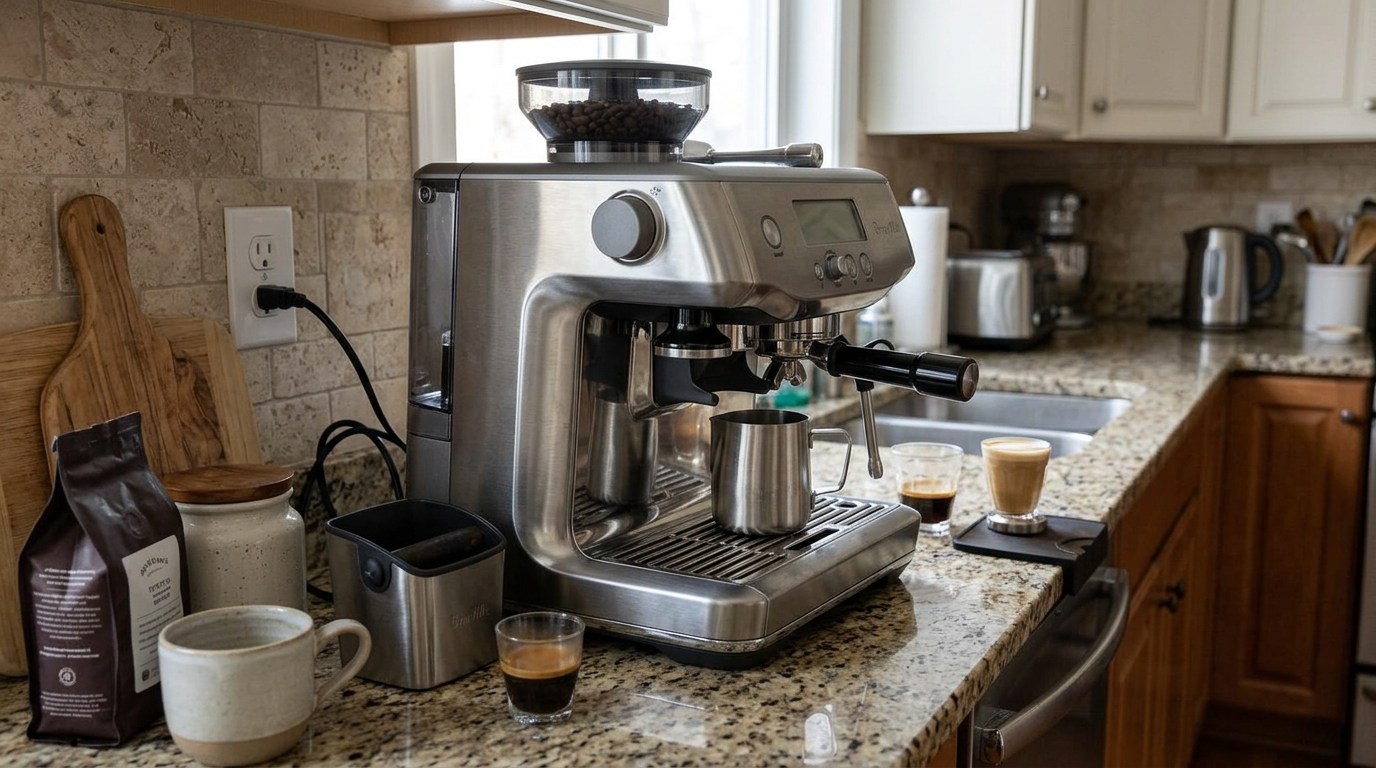
The Barista Pro matched the best Ninja on espresso and went further with light roasts.
| What you taste | Likely cause | Ninja fix | Breville fix |
|---|---|---|---|
| Sour, thin | Under-extraction✕Under-extractionWhen water does not pull enough flavor out of the coffee. The shot tastes sour, thin and watery. | Follow the finer prompt | One step finer |
| Bitter, harsh | Over-extraction | Coarser or lower temperature | Coarser or lower temperature |
| Weak first shot | Cold portafilter | Blank shot first | Blank shot first |
| Pale crema | Stale beans | Fresher beans | Fresher beans |
Light roasts, dark roasts and temperature
This is where the brands truly part ways for specialty coffee drinkers.
Both Ninja grinders struggle with light, fruity roasts. On the Premier, my light-roast shots scored about 6.0 out of 10 even at the finest setting and highest temperature, sometimes sour, thin or lacking sweetness.
The Barista Pro handled the same kind of bean beautifully. With its High temperature and a grind several numbers finer, a light roast opened up into sweet citrus, orange peel and bright stone fruit.
Light-roast espresso, my scores
Scores out of 10 once each machine was dialed in as far as it would go.
Temperature control is easy on three of the four. The Barista Pro has five settings two button presses away, and both Ninjas have three levels; the Barista Express needs a button combination from the manual.
Research from the Technical University of Munich found that particle size and temperature both change extraction speed, which is why a finer grinder plus a hotter setting rescues light roasts.
Our tip: If you buy mostly supermarket medium or dark blends, ignore this section, because all four machines are excellent with them.
Milk drinks
Breville gives you manual steam wands. The Barista Express has a single-hole tip that took about 45 seconds for 6 ounces; the Barista Pro’s four-hole tip did it in about 30 seconds, with glossy, wet-paint microfoam✕MicrofoamMilk foam with bubbles so small you can barely see them. It feels silky and glossy, which is what latte art needs..
With practice, both pour real latte art. By week two on the Pro, I was pouring hearts and simple tulips most mornings.
Ninja gives you the Dual Froth System: a steam wand with a spinning whisk inside, four presets and a manual mode. The presets make easy, consistent foam at about 140 to 149°F, but it is a little stiff and separates from the milk, so latte art needs the manual mode.
The Pro’s thicker non-burn wand was the easiest of all four to keep clean; milk simply does not bake onto it.
Milk drink scores
My scores out of 10, weighing texture, speed and convenience.
| Milk drink | Breville | Ninja |
|---|---|---|
| Cappuccino | Steam by hand | One-touch preset |
| Flat white | Best texture, latte art | Manual mode for best texture |
| Latte art | Yes, with practice | Manual mode only |
| Oat milk | Stretch a little longer | Plant-milk setting |
| Brew and froth at once | No | Froth while the shot runs |
Our tip: Start every milk drink with cold milk straight from the fridge, because it gives both wands and whisks more time to build fine foam.
See Today’s PriceCold foam and iced drinks
This is Ninja’s clearest win. Both Luxe Café machines have a cold foam preset: the whisk spins without steam and turns cold milk into thick, sweet foam that held its shape for more than five minutes.
A double shot over ice, cold milk and a cap of cold foam took about two minutes. The Pro adds cold press, which brews with cooler water for a smoother, less bitter iced espresso.
On a Breville, iced drinks are simpler: pull a shot over a full glass of ice and add cold milk. It tastes good, but there is no foam cap, and shaking milk in a jar collapses within a minute.
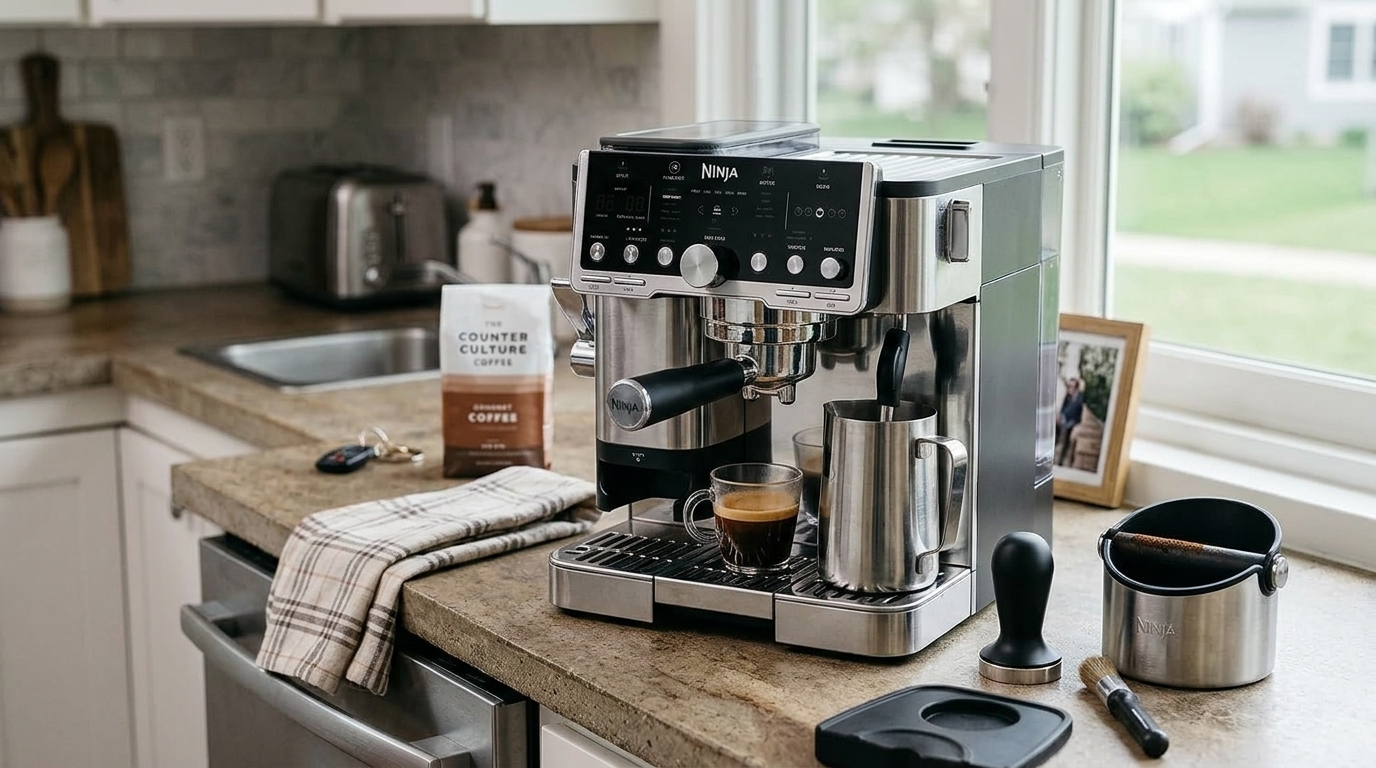
Cold foam and cold press make the Ninja Pro the iced-drink machine of the four.
Hot water, Americanos and big coffees
Both Brevilles have a dedicated hot water outlet next to the steam wand, so an Americano✕AmericanoA shot of espresso topped up with hot water. The coffee is never over-extracted, unlike pushing a whole mug of water through the grounds. or long black takes seconds. The Barista Pro’s pours a smooth, steady stream that never spat.
The Ninja Luxe Café Pro has a separate spout with three temperatures and a one-touch Americano style that scored 8.6 in my tasting. The US Ninja Premier has no hot water spout, so I used a kettle.
Both Ninjas also make drip-style coffee from a large Luxe basket. On the Premier, those cups were often thin and under-extracted; the Pro’s Rich style was better, but I still preferred an Americano for a big black coffee.
| Big black coffee | Barista Express | Barista Pro | Luxe Café Premier | Luxe Café Pro |
|---|---|---|---|---|
| Hot water spout | Yes | Yes, smooth stream | No (US) | Yes, 3 temperatures |
| Americano | By hand | By hand | Kettle top-up | One touch |
| Drip-style coffee | No | No | Thin, weak | Better on Rich |
| Tea | Green and herbal | Green and herbal | Use a kettle | Yes |
Speed and heat-up
The Barista Pro is the fastest machine here. Its ThermoJet is ready about three seconds after you press power, and switching from brewing to steam takes about five seconds.
The Barista Express and both Ninjas take about a minute to heat. The Ninjas make up time by frothing milk while the shot runs, which the Brevilles cannot do.
Minutes for a latte, switch-on to cup
Average across my weekday mornings, including cleaning the milk side.
All four need a warm portafilter for the best first shot. On the Barista Pro especially, two blank shots of hot water brought the group head up to temperature in about 20 seconds.
Where time really differs is hands-on minutes rather than machine minutes. On the Ninjas, I could rinse a cup or pour cereal while the machine ground, brewed and frothed; on the Brevilles, my hands were busy from grind to wipe.
For a single coffee, that hardly matters. For a household making four drinks before school, it adds up to several minutes every morning.
Our tip: Run a blank shot of hot water through the empty portafilter before your first espresso on any of these machines, and catch it in your cup to warm that too.
Cleaning and mess
Ninja wins on mess. The Premier’s dosing funnel and the Pro’s in-cradle tamping kept grounds off the counter, and many Premier parts are dishwasher-safe.
Breville needs more daily care: knock out the puck, rinse the basket, flush the group head, and wipe and purge the wand straight after every milk drink. When prompted, you backflush✕BackflushingRunning water backwards through the brew valve with a rubber disc and a cleaning tablet. It dissolves coffee oils that build up inside. with a tablet.
There is one catch on the Ninja side: the Luxe Café Pro is thirsty. It uses water for brewing, rinsing, purging and flushing, and I emptied its drip tray every morning, sometimes twice.
Hands-on cleaning per day, two milk drinks
My estimate, including drip tray chores.
Our tip: Wipe any steam wand within ten seconds of frothing, because milk that bakes onto hot steel takes minutes to remove later.
Size and build
The Brevilles are brushed stainless steel and feel like café equipment; the Barista Pro’s panels are even magnetic. The Ninjas are mostly plastic with brushed metal accents, solid and stable but less premium.
Sizes are similar: the Barista Express is 12.5 x 13.8 x 15.9 inches, the Barista Pro about 14 x 13 x 16, the Ninja Premier 13.4 x 13 x 14.6 and the Ninja Pro 12.5 x 13.4 x 14.8.
The Ninjas are heavier at about 26 to 27 lb, against 20 to 23 lb for the Brevilles, and neither Ninja has side handles.
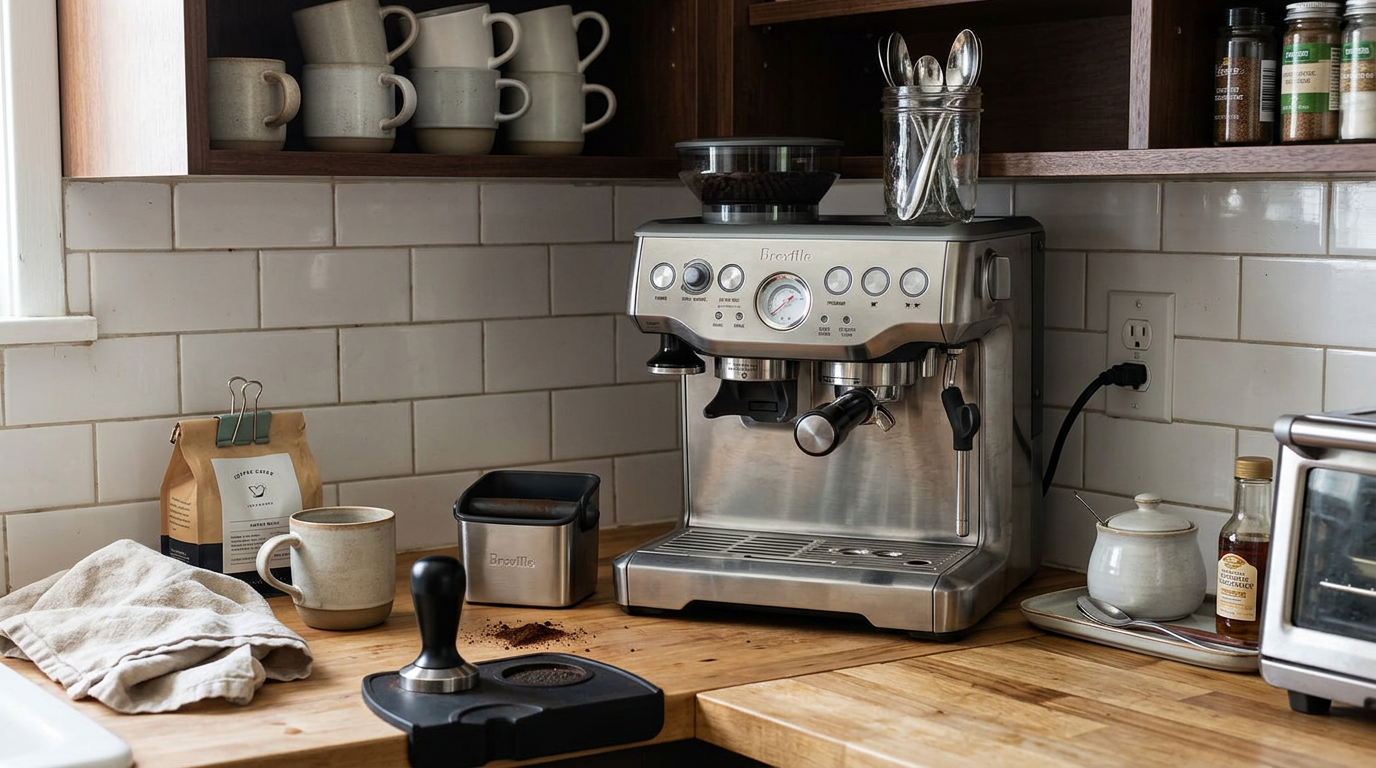
Brushed steel and a round gauge give the Brevilles their café look.
Beans, water and supplies
All four reward fresh beans roasted within the last few weeks. Medium and dark roasts were easy on every machine; light roasts were a Breville strength and a Ninja weakness.
Use filtered water and skip distilled water. University of Oregon researchers found that uneven extraction can waste up to 40% of the coffee in a puck, which is why an even tamp, whether by hand or by lever, matters on every machine.
| Supply | Breville | Ninja |
|---|---|---|
| Best extra to buy | A 0.1 g scale | Nothing essential |
| Water filter | Charcoal, every 2–3 months | Descale when alerted |
| Cleaning tablets | For backflushing | For the Pro’s brew group |
| Decaf | Swap beans or use the basket | Grind separately, tamp by hand |
Our tip: Buy beans in bags you can finish in two to three weeks, so your grind setting stays right to the last cup.
Find Out the Price TodayLiving with each brand for a month
A machine feels different on day one and day thirty, so here is how each brand settled into my routine.
Week one
On the Ninjas, week one was almost effortless. I followed the grind suggestion, made one or two changes when the machine asked, and had good doubles by the third shot. The only thing to learn was where to put the milk jug.
On the Brevilles, week one was a learning curve. On the Barista Express I moved the inner burr, calibrated the dose on a scale and worked on a level tamp; on the Barista Pro I learned that two blank shots fixed a thin first espresso. About half my shots hit the target window that week.
Weeks two and three
By week two, the Brevilles had clicked. Around three quarters of shots landed in the window, and I was pouring hearts on the Barista Pro and starting to on the Express. That is when the hands-on routine started to feel rewarding rather than demanding.
The Ninjas settled into reliable habits. Cold foam lattes became a daily afternoon drink, the Pro’s Americano replaced my morning drip coffee, and the Premier’s beeps went off in the settings menu for good.
Week four
By the end of the month, my Breville logs showed about 90 percent of shots on target, nearly matching the Ninjas’ consistency. The difference was that I had earned it, and I could now dial in almost any bean.
On the Ninjas, the only long-term irritations were small: the Pro’s drip tray every morning, and light roasts that never fully opened up on either.
| After four weeks | Breville | Ninja |
|---|---|---|
| Shots on target | About 90% | Consistent from week one |
| Skill gained | Real espresso skills | Mostly following prompts |
| Daily friction | Wand wiping, puck knocking | Drip tray on the Pro |
| What I missed | Cold foam | Latte art and light roasts |
Both brands held up well over the month, with nothing loose, leaking or rattling. On the Breville side, the Barista Pro carries a two-year US warranty and the Barista Express one year, so register either when you set it up.
Our tip: Give any new machine a full week before you judge it, because week one says more about the learning curve than about the coffee.
Real-life scenarios
Specs only go so far. These are the situations where one brand clearly pulled ahead across my testing.
Barista Assist got me to a balanced shot in about three tries, with no scale or tamping skill.
The Barista Pro’s four-hole wand made glossy microfoam in about 30 seconds.
One-touch cold foam on a shot over ice; the Pro’s cold press made it smoother still.
The Barista Pro on High turned sourness into citrus and stone fruit.
Presets and weight-based dosing meant nobody needed a lesson.
Only the Barista Pro’s ThermoJet is that fast.
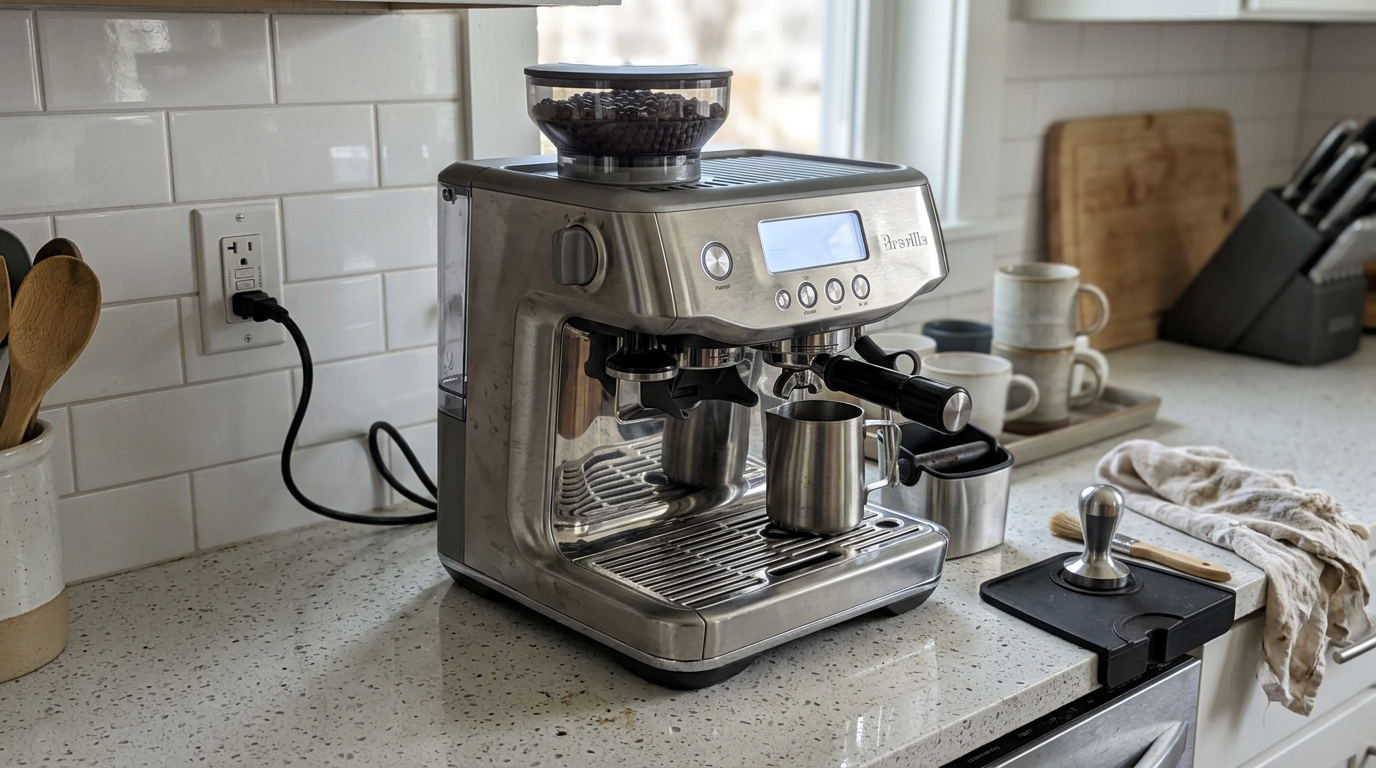
For latte art and light roasts, the Barista Pro stays ahead.
My scorecard
These scores come straight from my single reviews of each machine, all out of 10.
Overall score
Brand averages by category
The averages are remarkably close. Ninja’s lead on ease of use is real; Breville’s advantages, latte art and light roasts, do not show up in averages but matter enormously to the people who want them.
See How Much You’ll SaveWhich one is right for you?
4 quick questionsWhich brand should you buy?
It comes down to one question: do you want to learn espresso, or do you want espresso to be easy? Both are fair answers, and they point to different brands.
For the detail behind each machine, read my Barista Express, Barista Pro, Luxe Café Premier and Luxe Café Pro reviews.
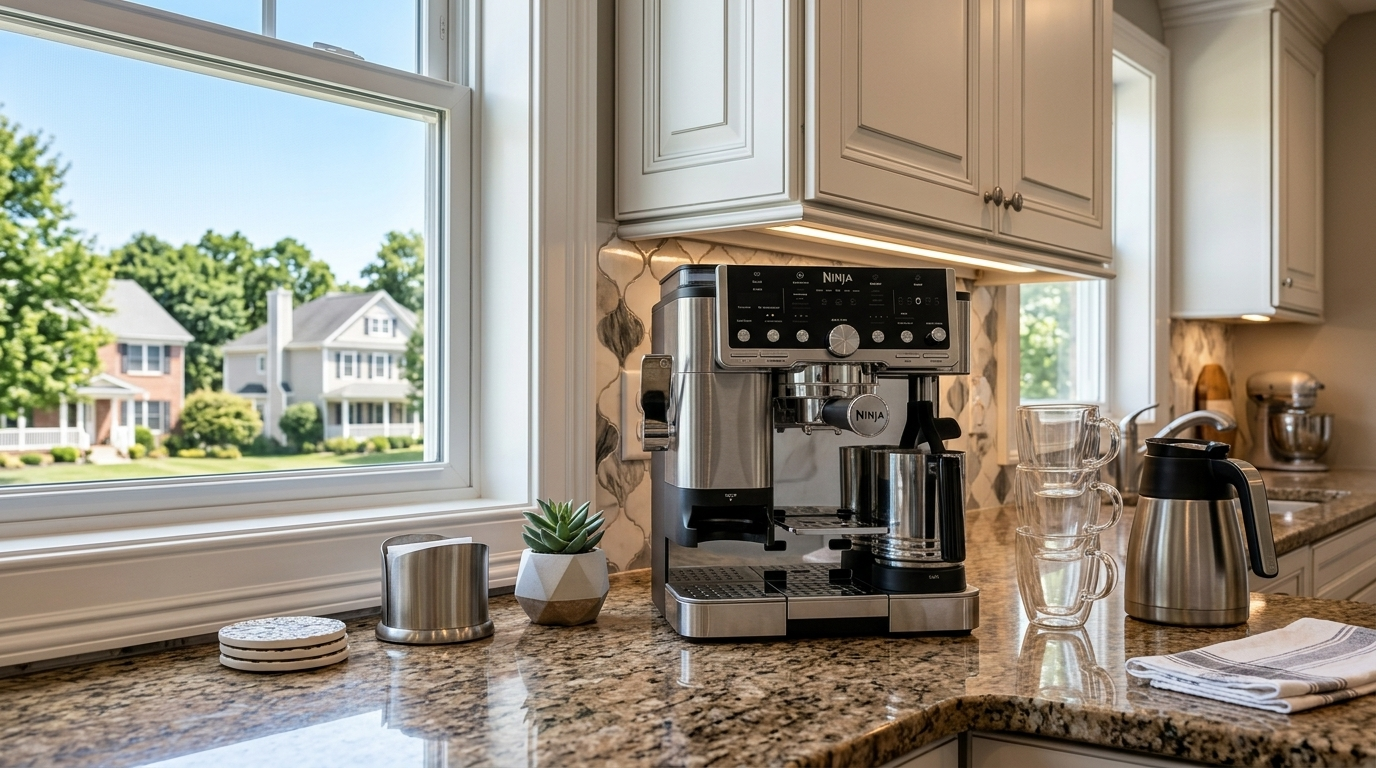
For guided espresso and iced drinks, the Ninja Pro is the easiest machine I have used.
- You want to learn espresso properly
- You want latte art
- You like light roasts
- You hate waiting for heat-up
- You want cold foam
- You want guidance and presets
- You will not buy a scale
- You want good drinks from week one
- You love iced lattes and cold foam
- You want Americanos at one touch
- You want a clean counter
- You buy light, fruity roasts
- You hate emptying drip trays
- You want full manual control
On a tighter budget, the Ninja Luxe Café Premier keeps the guidance and cold foam, and the Breville Barista Express keeps the gauge and the hot water spout.
There is no single winning brand. For most beginners who want café drinks quickly, my pick is the Ninja Luxe Café Pro: guided, weighed and tamped for you, with a non-burn wand, real hot water and the best cold foam I have tested.
For anyone who wants to learn the craft, pour latte art or drink light roasts, my pick is the Breville Barista Pro: fast, precise and with a far higher ceiling once you have practiced for a week.
Whichever you choose, buy fresh beans and cold milk, and keep the milk side clean. All four machines reward a little care with years of good coffee.
Breville vs Ninja specifications
From manufacturer specifications and my own testing.
| Barista Express | Barista Pro | Luxe Café Premier | Luxe Café Pro | |
|---|---|---|---|---|
| Type | Semi-automatic | Semi-automatic | Guided, with scale | Guided, with scale and tamper |
| Heat-up | About 1 min | About 3 s | About 1 min | About 1 min |
| Grinder | 16 plus inner burr | 30 steps | 25 steps | 25 steps |
| Dosing | Timed | Timed | By weight | By weight |
| Tamping | Manual | Manual | Lever with funnel | In the cradle |
| Pressure | 15-bar pump | 15-bar pump | 9 bar | 9 bar |
| Milk | Manual wand, 1 hole | Manual wand, 4 holes | Wand plus whisk, presets | Non-burn wand plus whisk |
| Cold foam | No | No | Yes | Yes |
| Hot water | Yes | Yes | No (US) | Yes, 3 temperatures |
| Size (W x D x H) | 12.5 x 13.8 x 15.9 in | ~14 x 13 x 16 in | 13.4 x 13 x 14.6 in | 12.5 x 13.4 x 14.8 in |
| Weight | ~22–23 lb | ~20 lb | ~26 lb | ~27 lb |
How I tested and compared them
I used each of the four machines as my only coffee maker for four weeks, making espresso, Americanos, lattes, cappuccinos, flat whites and iced drinks. Testing notes were written up together by Michael Reynolds and the HouseholdMe team.
I counted shots to a balanced espresso, weighed doses and yields with a 0.1-gram scale, timed heat-up and steaming, measured milk temperatures with a probe and tested light, medium and dark roasts on every machine.
I followed every cleaning routine and tracked water use, then compared my notes with Breville’s and Ninja’s specifications and owner documentation.
- Coffee: dose, crema, body, flavor and consistency.
- Milk: foam texture, temperature, speed and drink range.
- Workflow: heat-up, controls, guidance and daily routine.
- Ownership: cleaning, water care, noise and footprint.
Breville vs Ninja FAQ
Is Breville or Ninja better?
Ninja is better if you want guided, mess-free espresso and great iced drinks from the first week. Breville is better if you want to learn espresso, pour latte art or drink light roasts. In my testing, the best of each, the Ninja Luxe Café Pro and Breville Barista Pro, scored 8.6 and 8.5.
Which is better for beginners?
Ninja. Barista Assist, weight-based dosing and assisted tamping got me to a balanced espresso in about three shots, against about eight on the Barista Express.
Which makes better espresso?
With medium and dark roasts, they are essentially tied. With light roasts, Breville’s Barista Pro was clearly better because its grinder goes finer.
Can Ninja espresso machines make latte art?
Their automatic foam is a little stiff for latte art, but manual steaming mode works. Breville’s manual steam wands are better for pouring.
Do Breville machines make cold foam?
No. Both Ninja Luxe Café machines have a one-touch cold foam preset, which was a highlight of my testing.
Which brand is easier to clean?
Ninja makes less mess, thanks to its funnel or in-cradle tamping. The Ninja Pro does use a lot of water and fills its drip tray quickly.
Which heats up fastest?
The Breville Barista Pro, in about three seconds. The others take about a minute.
Do Ninja machines have a hot water spout?
The Luxe Café Pro does, with three temperatures. The US Luxe Café Premier does not. Both Brevilles have one.
Do I need a scale?
With a Breville, yes, because it doses by time. Both Ninjas have a built-in scale.
Which Ninja and which Breville should I buy?
For most people, the Ninja Luxe Café Pro or the Breville Barista Pro. On a tighter budget, the Ninja Luxe Café Premier or the Breville Barista Express.

- Our hands-on Breville Barista Express review
- Our hands-on Breville Barista Pro review
- Our hands-on Ninja Luxe Café Premier review
- Our hands-on Ninja Luxe Café Pro review
- Breville and Ninja product specifications and owner documentation
- Influence of Flow Rate, Particle Size, and Temperature on Espresso Extraction Kinetics, Technical University of Munich, Foods (2023)
- The perfect shot of espresso every time with chemistry, University of Oregon research