Ninja Luxe Café Premier vs Pro: is the Pro worth the extra money?
They share the same 25-step grinder, the same built-in scale, the same brew group and the same guided Barista Assist idea. Then they split: the Ninja Luxe Café Premier tamps with a lever through a dosing funnel and has no hot water spout, while the Ninja Luxe Café Pro grinds, weighs and tamps in one cradle, adds a thicker non-burn steam wand, a three-temperature hot water spout and ristretto, lungo and Americano styles. I used each one as my daily machine for four weeks to find out whether the Pro is worth the step up.
We choose products independently. We may earn a commission through links on this page; your price stays the same. Affiliate policy
Jargon helpNew to espresso? Tap any dotted term to see what it means.
In this comparison
If you make milk drinks every day, like a big Americano in the morning or simply want the least effort per cup, buy the Ninja Luxe Café Pro. Integrated tamping means no funnel to juggle, the non-burn wand wipes clean in seconds, and the hot water spout finally makes a proper Americano without a kettle. If you mostly drink espresso and lattes, do not mind a funnel and want to spend less, the Ninja Luxe Café Premier makes the same rich espresso and the same excellent cold foam. Just know the Pro is thirsty: I emptied its drip tray every single morning.
The two machines
Specs checked November 13, 2026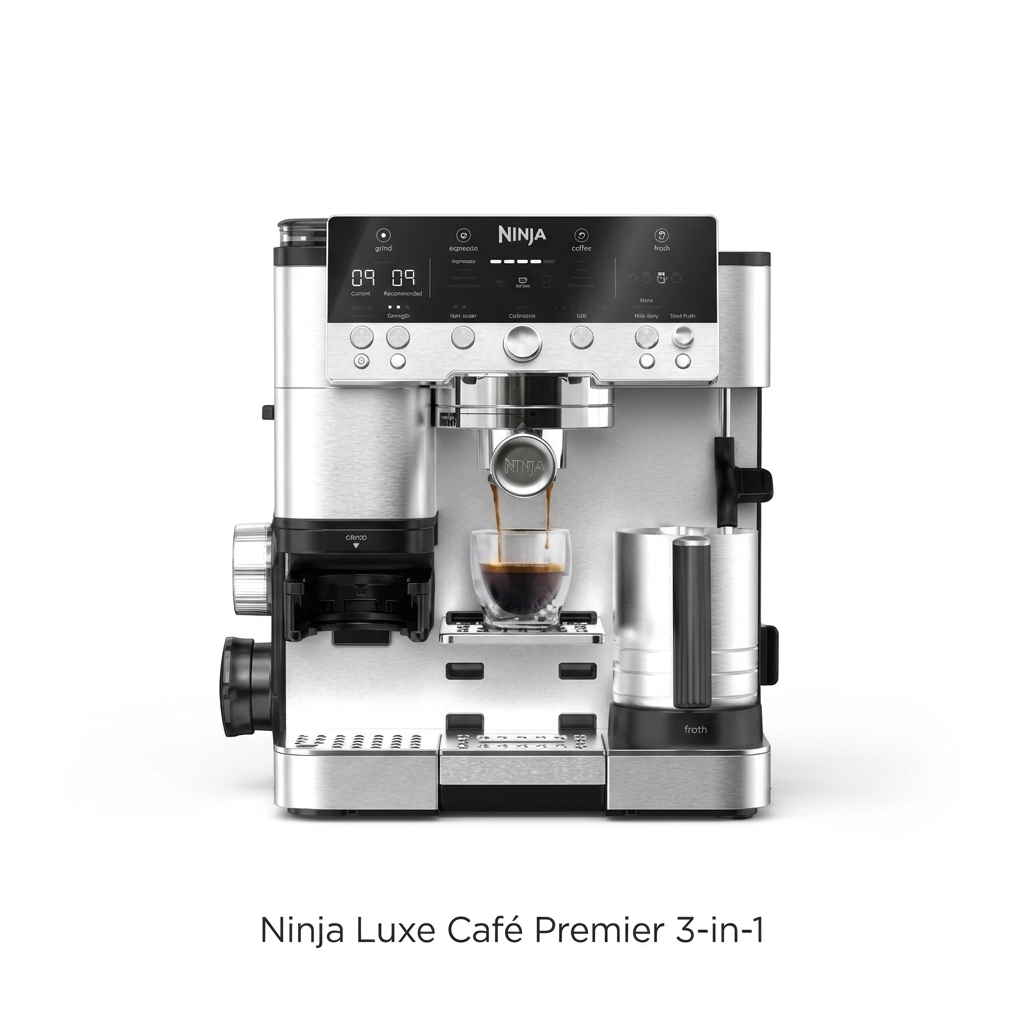
Barista Assist, weight-based dosing, a lever tamper with dosing funnel and a whisking frother with four presets, including excellent cold foam.
Check price on Amazon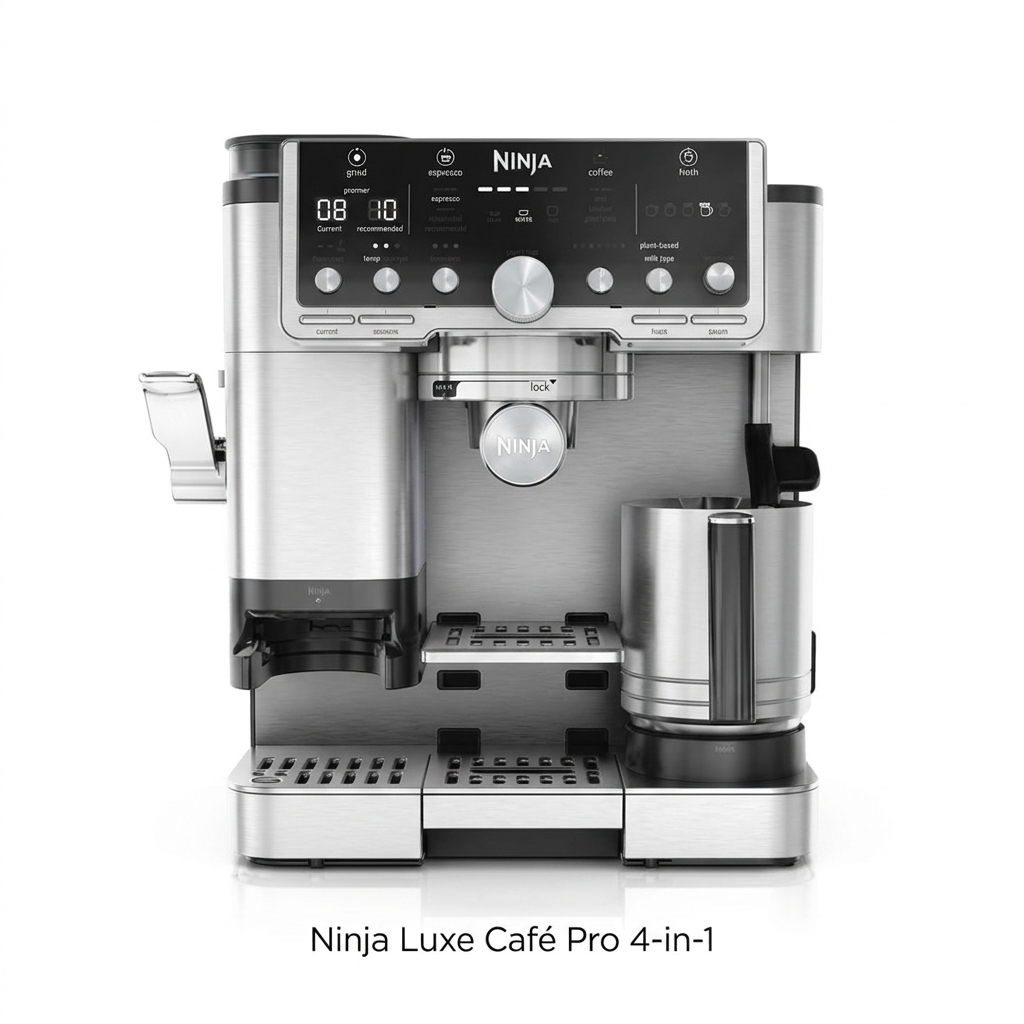
Grinds, weighs and tamps in one cradle, with a 12 mm non-burn wand, a three-temperature hot water spout, cold press and single, ristretto and lungo styles.
Reveal Today’s DealLuxe Café Premier vs Pro at a glance
- Buy the Pro if you want the cleanest, fastest workflow and Americanos without a kettle.
- Buy the Premier if you mostly drink espresso and lattes and want to spend less.
- Espresso flavor is essentially the same: same grinder, same brew group, same 25 settings.
- Both make superb cold foam; the Pro adds cold press for smoother iced espresso.
Head to head
The better result in each row is marked, based on four weeks with each machine and Ninja’s specs. Where they are the same, there is no winner.
The Pro wins most rows, but it is not my verdict for everyone. If you do not drink Americanos or hate emptying drip trays, several of those wins matter less.
| Spec | Luxe Café Premier | Luxe Café Pro |
|---|---|---|
| Tamping | Lever through a dosing funnel | Integrated in the cradle, no funnel ✓ Best |
| Steam wand | Standard wand plus whisk | 12 mm non-burn wand plus whisk ✓ Best |
| Hot water spoutUS model | No, use a kettle | Yes, 3 temperatures ✓ Best |
| Espresso styles | Single-size presets | Single, double, ristretto, lungo, Americano ✓ Best |
| Single basketUS model | No | Yes ✓ Best |
| Cold drinks | Cold foam | Cold foam and cold press ✓ Best |
| Grinder | 25 settings, conical burr | 25 settings, conical burr |
| Dosing | By weight | By weight, with basket recognition |
| Water use | Moderate ✓ Best | High, drip tray fills fast |
| LED lights | No | Yes, two ✓ Best |
| Size (W x D x H) | 13.4 x 13 x 14.6 in | 12.5 x 13.4 x 14.8 in |
| Weight | About 26 lb ✓ Best | About 27 lb |
| Rows won | 2 | 7 |
Luxe Café Premier vs Pro pros and cons
Ninja Luxe Café Premier
- Guided, mess-free espresso for beginners
- Excellent one-touch cold foam
- Huge cup clearance, from shot glass to thermos
- No hot water spout on the US model
- Large-basket coffees taste weak
- Loud beeps until you switch them off
Ninja Luxe Café Pro
- Integrated tamper: no funnel, no mess
- Non-burn steam wand that wipes clean
- Hot water spout and many espresso styles
- Uses a lot of water; drip tray fills fast
- No side handles for moving it
- Little room for manual puck preparation
Who should buy which machine?
- Espresso and latte drinkers on a budget
- Iced latte and cold foam fans
- People who already own a kettle
- Households making milk drinks every day
- Big-mug Americano drinkers
- Anyone who wants the least effort per cup
Design, size and build
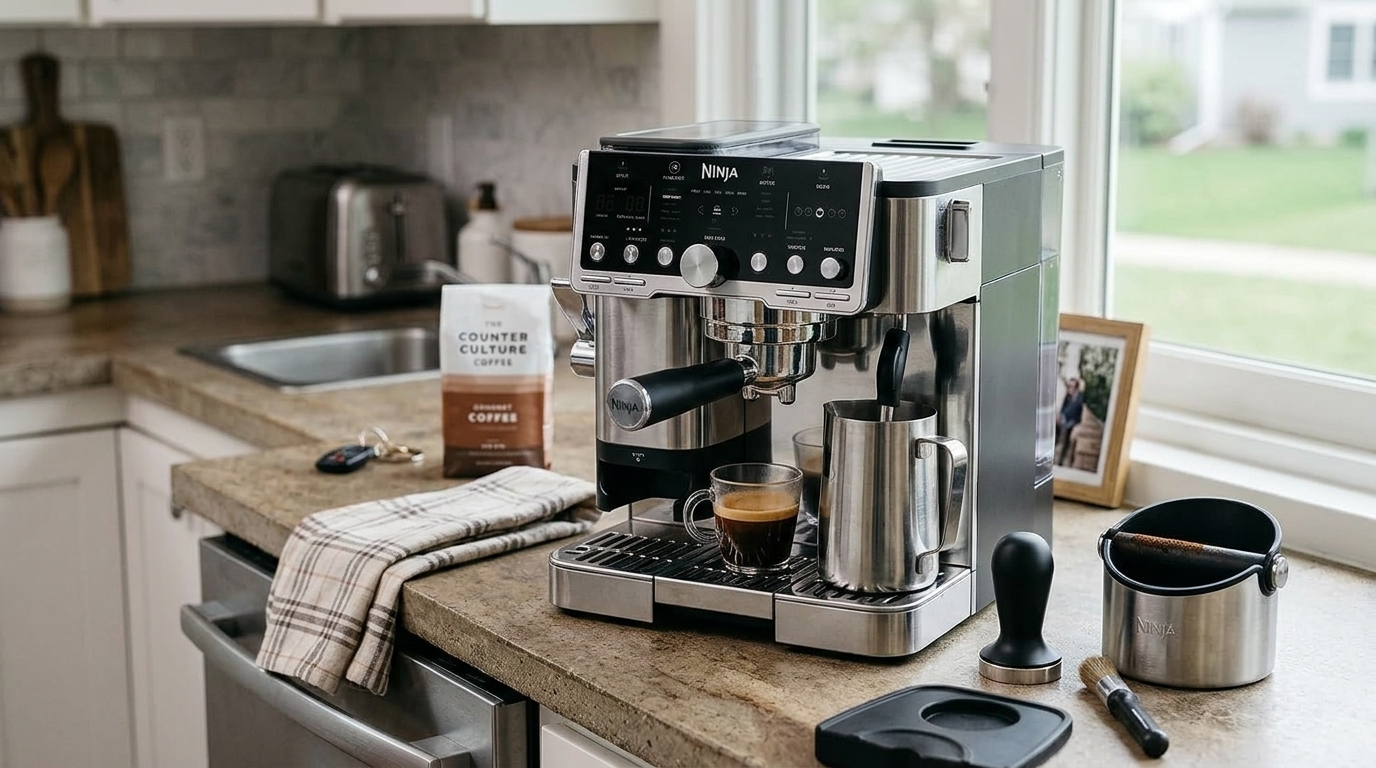
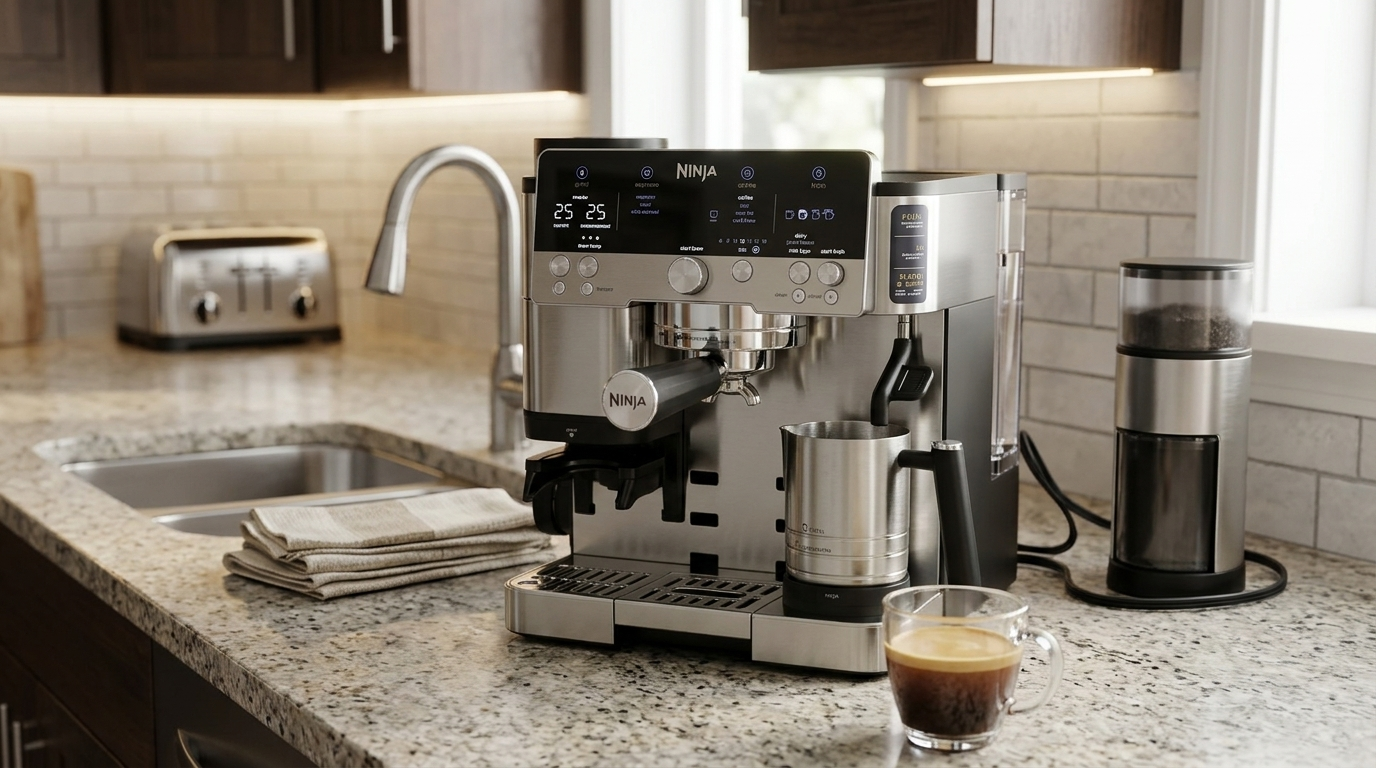
Side by side, these are obviously family. Both have a bean hopper on top, a control dial and display in the middle, a portafilter on the left and a frother on the right, in plastic with brushed metal accents.
The Pro is slightly narrower and taller, at about 12.5 inches wide, 13.4 inches deep and 14.8 inches tall, against about 13.4 by 13 by 14.6 inches for the Premier. It weighs about 27 lb, a pound more.
The Pro also adds two LED lights over the drip tray, which helped in a dark kitchen at 6 a.m. Neither has side handles, which I missed when sliding them forward to refill the hopper.
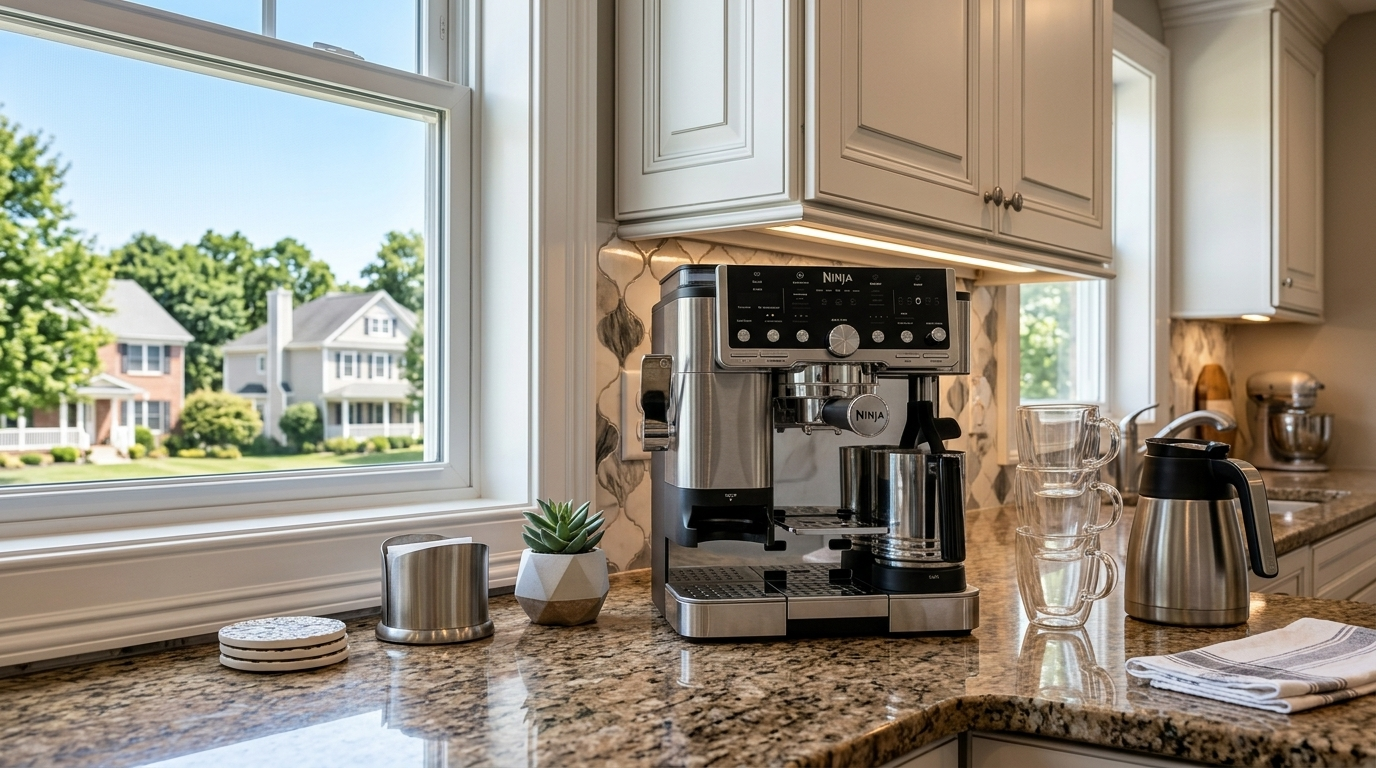
The Pro looks almost identical to the Premier, but tamps inside the grinding cradle.
Our tip: Leave room behind either machine to lift out the rear water tank, and a few inches above to refill the hopper.
Tamping: funnel and lever vs integrated
This is the Pro’s headline upgrade, and it is the reason I would choose it over its siblings.
On the Premier, a dosing funnel sits on the portafilter while you grind. After grinding, you pull a lever to tamp without removing the funnel, then take the funnel off and lock the portafilter in.
It is clean and easy, and my counter stayed tidier than with almost any grinder machine I have used. But it is still a few extra steps and one more part to rinse.
On the Pro, you place the portafilter in the cradle, grind, pull the tamping lever and brew. There is no funnel at all, and the machine recognizes whether you have fitted the single, double or Luxe basket.
The result was effectively zero mess and a noticeably faster routine. The only thing you give up is manual puck preparation, because there is little room to stir or level the grounds yourself.
| Step | Luxe Café Premier | Luxe Café Pro |
|---|---|---|
| Attach | Portafilter plus funnel | Portafilter only |
| Grind | By weight into the funnel | By weight in the cradle |
| Tamp | Pull the lever | Pull the lever twice |
| Remove | Take off the funnel | Nothing to remove |
| Basket recognition | No | Yes |
| Mess | Very little | Almost none |
Grinder and Barista Assist
Under the hood, the grinder and brew group are the same design on both, so do not expect the Pro to grind finer or extract differently.
Both have 25 grind settings on a conical burr grinder, a built-in scale that doses by weight and Barista Assist✕Barista AssistNinja’s guided system. It recommends a grind setting for your drink, then tells you after each shot whether to grind finer or coarser., which recommends a grind setting and tells you after each shot whether to go finer or coarser.
On the Premier, that feedback got me from a sour, watery shot to a balanced one in three tries with a medium roast. The Pro behaved the same way.
Shots to a balanced espresso on the Premier, by roast
My week-one dial-in results; the Pro’s identical grinder followed the same pattern.
Both grinders are at their best with medium and dark roasts. Light, fruity beans were the weak spot on both, because the grinder does not go fine enough to extract them fully.
Both also let you change brew temperature across three levels. Dropping one step for a very dark roast took the edge off the bitterness on both machines.
Our tip: Make one grind change at a time and pull a shot after each, because Barista Assist can only tell you which way to go if one thing changed.
Espresso quality and styles
With the same beans, the double espresso tasted the same on both machines: rich, smooth and full-bodied, with a thick hazel crema and clear chocolate, caramel and nutty notes.
The difference is range. The US Premier makes a double-basket espresso and its large-basket drinks. The Pro adds a single basket and ristretto, lungo and Americano styles.
I weighed the Pro’s shots against its own targets. A double aimed at 18 grams in and 36 grams out landed at 17.8 to 18 grams in and 38 to 39 grams out, a classic 1:2 brew ratio✕Brew ratioThe weight of coffee in the basket compared with the weight of espresso in the cup. 18 g in and 36 g out is a 1:2 ratio. near enough that I could not taste the difference.
| Pro drink | Target | What I measured |
|---|---|---|
| Single espresso | 9 g in, 18 g out | 9.1 g in, 23 g out |
| Double espresso | 18 g in, 36 g out | 17.8–18 g in, 38–39 g out |
| Ristretto✕RistrettoA short, concentrated espresso pulled with less water, roughly 1:1. Sweeter and thicker than a normal shot. | 18 g in, 18 g out | 18 g in, 21 g out |
| Lungo✕LungoA longer espresso pulled with more water through the same coffee. Lighter in body than a standard shot. | 18 g in, 144 g out | About 142 g, sometimes 70–80 g |
My scores by drink style on the Pro
My flavor scores out of 10.
Double espresso by roast, both machines
My scores on the Premier; the shared grinder and brew group gave the same pattern on the Pro.
The extra styles matter more than they sound. A ristretto on the Pro was sweeter and thicker than a normal double, and the single basket made an afternoon espresso without wasting 18 grams of beans.
Our tip: If the Pro’s lungo stops early, go one or two grind steps coarser before changing anything else.
Hot water and Americanos
This is the Pro’s quiet second advantage, and for big-mug drinkers it may be the deciding one.
The Pro has a dedicated hot water spout with three temperatures. Its Americano style puts the water in first and the espresso on top, and the three strength levels change the amount of water.
The US Premier has no hot water spout at all. For an Americano✕AmericanoA shot of espresso topped up with hot water. The coffee is never over-extracted, unlike pushing a whole mug of water through the grounds., I pulled a double shot and topped it up from my kettle every morning.
That sounds minor, but it changed my routine. On the Pro, the Americano became our daily big coffee and scored 8.6 in my tasting; on the Premier, it meant boiling a kettle first.
The Pro’s spout also made tea and cup-warming easy. Rinsing a cup with hot water before brewing kept small espressos noticeably warmer.
| Hot water task | Luxe Café Premier | Luxe Café Pro |
|---|---|---|
| Americano | Double shot plus kettle water | One touch, water first |
| Tea | Use a kettle | Spout, 3 temperatures |
| Warming cups | Use a kettle | Spout |
| Strength control | Your pour | 3 levels change the water |
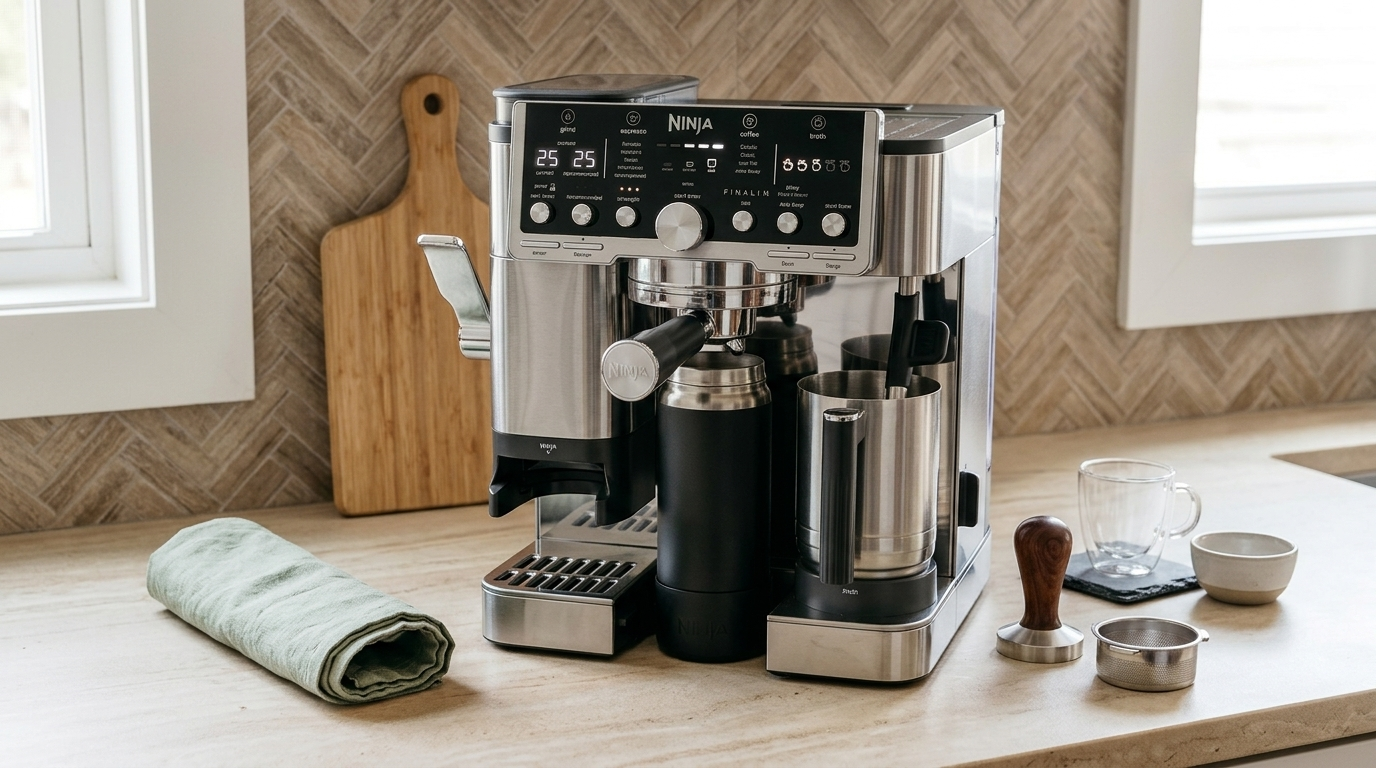
The Pro’s hot water spout made a big Americano a one-touch drink.
Our tip: Rinse your cup with water from the Pro’s hot water spout before brewing, because a small espresso cools quickly in a cold cup.
Big coffees from the Luxe basket
Both machines make drip-style coffee from the large Luxe basket. On the Premier, those cups were often thin, watery and under-extracted, because a lot of water passes through a small bed of coffee in a short time.
The Pro adds Classic and Rich styles, three strength levels and sizes from about 6 to 18 ounces. Rich uses less water for a stronger cup, which helped, but I still preferred an Americano for a big black coffee.
| Pro size | Approximate volume |
|---|---|
| Small Plus | About 6–8 oz |
| Medium Plus | About 10 oz |
| Large Plus | About 13–14 oz |
| Extra Large | About 18 oz |
One trick worked well on the Pro: keep a dark espresso blend in the hopper and grind a medium roast separately for drip-style coffee. The machine’s grind recommendation for your espresso beans stays untouched.
Steam wand and milk drinks
Both use Ninja’s Dual Froth System: a steam wand with a spinning whisk inside, four automatic presets and a manual steaming mode.
On the Premier, the presets made a tall, airy cappuccino foam and a decent latte texture, with milk at about 140 to 149°F. The automatic foam is a little stiff and separates from the milk, so manual steaming gave the silkiest microfoam✕MicrofoamMilk foam with bubbles so small you can barely see them. It feels silky and glossy, which is what latte art needs..
The Pro’s Dual Froth System Pro uses a thicker, 12 mm wand with an internal tube that keeps the outside cooler. That non-burn✕Non-burn steam wandA wand designed so the outside stays cooler during steaming. Milk does not bake onto it, so it wipes clean in seconds. design means milk does not bake onto it, and it wiped clean in seconds after every drink.
Texture was similar on both. Manual steaming on the Pro felt slightly more controllable, and cleaning was clearly easier.
Milk scores, my testing
My texture and stability scores out of 10 with whole milk.
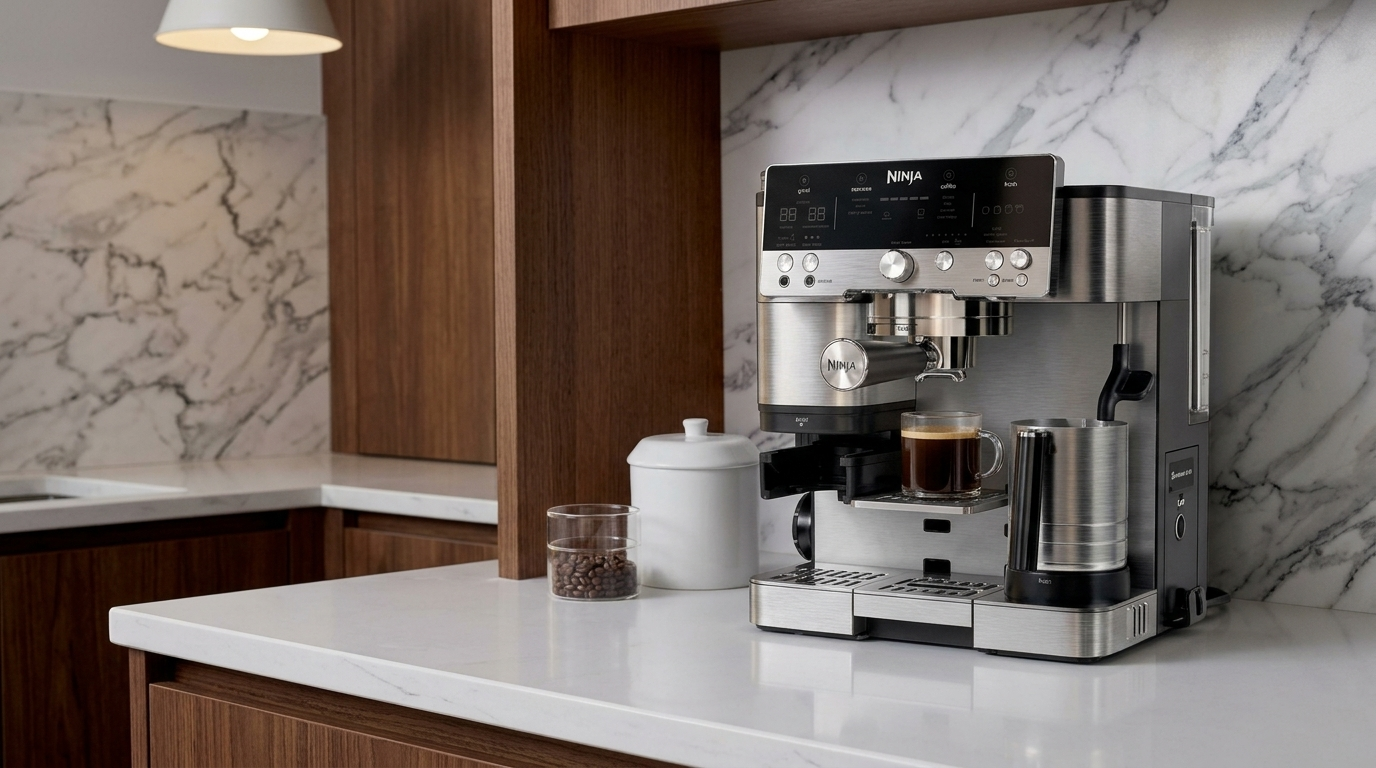
The Premier’s presets make easy cappuccinos, though the foam is a little stiff for latte art.
Our tip: Wipe the steam wand with a damp cloth straight after frothing on either machine, even though both purge themselves automatically.
Cold foam and iced drinks
Cold foam was a highlight on both. The whisk spins without steam, so you get thick, sweet foam from cold milk that held its shape for more than five minutes on top of an iced latte.
A double shot over ice, cold milk and a cap of cold foam took about two minutes on either machine.
The Pro adds a cold press setting that brews espresso with cooler water, so it tastes smoother and less bitter over ice. Because cooler water extracts more slowly, the machine recommends a finer grind and flushes the group to cool it first.
It was a nice upgrade for daily iced coffee drinkers, though the Premier’s hot shot over a full glass of ice was perfectly good too.
Our tip: Fill the glass completely with ice before brewing over it, because hot espresso melts a few cubes faster than you would think.
Water use and the drip tray
This is the Pro’s biggest weakness, and it is worth knowing before you buy.
The Pro uses water for brewing, rinsing, purging the wand and flushing the system before cold press. Overpressure water goes into the drip tray rather than back into the tank, so the tray fills fast.
I emptied the Pro’s drip tray every morning and sometimes twice a day, and topped up its roughly 2-liter tank daily. The Premier was noticeably less thirsty.
Daily water chores
From my four weeks with each; two people, three to four drinks a day.
Cleaning and maintenance
Day to day, both are easier to clean than most grinder machines. Pucks knock out firm and dry, and the counter stays clean.
On the Premier, the funnel, baskets, water tank, hopper and drip tray are dishwasher-safe. Its whisk pulls off for rinsing, and I soaked it in warm water once a week.
On the Pro, the non-burn wand made milk cleaning quicker, and there is no funnel to rinse. The drip tray and tank were the only chores that took longer.
Both alert you to descale✕DescalingRunning a mild acid through the machine to dissolve the mineral scale that hard water leaves behind in the heater and pipes.. On the Premier, descaling took about 30 minutes and came up after about a month of daily use with my moderately hard water; the Pro also asks for a brew group clean with a tablet, which takes about 10 minutes.
My hands-on cleaning time per day
Including drip tray and tank chores, not counting descaling.
| Task | Luxe Café Premier | Luxe Café Pro |
|---|---|---|
| After milk drinks | Wipe and purge, rinse the whisk | Wipe the non-burn wand, 20 s |
| Daily | Empty tray, rinse funnel and baskets | Empty tray (often twice), refill tank |
| Weekly | Soak the whisk | Rinse baskets, wipe brew area |
| When prompted | Descale, about 30 min | Brew group tablet, about 10 min; descale, about 30 min |
| Dishwasher-safe | Funnel, baskets, tank, hopper, tray | Baskets and removable parts |
Our tip: Purge and wipe the wand straight after every milk drink on the Premier, because dried milk is far harder to shift than fresh.
Daily use and noise
Both heat up in about a minute and grind a double in 10 to 15 seconds. A latte took me three to four minutes on the Premier, including grinding, tamping, brewing and frothing.
By week two on the Pro, my weekday routine took about three minutes: empty the drip tray, check the tank, switch on, grind, tamp twice, brew and steam. No funnel saved about 20 seconds per drink.
Minutes for a latte, start to finish
Average across my weekday mornings.
Noise was similar: a moderately loud grinder for a few seconds, a steady pump hum and a whoosh from the wand. The Premier’s beeps were loud until I turned them off in the settings.
Both have a low-water alert and huge cup clearance. On the Pro, two cups side by side only fit if they are narrow glasses.
A week of mornings on each
In week one on both machines, I focused on setup and espresso, and the guided workflow got me to good doubles within three shots. In week two, I moved to milk drinks; the Premier’s presets were easy, while the Pro’s non-burn wand was the clear winner for cleaning.
Week three was cold drinks and big coffees, where the Pro’s cold press and Americano became daily habits. In week four, I tested pre-ground decaf and long-term cleaning, and the only thing that wore on me was the Pro’s drip tray.
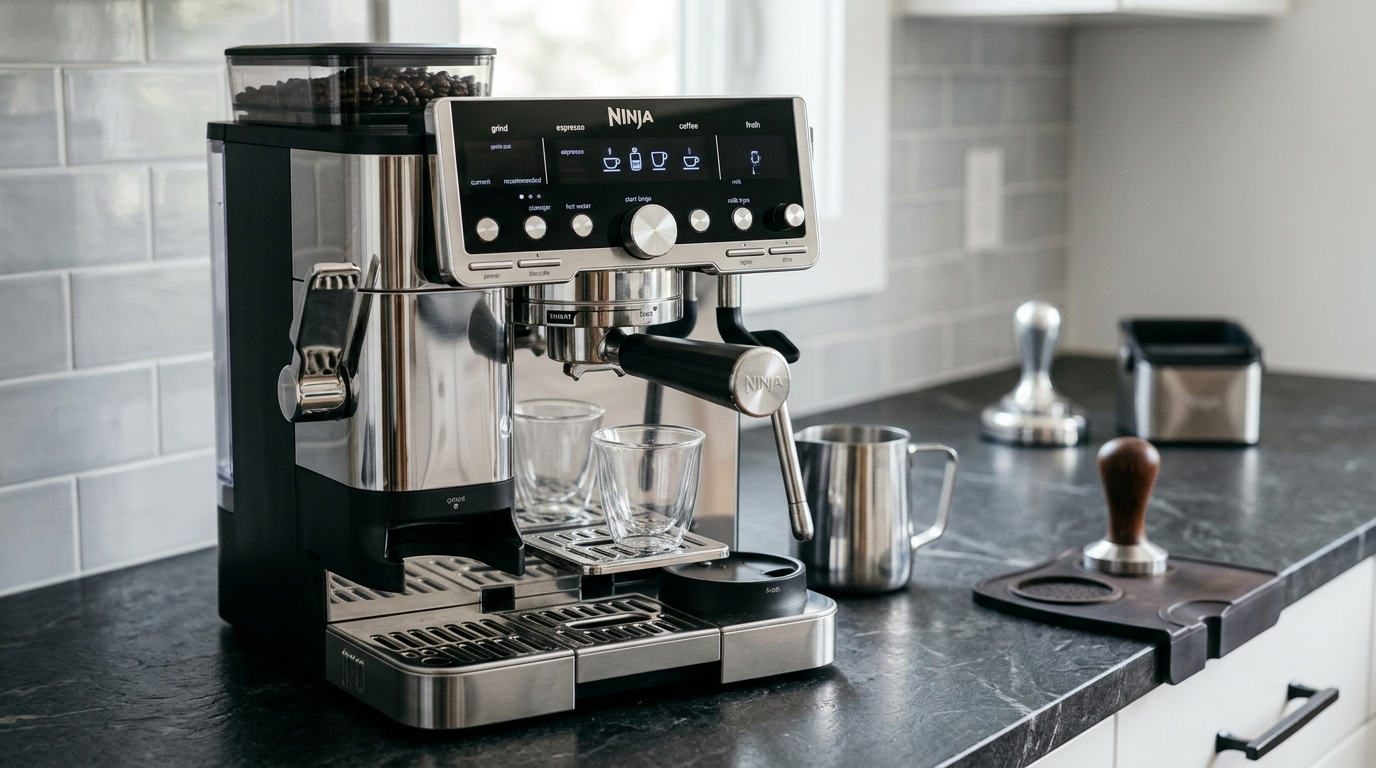
Two narrow glasses fit side by side under the Pro’s spouts.
Beans, water and supplies
Both machines are happiest with fresh medium and dark espresso blends, roasted within the last month. Keep only a few days’ worth in the hopper so beans do not go stale on top of the machine.
For decaf on the Pro, I ground about 17.8 grams separately, put it in the double basket and tamped it by hand with a 53 mm tamper. It worked well and did not affect the grind recommendations for my main beans.
Use fresh, filtered water and descale on time. University of Oregon researchers found that uneven extraction can waste up to 40% of the coffee in a puck, which is exactly what consistent weight-based dosing and an even tamp help prevent on both.
| Bean type | Luxe Café Premier | Luxe Café Pro |
|---|---|---|
| Medium roast | Excellent, near the first suggestion | Excellent, near the first suggestion |
| Dark roast | Excellent, drop temperature a step | Excellent, lowest temperature |
| Light roast | Limited by the grinder | Limited by the grinder |
| Decaf | Swap beans or use the Luxe basket | Grind separately, tamp by hand |
| Very dark, oily | Avoid | Avoid |
Our tip: Buy beans you can finish within a month and keep only a few days’ worth in the hopper.
Find Out the Price TodayWhere they sit in the Luxe Café range
It helps to see these two as steps on the same ladder rather than different machines. The Premier is the middle of Ninja’s Luxe Café family, and the Pro builds on it with workflow and convenience upgrades.
What does not change is the core: the grinder, the brew group and the overall construction are shared, so neither machine grinds finer or extracts light roasts better than the other.
What changes is everything around the shot. The Pro removes the funnel, adds a better wand, adds hot water, adds drink styles and adds cold press.
| Feature | Luxe Café Premier | Luxe Café Pro |
|---|---|---|
| Grinder and brew group | Shared design | Shared design |
| Tamping | Funnel and lever | Integrated, in the cradle |
| Steam wand | Narrower wand with whisk | 12 mm non-burn wand with whisk |
| Hot water spout | Not on the US model | Yes, 3 temperatures |
| Single basket | Not on the US model | Included |
| Americano, lungo, ristretto | No | Yes |
| Cold drinks | Cold foam | Cold foam and cold press |
| LED lights | No | Yes |
If you want something smaller still, Ninja also makes the compact Luxe Café Mini Plus. If you want full one-touch automation with no portafilter at all, the AutoBarista range grinds, brews and froths for you.
For most people choosing between these two, though, the decision is simple. If the funnel, the lack of hot water or the wand cleaning would annoy you every day, pay for the Pro; if none of them would, the Premier gives you the same coffee for less.
One last practical point: both machines are large. Measure under your cabinets, leave room behind for the rear tank and above for the hopper, and remember that neither has side handles, so pick a spot you will not need to move it from.
Real-life scenarios
Specs only go so far. These are the situations where one machine clearly pulled ahead during my eight weeks of testing.
One-touch Americano from the hot water spout. On the Premier, I boiled a kettle.
Both made a café-style cold foam latte in about two minutes; the Pro’s cold press was a little smoother.
No funnel to swap and a wand that wipes clean in seconds kept the queue moving.
Same espresso, same cold foam and the same guidance for less.
The Pro’s drip tray needed emptying daily, sometimes twice.
Only the Pro has a single basket and ristretto and lungo styles.
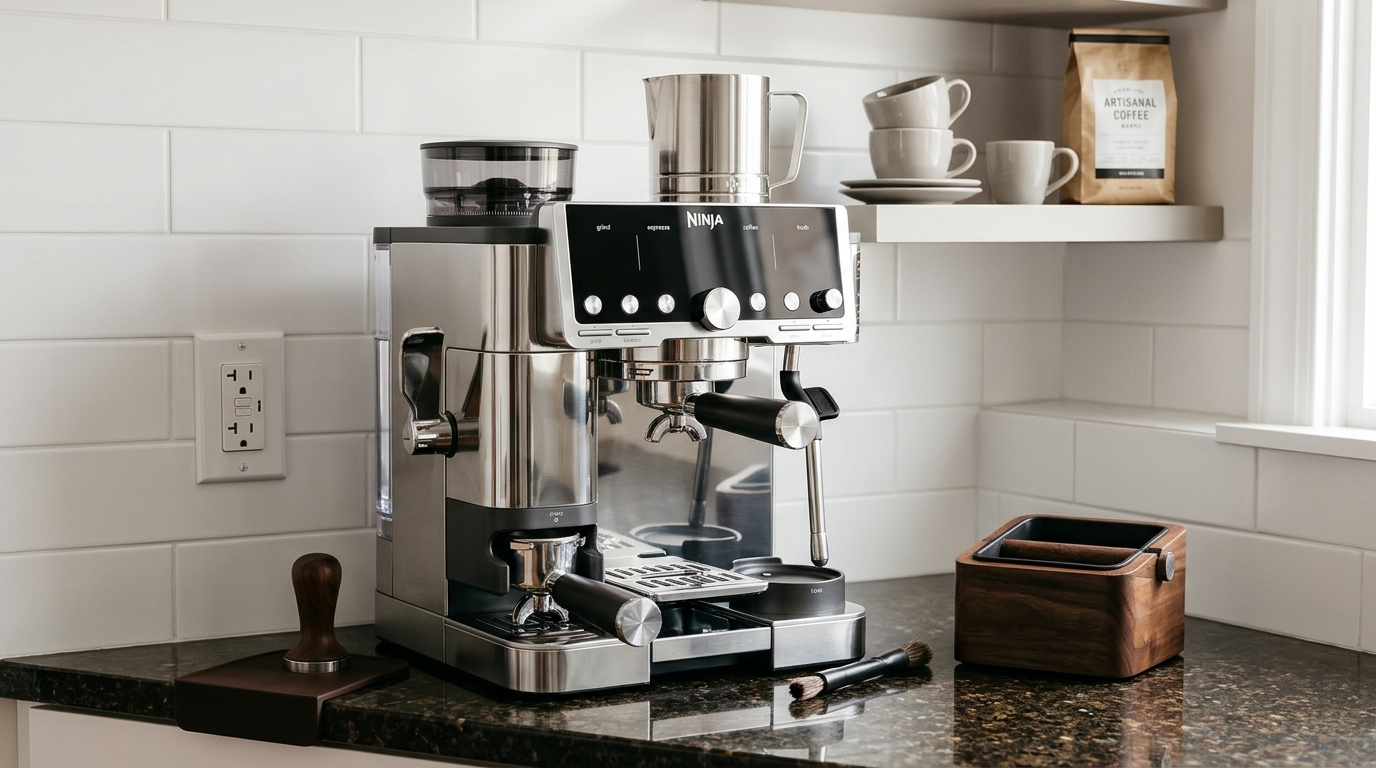
For daily milk drinks, the Pro’s non-burn wand made the routine noticeably easier.
My scorecard
These are my own scores out of 10, straight from my single reviews of each machine, plus two areas that decide this matchup.
Ninja Luxe Café Premier
Ninja Luxe Café Pro
Overall, I rate the Premier 8.1 and the Pro 8.6. The Pro earns its lead with a cleaner workflow, a better wand and real hot water, and gives a little back on water use.
See How Much You’ll SaveWhich one is right for you?
4 quick questionsWhich one should you buy?
It comes down to two questions: do you drink big Americanos, and how many milk drinks does your household make each day? If the answer to either is "lots", the Pro earns its place.
For more detail, read my Luxe Café Premier review and Luxe Café Pro review, or see how the Premier stacks up against a hands-on machine in Ninja Luxe Café vs Barista Express.
For espresso, lattes and cold foam on a tighter budget, the Premier is the sensible pick.
- You mostly drink espresso and lattes
- You love iced drinks with cold foam
- You already own a kettle
- You want fewer drip-tray trips
- You want one-touch Americanos
- You hate rinsing a funnel
- You want ristretto or single shots
- You make milk drinks every day
- You drink big Americanos or tea
- You want no funnel and no mess
- You like smoother cold press iced coffee
- You hate emptying drip trays
- You enjoy hands-on puck prep
- Your kitchen is very tight
For most daily milk-drink households, my pick is the Ninja Luxe Café Pro. Grinding, weighing and tamping in one cradle removes the messiest step, the non-burn wand makes daily lattes far less of a chore, and the hot water spout finally makes a proper Americano. Make emptying the drip tray your first job each morning and it is the easiest guided espresso machine I have used.
The Ninja Luxe Café Premier is the smarter buy if you mostly drink espresso and lattes and want to spend less. It shares the Pro’s grinder, brew group and cold foam, so in the cup you give up very little.
Whichever you choose, stick to fresh medium and dark roasts and make big black coffees as Americanos rather than large-basket brews.
Luxe Café Premier vs Pro specifications
From manufacturer specifications and my own testing.
| Luxe Café Premier | Luxe Café Pro | |
|---|---|---|
| Model | Ninja ES601 | Ninja ES701 |
| Type | Guided espresso with grinder and scale | Guided espresso with grinder, scale and integrated tamper |
| Brew styles | Espresso, drip-style coffee, cold brew | Espresso, drip-style coffee, cold press, hot water |
| Espresso styles | Double and Luxe basket drinks | Single, double, ristretto, lungo, Americano |
| Grinder | Conical burr, 25 settings | Conical burr, 25 settings |
| Dosing | By weight | By weight, basket recognition |
| Tamping | Lever with dosing funnel | Integrated in the cradle |
| Pressure | 9 bar | 9 bar, thermoblock |
| Milk | Dual Froth System, 4 presets incl. cold foam | Dual Froth System Pro, 12 mm non-burn wand |
| Hot water | No spout (US model) | Separate spout, 3 temperatures |
| Power | 1,650 W | 1,650 W |
| Water tank | Removable, low-water alert | About 2 L, rear mounted |
| Dimensions (W x D x H) | 13.4 x 13 x 14.6 in | 12.5 x 13.4 x 14.8 in |
| Weight | About 26 lb | About 27 lb |
How I tested and compared them
I used each machine as my everyday coffee maker for four weeks, making espresso, Americanos, lattes, cappuccinos, flat whites, iced lattes with cold foam and the large-basket coffee styles, plus ristretto, lungo and cold press on the Pro. Testing notes were written up together by Michael Reynolds and a second HouseholdMe tester.
I counted shots to a balanced espresso by roast, weighed doses and outputs on a separate scale, measured milk temperatures with a probe and compared automatic presets with manual steaming using whole, 2% and oat milk.
I tracked drip tray and tank refills, followed every cleaning and descaling routine, then checked my notes against Ninja’s specifications and owner documentation.
- Coffee: dose, crema, body, flavor and consistency.
- Milk: foam texture, temperature, speed and drink range.
- Workflow: heat-up, controls, guidance and daily routine.
- Ownership: cleaning, water care, noise and footprint.
Ninja Luxe Café Premier vs Pro FAQ
Is the Ninja Luxe Café Pro worth it over the Premier?
Yes, if you make milk drinks every day or drink big Americanos. The Pro tamps in the cradle with no funnel, has a 12 mm non-burn steam wand, a three-temperature hot water spout and ristretto, lungo and Americano styles. If you mostly drink espresso and lattes, the Premier is the better value.
Do the Premier and Pro make the same espresso?
Essentially yes. They share the same 25-step grinder and brew group, and with the same beans the double espresso tasted the same in my testing.
Does the Ninja Luxe Café Premier have a hot water spout?
Not the US model. I used a kettle for Americanos and tea. The Pro has a separate hot water spout with three temperatures.
What is the difference in tamping?
The Premier grinds through a dosing funnel and tamps with a lever. The Pro grinds and tamps inside the cradle with no funnel, and recognizes the basket you fitted.
Do both make cold foam?
Yes. Both have Ninja’s Dual Froth System with a cold foam preset, which held its shape for more than five minutes in my testing. The Pro adds cold press espresso for smoother iced drinks.
Why does the Pro use so much water?
It uses water for brewing, rinsing, purging the wand and flushing before cold press, and overpressure water goes into the drip tray. I emptied the tray daily, sometimes twice.
Which is easier to clean?
The Pro for milk, thanks to its non-burn wand and no funnel. The Premier for water chores, because its drip tray fills more slowly.
Are they good with light roasts?
Not really. Both grinders work best with medium and dark roasts; light roasts often tasted sour on both.
Can I use pre-ground coffee?
Yes. On the Pro I ground decaf separately, put it in the double basket and tamped by hand with a 53 mm tamper.
Which one is bigger?
They are close. The Premier is about 13.4 x 13 x 14.6 inches and 26 lb; the Pro is about 12.5 x 13.4 x 14.8 inches and 27 lb.

- Our hands-on Ninja Luxe Café Premier review
- Our hands-on Ninja Luxe Café Pro review
- Ninja product specifications and owner documentation
- The perfect shot of espresso every time with chemistry, University of Oregon research
- General espresso brewing, milk frothing and maintenance guidance