Breville Bambino vs Bambino Plus
Two tiny Breville espresso machines with the same heater, the same 54 mm portafilter and the same excellent shots. The Breville Bambino gives you a manual steam wand and a dedicated hot water button, while the Breville Bambino Plus adds hands-free milk with temperature and foam settings, a three-way valve and a bigger tank. I used both every day for four weeks to find out whether the Plus is worth the step up.
We choose products independently. We may earn a commission through links on this page; your price stays the same. Affiliate policy
Jargon helpNew to espresso? Tap any dotted term to see what it means.
In this comparison
Buy the Breville Bambino Plus if you drink lattes, flat whites or cappuccinos most days. It pulls the same rich, balanced espresso as the Bambino, but its automatic steam wand makes glossy microfoam with a single button, its three-way valve leaves a dry puck, and its tank is about a third bigger. The Breville Bambino is the smarter buy if you mostly drink espresso or Americanos, or if you want to learn to steam by hand: you get the same shots, a dedicated hot water button and a smaller, simpler machine.
The two machines
Specs checked November 24, 2026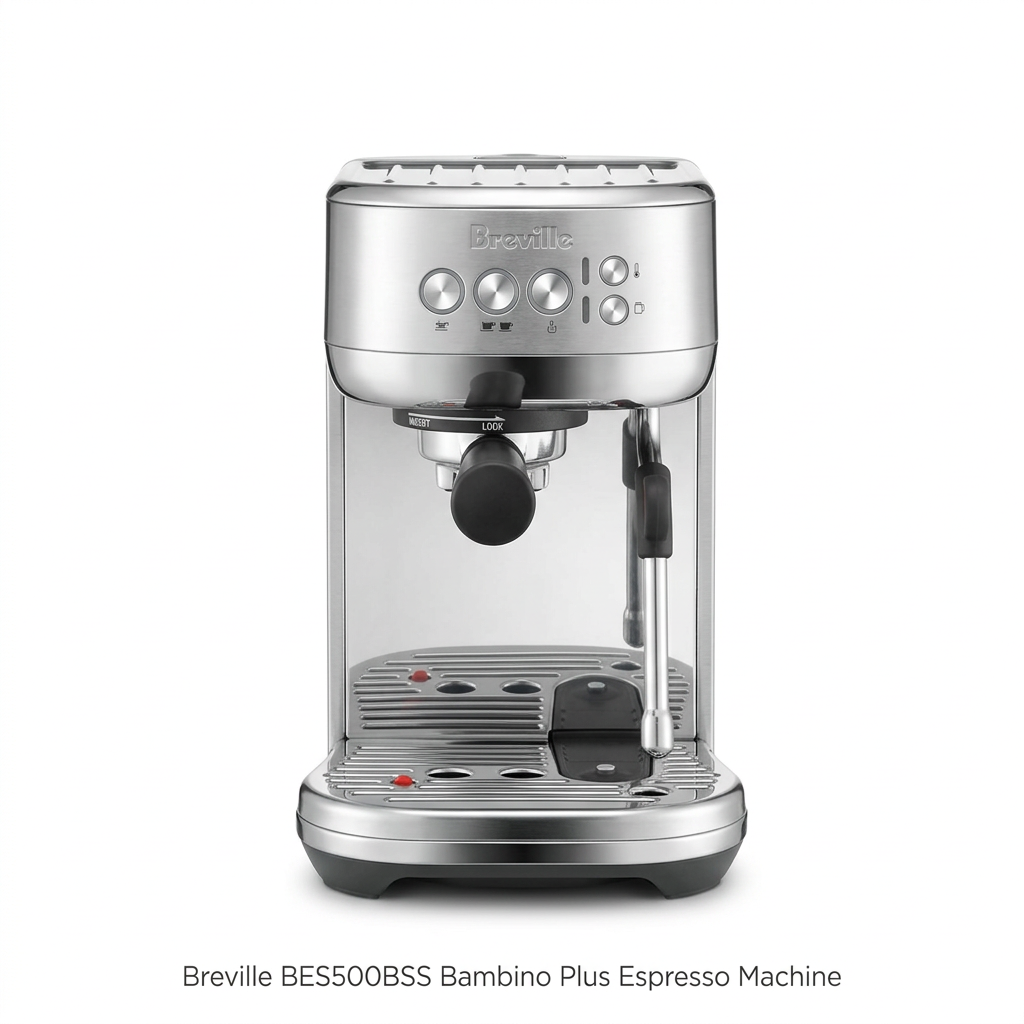
Three-second heat-up, PID and pre-infusion, plus an automatic steam wand with three temperatures, three foam levels and auto purge.
Check price on Amazon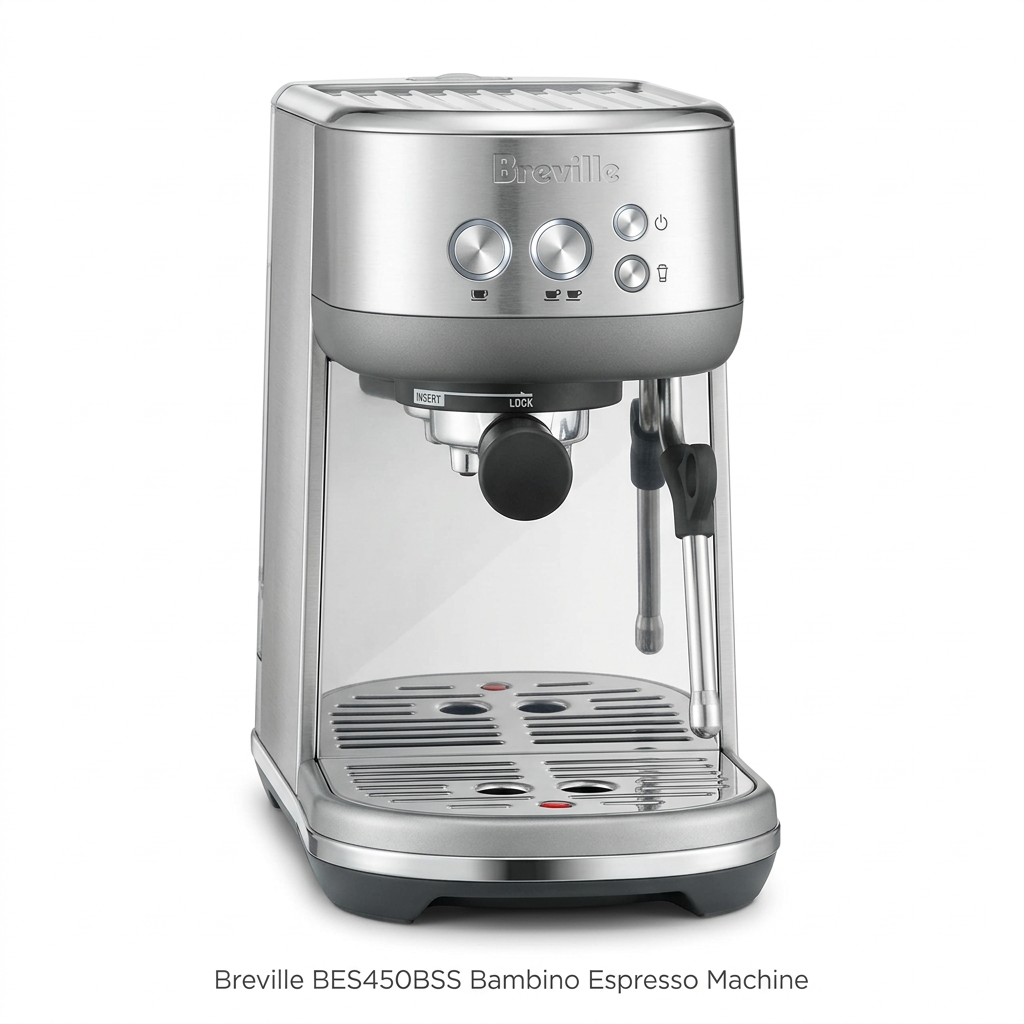
The same heater and shots in a simpler package, with a manual steam wand, a hot water button and four buttons in total.
Reveal Today’s DealBambino vs Bambino Plus at a glance
- The espresso is the same: same ThermoJet heater, PID control, pre-infusion and 54 mm portafilter.
- The Plus adds an automatic steam wand, a three-way valve, a low-water sensor and a bigger tank.
- The Bambino keeps a dedicated hot water button and is the simpler, smaller-tank machine.
- For daily milk drinkers, the Plus is the better buy; for espresso drinkers, the Bambino is enough.
Head to head
The better result in each row is marked, based on four weeks with each machine and the manufacturer specs. Rows where they are identical have no winner.
The tally is not my verdict on its own, but in this matchup most of the differences point to the Plus.
| Spec | Bambino | Bambino Plus |
|---|---|---|
| Espressomy tasting, same beans and grinder | Rich, balanced | Rich, balanced |
| Milk steaming | Manual wand only | Automatic or manual ✓ Best |
| Milk settings | None | 3 temperatures, 3 foam levels ✓ Best |
| Puck after the shot | Wet, sometimes soupy | Firm and dry, 3-way valve ✓ Best |
| Water tank | About 47 oz | About 64 oz, low-water sensor ✓ Best |
| Hot water | Dedicated button ✓ Best | Through the wand, less handy |
| Drip tray | Fills more slowly ✓ Best | Fills fast from purges |
| Heat-up | About 3 s | About 3 s |
| Portafilter | 54 mm, about 18 g | 54 mm, about 18 g |
| Footprint | 7.7 x 12.6 in | 7.7 x 12.6 in |
| Power | 1,560 W | 1,560 W |
| Rows won | 2 | 4 |
Bambino vs Bambino Plus pros and cons
Breville Bambino Plus
- Automatic steam wand makes silky milk hands-free
- Three-way valve leaves a dry, tidy puck
- Bigger tank with a low-water sensor
- Drip tray fills quickly and needs daily emptying
- Hot water is less convenient than on the Bambino
- Plastic tamper feels cheap on a machine this good
Breville Bambino
- Same rich espresso and 3-second heat-up
- Dedicated hot water button for Americanos and tea
- Simplest machine of the two, with only four buttons
- Short manual wand takes a week or more to learn
- Wet pucks without a three-way valve
- Smaller tank with no low-water warning
Who should buy which machine?
- Daily latte, flat white and cappuccino drinkers
- Homes where one person tinkers and another wants it easy
- Anyone who never wants to learn a steam wand
- Espresso and Americano drinkers
- Beginners who want to learn real milk steaming
- Buyers who want to spend more on the grinder
Where they sit in the Breville range
These are the two smallest Breville espresso machines. Both are semi-automatic✕Semi-automatic espresso machineA machine where you grind, dose and tamp the coffee yourself, and the machine controls the water, pressure and shot volume. You still do the barista part with a portafilter. machines with no grinder, so you grind, dose and tamp the coffee yourself.
Above them sit Breville’s machines with a built-in grinder, such as the Barista Express. Those are bigger, take longer to heat up and use a slower heating system.
Between the Bambino and Bambino Plus, the espresso side is identical. The real differences are milk, pucks, water capacity and hot water.
| Model | Grinder | Milk | Heat-up |
|---|---|---|---|
| Bambino | No | Manual steam wand | About 3 s |
| Bambino Plus | No | Automatic steam wand | About 3 s |
| Grinder models | Yes | Manual or automatic wand | Longer |
Our tip: Budget for a good espresso burr grinder before choosing between these two, because the grinder decides your shot quality more than either machine.
Design, size and build
These two share the same body. Both measure about 7.7 inches wide, 12.6 inches deep and 12.2 inches tall, and both weigh about 11 lb.
From a distance, they look almost identical: brushed stainless front, same 54 mm group head, same drip tray and a rear water tank.
The difference is on the right-hand side. The Plus has a small metal sensor plate under the wand and two extra buttons for milk temperature and foam level.
The Bambino takes up less space than most toasters.
The front and sides are stainless steel on both, with plastic panels elsewhere. Neither flexed or creaked during my month with each.
The weak spots are the same on both: a light portafilter and a plastic tamper that feels like an afterthought.
Because both use the common 54 mm size, better tampers, baskets and dosing funnels are easy to find.
Our tip: Leave a few inches of room above either machine, because the water tank lifts out from the top at the back.
Setup and first shots
Setup took me about ten minutes on each: rinse the tank and jug, fill the tank, flush water through the group head and the wand, then pull a couple of blank shots.
The Plus comes with the Razor dosing tool, which trims the coffee bed to the right height. The Bambino does not, but it is easy to add later.
Both include single-wall and dual-wall baskets✕Dual-wall (pressurized) basketA filter basket with a double floor and one small exit hole. It builds pressure for you, so pre-ground coffee or a basic grinder still gives a crema-topped shot., in one-cup and two-cup sizes.
| Setup step | Bambino | Bambino Plus |
|---|---|---|
| Time to first shot | About 10 minutes | About 10 minutes |
| Razor dosing tool | Not included | Included |
| Low-water sensor | No | Yes, buttons stay dark |
| Shots until it tasted right | 4 to 6 | 4 to 6 |
On the Plus, the buttons simply stay unlit when the tank is low or not seated properly. On the Bambino, you have to keep an eye on the water level yourself.
I ran the Bambino nearly dry once in week two. It sputtered, I refilled it, and it carried on, but the Plus never let that happen.
Buttons and settings
The Bambino has four backlit buttons: one cup, two cups, steam and hot water. That is the whole interface, and I never opened the manual after day one.
The Plus has one cup, two cups and steam on the front, plus separate buttons on the right for milk temperature and foam level, each with three little lights.
On both, the shot buttons are volumetric and reprogrammable. Hold the button to start, release it when the cup reaches the level you want, and the machine remembers it.
| Setting | Bambino | Bambino Plus |
|---|---|---|
| Shot buttons | 1 cup, 2 cups, programmable | 1 cup, 2 cups, programmable |
| Steam | On or off | Auto or manual |
| Milk temperature | By hand and feel | 3 levels |
| Foam level | By jug position | 3 levels |
| Hot water | Dedicated button | Via the wand |
| Auto off | Yes | Yes |
Neither has a screen, a shot timer or profiles. For timing and weighing shots, I used a small scale with a built-in timer on both.
Our tip: Reprogram the two-cup button once you have dialed in your favorite beans, so everyday shots need no scale.
Grind, dose and tamp
Neither machine has a grinder, and both reward a good one. With the single-wall baskets, they are honest: great coffee in, great espresso out.
The portafilter✕PortafilterThe handle with a metal basket that holds the ground coffee. You fill and tamp it, then lock it into the group head where the water flows through. is 54 mm on both and holds about 16 to 19 grams in the double basket. My sweet spot was 18 grams on each.
The Plus’s Razor tool helped a little with consistency. After tamping, it trims the bed to the right height, so my doses varied less from morning to morning.
How grind size changed my double shot, both machines
Approximate shot times for an 18 g double with the same beans and grinder. Both machines behaved the same.
I used two grinders on each machine: an entry-level burr grinder and a proper espresso burr grinder. The difference was far bigger than the difference between the two Bambinos.
With the entry-level grinder, both gave sour, fast shots in the single-wall baskets. With the espresso grinder, both gave sweet, syrupy shots within three adjustments.
| Prep detail | Bambino | Bambino Plus |
|---|---|---|
| Portafilter | 54 mm | 54 mm |
| Best dose | 18 g | 18 g |
| Tamper | Plastic, upgrade it | Plastic, upgrade it |
| Razor dosing tool | No | Yes |
| Pre-ground option | Dual-wall baskets | Dual-wall baskets |
For more on why a burr grinder matters so much, see my guide to burr vs blade grinders.
Espresso quality
This is where the two are tied. Both use Breville’s ThermoJet✕ThermoJet heatingBreville’s fast heater. It heats water as it flows instead of keeping a boiler hot, so the machine is ready to brew in about 3 seconds. heater, PID✕PID temperature controlA digital controller that constantly adjusts the heater to keep the brew water at a steady temperature, so shot after shot tastes the same. control and a 15-bar pump that brews at about 9 bar.
Every shot on both starts with low-pressure pre-infusion✕Pre-infusionA gentle soak of the coffee bed at low pressure before full pressure kicks in. It helps water flow evenly and makes the shot more forgiving of small tamping errors., and I could see it in the spouts: a slow start, then an even, honey-colored pour.
With a medium-dark blend, 18 grams in and about 36 grams out in 28 seconds, both gave me dark chocolate, caramel and a gentle ripe-fruit sweetness under a thick hazelnut crema.
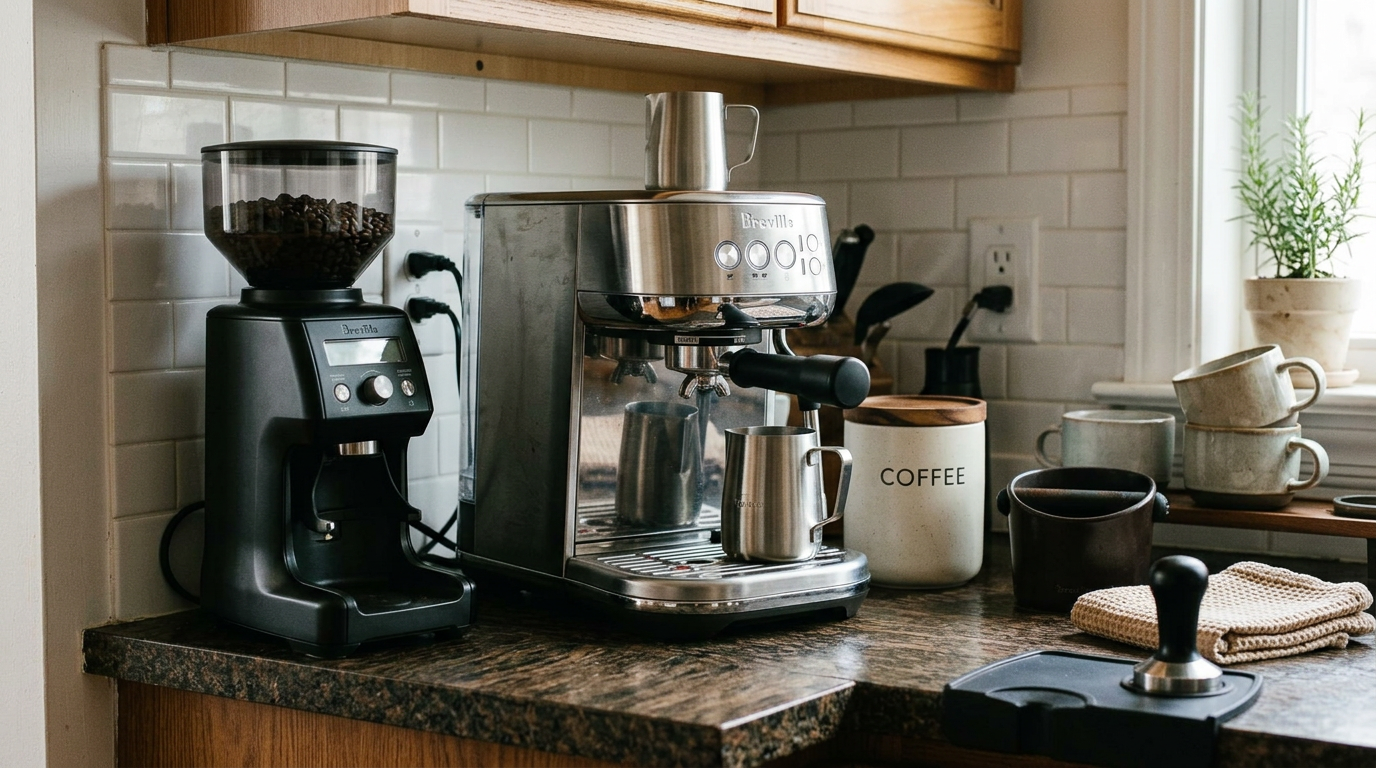
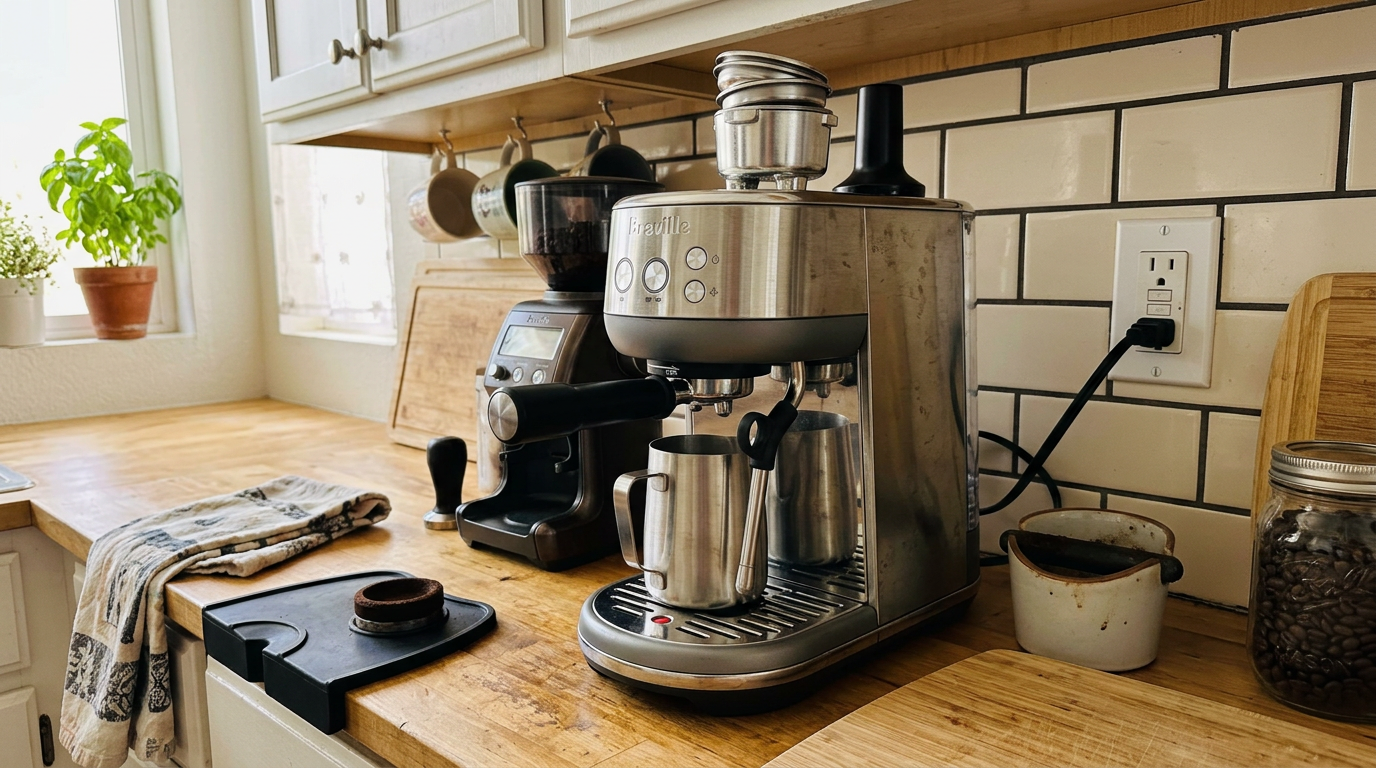
The Plus beside my grinder. The espresso on both depends on the grind.
In blind tastings, I could not reliably tell the shots apart. The few times we did, it came down to the puck prep, not the machine.
Lighter roasts were brighter and juicier on both, and the steady temperature kept them from tipping into sourness once I ground a little finer.
My espresso ratings
My single-review scores out of 10. The small gap comes from the drier puck and easier back-to-back shots on the Plus.
| What you taste | Likely cause | First fix on both |
|---|---|---|
| Sour, thin, fast | Under-extracted✕Under-extractionWhen water does not pull enough flavor out of the coffee, usually because the grind is too coarse. The shot runs fast and tastes sour and thin. | Grind finer |
| Bitter, slow, dark | Over-extraction | Grind slightly coarser |
| Sour and bitter together | Uneven tamp | Level the bed, tamp straight |
| Pale crema that fades fast | Stale beans | Beans 1 to 3 weeks from roast |
| First shot lukewarm | Cold group and cup | Pull a blank shot first |
If you are still choosing beans, my guide to coffee roast levels explains how roast changes the grind you need.
See Today’s PricePucks and the three-way valve
The Plus has a three-way solenoid valve✕Three-way solenoid valveA valve that releases leftover pressure from the group head into the drip tray after the shot. The puck comes out drier and you can remove the portafilter straight away.. The Bambino does not.
On the Plus, every shot ended with a short hiss into the drip tray, and the puck knocked out firm and fairly dry. I could pull the next shot straight away.
On the Bambino, the puck was often wet and sometimes soupy, especially with lighter doses. Knocking it out was messier, and I sometimes had to rinse the basket before the next shot.
Dry pucks out of 20 shots
My count over one week with the same 18 g dose. A “dry” puck knocked out in one piece.
This does not change the taste of a single shot. It matters when you make several drinks in a row, because the Plus is simply tidier and faster between shots.
Milk steaming
This is the biggest difference between the two, and the main reason the Bambino Plus exists.
Bambino: short manual wand
The Bambino’s wand is short and manual, with on or off steam and no knob to fine-tune the flow. You control the texture with jug position alone.
My first lattes had big, soapy bubbles. It took most of the first week to get a whirlpool going, and by week three the milk was glossy enough for simple hearts.
Once mastered, the Bambino’s milk was genuinely good: smooth, glossy microfoam✕MicrofoamMilk foam with bubbles so small you can barely see them. It feels silky and glossy, like wet paint, which is what a good flat white or latte needs. that poured well.
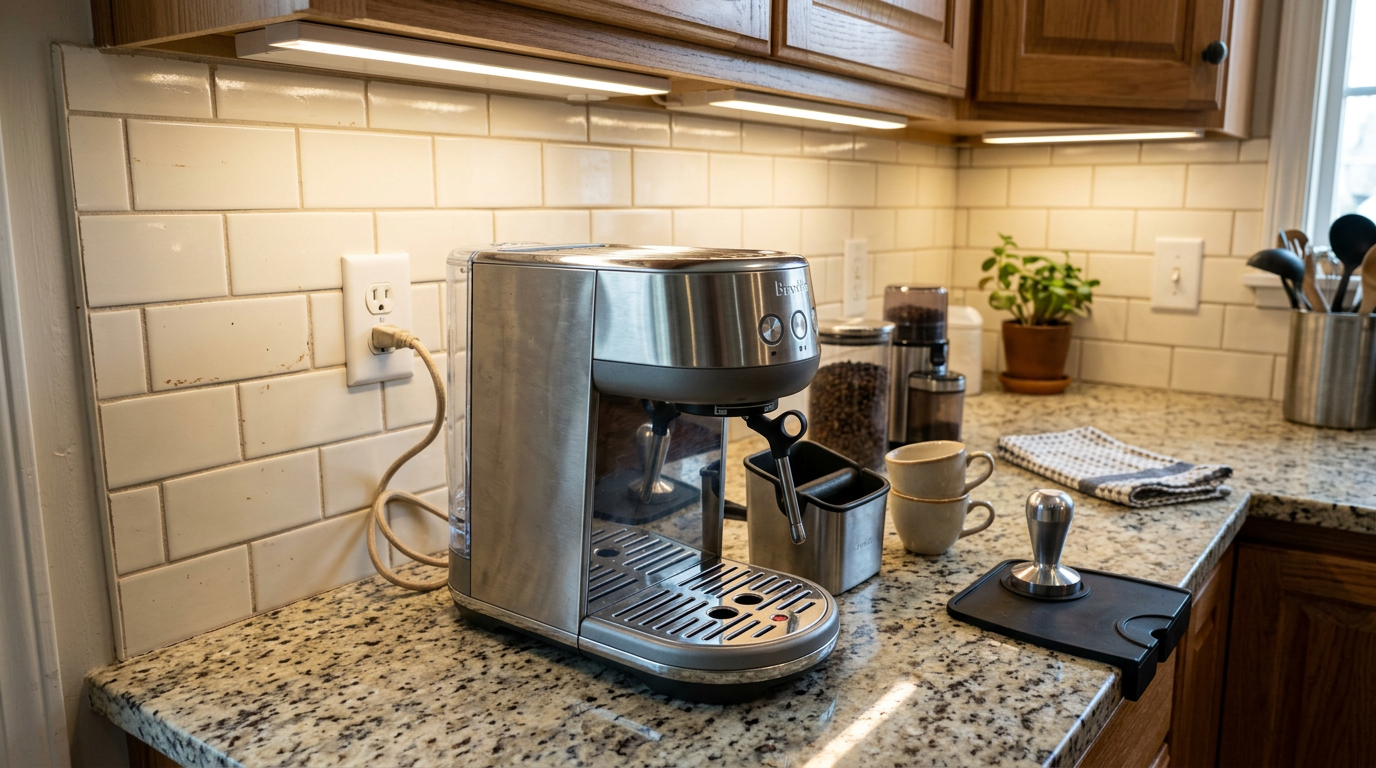
The Bambino’s short wand makes real microfoam, but it takes practice.
Bambino Plus: hands-free milk
On the Plus, I filled the jug with cold milk, set it on the sensor plate, chose a temperature and foam level and pressed steam.
About 45 seconds later, the wand stopped on its own. When I lowered the jug, it purged✕PurgeA short blast of steam or water through the wand to clear condensed water before steaming, or milk from the tip afterwards. itself automatically. The milk was glossy and smooth on the very first try.
You can also swing the wand out and steam by hand, so the Plus never locks you into automatic mode.
Milk texture over four weeks
My texture ratings out of 10 with cold whole milk. The Plus was consistent from day one; the Bambino caught up with practice.
| Milk feature | Bambino | Bambino Plus |
|---|---|---|
| Steam wand | Manual only | Automatic, with manual option |
| Temperature control | By hand | 3 levels, stops by itself |
| Foam control | Jug position | 3 levels |
| Auto purge | No | Yes |
| Learning curve | 1 to 3 weeks | None |
| Hands-free | No | Yes |
Which milk steamed best on each
My ratings out of 10 for texture and stability. Regular almond drink was thin on both; barista versions were far better.
The settings I used most on the Plus were temperature 2 with foam 1 for flat whites and foam 2 for lattes. Foam 3 gave a tall, airy cappuccino cap.
Our tip: On the Plus, push the jug all the way back on the sensor plate, so the wand sits near the rear of the jug and the milk can spin.
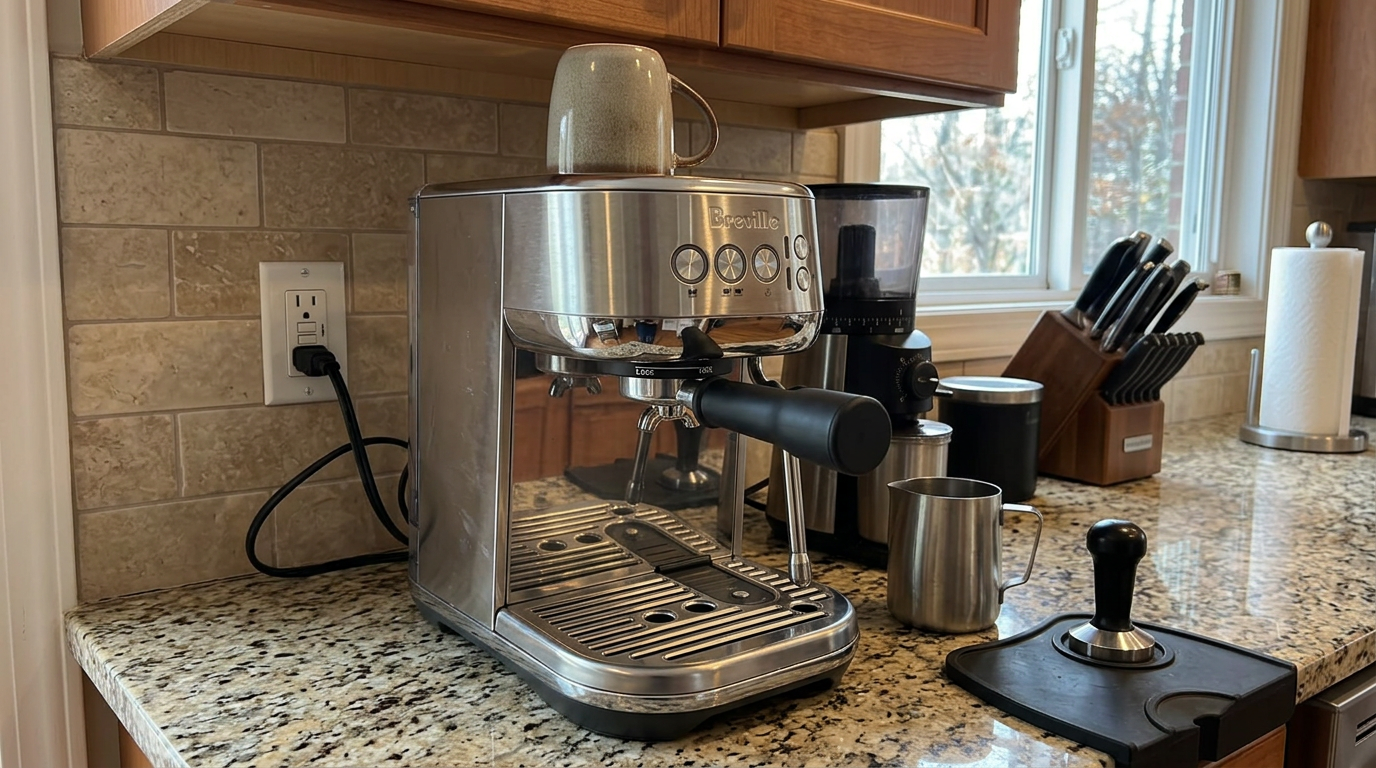
The sensor plate tells the Plus when to stop steaming.
See How Much You’ll SaveLatte art
Both can pour latte art, because both make real microfoam. They just get there in different ways.
On the Plus, auto mode on foam level 1 made thin, glossy milk that poured simple hearts easily. For more complex patterns, I switched to manual steaming for slightly finer control.
On the Bambino, latte art was entirely down to my steaming skill. By week three, I was pouring hearts most mornings, but the short wand and on-off button left little room for error.
| Latte art step | Bambino | Bambino Plus |
|---|---|---|
| Milk texture | Manual, takes practice | Auto foam 1 |
| Stretch | 3 to 4 seconds | Set by the machine |
| Before pouring | Tap and swirl | Tap and swirl |
| First decent heart | Week three | Week one |
Our tip: Tap the jug on the counter and swirl until the milk shines before pouring, on both machines.
Hot water, Americanos and tea
Here the smaller machine wins. The Bambino has a dedicated hot water button, and the water comes out of the wand at a steady flow.
On the Plus, there is no separate hot water button on the US model. Hot water comes through the steam wand, and in practice I boiled the kettle for Americanos and tea.
For an Americano✕AmericanoEspresso topped up with hot water. Because the water is added afterwards instead of being pushed through the coffee, it keeps more sweetness and less bitterness., hot water from either machine was a little cool for my taste. Pre-heating the mug with kettle water helped.
| Drink | Bambino | Bambino Plus |
|---|---|---|
| Americano | Hot water button | Kettle is easier |
| Green tea | Good | Use a kettle |
| Black tea | A bit cool | Use a kettle |
| Long black | Water first, then shot | Kettle water, then shot |
Cleaning and upkeep
Daily cleaning is quick on both: rinse the portafilter and basket, empty the drip tray and wipe the wand.
The Plus’s auto purge cleans the inside of the wand for you, and its dry pucks mean less rinsing. The Bambino needs a manual purge after every jug, or milk dries on the tip.
The catch on the Plus is the drip tray. The three-way valve and the auto purge both send water into it, and I emptied it every day, sometimes twice. It overflowed once when I forgot.
My daily hands-on cleaning time
With one or two milk drinks a day, not counting descaling.
| When | Bambino | Bambino Plus |
|---|---|---|
| After milk | Purge and wipe the wand | Wipe the wand, it purges itself |
| Daily | Empty tray, rinse basket | Empty tray, sometimes twice |
| Weekly | Wipe group head and gasket | Wipe gasket, wash sensor plate |
| Descaling | Every few months | When prompted |
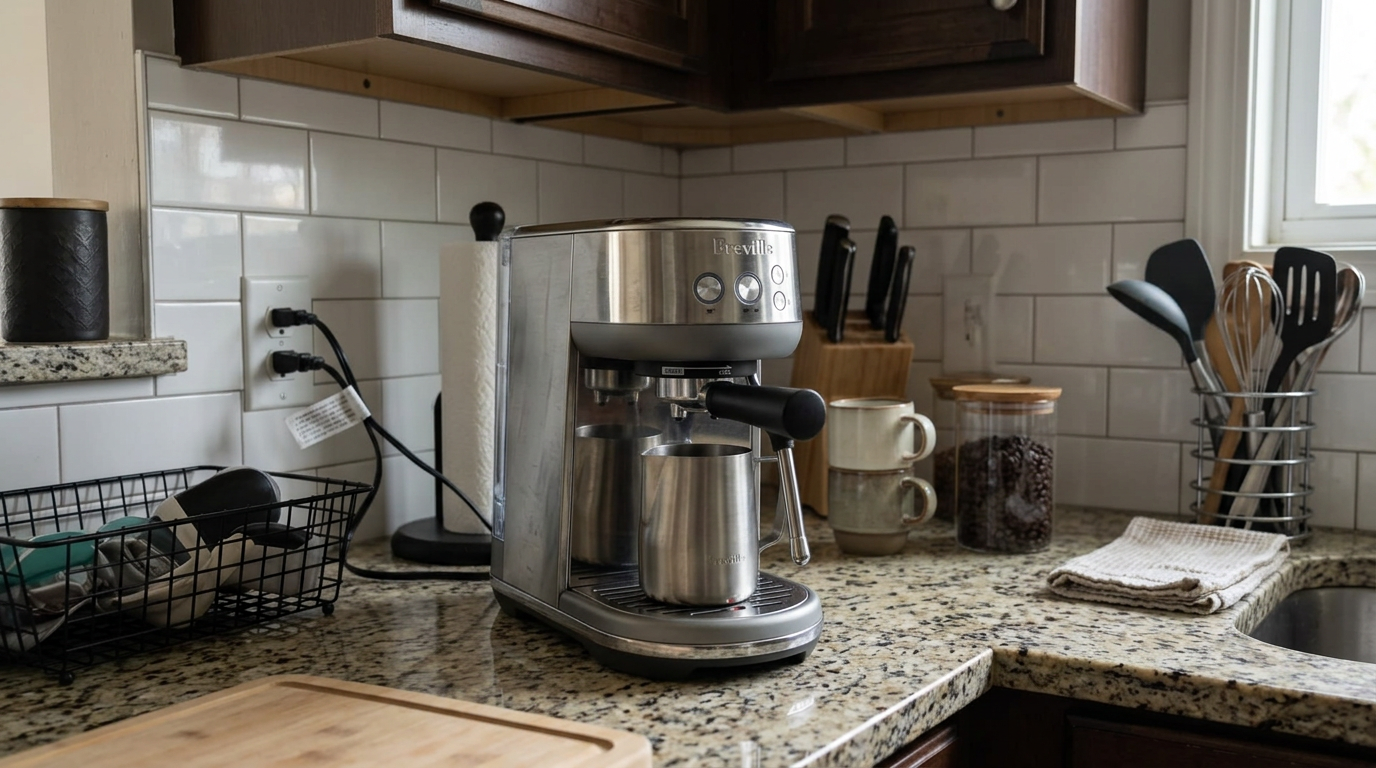
Daily cleaning on the Bambino is a two-minute job.
Noise
Both are fairly quiet, because neither has a grinder. The pump gives a short mechanical buzz during the shot, and the wand hisses while steaming.
The Plus adds a short hiss from the valve after each shot. Its auto steam is a steady hiss that stops on its own, while the Bambino’s hiss changes as you move the jug.
How loud each felt, my ranking
Relative loudness from side-by-side use. Your grinder will be the loudest thing on the counter.
Beans, water and long-term care
The Bambino’s tank holds about 47 ounces and the Plus’s about 64. With two coffee drinkers, I refilled the Bambino about every two days and the Plus about every three.
Because both are so consistent, bean freshness showed up in every cup. Beans roasted one to three weeks earlier were clearly better than older bags on both.
Drinks per full tank, rough maths
Allowing for blank shots and purges. Actual numbers depend on your cup sizes.
| Bean type | Bambino | Bambino Plus |
|---|---|---|
| Medium-dark blend | Chocolatey, rich | Chocolatey, great in milk |
| Medium roast | Sweeter, more fruit | Sweeter, more fruit |
| Light roast | Bright when dialed in | Bright when dialed in |
| Supermarket pre-ground | Dual-wall basket only | Dual-wall basket only |
Use fresh, cold, filtered water on both and change it daily. Filtered water slows scale inside the ThermoJet heater, and it tasted cleaner too.
Avoid distilled water, because coffee needs some minerals to extract properly. My guide to water chemistry for coffee goes deeper.
Our tip: Buy beans in bags you will finish within two to three weeks of the roast date, whichever Bambino you choose.
What to keep an eye on over time
Both machines share the same weak points: the light portafilter, the plastic tamper and the small steam tip, which can clog with dried milk if you skip the wipe.
On the Plus, keep the sensor plate clean and dry, because milk film on it can affect when steaming stops. On the Bambino, check the gasket around the group head every week.
Descale both regularly, more often with hard water. The ThermoJet heater is fast, but scale slows it down and makes the steam weaker.
Mistakes to avoid on both
A month with each taught me a few lessons that apply to both machines.
Using pre-ground coffee in the single-wall baskets. The shots ran fast and sour on both. Use the dual-wall baskets until you have a proper grinder.
Skipping the blank shot. The first espresso of the morning was always a little cooler. A quick blank shot through the empty portafilter warmed the group and the cup.
Overfilling the milk jug. On the Plus, milk overflowed and textured poorly. On the Bambino, the wand could not spin it. Fill to just below the spout.
Forgetting the Plus’s drip tray. It fills faster than you expect. Empty it every morning.
Running the Bambino dry. It has no low-water sensor, so check the tank before you start.
| Problem | Fix |
|---|---|
| Sour, fast shots | Grind finer, use single-wall only with fresh grounds |
| Big bubbles in milk | Cold milk, purge first, tilt the jug |
| Soupy pucks on the Bambino | Dose a full 18 g, wait a few seconds before removing |
| Overflowing tray on the Plus | Empty it daily |
| Mug does not fit | Brew into a small cup and pour |
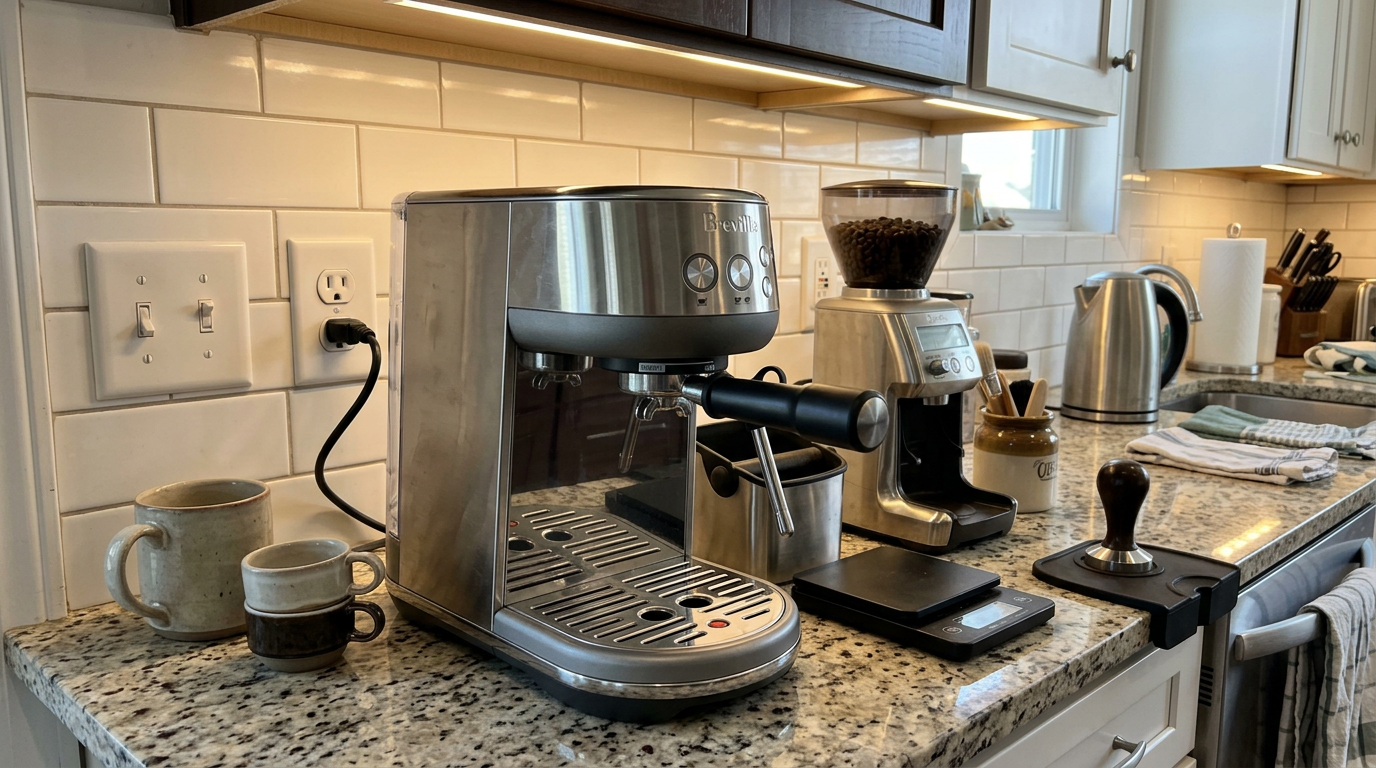
With the Bambino, a kettle beside it covers Americanos and tea.
A typical morning on each
This was my real weekday routine in week three: a flat white for me and a latte for my partner.
On the Bambino, I switched it on, ground 18 grams, tamped and pulled a double. Then I steamed a jug by hand, poured and steamed a second jug for the next drink.
On the Plus, the shot ran while I poured milk into the jug and set it on the plate. As soon as the shot finished, I pressed steam and ground the next dose while the milk textured itself.
That overlap is the Plus’s real everyday advantage. My hands were free for the next shot instead of holding a jug.
Time per morning, two milk drinks
From switch-on to two drinks, including a quick wipe. The Bambino time dropped from about 8 minutes in week one.
| Step | Bambino | Bambino Plus |
|---|---|---|
| Switch on and grind | About 40 s | About 40 s |
| Tamp and pull a double | About 35 s | About 35 s |
| Steam milk | About 45 s, hands-on | About 45 s, hands-free |
| Wipe and knock out | About 40 s | About 25 s |
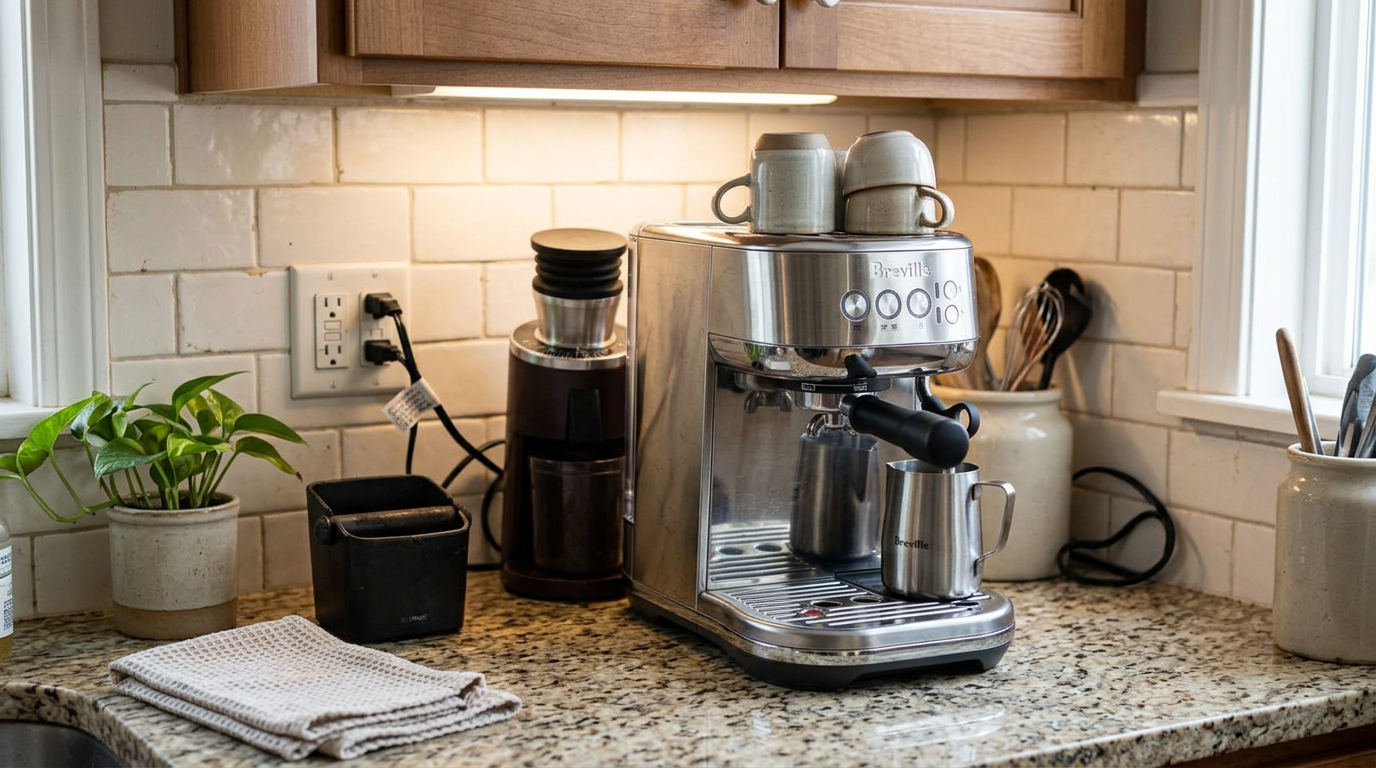
Cups warming on top of the Plus before a weekday round.
Serving guests
For a weekend round of four lattes, the gap between the two grew. On the Plus, I pulled a shot, set the milk going and ground the next dose while it steamed.
Four lattes took me about 10 minutes. On the Bambino, the same round took about 12 minutes, because my hands were busy with the jug for every drink.
The trick that helped most on the Bambino was to pull all the shots first, then steam two bigger jugs and split each between two cups.
Four lattes from switch-on, including grinding and a quick wipe.
Are these the right first espresso machine for you?
Both are often bought as a first step up from pods or a drip coffee maker, and they are excellent at that job.
Compared with pods, you get fresh-ground coffee, far less packaging waste and a cup that tastes noticeably richer. Compared with a drip machine, you get real espresso and café-style milk.
What you do not get is one-button coffee. You still grind, dose and tamp every shot, so if nobody in your home wants to touch a portafilter, a bean-to-cup machine is a better fit.
| Coming from | What improves | Which Bambino |
|---|---|---|
| Pods | Fresher, richer coffee, less waste | Plus, for easy milk |
| Drip coffee | Espresso and Americanos | Bambino, hot water button |
| Café lattes every day | Café milk at home | Plus |
| A curious hobbyist | A real skill to learn | Bambino |
For a first machine, I would choose the Plus for most milk drinkers. It removes the hardest skill from day one and still lets you steam by hand when you want to learn.
Our tip: Give yourself a full week before judging either machine, because the first few days are spent dialing in your grinder.
Small extras worth having
Neither machine needs much, but four small things made a big difference during my test.
A 54 mm metal tamper replaced the plastic one on both after a few days. My pucks were flatter and my shot times stopped jumping by five or ten seconds.
A small scale with a timer made dialing in far faster. A knock box kept the counter tidy, especially with the Bambino’s wetter pucks.
| Extra | Bambino | Bambino Plus |
|---|---|---|
| Espresso burr grinder | Essential | Essential |
| 54 mm metal tamper | Very useful | Very useful |
| Scale with timer | Very useful | Useful |
| Knock box | Very useful, wet pucks | Useful |
| Dosing tool | Optional | Included |
Still torn between the two?
Ask yourself one question: how many milk drinks does your home make each day? If it is one or more, the Plus earns its place every single morning.
If almost every cup is an espresso or an Americano, the two machines are close to identical in daily use. In that case, the Bambino’s hot water button is actually more useful than the Plus’s milk system.
It is also worth thinking about who will use it. If one person enjoys the ritual and another just wants a latte, the Plus suits both, because the second person never has to learn the wand.
Finally, think about your grinder. If buying the Plus means settling for a basic grinder, buy the Bambino and a better grinder instead. Great milk on top of a sour shot is still a sour drink.
Either way, both share the same 54 mm accessories, the same heater and the same basic care routine, so you are not locking yourself into anything.
Four weeks with each: my diary notes
These are the notes I kept as each machine settled into my routine.
Breville Bambino Plus
Week 1: Dialed in the grinder at 18 grams in and 36 out. First auto latte was glossy straight away.
Week 2: Worked through all nine milk combinations and settled on temperature 2, foam 2.
Week 3: Four milk drinks a day for two people in my house. The drip tray overflowed once.
Week 4: The easiest way I know to make a real flat white at home.
Breville Bambino
Week 1: Excellent shots from day two, but milk with big bubbles and a dry cap.
Week 2: Swapped in a metal tamper and finally got a whirlpool going in the jug.
Week 3: Poured my first decent hearts. Ran the tank nearly dry once.
Week 4: A brilliant little espresso machine, and a rewarding one if you enjoy learning.
Real-life scenarios
These are the situations where one machine clearly pulled ahead during my testing.
One button for glossy milk while you clean the portafilter.
Same heater, pressure and portafilter, same rich shot.
Its dedicated hot water button is more convenient.
About 10 minutes, against about 12 on the Bambino.
The short wand teaches you real milk skills.
One person tinkers, another just presses steam.
My scorecard
These are my own scores out of 10, from my single reviews of each machine, plus versatility because it decides this matchup.
Breville Bambino Plus
Breville Bambino
Overall, I rate the Bambino Plus 8.5 and the Bambino 8.2. The espresso is the same; the Plus wins on milk and ease, and the Bambino wins on cleaning and hot water.
Find Out the Price TodayWhich one is right for you?
4 quick questionsWhich one should you buy?
For most people who drink milk drinks, the Bambino Plus. It makes the same espresso as the Bambino, plus silky milk with one button, a drier puck and a bigger tank.
The Bambino makes sense if you mostly drink espresso or Americanos, enjoy learning to steam, or would rather put the difference into a better grinder. For the full detail on each, read my Breville Bambino review and Breville Bambino Plus review.
For daily milk drinkers, the Plus is the better compact Breville.
- You drink lattes or flat whites most days
- You want silky milk with no learning curve
- Two people with different skill levels share it
- You already own a good grinder
- You mostly drink espresso or Americanos
- You do not want to buy a burr grinder
- You want coffee at one button
- You drink espresso and Americanos
- You want to learn to steam by hand
- You want more budget for the grinder
- You want hands-free milk
- You make several milk drinks in a row
- You dislike wet pucks
My pick is the Breville Bambino Plus. It pulls the same rich, balanced espresso as the Bambino, but its automatic steam wand makes glossy microfoam at the press of a button, and its three-way valve and bigger tank make busy mornings tidier.
The Breville Bambino is the right choice if you mostly drink espresso or Americanos, or you want to learn real steaming skills. Pair it with a good grinder and a metal tamper, and it will serve you brilliantly.
Whichever you choose, start at 18 grams in and 36 out, use fresh beans and cold milk, and pull a blank shot first thing in the morning.
Bambino vs Bambino Plus specifications
From manufacturer specifications and my own testing.
| Breville Bambino | Breville Bambino Plus | |
|---|---|---|
| Model | BES450BSS | BES500BSS |
| Type | Semi-automatic, manual steam wand | Semi-automatic, automatic steam wand |
| Heating | ThermoJet, about 3 s | ThermoJet, about 3 s |
| Temperature control | PID | PID |
| Pump | 15 bar, about 9 bar extraction | 15 bar, about 9 bar extraction |
| Pre-infusion | Low-pressure, automatic | Low-pressure, automatic |
| Three-way valve | No | Yes |
| Portafilter | 54 mm, about 18 g | 54 mm, about 18 g |
| Baskets | Single-wall and dual-wall | Single-wall and dual-wall |
| Milk | Manual steam wand | Automatic wand, 3 temperatures, 3 foam levels, auto purge |
| Hot water | Dedicated button | Via the steam wand |
| Water tank | About 47 oz, rear | About 64 oz, rear, low-water sensor |
| Cup clearance | About 4 in | About 4 in, small cups |
| Included | Tamper, milk jug, cleaning tool, descaler | Tamper, Razor tool, milk jug, cleaning tools |
| Power | 1,560 W | 1,560 W |
| Dimensions (W x D x H) | About 7.7 x 12.6 x 12.2 in | About 7.7 x 12.6 x 12.2 in |
| Weight | About 11 lb | About 11 lb |
| Warranty | 2 years limited | 2 years limited |
How I tested and compared them
Michael Reynolds here. I used each machine as my everyday espresso maker for four weeks and kept detailed notes every week.
I weighed every dose and yield, timed shots, compared single-wall and dual-wall baskets, and swapped the plastic tampers for a 54 mm metal tamper on both. I ran blind tastings with the same beans and grinder.
I steamed whole, 2%, barista oat and almond milk on both, tried all nine milk settings on the Plus, tracked my manual steaming week by week on the Bambino, counted dry pucks and timed my mornings.
I then checked my notes against Breville’s specifications and owner documentation, and against general espresso and milk-steaming guidance.
- Espresso: body, crema, temperature stability and consistency.
- Milk: microfoam texture, learning curve and consistency.
- Workflow: buttons, heat-up, pucks and daily routine.
- Ownership: noise, cleaning, water capacity and footprint.
Bambino vs Bambino Plus FAQ
What is the difference between the Breville Bambino and Bambino Plus?
The milk system, the puck and the tank. The Bambino Plus has an automatic steam wand with three temperature and three foam levels, auto purge, a three-way solenoid valve for drier pucks and a 64 oz tank with a low-water sensor. The Bambino has a manual steam wand, a dedicated hot water button and a 47 oz tank.
Is the Bambino Plus worth it over the Bambino?
For daily milk drinkers, yes. The espresso is the same, but the Plus makes silky milk hands-free from the first day. If you mostly drink espresso or Americanos, the Bambino is enough.
Do the Bambino and Bambino Plus make the same espresso?
Yes, essentially. Both use ThermoJet heating, PID temperature control, pre-infusion, about 9 bar extraction and a 54 mm portafilter. In my blind tastings I could not reliably tell the shots apart.
Can the Bambino make latte art?
Yes, with practice. Its manual wand makes real microfoam once you learn the jug angle. It took me about three weeks to pour consistent hearts.
Can I steam milk manually on the Bambino Plus?
Yes. Swing the wand out and steam by hand, just like a regular steam wand.
Does the Bambino have a three-way valve?
No. Only the Bambino Plus has a three-way solenoid valve, which is why its pucks come out drier.
Which has a hot water button?
The Bambino has a dedicated hot water button. On the US Bambino Plus, hot water comes through the steam wand, so a kettle is easier for Americanos and tea.
Do I need a grinder for either machine?
For the best results, yes. Both need a capable espresso burr grinder with the single-wall baskets. With pre-ground coffee, use the dual-wall baskets.
Why does the Bambino Plus drip tray fill so fast?
The three-way valve and the auto purge both release water into the tray. Empty it every day.
Are the Bambino and Bambino Plus the same size?
Yes. Both are about 7.7 x 12.6 x 12.2 inches and weigh about 11 lb.

- Our hands-on Breville Bambino review
- Our hands-on Breville Bambino Plus review
- Breville product specifications and owner documentation
- General espresso brewing and milk steaming guidance