Best Window Cleaning Robots for Outside Windows (2026)
Outside glass is where window robots earn their keep, and where weak ones fail. I tested robots on pollen-covered patio doors, rain-spotted bedroom windows and a year of grime on a conservatory, and my top pick is the ECOVACS WINBOT W3 Omni: it cleans outside glass well and washes its own filthy pads afterwards.

Emily Carter
Buying Guide
4 models · 4 picks
4 weeks per robot
I choose products independently. If you buy through my links, HouseholdMe may earn a commission at no extra cost to you. Affiliate policy
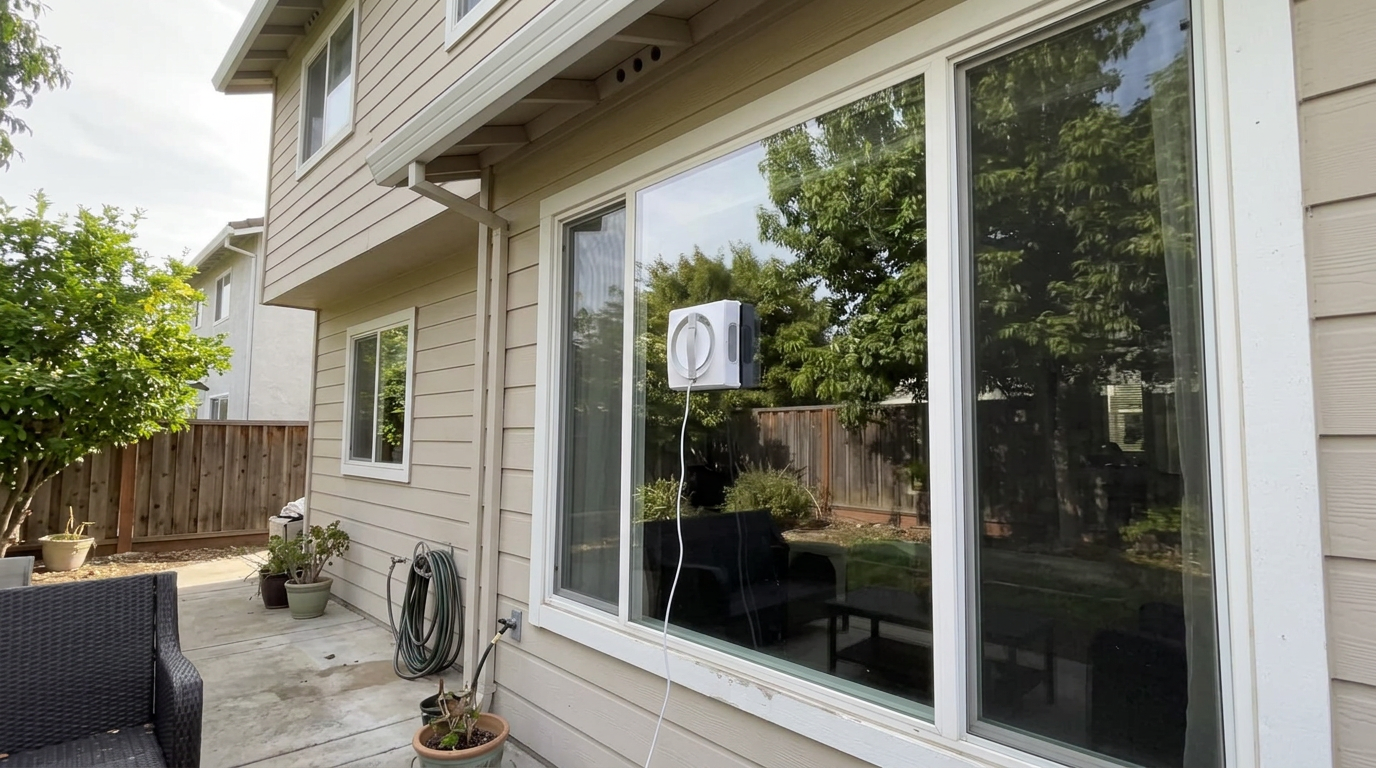
Jargon helpNew to window robots? Tap or hover over any dotted term to see what it means.
In this guide
The short answer
- Best overall for outside windows: the WINBOT W3 Omni. Its station rinses the dirty pads after each window, so outside dirt never gets smeared around.
- Best for heavily stained glass: the WINBOT W2S Omni. It cleaned neglected exterior glass very well and its battery station runs anywhere outside.
- Best streak-free finish: the HUTT H10. A dry polishing pad follows the wet one, which gave the clearest outside glass on calm days.
- Best budget pick: the Tosima WA9C Pro. Fine for easy ground-floor glass that you clean often.
Our picks at a glance
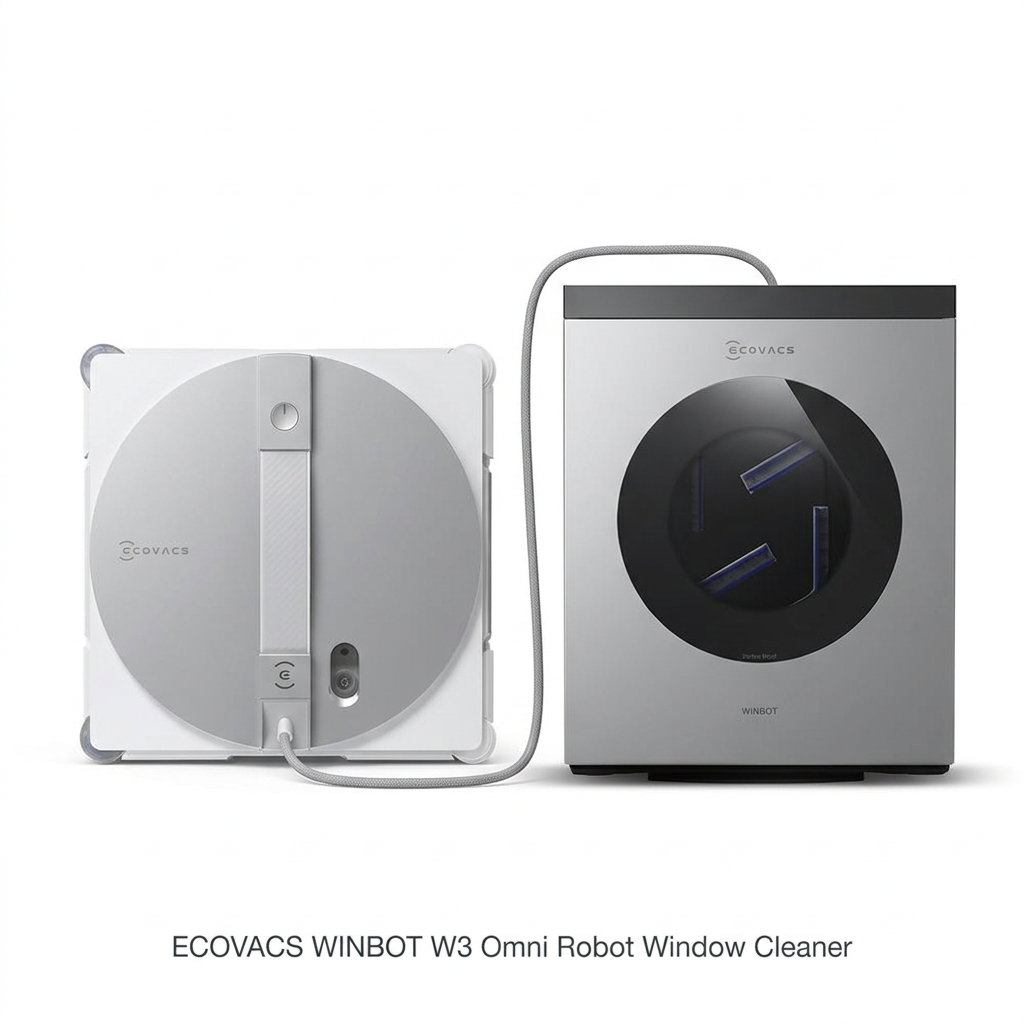
ECOVACS WINBOT W3 Omni
Its station rinses the pads after every window, so filthy outside glass never gets smeared with yesterday’s dirt. Battery powered, with TruEdge and a 130-minute run time.
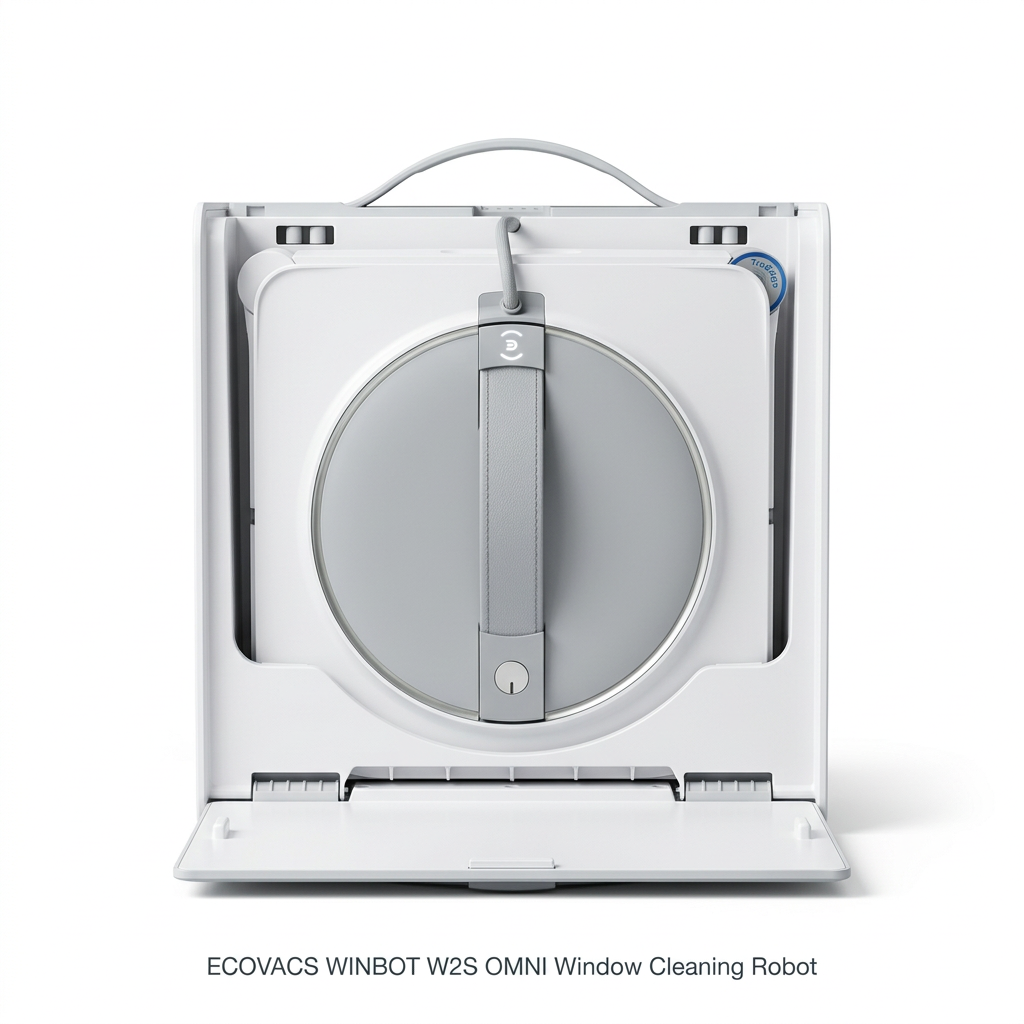
ECOVACS WINBOT W2S Omni
Strong results on neglected, stained exterior glass, a TruEdge scrubber for the frames and a portable battery station that runs it anywhere outside.
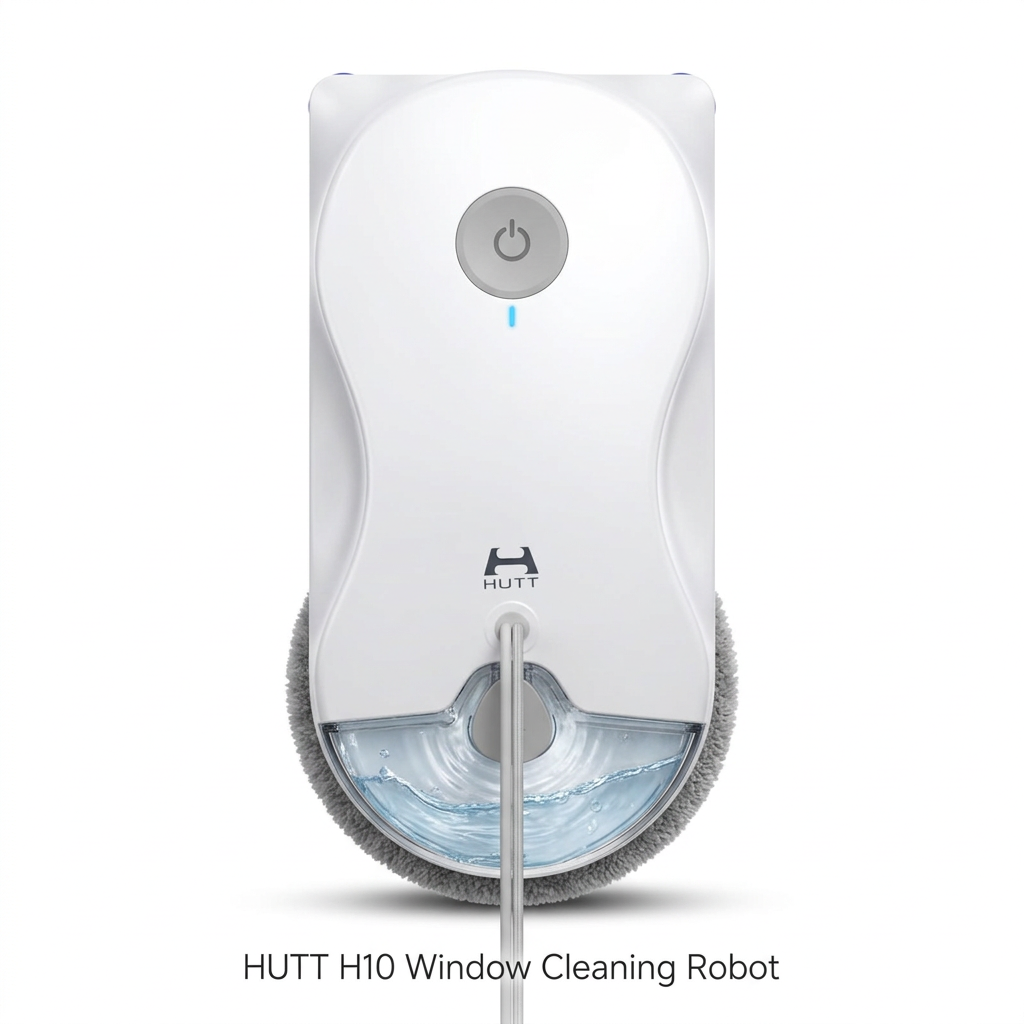
HUTT H10
Wet scrub and dry polish in one pass gave the clearest outside glass on calm days. Light, with a 30-minute backup battery.
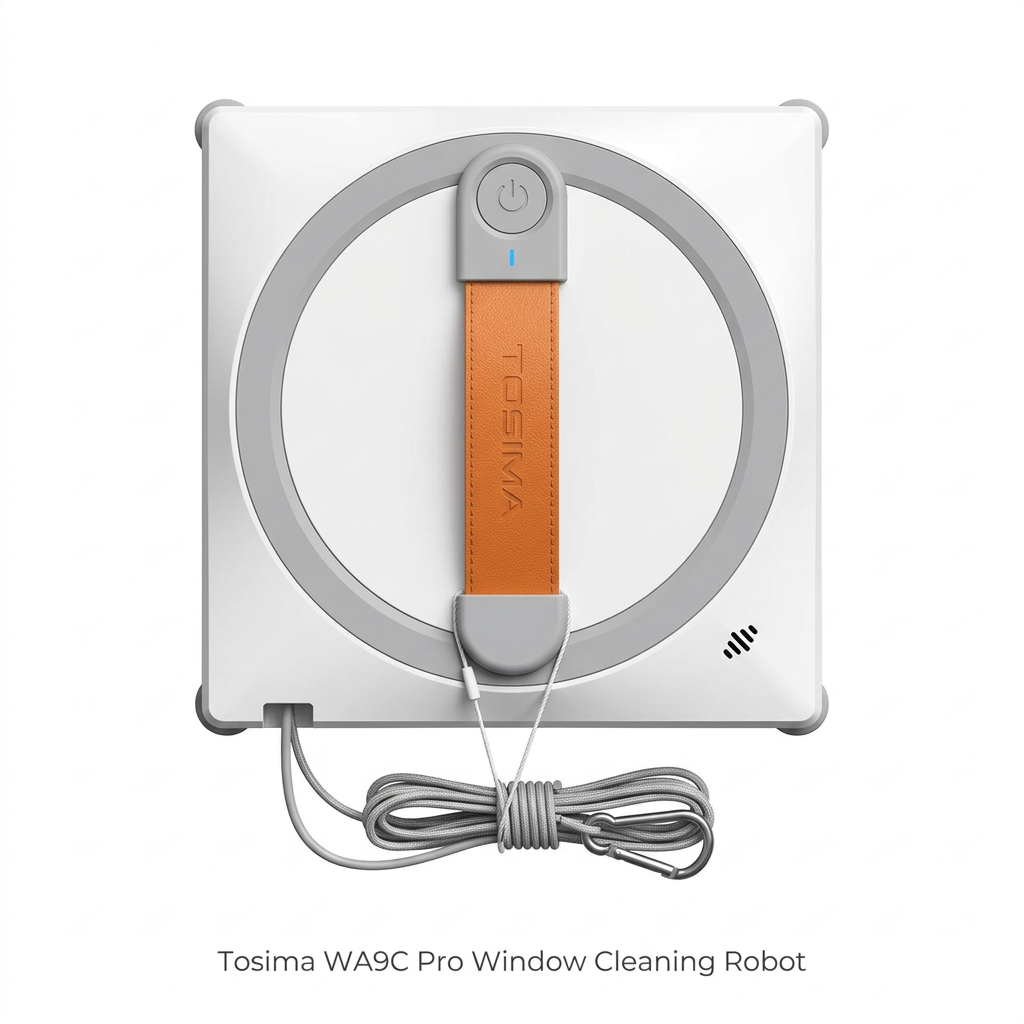
Tosima WA9C Pro
A square robot with an even four-nozzle spray and a remote. Fine on ground-floor outside glass that is cleaned often, near an outlet.
Availability and deals change often. Check the current offer on Amazon before you buy.
Compare the best robots for outside windows
I scored these robots on exterior glass only: patio doors, ground-floor and upstairs windows and a conservatory roof edge.
| 4 picks compared | Best overall | Stained glass | Streak-free | Budget |
|---|---|---|---|---|
| My outdoor scores | ||||
| Overall score | 8.8 | 8.6 | 8.3 | 7.8 |
| Cleaning | 8.8 | 8.7 | 8.5 | 7.8 |
| Edge coverage | 8.6 | 8.6 | 8.1 | 7.9 |
| Ease of use | 9.0 | 8.6 | 8.1 | 8.0 |
| Safety | 9.3 | 9.0 | 8.6 | 7.6 |
| Power and grip | ||||
| Max suction | 8,000 Pa | 8,000 Pa | 6,500 Pa | 2,600–3,200 Pa |
| Power | Battery station | Battery station | Corded + backup | Corded + backup |
| Run time | 130 min rated | 110 min rated | On cord | On cord |
| Outdoor features | ||||
| Self-washing pads | ✓ | ✕ | ✕ | ✕ |
| Edge cleaning | TruEdge scrubber | TruEdge scrubber | Square polishing pad | Square body |
| Works far from outlets | ✓ | ✓ | ✕ | ✕ |
| Best for | Regular outside cleans with no mess | Neglected and stained glass | Streak-free ground-floor glass | Easy glass on a budget |
My outdoor test scores
Every robot cleaned the same exterior glass over four weeks: a south-facing patio door, two ground-floor windows, two upstairs windows from inside and the glass of a conservatory.
Outside, the gap between robots grows. On clean indoor glass the four would be close, but pollen, dust and dried rain separated them quickly.
| Robot | Overall | Cleaning | Edges | Ease of use | Safety |
|---|---|---|---|---|---|
| WINBOT W3 Omni | 8.8 | 8.8 | 8.6 | 9.0 | 9.3 |
| WINBOT W2S Omni | 8.6 | 8.7 | 8.6 | 8.6 | 9.0 |
| HUTT H10 | 8.3 | 8.5 | 8.1 | 8.1 | 8.6 |
| Tosima WA9C Pro | 7.8 | 7.8 | 7.9 | 8.0 | 7.6 |
Editorial scores from four weeks of cleaning exterior glass.
The two ECOVACS station robots lead on almost everything outdoors. Their 8,000 Pa of suction, TruEdge scrubbers and batteries suit exterior glass, which is often dirtier, rougher and further from power.
The HUTT H10 is the surprise. It has less suction, but on calm days its polishing pad left the clearest outside glass of all four.
Our tip: Clean the outside of your windows twice as often as the inside, because outside dirt bakes on in the sun and gets harder to shift each month.
How I tested
I have tested home appliances professionally since 2016 and run HouseholdMe’s cleaning tests since 2021, with a background in industrial design.
For this guide I used four window robots for four weeks each, only on exterior glass. That meant a patio door, ground-floor and upstairs windows and a conservatory, in sun, wind, spring pollen and after rain.
I judged each window in low evening light, counted how many pads each job needed, and noted how often the robot slipped, stalled or needed a second pass.
Why outside glass is harder to clean
Inside glass mostly collects fingerprints and a light film. Outside glass collects everything the weather throws at it, and it is rarely cleaned, so the dirt has time to bond.
In my test, outside glass dirtied pads roughly twice as fast as inside glass, measured by how many pads each job needed.
| Outdoor dirt | What it does to a robot | What helps |
|---|---|---|
| Pollen and dust | Clogs pads fast, then smears | Clean pads, a second pass |
| Dried rain spots | Mineral rings that resist wiping | Repeated cleans, distilled water |
| Bird droppings | Lumps that block the robot | Remove by hand first |
| Cobwebs and insects | Catch in tracks and brushes | Brush off before you start |
| Grime near frames | Dark lines along the edges | TruEdge or square robots |
Location matters as well. Homes near busy roads collect a grey film of traffic dust, coastal homes get a salty haze and homes near trees get sap and pollen. All of it is harder to shift than indoor dirt.
In my test, the south-facing patio door was the dirtiest glass of all. Sun bakes dirt onto glass, which is also why that door showed streaks most easily.
That is why I weighted cleaning and pad handling heavily here. A robot that cleans well but needs its pad changed three times per window is tiring on a house with twenty panes.
How robots handle exterior glass
All four robots are held on by suction measured in Pascals (Pa)✕Pascals (Pa)the unit used for suction. Higher numbers mean the robot presses harder onto the glass, which helps on rough, dirty outside panes.. Outside, more suction matters because dirt and dust leave tiny gaps under the robot that leak air.
Each robot also sprays a fine mist ahead of the pad. The finer the mist, the less water runs down the glass, which matters more outside where dust turns drips into mud lines.
Edges outside
Exterior frames collect the most dirt of all. The two ECOVACS robots use a TruEdge✕TruEdgeECOVACS’ edge-cleaning scrubber, which drops down along the frame and spins to clean the strip a flat pad cannot reach. scrubber that drops along the frame, while the HUTT H10 uses its square polishing pad and the Tosima relies on its square body.
On my patio door, the TruEdge robots left a clean strip almost to the seal. The other two left a thin dark line that I wiped by hand.
Power outside
Outdoor outlets are rare, so power is a real issue. The station robots carry a battery, while the corded robots need an extension lead that reaches the window with slack.
Manufacturer ratings. Scaled to the strongest robot in my wider test, 10,000 Pa.
Safety outside
Every robot came with a safety tether✕Safety tethera strong rope clipped to the robot and to something solid indoors, which catches the robot if it ever loses grip on outside glass., and both corded robots have a backup battery✕Backup batterya battery that keeps the suction fan running if the power cord is pulled out or the power fails, usually for 25 to 30 minutes.. On the station robots, the station itself anchors the rope.
Our picks in depth
1. ECOVACS WINBOT W3 Omni
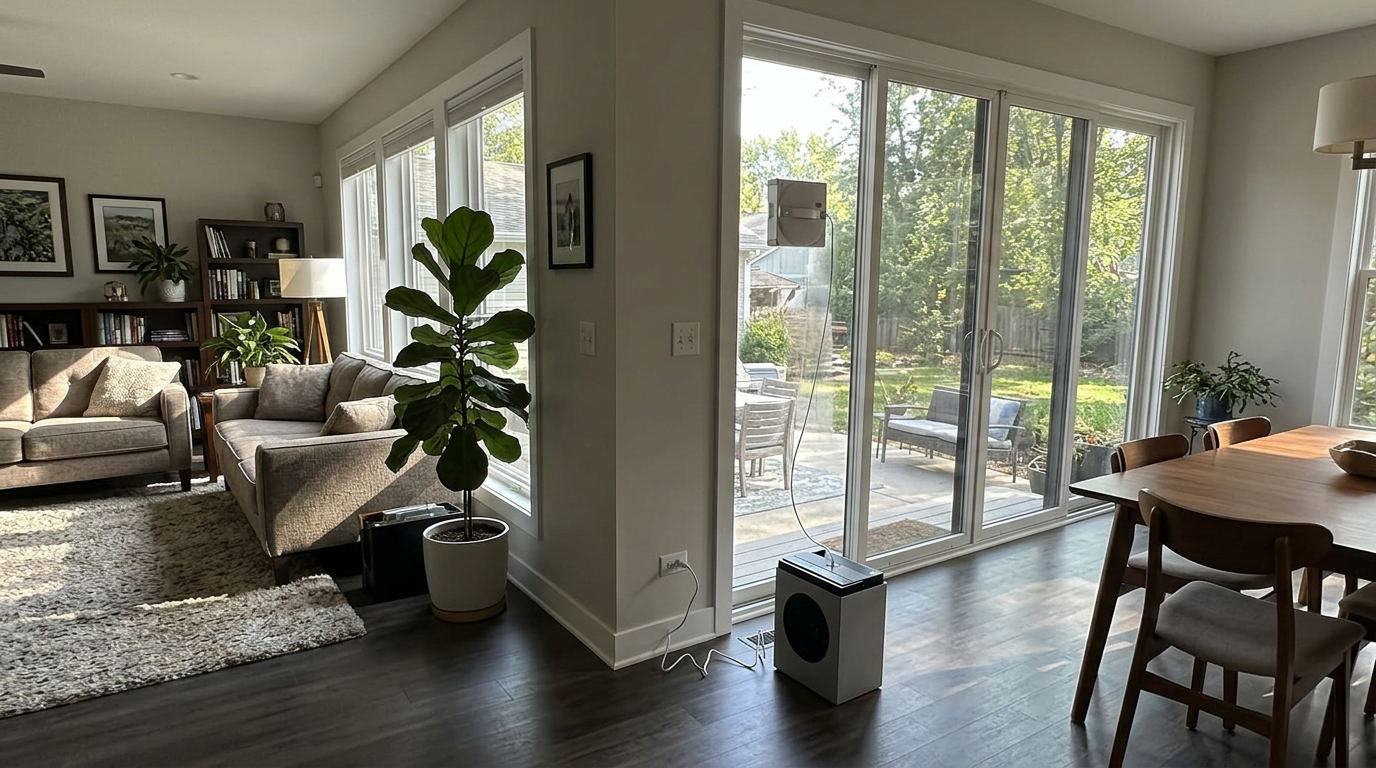
Outside glass makes pads filthy fast, and a dirty pad is the main reason robots leave smears outdoors. The WINBOT W3 Omni is the only robot here that deals with that for you: its station rinses both pads with 16 jets in about a minute after each window.
In practice, that meant every outside window started with a clean pad. Over four weeks, it was the most consistent outdoor cleaner I tested, and it cleaned as well on day 28 as on day one.
Built for a whole house of outside glass
With 130 minutes of rated battery, it finished every exterior pane of my house in one session, moving the station from room to room. No extension lead, no outdoor outlet and no trailing cable.
Its navigation measured my wide patio door and planned a tidy route. Its TruEdge scrubber, spinning at up to 200 RPM, cleaned the grimy strip along the frames that outside windows always collect.
Results on pollen and rain spots
Spring pollen was the hardest test. Other robots smeared it into a yellow haze by the end of a pane, while the W3 Omni came back for a fresh pad and finished clear.
Dried rain spots took two cleans over a fortnight to disappear completely. That was true for every robot, but the W3 Omni needed the least hand-finishing afterwards.
My outdoor routine
My routine with it was simple. I carried the station to the patio door, placed the robot outside, pressed start and went to make coffee, then moved on to the next window.
Between windows the station rinsed the pads, so I never touched a dirty pad all session. At the end I emptied the dirty-water tank, which took a minute.
What to know before you buy
The station is heavy, and it suits rectangular windows best. It also leaves a small pad mark where it parks, which I wiped off from inside.
If your outside glass is very neglected and you are happy to wash pads by hand, the W2S Omni does almost as well.
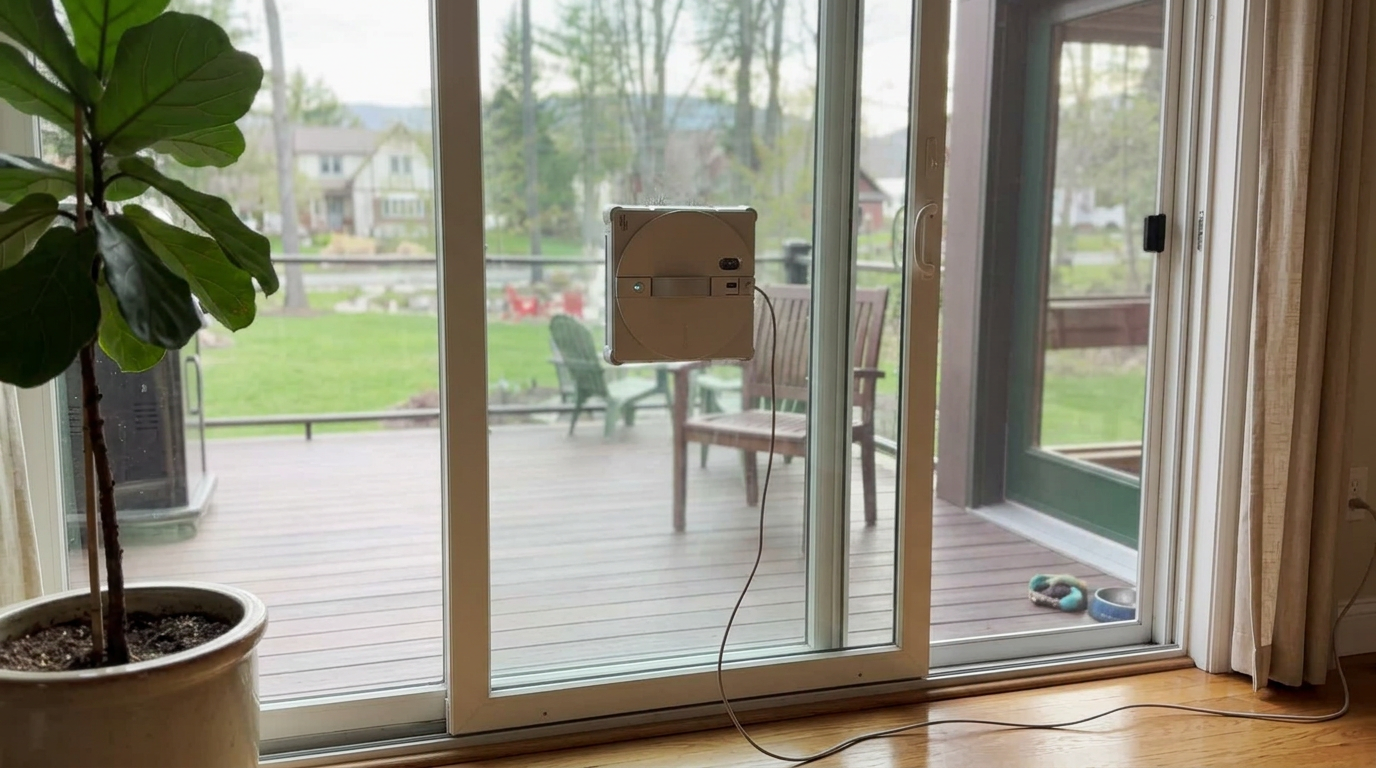
The station rinses the pads after every window, which matters most on dirty outside glass.
- Station washes the dirty pads after each window
- Battery powered, no outdoor outlet needed
- TruEdge scrubber cleans dirty frames
- Consistent results over four weeks
- Heavy station to move around the house
- Best on rectangular glass
- Leaves a small pad mark where it parks
- Homes with lots of exterior glass
- Anyone who cleans outside windows often
- People with no outdoor outlets
- Homes with a few small outside windows
- Anyone who struggles to carry weight
- Mostly arched or round windows
Choose this if you clean a lot of outside glass and want clean pads on every window. Read my full WINBOT W3 Omni review.
2. ECOVACS WINBOT W2S Omni
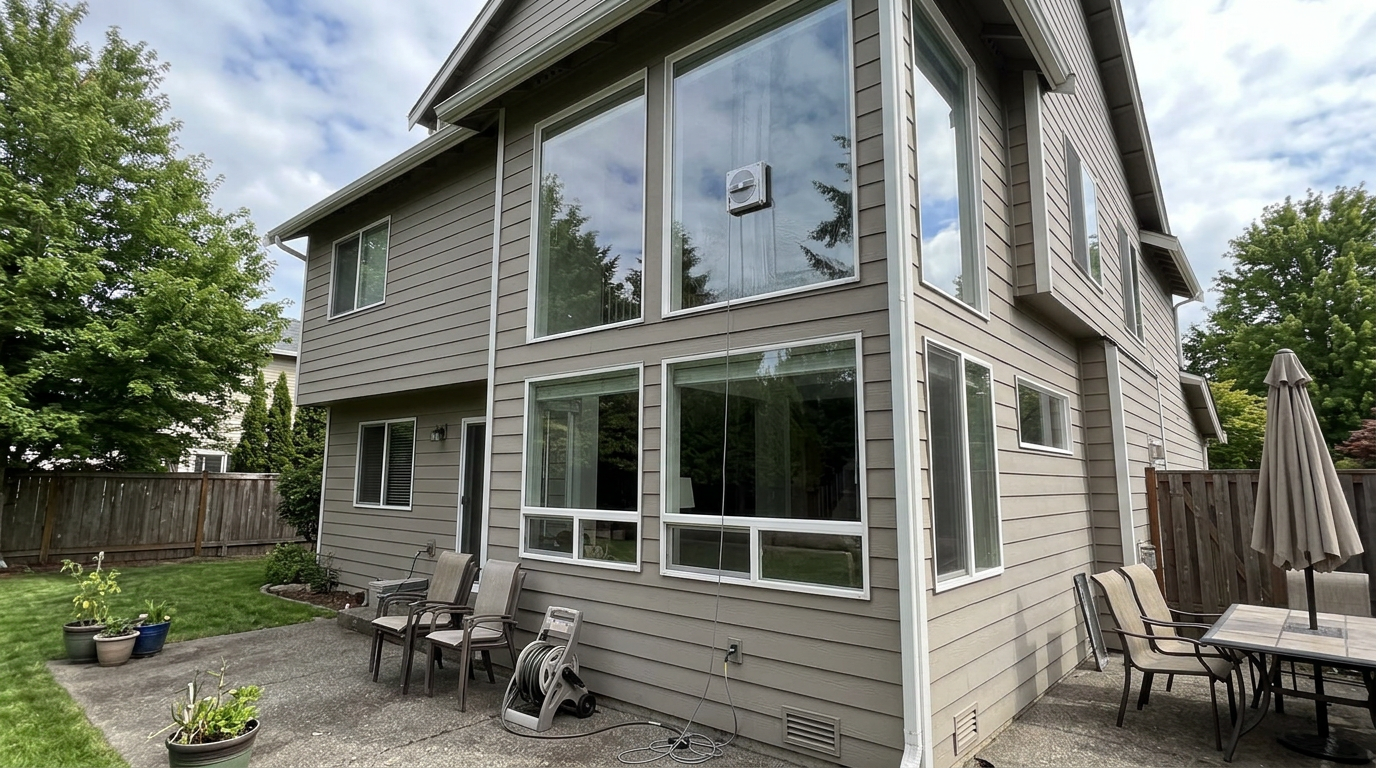
If your outside windows have not been cleaned in a long time, start with the WINBOT W2S Omni. In my single review it handled heavily stained outside glass better than most robots, and in this test it shifted a year of grime from my conservatory glass in two runs.
It has 8,000 Pa of suction, the original TruEdge scrubber and a portable battery station rated for 110 minutes.
Strong on stained glass
Neglected glass is rough with grime, which makes a weak robot slip and a soft pad skate. The W2S Omni gripped firmly and pressed hard enough to break through the film.
I swapped pads once halfway through the worst panes. After the first deep clean, normal monthly cleans needed only one pad per few windows.
A station that powers it anywhere
The station stores the robot, retracts the tether cable at the press of a button and anchors itself to the floor with a suction cup. Outside, the retracting cable stopped the rope tangling around plant pots and garden chairs.
Power and mode buttons sit on top of the station, so I could start a window without opening the app.
Our tip: On neglected glass, change the pad as soon as it looks grey, because a saturated pad turns grime into streaks instead of lifting it.
My outdoor routine
My routine was to keep a stack of clean pads in the station’s storage area. I swapped to a fresh one every two or three windows on routine cleans, and after every window on the first deep clean.
The retracting tether cable was a small luxury outside. One press reeled it back in, so it never dragged through flower beds between windows.
What to know before you buy
You wash the pads by hand, and with outside glass that is a real chore. The station is also heavy to carry between floors.
Compared with the W3 Omni, you trade self-washing pads for a lighter station. If you only deep-clean outside glass a few times a year, that trade makes sense.
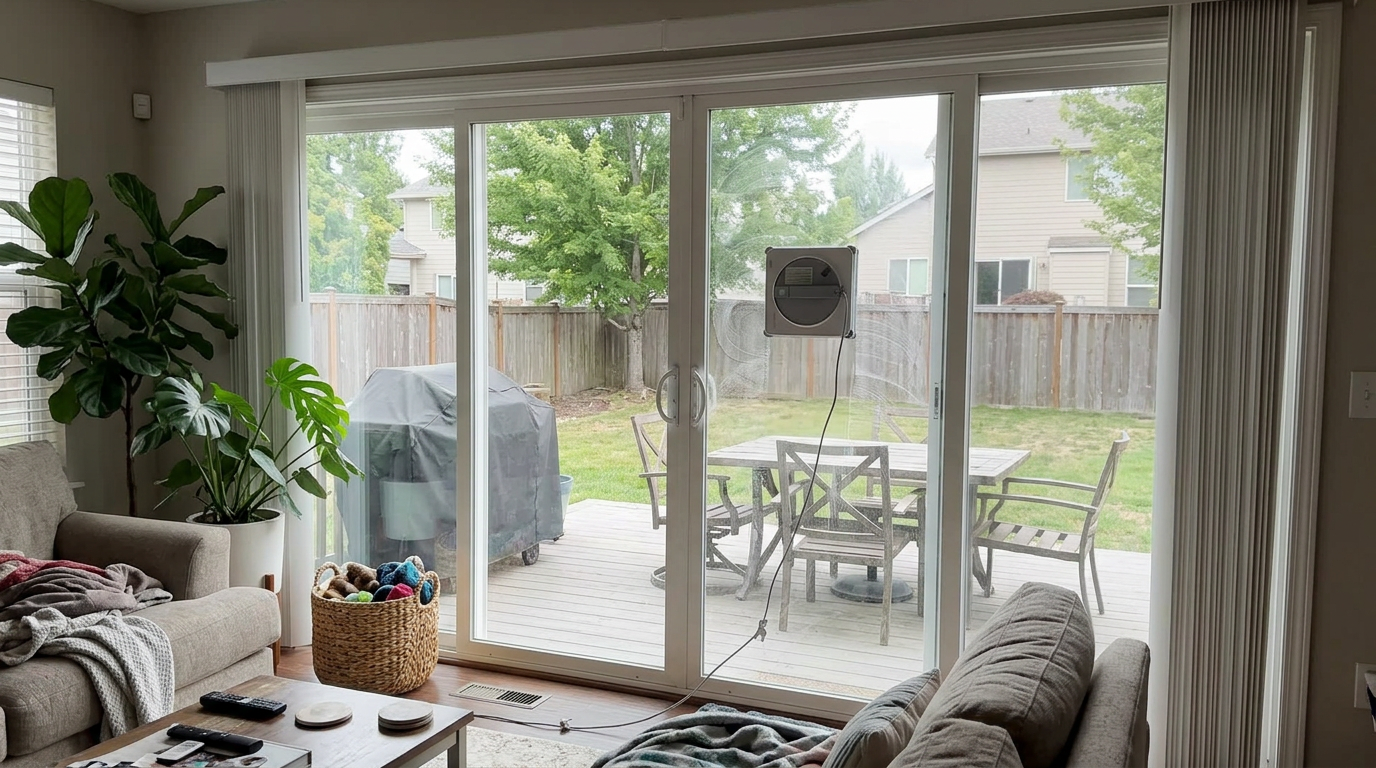
The W2S Omni’s battery station let it clean exterior glass far from any outlet.
- Strong results on heavily stained glass
- TruEdge scrubber cleans close to frames
- Battery station with a retracting cable
- Station buttons, no app needed
- Pads need washing by hand
- Station is heavy to carry
- Best on flat, rectangular glass
- Homes with neglected outside windows
- Conservatories and big exterior panes
- Gardens and balconies without outlets
- Anyone who hates washing pads
- Small windows near outlets
- People who clean outside glass weekly
Choose this if your outside glass is very dirty or rarely cleaned. Read my full WINBOT W2S Omni review.
3. HUTT H10
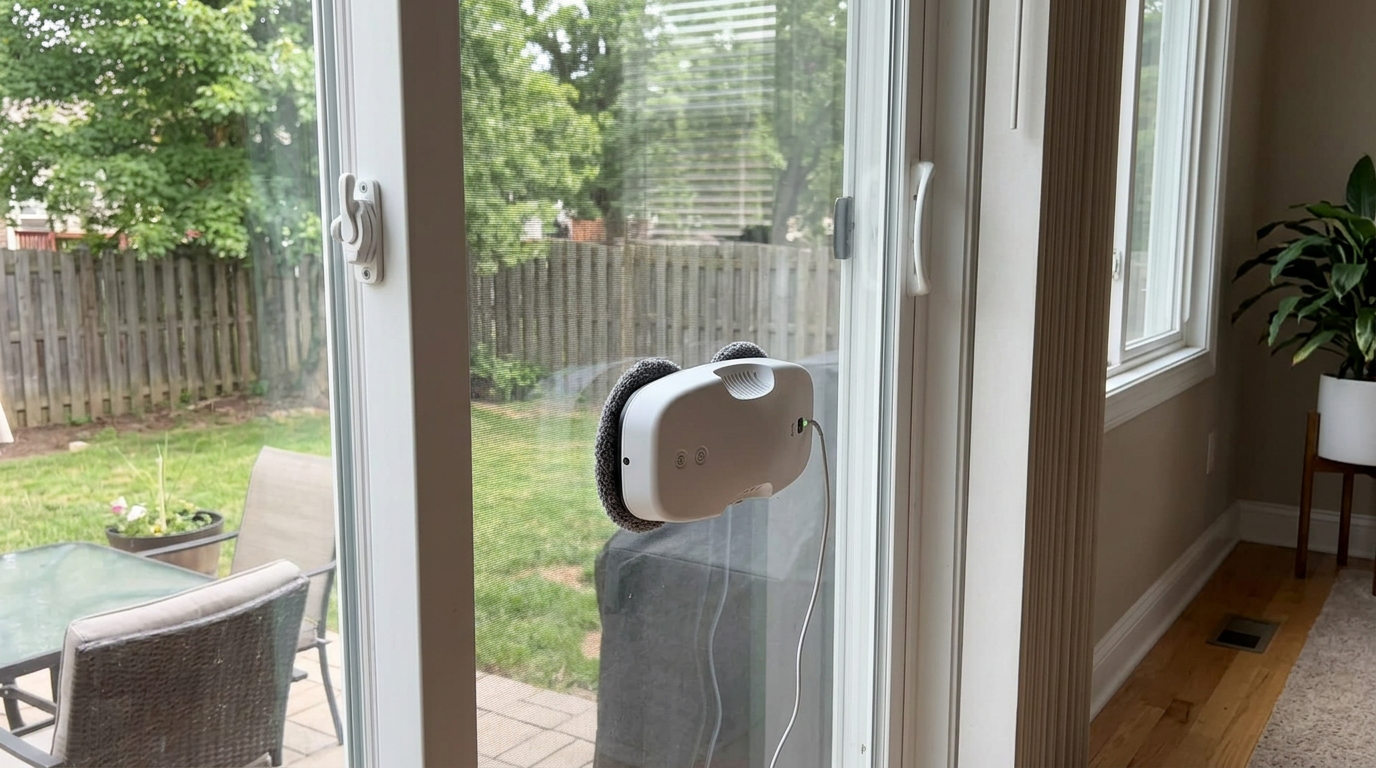
The HUTT H10 has less suction than the two station robots, so I did not expect much outdoors. On calm days, it surprised me: its dry polishing pad left the clearest outside glass in the test.
The idea is simple. A wet round pad scrubs, and a dry square pad behind it buffs the glass before the water can dry into streaks.
Where it shines outside
Ground-floor windows and patio doors, cleaned regularly, near an outlet. On those, its finish was excellent, with almost no streaks in low sunlight.
Its 55 N of even pad pressure also helped on the slightly uneven glass of my old conservatory.
Where it struggles
In wind, on rough neglected glass or when its square pad got damp, it slipped more than the station robots. Keeping its tracks and pads dry outdoors takes some care.
It is also the slowest of the four, because of the polishing step.
Our tip: Keep the H10’s square pads in a dry bag outside, because a pad that picks up damp from the lawn or a wet sill causes most of its outdoor streaks.
My outdoor routine
My routine was to clean the ground-floor windows and patio door with it on calm evenings, with an outdoor extension lead along the wall. I kept a dry square pad in my pocket and swapped it whenever the first one felt damp.
On those evenings, it left the glass so clear that I could not see a single streak when the sun came round the next morning.
What to know before you buy
It needs an outlet within cable reach, so outside you will need an outdoor-rated extension lead. For upstairs outside windows, I would choose a station robot.
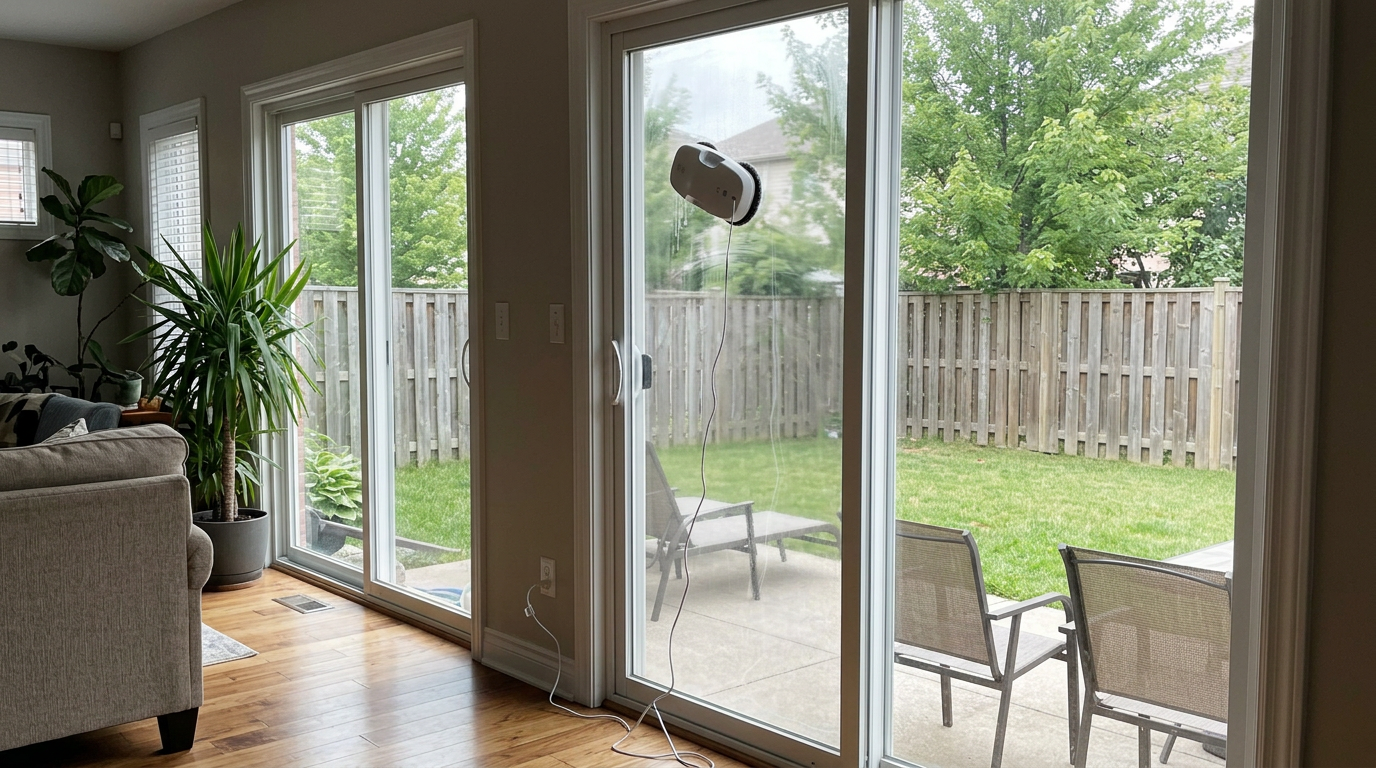
On calm days, the H10 gave the clearest finish on ground-floor outside glass.
- Clearest finish on calm days
- Dry polishing pad limits streaks
- Light, with a 30-minute backup
- Simple remote, no app
- Slips more in wind and on rough glass
- Needs an outlet and an extension lead outside
- Slowest robot in this guide
- Ground-floor windows and patio doors
- People who notice every streak
- Glass cleaned regularly
- Neglected, heavily stained glass
- Windy, exposed homes
- Upstairs outside windows
Choose this if your outside glass is easy to reach and streak-free glass matters most. Read my full HUTT H10 review.
4. Tosima WA9C Pro
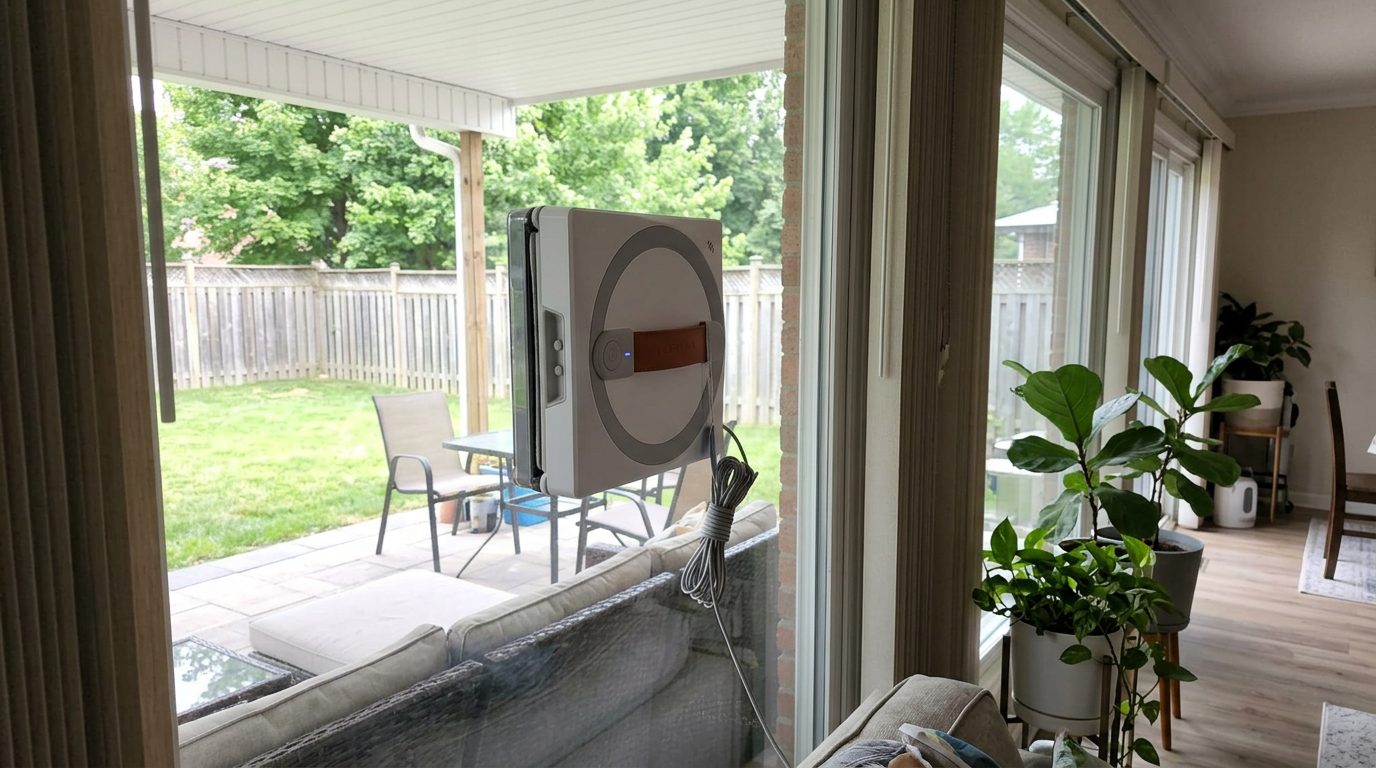
The Tosima WA9C Pro is the budget way into outdoor robot cleaning. Its square body reaches into corners, and its four nozzles wet the glass evenly, which helps outside where dry patches show up as streaks.
It keeps its grip for about 25 minutes if the power fails, and its remote controls everything, including steering.
Good on easy outside glass
On my ground-floor windows, cleaned every two weeks, it did a tidy job. The N route suited tall panes and the Z route suited wide ones.
Its corners were neater than round-pad budget robots, which is what earned it a place here.
Its limits outdoors
Its 2,600 to 3,200 Pa of suction is far below the others. On pollen-heavy glass and in a breeze it hesitated, and on the stained conservatory glass it struggled to make progress.
Its nozzles also disliked my hard tap water, so I switched to distilled water after the first week.
My outdoor routine
My routine was a quick clean of the ground-floor windows every two weeks, with distilled water in the tank. At that frequency the glass never got dirty enough to trouble its lower suction.
I used the N route on tall panes and the Z route on the wide kitchen window, which kept it from wasting time on the narrow edges.
What to know before you buy
Keep it to ground-floor outside glass that you clean often, and always use the tether. For upstairs or neglected glass, the ECOVACS robots are worth the extra.
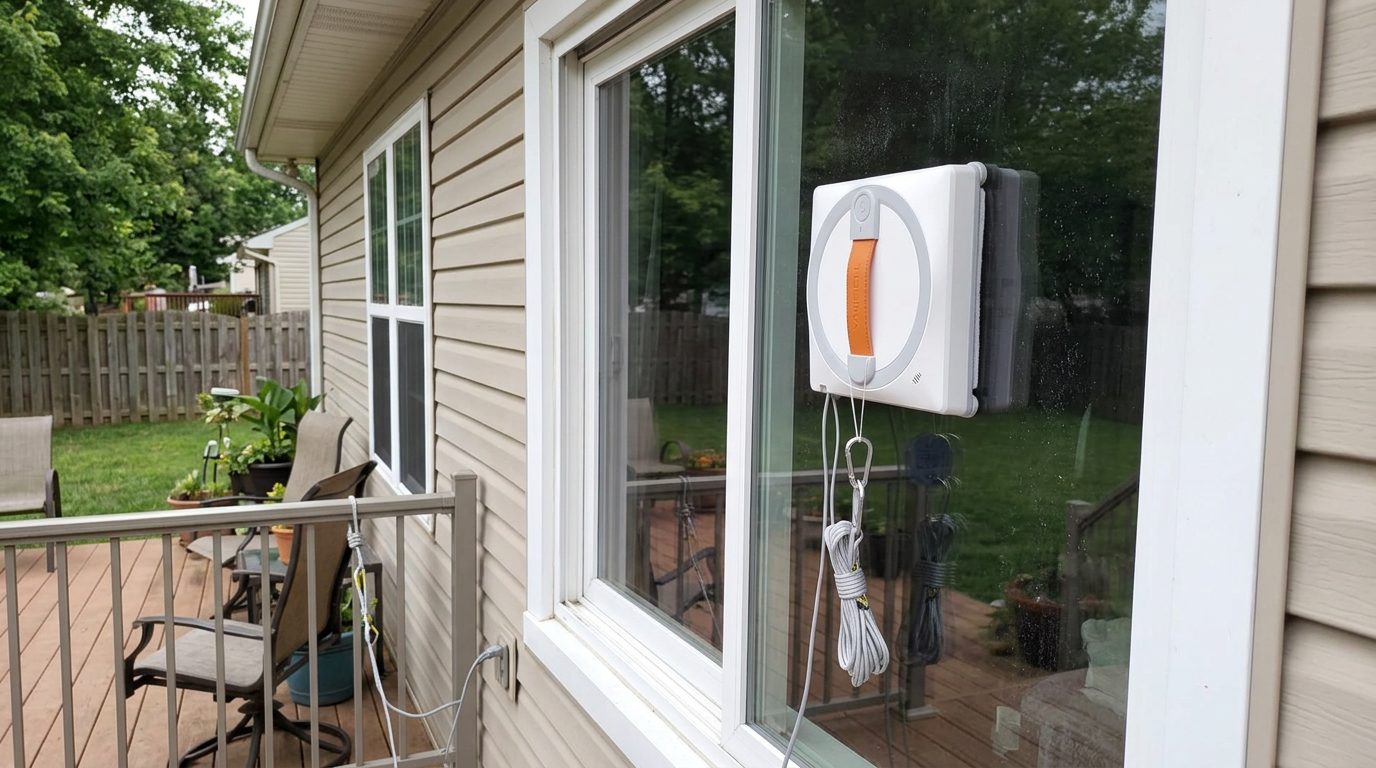
The square Tosima is best on ground-floor outside glass that is cleaned often.
- Square body reaches into corners
- Four nozzles wet the glass evenly
- 25-minute backup and full remote
- N and Z routes
- Lowest suction in this guide
- Struggles on stained or pollen-heavy glass
- Nozzles clog with hard tap water
- Ground-floor outside glass on a budget
- Windows cleaned every couple of weeks
- People who prefer a remote
- Upstairs outside windows
- Neglected or stained glass
- Windy, exposed locations
Choose this if you want an affordable robot for easy ground-floor outside glass. Read my full Tosima WA9C Pro review.
My outdoor test data
These are the numbers I recorded on the same outside glass over four weeks. They explain the scores better than any spec sheet.
Pads used per 10 outside windows
A pad that is too dirty smears, so I swapped pads as soon as they turned grey. Fewer pads means less washing and fewer smears.
My own count on typical outside glass in spring. Neglected glass roughly doubled these numbers.
Passes needed on neglected glass
| Robot | First clean of stained glass | Monthly clean afterwards |
|---|---|---|
| W3 Omni | 2 passes | 1 pass |
| W2S Omni | 2 passes | 1 pass |
| HUTT H10 | 2–3 passes | 1 pass |
| Tosima WA9C Pro | 3 passes, still hazy | 1–2 passes |
Behavior in wind
My ratings from cleaning on breezy days. I stopped testing above a light breeze for safety.
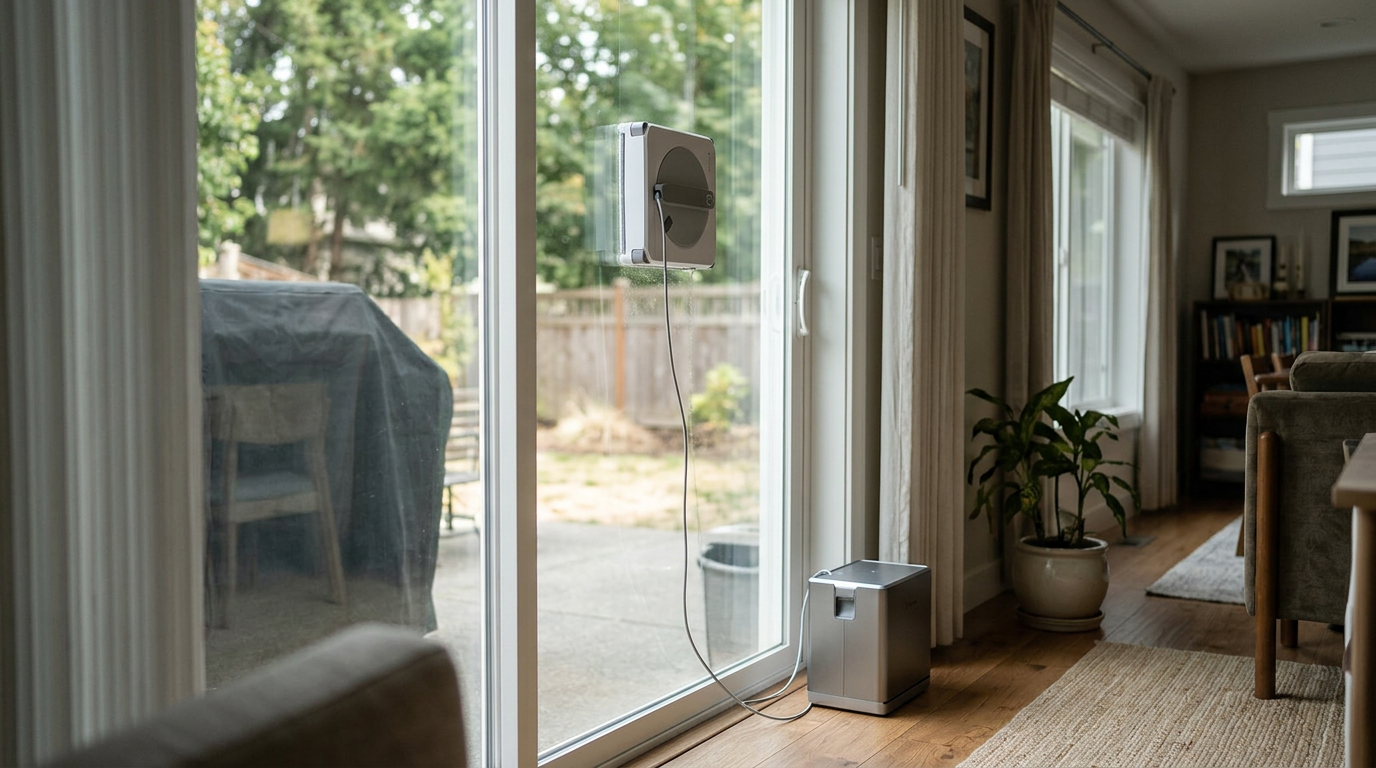
The station robots held firm on breezy days where the lower-suction robots hesitated.
The first deep clean of neglected outside glass
Most people buy a window robot after years of not cleaning the outside glass. That first clean is a different job from routine cleaning, and treating it differently saved me a lot of frustration.
Here is the routine that worked best on my stained conservatory glass, which had not been cleaned for over a year.
- Rinse the glass first
A garden hose or a bucket of water softens the crust of dust and pollen. Let it dry completely before the robot goes on.
- Remove the worst by hand
Scrape off bird droppings, tree sap and insect remains with a soft cloth. Robots smear sticky dirt instead of lifting it.
- Run a first pass with a damp pad
The aim is to lift the loose layer, not to finish the glass. Expect it to look streaky after this pass.
- Swap to a fresh pad
On the W3 Omni the station does this; on the others, fit a clean pad.
- Run a second full pass
This is the pass that makes the glass clear. On the worst panes I needed a third.
- Finish the edges once
After the deep clean, a cloth along the frames resets them, and the robot keeps them clean from then on.
On my conservatory, the W2S Omni and the W3 Omni turned grey, hazy glass clear in two runs each. The HUTT H10 needed three runs, and the Tosima never quite cleared the haze on the worst panes.
After that first clean, everything got easier. A month later, every robot cleaned the same glass in a single pass.
My ratings of the conservatory glass with the W3 Omni and W2S Omni, judged in evening light.
The best weather for cleaning outside windows
Weather changed my results more than any setting. The same robot left perfect glass one evening and streaky glass the next noon.
| Condition | Effect on results | My advice |
|---|---|---|
| Direct sun on the glass | Spray dries before the pad wipes, streaks | Clean in shade or late in the day |
| Overcast and mild | Best results of all | Ideal cleaning weather |
| Light breeze | Fine for strong robots | Watch low-suction robots |
| Wind | Robots slip, tether swings | Do not clean |
| Rain or wet glass | Suction breaks, dirt turns to mud | Wait for dry glass |
| Frost or near freezing | Spray can freeze on the glass | Wait for a milder day |
My best results came on dry, overcast spring evenings. My worst came on a sunny afternoon with a south-facing door, where every robot left streaks.
Our tip: Clean south- and west-facing windows in the morning, and east-facing ones in the evening, so the sun is never on the glass you are cleaning.
Safety on outside glass
Outside glass is where a robot can actually fall, so I treated safety as seriously as cleaning. Every robot here has a tether and either a battery station or a backup battery, and none of them fell during my test.
The station robots are the most reassuring outside, because the tether is anchored to a heavy station and there is no power cord to snag. The corded robots hold on for 25 to 30 minutes on battery if their cord is pulled, which gives you time to bring them in.
| Robot | Power-loss protection | Tether anchor | My outdoor safety rating |
|---|---|---|---|
| W3 Omni | Runs on station battery | Station | 9.3 |
| W2S Omni | Runs on station battery | Station | 9.0 |
| HUTT H10 | 30-minute backup battery | Indoor fixed point | 8.6 |
| Tosima WA9C Pro | About 25-minute backup | Indoor fixed point | 7.6 |
On ground-floor glass, a slip means a robot on the patio. On upstairs glass, it could mean a broken robot or worse, so for those windows I would only use the W3 Omni or the W2S Omni.
Children and pets are worth a thought too. Keep them away from the area below a window while a robot is working outside, just as you would if someone were up a ladder.
Outdoor setup, step by step
- Brush off loose dirt
Sweep away cobwebs, sand and bird droppings by hand first. Grit under the pad can scratch and blocks the seal.
- Plan the power
For corded robots, use an outdoor-rated extension lead with slack. For station robots, charge fully first.
- Anchor the tether indoors
Clip it to the station or heavy furniture inside, never to the window handle.
- Fit a clean, damp pad
Wring it out well. A dripping pad makes mud lines on dusty glass.
- Start in the middle of the pane
Let the suction build before you let go, then press start.
- Swap pads between windows
Unless your robot washes them, a fresh pad for each window keeps results clear.
Which one is right for you?
4 quick questionsAnswer four questions and I will match you with the right robot for your outside windows. My single reviews go deeper, starting with the W3 Omni review.
Or find your home below
Clean pads on every window and a battery that lasts the whole house.
Strong on stained glass, with a station that works anywhere.
Dry polishing for the clearest finish, cleaned in the shade.
Square corners and a remote, on a budget.
What to look for in a robot for outside windows
Outside, a few features matter much more than they do indoors. In order of importance, this is what I would check.
| Feature | Why it matters outside | What I would choose |
|---|---|---|
| Suction | Rough, dusty glass leaks air under the robot | 8,000 Pa or more for outside work |
| Power | Outdoor outlets are rare | A battery station, or an outdoor extension lead |
| Pad handling | Outside dirt saturates pads fast | Self-washing, or plenty of spare pads |
| Edge cleaning | Frames collect the most grime | TruEdge or a square body |
| Spray | Drips on dusty glass make mud lines | A fine ultrasonic mist |
| Safety | Exterior glass is often high | Backup power and an anchored tether |
Spray quality matters more outside
Every robot here uses an ultrasonic spray✕Ultrasonic spraya nozzle that vibrates the solution into a very fine mist. Small droplets spread evenly and dry without the runs a normal spray leaves. of some kind. On dusty outside glass, a fine even mist was the difference between clean glass and brown drip lines.
Our tip: Choose a station robot if more than half your windows are far from an outlet, because extension leads through windows are the most annoying part of cleaning outside glass.
Rain spots and hard water
Those round white rings on outside glass are minerals left when water dries. Rain itself is soft, but runoff from roofs, sprinklers and tap water used for cleaning all carry minerals.
The US Geological Survey estimates that about 85 percent of American homes have hard water. If you fill a robot with that water, you add a little more mineral to the glass every time.
| Water | Typical dissolved solids | Result on glass |
|---|---|---|
| Distilled | Close to 0 ppm | No residue |
| Soft tap water | 0–60 ppm | Light spots in sun |
| Hard tap water | 120–180 ppm | Visible rings |
| Very hard tap water | 180+ ppm | Heavy white spots |
Robots can remove fresh spots over a few cleans, but they cannot remove old etched spots that have bonded to the glass. For those, a dedicated hard-water remover and a cloth are the only fix.
Our tip: Fill your robot with distilled water outside, because it costs little and was the single biggest improvement to my outdoor results.
How much each habit reduced spots and streaks on my outside glass.
Exterior glass types and what robots can handle
Not all outside glass is the same, and a few types need extra care. This is what I found when I tried each robot on the glass around my house and my neighbors’ houses.
| Glass type | Robot friendly? | Notes |
|---|---|---|
| Standard double glazing | Yes | The ideal surface for every robot here |
| Low-E coated glass✕Low-E coated glassglass with a very thin metal-oxide coating that reflects heat. The coating is usually on an inner surface, so the outside can be cleaned normally. | Yes | Clean as normal; avoid abrasive pads |
| Self-cleaning glass✕Self-cleaning glassglass with a coating that uses sunlight and rain to break down dirt. Harsh cleaners and abrasives can damage the coating. | With care | Use plain distilled water and a soft pad only |
| Conservatory side panels | Yes | Battery robots are easiest here |
| Conservatory roof glass | Rarely | Slanted glass needs special care; see my skylight guide |
| Textured or frosted glass | No | Suction cannot seal |
| Leaded or small-pane windows | No | Panes are too small and the lead strips stop the robot |
The most common problem I saw was small panes. Georgian-style windows divided into many little panes simply do not fit a robot, and the glazing bars stop it in its tracks.
Frames matter too. Deep wooden frames with a raised lip are fine, but frames flush with the glass need edge sensors that work reliably, and the ECOVACS robots were the most consistent there.
Our tip: Check your window manufacturer’s cleaning advice if you have self-cleaning glass, because detergents and abrasive pads can damage the coating that makes it work.
How long a whole house of outside glass takes
I timed a complete exterior clean of my house: a patio door, six windows and the conservatory side panels. That included setup, moving the robot between windows and swapping pads.
My stopwatch totals for routine cleans after the first deep clean. Shorter is better.
The station robots were fastest mainly because they needed no cable management between windows. Carrying one station and placing the robot is much quicker than unplugging, rerouting and plugging in a corded robot at every window.
The HUTT H10 was the slowest because of its polishing step, though I was free to do other things while it worked.
For comparison, the same clean by hand, with a ladder for the upstairs windows, took me close to three hours the year before. The bigger saving was not the time but never climbing a ladder.
Ground floor, upstairs and patio doors
Where your outside glass is changes which robot fits best. Here is how the four compared on the three kinds of exterior glass most homes have.
| Glass | Best robot | Why |
|---|---|---|
| Patio and sliding doors | W3 Omni | Large panes, lots of dirt, and pad washing saves the most work |
| Ground-floor windows | HUTT H10 | Easy to reach, near outlets, and the clearest finish |
| Upstairs windows from inside | W2S Omni | Battery station, strong grip and a station-anchored tether |
| Neglected conservatory | W2S Omni | Strongest on stained glass in this group |
Patio doors were the easiest job of all for every robot, because the glass is big, flat and easy to reach from both sides. If that is most of your outside glass, even the Tosima does a decent job.
Upstairs windows are the hardest. You clean them from inside, the robot is out of reach and the safety setup takes longer, so I would only use a station robot there.
A year of outside windows
Outside glass changes with the seasons. This is the routine I would follow with a robot, based on what my test windows needed.
| Season | What builds up | How often to run the robot |
|---|---|---|
| Spring | Pollen and winter grime | Every 2 weeks |
| Summer | Dust, insects, sprinkler spots | Every 3–4 weeks |
| Autumn | Leaves, rain spots | Every 3–4 weeks |
| Winter | Salt spray, rain | Monthly on mild, dry days |
The first clean of spring is always the hardest. After that, regular short cleans keep the glass easy, and the robot does the work in one pass.
Robot vs other ways to clean outside windows
| Window robot | Squeegee and ladder | Water-fed pole | Professional | |
|---|---|---|---|---|
| Effort | Low | High | Medium | None |
| Fall risk | Very low | High | Low | None for you |
| Finish | Good to excellent | Excellent if skilled | Excellent with pure water | Excellent |
| Upstairs windows | From inside | Ladder needed | From the ground | Yes |
| Cost over time | Pads and solution | Very low | Filters and resin | Every visit |
A water-fed pole with purified water is what many professionals use on outside glass, and it is excellent. It is also bulky, needs a water supply and a filter system and takes practice, which is why most homeowners never get one.
A pressure washer is the wrong tool for glass. It can force water past window seals and damage frames, and it does not leave a streak-free finish.
For a homeowner, a robot plus a professional clean once a year covered everything my test house needed.
A robot will not beat a skilled professional on a filthy house, but it lets you keep glass clean between visits without climbing. For most homes, that is the real win.
What else you need for outside windows
A robot does the glass, but a few cheap extras made my outdoor sessions faster and the results better.
| Item | Why it helps |
|---|---|
| Spare cleaning pads | A fresh pad per window on corded robots, and backups for the station robots |
| Distilled water | The biggest single improvement to outdoor results in hard-water areas |
| Outdoor-rated extension lead | Only for corded robots; lets the cord reach with slack |
| Soft brush or duster | Sweeps cobwebs and grit off the glass before the robot goes on |
| Microfiber cloth | For corners and a final wipe of the frames after the first deep clean |
| Small step mat or cushion | Protects anything below a window while you learn how a robot behaves |
I kept all of this in one bucket by the back door. When cleaning outside glass became a grab-and-go job, I did it far more often.
None of it is expensive, and all of it applies whichever robot you buy.
Maintenance after outdoor cleaning
- Wash all pads after each session
Outdoor dirt sets into pads quickly. Wash warm, without fabric softener.
- Clean the tracks and underside
Pollen and dust on the tracks reduce grip on the next window.
- Empty and rinse the tank
Especially if you used tap water, to avoid nozzle clogging.
- Rinse the station’s dirty-water tank
On the W3 Omni, empty it after every session to avoid smells.
- Check the tether and clip
Outdoor use wears ropes faster than indoor use.
| Consumable | Outdoor use | Indoor use |
|---|---|---|
| Pads | Replace every 1–2 months | Replace every 2–3 months |
| Tether | Inspect monthly | Inspect every few months |
| Solution | Distilled water is enough | Distilled water is enough |
Common outdoor mistakes
| Mistake | What happens | Fix |
|---|---|---|
| Cleaning in full sun | Streaks and spots | Shade, morning or evening |
| Skipping the pre-brush | Grit scratches, robot stalls | Brush off loose dirt first |
| One pad for the whole house | Smears by the third window | Fresh pad per window |
| Tap water in a hard-water area | White spots | Use distilled water |
| Cleaning wet glass | The seal breaks, mud lines | Wait until it is dry |
Our tip: Remove bird droppings by hand before every run, because a robot that drives through one smears it across the whole pane.
Other robots I tested
These robots from my wider test are also good outside, but did not make this shortlist for exterior glass.
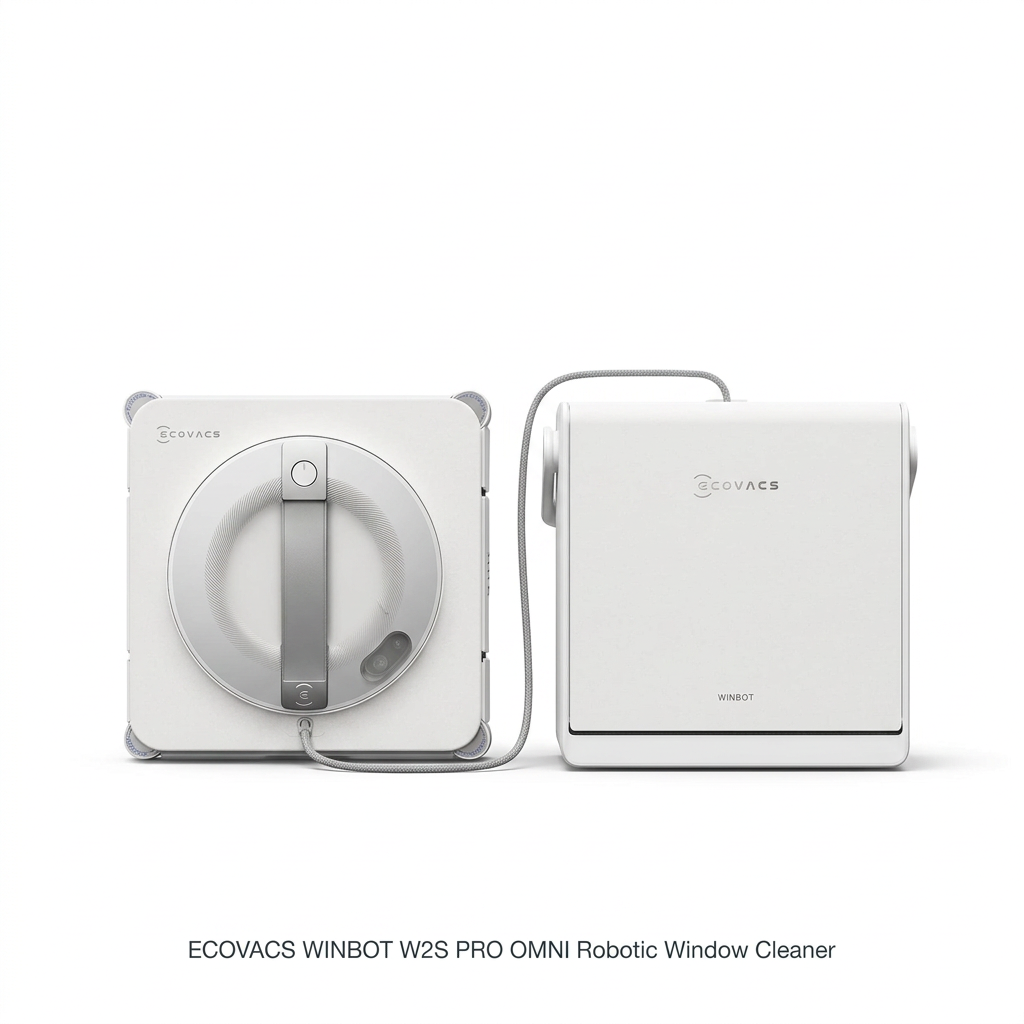
The WINBOT W2S PRO Omni has 10,000 Pa of suction and TruEdge 2.0 brushes. For upstairs outside glass, it is my top choice overall.
For mostly ground-floor exterior glass, the W3 Omni’s pad washing mattered more in daily use.
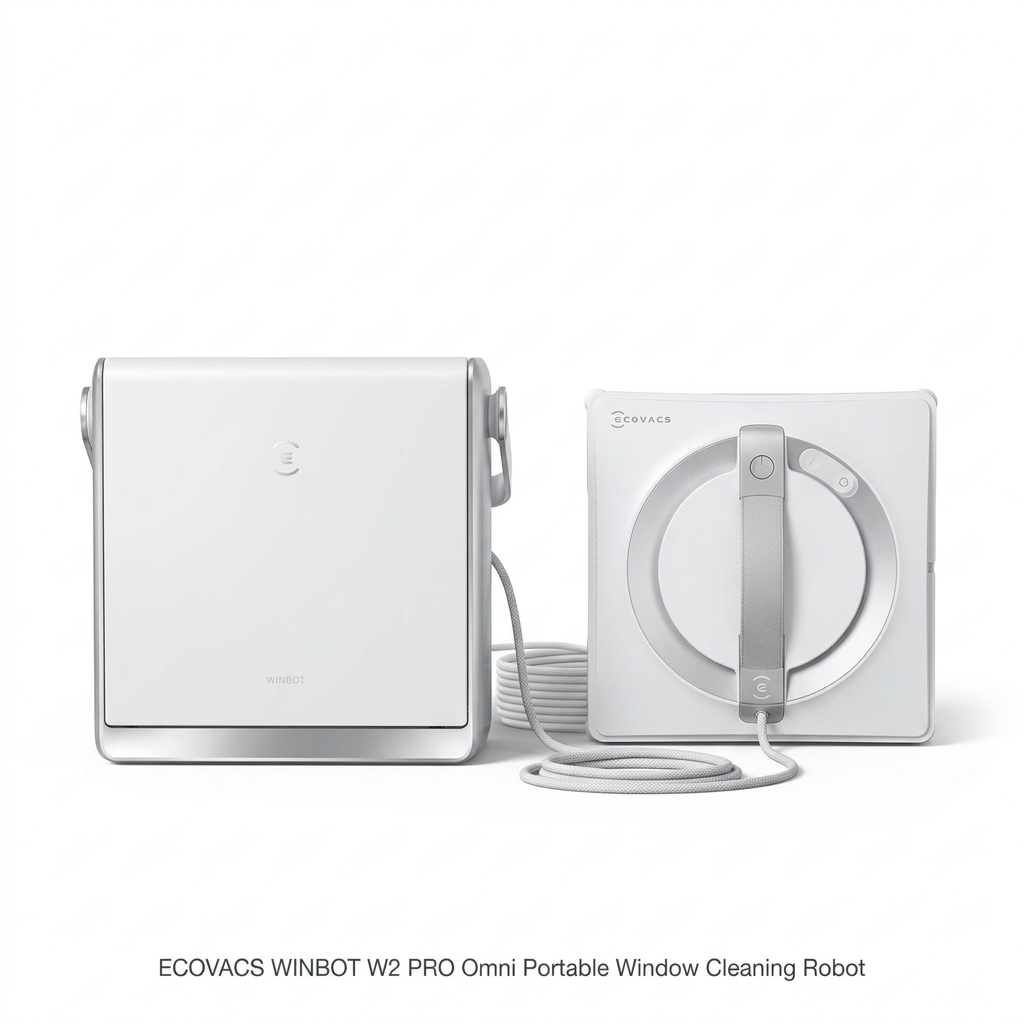
The WINBOT W2 PRO Omni is light to carry and runs on battery, which is handy outdoors.
Neglected outside glass needed extra passes, and its edges are not TruEdge level.
Frequently asked questions
What is the best window cleaning robot for outside windows?
The ECOVACS WINBOT W3 Omni. Its station washes the dirty pads after every window, it runs on battery and its TruEdge scrubber cleans dirty frames.
Can window robots clean outside windows from inside?
Yes, if the window opens wide enough. You clip the tether indoors, place the robot on the outside of the glass and close the window gently onto the rope.
Do window robots work on very dirty outside glass?
They do, but the first clean usually needs two passes and fresh pads. After that, monthly cleans take one pass.
Can I use a window robot in the rain?
No. Wet glass breaks the suction seal and dirt turns to mud. Wait for dry, calm weather.
Why does my robot leave streaks outside?
Usually direct sun, a dirty pad or hard water. Clean in shade, use a fresh pad per window and fill the tank with distilled water.
Do I need an outdoor outlet?
Not with a station robot like the W3 Omni or W2S Omni. Corded robots need an outdoor-rated extension lead.
Will a robot remove hard water spots?
Fresh spots fade over a few cleans. Old, etched spots need a dedicated remover and hand work.
How often should I clean outside windows with a robot?
Every two weeks in spring and every three to four weeks the rest of the year kept my test windows clear.
Is the HUTT H10 good outside?
Yes, on calm days and on glass near an outlet. It gave the clearest finish, but it slips more in wind than the station robots.
What about upstairs outside windows?
See my high-windows guide. For those, I recommend the W2S PRO Omni for its 10,000 Pa grip and station-anchored tether.
Can a window robot clean a conservatory?
The vertical side panels, yes, and battery robots are easiest there. Sloped conservatory roof glass is a different job that needs extra care, and many robots are not designed for it.
Do I need special cleaning solution outside?
Distilled water is enough for routine cleans. The maker’s own solution helps on the first deep clean of very dirty glass. Avoid household glass cleaners, which can foam and clog the spray nozzles.
For outside windows, my pick is the ECOVACS WINBOT W3 Omni. Outdoor dirt saturates pads fast, and it is the only robot here that rinses them itself, so every window starts clean.
Choose the W2S Omni for neglected, stained glass, the HUTT H10 for the clearest finish on easy ground-floor glass and the Tosima WA9C Pro for easy windows on a budget.
Whatever you choose, clean on dry, overcast days, brush off loose dirt first and use distilled water. Those habits made the biggest difference outside.
Senior home appliance tester
Emily has tested home appliances for a living since 2016, including five years as a test coordinator at a national consumer advocacy group, and has run HouseholdMe’s cleaning tests since 2021. She has a degree in industrial design, and for this guide she used four window cleaning robots for four weeks each on exterior glass only: patio doors, ground-floor and upstairs windows and a conservatory.
- Four weeks of hands-on outdoor testing per robot
- HouseholdMe single reviews of the WINBOT W3 Omni, W2S Omni, HUTT H10 and Tosima WA9C Pro
- Manufacturer specifications and user manuals
- US Geological Survey data on hard water
- Water hardness classifications used by window cleaning professionals
- Buying guide published, based on hands-on testing of 4 window cleaning robots on outside glass.