Best Window Cleaning Robots for High Windows (2026)
I tested window cleaning robots on second-floor windows, a double-height living room and an apartment balcony to find the ones you can trust where a fall would be expensive. My top pick is the ECOVACS WINBOT W2S PRO Omni: the strongest grip, the most safety layers and a station that anchors the rope.

Emily Carter
Buying Guide
5 models · 5 picks
4 weeks per robot
I choose products independently. If you buy through my links, HouseholdMe may earn a commission at no extra cost to you. Affiliate policy
Jargon helpNew to window robots? Tap or hover over any dotted term to see what it means.
In this guide
The short answer
- Best overall for high windows: the WINBOT W2S PRO Omni. 10,000 Pa of suction, the highest safety score in my test and a station that holds the tether.
- Best for tall glass walls: the WINBOT W3 Omni. The longest battery and the best mapping on very large panes, plus self-washing pads.
- Best value station: the WINBOT W2 PRO Omni. Portable, battery-powered and backed by 12 layers of safety.
- Best for high indoor glass: the HUTT H10. Light and quiet, with a dry polishing pad that leaves the fewest streaks.
- Best budget pick: the Tosima WA9C Pro. Square corners and a 25-minute backup, for clean glass you clean from inside.
Our picks at a glance
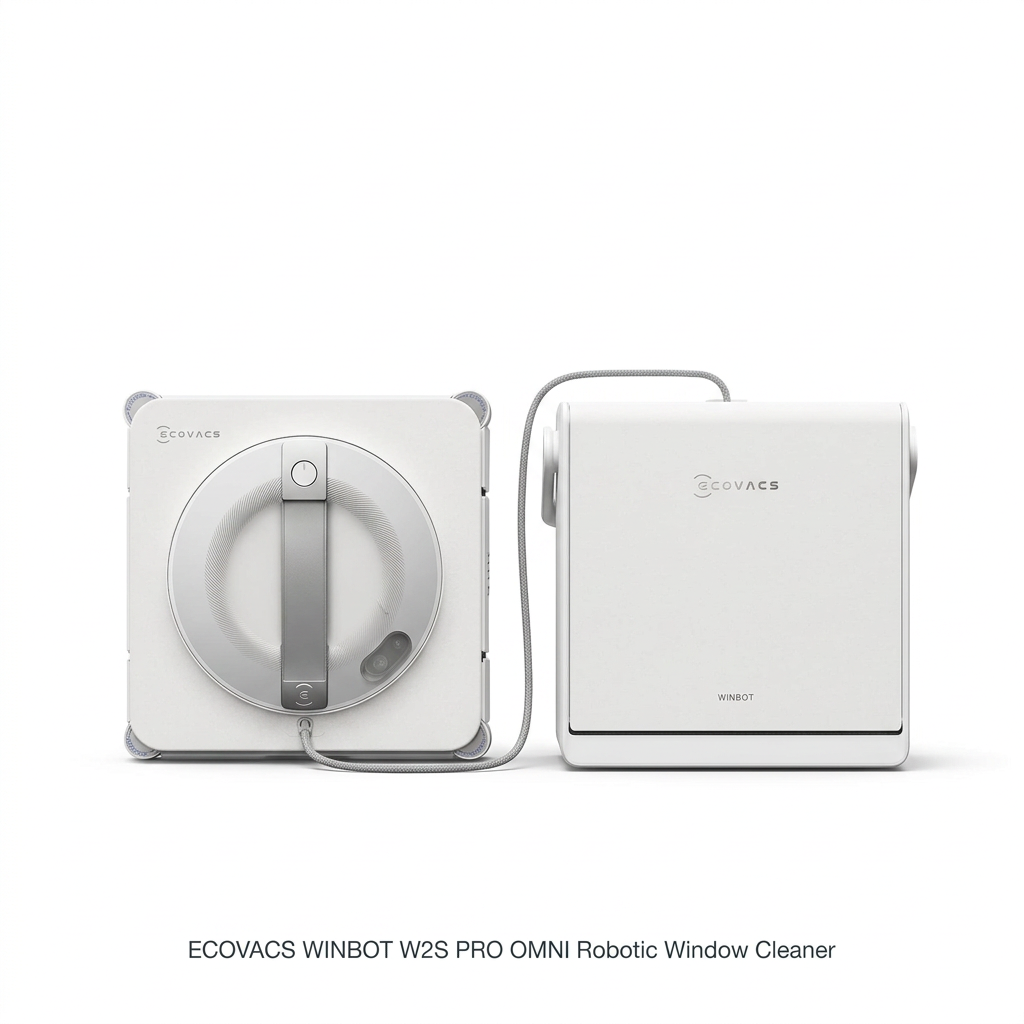
ECOVACS WINBOT W2S PRO Omni
The strongest grip I tested at 10,000 Pa, layered anti-drop safety and a battery station that anchors the tether. The robot I trusted most on second-floor glass.
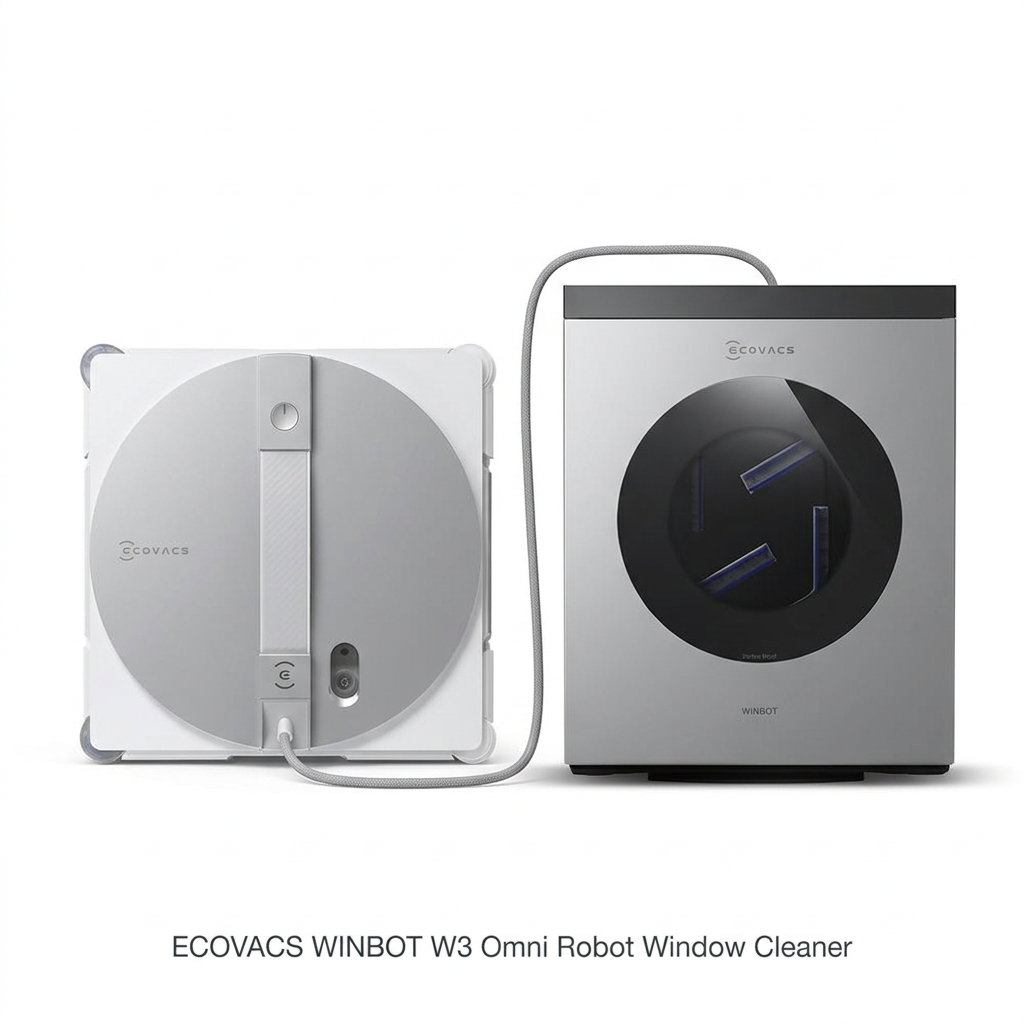
ECOVACS WINBOT W3 Omni
A 130-minute battery, smart mapping for very large panes and a station that washes the pads. Ideal for double-height windows and glass stairwells.
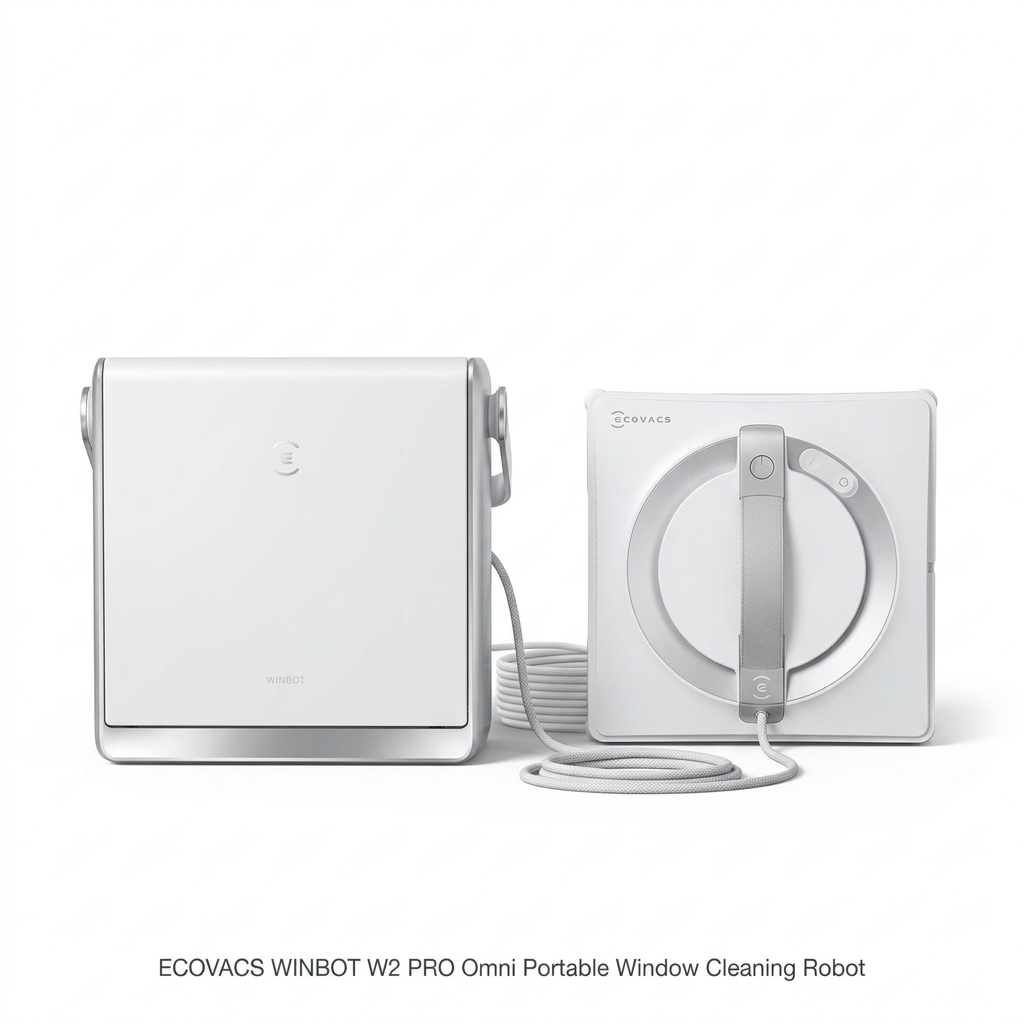
ECOVACS WINBOT W2 PRO Omni
A light, portable 6-in-1 station with battery and plug-in modes, 12-stage safety and a rope tied to the station. The easiest to carry upstairs.
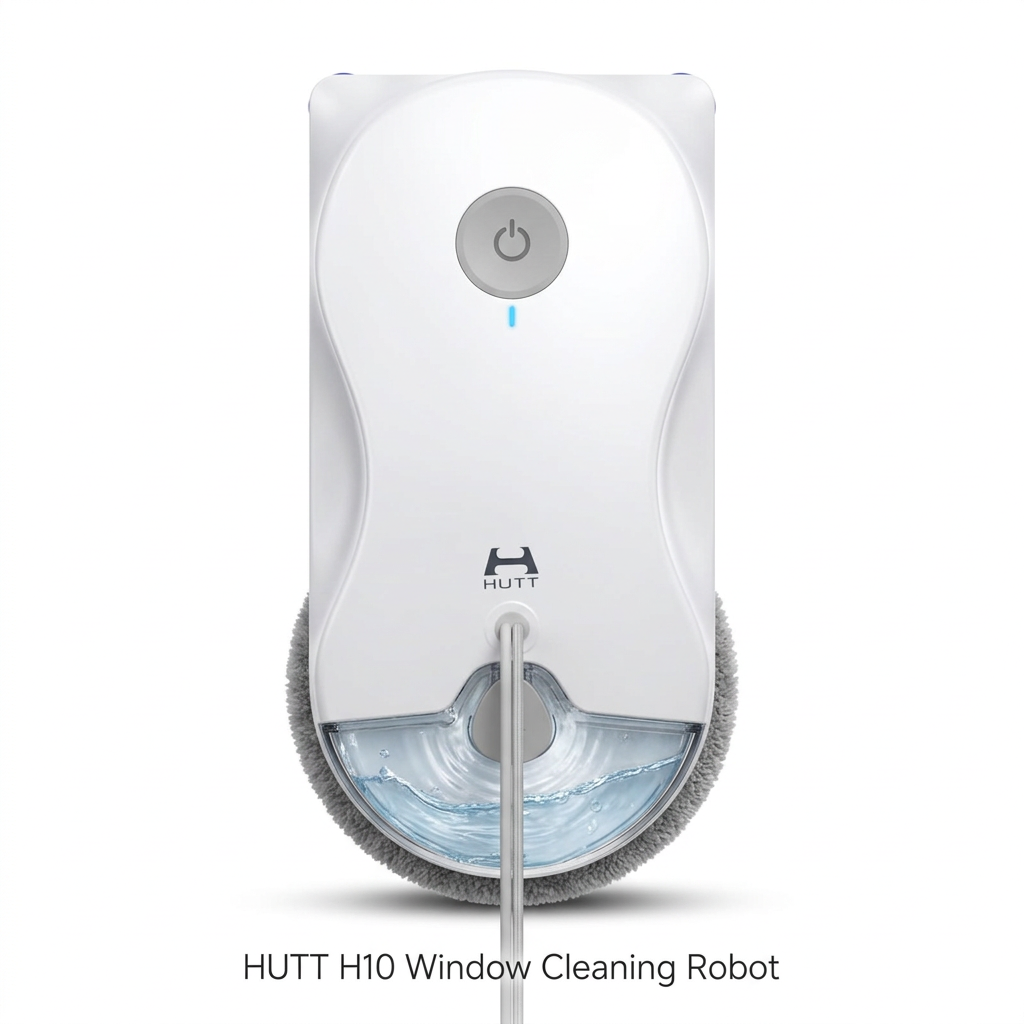
HUTT H10
Light, quiet and streak-free, with a 30-minute backup battery. Great for high interior glass, mezzanines and big mirrors you cannot reach.
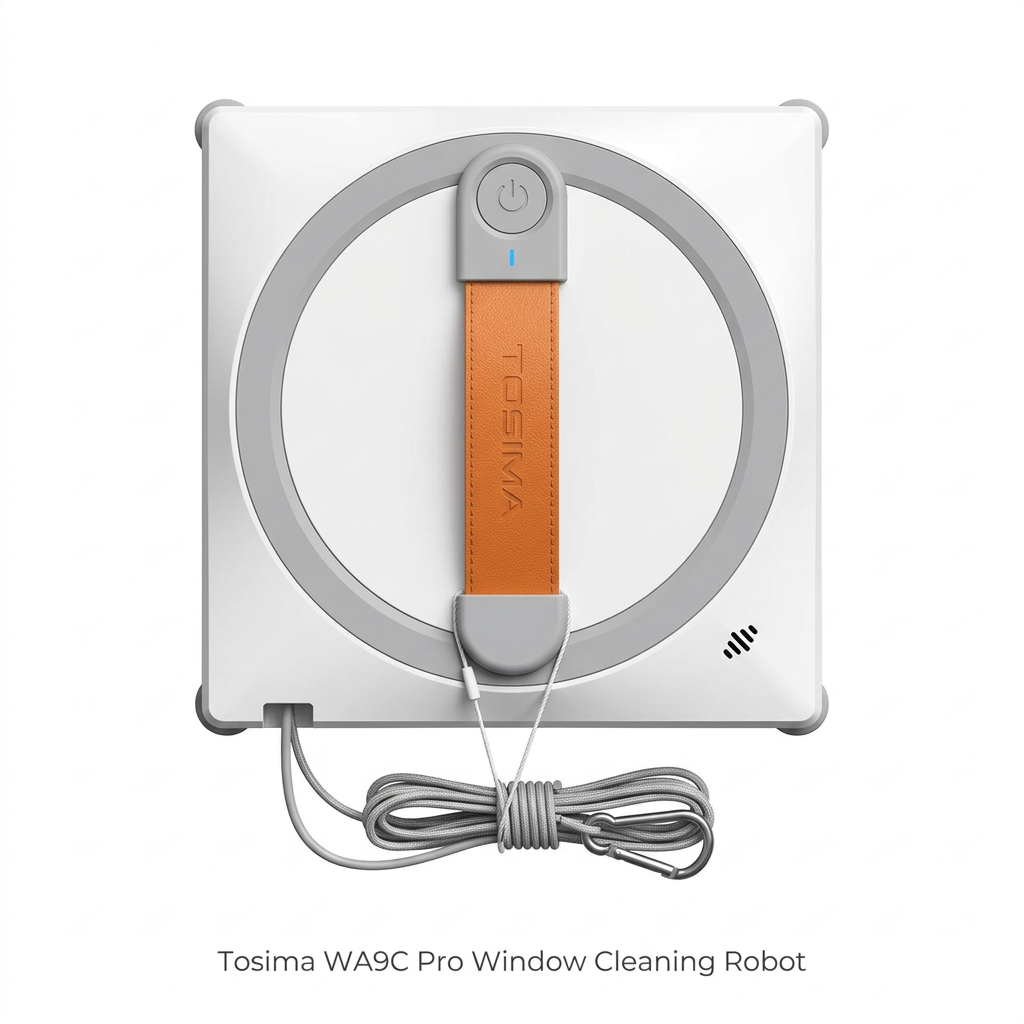
Tosima WA9C Pro
A square robot that reaches into corners, with a four-nozzle spray, a remote and a 25-minute backup. Best on clean, smooth glass from inside.
Availability and deals change often. Check the current offer on Amazon before you buy.
Compare the best robots for high windows
I ranked these robots for high glass, so safety counts for more here than in my general guide. Scores are from four weeks of use per robot.
| 5 picks compared | Best overall | Tall glass | Value station | Indoor high | Budget |
|---|---|---|---|---|---|
| My test scores | |||||
| Overall score | 8.9 | 8.8 | 8.4 | 8.3 | 7.8 |
| Safety | 9.4 | 9.3 | 9.0 | 8.6 | 7.6 |
| Cleaning | 8.8 | 8.8 | 8.3 | 8.5 | 7.8 |
| Edge coverage | 9.0 | 8.6 | 7.8 | 8.1 | 7.9 |
| Ease of use | 8.8 | 9.0 | 8.7 | 8.1 | 8.0 |
| Grip and power | |||||
| Max suction | 10,000 Pa | 8,000 Pa | Not stated | 6,500 Pa | 2,600–3,200 Pa |
| Power | Battery station | Battery station | Battery station | Corded + backup | Corded + backup |
| Power-loss protection | Station battery | Station battery | Station battery | 30-min battery | 25-min battery |
| Tether anchored to station | ✓ | ✓ | ✓ | ✕ | ✕ |
| Features | |||||
| Self-washing pads | ✕ | ✓ | ✕ | ✕ | ✕ |
| Edge cleaning | TruEdge 2.0 | TruEdge | Edge mode | Square pad | Square body |
| Control | App + station | App + station | App + station | Remote | Remote |
| Best for | Upstairs and outside glass anywhere | Double-height glass and big homes | Apartments and balconies | High indoor glass and mirrors | Clean glass on a budget |
My test scores for high windows
Each robot cleaned the same high glass: two second-floor bedroom windows from inside and out, a 4-meter living-room window I can only reach from a scaffold tower and a sliding door onto an apartment balcony.
For this guide I gave safety double weight. A robot that cleans slightly better but grips less firmly is the wrong choice when it hangs four meters up.
| Robot | Overall | Safety | Cleaning | Edges | Ease of use |
|---|---|---|---|---|---|
| WINBOT W2S PRO Omni | 8.9 | 9.4 | 8.8 | 9.0 | 8.8 |
| WINBOT W3 Omni | 8.8 | 9.3 | 8.8 | 8.6 | 9.0 |
| WINBOT W2 PRO Omni | 8.4 | 9.0 | 8.3 | 7.8 | 8.7 |
| HUTT H10 | 8.3 | 8.6 | 8.5 | 8.1 | 8.1 |
| Tosima WA9C Pro | 7.8 | 7.6 | 7.8 | 7.9 | 8.0 |
Editorial scores. Safety covers grip, power-loss protection, tether design and how the robot reacts when something goes wrong.
The three ECOVACS station robots form a clear top group on safety. Their stations double as an anchor for the tether, and their batteries mean there is no power cord that can be pulled or tripped over.
The HUTT H10 and the Tosima are both corded robots with a backup battery. They are safe when you follow the setup steps, but they leave more of the safety work to you.
Our tip: For any window above the ground floor, choose a robot whose tether clips to something heavy indoors, never to the window handle.
How I tested
I have tested home appliances for a living since 2016 and run HouseholdMe’s cleaning tests since 2021. My background in industrial design makes me look hard at how a product fails, which matters more on high glass than anywhere else.
For this guide I used each of the five robots for four weeks on the high glass in my home: two upstairs bedroom windows, a 4-meter double-height window in the living room and a balcony door in a friend’s seventh-floor apartment.
I tested power-loss behavior on every robot by pulling the plug or switching off the station mid-run, with the tether attached and a soft mat below. I also noted how each robot behaved near frames, on dusty outside glass and in a light breeze.
Why high windows are different
On a ground-floor window, a robot that slips is an annoyance. On a second-floor window it can fall several meters, crack a patio or hit someone below, so grip and backup systems matter far more than speed or extra modes.
The alternative is not risk-free either. The US Consumer Product Safety Commission estimates around 500,000 ladder-related injuries are treated each year, with roughly 300 deaths, and most fatal ladder falls happen from 10 feet or lower.
That last figure is the one that stuck with me. Window cleaning means climbing with a bucket, a squeegee and a cloth, which is exactly the situation in which ladder accidents happen.
A good robot takes that risk away. You open the window, clip the tether indoors, place the robot on the outside of the glass and stay on the floor the whole time.
Three things that change on high glass
- Wind
Even a light breeze pushes on a robot and on its tether. Robots with more suction resisted it noticeably better in my test.
- Dirt
High outside glass is rarely cleaned, so it carries more dust, pollen and dried rain. That rough surface makes it harder for a robot to seal.
- Access
You often cannot reach the robot if it stops in the middle of a high pane. A dependable return-to-start and a remote or app matter more.
How a window robot stays on high glass
Every robot here is held on by suction. A fan pulls air from under the body, and the outside air pressure pushes the robot onto the glass.
That pressure difference is rated in Pascals (Pa)✕Pascals (Pa)the unit used for suction. Higher numbers mean the robot is pressed harder onto the glass, which helps on dirty, rough or windy outside panes.. In this guide it ranges from about 2,600 Pa on the Tosima to 10,000 Pa on the W2S PRO Omni.
The four layers of protection
Suction is the first layer, but no safety-minded maker relies on it alone. The best robots add sensors, a backup power source and a physical rope.
| Layer | What it does | Best in this guide |
|---|---|---|
| Suction monitoring | Detects a leak in the seal and compensates or stops | W2S PRO Omni, W3 Omni |
| Edge and drop sensors | Stop the robot at frames and frameless edges | All five |
| Backup battery✕Backup batterya battery that keeps the suction fan running if the main power fails, giving you time to bring the robot down safely. | Keeps the fan running if power fails | Station robots run on battery anyway |
| Safety tether✕Safety tethera strong rope clipped to the robot and to something solid indoors. If the robot loses grip, the tether catches it. | Catches the robot if everything else fails | Station-anchored on the three ECOVACS models |
Every robot in this guide passed that test. The station robots never needed the backup at all, because their main power is the battery inside the station.
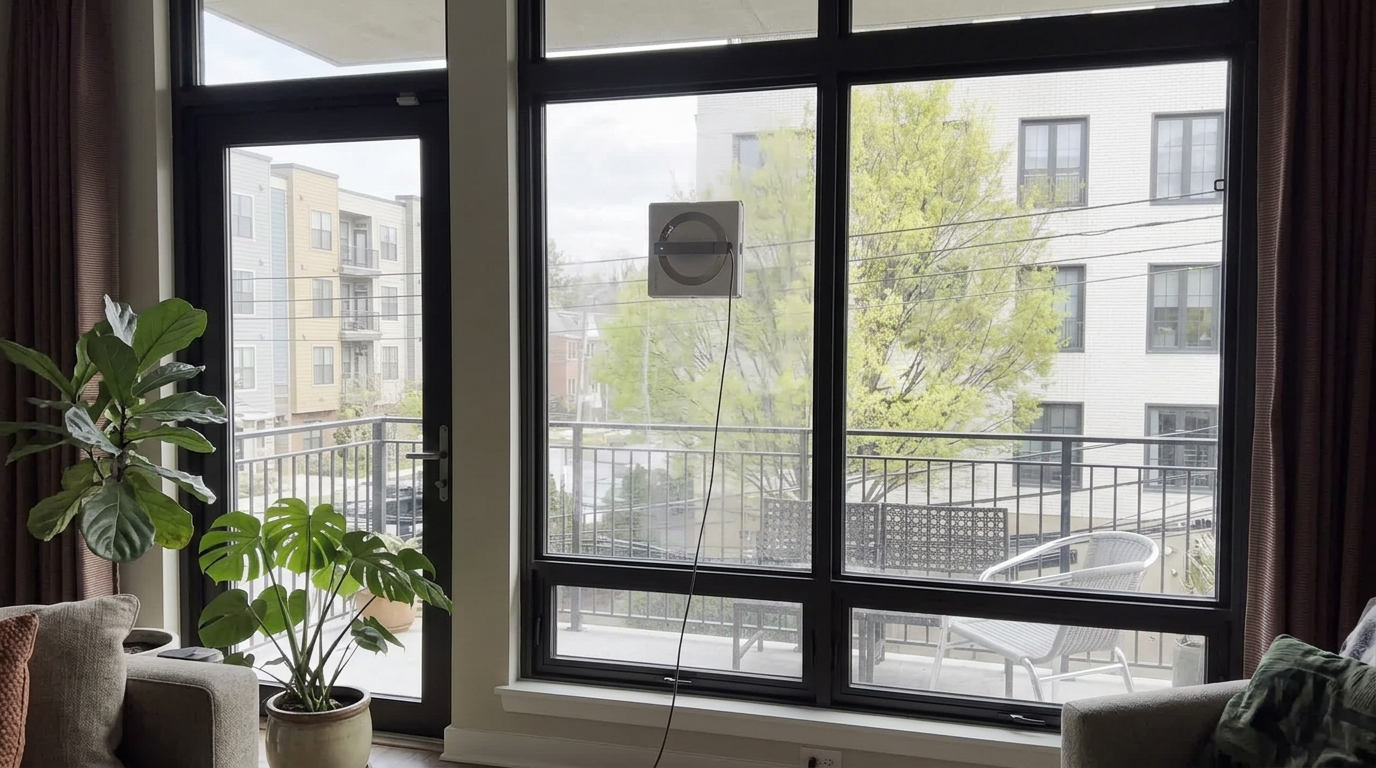
The W2 PRO Omni’s station stores the robot and anchors the safety rope, so the rope is fixed to something heavy.
Our picks in depth
1. ECOVACS WINBOT W2S PRO Omni
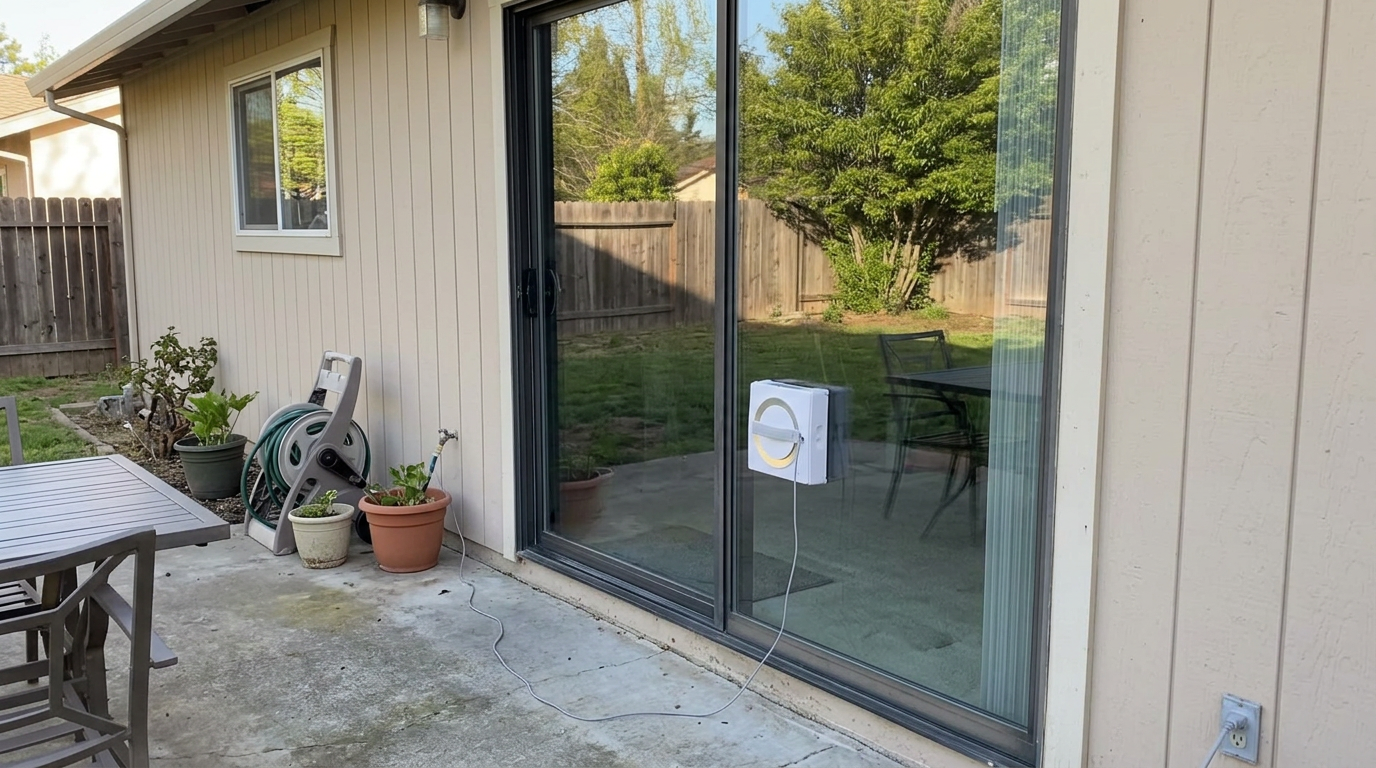
The WINBOT W2S PRO Omni is the robot I would put on a second-floor window without a second thought. Its 10,000 Pa of suction is the highest in this guide, and you feel it the moment you try to lift it off mid-run.
It also scored 9.4 for safety, the best of any robot I have tested. That comes from layers working together: suction monitoring, edge sensors, a tether and a station heavy enough to anchor it.
No cord to worry about
Because the robot runs from the station’s battery, there is no power cable running out through the window. On high glass that removes the most common problem with corded robots: a cable that pulls tight or gets trapped as the robot climbs.
The station’s own display shows the battery and the job, so I could start and check a run without fetching my phone. On a 4-meter window I could not reach, that was surprisingly reassuring.
Edges on glass you never touch
High windows rarely get cleaned, so the frames build up a dark line of dirt. The TruEdge 2.0 brushes cleaned right into that line, which is something no flat pad can do.
On my upstairs bedroom windows, I did not need to reach out and finish the edges at all. That is the whole point of a robot on high glass, because finishing by hand means leaning out again.
What to know before you buy
The station is heavy, so carrying it to an upstairs room is a two-handed job, and the pads still go in the washing machine. On rough, very dirty outside glass, the first clean also took two passes.
If you want the same grip with a cord and no station, the W2S PRO is the corded version, but on high glass I prefer the station.
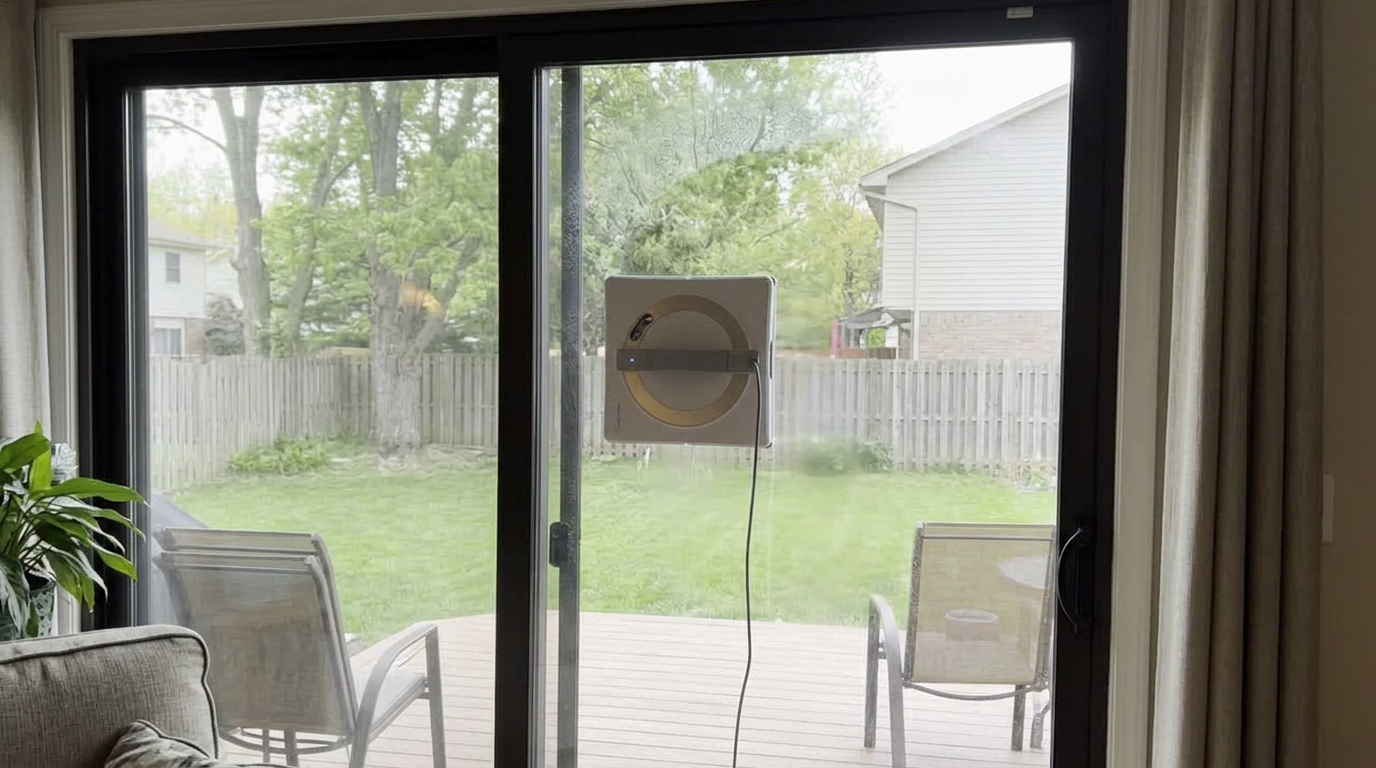
The station display shows battery and progress, handy when the robot is out of reach.
- 10,000 Pa grip, the strongest in this guide
- Highest safety score, with a station-anchored tether
- No power cord running through the window
- TruEdge 2.0 brushes clean frames you cannot reach
- Heavy station to carry upstairs
- Pads still need washing by hand
- Very dirty outside glass needs two passes
- Homes with second-floor windows cleaned from inside
- Anyone who worries about a robot falling
- Windows far from an outlet
- Ground-floor homes with small windows
- Anyone who cannot lift a heavy station
- People who never want to wash a pad
Choose this if you want the most secure grip and the cleanest edges on high glass. Read my full WINBOT W2S PRO Omni review.
2. ECOVACS WINBOT W3 Omni
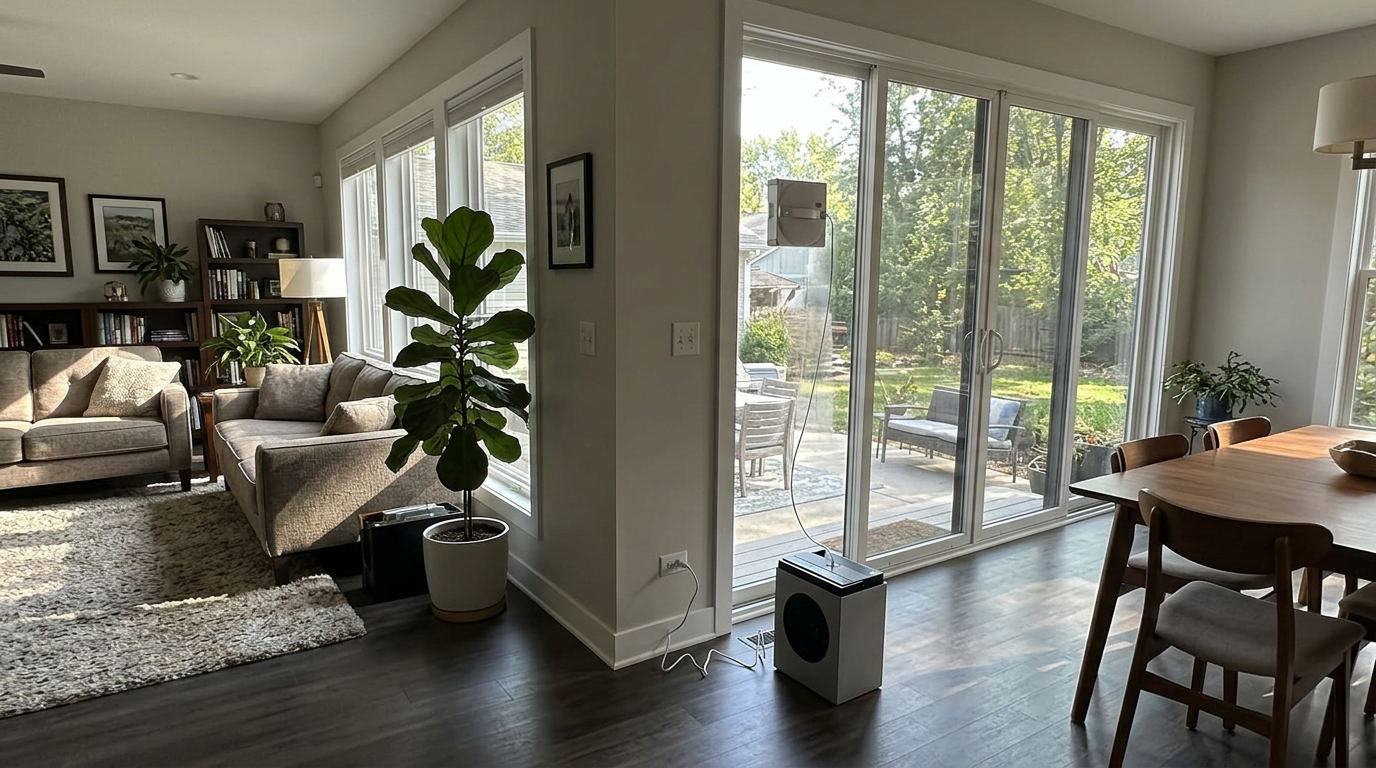
Double-height windows and glass stairwells are where the WINBOT W3 Omni shines. It has the longest rated battery in this guide at 130 minutes and the newest version of WIN-SLAM✕WIN-SLAMECOVACS’ navigation for window robots. It measures the pane, finds frames and obstacles and plans a route instead of wandering., which mapped my 4-meter window without missing strips.
Its safety score of 9.3 is just behind the W2S PRO Omni. It uses 8,000 Pa of suction and the same kind of station anchor for the tether.
Big panes without the pad problem
On a very tall window, a robot gets its pad filthy halfway up. Most robots then smear that dirt over the rest of the pane, so you take it down, wash the pad and start again.
The W3 Omni’s station rinses the pads after each job with 16 jets in about a minute. Over four weeks that saved me more time on high glass than any other feature.
Our tip: On a tall window, run the robot on the inside first, because the cleaner glass lets you see exactly where the outside still needs work.
Calm and predictable
It never lunged at frames or turned sharply on the glass, and its return to the start point was the most consistent of the five. When a robot is three meters above you, predictable is what you want.
Its TruEdge scrubber spins at up to 200 RPM along the frames. It is not as thorough in the very corners as the W2S PRO Omni’s brushes, but still far better than a flat pad.
What to know before you buy
The station is the heaviest in this guide, and it suits rectangular panes best. It also leaves a small pad mark where it parks, which on a high window I simply left until the next clean.
If your high windows are on different floors and you will carry the station a lot, the lighter W2 PRO Omni is easier to live with.
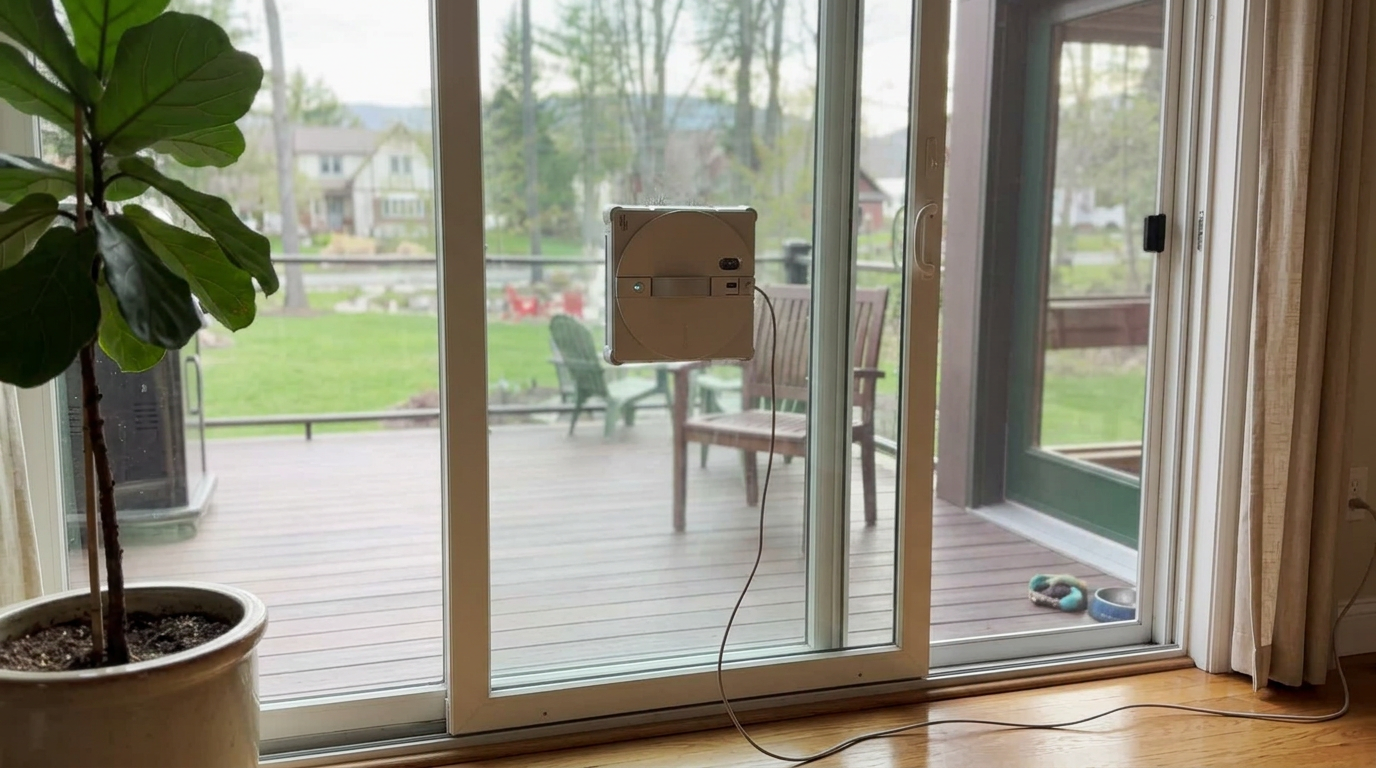
The Vortex Wash station rinses the pads, which matters most on tall panes that get the pad dirty fast.
- Longest rated battery at 130 minutes
- Best mapping on very tall and wide panes
- Station washes the pads after each job
- Station-anchored tether and 9.3 safety score
- Heaviest station in this guide
- Best on rectangular glass
- Leaves a small pad mark where it parks
- Homes with double-height windows or glass walls
- Anyone cleaning a lot of high glass at once
- People who hate washing dirty pads
- Apartments where you carry it up stairs often
- Homes with mostly small windows
- Arched or round high windows
Choose this if your high glass is big, tall or plentiful and you want the least work afterwards. Read my full WINBOT W3 Omni review.
3. ECOVACS WINBOT W2 PRO Omni
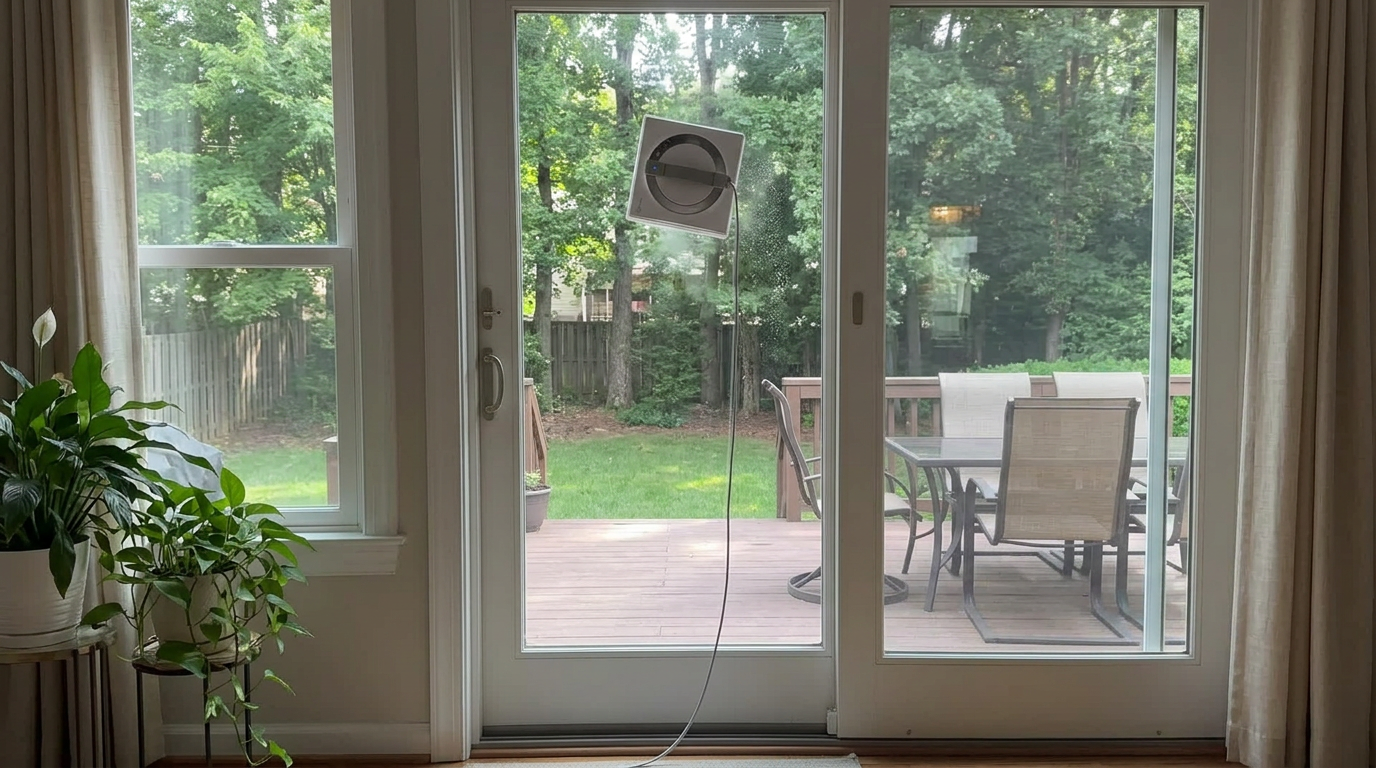
If your high windows are spread over several rooms or floors, weight matters. The WINBOT W2 PRO Omni has the most portable station of the three ECOVACS models, and I carried it up and down stairs far more happily.
Its station is a 6-in-1 design: it stores, charges, powers, controls and anchors the robot, and it carries the cleaning solution. On a balcony with no outlet, that is everything you need in one hand.
Safety you can see
ECOVACS lists 12 stages of safety on this model, and the one I valued most is simple: the tether is tied to the station. Put the station on the floor indoors and the rope is anchored before the robot touches the glass.
It also runs on battery or plugged in. On my friend’s seventh-floor balcony, battery mode meant no cable trailing out through the balcony door.
How well it cleans high glass
On everyday dust and fingerprints it cleaned very well. Heavily soiled outside glass, which had not been touched in a year, needed a second pass.
It has an edge-focused mode rather than TruEdge, so frames are good but not as crisp as the two models above. On high glass I left a thin line on the sides, which I cleaned from inside on the next clean.
Our tip: Run the first clean of a neglected high window twice in a row, because the second pass costs a few minutes and saves leaning out to fix smears.
What to know before you buy
Its suction is not officially stated, and on the dirtiest outside glass I could tell it had less bite than the W2S PRO Omni. You also wash the pads by hand.
For an apartment with a few high windows and a balcony, it is still the best value station in this guide.
Battery mode let the W2 PRO Omni clean a balcony door with no outlet nearby.
- Lightest, most portable station of the three
- Battery and plug-in modes
- 12-stage safety with a rope tied to the station
- Easy to run from the station buttons
- Neglected outside glass needs a second pass
- Edges good but not TruEdge level
- Suction not officially stated
- Apartments with balconies and high windows
- Homes with high glass on several floors
- Buyers who want a station for less
- Anyone who wants the crispest edges
- Very dirty, rarely cleaned outside glass
- People who want self-washing pads
Choose this if you want a station robot that is easy to carry between high windows. Read my full WINBOT W2 PRO Omni review.
4. HUTT H10
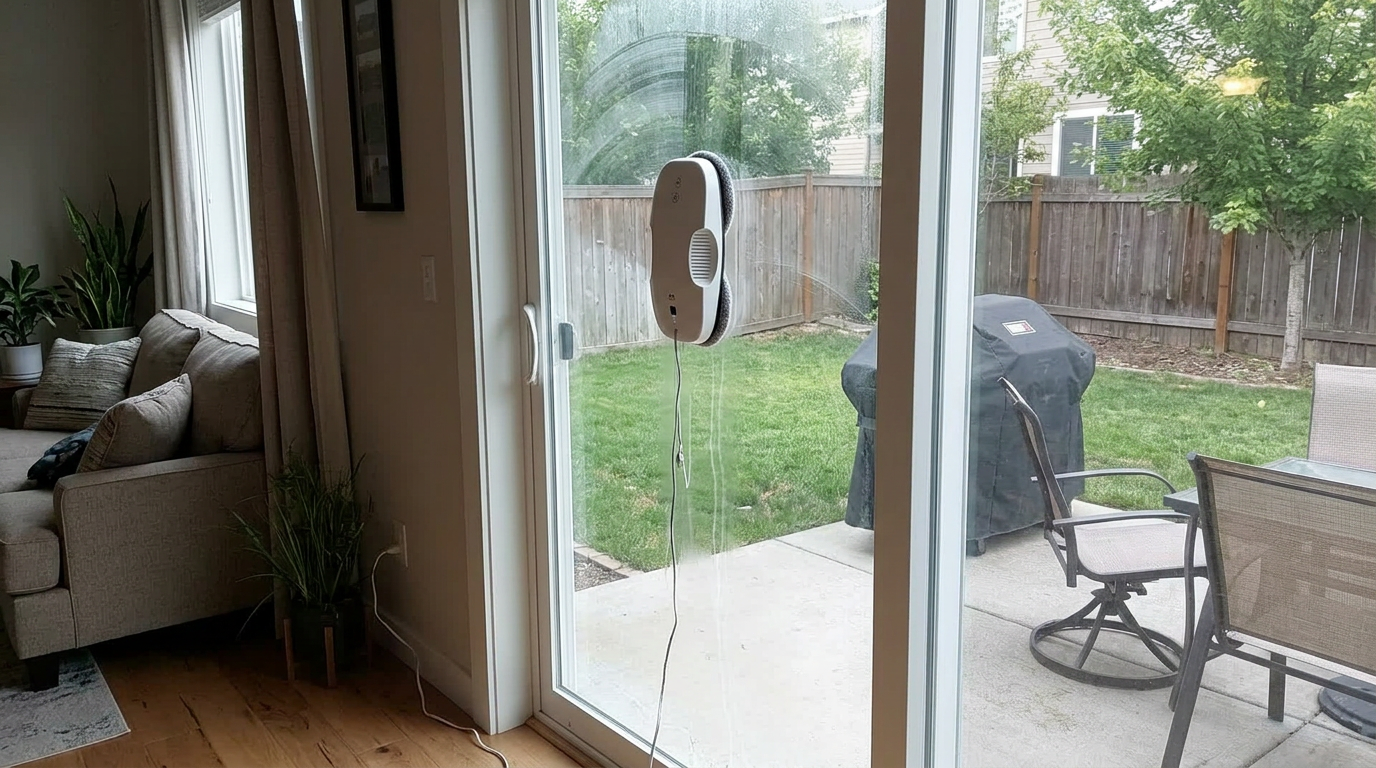
Not all high glass is outside. Mezzanine windows, glass balustrades and tall bathroom mirrors are just as hard to reach, and that is where the HUTT H10 earned its place.
It is light and quiet, so I did not mind it working above a sofa while I was in the room. Its wet-scrub, dry-polish system also leaves the fewest streaks, which you notice on interior glass lit by lamps.
Why light matters up high
A lighter robot puts less strain on its suction seal and on the tether. When the H10 reached the top of my double-height window, it never slowed or hesitated.
Its 30-minute backup battery held it firmly when I pulled the plug. It sounded an alarm and waited until I lowered it with the rope.
Streak-free where it shows
A wet round pad scrubs and a dry square pad buffs right behind it. On the inside of my tall living-room window, in evening lamp light, it was the clearest result of the five.
It is the slowest robot in this guide because of that polishing step. On high glass I did not mind, because I was not standing on anything while it worked.
What to know before you buy
It needs an outlet within cable reach, and its tracks and square pads must stay dry or it slips. On outside high glass, I preferred the stronger station robots.
Narrow gaps between panes also stop it, so it suits large single sheets of glass best.
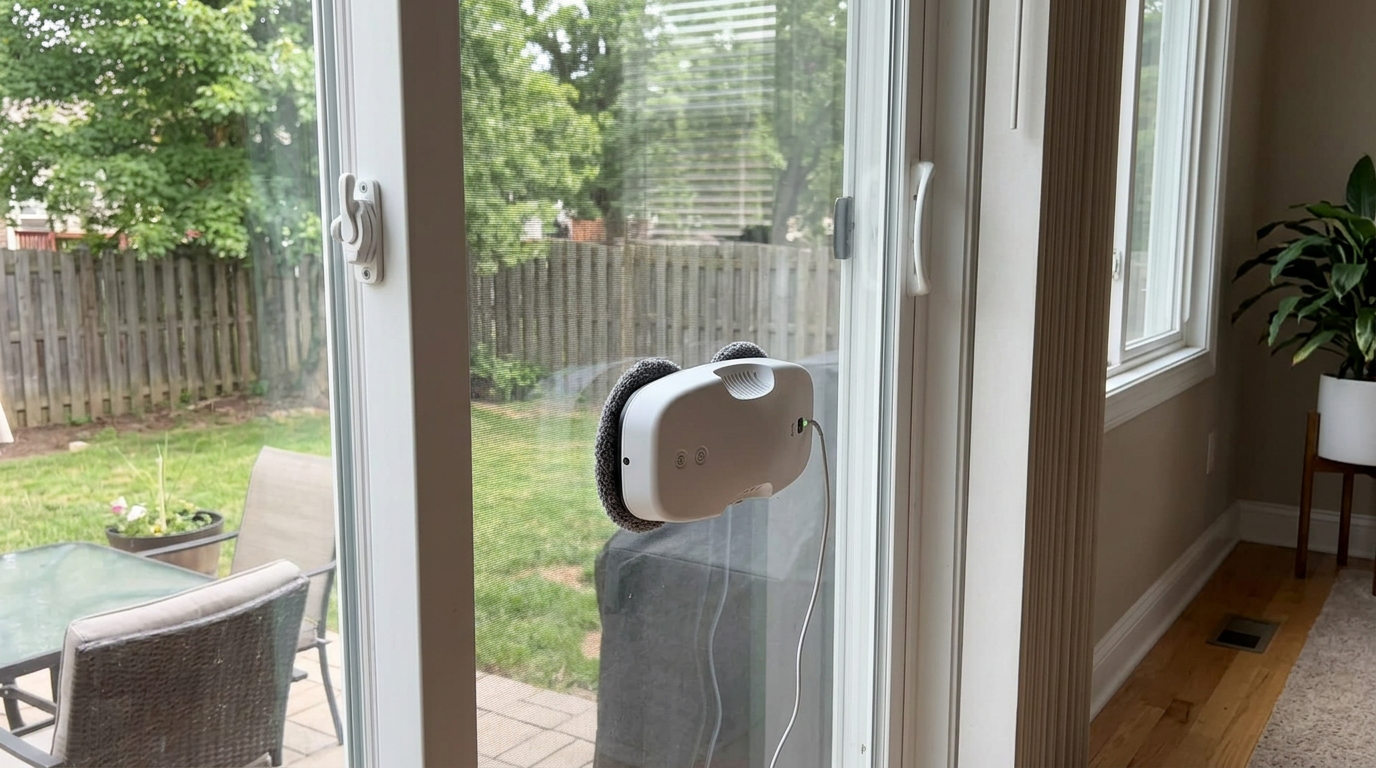
The H10 is light and quiet enough to run on high interior glass while you are in the room.
- Fewest streaks thanks to dry polishing
- Light and quiet on interior glass
- 30-minute backup battery
- Simple remote, no app needed
- Needs an outlet within cable reach
- Tracks and square pads must stay dry
- Slowest robot in this guide
- Homes with high interior glass and balustrades
- Tall mirrors you cannot reach
- People who notice every streak
- Very dirty high outside glass
- Windows far from an outlet
- Anyone in a hurry
Choose this if your high glass is mostly indoors and you want it streak-free. Read my full HUTT H10 review.
5. Tosima WA9C Pro
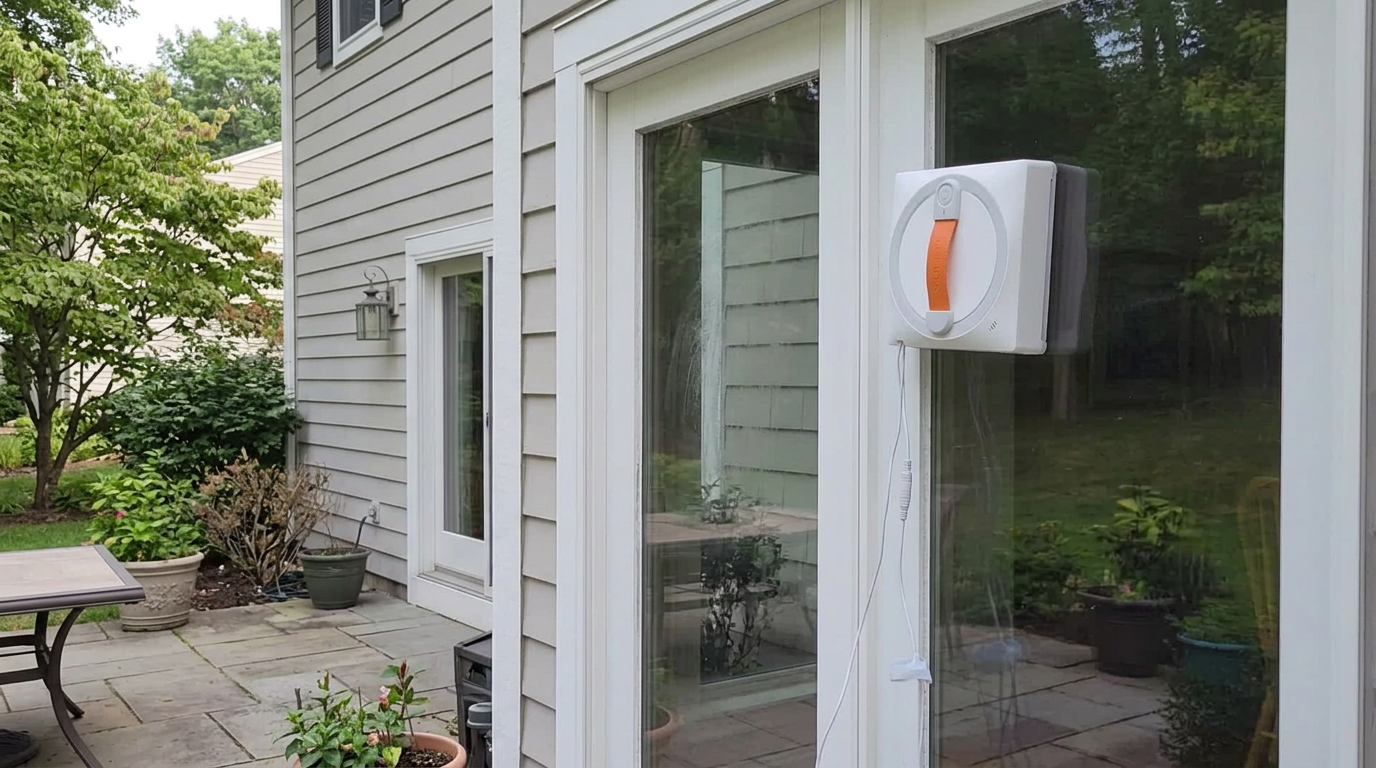
The Tosima WA9C Pro is the budget way to stop climbing. It is a square robot, so it pushes into corners better than round-pad budget robots, and it keeps its grip for about 25 minutes if the power fails.
Its four-nozzle spray wets the glass very evenly, and you can choose an N or Z route to suit tall or wide windows. Everything runs from a remote, including manual steering.
Where it works on high glass
I used it on the inside of my upstairs windows and on the inside of the tall living-room window, both clean, smooth glass. It did a tidy job and its square body cleaned into the corners nicely.
Its air-pressure monitor and bottom drop sensor work well, and the alarm when I pulled the plug was loud and clear.
Our tip: Use distilled water in the Tosima, because its nozzles clog with hard tap water and a blocked nozzle leaves dry strips on high glass.
Where it does not
Its suction of 2,600 to 3,200 Pa is the lowest in this guide by far. On dusty outside glass on a breezy day it hesitated, so I would not use it on high outside panes.
That is why its safety score is 7.6. It is fine for high glass you clean from the inside, with the tether always attached, but it is not my choice for outside work.
What to know before you buy
It needs an outlet within cord reach and has no app. If you need outside high glass on a budget, a stronger corded robot or the W2 PRO Omni is safer.
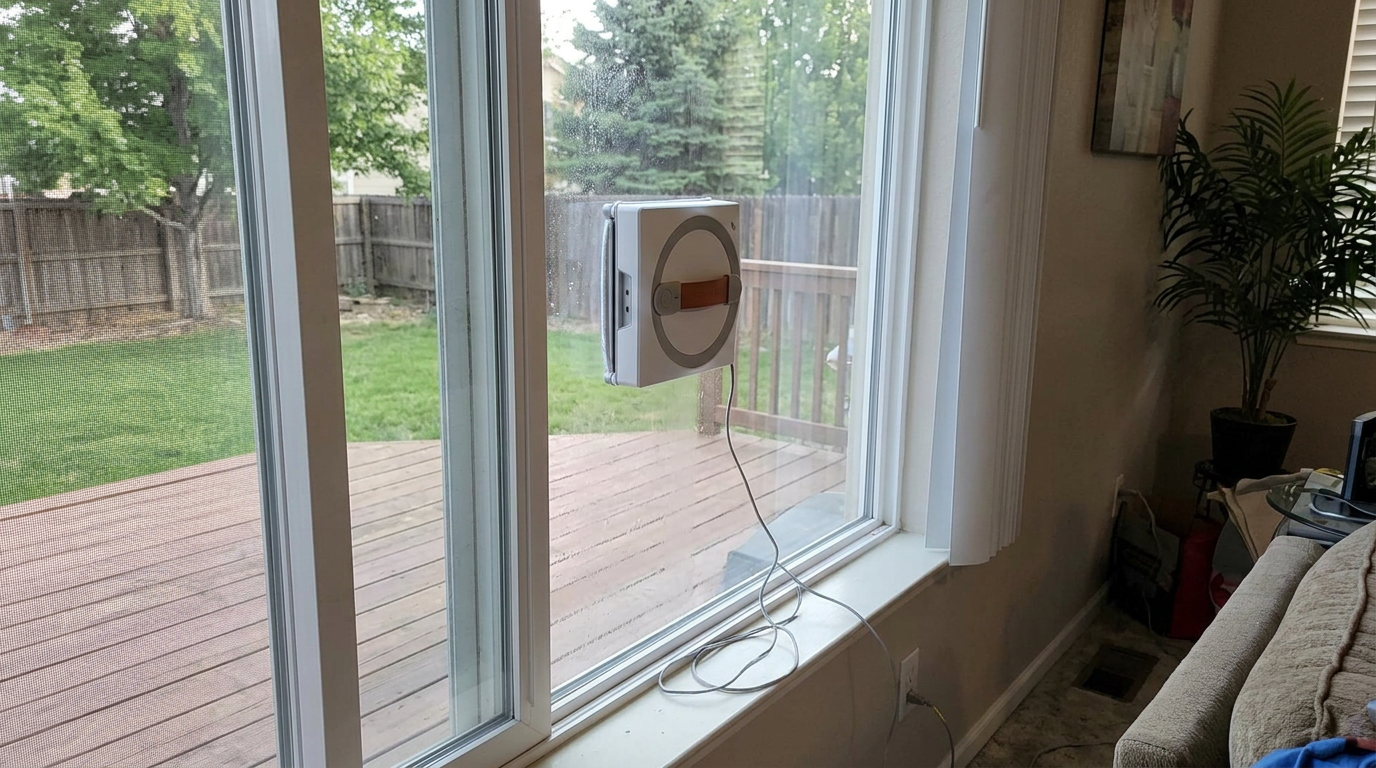
The square body and four nozzles give the Tosima neat corners on smooth indoor glass.
- Square body reaches into corners
- Four nozzles wet the glass evenly
- 25-minute backup and a full remote
- N and Z routes for tall or wide panes
- Lowest suction in this guide
- Not my choice for high outside glass
- Nozzles dislike hard tap water
- High interior glass on a budget
- Clean, smooth windows cleaned from inside
- People who prefer a remote to an app
- High outside windows
- Dusty or windy locations
- Homes with very hard water
Choose this if you want an affordable robot for high glass you clean from the inside. Read my full Tosima WA9C Pro review.
Safety data from my high-window tests
These are the things I checked on every robot, on the same high glass, with the tether attached and a soft mat underneath.
| Robot | Power-loss test | Tether anchor | Grip in a breeze | Return to start |
|---|---|---|---|---|
| W2S PRO Omni | Not needed, runs on battery | Station | Very firm | Reliable |
| W3 Omni | Not needed, runs on battery | Station | Firm | Most reliable |
| W2 PRO Omni | Not needed, runs on battery | Station | Firm | Reliable |
| HUTT H10 | Held 30 min with alarm | Indoor fixed point | Firm indoors | Reliable |
| Tosima WA9C Pro | Held about 25 min with alarm | Indoor fixed point | Hesitated outside | Usually |
How often I had to step in
I counted the times a robot stopped and needed me to move it, steer it or restart it on high glass during the four weeks. Lower is better, and on high glass every intervention means leaning out or fetching the rope.
My own count over four weeks of high-window cleaning, mostly caused by thick frames, dirt build-up and wind.
Manufacturer ratings. The W2 PRO Omni’s suction is not officially stated.
How to set up a robot on a high window safely
A robot is only as safe as its setup. This is the routine I settled on for every high window, and it took about two minutes once it became a habit.
- Check the weather
Skip windy, rainy or very hot days. Wind pushes the robot, rain breaks the seal and sun dries the spray too fast.
- Brush off loose dirt
Wipe the starting area with a dry cloth so the robot seals on clean glass. Grit under the robot is what breaks suction.
- Anchor the tether first
Clip it to the station, a heavy piece of furniture or a solid fixing indoors. Never to the window handle or a curtain rail.
- Attach the robot and place it centrally
Switch it on, let the suction build, and only then let go. Start near the middle of the pane, not at an edge.
- Stay nearby for the first run
Watch the first full clean on each window. After that, you know how the robot behaves on that glass.
- Bring it in gently
When it stops, hold the tether, switch it off and lift it from the glass with both hands.
Which one is right for you?
4 quick questionsAnswer four questions and I will match you with the right robot for your high windows. My single reviews go deeper, starting with the W2S PRO Omni review.
Or find your home below
Strongest grip, station-anchored tether and no cord through the window.
The longest battery and the best mapping on very tall panes.
Light station with battery mode and the rope tied to it.
Light, quiet and streak-free on interior glass.
Square corners and a 25-minute backup, used from inside.
High-rise and apartment windows
Apartment windows bring their own problems. Many open inward or tilt, some barely open at all, and building rules may ban anything hanging outside.
Before you buy, check three things: whether your windows open wide enough to place a robot outside, whether there is something solid indoors for the tether, and what your building allows.
Window types and robots
| Window type | Can a robot clean the outside? | Tip |
|---|---|---|
| Tilt-and-turn✕Tilt-and-turna window common in Europe and in newer apartments. It tilts open at the top for air or swings in fully like a door, which lets you reach the outside glass from inside. | Yes, in turn mode | Swing it fully open and place the robot on the outer pane |
| Casement | Usually | Place the robot through the opening, then close gently on the tether |
| Sliding | Yes | Clean the fixed pane from the side that opens |
| Sash (vertical sliding) | Partly | Some sashes tilt in for cleaning; check yours |
| Fixed glass | No | Clean the inside only, or ask the building |
| Balcony doors | Yes | The easiest: stand on the balcony with the station |
In my friend’s seventh-floor apartment, the tilt-and-turn windows were ideal. I swung them fully open, placed the W2 PRO Omni on the outside and closed the window onto the rope.
Above the second or third floor, I would only use a station robot with an anchored tether. The W2S PRO Omni is my first choice there.
Our tip: Ask your building manager before cleaning outside windows above the third floor, because some buildings require professional window cleaning for insurance reasons.
Glass balcony railings
Balconies deserve their own mention. Glass balcony railings are frameless, exposed to wind and often far from any outlet, which makes them one of the hardest jobs for a robot.
I cleaned a glass railing with all three station robots, always from the balcony side with the tether anchored to the station. The W2S PRO Omni handled the frameless edge best, while the corded robots were awkward because of the cable.
If your apartment has a glass railing, treat it as high glass even on a low floor. A fall onto the balcony below or the street is exactly the outcome the tether is there to prevent.
When a robot is the wrong answer
Very tall towers, windows that only open a few centimeters and textured or frosted glass are beyond any home robot. For those, a professional window cleaner with the right equipment is the safe option.
What to look for in a robot for high windows
For high glass, the order of importance changes. Safety features come first, cleaning performance second and convenience last.
| Feature | Why it matters on high glass | Minimum I would accept |
|---|---|---|
| Suction | Holds the robot on dirty, rough or windy glass | 7,000 Pa for outside glass |
| Power-loss protection | Keeps the robot on if power fails | 25 minutes of backup or a battery station |
| Tether anchor | Catches the robot if all else fails | A strong rope to a heavy indoor anchor |
| Edge sensing | Stops it driving off frameless edges | Required for frameless glass |
| Return to start | Brings it back where you can reach it | Reliable on your window size |
| Edge cleaning | Avoids leaning out to finish frames | Square body or edge brushes |
Corded or station
For high glass I strongly prefer a station robot. There is no cord to snag, the tether is anchored to a heavy base and the robot keeps running even if you trip over something.
Corded robots with a backup battery are safe too, but you need to plan the cable route and find a solid indoor anchor yourself.
Our tip: Measure the distance from your highest window to the nearest outlet before you buy a corded robot, because the cord must reach the top of the pane with slack to spare.
Suction is not everything
More suction helps, but a robot that seals poorly on dusty glass loses much of it. Cleaning the starting area and keeping the tracks clean made as much difference in my test as the suction rating.
Getting streak-free results on high glass
Streaks are more annoying on high windows, because you cannot simply reach up and wipe them. These habits gave me clear glass on the first pass most of the time.
- Use distilled water
The US Geological Survey estimates about 85 percent of American homes have hard water. Its minerals dry as white spots, while distilled water leaves almost nothing.
- Clean in the shade
Morning, evening or cloudy days stop the mist drying before the pad reaches it.
- Wring the pads well
A damp pad cleans; a wet one leaves drip lines down a tall pane.
- Clean inside first
Clear inside glass shows what still needs work on the outside.
How much each habit reduced streaks on my high windows, from side-by-side runs.
Maintenance that keeps high-window robots safe
On high glass, maintenance is a safety task, not only a cleaning one. Dirty tracks and worn ropes are the main reasons a robot struggles.
- Wipe the tracks and the underside
Dust on the tracks makes crawlers slip, and dust on the seal costs suction.
- Check the tether
Look for fraying near the clip and replace it if in doubt.
- Charge before each session
Station robots should start a high window with a full battery.
- Test the alarm now and then
Pull the plug on a corded robot on a low window to make sure the backup still works.
- Wash the pads
Warm wash, no fabric softener, which causes streaks.
| Item | How often | Why |
|---|---|---|
| Tether | Inspect monthly, replace when worn | It is your last safety layer |
| Pads | Replace every few months | Worn pads smear |
| Edge brushes | Clean every few runs | They drag dirt when clogged |
| Backup battery | Test a few times a year | Batteries age |
Common mistakes on high windows
| Mistake | Risk | Fix |
|---|---|---|
| Clipping the tether to the window handle | The handle can break or the window can swing | Anchor to the station or heavy furniture |
| Starting on dusty glass | Weak seal and slipping | Wipe the starting area first |
| Running in wind or rain | The robot slips or stalls out of reach | Choose a calm, dry day |
| A tight power cord | The robot is pulled off course | Leave a meter of slack over the top |
| Leaving it alone on the first run | You miss problems on that window | Watch the first clean on every window |
Our tip: Keep a soft mat or cushion below the window during the first clean, because it costs nothing and protects anything below while you learn how the robot behaves.
Robot, ladder or professional cleaner?
A robot is not the only way to clean high windows, so I compared it honestly with the two alternatives most people use.
| Window robot | Ladder and squeegee | Professional cleaner | |
|---|---|---|---|
| Fall risk for you | Very low, you stay indoors | Highest | None |
| Time per high window | About 5–10 minutes, hands-free | 15–30 minutes, including setup | None of your time |
| Edges and corners | Good to excellent on top models | Excellent if you are skilled | Excellent |
| Works on any window | Smooth glass that opens fully | Most windows | Almost all |
| How often you can clean | Whenever you like | When you feel brave | When booked |
| Ongoing cost | Pads and solution | Next to nothing | Every visit |
For me the robot won on the thing that matters most: I never had to climb. It also changed how often I cleaned, because a two-minute setup is easy to repeat every month.
A professional still makes sense once or twice a year for windows a robot cannot reach, such as fixed panes, very tall towers or glass that does not open.
My own cleaning log. Making high windows easy is what makes them clean.
Other robots I considered
Several robots from my main test did not make this list, either because the five above are better on high glass or because they were not built for it.
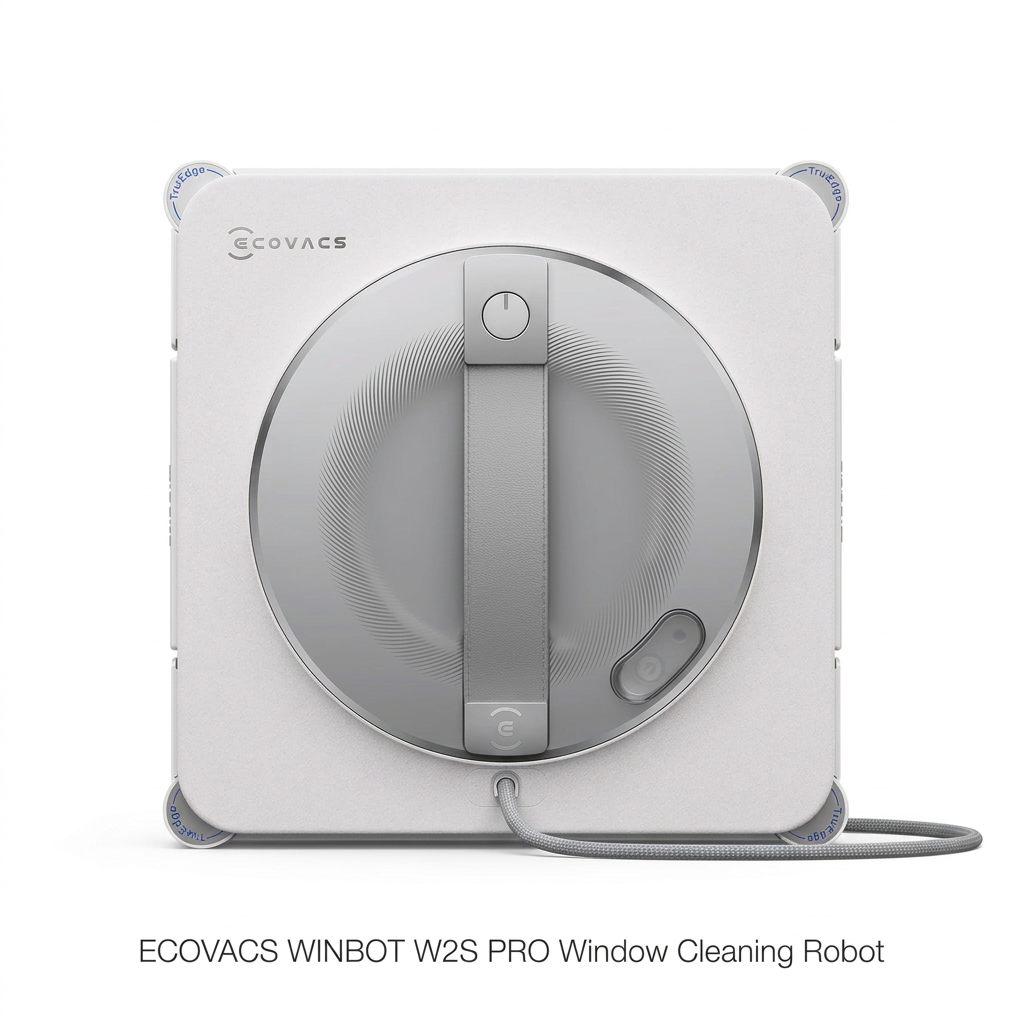
The WINBOT W2S PRO has the same 10,000 Pa grip and TruEdge 2.0 brushes as my top pick. On high glass, though, its power cord and loose rope are more to manage than a station.
If all your upstairs windows are near outlets, it is a strong choice for less.
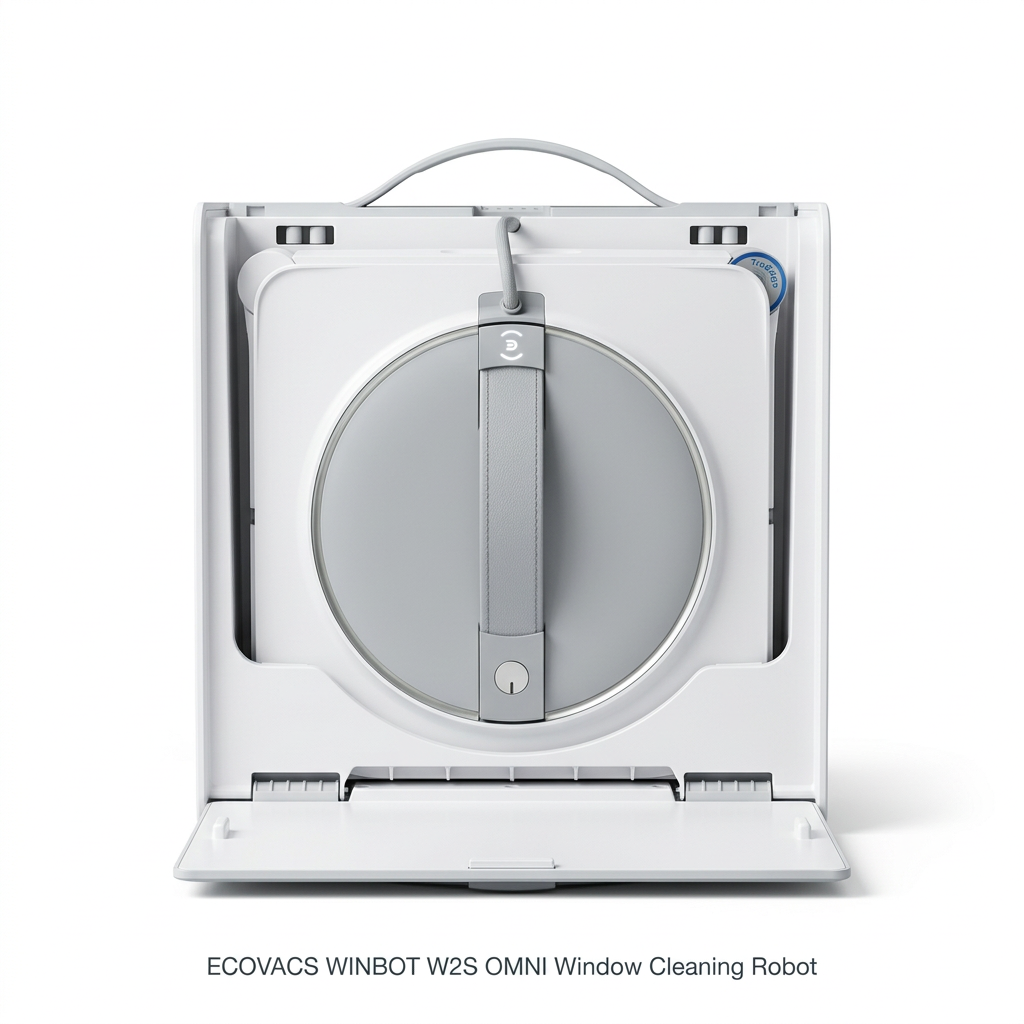
The WINBOT W2S Omni has a station and 8,000 Pa, and it is a capable high-window robot. The W3 Omni and W2S PRO Omni simply do more for tall or outside glass.
It is worth a look if you want TruEdge and a station without paying for the PRO.
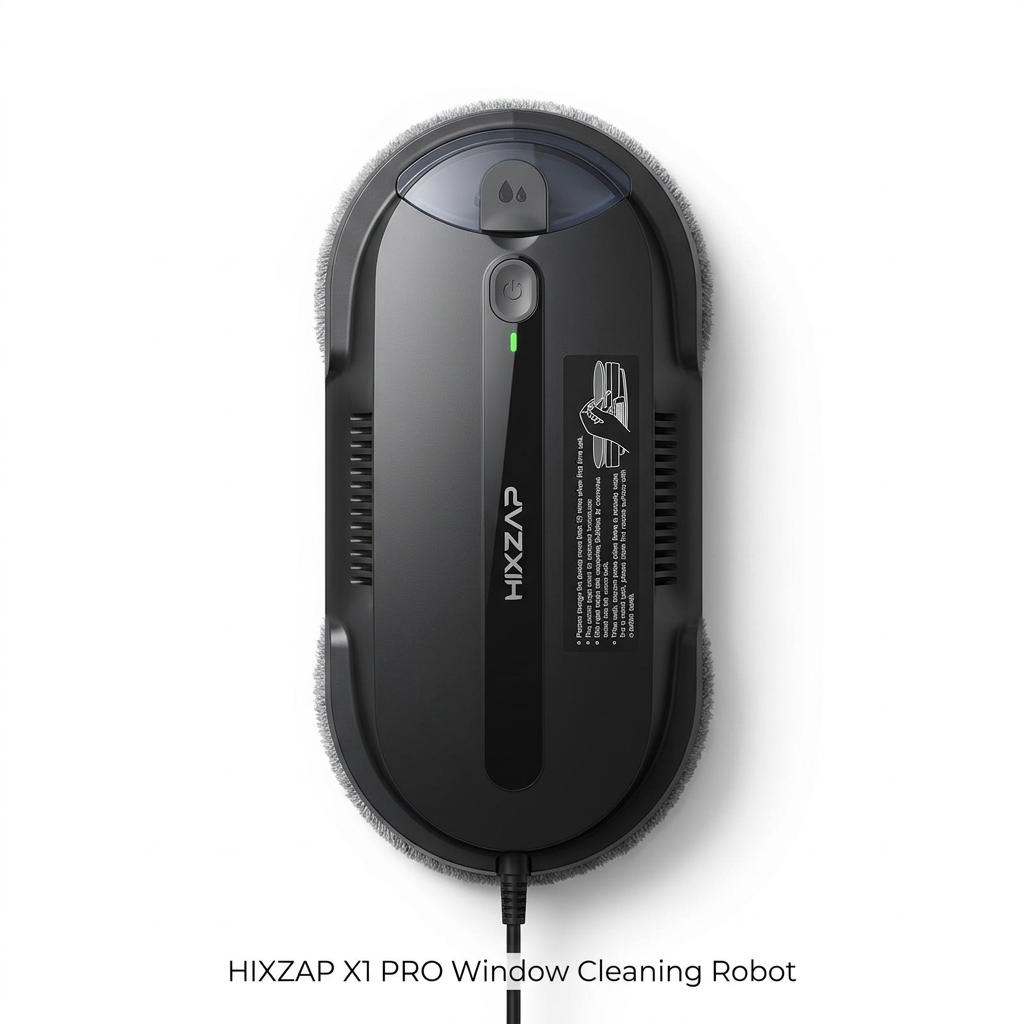
The HIXZAP X1 PRO grips at 7,200 Pa and has a 25-minute backup, so it is a reasonable budget option for upstairs glass cleaned from inside.
Its round pads leave curved patches in corners, which are hard to finish on a high window.
Frequently asked questions
What is the best window cleaning robot for high windows?
The ECOVACS WINBOT W2S PRO Omni. It has the strongest grip in this guide at 10,000 Pa, the highest safety score in my tests and a battery station that anchors the tether.
Are window cleaning robots safe on second-floor windows?
Yes, if you choose a robot with strong suction, a backup battery or battery station and a tether anchored indoors, and you follow a safe setup routine. None of my robots fell during testing.
What happens if a window robot loses power?
Corded robots with a backup battery keep their suction for 25 to 30 minutes and sound an alarm. Station robots run on battery anyway, so a power cut does not affect them.
Can I use a window robot on a high-rise apartment?
On windows that open fully, like tilt-and-turn or balcony doors, yes. Check your building rules first, and only use a station robot with an anchored tether on upper floors.
How much suction do I need for high windows?
For outside high glass, I would look for at least 7,000 Pa. Lower-suction robots are fine on clean indoor glass but can hesitate on dusty or windy outside panes.
Can a robot clean windows that only tilt open?
Not from a tilt position. You need to open the window fully, so a tilt-and-turn window in turn mode works, while a window that only tilts a few centimeters does not.
Do I need to stay with the robot?
Watch the first run on each high window. After that, stay in the room or nearby so you can respond to an alarm.
Which robot is lightest to carry upstairs?
Of the station robots, the W2 PRO Omni was the easiest to carry. The corded HUTT H10 is the lightest overall.
Can a window robot clean a skylight or slanted roof window?
Some can, with care, but slanted glass is a different job. I cover it in my separate skylight guide.
Is the Tosima safe for high outside windows?
I would not use it on high outside glass because its suction is the lowest here. It is fine on high glass you clean from the inside.
For high windows, my pick is the ECOVACS WINBOT W2S PRO Omni. It grips harder than anything else I tested, scored highest for safety and has no cord running through the window, which removes most of what can go wrong up high.
Choose the W3 Omni for tall glass walls and a lot of glass, the W2 PRO Omni if you carry it between floors or to a balcony, the HUTT H10 for high interior glass and the Tosima WA9C Pro for clean glass on a budget.
Whichever you buy, anchor the tether indoors, start on clean glass and watch the first run. That routine matters as much as the robot.
Senior home appliance tester
Emily has tested home appliances for a living since 2016, including five years as a test coordinator at a national consumer advocacy group, and has run HouseholdMe’s cleaning tests since 2021. She has a degree in industrial design, and for this guide she used five window cleaning robots for four weeks each on upstairs windows, a double-height living-room window and a seventh-floor apartment balcony.
- Four weeks of hands-on testing per robot on high windows
- HouseholdMe single reviews of the WINBOT W2S PRO Omni, W3 Omni, W2 PRO Omni, HUTT H10 and Tosima WA9C Pro
- Manufacturer specifications and safety documentation
- US Consumer Product Safety Commission data on ladder-related injuries
- US Geological Survey data on hard water
- Buying guide published, based on hands-on testing of 5 window cleaning robots on high windows.