Best Window Cleaning Robots of 2026
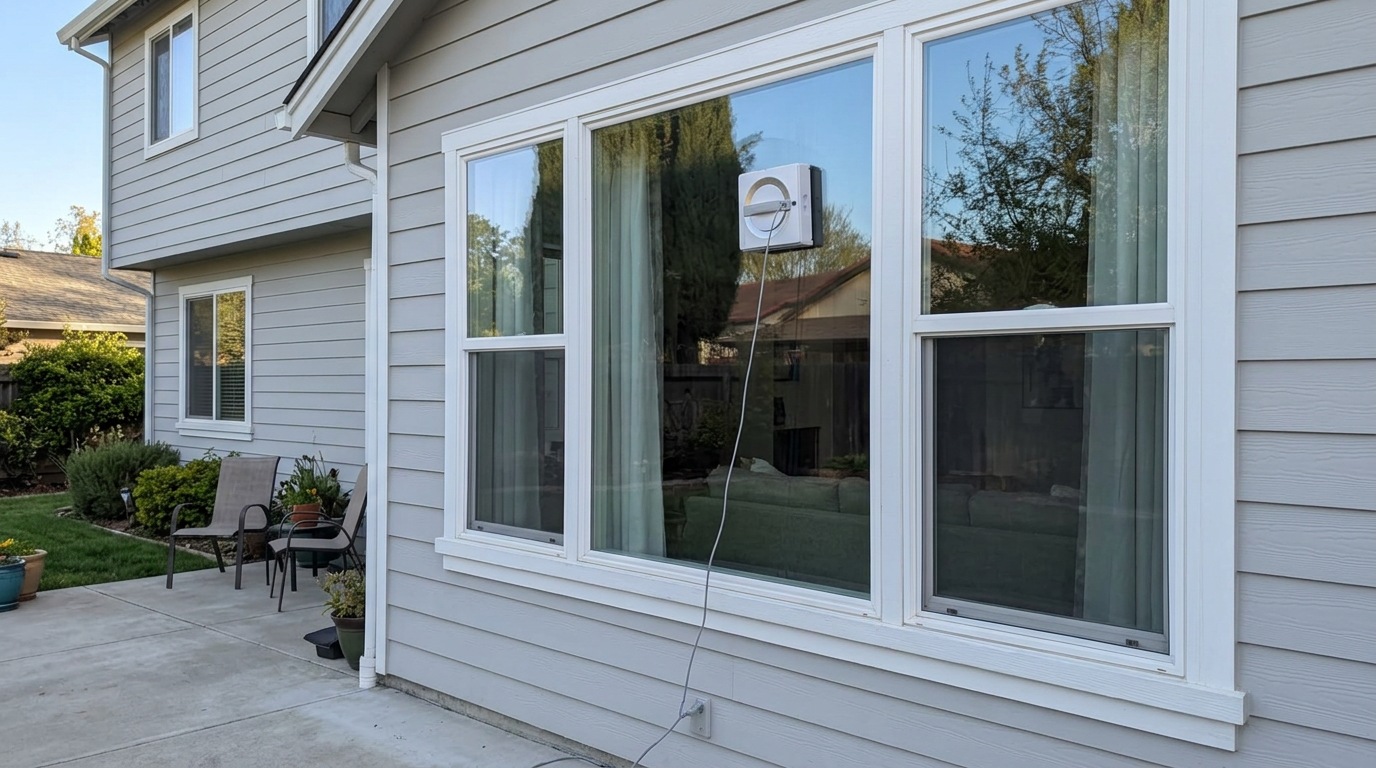
I tested 11 window cleaning robots on sliding doors, upstairs windows, shower screens and mirrors to find the ones worth hanging on your glass. My overall favorite is the ECOVACS WINBOT W2S PRO Omni: it held on hardest, cleaned closest to the frames and runs anywhere from its battery station.

Emily Carter
Buying Guide
11 models · 5 picks
4 weeks per robot
I choose products independently. If you buy through my links, HouseholdMe may earn a commission at no extra cost to you. Affiliate policy
Jargon helpNew to window robots? Tap or hover over any dotted term to see what it means.
In this guide
The short answer
- Best overall: the WINBOT W2S PRO Omni. The strongest grip I tested, the cleanest edges and a battery station that lets it work far from any outlet.
- Best for hands-off cleaning: the WINBOT W3 Omni. Its station washes the dirty pads for you, so there is no sink scrubbing after every job.
- Best for small windows, mirrors and showers: the WINBOT MINI 2. Four corner brushes in a robot small enough to keep in a drawer.
- Best for streak-free glass: the HUTT H10. It scrubs wet and polishes dry in one pass, which gave me some of the clearest glass of the test.
- Best budget pick: the HIXZAP X1 PRO. A firm 7,200 Pa grip, a 25-minute backup battery and a simple remote, without paying for a station.
Our picks at a glance
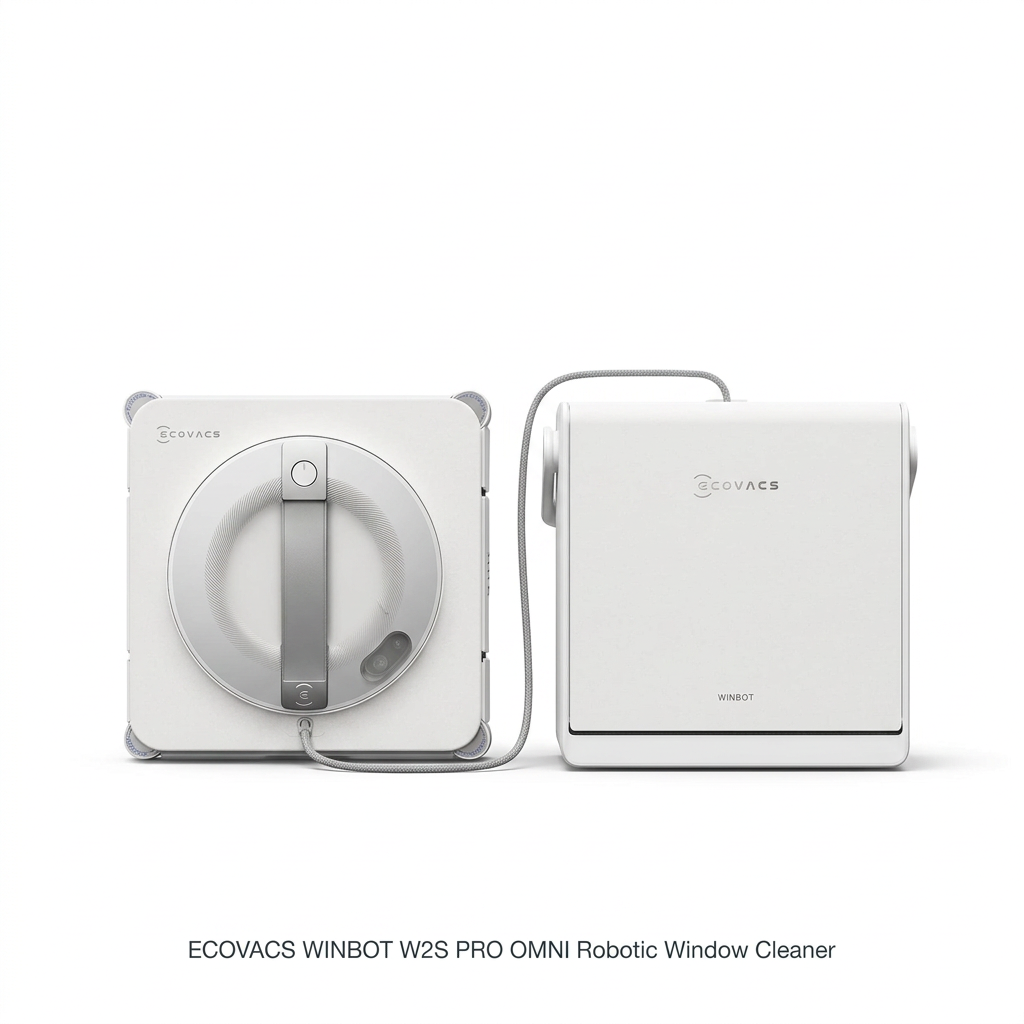
ECOVACS WINBOT W2S PRO Omni
10,000 Pa of suction, TruEdge 2.0 brushes that clean right into the frame and a battery station with its own display. The most complete window robot I have used.
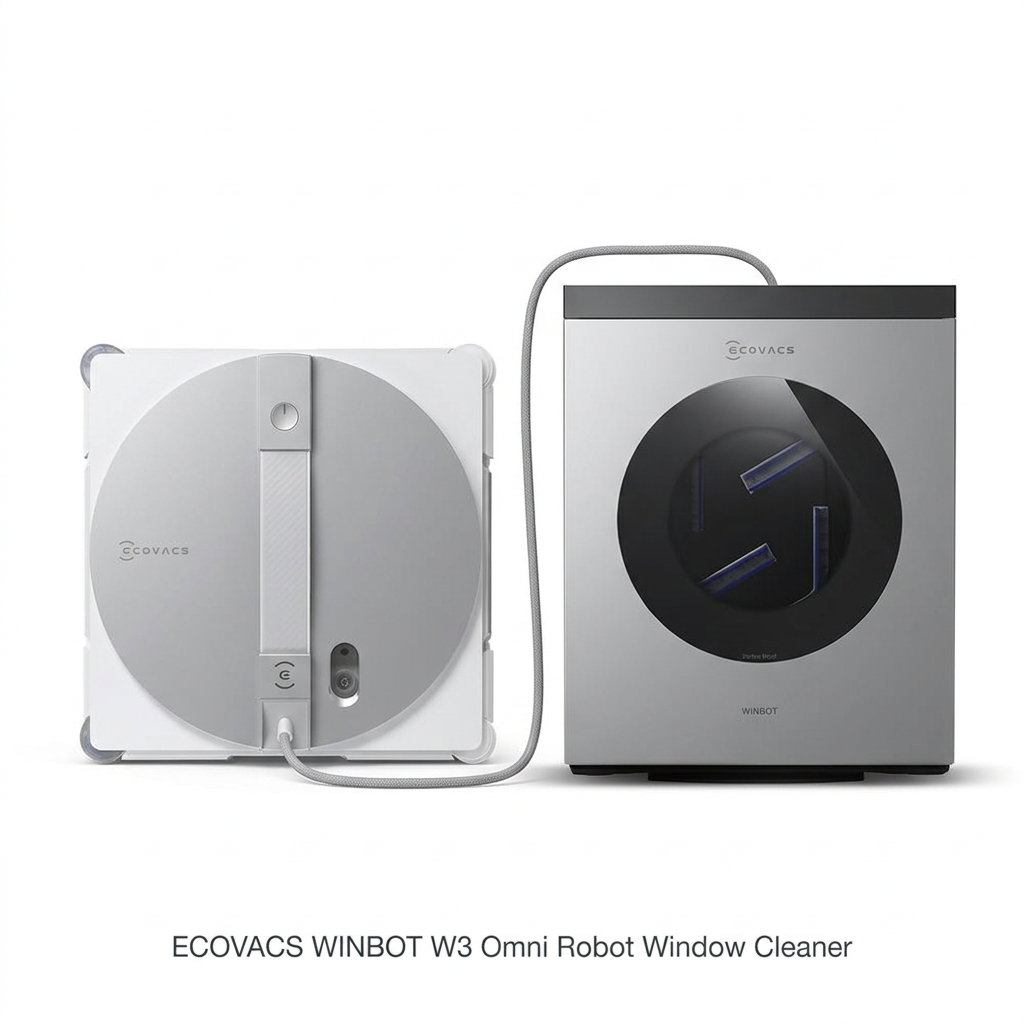
ECOVACS WINBOT W3 Omni
The only robot here whose station rinses the dirty pads itself. It cleaned as well on day 28 as on day one, with the longest rated battery in the group.
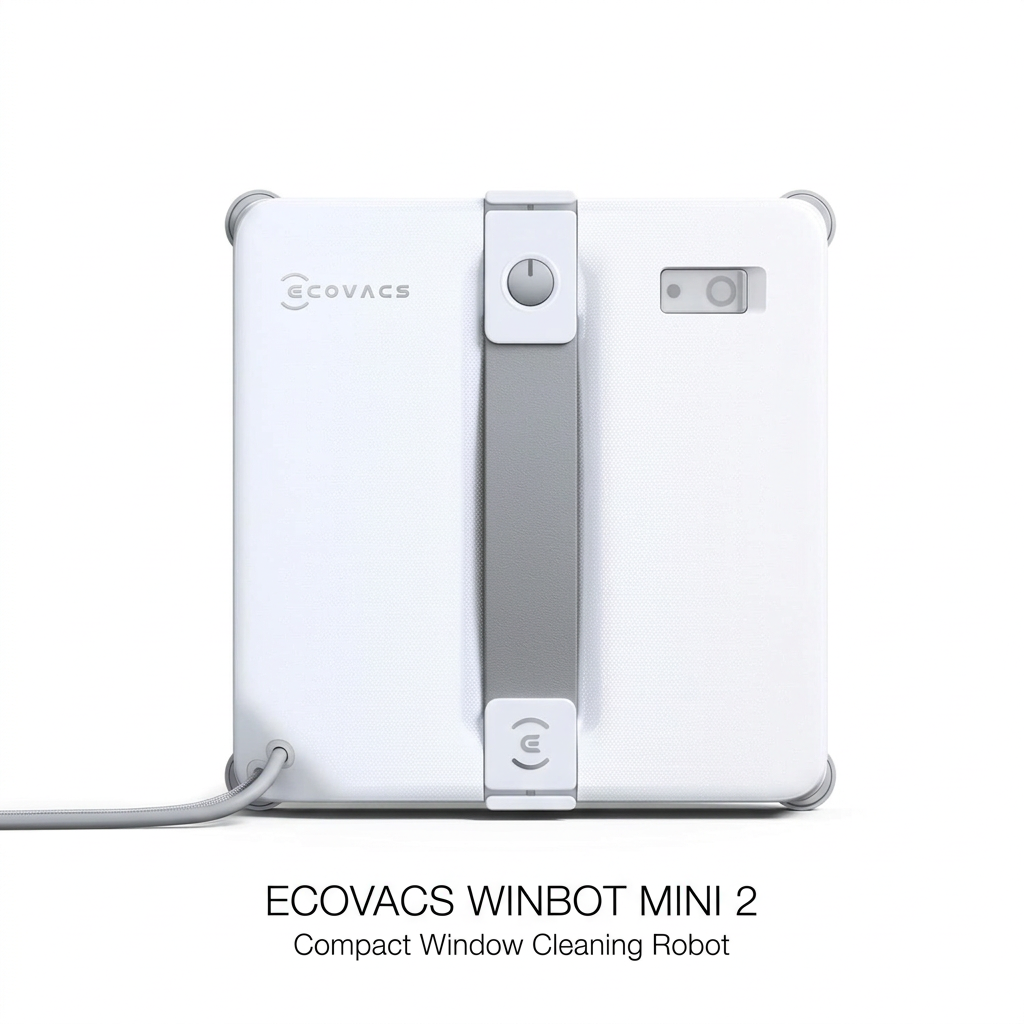
ECOVACS WINBOT MINI 2
A compact robot with four spinning corner brushes and an ultra-fine mist. It fits narrow panes, mirrors and shower glass that bigger robots cannot reach.
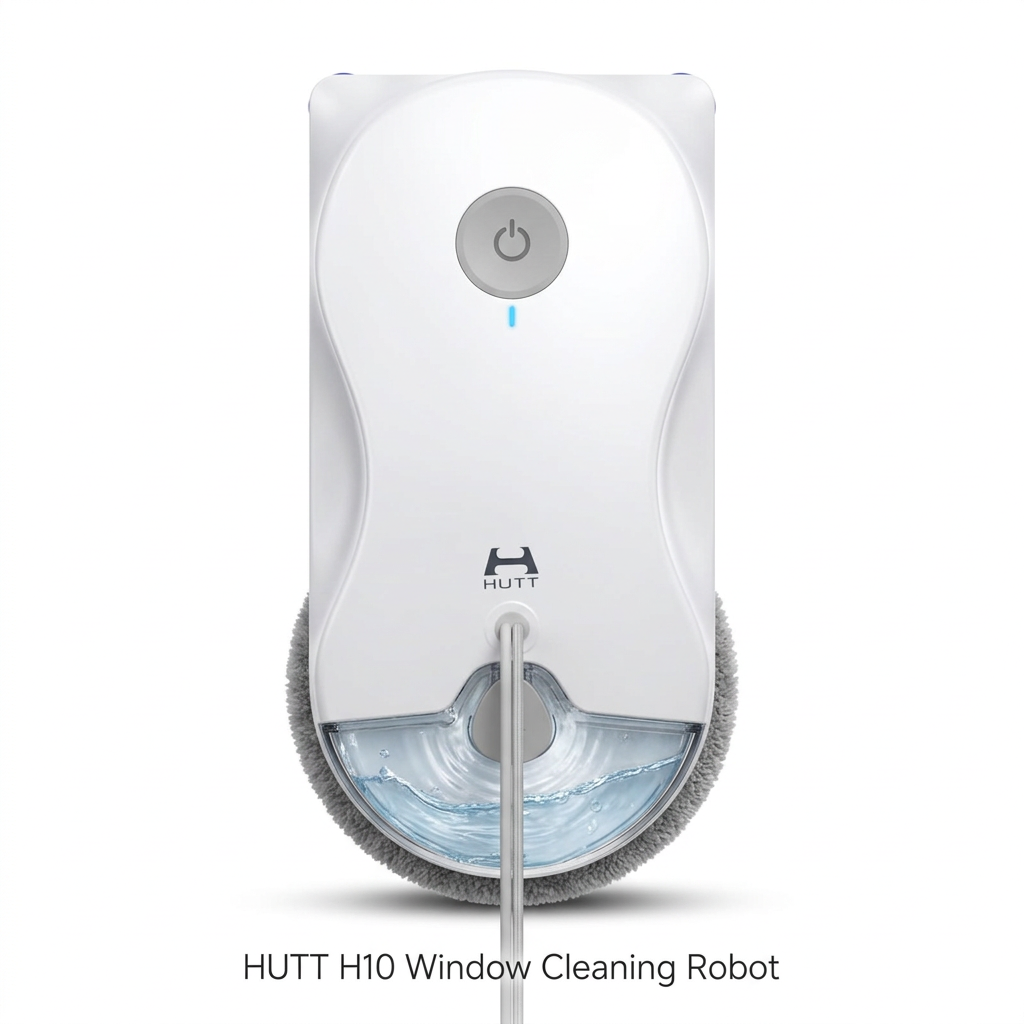
HUTT H10
A wet round pad scrubs and a dry square pad polishes in the same pass. Slower than the crawlers, but the glass came out clearer than almost anything else I tested.
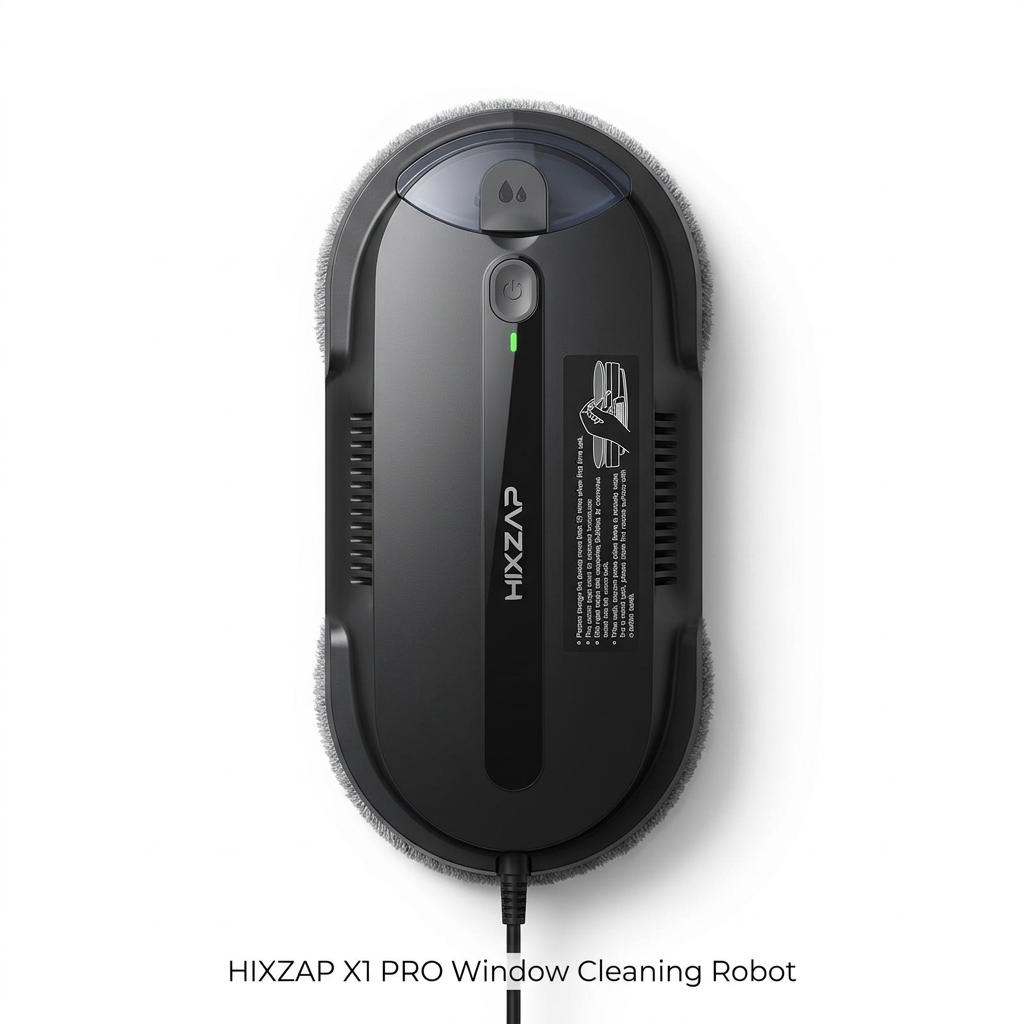
HIXZAP X1 PRO
Two spinning pads, a 7,200 Pa grip and a 25-minute backup battery. Everything runs from a remote, and it comes with 20 pads in the box.
Availability and deals change often. Check the current offer on Amazon before you buy.
Compare the best window cleaning robots side by side
Scores come from four weeks of daily and weekly use per robot. Specs are the rated figures, checked against what I saw on my own glass.
| 5 picks compared | Best overall | Hands-off | Small windows | Streak-free | Budget |
|---|---|---|---|---|---|
| My test scores | |||||
| Overall score | 8.9 | 8.8 | 8.4 | 8.3 | 7.8 |
| Cleaning | 8.8 | 8.8 | 8.2 | 8.5 | 7.9 |
| Edge coverage | 9.0 | 8.6 | 8.4 | 8.1 | 7.0 |
| Ease of use | 8.8 | 9.0 | 8.7 | 8.1 | 8.1 |
| Safety | 9.4 | 9.3 | 8.7 | 8.6 | 8.3 |
| Power and grip | |||||
| Power | Battery station | Battery station | Corded + backup | Corded + backup | Corded + backup |
| Max suction | 10,000 Pa | 8,000 Pa | 8,000 Pa | 6,500 Pa | 7,200 Pa |
| Power-loss backup | Station battery | Station battery | 30+ min | 30 min | 25 min |
| Rated run time | 110 min | 130 min | Unlimited on cord | Unlimited on cord | Unlimited on cord |
| Cleaning features | |||||
| Cleaning head | Square crawler | Square crawler | Compact square | Round wet + square dry | Two spinning pads |
| Edge tech | TruEdge 2.0 brushes | TruEdge scrubber | Four corner brushes | Square polishing pad | None (round pads) |
| Washes its own pads | ✕ | ✓ | ✕ | ✕ | ✕ |
| Carry and storage station | ✓ | ✓ | ✕ | ✕ | ✕ |
| App control | ✓ | ✓ | ✓ | ✕ | ✕ |
| Remote control | ✕ | ✕ | ✕ | ✓ | ✓ |
| Best for | Large, high and frameless glass anywhere in the house | Lots of glass, and no patience for washing pads | Mirrors, shower screens and narrow panes | Glass where every streak shows | Upstairs windows on a tight budget |
My test scores for all 11 robots
Every robot got the same jobs: a large sliding door, two upstairs windows cleaned from inside and out, a frameless shower screen and a bathroom mirror. I scored cleaning, edge coverage, ease of use and safety separately, then weighted them into one overall score.
The four ECOVACS station and TruEdge models took the top four places, and the gap between them is small. The bigger jump comes below 8.0, where round-pad and lower-suction robots start leaving visible patches in the corners.
| Robot | Overall | Cleaning | Edges | Ease of use | Safety |
|---|---|---|---|---|---|
| WINBOT W2S PRO Omni | 8.9 | 8.8 | 9.0 | 8.8 | 9.4 |
| WINBOT W3 Omni | 8.8 | 8.8 | 8.6 | 9.0 | 9.3 |
| WINBOT W2S Omni | 8.6 | 8.7 | 8.6 | 8.6 | 9.0 |
| WINBOT W2S PRO | 8.6 | 8.7 | 8.9 | 8.2 | 8.8 |
| WINBOT MINI 2 | 8.4 | 8.2 | 8.4 | 8.7 | 8.7 |
| WINBOT W2 PRO Omni | 8.4 | 8.3 | 7.8 | 8.7 | 9.0 |
| HUTT H10 | 8.3 | 8.5 | 8.1 | 8.1 | 8.6 |
| HIXZAP X1 PRO | 7.8 | 7.9 | 7.0 | 8.1 | 8.3 |
| Tosima WA9C Pro | 7.8 | 7.8 | 7.9 | 8.0 | 7.6 |
| WINBOT MINI | 7.6 | 7.5 | 7.2 | 8.3 | 8.4 |
| HIXZAP X1 | 7.4 | 7.6 | 6.8 | 7.8 | 7.6 |
If you only look at one column, make it edge coverage. Every robot here gets the middle of the glass clean; what separates them is how much of the strip along the frame you still have to finish with a cloth.
Editorial scores from my four-week tests. Higher means less hand-finishing along frames and in corners.
| Best in each category | Winner | Score |
|---|---|---|
| Cleaning | W2S PRO Omni and W3 Omni (tie) | 8.8 |
| Edge coverage | W2S PRO Omni | 9.0 |
| Ease of use | W3 Omni | 9.0 |
| Safety | W2S PRO Omni | 9.4 |
| Small spaces | WINBOT MINI 2 | 8.7 ease |
| Budget cleaning | HIXZAP X1 PRO | 7.9 |
Our tip: Count how many of your windows sit near an outlet before you choose, because that one fact decides whether you need a battery station.
How I tested
I have tested home appliances for a living since 2016, and I have run HouseholdMe’s cleaning tests since 2021. My background is industrial design, so I look at how a robot is built and how it fails, not only at how clean the glass looks on day one.
I used each of the 11 robots for four weeks in my own home. That meant a large sliding patio door, two upstairs bedroom windows cleaned from inside and out, a frameless glass shower screen, a divided bathroom mirror and a narrow kitchen window above the sink.
After every run I checked the glass in low evening light, which shows streaks far better than midday sun. I noted how much I had to finish by hand, how long each job took, how often the robot stopped or asked for help, and how much cleaning the robot itself needed afterwards.
How a window cleaning robot works
A window robot is basically a small vacuum turned upside down. A fan pulls air out from under the body, which creates a pressure difference that pins the robot to the glass while it drives around.
That grip is measured in Pascals (Pa)✕Pascals (Pa)the unit of pressure used for suction. A robot rated at 8,000 Pa pulls itself onto the glass harder than one rated at 3,000 Pa, which matters most on dirty, dusty or slightly uneven outside glass., and in my test it ranged from about 2,600 Pa on the cheapest square robot up to 10,000 Pa on the two W2S PRO models. More suction does not clean better by itself, but it lets the robot press harder and stay put on grimy glass.
Three ways to move across the glass
Square crawler robots, like the WINBOT W-series, drive on rubber tracks and wipe with a flat pad underneath. They are fast and methodical, and the square shape lets them push right into corners.
Dual-pad robots, like the HIXZAP X1 and X1 PRO, use two spinning round pads that scrub and move the robot at the same time. They scrub everyday dirt well, but two circles can never fill a square corner, so they always leave a small curved patch.
The HUTT H10 is a hybrid: a wet round pad scrubs and a dry square pad polishes behind it. It is the slowest of the three types, but it produced some of the most streak-free glass in the whole test.
Spray and navigation
Almost every robot here uses an ultrasonic spray✕Ultrasonic spraya nozzle that vibrates the cleaning solution into a very fine mist. Smaller droplets spread evenly and dry without the runs and drips you get from a normal spray. rather than a simple squirt. The finer the mist, the less water runs down the glass and the fewer drip lines you see afterwards.
The ECOVACS robots use WIN-SLAM✕WIN-SLAMECOVACS’ navigation system for window robots. The robot maps the size and shape of the pane, detects frames and obstacles, and plans its route instead of bumping around at random. to measure the pane and plan their route, while the budget robots follow fixed S, N or Z patterns. In practice, mapping matters most on large doors and odd-shaped panes, where simple patterns either miss strips or go over the same area twice.
Edges are where robots win or lose
The middle of the glass is easy. The hard part is the strip of a few centimeters along the frame, where dirt collects and where a flat pad cannot quite reach.
That is why ECOVACS added TruEdge✕TruEdgeECOVACS’ edge-cleaning system. A small scrubber or a set of brushes drops down near the frame and spins to clean the strip a flat pad misses. TruEdge 2.0 uses brushes that reach further into the corner. to its best models, and why the MINI 2 has four spinning corner brushes. In my test those were the robots that left the least for me to finish with a cloth.
Manufacturer ratings. The W2 PRO Omni’s suction is not officially stated.
Safety layers
Every robot I tested comes with a safety tether✕Safety tethera strong rope that clips to the robot at one end and to something solid indoors at the other. If the robot ever loses grip on an outside window, the tether catches it before it hits the ground., and most add a backup battery✕Backup batterya small battery inside a corded robot that keeps the suction fan running if the power cord is pulled out or the power fails, usually for 25 to 30 minutes, so you have time to rescue it. that keeps the fan running if the power drops. The station models go further: the station itself anchors the tether and holds the robot’s power.
None of my 11 robots fell during the test. I did pull the plug on purpose on every corded model, and each one stayed put and sounded an alarm until I lifted it off.
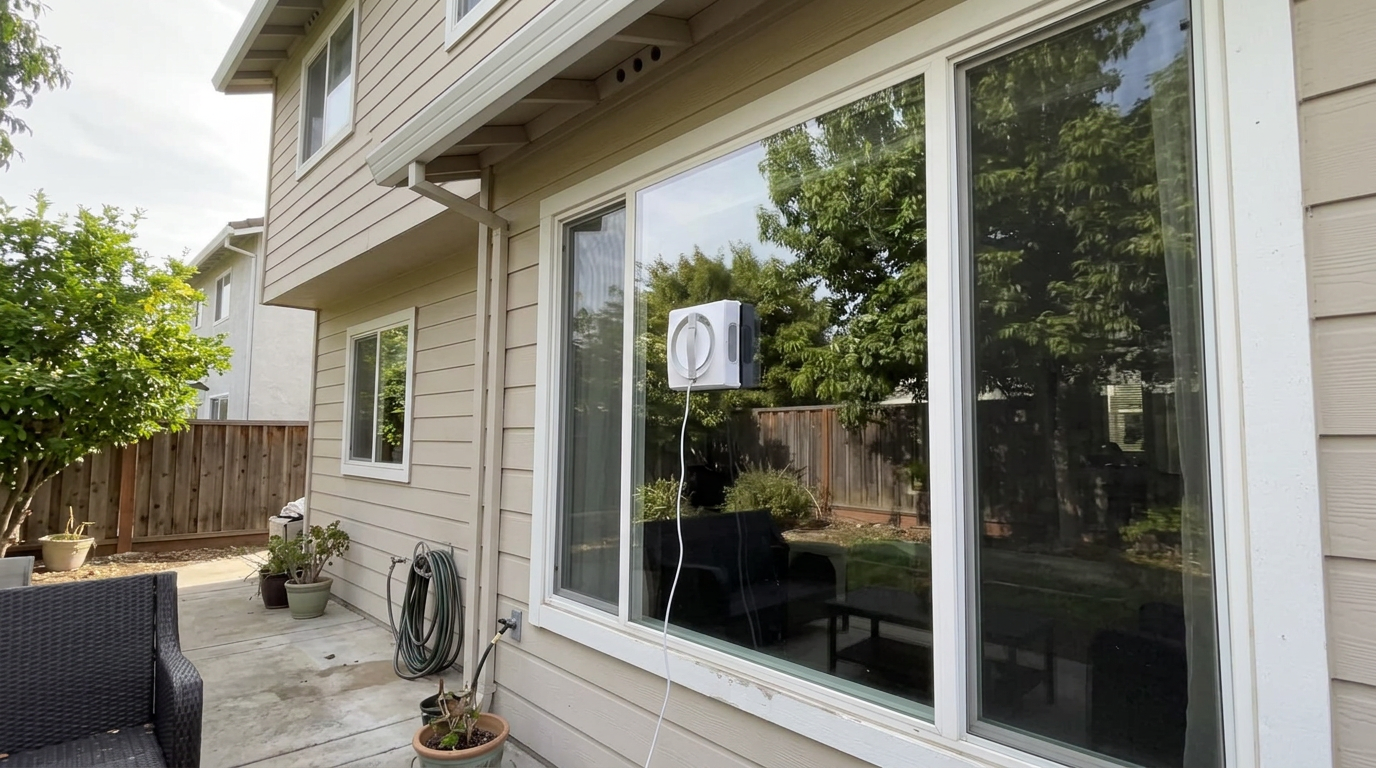
The W3 Omni’s station carries the robot, powers it and rinses the dirty pads after the job.
Our picks in depth
1. ECOVACS WINBOT W2S PRO Omni
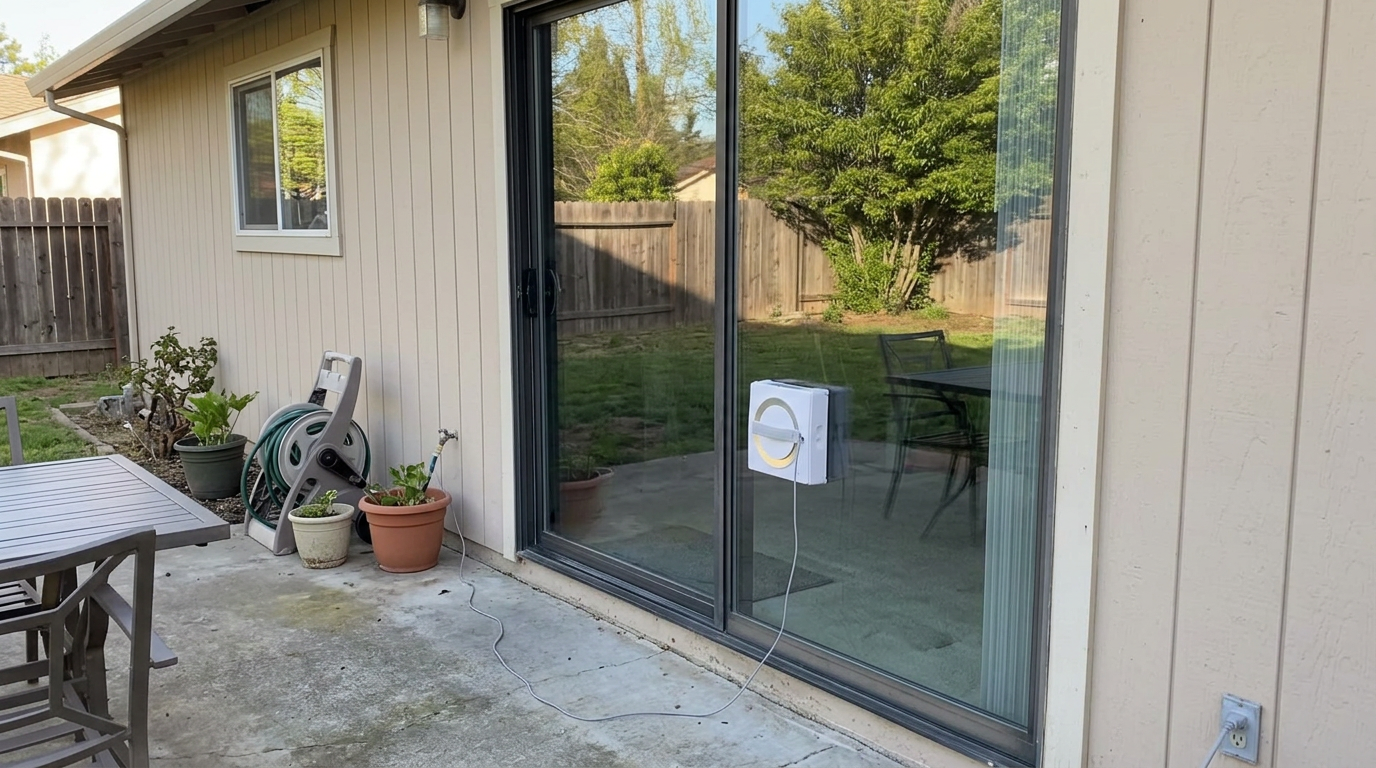
The WINBOT W2S PRO Omni is the robot I would buy if I could only own one. It combines the strongest suction in the test with the best edge cleaning and a station that frees it from the wall socket.
It never felt like it was struggling, whether I put it on a dusty patio door or on the outside of an upstairs window after a week of rain. Out of the 11 robots, it is the one I trusted most on high glass.
The cleanest edges I have seen
TruEdge 2.0 uses small brushes that drop down along the frame and sweep the strip a flat pad cannot reach. On my sliding door, the clean area ran almost all the way to the rubber seal.
With most robots I spend a few minutes after each run wiping a line around the frame. With this one, I usually only touched up the very corners, and on some panes not even those.
Grip and safety
At 10,000 Pa it holds hard, and you can feel it when you try to lift it off mid-run. It also stacks several anti-drop layers: suction monitoring, edge sensors, the tether and a station that anchors the rope.
That is why it scored highest on safety. On upstairs outside glass, where a fall would be expensive, I simply worried less with this robot than with any other.
The station
The station holds the robot, carries the cleaning solution, powers everything from its battery and shows the battery level and task on its own small display. I could run a full job from the buttons without opening the app once.
The rated 110 minutes was enough for every window in my house in one go. On a balcony with no outlet, that alone made it far easier to use than any corded robot.
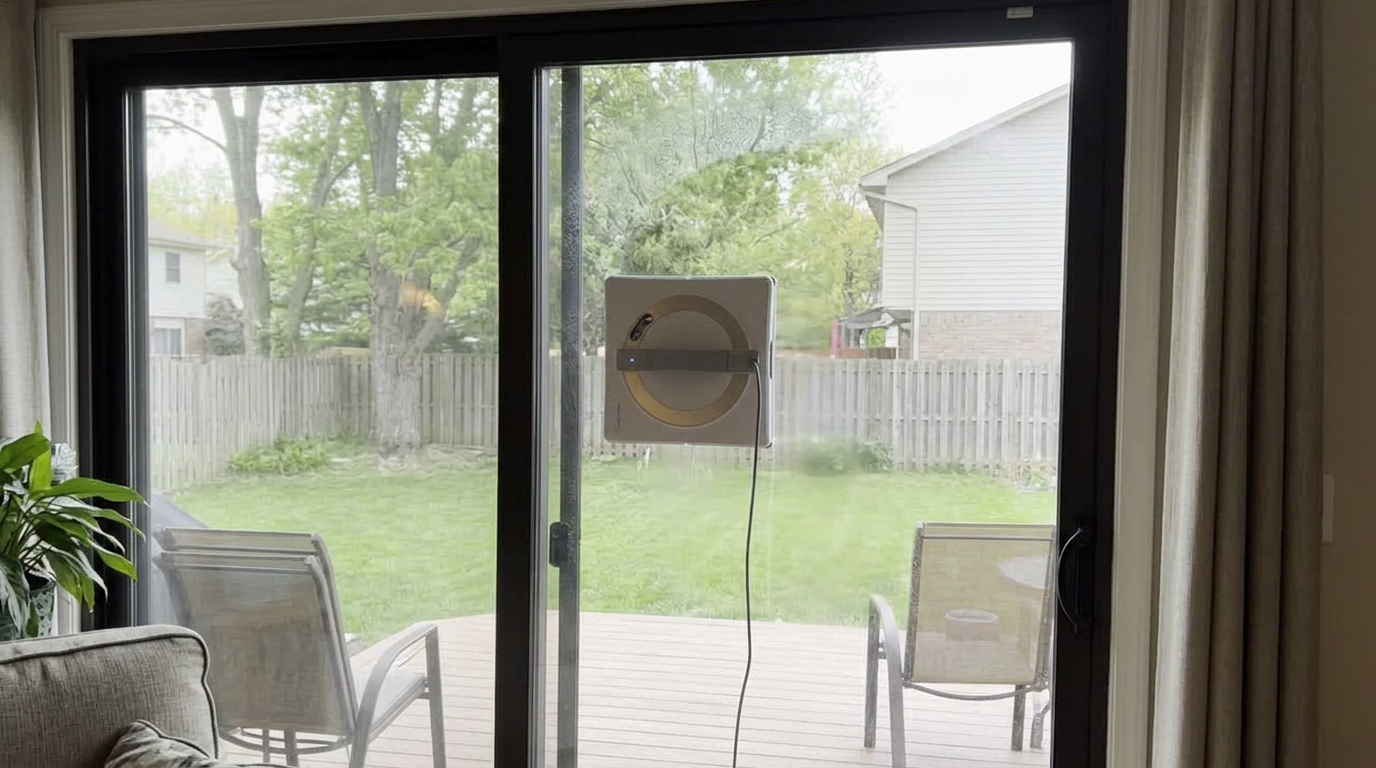
The station’s display shows battery and task status, so you do not need your phone for a quick clean.
What to know before you buy
The station is heavy, so carrying it up and down stairs is a two-handed job. You also still rinse the pads by hand, and the TruEdge brushes need a quick clean every few runs or they start to drag dirt along.
If washing pads is the part you hate most, the W3 Omni below solves that. If you do not need a station at all, the corded WINBOT W2S PRO gives you the same suction and brushes for less.
- 10,000 Pa suction and layered anti-drop safety
- TruEdge 2.0 brushes clean right into frames and corners
- Battery station runs it far from any outlet
- Station display, so no app needed for a quick job
- Pads still need washing by hand
- Heavy station to carry between floors
- Edge brushes need regular cleaning
- Homes with large windows, sliding doors or glass walls
- Anyone cleaning high or outside glass regularly
- People with balconies or windows far from outlets
- Anyone who never wants to wash a pad again
- Homes with only a few small, reachable windows
- People who cannot easily carry a heavy station upstairs
Choose this if you want the best all-round window robot and the most secure grip on high glass. Read my full WINBOT W2S PRO Omni review.
2. ECOVACS WINBOT W3 Omni
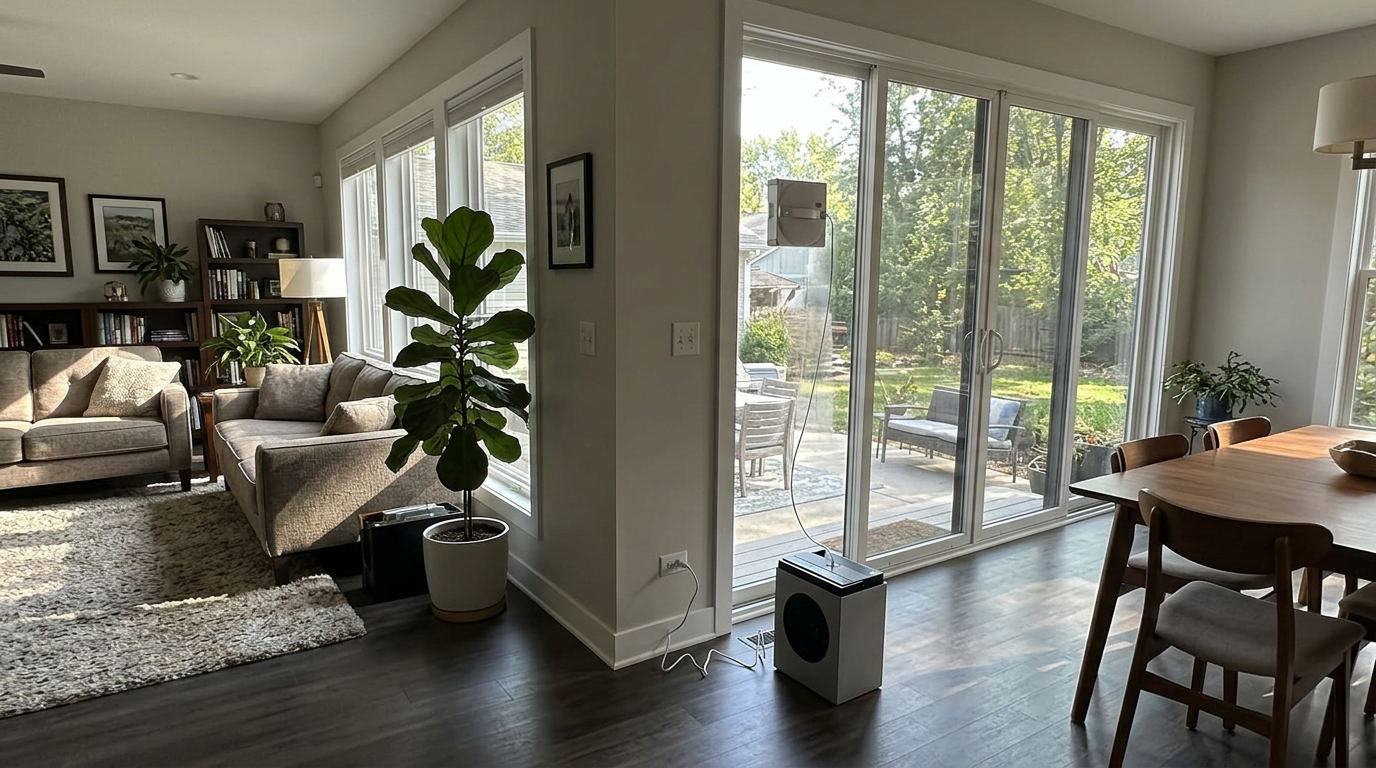
The WINBOT W3 Omni solves the chore nobody mentions in the adverts: washing a filthy cleaning pad in the sink after every job. Its station rinses the pads itself with 16 water jets in about a minute.
That sounds like a small thing until you have cleaned ten windows in a row. By week two I had stopped thinking of window cleaning as a job with a messy ending, and that is exactly why it scored highest on ease of use.
Cleaning that does not fade
Because the pads come back clean every time, the robot never starts a job by smearing yesterday’s dirt around. It cleaned as well on day 28 as on day one, which was not true for every robot in this test.
Its TruEdge scrubber spins at up to 200 RPM along the frames. It is not quite as thorough in the corners as the brushes on the W2S PRO models, but it still left far less for me to finish than any non-ECOVACS robot.
Smarter navigation and a bigger battery
The W3 Omni uses the newest version of WIN-SLAM in this group, and it handled my large patio door and the odd-shaped pane above my front door without missing strips. The rated 130 minutes is the longest of any robot I tested.
Like the W2S PRO Omni, it can also run from the wall when you are near an outlet. I mostly used battery mode because it meant one less cable on the floor.
Our tip: Refill the station’s clean-water tank before each big session, because the pad rinse uses more water than the spray does.
What to know before you buy
The station is the heaviest in the test, so it is best for homes where most of the glass is on one or two floors. The square design is also built for rectangular panes; it handled my arched window, but not as neatly.
It also leaves a small pad mark where it parks at the end, which I wiped off with a cloth. If you mostly clean a few small windows, the WINBOT MINI 2 makes more sense.
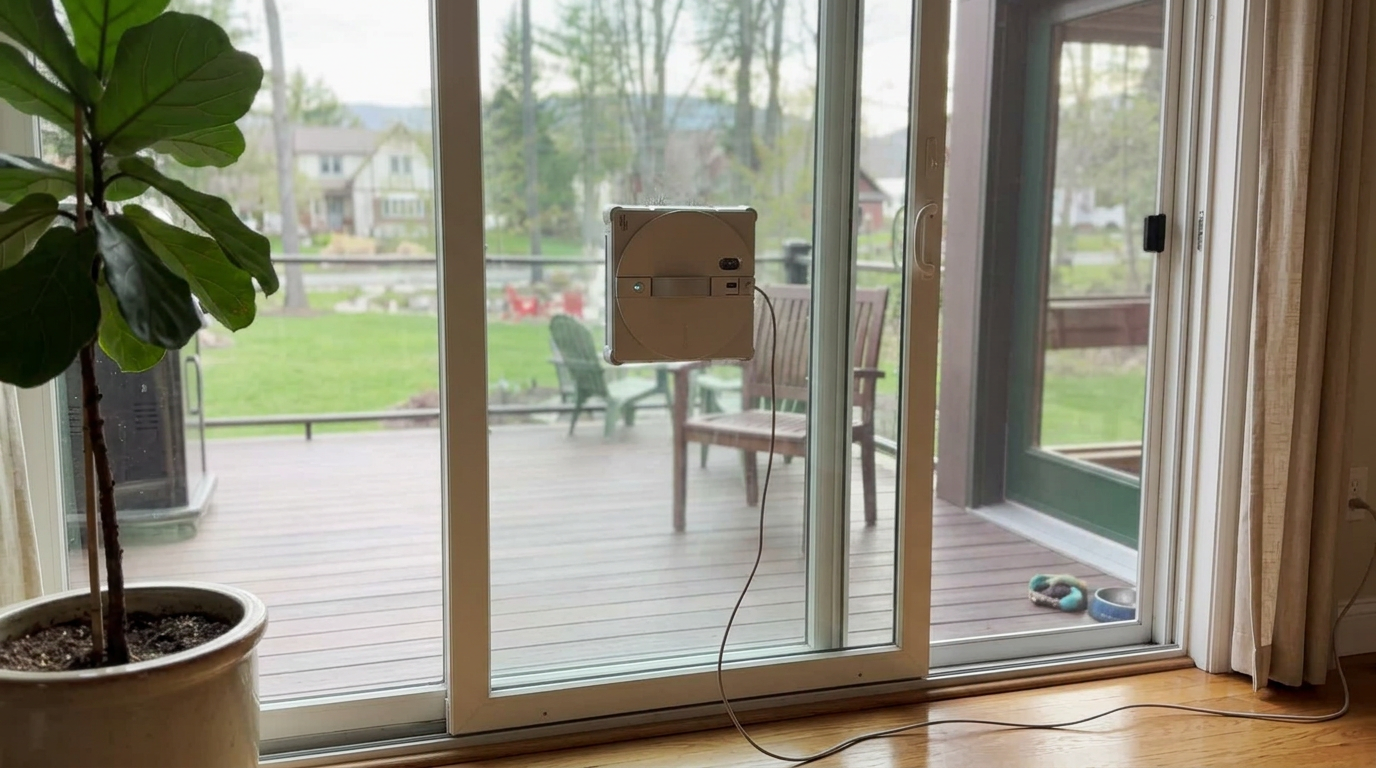
The Vortex Wash station rinses both pads after the job, so they are clean for the next window.
- Station washes the dirty pads, so no sink scrubbing
- TruEdge scrubber cleans much closer to frames and corners
- Battery or plug-in power, 130-minute rated run time
- Multiple safety layers, including a station anchor
- Heaviest station to carry between rooms
- Square design suits rectangular windows best
- Leaves a small pad mark where it parks
- Homes with lots of glass, sliding doors and conservatories
- Anyone who hates washing dirty pads
- People who clean windows every week or two
- Homes with only a few small windows
- Anyone who needs to carry it up several flights of stairs
- People with mostly round or arched glass
Choose this if you clean a lot of glass often and want the least mess afterwards. Read my full WINBOT W3 Omni review.
3. ECOVACS WINBOT MINI 2
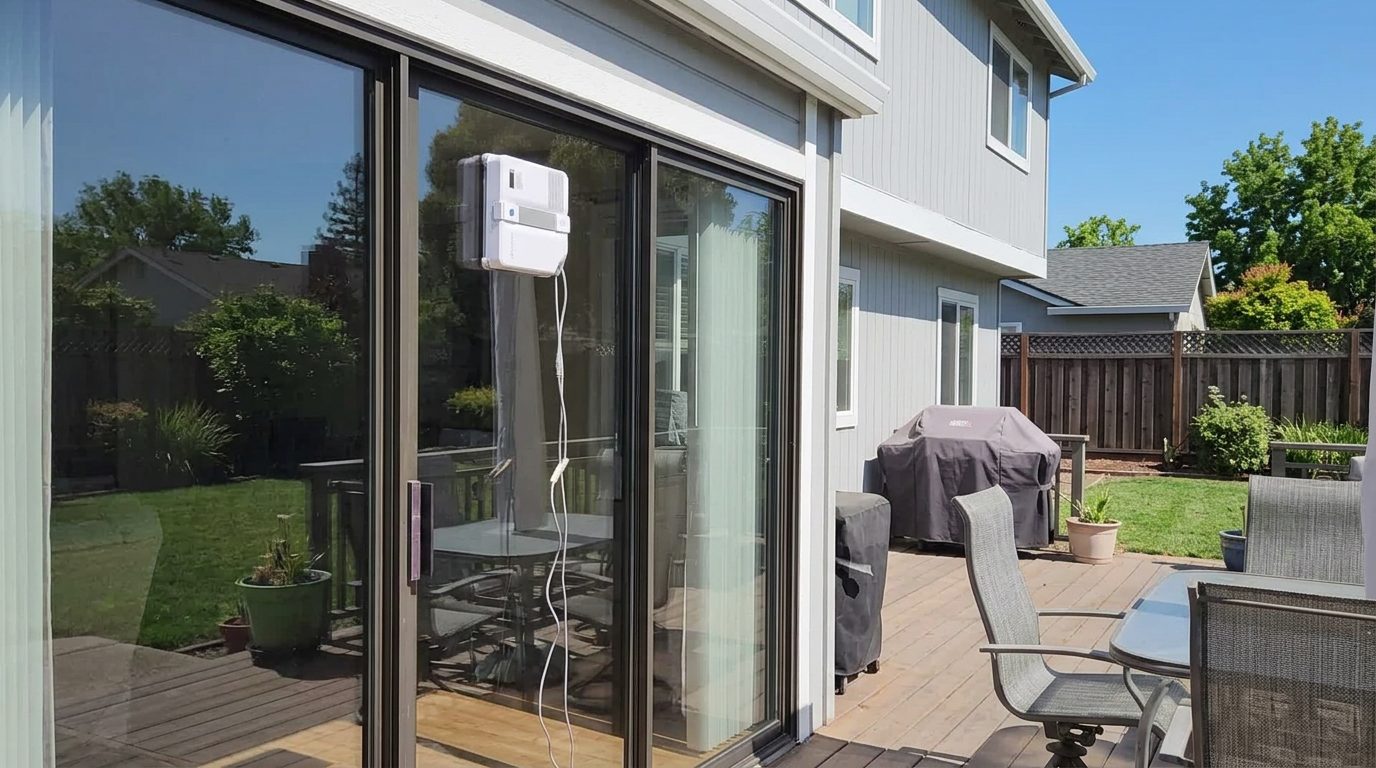
Big window robots are great on patio doors, but most homes also have glass they simply do not fit on. The WINBOT MINI 2 is about 21.5 cm across and 5.5 cm thick, so it works on narrow kitchen windows, bathroom mirrors and shower screens.
What surprised me was how well it handles corners for such a small robot. Four rotating brushes, one at each corner, sweep along the frame while little side wings guide the pad to within about a millimeter of the edge.
Corners on a compact robot
The corner brushes spin at up to 84 RPM and are rated for up to 90 percent edge coverage. On my divided bathroom mirror, that meant much less hand-finishing than with the older WINBOT MINI.
It still is not a TruEdge robot, and on large panes the larger W-series models leave cleaner frames. But for its size, nothing else I tested comes close.
Mist, not drips
Its ultrasonic spray makes droplets as small as 10 microns, and the microfiber pad presses down at about 14 N. On a mirror, where every drip line shows, that combination left noticeably fewer runs than the dual-pad robots.
Mirrors are also where I liked it most. It sticks to them at 8,000 Pa, finishes a standard bathroom mirror in a few minutes and returns near where it started.
Storage and setup
It fits in a drawer with its cable and tether, which is a real advantage if you do not want a station sitting in a cupboard. Setup takes seconds: plug in, clip the tether, place it and press start.
Like other corded models it keeps its grip for more than 30 minutes on its internal battery if the cord comes out. I tested that on a mirror, and it held on and beeped until I lifted it off.
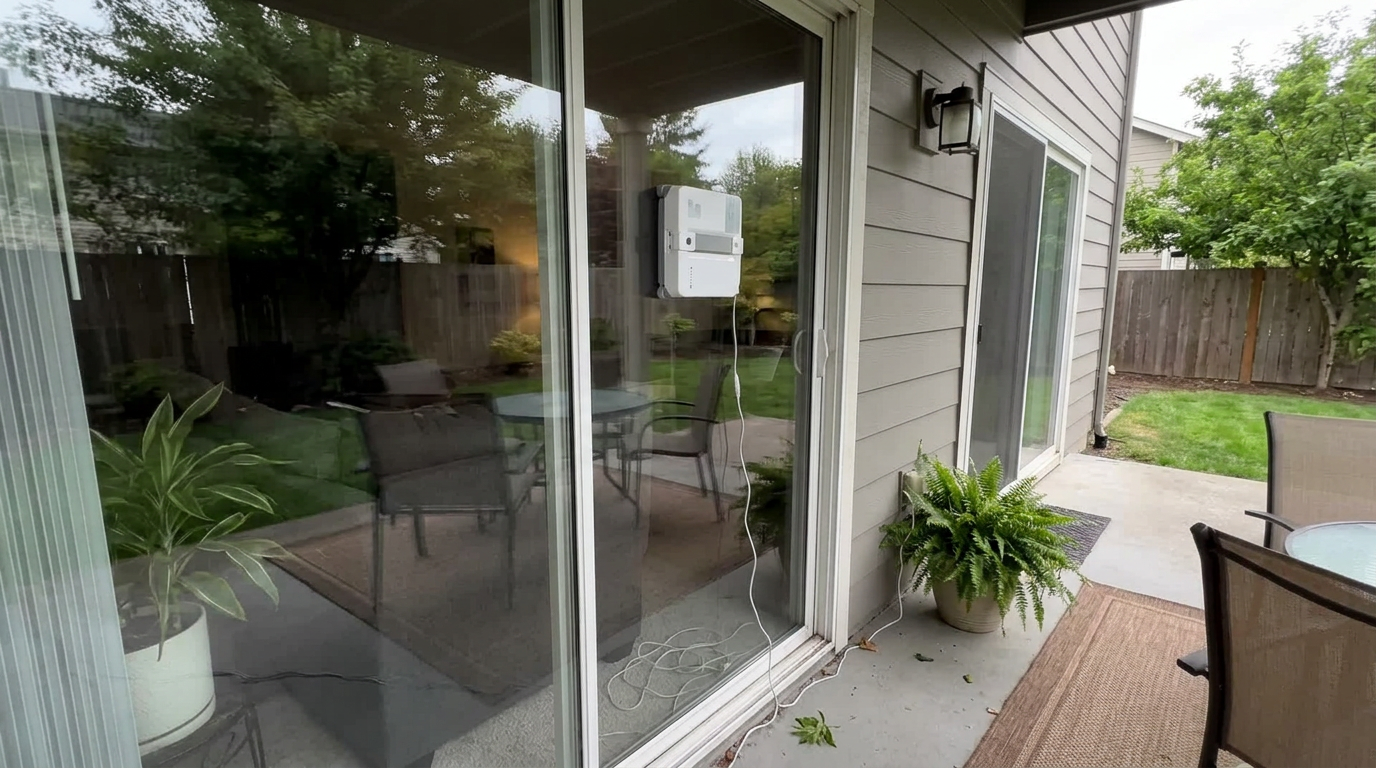
The four corner brushes are what make the MINI 2 clean so close to the frame for its size.
What to know before you buy
It needs an outlet within reach of its cable, and on a big patio door it is clearly slower than the full-size robots. Very dirty outside glass also needed a second pass.
If you want one robot for big and small glass, buy a W-series model and wipe the mirrors by hand. If your glass is mostly small, this is the one.
- Four corner brushes clean close to frames
- Small and light enough to store in a drawer
- 8,000 Pa grip with a 30-minute power-loss backup
- Ultra-fine mist leaves fewer drip lines on mirrors
- Needs a power outlet within cable reach
- Slower than full-size robots on big glass
- Very dirty glass needs extra passes
- Apartments with smaller windows
- Anyone cleaning mirrors and shower screens often
- First-time buyers who want a simple, compact robot
- Homes with mostly big glass walls and doors
- Windows far from any power outlet
- Heavily soiled outside glass
Choose this if your glass is mostly small, narrow or in the bathroom. Read my full WINBOT MINI 2 review.
4. HUTT H10
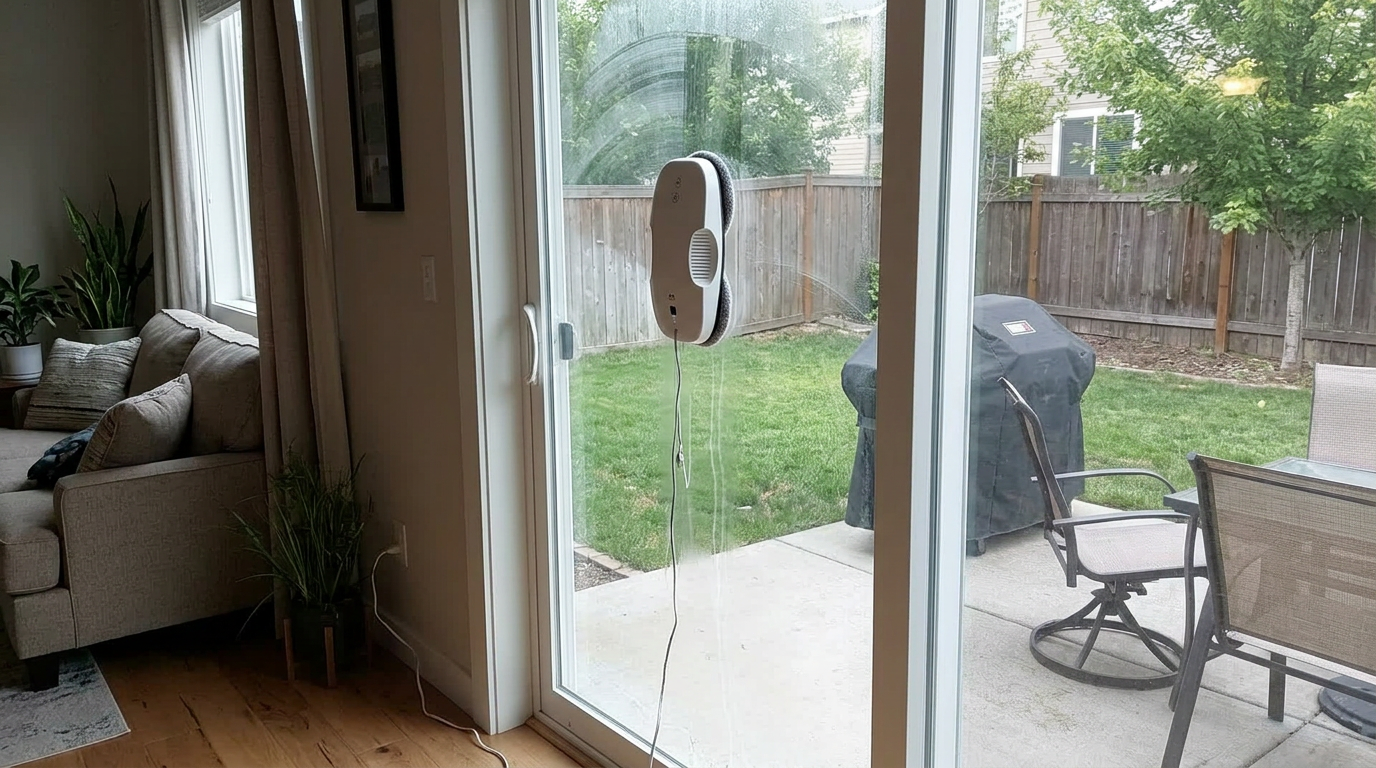
If streaks bother you more than anything else, look at the HUTT H10. It is the only robot here that scrubs and polishes in one pass: a wet round pad at the front loosens the dirt and a dry square pad behind it buffs the glass.
On my frameless shower screen, in low evening light, it left the clearest glass of any robot outside the top two. Its cleaning score of 8.5 was higher than the W2S PRO and the MINI 2.
Wet scrub, dry polish
Most streaks come from moisture drying unevenly after the pad has passed. Because the dry square pad follows straight behind the wet round one, there is very little water left on the glass to dry badly.
The steady 55 N of pad pressure helps too. It pressed evenly across the whole pane rather than skating over the lighter spots.
Light and quiet
It was one of the lighter and quieter robots I tested, which I appreciated on mirrors indoors. It also has a 30-minute backup battery, and it held fast when I pulled the plug.
Its NAVI 7.0 navigation covered my panes methodically. It just takes longer about it than the square crawlers.
Our tip: Keep a second set of dry square pads ready, because a damp polishing pad is the main reason the H10 ever leaves streaks.
What to know before you buy
It is fussy about moisture: the tracks and square pads must stay dry, or it slips and polishes less well. Narrow gaps between glass panels in my divided mirror also stopped it, so it suits large single panes best.
It is also slower than the W-series robots. If you have a lot of big glass and less patience, the W3 Omni gets through it faster.
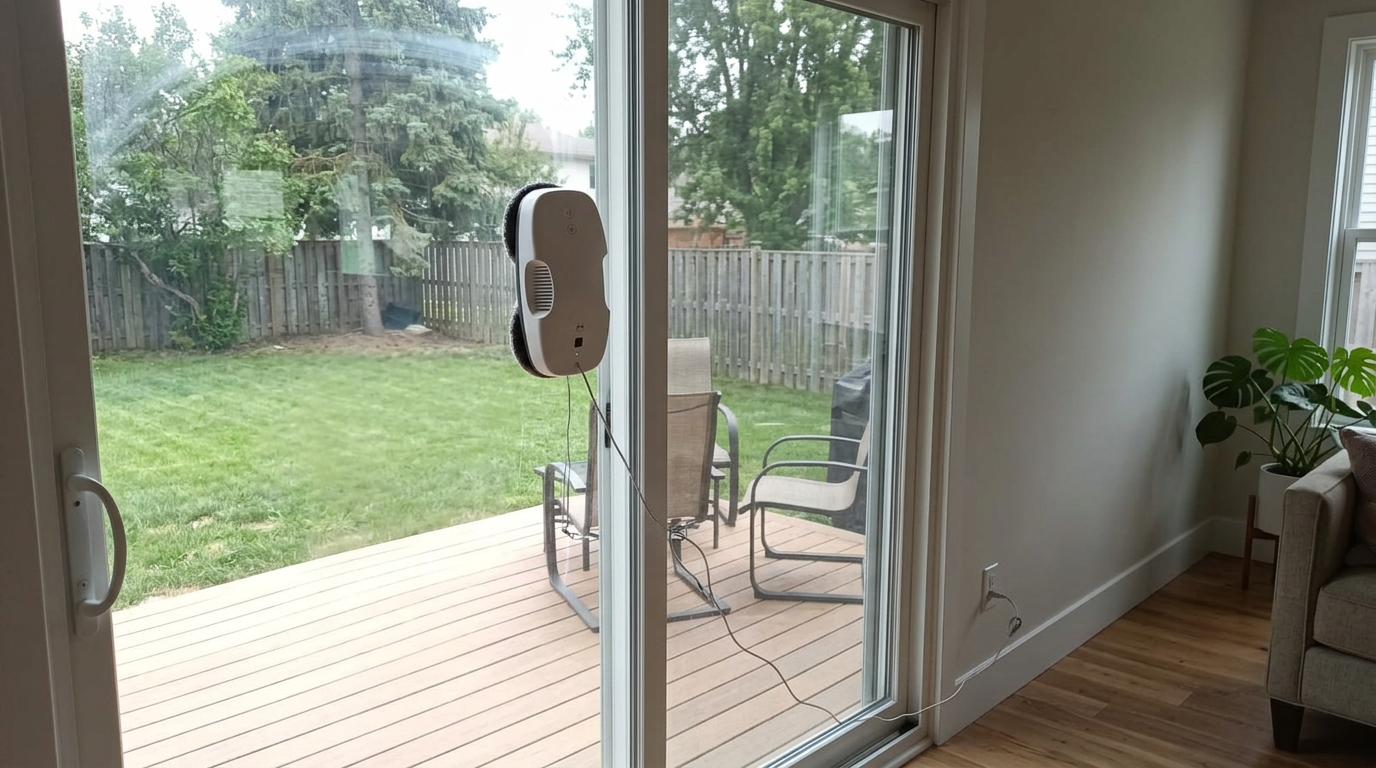
The round wet pad scrubs and the square dry pad polishes in the same pass.
- Wet scrub plus dry polish leaves fewer streaks
- 6,500 Pa grip with steady 55 N pad pressure
- Light, quiet and backed by a 30-minute battery
- Simple remote, no app needed
- Slower than square crawler robots
- Tracks and square pads must stay dry
- Narrow gaps between glass panels stop it
- Anyone who notices every streak on the glass
- Homes with frameless shower screens and big mirrors
- People who clean indoors more than outside
- Anyone who wants the fastest possible clean
- Homes with many divided or small panes
- Windows far from an outlet
Choose this if clear, streak-free glass matters more to you than speed. Read my full HUTT H10 review.
5. HIXZAP X1 PRO
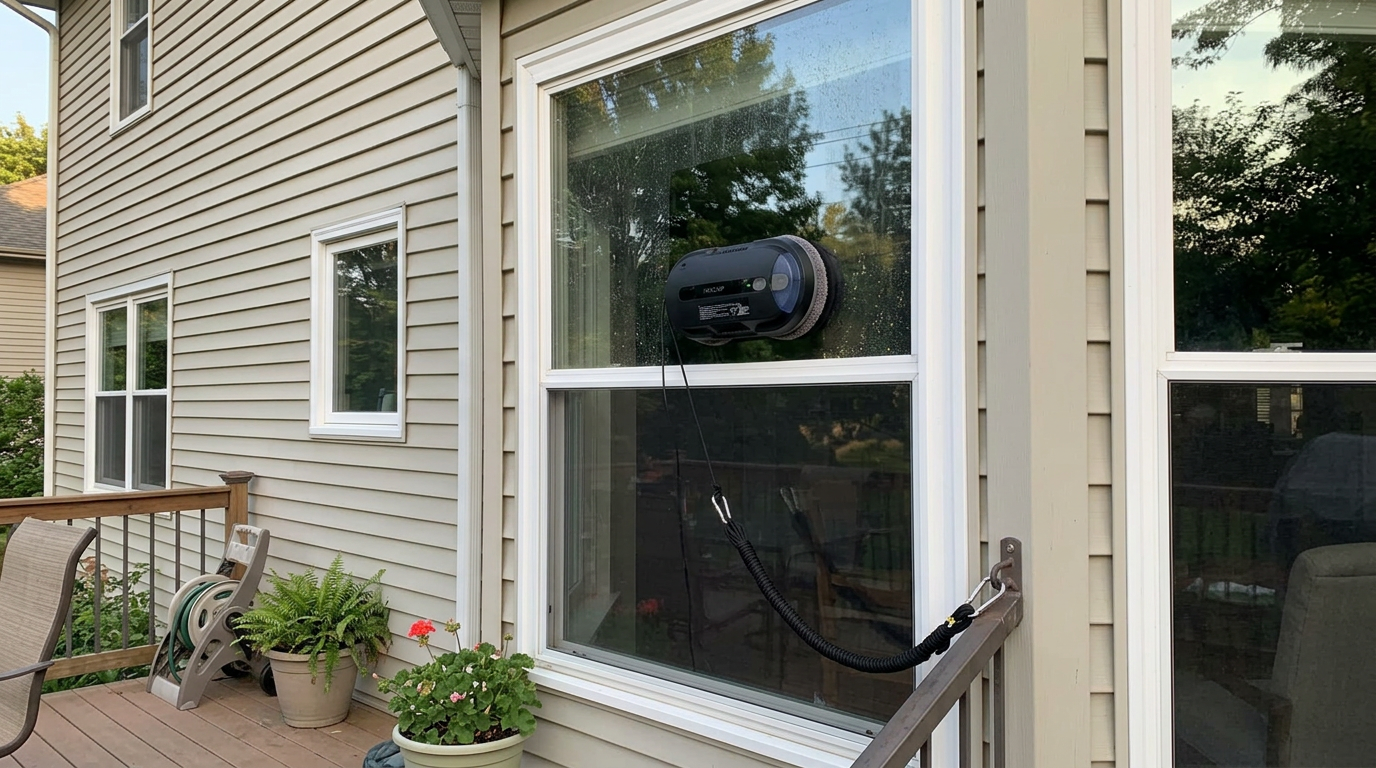
The HIXZAP X1 PRO is the robot I would recommend to someone who wants to stop climbing ladders without paying for a station. It grips at 7,200 Pa, keeps that grip for 25 minutes on its backup battery and does everything from a simple remote.
It is a dual-pad robot, so it moves by spinning two round pads against the glass. That makes it a strong scrubber on everyday dust, pollen and fingerprints.
Grip you can trust upstairs
For a budget robot, its safety score of 8.3 is impressive. It grips glass from 3 mm thick upward, monitors suction constantly and sounds an alarm if something goes wrong.
I used it on my upstairs windows from inside for all four weeks. It never slipped, and the backup battery held it in place when I pulled the plug.
A remote instead of an app
There is no app or Wi-Fi to set up. The remote controls the spray strength, the cleaning modes and even manual steering, which I used to send it back over a bird dropping.
The 85 ml tank is large and see-through, so I refilled it far less often than on the compact robots. Twenty pads in the box also means you can swap to a fresh one mid-session.
Our tip: Use spot mode on the worst marks first, then run a full clean, because round pads work best on dirt that has already been loosened.
What to know before you buy
Like every round-pad robot, it leaves small curved patches in each corner, which explains its edge score of 7.0. Expect to finish the corners with a cloth.
It is also noisier and less refined than the ECOVACS robots, and it needs an outlet within cord reach. If corners matter more than grip, the square Tosima WA9C Pro is the other budget option.
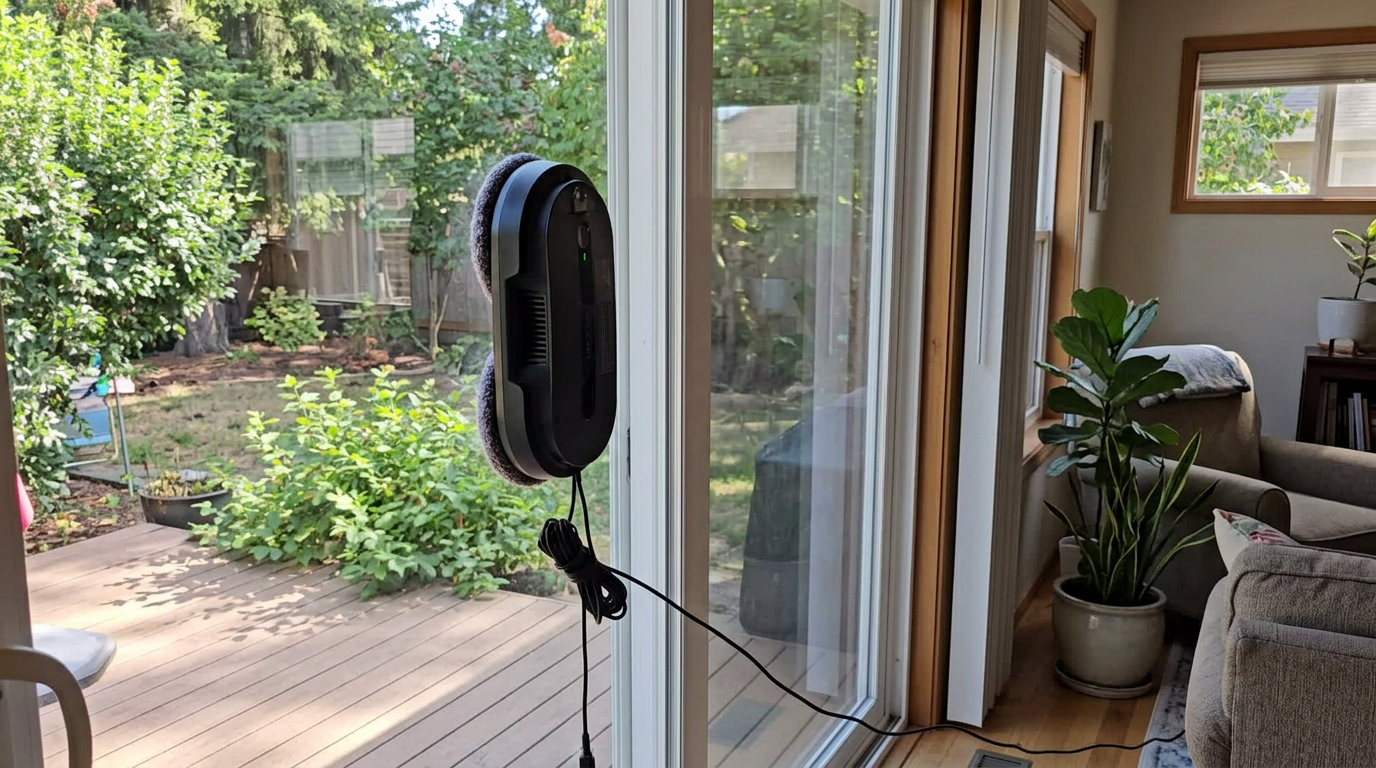
The X1 PRO runs from a remote, with no app or Wi-Fi to set up.
- 7,200 Pa grip with a 25-minute power-loss backup
- Remote controls spray, modes and steering, no app
- Comes with 20 pads and an 85 ml visible tank
- Strong scrubbing on everyday dirt
- Round pads miss curved patches in corners
- Needs an outlet within cord reach
- Noisier and less refined than premium robots
- First-time buyers on a budget
- Anyone cleaning upstairs windows from inside
- People who prefer a remote to an app
- Anyone who wants crisp, clean corners
- Windows far from power outlets
- People sensitive to noise
Choose this if you want a safe, affordable robot for everyday window cleaning. Read my full HIXZAP X1 PRO review.
My test data: what the numbers showed
Scores only tell you so much. These are the things I timed and counted during the test, and they explain most of the differences between the robots.
How much I had to finish by hand
After each run I wiped whatever the robot had missed along the frames and in the corners. This is my estimate of the strip I still had to clean by hand on my sliding patio door, averaged over four weeks.
My estimates from four weeks of use on the same patio door. Shorter bars mean less hand-finishing.
Power and run time
The station robots run from their own battery, while the corded robots run as long as they are plugged in and only use their battery as an emergency backup. That difference decides where you can use them.
| Robot | Power | Battery role | Rated time |
|---|---|---|---|
| W3 Omni | Station battery or outlet | Main power | 130 min |
| W2S PRO Omni | Station battery or outlet | Main power | 110 min |
| W2S Omni | Station battery or outlet | Main power | 110 min |
| W2 PRO Omni | Station battery or outlet | Main power | 110 min |
| MINI 2, WINBOT MINI | Cord | Emergency backup | 30+ min hold |
| HUTT H10 | Cord | Emergency backup | 30 min hold |
| X1 PRO, Tosima WA9C Pro | Cord | Emergency backup | 25 min hold |
| W2S PRO | Cord | Emergency backup | Backup only |
Time per window
A standard 1 by 1 meter pane took the square crawlers roughly three minutes in their default mode. The dual-pad robots were a little slower, and the HUTT H10 was the slowest because it polishes as it goes.
My stopwatch averages, rounded. Edge passes and second passes on dirty glass add time.
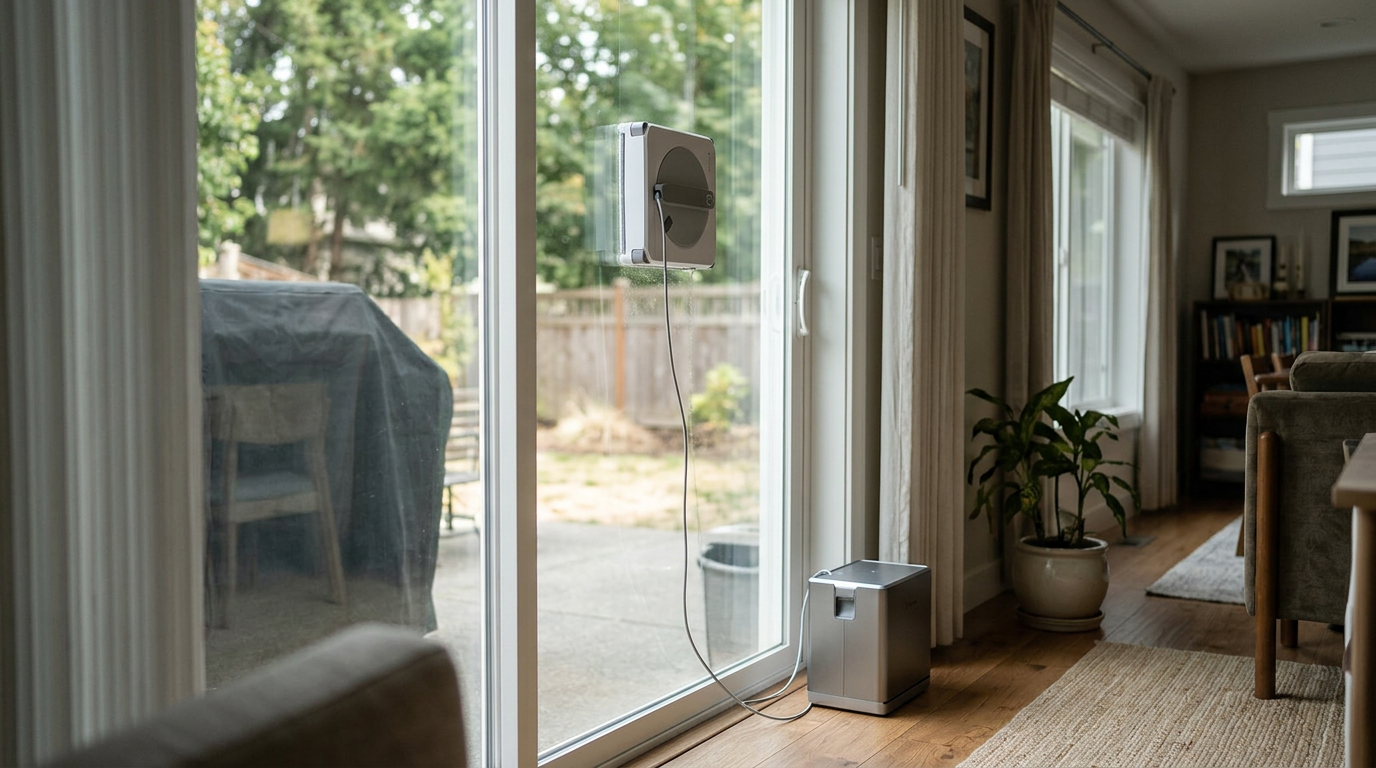
Large sliding doors are where the station robots save the most time and effort.
High, outside and hard-to-reach windows
The best reason to buy a window robot is not saving time. It is not having to stand on a ladder or lean out of an upstairs window to reach the outside of the glass.
The US Consumer Product Safety Commission puts the number of people treated for ladder-related injuries at around 500,000 a year, with roughly 300 deaths. Most of those falls happen from 10 feet or lower, which is exactly the height of a typical upstairs window.
How each robot handles high glass
| Robot | Max suction | Power-loss backup | Station anchor | Safety score |
|---|---|---|---|---|
| W2S PRO Omni | 10,000 Pa | ✓ | ✓ | 9.4 |
| W3 Omni | 8,000 Pa | ✓ | ✓ | 9.3 |
| W2S Omni | 8,000 Pa | ✓ | ✓ | 9.0 |
| W2 PRO Omni | Not stated | ✓ | ✓ | 9.0 |
| W2S PRO | 10,000 Pa | ✓ | ✕ | 8.8 |
| MINI 2 | 8,000 Pa | ✓ | ✕ | 8.7 |
| HUTT H10 | 6,500 Pa | ✓ | ✕ | 8.6 |
| WINBOT MINI | 7,500 Pa | ✓ | ✕ | 8.4 |
| HIXZAP X1 PRO | 7,200 Pa | ✓ | ✕ | 8.3 |
| Tosima WA9C Pro | 2,600–3,200 Pa | ✓ | ✕ | 7.6 |
| HIXZAP X1 | 4,800–6,400 Pa | Not listed | ✕ | 7.6 |
For outside glass on upper floors, I would only use a robot with at least 7,000 Pa of suction, a backup battery and a tether anchored indoors. All of my top five meet that bar, and the station models add a heavy base that holds the rope.
Outside glass also gets much dirtier than inside glass. Pollen, dust and dried rain spots took most robots two passes the first time, and only one pass on later cleans once the glass was in better shape.
Our tip: Clean outside windows on a dry, overcast day, because wind and direct sun both make robots slip and streak.
Frameless glass
Frameless glass, like a walk-in shower screen or a glass balcony railing, is the hardest job for a window robot. There is no frame to bump into, so the robot has to detect the edge itself.
Every robot here has edge sensors, but the ones I trusted most on frameless glass were the W2S PRO Omni, the MINI 2 and the HUTT H10. Always run a robot on a frameless pane with the tether attached, even indoors.
Which one is right for you?
4 quick questionsAnswer four questions and I will point you to the robot that fits your home best. My single reviews of each robot go deeper, starting with the W2S PRO Omni review.
Or find your home below
Battery station, 10,000 Pa grip and TruEdge 2.0 brushes for frame-to-frame cleaning anywhere.
Washes its own pads and runs 130 minutes, so it can do a lot of glass in one session.
Compact, drawer-sized and with four corner brushes for narrow panes.
Scrubs wet and polishes dry in one pass for the fewest streaks.
7,200 Pa grip, 25-minute backup and a remote instead of an app.
The same suction and TruEdge 2.0 brushes as my top pick, on a cord instead of a station.
What to look for in a window cleaning robot
Window robots look alike in photos, but they differ a lot in grip, edge cleaning and how you power them. These are the points that mattered most in my test, in order of importance.
Start with your glass
| Your main glass | What you need | Best match |
|---|---|---|
| Large sliding doors and picture windows | Square crawler, strong suction, mapping | W2S PRO Omni or W3 Omni |
| Upstairs windows, outside glass | 7,000 Pa or more, backup battery, anchored tether | W2S PRO Omni |
| Small panes and narrow windows | Compact body, corner brushes | WINBOT MINI 2 |
| Mirrors and shower screens | Fine mist, edge sensing, low streaking | HUTT H10 or MINI 2 |
| Lots of glass, cleaned often | Self-washing pads, long battery | W3 Omni |
| Everyday upkeep on a budget | Firm grip and a backup battery | HIXZAP X1 PRO |
Suction
Suction decides how firmly the robot holds on and how hard it can press the pad. For indoor glass, around 5,000 to 6,000 Pa is fine; for dusty outside glass and high windows, I would look for 7,000 Pa or more.
Lower-suction robots, like the Tosima at 2,600 to 3,200 Pa, work well on clean indoor glass but are less happy on rough, dirty outside panes.
Edge cleaning
This is the biggest quality difference between robots, and the one most buyers overlook. Square robots reach corners better than round-pad robots, and TruEdge brushes or corner brushes reach even closer.
If you dislike finishing jobs by hand, pay for edge cleaning before you pay for an app or extra modes.
Corded or station
Corded robots are lighter, simpler and run as long as they are plugged in. Their limit is the cord: if your window is more than a few meters from an outlet, you need an extension lead or a different robot.
Station robots carry their own battery, hold the robot, the solution and the tether, and run anywhere. They are heavier and more expensive, but on balconies and big houses they make the robot far easier to use.
Our tip: If you choose a corded robot, buy a short outdoor-rated extension lead with it so the cord never pulls tight while the robot climbs.
Pad washing
Every robot gets its pad dirty, and a dirty pad smears. All robots here except the W3 Omni need you to wash the pads by hand, usually after each session and sometimes mid-session on very dirty glass.
App or remote
The ECOVACS robots use an app for modes, scheduling and a manual joystick, plus buttons on the robot or station for quick jobs. The budget robots and the HUTT H10 use a remote, which I found faster for everyday use.
Glass thickness and type
Most robots need glass at least 3 mm thick, which covers almost all home windows. Textured, frosted or very rough glass breaks the suction seal, so skip robots for those panes altogether.
Square, dual-pad or round-square: which design cleans best?
The shape of the cleaning head affects corners, speed and streaks more than any spec on the box. Here is how the three designs compared in my test.
| Square crawler | Dual spinning pads | Round-square hybrid | |
|---|---|---|---|
| Examples | WINBOT W-series, MINI 2, Tosima | HIXZAP X1, X1 PRO | HUTT H10 |
| Corners | Good to excellent | Curved patches | Good |
| Speed | Fastest | Medium | Slowest |
| Scrubbing | Good, flat pad | Strong, spinning | Strong, then polished |
| Streaks | Few on default mode | Some on dirty glass | Fewest |
| Best for | Most homes | Budget upkeep | Mirrors and frameless glass |
Averages of my cleaning scores. Edge coverage is scored separately.
For most homes, a square crawler is the right choice. The hybrid wins on streaks but costs you time, and dual-pad robots are the budget route if you can live with wiping the corners.
What each step up gets you
Window robots fall into clear tiers. This is what you actually gain as you move up, based on what changed on my glass.
| From | To | What you gain | Worth it if |
|---|---|---|---|
| HIXZAP X1 | HIXZAP X1 PRO | Stronger 7,200 Pa grip, 25-minute backup, remote | You clean upstairs or outside glass |
| HIXZAP X1 PRO | WINBOT MINI 2 | Square corners, corner brushes, app, finer mist | Corners and mirrors matter to you |
| WINBOT MINI 2 | WINBOT W2S PRO | 10,000 Pa, TruEdge 2.0, faster on big glass | Your glass is mostly large |
| WINBOT W2S PRO | WINBOT W2S PRO Omni | Battery station, display, cordless anywhere | Outlets are far from your windows |
| WINBOT W2S PRO Omni | WINBOT W3 Omni | Self-washing pads, 130-minute battery | You clean a lot of glass often |
The biggest jump in results is from round pads to a square robot with edge cleaning. The biggest jump in convenience is from a cord to a station, and then from hand-washed pads to the W3 Omni’s self-washing station.
How to get streak-free results from any window robot
Most streaks are not the robot’s fault. They come from the water, the pad and the conditions, and a few habits made every robot in my test clean better.
- Use distilled water in the tank
The US Geological Survey estimates that about 85 percent of American homes have hard water. Its calcium and magnesium dry as white spots, while distilled water reads close to 0 ppm and leaves nothing behind.
- Start with a clean, damp pad
Wet the pad, wring it out well and fit it firmly. A dripping pad smears and a loose pad leaves lines.
- Vacuum or brush dry dirt first
On outside glass, brush off cobwebs, sand and bird droppings before the robot goes on. Grit under the pad can scratch, and it turns into mud the moment the spray hits it.
- Avoid direct sun
Warm glass dries the mist before the pad wipes it, which leaves streaks. Morning, evening or cloudy days gave me the best results.
- Run a second pass on very dirty glass
The first clean of the season is always the hardest. After that, a monthly run keeps glass in shape with one pass.
How much each habit reduced visible streaks in my test, from my own side-by-side runs.
Our tip: Use only the solution the maker recommends or plain distilled water, because household glass cleaners can foam and clog ultrasonic nozzles.
Maintenance and running costs
Window robots need very little care, but the little they need matters. Skipping it is the main reason a robot that cleaned well in week one starts streaking in week four.
- Wash the pads after every session
Machine-wash them warm without fabric softener, which coats the fibers and causes streaks. The W3 Omni rinses its pads itself, but still benefits from a proper wash now and then.
- Wipe the tracks and sensors
Dust on the rubber tracks makes crawlers slip. A damp cloth over the tracks and edge sensors every few runs keeps them gripping.
- Clean the edge brushes
TruEdge brushes and corner brushes collect hair and grit. Pull it off every few runs so they sweep instead of drag.
- Empty the tank after use
Leaving solution in the tank for weeks can block the nozzles, especially with tap water.
- Check the tether
Look over the rope and its clip a few times a year, and replace it if it frays.
| Consumable | How often | Notes |
|---|---|---|
| Cleaning pads | Every 2–3 months of regular use | Replace when they stop absorbing or look matted |
| Cleaning solution | As needed | Distilled water alone works for regular cleans |
| Edge brushes | Once or twice a year | Only on TruEdge 2.0 and corner-brush models |
| Safety tether | When worn or frayed | Never use a damaged tether on outside glass |
Common mistakes to avoid
These caught me out at least once during the test. Every one of them is easy to avoid once you know about it.
| Mistake | What happens | Fix |
|---|---|---|
| Skipping the tether indoors | A robot that slips off a mirror can crack a sink or tile | Clip the tether every time, on every pane |
| Using a soaking-wet pad | Drips, smears and streaks | Wring the pad until it is only damp |
| Tap water in hard-water areas | White spots after drying | Use distilled water |
| Cleaning in full sun | Streaks as the mist dries too fast | Clean in the morning, evening or on cloudy days |
| Putting it on frosted or textured glass | Suction alarm, robot will not hold | Clean those panes by hand |
| Starting too close to a frame | The robot misjudges the pane size | Place it near the middle of the glass |
Our tip: Place the robot in the middle of the pane at the start, because most robots measure the glass from where you put them.
Other window robots I tested
These six did not make my top five, but several are excellent and could be the better buy for your home. Here is where each one fits.
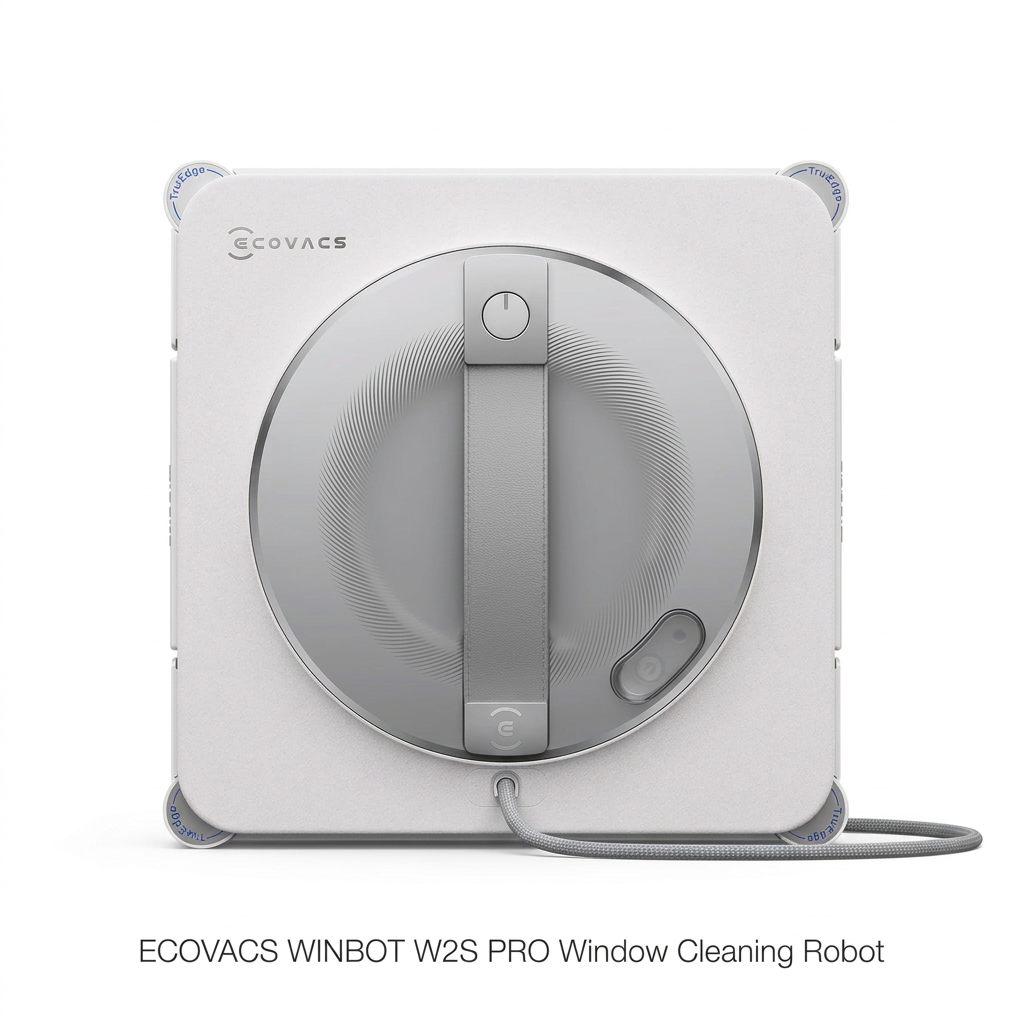
The WINBOT W2S PRO has the same 10,000 Pa suction and TruEdge 2.0 brushes as my top pick, and it scored 8.9 for edges. It also has seven modes plus a manual joystick in the app.
It runs on a cord with a backup battery and has no station, so you manage the cable and rope yourself. If all your windows are near outlets, it gives you top-tier edges for less.
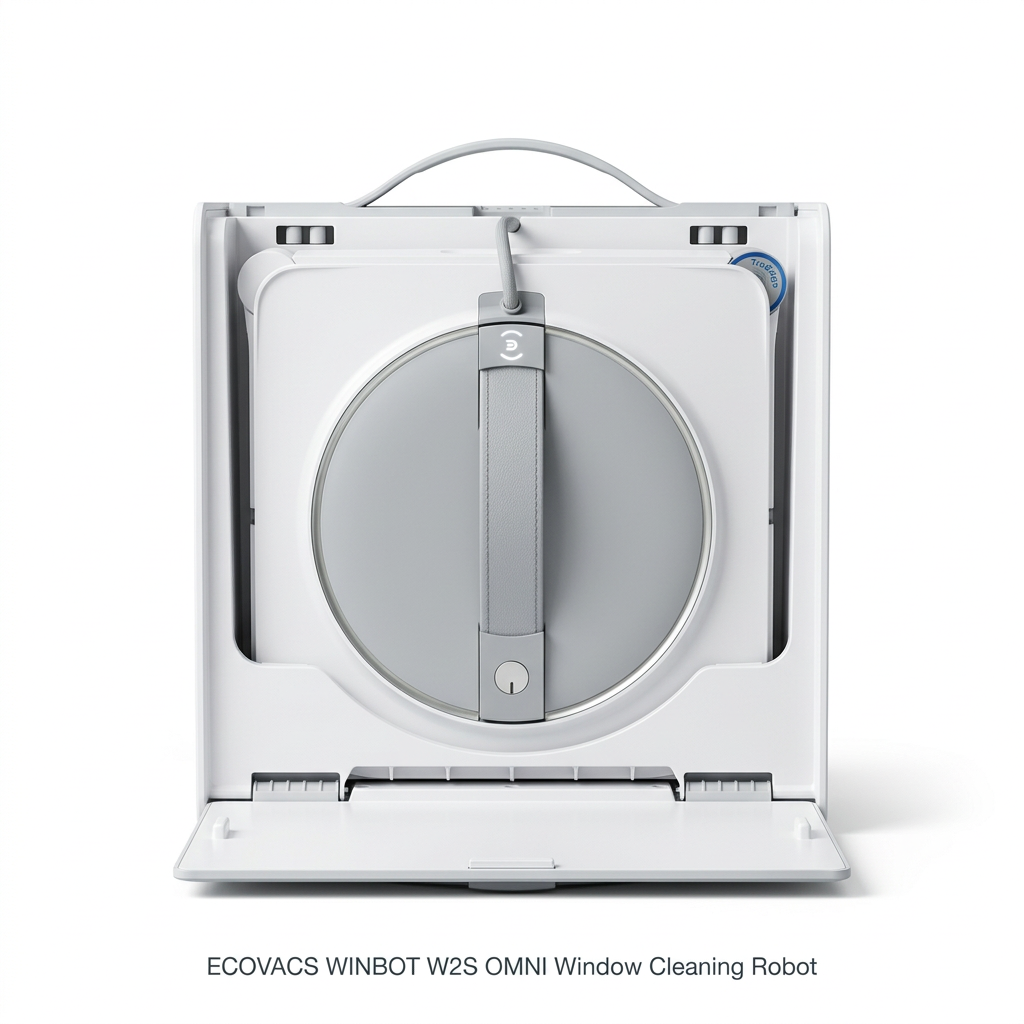
The WINBOT W2S Omni pairs the original TruEdge scrubber and 8,000 Pa of suction with a portable battery station. It handled heavily stained outside glass very well.
It sits just below the W2S PRO Omni on grip and edge brushes, and you still wash the pads by hand. It is a strong choice if you want a station and TruEdge without paying for the PRO version.
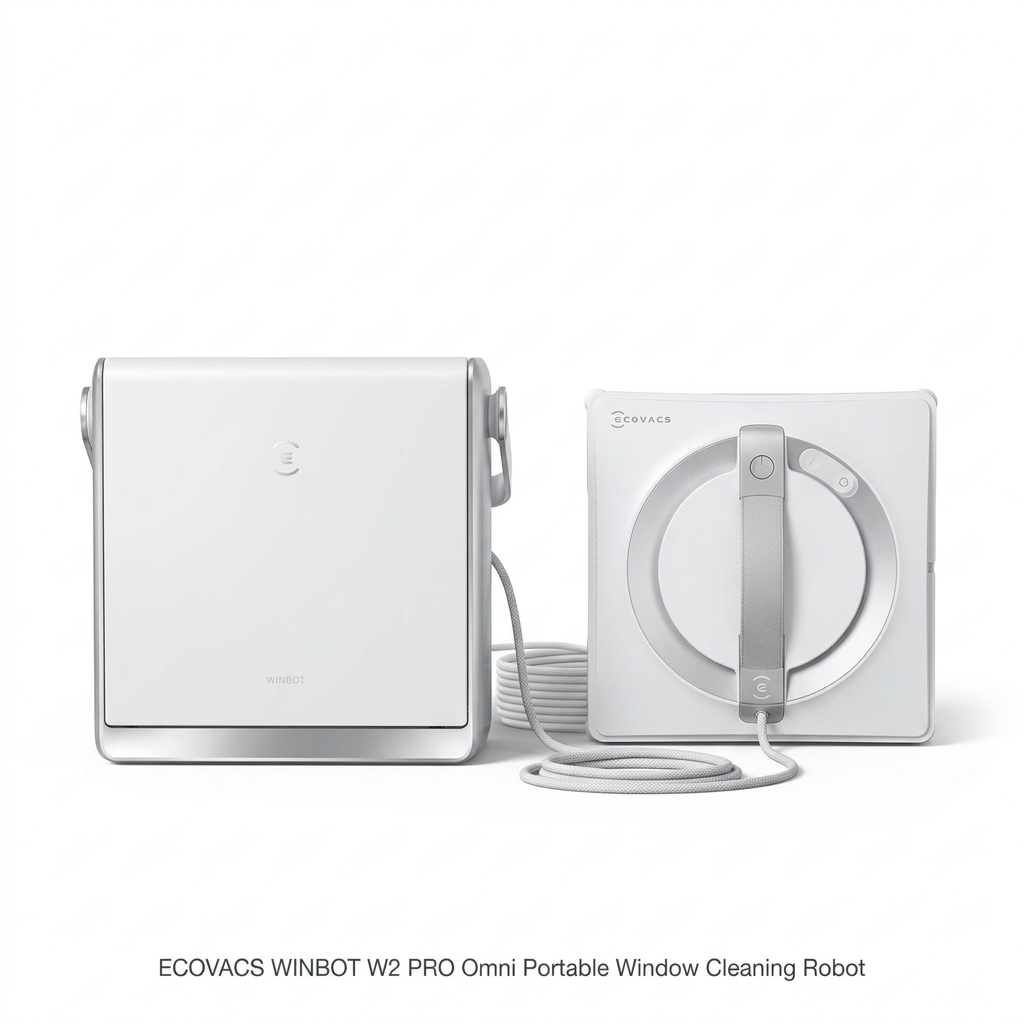
The WINBOT W2 PRO Omni has a 6-in-1 station that stores, charges, controls and anchors the robot, with battery and plug-in modes and 12-stage safety. It was the easiest station to carry from room to room.
It does not have TruEdge, so its edge score of 7.8 is the lowest of the ECOVACS station robots, and neglected outside glass needed two passes. It suits people who value portability over perfect frames.
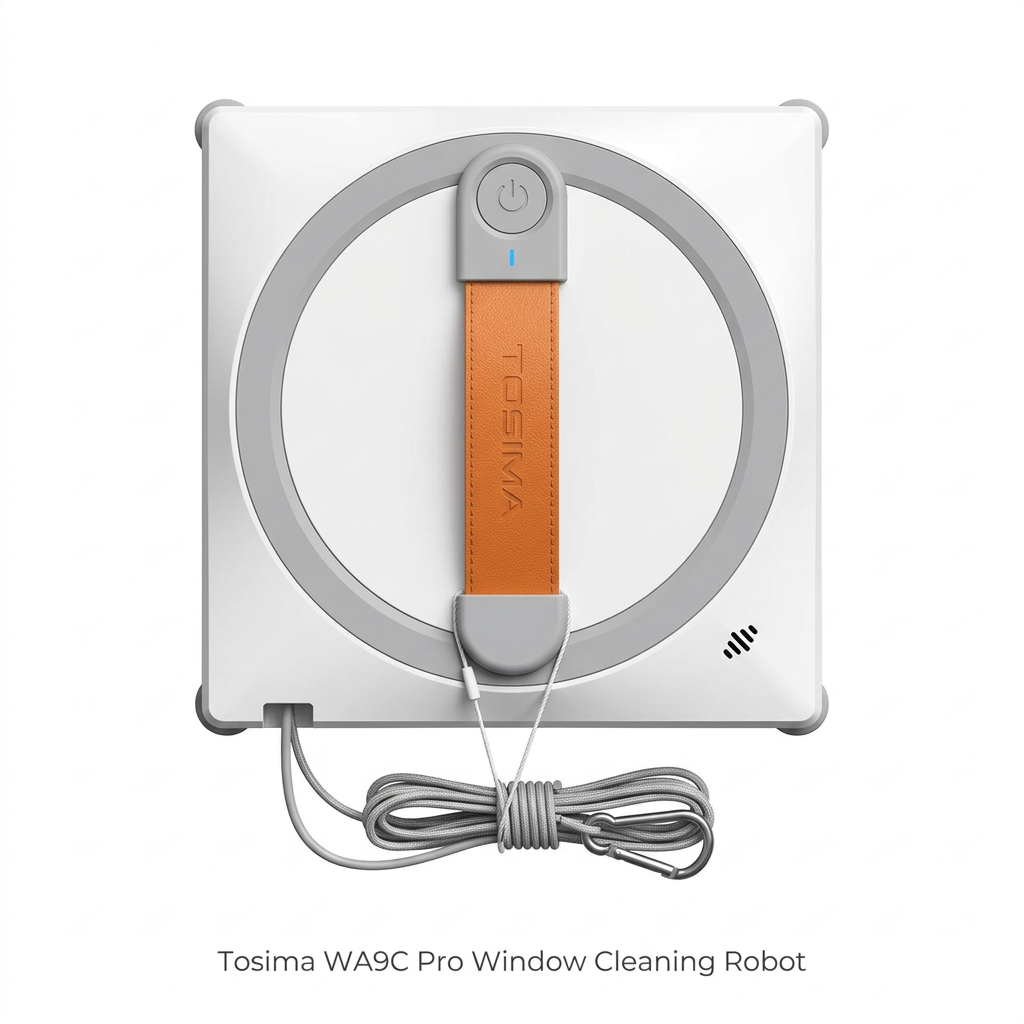
The Tosima WA9C Pro is a square robot with a four-nozzle spray that wets the glass very evenly. You can choose an N or Z route to suit the window, and it keeps its grip for about 25 minutes if the power drops.
Its 2,600 to 3,200 Pa suction is the lowest in the test, and the nozzles disliked my hard tap water. It is happiest on clean indoor glass where corners matter more than grip.
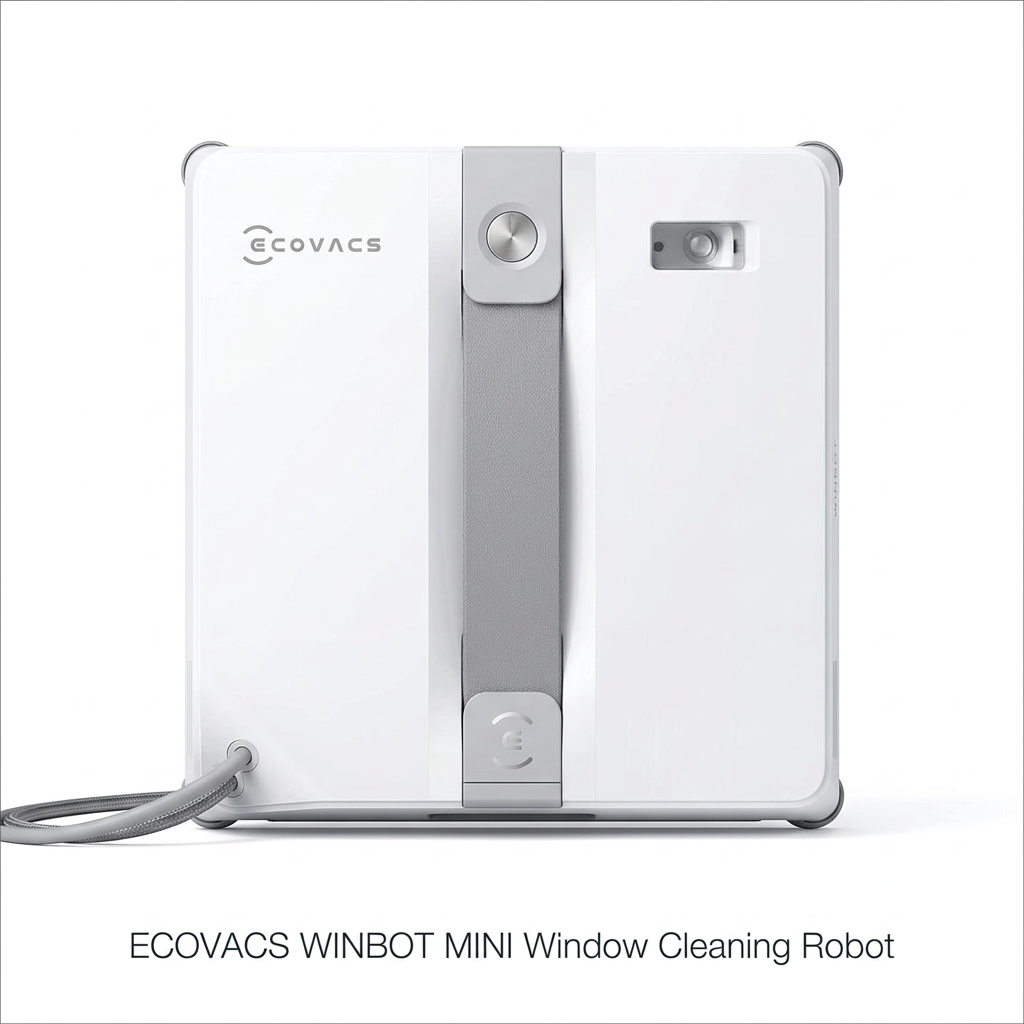
The WINBOT MINI is the predecessor of the MINI 2: the same compact 21.5 cm body, 7,500 Pa of suction, WIN-SLAM 3.0 and a 30-minute backup battery. It is light, about 1.3 kg, and simple to use.
It has no corner brushes, so it leaves more along the frames, and its 60 ml tank needs refilling more often. The MINI 2 is the better buy unless you find this one on a good deal.
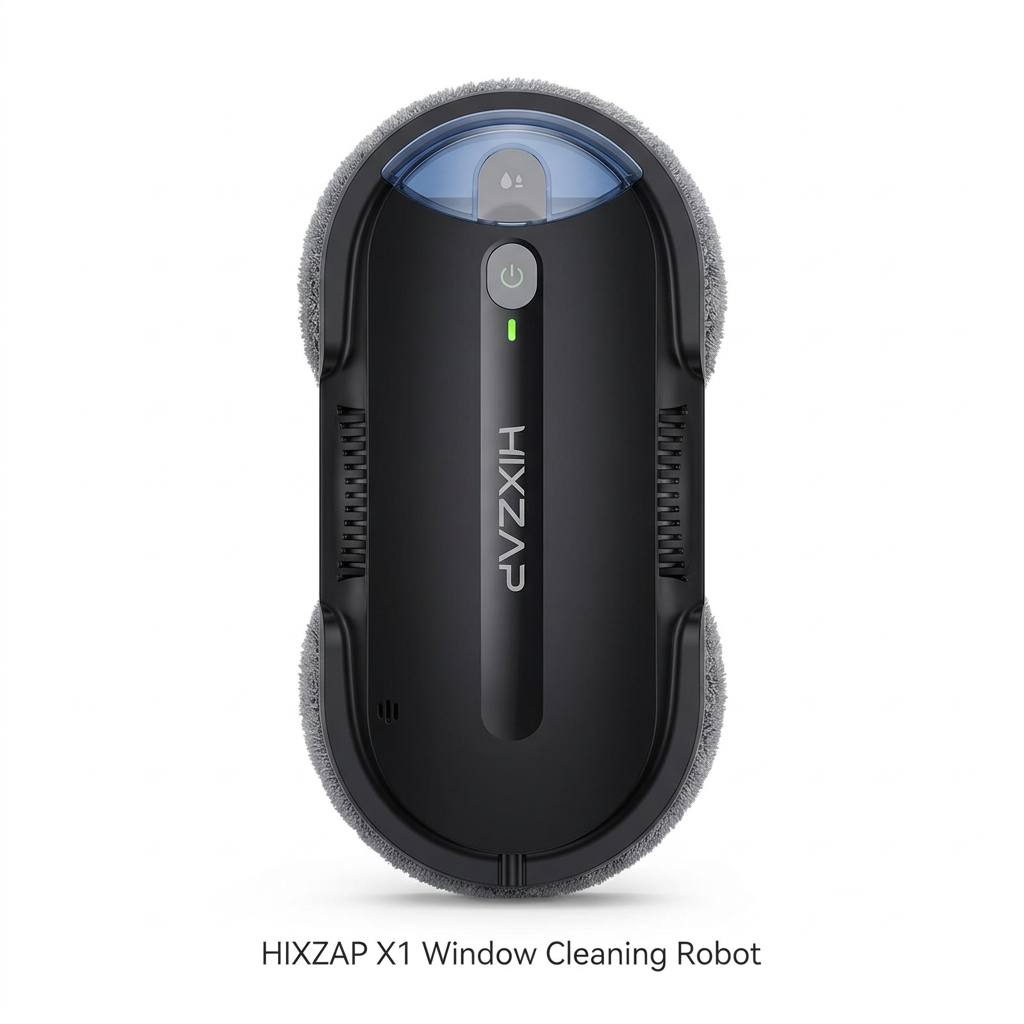
The HIXZAP X1 is a no-fuss dual-pad robot with variable suction from 4,800 to 6,400 Pa and a large 85 ml tank. It scrubbed everyday dust and fingerprints well.
Its round pads leave curved patches in every corner, it has fewer modes and no app, and I did not see a backup battery listed. For upstairs windows I would choose the X1 PRO instead.
Frequently asked questions
What is the best window cleaning robot in 2026?
For most people, the ECOVACS WINBOT W2S PRO Omni. It had the strongest grip, the cleanest edges and the highest safety score in my test, and its battery station lets it clean windows far from any outlet.
Do window cleaning robots really work?
Yes, on smooth glass they work well. They clean the middle of the pane as well as you would by hand, and the best ones also get close to the frames. Expect to touch up corners now and then, more so with round-pad robots.
Are window cleaning robots safe on outside windows?
The good ones are. Look for strong suction, a backup battery that holds the robot if the power fails and a safety tether clipped to something solid indoors. None of the 11 robots I tested fell during four weeks of use.
Can a window robot clean both sides of the glass at once?
No. Every robot in this guide cleans one side at a time, so you clean the inside, then move it outside or reach out with the tether attached.
Do I need a battery station or is a corded robot fine?
If your windows are all within a few meters of an outlet, a corded robot like the WINBOT W2S PRO is fine and costs less. If you have balconies, big glass walls or windows far from sockets, a station model such as the W2S Omni or the W2 PRO Omni is much easier to live with.
Can window robots clean mirrors and shower glass?
Yes. Compact robots like the WINBOT MINI 2 and streak-focused robots like the HUTT H10 did especially well on my bathroom mirror and frameless shower screen. Always use the tether, even indoors.
Will a window robot work on frameless glass?
Most will, because they detect the edge with sensors instead of bumping into a frame. I trusted the W2S PRO Omni, the MINI 2 and the HUTT H10 most on frameless glass.
What water should I use in a window robot?
Distilled water gives the fewest spots, especially in hard-water areas. Use the maker’s own solution if you want extra cleaning power, and avoid household glass cleaners that foam.
How often should I run a window robot?
Every two to four weeks keeps most glass in good shape with one pass. Outside windows in dusty or pollen-heavy areas may need it more often.
Is a budget window robot good enough?
For everyday cleaning near outlets, yes. The HIXZAP X1 PRO grips hard and has a backup battery, while the simpler HIXZAP X1 suits easy indoor glass. Both leave curved patches in the corners.
Which window robot is best for small windows?
The WINBOT MINI 2. It is about 21.5 cm across, stores in a drawer and has four corner brushes, so it cleans small and narrow panes far better than full-size robots.
For most homes, the best window cleaning robot is the ECOVACS WINBOT W2S PRO Omni. It held on hardest, cleaned closest to the frames and runs anywhere from its battery station, which made it the robot I trusted most on high and outside glass.
Choose the W3 Omni if you clean a lot of glass and never want to wash a pad again, the MINI 2 for small windows and bathrooms, the HUTT H10 if streaks drive you mad, and the HIXZAP X1 PRO if you want a safe robot on a budget.
Whichever you choose, use distilled water, wring out the pads and always clip the tether. Those three habits made a bigger difference to my glass than any spec on the box.
Senior home appliance tester
Emily has tested home appliances for a living since 2016, including five years as a test coordinator at a national consumer advocacy group, and has run HouseholdMe’s cleaning tests since 2021. She has a degree in industrial design, and for this guide she used 11 window cleaning robots for four weeks each on windows, sliding doors, mirrors and shower glass.
- Four weeks of hands-on testing per robot, 11 robots in total, in my own home
- HouseholdMe single reviews of the WINBOT W3 Omni, W2S Omni, W2S PRO Omni, W2 PRO Omni, W2S PRO, MINI 2, HIXZAP X1, X1 PRO, Tosima WA9C Pro and HUTT H10
- Manufacturer specifications and user manuals for all 11 robots
- US Consumer Product Safety Commission data on ladder-related injuries
- US Geological Survey data on hard water in American homes
- Buying guide published, based on hands-on testing of 11 window cleaning robots.