Turkish Coffee History and Culture: From Ottoman Palaces and Coffeehouses to Fortune-Telling Cups
Turkish coffee is one of the oldest ways of making coffee still in daily use, and one of the richest in ritual. Here is how coffee traveled from Ethiopia and Yemen to the Ottoman palace, how Istanbul's coffeehouses changed public life, how to brew it properly in a cezve, and the traditions, from fortune-telling to salty engagement coffee, that still surround every small cup.
We choose products independently. When you buy through links on HouseholdMe we may earn a commission, at no extra cost to you. Affiliate policy
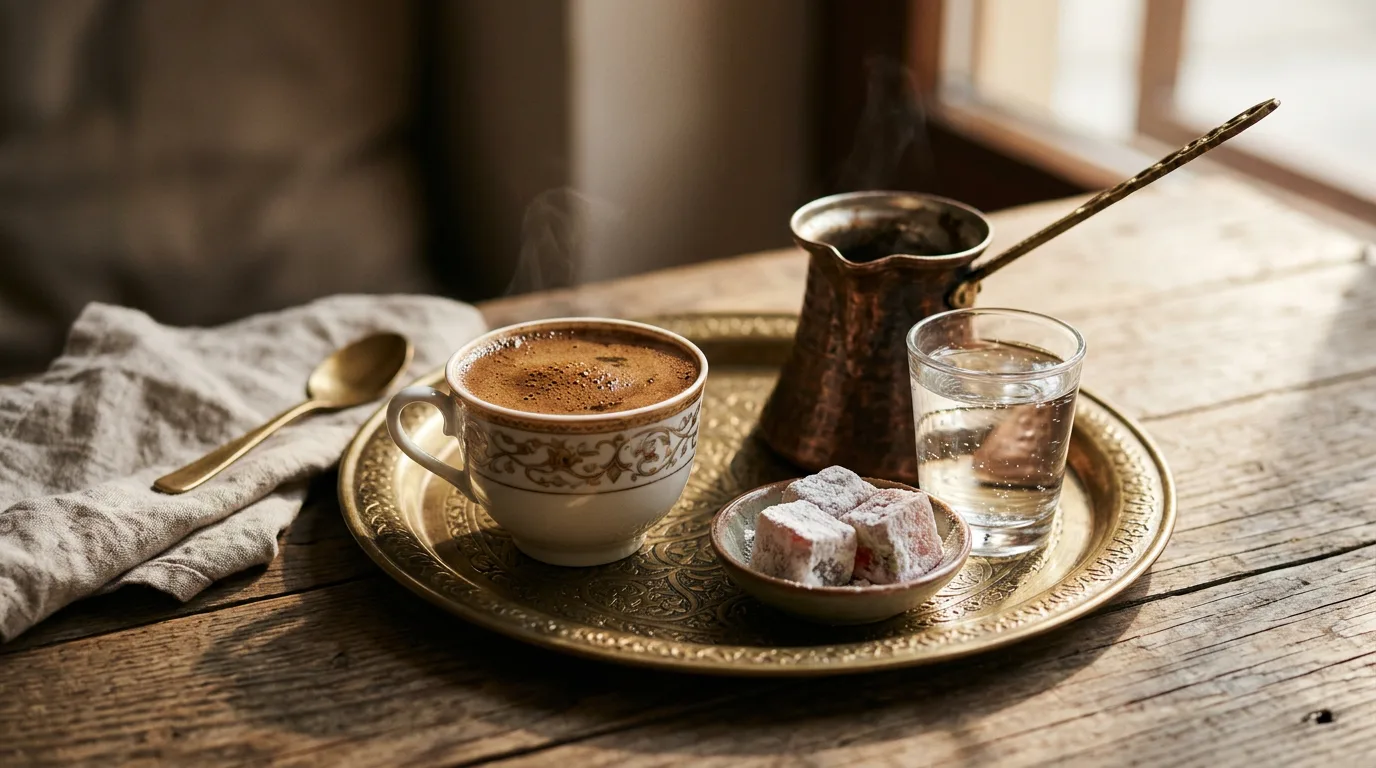
Turkish coffee is coffee ground to a fine powder, simmered slowly with water (and often sugar) in a small pot called a cezve, and served unfiltered with its foam on top. Coffee reached Istanbul from Yemen in the 16th century and quickly became a palace ritual and the heart of a new public institution, the coffeehouse, despite several attempts to ban it. Today Turkish coffee is served with a glass of water and often Turkish delight, read for fortunes in its grounds, and used in engagement customs. In 2013, Turkish coffee culture and tradition was added to UNESCO's list of Intangible Cultural Heritage.
Why I wrote this
My first real Turkish coffee came in a tiny cup with a thick cap of foam, a glass of cold water and a cube of rose-flavored Turkish delight. My host told me to drink the water first, sip the coffee slowly and leave the sludge at the bottom. Then she turned my cup upside down on its saucer and announced she would read my future once it cooled.
I've loved Turkish coffee ever since, not just the drink but everything around it. Few coffee traditions carry so much history, ceremony and social meaning in such a small cup.
Turkish coffee is also one of the most accessible coffee traditions to try at home. You need a small pot, a stove and finely ground coffee. No machine, no filters, no electricity required. And yet doing it well takes attention and a little practice, which is part of its charm.
This article tells that story, from the legends of coffee's discovery to Ottoman palace rituals, the rise and repeated banning of coffeehouses, and the customs that still surround Turkish coffee today. I'll also show you how to make it properly at home.
The origins of coffee: Ethiopia and its legends
Coffee's story begins long before Istanbul. The coffee plant grows wild in the forests of southwestern Ethiopia, and the Kaffa region is often linked to the word "coffee" itself.
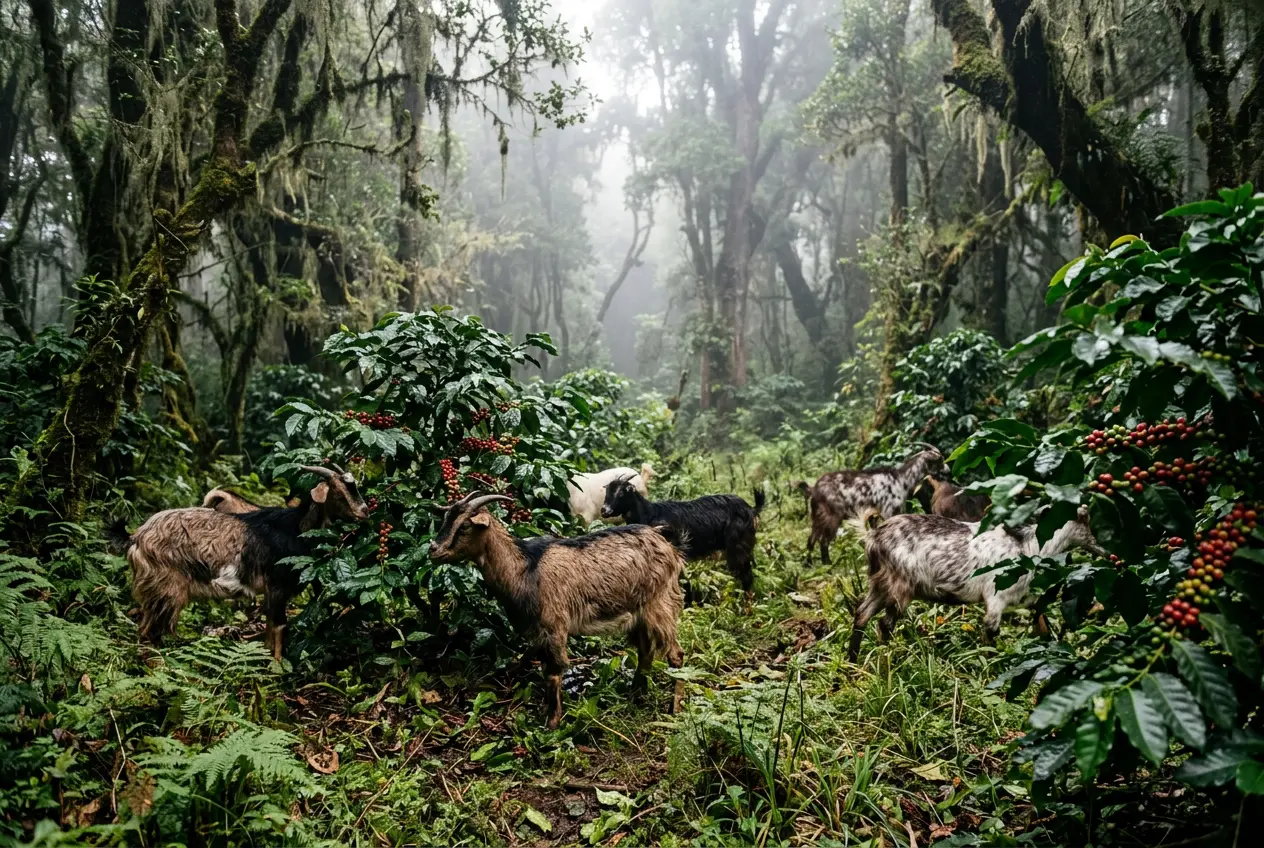
Several legends try to explain how people discovered coffee:
- Kaldi and his goats. The most famous tells of a goatherd named Kaldi who noticed his goats became unusually lively after eating red berries from a certain shrub. He tried them himself and felt the same energy.
- The Prophet Solomon. Another story says Solomon met people suffering from an unknown illness and, guided by the angel Gabriel, cured them with roasted coffee beans from Yemen.
- Sheikh al-Shadhili. A Sufi tale connects coffee with al-Shadhili of Mocha in Yemen, who is said to have survived in the desert on coffee and taught its benefits to his followers.
These are stories, not history, but they show how quickly coffee became important wherever it went.
Coffee wasn't always a drink. Early accounts describe people eating coffee cherries, mixing them with fat or into bread, and carrying them on journeys for energy. Coffee was also valued as a medicine.
From Ethiopia to Yemen
Coffee crossed the Red Sea to Yemen, where by the 15th century it had become a brewed drink. Sufi communities played a central role.
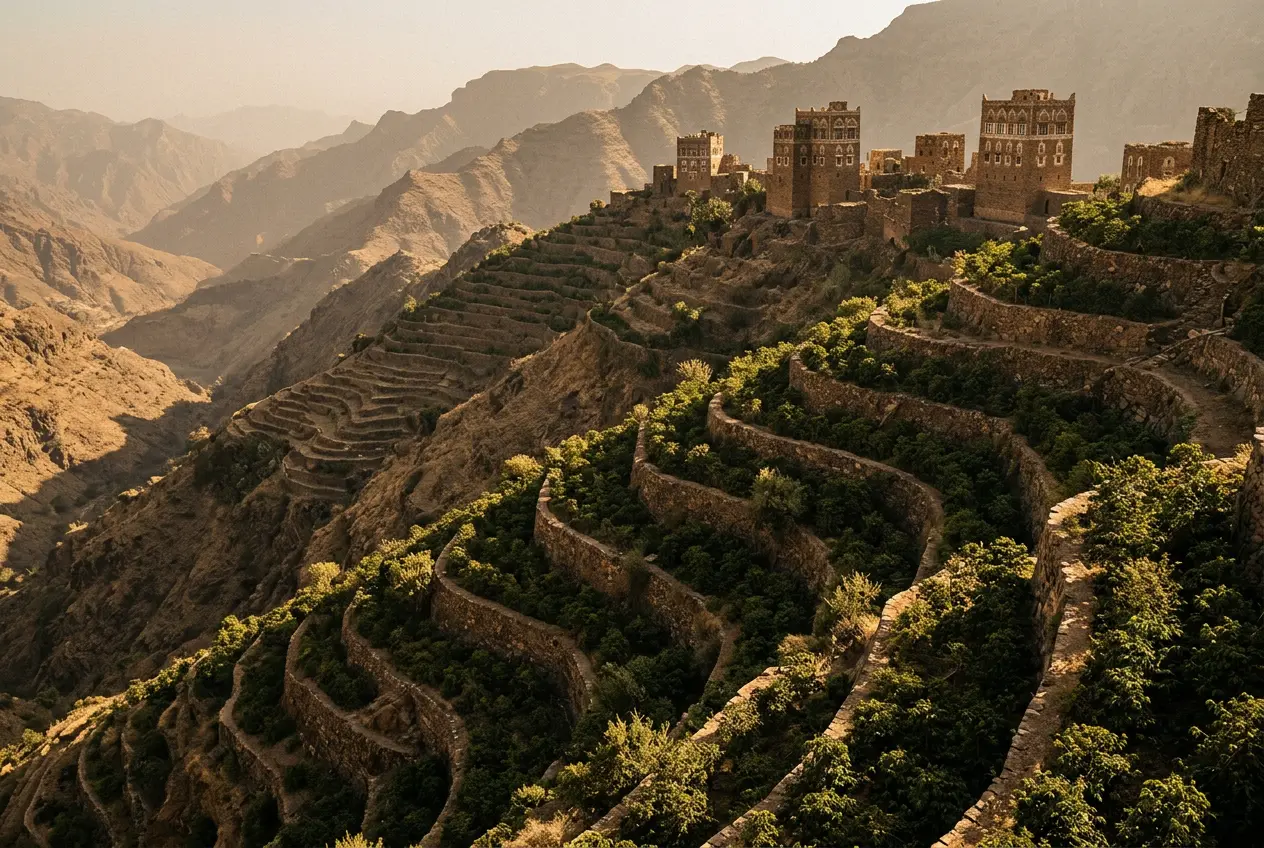
Sufi dervishes drank coffee to stay awake through long nights of prayer and devotion. Its stimulating effect made it ideal for people who needed to stay alert during extended worship.
Yemen also became the first place to cultivate coffee on a large scale, on terraced mountain slopes. The port of Mocha gave its name to coffee for centuries.
Through religious and trade links with Mecca and Medina, coffee spread across the Arabian Peninsula, to Cairo and Damascus, and from there into the growing Ottoman Empire.
Coffee reaches Istanbul
Coffee arrived in Istanbul in the 16th century and quickly found favor at the Ottoman court. One well-known account credits Özdemir Pasha, the Ottoman governor of Yemen, with introducing it to Sultan Suleiman the Magnificent. Other accounts link its arrival to Sultan Selim I after the Ottoman conquest of Egypt. The exact story is uncertain, but coffee spread fast.
At first it was an expensive luxury for the palace and wealthy households. As trade grew and supply increased, it became available to ordinary people, and soon it was part of everyday life across the empire.
The Ottomans developed their own way of preparing it: beans roasted, ground very fine and simmered in a small pot. That method became what the world now calls Turkish coffee.
Coffee in the Ottoman palace
In the palace, coffee was much more than a drink. It stood for hospitality, refinement and imperial status.
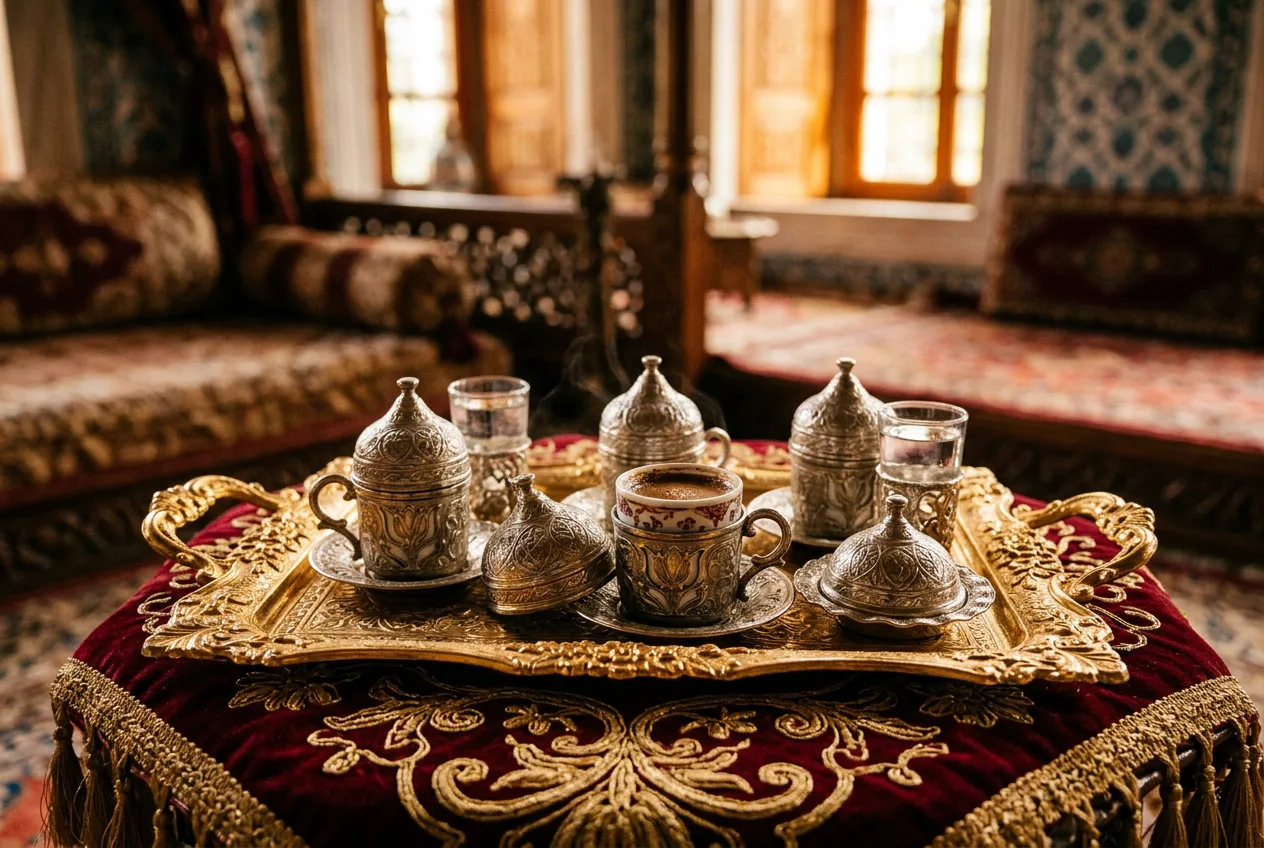
The palace had an official post called the kahvecibaşı, or chief coffee maker, who oversaw the preparation and serving of the sultan's coffee. It was a position of trust and prestige. One recorded palace coffee master, Nakşi Mustafa Ağa, was also known as a poet, a sign that coffee-making could be a respected art.
Even the water mattered. According to historical accounts, water for the sultan's coffee was brought from the Gümüşsuyu fountain in Istanbul.
Palace kitchen records list coffee purchases and prices, offering a glimpse of how highly it was valued and how its cost compared with everyday goods.
Coffee was central to formal occasions. When foreign ambassadors were received, serving coffee was a mark of Ottoman hospitality and respect. The equipment could be breathtaking: cups set in holders decorated with silver, gold and even emeralds, served on gold trays with embroidered cloths.
In the imperial harem, specially trained women prepared and served coffee according to careful customs. By the 19th century, wealthy households employed several people just for coffee, sometimes as many as seven, and the size of a family's coffee staff signaled its status.
The first coffeehouses
Coffeehouses appeared in Istanbul in the mid-16th century. Historical accounts place the first in Tahtakale, a busy commercial district near the Golden Horn.
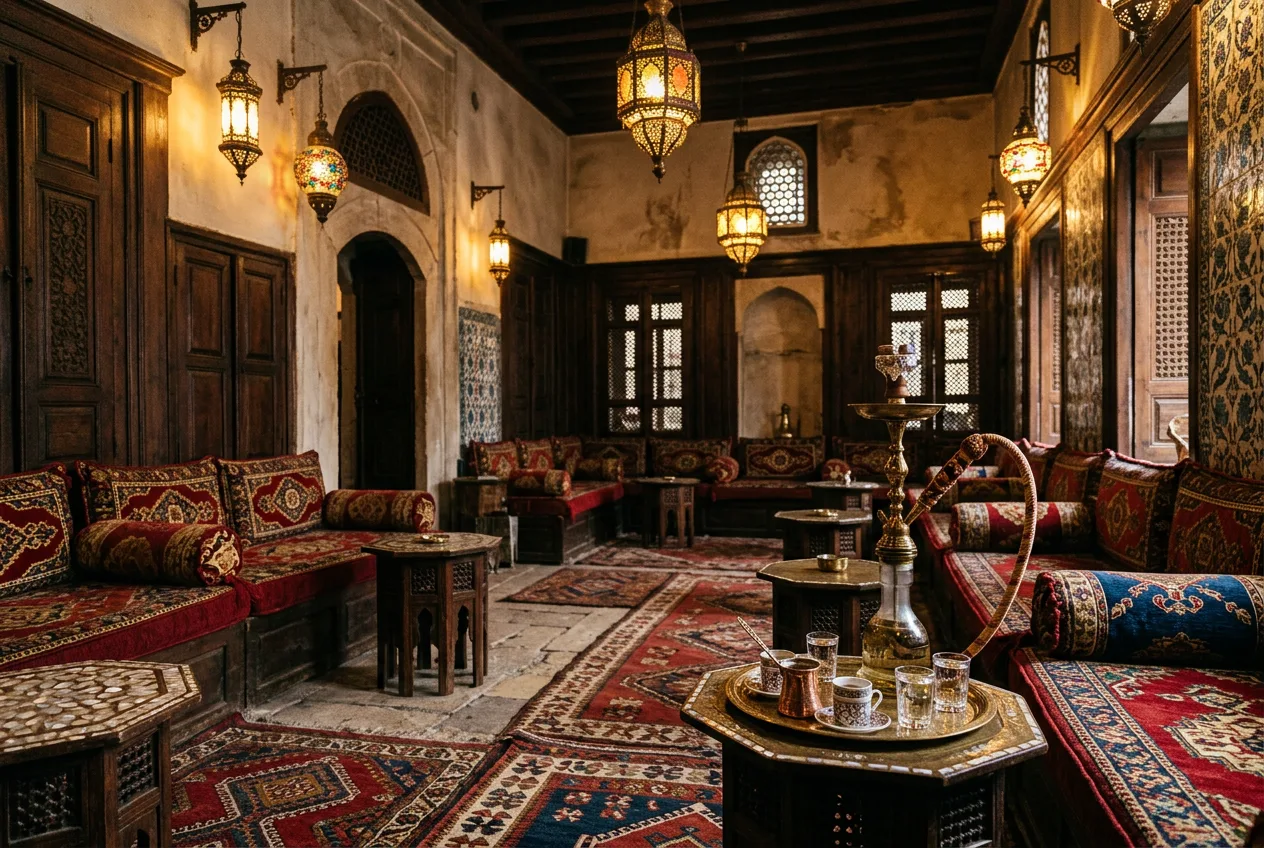
Two men, Hakem from Aleppo and Şems from Damascus, are traditionally credited with bringing the coffeehouse to Istanbul. Their idea caught on with astonishing speed. By the end of the 16th century, the city reportedly had more than 600 coffeehouses.
Coffeehouses created a completely new kind of public life. For the first time, people had a place outside home and mosque where they could gather, talk, swap news and spend time with others.
Early coffeehouses were often simple rooms with raised wooden benches, sedir, running along the walls and covered with carpets or cushions. Customers sat cross-legged, and the coffee maker worked at a hearth or brazier, often in view of everyone. Some of the grander coffeehouses had fountains, gardens or views over the Bosphorus.
They brought together people from different walks of life: Janissaries, merchants, poets, craftsmen and ordinary neighbors.
Life in the Ottoman coffeehouse
The coffeehouse was a social center, an entertainment venue and an informal newsroom all at once.
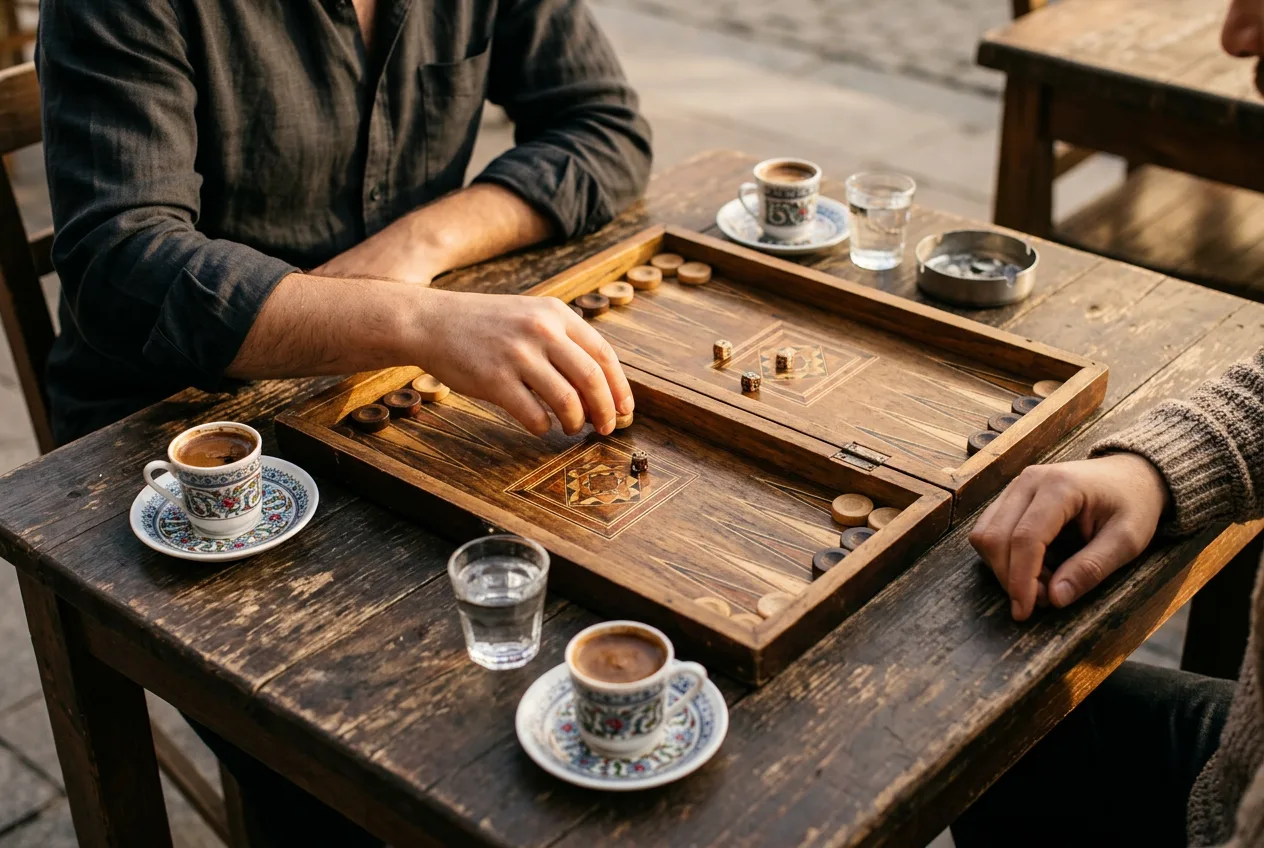
- Games: backgammon and chess were played for hours.
- Storytelling: professional storytellers, meddah, performed tales.
- Shadow plays: Karagöz and Hacivat puppet shows entertained crowds.
- Music and poetry: musicians performed, and folk poets shared and built their reputations.
- Politics: people debated news, prices, officials and the sultan's policies.
- Tobacco: once tobacco arrived, pipes and later hookahs became constant companions to coffee.
Some coffeehouses became intellectual hubs where books, magazines and later newspapers were read aloud or sold. These came to be called kıraathane, "reading houses," a name still used for traditional coffeehouses in Türkiye.
Neighborhood coffeehouses served everyday community needs, places to hear local news, discuss problems and keep up friendships.
There were specialized coffeehouses too. From the 17th century, Janissary coffeehouses became gathering places for members of the elite infantry corps, often decorated with symbols of their units such as ships, swords and fish. It was said to bring good luck to give a newly opened coffeehouse a canary.
Bans and controversies
Coffeehouses were popular, but authorities didn't always welcome them. Several Ottoman rulers, including Murad III, Ahmed I and Murad IV, are associated with periods when coffee or coffeehouses were banned or restricted.
The biggest worry was politics. Coffeehouses were places where people criticized officials and discussed the sultan's decisions. To rulers, crowded rooms full of opinionated men looked like potential centers of unrest, and they were hard to monitor.
Religious objections played a part too. Some scholars questioned whether coffee was permissible, debating whether its stimulating effect made it an intoxicant. There were also health concerns.
The debate wasn't unique to the Ottomans. Coffee faced similar challenges in Mecca in 1511, where an official briefly banned it, and later in parts of Europe, where some rulers and clergy were suspicious of coffeehouses as places of idle talk and sedition. Everywhere, the bans failed for the same reason: people loved coffee and the company that came with it.
Murad IV, in the 17th century, is remembered for especially harsh measures against coffee and tobacco. Yet none of the bans lasted. Coffee was already woven into daily life, and people kept drinking it. Eventually coffeehouses became a permanent part of Ottoman society.
Women and coffee
For a long time, Ottoman coffeehouses were male spaces. Miniature paintings and illustrations almost always show men gathered over coffee.
But women were very much part of coffee culture. They drank coffee at home, during visits to friends and family, and at the public baths, the hamam, which were important social spaces for women.
In the 18th century, Lady Mary Wortley Montagu, wife of the British ambassador in Istanbul, wrote about women's gatherings at the baths where coffee was served, comparing them to women's coffeehouses.
Coffee mattered so much in domestic life that some accounts claim a husband's failure to provide his wife with coffee could be grounds for divorce. Whether or not that was common, the story shows how essential coffee had become.
How coffee reached Europe
The Ottoman Empire was a major gateway for coffee into Europe. In the 17th century, merchants and travelers carried coffee west, first to Venice and other Italian ports, then onward.
Coffeehouses opened in London, Paris, Vienna and beyond, becoming centers of conversation, business and news, much like their Istanbul ancestors. I explore London's version in the history of the London coffeehouse.
European powers then wanted their own supply. They obtained coffee plants and established plantations in their colonies, in Java, the Caribbean and Latin America. By the 18th and 19th centuries, coffee had become a global commodity, and Brazil eventually became the world's largest producer. I tell that bigger story in the history of coffee.
Coffee in the Turkish language
Coffee is so deeply rooted in Turkish life that it's built into the language.
The Turkish word for breakfast, kahvaltı, comes from kahve (coffee) and altı (under or before). It literally means something like "before coffee," the food you eat before your coffee. Ironically, Turks usually drink tea at breakfast today and save coffee for later.
The word for the color brown, kahverengi, simply means "coffee color."
And the old phrase about a cup of coffee being remembered for forty years, "bir fincan kahvenin kırk yıl hatırı vardır," is still used to express gratitude and the lasting bond that hospitality creates.
The tools of traditional coffee making
Before coffee came pre-roasted and pre-ground, making it was a whole craft at home and in coffeehouses.
Green beans were roasted in long-handled pans or small drum roasters over fire, stirred constantly with a metal spoon. They were cooled in shallow trays, sometimes decorated wooden or brass bowls.
Grinding was done in brass hand mills or by pounding in large mortars, the origin of dibek coffee. The fine powder was stored in tin or brass containers.
Coffee was brewed in cezves of copper or brass, lined with tin to protect the coffee from the metal, and served in porcelain cups set in zarf holders of brass, silver or gold, depending on the household's wealth.
Many of these objects are now collectors' items and museum pieces, and Istanbul's Grand Bazaar is still full of beautiful hand-hammered cezves and grinders for anyone who wants to bring the tradition home.
What makes it Turkish coffee
Turkish coffee is defined by two things: an extremely fine grind and an unfiltered, slow-simmered brew.
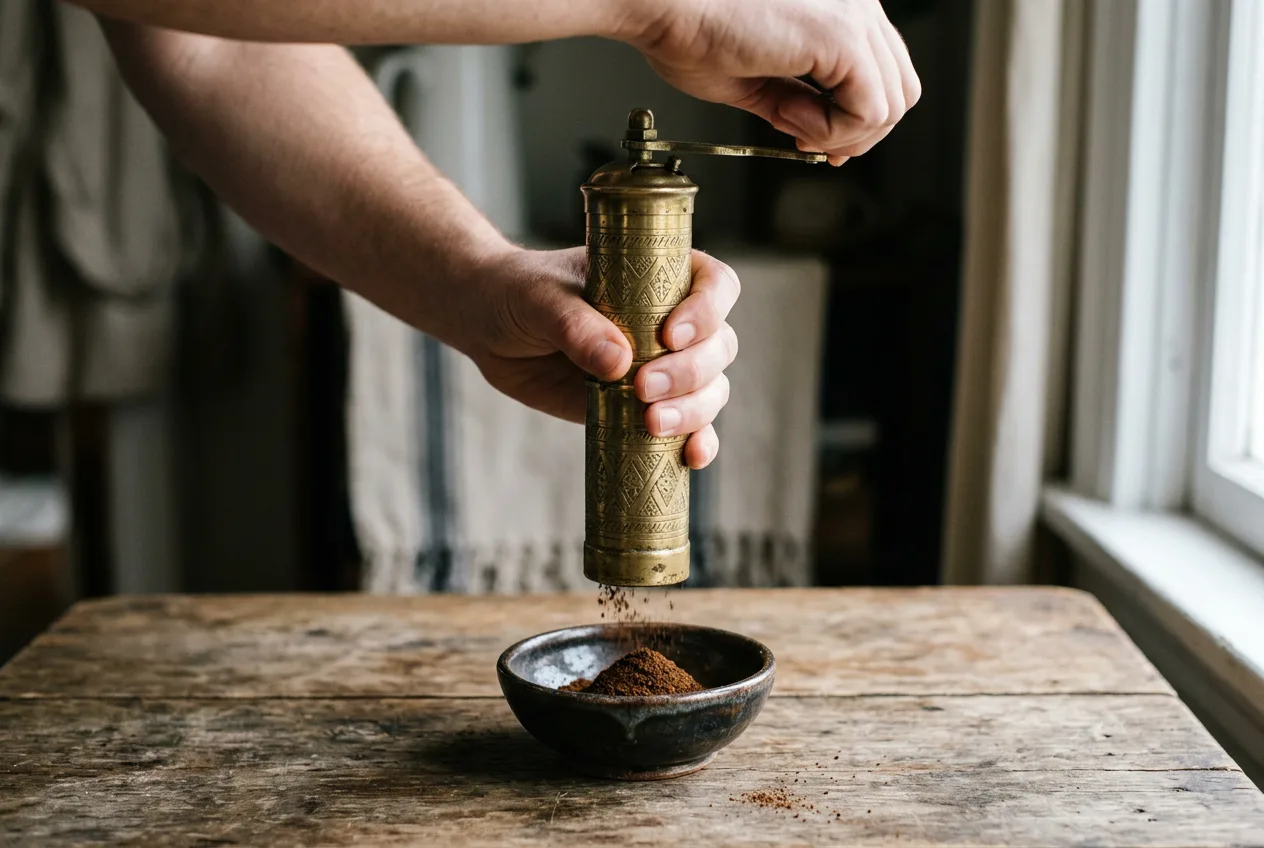
Medium roasting keeps the coffee sweet and aromatic rather than smoky, which matters because the brewing extracts a lot from the powder. Very dark roasts can turn harsh and bitter in a cezve.
The grind is finer than espresso. Traditional brass hand grinders, tall and cylindrical, were made for exactly this, and many home burr grinders can't reach it. Buying coffee ground specifically for Turkish coffee is perfectly normal, even in Türkiye.
How to make Turkish coffee
Making Turkish coffee is simple, but it rewards patience. The aim is a rich, smooth coffee with a thick layer of foam.
- MeasureFor each cup, use one small coffee cup (about 70 ml / 2.5 oz) of cold water and 1 to 2 heaped teaspoons (about 7 g) of powder-fine coffee.
- Add sugar now, if anySugar must go in before brewing; you can't stir it in afterwards. Decide how sweet you want it.
- Stir onceMix coffee, water and sugar in the cold cezve until the coffee is fully wet. Then stop stirring.
- Heat slowlyUse low to medium-low heat. Slow heating builds the foam. This takes a few minutes.
- Watch the foamAs it nears boiling, a dark foam rises. Spoon a little into each cup.
- Bring it up once moreReturn the cezve to the heat until it rises again, then remove it before it boils over.
- Pour gentlyPour slowly into the cups so the foam stays on top. Let it rest a minute for the grounds to settle.
| Turkish name | Sweetness | Sugar per cup (approx.) |
|---|---|---|
| Sade | Plain, no sugar | None |
| Az şekerli | A little sugar | About ½ teaspoon |
| Orta | Medium | About 1 teaspoon |
| Şekerli | Sweet | About 2 teaspoons |
Foam is the mark of a good Turkish coffee. Too much stirring during heating, too high a flame or letting it boil hard will kill the foam and make the coffee taste harsh.
Our tip: Use a cezve sized for the number of cups you're making. A pot that's too big spreads the coffee thin and you'll get little foam. One- and two-cup cezves are ideal for home.
Choosing a cezve
If you want to make Turkish coffee at home, the pot matters more than you might think.
- Copper heats quickly and evenly and is the traditional choice. Look for a tin or food-safe lining inside.
- Brass is also traditional and durable, with a similar feel.
- Stainless steel is easy to care for and works well on induction hobs if the base is magnetic.
- Size matters: pick one sized for the number of cups you usually make. A one- or two-cup cezve gives the best foam.
- Shape: a narrow neck and wider base help build and hold the foam.
- Handle: a long handle keeps your hand away from the heat and makes pouring easier.
There are also electric Turkish coffee machines that heat the coffee and stop just before it boils over. They're convenient and surprisingly good, though they lack the ritual of the stovetop.
Common mistakes when making Turkish coffee
| Mistake | What happens | Fix |
|---|---|---|
| Grind too coarse | Weak, gritty coffee with little foam | Use powder-fine Turkish grind |
| Using hot water | Brews too fast; poor foam | Always start with cold water |
| Stirring while heating | Breaks up the foam | Stir only at the start |
| Heat too high | Bitter, burnt taste; boils over | Low to medium-low heat |
| Letting it boil hard | Foam collapses; harsh flavor | Lift off as soon as it rises |
| Adding sugar afterwards | Stirring stirs up the grounds | Add sugar before brewing |
Turkish coffee compared with other coffees
| Coffee | Grind | Filtered? | Texture | Serving |
|---|---|---|---|---|
| Turkish coffee | Powder | No | Thick, foamy, with sediment | Small cup, ~70 ml |
| Espresso | Fine | Yes (metal basket) | Syrupy with crema | ~30–60 ml |
| French press | Coarse | Metal mesh | Full-bodied, some sediment | Mug |
| Filter coffee | Medium | Paper | Clean, light | Mug |
Close relatives of Turkish coffee are found across the region. Greek coffee is made the same way in a briki. Bosnian coffee is often brewed by adding coffee to already-boiling water and served on a copper tray. Armenian and Arab traditions have their own versions, and Arabic coffee, often spiced with cardamom and very lightly roasted, is quite different again. I compare more traditions in coffee culture around the world.
How Turkish coffee is served
Turkish coffee is served in small cups called fincan. Originally they had no handles and sat in decorative metal holders called zarf. Handled cups with saucers became common later.
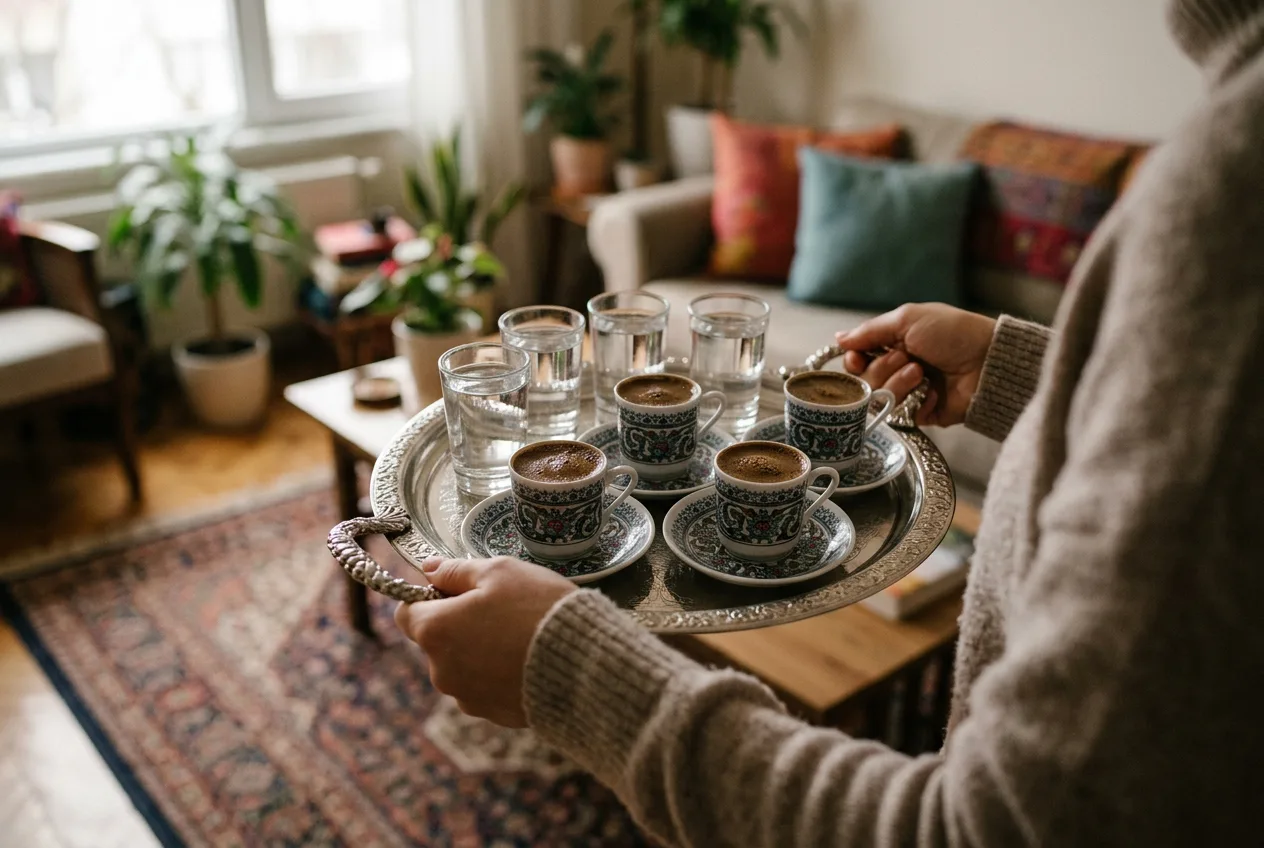
It almost always comes with a glass of water. Drink some water first to clean your palate so you can taste the coffee properly. Some people sip water between sips of coffee too.
Turkish delight, lokum, is the classic companion. Its soft sweetness balances the intense coffee. Sometimes you'll get a chocolate or a small sweet instead.
In homes, the host usually serves the coffee on a tray, offering it first to the oldest or most honored guest. Cups are filled carefully so each one gets its share of foam, which is considered a sign of a well-made coffee and of respect for the guest.
Turkish coffee isn't for gulping. It's sipped slowly, often with conversation, and you stop before the thick layer of grounds at the bottom. A popular Turkish saying holds that "a cup of coffee is remembered for forty years," a reminder that sharing coffee creates friendship and obligation.
Fortune-telling with coffee grounds
One of the best-loved parts of Turkish coffee culture is reading fortunes in the grounds left in the cup, called telve. Because the coffee is unfiltered, a thick layer remains after drinking.
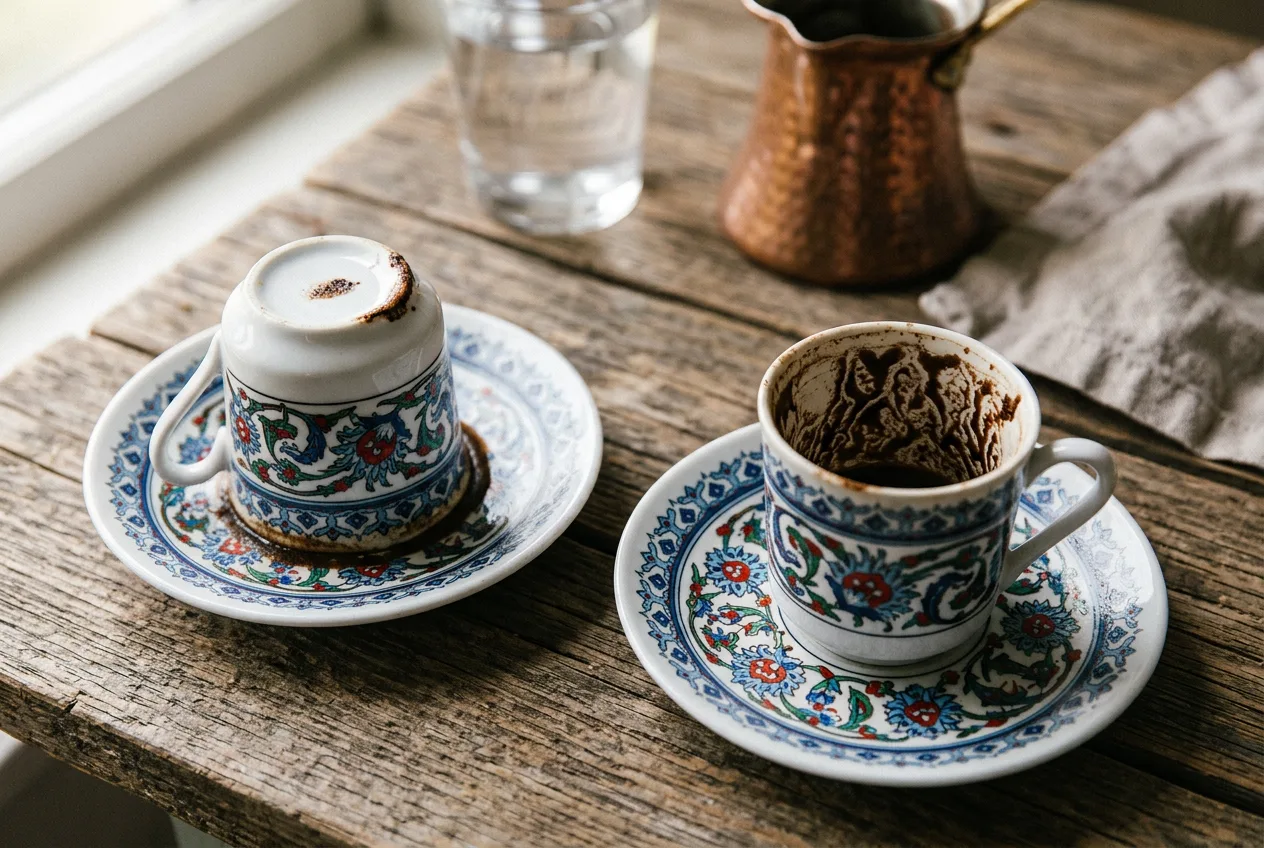
- Finish your coffeeLeave the grounds in the cup.
- Make a wishSome people swirl the cup gently while thinking of a question.
- Turn it overPlace the saucer on top and flip the cup upside down onto it.
- Let it coolWait until the cup is cool and the grounds have dried into patterns.
- Read the shapesTurn the cup upright and interpret the shapes and patterns inside.
Shapes near the drinker's side of the cup are often read as relating to emotions, love and relationships. Shapes further away might concern work, travel or practical matters. Readers look for familiar forms: birds, fish, rings, roads, animals.
There's no scientific basis to any of it, and most people treat it as entertainment and an excuse for a good conversation. The practice became especially popular among women from the 17th century, alongside palm reading and other forms of fortune-telling. It's related to tasseography, the reading of tea leaves and other residues.
Reading is usually done by a friend or relative rather than a professional, and a good reader is as much a storyteller as a fortune teller. Part of the fun is how the reading reflects what's going on in the group: a hint of romance for the newly single friend, a journey for the one planning a trip. Some traditions say you shouldn't read your own cup, and that a reading isn't valid until the cup has fully cooled.
A Turkish saying sums up the playful spirit: "Don't believe in fortune-telling, but don't be left without one."
Turkish coffee customs today
Turkish coffee is still part of everyday life in Türkiye: at home, in restaurants and cafés, at hair salons and in countless social settings. It's closely tied to hospitality. Offering a guest coffee is a basic courtesy.
The salty engagement coffee
The most famous modern custom happens during the traditional visit when a groom's family comes to ask for a bride's hand, known as kız isteme. The bride-to-be prepares and serves Turkish coffee to the guests.
In many families, she adds salt to the groom's cup instead of sugar. He's expected to drink it without complaint, showing patience, good humor and devotion. It's usually done with lots of laughter, and it symbolizes the couple's willingness to accept each other, salt and all.
Fortunes among friends
Coffee fortune-telling remains a popular way to end a gathering among friends. Some cafés even employ fortune readers.
The Hürrem Sultan story
A popular story says Hürrem Sultan, wife of Suleiman the Magnificent, found coffee too strong and preferred it with Turkish delight, in some versions mixed right into the cup. A sweet "Hürrem Sultan coffee" is sold today on the back of this tale. It's a charming anecdote, but there's no solid historical evidence for it.
Coffee, tea and modern Türkiye
Here's a twist many visitors don't expect: today, Türkiye drinks far more tea than coffee. Small tulip-shaped glasses of black tea are everywhere, from offices to ferry decks.
The shift happened in the 20th century. With the collapse of the Ottoman Empire after the First World War, Türkiye lost Yemen and other coffee-producing territories, and imported coffee became expensive and sometimes scarce. Meanwhile, the young Turkish Republic encouraged tea growing in the Rize region on the Black Sea coast, providing a homegrown, affordable alternative.
Tea became the everyday drink. Turkish coffee shifted toward something special: the cup you share after a meal, offer a guest, drink at a celebration or have your fortune read from.
In recent decades, coffee has been booming again. Istanbul now has a lively specialty coffee scene, international chains and modern cafés, alongside traditional coffeehouses and the old kıraathane where men still play backgammon and cards. Many young Turks drink filter coffee and lattes during the day and Turkish coffee with family on weekends.
Being a good guest over Turkish coffee
If you're offered Turkish coffee in someone's home, a few small gestures go a long way.
- Accept the offer. Coffee is hospitality; saying yes is part of the welcome.
- Say how you take it. Your host will ask "sade, orta, şekerli?" so they can sweeten it before brewing.
- Drink the water first. It's there to refresh your palate.
- Sip slowly and talk. The coffee is an excuse for conversation.
- Leave the grounds. Stop when you reach the thick layer at the bottom.
- Join in the fortune-telling. If someone offers to read your cup, play along and enjoy it.
- Say thank you. "Elinize sağlık" ("health to your hands") is a lovely way to thank someone for food or drink they've made.
How I make Turkish coffee at home
I keep a small copper two-cup cezve and a bag of freshly ground Turkish coffee in my kitchen for weekend afternoons.
I use cold filtered water measured with the actual cups I'll serve in, about 7 grams of coffee per cup, and a little sugar for my wife's cup only. One stir, then low heat on the smallest burner. I spoon the first foam into the cups, let the coffee rise once more, and pour slowly.
It takes about five minutes, and it's one of the most relaxing coffee rituals I know. A glass of water and a piece of lokum on the side, and suddenly a gray Sunday afternoon feels a little more like Istanbul.
Types of Turkish coffee
Turkish coffee isn't a single recipe. Many regional and modern variations exist:

| Type | What it is |
|---|---|
| Dibek coffee | Beans pounded in a large stone or wooden mortar; a softer, distinct texture |
| Menengiç coffee | Made from roasted terebinth (wild pistachio) fruit, not coffee; from southeastern Türkiye |
| Mastic coffee | Flavored with mastic resin for a piney, aromatic note |
| Mırra | An intensely strong, bitter coffee from the southeast, boiled repeatedly and served in tiny amounts |
| Lavender coffee | Infused with lavender for a floral aroma |
| Saffron coffee | Scented with saffron |
| Chickpea coffee | Made from roasted chickpeas instead of coffee beans |
Sand and embers
How the coffee is heated also changes the result. In the traditional sand method, the cezve is nestled into a tray of hot sand, which surrounds the pot with gentle, even heat and makes it easy to control the foam. Some vendors and restaurants still do this, and it's wonderful to watch.
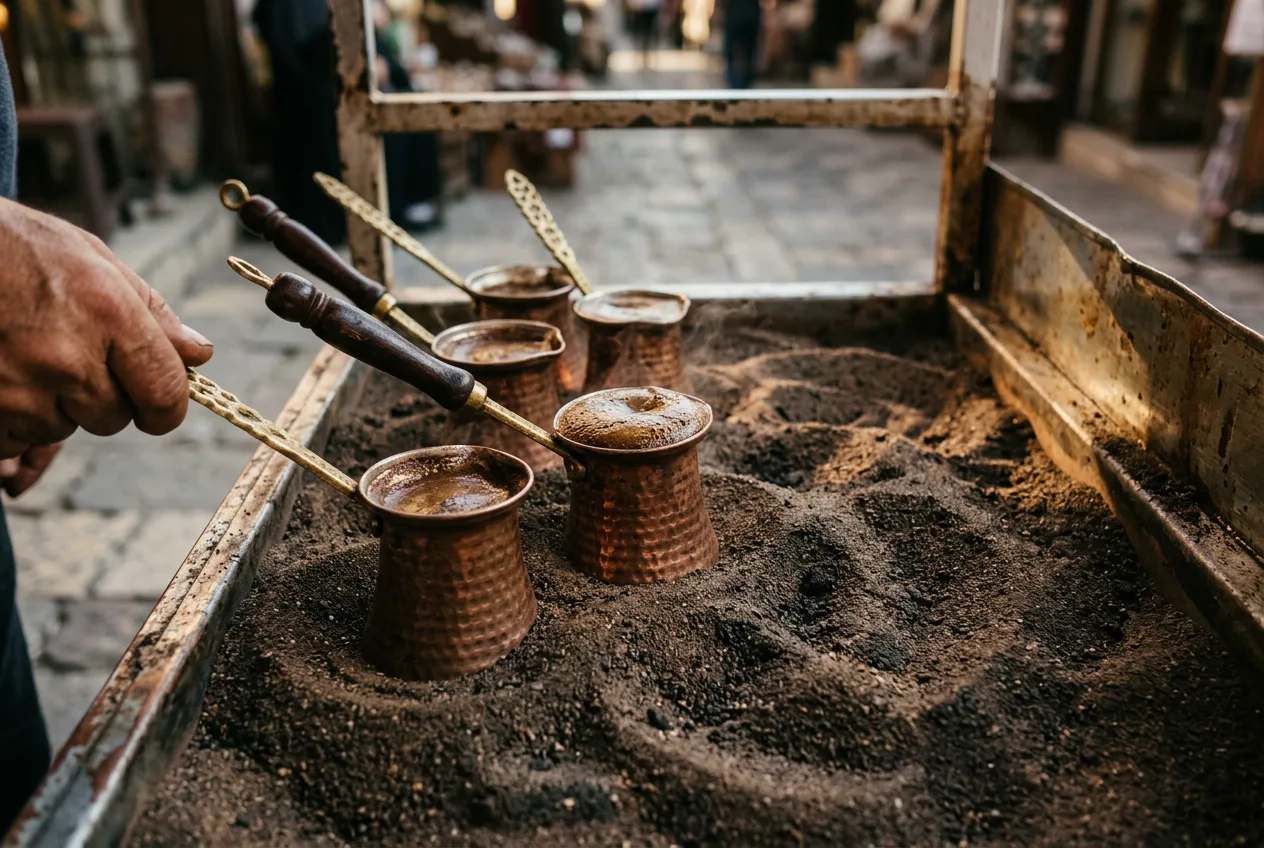
Others brew over glowing embers, which give direct but controllable heat. Both methods produce subtly different textures and flavors from a gas stove.
Coffee in Ottoman art and literature
Coffee left a rich mark on Ottoman culture. Miniature paintings show crowded coffeehouses with men lounging on raised benches, sipping from small cups, playing games and listening to musicians. These images are some of the best evidence we have of what early coffeehouses looked like.
Poets wrote verses praising coffee and the conversation it inspired, and others mocked coffeehouse idlers and gossips. Travelers from Europe described the coffeehouses of Istanbul in letters and travel books, often with fascination, helping spread the idea of the coffeehouse westward.
The Karagöz and Hacivat shadow plays, performed in coffeehouses, often poked fun at daily life, officials and social types, and coffee itself sometimes appeared in the jokes. The coffeehouse wasn't just a setting for culture; it shaped what that culture talked about.
Coffee ceremonies at the source
It's worth remembering that the lands where coffee began still have their own living coffee rituals.
In Ethiopia, the traditional coffee ceremony is a central part of hospitality. Green beans are washed and roasted in a pan over charcoal, the fragrant smoke is wafted toward guests, the beans are ground by hand and brewed in a clay pot called a jebena. Coffee is served in small handleless cups, often in three rounds, with incense burning nearby. The whole ceremony can take an hour or more.
In Yemen, coffee culture includes qishr, a drink made from dried coffee cherry husks, often spiced with ginger, alongside coffee made from the beans.
Turkish coffee is one branch of a much older family tree. The cezve, the small cups and the emphasis on sharing coffee slowly with guests all echo traditions that began in Ethiopia and Yemen centuries ago.
Turkish coffee as cultural heritage
Turkish coffee is much more than a brewing method. It ties together centuries of history, social customs, craftsmanship, hospitality and everyday relationships.
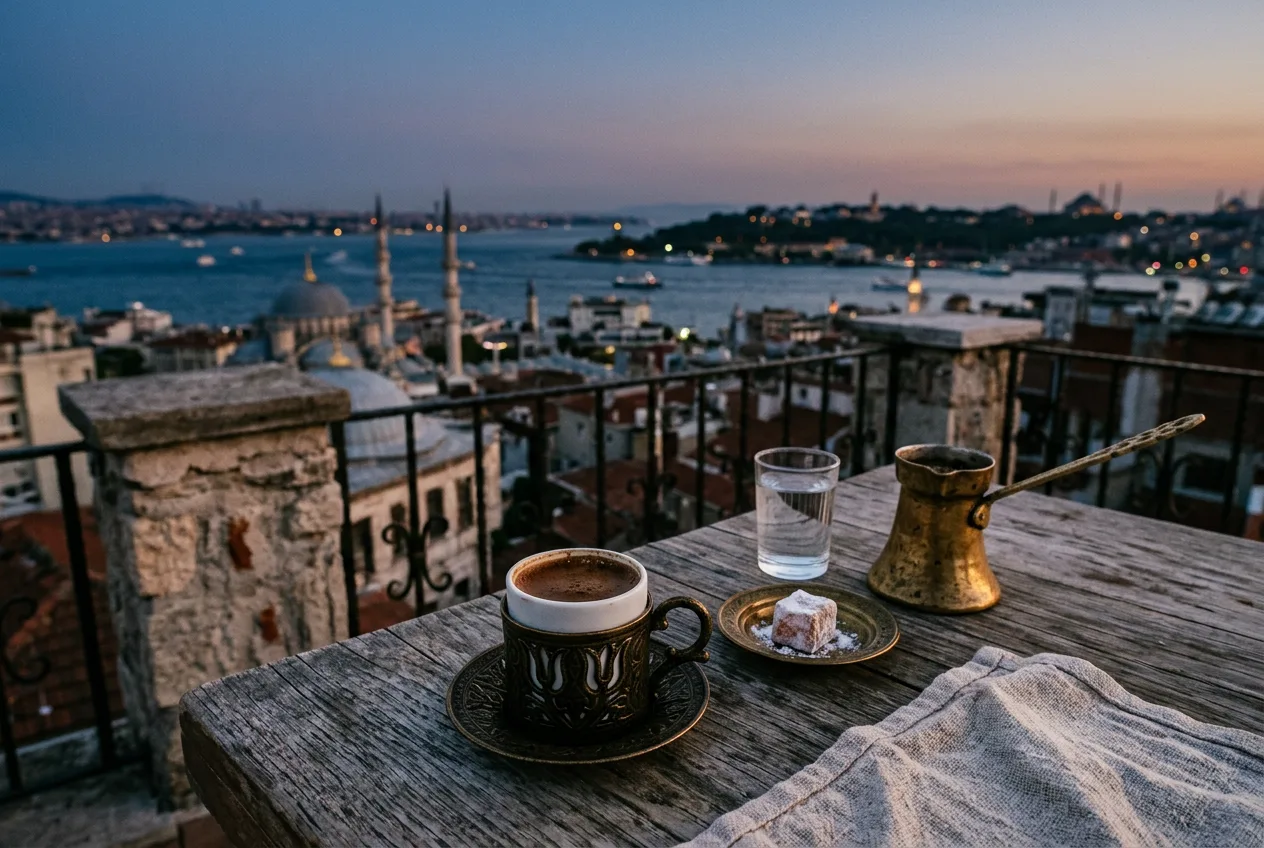
In 2013, "Turkish coffee culture and tradition" was inscribed on UNESCO's Representative List of the Intangible Cultural Heritage of Humanity. The listing recognizes the whole tradition: the preparation, the serving customs, the social gatherings and the knowledge passed down through generations.
Turkish coffee has kept its cultural importance despite changes in technology, global trade and modern life. From palace receptions to neighborhood gatherings, from engagement visits to casual chats with friends, it still creates moments for people to connect.
Making it requires attention and patience. Drinking it encourages people to slow down and spend time together. It's both a drink and an institution.
Similar coffee traditions exist across the region, in Greece, the Balkans, the Middle East and the Caucasus, each with its own name, pot and customs. They share the same roots and the same spirit of hospitality.
A note on health
Because Turkish coffee is unfiltered and boiled, it contains more of coffee's natural oils, including cafestol, which can raise LDL cholesterol when consumed regularly in large amounts. A cup or two a day is unlikely to matter for most people, but if your cholesterol is high, it's worth knowing. I explain this in coffee and heart health.
A small cup of Turkish coffee contains roughly as much caffeine as a single espresso, depending on how much coffee is used.
Key takeaways
- Coffee originated in Ethiopia and became a brewed drink among Sufis in Yemen.
- It reached Istanbul in the 16th century and became a symbol of Ottoman palace hospitality.
- Istanbul's first coffeehouse opened in Tahtakale; by century's end there were reportedly over 600.
- Coffeehouses became centers of games, storytelling, poetry, news and politics, and were repeatedly banned.
- Women drank coffee at home and in the baths; it was central to domestic life.
- Turkish coffee uses powder-fine coffee, slow heating in a cezve and no filter; foam is essential.
- It's served with water and often Turkish delight, and sipped slowly.
- Fortune-telling with the grounds and salty engagement coffee remain beloved customs.
- UNESCO recognized Turkish coffee culture and tradition in 2013.
Frequently asked questions
What is Turkish coffee?
Coffee ground to a fine powder, simmered with water (and optional sugar) in a cezve, and served unfiltered with foam on top.
When did Turkish coffee start?
Coffee reached Istanbul in the 16th century, and the Ottoman method of preparing it developed from then on.
Why is Turkish coffee served with water?
Drinking water first cleanses your palate so you can taste the coffee fully.
Do you drink the grounds in Turkish coffee?
No. Let the grounds settle and stop drinking before you reach the thick layer at the bottom.
Can I add sugar after brewing?
Traditionally no. Sugar is added before brewing, so you choose sweetness when ordering: sade, az şekerli, orta or şekerli.
How do you read Turkish coffee fortunes?
Flip the cup onto its saucer, let it cool, then interpret the shapes the grounds leave inside. It's done for fun, not as a real prediction.
Why does the bride put salt in the groom's coffee?
It's a playful engagement tradition: the groom drinks it without complaint to show patience and affection.
Is Turkish coffee stronger than espresso?
It tastes intense and has a similar amount of caffeine to a single espresso, but it's brewed differently and contains more fine particles and oils.

- Michael Reynolds, notes on Turkish coffee traditions and brewing at home
- Turkish coffee culture and tradition, UNESCO Intangible Cultural Heritage
- Turkish coffee, Wikipedia
- History of coffee, Wikipedia
- Coffeehouse, Wikipedia
- Tasseography, Wikipedia
Related guides
History of coffee The history of the London coffeehouse Coffee culture around the worldWritten by Michael Reynolds. Last updated November 20, 2026.