Super-automatic vs semi-automatic espresso machines: which type is right for you?
One type hands you a portafilter and a steam wand; the other hands you a row of drink icons. I lived with a semi-automatic, the Breville Barista Express, and a super-automatic, the Philips 3200, for four weeks each. I weighed every dose, timed every routine and counted every step to find out which type belongs in your kitchen.
We choose products independently. We may earn a commission through links on this page; your price stays the same. Affiliate policy
Jargon helpNew to espresso? Tap any dotted term to see what it means.
In this comparison
If several people share the machine, everyone wants a different drink and nobody wants a learning curve, buy a super-automatic like the Philips 3200. It makes five drinks at one touch and its milk jug rinses clean in seconds. If espresso itself is your hobby, buy a semi-automatic like the Breville Barista Express. It used almost twice the coffee per shot, pulled the fuller, sweeter espresso and lets you pour real latte art, after a few days of practice.
The two types I tested
Specs checked November 14, 2026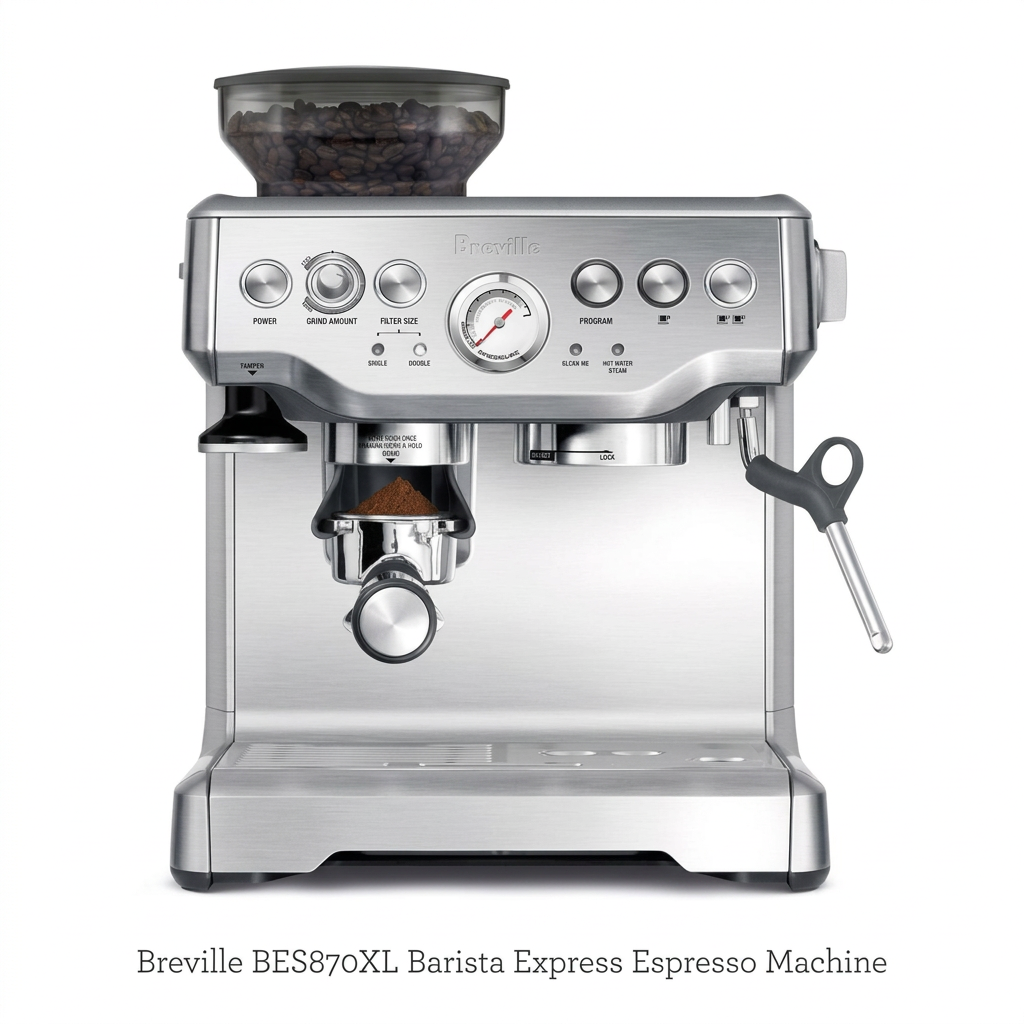
You grind, dose, tamp and steam. A pressure gauge and manual wand teach you real espresso and latte art.
Check price on Amazon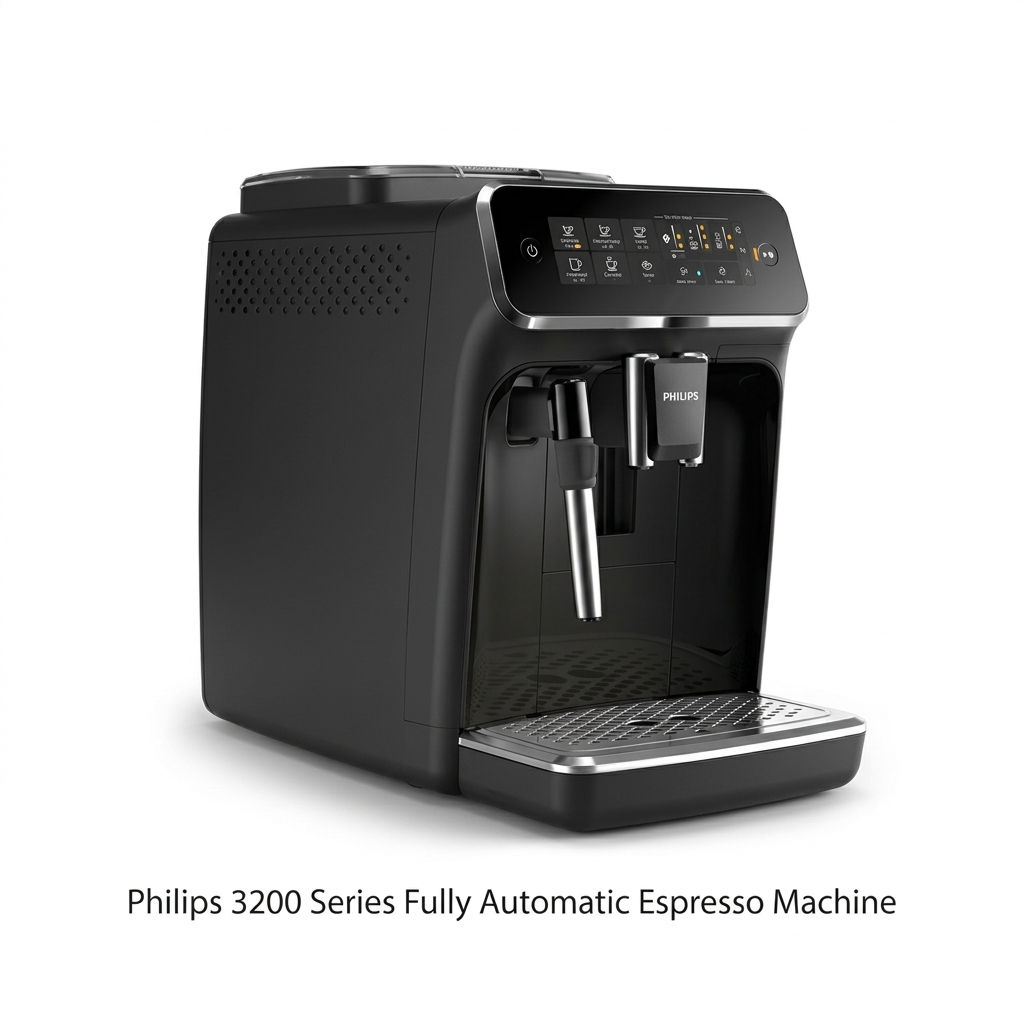
Press one icon and it grinds, brews and froths. Five one-touch drinks and a tubeless LatteGo milk jug.
Reveal Today’s DealSuper-automatic vs semi-automatic at a glance
- A semi-automatic machine controls the water; you control the coffee. A super-automatic does everything from beans to cup.
- Choose semi-automatic if you want the strongest, best-tasting espresso and latte art, and you enjoy a hands-on routine.
- Choose super-automatic if several people want different drinks at one touch and cleaning time matters more than the last bit of flavor.
- Most of the difference in the cup comes from dose: the semi-automatic I tested used almost twice as much coffee per shot.
What each type actually is
The names are confusing, so let’s start simple. Both types push hot water through finely ground coffee at high pressure. The difference is who does the work around that moment.
A semi-automatic✕Semi-automatic espresso machineA machine that controls the pump and water, while you grind, dose, tamp, lock in the portafilter and usually steam the milk yourself. machine, like the Breville Barista Express, controls the pump and temperature. You grind into a portafilter✕PortafilterThe handle with a metal basket that holds the ground coffee. You lock it into the machine’s group head to brew., level and tamp the coffee, lock it in, start and stop the shot, and steam the milk with a wand.
A super-automatic✕Super-automatic espresso machineAlso called fully automatic or bean-to-cup. It grinds, doses, tamps, brews, froths milk and ejects the used puck by itself at the press of a button. machine, like the Philips 3200, does all of that inside the box. You press an icon, and it grinds, doses, compresses, brews, froths the milk and drops the used puck in a drawer.
| Step | Semi-automatic | Super-automatic |
|---|---|---|
| Grind beans | You, into the portafilter | Machine |
| Dose | You, ideally by weight | Machine, set by strength level |
| Tamp | You, by hand | Machine, inside the brew group |
| Start and stop the shot | You, or a programmed button | Machine |
| Froth milk | You, with a steam wand | Machine, automatic frother |
| Dispose of grounds | You, knock out the puck | Machine, into a drawer |
| Hands-on steps per latte | About 8 | 1 |
There’s a middle ground too. Machines like the Breville Barista Touch are still semi-automatic, because you tamp, but they steam milk for you. I’ll come back to that when we get to milk.
Our tip: If a machine has a removable portafilter with a handle, it’s semi-automatic; if it has a bean hopper and drink icons but no handle, it’s super-automatic.
Head to head
I lined up my two test machines row by row. The better result is marked, based on four weeks with each and the manufacturers’ specs.
Remember that the tally is not my verdict. If you only care about espresso flavor, one row outweighs the rest; if you care about mornings with three people and one machine, another does.
| Spec | Breville Barista Express | Philips 3200 |
|---|---|---|
| Espresso body and sweetnessmy tasting, same beans | Syrupy, café-style ✓ Best | Mild, lungo-style |
| Coffee dose per shotweighed | About 15.4 g ✓ Best | About 8 g |
| Milk texture | Glossy microfoam ✓ Best | Creamy, automatic foam |
| Latte art | Yes, with practice ✓ Best | No |
| One-touch drinks | None | 5, plus hot water ✓ Best |
| Hands-on steps per latte | About 8 | 1 ✓ Best |
| Time to first good drink | About 2 days of dialing in | First morning ✓ Best |
| Milk cleaning | Wipe and purge the wand | Rinse two jug parts ✓ Best |
| Grinder | Steel conical, 16 steps ✓ Best | Ceramic, 12 steps |
| Two drinks at once | Double shot only | Espresso and coffee ✓ Best |
| Water tank | 67 oz ✓ Best | 61 oz |
| Footprintwidth × depth | 12.5 × 13.8 in | 9.7 × 17 in |
| Build | Brushed stainless steel ✓ Best | Mostly plastic |
| Rows won | 7 | 5 |
Semi-automatic vs super-automatic pros and cons
Breville Barista Express
- Fuller, sweeter espresso from a bigger dose
- Real microfoam and latte art with practice
- You learn exactly how espresso works
- A learning curve of a few days
- About 8 hands-on steps per latte
- More daily cleaning around the wand and puck
Philips 3200
- One touch per drink for everyone in the house
- Tubeless milk jug that rinses clean in seconds
- Consistent cups with no skill needed
- Milder espresso from a small dose
- Foam is creamy but not café microfoam
- Mostly plastic body and a small drip tray
Who should buy which type?
- Espresso lovers who want the most flavor
- People who want to learn latte art
- Anyone who enjoys a hands-on morning ritual
- Households where everyone drinks something different
- Busy mornings with no time to dial in
- Anyone who wants milk drinks without a learning curve
Design, size and build
Put the two side by side and you can tell which is which instantly. The Barista Express looks like a small café machine, with a round pressure gauge, chunky dials, a portafilter handle and a steam wand on the side.
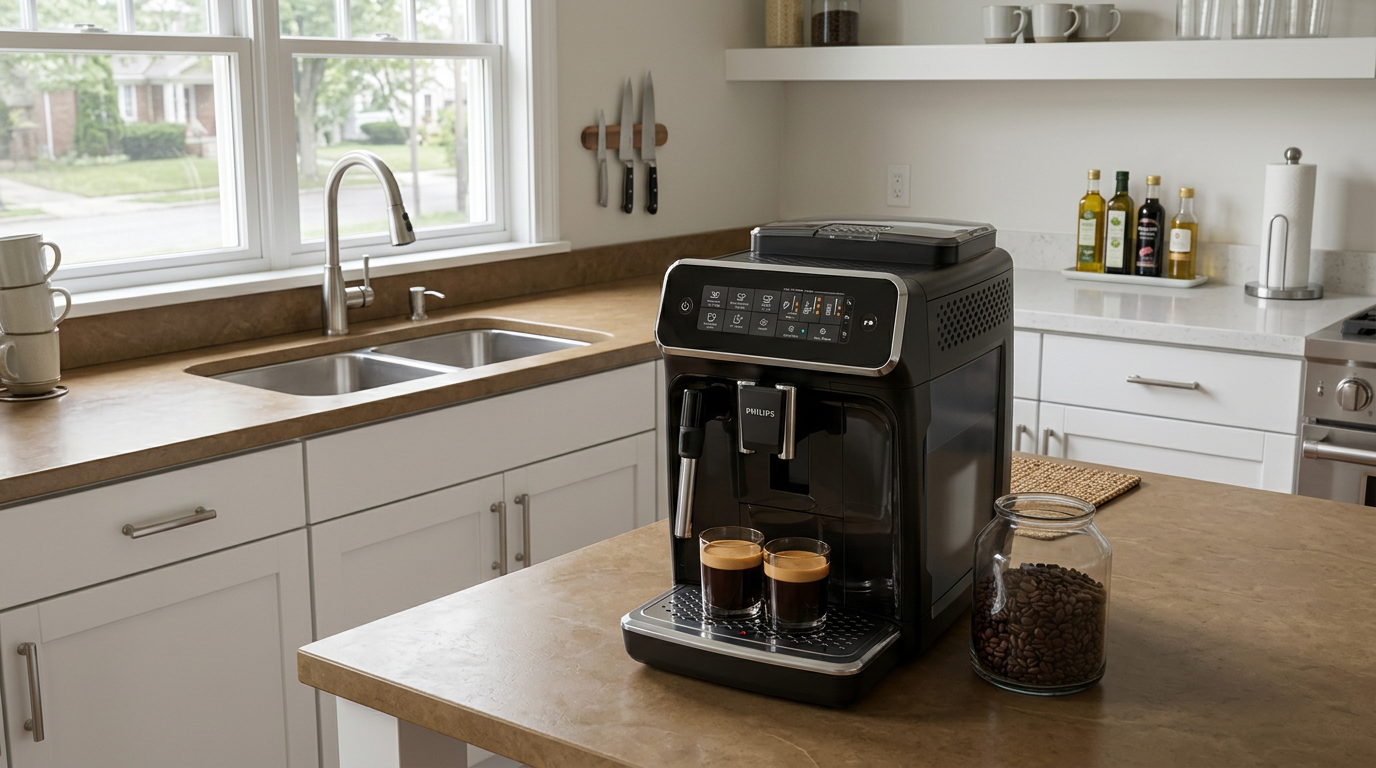
The Philips 3200 looks like a kitchen appliance. A glossy black panel with drink icons, a sliding spout, a milk jug that clips on the front and no handle in sight.
Their footprints are surprisingly similar. The Philips is narrower at 9.7 inches but deeper at about 17 inches, while the Express is 12.5 inches wide and 13.8 inches deep.
A super-automatic hides the whole process behind a panel of drink icons.
Materials tell the bigger story. The Express is brushed stainless steel and weighs about 22 pounds, so it doesn’t budge when you lock in the portafilter.
The Philips is mostly plastic, apart from a stainless drip tray cover, and weighs about 17.6 pounds. It held up well with no rattles, but it doesn’t feel premium.
That pattern holds across both categories. At similar sizes, semi-automatics tend to put more money into metal parts, while super-automatics put it into motors, sensors and milk systems.
Width on the counter
The super-automatic is narrower, but needs depth for its jug and sliding spout.
Our tip: Budget a little extra counter space for a semi-automatic, because you’ll want a tamping mat, a scale and a knock box beside it.
The daily workflow, step by step
This is where the two types feel most different, so I timed and counted every step of a latte on both.
On the semi-automatic, my latte routine looked like this: switch on, run a blank shot to warm the portafilter, grind into the basket, weigh, tap, tamp, lock in, brew, steam the milk, pour, wipe the wand and knock out the puck.
On the super-automatic, it looked like this: fill the LatteGo jug with milk, clip it on, press latte macchiato. Afterwards, I rinsed the two jug parts under the tap for about ten seconds.
Time from power on to first sip, latte
My timings, including warm-up and the cleanup straight after.
Hands-on steps per drink
Counting each separate action, including filling the milk jug on the super-automatic.
For one person making one drink, the semi-automatic routine is calm and even enjoyable once it’s a habit. Many people love it for exactly that reason.
For a household where three people want three drinks before work, the super-automatic wins easily. In my house, it made three or four drinks every morning with no queue and no instructions.
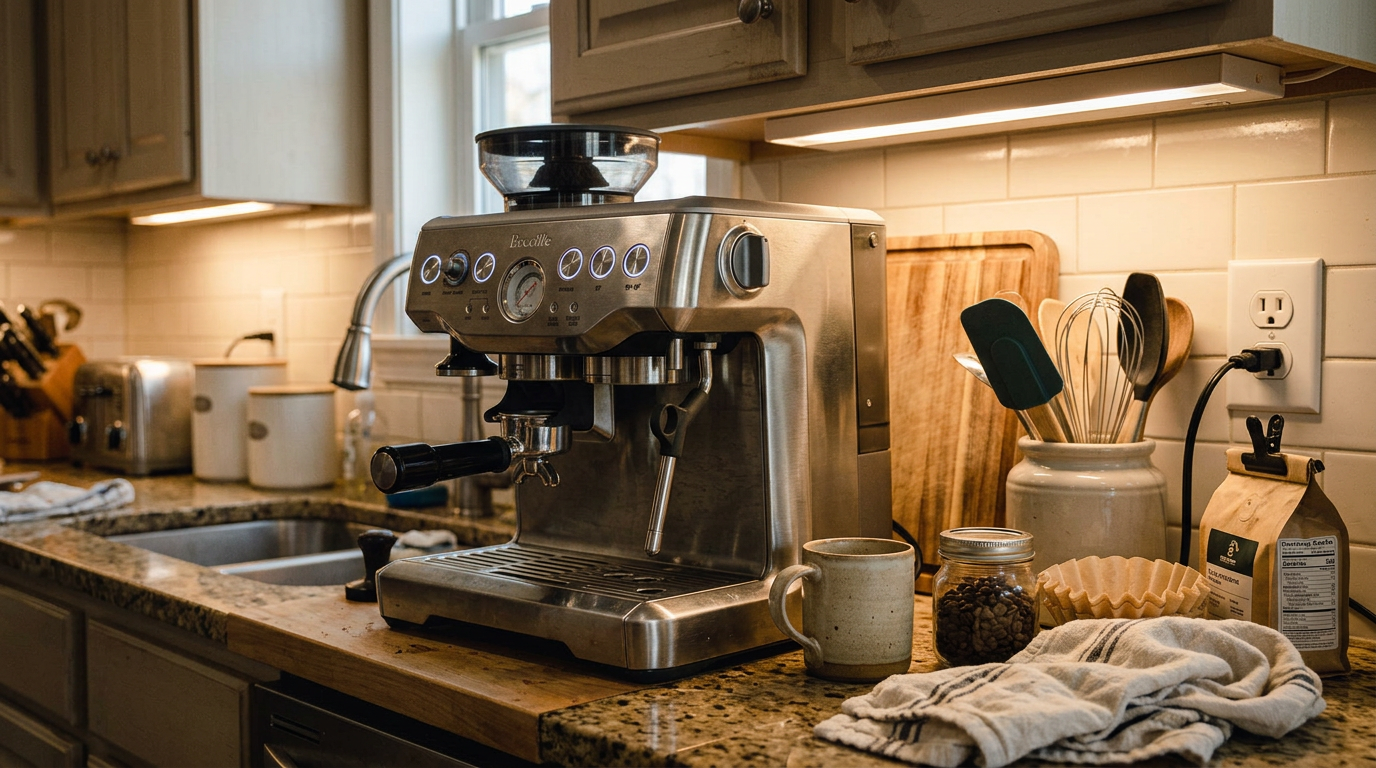
On a semi-automatic, every step from grind to pour is in your hands.
Our tip: If you’re unsure, picture your busiest weekday morning, not a slow Sunday, because that’s the morning a machine has to survive.
Grinder and dose: the hidden difference
This is the single most important technical difference I found, and it’s barely mentioned on the box.
On the semi-automatic, you choose the dose. I settled on about 15.4 grams in the double basket of the Barista Express, weighed on a 0.1-gram scale, which is in line with a typical café double of 14 to 18 grams.
On the super-automatic, the machine chooses. I stopped the Philips 3200 after grinding on its strongest setting and weighed the coffee: about 8 grams.
That small dose is why the super-automatic’s espresso tasted mild. More water through less coffee gives a longer, gentler cup, closer to a lungo✕LungoA “long” espresso made with more water than a normal shot. It’s milder and less concentrated. than a classic espresso.
Coffee dose per shot
Weighed doses. Not every super-automatic is this low; premium models go up to about 16 g.
Grinders differ too. The Express uses stainless steel conical burrs✕Conical burrsTwo cone-shaped grinding parts, one inside the other. Beans are crushed between them, and the gap sets how fine the coffee is. with 16 outer steps plus an inner adjustment. The Philips uses a ceramic grinder with 12 settings, turned with a knob inside the hopper.
Both should only be adjusted while the grinder is running. On the Express, I also had to move the hidden inner burr from 6 to 2 before the dial reached a fine enough espresso grind for fresh beans.
| Grinder detail | Semi-automatic | Super-automatic |
|---|---|---|
| Burrs | Stainless steel, conical | Ceramic, flat |
| Settings | 16 plus inner burr | 12 |
| Dose control | You choose, by time and scale | Strength level, 3 steps |
| My measured dose | About 15.4 g | About 8 g |
| Pre-ground option | Yes, pressurized basket | Yes, separate chute |
| Best beans | Fresh, any roast | Medium to medium-dark, not oily |
Our tip: On any super-automatic, set the strongest aroma and the smallest cup first, because that squeezes the most body out of a small dose.
Espresso quality
With the same medium-dark beans, the difference in the cup was clear from the first day the semi-automatic was dialed in.
The Barista Express poured 30 grams of espresso from 15.4 grams of coffee in about 27 seconds, a classic 1:2 ratio. The pressure gauge sat in the espresso zone, the crema✕CremaThe golden, foamy layer on top of a fresh espresso. It forms when pressure pushes oils and gases out of the coffee. was deep and velvety, and it tasted sweet and creamy, like warm honey with chocolate.
The Philips 3200 made a smooth, mild espresso with a thin, even crema. I tasted gentle caramel and nut notes, with very little bitterness, but much less body and intensity.
My espresso ratings
My scores out of 10 for body, crema, flavor and consistency, from the single reviews.
There’s an important twist here. The super-automatic never made a bad cup. Every espresso tasted the same from the first morning to the last.
The semi-automatic made the best cups, but also the worst ones, especially in week one. My shot log tells the story: only about 45 percent of my first-week shots hit my target window, rising to about 90 percent by week four.
Semi-automatic shots in my target window
From my four-week shot log on the Barista Express. The super-automatic was consistent from day one.
| If you like your espresso… | Better type | Why |
|---|---|---|
| Short, strong and syrupy | Semi-automatic | Bigger dose, full control |
| Smooth and gentle | Super-automatic | Mild, never bitter |
| Exactly the same every day | Super-automatic | No technique involved |
| Different for every bean | Semi-automatic | You tune grind, dose and temperature |
| Mostly in milk | Either | Milk hides much of the gap |
Our tip: If you find café espresso too bitter, try a super-automatic’s espresso before you assume you need a semi-automatic.
See Today’s PriceMilk drinks
Both types make cappuccinos and lattes, but in very different ways.
On the semi-automatic, you steam milk with a manual wand. I put the tip just under the surface of cold whole milk, let it hiss gently to add air, then sank it slightly so the milk spun into a whirlpool. After about 40 seconds, it looked like glossy paint.
That glossy texture is microfoam✕MicrofoamMilk foam with bubbles so small you can barely see them. It feels silky and glossy, and it’s what you need for latte art., and it’s what lets you pour latte art. By week three, I could pour a heart most mornings.
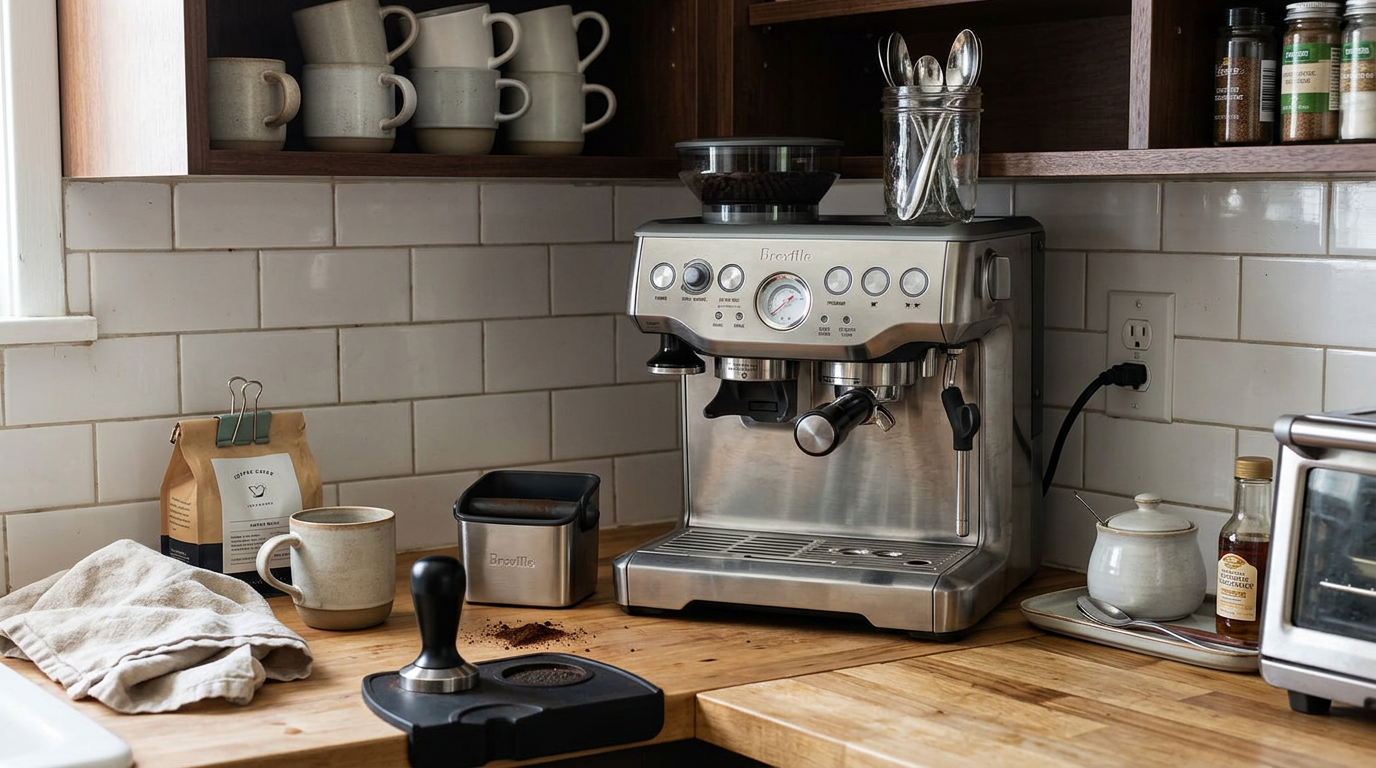
A manual steam wand gives you the best texture, once you learn the technique.
On the super-automatic, the LatteGo jug did everything. Steam drew milk into a small chamber, mixed in air and poured creamy foam straight into the cup, then the coffee ran on top.
The foam was creamy and fairly fine, and latte macchiatos came out in neat layers in a tall glass. But you can’t control the texture, and it can’t pour latte art.
Cleaning was the opposite story. The LatteGo jug has no tubes, so I rinsed two parts under the tap in about ten seconds and put them in the dishwasher once a day.
Milk system ratings
My scores out of 10, from the single reviews and my side-by-side notes.
If you want both, there’s a hybrid. Semi-automatics like the Breville Barista Touch keep the portafilter but steam milk automatically to a temperature you choose, which gave me latte-art-ready foam with no wand technique.
| Milk drink | Semi-automatic | Super-automatic |
|---|---|---|
| Cappuccino | Hand-steamed, thick foam | One touch |
| Latte or flat white | Hand-steamed microfoam | Latte macchiato at one touch |
| Latte art | Yes, with practice | No |
| Oat milk | Barista oat works well | Barista oat works well |
| Milk temperature | You decide by feel | Set by the machine |
| Cleanup | Wipe and purge the wand | Rinse two jug parts |
Our tip: Use cold whole milk straight from the fridge on either type, because cold milk gives you more time to build fine foam.
Drink range and customization
A super-automatic gives you a menu. The Philips 3200 has five one-touch drinks: espresso, coffee, Americano, cappuccino and latte macchiato, plus hot water.
Its My Coffee Choice menu lets you change aroma strength in three levels, coffee and milk length per drink and three temperatures. What it doesn’t have is user profiles, so a household shares one set of defaults.
A semi-automatic gives you a blank page. The Barista Express has a one-cup and two-cup button, a steam wand and a hot water outlet, and from those you can build any drink: espresso, ristretto, americano, long black, cortado, flat white, cappuccino, latte or a macchiato.
Drinks you can make
The semi-automatic has no presets, but no limits either.
| Drink | Semi-automatic | Super-automatic |
|---|---|---|
| Espresso | Yes, any ratio | One touch, mild |
| Ristretto | Yes | No, only shorter volume |
| Americano | Shot plus hot water outlet | One touch |
| Long black | Yes, water first | By hand |
| Flat white | Yes, true microfoam | Approximation only |
| Cappuccino | Yes | One touch |
| Latte macchiato | Yes | One touch, layered |
| Two cups at once | Double shot only | Espresso or coffee |
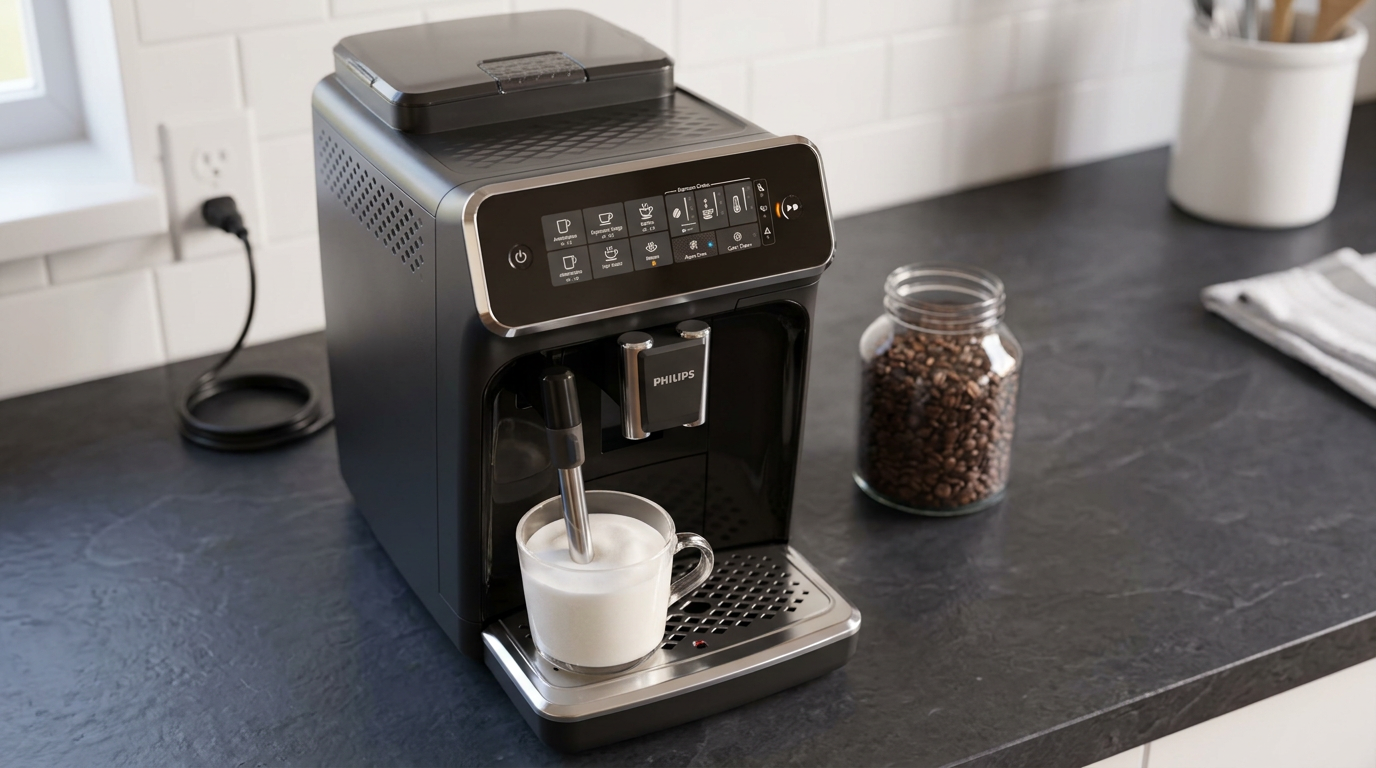
On the super-automatic, a layered latte macchiato is one button away.
Our tip: On a super-automatic without a flat white button, make a short cappuccino in a small cup and add a second espresso for a stronger milky drink.
The learning curve
This is the part most buyers underestimate, in both directions.
A semi-automatic is not hard, but it does take practice. On the Express, I spent the first day adjusting the inner burr, mapping the grind dial and weighing doses until the timer delivered 15.4 grams every time.
By the end of day two, I was pulling shots that poured like warm honey. Milk took longer: my first week of latte art was blobs, and hearts arrived in week three.
A super-automatic has almost no curve at all. On the Philips, the only things I learned were to grind two steps finer, use the strongest aroma and pour away the first three or four drinks while the grinder settled.
| Week | Semi-automatic | Super-automatic |
|---|---|---|
| Week 1 | Messy shots, learning grind and tamp | Easy, coffee a bit flat |
| Week 2 | Shots settle, milk improving | Dialed in: finer grind, strongest aroma |
| Week 3 | Consistent espresso, first latte-art hearts | Smooth routine |
| Week 4 | About 90% of shots on target | Reliable, mild coffee |
How confident I felt by the end of each week
My own rating of how sure I was that the next drink would be good.
Our tip: Buy a 0.1-gram scale with any semi-automatic, because weighing your dose solves half the problems before they start.
Cleaning and upkeep
Both types need cleaning, but the jobs are different.
On the semi-automatic, cleaning is small and constant. After every shot, I knocked out the puck and rinsed the basket; after every milk drink, I wiped and purged the wand straight away, because milk dries fast on hot steel. When the Clean Me light came on, I backflushed✕BackflushingRunning water backwards through the group head with a blank disc and a cleaning tablet in the basket, to dissolve coffee oils from the valve. with a cleaning tablet.
On the super-automatic, cleaning is less frequent but more involved. The Philips asks you to empty the grounds drawer and the small drip tray daily, rinse the removable brew group✕Brew groupThe part inside a super-automatic that compresses the coffee, holds it while water passes through and ejects the used puck. weekly and grease its moving parts every couple of months.
My daily hands-on cleaning time
My estimates, not counting automatic rinses.
| When | Semi-automatic | Super-automatic |
|---|---|---|
| After each drink | Knock out puck, rinse basket, purge wand | Rinse LatteGo parts |
| Daily | Empty drip tray, wipe shower screen | Empty drip tray and grounds drawer |
| Weekly | Brush gasket and grinder chute | Rinse the brew group |
| Every 2 months | Replace water filter | Grease the brew group |
| When prompted | Backflush with a tablet | Replace filter or descale |
Our tip: Whatever you buy, empty the drip tray at the end of every day, because both types fill it with rinse water faster than you expect.
Water, beans and running costs
Both types run on the same things: fresh beans, clean water and the occasional cleaning tablet or filter. The difference is how much coffee each one uses.
Because the semi-automatic used almost twice the dose, a bag of beans went roughly half as far. That’s the price of a fuller espresso.
Water matters on both. The Specialty Coffee Association’s brewing standard aims for around 150 ppm of total dissolved solids, with calcium hardness roughly between 50 and 175 ppm. Very hard water scales heaters faster; distilled water tastes flat and isn’t recommended by either manufacturer.
Roughly how far one full tank goes
Rough maths: 67 oz tank on the semi, 61 oz on the super, allowing for rinses.
Double espressos per 250 g bag of beans
Based on my weighed doses of about 15.4 g and 8 g.
| Bean type | Semi-automatic | Super-automatic |
|---|---|---|
| Medium roast | Sweet, easy to dial in | Balanced, gentle |
| Medium-dark | Rich body, thick crema | Best body, great in milk |
| Light roast | Bright, needs finer grind | Bright but thin |
| Oily, very dark | Coats the burrs | Avoid, can clog the grinder |
Our tip: Choose medium-dark beans for a super-automatic, because their body helps a small dose taste fuller in milk.
Noise
Neither type is quiet. Both grind beans for a few loud seconds and both hiss when frothing milk.
The semi-automatic adds the pump hum during a 25 to 30 second shot and the knock of the portafilter against a knock box. The super-automatic adds a mechanical whirr as the brew group moves, and a steady hiss from the milk jug.
In practice, the super-automatic was noisy for a shorter time, because the whole drink took about a minute and a half instead of four or five.
How long the kitchen was noisy, one latte
From power on to first sip.
Five myths about both types
A lot of buying advice repeats the same half-truths. Here’s what four weeks with each type taught me.
| Myth | What I found |
|---|---|
| “Super-automatics can’t make real espresso.” | They do brew under pressure, with crema. The limit is the dose; mine used about 8 g, so it tasted mild rather than wrong. |
| “Semi-automatics take months to learn.” | My first great shot came on day two. Consistency took about two weeks, and latte art about three. |
| “15 bar or 20 bar on the box means better coffee.” | That’s the pump’s maximum. Good espresso brews at around 9 bar at the puck, and the Express gauge showed me exactly where my shots sat. |
| “Super-automatics are maintenance-free.” | They automate rinsing, not everything. I still emptied the grounds and drip tray daily and rinsed the brew group weekly. |
| “You need a separate grinder for a semi-automatic.” | A built-in grinder like the Express’s did everything I needed with medium and medium-dark roasts, once I set the inner burr. |
The common thread is that both types are better than their reputations. The real question is which compromises you’d rather live with.
Our tip: Ignore the bar number on the box, and compare dose, milk system and cleaning routine instead.
Living with each one long term
Day one tells you very little. These are the things that started to matter in weeks three and four.
On the semi-automatic, the routine became second nature. I stopped thinking about tamping, glanced at the gauge out of habit and only touched the grind dial when I opened a new bag of beans.
The parts are simple and serviceable: a portafilter, baskets, a shower screen and a gasket. Nothing hides inside a closed box, and the Express has no low-water sensor, so I checked the tank every morning.
On the super-automatic, the routine was almost invisible. The one recurring chore was the small drip tray, which needed emptying every day, and the weekly brew group rinse, which washed out a surprising amount of brown residue the first time.
Super-automatics have more moving parts, sensors and motors. That makes them more convenient, but there’s more that can eventually need attention, so a removable brew group like the Philips’s is worth looking for.
| After a month | Semi-automatic | Super-automatic |
|---|---|---|
| Routine | Second nature, about 4 to 5 min | Invisible, about 1.5 min |
| Biggest annoyance | No low-water warning | Small drip tray |
| What I adjusted | Grind for each new bag | Nothing after week two |
| Moving parts inside | Few, simple | Brew group, grinder motor, sensors |
| Warranty (US) | 1 year | 2 years |
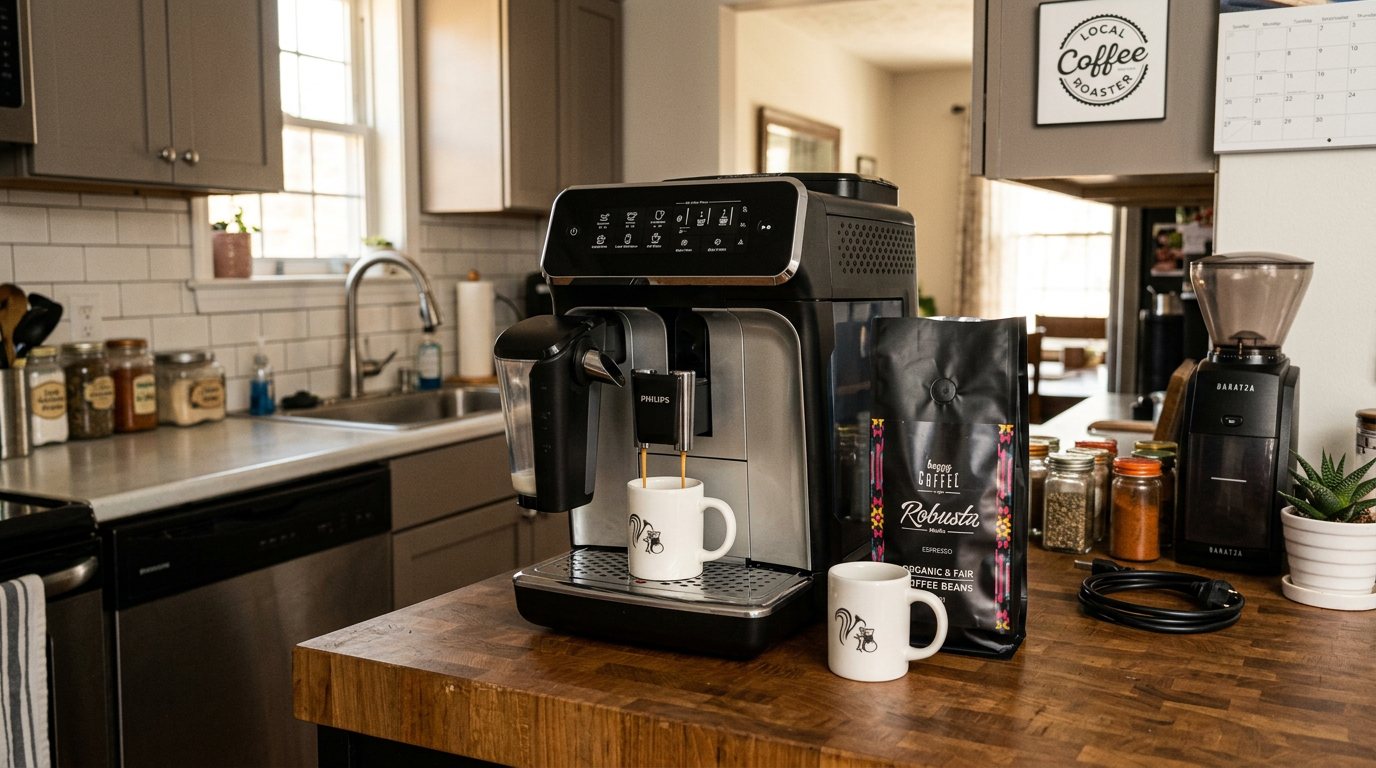
A removable brew group makes a super-automatic much easier to keep fresh.
Real-life scenarios
These are the situations where one type clearly pulled ahead during my month with each.
The bigger dose made a café-style shot with body and sweetness. The super-automatic’s was smooth but light.
Espresso, a big mug and a latte macchiato, one button each, done in a few minutes.
Only a steam wand makes the glossy microfoam you need to pour a heart.
A ten-second rinse of the LatteGo parts, then the dishwasher.
The mild, gentle espresso was the cup non-espresso drinkers liked most.
You can tune grind, dose and temperature for each bag.
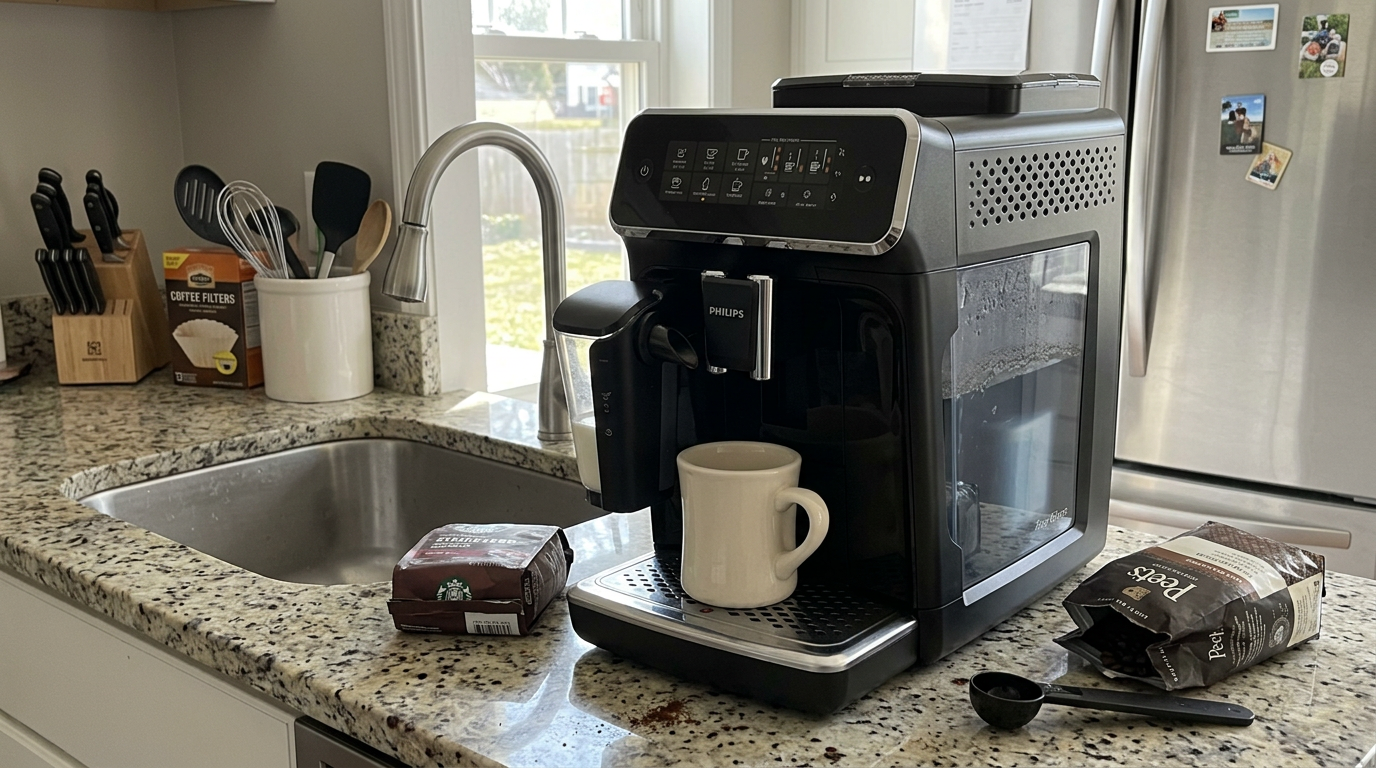
In a busy household, the super-automatic was the machine nobody needed help with.
My scorecard
These are my scores out of 10. The first four come from my single reviews of each machine; I added learning curve and household fit because they decide this choice.
Semi-automatic (Barista Express)
Super-automatic (Philips 3200)
Both machines scored 8.0 overall in my single reviews, which says a lot. They’re equally good, at completely different jobs.
See How Much You’ll SaveWhich type is right for you?
4 quick questionsWhich one should you buy?
Ask yourself one question: is coffee a ritual you want to learn, or a drink you want to press a button for? Your honest answer is the right type.
If you lean semi-automatic, my Barista Express vs Barista Touch comparison shows how much a touchscreen and automatic milk change the routine. If you lean super-automatic, see my Philips 3200 vs De’Longhi Magnifica Evo matchup and my guide to the best super-automatic espresso machines.
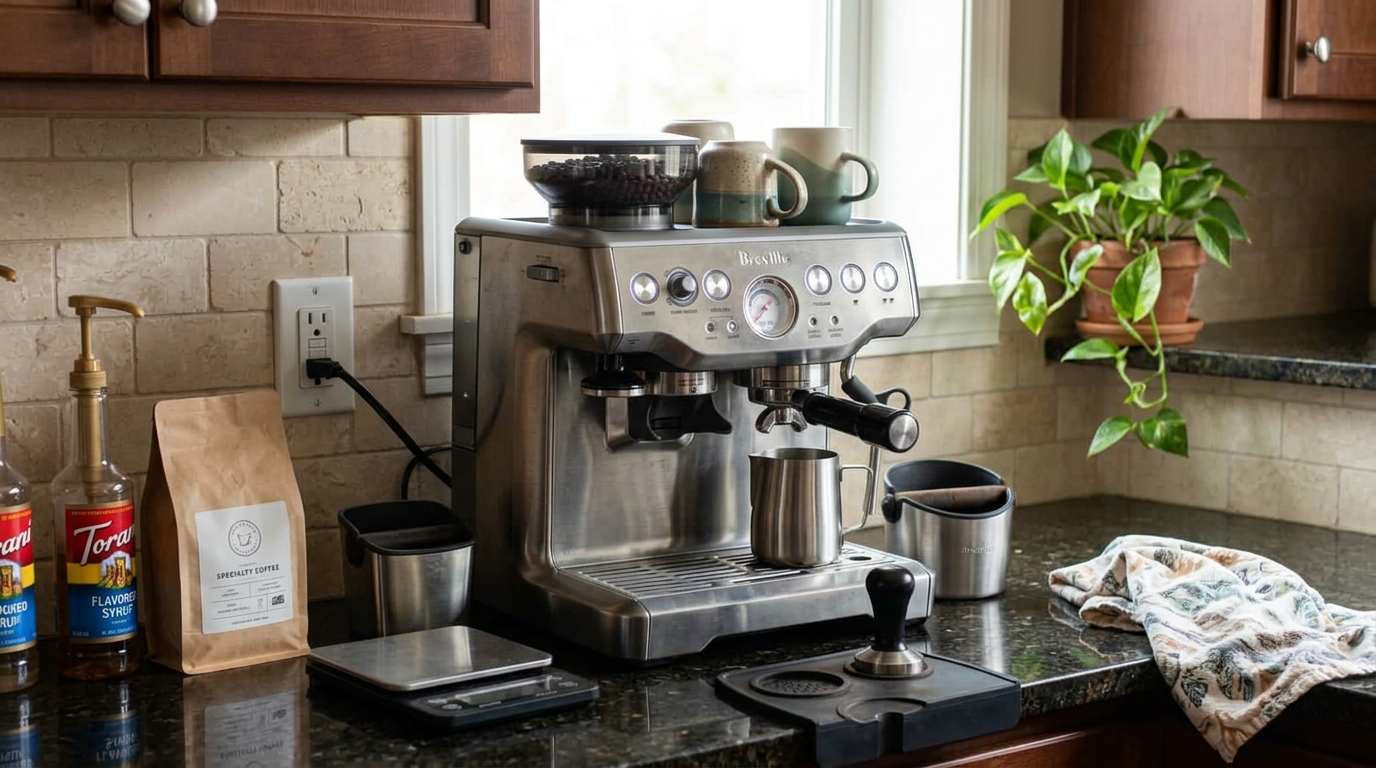
For espresso lovers who enjoy the routine, a semi-automatic is hard to beat.
- You want the strongest, sweetest espresso
- You want to pour latte art
- You enjoy a hands-on morning routine
- You mostly make one or two drinks at a time
- You want one-touch drinks
- Several people want different drinks fast
- You don’t want a learning curve
- Everyone in your home drinks something different
- You want milk drinks with no technique
- You prefer mild, smooth coffee
- You want the easiest milk cleaning
- You want café-strength espresso
- You want latte art
- You want a metal, premium body
For most households, especially busy ones with mixed tastes, a super-automatic is the easier and happier choice. The Philips 3200 gave everyone in my house their own drink at one touch, never made a bad cup and cleaned up in seconds.
If espresso itself is the point, buy a semi-automatic. The Breville Barista Express used almost twice the coffee per shot, made the fuller, sweeter espresso and taught me to pour latte art. It asks for a few days of practice, then rewards you every morning.
Either way, fresh beans and clean water make the biggest difference, and both types reward a little care with years of good coffee.
Semi-automatic vs super-automatic specifications
My two test machines, from manufacturer specifications and my own testing.
| Semi-automatic: Breville Barista Express | Super-automatic: Philips 3200 | |
|---|---|---|
| Model | Breville BES870XL | Philips 3200 Series EP3241/54 |
| Type | Semi-automatic with grinder | Fully automatic bean-to-cup |
| Heating | 1600 W thermocoil, PID | 1500 W |
| Pump | 15 bar | 15 bar |
| Grinder | Steel conical, 16 settings plus inner burr | Ceramic, 12 settings |
| Measured dose | About 15.4 g | About 8 g |
| Tamping | By hand | Automatic |
| One-touch drinks | None | 5 plus hot water |
| Milk | Manual steam wand | LatteGo automatic jug |
| Pre-ground coffee | Pressurized baskets | Separate chute |
| Bean hopper | About ½ lb | About 9.7 oz |
| Water tank | 67 oz | 61 oz |
| Dimensions (W × D × H) | 12.5 × 13.8 × 15.9 in | 9.7 × 17 × 14.6 in |
| Weight | About 22 lb | About 17.6 lb |
| Warranty (US) | 1 year limited | 2 years limited |
How I tested and compared them
I used each type as my everyday coffee machine for four weeks: the Breville Barista Express for the semi-automatic side and the Philips 3200 Series for the super-automatic side. The notes were written up together by Michael Reynolds and the HouseholdMe team.
I weighed doses and yields, logged shot times, counted and timed every step of the daily routine, steamed and frothed whole, semi-skimmed, skim and oat milk, and ran every cleaning routine.
I then compared my notes with both manufacturers’ specifications and owner documentation, and with Specialty Coffee Association brewing water guidance.
- Coffee: dose, crema, body and consistency.
- Milk: texture, control, convenience and latte art.
- Workflow: steps, time per drink and learning curve.
- Ownership: cleaning, beans, water and footprint.
Super-automatic vs semi-automatic FAQ
What is the difference between a semi-automatic and super-automatic espresso machine?
A semi-automatic controls the pump and water, but you grind, dose, tamp and usually steam the milk. A super-automatic, also called fully automatic or bean-to-cup, does everything from grinding to frothing and ejecting the puck at the press of a button.
Which makes better espresso?
In my testing, the semi-automatic. The Breville Barista Express used about 15.4 grams of coffee per shot against about 8 grams on the Philips 3200, and pulled a fuller, sweeter espresso. The super-automatic was milder but perfectly consistent.
Is a super-automatic espresso machine worth it?
Yes, if convenience matters most. It suits households where several people want different drinks, and anyone who doesn’t want to learn tamping and milk steaming.
Is a semi-automatic espresso machine hard to use?
Not hard, but it takes practice. My first good shot came on day two, and about 90 percent of my shots hit target by week four. Milk steaming and latte art took about three weeks.
Can a super-automatic make latte art?
No. Automatic frothers make creamy foam, but not the glossy microfoam you need to pour latte art.
Which is easier to clean?
The super-automatic, in my testing: about 3 minutes a day with milk drinks against about 6 on the semi-automatic. It does need a weekly brew group rinse and occasional greasing.
What is a bean-to-cup machine?
Another name for a super-automatic or fully automatic machine. It grinds whole beans and brews them in one automatic process.
Is there anything in between?
Yes. Semi-automatics like the Breville Barista Touch keep the portafilter and hand tamping, but steam the milk automatically to a set temperature.
Which type uses more coffee?
The semi-automatic, because you can use a full café dose. In my tests, a 250 g bag made about 16 double espressos on the semi-automatic and about 31 on the super-automatic.
Which is better for beginners?
For instant results, the super-automatic. For beginners who want to learn espresso, the semi-automatic is the better teacher.

- Our hands-on Breville Barista Express review
- Our hands-on Philips 3200 Series review
- Our hands-on Breville Barista Touch review
- Breville and Philips product specifications and owner documentation
- Specialty Coffee Association brewing water guidance