Philips 3200 vs 3300: what’s actually different?
On paper these two are almost twins: the same ceramic grinder, the same brew group, the same 1.8-liter tank and the same tubeless LatteGo jug. The differences are in the details you live with every morning. The Philips 3200 keeps an americano button and a side-loading tank, while the Philips 3300 swaps the americano for iced coffee and adds a gasket-sealed bean lid, a backlit panel and a tank and grounds bin that pull out from the front. I used each one for four weeks, measured what matters and lined up the data so you don’t overpay.
We choose products independently. We may earn a commission through links on this page; your price stays the same. Affiliate policy
Jargon helpNew to espresso? Tap any dotted term to see what it means.
In this comparison
If you make coffee while someone is asleep, want iced coffee in summer or just want the easiest daily routine, buy the Philips 3300. Its sealed lid kept grinding to about 61 dB, its tank and grounds bin come out from the front, and its LatteGo jug rinsed clean in under 10 seconds. If you drink americanos every day and can find the Philips 3200 for noticeably less, it is still a great machine: the same espresso, the same milk drinks and a dedicated americano button the 3300 dropped.
The two machines
Specs checked November 14, 2026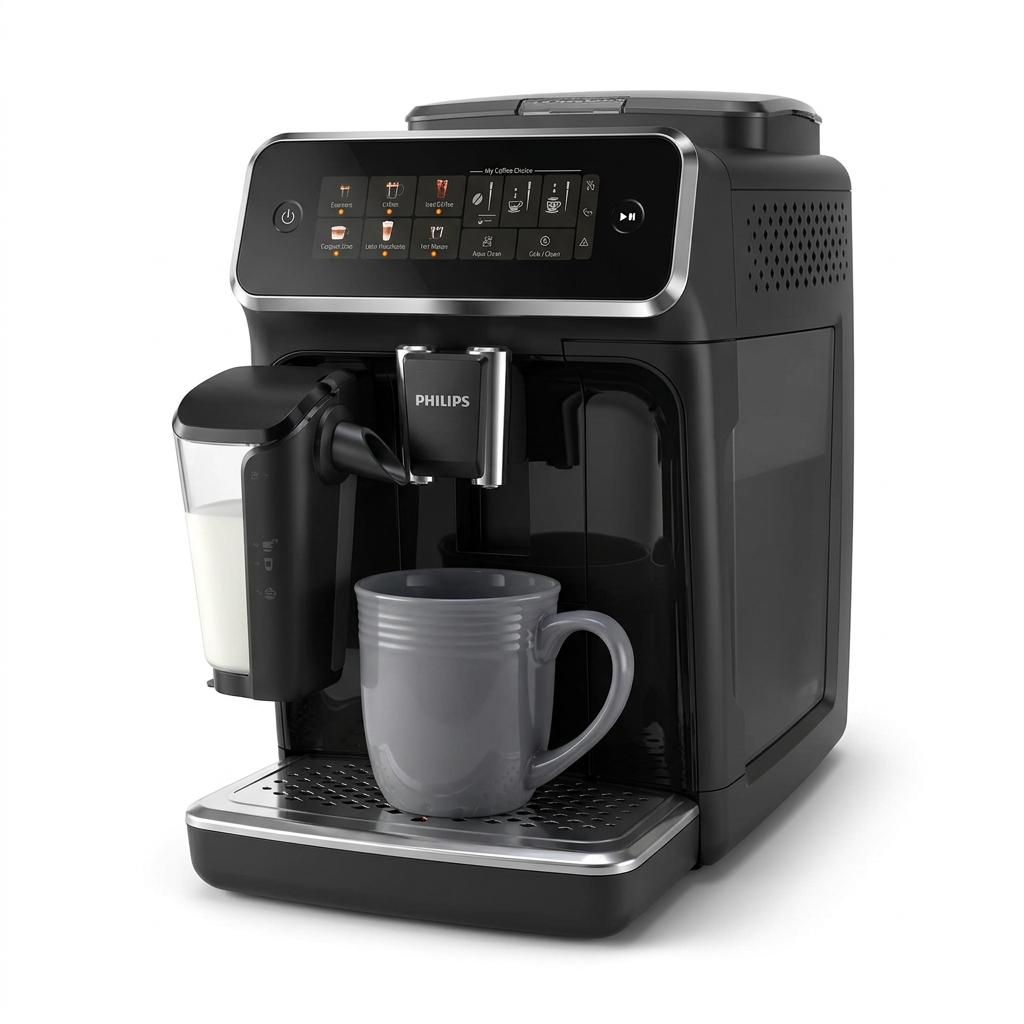
Quiet gasket-sealed grinding, an iced coffee button, a backlit panel and a tank and grounds bin that pull out from the front.
Check price on Amazon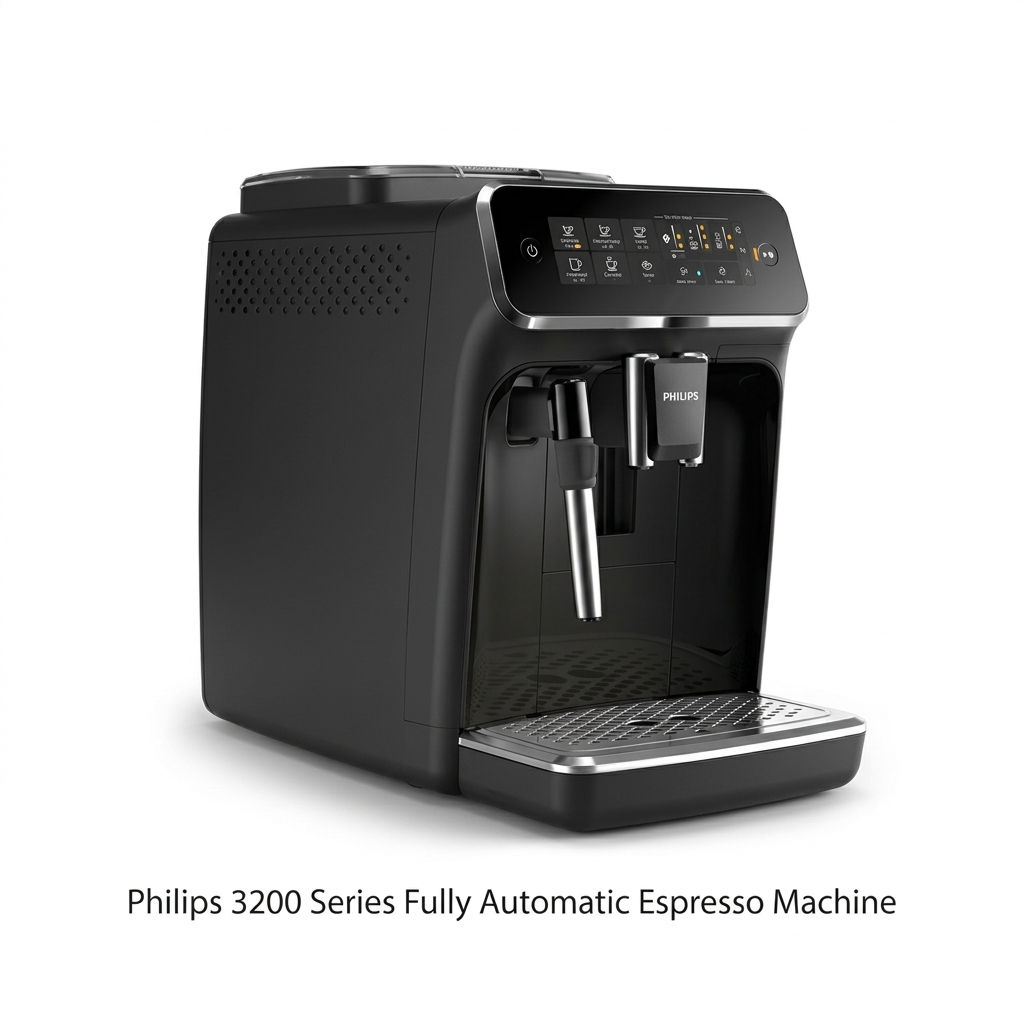
Five one-touch drinks including a true americano, the same LatteGo jug and the same espresso, with a side-loading tank.
Reveal Today’s DealPhilips 3200 vs 3300 at a glance
- Buy the 3300 for quieter mornings, iced coffee and the easiest daily routine.
- Buy the 3200 if americanos are your daily drink and the price gap is meaningful.
- Coffee and milk quality are the same, because the grinder, brew group and LatteGo jug are shared.
- The upgrades are about comfort: noise, front access and a clearer panel.
Head to head
The better result in each row is marked, based on my testing and the manufacturer specs. Rows where the two machines are identical have no winner.
Keep in mind that the tally is not my verdict. Most rows here are ties, which is the point: you are choosing on a handful of details.
| Spec | Philips 3200 | Philips 3300 |
|---|---|---|
| Espressomy tasting, same beans | Mild, smooth, lungo-style | Clean, balanced, light |
| One-touch drinks | 5, plus hot water | 5, plus hot water |
| Americano button | Yes ✓ Best | No, by hand |
| Iced coffee button | No | Yes ✓ Best |
| Grinder noise | Standard, unsealed lid | 61–62 dB, gasket-sealed lid ✓ Best |
| Water tank access | Side | Front ✓ Best |
| Grounds bin access | Behind the drip tray | Front ✓ Best |
| Panel | Icon touch panel | Backlit touch icons ✓ Best |
| My cleaning score | 8.5 | 9.4 ✓ Best |
| LatteGo jug | 260 ml, two parts | 260 ml, two parts |
| Grinder | Ceramic, 12 settings | Ceramic, 12 settings |
| Footprint | 9.7 x 17 in, 14.6 in tall | 9.7 x 17 in, 14.6 in tall |
| Rows won | 1 | 6 |
Philips 3200 vs 3300 pros and cons
Philips 3200
- Dedicated one-touch americano
- Tubeless LatteGo jug rinses clean fast
- Removable brew group and AquaClean included
- Mild espresso from a dose of about 8 grams
- Louder grinding with an unsealed lid
- Side tank needs room to lift out
Philips 3300
- Gasket-sealed bean lid keeps grinding quiet
- Iced coffee button for warm days
- Water tank and grounds bin pull out from the front
- Single-cycle espresso is lighter than café espresso
- No americano button
- Milk foam is stiff rather than silky
Who should buy which machine?
- Daily americano drinkers
- Buyers who find it at a clearly lower price
- Kitchens with room beside the machine
- Homes where someone is asleep while coffee is made
- Iced coffee fans
- Tight spaces where only the front is reachable
What is the same
Let’s start with the part that should calm anyone worried about picking wrong. The coffee hardware is shared.
Both use a 100% ceramic burr grinder✕Burr grinderTwo hard grinding surfaces that crush beans to an even size. The gap between them sets how fine the coffee is. with 12 settings, a removable brew group✕Brew groupThe part that compresses the ground coffee, holds it while water passes through and ejects the used puck. On these machines it slides out for rinsing., a thermoblock✕ThermoblockA compact heater that warms water as it flows through a metal block. It heats up fast and uses little energy at idle. heater and a 15-bar pump.
Both have three strength levels, three temperatures, a 275-gram hopper, a 1.8-liter tank, the AquaClean filter and the same 260 ml LatteGo jug.
| Shared part | Philips 3200 | Philips 3300 |
|---|---|---|
| Grinder | Ceramic, 12 settings | Ceramic, 12 settings |
| Dose | About 8 g max | About 6 to 8 g |
| Strength levels | 3 | 3 |
| Temperature | 3 levels | 3 levels |
| LatteGo jug | 260 ml, tubeless | 260 ml, tubeless |
| Water tank | 1.8 L | 1.8 L |
| Bean hopper | 275 g | 275 g |
| Dimensions | 9.7 x 17 x 14.6 in | 9.7 x 17 x 14.6 in |
| Weight | About 17.6 lb | About 17.6 lb |
Our tip: Don’t expect stronger coffee from the 3300, because its grinder and brew group are the same as the 3200’s.
Design and access
From across the room they look nearly identical: narrow, glossy, with the LatteGo jug clipped to the front.
Up close, the 3300 has one change I came to love. Its water tank and grounds bin both pull out from the front, so I never had to slide the machine forward or reach round the side.
The 3200’s tank lifts out from the side. That is fine on an open counter, but tucked between a wall and a toaster, it means moving the machine every refill.
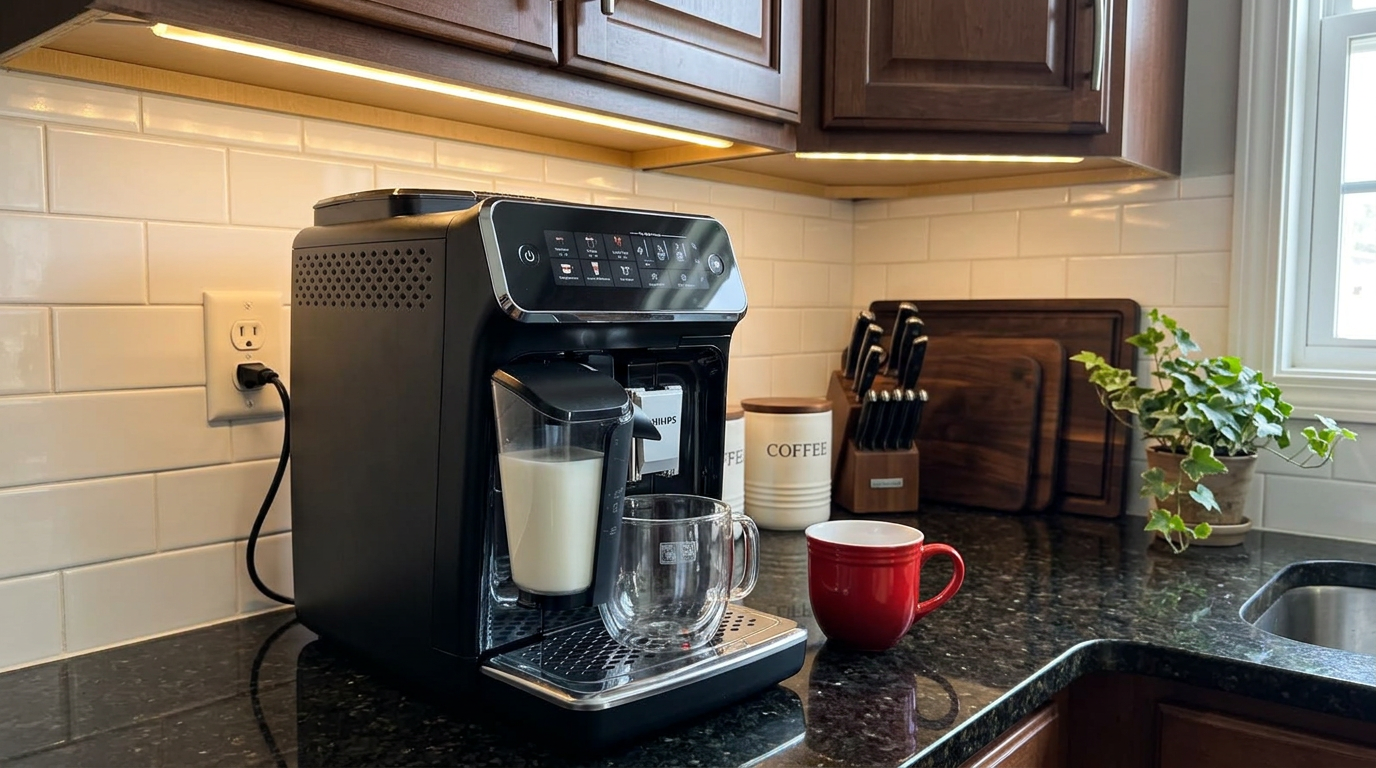
Front access for the tank and grounds bin makes the 3300 easier in a tight spot.
The 3300’s top barely got warm, reaching only about 95°F after 20 minutes idle. Don’t count on it as a cup warmer, but it also means it is safe to park things nearby.
Our tip: Measure the gap beside the machine before choosing the 3200, because its side tank needs a few inches to lift out.
Both machines draw about 1,500 watts while heating and use a thermoblock, so neither keeps a boiler hot between drinks. That makes both quick to start and cheap to leave on standby for a morning.
Panel and settings
Both use touch icons rather than a screen. The 3300’s are backlit, which made them easier to read in a dim kitchen and easier to wipe.
On both, you tap a drink, then cycle through strength, volume and, for milk drinks, milk amount. On the 3300 that gives 27 combinations for every milk drink, which is plenty for most homes.
The volume steps are fairly coarse on both. If you want exactly 40 ml of espresso, you choose the nearest level rather than dialing it in.
| Setting | Philips 3200 | Philips 3300 |
|---|---|---|
| Panel | Icon touch panel | Backlit touch icons |
| Strength | 3 levels | 3 levels, about 6 to 8 g |
| Coffee volume | 3 steps | 3 steps |
| Milk volume | Adjustable | 3 steps |
| Temperature | 3 levels | 3 levels |
| Profiles | None | None |
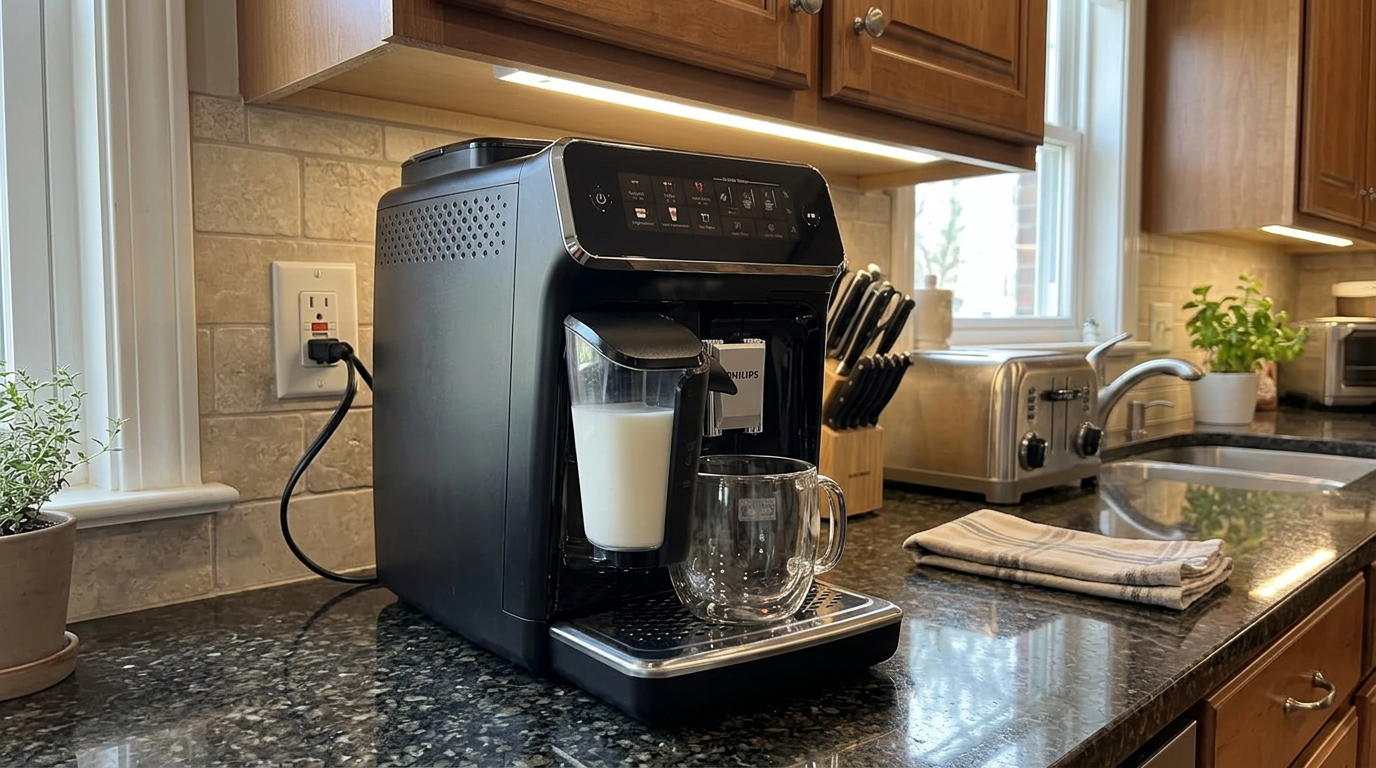
The 3300’s backlit icons were easier to read early in the morning.
Neither machine has user profiles, so in a two-person home the last person to change a setting wins. The 3200 and 3300 both remember the last strength and volume you saved for each drink, which worked fine for my partner and me because we drink similar coffee.
If you want saved settings for different people, that is a reason to look further up the range rather than choose between these two.
Grinder and dose
Both grind into the same brew chamber, which holds about 8 grams of coffee per cycle. On the 3300, the three strength levels ground about 6, 7 and 8 grams.
A typical café double uses 16 to 18 grams. That is the key to understanding both machines: a single cycle is a light espresso, and brewing a double, two cycles into one cup, gets you to about 16 grams.
Coffee per drink
Measured on my scale right after grinding.
| Grind setting | What I tasted on both | Verdict |
|---|---|---|
| 1–3, fine | Firmer pucks, best body | My pick |
| 4–6, medium | Balanced | Good for coffee |
| 7–9, default | Lighter | Too light for espresso |
| 10–12, coarse | Thin, fast | Avoid |
New burrs and a fresh brew group need time. On the 3300, my pucks were crumbly for the first 10 cups, firmer by cup 20 and solid by cup 30, and the coffee improved with them.
Puck quality while breaking in
Seen on the 3300; the 3200 followed the same pattern.
Our tip: Change the grind one step at a time and wait a couple of cups, because jumping from 8 to 1 hides which change actually helped.
Espresso quality
Same hardware, same result. With the same medium-dark blend on fine grind settings, the two espressos were nearly impossible to tell apart.
The 3200’s espresso was mild, smooth and round, at about 1.1 fl oz. The 3300’s was clean, balanced and pleasant, and at fine settings it measured between 4.5% and 5.5% TDS✕TDS (total dissolved solids)The share of coffee that ends up dissolved in your cup. Higher numbers mean a stronger, more concentrated drink..
For context, automatic machines with more compression usually reach 6 to 7%, and a portafilter espresso 10 to 12%. That is why both taste light on their own.
Espresso strength, TDS
My TDS readings on the 3300 against typical published ranges.
Temperature was solid on the 3300. Espresso came out at about 185°F at start-up, and coffee for milk drinks measured 183 to 185°F at the spout, consistent from cup to cup.
My espresso ratings
My scores out of 10. The gap is within day-to-day variation.
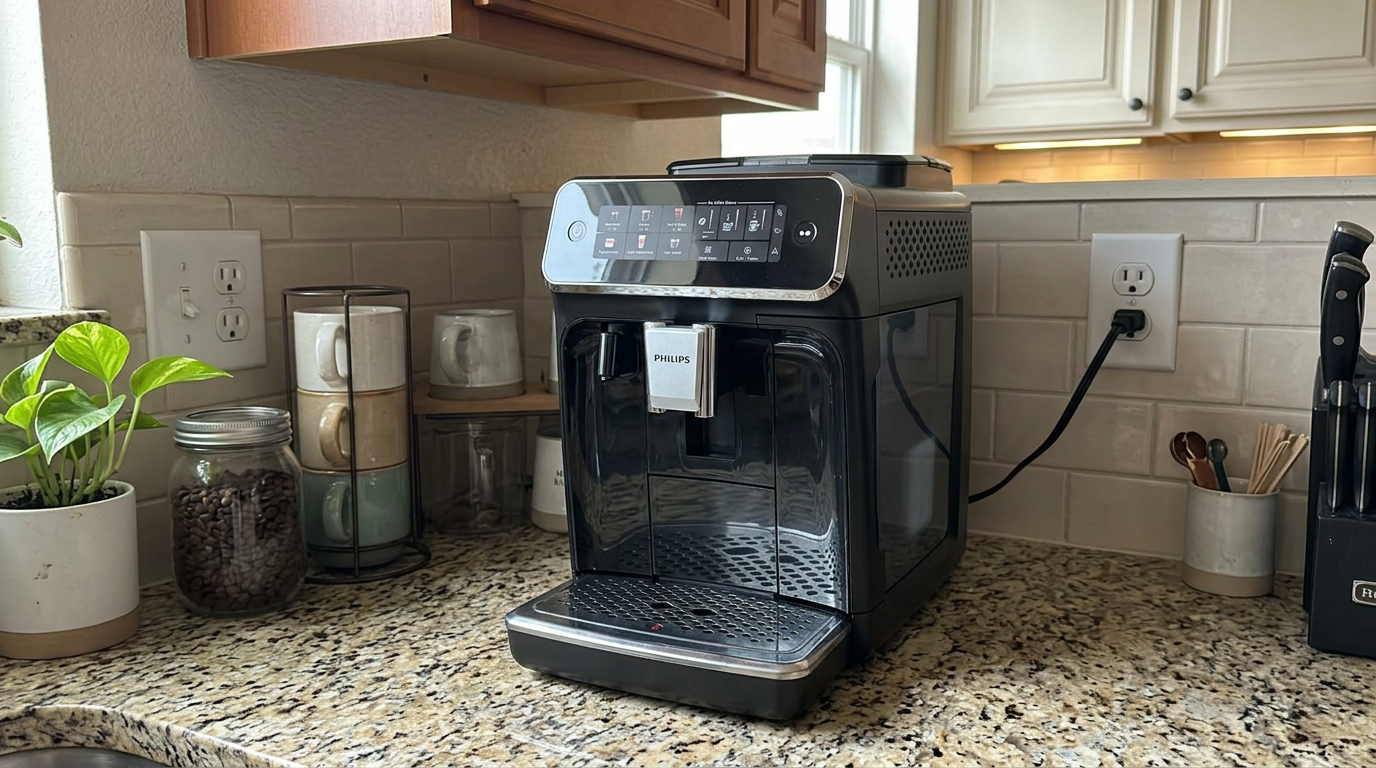
Two cycles into one cup gave both machines a much fuller espresso.
Americano and long coffee
This is the 3200’s home turf. Its americano button brews a short shot and then adds hot water, which kept the cup gentle and clean.
On the 3300, I made the same drink by brewing a double espresso on the lowest volume and adding hot water from the spout. It tasted better than the 3200’s single americano, but it takes two steps.
Both machines’ coffee button pushes more water through one puck. On the largest volume it turned thin and slightly bitter, so I used it only for a medium mug.
Our tip: Use the double espresso plus hot water method for a big mug on either machine, because the largest coffee volume tastes thin and bitter.
Find Out the Price TodayMilk drinks
Both use the same LatteGo jug, so milk drinks taste the same. It clips onto the front, has no tubes and comes apart into two main pieces.
The foam is generous and stiff rather than silky. I scored the 3300’s foam 9.0 for volume and 6.0 for silkiness: great for a classic cappuccino, not for latte art.
Plant milks worked well. A barista-style oat drink foamed almost as well as whole milk on both machines.
LatteGo on the 3300, my ratings
My scores out of 10. The 3200 uses the same jug.
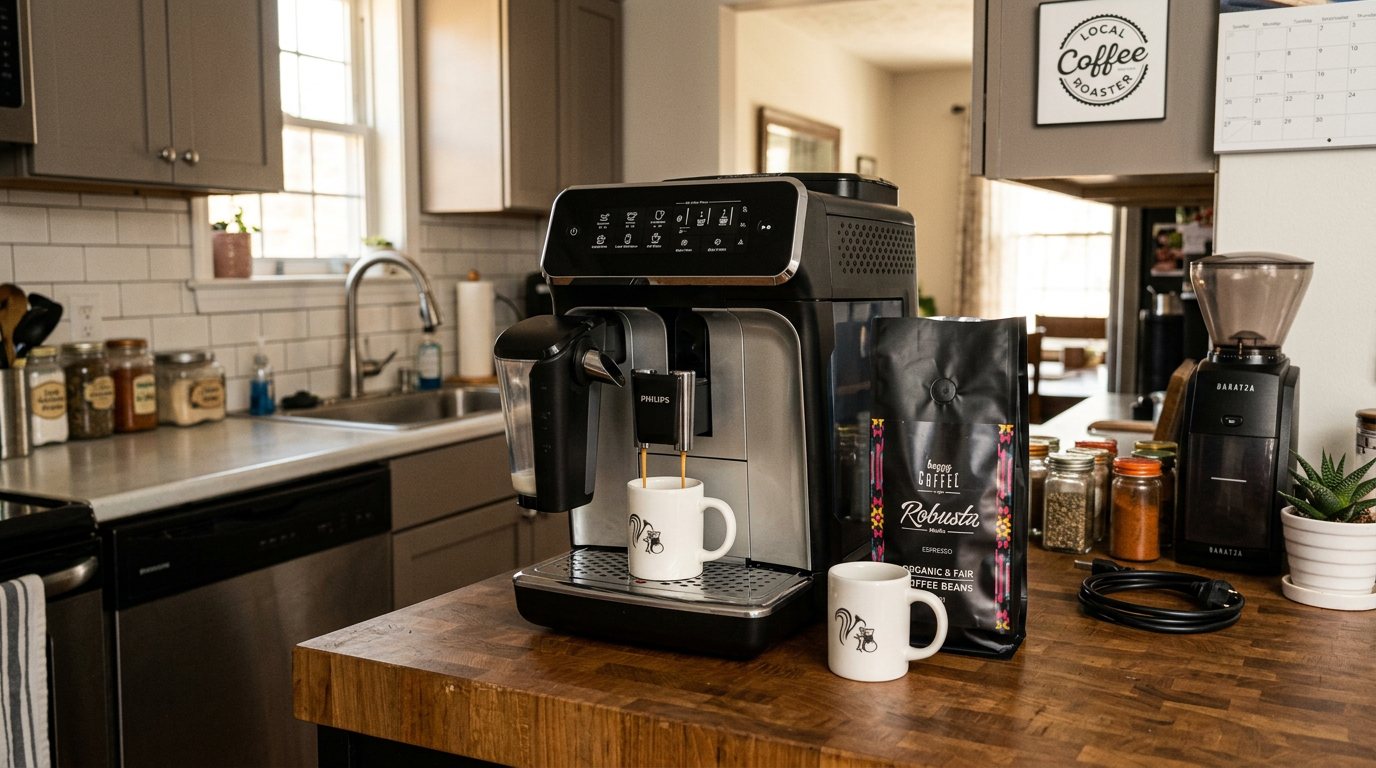
Same jug, same foam: milk drinks taste the same on both.
The 260 ml jug is enough for two cappuccinos or one large latte macchiato before a refill. Between drinks, it goes in the fridge with the lid on.
Our tip: Use cold milk straight from the fridge on both, because warm milk makes big, loose bubbles in the LatteGo jug.
Iced coffee
The 3300’s iced coffee button brews a slower, cooler, concentrated coffee designed to be poured straight over ice.
How much ice you use matters more than any setting. With a third of a glass of ice, my drink was lukewarm; two-thirds made it cool; a full glass made it properly cold.
Iced coffee on the 3300, by ice level
Same recipe, same glass, different amounts of ice.
On the 3200, I made iced coffee by pulling a double espresso over a full glass of ice. It worked, but it melted more ice and tasted thinner.
The 3300’s iced coffee is also a good base for an iced latte. I poured it over a full glass of ice and topped it with cold milk straight from the fridge, which kept the drink cold and creamy without watering it down.
If you only want iced coffee a few times a summer, the 3200’s double-espresso-over-ice method is fine. If it is a weekly habit, the button is worth having.
Our tip: Pre-chill your glass in the freezer for iced coffee on either machine, because a cold glass melts less ice.
Noise
This is the 3300’s headline upgrade, and it is real.
Its bean hopper lid has a gasket that seals the grinder chamber, which Philips calls SilentBrew. With the lid closed, the grinder peaked at about 61 to 62 dB; with the lid removed, the same grind hit 72 to 73 dB.
Decibels are logarithmic, so a 10 dB drop cuts the sound energy by about 90% and sounds roughly half as loud. I made coffee at 6 a.m. with a child asleep in the next room, and nobody woke up.
Grinder noise I measured
Measured from about 3 feet away. Normal conversation is about 60 dB.
The 3200 doesn’t have the sealed lid, and its grinding sounded like the 3300 with the lid off: a short, normal burst that is fine in a busy kitchen but noticeable in a quiet home.
Our tip: Seat the 3300’s hopper lid firmly before each drink, because the gasket only quiets the grinder when it is fully closed.
Cleaning and upkeep
Both are among the easiest milk machines to keep clean. The LatteGo jug comes apart and rinses under the tap, and on the 3300 I timed myself: separating, rinsing and reassembling took under 10 seconds.
Both have a brew group you slide out and rinse weekly in warm water, no detergent. The 3300’s front-access tank and grounds bin made the daily routine noticeably quicker in my kitchen.
My cleaning scores
My scores out of 10 for daily and weekly effort.
| When | Philips 3200 | Philips 3300 |
|---|---|---|
| After each session | Rinse the LatteGo jug | Rinse the LatteGo jug, under 10 seconds |
| Daily | Empty tray and grounds | Empty tray and grounds, front access |
| Weekly | Rinse the brew group | Rinse the brew group, warm water only |
| Monthly | Clear the pre-ground chute | Clear the pre-ground chute |
| Every 2–4 months | Grease the brew group | Grease the brew group |
| When prompted | New AquaClean or descale | New AquaClean or descale |
Water hardness decides how often you descale✕DescalingRunning a mild acid through the machine to dissolve the mineral scale that hard water leaves in the heater and pipes.. Without a filter, I would expect a descale every 300 cups or so with hard water and about 800 with soft water; with AquaClean replaced on time, Philips says up to 5,000 cups.
Cups between descales
Based on Philips guidance and my water.
The grounds bin holds about 12 pucks on the 3300, and they come out dry enough to tip straight into the compost.
Water, beans and supplies
Both use the same tank, filters, grease and jug, so running costs are identical apart from beans.
On the 3300, one hopper lasted about 31 single drinks or about 15 doubles. One tank made 10 to 12 cups, and the milk jug held enough for about two cappuccinos.
What one fill gives you on the 3300
Rough maths from my testing.
Medium or dry-looking dark roasts worked best on both. Very oily dark beans clumped in the hopper and are best avoided on any Philips ceramic grinder.
If you brew doubles all day, keep an eye on caffeine. For most adults, the FDA cites about 400 milligrams a day as an amount not generally linked to negative effects.
Our tip: Choose medium or dry-looking dark roasts on both machines, because oily beans clog the hopper and grinder.
A morning with each machine
Specs don’t tell you how a machine feels at 7 a.m., so I tracked a normal weekday morning on each: two cappuccinos, one black coffee and the cleanup afterward.
On the 3200, the routine was quick and familiar. I filled the LatteGo jug, made two cappuccinos, swapped in a cup for an americano and rinsed the jug. The only friction was the tank: in my kitchen it sits against the wall, so every second morning I slid the machine forward to refill it.
On the 3300, the same drinks took the same time, but the edges were softer. The grinder was quiet enough that the kitchen radio stayed audible, the tank came out the front, and the grounds bin slid out without moving anything.
For the black coffee, the 3200’s americano button was one press; on the 3300, I brewed a double and added hot water, which added about 20 seconds and tasted a little fuller.
| Morning step | Philips 3200 | Philips 3300 |
|---|---|---|
| Refill water | Lift out from the side | Pull out from the front |
| Two cappuccinos | One touch each | One touch each |
| Black coffee | Americano button | Double espresso plus hot water |
| Noise while grinding | Normal | Quiet, about 61 dB |
| Rinse the jug | About 10 seconds | About 10 seconds |
| Empty grounds | Remove tray, then bin | Pull bin from the front |
Neither machine ever made me late. The difference is the kind you notice after a month, not on the first morning: fewer small chores and a calmer kitchen on the 3300, one less step for americanos on the 3200.
Mistakes to avoid on both
Because the hardware is shared, the same habits make or break the coffee on both machines. These are the mistakes I made, or saw others make, during my testing.
| Mistake | What happens | Better habit |
|---|---|---|
| Leaving the grind at the default | Lighter, thinner coffee | Move to settings 1 to 3 |
| Turning the grind knob while idle | Strain on the burrs | Only adjust while grinding |
| Using the largest volume for black coffee | Watery, bitter cup | Double espresso plus hot water |
| Washing the brew group with soap | Removes the lubricant | Warm water only, then grease |
| Leaving milk in the jug on the counter | Spoilage and residue | Store it in the fridge, rinse after use |
| Using oily, very dark beans | Clogged hopper and grinder | Medium or dry dark roasts |
The one mistake specific to the 3300 is leaving the hopper lid loose. The gasket only quiets the grinder when the lid is fully seated, and an ajar lid sounds just like the 3200.
The one specific to the 3200 is ignoring the space beside it. If the tank is hard to reach, you refill it less often, and running low mid-drink wastes coffee.
Four weeks with each machine
A machine can feel very different on day one and day thirty, so here is how my view of each changed.
The 3200 was good from the first morning and stayed that way. By week two my grind and strength were set, by week three the routine was automatic, and week four was simply reliable, mild coffee.
The 3300 started a little weaker, because its new burrs and brew group made crumbly pucks for the first 10 cups or so. By week two, with the grind at setting 2 and doubles for every drink, it matched the 3200 in the cup, and from then on its quieter grinding and front access made it the one I preferred to use.
| Week | Philips 3200 | Philips 3300 |
|---|---|---|
| Week 1 | Easy, a bit flat | Breaking in, crumbly pucks |
| Week 2 | Dialed in | Dialed in, doubles for everything |
| Week 3 | Smooth routine | Quiet, smooth routine |
| Week 4 | Reliable, mild coffee | Reliable, my preferred machine |
Our tip: Give either machine about 30 cups before you judge the taste, because the burrs and brew group need that long to settle.
Real-life scenarios
Specs only go so far. These are the situations where one machine clearly pulled ahead during my testing.
The sealed lid kept grinding around 61 dB. Nobody woke up.
One button. On the 3300 it is a double plus hot water.
A dedicated button and a full glass of ice made it properly cold.
Tank and grounds bin out the front, no sliding the machine.
Same jug, same foam, same 10-second rinse.
If it is clearly cheaper, you lose very little in the cup.
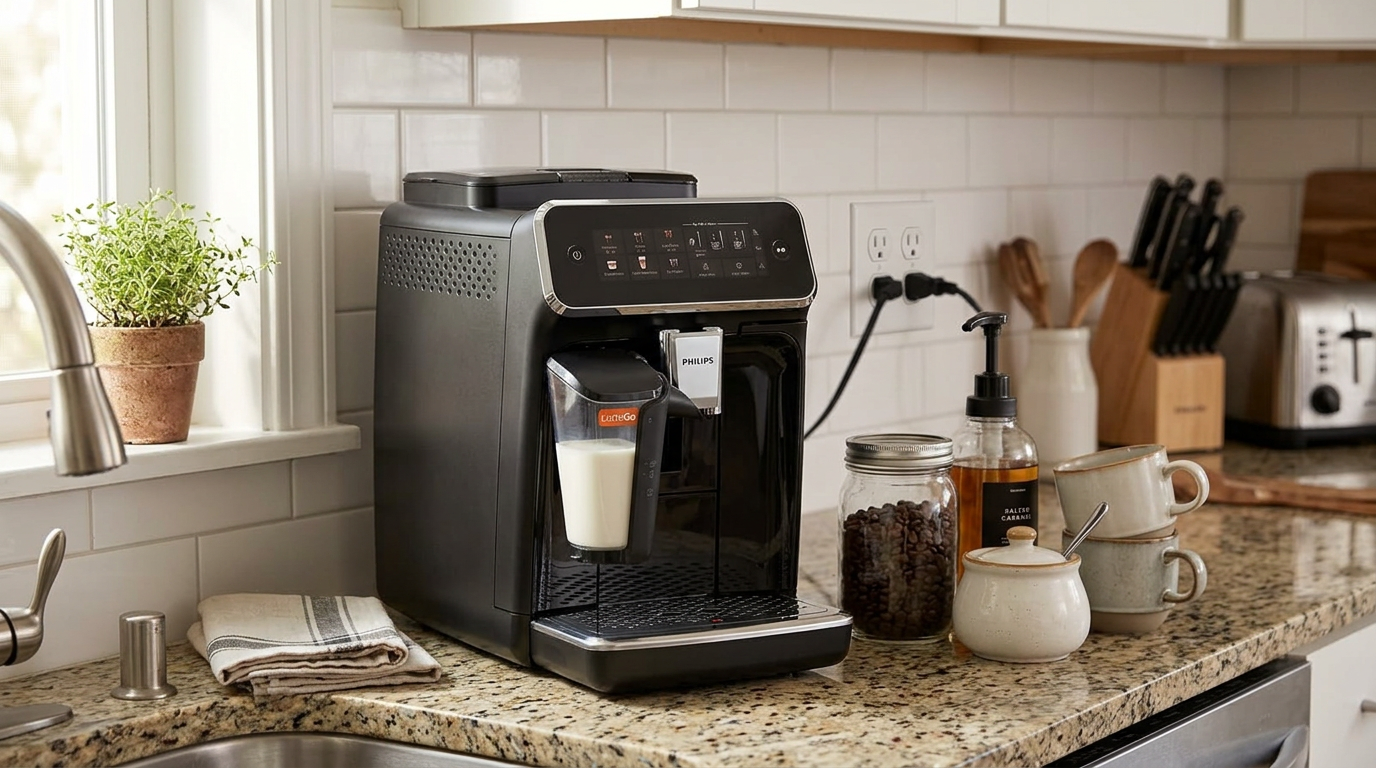
For quiet mornings and easy refills, the 3300 was the more pleasant machine to live with.
My scorecard
These are my own scores out of 10 from my single reviews, plus quietness and access because they decide this matchup.
Philips 3200
Philips 3300
Overall, I rate the 3200 8.0 and the 3300 8.4. The coffee is the same; the 3300 is simply the nicer machine to live with every morning.
See How Much You’ll SaveWhich one is right for you?
4 quick questionsWhich one should you buy?
It comes down to two questions: do you drink americanos every day, and does noise matter in your home? An americano habit points to the 3200; quiet mornings and iced coffee point to the 3300. Still weighing other options? I rank every model I’ve tested in my guide to the best super-automatic espresso machines.
If you want more drinks than either, my Philips 3200 vs 4300 and Philips 3300 vs 5500 comparisons cover the next step up. The full single reviews are here: Philips 3200 and Philips 3300, and my guide to the best Philips espresso machines ranks the whole range.
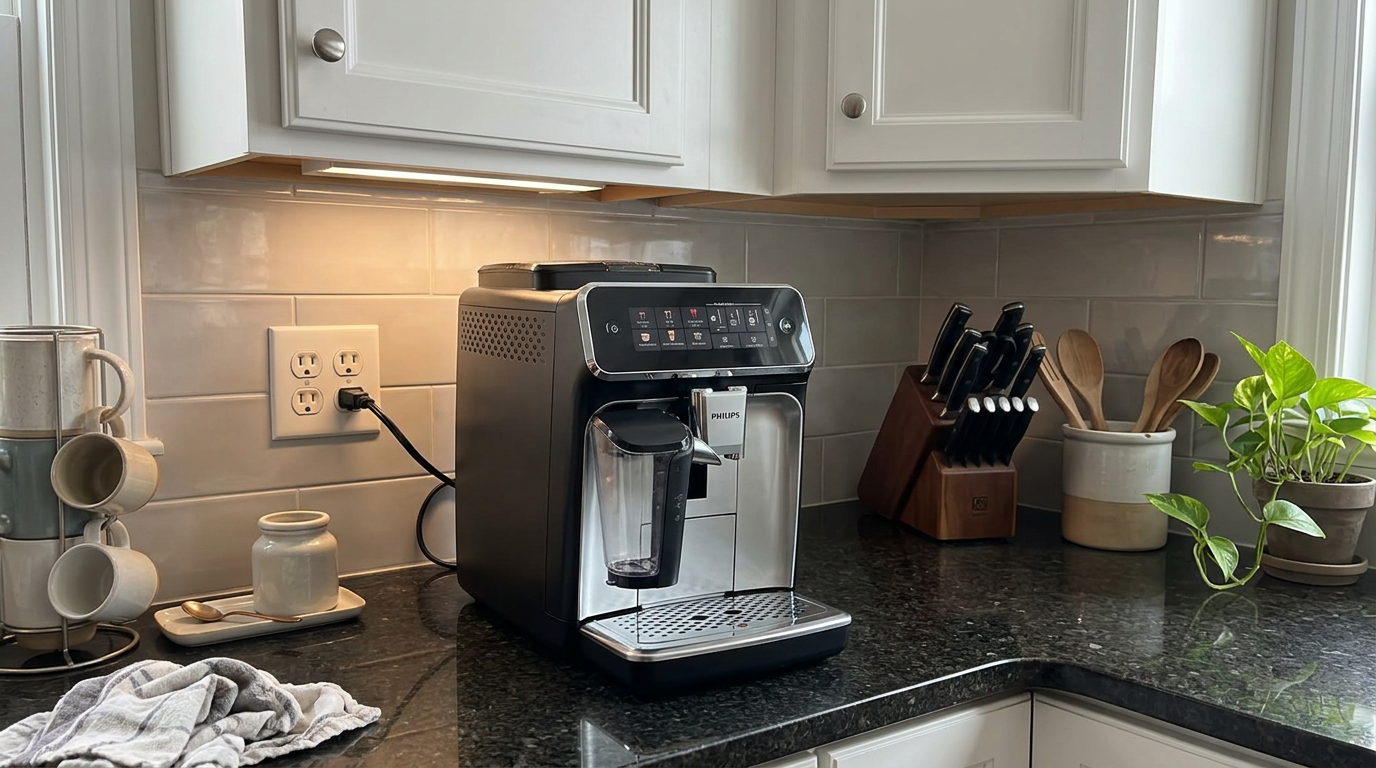
For most homes, the 3300 is the better everyday machine.
- Someone is often asleep when you make coffee
- You want iced coffee
- Your machine sits in a tight spot
- You want the easiest cleaning
- You drink americanos every day
- You want stronger single espresso
- You want silky latte-art milk
- Americanos are your daily drink
- You find it at a clearly lower price
- Noise is not an issue
- You have room beside the machine
- You make coffee while others sleep
- You want iced coffee at one touch
- You want front-access refills
For most homes, my pick is the Philips 3300. It makes the same espresso and the same LatteGo milk drinks as the 3200, but it grinds far more quietly, adds an iced coffee button and lets you refill and empty everything from the front. Brew doubles and it has no real weak spot.
The Philips 3200 is the smarter buy if americanos are your daily drink, or if you find it for noticeably less. In the cup, you give up nothing but iced coffee; in daily life, you give up some quiet and some convenience.
Whichever you choose, grind a few steps finer than the default, brew doubles for espresso and rinse the LatteGo jug after every use. Both reward a little care with years of easy coffee.
Philips 3200 vs 3300 specifications
From manufacturer specifications and my own testing.
| Philips 3200 | Philips 3300 | |
|---|---|---|
| Model | Philips 3200 Series, EP3241/54 | Philips 3300 Series |
| Type | Fully automatic with LatteGo | Fully automatic with LatteGo |
| Drinks | Espresso, coffee, americano, cappuccino, latte macchiato, hot water | Espresso, coffee, cappuccino, latte macchiato, iced coffee, hot water |
| Pump pressure | 15 bar | 15 bar |
| Heating | Thermoblock | Thermoblock |
| Grinder | 100% ceramic, 12 settings | 100% ceramic, 12 settings |
| Strength levels | 3 | 3, about 6 to 8 g |
| Temperature settings | 3 | 3 |
| Noise (measured) | Standard, unsealed lid | 61–62 dB grinding, 62–68 dB brewing |
| Panel | Icon touch panel | Backlit touch icons |
| Milk system | LatteGo, 260 ml | LatteGo, 260 ml, dishwasher safe |
| Water tank | 1.8 L, side access | 1.8 L, front access |
| Bean hopper | 275 g | 275 g, gasket-sealed lid |
| Grounds container | About 12 pucks | About 12 pucks, front access |
| Water filter | AquaClean, included | AquaClean, up to 5,000 cups |
| Power | 1,500 watts | 1,500 watts |
| Dimensions | 9.7 x 17 x 14.6 in | 9.7 x 17 x 14.6 in |
| Weight | About 17.6 lb | About 17.6 lb |
| Warranty | 2 years limited | 2 years |
How I tested and compared them
I used each machine as my everyday coffee maker for four weeks, making espresso, coffee, cappuccinos and latte macchiatos on both, americanos on the 3200 and iced coffee on the 3300.
I weighed doses at each strength, measured TDS and temperatures at the spout, recorded grinder and pump noise with the lid on and off, and timed the LatteGo rinse.
I ran every cleaning routine, tracked how the pucks changed as the burrs broke in, and compared my notes with Philips specifications, owner documentation and published test data.
- Coffee: dose, TDS, body and consistency.
- Milk: foam volume, silkiness and plant milk.
- Workflow: panel, drink menu and refills.
- Ownership: noise, cleaning, water care and footprint.
Philips 3200 vs 3300 FAQ
What is the difference between the Philips 3200 and 3300?
The coffee hardware is the same. The 3300 adds a gasket-sealed bean lid that makes grinding much quieter, an iced coffee button, backlit touch icons and a water tank and grounds bin that pull out from the front. It drops the 3200’s americano button.
Is the Philips 3300 worth it over the 3200?
For most homes, yes, if the price gap is small. You get quieter mornings, iced coffee and easier refills. If americanos are your daily drink or the 3200 is clearly cheaper, the 3200 is still a great buy.
Does the Philips 3300 make better coffee than the 3200?
No. They share the same ceramic grinder, brew group and LatteGo jug. I scored the 3300’s espresso 7.4 and the 3200’s 7.2, which is within day-to-day variation.
How quiet is the Philips 3300?
With its lid closed, the grinder peaked at about 61 to 62 dB in my tests, against 72 to 73 dB with the lid off. That is roughly half as loud to the ear.
Does the Philips 3300 have an americano button?
No. Brew a double espresso on the lowest volume and add hot water from the spout. The 3200 has a dedicated americano button.
Can the Philips 3200 make iced coffee?
Not at one touch. You can pull a double espresso over a full glass of ice, but the 3300’s iced coffee button makes a cooler, more concentrated brew designed for ice.
Do the 3200 and 3300 use the same LatteGo jug?
Yes. Both use the same 260 ml, two-part, tubeless LatteGo jug. It rinsed clean in under 10 seconds in my tests.
Why is the espresso light on both machines?
A single cycle uses about 8 grams of coffee. Brewing a double, two cycles into one cup, gets you to about 16 grams and a much fuller drink.
Are the Philips 3200 and 3300 the same size?
Yes. Both are about 9.7 inches wide, 17 inches deep and 14.6 inches tall, and weigh about 17.6 pounds. The 3300’s tank is at the front, the 3200’s at the side.
How often do you need to descale them?
With the AquaClean filter replaced on time, Philips says up to 5,000 cups. Without it, expect roughly every 300 cups with hard water and about 800 with soft water.

- Our hands-on Philips 3200 Series review
- Our hands-on Philips 3300 review
- Philips product specifications and owner documentation
- Spilling the Beans: How Much Caffeine is Too Much?, U.S. Food and Drug Administration
- Composting and Coffee Grounds, Cornell University