Philips 2200 vs De’Longhi Magnifica Start: cheapest good super-automatic?
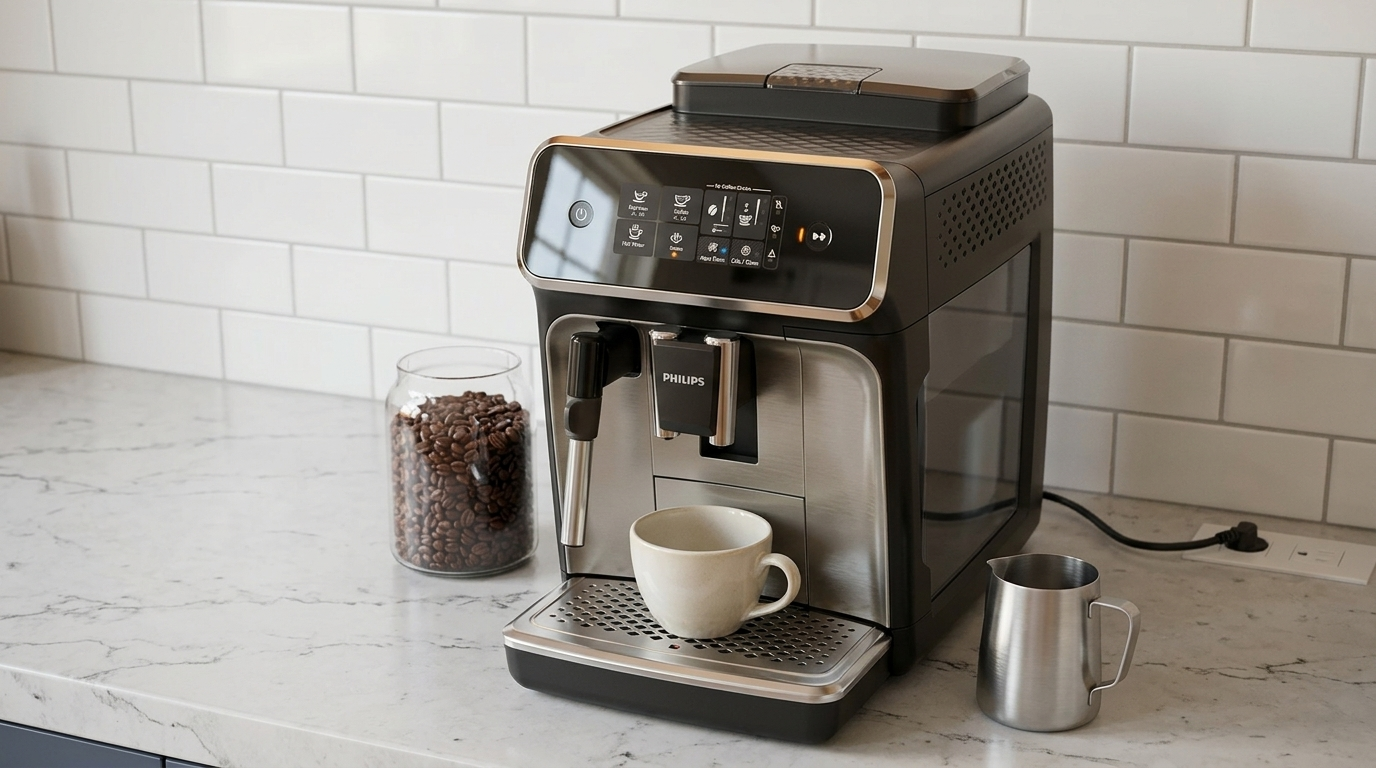
These are two of the most popular ways into bean-to-cup coffee, and they look like twins on paper: grind at one touch, steam milk by hand, no carafe to clean. Then they split: the Philips 2200 doses lightly and makes a smooth, lungo-style cup with a surprisingly good steam tip, while the De’Longhi Magnifica Start shares its brew unit with De’Longhi’s bigger machines and adds a true Americano button. I used each as my only coffee maker for four weeks to find out which entry-level machine is worth your counter.
We choose products independently. We may earn a commission through links on this page; your price stays the same. Affiliate policy
Jargon helpNew to espresso? Tap any dotted term to see what it means.
In this comparison
If you mostly drink espresso or big mugs of black coffee, buy the De’Longhi Magnifica Start. Its espresso was richer and its one-touch Americano made the best long cup of the two by a clear margin. If milk drinks matter more, or you want to learn to steam proper microfoam without buying a manual machine, the Philips 2200 is the better pick: take the sleeve off its frother and the bare steam tip makes glossy milk, and the AquaClean filter in the box means far less descaling.
The two machines
Specs checked November 14, 2026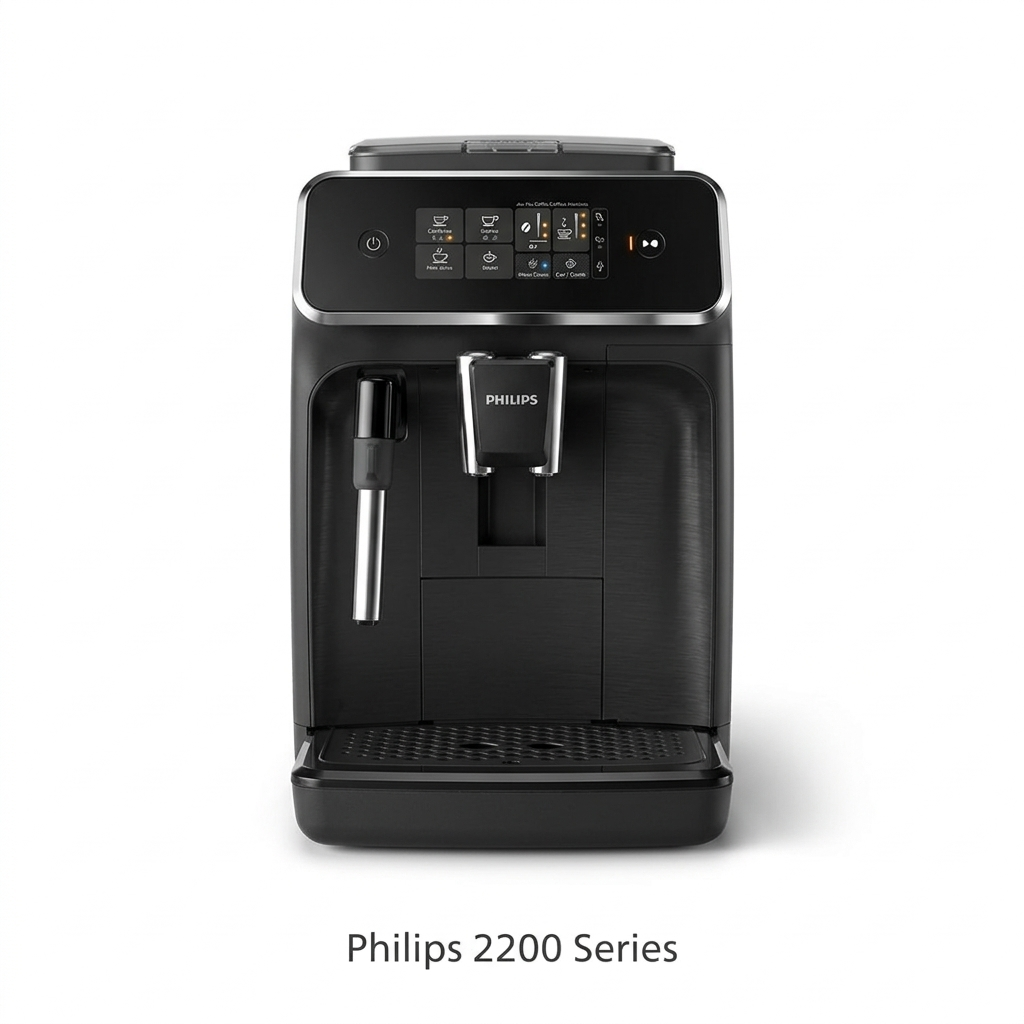
A simple touch panel, smooth espresso and coffee, AquaClean in the box and a frother that hides a real steam tip for silky microfoam.
Check price on Amazon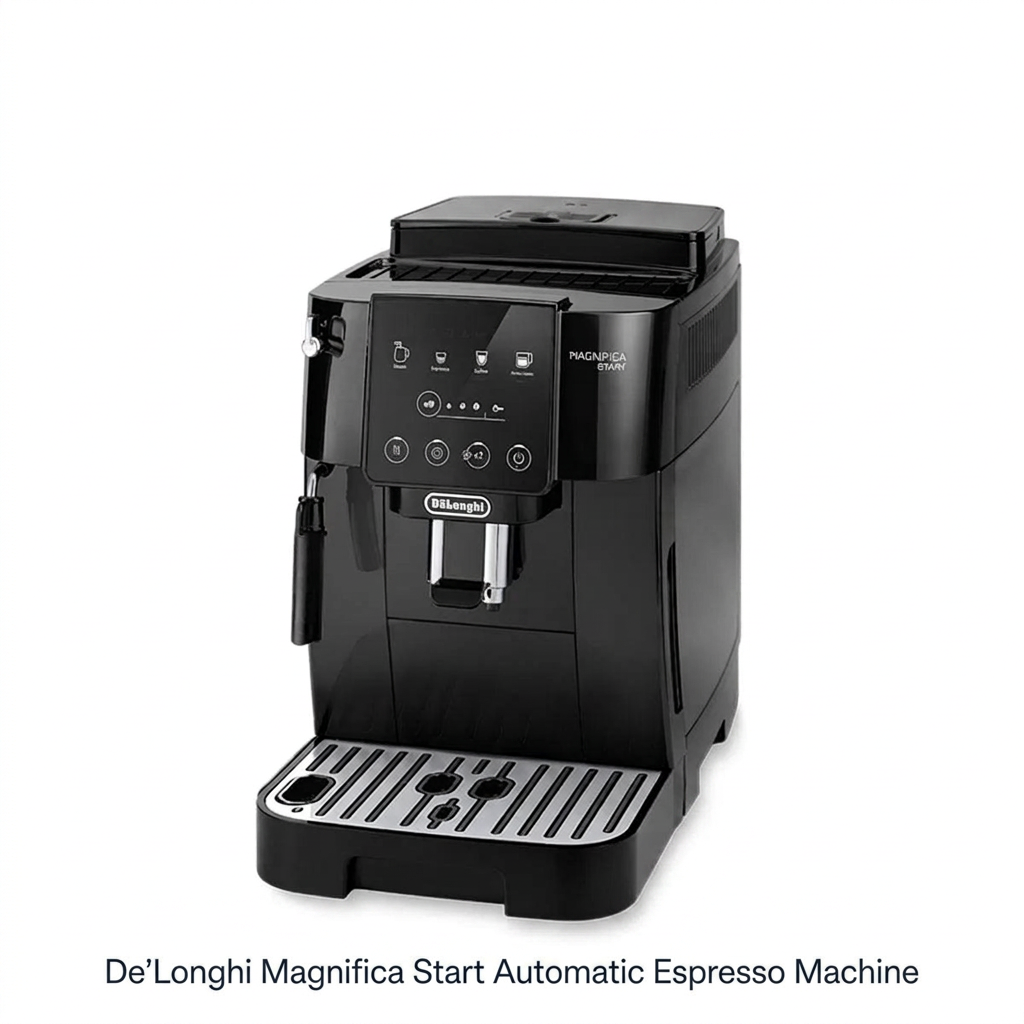
Big-machine espresso from a shared De’Longhi brew unit, a one-touch Americano, 13 grind steps and a steam wand for hand-made milk.
See Today’s PricePhilips 2200 vs Magnifica Start at a glance
- Buy the Magnifica Start for richer espresso and the best one-touch Americano at this level.
- Buy the Philips 2200 for better hand-steamed milk and the least descaling.
- Both have a manual frother, no carafe and very little to clean.
- Neither 2x button makes a strong double, so brew two singles back to back.
Head to head
The better result in each row is marked, based on my testing and the manufacturer specs. Rows where they are equal have no winner.
The tally is not my verdict. Espresso drinkers and latte drinkers will weigh these rows very differently.
| Spec | Philips 2200 | De’Longhi Magnifica Start |
|---|---|---|
| Espressomy tasting, same beans | Smooth, lungo-style | Rich, thick crema ✓ Best |
| Dose | About 6.5 g on medium | Bigger, shared De’Longhi brew unit ✓ Best |
| Long black coffee | Coffee button, smooth | One-touch Americano ✓ Best |
| Milk textureby hand | Silky with sleeve off ✓ Best | Good with sleeve off, takes practice |
| Strength and size levels | Three of each ✓ Best | Three strength levels |
| Water filter | AquaClean included ✓ Best | Filter fitted at setup |
| Grinder | Ceramic, 12 settings | Steel conical, 13 settings |
| Heat-up | Under a minute | About 40 s ✓ Best |
| Hopper lid | Sealed ✓ Best | Not sealed |
| Width | About 9.7 in | About 9.4 in ✓ Best |
| Depth | About 17 in ✓ Best | About 17.3 in |
| Weight | About 16.5 lb ✓ Best | About 19 lb |
| Rows won | 6 | 5 |
Philips 2200 vs Magnifica Start pros and cons
Philips 2200
- Steam tip can make silky microfoam for latte art
- Simple touch panel with three strength and size levels
- AquaClean filter included and brew group comes out
- Small dose makes espresso closer to a lungo
- Only two coffee drinks on the menu
- Steaming takes practice to get the best texture
De’Longhi Magnifica Start
- Rich espresso from the same brew unit as pricier models
- One-touch Americano makes a sweet, full long cup
- Simple to clean, with hot water straight from the wand
- 2x button grinds once, so drinks are weak
- Hopper lid has no seal, so beans go stale faster
- Milk frothing is manual and takes practice
Who should buy which machine?
- Latte and flat white drinkers who will steam
- People who want the least descaling
- Fans of smooth, gentle coffee
- Espresso and Americano drinkers
- Big mugs of black coffee
- Anyone who wants fuller-bodied coffee
Design, size and build
Both are compact, plastic-bodied machines built to fit almost any kitchen. Neither will win design awards, and neither needs to.
The Philips 2200 measures about 9.7 x 17 x 14.6 inches and weighs about 16.5 pounds. It’s light enough to slide forward with one hand.
The De’Longhi Magnifica Start measures about 9.4 x 17.3 x 13.8 inches and weighs around 19 pounds. It is a touch narrower and shorter, but a little heavier.
Height on the counter
Both slide under standard 18-inch wall cabinets with room to spare.
The Philips has a sleek touch panel with icons for espresso, coffee, hot water and steam, plus strength and size buttons. The De’Longhi has backlit touch icons for Espresso, Coffee, Americano, steam and a 2x button, with three bean icons for strength.
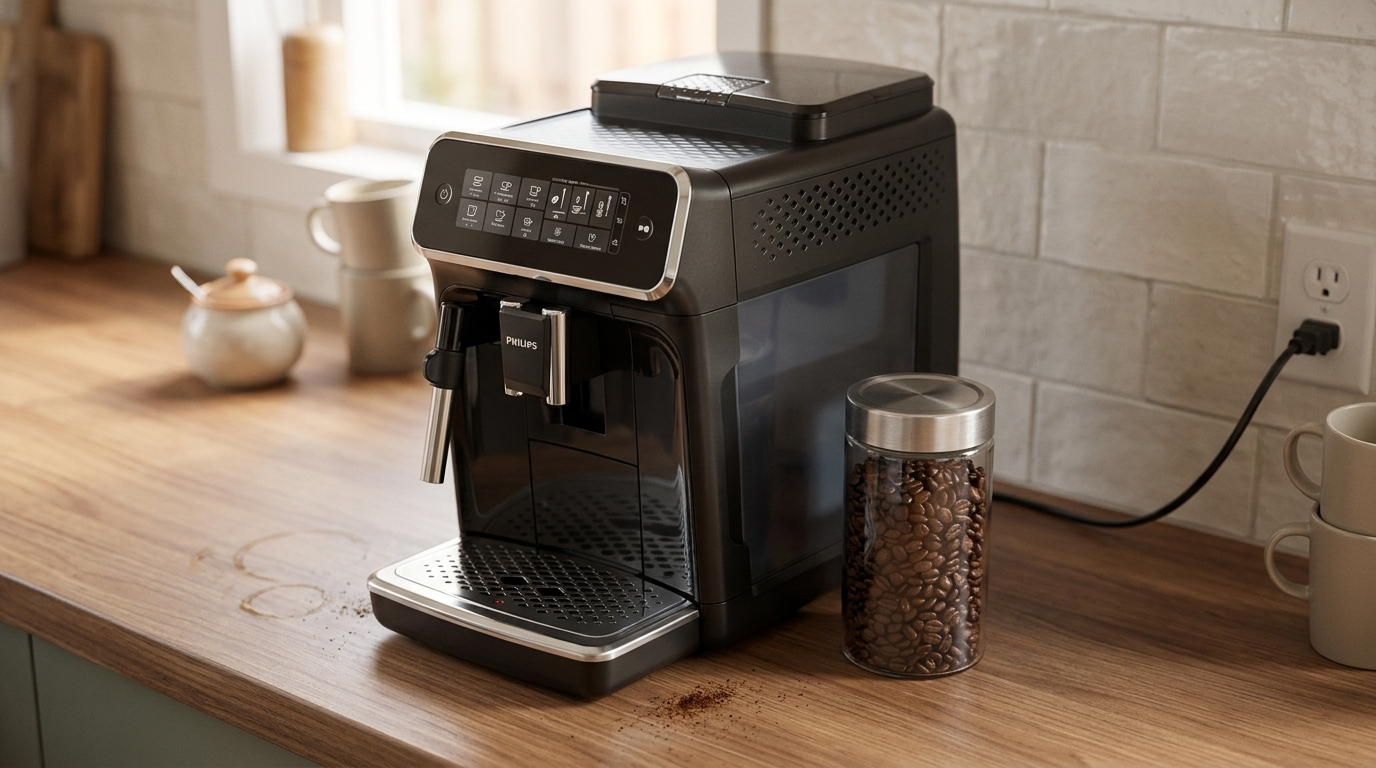
The Philips 2200 keeps its controls to a clean, simple touch panel.
One small build detail made a difference over the month. The Philips hopper lid seals well, while the De’Longhi’s lid isn’t sealed, so beans in it went stale faster.
Our tip: Load only a day or two of beans into the Magnifica Start’s hopper, because its unsealed lid lets beans go stale faster than in a sealed container.
What entry-level super-automatics do well
Both of these are super-automatic✕Super-automaticA machine that grinds, doses, tamps, brews and usually froths milk at the press of a button, with no portafilter to handle. machines with one important shortcut: there is no automatic milk system. You get one-touch coffee and a manual frother for milk.
That shortcut is why they are popular. With no carafe or milk tubes to clean, the daily routine is as short as it gets, and there is less to go wrong.
The trade-off is that every milk drink is made by hand. If you drink one latte a day, that is a minute of steaming. If your house makes four, it adds up.
| What you get | Philips 2200 | Magnifica Start |
|---|---|---|
| Grind, dose and brew | Automatic | Automatic |
| Milk | By hand, frother | By hand, wand |
| Milk system to clean | None | None |
| Removable brew unit | Yes | Yes |
| Profiles or screen | No | No |
If you want one-touch cappuccinos instead, both brands make step-up models with a milk jug or carafe. If you drink mostly black coffee, or enjoy steaming, these two are the sweet spot.
No carafe and no tubes: the frother is the only milk part to clean.
Our tip: Count how many milk drinks your house makes a day before choosing a manual-frother machine, because more than three or four gets tiring by hand.
Setup and controls
Setup took about 15 minutes on each. Rinse the tank, fit the filter, set water hardness with the test strip and let the machine prime.
On the Philips, the AquaClean✕AquaClean filterPhilips’ water filter. Used as directed, it cuts scale so you descale far less often. filter comes in the box. Used as directed, it means far less descaling over the machine’s life.
Both panels are as simple as automatic machines get. The Philips gives you three strength levels and three sizes for each drink, and the De’Longhi gives you three strength levels and a few drinks.
| Control | Philips 2200 | Magnifica Start |
|---|---|---|
| Drinks | Espresso, coffee | Espresso, Coffee, Americano |
| Strength | 3 levels | 3 bean icons |
| Size | 3 levels | Adjustable |
| Milk | Steam button, manual frother | Steam button, manual wand |
| Hot water | From the frother | From the wand |
| Double | 2x, single grind | 2x, single grind |
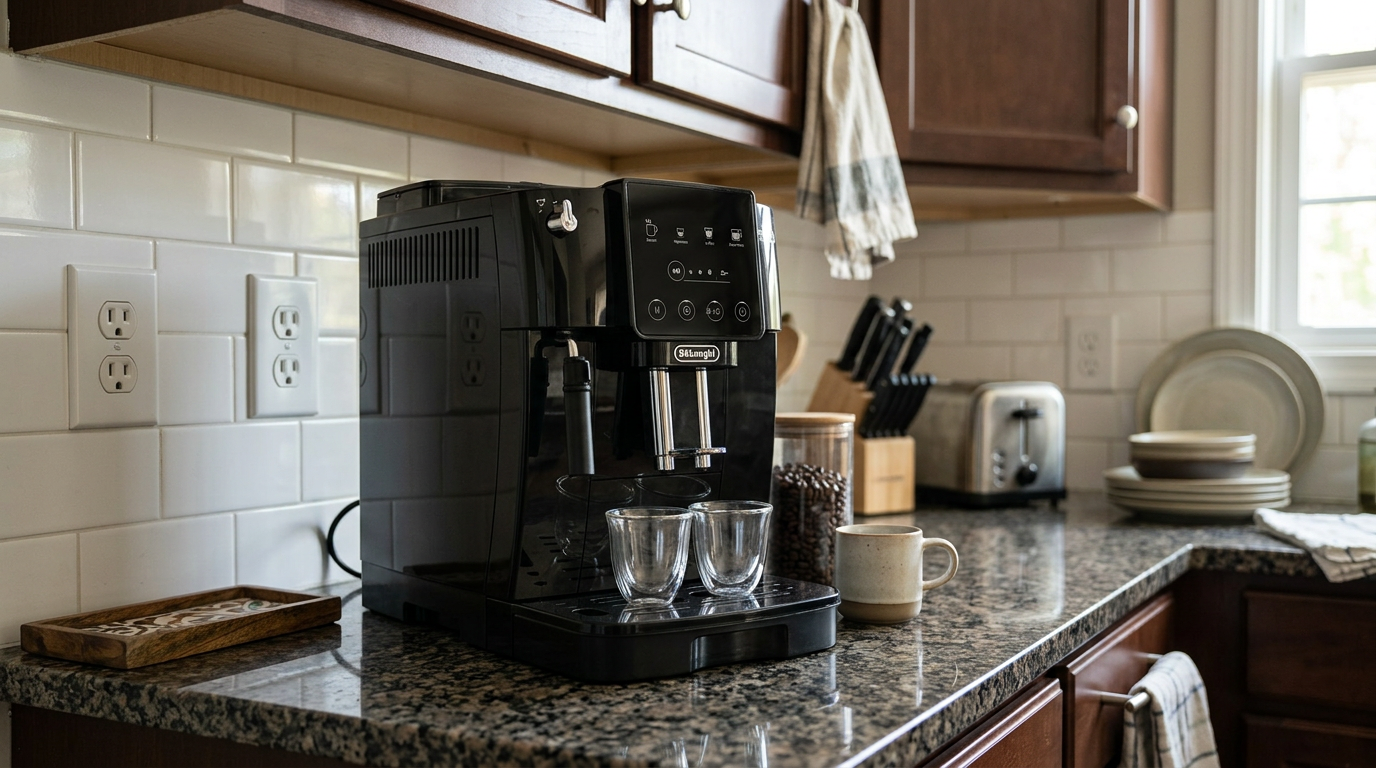
The Magnifica Start adds a one-touch Americano to the basic menu.
Our tip: Set the water hardness with the test strip on day one on both machines, because a wrong setting makes the descale alert arrive late.
Grinder and dose
The dose✕DoseThe weight of ground coffee used for one drink. A bigger dose gives a stronger, fuller cup. is the most important difference between these two, and it explains almost everything about how they taste.
I stopped the Philips right after it ground and weighed the coffee. On medium strength and medium size, about 6.5 grams of coffee made about 40 grams of espresso.
That is a brew ratio✕Brew ratioThe weight of dry coffee compared with the weight of liquid espresso. 1:2 means 18 g of coffee makes 36 g of espresso. of roughly 1:6. A classic espresso is closer to 1:2, and a lungo✕LungoA “long” espresso made by running more water through the same coffee. Lighter in body and slightly more bitter than a regular shot. sits around 1:3 to 1:4, so the Philips espresso button really makes something closer to a lungo.
A typical café espresso uses about 14 to 18 grams for a double. Even on its strongest setting, the Philips uses about half that.
The Magnifica Start shares its brew unit with De’Longhi’s more expensive machines, which take a much bigger dose. On the Magnifica Evo, which uses the same unit, I measured up to about 15 grams.
Coffee per espresso
Philips weighed on my scale; De’Longhi figure from the same brew unit on the Magnifica Evo.
| Grinder detail | Philips 2200 | Magnifica Start |
|---|---|---|
| Burrs | Ceramic burrs✕Ceramic burrsGrinding parts made of hard ceramic. They wear slowly and stay cool, which helps protect the coffee’s aroma. | Steel conical burrs✕Conical burrsA cone-shaped burr that turns inside a ring-shaped burr. The gap between them sets how fine the coffee is ground. |
| Settings | 12 | 13 |
| Adjust while | Grinding | Grinding |
| Strength levels | 3 | 3 |
| Hopper lid | Sealed | Not sealed |
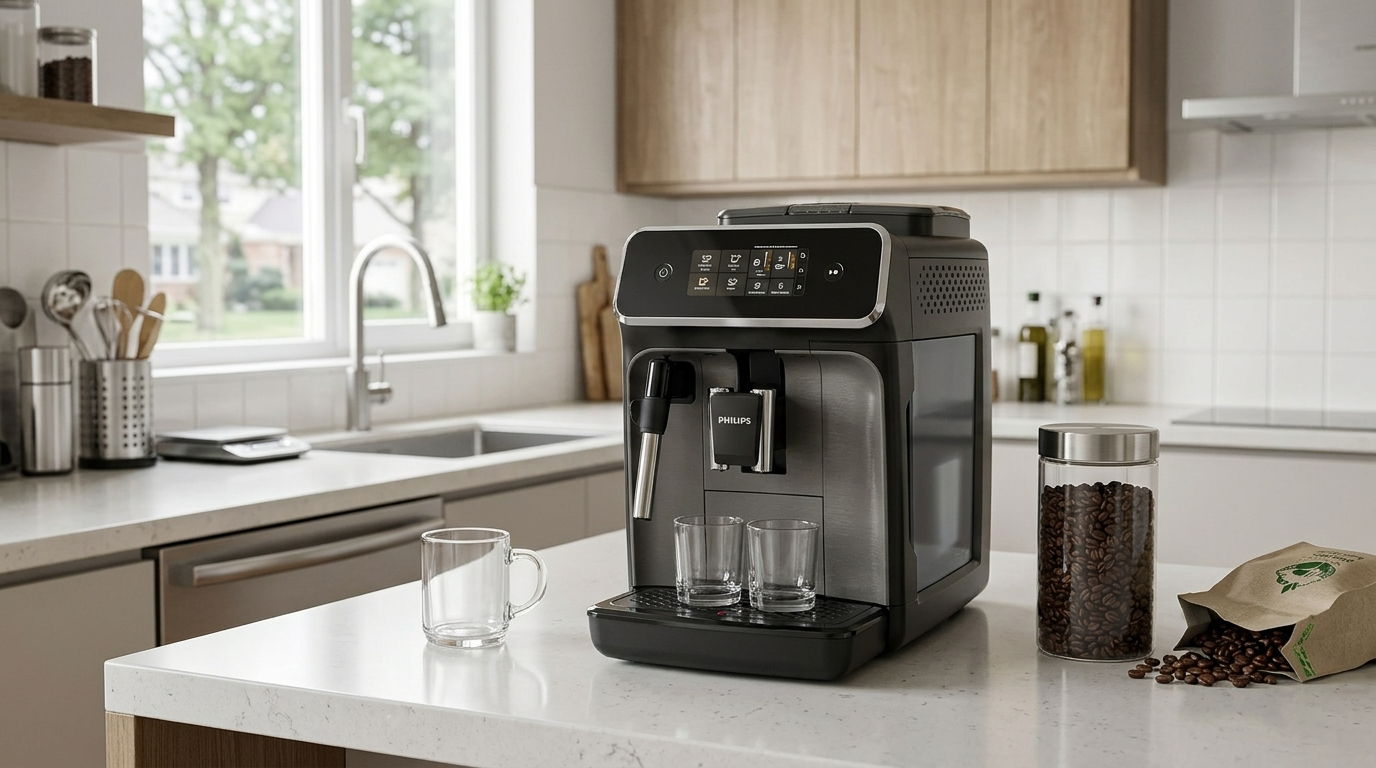
The Philips grinder is fine; its small dose is what keeps the espresso mild.
Our tip: Use the smallest size with the strongest setting on the Philips, because that is the shortest, fullest espresso it can make.
Espresso quality
With the same beans, the De’Longhi made the better espresso. The Philips made a pleasant, easy-drinking cup that just isn’t as concentrated.
With a medium-dark blend at grind setting 3 and three beans of strength, the Magnifica Start’s espresso had a thick, dark, persistent crema✕CremaThe golden, foamy layer on top of a fresh espresso. It forms when pressure pushes oils and gases out of the coffee.. Moving from the middle of the range down to setting 3 transformed it.
On the Philips, with recently roasted beans, I got a consistent, smooth espresso. On high strength and medium size, the shot weighed about 38 grams with a visible layer of crema.
I measured the Philips espresso in the cup at about 154 to 158°F, or 68 to 70°C. That is a good serving temperature.
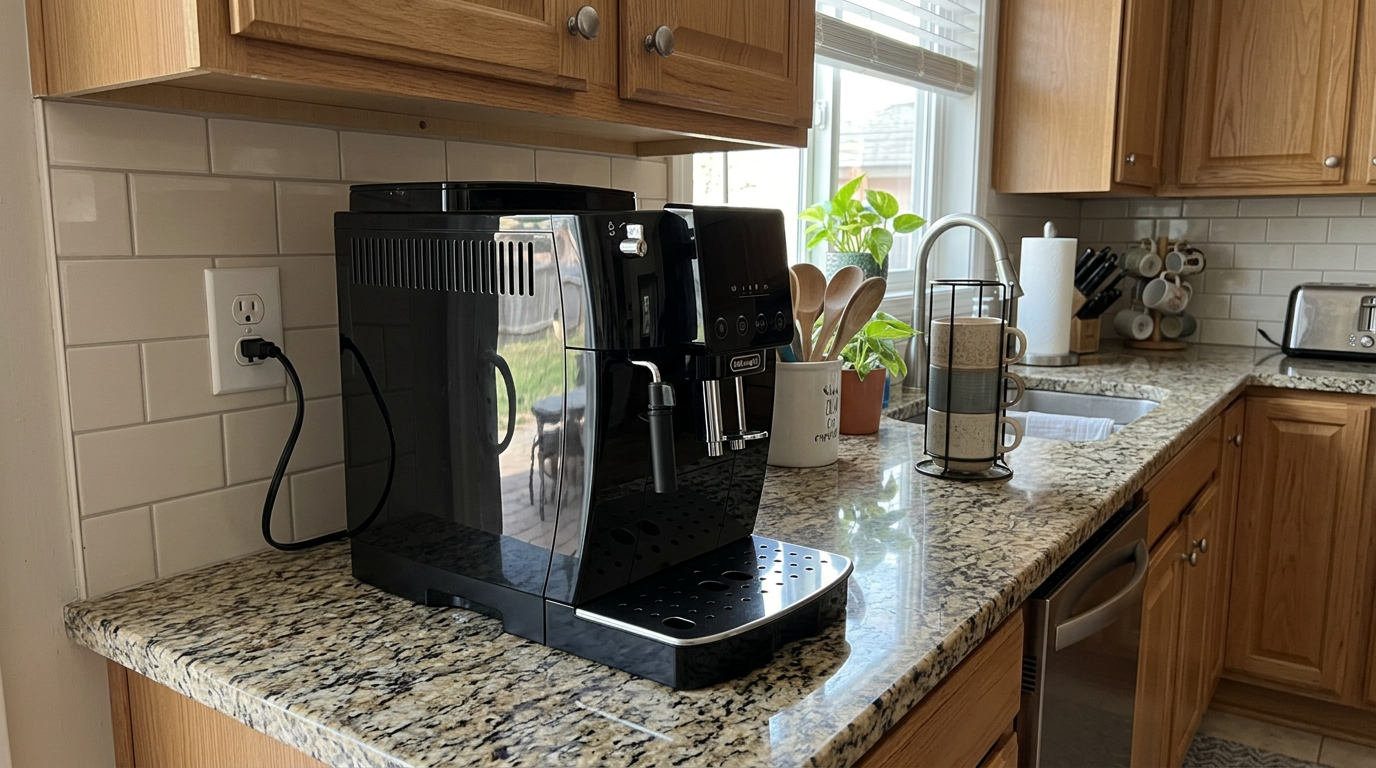
The Magnifica Start’s espresso had a thick, persistent crema at grind setting 3.
My espresso ratings
Scores out of 10 for body, crema, sweetness and consistency.
| What you taste | Philips fix | De’Longhi fix |
|---|---|---|
| Thin, watery | Smallest size, strongest setting | Grind 3, three beans |
| Bitter | Use small or medium size | Shorter volume |
| Weak double | Two singles, not 2x | Two singles, not 2x |
| Pale crema | Fresher beans | Fresher beans, fill hopper less |
Long coffee and the Americano
For people who drink big mugs of black coffee, this is the section that matters. The De’Longhi wins it clearly.
The Magnifica Start has a true one-touch americano✕AmericanoEspresso topped up with hot water. It keeps the espresso flavor but gives you a longer, milder drink.. It brews espresso and then adds hot water, which made a sweeter, fuller long cup than any coffee button.
Magnifica Start black drinks, my scores
Scores out of 10 from my single review of the Start.
Its plain Coffee button pushes a mug of water through one dose. The finish was thin and slightly bitter, which is why the Americano exists.
Running a lot of water through a small puck over-extracts it, which is why long coffee buttons often taste bitter. Adding water after brewing avoids that.
The Philips has only espresso and coffee. On medium size with high strength, its coffee gave me about 3.9 fluid ounces with nice crema, at about 162°F.
For a bigger mug on the Philips, I brewed a coffee and topped it up with hot water from the frother. That worked, but it’s two steps instead of one.
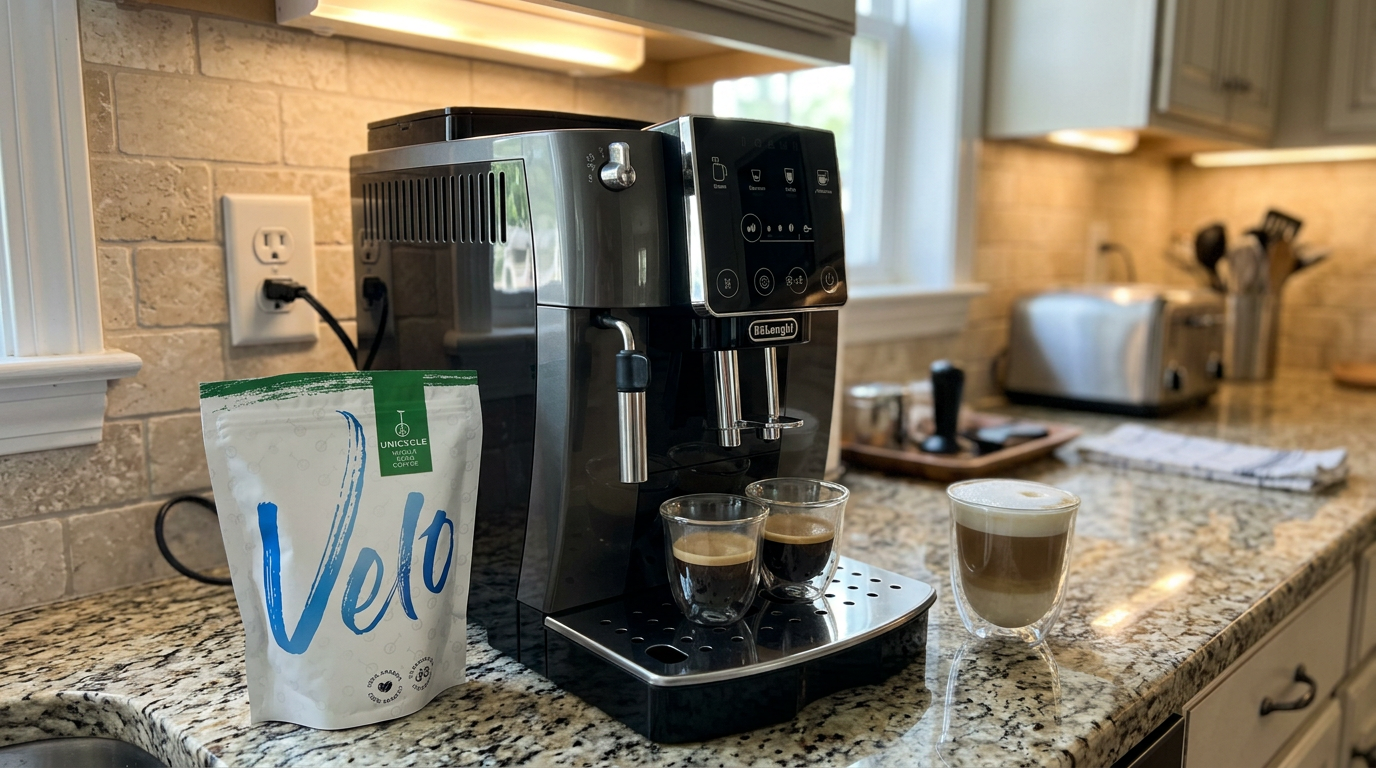
The one-touch Americano was the best long black coffee of the month.
Our tip: Use the Americano button for every big mug on the Magnifica Start, because the Coffee button makes a thinner, more bitter cup from the same beans.
Is It On Sale? Check NowMilk drinks and steaming
Neither machine has a carafe. Both use a manual frother with a removable sleeve, and that turned out to be one of the most interesting parts of this test.
Sleeve on: easy foam
With the sleeve fitted, both work like a Panarello✕Panarello wandA steam wand with a sleeve that sucks in air for you. It makes big, foamy milk easily but is harder to use for latte art. wand. The sleeve pulls in air for you, and you get big, foamy milk for a cappuccino in under a minute.
Sleeve off: real microfoam
Pull the sleeve off the Philips and you find a bare steam tip. With it, I could make glossy microfoam✕MicrofoamMilk foam with bubbles so small you can barely see them. It looks glossy, like wet paint, and blends into the coffee. for flat whites and simple latte art.
My method: about 120 ml, or 4 fluid ounces, of cold whole milk in a small stainless pitcher. Two or three seconds of air at the start, then sink the tip near the side to start a whirlpool, and stop at around 140 to 150°F when the pitcher becomes too hot to hold.
Stopping at around 140°F is not just about comfort. Research from the University of Camerino found steamed milk foam is most stable at about 60°C.
The De’Longhi also works with the sleeve off, but it took me longer to get consistent. My milk scores climbed from 5.0 in week one, sleeve on, to 8.4 in week four, sleeve off.
My Magnifica Start milk scores, by week
Practice pays off on both machines.
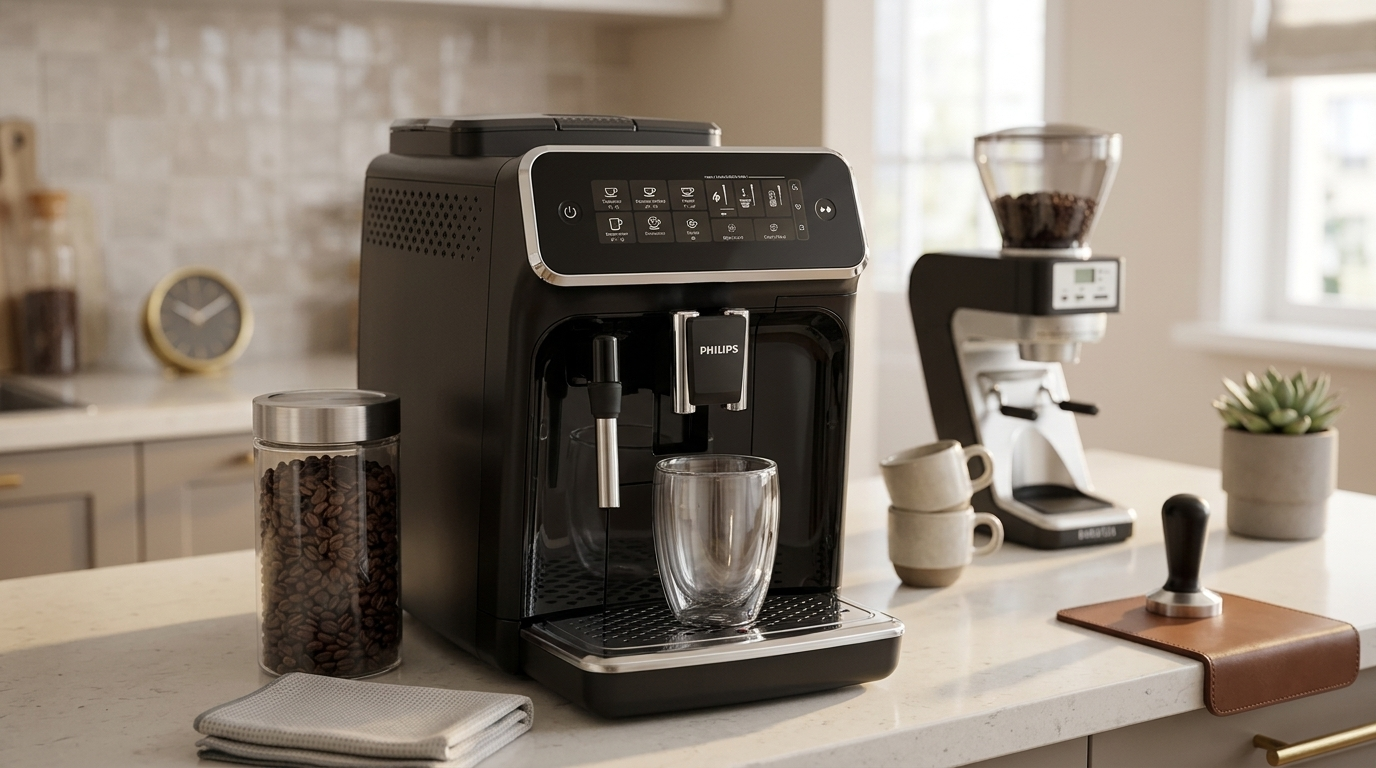
With the sleeve off, the Philips steam tip makes glossy microfoam.
| Milk detail | Philips 2200 | Magnifica Start |
|---|---|---|
| Frother | Sleeve plus bare steam tip | Panarello sleeve, removable |
| Easy foam | Sleeve on | Sleeve on |
| Microfoam | Sleeve off, easier | Sleeve off, more practice |
| Latte art | Possible with practice | Possible with practice |
| Hot water | From the frother, about 183°F | From the wand |
Cleaning and upkeep
With no carafe and no tubes, both are among the easiest machines to keep clean. You wipe and purge the frother after milk, empty the tray and grounds, and rinse the brew group weekly.
The Philips brew group slides out of the side for a rinse under the tap. The De’Longhi brew unit comes out too, and both should be rinsed with water only, never soap.
The De’Longhi needs no tablets for routine cleaning. The Philips AquaClean filter cuts descaling dramatically if you replace it when prompted.
My daily hands-on cleaning time
My estimate of hands-on time per day, not counting automatic rinses.
| When | Philips 2200 | Magnifica Start |
|---|---|---|
| After milk | Purge and wipe the frother | Purge and wipe the wand |
| Daily | Empty tray and grounds | Empty tray and grounds |
| Weekly | Rinse the brew group | Rinse the brew unit, water only |
| When prompted | Replace AquaClean, lubricate group | Descaling✕DescalingRunning a mild acid through the machine to dissolve the mineral scale that hard water leaves in the heater and pipes. |
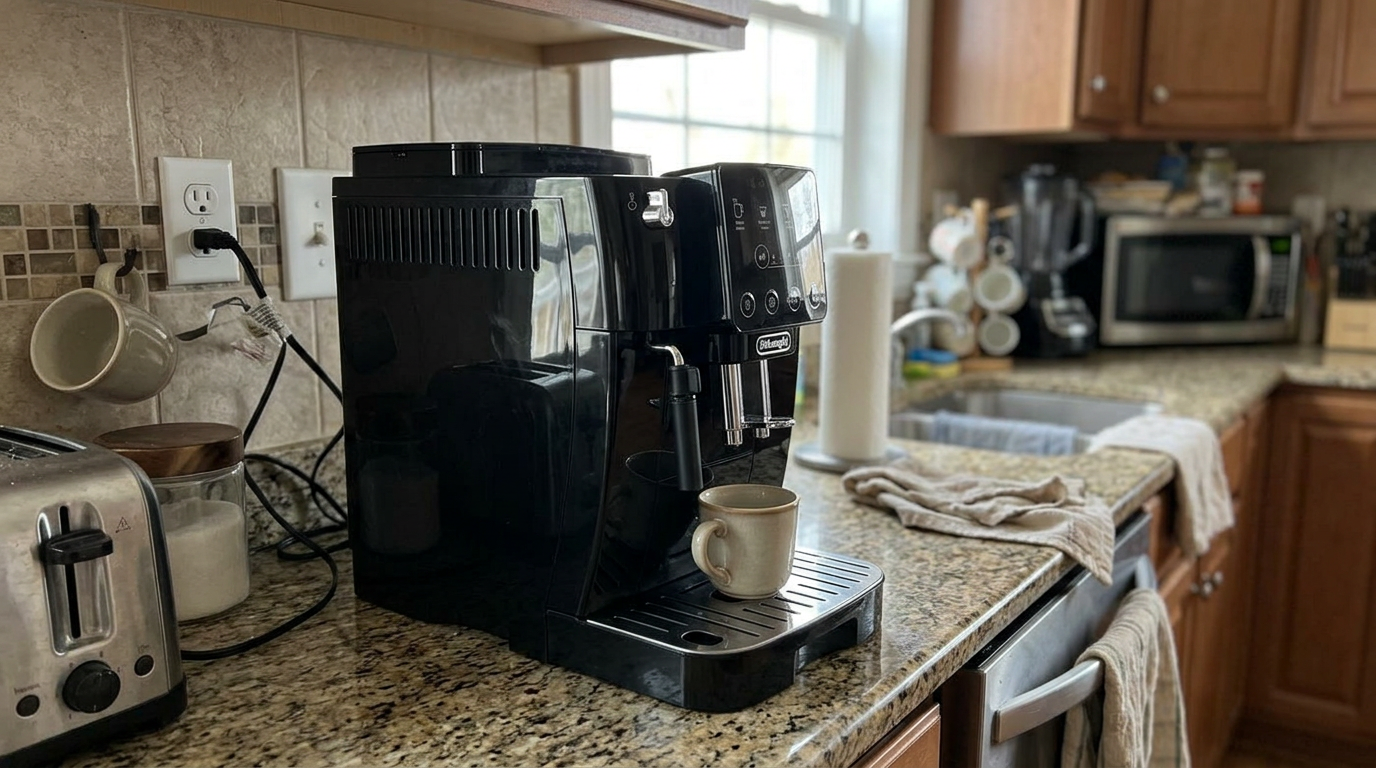
No carafe and no tubes: both machines are quick to clean.
Our tip: Purge and wipe the steam wand within seconds of frothing on both machines, because dried milk blocks the air hole and ruins the next drink.
Noise and speed
Both heat up quickly with a thermoblock✕ThermoblockA compact heater that warms water as it flows through a metal block, instead of keeping a whole boiler hot. It heats up fast.. The Magnifica Start was ready in about 40 seconds, and the Philips was ready in under a minute.
Noise is typical for entry-level machines. The grinders make a short burst, and the brew units give a soft mechanical clunk as they press and eject the puck.
The steam wands are the loudest part on both. Steaming milk makes a steady hiss, and it’s the bit most likely to wake someone in a small apartment.
| Task | Philips 2200 | Magnifica Start |
|---|---|---|
| Heat-up from cold | Under a minute | About 40 s |
| Espresso | About 1 min | About 1 min |
| Americano or long coffee | About 1.5 min | About 1.5 min |
| Steam for a cappuccino | About 1 min | About 1 min |
| Cappuccino, switch-on to cup | About 3 min | About 3 min |
Speed is effectively a tie. The one thing that slows both down is steaming, because the machine has to switch from brewing to steam.
Both machines heat up in under a minute with a thermoblock.
Water, beans and supplies
The Magnifica Start’s 60-ounce tank, about 1.8 liters, lasted two to three days for two of us. The Philips tank is the same 1.8 liters and lasted about as long.
The Philips uses less coffee per drink, so a bag lasts longer. That is the one upside of its small dose.
| Bean type | Philips 2200 | Magnifica Start |
|---|---|---|
| Medium roast | Smooth, easy-drinking | Bright and sweet |
| Medium-dark blend | Best match | Best match, grind 3 |
| Light roast | Thin | Can taste sour |
| Oily or flavored | Avoid | Avoid |
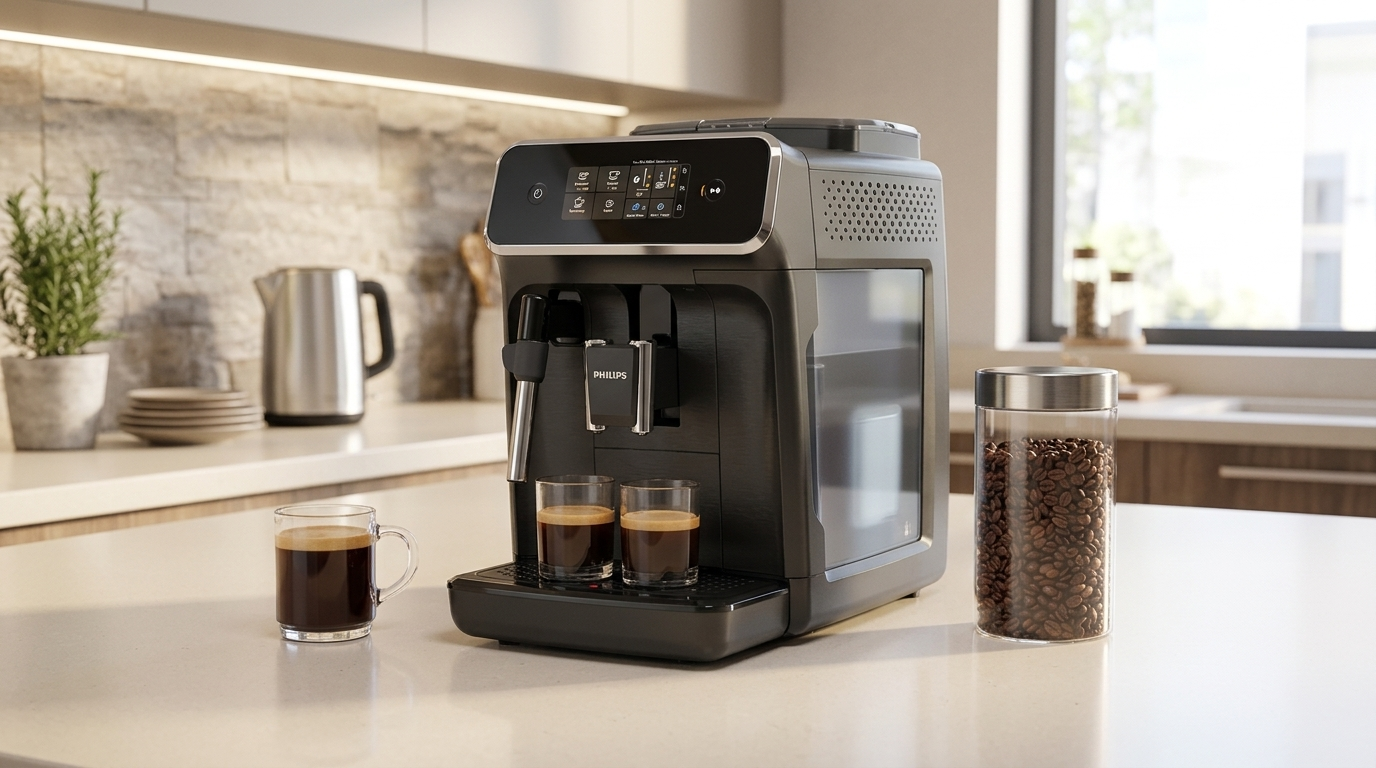
The Philips uses less coffee per drink, so a bag of beans lasts longer.
Our tip: Buy medium or medium-dark, dry-looking beans for both machines, because oily beans clog grinders and stick in the hopper.
How four weeks went
A machine can feel very different on day one and day thirty. Here is how my view of each changed.
| Week | Philips 2200 | Magnifica Start |
|---|---|---|
| 1 | Smooth coffee from day one; sleeve-on foam was stiff | Grind moved to 3; espresso immediately richer |
| 2 | Learned smallest size, strongest setting for espresso | Americano became my default mug |
| 3 | Sleeve off; first glossy microfoam | Sleeve off; milk improving |
| 4 | Simple latte art; AquaClean meant no descale alerts | Milk scores up to 8.4; stopped using 2x entirely |
By the end, both had earned their place. I reached for the De’Longhi for anything black and for the Philips whenever I wanted a flat white.
If you can only have one, think about what you drink before noon. Black coffee drinkers will be happier with the De’Longhi; latte drinkers with the Philips.
Getting the most from each
- Philips: smallest size and strongest setting for espresso, and top up coffee with hot water for big mugs.
- Philips: take the sleeve off after a week and learn the bare steam tip.
- Magnifica Start: grind setting 3, three beans and the Americano button for mugs.
- Magnifica Start: load only a day or two of beans, and brew two singles instead of 2x.
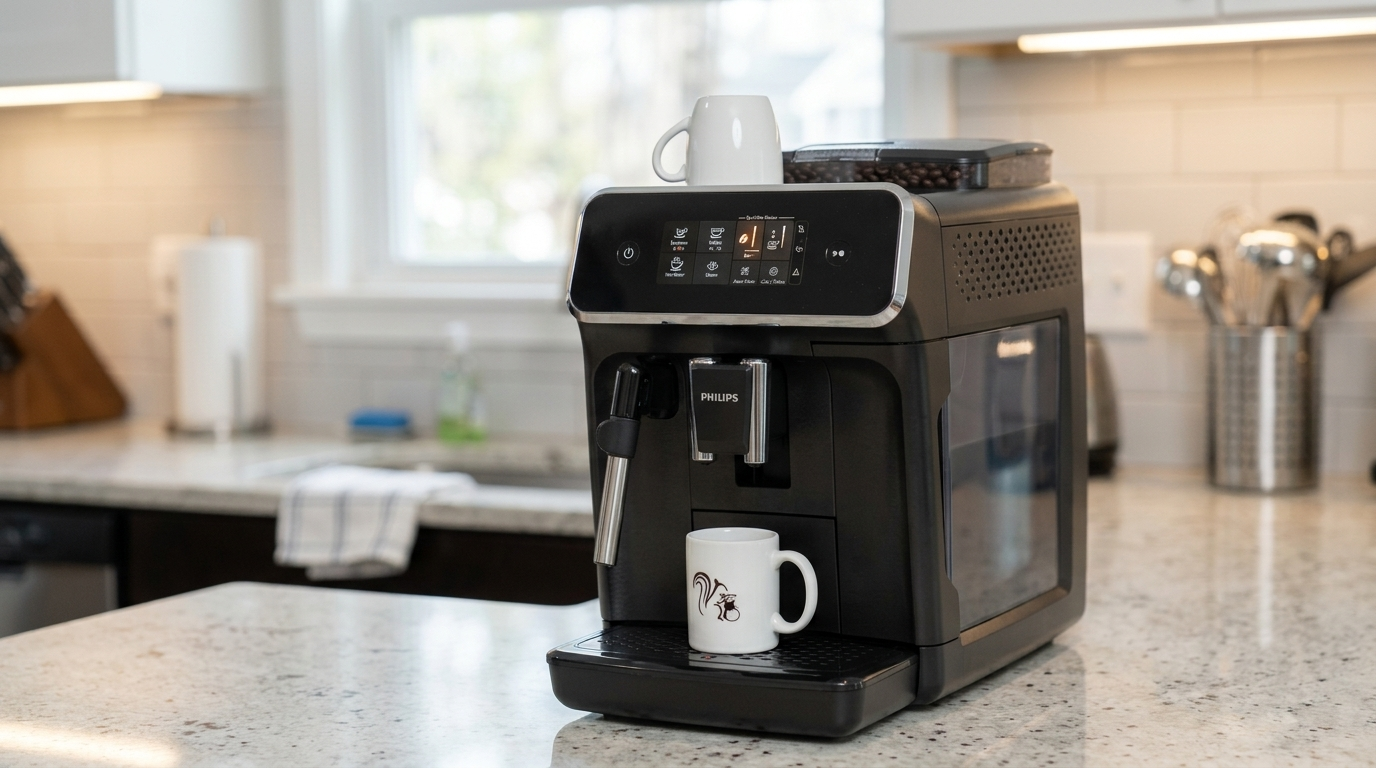
Once I learned the steam tip, the Philips made the better flat white.
Our tip: Practice steaming with water and a drop of dish soap first, because it behaves a lot like milk and you won’t waste a carton while you learn the whirlpool.
Mistakes to avoid on each
Both entry-level machines are simple, which makes their few traps easy to fall into. These were the ones I hit most.
| Machine | Mistake | Better habit |
|---|---|---|
| Philips 2200 | Expecting a café-style ristretto | Smallest size, strongest setting |
| Philips 2200 | Using the largest espresso size | Use small or medium |
| Philips 2200 | Steaming with the tip in the center | Tip near the side, start a whirlpool |
| Philips 2200 | Too much air at the start | Two or three seconds of air only |
| Magnifica Start | Using 2x for a strong double | Brew two singles |
| Magnifica Start | Using Coffee for a big mug | Use the Americano button |
| Magnifica Start | Filling the hopper for the week | Load a day or two at a time |
| Magnifica Start | Washing the brew unit with soap | Rinse with water only |
On the Philips, steaming technique made the biggest difference. Keeping the tip near the side of the pitcher so the milk spun turned big bubbles into silky microfoam.
On the De’Longhi, the 2x button was the biggest trap. It grinds once and doubles the water, so the drink tastes weak; two singles back to back fixed it.
Two singles back to back beat the weak 2x button on both machines.
Our tip: Purge the steam wand for two seconds before steaming on both machines, because it clears condensed water that makes milk wet and bubbly.
Real-life scenarios
Specs only go so far. These are the situations where one machine clearly pulled ahead during my testing.
The one-touch Americano was sweet and full. The Philips coffee button was smooth but needed topping up.
Sleeve off, the Philips steam tip made glossy microfoam in about four days of practice.
The De’Longhi brew unit’s bigger dose gave a thick, persistent crema. The Philips shot was closer to a lungo.
The AquaClean filter in the box cut descaling right down.
The Philips makes an easy-drinking, smooth cup that never tastes harsh.
Two singles back to back made richer espressos on the Start. On both, avoid the weak 2x button.
For black coffee drinkers, the Magnifica Start was the better daily machine.
My scorecard
These are my own scores out of 10 after four weeks with each machine. I added black coffee and descaling because they decide this matchup.
Philips 2200
De’Longhi Magnifica Start
Overall, I rate the Magnifica Start 8.4 and the Philips 2200 8.2 in this matchup. The De’Longhi makes the better coffee; the Philips makes milk easier to get right and needs less descaling.
See How Much You’ll SaveWhich one is right for you?
4 quick questionsWhich one should you buy?
It comes down to one question: do you drink your coffee black or with milk? Answer that and the choice makes itself.
Think about your water too. If it is hard, the Philips AquaClean filter will save you a lot of descaling over the years; if it is soft, that advantage shrinks. For the wider picture beyond this matchup, see my guide to the best Philips espresso machines.
If you want one-touch milk instead of steaming, look at my Philips 2200 vs 3200 comparison or the Magnifica Evo review. For more detail, read my Philips 2200 review and Magnifica Start review.
For milk lovers willing to steam, the Philips 2200 punches above its weight.
- You drink lattes and flat whites
- You want to learn to steam milk
- Your water is hard
- You like mild, smooth coffee
- You want strong, short espresso
- You drink big mugs of black coffee
- You want an Americano button
- You drink espresso or Americanos
- You like rich, full-bodied coffee
- You mostly drink black coffee
- You want the simplest cleaning
- You want the silkiest milk with little practice
- You keep a week of beans in the hopper
- You want a strong one-press double
For most people buying their first bean-to-cup machine, my pick is the De’Longhi Magnifica Start. Its espresso was richer, its one-touch Americano made the best long black coffee of the test, and cleaning is as simple as it gets.
The Philips 2200 is the smarter buy for milk lovers. Its bare steam tip makes silky microfoam once you learn it, the AquaClean filter cuts descaling, and its gentle coffee suits people who find espresso harsh.
Whichever you choose, skip the 2x button, use fresh beans and wipe the wand after every use. Both are good, honest machines at the entry level.
Philips 2200 vs Magnifica Start specifications
From manufacturer specifications and my own testing.
| Philips 2200 | De’Longhi Magnifica Start | |
|---|---|---|
| Model | Philips 2200 Series | De’Longhi Magnifica Start |
| Type | Fully automatic, manual frother | Fully automatic, manual wand |
| Drinks | Espresso, coffee, hot water, steam | Espresso, Coffee, Americano, steam, hot water |
| Pump | 15 bar | 15 bar |
| Heating | Thermoblock | Thermoblock, about 40 s |
| Grinder | Ceramic, 12 settings | Steel conical, 13 settings |
| Dose | About 6.5 g on medium | De’Longhi large brew unit |
| Strength levels | 3 | 3 |
| Milk | Frother sleeve plus steam tip | Panarello wand, removable sleeve |
| Water filter | AquaClean included | Filter included |
| Water tank | 1.8 liters | About 60 oz |
| Dimensions (W x D x H) | 9.7 x 17 x 14.6 in | 9.4 x 17.3 x 13.8 in |
| Weight | About 16.5 lb | About 19 lb |
How I tested and compared them
I used each machine as my everyday coffee maker for four weeks, making espresso, coffee, Americanos, cappuccinos and flat whites, plus hot water for tea.
I weighed doses right after grinding, weighed shots, measured drink and hot water temperatures with a probe thermometer and steamed whole milk with the sleeve on and off.
I ran every cleaning routine and compared my notes with Philips and De’Longhi specifications, owner documentation and published coffee research.
- Coffee: dose, ratio, crema and body.
- Milk: sleeve-on foam and sleeve-off microfoam.
- Workflow: controls, 2x drinks and morning routine.
- Ownership: cleaning, descaling, beans and footprint.
Philips 2200 vs Magnifica Start FAQ
Is the Philips 2200 or De’Longhi Magnifica Start better?
For espresso and black coffee, the Magnifica Start. For hand-steamed milk drinks and the least descaling, the Philips 2200.
Why is the Philips 2200 espresso weak?
It uses a small dose, about 6.5 grams on medium strength, so its espresso has a ratio of roughly 1:6. That makes it closer to a lungo.
Does the Magnifica Start have an Americano button?
Yes. It brews espresso and then adds hot water, and it made the best long black coffee in my testing, scoring 8.6 out of 10.
Can either make latte art?
Yes, with practice. Take the frother sleeve off and use the bare steam tip. The Philips was easier to get silky microfoam from.
Should I use the 2x button?
No, on either machine. It grinds once and runs double the water, so the drink is weak. Brew two singles back to back instead.
Which is easier to clean?
Both are easy, with no carafe or tubes. The Magnifica Start needed about a minute a day for black coffee only.
Does the Philips 2200 include a water filter?
Yes, the AquaClean filter is in the box. Replaced when prompted, it means far less descaling.
Which is smaller?
They’re very close. The Magnifica Start is about 9.4 inches wide and 13.8 inches tall; the Philips 2200 is about 9.7 inches wide and 14.6 inches tall.
How hot is the coffee on the Philips 2200?
I measured espresso at about 154 to 158°F in the cup and coffee at about 162°F.
Do I need special beans?
Use fresh medium or medium-dark, dry-looking beans. Avoid oily or flavored beans on both.
Can I use pre-ground decaf in either machine?
Yes, both have a pre-ground option for a single scoop, so you can make decaf without emptying the hopper.
Do both have a removable brew unit?
Yes. Both slide out for a weekly rinse under the tap, with water only and no soap.

- Our hands-on Philips 2200 Series review
- Our hands-on De’Longhi Magnifica Start review
- Philips and De’Longhi product specifications and owner documentation
- A living lexicon for brewed coffee, University of Oregon
- Effect of milk processing and steam frothing conditions on microfoam formation, University of Camerino