Ninja Luxe Café vs Breville Barista Touch Impress: smart espresso showdown
Both promise real portafilter espresso without the guesswork. Both grind, dose and tamp with help from the machine, and both scored 9.0 for ease of use in my reviews. Then they split: the Ninja Luxe Café Pro adds drip-style coffee up to 18 ounces, cold brew and cold foam, while the Breville Barista Touch Impress answers with a 4-inch touchscreen, sensor-checked dosing, a ThermoJet that heats in 3 seconds and milk smooth enough for latte art. I used both every day for four weeks and lined up the data to find out which one belongs in your kitchen.
We choose products independently. We may earn a commission through links on this page; your price stays the same. Affiliate policy
Jargon helpNew to espresso? Tap any dotted term to see what it means.
In this comparison
If you want the best espresso and milk from a guided machine, buy the Breville Barista Touch Impress. Its Impress lever checks every dose, its touchscreen saves eight drinks, its manual milk pours latte art and it uses far less water. If you want one machine for espresso, big mugs of drip-style coffee, cold brew and cold foam, the Ninja Luxe Café Pro does more, with the easiest workflow I have tested. Just be ready to empty its drip tray daily.
The two machines
Specs checked November 14, 2026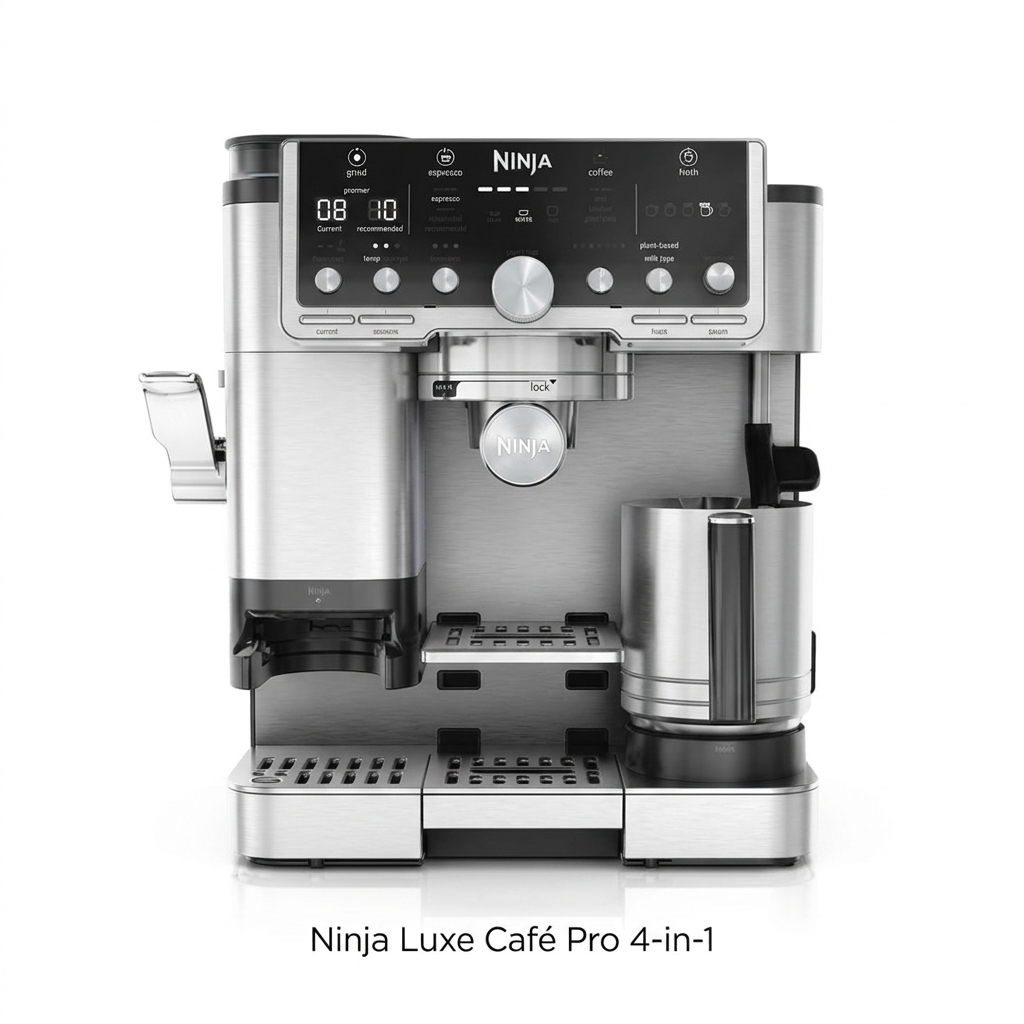
Espresso, drip-style coffee up to 18 oz, cold brew and cold foam, with Barista Assist, an integrated tamper and a non-burn steam wand.
Check price on Amazon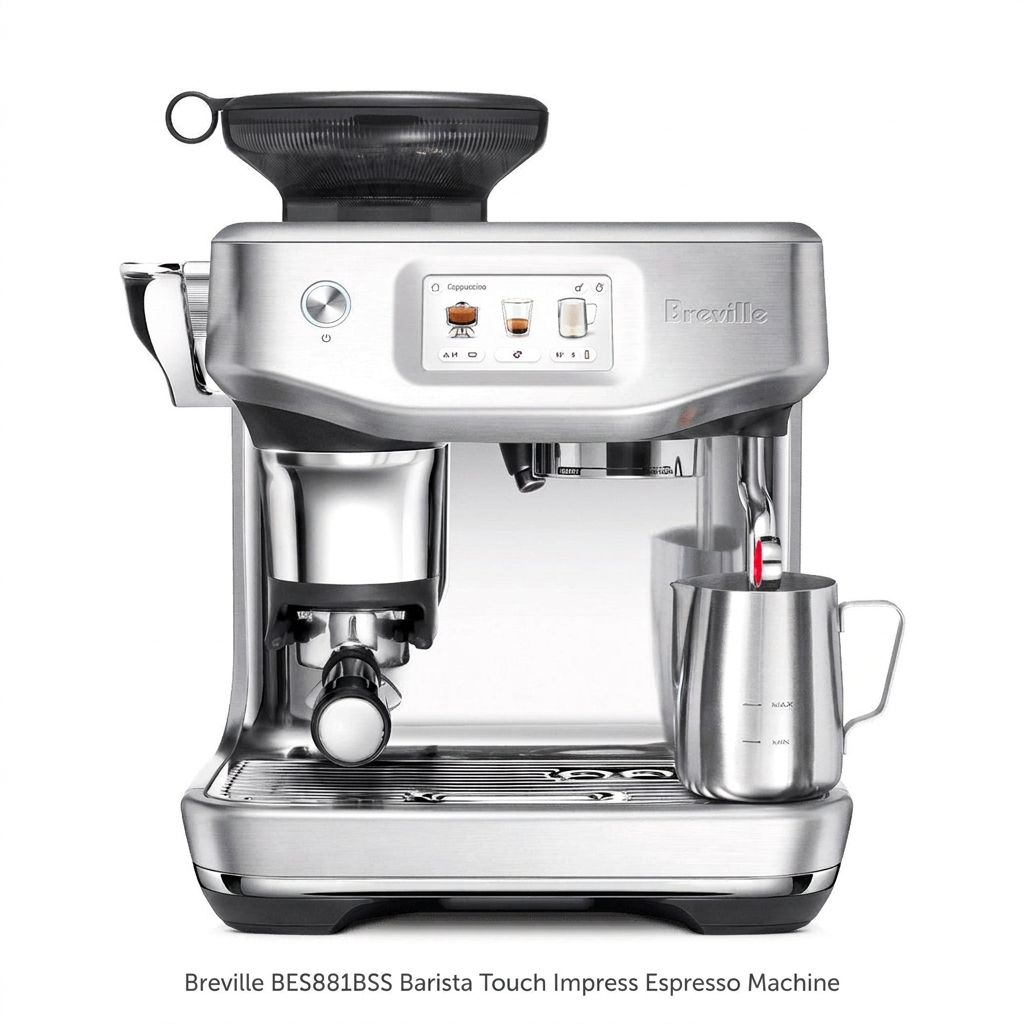
Sensor-checked Impress tamping, a 4-inch touchscreen with 8 saved drinks, a 3-second ThermoJet and hands-free or manual milk.
Reveal Today’s DealNinja Luxe Café Pro vs Barista Touch Impress at a glance
- Buy the Barista Touch Impress for the best guided espresso, finer milk and less water waste.
- Buy the Ninja Luxe Café Pro for drip-style coffee, cold brew, cold foam and the simplest workflow.
- Both grind, dose and tamp for you, and both scored 9.0 for ease of use.
- The Ninja is the thirstier machine, and the Breville’s grinder is the slower one.
Head to head
The better result in each row is marked, based on my testing and the manufacturer specs. Rows where the machines are level have no winner.
Keep in mind that the tally is not my verdict. Some rows matter far more than others, and which ones matter depends on what you drink.
| Spec | Ninja Luxe Café Pro | Breville Barista Touch Impress |
|---|---|---|
| Espressomy rating | 8.7 | 8.7 |
| Milk drinksmy rating | 8.6 | 8.8 ✓ Best |
| Ease of usemy rating | 9.0 | 9.0 |
| Cleaningmy rating | 7.9 | 8.3 ✓ Best |
| Tamping | Integrated tamper, tamp twice | Impress lever with dose sensor ✓ Best |
| Grind settings | 25 | 30, stepless ✓ Best |
| Portafilter | 53.3 mm | 54 mm |
| Drip-style coffee | Yes, up to 18 oz ✓ Best | No, long black or americano |
| Cold brew and cold foam | Yes ✓ Best | No |
| Display | Dials and buttons | 4-inch touchscreen, 8 saved drinks ✓ Best |
| Heat-up | Thermoblock | ThermoJet, about 3 sec ✓ Best |
| Water to drinksmy estimate | About 55% | Much less waste ✓ Best |
| Grinder speed | Quick ✓ Best | About 20 sec for a double |
| Weight | About 27 lb | About 24 lb ✓ Best |
| Rows won | 3 | 8 |
Ninja Luxe Café Pro vs Barista Touch Impress pros and cons
Ninja Luxe Café Pro
- Integrated tamper, with no funnel or mess
- Non-burn steam wand that wipes clean, plus cold foam
- Hot water spout and many drink styles, including drip-style coffee
- High water use, and the drip tray fills fast
- No side handles to move it
- Limited room for manual puck preparation
Breville Barista Touch Impress
- On-screen guidance and lever tamping make espresso easy
- Fast ThermoJet heat-up and quick steam
- Milk works hands-free or manually
- Grinder takes about 20 seconds for a double
- 54 mm basket limits some commercial accessories
- Automatic milk is slightly coarser than manual
Who should buy which machine?
- Beginners who want the easiest workflow
- Households that drink big mugs of coffee too
- Iced coffee, cold brew and cold foam fans
- Beginners who want to learn espresso properly
- Latte drinkers who want to pour latte art
- Several people with their own saved drinks
Design, size and build
These two take up a similar footprint, but they feel different on the counter.
The Ninja Luxe Café Pro is about 12.5 inches wide, 13.4 inches deep and 14.8 inches tall, and it weighs about 27 lb. It has no side handles, so moving it to clean behind was awkward.
The Breville Barista Touch Impress is about 14.2 inches wide, 13.4 inches deep and 16.3 inches tall, at about 24 lb. Its 4-inch color touchscreen sits front and center.
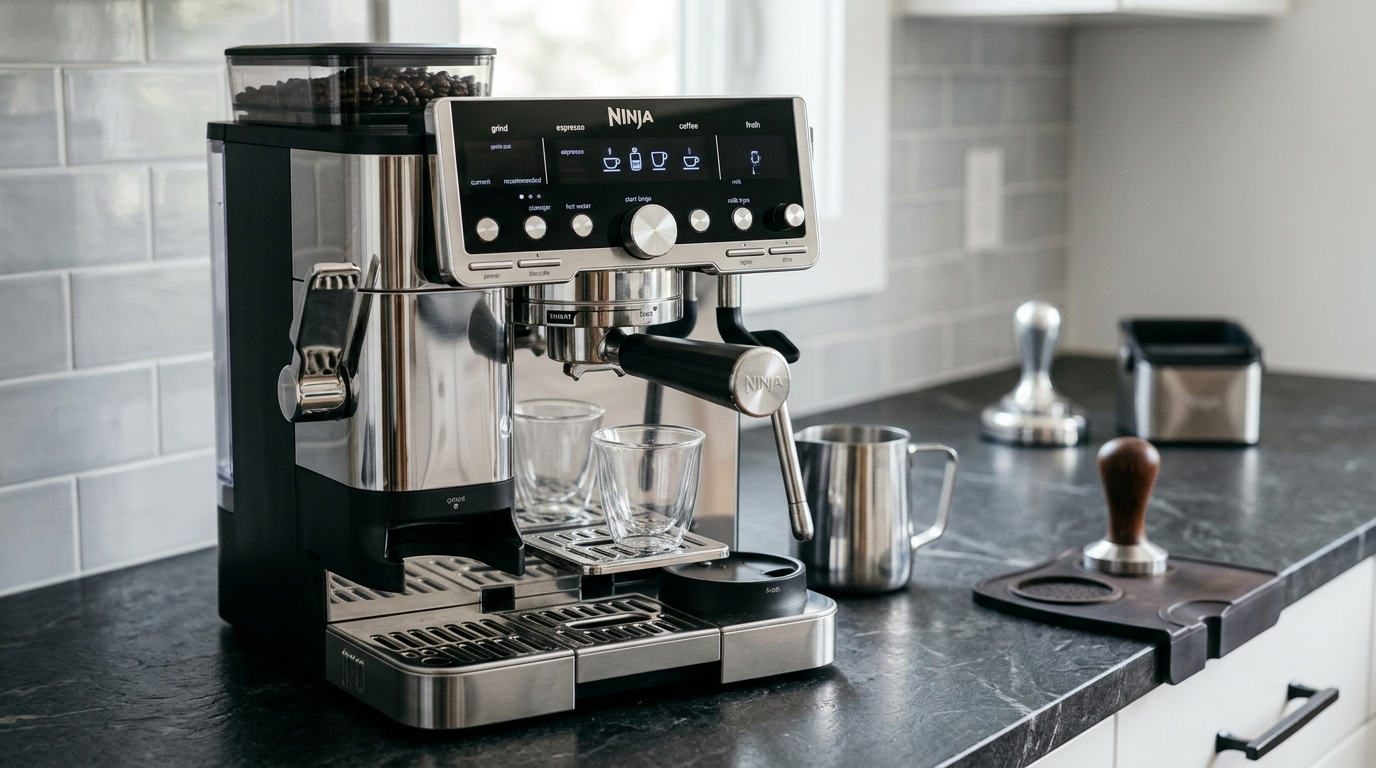
The Ninja Luxe Café Pro is narrower and shorter, but heavier and has no side handles.
Both are brushed stainless and plastic and felt sturdy. The Breville’s 2-liter tank sits at the back with a magnetic float sensor, and the Ninja’s roughly 2-liter tank needed a refill every day.
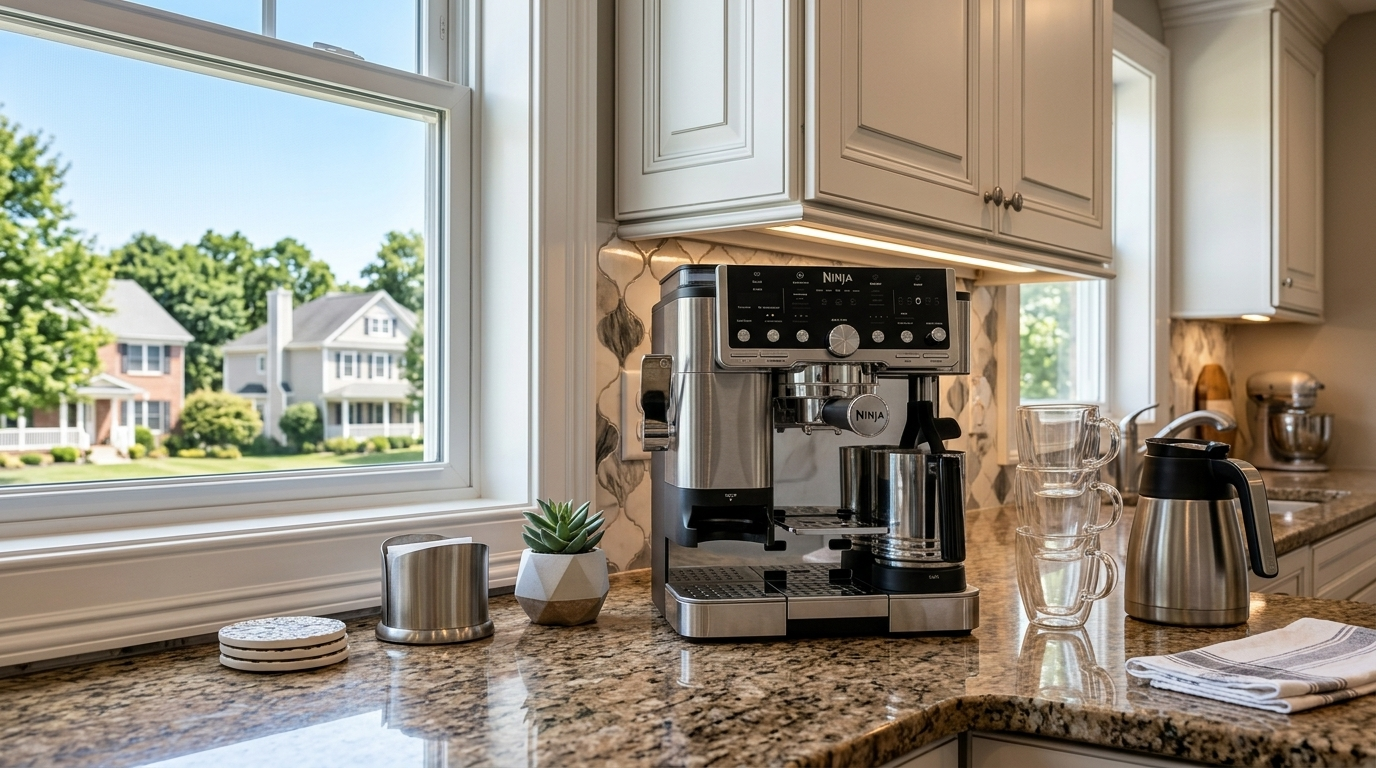
The Ninja’s lower height makes it the easier fit under wall cabinets. The Breville needs about 16.3 inches plus room to lift the hopper lid.
Height on the counter
Standard wall cabinets sit about 18 inches above the counter.
Our tip: Leave room to slide the Ninja forward, because it has no side handles and you will move it often to empty the drip tray.
Setup and the first week
Setup on the Ninja took about 15 minutes, including filling, priming and a few practice shots. Its Barista Assist recommendations made the first week painless.
The Breville also walked me through setup on its touchscreen. In week one, it asked for a top-up dose on about one shot in three, and by day four nearly every dose passed on the first tamp.
On both, I ran a blank shot of hot water through the empty portafilter✕PortafilterThe handle with a metal basket that holds the ground coffee. You lock it into the machine, and hot water is pushed through the coffee in it. before the first espresso of the day, which warmed the metal and made the first shot taste as good as the second.
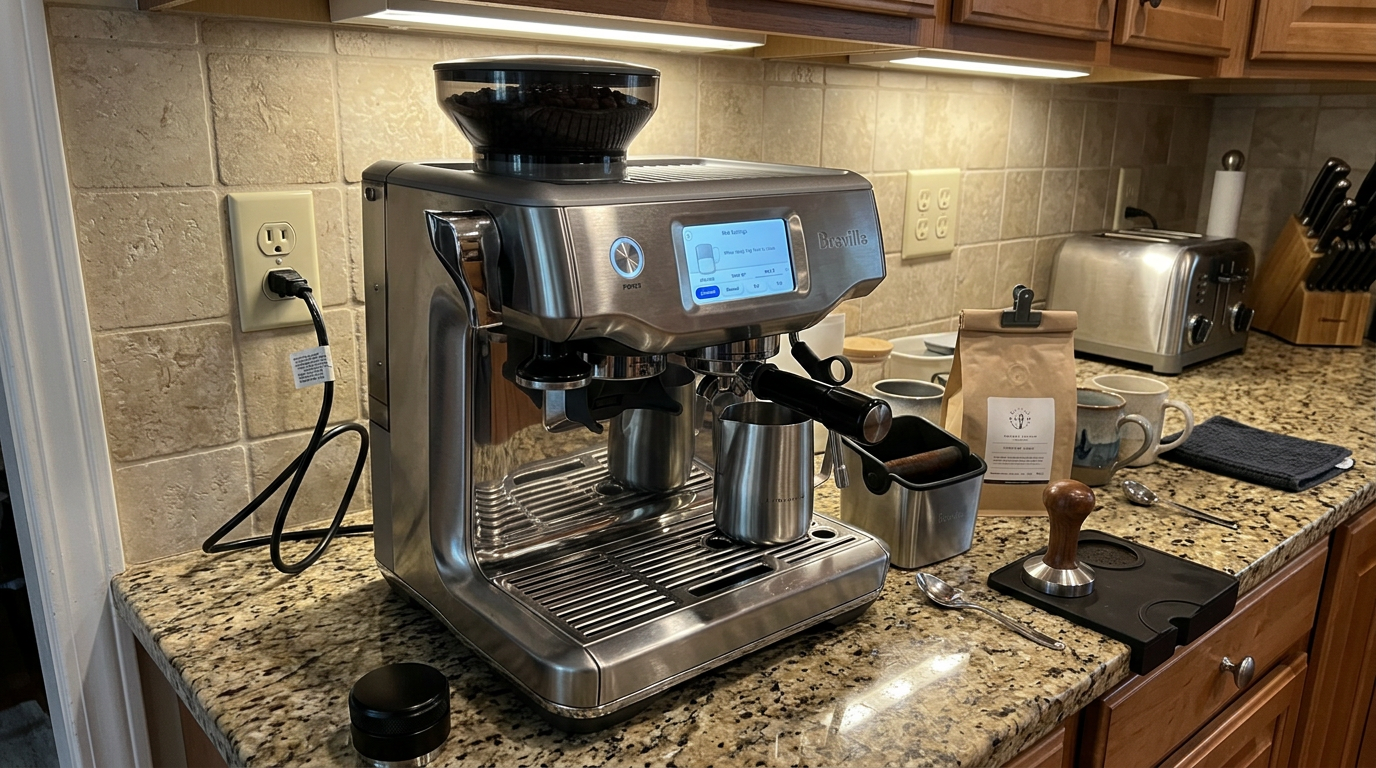
The Barista Touch Impress guides every step on its 4-inch touchscreen.
Breville doses passing on the first tamp
Share of doses that got the green check on the first lever pull, from my four-week log.
Our tip: Run a blank shot through the empty portafilter before your first espresso on either machine, because a cold basket steals heat from the first shot.
Grinder, dose and tamping
Both machines grind straight into the portafilter and help you tamp. They do it in different ways.
The Ninja has a conical burr✕Conical burrsTwo cone-shaped grinding parts, one inside the other. Beans are crushed between them, and the gap between the burrs sets how fine the coffee is. grinder with 25 settings and Barista Assist, which recommends a grind for each drink. After grinding, you pull an integrated tamper twice, with no funnel and no mess.
My recommended settings were 15 for a single, 11 for a ristretto and 23 for drip-style coffee. A double weighed 17.8 to 18 grams every time.
The Breville uses Baratza-designed burrs with 30 numbered settings on a stepless dial. It grinds at about 1 gram per second, so a double took 18 to 20 seconds, the slowest part of its workflow.
Its Impress lever presses a built-in tamper with about 22 lb of force and a 7-degree twist. Sensors measure how far the tamper travels and tell you if the dose is low or high.
If the dose is low, you grind a top-up and tamp again. If it is high, the machine shortens the next grind on its own. A second pull polishes the puck and reduces channeling✕ChannelingWhen water finds a weak path through the coffee puck and rushes through it, leaving the rest under-extracted. The shot tastes sour and thin..
| Grind and tamp | Ninja Luxe Café Pro | Barista Touch Impress |
|---|---|---|
| Grinder | Conical burr, 25 settings | Baratza-designed, 30 settings, stepless |
| Guidance | Barista Assist | On-screen with dose sensor |
| Tamping | Integrated tamper, pull twice | Impress lever, 22 lb, 7-degree twist |
| Dose check | Recommended dose | Sensor reads tamper travel |
| Double dose | 17.8–18 g | 18 g |
| My grind range | 11 to 23 by drink | 8 to 12 |
Espresso quality
Both scored 8.7 for espresso in my reviews, and in the cup they were genuinely close.
On the Ninja, my double aimed for 18 grams in and 36 grams out. It usually came out at 38 to 39 grams, at about 63 to 64°C in the cup, and its double espresso scored 9.0, its best drink.
On the Breville, my standard recipe was 18 grams in, 36 grams out in 27 to 30 seconds, and from week two most shots landed there. The crema✕CremaThe golden, foamy layer on top of a fresh espresso. It forms when pressure pushes oils and gases out of the coffee. was thick, hazelnut-colored and elastic.
The Breville’s shot had balanced acidity and sweetness, a strong chocolate note and almost no astringency. Its brew temperature defaults to 200°F and adjusts from 192 to 207°F in 1-degree steps.
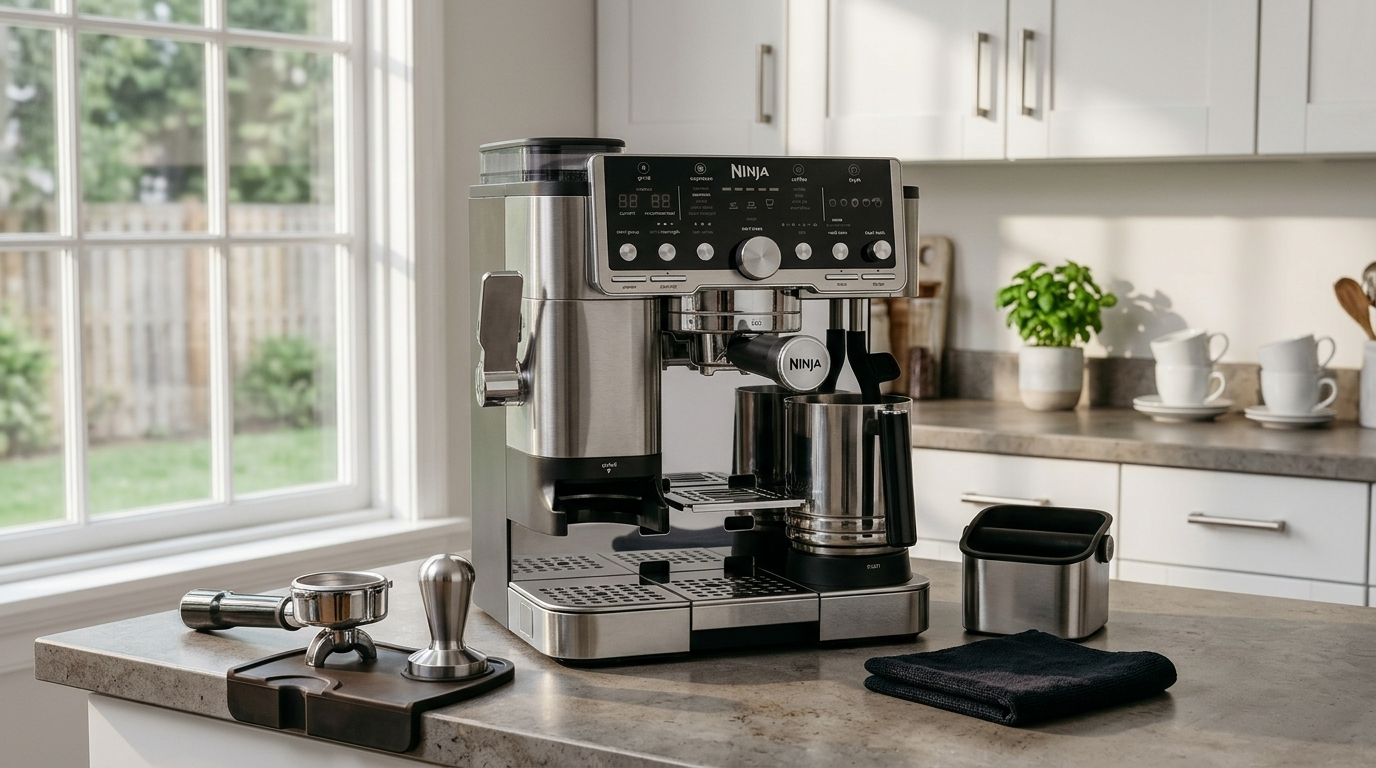
The Ninja’s double espresso scored 9.0, its best drink in my testing.
Ninja drink scores
My flavor scores out of 10 on the Ninja Luxe Café Pro.
The Ninja also makes styles the Breville doesn’t. Its ristretto runs 18 grams in and 21 out, and its lungo aims for 144 grams, which I got on a good day but sometimes ran short at 70 to 80 grams.
| Roast | Breville grind | Breville temperature |
|---|---|---|
| Light | 7–8 | 202–204°F |
| Medium | 9–11 | 200°F |
| Medium-dark | 11–12 | 198°F |
| Dark | 12–14 | 194–196°F |
Our tip: Weigh your yield on a scale that reads to 0.1 gram on either machine, because the Ninja often ran 2 to 3 grams long and that changes the taste.
Drip-style coffee and americano
This is the Ninja’s big advantage. As well as espresso, it brews drip-style coffee in four sizes, from about 6 to 8 ounces up to about 18 ounces.
At grind setting 23, its Classic Small Plus aimed for 235 ml and gave me 245. For someone in the house who just wants a big mug of coffee, it is a real alternative to a second machine.
Ninja drip-style coffee sizes.
The Breville makes long blacks and americanos with hot water through a bypass in the group. For a long black, I poured 4 to 6 ounces of water first, then the double, to keep the crema on top.
Its americano was a double with 4 to 8 ounces of water added after. Both are excellent, but neither is a true mug of filter coffee.
The Ninja’s americano scored 8.6, and both machines avoid the bitter, drying notes of pushing a mug of water through one espresso puck.
Our tip: Pour the water first for a long black on the Breville, because adding the shot on top keeps the crema intact.
Milk drinks
Both machines let you froth hands-free or steam by hand, and both have temperature control.
Ninja: Dual Froth System Pro
The Ninja has a 12 mm non-burn steam wand that wipes clean after each use. Its automatic frothing gave whole milk a score of 8.4 and oat milk 7.6, with oat on medium froth at about 61°C.
Steaming by hand with whole milk scored 9.0. The Ninja also makes cold foam, which scored 8.8 and has no equivalent on the Breville.
Breville: auto or manual
The Breville has a four-hole steam tip with a cool-touch liner and a sensor that reads the jug’s temperature through its base. The default is 149°F, adjustable down to 140°F.
Its foam scale runs from 1 to 8. I used 2 to 3 for a flat white✕Flat whiteA short milk coffee with a double shot and a thin layer of silky milk. It is stronger and less foamy than a cappuccino., 3 to 4 for a latte, 4 to 5 for a cappuccino and 7 to 8 for a dense cappuccino cap.
Manual steaming made finer, silkier microfoam✕MicrofoamMilk foam with bubbles so small you can barely see them. It feels silky and glossy, which is what a good flat white or latte needs. than the automatic mode, and it was good enough for latte art.
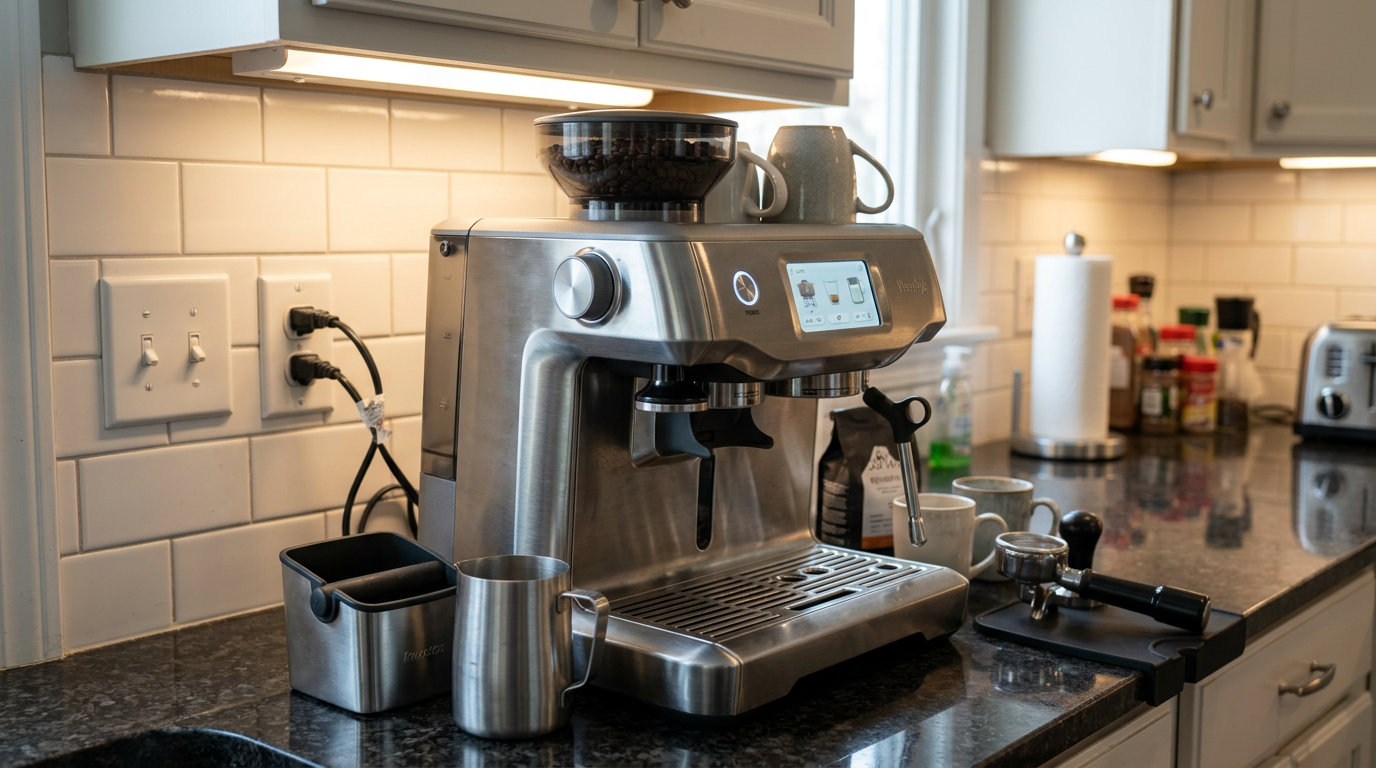
The Breville’s sensor reads the jug temperature, and its manual mode pours latte art.
Milk texture scores on the Ninja
My ratings out of 10. The Breville’s automatic milk was slightly coarser than its manual milk.
Both land in the sweet spot. Research from the University of Camerino found the best foam structure at around 60°C, or 140°F.
| Milk | Ninja Luxe Café Pro | Barista Touch Impress |
|---|---|---|
| Automatic frothing | Yes, Dual Froth System Pro | Yes, 8 foam levels |
| Manual steaming | Yes, non-burn wand | Yes, four-hole tip |
| Temperature control | Yes | 149°F default, down to 140°F |
| Cold foam | Yes | No |
| Latte art | With manual steam | With manual steam |
| Milk types | Dairy and plant | Dairy, almond, oat, soy settings |
Our tip: Clear all four holes in the Breville’s steam tip if the steam gets weak, then purge it into a damp towel.
Find Out the Price TodayIced drinks and cold brew
The Ninja is the only one of the two with cold drinks built in. Its cold press makes a cold brew-style coffee, and its cold foam floats on iced lattes.
A cold foam latte over ice took me about 2 minutes. Cold press and cold foam can even run at the same time.
On the Breville, iced drinks mean pulling a hot double over a glass full of ice. It works, but it dilutes more, and there is no cold foam.
Our tip: Fill the glass with ice before you brew any iced drink, because ice added afterwards melts unevenly and waters the drink down.
Controls and speed
The Ninja uses dials and buttons with three strength levels, three brew temperatures and three hot water temperatures. By week two, my weekday routine took about 3 minutes.
The Breville uses a 4-inch touchscreen and saves up to eight drinks. I named them after people rather than drinks, which made it easier for guests.
Breville times from power on to first sip, from my stopwatch.
The Breville’s ThermoJet✕ThermoJetBreville’s fast heater. Instead of keeping a boiler of water hot, it heats water on its way through, so the machine is ready in seconds. heats in about 3 seconds, so I switched it off between coffees without a penalty.
| Controls | Ninja Luxe Café Pro | Barista Touch Impress |
|---|---|---|
| Interface | Dials and buttons | 4-inch touchscreen |
| Saved drinks | Drink styles | Up to 8, named |
| Brew temperatures | 3 | 192–207°F, 1-degree steps |
| Hot water temperatures | 3 | One |
| Weekday routine | About 3 min | About 3 min |
Cleaning and water use
Water use is the Ninja’s biggest weakness. An overpressure valve sends water to the drip tray above about 9 bar, and a finer grind sends more.
In my two-person household, I estimated that only about 55% of the Ninja’s water ended up in drinks. The tank needed a refill every day, and the drip tray filled daily, sometimes twice.
Where the Ninja’s water went, my estimate for two people.
On the Breville, a 2-liter tank gave about 22 espressos or 16 flat whites and lasted two of us about two days.
Daily cleaning was similar otherwise. I knocked out the puck, wiped the basket, flushed the group, wiped the steam wand after each milk drink and emptied the tray when the red float rose.
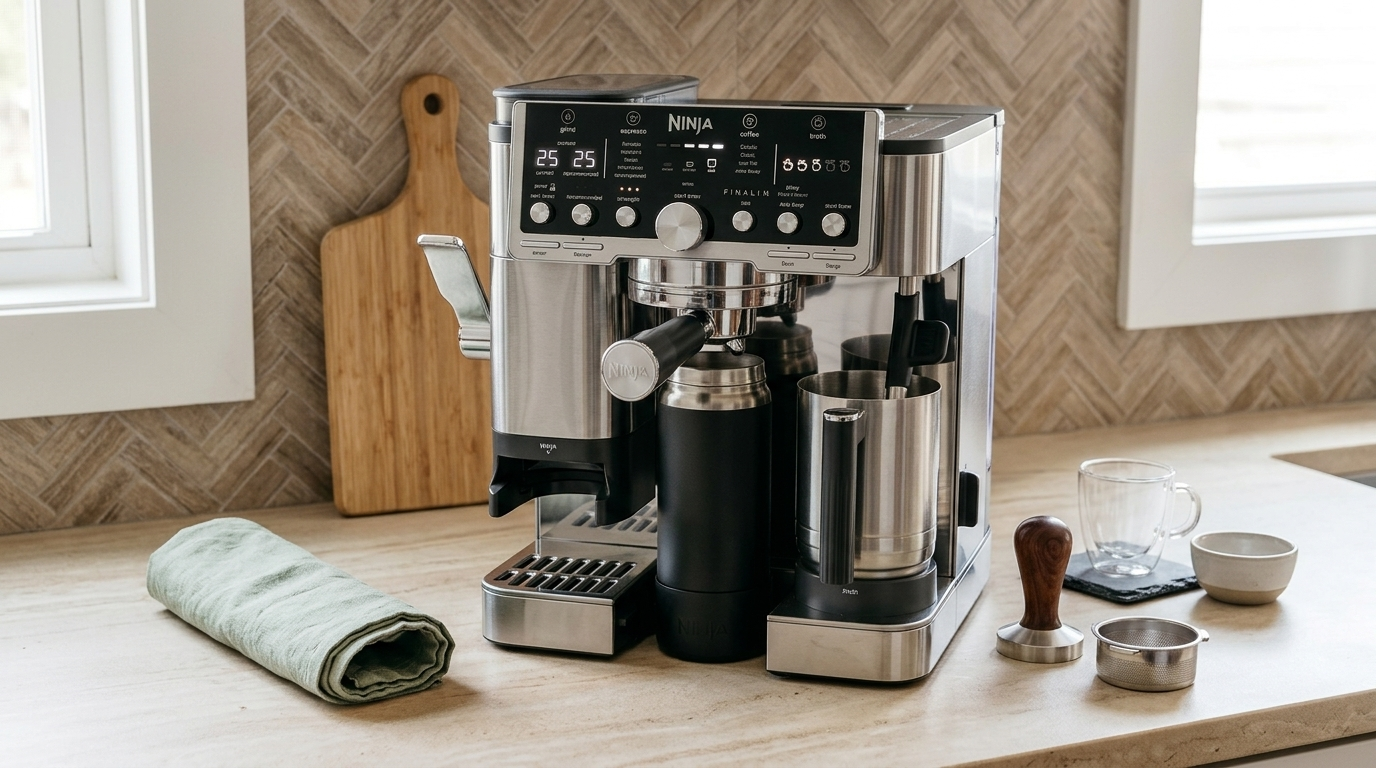
The Ninja’s drip tray filled every day, sometimes twice.
| When | Ninja Luxe Café Pro | Barista Touch Impress |
|---|---|---|
| After milk drinks | Wipe wand, about 20 sec | Wipe wand, auto-purge |
| Daily | Empty tray once or twice, refill tank | Knock out puck, flush, empty tray at the float |
| When prompted | Brew group tablet clean, about 10 min | Backflush✕BackflushA cleaning cycle where a blind disc stops water flowing out, so the machine pushes water and cleaner back through the group head to clear coffee oils. with disc and tablet |
| Descale | When alerted, about 30 min | Guided, with filter change |
| Hands-on per day | More drip tray trips | About 4.5 min with two milk drinks |
Our tip: Wipe the basket dry before every dose on both machines, because a wet basket makes the puck stick and the shot run uneven.
A morning with each machine
Numbers only go so far, so here is what a weekday flat white looked like on each machine by week three.
On the Ninja Luxe Café Pro
I switched it on and ran a blank shot to warm the portafilter✕PortafilterThe handle with a metal basket that holds the ground coffee. You lock it into the machine, and hot water is pushed through the coffee in it.. Barista Assist suggested my grind, the grinder dosed straight into the basket and I pulled the integrated tamper twice.
While the double ran, I filled the jug and picked a froth setting. The non-burn wand wiped clean in seconds afterwards, and the whole routine took about 3 minutes.
Then I emptied the drip tray. On most days that was the one job I could not skip.
On the Breville Barista Touch Impress
The ThermoJet was ready in about 3 seconds. I tapped my saved drink, named after me, and the grinder ran for 18 to 20 seconds.
One pull of the lever tamped and checked the dose, and the screen showed a green check. A second pull polished the puck, and the shot ran 27 to 30 seconds.
I chose foam level 2 and let the automatic wand texture the milk while I wiped the basket. That flat white also took about 3 minutes from power on.
The two mornings felt similar in time. The difference was in the details: the Ninja asked me to empty the tray, and the Breville asked me to wait for its slower grinder.
Our tip: Name your saved drinks after people on the Breville, because guests find their own drink faster than they find a flat white with the right settings.
Noise
Neither machine is loud. The Breville’s grinder hums quietly for about 20 seconds per double, longer than most, but at a low pitch.
The Ninja’s grinder is quicker, and its steam wand is quiet for a portafilter machine. Both were fine for early mornings in my apartment.
Relative loudness from my side-by-side use. Shorter bars are quieter.
Water, beans and supplies
Both have about a 2-liter tank. The Ninja’s hopper holds about 250 grams of beans and the Breville’s about 340 grams.
Fresh whole beans within a few weeks of roasting made the biggest difference on both. I used a fresh medium-to-dark roast with some high-quality robusta, and very oily beans clogged the Breville’s hopper once in week three.
Use filtered water or keep the filters installed, and put the spent pucks in the compost.
Breville tank yield, rough estimate from my testing.
| Bean type | Ninja Luxe Café Pro | Barista Touch Impress |
|---|---|---|
| Medium-dark blend | Best all-rounder | Grind 11–12, 198°F |
| Medium roast | Good espresso and drip | Grind 9–11, 200°F |
| Light roast | Finer, longer shot | Grind 7–8, 202–204°F |
| Very oily | Avoid | Avoid, clogs the hopper |
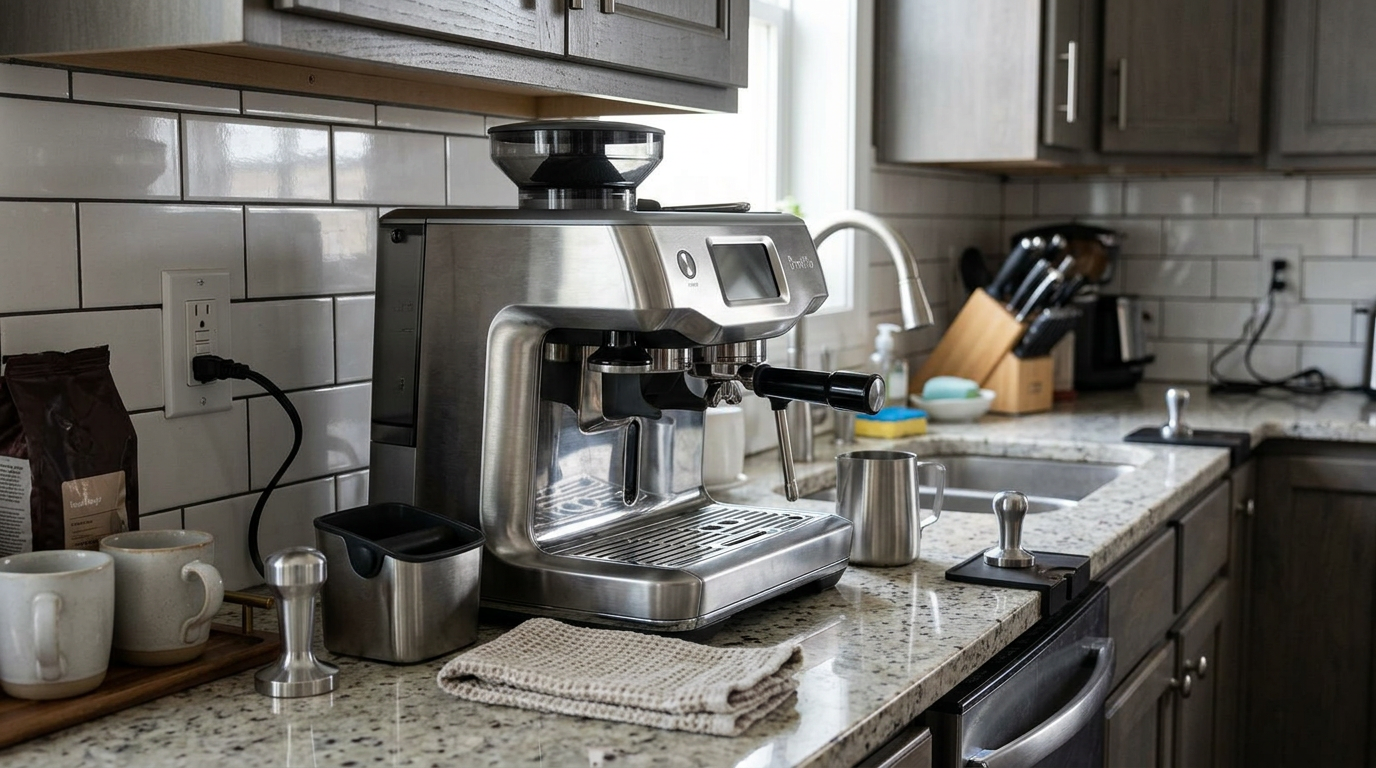
The Breville uses far less water for the same drinks.
Our tip: Use the Breville’s dual-wall baskets only for pre-ground coffee, because fresh beans taste better through the single-wall baskets.
Real-life scenarios
Specs only go so far. These are the situations where one machine clearly pulled ahead during my testing.
Drip-style coffee up to 18 ounces from the same machine.
Manual steaming made silky microfoam, and the dose sensor took the guesswork out of the shot.
Cold foam over ice in about 2 minutes.
Eight saved drinks, each named after a person.
The Ninja’s tray filled daily, sometimes twice.
Barista Assist and the integrated tamper made it the most hands-off espresso I have tested.
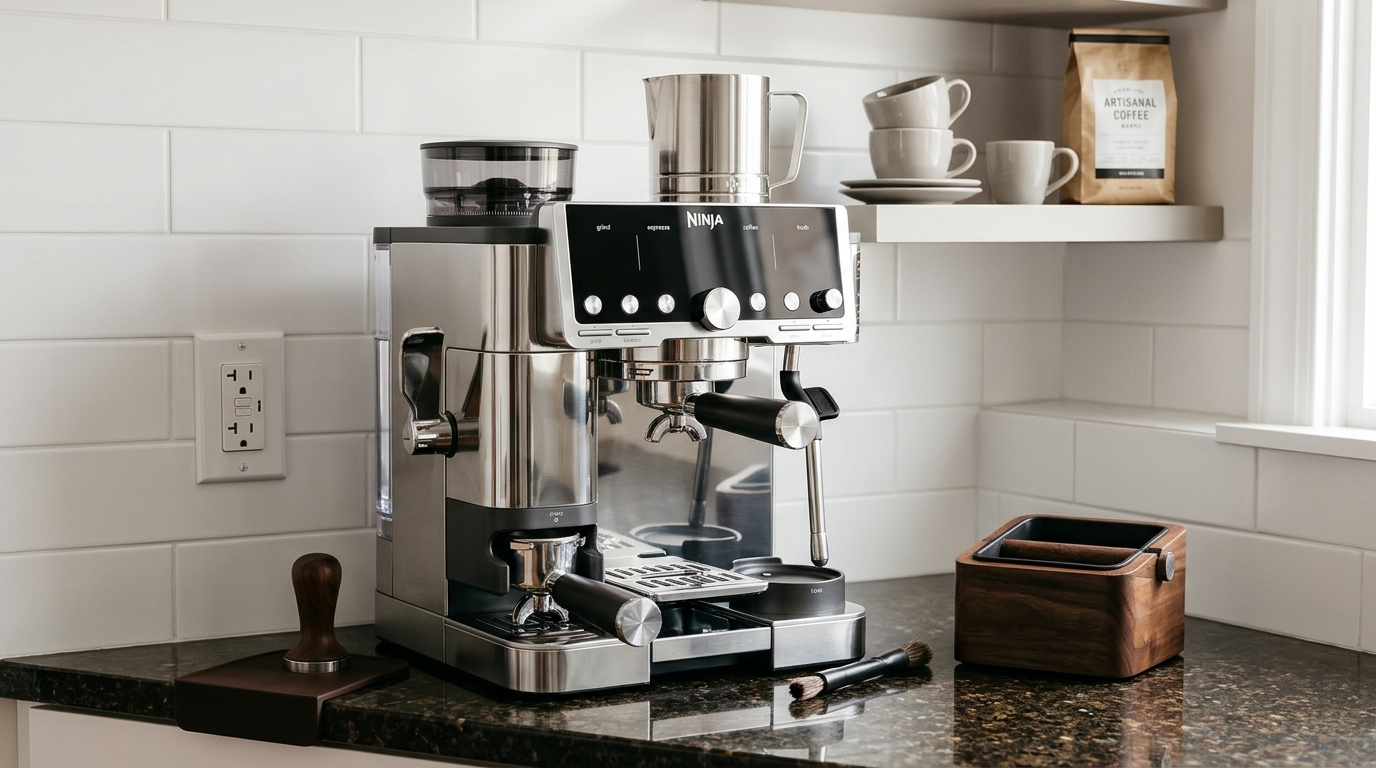
For drip coffee, cold brew and cold foam, the Ninja does more.
My scorecard
These are my own scores out of 10 from my single reviews of each machine.
Ninja Luxe Café Pro
Breville Barista Touch Impress
Overall, I rate the Breville 8.7 and the Ninja 8.6. The Breville is the more refined espresso and milk machine, and the Ninja is the more versatile one.
See How Much You’ll SaveWhich one is right for you?
4 quick questionsWhich one should you buy?
It comes down to one question: do you want espresso done really well, or lots of different coffees done well? The Breville is the first, and the Ninja is the second. Still weighing other options? I rank every model I’ve tested in my guide to the best Breville espresso machines.
For more detail, read my Ninja Luxe Café Pro review and Breville Barista Touch Impress review, or see my Breville vs Ninja brand comparison.
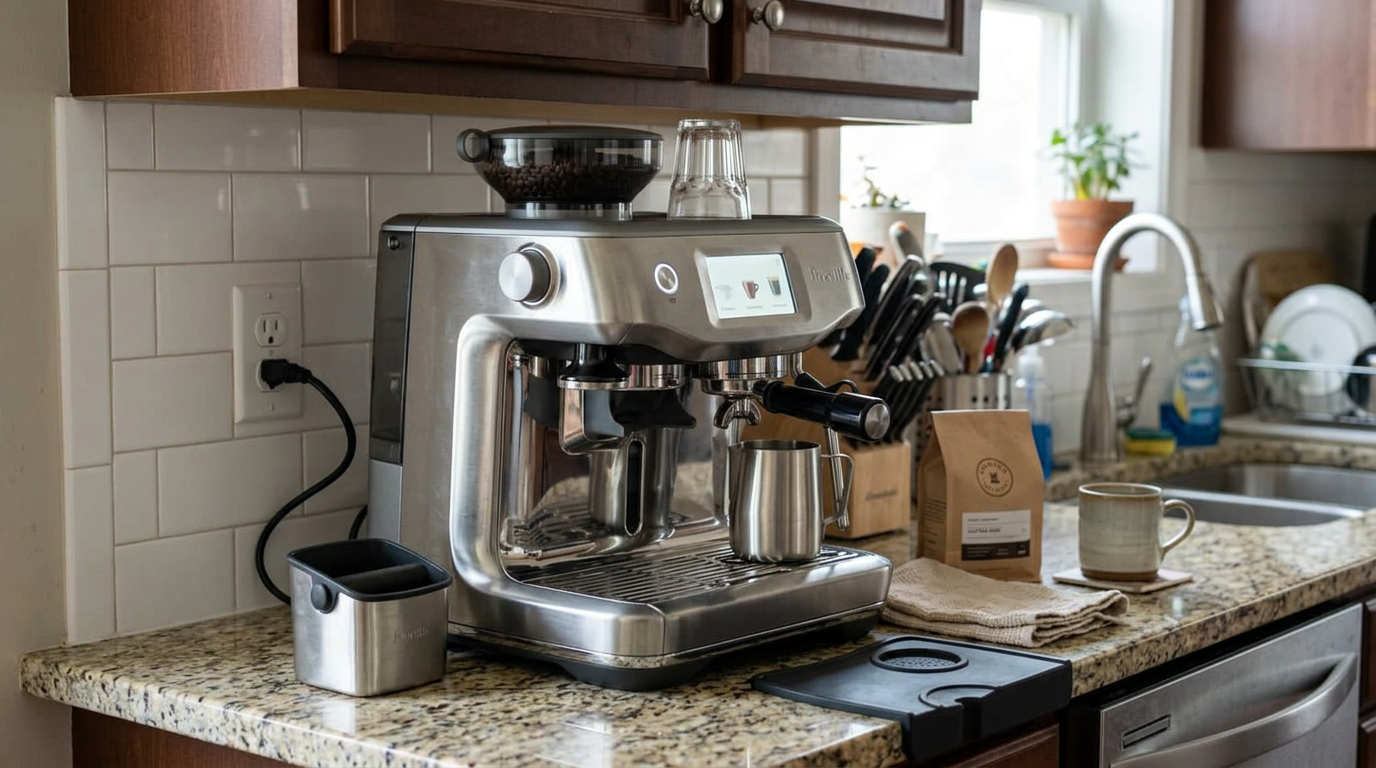
For guided espresso and latte art, the Barista Touch Impress is the more refined machine.
- You want drip-style coffee as well as espresso
- You drink iced coffee or cold foam
- You want the easiest possible workflow
- Your cabinets are low
- You hate emptying drip trays
- You want latte-art milk from the automatic mode
- You need side handles to move it
- Espresso and flat whites are your daily drinks
- You want to learn latte art
- Several people want saved drinks
- You care about water waste
- You want big mugs of filter-style coffee
- You want cold brew or cold foam
- A 20-second grind would annoy you
For espresso and milk drink lovers, my pick is the Breville Barista Touch Impress. Its Impress lever checks every dose, its 3-second ThermoJet and touchscreen make mornings easy, it pours latte art by hand and it wastes far less water.
The Ninja Luxe Café Pro is the smarter buy if your household wants more than espresso. Drip-style coffee up to 18 ounces, cold brew, cold foam and the most hands-off workflow I have tested make it the most versatile machine here. Keep an eye on the drip tray.
Whichever you choose, use fresh beans, run a blank shot first thing and weigh your yield now and then. Both reward a little care with café-quality coffee.
Ninja Luxe Café Pro vs Barista Touch Impress specifications
From manufacturer specifications and my own testing.
| Ninja Luxe Café Pro | Breville Barista Touch Impress | |
|---|---|---|
| Model | Ninja Luxe Café Pro 4-in-1 | Breville BES881BSS Barista Touch Impress |
| Heating | Thermoblock, 1,650 W | ThermoJet, about 3 sec, 1,750 W |
| Pressure | 9 bar | 9 bar extraction |
| Grinder | Conical burr, 25 settings | Baratza-designed, 30 settings, stepless |
| Tamping | Integrated tamper, tamp twice | Impress lever, 22 lb, dose sensor |
| Portafilter | 53.3 mm | 54 mm |
| Drink styles | Espresso, drip-style coffee, cold press, hot water | Espresso, americano, long black, milk drinks |
| Milk | Dual Froth System Pro, cold foam | Auto or manual, 8 foam levels |
| Display | Dials and buttons | 4-inch color touchscreen |
| Saved drinks | Styles and sizes | Up to 8 |
| Water tank | About 2 L | 2 L, 67.6 oz |
| Bean hopper | About 250 g | About 340 g |
| Dimensions (W x D x H) | 12.5 x 13.4 x 14.8 in | 14.2 x 13.4 x 16.3 in |
| Weight | About 27 lb | About 24 lb |
| Warranty | Check with the retailer | 2 years limited |
How I tested and compared them
I used each machine as my everyday espresso maker for four weeks, making espresso, americanos, cappuccinos, flat whites and lattes on both, plus drip-style coffee, ristretto, lungo, cold press and cold foam on the Ninja and long blacks on the Breville.
I weighed doses and yields on a 0.1-gram scale, timed shots and drinks with a stopwatch, measured shot and milk temperatures with a probe thermometer and logged every Breville dose check.
I frothed whole and oat milk automatically and by hand, worked through the grind ranges with several roasts, tracked the Ninja’s water use, ran every cleaning routine and compared my notes with Ninja’s and Breville’s specifications and owner documentation.
- Coffee: dose, crema, body and consistency.
- Milk: foam texture, temperature and drink range.
- Workflow: controls, menus and daily routine.
- Ownership: noise, cleaning, water care and footprint.
Ninja Luxe Café vs Barista Touch Impress FAQ
Is the Ninja Luxe Café Pro better than the Breville Barista Touch Impress?
It is more versatile, with drip-style coffee, cold brew and cold foam. The Breville is more refined for espresso and milk, with sensor-checked dosing, latte-art milk and far less water waste.
Which makes better espresso?
They tied at 8.7 in my reviews. The Ninja’s double scored 9.0 as a drink, and the Breville was the more consistent day to day once dialed in.
Can the Ninja Luxe Café make regular coffee?
Yes. It brews drip-style coffee in four sizes, from about 6 to 8 ounces up to about 18 ounces.
Does the Barista Touch Impress make cold brew?
No. Pour a hot double over a glass full of ice. The Ninja has a cold press and cold foam.
Which is easier for beginners?
Both scored 9.0 for ease of use. The Ninja has the simplest workflow, and the Breville teaches you more with on-screen guidance and dose checks.
Which has better milk?
The Breville, slightly. Its manual steaming makes latte-art microfoam and its auto mode has 8 foam levels. The Ninja’s manual steaming is also excellent, and it adds cold foam.
Why does the Ninja use so much water?
An overpressure valve sends water to the drip tray above about 9 bar. I estimated only about 55% of its water ended up in drinks.
How long does the Breville take to heat up?
Its ThermoJet heats in about 3 seconds. My first espresso was ready about 1.5 minutes after switching on, including a blank shot.
What size portafilter do they use?
The Ninja uses 53.3 mm and the Breville 54 mm, so neither takes common 58 mm café accessories.

- Our hands-on Ninja Luxe Café Pro review
- Our hands-on Breville Barista Touch Impress review
- Ninja and Breville product specifications and owner documentation
- General espresso brewing and maintenance guidance
- Effect of milk processing and steam frothing conditions on microfoam formation, University of Camerino
- A living lexicon for brewed coffee, University of Oregon
- Composting and Coffee Grounds, Cornell University