Ninja Luxe Café vs Breville Barista Pro: guided espresso compared
Both grind fresh beans straight into a portafilter and both made genuinely good espresso in my kitchen. Then they split: the Ninja Luxe Café Premier weighs every dose on a built-in scale, guides you with Barista Assist and makes cold foam at the touch of a preset, while the Breville Barista Pro heats in 3 seconds, shows a shot timer on its LCD and steams milk in about 30 seconds with a powerful four-hole wand. I used both every day for four weeks and lined up the data to find out which one belongs in your kitchen.
We choose products independently. We may earn a commission through links on this page; your price stays the same. Affiliate policy
Jargon helpNew to espresso? Tap any dotted term to see what it means.
In this comparison
If you want to learn real espresso and steam milk by hand, buy the Breville Barista Pro. It is ready in about 3 seconds, its shot timer and five PID temperatures made dialing in easy, it handled light roasts far better and its steam wand made microfoam in about 30 seconds. If you want guidance at every step and love iced drinks, the Ninja Luxe Café Premier is the easier start. Its built-in scale kept doses within a few tenths of a gram, its counter stayed spotless and its cold foam was the best of any machine I have tested.
The two machines
Specs checked November 14, 2026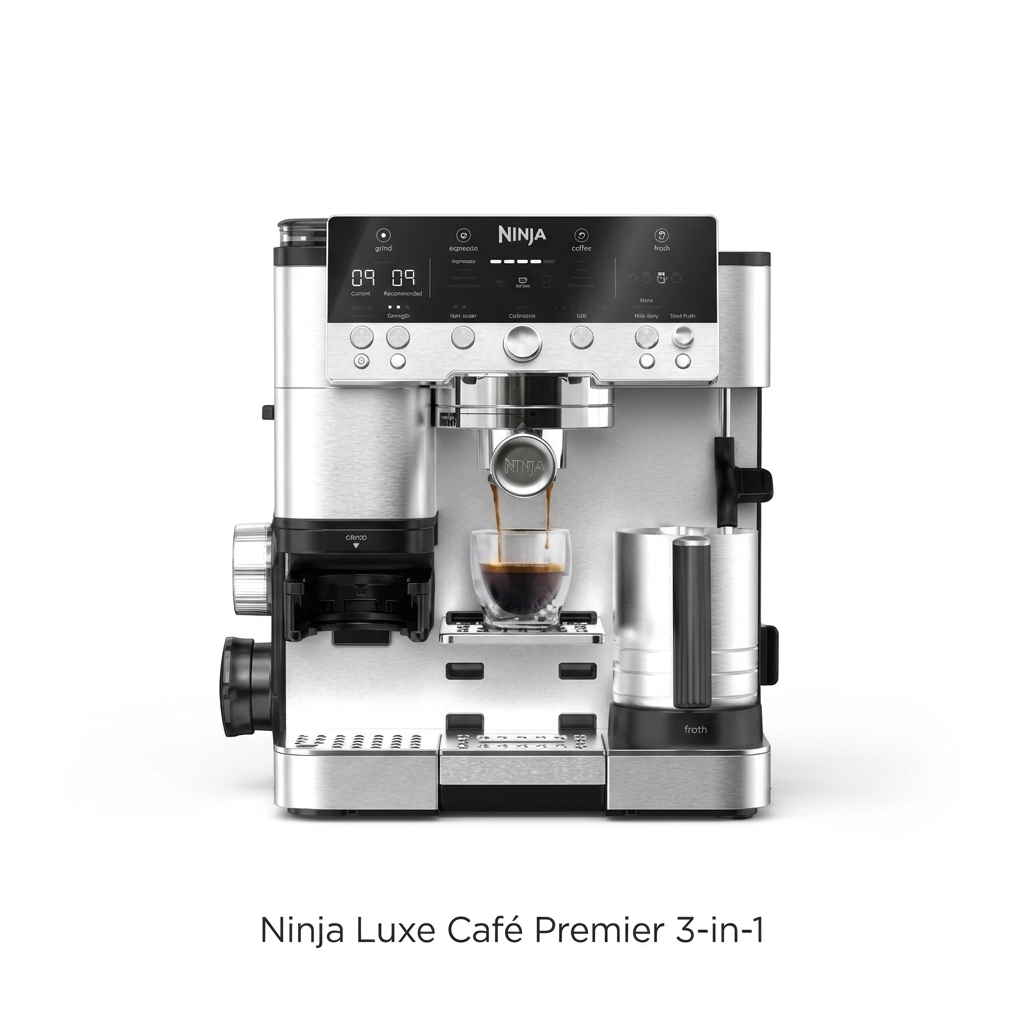
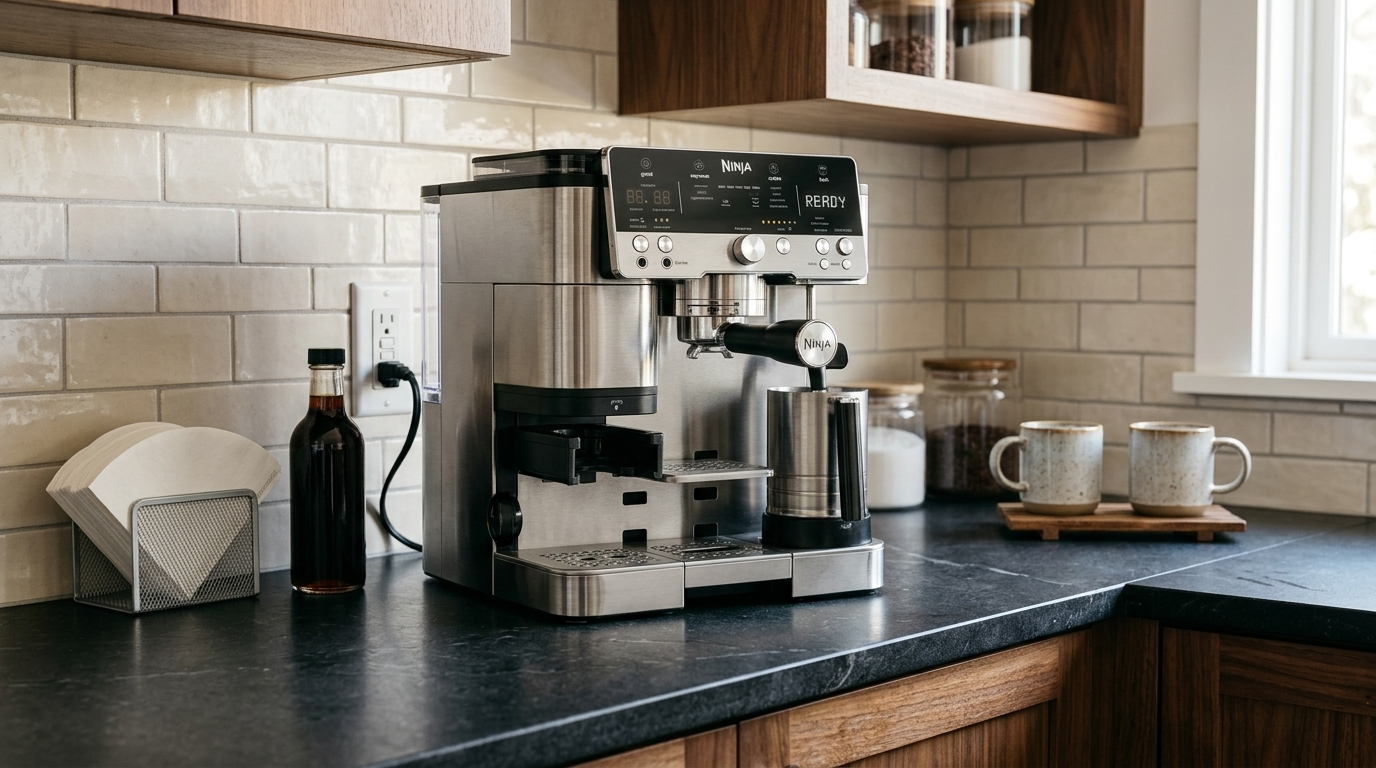
Weight-based dosing on a built-in scale, Barista Assist, a lever tamper with a funnel, four froth presets including cold foam and drip-style coffee.
Check price on Amazon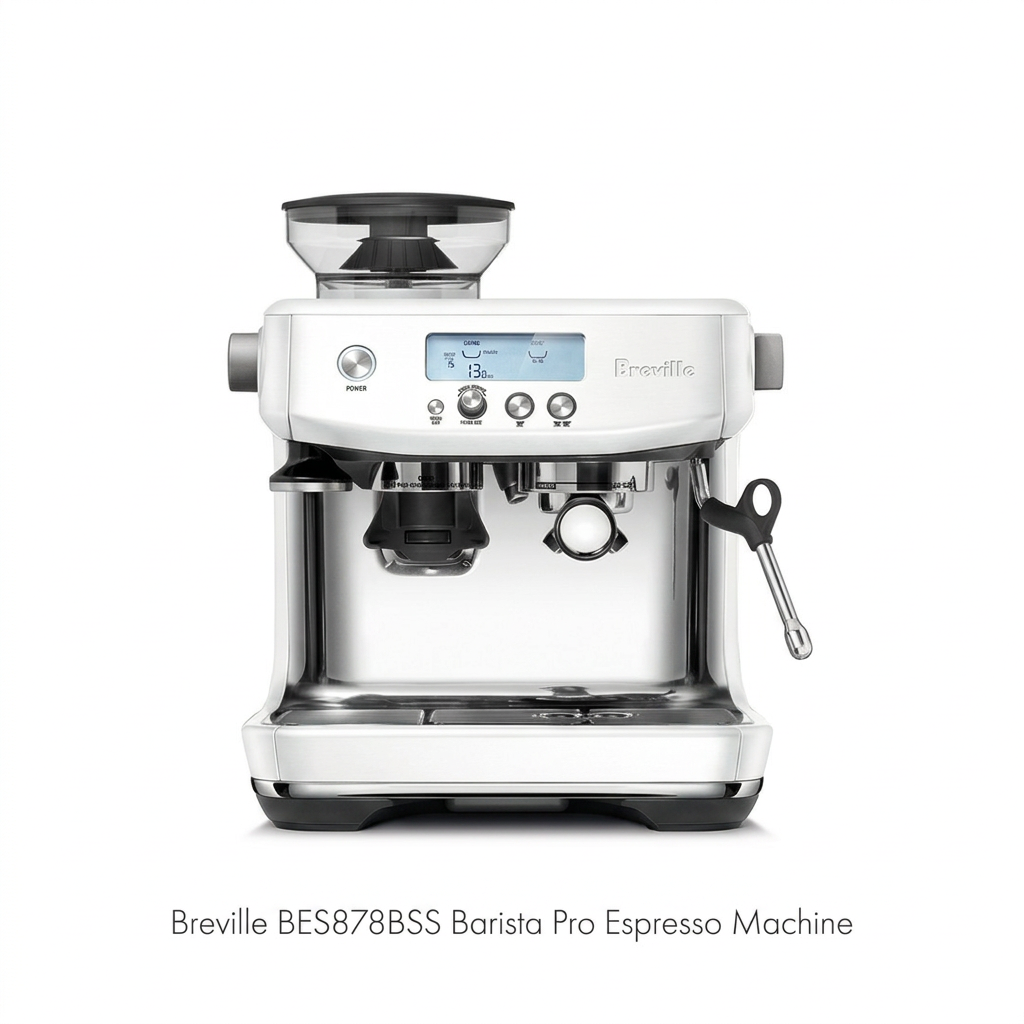
A 3-second ThermoJet, 30 grind settings, an LCD shot timer, five PID temperatures, programmable pre-infusion and a powerful steam wand.
Reveal Today’s DealNinja Luxe Café Premier vs Barista Pro at a glance
- Buy the Barista Pro to learn espresso, steam milk by hand and brew light roasts well.
- Buy the Ninja Luxe Café Premier for the most guided start and iced drinks with cold foam.
- The Ninja weighs its doses, while the Breville times them and shows you a shot timer.
- Neither replaces a drip coffee maker: make big cups as americanos on both.
Head to head
The better result in each row is marked, based on my testing and the manufacturer specs. Rows where the machines are level have no winner.
Keep in mind that the tally is not my verdict. Some rows matter far more than others, and which ones matter depends on what you drink.
| Spec | Ninja Luxe Café Premier | Breville Barista Pro |
|---|---|---|
| Espressomy rating | 8.5 | 8.7 ✓ Best |
| Milk drinksmy rating | 7.9 | 8.6 ✓ Best |
| Ease of usemy rating | 8.7 ✓ Best | 8.2 |
| Cleaningmy rating | 8.1 | 8.4 ✓ Best |
| Dosing | Weight-based, built-in scale ✓ Best | Timed, tenths of a second |
| Tamping | Lever tamper with funnel ✓ Best | Hand tamper and funnel |
| Heat-up | About 1 minute | About 3 seconds ✓ Best |
| Feedback | Barista Assist after each shot | LCD with shot timer |
| Light roastsmy flavor score | 6.0 | Good on High ✓ Best |
| Cold foam | Yes, 9.0 ✓ Best | No |
| Brew temperatures | Several levels | Five, PID controlled ✓ Best |
| Pre-infusion | Automatic | Programmable, up to 10 sec ✓ Best |
| Weight | About 26 lb | About 20 lb ✓ Best |
| Rows won | 4 | 8 |
Ninja Luxe Café Premier vs Barista Pro pros and cons
Ninja Luxe Café Premier
- Guided, mess-free espresso for beginners
- Cold foam and four froth presets
- Large cup clearance, from shot glass to thermos
- Large-basket coffees taste weak and watery
- Grinder works best with medium and dark roasts
- Loud beeps until you switch them off
Breville Barista Pro
- Ready in seconds, with near-instant steam
- Strong four-hole steam wand for fast microfoam
- LCD with shot timer makes dialing in simpler
- No analog pressure gauge
- Pre-infusion capped at 10 seconds
- Portafilter and group need a warm-up flush
Who should buy which machine?
- First-time espresso buyers who want guidance
- Latte, cappuccino and iced drink fans
- Households that use lots of cup sizes
- People who want to learn espresso properly
- Flat white and latte drinkers who steam by hand
- Light-roast and specialty coffee fans
Design, size and build
These two take up similar space but feel different in the hand.
The Ninja Luxe Café Premier measures about 13.4 inches wide, 13 inches deep and 14.6 inches tall, and it weighs about 26 lb. Its hopper and water tank both lift off, and the tank has a low-water alert.
The Breville Barista Pro is about 14 inches wide, 13 inches deep and 16 inches tall, at about 20 lb. Its brushed stainless body is magnetic, which turned out to be handy for holding small tools.
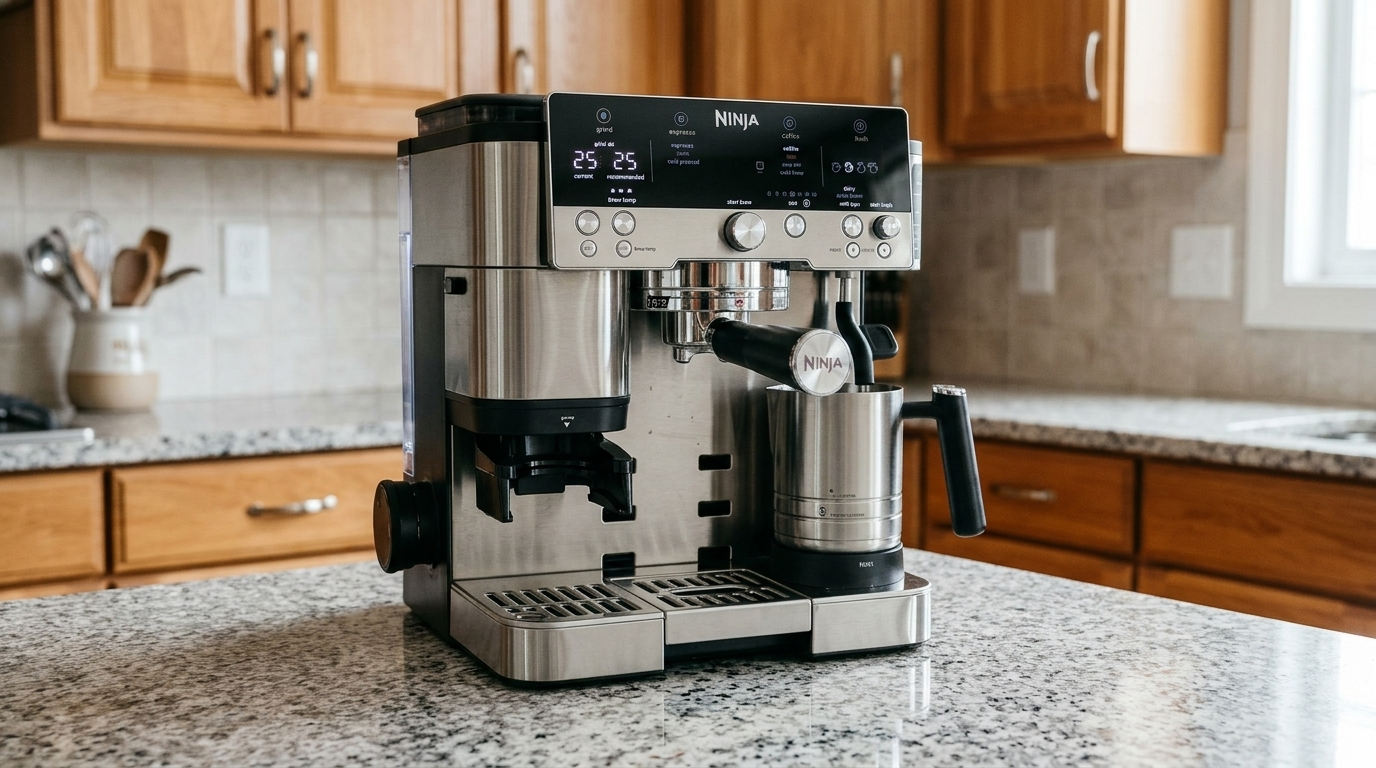
The Ninja Luxe Café Premier is shorter but heavier, with big cup clearance.
The Ninja has the bigger cup clearance. It took everything from a shot glass to a travel thermos, which was useful in a house where everyone uses different mugs.
The Breville’s 67-ounce tank sits at the back with a level sensor. It stopped a shot from starting when the water was low, which saved me at least two ruined shots in four weeks.
Height on the counter
Standard wall cabinets sit about 18 inches above the counter.
Our tip: Measure the height under your wall cabinets before you buy either, and leave room to lift the hopper lid without sliding the machine out.
Heat-up and setup
Setup took about 15 minutes on the Ninja. The Breville was similar, and both came with everything I needed, including a dosing funnel.
Heat-up is where the Breville shines. Its ThermoJet✕ThermoJetBreville’s fast heater. Instead of keeping a boiler of water hot, it heats water on its way through, so the machine is ready in seconds. was ready in about 3 seconds, switched from brewing to full steam in about 5 seconds and back to brewing in about 6.
The Ninja took about 1 minute to heat from cold. A full latte, from switching on to the cup, took me 3 to 4 minutes.
Both need a warm portafilter. On cold mornings I ran two blank shots on the Breville, about 20 seconds, and two or three on the Ninja.
Heat-up and switch times from my stopwatch.
Our tip: Turn the Barista Pro off between coffees, because it reheats in about 3 seconds and there is no reason to leave it on.
Grinder, dose and tamping
This is the heart of the difference. The Ninja weighs your coffee, and the Breville times it.
The Ninja uses a conical burr✕Conical burrsTwo cone-shaped grinding parts, one inside the other. Beans are crushed between them, and the gap between the burrs sets how fine the coffee is. grinder with 25 settings and a built-in scale. Doses stayed within a few tenths of a gram shot to shot, and a double took 10 to 15 seconds to grind.
After grinding, you pull a lever tamper through a dosing funnel. My counter stayed cleaner than with almost any other grinder machine I have tested, and a brush and damp cloth each day were enough.
The Breville uses hardened steel conical burrs with 30 numbered settings on a stepless collar. It doses by time in tenths of a second, and on the same setting my doses ranged from about 15.8 to 16.2 grams.
You tamp by hand with the included tamper, then trim with the Razor tool. The stock tamper is slightly undersized, so a 53.3 mm precision tamper filled the basket edge to edge.
| Grind and dose | Ninja Luxe Café Premier | Breville Barista Pro |
|---|---|---|
| Grinder | Conical burr, 25 settings | Hardened steel conical, 30 settings |
| Dosing | Weight-based, built-in scale | Timed, tenths of a second |
| Dose consistency | Within a few tenths of a gram | About 15.8–16.2 g |
| Tamping | Lever tamper with funnel | Hand tamper, Razor trim |
| Grind time, double | 10–15 seconds | Short, fairly loud burst |
| Portafilter | Ninja baskets, double and Luxe | 54 mm |
Shots to a balanced espresso on the Ninja
How many shots it took me to reach a balanced espresso by roast.
Espresso quality
Both made good espresso, and the Breville edged it, 8.7 to 8.5.
On the Breville, my espresso recipe was 16 grams in and 32 grams out, a 2:1 ratio, in about 28 to 30 seconds with a medium roast. The LCD shot timer made hitting that window easy.
My target window was 26 to 32 seconds. About half my shots landed in it in week one and about 92% by week four.
Share of my Barista Pro shots in the 26–32 second window, by week.
The Ninja did its best work with medium and dark roasts. Its medium-roast espresso scored 9.0 and its dark roast 8.8, both excellent.
Light roasts were another story. They never fully opened up on the Ninja, even at the finest setting, and scored 6.0.
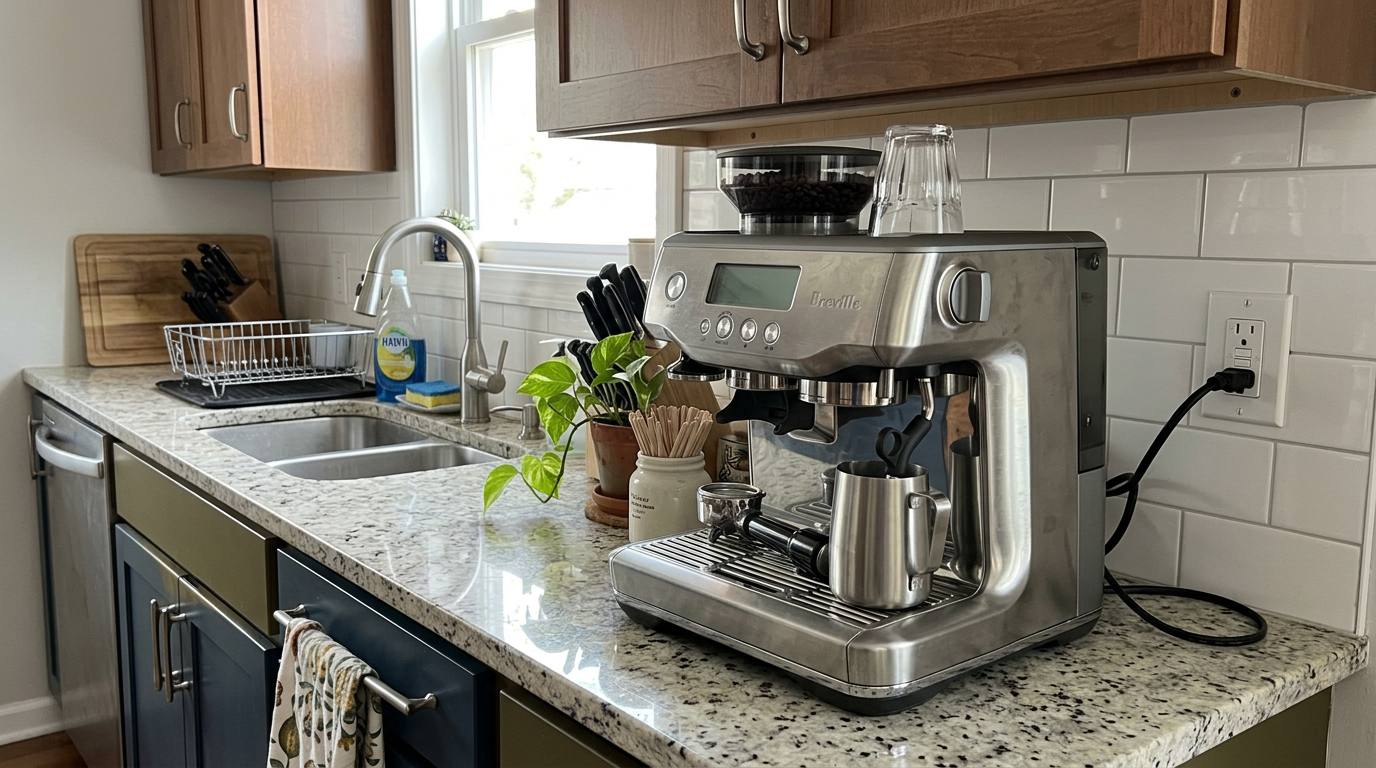
The Barista Pro’s LCD shot timer made hitting my 26 to 32 second window easy.
Ninja espresso flavor by roast
My flavor scores out of 10 on the Ninja Luxe Café Premier.
The Breville handles light roasts with PID✕PID controllerA smart temperature controller that constantly adjusts the heater to hold the water at an exact temperature, instead of switching on and off around it. temperature control and five settings. On Low, my light roast scored 8 for sourness on a 0 to 10 scale, with 10 the most sour. On High, it dropped to 2.5.
It also has programmable pre-infusion✕Pre-infusionA short soak of the ground coffee before full pressure starts, so the water flows through the puck evenly. up to 10 seconds. At the full 10, I went about half a number finer on the grind.
| Roast | Barista Pro grind | Barista Pro temperature |
|---|---|---|
| Light | 7–9 | High |
| Medium | 10–12 | Medium-High |
| Medium-dark | 12–14 | Medium |
| Dark | 14–16 | Medium-Low or Low |
Our tip: Switch the Barista Pro to High before you blame the grinder for a sour light roast, because temperature fixed more of my sour shots than grind changes did.
Milk drinks
This is where the two machines are most different.
The Breville has a manual steam wand with a four-hole tip and auto-purge. It is powerful: 6 ounces of cold milk took about 30 seconds, against about 45 seconds on an older thermocoil machine and about 60 on a small entry-level one.
I let air in for about 5 to 6 seconds in a 12-ounce jug before sinking the tip, then stopped at 140 to 150°F. The result was glossy microfoam✕MicrofoamMilk foam with bubbles so small you can barely see them. It feels silky and glossy, which is what a good flat white or latte needs. for flat whites and lattes.
Time to steam 6 oz of cold milk, from my stopwatch.
The Ninja uses a Dual Froth System with a steam wand and a whisk. It has four presets, steamed milk, thin froth, thick froth and cold foam, plus manual steaming.
Its presets heat milk to about 60 to 65°C. Frothing milk for a latte took about a minute, and cold foam was the standout, holding its shape for more than five minutes.
Ninja milk and foam scores
My ratings out of 10 on the Ninja Luxe Café Premier.
Both target the sweet spot. Research from the University of Camerino found the best foam structure in milk steamed to around 60°C.
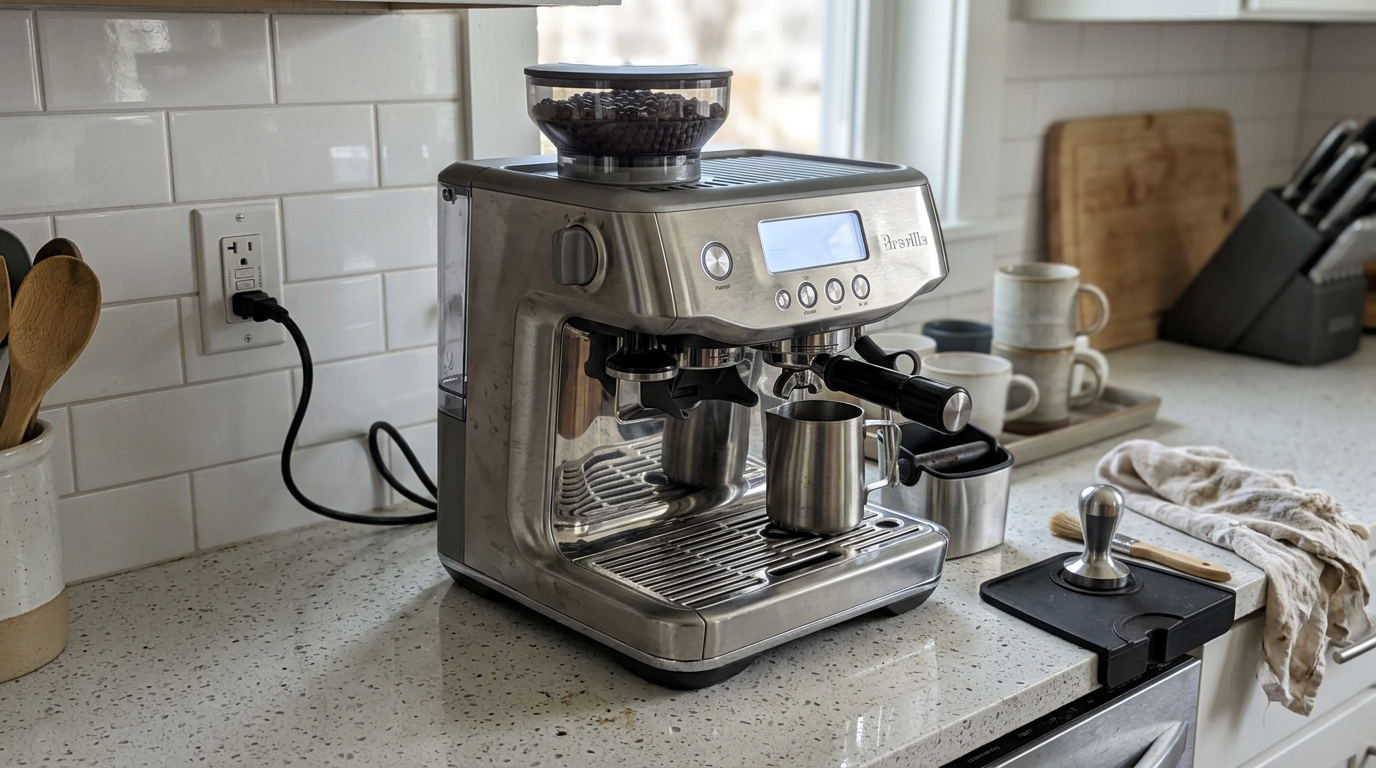
The Barista Pro steamed 6 ounces of cold milk in about 30 seconds.
| Milk | Ninja Luxe Café Premier | Breville Barista Pro |
|---|---|---|
| Steaming | Wand and whisk, plus manual | Manual, four-hole tip |
| Presets | Steamed, thin, thick, cold foam | None, you control it |
| Milk temperature | About 60–65°C presets | 140–150°F by hand |
| Cold foam | Yes, holds 5+ minutes | No |
| Latte art | Possible with manual steam | Yes, glossy microfoam |
| Plant milk | Plant setting, barista oat | Barista oat needs a few extra seconds |
Our tip: Purge and wipe the steam wand straight after every milk drink on both machines, because dried milk blocks the tip and spoils the next foam.
Find Out the Price TodayBig cups, americanos and cold drinks
The Ninja advertises drip-style coffee and cold brew from its large Luxe basket. In my testing, those were its weakest drinks.
The classic coffee tasted thin and under-extracted, the rich coffee was better but still light, and over-ice coffee was watery once diluted. The rapid cold brew was fast but weak.
My fix on both machines was the same: make big cups as americanos, with a double shot topped up with hot water. On the Breville, the dedicated hot water outlet gave a smooth, steady stream.
An americano avoids the bitter, drying notes of pushing too much water through one basket.
Iced drinks are the Ninja’s strength. An iced latte with cold foam took about 2 minutes, and I made one almost every day. On the Breville, I pulled a shot straight over ice and added cold milk.
| Big or cold drink | Ninja Luxe Café Premier | Breville Barista Pro |
|---|---|---|
| Drip-style coffee | Yes, but thin | No |
| Americano | Double plus hot water | Double plus hot water outlet |
| Iced latte | About 2 min, with cold foam | Shot over ice, cold milk |
| Cold brew | Rapid, but weak | No |
Our tip: Pull iced coffee shots straight over ice on either machine, because pouring a cooled shot later loses aroma.
Controls and feedback
The Ninja guides you with Barista Assist, which recommends a grind and gives feedback after each shot. Shot sizes are preset by drink, and stopping a shot manually is limited.
It also beeps loudly. In a quiet early-morning kitchen that got annoying until I switched the beeps off.
The Breville gives you an LCD that shows grind time, shot size and a live shot timer. There is no analog pressure gauge, which I missed a little while learning.
| Controls | Ninja Luxe Café Premier | Breville Barista Pro |
|---|---|---|
| Guidance | Barista Assist, after-shot feedback | LCD with shot timer |
| Shot size | Preset by drink | Programmable |
| Temperature | Several levels | Five PID settings |
| Pre-infusion | Automatic | Programmable, up to 10 sec |
| Pressure gauge | No | No |
| Beeps | Loud until switched off | Quiet |
Cleaning and upkeep
Both are easy to keep clean. Many of the Ninja’s parts go in the dishwasher: the funnel, baskets, water tank, hopper and drip tray.
On the Ninja, I wiped and purged the frother after every milk drink, about 30 seconds, rinsed the funnel and baskets daily and soaked the whisk weekly. The burrs needed a 10-minute clean each month.
On the Breville, I knocked out the puck, rinsed the basket and flushed the group after each shot, and purged and wiped the wand after each milk drink. Each week I brushed the gasket and burr chamber.
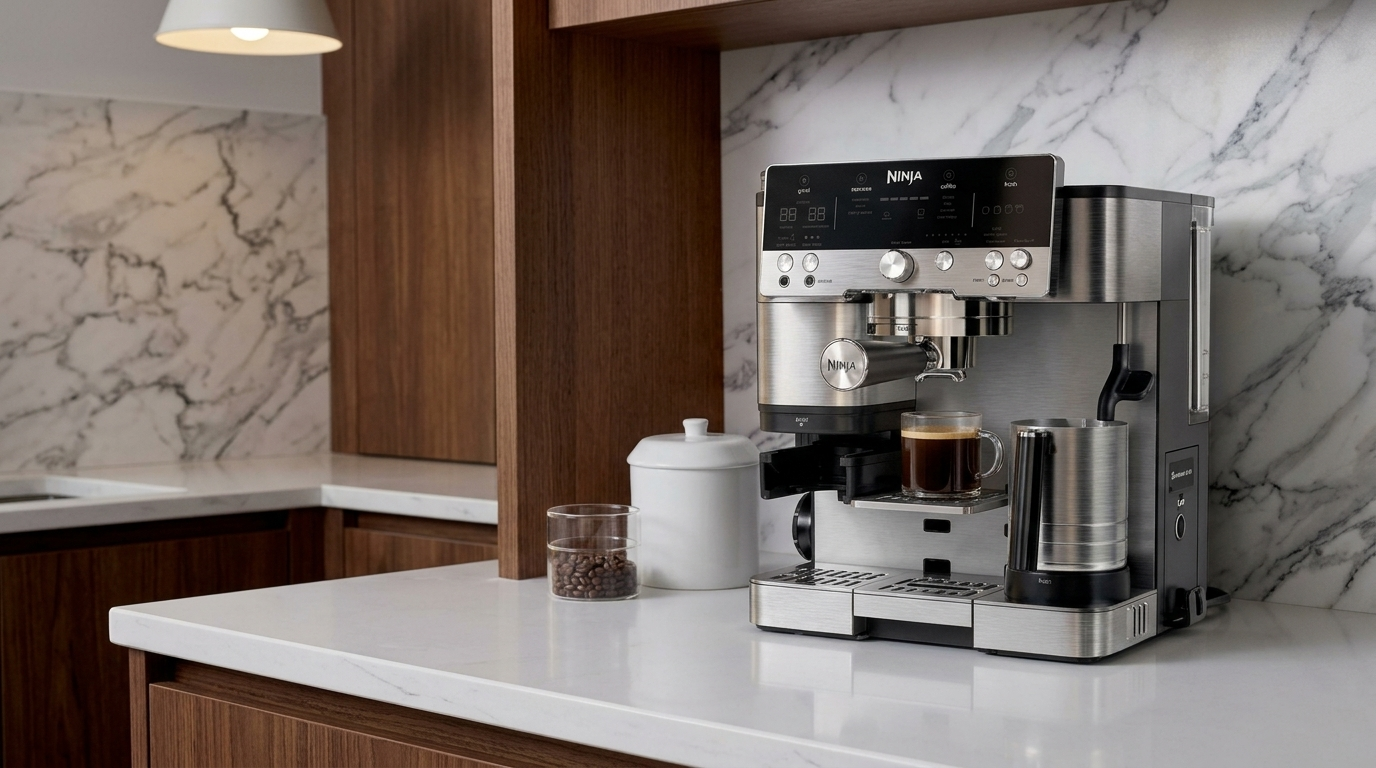
Many of the Ninja’s parts are dishwasher-safe, and its counter stayed spotless.
My estimate of hands-on time per day with two milk drinks, not counting automatic rinses.
| When | Ninja Luxe Café Premier | Breville Barista Pro |
|---|---|---|
| After milk drinks | Wipe and purge, 30 sec | Purge and wipe the wand |
| Daily | Tray, puck, funnel and baskets | Knock out, rinse, flush, empty tray |
| Weekly | Soak the whisk, 5 min | Brush gasket and burr chamber |
| Monthly | Clean burrs, 10 min | Replace filter every 2–3 months |
| When prompted | Descale, about 30 min | Backflush✕BackflushA cleaning cycle where a blind disc stops water flowing out, so the machine pushes water and cleaner back through the group head to clear coffee oils. and descale |
My Ninja’s descale alert came after about a month of daily use with moderately hard water, and the cycle took about 30 minutes.
Our tip: Keep the Ninja’s hopper at least partly full, because its scale-based dosing works best with a steady flow of beans.
A morning with each machine
Numbers only tell part of the story, so here is what a weekday flat white looked like on each machine by week three.
On the Ninja Luxe Café Premier
I switched it on, ran two blank shots while it heated for about a minute and clipped the dosing funnel onto the portafilter✕PortafilterThe handle with a metal basket that holds the ground coffee. You lock it into the machine, and hot water is pushed through the coffee in it..
I chose the drink, let the scale-based grinder dose for 10 to 15 seconds, pulled the lever tamper and locked in. While the shot ran for 25 to 30 seconds, I filled the jug and picked the thin froth preset.
Frothing took about a minute, hands-free. From switch-on to a cup in my hand took 3 to 4 minutes, and the counter was still clean.
On the Breville Barista Pro
I switched it on, and it was ready in about 3 seconds. I ran two quick blank shots to warm the group and used the hot water outlet to warm my cup.
I ground, tamped by hand, trimmed with the Razor and pulled a 1.75:1 shot, watching the timer on the LCD. The thick, hazelnut-colored crema✕CremaThe golden, foamy layer on top of a fresh espresso. It forms when pressure pushes oils and gases out of the coffee. told me it was right before I tasted it.
The wand switched to steam in about 5 seconds and textured my milk in about 30. I was done faster, but I did more of the work myself.
Our tip: Warm your cup with the hot water outlet while the group flushes on the Barista Pro, because it costs no extra time and keeps the flat white hotter.
Noise
Neither machine is very loud. The Breville’s grinder makes a short, fairly loud burst and its pump a steady hum.
The Ninja’s grinder runs 10 to 15 seconds for a double, and the loudest thing about it was the beeping until I turned it off.
Relative loudness from my side-by-side use. Shorter bars are quieter.
Water, beans and supplies
The Breville’s 67-ounce tank gave about 22 espressos, 16 flat whites or 9 americanos, and lasted two of us about two days.
Both machines did best with fresh espresso roasted within the last month. The Ninja liked medium and dark roasts, and the Breville handled everything from light to dark once I used the right temperature.
The scale I used to check yields, reading to 0.1 gram, was the most useful accessory with the Breville. Your spent pucks can go in the compost.
Breville tank yield, rough estimate from my testing.
| Bean type | Ninja Luxe Café Premier | Breville Barista Pro |
|---|---|---|
| Dark roast | 8.8, balanced in 2 shots | Grind 14–16, Medium-Low |
| Medium roast | 9.0, balanced in 3 shots | Grind 10–12, Medium-High |
| Light roast | 6.0, never fully opened | Grind 7–9, High |
| Very oily | Avoid | Avoid |
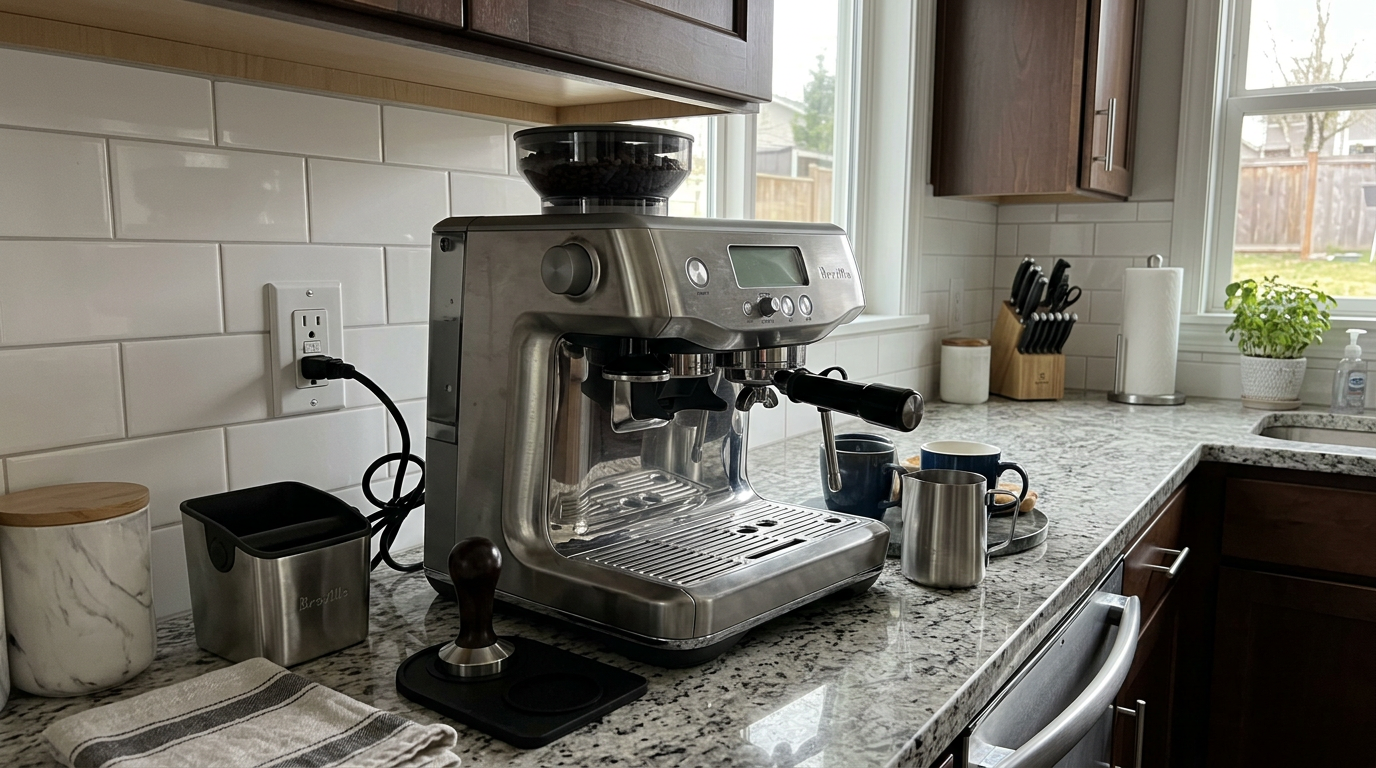
The Barista Pro handled every roast once I matched the temperature.
Our tip: Use barista-style oat milk and start it cold for plant-based drinks on both machines, because regular oat drinks collapse quickly.
Real-life scenarios
Specs only go so far. These are the situations where one machine clearly pulled ahead during my testing.
Weighed doses, a lever tamper with a funnel and a spotless counter.
Cold foam held its shape for more than five minutes.
High temperature took sourness from 8 down to 2.5 on my scale.
Ready in 3 seconds and milk steamed in about 30.
Clearance from a shot glass to a travel thermos.
The LCD shot timer showed exactly what each change did.
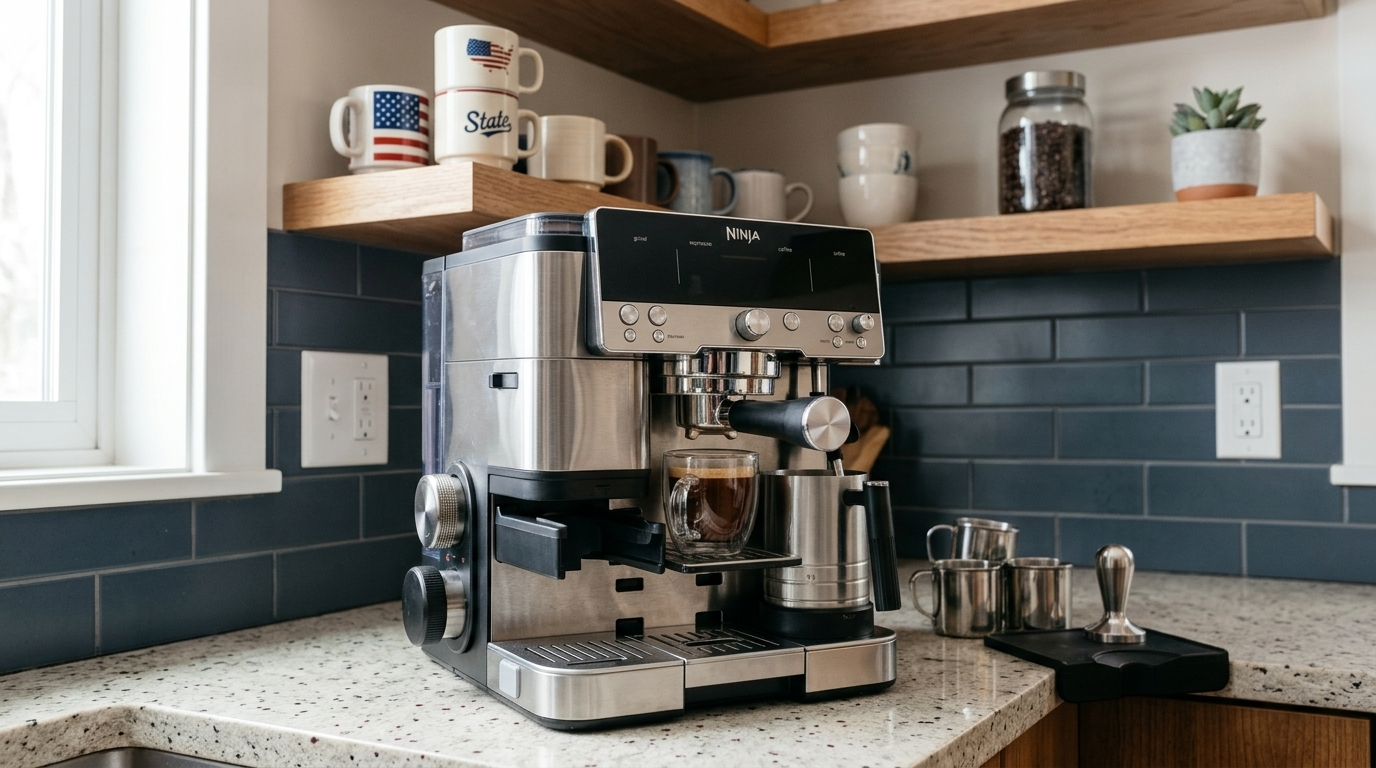
For guided espresso and iced drinks, the Ninja is the easier start.
My scorecard
These are my own scores out of 10 from my single reviews of each machine.
Ninja Luxe Café Premier
Breville Barista Pro
Overall, I rate the Barista Pro 8.5 and the Luxe Café Premier 8.1. The Breville makes the better espresso and milk, and the Ninja is the easier, more guided machine.
See How Much You’ll SaveWhich one is right for you?
4 quick questionsWhich one should you buy?
It comes down to one question: do you want the machine to guide you, or do you want to learn the craft? The Ninja guides, and the Breville teaches. If none of these is quite right for you, my guide to the best Breville espresso machines covers the rest of the range I’ve tested.
For more detail, read my Ninja Luxe Café Premier review and Breville Barista Pro review, or see my Ninja Luxe Café Premier vs Pro comparison.
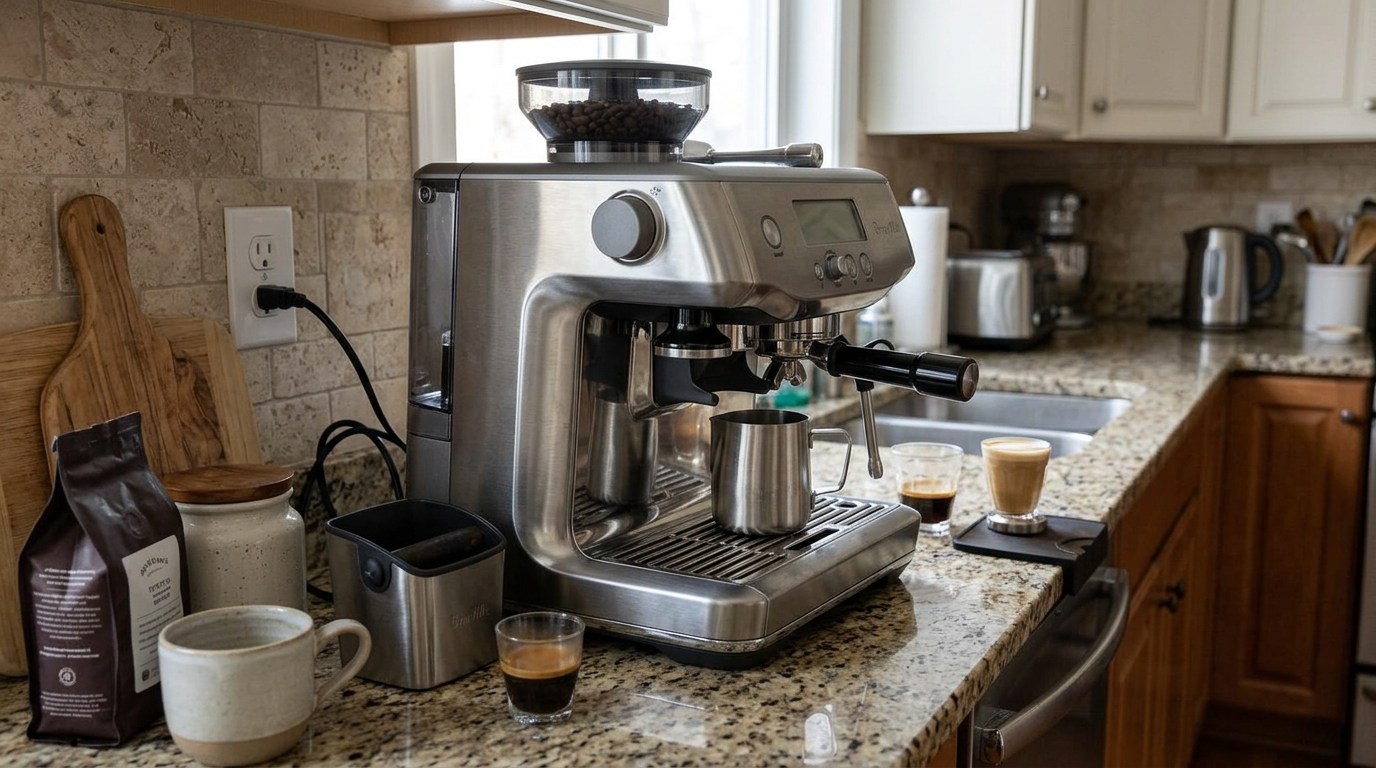
For learning espresso and steaming milk, the Barista Pro is the better machine.
- You want the machine to guide every step
- You drink iced lattes with cold foam
- You buy medium and dark roasts
- You want a spotless counter
- You want big mugs of drip-style coffee
- You drink light roasts
- Beeps would annoy you
- You want to learn real espresso
- You steam milk for flat whites and lattes
- You drink light roasts or single origins
- You want a machine ready in seconds
- You want cold foam at one touch
- You want weighed doses
- You learn best from a pressure gauge
For most people who want to make real espresso, my pick is the Breville Barista Pro. It is ready in 3 seconds, its shot timer and five temperatures make dialing in easy, it handles light roasts and its steam wand makes microfoam in about 30 seconds.
The Ninja Luxe Café Premier is the smarter buy if you want guidance at every step and love iced drinks. Weighed doses, a lever tamper, a clean counter and the best cold foam I have tested make it the gentlest way into espresso. Make your big cups as americanos.
Whichever you choose, use fresh beans roasted within the last month, run a blank shot first and change one thing at a time. Both reward a little patience with café-quality coffee.
Ninja Luxe Café Premier vs Barista Pro specifications
From manufacturer specifications and my own testing.
| Ninja Luxe Café Premier | Breville Barista Pro | |
|---|---|---|
| Model | Ninja Luxe Café Premier ES601 | Breville BES878BSS Barista Pro |
| Type | Semi-automatic with grinder | Semi-automatic with grinder |
| Heating | Thermoblock, about 1 min | ThermoJet, about 3 sec, 1,680 W |
| Pressure | 9 bar | 9 bar extraction |
| Grinder | Conical burr, 25 settings | Hardened steel conical, 30 settings |
| Dosing | Weight-based, built-in scale | Timed, tenths of a second |
| Tamping | Assisted lever with funnel | Hand tamper, Razor tool |
| Portafilter | Double and Luxe baskets | 54 mm |
| Temperature | Several levels | 5 PID settings |
| Pre-infusion | Automatic | Programmable, up to 10 sec |
| Milk | Dual Froth System, 4 presets, cold foam | Manual four-hole wand |
| Display | Barista Assist | LCD with shot timer |
| Water tank | Removable, low-water alert | 67 oz, level sensor |
| Dimensions (W x D x H) | 13.4 x 13 x 14.6 in | 14 x 13 x 16 in |
| Weight | About 26 lb | About 20 lb |
How I tested and compared them
I used each machine as my everyday espresso maker for four weeks, making espresso, americanos, cappuccinos, flat whites and lattes on both, plus drip-style coffee, rapid cold brew and cold foam drinks on the Ninja.
I weighed doses and yields on a 0.1-gram scale, logged shot times against my target window, timed heat-up, grinding and steaming with a stopwatch and measured milk temperatures with a probe thermometer.
I brewed light, medium and dark roasts, foamed whole, skim and barista oat milk, ran every cleaning routine and compared my notes with Ninja’s and Breville’s specifications and owner documentation.
- Coffee: dose, crema, body and consistency.
- Milk: foam texture, temperature and drink range.
- Workflow: controls, menus and daily routine.
- Ownership: noise, cleaning, water care and footprint.
Ninja Luxe Café vs Barista Pro FAQ
Is the Ninja Luxe Café Premier better than the Breville Barista Pro?
It is easier, with weighed doses, guidance and cold foam. The Barista Pro makes the better espresso and milk, heats in 3 seconds and handles light roasts far better.
Which is better for beginners?
The Ninja is the gentler start, scoring 8.7 for ease of use. The Barista Pro, at 8.2, takes about a day of tweaking, then teaches you more.
Which makes better espresso?
The Barista Pro, 8.7 to 8.5. The Ninja was excellent with medium and dark roasts but light roasts never opened up.
How fast does the Barista Pro heat up?
About 3 seconds to ready, about 5 seconds to full steam and about 6 seconds back to brewing.
Does the Ninja make good drip coffee?
Not in my testing. Its large-basket coffees tasted thin and watery. A double espresso topped with hot water was better.
Can the Barista Pro make cold foam?
No. It has a manual steam wand for hot milk. The Ninja has a cold foam preset that held its shape for more than five minutes.
Does either have a pressure gauge?
No. The Barista Pro has an LCD with a shot timer, and the Ninja gives Barista Assist feedback after each shot.
Which is easier to clean?
They are close. Many Ninja parts are dishwasher-safe, and the Breville scored slightly higher for cleaning, 8.4 to 8.1.

- Our hands-on Ninja Luxe Café Premier review
- Our hands-on Breville Barista Pro review
- Ninja and Breville product specifications and owner documentation
- General espresso brewing and maintenance guidance
- Effect of milk processing and steam frothing conditions on microfoam formation, University of Camerino
- A living lexicon for brewed coffee, University of Oregon
- Composting and Coffee Grounds, Cornell University