Ninja Luxe Café vs Breville Barista Express vs Barista Pro
undefined
We choose products independently. We may earn a commission through links on this page; your price stays the same. Affiliate policy
Jargon helpNew to espresso? Tap any dotted term to see what it means.
In this comparison
For most people who want to make real espresso at home, buy the Breville Barista Pro. It heats up in about 3 seconds, its 30-step grinder dials in finer than the Express, and it pulled the best espresso and steamed the best milk of the three. Buy the Ninja Luxe Café Premier if you are nervous about the learning curve: it weighs your dose, tamps for you, keeps the counter clean and makes cold foam. The Breville Barista Express is the classic way to learn the craft, with a pressure gauge that teaches you what is happening in every shot, but it is the slowest and messiest of the three.
The three machines
Specs checked November 14, 2026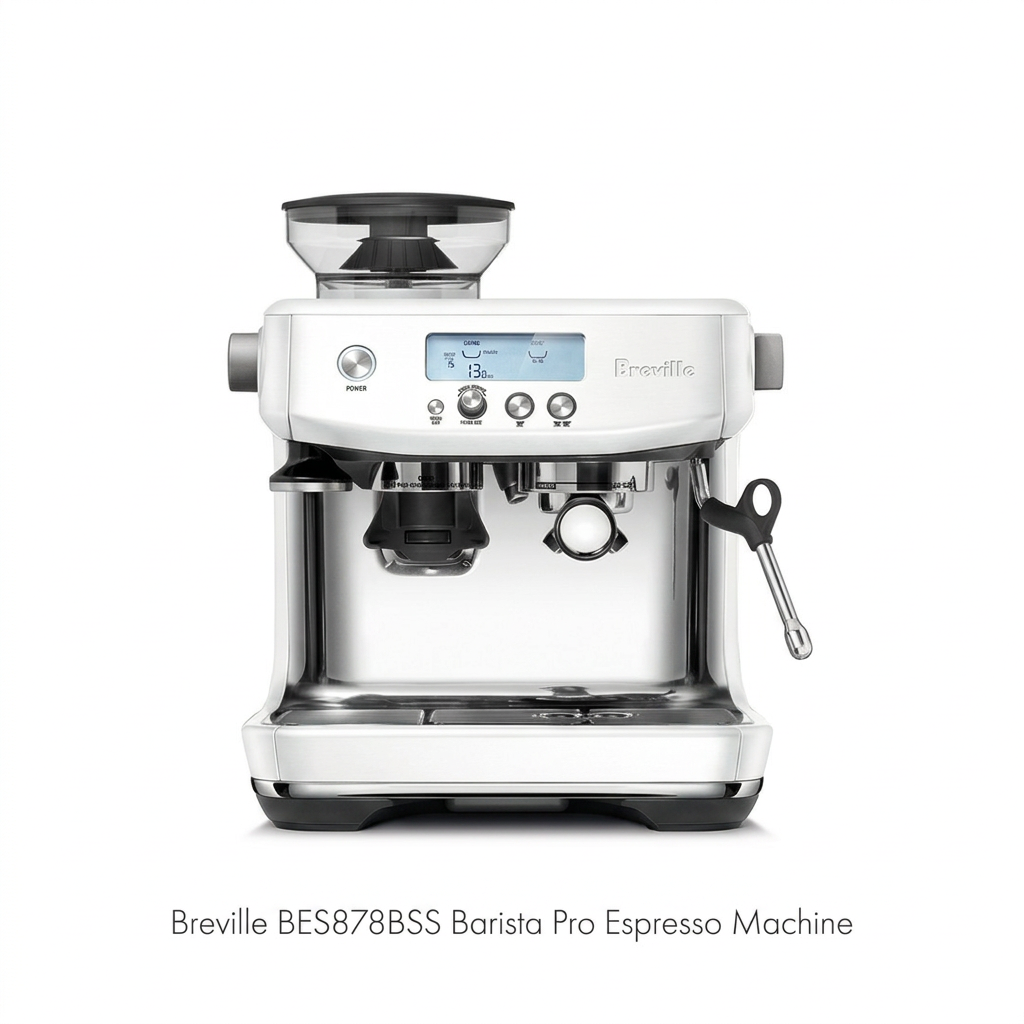
A 3-second ThermoJet heat-up, a 30-setting grinder, an LCD that times every shot and the best steam wand of the three.
Check price on Amazon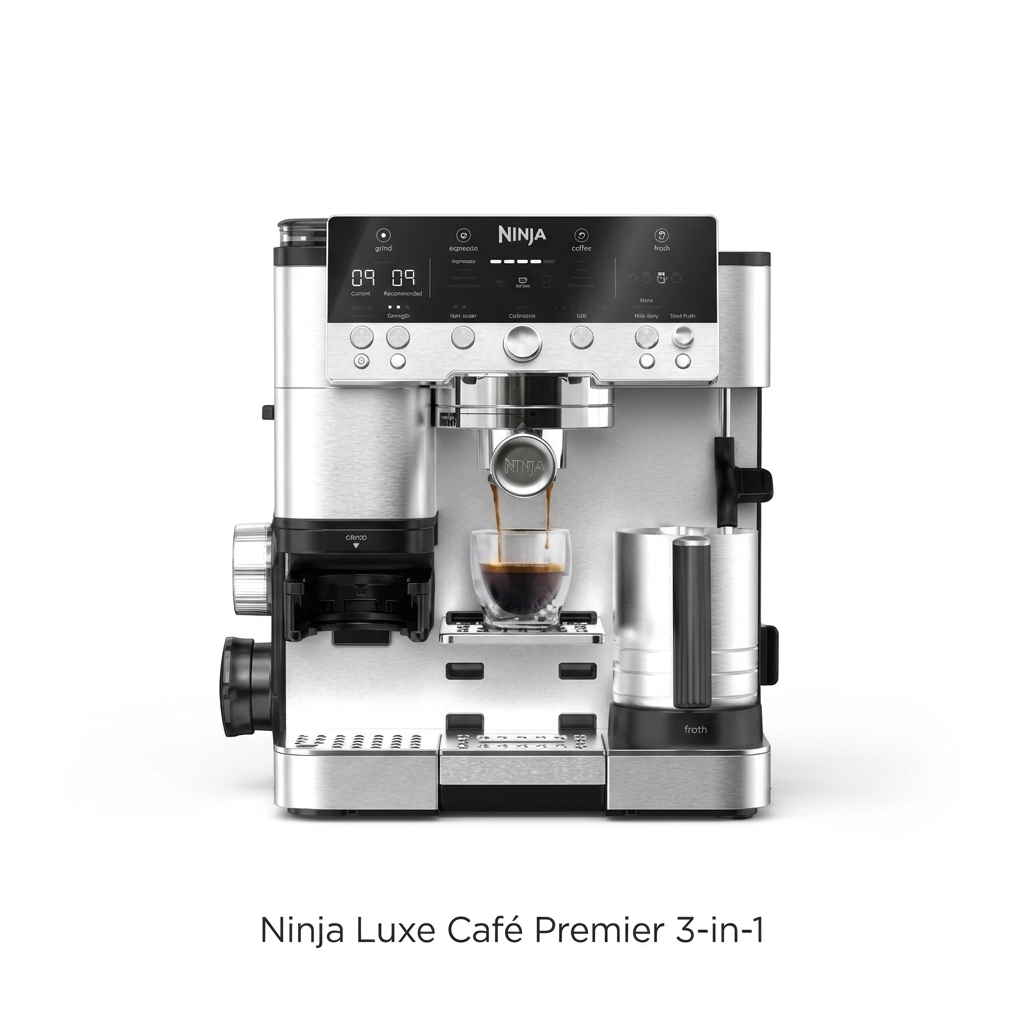
A guided machine with a built-in scale, an assisted tamper, Barista Assist tips and a frother that also makes cold foam.
Reveal Today’s Deal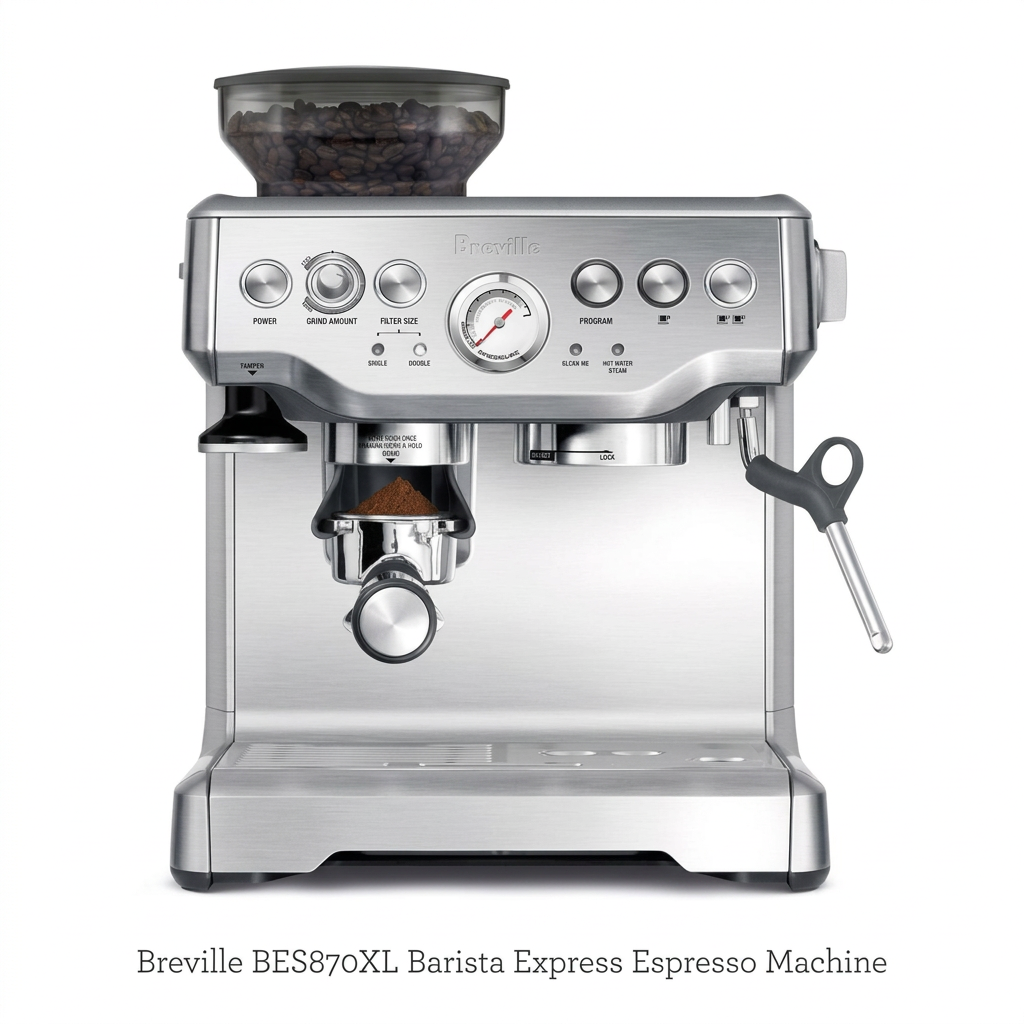
The classic grinder-and-espresso combo with a pressure gauge, a 16-step grinder and a manual steam wand.
See Today’s PriceNinja vs Barista Express vs Barista Pro at a glance
- The Barista Pro is the best all-rounder: faster, finer and more consistent than the Express.
- The Ninja removes the mess and guesswork, and it is the only one with cold foam.
- The Barista Express still pulls great espresso, but it asks the most of you.
- All three are semi-automatic, so you grind, tamp and steam on every one.
Head to head
The better result in each row is marked, based on four weeks with each machine and the manufacturer specs. Rows where they are equal have no winner.
Keep in mind that the tally is not my verdict. Some rows matter far more than others, and which ones matter depends on how you like to make coffee.
| Spec | Ninja Luxe Café | Barista Express | Barista Pro |
|---|---|---|---|
| Espresso flavormy tasting, same beans | Sweet, syrupy | Sweet, a touch less clean | Sweetest, most consistent ✓ Best |
| Heat-up | About 30 seconds | About 30 to 40 seconds | About 3 seconds ✓ Best |
| Grind settings | 25, with recommendations | 16 | 30 ✓ Best |
| Dosing | Weighed by a scale ✓ Best | Timed, Grind Amount dial | Timed, in tenths of a second |
| Tamping | Assisted lever with funnel ✓ Best | Magnetic hand tamper | Magnetic hand tamper |
| Shot feedback | Barista Assist tips | Analog pressure gauge | LCD shot timer |
| Steam wand | Wand with whisk, 4 presets | Manual, slower | Manual, four-hole tip, fast ✓ Best |
| Cold foam | Yes ✓ Best | No | No |
| Switch espresso to steam | Quick | Slow, around 20 seconds | Almost instant ✓ Best |
| Mess on the counter | Very little ✓ Best | Most | Some |
| Big cup clearance | Up to a travel mug ✓ Best | Limited | Limited |
| Weight | About 26 lb | About 22 lb | About 20 lb ✓ Best |
| Rows won | 5 | 0 | 6 |
Pros and cons
Breville Barista Pro
- Best espresso of the three, with 30 grind steps
- About 3-second heat-up and instant switch to steam
- Fast, powerful steam wand for real latte art
- Timed dosing means you still weigh to be exact
- No cold foam
- LCD menus take a few days to learn
Ninja Luxe Café Premier
- Guided, weighed and tamped shots with almost no mess
- Four froth presets including cold foam
- Huge cup clearance, up to a travel mug
- Large-basket coffees tasted thin
- Grinder prefers medium and dark roasts
- The heaviest and widest of the three
Breville Barista Express
- Pressure gauge teaches you how good shots behave
- Sweet espresso once dialed in
- A proven design with a huge owner community
- Slowest to switch from espresso to steam
- 16 grind steps can be too coarse for some beans
- The messiest workflow of the three
Who should buy which machine?
- Home baristas who want café-level shots
- Latte art learners
- Anyone who hates waiting for the machine
- Complete beginners
- Iced latte and cold foam fans
- People who want a clean counter
- Hobbyists who want to learn by feel
- Buyers who like a pressure gauge
- People happy to work a little harder
Design, size and build
All three are semi-automatic✕Semi-automatic espresso machineA machine where you handle the coffee yourself: you fill a portafilter, tamp it and lock it in, and the machine controls the water and pressure. machines with a grinder built in, but they look and feel quite different on the counter.
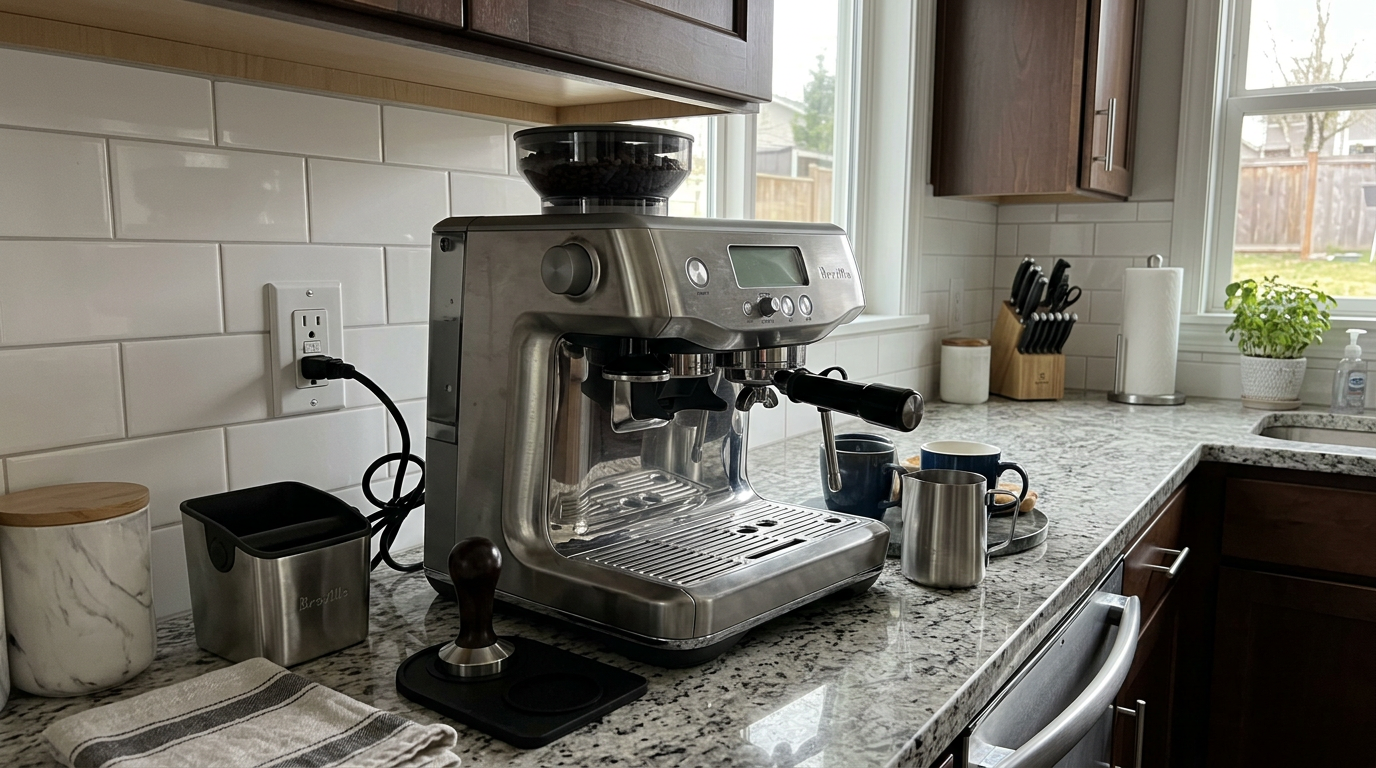
The Barista Express is the classic: a brushed steel box with a bean hopper on top, a grinder cradle on the left, a pressure gauge in the middle and a steam wand on the right.
The Barista Pro keeps the same idea but swaps the gauge for an LCD screen and trims the weight to about 20 lb. It looks cleaner and more modern.
The Ninja is the biggest of the three. At about 13.4 inches wide and 26 lb, it needs more room, but it hides the mess better with its funnel and assisted tamper.
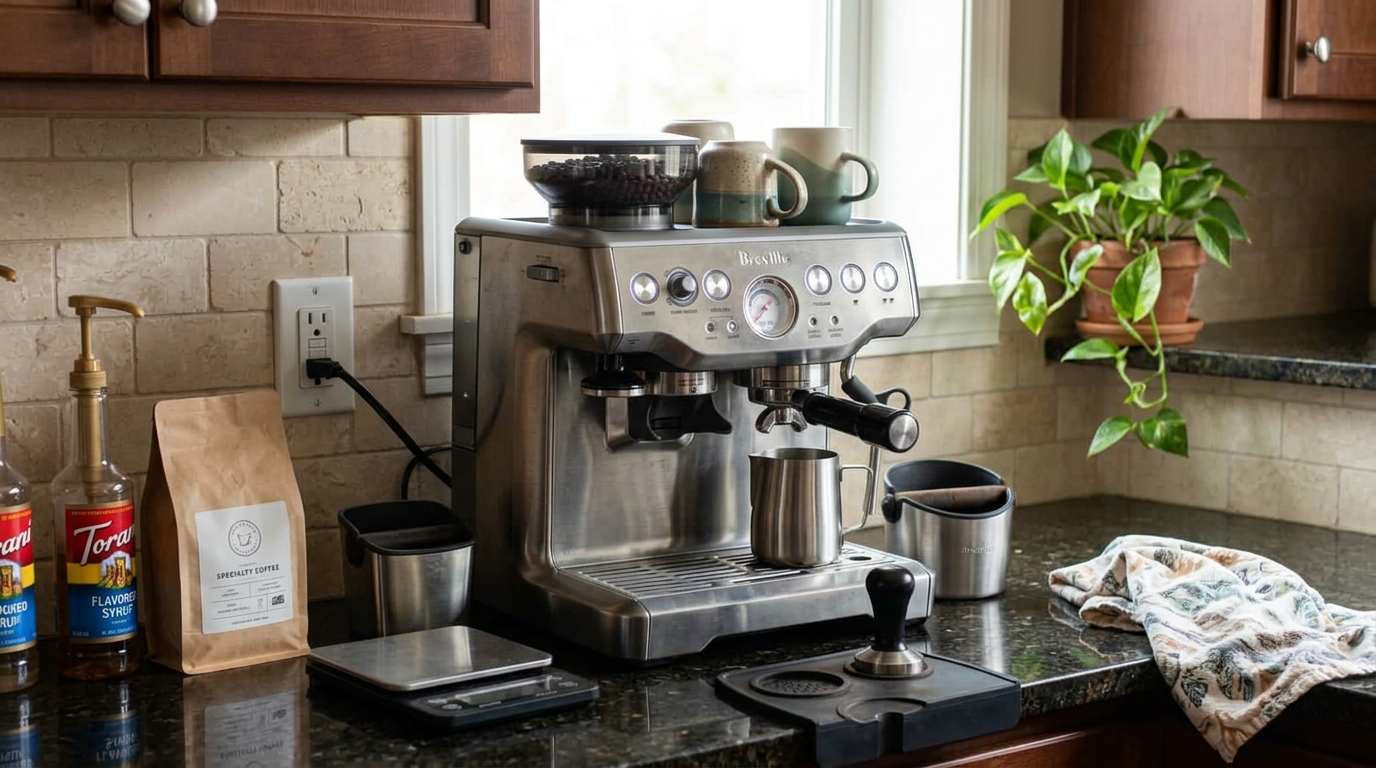
The Barista Express’s pressure gauge is the part beginners learn the most from.
Weight on the counter
Heavier machines stay put when you lock in the portafilter.
Build quality was good across the board. The Brevilles use more brushed stainless steel on the outside, while the Ninja mixes metal and plastic but felt solid in daily use.
Our tip: Leave a little space to the right of the Brevilles so the steam wand can swing out fully when you froth a big jug.
Heat-up and speed
This is the Barista Pro’s headline feature, and after a month it is the one I missed most on the others.
The Pro uses a ThermoJet✕ThermoJet heatingBreville’s fast heating system. It heats water as it flows instead of warming a boiler, so the machine is ready in about 3 seconds and switches to steam almost instantly. heater and was ready to pull a shot about 3 seconds after I pressed power. It also switched from espresso to steam almost instantly.
The Barista Express uses a thermocoil✕ThermocoilA heater with water running through a coiled tube inside a metal block. It is quicker than a boiler but slower than newer instant heaters. that took around 30 to 40 seconds to warm up. Switching to steam took roughly 20 seconds more, and that wait adds up every morning.
The Ninja was ready in about 30 seconds and moved between espresso and frothing quickly.
Seconds until ready to brew
From cold, measured with a stopwatch. Shorter bars are faster.
Time to a finished latte
From a cold start to a latte in hand, my average over a week.
All three use PID✕PID temperature controlA digital controller that keeps the brewing water at a steady, precise temperature instead of letting it swing up and down. control for brewing temperature, so shot temperature was steady on all of them once warm.
Find Out the Price TodayDosing and tamping
This is where the Ninja pulls away for beginners.
On the Ninja, you place the portafilter in its cradle and press grind. A built-in scale stops the grinder at the right weight, a funnel keeps the grounds in the basket, and you pull a lever twice to tamp. My doses landed within about half a gram all month.
On both Brevilles, dosing is timed. You set the grind amount, grind into the portafilter, then tamp by hand with the magnetic tamper. The Pro lets you set the grind time in tenths of a second, which made it easier to repeat a dose.
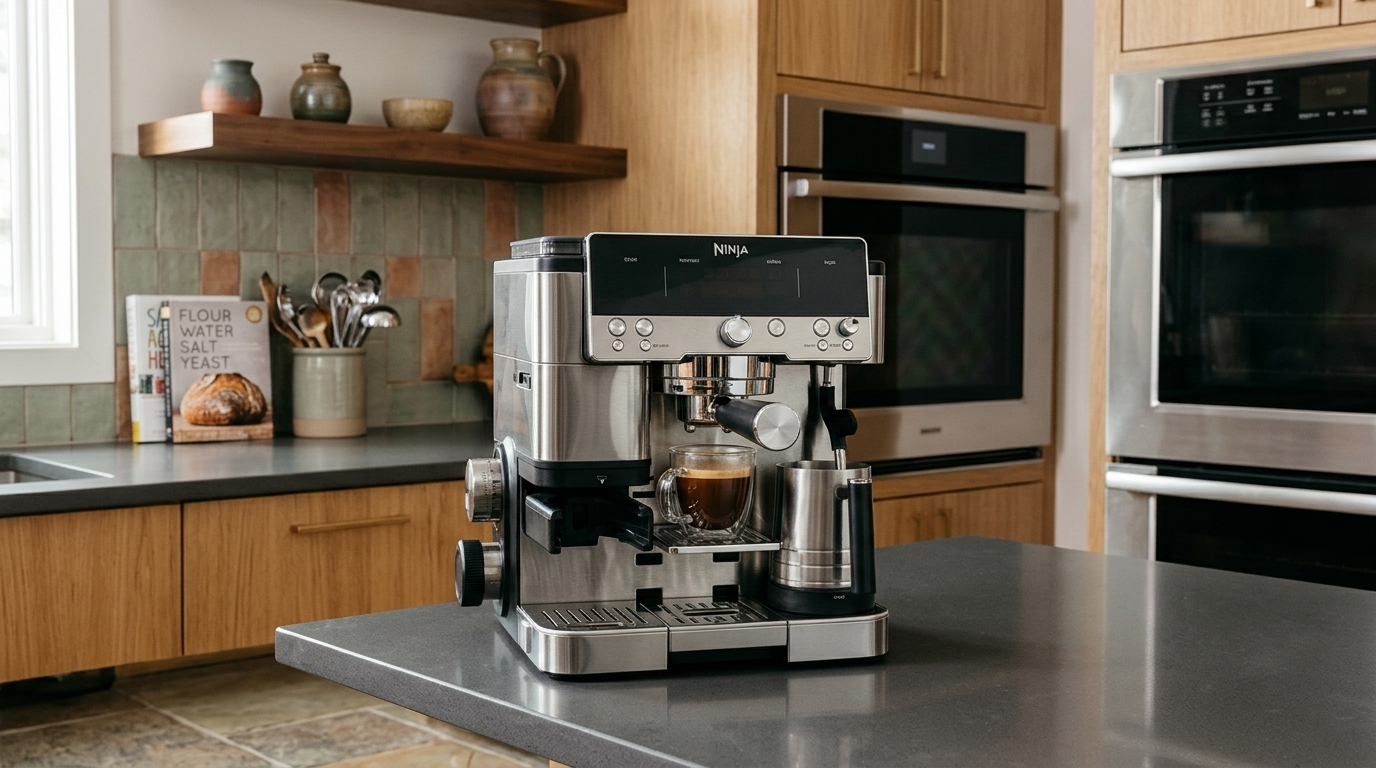
The Ninja’s funnel and scale removed nearly all of the mess from my morning routine.
| Step | Ninja Luxe Café | Barista Express | Barista Pro |
|---|---|---|---|
| Dose | Weighed automatically | Timed, Grind Amount dial | Timed, 0.1 s steps |
| Mess control | Funnel | None | None |
| Tamp | Assisted lever | Hand tamper | Hand tamper |
| Guidance | Barista Assist tips | Pressure gauge | Shot timer on the LCD |
| Typical double dose | About 20 g | About 18 g | About 18 g |
Our tip: Put a small knock box next to the Brevilles from day one, because tapping pucks into the bin gets messy fast.
Grinder
All three grind fresh with conical burrs✕Conical burrsTwo cone-shaped grinding parts, one inside the other. Beans are crushed between them, and the gap between the burrs sets how fine the coffee is., but the range matters a lot for espresso.
The Barista Pro’s 30 settings let me make small changes, which made it the easiest to dial in with different beans. The Express’s 16 settings felt like bigger jumps, and with some light roasts I could not get fine enough without adjusting the inner burr.
The Ninja’s 25 settings come with a recommendation for your roast. It was happiest with medium and dark roasts, and light roasts ran a little fast even at its finest setting.
Grind settings
More steps means smaller, easier adjustments.
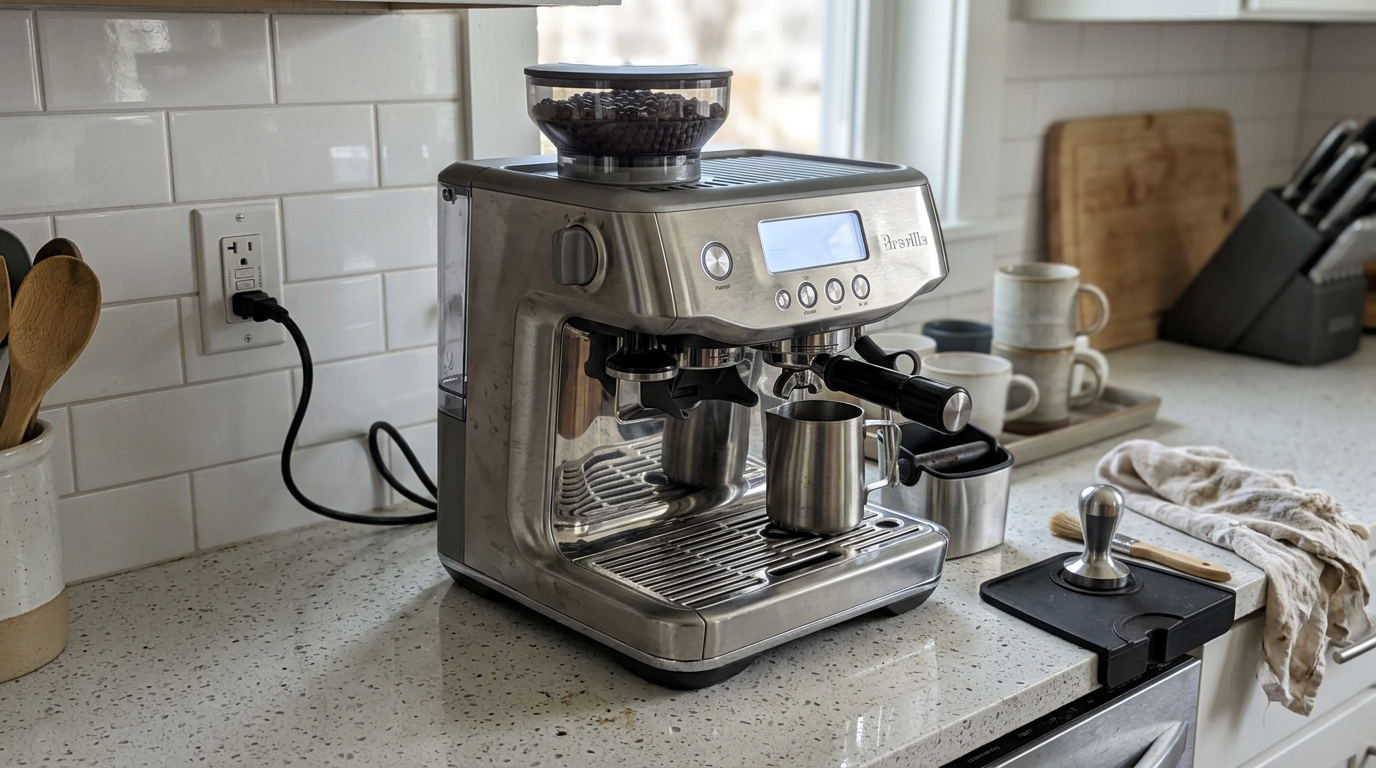
The Barista Pro’s 30 grind steps made dialing in new beans much easier.
Our tip: Change only one thing at a time when you dial in, either grind or dose, so you know which change fixed the shot.
Espresso quality
I used the same medium-roast blend across all three machines for most of my testing and aimed for a classic 1:2 ratio, about 18 grams in and 36 grams out.
The Barista Pro pulled the best shots. With its programmable pre-infusion✕Pre-infusionA short soak of the ground coffee before full pressure starts, so the water flows through the puck evenly. and finer grind, the espresso was sweet, balanced and syrupy, with a thick crema and very few bad shots.
The Barista Express came close once dialed in. Its shots were sweet and full, though they varied a little more from day to day.
The Ninja surprised me. With a weighed 20-gram dose, its double shot was sweet and syrupy with caramel and cocoa notes, and it got there within two or three tries.
My espresso ratings
My scores out of 10 for body, crema, flavor and consistency.
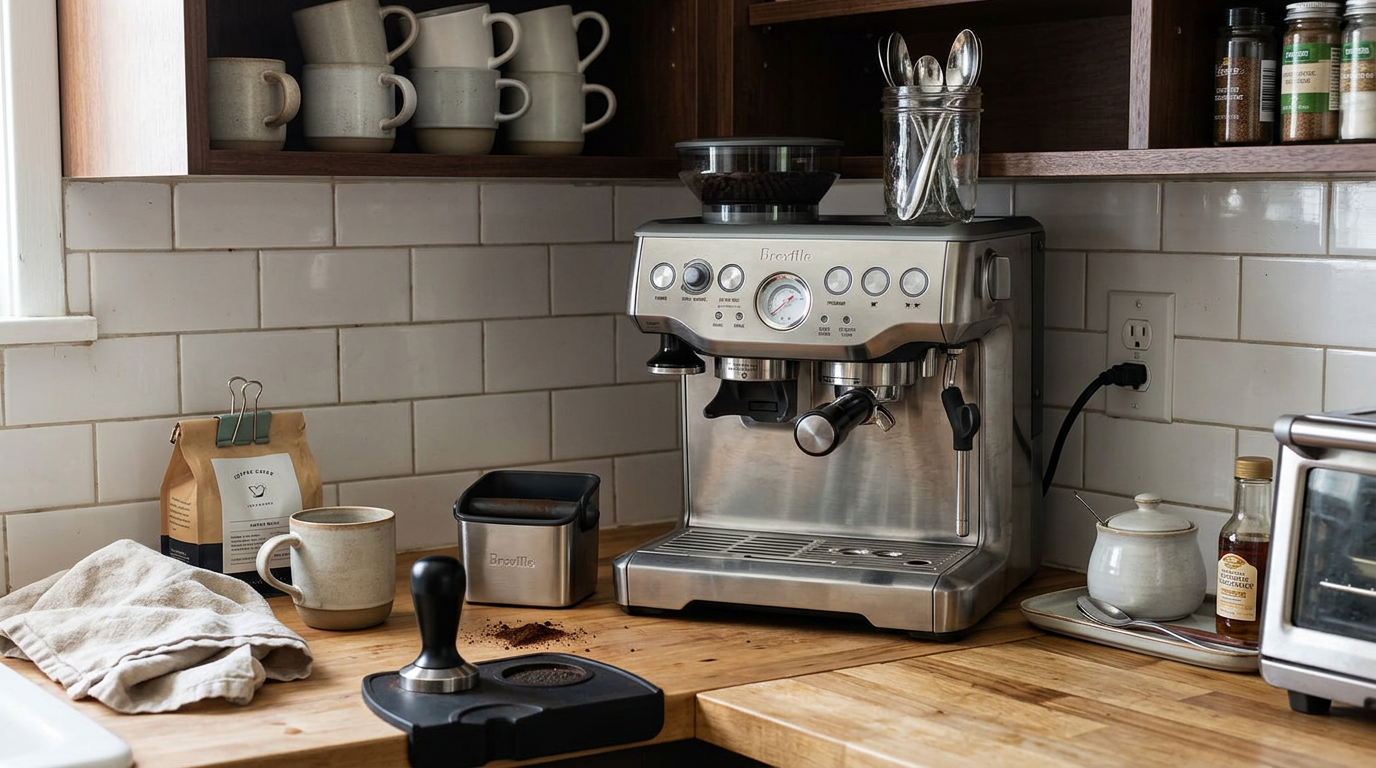
Once dialed in, the Barista Express pulls sweet, full espresso.
The Express’s gauge deserves credit. Watching the needle sit in the espresso range taught me more about extraction✕ExtractionHow much flavor water pulls out of the ground coffee. Too little tastes sour; too much tastes bitter. in a week than any manual.
| What you taste | Likely cause | First fix |
|---|---|---|
| Sour, thin, watery | Under-extraction | Grind one step finer |
| Bitter, harsh, drying | Over-extraction | Grind one step coarser |
| Shot runs in under 20 seconds | Grind too coarse or dose too low | Grind finer or add 0.5 g |
| Shot drips for over 35 seconds | Grind too fine | Grind coarser |
Milk and steaming
The three machines take two very different approaches to milk.
The Brevilles use classic manual steam wands. You purge, sink the tip, stretch the milk and then roll it into microfoam✕MicrofoamMilk foam with bubbles so small you can barely see them. It feels silky and glossy, which is what latte art needs.. It takes practice, but it is the only way to pour real latte art.
The Barista Pro’s wand has a four-hole tip and more steam power, and it purges itself automatically. A 5-ounce jug of milk took me about 25 to 30 seconds, and it was the easiest wand to learn on.
The Express’s wand is slower and gentler. That gives beginners more time to get it right, but a latte jug took noticeably longer.
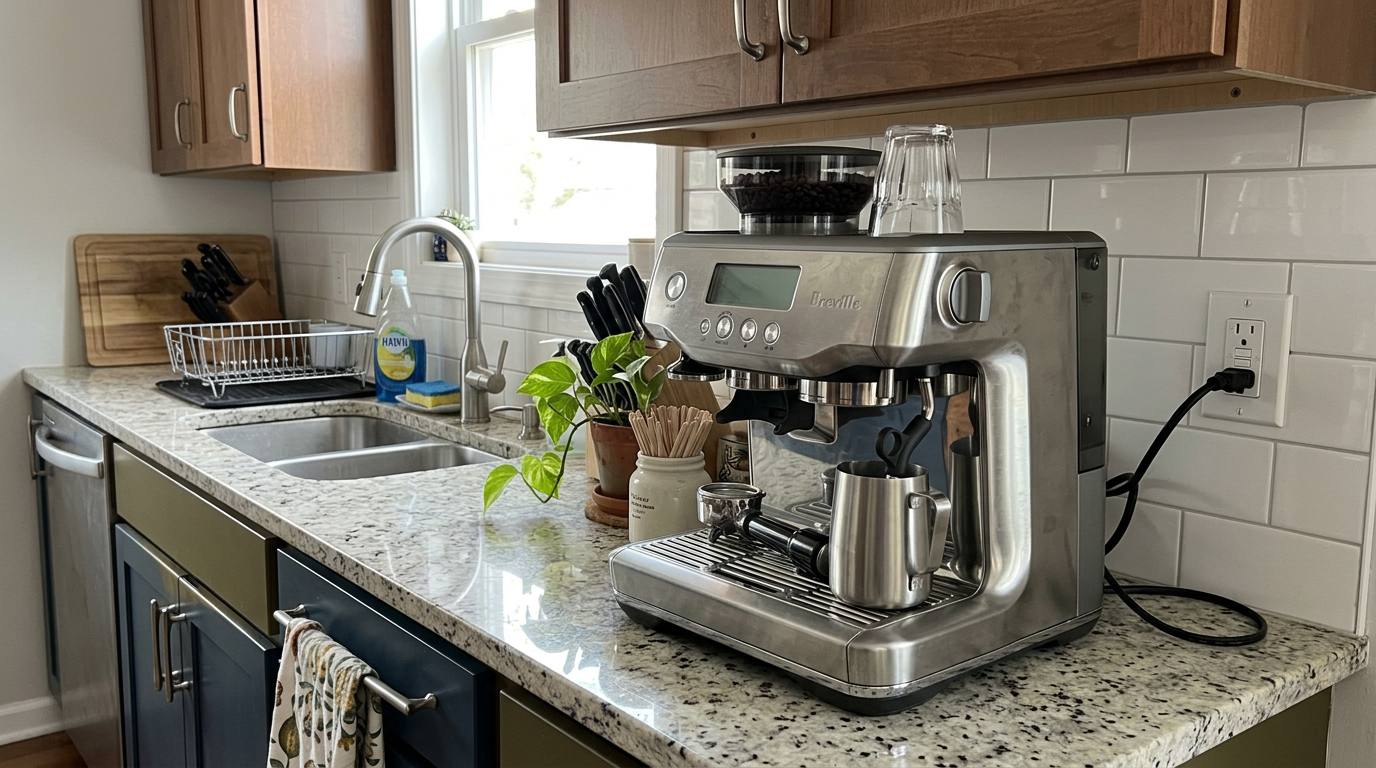
The Barista Pro’s four-hole tip made silky, pourable microfoam the quickest.
The Ninja takes the skill out of it. Its Dual Froth System has a whisk inside the wand and four presets: steamed milk, thin foam, thick foam and cold foam. You choose one, place the jug and walk away.
Milk came out at about 140 to 149°F on the Ninja, a good drinking temperature. The foam was good, if not quite as glossy as what I could make by hand on the Pro.
My milk ratings
My scores out of 10 for texture, temperature and ease.
| Milk feature | Ninja Luxe Café | Barista Express | Barista Pro |
|---|---|---|---|
| Wand type | Wand with whisk | Manual wand | Manual wand, four-hole tip |
| Hands-free presets | 4 | No | No |
| Cold foam | Yes | No | No |
| Auto purge | No | No | Yes |
| Latte art potential | Limited | Good, with practice | Best |
| Time for a latte jug | About 60 s, unattended | About 45 s | About 30 s |
Our tip: Purge the steam wand for a second before and after every jug on all three machines, because it clears condensed water and stops milk drying inside the tip.
Iced drinks, americanos and big coffee
If iced coffee is part of your week, the Ninja is the only one with real tricks.
Its cold foam preset whisks cold milk into a thick, sweet topping for iced lattes. It also has over-ice and cold-brew-style settings that brew a concentrated coffee for pouring over ice.
On the Brevilles, an iced latte means pulling a shot over ice and adding cold milk. It works, but there is no cold foam.
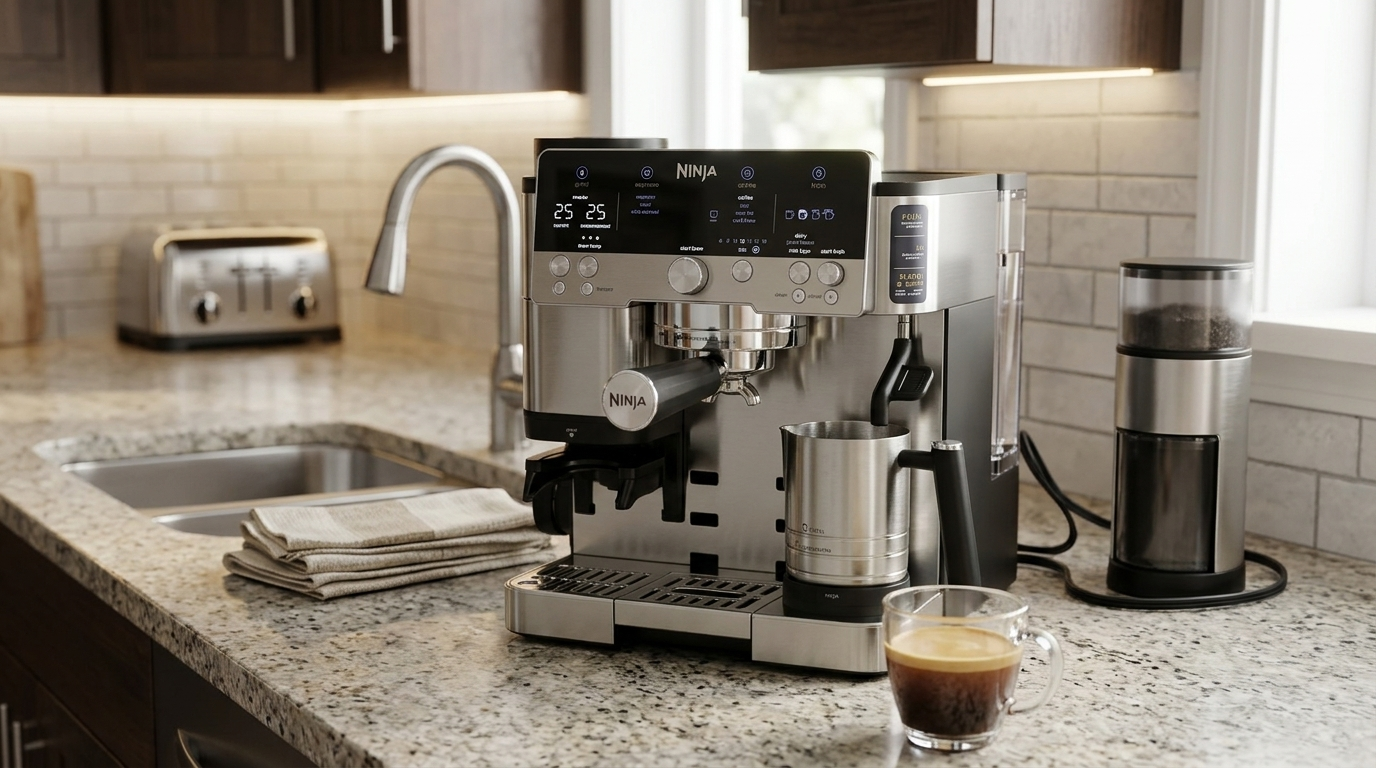
Cold foam on an iced latte is something only the Ninja can do here.
For hot black coffee, all three make a good americano✕AmericanoEspresso topped up with hot water. Because the water is added afterwards instead of being pushed through the coffee, it keeps more sweetness and less bitterness. using their hot water outlets. The Ninja’s large-basket drip-style coffee was the weak spot of my test: it tasted thin, so I stuck to americanos.
| Drink | Ninja Luxe Café | Barista Express | Barista Pro |
|---|---|---|---|
| Americano | Yes, hot water outlet | Yes, hot water outlet | Yes, hot water outlet |
| Big mug of coffee | Large basket, tasted thin | Americano only | Americano only |
| Iced latte | Over-ice brew plus cold foam | Shot over ice | Shot over ice |
| Cold foam | Yes | No | No |
Our tip: Pull your shot into a small cup first, then pour it over the ice, so the espresso does not shock and turn bitter.
Cleaning and upkeep
None of these is as easy to clean as a fully automatic, but the Ninja keeps the mess under control best.
On every machine, you knock out the puck, rinse the basket, purge and wipe the steam wand and empty the drip tray. On the Brevilles, there were always a few grounds on the counter from dosing and tamping.
The Barista Pro and Express both have a cleaning cycle that runs with a tablet when a light comes on, and both use a water filter in the tank.
My daily hands-on cleaning time
With two milk drinks a day, including wiping the counter.
| When | Ninja Luxe Café | Barista Express | Barista Pro |
|---|---|---|---|
| After each drink | Knock out, wipe wand, rinse jug | Knock out, wipe wand | Knock out, wipe wand |
| Daily | Empty tray | Empty tray, wipe counter | Empty tray, wipe counter |
| Weekly | Wash funnel and baskets | Wash baskets and portafilter | Wash baskets and portafilter |
| When prompted | Descale, about 30 minutes | Clean cycle with a tablet | Clean cycle with a tablet |
| Every 2 to 3 months | Descale | Change the filter | Change the filter |
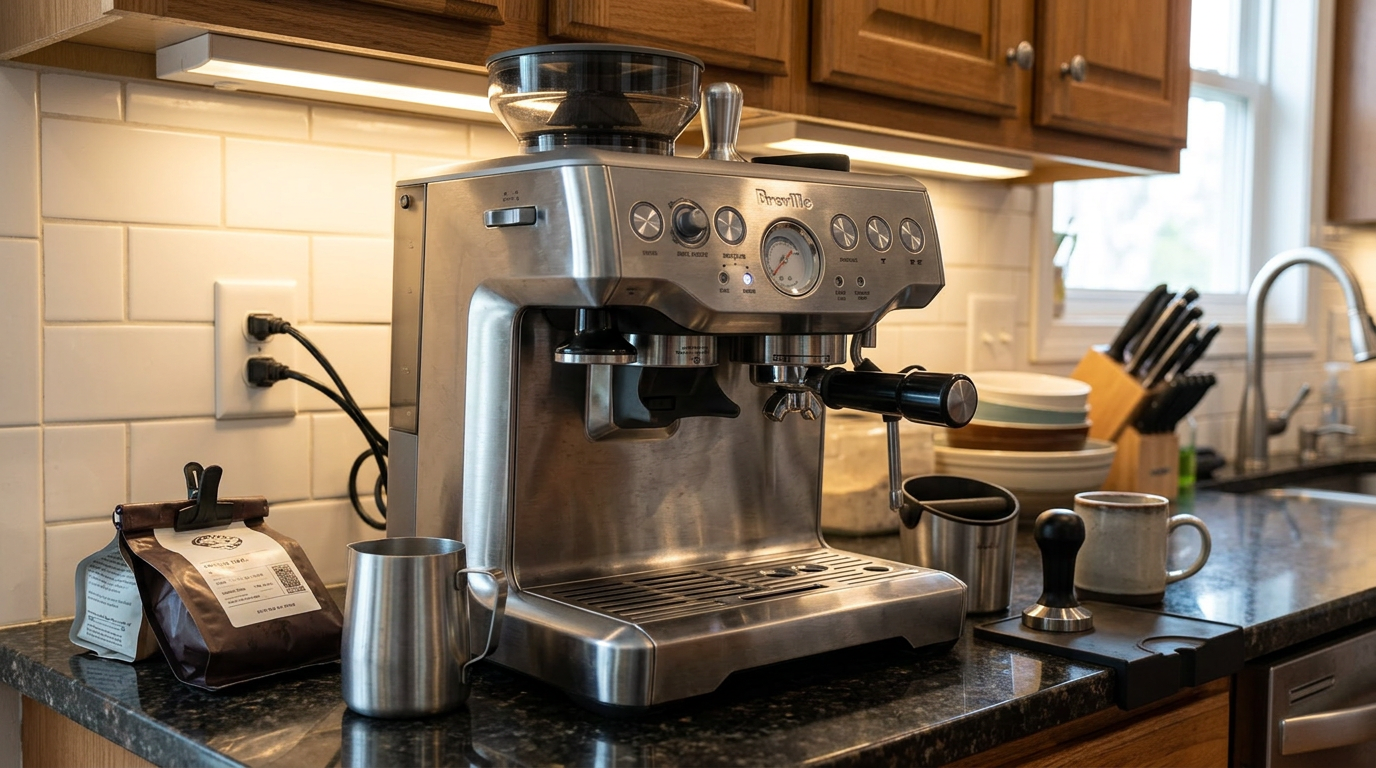
Expect a few stray grounds around the Express every morning.
Our tip: Brush the grinder chute on the Brevilles once a week, because old grounds stuck inside go stale and dull the next few shots.
Noise
All three grinders are noticeable, but none is unbearable.
The Ninja’s grinder ran for 10 to 15 seconds for a double and its beeps were loud until I switched them off. The Brevilles’ grinders were a little sharper in tone but just as quick.
The Barista Pro’s steam wand was the loudest single moment of my mornings, simply because it is so powerful.
How loud each felt, my ranking
Relative loudness from side-by-side use. Shorter bars are quieter.
Beans, water and supplies
All three love fresh beans. Aim to use them within a few weeks of the roast date, and buy medium or medium-dark roasts for the easiest results.
The Brevilles both hold about half a pound of beans and 67 oz of water. The Ninja’s hopper is lockable and removable, which made switching beans quicker.
| Bean type | Ninja Luxe Café | Barista Express | Barista Pro |
|---|---|---|---|
| Medium blend | Best | Great | Best |
| Dark roast | Great | Great, grind coarser | Great |
| Light roast | Runs fast | Hard to grind fine enough | Good with fine settings |
| Very oily beans | Small amounts | Avoid | Avoid |
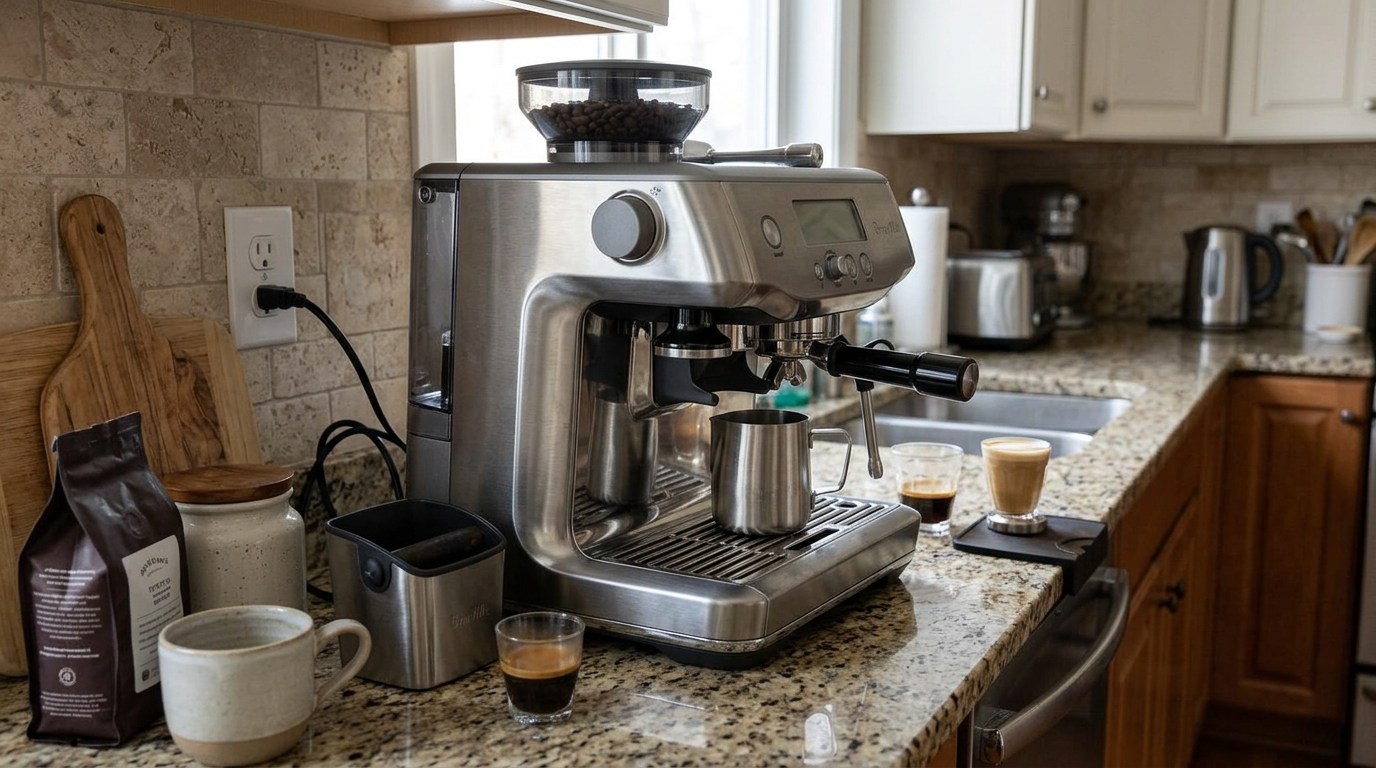
Both Brevilles hold about half a pound of beans and 67 oz of water.
Our tip: Use filtered water in all three machines, because softer water keeps scale out of the heater and makes espresso taste cleaner.
Four weeks with each: my diary notes
A month is long enough for the honeymoon to end. These are the notes I wrote as each machine settled into my real routine.
Breville Barista Pro
Week 1: I spent three days dialing in, mostly adjusting grind time in tenths of a second. By day four, I was pulling shots I would happily pay for.
Week 2: Latte art clicked. The four-hole wand rolled the milk so quickly that I could pour a rough heart by the weekend.
Week 3: The 3-second heat-up changed my habits. I started making a second coffee in the afternoon simply because there was no waiting.
Week 4: The machine felt like a trusted tool. My only chore was weighing the occasional dose to make sure the timer had not drifted.
Ninja Luxe Café Premier
Week 1: Barista Assist had me at a good shot on my second try. My partner, who had never made espresso, did the same.
Week 2: Cold foam became a household obsession. We made iced lattes almost every afternoon.
Week 3: I tried the large-basket coffee a few more times and gave up on it, switching to americanos for big mugs.
Week 4: The clean counter was what I appreciated most. Even on rushed mornings, there were no stray grounds to wipe away.
Breville Barista Express
Week 1: The gauge kept me honest. Several early shots sat outside the espresso zone, and the needle told me why before I tasted them.
Week 2: The wait to switch to steam started to feel long on weekday mornings, so I began steaming milk first and pulling the shot second.
Week 3: With dialed-in medium-dark beans, the shots were genuinely excellent: sweet, round and full.
Week 4: I had a routine that worked, but it took the most time and left the most mess of the three.
By week four, the Barista Pro felt like a trusted everyday tool.
| Week | Barista Pro | Ninja Luxe Café | Barista Express |
|---|---|---|---|
| 1 | Dialed in by day four | Good shot on the second try | Gauge explained every mistake |
| 2 | Latte art clicked | Cold foam obsession | Steam wait felt long |
| 3 | Second coffee every afternoon | Switched to americanos | Excellent shots once dialed in |
| 4 | A trusted tool | Clean counter every day | Good, but slowest routine |
Accessories worth adding
None of these machines needs extras to make good coffee, but a few small additions made a real difference in my month.
A small kitchen scale was the best one for the Brevilles, because it turns timed dosing into weighed dosing. A knock box kept the counter tidy on all three, and a 12-ounce milk jug suited both Breville wands better than the larger included jugs for single drinks.
For the Ninja, the most useful extra was simply a second milk jug, so I could keep one for cold foam and one for hot milk.
| Accessory | Ninja Luxe Café | Barista Express | Barista Pro |
|---|---|---|---|
| Kitchen scale | Not needed | Very useful | Very useful |
| Knock box | Useful | Essential | Essential |
| 12 oz milk jug | Optional | Useful | Useful |
| Distribution tool | Not needed | Helpful | Helpful |
Real-life scenarios
Specs only go so far. These are the situations where one machine clearly pulled ahead during my testing.
The four-hole wand and instant steam made glossy microfoam I could actually pour a heart with.
Barista Assist and the scale got me to a good shot in two or three tries, with no mess.
The pressure gauge showed me exactly when a shot was under- or over-extracted.
Cold foam on an over-ice brew is something neither Breville can do.
No waiting to switch from espresso to steam saved real minutes every day.
The lightest of the three, and it looks tidy on the counter.
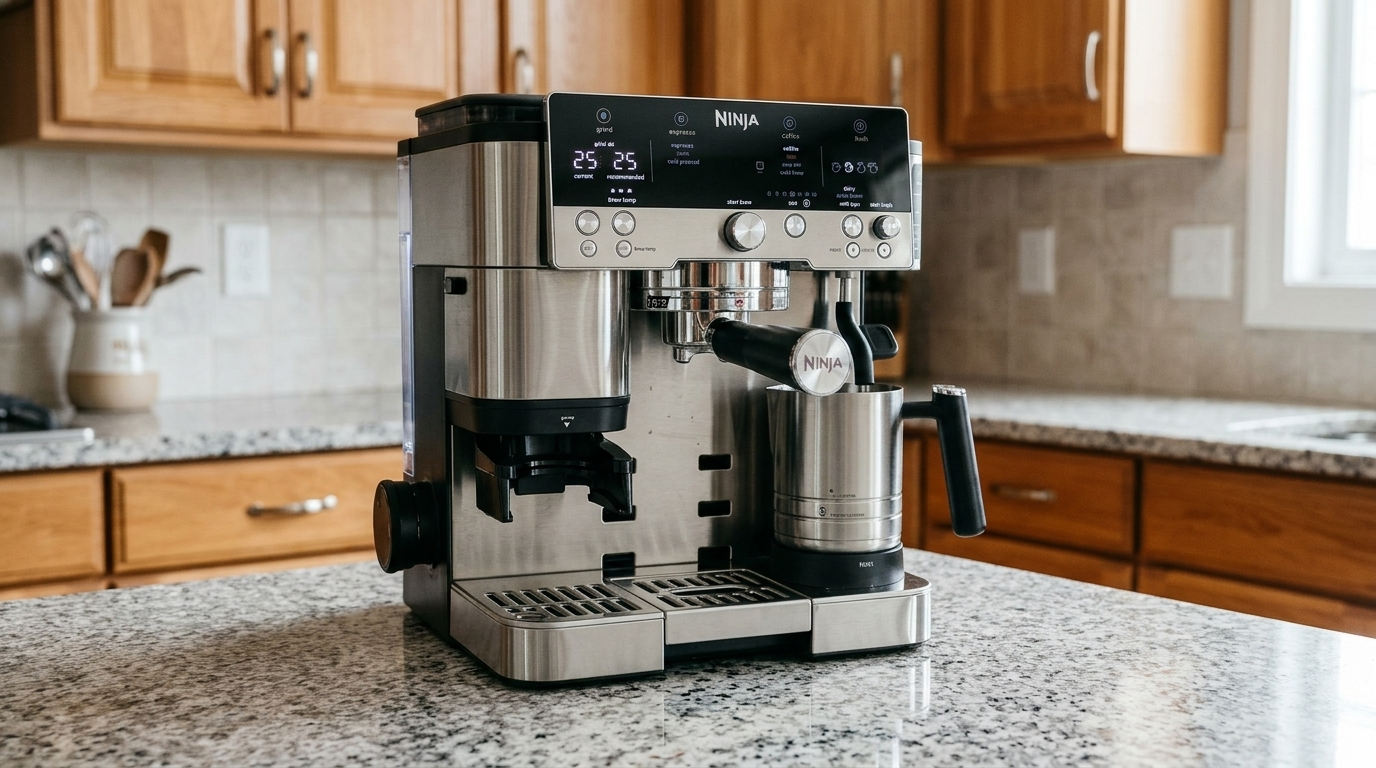
For beginners, the Ninja was the machine that made espresso feel easy.
My scorecard
These are my own scores out of 10. The first four come from my single reviews of each machine, and I added speed and iced drinks because they decide this matchup.
Breville Barista Pro
Ninja Luxe Café Premier
Breville Barista Express
Overall, I rate the Barista Pro 8.5, the Ninja 8.1 and the Barista Express 8.0. The Pro is the best espresso machine here; the Ninja is the easiest; the Express is the best teacher.
See How Much You’ll SaveWhich one is right for you?
4 quick questionsWhich one should you buy?
If you want the best espresso and milk and do not mind a little practice, buy the Barista Pro. If you want the easiest, cleanest route to a good latte, buy the Ninja. If you want to learn the craft the classic way, the Barista Express still delivers. For the wider picture beyond this matchup, see my guide to the best Breville espresso machines.
For more detail on each pairing, see my Ninja Luxe Café vs Barista Express and Barista Express vs Barista Pro comparisons. Thinking about a touchscreen? My Barista Pro vs Barista Touch comparison covers the next step up.
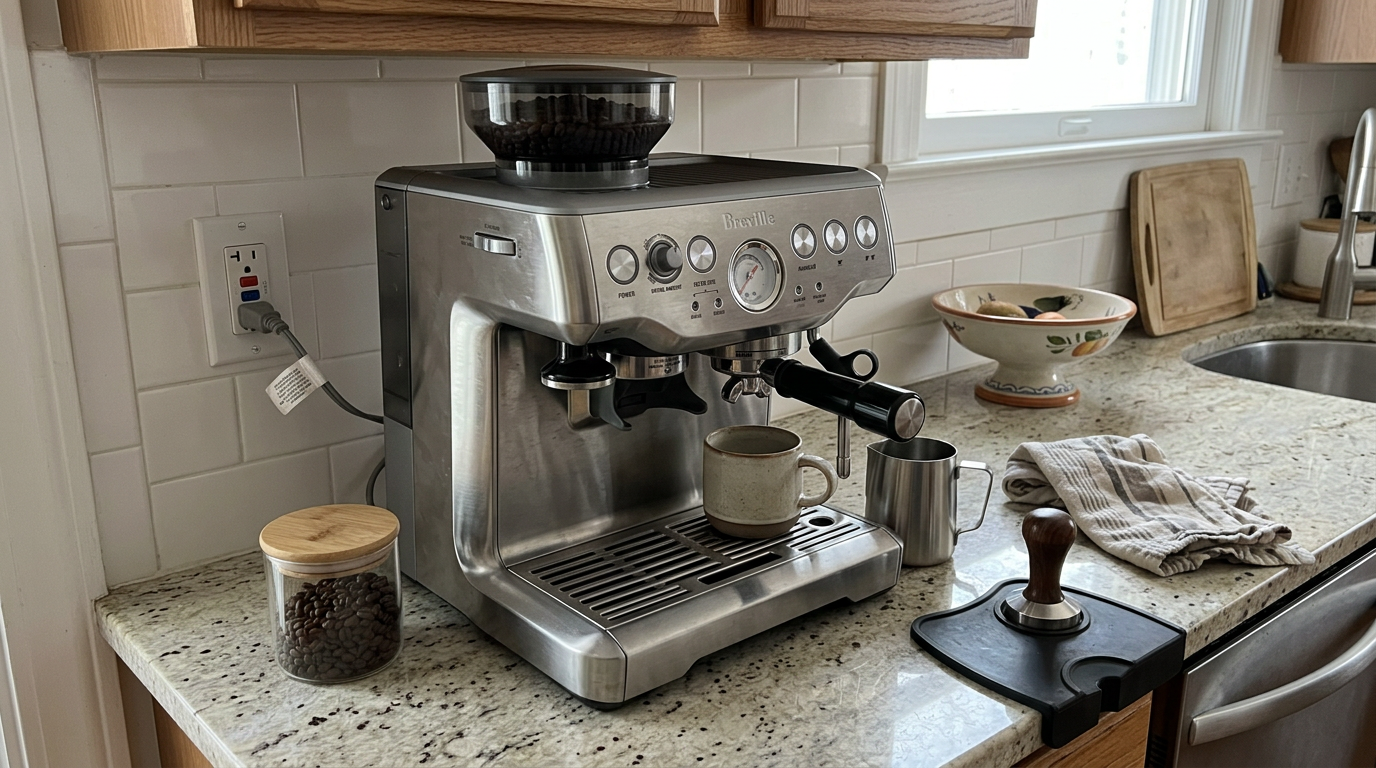
The Barista Express remains a great teacher for hands-on espresso.
- You want the best espresso and milk of the three
- You hate waiting for heat-up or steam
- You want to learn latte art
- You want a lighter, tidier machine
- You want the machine to weigh and tamp for you
- You want cold foam
- You want no learning curve at all
- You are new to espresso
- You want a clean counter
- You drink iced lattes
- You use tall travel mugs
- You want latte art
- You drink light roasts
- Your counter is tight on width
- You want to learn espresso by feel
- You like a pressure gauge
- You enjoy a hands-on routine
- You are short on time in the morning
- You want the finest grind range
- You hate stray grounds
For most home baristas, my pick is the Breville Barista Pro. It pulled the best espresso, steamed the best milk and heats up in about 3 seconds, so it fits a busy morning as well as a slow weekend.
Choose the Ninja Luxe Café Premier if you want the easiest path to good coffee. It weighs and tamps for you, keeps the counter clean and makes cold foam for iced drinks. The Breville Barista Express is the right choice if you want to learn espresso the classic way and enjoy the process.
Whichever you choose, use fresh beans, weigh your doses at first and purge the steam wand every time. All three reward a little care with great coffee.
Specifications compared
From manufacturer specifications and my own testing.
| Ninja Luxe Café Premier | Barista Express | Barista Pro | |
|---|---|---|---|
| Model | ES601 | BES870XL | BES878BSS |
| Heating | Thermoblock | 1,600 W thermocoil, PID | ThermoJet, PID, 5 temperatures |
| Heat-up | About 30 s | About 30 to 40 s | About 3 s |
| Grinder | Conical burr, 25 settings | Conical burrs, 16 settings | Conical burrs, 30 settings |
| Dosing | Built-in scale | Timed | Timed, 0.1 s steps |
| Tamping | Assisted lever | Hand tamper | Hand tamper |
| Portafilter | Ninja portafilter | 54 mm | 54 mm |
| Pre-infusion | Automatic | Low-pressure | Programmable, up to 10 s |
| Milk | Wand with whisk, 4 presets | Manual wand | Manual wand, auto purge |
| Cold foam | Yes | No | No |
| Display | Dial with indicators | Pressure gauge | LCD |
| Bean hopper | Removable, lockable | About ½ lb | About ½ lb |
| Water tank | Removable | 67 oz | 67 oz |
| Dimensions (W x D x H) | 13.4 x 13 x 14.6 in | 12.5 x 13.8 x 15.9 in | About 14 x 13 x 16 in |
| Weight | About 26 lb | About 22 lb | About 20 lb |
How I tested and compared them
Michael Reynolds here. I used each machine as my everyday coffee maker for four weeks, making espresso, americanos, lattes, flat whites and iced drinks, and kept notes on every week.
I weighed doses and yields, timed heat-up and every shot, measured milk temperature with a probe thermometer and steamed whole, skim and barista oat milk.
I worked through each grinder’s range with light, medium and dark roasts, ran every cleaning cycle, and compared my notes with the manufacturer specifications and owner documentation.
- Coffee: dose, crema, body and consistency.
- Milk: foam texture, temperature and ease.
- Workflow: heat-up, dosing, tamping and mess.
- Ownership: noise, cleaning, water care and footprint.
Ninja vs Barista Express vs Barista Pro FAQ
Which is better, the Ninja Luxe Café, Barista Express or Barista Pro?
For most people, the Barista Pro. It made the best espresso and milk in my testing and heats up in about 3 seconds. The Ninja is the easiest for beginners, and the Barista Express is the best for learning the craft.
Is the Ninja Luxe Café easier than the Breville Barista Express?
Yes. The Ninja weighs your dose with a built-in scale, tamps with a lever and froths milk with presets. On the Express, you time your dose, tamp by hand and steam milk yourself.
Is the Barista Pro worth it over the Barista Express?
For most people, yes. It heats up in about 3 seconds instead of around 35, switches to steam almost instantly, has 30 grind steps instead of 16 and pulled more consistent espresso.
Which one makes cold foam?
Only the Ninja Luxe Café. Neither Breville has a cold foam function.
Can you make latte art with the Ninja Luxe Café?
You can make simple shapes, but its whisk-assisted foam is less glossy than milk you steam by hand. The Barista Pro’s manual wand is the best of the three for latte art.
Do the Brevilles have a scale?
No. Both use timed dosing. I recommend weighing your doses on a kitchen scale for the first week to dial in the grind time.
Which is the fastest to heat up?
The Barista Pro, at about 3 seconds. The Ninja took about 30 seconds and the Express about 30 to 40 seconds.
Which grinder is best for light roasts?
The Barista Pro, thanks to its 30 fine settings. The Express can struggle to grind fine enough, and the Ninja ran light roasts a little fast.
Which one is easiest to clean?
The Ninja, because its funnel and lever tamper keep grounds off the counter. All three need the wand purged and the puck knocked out after each drink.
Which is the smallest?
The Barista Pro is the lightest at about 20 lb. The Ninja is the widest and heaviest at about 13.4 inches and 26 lb.

- Our hands-on Ninja Luxe Café Premier review
- Our hands-on Breville Barista Express review
- Our hands-on Breville Barista Pro review
- Ninja and Breville product specifications and owner documentation