Ninja Luxe Café Premier vs Pro vs AutoBarista: which Ninja espresso machine?
Ninja now sells two guided espresso machines and one that does everything for you. The Ninja Luxe Café Premier and Ninja Luxe Café Pro weigh your dose and help you tamp, while the Ninja AutoBarista grinds, tamps, brews and froths at one touch. I used all three every day for four weeks, weighed the shots and timed the routines to find out which Ninja fits your kitchen.
We choose products independently. We may earn a commission through links on this page; your price stays the same. Affiliate policy
Jargon helpNew to espresso? Tap any dotted term to see what it means.
In this comparison
If you want to make espresso yourself with as little mess as possible, buy the Ninja Luxe Café Pro. Its integrated tamper, non-burn steam wand and hot water spout make it the most complete guided machine Ninja sells, and it made the best milk drinks of the three. If you want to press one button and walk away, the Ninja AutoBarista is the one: it dials in its own grind, weighs every dose and froths hands-free, and its espresso had the most body of all. The Ninja Luxe Café Premier makes sense if you want Ninja’s guided espresso and cold brew and can live without the Pro’s extras.
The three machines
Specs checked November 14, 2026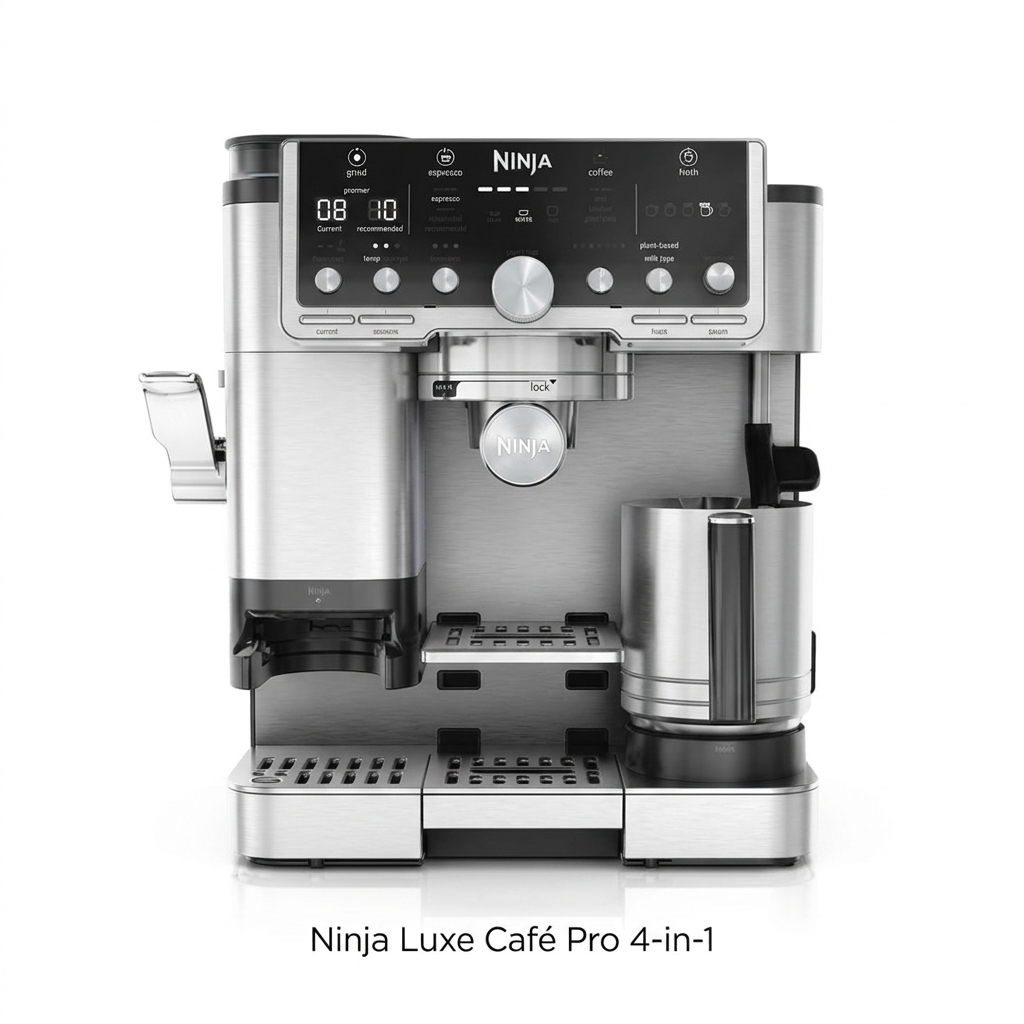
Grinds by weight, tamps in the cradle, steams with a 12 mm non-burn wand and pours hot water from its own spout.
Check price on Amazon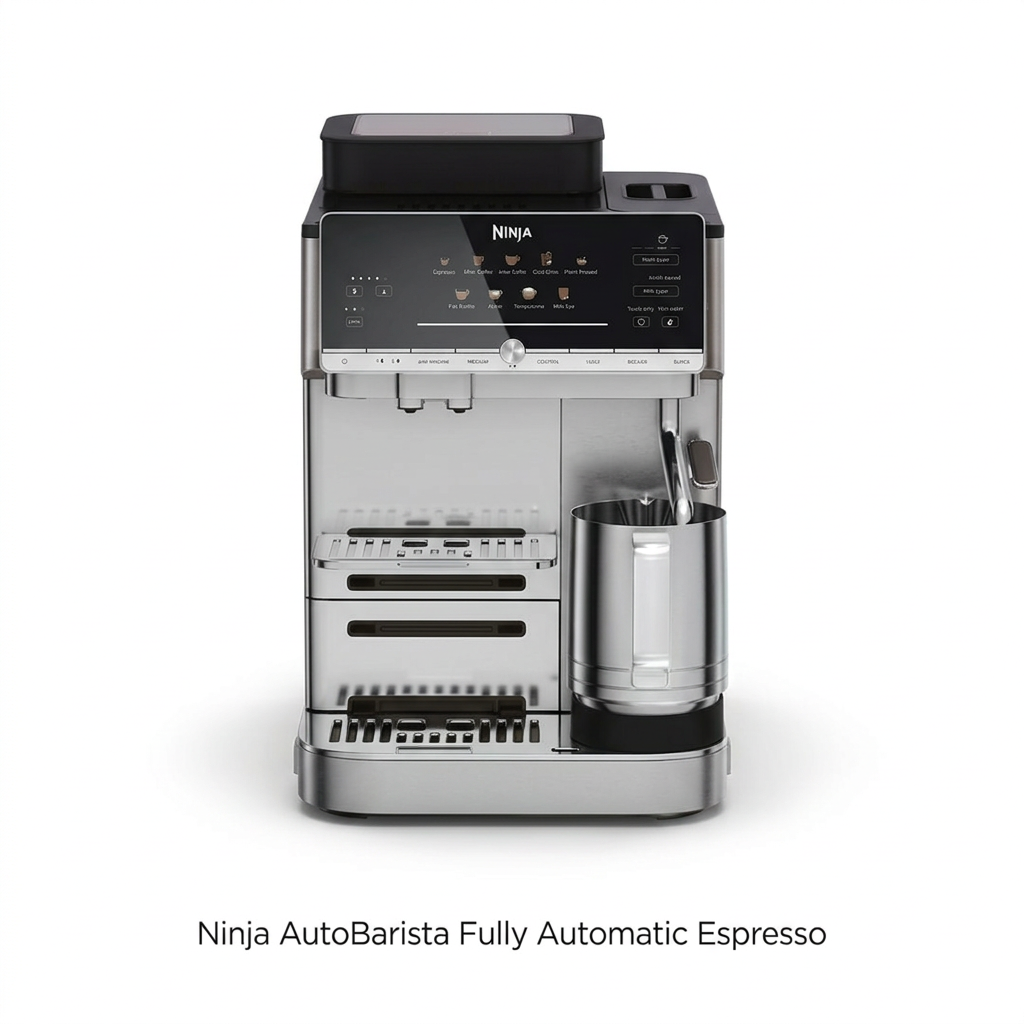
Fully automatic: Grind iQ picks from 50 settings, weighs single, double or triple doses and froths in a jug hands-free.
Reveal Today’s Deal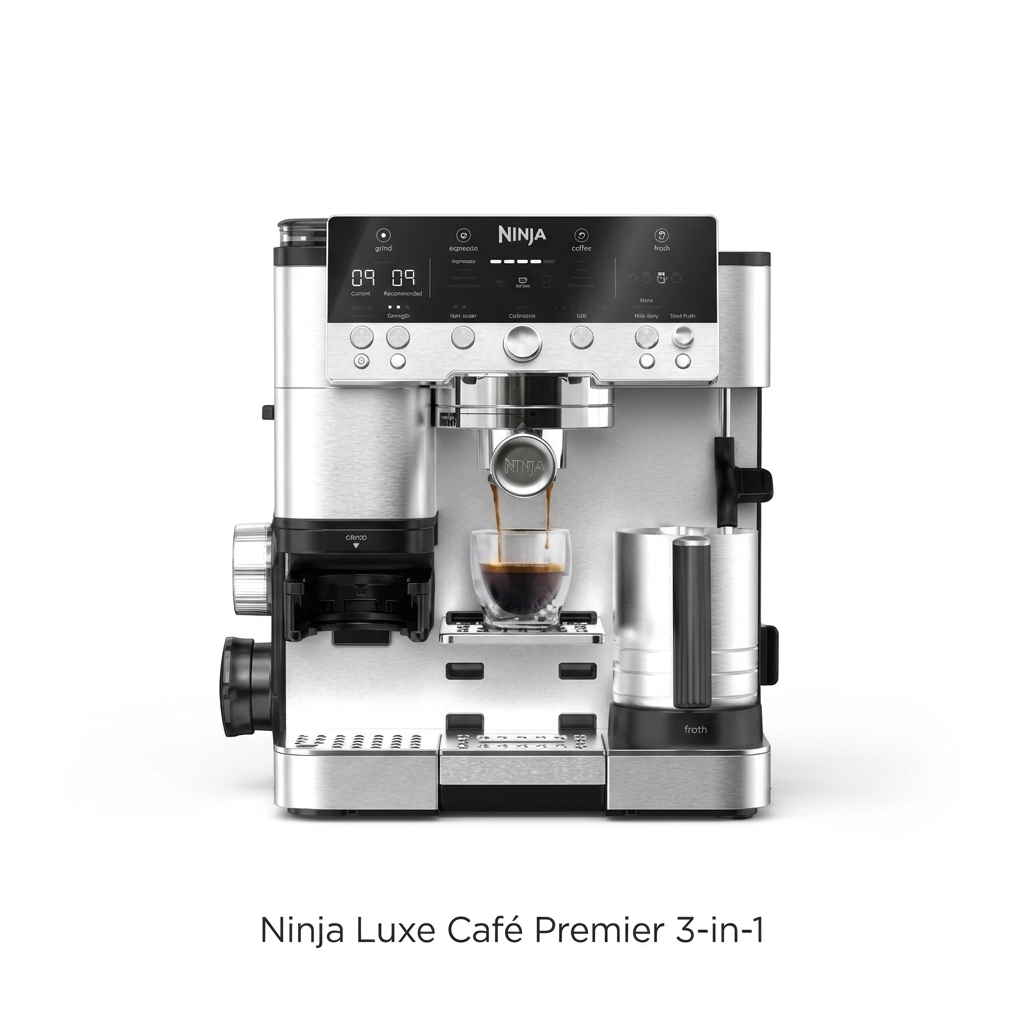
Guided espresso with a scale, an assisted tamper and funnel, drip-style coffee, cold brew and cold foam.
See Today’s PriceNinja Luxe Café Premier vs Pro vs AutoBarista at a glance
- Buy the Luxe Café Pro if you enjoy making espresso and want the least mess and best milk.
- Buy the AutoBarista if you want café drinks at one touch with no portafilter at all.
- Buy the Luxe Café Premier if you want Ninja’s guided espresso, drip and cold brew for less.
- All three weigh their doses and make cold foam; only the AutoBarista tamps and brews without you.
Head to head
The best result in each row is marked, based on my four weeks with each machine and Ninja’s specs. Rows where they are even have no winner.
Remember the two Luxe Cafés are guided semi-automatics, while the AutoBarista is fully automatic✕Fully automaticA bean-to-cup machine that grinds, doses, tamps, brews and ejects the used coffee by itself at one touch.. That single difference decides most buyers before any spec does.
| Spec | Luxe Café Premier | Luxe Café Pro | AutoBarista |
|---|---|---|---|
| Espressomy scores | 8.5 | 8.7 | 8.8 ✓ Best |
| Milk drinksmy scores | 7.9 | 8.6 ✓ Best | 8.2 |
| Ease of usemy scores | 8.7 | 9.0 ✓ Best | 8.5 |
| Cleaningmy scores | 8.1 | 7.9 | 8.2 ✓ Best |
| Tamping | Assisted lever with funnel | Integrated, in the cradle | Fully automatic ✓ Best |
| Grind settings | 25 | 25 | 50, Grind iQ ✓ Best |
| One-touch drinks | No | No | 10 drinks ✓ Best |
| Steam wand | Narrower wand | 12 mm non-burn wand ✓ Best | Hands-free whisk jug |
| Hot water spout | No | Yes, 3 temperatures | Yes |
| Drip-style coffee and cold brew | Yes | Yes | Yes |
| Americano, lungo, ristretto | No | Yes ✓ Best | Americano |
| User profiles | No | No | 2 ✓ Best |
| Footprint | Compact ✓ Best | Compact | Large, deep body |
| Rows won | 1 | 4 | 6 |
Premier vs Pro vs AutoBarista pros and cons
Ninja Luxe Café Premier
- Guided, mess-free espresso for beginners
- Cold foam and four froth presets
- Huge cup clearance, from shot glass to thermos
- Large-basket coffees can taste weak
- Funnel and lever add steps
- Loud beeps until you switch them off
Ninja Luxe Café Pro
- Integrated tamper: no funnel, no mess
- Non-burn steam wand that wipes clean
- Hot water spout and more espresso styles
- Uses a lot of water; drip tray fills fast
- No side handles for moving it
- Little room for manual puck preparation
Ninja AutoBarista
- Full-bodied espresso with weighed doses up to a triple
- Real drip coffee and cold brew at one touch
- Grind iQ dials in new beans for you
- Only one bean hopper
- Large footprint for a single-hopper machine
- Settings menu uses codes
Who should buy which machine?
Ninja Luxe Café Premier
- First-time espresso makers on a tighter budget
- Latte and cold foam fans
- Anyone who wants drip and cold brew too
- People who want zero hands-on steps
- Big mugs of drip coffee every day
- Light-roast drinkers
Ninja Luxe Café Pro
- Milk-drink lovers who want the least mess
- Americano and tea drinkers, thanks to the hot water spout
- People who enjoy a little barista craft
- Kitchens where water use matters
- Hands-on puck prep enthusiasts
- Anyone who moves the machine often
Ninja AutoBarista
- Busy homes that want one-touch drinks
- Strong espresso and drip coffee drinkers
- Two people who want saved favorites
- Small or shallow counters
- People who switch beans daily
- Anyone who wants decaf on demand from beans
Design, size and build
The two Luxe Cafés share a body and look almost identical from across the room. Both have a brushed steel front, a top bean hopper, a dial and buttons, and a portafilter✕PortafilterThe handle with a metal basket that holds the ground coffee. You lock it into the group head to brew. handle at the center.
The Pro adds LED lights over the cup area, a thicker steam wand and a separate hot water spout. Beside each other, it looks a little more finished.
The Ninja AutoBarista is a different kind of machine. There’s no portafilter, just a tall steel body with a display, a coffee outlet, a frothing station with its own jug, and a 70-ounce tank on the side.
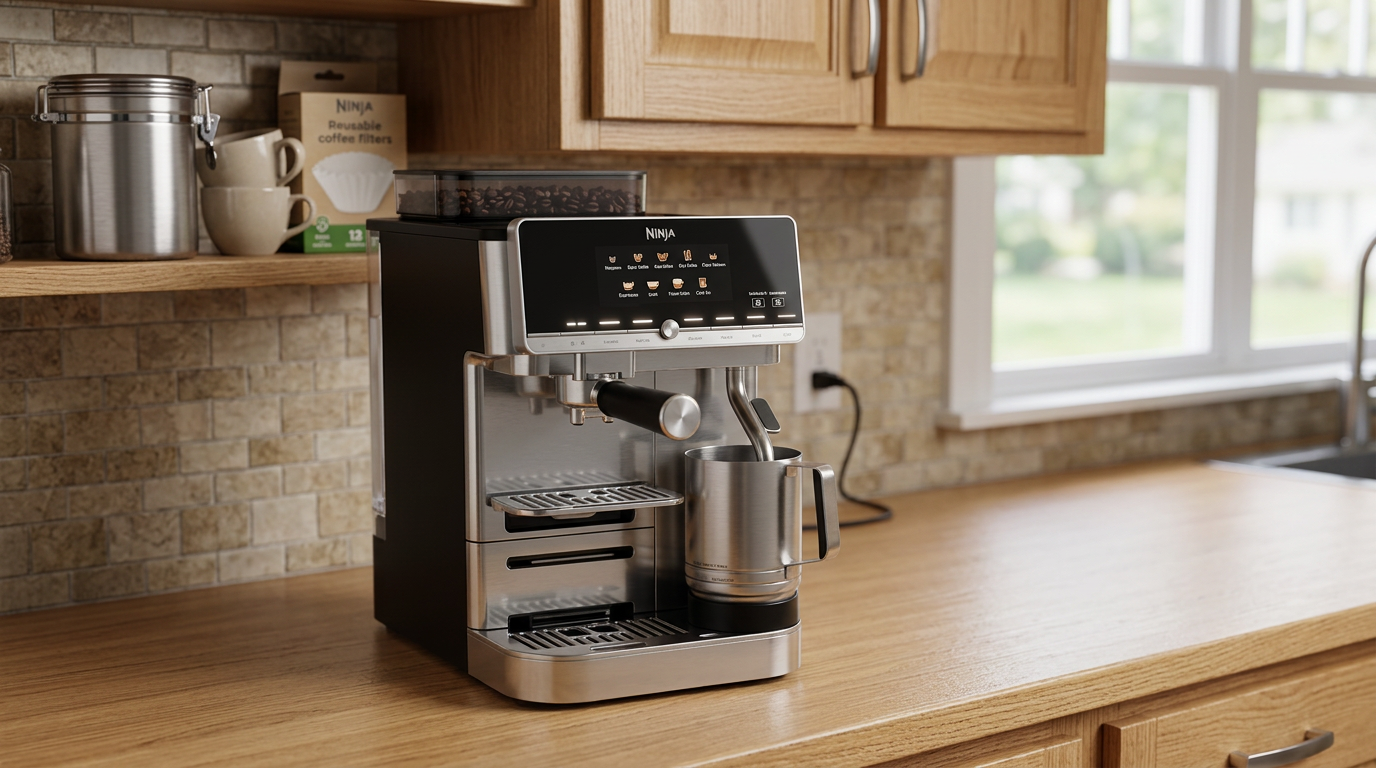
The AutoBarista has no portafilter at all: everything happens inside the body.
Size is the AutoBarista’s weak spot. It measures about 17.8 inches deep, 10.7 inches wide and 15.8 inches tall, and that is a lot of counter for a machine with one bean hopper.
The Luxe Cafés are about 13.4 inches wide but only about 13 inches deep, so they suit shallower counters. They are heavy, though, and the Pro has no side handles for moving it.
Depth on the counter
Approximate depth from my tape measure and Ninja’s specs.
Our tip: Measure depth before width, because the AutoBarista needs almost the full depth of a standard counter.
Daily workflow: guided or fully automatic?
All three machines grind fresh, weigh the dose and help with milk. Where they differ is how many steps you do yourself.
On the Premier, you grind into the portafilter through a funnel, the scale weighs it, you pull an assisted tamping✕TampingPressing ground coffee into a flat, even puck so water flows through it evenly instead of finding weak spots. lever, remove the funnel, lock the handle in and press brew. It’s guided and tidy, but it’s still six or seven moves.
The Pro cuts that down. The grinder doses by weight straight into the basket and the tamper is built into the cradle, so there’s no funnel to fit or wash. It made the easiest good espresso of any guided machine I have tested.
On the AutoBarista, you press a drink and walk away. The brew unit✕Brew unitThe part inside a fully automatic machine that presses the ground coffee, brews it and ejects the used puck. grinds, weighs, tamps, brews and ejects the puck inside the machine, and the frother heats your milk in the jug while you get a cup.
| Step | Premier | Pro | AutoBarista |
|---|---|---|---|
| Grind and weigh | Into the portafilter, via funnel | Into the portafilter, by weight | Automatic |
| Tamp | Assisted lever | Integrated in the cradle | Automatic |
| Brew | Lock in, press brew | Lock in, press brew | Automatic |
| Milk | Jug, pick a preset | Jug, pick a preset | Jug, pick a preset |
| Puck | Knock out by hand | Knock out by hand | Automatic |
| Steps per latte, my count | ~8 | ~6 | ~2 |
Hands-on steps per latte
Counted from my morning routine with each machine.
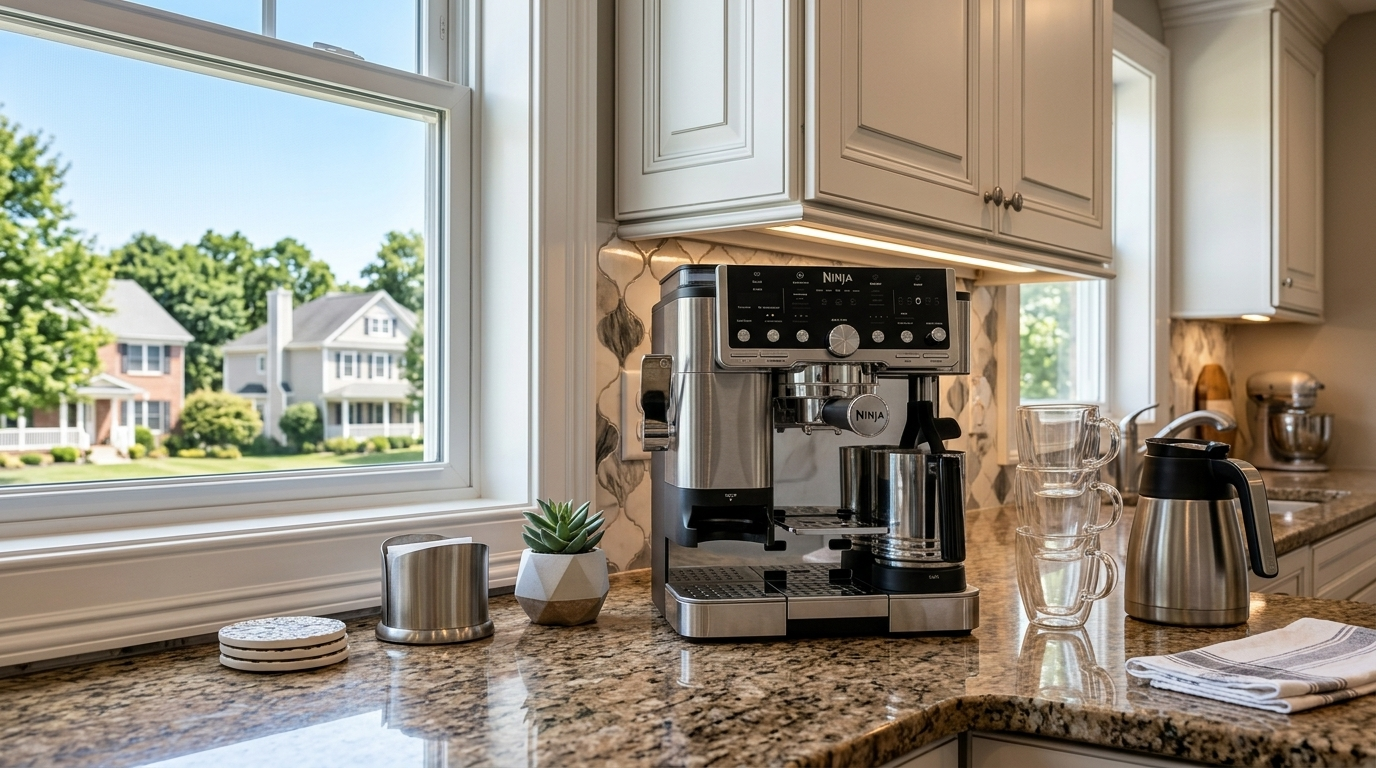
The Pro’s integrated tamper removes the funnel step entirely.
Grinder, dose and dialing in
The two Luxe Cafés use the same conical burr grinder with 25 settings. Barista Assist recommends a setting for your beans and adjusts it after each shot.
On the Pro, with the double basket on the strongest setting, it aimed for 18 grams of coffee and a 36-gram shot. The dose landed between 17.8 and 18 grams almost every time.
The AutoBarista goes a step further with Grind iQ✕Grind iQNinja’s automatic calibration. It pulls test shots, measures how they flow and picks a grind from 50 settings, then saves it for your beans.. You press the button with a new bag, it pulls test shots, measures the flow and picks from 50 grind settings by itself.
Grind settings
More steps mean finer control, especially with lighter roasts.
On the Luxe Cafés, a new bag still took a few test shots. In my testing, dark roasts needed about two, medium roasts three and light roasts seven or more.
On the AutoBarista, Grind iQ handled that for me, but it wastes a few shots of its own. With one hopper, switching to decaf means pre-ground coffee, because changing beans means recalibrating.
| Grinder detail | Premier | Pro | AutoBarista |
|---|---|---|---|
| Burrs | Conical | Conical | Conical |
| Settings | 25 | 25 | 50 |
| Grind help | Recommends a setting | Recommends a setting | Calibrates by itself |
| Dose | Weighed, ~18 g double | Weighed, 17.8–18 g | Weighed single, double, triple |
| Bean hopper | One | One | One, about 250 g |
Our tip: Run Grind iQ every time you open a new bag on the AutoBarista, even the same coffee, because roast dates change how beans grind.
Espresso quality
All three make real espresso at around 9 bar with pre-infusion✕Pre-infusionA short soak of the ground coffee at low pressure before full pressure starts, so water flows through the puck evenly., and all three beat most push-button machines I’ve tested for body.
The Pro’s doubles came out at around 38 to 39 grams from 18 grams of coffee, close to a 1:2 brew ratio✕Brew ratioThe weight of liquid espresso compared with the dry coffee. A 1:2 ratio means 18 g of coffee makes about 36 g of espresso.. They were warm at about 63 to 64°C in the cup, balanced and sweet with a thick crema✕CremaThe golden, foamy layer on a fresh espresso. It forms when pressure pushes oils and gases out of the coffee..
The Premier pulled very similar shots once dialed in. It scored a touch lower only because its funnel workflow made consistency harder on busy mornings.
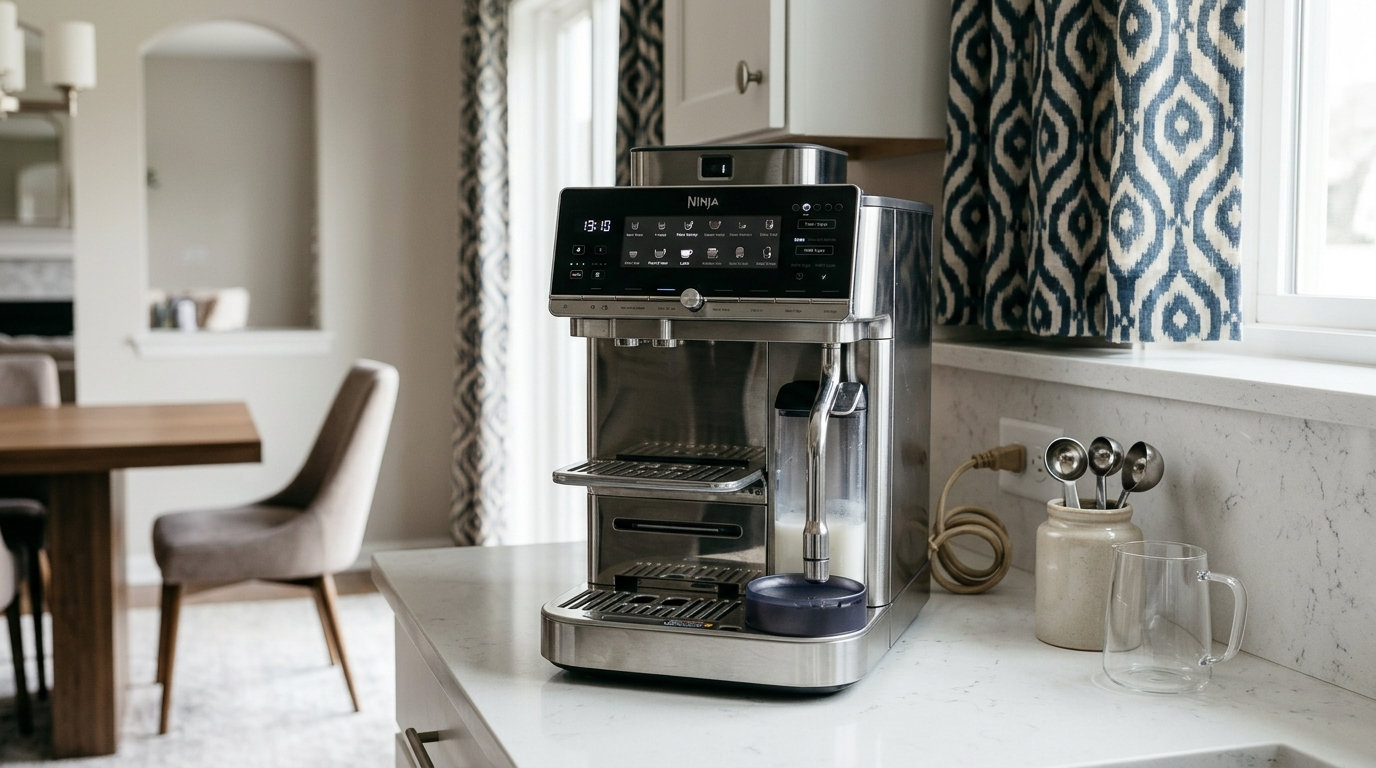
The AutoBarista’s weighed doses made the most full-bodied espresso of the three.
The Ninja AutoBarista surprised me. Its doubles landed at about 36 to 37 grams in roughly 30 seconds on every day of the week, from a full hopper to a nearly empty one.
With five-bean strength, its triple was the richest drink I made all month. That is the AutoBarista’s secret: it simply uses more coffee than most push-button machines.
My espresso ratings
My scores out of 10 for body, crema, flavor and consistency.
AutoBarista shot consistency through the week
Shot weight and time for a double, measured on a 0.1-gram scale.
See Today’s PriceDrip coffee, Americano and cold brew
Every machine here makes more than espresso, and this is where Ninja stands apart from most espresso brands.
The Premier and Pro brew drip-style coffee and cold brew through a large Luxe basket. On the Premier, those bigger coffees often tasted weak, while the Pro hit 142 grams against a 144-gram target on a good day and came out at a hot 73 to 75°C.
The Pro also adds Americano, lungo and ristretto styles and a hot water spout with three temperatures, which makes it the better pick for tea drinkers.
The AutoBarista’s drip mode was the most convincing of the three. My 12-ounce mug came out at about 170°F and tasted like a clean, medium-bodied filter coffee.
Its cold brew setting brews slower and cooler over ice, and topped with cold foam from 2% milk, it became my afternoon drink.
| Black coffee | Premier | Pro | AutoBarista |
|---|---|---|---|
| Drip-style coffee | Yes, can be weak | Yes, hot and full | Yes, best of the three |
| Cold brew | Yes | Yes | Yes |
| Americano | By hand | One setting | One touch |
| Hot water | No spout | Spout, 3 temperatures | Yes |
| Cup sizes | Shot glass to thermos | About 6 to 18 oz | Espresso to 12 oz+ mug |
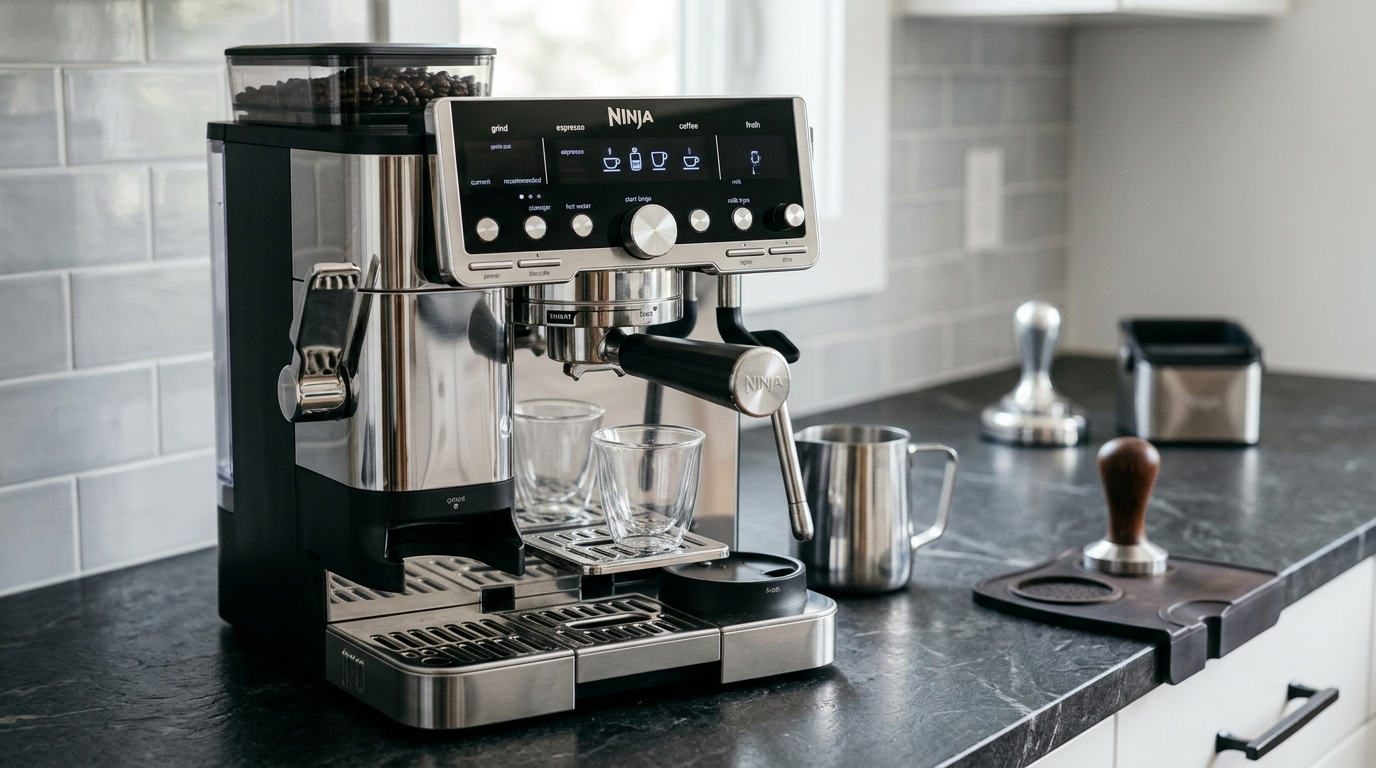
The Pro’s coffee sizes run from about 6 to 18 ounces.
Our tip: For a stronger drip-style cup on the Luxe Cafés, choose the rich style and go one grind step finer than the suggestion.
Milk drinks
All three machines share Ninja’s hands-free frothing idea: milk goes in a jug, you pick steamed, thin, thick or cold foam✕Cold foamMilk whipped into foam without heating it, for spooning over iced coffee or cold brew., and a whisk spins while steam heats it. Each also handles plant milk with its own setting.
The difference is control. The Luxe Cafés let you steam manually like a barista, and the Pro’s thicker 12 mm non-burn wand made that easier. The AutoBarista is hands-free only.
Best froth result on each machine
My scores out of 10 for texture and stability.
With whole milk at around 3.5% fat, the Pro’s wand gave me glossy, silky microfoam✕MicrofoamMilk foam with bubbles so small you can barely see them. It feels silky and pours into latte art. that poured well for basic latte art. Its automatic presets were nearly as good, and oat milk on medium froth reached about 61°C and came out creamy.
The AutoBarista’s whole-milk thick froth made the richest cappuccinos, and 2% made the silkiest flat whites. Skim milk was its weak spot, with big, quickly fading bubbles.
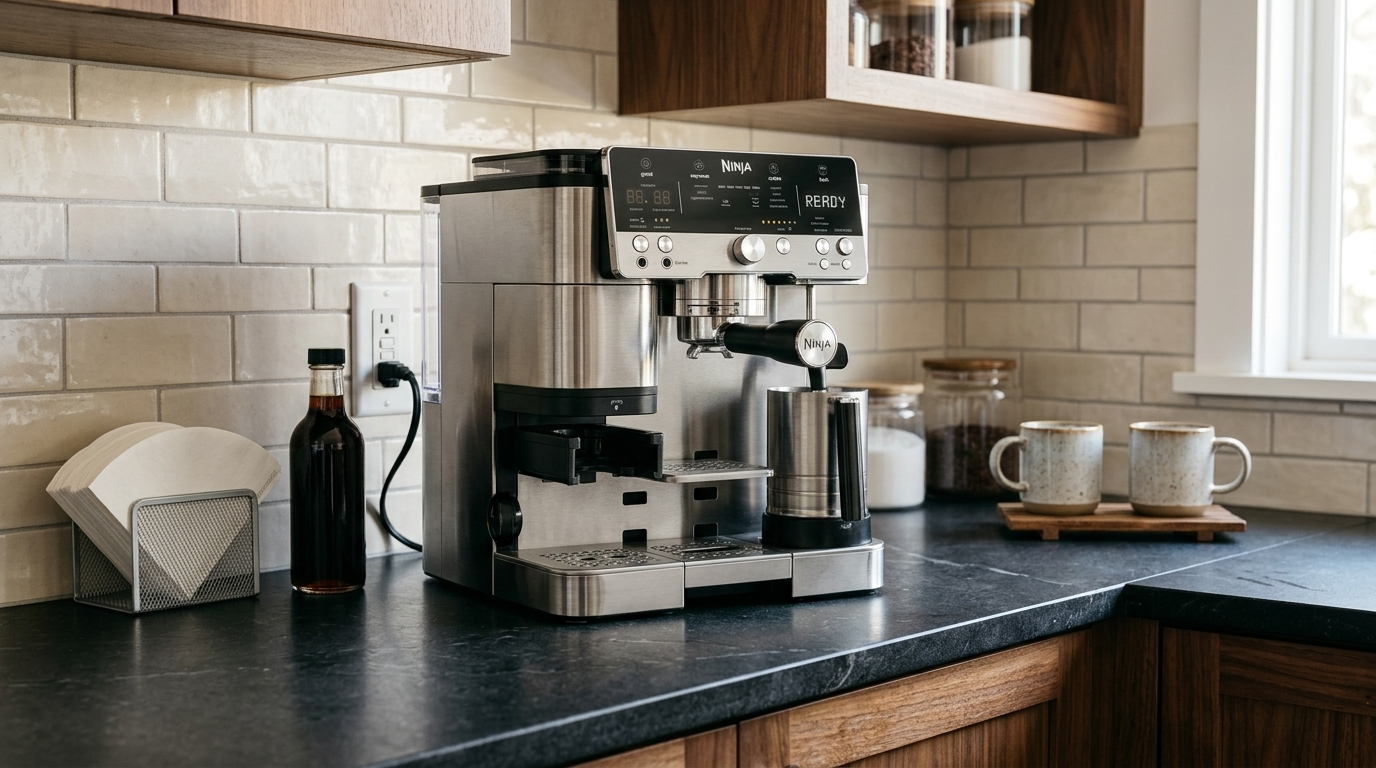
Every Ninja here froths in a jug, hot or cold, at the touch of a preset.
Milk temperature was good across the board. The Premier landed at 60 to 65°C, and on the AutoBarista a default cappuccino came out at about 63°C, rising to about 66°C when I raised the froth temperature.
That range is where milk tastes sweetest. If you like your latte hotter, raise the froth temperature one step and warm the cup.
Cleaning, water use and upkeep
Cleaning separates these machines more than you might expect.
The AutoBarista was the easiest. It rinses itself, has a self-drying fan inside, and its brew unit✕Brew unitThe part that presses the ground coffee, brews it and ejects the used puck. comes out for a rinse. The milk jug and whisk go in the dishwasher.
The Premier asks you to wash the funnel, knock out pucks and wipe the wand. The Pro skips the funnel, but it uses a lot of water.
Where the Pro’s water goes
My estimate over a typical week on the Luxe Café Pro.
When pressure rises above about 9 bar, the Pro diverts water into the drip tray instead of the puck. That protects the shot, but it means emptying the tray more often than on the other two.
Descaling✕DescalingRunning a mild acid through the machine to dissolve the mineral scale that hard water leaves in the heater and pipes. took about 30 minutes on the Luxe Cafés, and with moderately hard water the alert came up after about a month. Using the included water filter on the AutoBarista stretched that out.
| When | Premier | Pro | AutoBarista |
|---|---|---|---|
| After milk | Wipe and purge wand, wash jug | Wipe wand, wash jug | Rinse jug and whisk |
| Daily | Knock out pucks, tray, funnel | Knock out pucks, empty tray often | Empty grounds and tray |
| Weekly | Wash baskets and funnel | Wash baskets | Rinse brew unit |
| When prompted | Descale | Descale | Clean cycle, descale |
Our tip: Empty the Pro’s drip tray every morning, even if it looks half full, because a few diverted shots can fill it by evening.
Noise and speed
The AutoBarista’s grinder peaked around 70 to 72 dB on my meter, with brewing around 60 dB and whisking around 66 dB. Normal conversation is around 60 dB.
The Luxe Cafés grind for 10 to 15 seconds per double and felt similar in loudness. Their beeps were the more annoying sound, so switch them off in the settings.
AutoBarista noise, measured
Measured with a phone meter at about 3 feet.
For speed, the AutoBarista wins because you can walk away. A latte took about the same total time on all three, but on the Luxe Cafés I was standing at the machine for most of it.
Four weeks with each, week by week
Spec sheets don’t show how a machine feels once the novelty wears off, so I kept notes every week.
| Week | Luxe Café Premier | Luxe Café Pro | AutoBarista |
|---|---|---|---|
| Week 1 | Fun, a little messy with the funnel | Quick to learn, very tidy | Grind iQ setup, learning the codes |
| Week 2 | Dialed in, steady shots | Dialed in, best milk of the month | Settled into one-touch mornings |
| Week 3 | Routine took just over a minute | Emptying the drip tray daily | Saved favorites for two people |
| Week 4 | Reliable, still hands-on | Reliable, still my favorite to use | Reliable, invisible in a good way |
Luxe Café Premier
The first week on the Premier was fun but messy. The funnel kept the grounds in the basket, but I still had to remember to fit it, and a couple of mornings I forgot to take it off before locking in the handle.
By week two, the routine was automatic and the shots were steady. The biggest surprise was how often I reached for cold foam on iced coffee, which became an afternoon habit for both of us.
Luxe Café Pro
The Pro felt easier from day one, because there was nothing to fit or remove between grinding and brewing. I pressed grind, swung the tamping lever in the cradle and locked the handle in.
The one habit I had to build was emptying the drip tray every morning. By the end of the month, the Pro was the machine I most enjoyed using, especially when I steamed milk by hand on weekends.
AutoBarista
The AutoBarista had the steepest first hour and the easiest month after that. Grind iQ took a few test shots, and the coded settings menu sent me to the manual twice.
After that, it disappeared into the morning routine. My partner saved a thick-froth cappuccino, I saved a double espresso and a 12-ounce drip, and neither of us thought about grind settings again until the next bag.
Our tip: Write your favorite grind and froth settings on a sticky note inside a cupboard door, because it saves you hunting through menus after a descale or reset.
Water, beans and supplies
The AutoBarista’s 70-ounce tank lasted about two days for two people, and its 250-gram hopper lasted about a week. The Luxe Cafés have similar-size tanks, but the Pro emptied its tank faster because of the water it diverts.
Fresh medium and medium-dark beans worked best on all three. Light roasts needed the most dialing on the Luxe Cafés, while Grind iQ handled them with fewer wasted shots.
Drinks per full tank, two people
Rough maths from my testing, allowing for rinse and purge water.
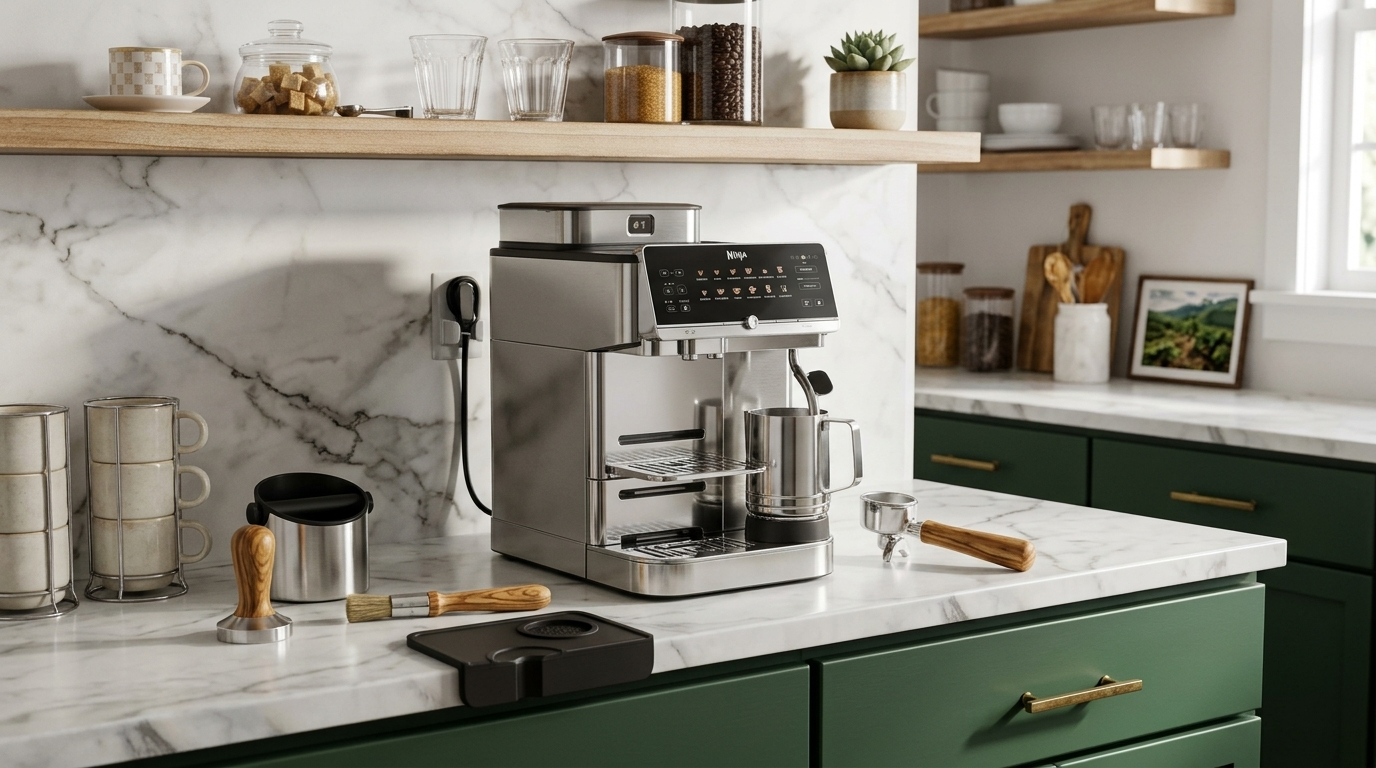
The AutoBarista’s side tank lifts out by a molded grip.
| Bean type | Luxe Cafés | AutoBarista |
|---|---|---|
| Dark roast | About 2 shots to dial in | Grind iQ, quick |
| Medium roast | About 3 shots | Grind iQ, quick |
| Light roast | 7+ shots | Grind iQ, a few test shots |
| Decaf in the evening | Single dose by hand | Pre-ground only |
Our tip: Keep a small bag of pre-ground decaf for the AutoBarista, because switching beans in its single hopper means recalibrating.
Common mistakes to avoid
Most of the bad drinks I made in four weeks came from the same handful of mistakes. They apply to all three Ninjas, and every one is easy to fix.
| Mistake | What happens | Fix |
|---|---|---|
| Ignoring the grind suggestion | Shots run too fast or too slow | Follow the recommendation for three shots before adjusting |
| Using stale beans | Thin crema, sour taste | Buy beans roasted within the last few weeks |
| Warm or nearly empty milk jug | Big, soapy bubbles | Use fridge-cold milk, filled to the line |
| Skipping the wand purge | Dried milk inside the tip | Purge for two seconds after every drink |
| Never emptying the tray | Overflow onto the counter | Empty it every morning, especially on the Pro |
| Forgetting to descale | Slower flow, cooler drinks | Descale as soon as the alert appears |
The one I made most often on the Luxe Cafés was adjusting the grind after a single odd shot. One shot is noise; three shots in the same direction is a trend worth acting on.
On the AutoBarista, the most common mistake was skipping Grind iQ with a new bag. Even beans from the same roaster changed enough between bags to make a difference I could taste.
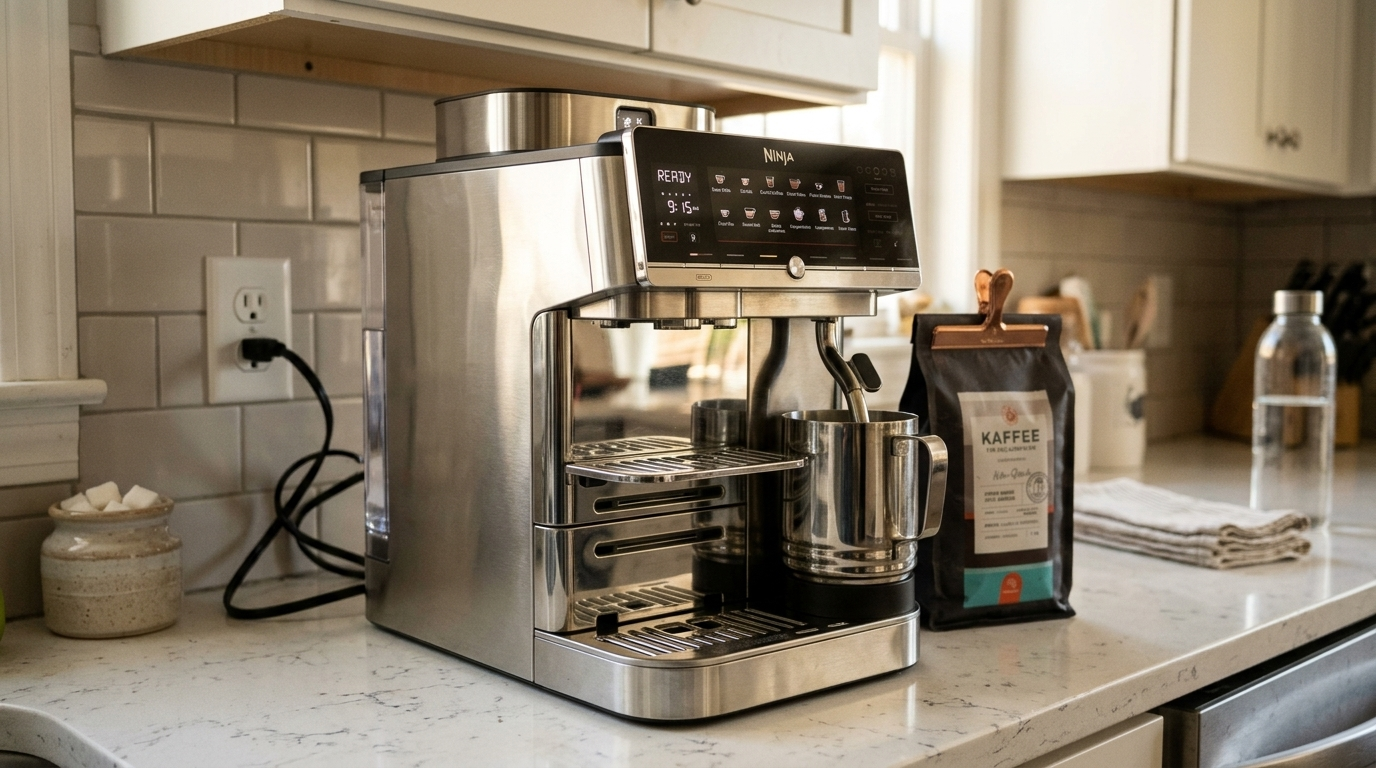
Fridge-cold milk filled to the line gave the best foam on every Ninja.
Real-life scenarios
These are the moments where one machine clearly pulled ahead during my testing.
Two presses, two drinks, and I packed lunches while it worked.
The 12 mm non-burn wand made glossy microfoam that poured clean hearts.
The hot water spout with three temperatures covered both without a kettle.
Every Ninja made it well; the Premier did it for the least money.
Its 12-ounce drip at about 170°F tasted like real filter coffee.
I ground a single dose of decaf separately and tamped it by hand in a minute.
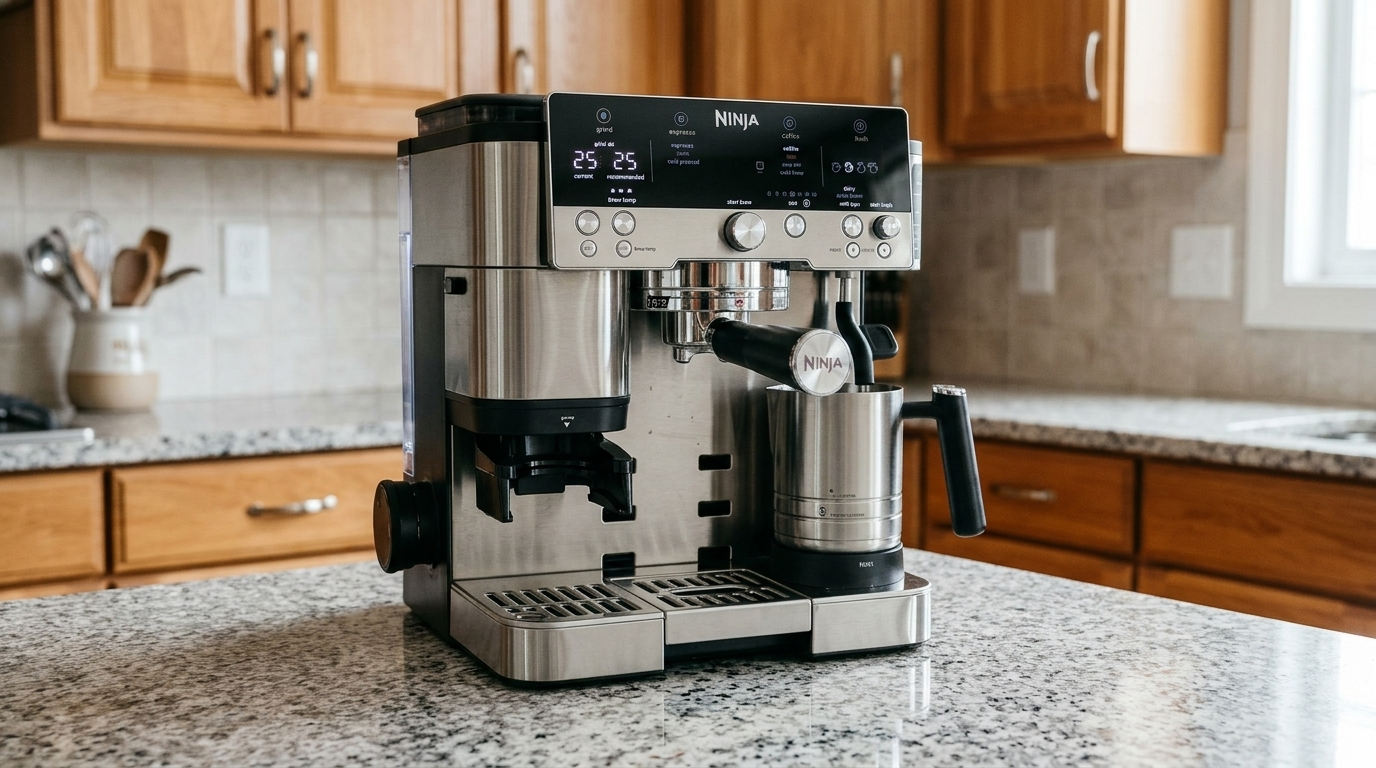
For less money, the Premier still makes café-style espresso and cold foam.
My scorecard
These are my scores out of 10 from my single reviews of each machine.
Luxe Café Premier
Overall: 8.1
Luxe Café Pro
Overall: 8.6
AutoBarista
Overall: 8.4
The Pro scores highest overall because it does the guided workflow best. The AutoBarista’s ease score is held back only by its coded settings menu, not by daily use.
See How Much You’ll SaveWhich one is right for you?
4 quick questionsWhich one should you buy?
Start with one question: do you want to make espresso, or do you want espresso made for you? If it’s the second, the AutoBarista is your machine and the rest of this page is detail.
If you want to make it yourself, the Pro is worth the step up from the Premier for its integrated tamper, better wand and hot water spout. The Premier is the right call if those extras don’t matter to you. For the wider picture beyond this matchup, see my guide to the best Ninja espresso machines.
For a deeper look at the two guided models alone, see my Luxe Café Premier review and Luxe Café Pro review, and for the fully automatic side, my AutoBarista review.
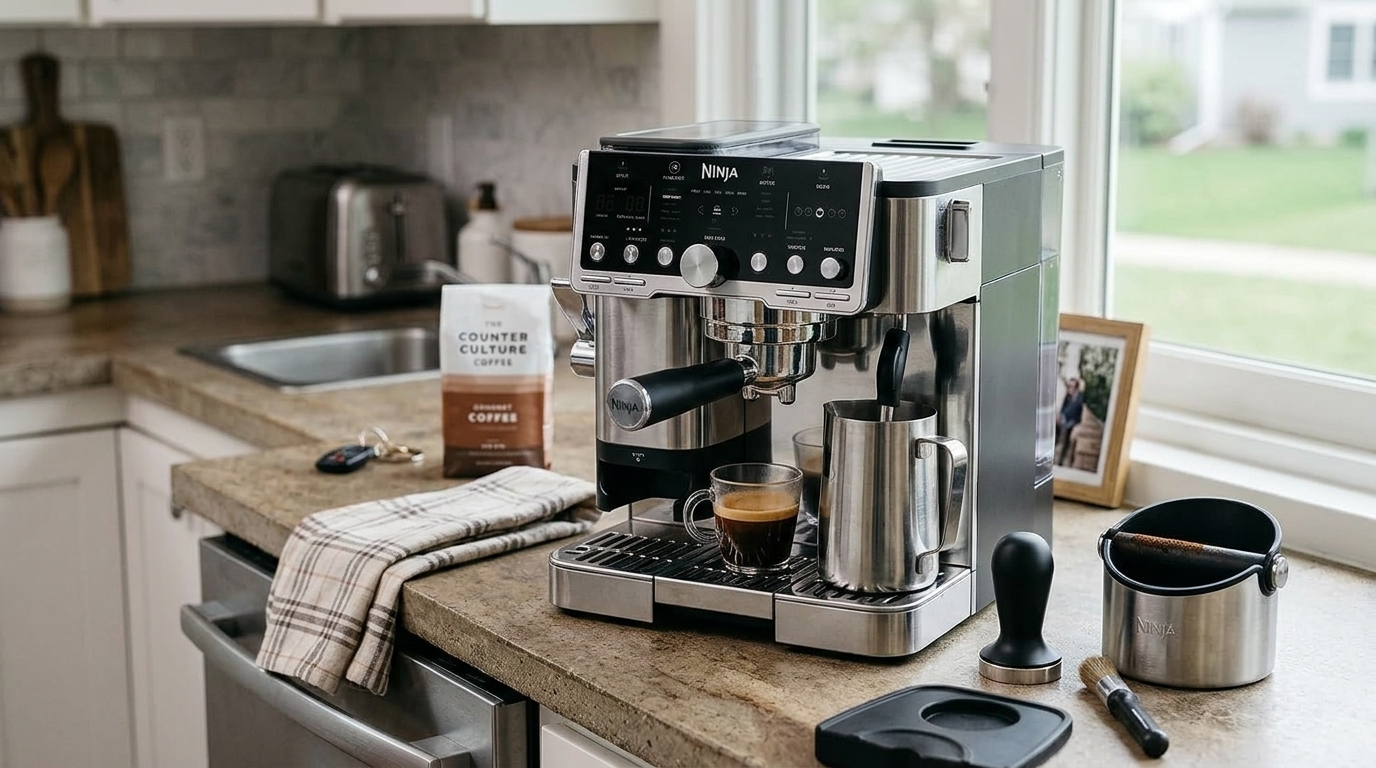
The Pro is the most complete guided Ninja, and the one I’d buy to make espresso myself.
- You enjoy making espresso and lattes
- You want the least mess per shot
- You drink Americanos or tea too
- You want true one-touch drinks
- Water use and tray emptying bother you
- You want the lowest cost
- You want to press one button and walk away
- You love strong espresso and drip coffee
- Two people want saved favorites
- Your counter is shallow
- You switch beans or drink decaf often
- You want to steam milk by hand
- You want guided espresso and cold brew
- You mainly make lattes and iced drinks
- You don’t need a hot water spout
- You want an integrated tamper
- You want Americano and ristretto styles
- You want zero hands-on steps
For most people who want to make espresso at home, my pick is the Ninja Luxe Café Pro. It took the guesswork and the mess out of espresso better than any guided machine I’ve used, and it made the best milk drinks of the three.
If you don’t want to make coffee at all, buy the Ninja AutoBarista. It made the fullest espresso and the best drip coffee here, all at one touch. Just make sure you have the counter depth.
The Ninja Luxe Café Premier is still a very good machine. It’s the one to buy if you want Ninja’s guided espresso, cold brew and cold foam and can live without the Pro’s extras.
Premier vs Pro vs AutoBarista specifications
From manufacturer specifications and my own testing.
| Luxe Café Premier | Luxe Café Pro | AutoBarista | |
|---|---|---|---|
| Model | ES601 | ES701 | AE1001 |
| Type | Guided semi-automatic | Guided semi-automatic | Fully automatic |
| Brewing | Espresso, drip-style, cold brew | Espresso, drip-style, cold brew, hot water | 10 one-touch drinks incl. drip and cold brew |
| Pressure at the coffee | About 9 bar | About 9 bar | About 9 bar, with pre-infusion |
| Grinder | Conical, 25 settings | Conical, 25 settings | Conical, 50 settings, Grind iQ |
| Dosing | Built-in scale | Built-in scale | Built-in scale, single to triple |
| Tamping | Assisted lever and funnel | Integrated in the cradle | Automatic |
| Milk | Hands-free frother, steam wand | Hands-free frother, 12 mm non-burn wand | Hands-free whisk frother |
| Froth presets | 4, incl. cold foam | 4, incl. cold foam | 4, incl. cold foam |
| Hot water spout | No | Yes, 3 temperatures | Yes |
| User profiles | No | No | 2 |
| Water tank | About 68 oz | About 68 oz | About 70 oz |
| Size (W x D x H) | About 13.4 x 13 x 14.6 in | About 13.4 x 13 x 14.6 in | About 10.7 x 17.8 x 15.8 in |
How I tested and compared them
I used each machine as my everyday coffee maker for four weeks, making espresso, Americanos, drip-style coffee, cold brew, cappuccinos, flat whites, lattes and cold foam drinks.
I weighed doses and shots on a 0.1-gram scale, logged shot times, measured coffee and milk temperatures with a probe thermometer and noise with a phone meter, and foamed whole, 2%, skim and barista oat milk.
I ran every cleaning and descaling routine, then compared my notes with Ninja’s specifications, owner documentation and published test data.
- Coffee: dose, yield, body and consistency.
- Milk: foam texture, temperature and presets.
- Workflow: steps per drink and learning curve.
- Ownership: cleaning, water use, noise and footprint.
Ninja Luxe Café Premier vs Pro vs AutoBarista FAQ
What is the difference between the Ninja Luxe Café Premier and Pro?
The Pro adds an integrated tamper in the grinder cradle, a thicker 12 mm non-burn steam wand, a hot water spout with three temperatures, a single basket, Americano, lungo and ristretto styles, and LED lights. The grinder, scale and frother concept are the same.
Is the Ninja AutoBarista a Luxe Café?
No. The AutoBarista is Ninja’s fully automatic machine. It has no portafilter: it grinds, weighs, tamps, brews and ejects the puck by itself, and makes 10 one-touch drinks.
Which Ninja makes the best espresso?
In my testing, the AutoBarista, by a hair. Its weighed doubles came out at about 36 to 37 grams in about 30 seconds every day, and its triple was the richest drink of all. The Pro was very close.
Which Ninja is best for milk drinks?
The Luxe Café Pro. Its non-burn wand made silky microfoam for latte art, and its automatic presets were excellent too.
Do all three make cold brew?
Yes. All three make cold brew-style coffee and cold foam.
Is the Luxe Café Pro worth the extra over the Premier?
Yes, if you make espresso daily. The integrated tamper removes the funnel step, the wand is easier to clean, and the hot water spout replaces a kettle for Americanos and tea.
How many grind settings does the AutoBarista have?
Fifty. Grind iQ picks one automatically after pulling test shots with your beans.
Which Ninja is easiest to clean?
The AutoBarista, with automatic rinses, a self-drying fan and a removable brew unit. The Pro uses the most water and fills its drip tray fastest.
Can I use decaf in the AutoBarista?
Yes, as pre-ground coffee. With one bean hopper, switching to decaf beans means recalibrating Grind iQ.
Which takes up the least space?
The Luxe Café Premier and Pro, at about 13 inches deep. The AutoBarista is about 17.8 inches deep.

- Our hands-on Ninja Luxe Café Premier review
- Our hands-on Ninja Luxe Café Pro review
- Our hands-on Ninja AutoBarista review
- Ninja product specifications and owner documentation
- General espresso brewing and maintenance guidance