Ninja AutoBarista vs Luxe Café: fully automatic or semi-automatic?
Same brand, two philosophies. The Ninja AutoBarista is fully automatic: it calibrates its own grind, weighs every dose and makes espresso, real drip coffee and cold brew at one touch. The Ninja Luxe Café Premier keeps a real portafilter, but guides you through grinding, dosing and tamping, then tops your iced latte with superb cold foam. I used each one every day for four weeks to find out which suits your mornings.
We choose products independently. We may earn a commission through links on this page; your price stays the same. Affiliate policy
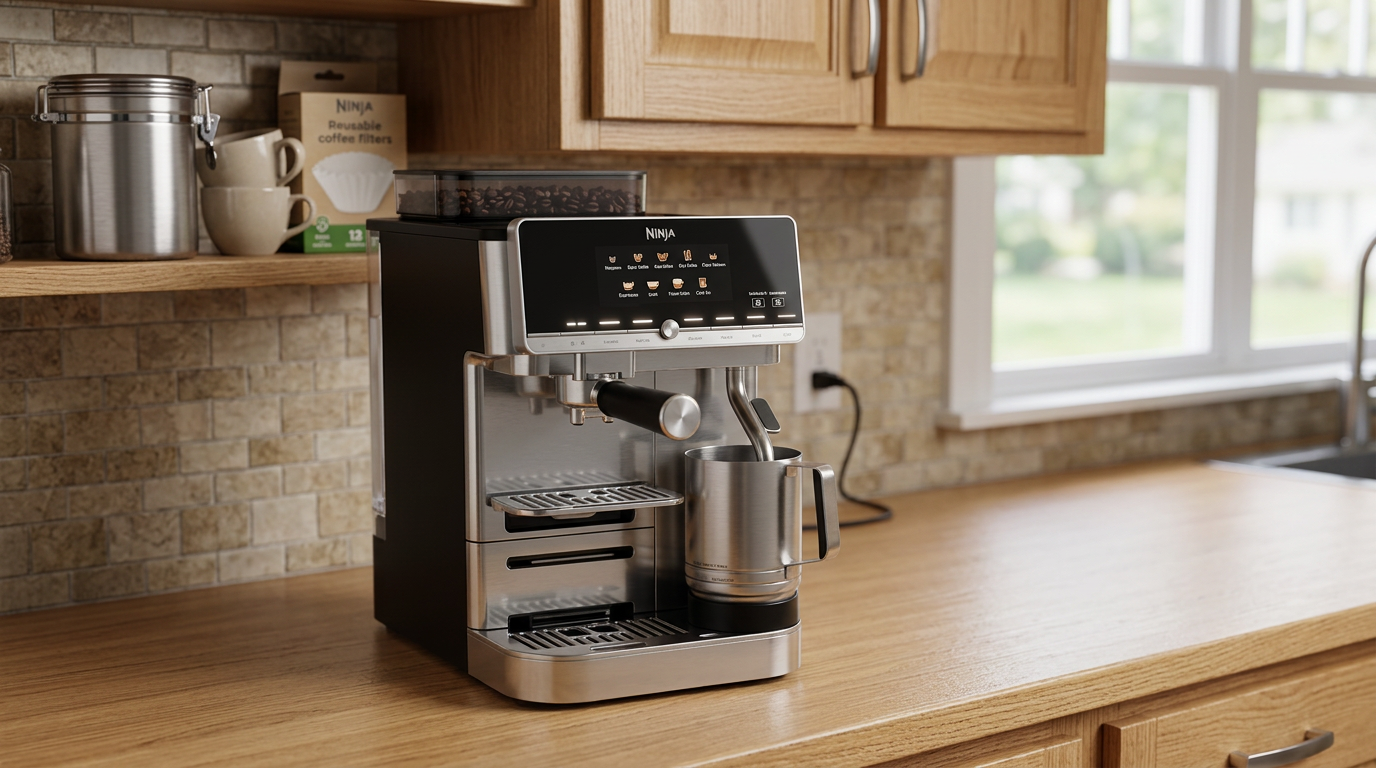
Jargon helpNew to espresso? Tap any dotted term to see what it means.
In this comparison
If you want great coffee without any technique, and especially if someone drinks big mugs of filter coffee, buy the Ninja AutoBarista. It makes full-bodied espresso, real drip coffee and smooth cold brew at one touch. If you want to learn real espresso with a safety net, love iced lattes or have a shallower counter, buy the Ninja Luxe Café Premier. It guides you to a great shot in two or three tries and makes the best cold foam I’ve tested, but make your big coffees as Americanos.
The two machines
Specs checked November 14, 2026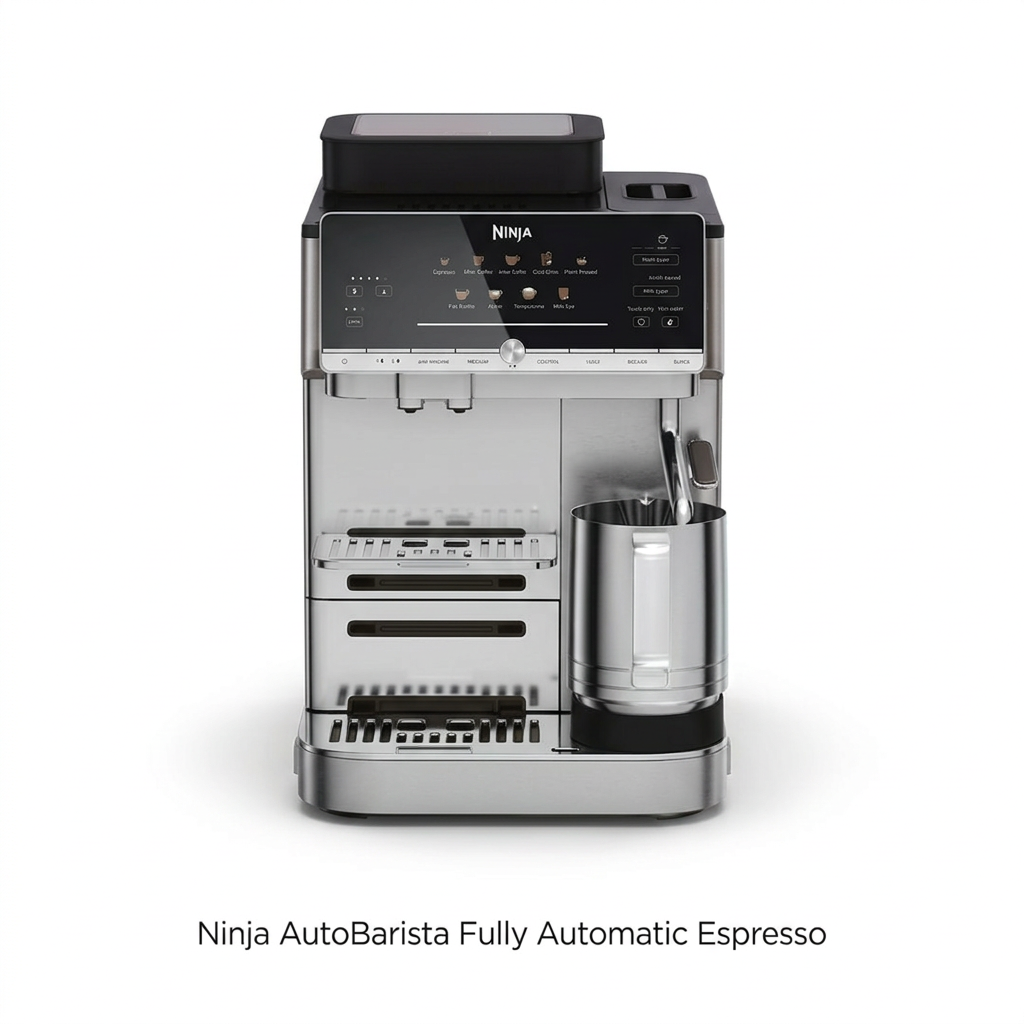
Fully automatic: Grind IQ, weighed single to triple doses, real drip coffee, cold brew and hands-free whisked milk.
Check price on Amazon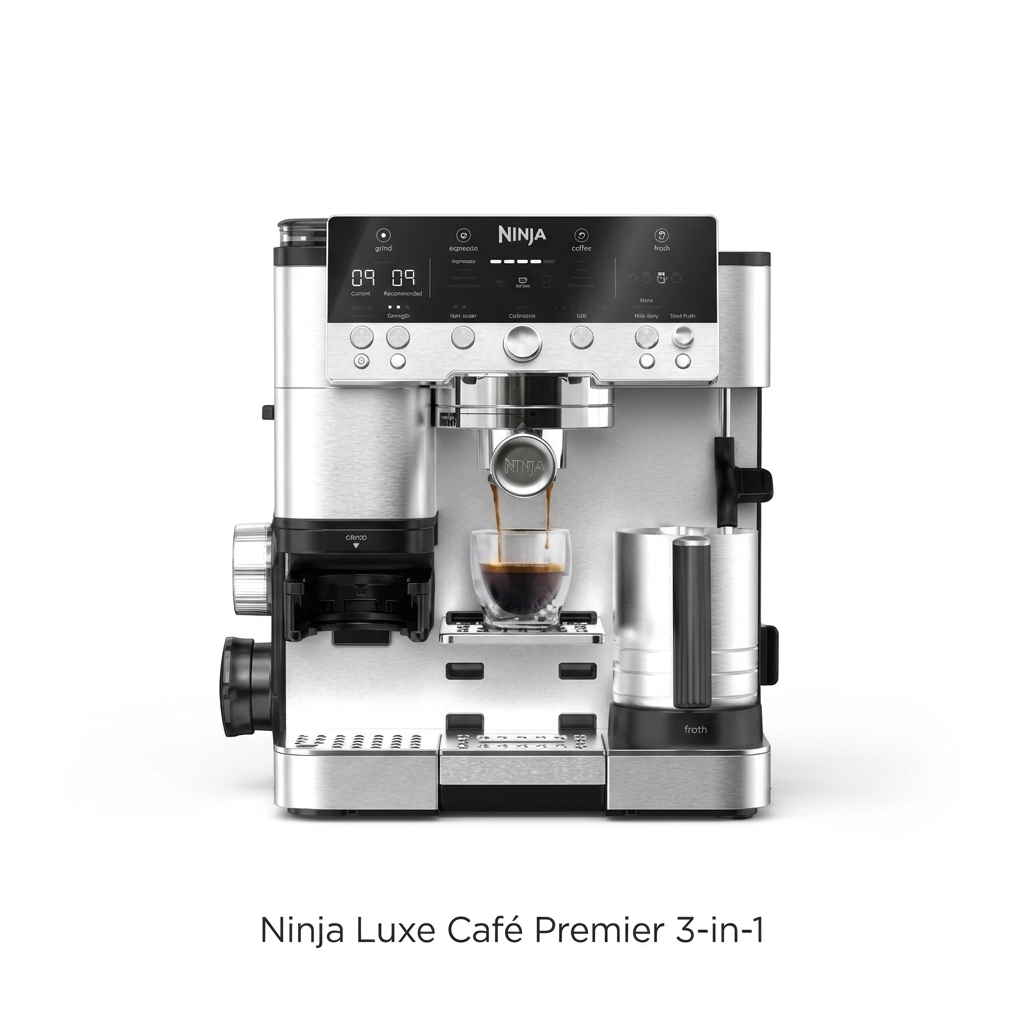
Semi-automatic with guidance: Barista Assist, weighed dosing, a lever tamper, cold foam and manual steaming.
Reveal Today’s DealAutoBarista vs Luxe Café at a glance
- Buy the AutoBarista if you want great espresso, real drip coffee and cold brew at one touch, and you have the counter depth.
- Buy the Luxe Café Premier if you want to learn espresso with a safety net, love iced lattes with cold foam and drink mostly espresso-based drinks.
- Both weigh every dose, both froth milk hands-free with a whisking wand and both make excellent espresso with medium and dark roasts.
- The AutoBarista wins on convenience and long coffees; the Premier wins on control, footprint and cold foam.
Head to head
The better result in each row is marked, based on four weeks with each machine and Ninja’s specs. Rows where they’re the same have no winner.
The tally isn’t my verdict. These machines are built on two different ideas, so the rows that matter depend on whether you want to press a button or hold a portafilter.
| Spec | Ninja AutoBarista | Ninja Luxe Café Premier |
|---|---|---|
| Type | Fully automatic | Semi-automatic with guidance |
| Espressomedium-dark beans | Double 8.8, syrupy | Medium roast 9.0, dark 8.8 |
| Light roasts | Good after Grind IQ ✓ Best | Struggled, about 6.0 |
| Grind setup | Grind IQ, automatic ✓ Best | Barista Assist, you turn the dial |
| Dosing | Weighed, single to triple | Weighed, built-in scale |
| Tamping | Automatic, inside ✓ Best | Lever tamper with funnel |
| Drip coffee | Clean, filter-style ✓ Best | Thin from the large basket |
| Cold brew | Smooth, low bitterness ✓ Best | Fast but weak |
| Cold foam | Yes | Yes, my favorite preset ✓ Best |
| Manual steaming | No | Yes ✓ Best |
| Cup clearance | Standard mugs | Shot glass to tall thermos ✓ Best |
| Profiles | 2 ✓ Best | None |
| Depth on the counter | 17.8 in | 13 in ✓ Best |
| Weight | About 36 to 40 lb | About 26 lb ✓ Best |
| Rows won | 6 | 5 |
AutoBarista vs Luxe Café pros and cons
Ninja AutoBarista
- One-touch espresso with weighed, generous doses
- Real drip coffee and smooth cold brew
- Grind IQ dials in new beans for you
- Deep, heavy body for a single-hopper machine
- Settings menu uses numbered codes
- No manual steaming for latte art
Ninja Luxe Café Premier
- Guided, mess-free espresso for beginners
- Excellent cold foam and four froth presets
- Huge cup clearance, from shot glass to thermos
- Large-basket coffees and cold brew taste weak
- Grinder struggles with light roasts
- Loud beeps until you switch them off
Who should buy which machine?
- Homes that drink espresso and big mugs of drip coffee
- Anyone who wants zero technique at the counter
- Cold brew drinkers who want it ready fast
- First-time espresso buyers who want to learn
- Iced latte fans who love cold foam
- Kitchens without 18 inches of counter depth
Two philosophies from one brand
Ninja built these two machines on opposite ideas, and that’s the real choice here.
The AutoBarista is fully automatic✕Fully automaticAlso called super-automatic or bean-to-cup. The machine grinds, doses, tamps, brews and ejects the puck by itself at the press of a button.. There’s no portafilter to lock in and no tamper to hold. You press a button, and it grinds, weighs, compacts, brews and drops the puck.
The Luxe Café Premier is semi-automatic✕Semi-automaticA machine that controls the water, while you handle the portafilter: grinding into it, tamping and locking it into the group head. with a lot of help. You grind into a real portafilter✕PortafilterThe handle with a metal basket that holds the ground coffee. You lock it into the machine to brew., pull a lever to tamp, lock it in and press brew. The machine recommends a grind and tells you after each shot whether to go finer or coarser.
Both weigh every dose and both froth milk hands-free. The difference is whether you want to touch the coffee.
| Step | AutoBarista | Luxe Café Premier |
|---|---|---|
| Pick a grind | Grind IQ chooses | Barista Assist recommends, you turn the dial |
| Dose | Weighed automatically | Weighed into the funnel |
| Tamp | Inside the machine | You pull a lever |
| Lock in and brew | One button | You lock the portafilter, press brew |
| Knock out the puck | Machine ejects it | You knock it out |
| Froth milk | Hands-free | Hands-free or manual |
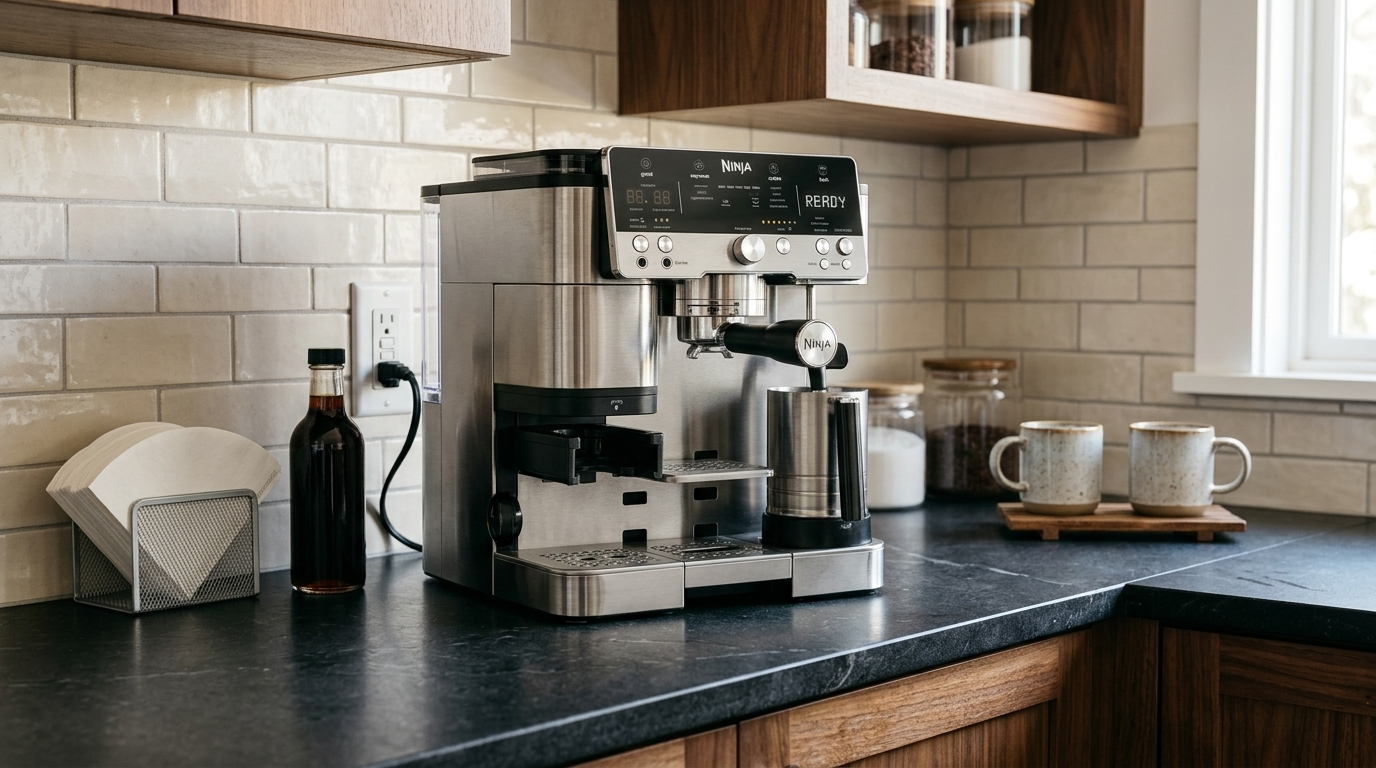
The Premier keeps a real portafilter, but guides every step.
Our tip: If you enjoy the ritual of locking in a portafilter, choose the Premier; if you want coffee without thinking about it, choose the AutoBarista.
Design, size and build
These two take up space in very different ways. The AutoBarista is narrow but deep: about 10.7 inches wide, 17.8 inches deep and 15.8 inches tall, weighing 36 to 40 pounds.
The Premier is wide but shallow: about 13.4 inches wide, 13 inches deep and 14.6 inches tall, weighing about 26 pounds. On my counter it took up roughly the space of a microwave.
The AutoBarista looks like a semi-automatic, with brushed steel, a hopper on top and a steam wand on the side, but no portafilter. Its tank lifts out from the side, and the back gets warm in use.
The Premier is mostly plastic with brushed metal accents. It felt solid and stable, with a heavy portafilter and a control dial that clicks nicely.
Depth on the counter
The AutoBarista needs a deep counter plus a gap behind for heat.
Cup clearance is a Premier strength. Remove part of the drip tray and a tall travel thermos fits under the group head, while small espresso cups sit higher on the tray.
Our tip: Measure the height under your wall cabinets for either machine, because both need room above to lift the hopper lid.
Setup and dialing in
Setup took about 15 minutes on both: rinse the parts, fill the tank and hopper, prime the system.
On the AutoBarista, the real setup is Grind IQ. I pressed the button with a cup under the spout, and the machine pulled test shots, adjusted the grind between each and saved a setting. My third shot landed at about 36 grams in about 30 seconds, and I barely touched the grind again.
On the Premier, Barista Assist does the thinking but you do the turning. It recommended a grind for my beans, and after each shot it told me whether it ran too fast or too slow.
Shots it took the Premier to reach a balanced espresso
My own dial-in results in week one. The AutoBarista’s Grind IQ needed up to three test shots for any roast.
Our tip: Re-run Grind IQ on the AutoBarista, or follow Barista Assist again on the Premier, every time you open a bag of a different coffee.
Grinder, dosing and tamping
Both machines weigh the coffee rather than grinding for a set time, which is one of the smartest things Ninja does.
The AutoBarista has a scale under the hopper that weighs each dose to the gram, then grinds from 50 settings chosen by Grind IQ. You can nudge the grind from −2 to +2 around the saved setting.
The Luxe Café Premier has 25 grind settings and a built-in scale under the grinder. In my tests, the dose stayed within a few tenths of a gram from shot to shot, and a double took about 10 to 15 seconds to grind.
A dosing funnel sits on top of the Premier’s portafilter while you grind, so grounds don’t spray onto the counter. Then you pull a lever to tamp without removing the funnel, and it gave me a level puck every time.
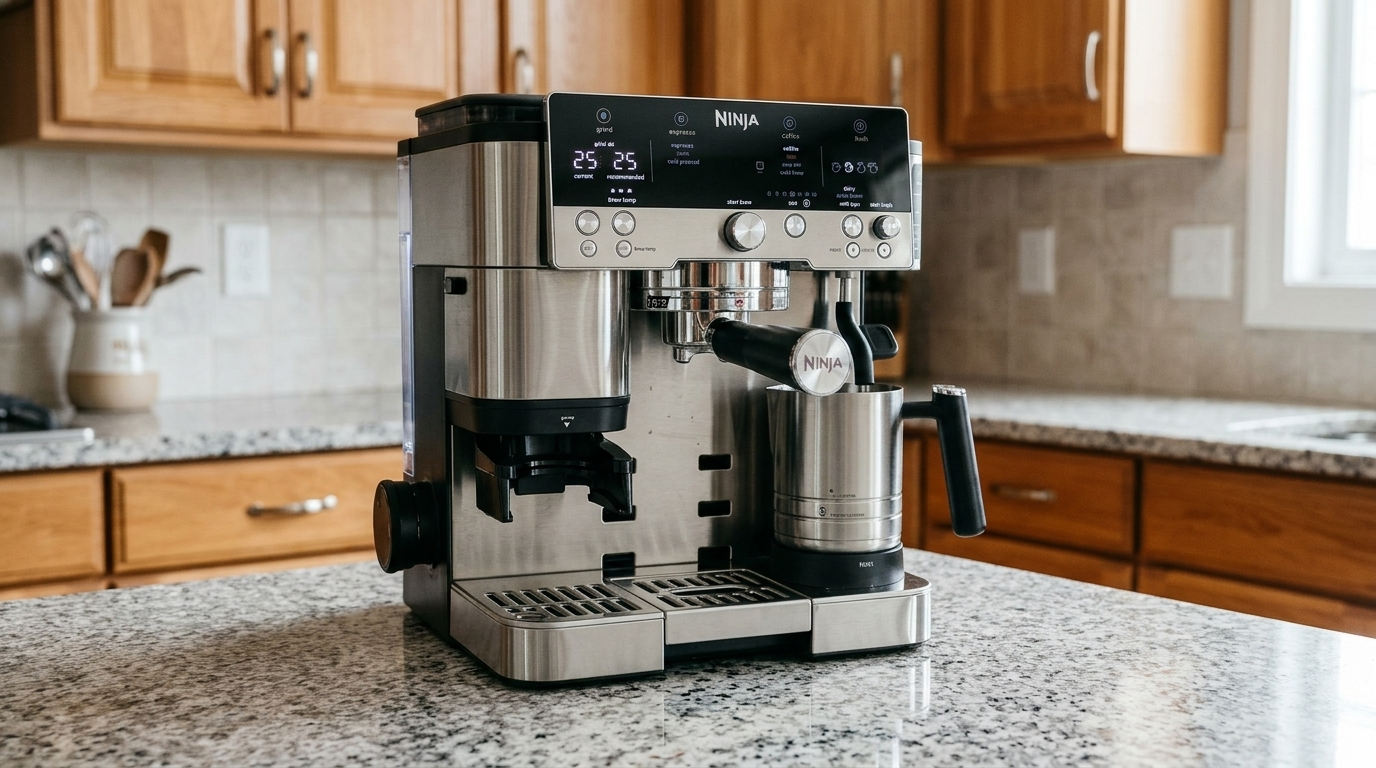
The Premier’s funnel and lever kept my counter cleaner than almost any grinder machine I’ve tested.
| Detail | AutoBarista | Luxe Café Premier |
|---|---|---|
| Grind settings | 50, chosen by Grind IQ | 25, recommended by Barista Assist |
| Dosing | Weighed to the gram | Weighed, within a few tenths of a gram |
| Doses | Single, double, triple | Double and large Luxe basket |
| Tamping | Automatic, inside | Assisted lever with funnel |
| Mess on the counter | None | Very little |
| Bean swaps | Single hopper | Removable, lockable hopper |
Our tip: Tap the Premier’s portafilter gently on the counter before you pull the tamping lever, so the grounds settle evenly.
Espresso quality
With medium and dark roasts, both make better espresso than their friendly designs suggest.
On the AutoBarista, my calibrated double came out with a thick hazelnut crema✕CremaThe golden, foamy layer on top of a fresh espresso., a syrupy body and dark chocolate and caramel notes. The used pucks came out firm and whole, a sign of an even extraction.
On the Premier, medium and dark roasts gave rich, smooth, full-bodied shots with thick, hazel-colored crema and clear chocolate, caramel and nut notes. Its adjustable brew temperature helped too: one step lower took the edge off a very dark roast.
The gap opens with light roasts. Grind IQ dialed those in reasonably on the AutoBarista, but the Premier’s grinder doesn’t go fine or even enough, and even at its finest settings the shots were often sour and thin.
My espresso scores by roast
My scores out of 10. The AutoBarista’s light roasts were good after Grind IQ.
AutoBarista espresso by dose
The single is small for this brew group; make the double your default.
Our tip: Lower the Premier’s brew temperature one step for dark roasts, because it makes the shot noticeably sweeter and less smoky.
See Today’s PriceDrip coffee and cold brew
This is the clearest win in the whole comparison.
On the AutoBarista, drip coffee isn’t a stretched espresso. The machine switches to a coarser grind and its own brewing process, and my 12-ounce mug came out at about 170°F, tasting like a clean, medium-bodied filter coffee. It replaced our separate drip maker.
Its cold brew was smooth and low in bitterness, and cold-pressed coffee was bright and clean over ice.
The Premier calls itself a 3-in-1, but this was the most disappointing part of my test. Coffees from its large Luxe basket were thin, watery and under-extracted, and its rapid cold brew was fast but weak.
Big-cup quality
My ratings for flavor and body in a mug or glass.
On the Premier, my fix was simple. For a big mug, I pulled a double and topped it up with hot water from my kettle; for iced coffee, I pulled the shot straight over ice.
| Big drink | AutoBarista | Luxe Café Premier |
|---|---|---|
| Drip coffee | Real filter-style, about 170°F | Thin from the Luxe basket |
| Americano | Espresso plus hot water | Double plus kettle water |
| Cold brew | Smooth, low bitterness | Fast but weak |
| Over ice | Bold, a little bitter with dark roasts | Better as espresso over ice |
Our tip: On the Premier, make big coffees from a double shot plus hot water, because they taste far better than the large-basket setting.
Milk drinks and cold foam
Both use a steam wand with a spinning whisk inside, and both stop automatically when the milk is ready. The setups are close cousins.
The AutoBarista has four presets: steamed milk, thin froth, thick froth and cold foam, with dairy and plant settings. Its whisk keeps stirring now and then while the espresso finishes, which stopped the foam separating, and my milk stayed creamy until I poured.
The Premier, which Ninja calls the Dual Froth System, has the same four presets. Thick froth made a tall, airy cappuccino foam and milk came out at about 60 to 65°C. Its automatic foam was a little stiffer and separated from the milk more readily.
The Premier has one big extra: manual steaming. I switched to it for silkier microfoam✕MicrofoamMilk foam with bubbles so small you can barely see them. It feels silky and glossy, and it’s what you need for latte art. and simple latte art, though the wand isn’t as powerful as a commercial one.
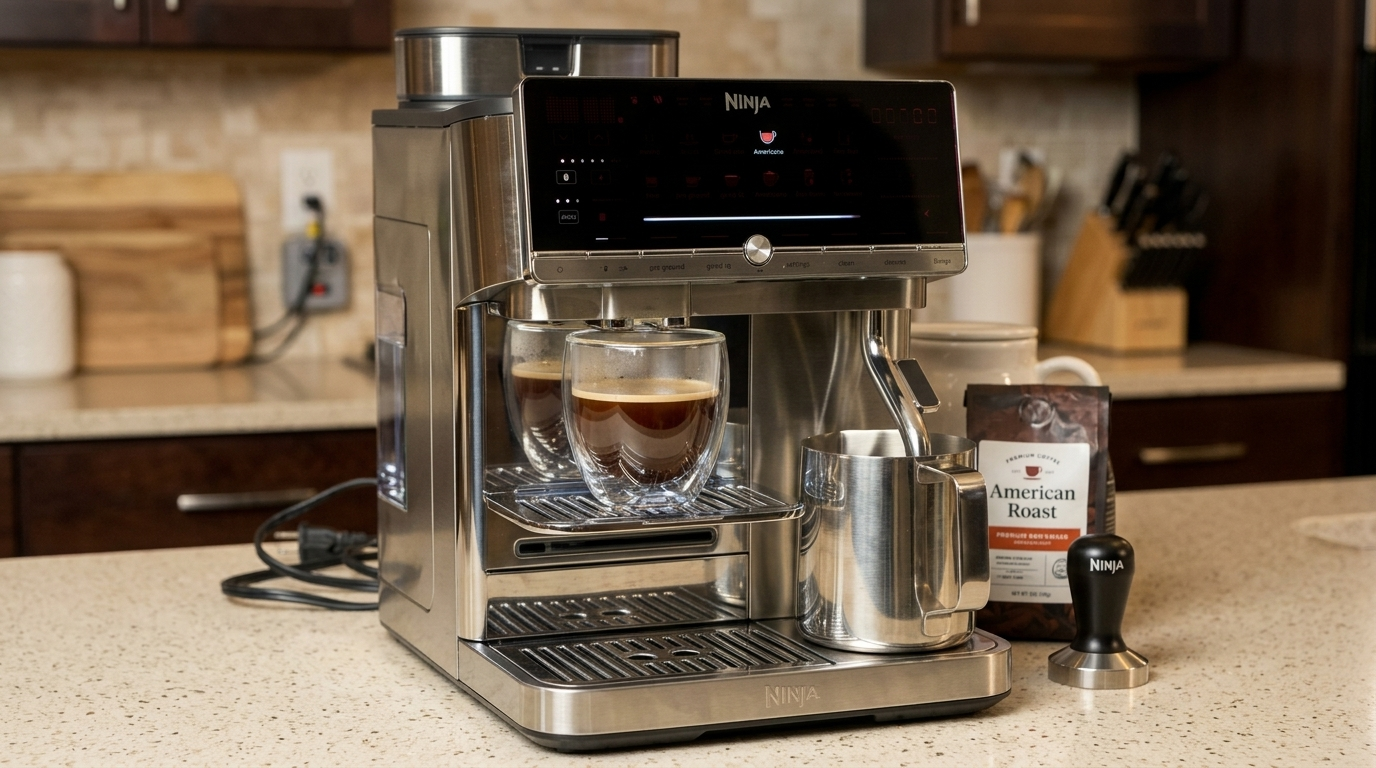
The AutoBarista’s whisk kept the foam creamy while the shot finished.
Milk results
My scores out of 10 for texture and stability.
Cold foam: the Premier’s highlight
Cold foam was the unexpected star of my Premier test. The whisk spins without steam, so cold milk turns into a thick, sweet foam that held its shape for more than five minutes.
A double shot over ice, cold milk and a layer of cold foam made a café-style iced latte in about two minutes. The AutoBarista’s cold foam over cold brew was good too, but the Premier’s was the one I kept going back to.
| Milk feature | AutoBarista | Luxe Café Premier |
|---|---|---|
| Presets | 4 incl. cold foam | 4 incl. cold foam |
| Dairy and plant settings | Yes | Yes |
| Whisk keeps stirring while waiting | Yes | No |
| Manual steaming | No | Yes |
| Latte art | Not really | Simple shapes with manual steam |
| Best plant milk | Barista oat, plant setting | Barista oat, plant setting |
Our tip: Start with cold milk and a cold, clean jug on both machines, because warm milk makes big, loose bubbles.
Reveal Today’s DealControls, profiles and daily use
The Premier’s controls are the friendlier of the two. A dial selects your drink, a few buttons set size and temperature, and the display shows your grind setting and dosing status. Everything felt logical from the first morning.
Its one annoyance is the beeps. In a quiet kitchen early in the morning, they were loud until I turned them off in the settings.
The AutoBarista’s drink buttons are simple, and it has two profiles: press and hold a drink to save it. Its settings menu, though, shows options as numbered codes, so I kept the manual nearby for the first week.
| Feature | AutoBarista | Luxe Café Premier |
|---|---|---|
| Main control | Drink buttons | Dial plus buttons |
| Profiles | 2 | None |
| Settings menu | Numbered codes | Clear display |
| Brew temperature | Coffee and froth settings | Several adjustable levels |
| Shot readout | Weight and time on screen | Too fast or too slow feedback |
| Alerts | Low-water sensor | Low-water alert, loud beeps |
Our tip: Turn off the Premier’s beeps in the settings on day one if you make coffee while others are still asleep.
Speed and noise
For one drink, the AutoBarista is quicker in practice because there’s nothing to do. A double espresso took about a minute and a cappuccino about two.
The Premier heats up in about a minute from cold. A latte from switch-on to cup took me three to four minutes, including grinding, tamping, brewing and frothing, with the milk frothing while the shot ran.
Noise was similar. The AutoBarista’s grinder peaked around 70 to 72 dB on my phone meter at about 50 centimeters, with brewing around 60 dB. The Premier’s grinder is moderately loud but quick, and brewing and frothing are a steady hum and a whoosh.
Time to a latte or cappuccino
From pressing the button, or from switch-on for the Premier.
| Task | AutoBarista | Luxe Café Premier |
|---|---|---|
| Heat-up | Ready quickly | About 1 minute |
| Grinding a double | Part of the automatic cycle | 10 to 15 seconds |
| Double espresso | About 1 minute | About 1.5 minutes with tamping |
| Milk drink | About 2 minutes | 3 to 4 minutes |
Cleaning and upkeep
Both clean up faster than most milk machines.
On the AutoBarista, the steam wand purges itself after frothing, and the side panel and brew group✕Brew groupThe part inside an automatic machine that compresses the coffee, holds it while water passes through and ejects the used puck. come out without tools. I rinsed the brew group weekly and ran a grinder purge from the settings menu.
On the Premier, the funnel keeps the counter clean and the portafilter knocks out a firm, dry puck. The funnel, baskets, tank, hopper and drip tray are dishwasher-safe. The whisk pulls off for rinsing, and I soaked it weekly.
Its descale alert came up after about a month with my moderately hard water, and the routine took about 30 minutes.
Hands-on cleaning time per day, with milk drinks
My estimates, including knocking out the puck on the Premier.
| When | AutoBarista | Luxe Café Premier |
|---|---|---|
| After milk drinks | Automatic purge, wipe wand | Wipe and purge the wand |
| Daily | Empty tray and grounds bin, wash jug | Empty tray, knock out puck, rinse funnel and basket |
| Weekly | Rinse brew group, grinder purge | Soak the whisk |
| Monthly | Check the brew group | Clean the grinder burrs |
| When prompted | Descale | Descale, about 30 minutes |
Our tip: Wipe and purge the steam wand straight after every milk drink on both machines, before the milk has a chance to dry.
Water, beans and supplies
The AutoBarista’s 70-ounce tank lasted about two days for two people, and its 250-gram hopper about a week. The Premier’s removable tank has a low-water alert that saved me from a failed shot more than once.
Bean choice matters more on the Premier, because its grinder favors medium and dark roasts. The AutoBarista handled light roasts reasonably once Grind IQ had dialed them in.
For water, the Specialty Coffee Association’s brewing standard aims for about 150 ppm of total dissolved solids. Filtered tap water and the right hardness setting kept both happy.
| Bean type | AutoBarista | Luxe Café Premier |
|---|---|---|
| Medium-dark blend | Excellent espresso, very good drip | Excellent, about 8.8 |
| Medium roast | Very good espresso, excellent drip and cold brew | Best, about 9.0 |
| Light roast | Good after Grind IQ | Struggles, about 6.0 |
| Very dark, oily | Not recommended | Lower the temperature |
Our tip: Keep the Premier’s hopper only partly full, so beans don’t go stale sitting on top of a warm machine.
How the four weeks went on each
A machine can feel very different on day one and day thirty, so here’s how my view of each changed over the month.
On the AutoBarista, week one was all about Grind IQ and learning that the single dose was too small to judge the machine by. Week two settled on a double at five beans. In week three, drip coffee replaced our old drip maker and cold brew with cold foam became the afternoon drink. Week four was about milk presets and the weekly brew group rinse.
On the Premier, week one went from a sour first shot to a balanced one in three tries. Week two was milk and cold foam, which instantly became my co-tester’s daily iced latte. Week three exposed the weak large-basket coffees, so we switched to Americanos. Week four confirmed that medium and dark roasts shine and light roasts struggle, while cleaning stayed easy.
| Week | Ninja AutoBarista | Ninja Luxe Café Premier |
|---|---|---|
| 1 | Grind IQ calibration | Barista Assist, good shots in 2 to 3 tries |
| 2 | Double at five beans as default | Milk presets and cold foam |
| 3 | Drip and cold brew replace other gadgets | Large-basket coffee disappoints, Americanos instead |
| 4 | Milk presets, weekly brew group rinse | Roast testing, easy cleaning routine |
By the end, both felt reliable. Neither threw an error or a surprise, and the weak points of each stayed the same from week one to week four, which made them easy to work around.
Our tip: Give either machine a full week before you judge it, and change only one setting per day while you learn it.
Real-life scenarios
These are the moments where one machine clearly pulled ahead.
Real drip coffee at about 170°F. The Premier’s large-basket coffee tasted thin.
The best cold foam I’ve made at home, in about two minutes.
Barista Assist got me to a balanced shot in two or three tries, and I understood why.
One button, a weighed double and a firm puck I never touched.
About 13 inches deep against nearly 18.
Smooth and low in bitterness; the Premier’s was fast but weak.
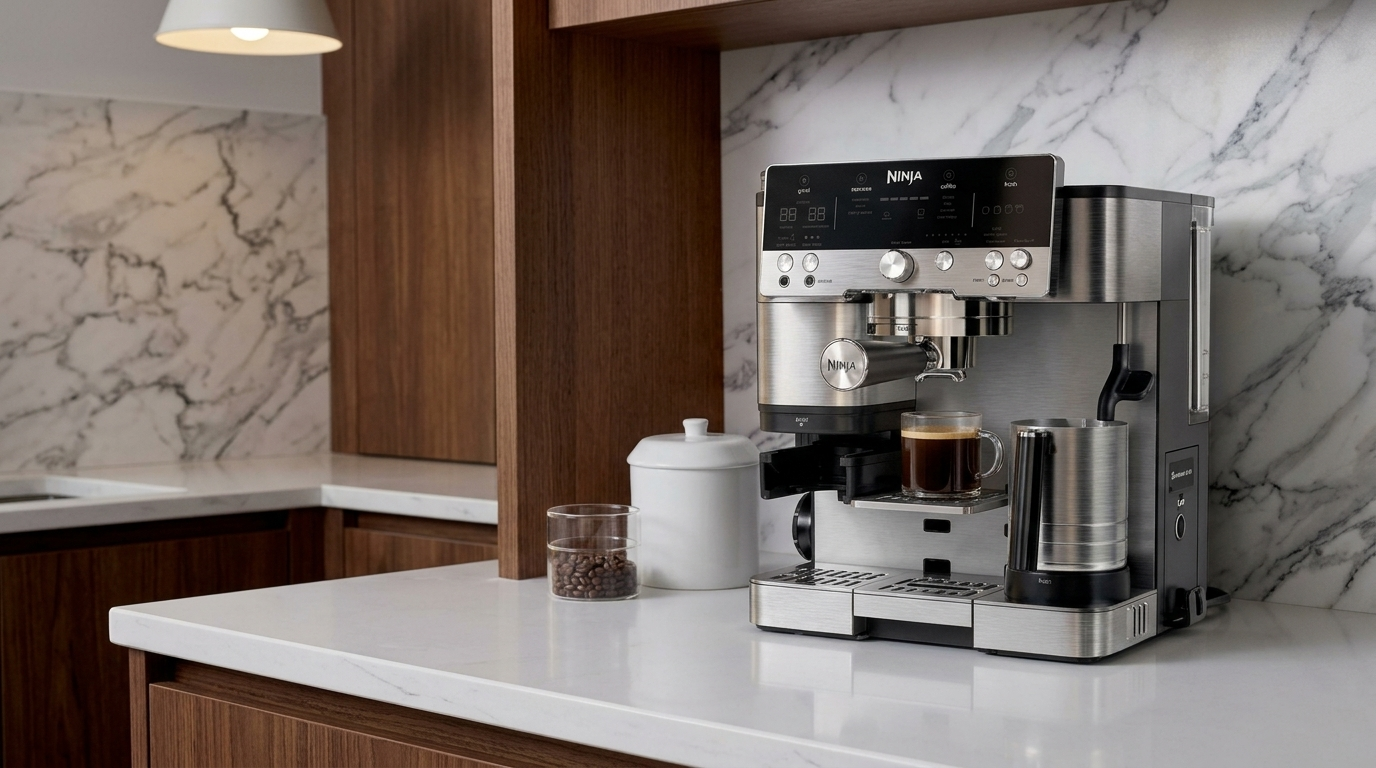
For iced-drink fans, the Premier’s cold foam is a genuine highlight.
My scorecard
These are my scores out of 10. The first four come from my single reviews; I added long drinks and hands-on control because they decide this matchup.
Ninja AutoBarista
Ninja Luxe Café Premier
Overall, I rate the AutoBarista 8.4 and the Premier 8.1. The AutoBarista is the more complete coffee machine; the Premier is the better espresso teacher and the better fit for smaller kitchens.
See How Much You’ll SaveWhich one is right for you?
4 quick questionsWhich one should you buy?
It comes down to one question: do you want to press a button, or hold a portafilter? Beyond that, your morning mug decides it. If it’s filter coffee, the AutoBarista wins easily. For the wider picture beyond this matchup, see my guide to the best Ninja espresso machines.
If you lean fully automatic, my AutoBarista vs AutoBarista Pro comparison explains when the second hopper is worth it. If you lean hands-on, see Luxe Café Premier vs Pro, and for the broader choice, my super-automatic vs semi-automatic guide.
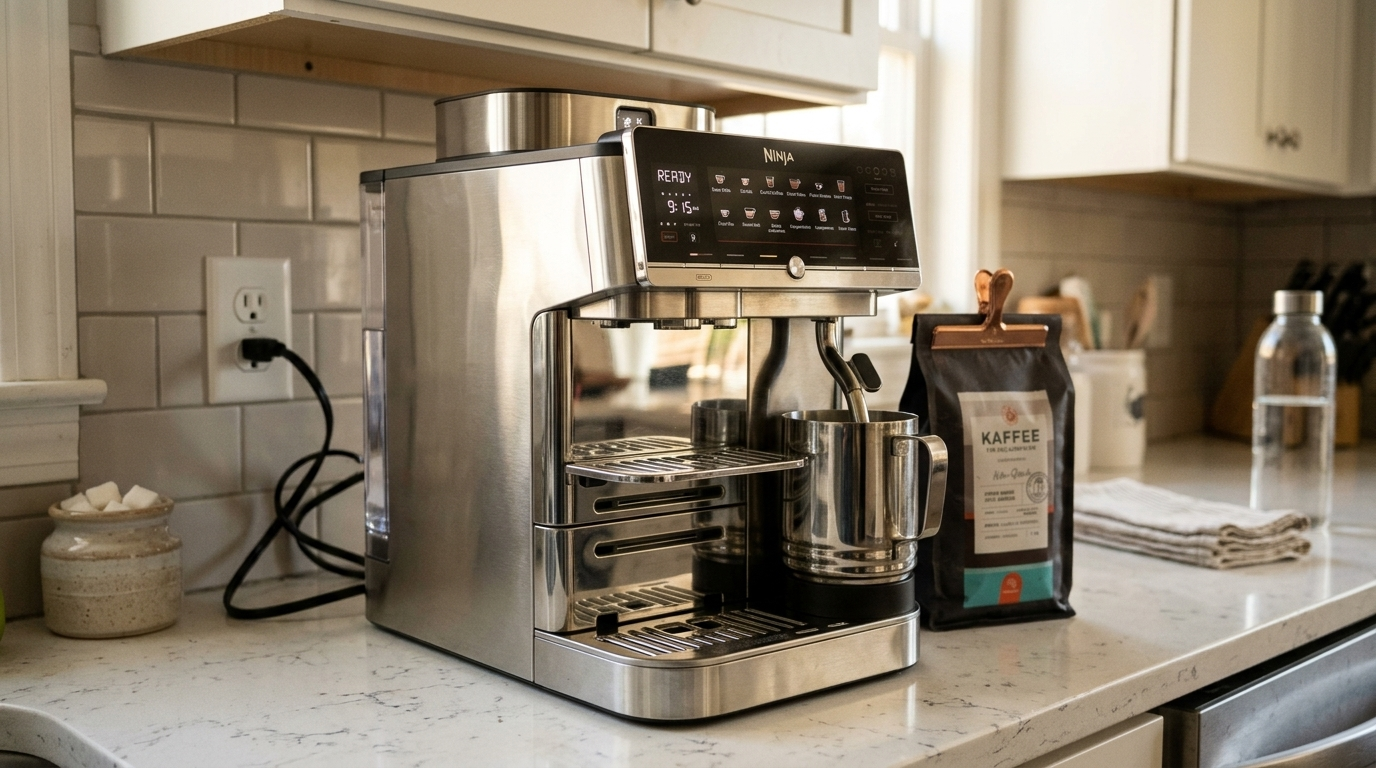
For espresso and filter coffee at one touch, the AutoBarista is hard to beat.
- You want coffee with zero technique
- You drink big mugs of drip coffee
- You like smooth cold brew
- You have a deep counter
- You want to learn espresso by hand
- You want manual steaming
- Your counter is shallow
- You want to learn espresso with guidance
- You love iced lattes with cold foam
- You use cups from shot glasses to thermoses
- Your kitchen is short on depth
- You mostly drink drip coffee
- You buy light, fruity roasts
- You want one-touch drinks
For most households, my pick is the Ninja AutoBarista. It makes full-bodied espresso at one touch, real drip coffee and smooth cold brew, and its Grind IQ and weighed doses take the guesswork away completely.
The Ninja Luxe Café Premier is the better choice if you want to learn espresso, love iced lattes or have a shallower counter. Barista Assist and the lever tamper get you to a great shot in a couple of tries, and its cold foam is the best I’ve made at home. Just make your big coffees as Americanos.
Either way, use fresh medium or medium-dark beans, start with cold milk and purge the wand after every milk drink.
AutoBarista vs Luxe Café Premier specifications
From manufacturer specifications and my own testing.
| Ninja AutoBarista | Ninja Luxe Café Premier | |
|---|---|---|
| Model | AE1001 | ES601 |
| Type | Fully automatic | Semi-automatic with grinder |
| Brew styles | Espresso, drip, cold brew, iced | Espresso, drip-style, cold brew |
| Grinder | Grind IQ, 50 settings | Conical burr, 25 settings, Barista Assist |
| Dosing | Weighed to the gram | Weight-based, built-in scale |
| Tamping | Automatic | Assisted lever, dosing funnel |
| Pressure | Around 9 bar at the coffee | 9 bar |
| Milk | Whisking wand, 4 presets | Dual Froth System, 4 presets, manual |
| Profiles | 2 | None |
| Power | 1,650 W | 1,650 W |
| Water tank | About 70 oz, side | Removable, low-water alert |
| Dimensions (W × D × H) | 10.7 × 17.8 × 15.8 in | 13.4 × 13 × 14.6 in |
| Weight | About 36 to 40 lb | About 26 lb |
How I tested and compared them
I used each machine as my everyday coffee maker for four weeks. Michael Reynolds and a second HouseholdMe tester shared each machine and wrote the notes together.
On the AutoBarista, we ran Grind IQ on three coffees, used every dose and strength and made drip, cold brew and iced drinks. On the Premier, we followed Barista Assist with dark, medium and light roasts, adjusted temperature and tested the large basket.
We frothed whole, 2% and barista oat milk on every preset, tried manual steaming on the Premier, measured temperatures and noise and checked our notes against Ninja’s specifications.
- Coffee: dose, body, crema and roast range.
- Long drinks: drip, Americano and cold brew.
- Milk: froth presets, cold foam and manual steaming.
- Ownership: footprint, cleaning, noise and controls.
Ninja AutoBarista vs Luxe Café FAQ
What is the difference between the Ninja AutoBarista and Luxe Café?
The AutoBarista is fully automatic: it grinds, weighs, tamps and brews at one touch. The Luxe Café Premier is semi-automatic: you use a real portafilter, pull a lever to tamp and lock it in, with on-screen guidance at every step.
Which makes better espresso?
With medium and dark roasts, both are excellent. I scored the AutoBarista’s double 8.8 and the Premier’s medium-roast shot 9.0. The Premier struggled with light roasts; the AutoBarista handled them better after Grind IQ.
Which makes better drip coffee?
The AutoBarista, clearly. Its drip mode tasted like a clean filter coffee. The Premier’s large-basket coffees were thin, so I made Americanos instead.
Which is better for iced coffee?
For cold brew, the AutoBarista. For iced lattes with cold foam, the Premier, whose cold foam I scored 9.0.
Is the Luxe Café good for beginners?
Yes. Barista Assist recommends a grind and tells you after each shot whether to go finer or coarser. I reached a balanced shot in two or three tries with medium and dark roasts.
Can I make latte art with either?
The Premier’s manual steaming can make simple shapes. The AutoBarista has automatic milk only.
Which is smaller?
The Luxe Café Premier is about 13 inches deep and 26 pounds. The AutoBarista is about 17.8 inches deep and 36 to 40 pounds.
Do both weigh the coffee?
Yes. Both have built-in scales and dose by weight, not by grind time.
Which is easier to clean?
The AutoBarista, slightly, because there’s no puck to knock out. Both have self-purging wands and parts that come apart easily.
Does the AutoBarista have profiles?
Yes, two. The Luxe Café Premier has none.

- Our hands-on Ninja AutoBarista review
- Our hands-on Ninja Luxe Café Premier review
- Ninja product specifications and owner documentation
- Specialty Coffee Association brewing water guidance
- General espresso brewing and maintenance guidance