Jura vs Gaggia: Swiss vs Italian super-automatics
undefined
We choose products independently. We may earn a commission through links on this page; your price stays the same. Affiliate policy
Jargon helpNew to espresso? Tap any dotted term to see what it means.
In this comparison
For most homes, I would buy the Gaggia. The Gaggia Cadorna Prestige made the better espresso and the hotter, creamier milk of the two machines I tested, it has four user profiles and its brew group slides out so you can rinse it under the tap. Choose Jura if you want the most polished experience: the Jura E8 makes 17 drinks including a real flat white, tracks its own filter and never asks you to touch the brew unit. Just pre-warm your cups, because its milk comes out at about 122°F.
The two machines
Specs checked November 14, 2026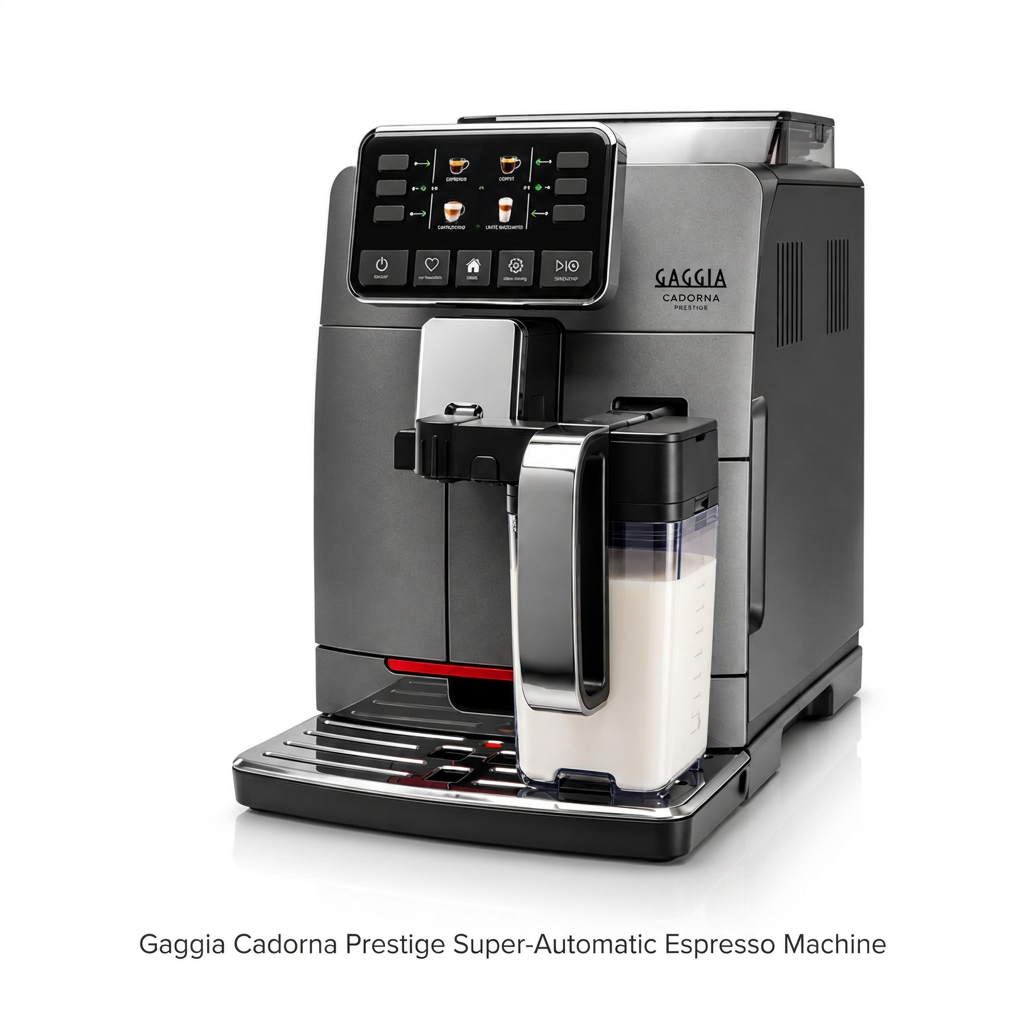
14 one-touch drinks, a clip-on milk carafe that pours at about 155°F, four user profiles and a removable brew group you rinse yourself.
Check price on Amazon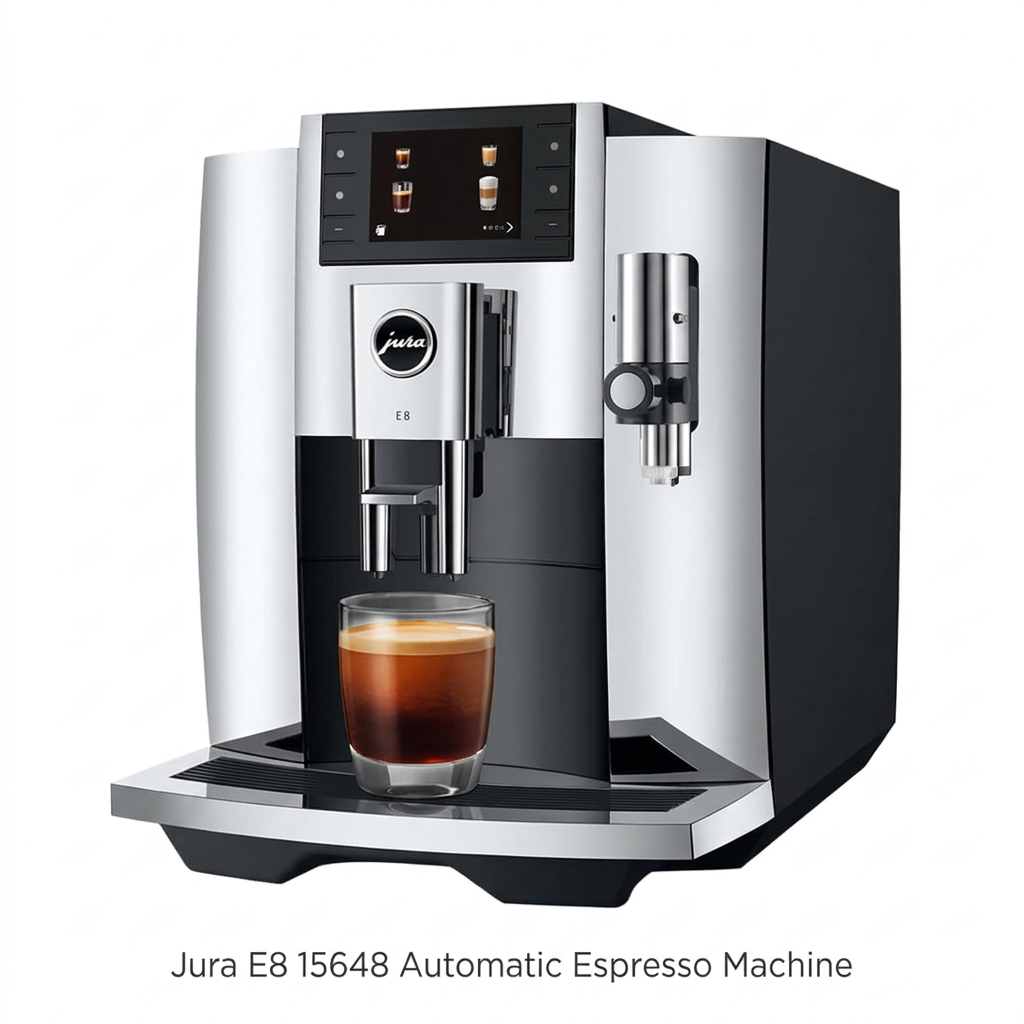
17 one-touch drinks with a flat white and cortado, Pulse Extraction, automatic filter tracking and a sealed brew unit that cleans itself with tablets.
Reveal Today’s DealJura vs Gaggia at a glance
- Jura sells precision and polish; Gaggia sells Italian practicality and value.
- The Gaggia Cadorna Prestige beat the Jura E8 on espresso, milk temperature and user profiles.
- The Jura E8 wins on drink range, flat white, filter tracking and hands-off cleaning.
- Gaggia’s removable brew group is easier to fix yourself; Jura’s sealed unit needs fewer chores.
Head to head
I compared the brands through two machines at a similar level in each range: the Jura E8 and the Gaggia Cadorna Prestige. The better result in each row is marked, based on four weeks with each.
The tally is not my verdict. Some rows, like milk temperature, matter far more to daily drinking than others.
| Spec | Jura E8 | Gaggia Cadorna Prestige |
|---|---|---|
| Espressomy tasting, same beans | Smooth, a touch light | Fuller, sweeter, nutty ✓ Best |
| One-touch drinks | 17 ✓ Best | 14 |
| Flat white and cortado | Yes, one touch ✓ Best | No |
| Milk temperaturemeasured | About 122°F | About 155°F ✓ Best |
| Milk system | Hose into a container | Clip-on 20 oz carafe |
| User profiles | No | 4, color-coded ✓ Best |
| Brew unit | Sealed, cleans with tablets | Removable, rinse weekly |
| Filter tracking | Automatic detection ✓ Best | Manual setup |
| App control | J.O.E. app ✓ Best | No |
| Hot water for tea | Up to about 176–185°F | Hotter, at three temperatures ✓ Best |
| Bean hopper | About 10 oz | About 10.6 oz ✓ Best |
| Water tank | 64 oz, side | 51 oz, front |
| Width | 11 in | 10.2 in ✓ Best |
| Grinder | Steel conical burrs | Ceramic burrs, 10 settings |
| Rows won | 4 | 6 |
Jura vs Gaggia pros and cons
Gaggia Cadorna Prestige
- Fuller espresso and hot, creamy milk at about 155°F
- Four user profiles for a shared kitchen
- Removable brew group you can rinse and inspect
- No one-touch flat white or cortado
- Brew group needs weekly rinsing and occasional grease
- Smaller 51 oz tank than the Jura
Jura E8
- 17 one-touch drinks, including flat white and cortado
- Automatic filter detection and a clear maintenance dashboard
- Sealed brew unit with no weekly chores
- Milk comes out at about 122°F
- Hot water is a little cool for black tea
- Espresso is slightly light in body
Who should buy which brand?
- Families who want hot lattes and saved favorites
- People who like to fix and clean things themselves
- Espresso drinkers who want a fuller shot
- Flat white and cortado lovers
- Anyone who never wants to touch a brew unit
- Tech fans who want app control and filter tracking
Swiss vs Italian: the two brands
Before the machines, a word on the brands, because they really do think about coffee differently.
Jura is a Swiss company that makes nothing but automatic coffee machines. Its machines are engineered in Switzerland, and the E8 I tested was built in Portugal. The brand’s whole pitch is precision, a sealed system and as few chores as possible.
Gaggia comes from Milan. Its founder is credited with the lever machine that gave espresso its crema in the late 1930s, and the brand still leans hard into that Italian espresso heritage.
In practice, the difference shows up in the details. Jura machines hide their brew unit and ask you to drop in a cleaning tablet when prompted. Gaggia machines let you slide the brew group out from the side and rinse it under the tap.
Jura uses its Pulse Extraction Process✕Pulse Extraction Process (P.E.P.)Instead of pushing water through the coffee in one steady stream, the machine sends it in short, rapid pulses. It helps short drinks like espresso extract more evenly. for short drinks. Gaggia relies on a classic pre-infusion✕Pre-infusionA short soak of the ground coffee before full pressure starts, so the water flows through the puck evenly. and a quick-heat boiler.
| Brand trait | Jura | Gaggia |
|---|---|---|
| Home country | Switzerland | Italy |
| Brew unit | Sealed, not user-removable | Removable from the side |
| Grinder | Steel conical burrs | Ceramic burrs |
| Milk approach | Hose and fine-foam spout | Clip-on carafe on most models |
| Cleaning | Tablets and automatic programs | Rinse the group, grease it occasionally |
| App control | On many models | Rare |
| Personality | Polished, minimal chores | Practical, hands-on care |
Our tip: Decide first whether you would rather rinse a brew group once a week or buy cleaning tablets, because that choice shapes the next ten years of owning either brand.
How the two ranges line up
Both brands sell machines from entry level to flagship. This is roughly how the models I have tested line up against each other.
At the entry point, the Jura E6 faces the Gaggia Magenta Prestige. In the middle, the E8 meets the Cadorna Prestige, which is the matchup this comparison focuses on. At the top, the Gaggia Accademia squares up to Jura’s more premium machines like the Jura ENA 8 and above.
| Level | Jura | Gaggia | What changes |
|---|---|---|---|
| Entry with milk | E6 | Magenta Prestige | One-touch cappuccino on both |
| Mid-range | E8 | Cadorna Prestige | More drinks, profiles on Gaggia, app on Jura |
| Compact premium | ENA 8 | Accademia | Premium finishes and more drinks |
| Top of range | S and Z lines | Accademia | Bigger screens, more automation |
My overall scores, mid-range machines
Overall scores out of 10 from my single reviews.
Across the range, the pattern held. Gaggia tends to give you more coffee and hotter milk for your money, while Jura gives you more polish, smarter maintenance and a broader drink menu.
Design, size and build
Side by side, the two machines have a similar shape: a tall box with the spouts in the middle and the bean hopper on top.
The Jura E8 is about 11 inches wide, 13.8 inches tall and 17.6 inches deep, with the water tank on the side and a chrome-look front panel. A small light switches on above the cup grille whenever a drink starts.
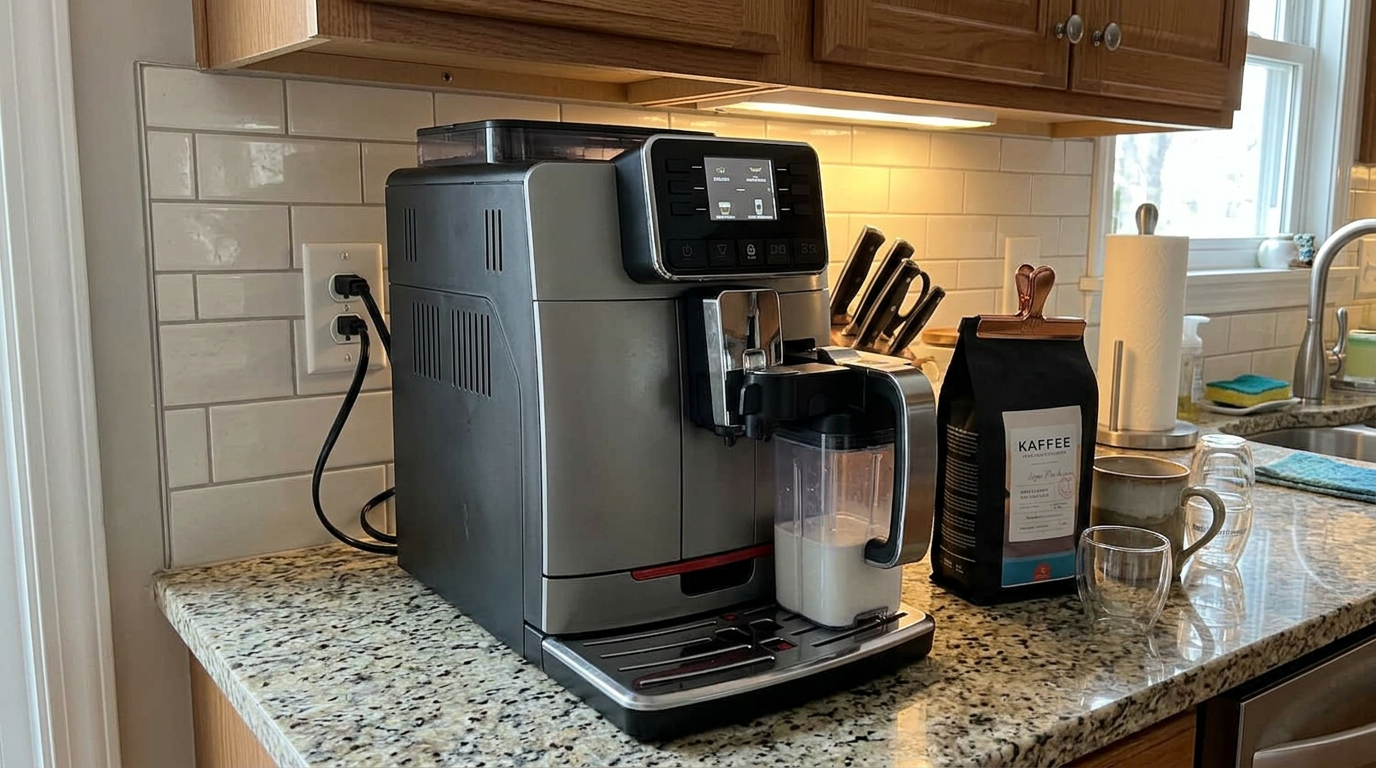
The Gaggia Cadorna Prestige is narrower at about 10.2 inches but taller at about 15 inches. Its water tank and puck drawer load from the front, which made it easier to slot between other appliances.
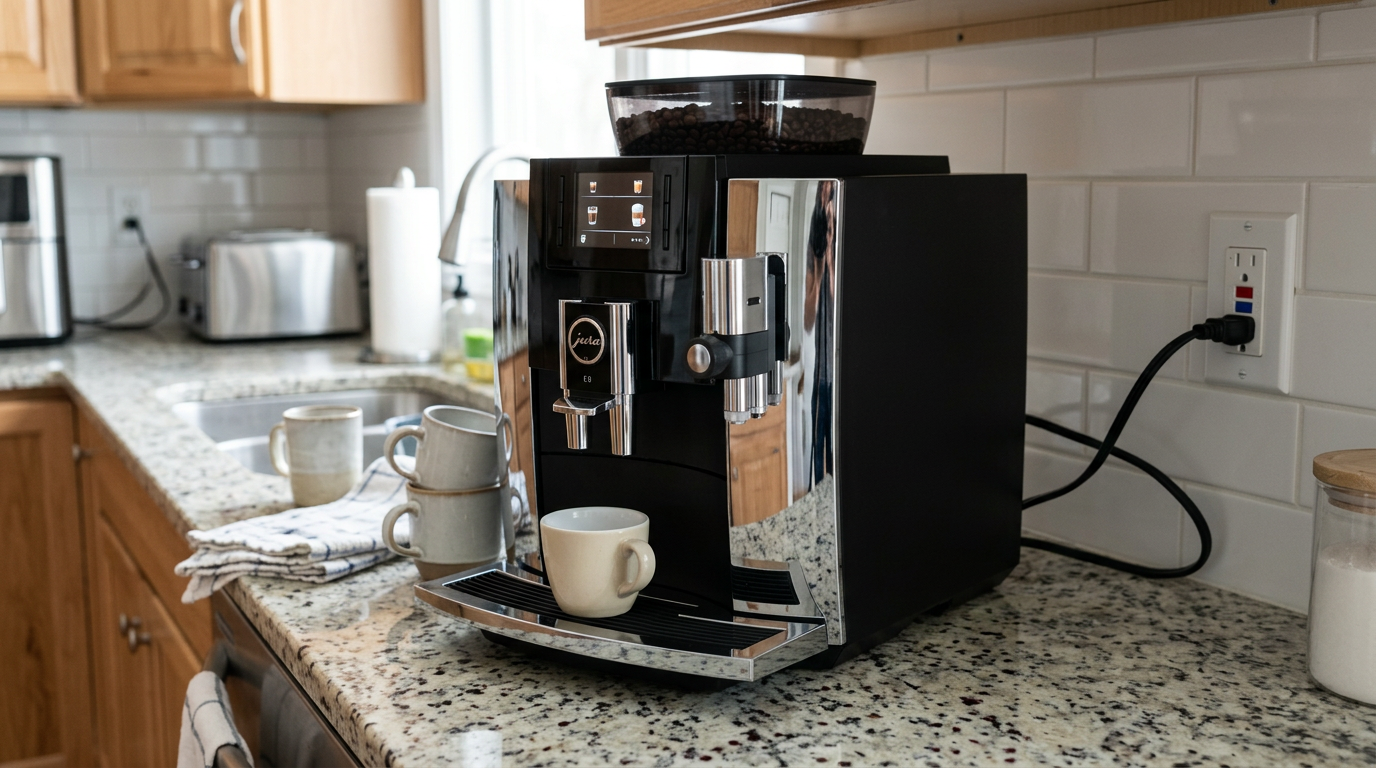
The Jura E8 is the more polished-looking machine, with a chrome-look front and cup light.
Both are mostly plastic on the outside. The Jura felt slightly denser and more premium in the hand, while the Gaggia’s front-loading parts felt more practical day to day.
Weight is close: about 21.2 lb for the Jura and about 20.5 lb for the Gaggia.
Height under your cabinets
Leave room above the hopper lid for refilling beans.
Our tip: Measure the gap under your wall cabinets before buying the Gaggia, because its extra 1.2 inches of height is the one place it can catch you out.
Setup and the first week
Both machines were drinking-ready in about ten minutes. You test the water hardness, enter it, rinse the system and pull a few test drinks.
The Jura recognizes its CLEARYL Smart+✕CLEARYL Smart+ filterJura’s water filter cartridge. It sits in the water tank and removes minerals and off-flavors, so the machine needs descaling far less often. filter automatically and keeps track of it from then on. On the Gaggia, you tell the machine you have fitted a filter, and it counts down from there.
I also set the Gaggia’s automatic standby, which can be anywhere from 15 minutes to 3 hours after the last drink. The Jura uses 0 W in standby, which I appreciated.
| Setup step | Jura E8 | Gaggia Cadorna Prestige |
|---|---|---|
| Water hardness | Test strip, entered on screen | Test strip, entered on screen |
| Filter | Detected automatically | Activated in the menu |
| Heat-up | Fast thermoblock | Quick-heat boiler, under 60 seconds |
| First good drink | Around the fourth cup | Around the third cup |
Our tip: Throw away the first three or four drinks on either machine, because the grinder needs a few cycles to clear factory test coffee.
Screen, buttons and smart features
Neither machine uses a touchscreen, and both were easy for everyone in my house.
The Jura E8 has a 3.5-inch color display flanked by real buttons, each one controlling the drink next to it. You can change strength and size while a drink is being made, and the J.O.E. app lets you start drinks from your phone.
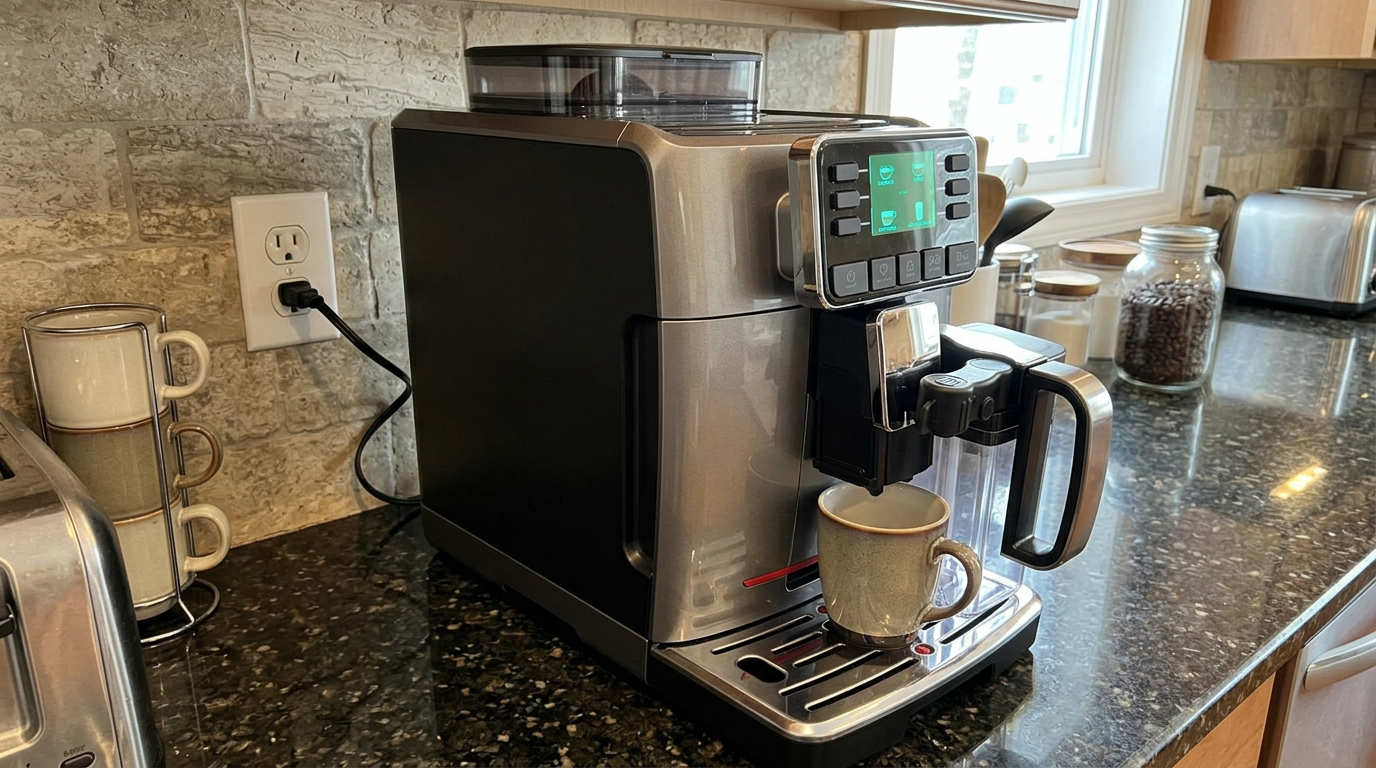
The Gaggia Cadorna Prestige uses a color display with buttons too, and its standout feature is four color-coded user profiles. Each person saves their own strength, size and temperature for every drink.
The Gaggia’s color-coded profiles mean nobody overwrites anybody else’s favorite drink.
| Feature | Jura E8 | Gaggia Cadorna Prestige |
|---|---|---|
| Display | 3.5-inch color, buttons | Color display, buttons |
| User profiles | No | 4 |
| App | J.O.E., remote start | No |
| Maintenance view | Full dashboard | Menu alerts |
| Change a drink mid-brew | Yes | Yes |
| Cup light | Yes | No |
For a couple, the Jura’s polish is lovely. For a family of four with four different favorite drinks, the Gaggia’s profiles saved more arguments.
Grinder and dose
Here the brands take different paths. Jura uses steel conical burrs✕Conical burrsTwo cone-shaped grinding parts, one inside the other. Beans are crushed between them, and the gap between the burrs sets how fine the coffee is. in its Professional Aroma Grinder. Gaggia uses ceramic burrs✕Ceramic burrsGrinding parts made of ceramic instead of steel. They stay cooler, run quieter and keep a sharp edge for many years..
The Jura E8 takes between 5 and 16 grams of coffee per brew, so a full double shot or a 12-ounce mug comes from one pass of the grinder.
The Gaggia offers five strength levels, which my scale put at about 6.5 to 11.3 grams. It grinds a second time for its double drinks, rather than stretching a single dose.
Maximum dose per brew
Measured on my kitchen scale at the strongest settings.
On paper, the Jura’s bigger dose should win. In the cup, the Gaggia still tasted fuller, which I put down to its grind going finer and its pre-infusion working well with medium-dark beans.
The Jura’s finest setting felt a touch coarse for a really heavy espresso, especially with lighter roasts.
Our tip: Turn the grind dial only while the grinder is running on either machine, because adjusting it with the burrs stopped can jam beans and strain the motor.
Espresso quality
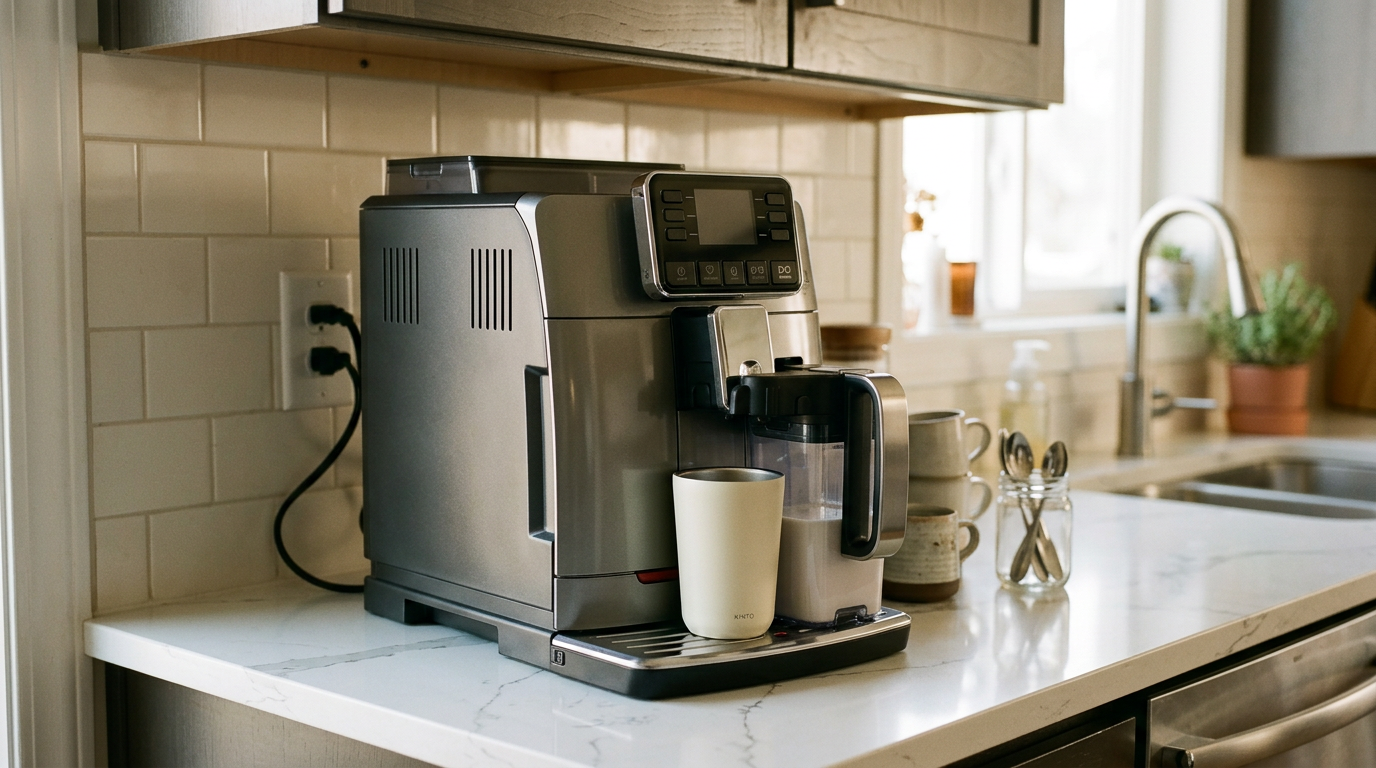
With the same medium-dark blend in both machines, the Gaggia pulled the better espresso of the two.
Its shot had a fuller body and a thick, hazelnut-colored crema, with flavors of toasted nuts and dark chocolate. The bitterness stayed low, even on the strongest setting.
The Jura’s espresso was smooth, with an even crema and mild chocolate notes. It weighed about 29 grams from a 15-gram dose, a classic 1:2 ratio, but the body was a little thin for my taste.
The Gaggia’s espresso had the fuller body and thicker crema with the same beans.
My espresso ratings
My scores out of 10 for body, crema, flavor and consistency.
| What you taste | Likely cause | First fix on either machine |
|---|---|---|
| Sour, thin, watery | Under-extracted✕Under-extractionWhen water does not pull enough flavor out of the coffee. The shot tastes sour, thin and watery. | Grind one step finer or raise strength |
| Bitter, harsh, drying | Over-extraction | Grind one step coarser |
| Pale crema that fades fast | Stale beans | Use beans within a few weeks of roasting |
| Lukewarm shot | Cold cup | Warm the cup with hot water first |
Americano and long coffee
Both brands make a proper americano✕AmericanoEspresso topped up with hot water. Because the water is added afterwards instead of being pushed through the coffee, it keeps more sweetness and less bitterness.: a concentrated espresso first, then clean hot water through a separate path that bypasses the coffee.
On the Gaggia, my americano kept its crema and tasted round and sweet. On the Jura, the long coffee at its highest temperature became my favorite mug of the month, with a dense crema and a soft, almond-like sweetness.
So black coffee in a mug is a near tie. The Gaggia’s americano was slightly fuller; the Jura’s long coffee was slightly more consistent.
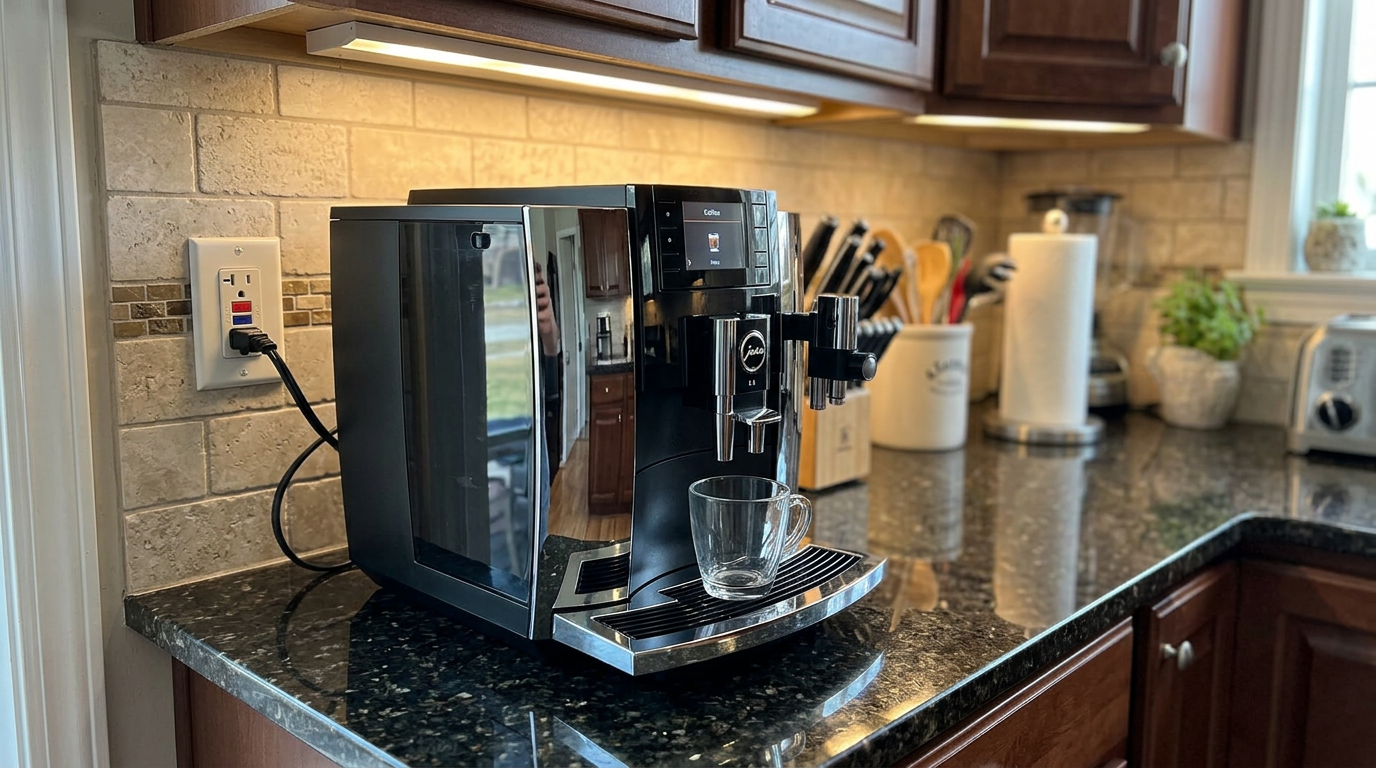
The Jura’s long coffee was its most consistent drink all month.
See Today’s PriceMilk drinks
This is the biggest day-to-day difference between the two machines, and the reason the Gaggia wins my vote for most homes.
Gaggia: a carafe and hot, creamy foam
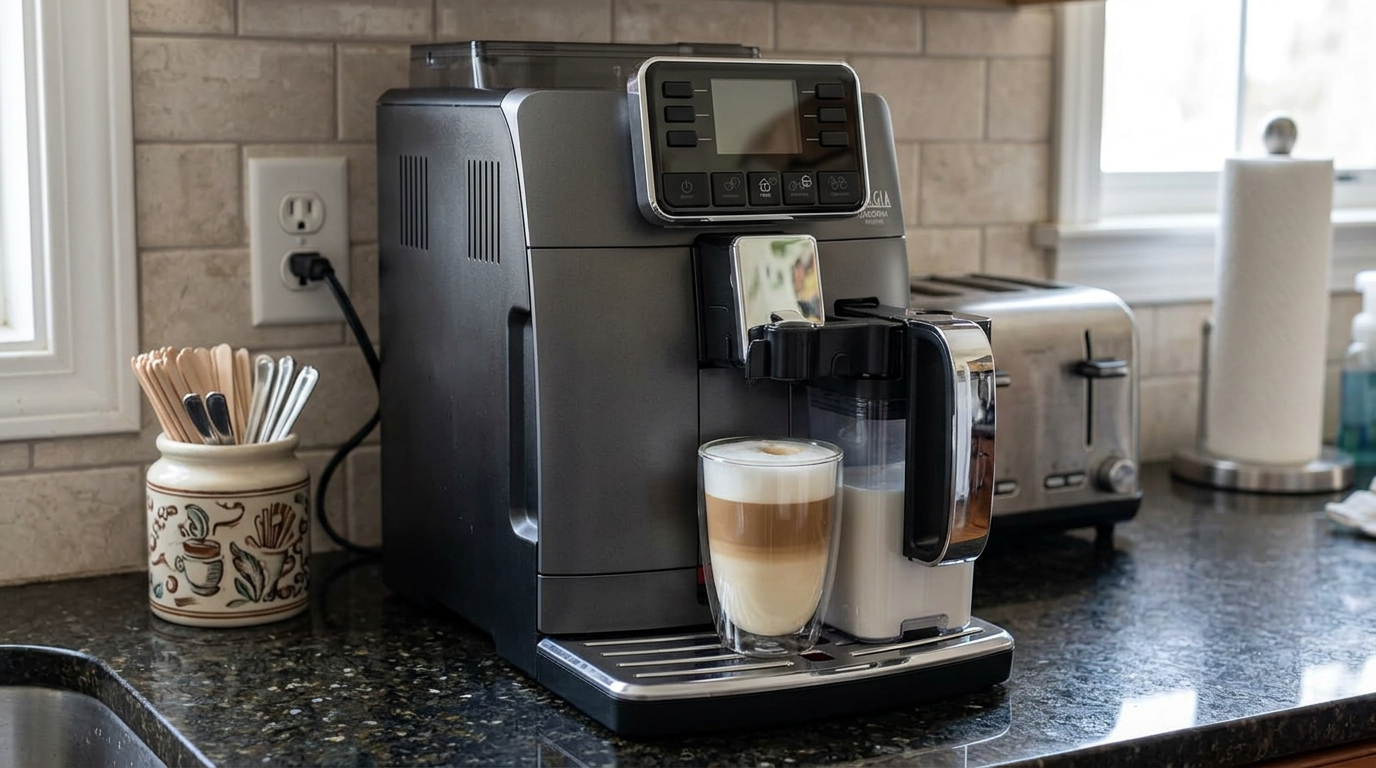
The Cadorna Prestige uses a clip-on milk carafe that holds about 20 ounces. You fill it, click it onto the front and press cappuccino or latte macchiato, and it pours foam straight into your cup.
Milk came out at about 155°F, hot enough for a satisfying latte but below the point where milk starts tasting cooked. The foam was dense and creamy, and the carafe went back into the fridge between uses.
The Gaggia’s carafe made the hottest, creamiest milk drinks of the two.
Jura: silky microfoam, cooler milk
The Jura E8 draws milk through a hose from a carton or container. Inside its frothing head, steam creates suction through the Venturi effect✕Venturi effectWhen steam rushes through a narrow channel, it creates suction. Jura frothers use it to pull milk up the hose and mix in air. and makes dense, silky microfoam✕MicrofoamMilk foam with bubbles so small you can barely see them. It feels silky and glossy, which is what a good flat white or cappuccino needs..
The texture was lovely, and the E8 makes a one-touch flat white, latte macchiato and cortado that the Gaggia cannot. The catch was temperature: my frothed milk measured about 122°F, which felt cool in a cold cup.
Milk temperature, measured
Probe thermometer in the cup, straight after the drink finished.
| Milk drink | Jura E8 | Gaggia Cadorna Prestige |
|---|---|---|
| Cappuccino | One touch, extra-shot option | One touch |
| Latte macchiato | One touch | One touch |
| Flat white | One touch | No |
| Cortado | One touch | No |
| Milk foam only | Yes | Yes |
| Milk storage | Carton with hose | Carafe in the fridge |
| Milk temperature | About 122°F | About 155°F |
Our tip: Use milk straight from the fridge at 40°F or colder, because warm milk foams with big, loose bubbles on both machines.
Hot water and tea
If someone in your home drinks tea, the Gaggia is the better partner.
Its hot water comes out hotter and you can choose between three temperatures, which suits green, herbal and black tea.
The Jura E8’s hot water topped out at about 176 to 185°F in my cups. That is fine for green and white tea, but a little cool for strong black tea, which wants water close to boiling.
| Tea type | Ideal water | Jura E8 | Gaggia Cadorna |
|---|---|---|---|
| Green tea | 158–176°F | Yes | Yes, low setting |
| White tea | 167–185°F | Yes | Yes |
| Herbal tea | 194–212°F | Fair | Yes, high setting |
| Black tea | 203–212°F | A bit cool | Good |
Our tip: Swap to a clean spout or rinse the outlet before making tea, so there is no trace of milk in the cup.
Cleaning and the brew unit
This is where the two brands truly differ in philosophy.
The Jura’s brew unit✕Brew unitThe part inside a super-automatic that compresses the ground coffee, holds it while water passes through and then ejects the used puck. stays inside the machine. You never touch it; instead, the machine asks for a cleaning cycle and you drop in a tablet when prompted.
The Gaggia’s brew group slides out from the side. I rinsed it under the tap once a week and let it air-dry, and roughly once a month I added a thin layer of food-safe grease to its moving parts.
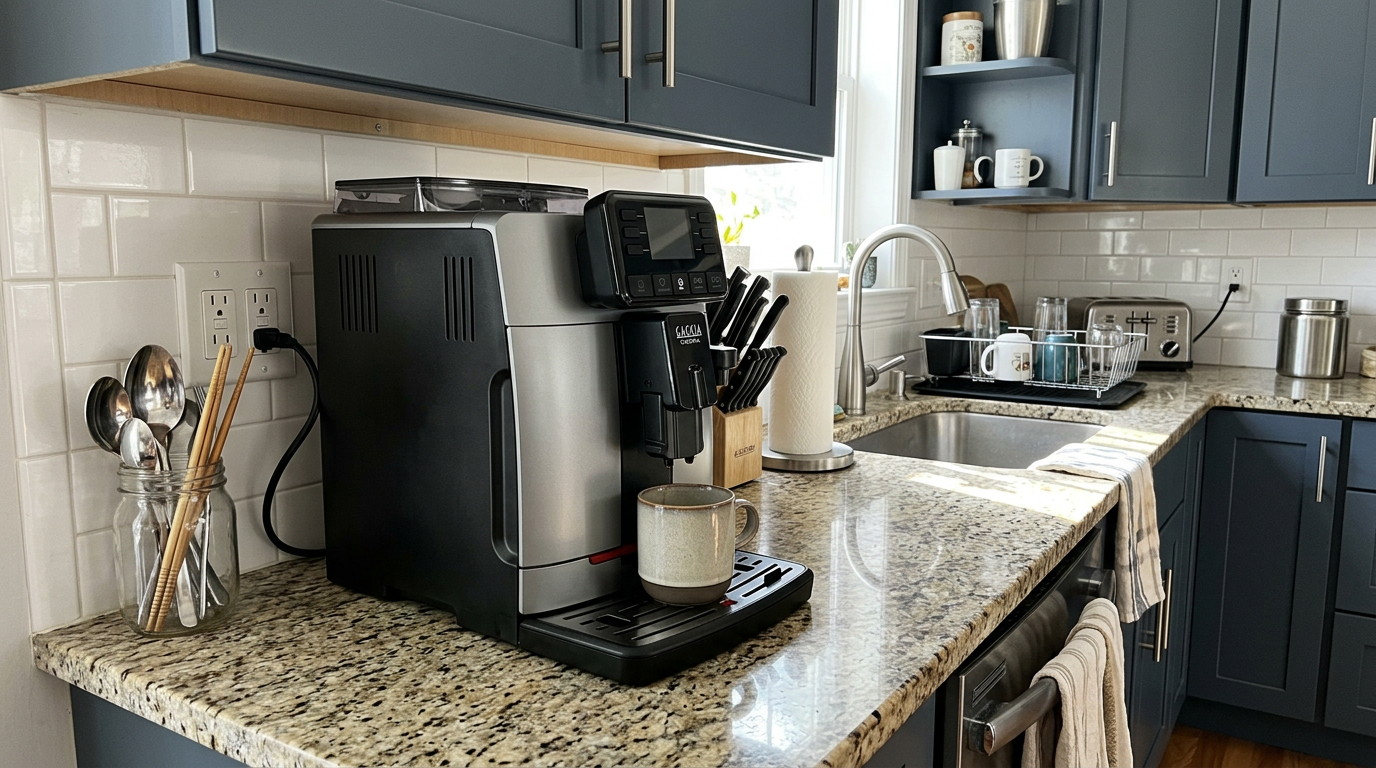
The Gaggia’s brew group slides out for a weekly rinse, so you can see exactly how clean it is.
Both approaches work. The Jura asks for fewer chores; the Gaggia lets you see and fix things yourself, which some owners value over many years.
On the milk side, the Gaggia’s carafe has a quick clean function and comes apart for the dishwasher. The Jura prompts you to rinse its milk system after milk drinks and runs a deeper clean with a tablet once a week.
My daily hands-on cleaning time
Plus about 5 minutes a week for the Gaggia’s brew group.
| When | Jura E8 | Gaggia Cadorna Prestige |
|---|---|---|
| After milk drinks | Rinse when prompted | Quick-clean the carafe |
| Daily | Empty tray and grounds | Empty tray and puck drawer |
| Weekly | Deep milk clean with a tablet | Rinse the brew group, wash the carafe |
| Monthly | Brew unit tablet when prompted | Grease the brew group |
| Descaling | Rarely with the filter | When prompted |
Our tip: Put a calendar reminder in for the Gaggia’s brew group rinse, because it is the one chore the machine does not ask you to do.
Noise
The Gaggia was the quieter machine overall. Its ceramic burrs make a softer, lower grinding sound, and the brew group moves with a gentle thud.
The Jura’s grinder is quick, but the gears that move its brew unit make a noticeable mechanical clunk during preparation and again when the puck drops.
In a busy kitchen you will not notice either. In an open-plan apartment at 6 a.m., you will notice the Jura more.
How loud each felt, my ranking
Relative loudness from side-by-side use. Shorter bars are quieter.
Ownership, supplies and long-term care
Owning a super-automatic is a long relationship, and the brands ask for different things over the years.
Jura machines run on Jura filters, cleaning tablets and milk system cleaner, and the E8 tracks all of it for you. When something does go wrong, the sealed design usually means a trip to a service center.
Gaggia machines use a water filter, descaler and brew group grease. Because the brew group comes out, many small issues can be solved at home with a rinse.
| Long-term item | Jura E8 | Gaggia Cadorna Prestige |
|---|---|---|
| Water filter | CLEARYL Smart+, auto-detected | Brand filter, set in the menu |
| Brew unit care | Cleaning tablets | Rinse weekly, grease monthly |
| Milk system care | Milk cleaner, hose change every 3 months | Carafe in the dishwasher |
| Home fixes | Limited | Many |
| Warranty | Check your retailer | 2 years |
Drinks per full water tank
Rough maths allowing for rinse water. The Jura’s tank is 13 oz bigger.
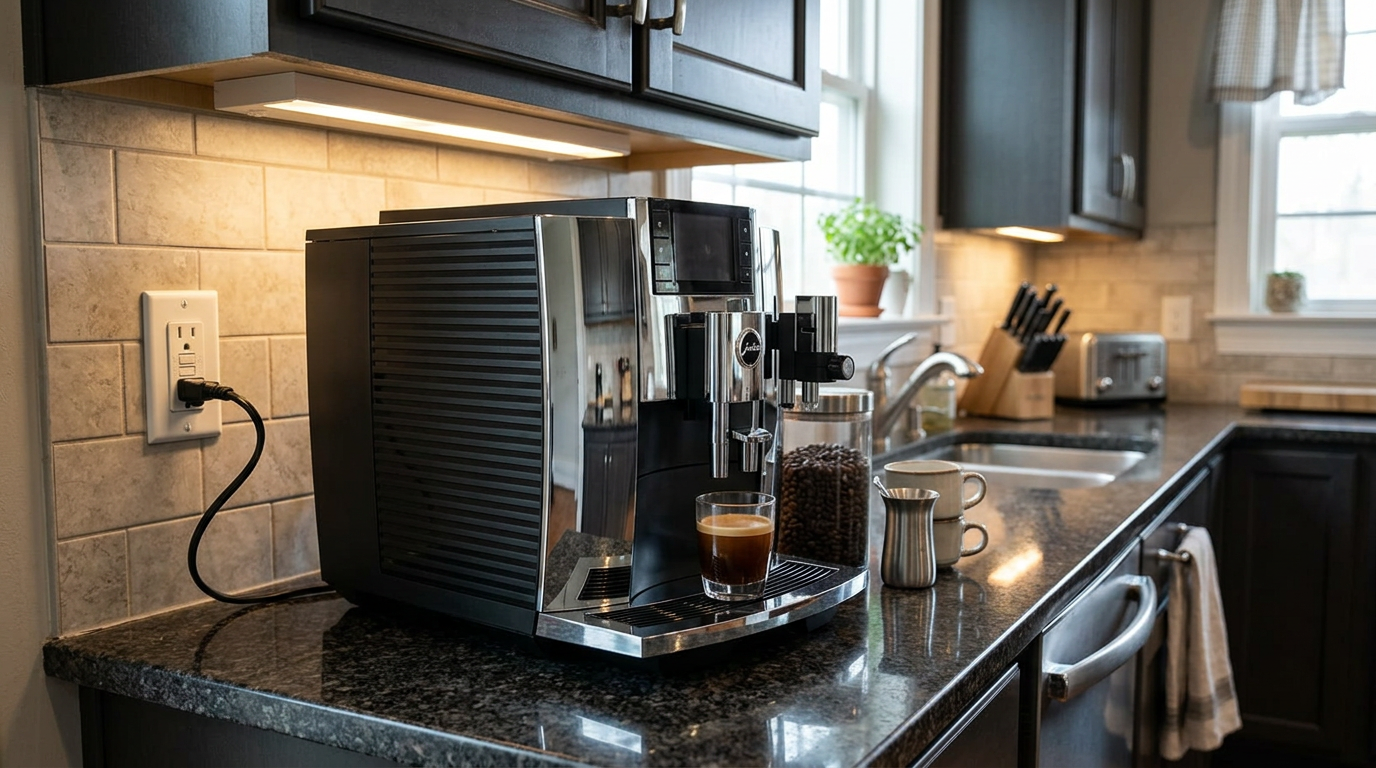
The Jura’s 64 oz tank on the side lasted noticeably longer between refills.
Our tip: Buy beans you can finish within two or three weeks of the roast date, because both grinders show off fresh coffee far better than stale.
Real-life scenarios
These are the moments where one brand clearly pulled ahead during my month with each machine.
Milk at about 155°F stayed hot to the last sip. The Jura’s needed a pre-warmed cup.
One touch, silky microfoam and an extra-shot option. The Gaggia has no flat white button.
Four color-coded profiles kept everyone’s strength and size saved.
Automatic filter detection, a sealed brew unit and a dashboard that shows every task.
The fuller body and thicker crema felt more like a café espresso.
The J.O.E. app started grinding within about a second of pressing start.
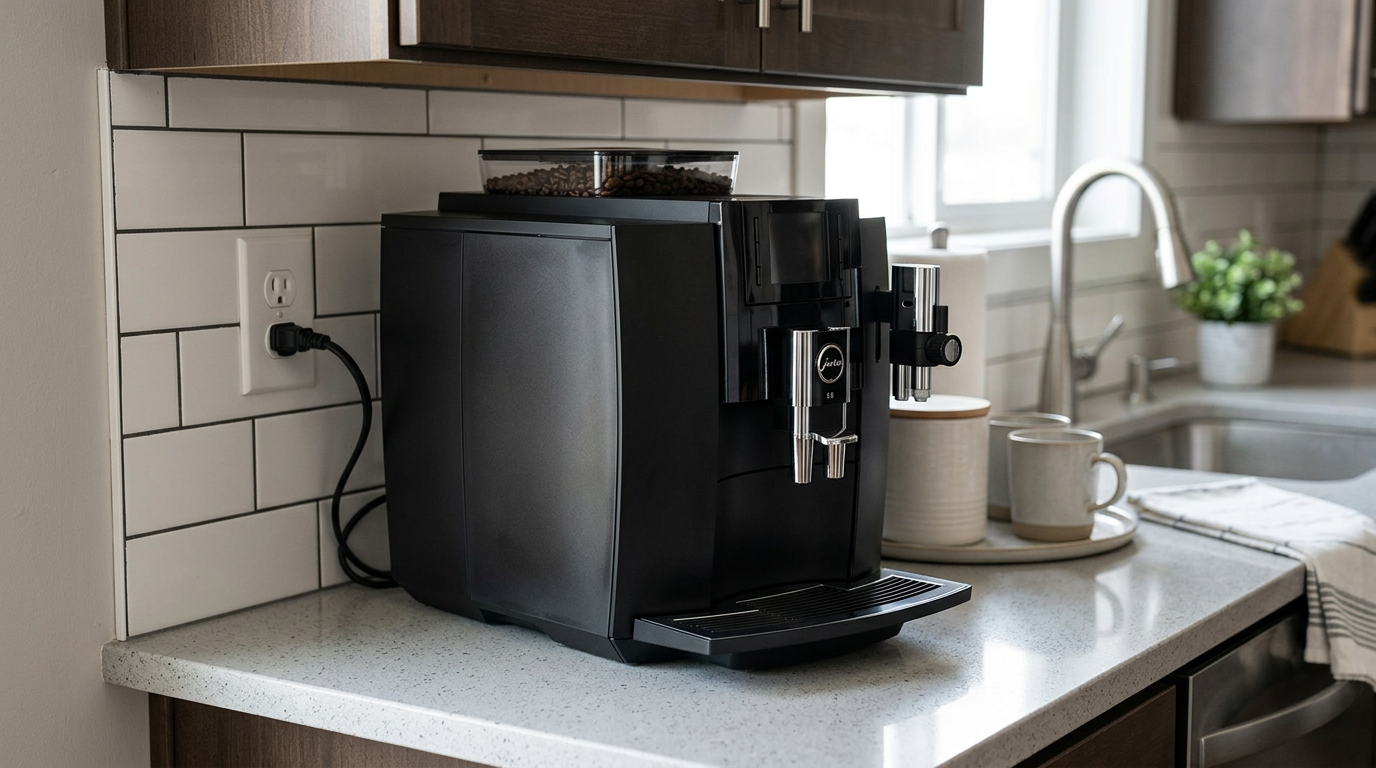
For flat whites and app control, the Jura still has a clear edge.
Four weeks with each: my diary notes
Spec sheets do not tell you how a machine feels in week three, when the novelty has worn off. These are the notes I kept while living with each one.
Jura E8
Week 1: The menu impressed everyone. My partner went straight for the flat white, my teenager discovered the cortado, and I spent the week dialing in espresso with medium-dark beans.
Week 2: The milk temperature started to bother me. I began pre-warming cups with hot water, and from then on the cappuccinos were much more enjoyable.
Week 3: The maintenance dashboard proved its worth. It showed the filter at about two-thirds life and the milk clean coming up, so nothing caught me by surprise.
Week 4: The long coffee had become my default morning mug. I barely touched the settings, and the machine just kept producing the same cup every day.
Gaggia Cadorna Prestige
Week 1: Setting up four profiles took about ten minutes, and it was the best ten minutes of the month. Everyone had their own saved drink by the first weekend.
Week 2: The first brew group rinse took under five minutes. Seeing it clean, rather than trusting a tablet, was oddly reassuring.
Week 3: Hot lattes were the household favorite. Guests commented on how hot and creamy the milk was without any prompting from me.
Week 4: I greased the brew group for the first time, which took a couple of minutes. The espresso still tasted as full as it did on day three.
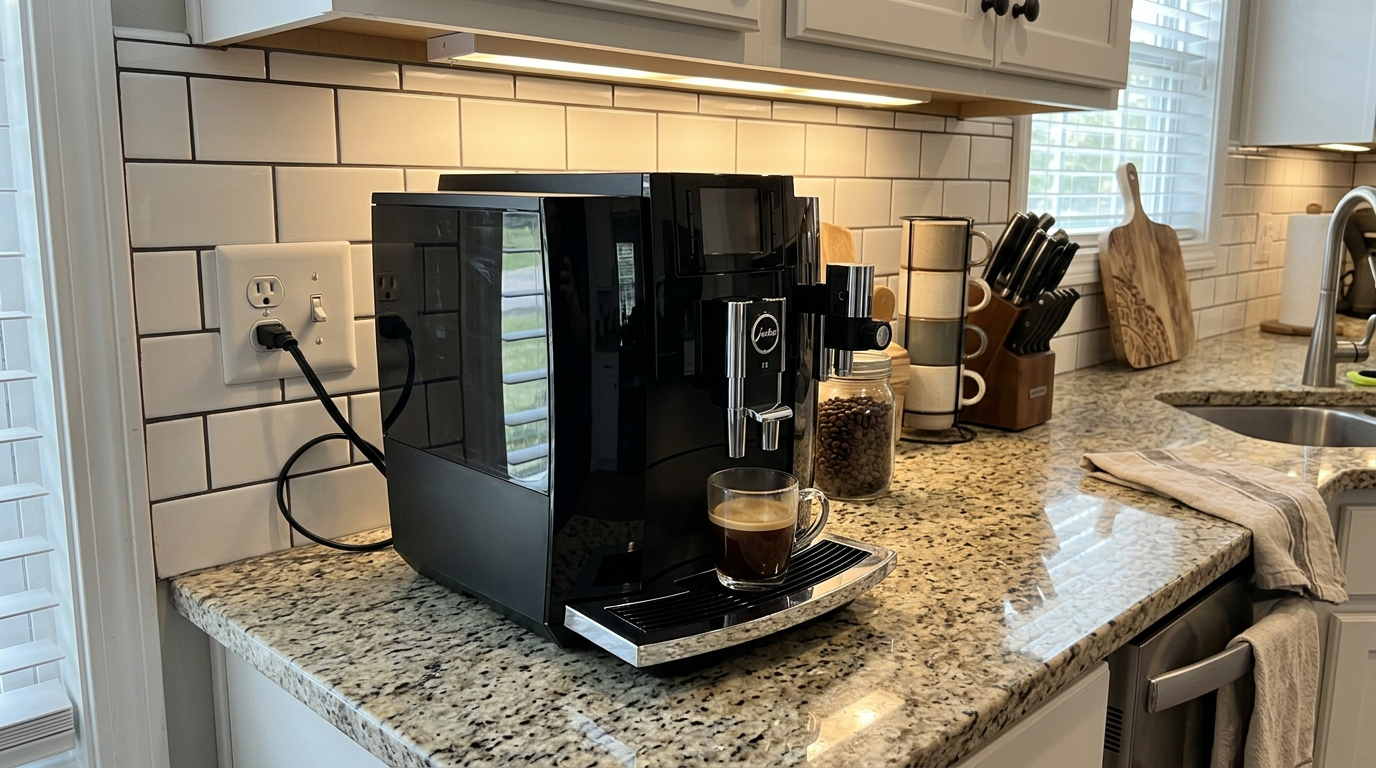
By week four, the Jura had settled into an easy, consistent routine.
| Week | Jura E8 highlight | Gaggia highlight |
|---|---|---|
| 1 | 17-drink menu | Four saved profiles |
| 2 | Pre-warmed cups fixed cool milk | First brew group rinse |
| 3 | Dashboard showed every task | Hot lattes won the family over |
| 4 | Long coffee became the default | Espresso stayed full and sweet |
The overall feeling after a month matched my scores. The Jura felt like a premium appliance that runs itself. The Gaggia felt like a proper Italian espresso machine that happens to be automatic.
My scorecard
These are my own scores out of 10. The first four come from my single reviews of each machine, and I added drink range and tea water because they decide this brand matchup.
Gaggia Cadorna Prestige
Jura E8
Overall, I rate the Gaggia 8.6 and the Jura 8.1. The Gaggia makes the better coffee and hotter milk; the Jura makes more drinks with fewer chores.
See How Much You’ll SaveWhich one is right for you?
4 quick questionsWhich one should you buy?
It comes down to two things: how hot you like your milk, and how you feel about maintenance. If you want hot lattes and do not mind rinsing a part once a week, buy Gaggia. If you want flat whites and zero fuss, buy Jura. For the wider picture beyond this matchup, see my guide to the best Jura coffee machines.
To see how Jura stacks up against other brands, read my Jura vs De’Longhi, Jura vs Miele and Jura vs Breville comparisons. Within Gaggia, my Cadorna Prestige review and Magenta Prestige review go deeper.
For hot milk drinks and shared kitchens, the Gaggia earns its place on the counter.
- You want hot lattes and cappuccinos
- Several people share the machine
- You want the fuller espresso
- You like being able to clean the brew group yourself
- You want a one-touch flat white or cortado
- You never want to touch the insides
- You want app control
- You love flat whites and cortados
- You want the least maintenance possible
- You like app control and a maintenance dashboard
- You want the bigger water tank
- You like very hot lattes
- You drink strong black tea from the machine
- You want user profiles
For most homes, my pick is the Gaggia Cadorna Prestige. It made the better espresso, the hotter and creamier milk, and its four profiles made it the easier machine to share. Rinsing its brew group once a week is a small price for that.
The Jura E8 is the better buy if you want the most polished experience. Seventeen drinks, a real flat white, automatic filter tracking and a sealed brew unit make it the machine that asks the least of you. Pre-warm your cups and it fixes its biggest weakness.
Whichever brand you choose, buy fresh whole beans, use cold milk and keep up with the small weekly care. Both reward it with years of good coffee.
Jura E8 vs Gaggia Cadorna Prestige specifications
From manufacturer specifications and my own testing.
| Jura E8 | Gaggia Cadorna Prestige | |
|---|---|---|
| Model | 15648 | RI9604/47 |
| Type | Fully automatic with milk system | Super-automatic with milk carafe |
| One-touch drinks | 17 | 14 |
| Heating | Thermoblock | Quick-heat boiler |
| Pump pressure | 15 bar | 15 bar |
| Extraction | Pulse Extraction Process | Pre-infusion |
| Grinder | Steel conical burrs | Ceramic burrs, 10 settings |
| Dose | 5–16 g | About 6.5–11.3 g, 5 levels |
| Milk system | Hose, fine-foam spout | Clip-on carafe, about 20 oz |
| Milk temperature (measured) | About 122°F | About 155°F |
| User profiles | No | 4 |
| Display | 3.5-inch color with buttons | Color display with buttons |
| App | J.O.E. | No |
| Brew unit | Sealed | Removable |
| Bean hopper | About 10 oz | About 10.6 oz |
| Water tank | About 64 oz, side | About 51 oz, front |
| Grounds container | About 16 servings | About 10 pucks |
| Dimensions (W x H x D) | 11 x 13.8 x 17.6 in | 10.2 x 15 x 17.3 in |
| Weight | About 21.2 lb | About 20.5 lb |
How I tested and compared them
Michael Reynolds here. I used each machine as my everyday coffee maker for four weeks, making espresso, americanos, long coffees, cappuccinos, lattes and tea water, plus flat whites and cortados on the Jura.
I weighed doses and yields, measured milk and hot water temperatures with a probe thermometer, worked through the grind range and foamed whole, semi-skimmed and oat milk.
I ran every cleaning routine, rinsed and greased the Gaggia’s brew group, and then compared my notes with each brand’s specifications and owner documentation.
- Coffee: dose, crema, body and consistency.
- Milk: foam texture, temperature and drink range.
- Workflow: controls, profiles, app and daily routine.
- Ownership: noise, cleaning, brew unit care and supplies.
Jura vs Gaggia FAQ
Is Jura better than Gaggia?
Not across the board. In my testing, the Gaggia Cadorna Prestige made fuller espresso and hotter milk than the Jura E8, while the Jura made more drinks, tracked its own filter and needed fewer chores. Jura is more polished; Gaggia is more practical.
Why is Jura more premium than Gaggia?
Jura makes only automatic coffee machines, with Swiss engineering, a sealed brew unit, Pulse Extraction and features like automatic filter detection and app control. You pay for polish and low maintenance more than for better coffee.
Which brand makes hotter milk?
Gaggia. My Cadorna Prestige poured milk at about 155°F, while the Jura E8 measured about 122°F.
Can you remove the brew unit on a Jura?
No. Jura brew units stay inside the machine and are cleaned with tablets when prompted. Gaggia brew groups slide out so you can rinse them yourself.
How often do you clean a Gaggia brew group?
I rinsed it under the tap once a week and added food-safe grease roughly once a month.
Which is quieter, Jura or Gaggia?
The Gaggia, in my testing. Its ceramic burrs sound softer, and the Jura E8’s brew gears make a noticeable clunk.
Does Gaggia make a flat white?
The Cadorna Prestige does not have a one-touch flat white. The Jura E8 has one, along with a cortado.
Which is better for tea?
The Gaggia. Its hot water is hotter and comes at three temperatures. The Jura E8 topped out around 176 to 185°F in my tests.
Do Jura machines have user profiles?
The E8 does not. The Gaggia Cadorna Prestige has four color-coded profiles.
Which brand is easier to own long term?
Jura asks for fewer chores and tracks maintenance for you, but repairs usually mean a service center. Gaggia asks for a weekly rinse, but many small issues can be fixed at home.

- Our hands-on Jura E8 review
- Our hands-on Gaggia Cadorna Prestige review
- Our hands-on Jura E6 review
- Our hands-on Gaggia Magenta Prestige review
- Jura and Gaggia product specifications and owner documentation