Jura E8 vs Philips 5500: is the premium worth paying for?
The Jura E8 is a Swiss-engineered benchmark with 17 drinks, real buttons and automatic filter tracking. The Philips 5500 costs far less and answers with 20 hot and iced drinks, four profiles, a tube-free LatteGo carafe that rinses clean in about 10 seconds and a brew group you can pull out and wash. I used both every day for four weeks to see whether the premium name still earns its place.
We choose products independently. We may earn a commission through links on this page; your price stays the same. Affiliate policy
Jargon helpNew to espresso? Tap any dotted term to see what it means.
In this comparison
For most homes, buy the Philips 5500. In my testing, its milk drinks came out far hotter, its LatteGo carafe was the fastest milk system to clean I’ve used, it saves four profiles, it makes iced drinks and it’s quieter, smaller and lighter. Its espresso is light, but so is the E8’s. Buy the Jura E8 if you want the more premium build, the clearest buttons, a bigger tank and grounds bin, a filter the machine tracks on its own and the best long coffee of the two, and you don’t mind pre-warming cups for milk drinks.
The two machines
Specs checked November 14, 2026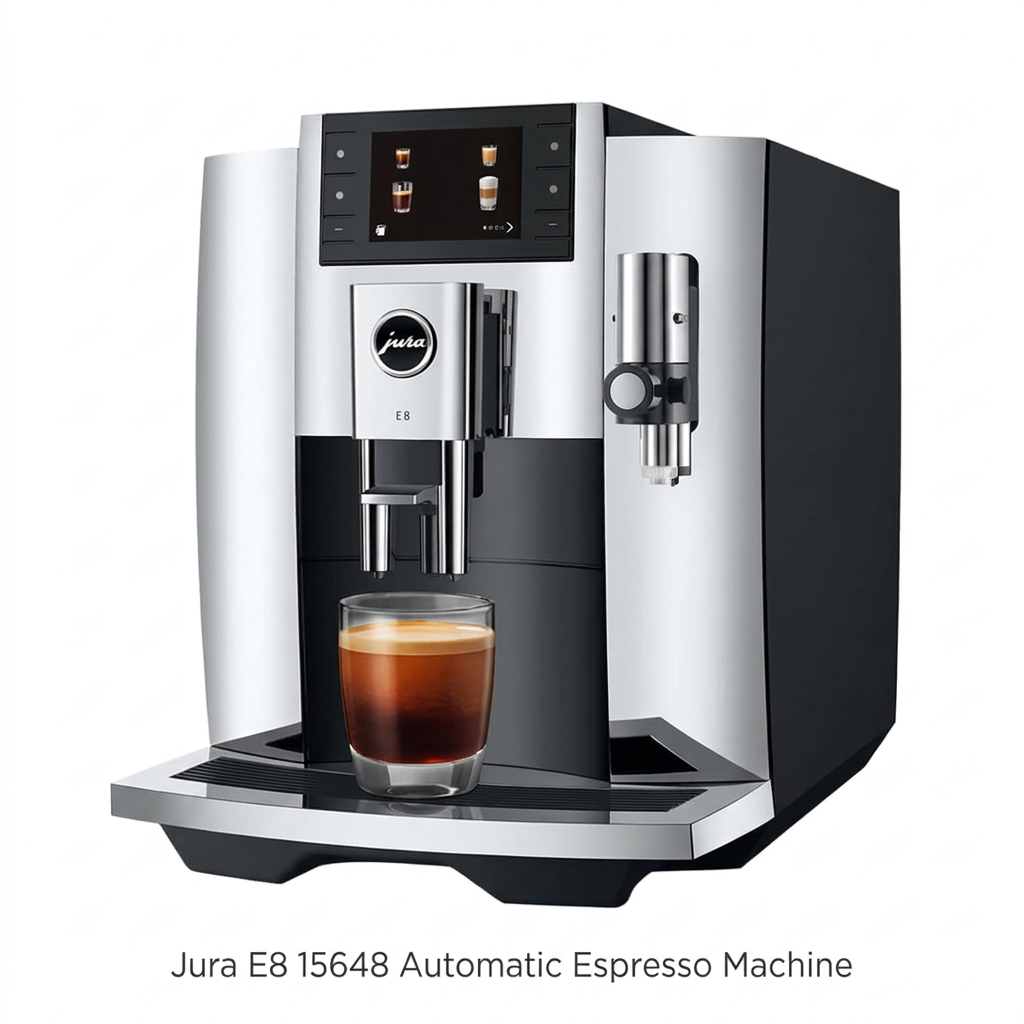
17 one-touch drinks, dense silky foam, a 3.5-inch display with real buttons, J.O.E. app control and automatic filter tracking.
Check price on Amazon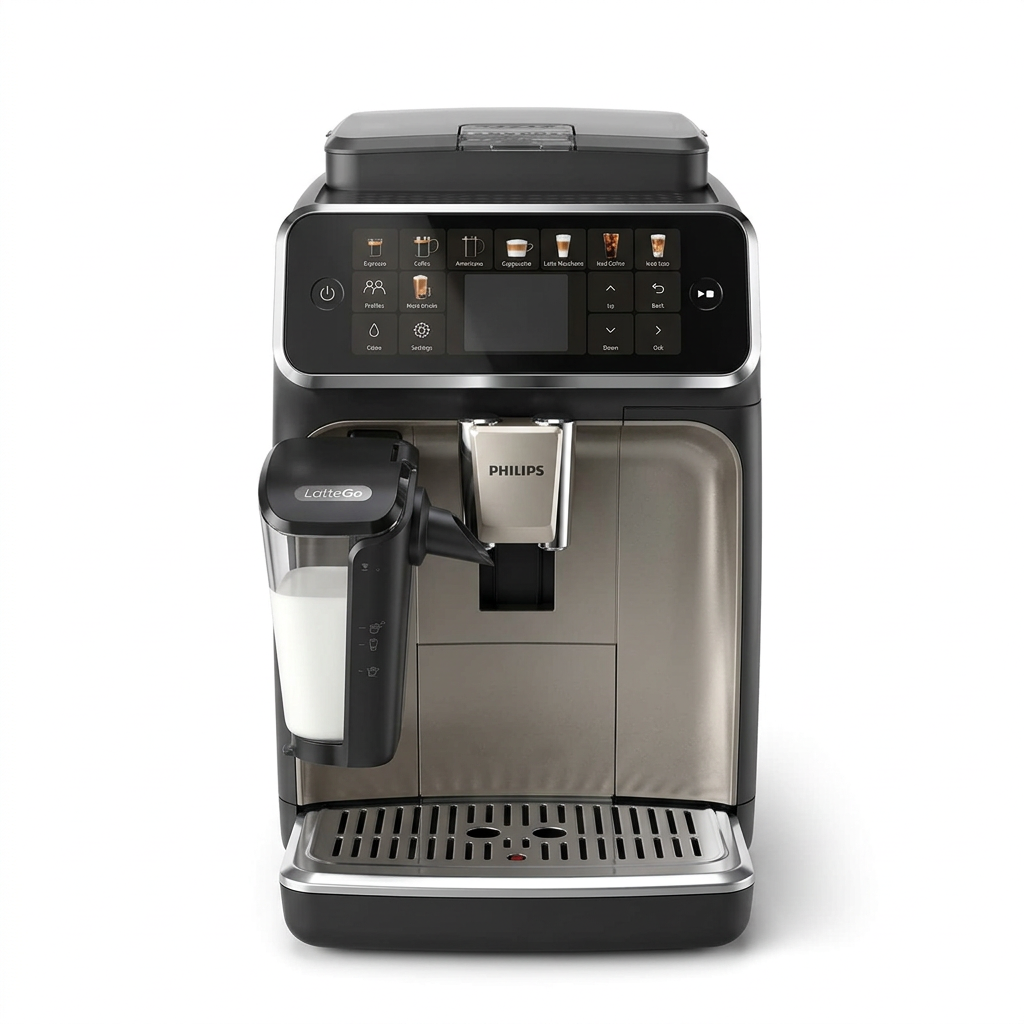
20 hot and iced drinks, four profiles, a tube-free LatteGo carafe, quiet ceramic grinder and a removable brew group.
Reveal Today’s DealJura E8 vs Philips 5500 at a glance
- Buy the Philips 5500 if you drink milk drinks, share the machine or want iced coffee.
- Buy the Jura E8 if you value build quality, button simplicity and the best long coffee.
- Neither makes a heavy espresso; both pull smooth, lighter shots, and the Philips scored a touch higher.
- The Philips’ brew group comes out for rinsing; the Jura’s stays sealed inside.
Head to head
The better result in each row is marked, based on my testing and the manufacturer specs. Rows where the two are level have no winner.
The tally is not my verdict, but in this matchup it points the same way.
| Spec | Jura E8 | Philips 5500 |
|---|---|---|
| Espressomy score | 8.0, smooth, a touch light | 8.2, soft, gentle crema ✓ Best |
| Milk drinks score | 7.8 | 8.8 ✓ Best |
| Milk temperature | About 122°F in the cup | About 167°F at the spout ✓ Best |
| Milk cleaning | Daily take-apart frother rinse | Two-part carafe, about 10 seconds ✓ Best |
| One-touch drinks | 17 | 20, hot and iced ✓ Best |
| User profiles | None | 4 plus guest ✓ Best |
| Iced drinks | By hand | One-touch iced recipes ✓ Best |
| Long coffee | Hot, lasting crema ✓ Best | Lighter |
| Controls | 3.5-inch display, real buttons | Color display with buttons |
| Filter tracking | Automatic CLEARYL Smart+ | AquaClean filter |
| Brew unit | Sealed | Removable brew group ✓ Best |
| Grinder | Steel conical, 5–16 g | Ceramic flat, 12 settings |
| Water tank | About 64 fl oz ✓ Best | About 61 fl oz |
| Grounds container | About 16 pucks ✓ Best | About 12 pucks |
| Noise | Louder brew gears | About 60 dB, lid closed ✓ Best |
| Weight | About 21.2 lb | About 17.6 lb ✓ Best |
| Rows won | 3 | 10 |
Jura E8 vs Philips 5500 pros and cons
Jura E8
- Premium build with the clearest button controls I’ve used
- Dense, silky microfoam and a great long coffee
- Automatic filter tracking and a 16-puck grounds bin
- Milk comes out at about 122°F
- Brew unit is sealed and the mechanism is fairly loud
- No profiles and no iced drinks
Philips 5500
- Two-part LatteGo carafe cleans in about 10 seconds
- 20 hot and iced drinks with four saved profiles
- Quiet grinding at around 60 dB, removable brew group
- Espresso is lighter than a café shot
- Iced drinks are brewed warm and poured over ice
- Fixed milk spout means cup placement matters
Who should buy which machine?
- Buyers who want premium build and a classic look
- Long coffee and americano drinkers
- Anyone who wants the biggest bins and zero filter tracking
- Families who drink hot milk drinks every day
- Anyone who hates cleaning milk systems
- Iced coffee fans and households with several profiles
Design, size and build
The Jura E8 looks and feels like the more expensive machine. Its chrome-look panel frames the spouts, a small light switches on above the cup grille whenever a drink starts, and it’s engineered in Switzerland and made in Portugal.
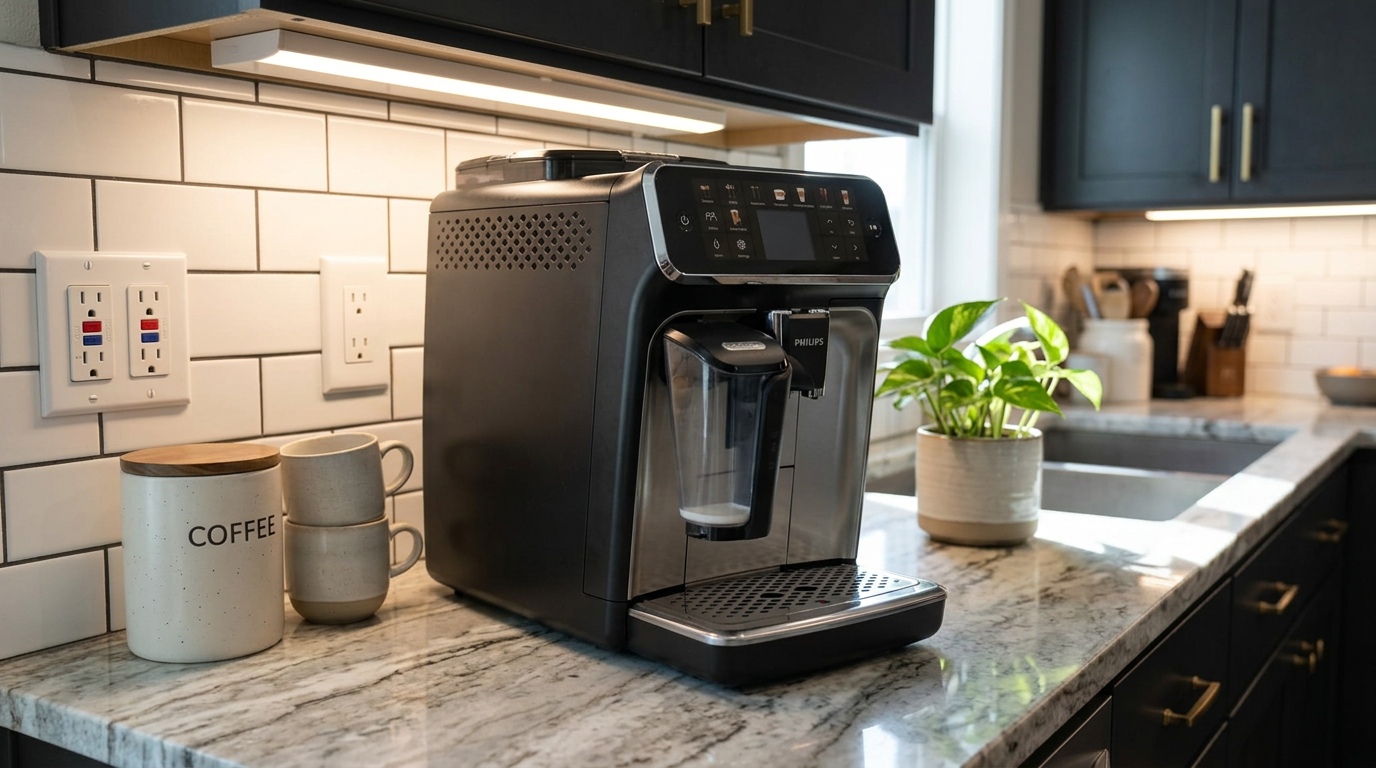
The Philips 5500 is mostly plastic too, but a chrome border frames the display and the drip tray carries a stainless steel grate, so it looks more expensive than the materials suggest.
The Philips is the smaller and lighter machine. It measures about 9.7 inches wide, 14.6 inches tall and 17 inches deep, and weighs about 17.6 lb. The E8 is about 11 inches wide, 13.8 inches tall and 17.6 inches deep, at about 21.2 lb.
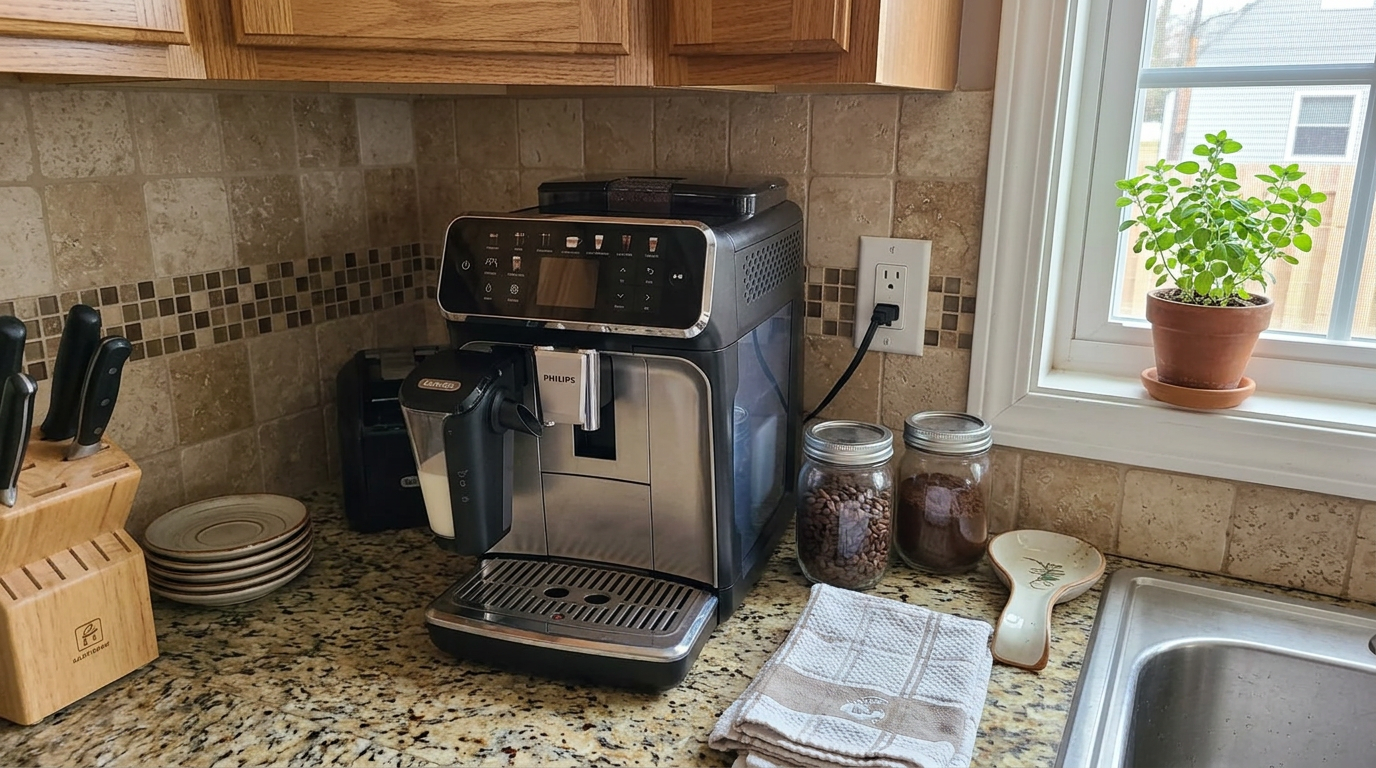
The Philips 5500 asks for less counter space than most machines with this many drinks.
Width on the counter
The Philips is about 1.3 inches narrower. The E8 is about 0.8 inches shorter.
Our tip: Measure the height under your wall cabinets before choosing the Philips, because it’s the taller machine by almost an inch.
Setup and the first week
Both machines were making coffee within about 15 minutes, and both follow the same pattern: test the water with the strip in the box, fit the filter, fill the tank and let the machine prime and rinse.
On the E8, the 3.5-inch screen walks you through each step, and the machine recognizes Jura’s CLEARYL Smart+✕CLEARYL Smart+ filterJura’s water filter cartridge. It sits in the tank, softens the water and removes off-flavors, so the machine needs descaling far less often. filter on its own. From then on, it tracks how much water has passed through it and asks for a new one when it’s used up.
On the Philips, I fitted the AquaClean filter, filled the tank and let it prime. The quick buttons and the hot and iced menus were easy to find, and setting up four profiles took a few minutes more.
On both machines, I threw away the first few drinks while the grinder and brew unit bedded in. Nothing tasted right until about the fourth cup, which is normal for any bean-to-cup machine.
| First-week step | Jura E8 | Philips 5500 |
|---|---|---|
| Water test and filter | Strip, filter detected automatically | Strip, AquaClean fitted by hand |
| Profiles | None to set up | Four plus guest |
| Ready to brew | Quick, guided on screen | About 20 to 25 seconds from switch-on |
| First good drink | Around the fourth cup | Around the fourth cup |
| Learning curve | Almost none | Almost none |
Our tip: Throw away the first three or four drinks on either machine, because the grinder needs a few cycles to settle before the coffee tastes right.
Controls, profiles and smart features
Both machines use a color display with real buttons rather than a touchscreen, and I count that as a plus on both.
The E8’s 3.5-inch screen sits between two rows of buttons, and each button controls the drink next to it. Guests used it without asking me anything. You can change strength and volume while a drink runs, and pressing the button mid-espresso lets the shot run a little longer.
The Philips takes a choose, adjust and froth approach: pick a drink from the quick buttons or the hot and iced menus, set strength, volume and temperature, and save it to your profile.
Four profiles vs none
This is a real difference for families. The Philips has four color-coded profiles plus a guest profile, and each saves its own strength, volume and temperature.
The E8 has no profiles, so everyone shares the same saved drinks. Its J.O.E. app lets you adjust a drink before starting it remotely, which helps a little, but it’s not the same as tapping your own name.
| Feature | Jura E8 | Philips 5500 |
|---|---|---|
| Display | 3.5-inch color, buttons | Color TFT, buttons |
| User profiles | None | 4 plus guest |
| Strength levels | Adjustable, plus extra-shot drinks | 5 levels, plus Extra Shot |
| Change drinks on the fly | Yes, can extend a running shot | Before brewing |
| App | J.O.E. app, remote start | Not part of my test |
| Ready to brew | Fast, intelligent preheating | About 20 to 25 seconds |
Our tip: Set up a Philips profile for every regular coffee drinker on day one, so nobody overwrites anyone else’s favorite drink.
The drink menu: 17 vs 20
The E8 lists 17 drinks: espresso, coffee, americano, lungo, espresso doppio, cortado, macchiato, cappuccino, flat white and latte macchiato, plus extra-shot versions of the three big milk drinks.
The Philips lists 20 hot and iced recipes, covering classic black coffees, milk drinks, hot water and a full menu of iced options. The iced menu is the clearest addition.
The E8’s extra-shot milk drinks were the surprise hit in my house, because they add a second shot to the same drink and make up for its slightly light espresso. The Philips’ Extra Shot option does a similar job.
One-touch drinks
Counted from each menu, including hot water.
| Drink type | Jura E8 | Philips 5500 |
|---|---|---|
| Espresso and doppio | Yes | Yes, plus Extra Shot |
| Americano | Two-step, one touch | Yes |
| Cappuccino and latte macchiato | Yes, extra-shot versions | Yes |
| Flat white and cortado | Yes | Varies by recipe |
| Iced coffee and iced lattes | By hand, over ice | One-touch iced recipes |
| Hot water | Yes | Yes |
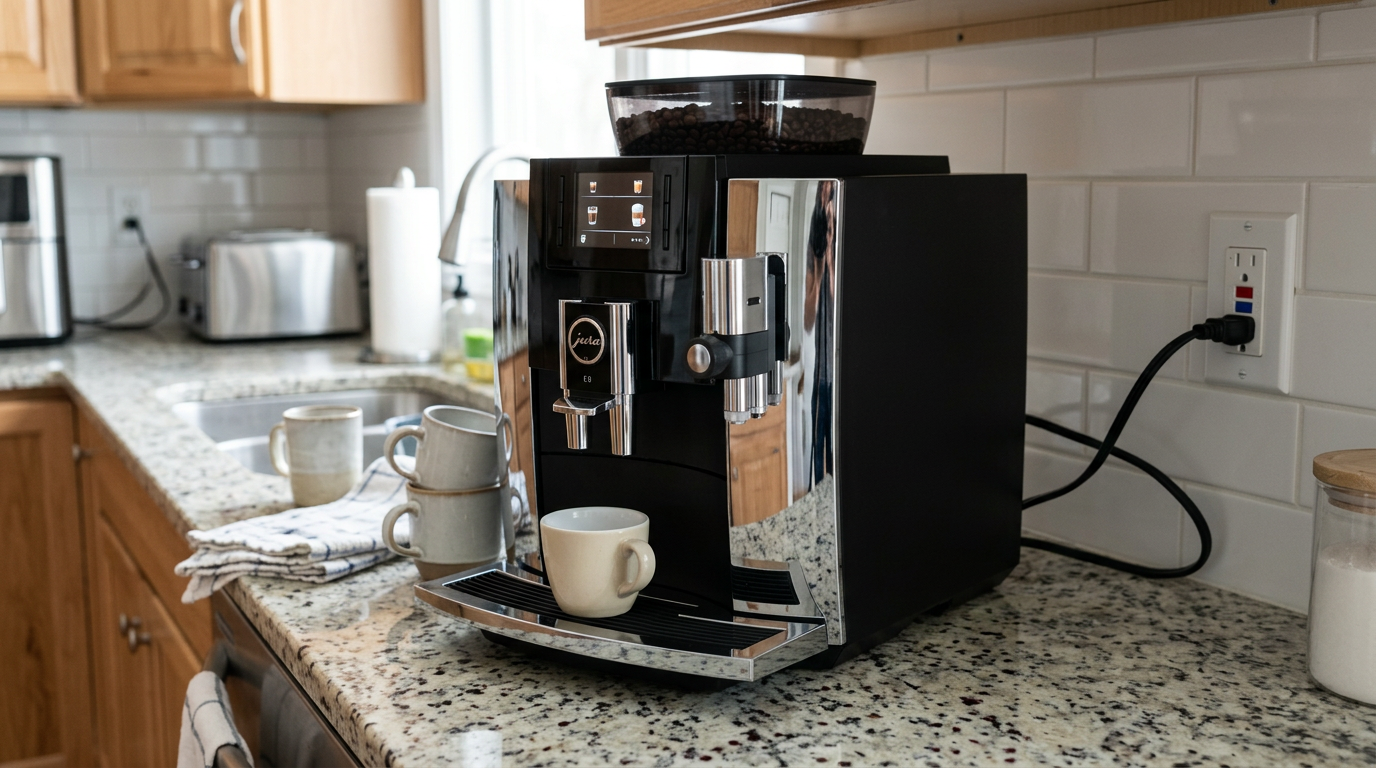
The E8’s menu is clear and logical, but it has no iced drinks.
See Today’s PriceGrinder and brew unit
The two machines grind very differently.
The E8 uses Jura’s Professional Aroma Grinder with steel conical burrs✕Conical burrsTwo cone-shaped grinding parts, one inside the other. Beans are crushed between them, and the gap sets how fine the coffee is.. It’s fast, about five seconds for a 15-gram dose, and its brew unit takes 5 to 16 grams. Its weakness is that even the finest setting felt a touch coarse for a heavy espresso.
The Philips uses flat ceramic burrs with 12 settings and five strength levels. Ceramic burrs tend to run cooler during grinding, and this grinder was also the quieter of the two.
Removable vs sealed brew unit
This is one of the biggest long-term differences between the two machines.
Like most Philips machines, the 5500 has a brew group✕Brew groupThe part that presses the ground coffee into a puck, holds it while water flows through and then ejects it. On some machines you can remove it to rinse. you can take out yourself. I removed and rinsed it as part of the routine, and you can see exactly how clean it is.
The E8’s brew unit stays sealed inside. The machine asks for a cleaning cycle and you drop a tablet into the chute, which works, but you never see the result.
| Detail | Jura E8 | Philips 5500 |
|---|---|---|
| Burrs | Steel, conical | Ceramic, flat |
| Grind settings | Dial, change while grinding | 12 settings |
| Dose | 5–16 g | Set by 5 strength levels |
| Brew unit | Sealed, tablet cleaning | Removable brew group |
| Pre-ground coffee | Fully removable chute with sensor | Single-scoop chute |
| Bean hopper | About 10 oz | About 10 oz |
Our tip: Only change the grind while the grinder is running on either machine, because turning it with the burrs stopped can jam beans and strain the gears.
Espresso quality
Neither of these is an espresso purist’s machine, and that’s worth knowing up front.
On the E8, I used a 15-gram dose and aimed for a 1:2 ratio. The cup weighed about 29 grams, with a smooth, even crema✕CremaThe golden, foamy layer on top of a fresh espresso, formed when pressure pushes oils and gases out of the coffee., mild chocolate and gentle acidity, but a touch thin in body.
The Philips made a softer, lighter-bodied espresso with a gentle crema. Raising the strength and lowering the volume gave a rounder, sweeter shot with more body and less sourness, and that’s the version I scored.
My espresso scores
My scores out of 10 for body, crema, flavor and consistency, same medium-dark beans.
On the Philips, the espresso reached about 176°F at the spout on its hottest setting. On the E8, the drink was hot too, but I warmed cups first for straight shots.
| What you taste | Likely cause | First fix on either machine |
|---|---|---|
| Sour, thin, watery | Under-extraction✕Under-extractionWhen water doesn’t pull enough flavor from the coffee, so the shot tastes sour, thin and watery. | Raise strength or grind finer |
| Bitter, harsh | Over-extraction | Grind one step coarser |
| Pale crema | Stale beans | Use beans within a few weeks of roasting |
| Lukewarm shot | Cold cup | Warm the cup first |
Long coffee and americano
This is the Jura’s best category.
The E8’s long coffee became my morning mug. Set to 150 ml, about 5 ounces, at the highest temperature, it delivered about 140 grams with a dense, durable crema and a soft, almond-like sweetness. It was my most consistent drink of the month.
Its americano pulls an espresso and then adds hot water through a separate path, so the cup stays clean instead of bitter.
The Philips makes good black coffee too, but its longer drinks shared the espresso’s lighter body. For a strong mug, I used the strongest setting with Extra Shot.
Body in a mug, side by side
Relative body from my side-by-side tasting with the same medium roast.
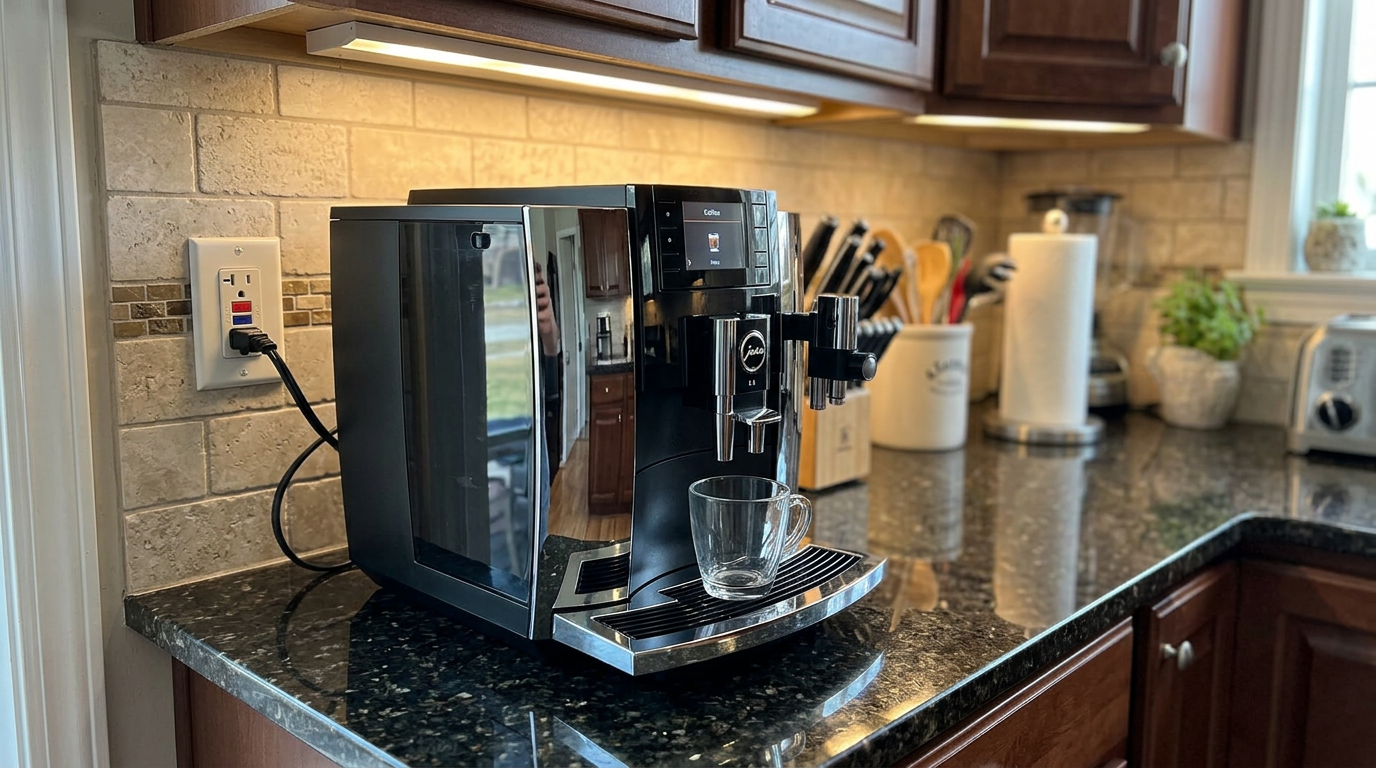
The E8’s long coffee was my most consistent drink of the month.
Our tip: Save the E8’s long coffee at 150 ml and the highest temperature, because that setting gave me the best mug of either machine.
Milk drinks
This is the section that decides the matchup for most buyers.
The E8 draws milk through a silicone hose from a carton. Its foam is excellent: dense microfoam✕MicrofoamMilk foam with bubbles so small you can barely see them. It feels silky and glossy, which is what a good flat white or cappuccino needs. with fine bubbles and a silky feel. It pours the milk first and the espresso second, and the drinks look lovely in a glass.
The Philips uses LatteGo, a two-part carafe that clips to the front and froths without any internal tubing. Because milk never travels through the body of the machine, there’s nothing inside for old milk to sour in.
Its foam was smooth and consistent with whole milk, skimmed milk and barista oat milk, and its milk drinks scored 8.8 in my testing against 7.8 for the E8.
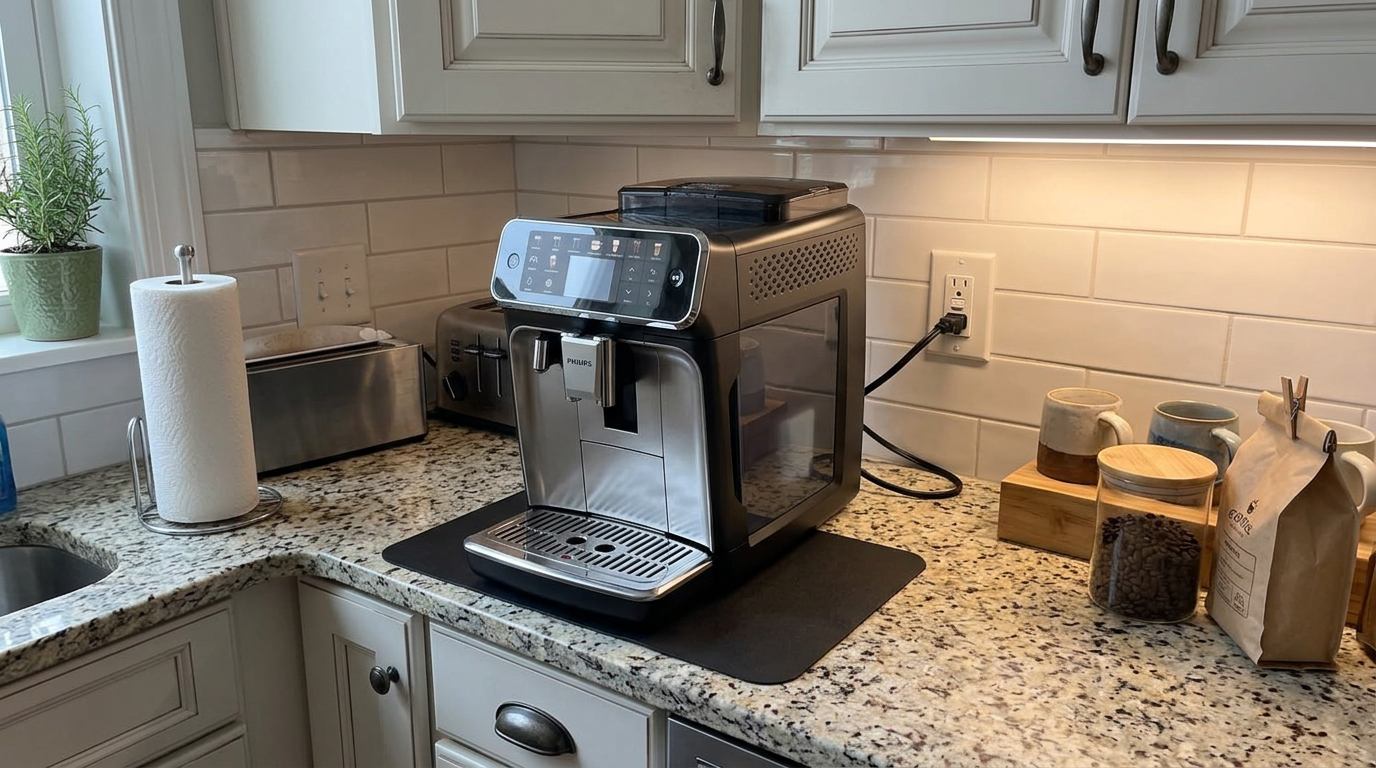
The tube-free LatteGo carafe clips to the front of the Philips 5500.
Milk drink scores
My scores out of 10 for foam, temperature and convenience.
The Philips has one quirk. Its milk spout is fixed, so cup placement matters, especially with tall glasses. The E8’s cappuccino spout adjusts to fit glasses up to about 6 inches.
| Milk detail | Jura E8 | Philips 5500 |
|---|---|---|
| System | Hose into a carton | LatteGo two-part carafe |
| Internal milk tubing | Yes | None |
| Carafe size | Use your own carton | About 9 oz |
| Extra-shot milk drinks | Yes | Extra Shot option |
| Spout | Height-adjustable | Fixed |
| Best milk in my test | Cold whole milk | Whole milk and barista oat |
Our tip: Use cold milk straight from the fridge on both machines, because warm milk makes big, loose bubbles that collapse quickly.
Drink temperature
Here the gap is enormous.
My frothed milk on the E8 measured about 50°C, or 122°F, in the cup, with no setting to raise it. That sits at the very bottom of the range baristas aim for, and below the 140 to 149°F band where research on cappuccino milk finds sweetness and foam stability peak.
On the Philips, milk came out at about 75°C, or 167°F, at the spout, which is hot without tasting scalded. By the time it hits a cup and meets the espresso, it lands comfortably in that sweet zone. Espresso reached about 176°F at the spout on the hottest setting.
Temperatures I measured
Probe thermometer readings on the hottest settings.
Iced drinks, hot water and tea
The Philips has a full menu of one-touch iced drinks. It lowers its brewing temperature to about 140°F, compared with about 176°F for hot espresso, and pours it over ice.
That’s a smart idea, but the coffee is still warm when it hits the ice, so it melts some of it. My iced drinks scored 7.0, the Philips’ lowest category.
The E8 has no iced menu. I brewed a strong espresso straight over ice and added cold milk, which works, but it’s a manual step.
| Drink | Jura E8 | Philips 5500 |
|---|---|---|
| Iced latte | By hand, espresso over ice | One touch |
| Iced americano | By hand | One touch |
| Hot water | Up to about 176–185°F | Yes |
| Green and white tea | Good temperature | Good |
| Black tea | A bit cool | Use a kettle for best results |
Our tip: Fill the glass to the top with large ice cubes for the Philips’ iced recipes, because the warm coffee melts small cubes and waters the drink down.
Cleaning and upkeep
The Philips is one of the easiest machines to keep clean that I’ve tested, and this is a clear win.
After milk drinks, the LatteGo carafe came apart in two pieces, rinsed clean under the tap in about 10 seconds and went straight back on the machine. Both pieces are dishwasher-safe for a deeper wash.
The brew group comes out too. I removed and rinsed it as part of the weekly routine.
The E8 is easy in its own way. The frothing head drops down and its air valve, connector and nozzle come apart without tools for a daily rinse, its pre-ground chute is removable, and its filter is tracked automatically. But its brew unit stays sealed, and the daily milk routine takes longer.
My daily hands-on cleaning time
My estimate of hands-on time per day, not counting automatic rinses.
| When | Jura E8 | Philips 5500 |
|---|---|---|
| After milk drinks | Take apart and rinse frother parts | Rinse the two-part carafe, about 10 seconds |
| Daily | Empty tray and grounds | Empty tray and grounds |
| Weekly | Wash the pre-ground chute | Remove and rinse the brew group |
| When prompted | Brew unit tablet, milk cleaner | Descale or change the AquaClean filter |
| Filter | CLEARYL Smart+, tracked automatically | AquaClean |
Our tip: Rinse the LatteGo carafe right after the last milk drink, because fresh milk washes off in seconds and dried milk takes minutes.
Noise and speed
The Philips is the quieter machine. Its grinder ran at around 60 dB with the lid closed, and nobody in my house woke up to it.
The E8’s grinder is quick, but the gears that move its brew unit are fairly loud. You hear a mechanical clunk during preparation and again when the puck drops.
Both are quick to start. The Philips’ thermoblock was ready to brew within about 20 to 25 seconds of switching on, and the E8’s intelligent preheating kept back-to-back drinks fast.
How loud each felt, my ranking
Relative loudness from my side-by-side use. Every 10 dB sounds roughly twice as loud.
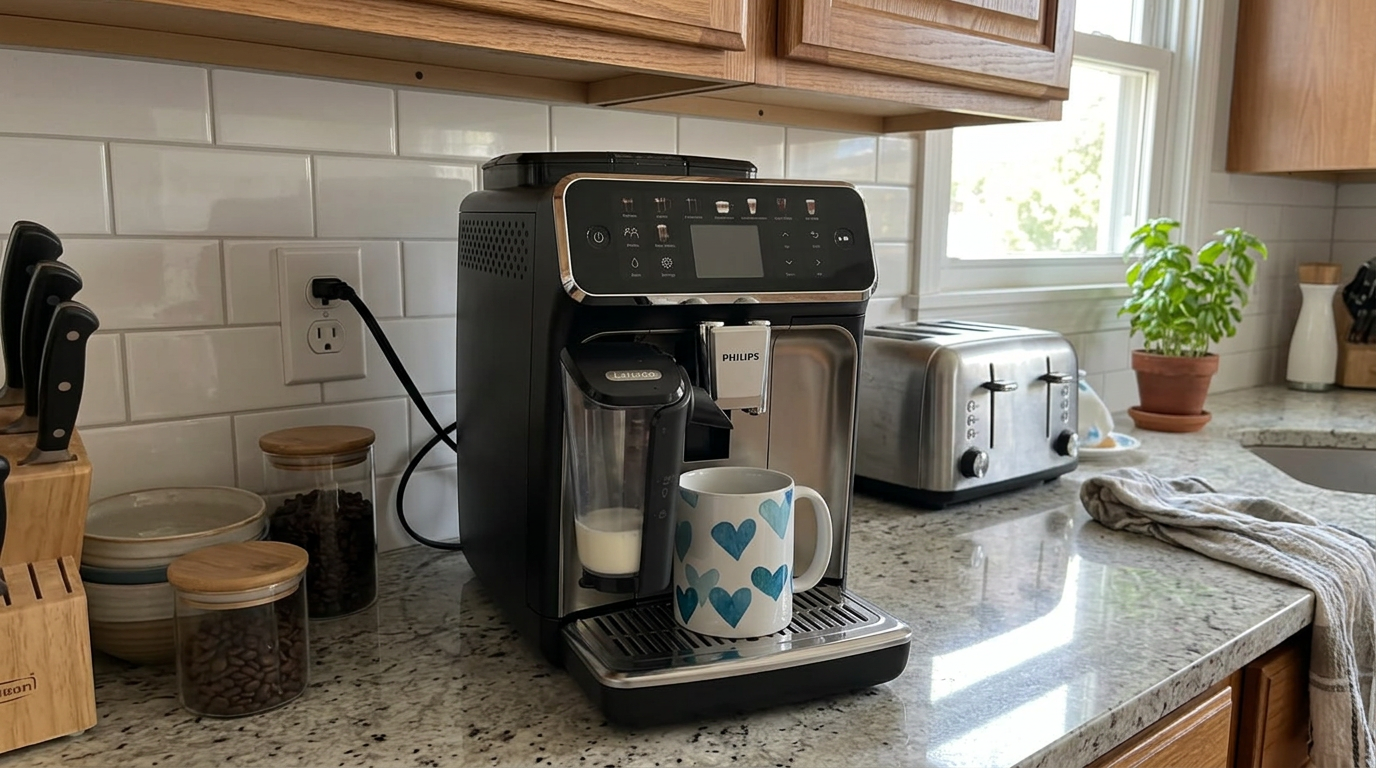
The Philips’ ceramic grinder was quiet enough for early mornings.
Capacity, beans and supplies
Capacity is close, with a small edge to the E8.
Its tank holds about 64 ounces and its grounds container about 16 pucks. The Philips holds about 61 ounces and 12 pucks. Both hoppers hold about 10 ounces.
Capacity compared
Manufacturer capacities and my own counts.
Use fresh whole beans within a few weeks of the roast date. Medium and medium-dark roasts suit both, and very oily beans are worth avoiding in any automatic grinder. Spent pucks are great for the compost.
Our tip: Fit the water filter on day one on either machine, because it slows scale buildup and keeps the descaling reminders far apart.
Mistakes to avoid
Both machines are easy to live with, but a few habits held them back during my four weeks.
On the E8, the biggest one is using a cold cup for milk drinks. Its milk is already cool, and a cold mug takes a cappuccino from warm to lukewarm in a couple of minutes.
On the Philips, it’s cup placement. The milk spout is fixed, so a tall glass placed off-center catches only part of the foam. Line the glass up under the spout before you press the button.
On both, light roasts at a standard strength tasted bright and a little sour. Medium-dark beans at a high strength fixed it, and on the E8, extending the shot helped too.
| Mistake | What happens | Better habit |
|---|---|---|
| Cold cup on the E8 | Cappuccino cools fast | Pre-warm the cup with hot water |
| Off-center glass on the Philips | Foam misses the glass | Line the glass up under the fixed spout |
| Light roast at standard strength | Sour, thin espresso | Medium-dark beans, higher strength |
| Leaving the LatteGo carafe unwashed | Dried milk takes minutes to clean | Rinse it right after the last drink |
| Skipping the E8 frother rinse | Milk clogs the tiny air channels | Rinse the parts every day |
| Small ice cubes for Philips iced drinks | Watered-down coffee | Fill the glass with large cubes |
None of these take more than a few seconds to get right, and once they became habits, both machines made consistently good coffee every morning.
Real-life scenarios
These are the moments where one machine clearly pulled ahead during my testing.
Milk at about 167°F at the spout, no cup warming needed.
Four profiles plus a guest profile, so everyone tapped their own drink.
The long coffee at the hottest setting was the best mug of either machine.
One-touch iced recipes, as long as you use plenty of ice.
Two carafe parts under the tap, about 10 seconds.
The chrome front, the cup light and the clearest buttons I’ve used.
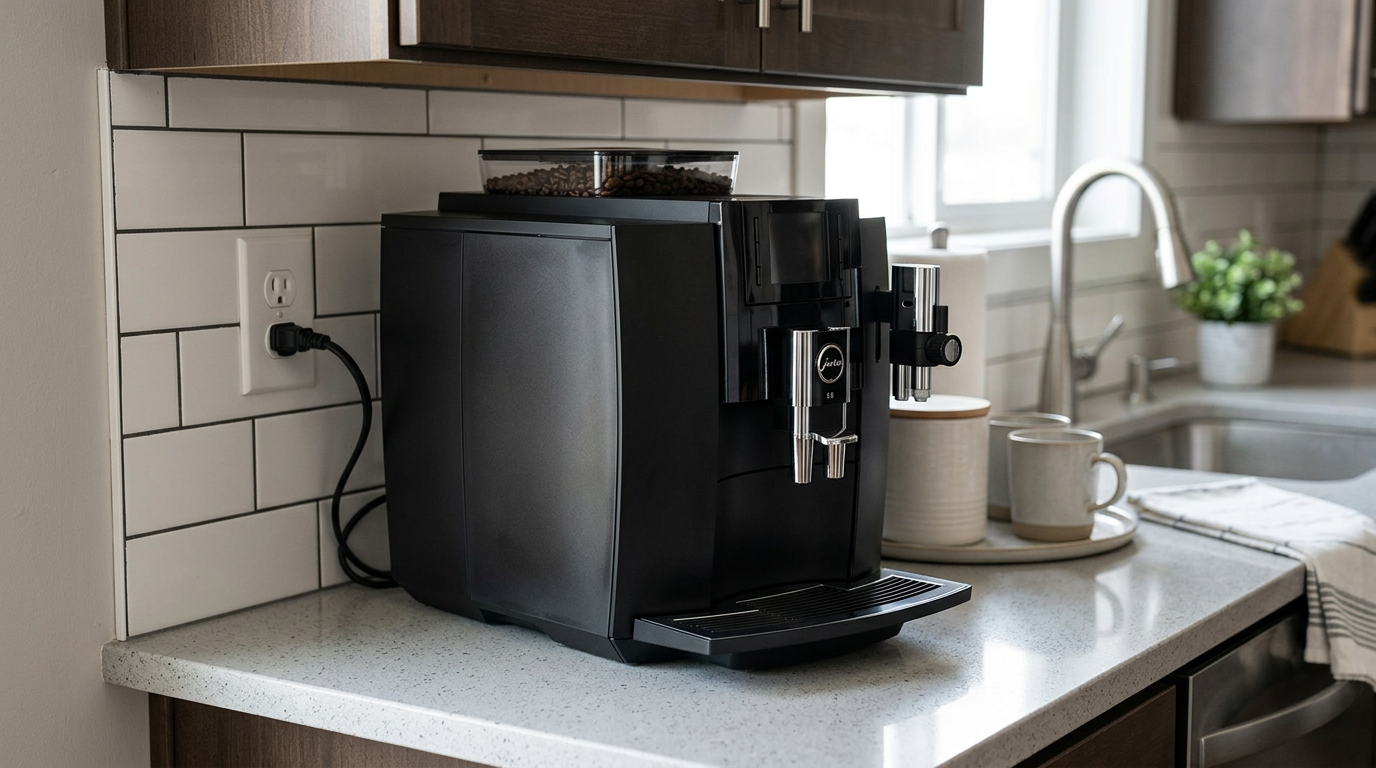
The E8 still looks the part, and its long coffee is its best drink.
My scorecard
These are my own scores out of 10, from my single reviews of each machine. The Philips review also scored iced drinks, which the E8 doesn’t make at one touch.
Jura E8
Jura E8 overall: 8.1 out of 10.
Philips 5500
Philips 5500 overall: 8.5 out of 10.
Overall, I rate the Philips 5500 8.5 and the Jura E8 8.1. The Philips wins every core category in my testing. The E8’s case rests on build, its long coffee, its capacity and the confidence of a premium name.
See How Much You’ll SaveWhich one is right for you?
4 quick questionsWhich one should you buy?
It comes down to one question: do you drink milk drinks most days?
If you do, the Philips is the easy call. Hotter milk, a carafe that cleans in seconds and profiles for the whole family make it the better daily machine. If you mostly drink long coffee and americanos and you value build and simplicity, the E8 still makes a strong case. Still weighing other options? I rank every model I’ve tested in my guide to the best Jura coffee machines.
For more options, see my Jura E6 vs E8 comparison, my Philips 3200 vs 5500 comparison and the full Philips 5500 review.
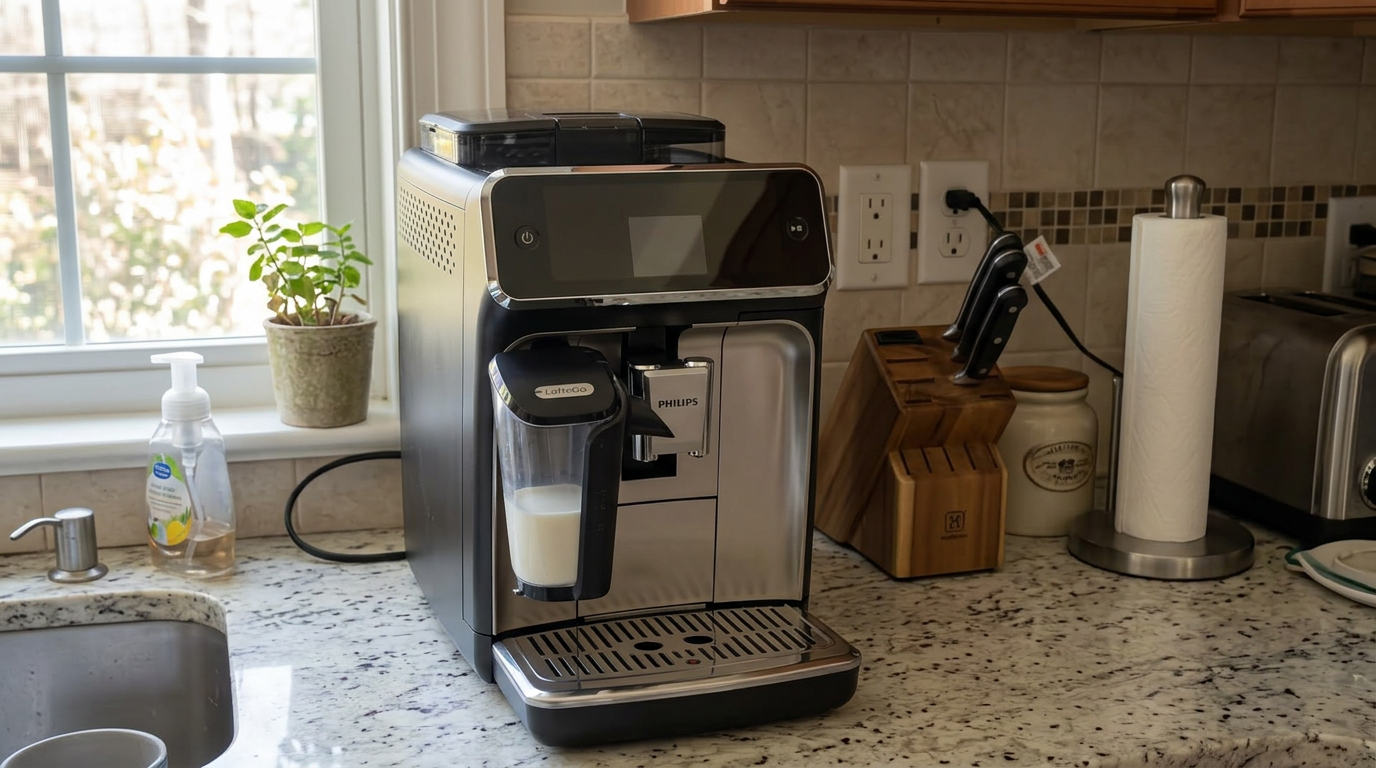
For most households, the Philips 5500 is the better daily machine.
Living with them long term
Think about what you’ll do every day for years, not just the first week.
With the Philips, the daily routine is short: rinse two carafe parts, empty the tray and grounds, and pull the brew group out for a rinse once a week. Running costs are AquaClean filters and descaler.
With the E8, the routine is a daily frother rinse, a weekly chute wash and a cleaning tablet when the machine asks. Running costs are CLEARYL Smart+ filters, cleaning tablets and milk cleaner, and you’ll never see the brew unit itself.
What I would change on the E8 is a milk temperature setting and a removable brew unit. On the Philips, I’d like an adjustable milk spout and iced drinks that are brewed cooler.
- You drink long coffee and americanos
- You want premium build and real buttons
- You want the biggest bins and automatic filter tracking
- You sip milk drinks straight away
- You like hot milk drinks
- You want iced drinks at one touch
- Several people want saved profiles
- Milk drinks are a daily habit
- You hate cleaning milk systems
- Several people share the machine
- You want iced coffee at one touch
- You want a heavy, café-style espresso
- You use very tall glasses under a fixed spout
For most homes, my pick is the Philips 5500. It beat the Jura E8 in every core category in my testing: hotter milk, faster cleaning, four profiles, iced drinks, quieter grinding and a brew group you can rinse yourself, all in a smaller, lighter body.
The Jura E8 is still the more premium machine to own. Its buttons are the clearest I’ve used, its long coffee is excellent and its bigger bins and automatic filter tracking mean fewer chores. Pre-warm your cups and it fixes its biggest weakness.
Whichever you choose, buy fresh whole beans, use cold milk and keep up with the milk cleaning. Both machines reward a little care with years of good coffee.
Jura E8 vs Philips 5500 specifications
From manufacturer specifications and my own testing.
| Jura E8 | Philips 5500 | |
|---|---|---|
| Model | Jura E8, 15648 | Philips 5500 Series with LatteGo |
| Type | Fully automatic with milk system | Fully automatic with milk carafe |
| Drinks | 17 | 20 hot and iced |
| User profiles | None | 4 plus guest |
| Pump pressure | 15 bar | 15 bar |
| Heating | Thermoblock with intelligent preheating | Thermoblock with QuickStart |
| Grinder | Steel conical | Ceramic flat, 12 settings |
| Strength | Dose 5–16 g, extra-shot drinks | 5 levels plus Extra Shot |
| Brew unit | Sealed | Removable brew group |
| Milk system | Hose, fine-foam spout | LatteGo, two parts, tube-free |
| Milk temperature | About 122°F in the cup | About 167°F at the spout |
| Display | 3.5-inch color with buttons | Color TFT with buttons |
| Water filter | CLEARYL Smart+, auto detection | AquaClean |
| Bean hopper | About 10 oz | About 10 oz |
| Water tank | About 64 fl oz | About 61 fl oz |
| Grounds container | About 16 servings | About 12 servings |
| Dimensions (W x H x D) | 11 x 13.8 x 17.6 in | 9.7 x 14.6 x 17 in |
| Weight | About 21.2 lb | About 17.6 lb |
How I tested and compared them
I used each machine as my everyday coffee maker for four weeks, making espresso, long coffee, americanos, cappuccinos, flat whites, latte macchiatos, iced drinks and hot water. A second HouseholdMe tester shared both machines, and we wrote the notes together.
I weighed doses and yields on the E8, measured drink, milk and water temperatures with a probe thermometer, foamed whole, skimmed and barista oat milk, and set up profiles on the Philips.
I ran every cleaning routine, including removing and rinsing the Philips’ brew group, and then checked my notes against Jura’s and Philips’ specifications and owner documentation.
- Coffee: espresso, long coffee, crema and consistency.
- Milk: foam, temperature and cleaning.
- Workflow: controls, profiles and drink range.
- Ownership: noise, capacity, build and footprint.
Jura E8 vs Philips 5500 FAQ
Is the Philips 5500 better than the Jura E8?
In my testing, yes for most homes. The Philips scored 8.5 overall against 8.1 for the E8, with hotter milk drinks, much faster milk cleaning, four profiles, iced drinks and a removable brew group. The E8 has the more premium build, a better long coffee and bigger bins.
Is the Jura E8 worth the extra money over the Philips 5500?
Only if build quality, button simplicity and long coffee matter more to you than milk drinks. For daily cappuccinos and lattes, the Philips was the better machine in my testing.
Which makes hotter milk?
The Philips 5500. Its milk came out at about 167°F at the spout. The E8’s frothed milk measured about 122°F in the cup, with no setting to raise it.
Which makes better espresso?
Neither makes a heavy shot. The Philips scored 8.2 and the E8 8.0 in my testing. Both are smoothest with medium-dark beans at a high strength.
Which is easier to clean?
The Philips 5500. Its two-part LatteGo carafe rinsed clean in about 10 seconds, and its brew group comes out for rinsing. The E8’s frother needs a daily take-apart rinse, and its brew unit is sealed.
Does the Jura E8 make iced coffee?
Not at one touch. You can brew espresso over ice by hand. The Philips 5500 has a menu of one-touch iced recipes, brewed at a lower temperature and poured over ice.
Does the Philips 5500 have user profiles?
Yes, four color-coded profiles plus a guest profile. The Jura E8 has none.
Which one is quieter?
The Philips 5500, at around 60 dB while grinding with the lid closed. The E8’s grinder is quick, but its brew gears make a noticeable clunk.
Which is smaller?
The Philips is narrower and lighter at about 9.7 inches wide and 17.6 lb. The E8 is about 11 inches wide and 21.2 lb, but almost an inch shorter.
Do both have water filters?
Yes. The E8 uses Jura’s CLEARYL Smart+, which it detects and tracks automatically, and the Philips uses an AquaClean filter.

- Our hands-on Jura E8 review
- Our hands-on Philips 5500 review
- Jura and Philips product specifications and owner documentation
- General espresso brewing and maintenance guidance
- Cappuccino quality and milk foaming temperature, University of Camerino
- A living lexicon for brewed coffee, University of Oregon
- Composting and Coffee Grounds, Cornell University