Jura E8 vs Miele CM 6360: which premium machine wins?
Both are premium, one-touch, bean-to-cup machines that sit comfortably under a kitchen cabinet. The Jura E8 is the simplest to live with: 17 drinks, clear buttons and a machine that tracks its own filter. The Miele CM 6360 answers with eight named profiles, a glass milk jug, hotter milk and a brew unit you can pull out and rinse. I used both every day for four weeks to find out which one belongs in your kitchen.
We choose products independently. We may earn a commission through links on this page; your price stays the same. Affiliate policy
Jargon helpNew to espresso? Tap any dotted term to see what it means.
In this comparison
For most homes, and especially for families who drink cappuccinos, flat whites and big mugs of coffee, buy the Miele CM 6360. Its milk comes out properly hot, its foam is the best I measured from either machine, everyone gets a named profile, and you can take the brew unit out and rinse it under the tap. Buy the Jura E8 if you want the easiest machine you can hand to anyone, a bigger water tank and grounds bin, and a filter the machine tracks on its own. Just pre-warm your cups, because its milk lands at about 122°F.
The two machines
Specs checked November 14, 2026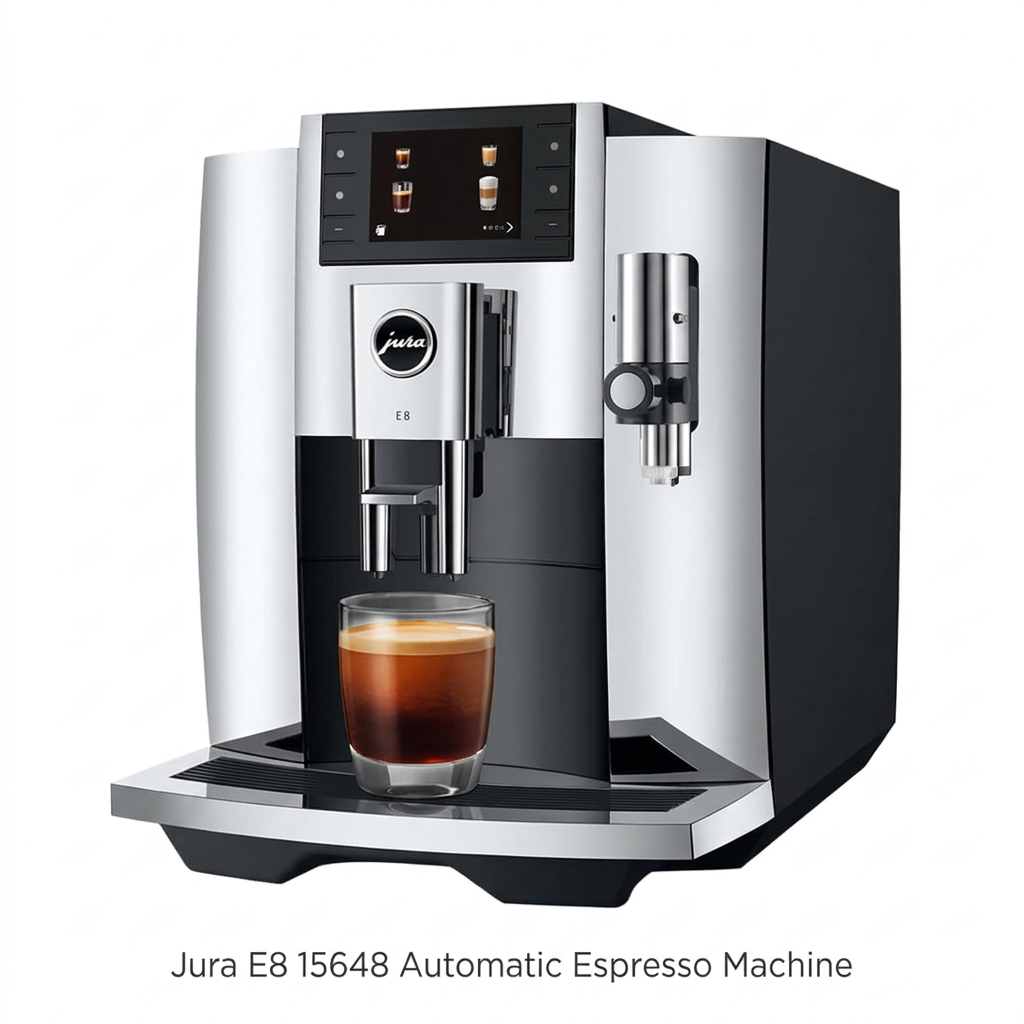
17 one-touch drinks, dense silky foam, a 3.5-inch display with real buttons, J.O.E. app control and automatic CLEARYL Smart+ filter tracking.
Check price on Amazon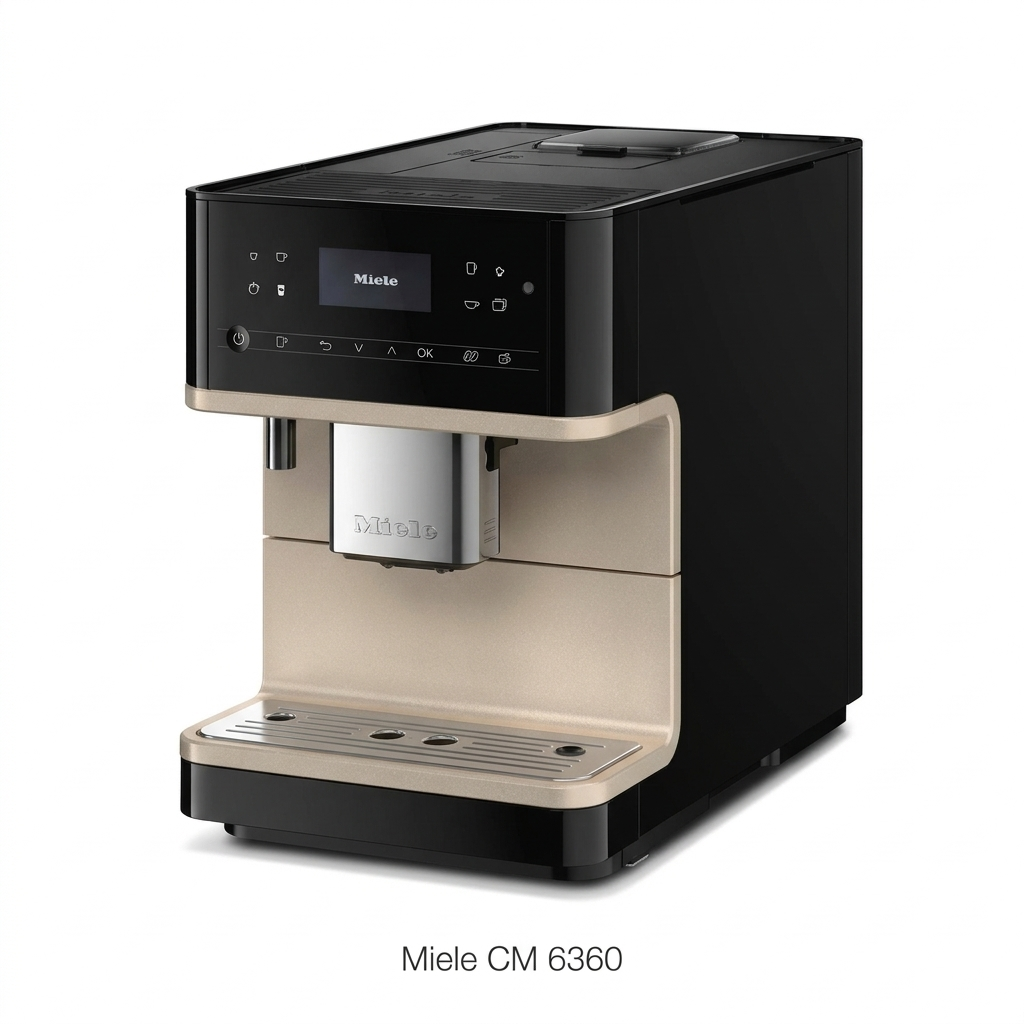
18 drinks, eight named profiles, a glass milk container, DoubleShot for strong mugs, six tea programs and a removable brew unit.
Reveal Today’s DealJura E8 vs Miele CM 6360 at a glance
- Buy the Miele CM 6360 if several people share the machine and most of them drink milk drinks or big mugs.
- Buy the Jura E8 if you want the simplest controls, the biggest bins and a filter you never have to think about.
- The Miele’s milk is hotter, its foam finer and its brew unit removable; the E8’s milk is cooler and its brew unit sealed.
- Both make good espresso, but the Miele’s factory shot is too long and needs two minutes of setup to shine.
Head to head
The better result in each row is marked, based on my testing and the manufacturer specs. Rows where the two machines are effectively identical have no winner.
The tally is not my verdict. Milk temperature and profiles matter far more to a family than the size of the grounds bin.
| Spec | Jura E8 | Miele CM 6360 |
|---|---|---|
| Espresso qualitymy tasting, same beans | Smooth crema, a touch light | Fuller once shortened ✓ Best |
| Milk foam | Dense and silky | Finer, glossier, longer lasting ✓ Best |
| Milk drink temperaturefinished drink, my probe | About 122°F | About 140–149°F ✓ Best |
| One-touch drinks | 17 | 18, plus a coffee pot ✓ Best |
| User profiles | None | 8, with names ✓ Best |
| Strong big mug | Long coffee, single dose | DoubleShot, two grinds ✓ Best |
| Tea water | Tops out around 176–185°F | Six tea programs and a timer ✓ Best |
| Controls | 3.5-inch display, real buttons ✓ Best | Direct buttons, text display |
| Filter tracking | Automatic CLEARYL Smart+ ✓ Best | Water hardness setting |
| Brew unit | Sealed, tablet cleaning | Removable, rinse by hand ✓ Best |
| Grounds container | About 16 pucks ✓ Best | About 10 pucks |
| Water tank | About 64 fl oz ✓ Best | About 61 fl oz |
| Two milk drinks at once | No | Yes, OneTouch for Two ✓ Best |
| Noise | Louder brew gears | Quiet, about 55–63 dB ✓ Best |
| Counter width | 11 in | 9.9 in ✓ Best |
| App | J.O.E. app, remote start | Miele app, remote start |
| Rows won | 4 | 11 |
Jura E8 vs Miele CM 6360 pros and cons
Jura E8
- The easiest controls I’ve used, with a clear maintenance dashboard
- Dense, silky microfoam and extra-shot milk drinks
- Automatic filter tracking, a big tank and a 16-puck grounds bin
- Milk comes out at about 122°F, which feels cool
- Hot water is too cool for strong black tea
- Brew unit is sealed and the mechanism is fairly loud
Miele CM 6360
- Hot, glossy milk foam with a glass container in the box
- Eight named profiles for a whole household
- Removable brew unit and DoubleShot for strong mugs
- Factory espresso is too long until you shorten it
- Wi-Fi and app setup take patience
- Smaller 10-puck grounds bin and an awkward milk-tube storage spot
Who should buy which machine?
- People who want one button and zero learning curve
- Homes that never want to think about filters
- Anyone who sips milk drinks straight away and likes them warm, not hot
- Families where three or more people each want their own drink
- Cappuccino and flat white fans who like them properly hot
- Tea drinkers and big-mug coffee drinkers
Design, size and build
These two machines take very different shapes to do the same job.
The Jura E8 is the wider, deeper and slightly shorter of the two. It measures about 11 inches wide, 13.8 inches tall and 17.6 inches deep, with a chrome-look panel around the spouts.
The Miele CM 6360 is narrow and tall. At about 9.9 inches wide, 14.1 inches tall and 16.8 inches deep, it fits into gaps where the Jura simply won’t.
On a crowded counter, that inch of width is the difference between the machine living next to the kettle or the kettle living in a cupboard.
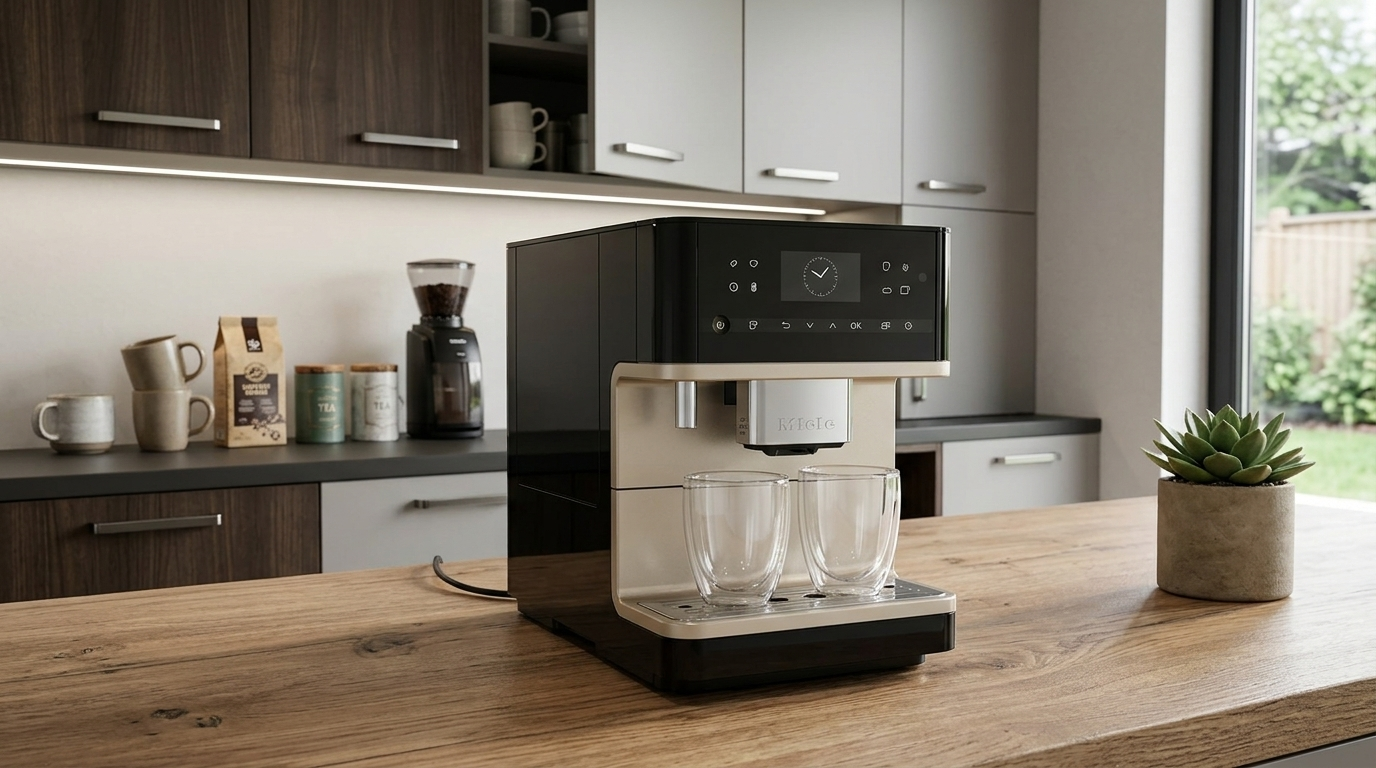
The Miele CM 6360 is the narrower machine, even with its glass milk container parked beside it.
Both bodies are mostly plastic. The E8’s glossy housing felt solid, but its plastic drip tray grid was the one place it felt less premium than I expected.
The Miele has a cleaner, more minimal face, with seven direct drink buttons under a slim text display. It comes in Lotus White and two Obsidian Black finishes, and its top doubles as a heated cup warmer.
Weight is almost a tie. The E8 is about 21.2 lb and the Miele about 22 lb, so neither is something you’ll want to slide around daily.
Width on the counter
The Miele is about 10% narrower, which matters most on short stretches of counter.
Depth on the counter
Both fit a standard 24-inch-deep counter with room to spare.
Our tip: Measure the gap under your wall cabinets before you buy, and leave about 2 inches above the bean hopper so refilling never means pulling the machine forward.
Setup and the first week
Setup on the E8 is the quickest I’ve done on a premium machine. You test the water hardness with the strip, fit the filter, and the 3.5-inch screen walks you through the rest.
The Miele took me longer, and the reason was the app. I tried to connect it before finishing the machine’s own setup, and it took three attempts.
The fix is simple. Do language, water hardness and preferences on the machine first, and only then pair the app.
On both machines, the first few drinks were weaker while the grinder settled. I didn’t judge anything until the fourth cup.
Filter tracking: the E8’s quiet advantage
The E8 recognizes Jura’s CLEARYL Smart+✕CLEARYL Smart+ filterJura’s water filter cartridge. It sits in the tank, softens the water and removes off-flavors, so the machine needs descaling far less often. filter on its own. It tracks how long the cartridge has been in and how much water has passed through, then asks for a new one.
On the Miele, you set your water hardness and the machine schedules descaling✕DescalingRunning a mild acid through the machine to dissolve the mineral scale that hard water leaves in the heater and pipes. reminders from that. It works, but it relies on you entering the right number.
Hard water is the silent killer of every automatic machine, so whichever you buy, test your water on day one.
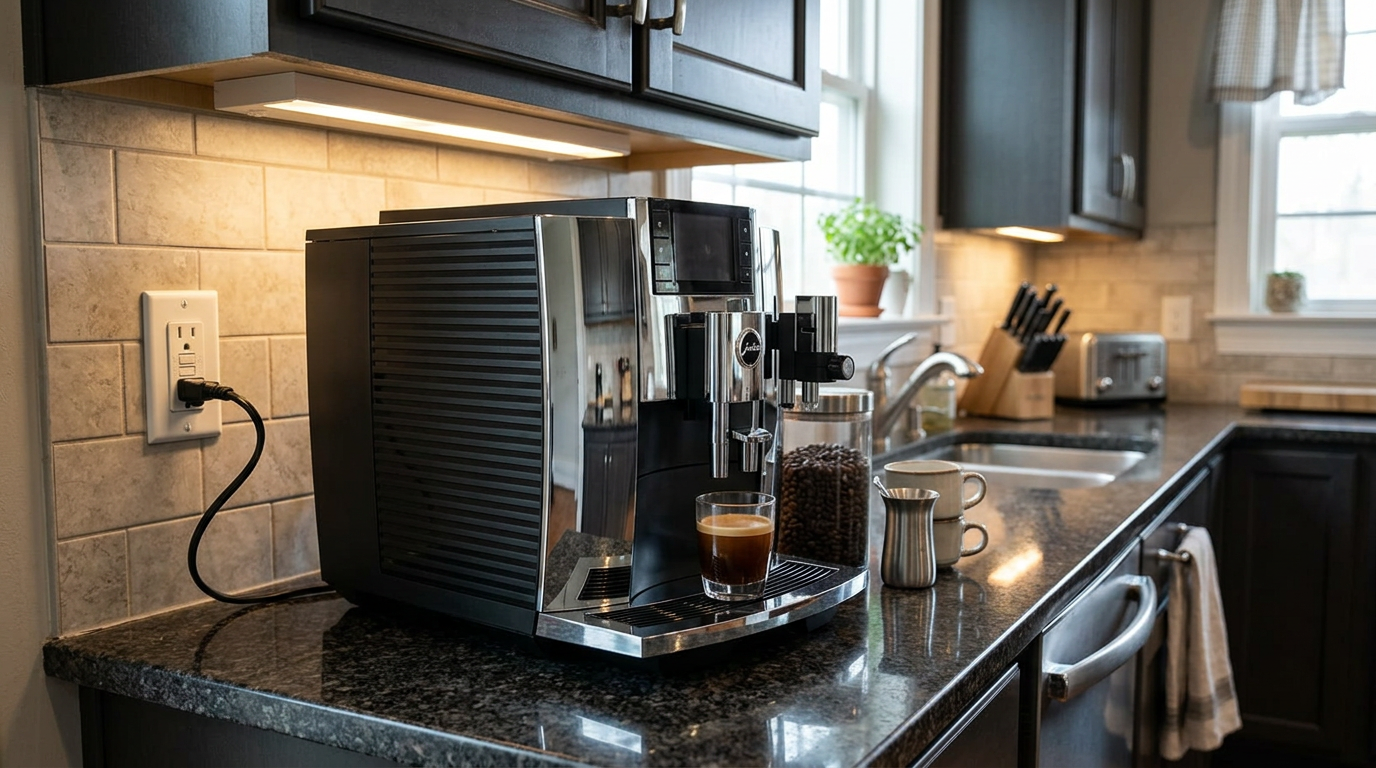
The E8’s side-mounted tank holds about 64 ounces, a touch more than the Miele’s.
| Setup step | Jura E8 | Miele CM 6360 |
|---|---|---|
| Water hardness test | Strip, entered on screen | Strip, entered on screen |
| Filter | Detected automatically | Hardness setting and reminders |
| App pairing | Straightforward | Do machine setup first |
| Profiles to set up | None | Up to eight, with names |
| Time to first good drink | About 10 minutes | About 20 minutes with profiles |
Our tip: Finish the Miele’s on-machine setup before you open the app, because pairing first is the one thing that made my setup fail.
Controls, profiles and smart features
This is where the two machines show their personalities most clearly.
The E8 uses a color display flanked by physical buttons, and each button controls the drink next to it. Guests used it without asking me a single question, and the buttons work with damp fingers.
It also lets you change strength and volume while a drink is running. My favorite trick was pressing the button mid-espresso to let the shot run a little longer, which softened brighter beans.
Eight named profiles on the Miele
The Miele CM 6360 greeted me by name on my second morning. That sounds like a gimmick, and then you live with it.
Each of up to eight profiles saves its own coffee amount, portion size, temperature and pre-brewing for every drink. I set up four on the first evening, and from then on nobody touched anyone else’s settings.
The E8 has no profiles at all. Everyone shares the same saved drinks, so in my house we agreed on the long coffee settings and changed everything else on the fly.
| Person | Their drink | Jura E8 | Miele CM 6360 |
|---|---|---|---|
| Me | Short espresso, strong mug | Adjust each time | Saved in my profile |
| Partner | Flat white, less milk | Shared setting | Saved in their profile |
| Teenager | Latte macchiato, more milk | Shared setting | Saved in their profile |
| Guests | Factory cappuccino | Easy, clear buttons | Guest profile, factory settings |
The apps
Both machines connect to an app and can start a drink remotely. The E8’s J.O.E. app started grinding within about a second of pressing start, and it shows maintenance as clear percentages.
The Miele app does the same job once it’s paired. In practice, I used neither app daily, because the buttons on both machines are faster than unlocking a phone.
Our tip: Only remote-start black coffee on either machine, because milk shouldn’t sit out on the counter waiting for a drink you started from bed.
The drink menu: 17 vs 18
On paper these menus are close. In use, they cover different households.
The E8 lists 17 drinks, including an americano, a cortado, a flat white and extra-shot versions of the cappuccino, flat white and latte macchiato. Those extra-shot drinks were a hit, because they make up for the E8’s slightly light espresso.
The Miele lists 18, from ristretto to café au lait, plus hot milk, milk froth and a coffee pot mode that fills a carafe with about 30 ounces. Seven of them have their own button on the front.
One-touch drinks per category
Counted from each menu. The Miele counts hot milk and milk froth; the E8 counts extra-shot milk drinks and doubles. Hot water and tea are not included.
The Miele also has two buttons the E8 can’t match. DoubleShot✕DoubleShotMiele’s two-stage brew. The machine grinds and brews once, pauses, then grinds and brews again into the same cup, so a big drink doesn’t taste watery. makes a big mug taste strong, and OneTouch for Two makes two complete milk drinks at once.
The E8 can make two espressos or two coffees side by side, but milk drinks are one at a time.
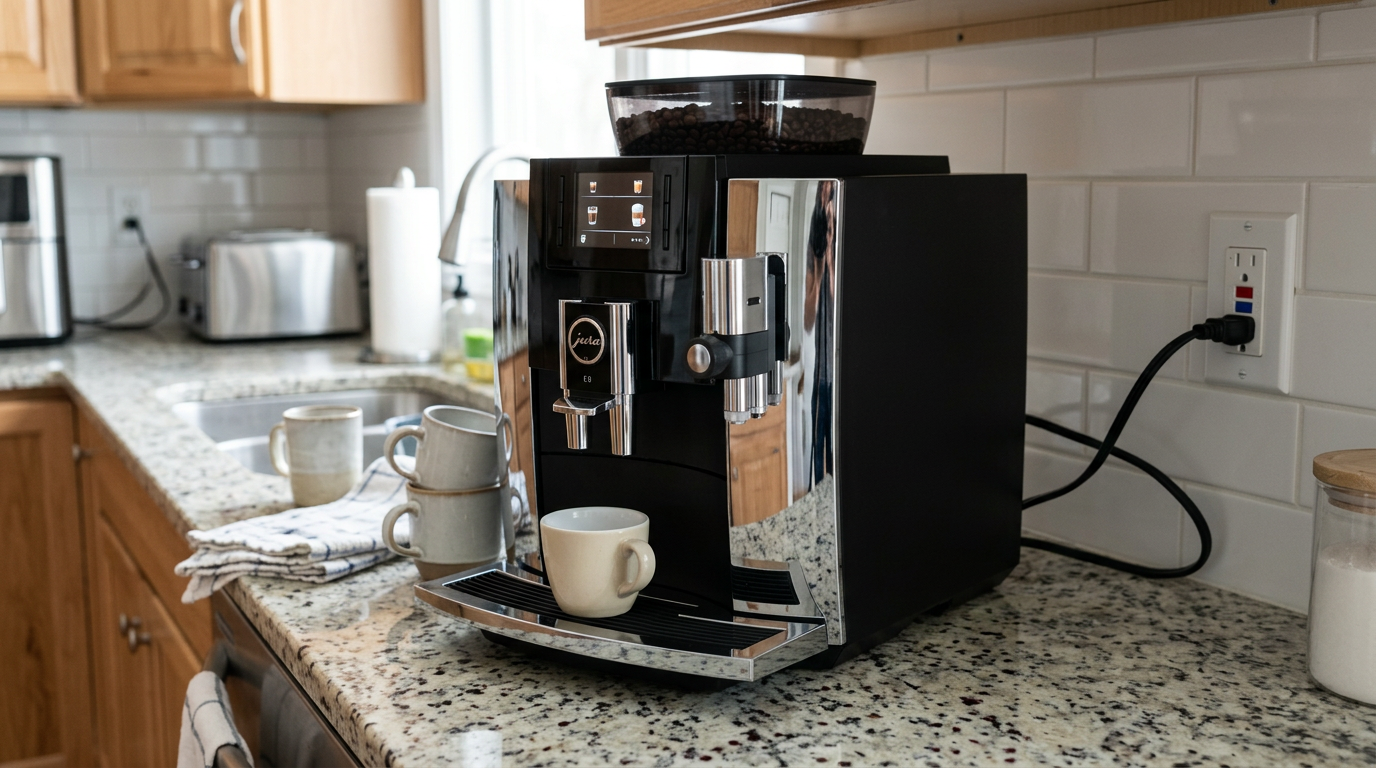
The E8’s menu is broad, logical and one button deep.
See Today’s PriceGrinder, dose and brew unit
Both machines grind with steel conical burrs✕Conical burrsTwo cone-shaped grinding parts, one inside the other. Beans are crushed between them, and the gap sets how fine the coffee is., and both are fast.
The E8’s Professional Aroma Grinder took about five seconds for a 15-gram dose, and its brew unit takes 5 to 16 grams per brew. Its weakness is how fine it goes: even the finest setting felt a touch coarse for a really heavy espresso.
The Miele pairs its grinder with the AromaticSystem✕AromaticSystemMiele’s expanding brew chamber. It gets bigger as water flows in, so the ground coffee mixes more thoroughly with the water., a brew chamber that expands as water comes in. With DoubleShot, it simply grinds and brews twice for one drink.
Sealed vs removable brew unit
This is the biggest long-term difference between the two, and it barely shows on a spec sheet.
The E8’s brew unit✕Brew unitThe part that presses the ground coffee, holds it while water passes through and then ejects the used puck. is fixed inside. You clean it by dropping a tablet into the chute when the machine asks, and you never see it.
The Miele’s brew unit slides out through a side door. Every week, I pulled it out and rinsed the coffee oils off under the tap, which takes about a minute.
If you like to see that the heart of your machine is clean, the Miele wins outright.
| Grinder and brew detail | Jura E8 | Miele CM 6360 |
|---|---|---|
| Burrs | Steel, conical | Steel, conical |
| Dose range | 5–16 g | Adjustable, DoubleShot for two |
| Grind time, 15 g | About 5 seconds | Quick and muffled |
| Brew unit | Sealed, tablet cleaning | Removable, weekly rinse |
| Pre-ground chute | Fully removable, with sensor | Yes |
| Bean hopper | About 10 oz | About 10.6 oz |
Our tip: Only turn the grind adjustment while the grinder is running on either machine, because turning it with the burrs stopped can jam beans and strain the gears.
Espresso quality
Out of the box, the E8 pulls the better espresso. After two minutes in the Miele’s settings, the Miele does.
On the E8, I used a 15-gram dose and aimed for a 1:2 ratio. The cup weighed about 29 grams, or 1 ounce, with a smooth, even crema✕CremaThe golden, foamy layer on top of a fresh espresso, formed when pressure pushes oils and gases out of the coffee., mild chocolate and gentle acidity. The body was a touch thin.
The Miele’s factory espresso was too long and slightly thin. I shortened the portion to about 1.2 ounces, raised the coffee amount, chose the highest temperature and long pre-brewing✕Pre-brewingA short soak of the ground coffee before the main brew, so the water flows through the puck more evenly..
That shot was a different drink: hazelnut crema, cocoa and toasted nuts, with very little bitterness.
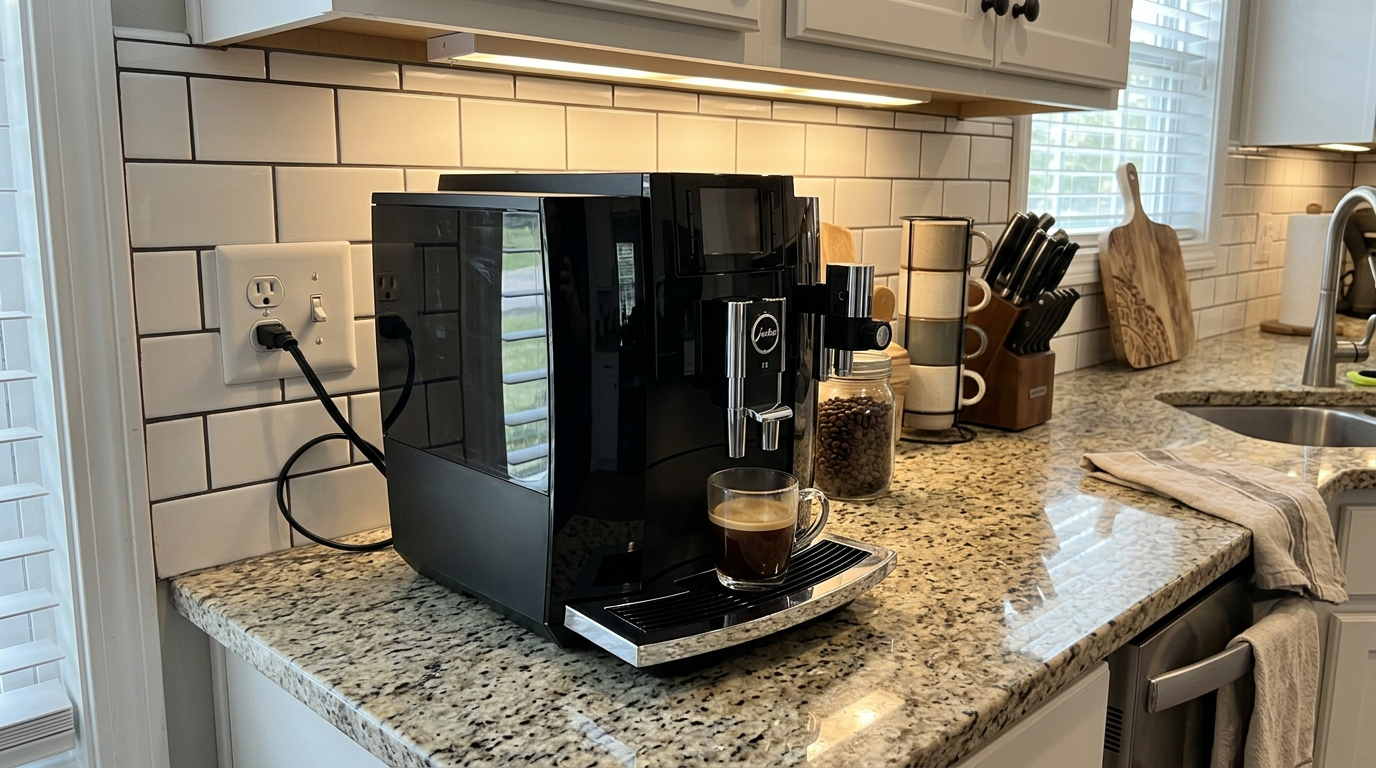
The E8’s espresso is smooth and consistent, but medium-dark beans suit its grinder best.
My espresso ratings
My scores out of 10 for body, crema, flavor and consistency, same medium-dark beans.
The Miele has one more edge for espresso drinkers: the heated cup warmer on top. A shot pulled into a warm cup measured about 162°F, against about 151°F in a cold cup from the cupboard.
On the E8, I warmed cups with a splash of hot water instead. It works, but it’s one more step every morning.
| What you taste | Likely cause | First fix on either machine |
|---|---|---|
| Sour, thin, watery | Under-extraction✕Under-extractionWhen water doesn’t pull enough flavor from the coffee. The shot tastes sour, thin and watery. or a long shot | Shorten the portion or grind finer |
| Bitter, harsh | Over-extraction | Grind one step coarser |
| Pale crema that fades fast | Stale beans | Use beans within a few weeks of roasting |
| Lukewarm shot | Cold cup | Warm the cup first |
Long coffee and big mugs
Strong, full-flavored long coffee is something most fully automatic machines get wrong. Both of these get it right, in different ways.
The E8’s long coffee became my morning mug. I set it to 150 ml, about 5 ounces, at the highest temperature, and it delivered about 140 grams with a dense, durable crema and a soft, almond-like sweetness.
It also has a real two-step americano, which pulls an espresso and then adds hot water through a separate path, so the cup stays clean instead of bitter.
The Miele goes bigger. A single coffee tops out at around 8 ounces, and with DoubleShot the machine grinds a second portion halfway through, so the big mug keeps its strength.
Same-size long coffee on the Miele
My ratings out of 10 for body and flavor, same beans and cup size.
Side by side, the DoubleShot mug was visibly darker and tasted fuller, with more chocolate and less watery bitterness.
For a weekend breakfast, the Miele’s coffee pot mode filled a carafe with about 30 ounces. The E8 has nothing like it, so for a crowd you’re making mug after mug.
Our tip: Save DoubleShot into the Miele’s long coffee setting for any mug over about 6 ounces, because that’s where a single dose starts to taste thin.
Find Out the Price TodayMilk drinks
This is the section that decides the matchup for most buyers, and it’s the clearest win in the comparison.
The E8 draws milk through a silicone hose from a carton, and its foam is excellent: dense microfoam✕MicrofoamMilk foam with bubbles so small you can barely see them. It feels silky and glossy, which is what a good flat white or cappuccino needs. with fine bubbles and a silky feel. It pours the milk first and the espresso second.
The Miele uses a two-tube milk line that works the milk twice, and it builds a thicker, glossier cap that held its shape to the last sip. Flat whites were silky and pourable, and latte macchiatos layered cleanly into milk, espresso and foam.
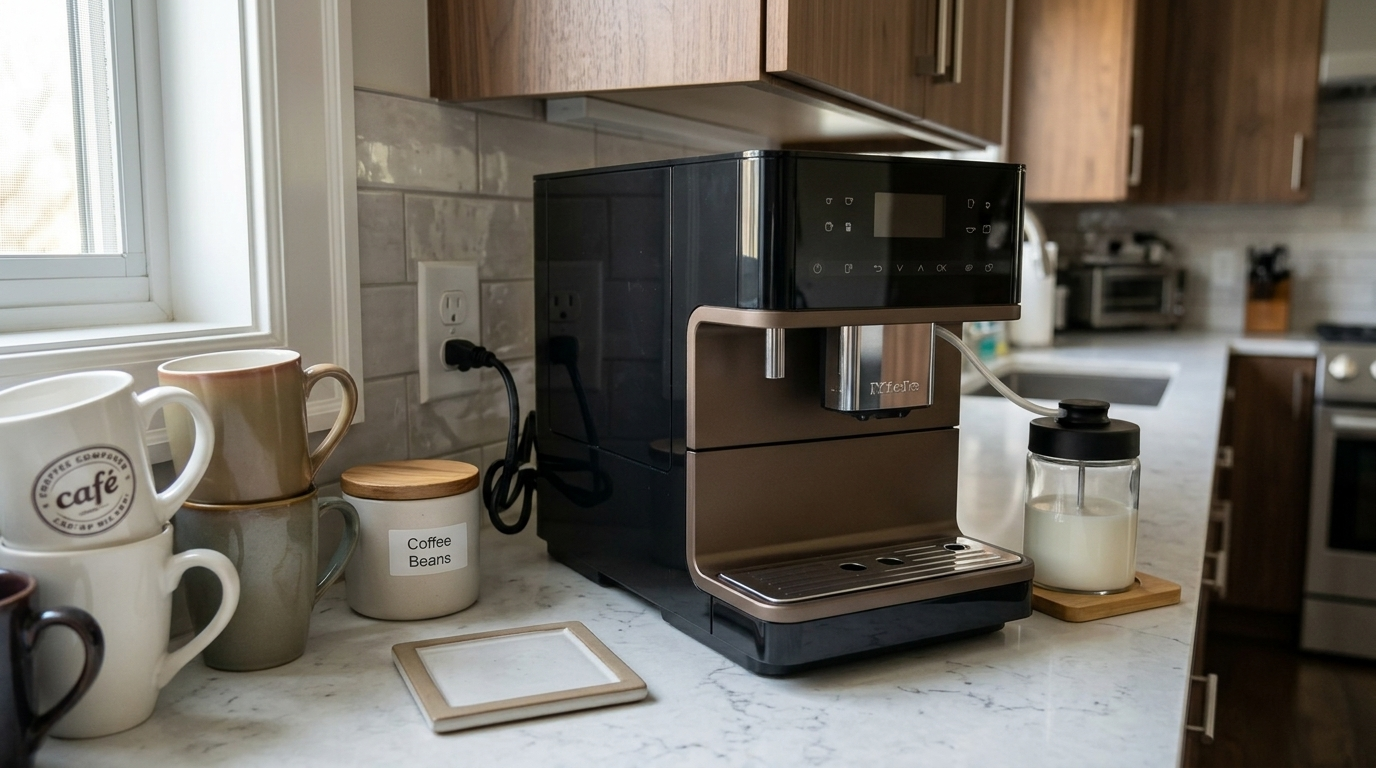
Cappuccino foam on the Miele was dense, glossy and long-lasting.
The glass jug vs the carton hose
The Miele ships with a glass milk container. It sits beside the machine during milk drinks, goes straight into the fridge afterwards and shows exactly how much milk is left.
There’s also a steel milk rod if you’d rather use a carton. The one niggle is storage: the new two-tube line doesn’t fit neatly in its spot inside the machine, so mine lived coiled beside it.
The E8 has no container in the box. Its hose goes into a carton or any jug you own, which is simpler but less tidy.
How each milk foamed on the Miele CM 6360
My ratings out of 10 for texture, stability and temperature. On the E8, whole milk at about 3.8% fat was also my favorite, with oat and semi-skimmed close behind.
| Milk drink | Jura E8 | Miele CM 6360 |
|---|---|---|
| Cappuccino | One touch, extra-shot option | One touch, plus cappuccino Italiano |
| Flat white | One touch, extra-shot option | One touch |
| Latte macchiato | One touch, extra-shot option | One touch, clean layers |
| Cortado | One touch | No |
| Café latte and café au lait | No | One touch |
| Two milk drinks at once | No | Yes, OneTouch for Two |
| Milk container | Hose into a carton | Glass container included |
Our tip: Use cold milk straight from the fridge on both machines, because warm milk makes big, loose bubbles that collapse fast.
Drink temperature
If you like a properly hot cappuccino, read this section twice.
My frothed milk on the E8 measured about 50°C, or 122°F. That is pleasant to sip straight away, but it sits right at the bottom of the range baristas aim for, and there’s no milk temperature setting to raise it.
The Miele’s milk drinks finished at about 60 to 65°C, or 140 to 149°F. That’s squarely in the zone where milk tastes sweetest, which is also what university research on cappuccino milk points to as the ideal for flavor and foam.
Finished drink temperatures I measured
Probe thermometer readings straight after brewing, highest coffee temperature on both machines.
For milk drinks on the Miele, I actually used a medium temperature. The milk tasted sweeter and the foam held up better than on the maximum setting.
Our tip: Keep a few espresso cups on the Miele’s heated cup warmer, so the first shot of the morning doesn’t cool in a cold cup.
Hot water and tea
If anyone in your house drinks tea, the Miele is the easy pick.
It has six tea programs: black, fruit, herbal, green, white and Japanese. Each dispenses water at a suitable temperature, and a tea timer beeps when the tea has steeped. I used the green tea program most afternoons, and it stopped me from over-steeping.
The E8’s hot water is handy for americanos and lighter teas. At its highest setting, my cup measured about 176 to 185°F, because water rushes through the thermoblock✕ThermoblockA compact heater that warms water as it flows through a metal block, instead of keeping a tank of water hot. It heats up fast but can run cooler on long pours. quickly rather than sitting and heating.
That’s fine for green and white tea, but a little cool for strong black tea, which wants water close to boiling.
| Tea type | Ideal water | Jura E8 | Miele CM 6360 |
|---|---|---|---|
| Green tea | 158–176°F | Yes | Yes, green or Japanese program |
| White tea | 167–185°F | Yes | Yes, white program |
| Herbal tea | 194–212°F | Fair | Yes, herbal program |
| Black tea | 203–212°F | A bit cool | Yes, hottest program |
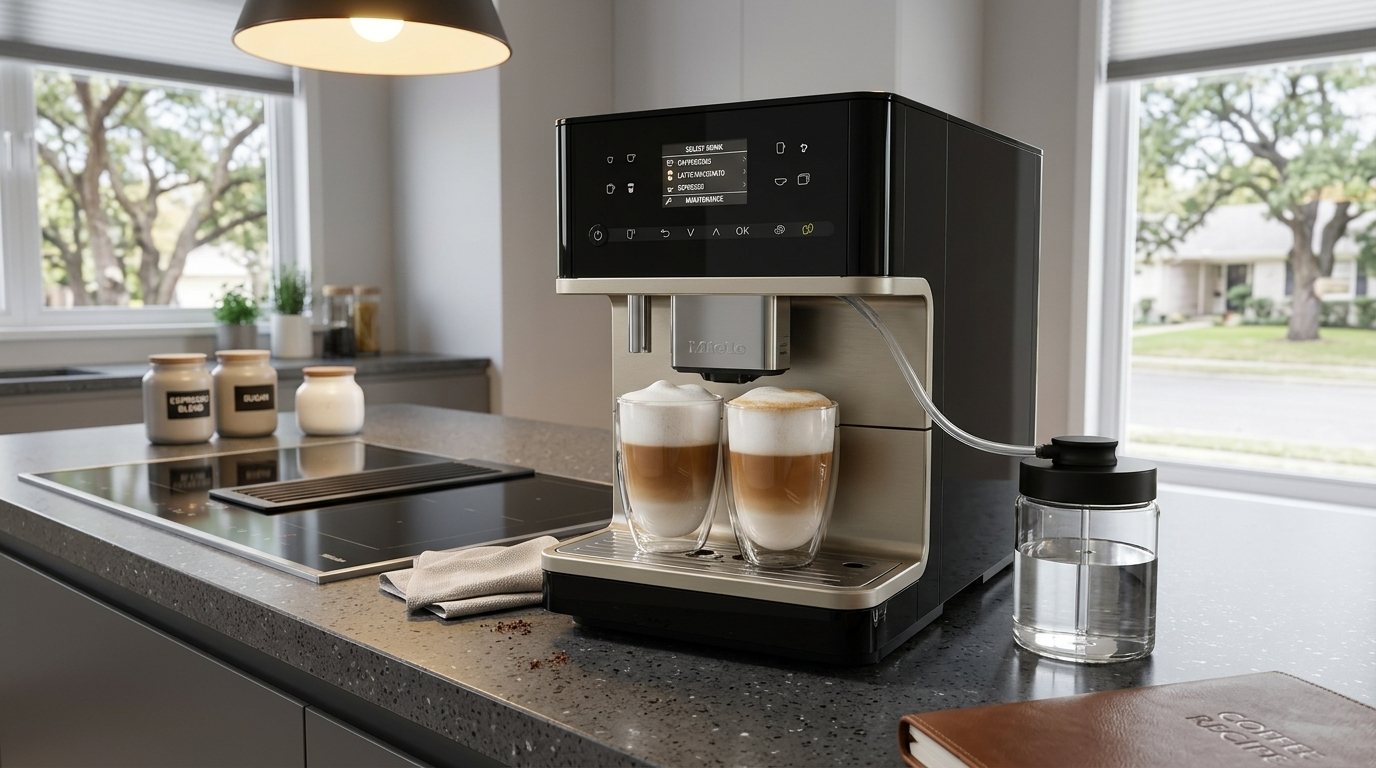
Six tea programs and a timer turn the Miele into a tea station too.
Our tip: Keep a kettle if you drink strong black tea and buy the E8, because its hot water tops out below what black tea needs.
Cleaning and upkeep
Daily cleaning is close. The difference is what you can see and touch.
On the E8, the frothing head drops down from the side, and its air valve, connector and silicone nozzle come apart without tools. I rinsed them every day, which keeps milk solids out of the tiny air channels.
Its pre-ground chute is fully removable too. Coffee oils and moisture build up in a chute, so being able to wash it weekly is a real hygiene win.
On the Miele, you follow the on-screen steps to rinse both milk tubes after milk drinks, wash the glass container and pull the brew unit out weekly. The magnetic milk connection comes apart for a proper wash.
My daily hands-on cleaning time
My estimate of hands-on time per day, not counting automatic rinses.
| When | Jura E8 | Miele CM 6360 |
|---|---|---|
| After milk drinks | Rinse frother parts | Rinse milk pipework, wash the jug |
| Daily | Empty tray and grounds | Empty tray and grounds |
| Weekly | Wash the pre-ground chute | Rinse the brew unit under the tap |
| When prompted | Brew unit tablet, milk cleaner | Clean milk pipework, degrease brew unit |
| Water care | Filter change, tracked automatically | Descale, based on hardness setting |
Our tip: Leave the E8’s frother parts and the Miele’s milk connector on a clean towel overnight, so they dry fully before the morning.
Noise
The Miele is the quieter machine, and you notice it at 6 a.m.
I measured about 60 to 63 dB while it was grinding and about 55 dB while it was brewing, with a phone meter at about 20 inches. That’s about the level of normal conversation.
The E8’s grinder is quick, but the gears that move its brew unit are fairly loud. You hear a mechanical clunk during preparation and again when the puck drops.
How loud each felt, my ranking
Relative loudness from my side-by-side use. Shorter bars are quieter.
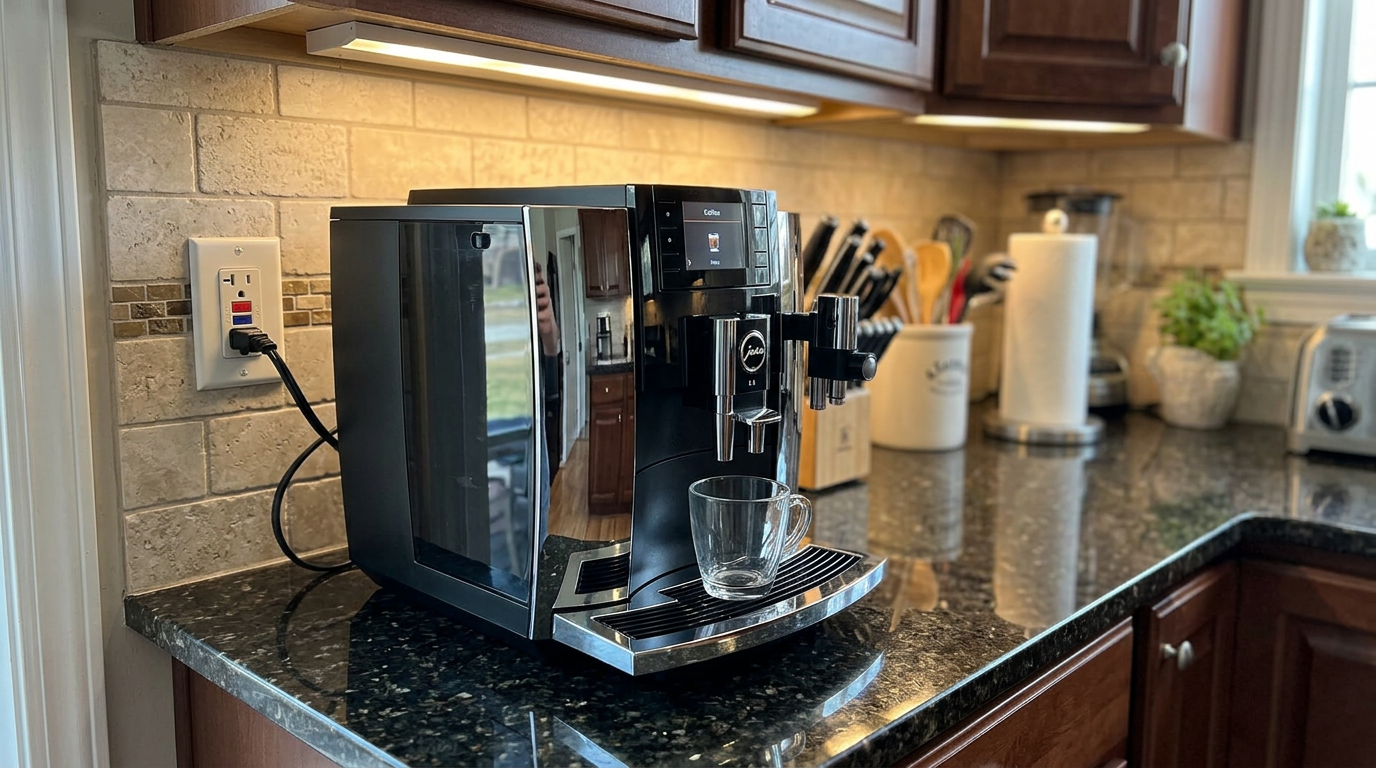
The E8’s cup light helps in a dark kitchen, but its brew gears are the louder of the two.
Capacity, beans and supplies
This is the one area where the E8 clearly pulls ahead.
Its tank holds about 64 ounces against the Miele’s 61, and its grounds container takes about 16 pucks against the Miele’s 10. With four of us, I emptied the Miele’s grounds every day, and the E8’s every other day.
The hoppers are close: about 10 ounces on the E8 and about 10.6 ounces on the Miele, so a standard bag nearly fits in either.
Drinks per full tank
Rough maths allowing for rinse water. Your numbers depend on cup size.
Use fresh whole beans within a few weeks of the roast date on both. Medium and medium-dark roasts worked best, and they suit the E8’s grinder in particular.
Avoid very oily or flavored beans, which can clog grinders and chutes over time. When the grounds bin fills, the used pucks are excellent for the compost.
| Bean type | Jura E8 | Miele CM 6360 |
|---|---|---|
| Medium-dark blend | Best espresso, finest setting | Excellent milk drinks, very good espresso |
| Medium roast | Good long coffee | Excellent with DoubleShot |
| Light roast | Bright, extend the shot | Finer grind plus DoubleShot |
| Very dark, oily | Avoid | Avoid |
Our tip: Buy a bag of beans you can finish in two or three weeks, because both grinders show off fresh coffee far better than stale.
Real-life scenarios
Specs only go so far. These are the moments where one machine clearly pulled ahead during my testing.
Everyone pressed their own name and got their own drink. On the E8, someone always had to tweak a shared setting.
The button next to each drink made it obvious. Guests worked the E8 out without asking me anything.
About 145°F in the cup versus about 122°F on the E8, with no cup warming needed.
The green tea program and timer handled the tea, so nobody needed the kettle.
Bigger tank, bigger grounds bin and a filter it tracks itself. I touched the E8 less than the Miele.
The coffee pot mode filled a carafe, and OneTouch for Two handled the milk drinks in pairs.
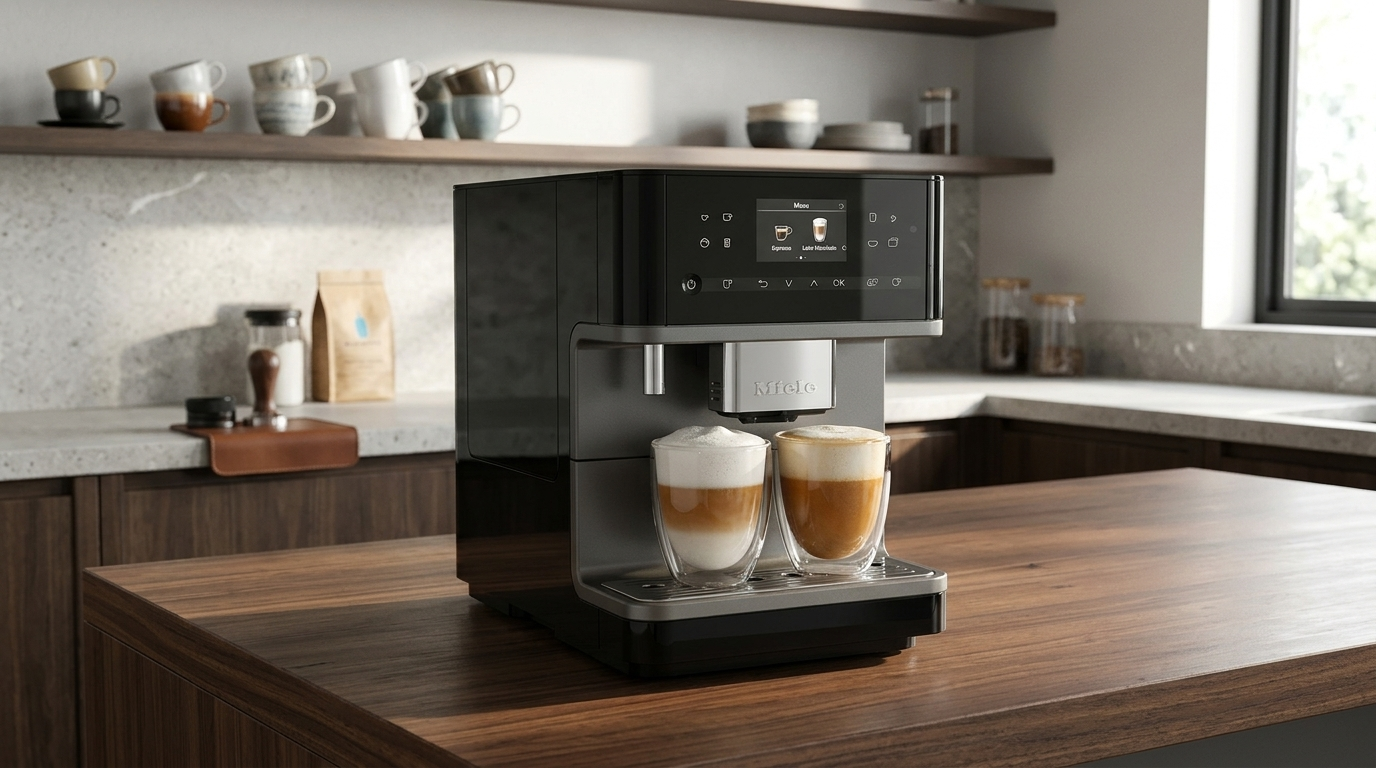
In a busy family kitchen, the Miele’s named profiles earned their keep every morning.
My scorecard
These are my own scores out of 10. The first four come from my single reviews of each machine, and I added milk temperature and household sharing because they decide this matchup.
Jura E8
Jura E8 overall: 8.1 out of 10.
Miele CM 6360
Miele CM 6360 overall: 8.7 out of 10.
Overall, I rate the Miele CM 6360 8.7 and the Jura E8 8.1. The Miele does more of the things a family notices every day. The E8 asks less of you, and it’s the one I’d hand to someone who never wants to read a menu.
See How Much You’ll SaveWhich one is right for you?
4 quick questionsWhich one should you buy?
It comes down to two questions. How many people share the machine, and how hot do you like your milk?
If the answers are “several” and “hot,” the Miele is the easy call. If it’s one or two of you and you value simplicity over everything, the E8 will never ask much of you. For the wider picture beyond this matchup, see my guide to the best Jura coffee machines.
For the bigger picture, see my Jura vs Miele brand comparison, my guide to the best Miele coffee machine and my Miele CM 6160 vs CM 6360 head-to-head if you’re weighing the cheaper Miele too.
For a busy household, the Miele CM 6360 is the more complete machine.
- You want the simplest controls in the class
- You hate tracking filters and maintenance
- You want the biggest tank and grounds bin
- You sip milk drinks straight away
- You like very hot cappuccinos
- You drink strong black tea from the machine
- You want to rinse the brew unit yourself
- Three or more people share the machine
- You drink milk drinks most days
- You want a strong big mug or a coffee pot
- Someone at home drinks tea
- You want zero menus and settings
- You fill a huge travel mug every morning
- You hate emptying a small grounds bin
For most homes, my pick is the Miele CM 6360. Hotter milk, finer foam, eight named profiles, DoubleShot mugs, six tea programs and a removable brew unit add up to the more complete machine, and it was the quieter one in my kitchen. Shorten the factory espresso on day one and it pulls the better shot too.
The Jura E8 is the smarter buy if simplicity matters more than anything. Its buttons are the clearest I’ve used, it tracks its own filter, and its bigger bins mean fewer trips to the sink. Pre-warm your cups and you’ll forgive its cooler milk.
Whichever you choose, buy fresh whole beans, use cold milk and keep up with the milk cleaning. Both machines reward a little care with years of good coffee.
Jura E8 vs Miele CM 6360 specifications
From manufacturer specifications and my own testing.
| Jura E8 | Miele CM 6360 | |
|---|---|---|
| Model | Jura E8, 15648 | Miele CM 6360 MilkPerfection |
| Type | Fully automatic with milk system | Fully automatic with milk system |
| Drinks | 17 | 18, plus coffee pot |
| User profiles | None | 8, with names |
| Pump pressure | 15 bar | 15 bar |
| Power | 1,450 W | 1,450 W |
| Heating | Thermoblock with intelligent preheating | Programmable per drink |
| Grinder | Professional Aroma Grinder, steel conical | Steel conical, adjustable |
| Brew unit | Sealed | Removable, AromaticSystem |
| Milk system | Hose, fine-foam spout | Two-tube line, glass container included |
| Milk drink temperature | About 122°F measured | About 140–149°F measured |
| Tea | Hot water, max about 176–185°F | Six tea programs and a timer |
| Display | 3.5-inch color with buttons | Text display with direct buttons |
| Water filter | CLEARYL Smart+, auto detection | Water hardness setting |
| App | J.O.E. app | Miele app over Wi-Fi |
| Bean hopper | About 10 oz | About 10.6 oz |
| Water tank | About 64 fl oz | About 61 fl oz |
| Grounds container | About 16 servings | About 10 servings |
| Cup warmer | No | Heated |
| Dimensions (W x H x D) | 11 x 13.8 x 17.6 in | 9.9 x 14.1 x 16.8 in |
| Weight | About 21.2 lb | About 22 lb |
How I tested and compared them
I used each machine as my household’s everyday coffee maker for four weeks, making espresso, ristretto, long coffee, americanos, cappuccinos, flat whites, latte macchiatos and tea water. A second HouseholdMe tester shared both machines, and we wrote the notes together.
I weighed doses and yields, measured drink and water temperatures with a probe thermometer, measured noise with a phone meter at about 20 inches and foamed whole, 2%, skim and oat milk.
I set up the Miele’s profiles, compared standard and DoubleShot long coffee side by side, ran every cleaning routine on both and then checked my notes against Jura’s and Miele’s specifications and owner documentation.
- Coffee: dose, crema, body and consistency.
- Milk: foam texture, temperature and drink range.
- Workflow: controls, profiles, app and daily routine.
- Ownership: noise, cleaning, capacity and footprint.
Jura E8 vs Miele CM 6360 FAQ
Is the Miele CM 6360 better than the Jura E8?
For most households, yes. In my testing, the Miele made hotter milk drinks with finer foam, offered eight named profiles, a removable brew unit, DoubleShot and six tea programs. The Jura E8 is easier to use and has a bigger tank and grounds bin.
Which makes hotter milk drinks?
The Miele CM 6360. Its milk drinks finished at about 140 to 149°F, while the Jura E8’s frothed milk measured about 122°F. Pre-warming your cup helps a lot on the E8.
Which makes better espresso?
At factory settings, the Jura E8. Once I shortened the Miele’s espresso to about 1.2 ounces and raised the coffee amount, the Miele pulled the fuller, sweeter shot.
Can you remove the brew unit?
On the Miele CM 6360, yes. It slides out through a side door, and I rinsed it weekly. The Jura E8’s brew unit is sealed and cleaned with a tablet when the machine asks.
Does the Jura E8 have user profiles?
No. Everyone shares the same saved drinks, though you can change strength and volume while a drink is running. The Miele CM 6360 has eight named profiles.
Which is better for tea?
The Miele. It has six tea programs and a timer. The E8’s hot water topped out around 176 to 185°F, which suits green tea but is a little cool for black tea.
Which one is quieter?
The Miele CM 6360. I measured about 60 to 63 dB while grinding and about 55 dB while brewing. The E8’s grinder is quick, but its brew gears make a noticeable clunk.
Which is smaller?
The Miele is narrower and shallower at about 9.9 x 16.8 inches, against 11 x 17.6 inches for the E8. The Miele is slightly taller at about 14.1 inches.
Does the Miele CM 6360 come with a milk container?
Yes, a glass milk container is in the box, along with a steel milk rod if you prefer to use a carton. The Jura E8 draws milk through a hose from a carton or your own jug.
Can both make two drinks at once?
Both can make two espressos or two coffees. Only the Miele can make two milk drinks at once, with OneTouch for Two.

- Our hands-on Jura E8 review
- Our hands-on Miele CM 6360 review
- Jura and Miele product specifications and owner documentation
- General espresso brewing and maintenance guidance
- Cappuccino quality and milk foaming temperature, University of Camerino
- A living lexicon for brewed coffee, University of Oregon
- Composting and Coffee Grounds, Cornell University