Instant Pot Duo vs Zojirushi NS-TSC10
Instant Pot or rice cooker is a question I get all the time, so I put the Instant Pot Duo 6 Qt and the Zojirushi NS-TSC10 side by side. They are different appliances: the Instant Pot is a 7-in-1 pressure cooking✕Pressure cookingCooking in a sealed pot where trapped steam raises the boiling point of water, so food cooks hotter and much faster. machine with a rice program, while the Zojirushi is a dedicated Micom✕MicomShort for microcomputer. A Micom rice cooker uses a chip and fuzzy logic to adjust heat and timing as it soaks, cooks, steams and rests the rice. rice cooker. I used each as my main cooker for four weeks, and rice was where they split most clearly. The Zojirushi made the best rice I have cooked at home. The Instant Pot made sticky basmati, but it also made tender lamb in 30 minutes and beans without soaking.
We choose products independently. We may earn a commission when you buy through our links. Affiliate policy
Jargon helpNew to rice cookers? Tap any dotted term to see what it means.
In this comparison
The Zojirushi NS-TSC10 makes much better rice. Long-grain white rice came out fluffy, separate and evenly cooked every time, with no scorching, and it handled brown, sticky, sushi and porridge rice beautifully. The Instant Pot Duo 6 Qt made basmati that was sticky and slightly overcooked, and even after three attempts it was not perfect. Buy the Zojirushi if you eat rice several times a week. Buy the Instant Pot if you want one appliance for stews, beans and one-pot dinners and can live with good-enough rice.
The two cookers
Specs checked November 26, 2026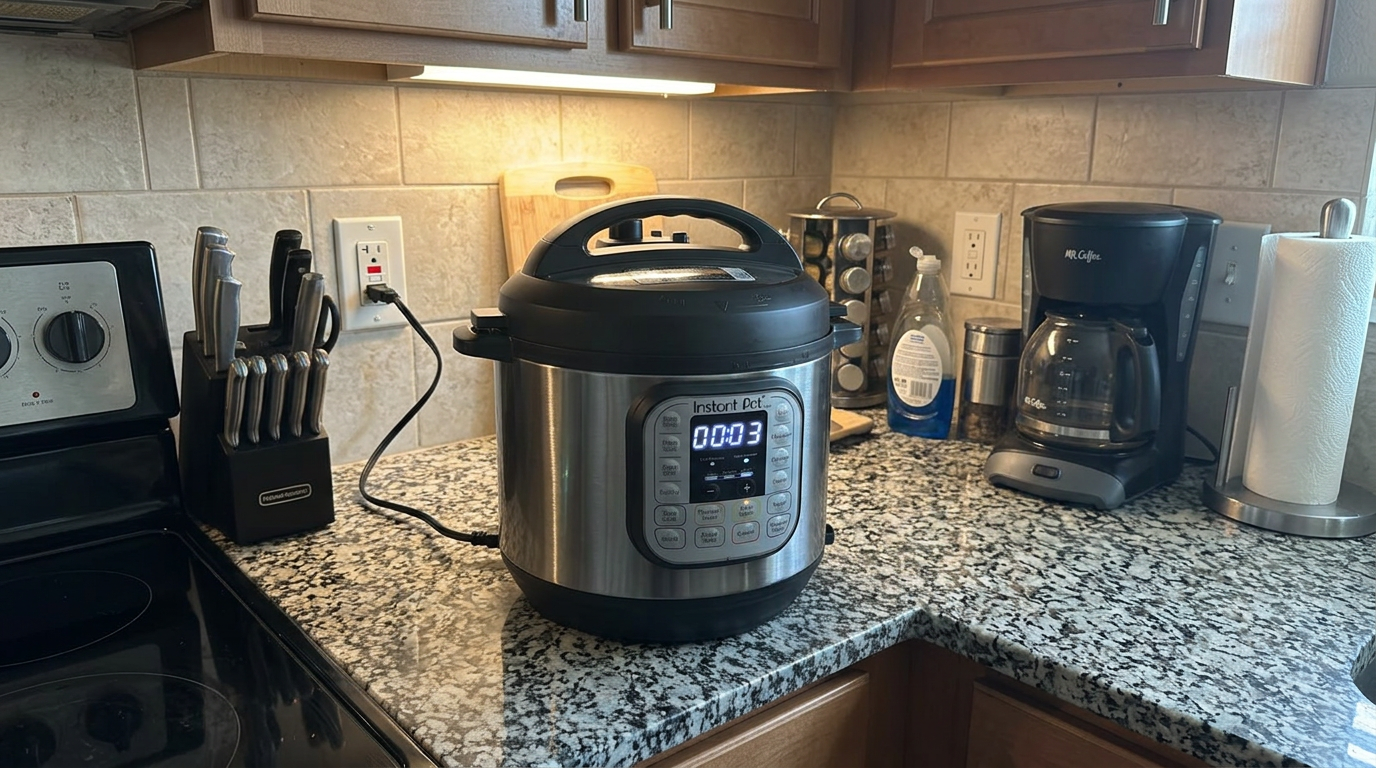
7-in-1 electric pressure cooker with a stainless steel pot: pressure cook, slow cook, rice, yogurt, steam, sauté and keep warm.
Check price on Amazon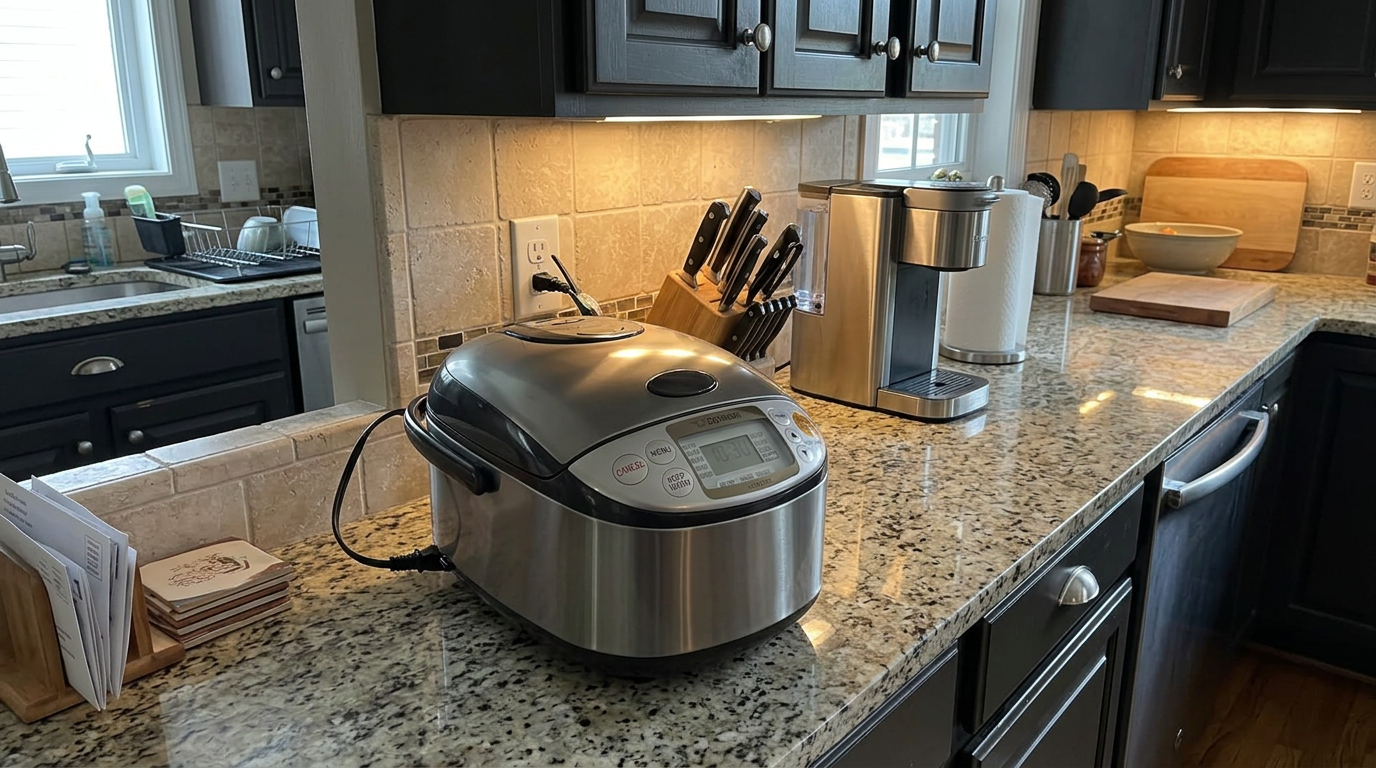
5.5-cup Micom rice cooker with eight menu settings, a delay timer, gentle keep warm, a steam tray and a retractable cord.
See Today’s PriceInstant Pot vs Zojirushi at a glance
- The Zojirushi made fluffy, evenly cooked rice every time.
- The Instant Pot’s basmati was sticky with the standard method.
- The Instant Pot is much faster and does far more than rice.
- If you eat rice most days, buy the rice cooker.
Head to head
The best result in each row is marked, based on my four weeks with each and the manufacturer specs.
The Zojirushi wins every rice row; the Instant Pot wins on speed, versatility and an easy-clean pot.
| Spec | Instant Pot Duo | Zojirushi |
|---|---|---|
| Long-grain white rice | Not tested beyond basmati | Fluffy, separate, 9.4 ✓ Best |
| Basmati | Sticky, best attempt still soft | Long, separate grains with less water ✓ Best |
| Brown rice | Not tested | Tender with a chew, 9.2 ✓ Best |
| Sticky and sushi rice | Not tested | Glossy, cohesive ✓ Best |
| Rice time | About 22 minutes ✓ Best | About 60 minutes regular white |
| Delay timer | Not covered in my test | Yes, 2 memory settings ✓ Best |
| Other cooking | Pressure, slow cook, sauté, yogurt, steam ✓ Best | Steam and cake, basic |
| Inner pot | Stainless, dishwasher safe ✓ Best | Nonstick, hand wash |
| Size and weight | About 14.5 lb | About 7 lb, handle, retractable cord ✓ Best |
| Rows won | 3 | 6 |
Six rows to the Zojirushi and three to the Instant Pot. For rice alone, it is not close.
Is It On Sale? Check NowInstant Pot vs Zojirushi pros and cons
Instant Pot Duo 6 Qt
- Tender meat and unsoaked beans in a fraction of the time
- Rice in about 22 minutes
- Dishwasher-safe stainless pot
- Basmati came out sticky
- Liquid ratios must be exact
- Display time excludes heat-up and release
Zojirushi NS-TSC10
- Fluffy, evenly cooked rice every time
- Delay timer and gentle keep warm
- Compact with handle and retractable cord
- Regular white rice takes about an hour
- Removable parts are hand wash only
- Steaming and cake settings are basic
Who should buy which cooker?
- Cooks who want one machine for dinners
- Stews, beans and one-pot meals
- Occasional rice eaters
- Families who eat rice most days
- Brown, sushi and sticky rice fans
- Small kitchens
How they differ
These two appliances solve different problems. The Instant Pot Duo is a 7-in-1 electric pressure cooker: pressure cooker, slow cooker, rice cooker, steamer, sauté pan, yogurt maker and food warmer, with 13 smart programs and a 1,000-watt heater. Rice is one program among many.
The Zojirushi is a 610-watt Micom✕MicomShort for microcomputer. A Micom rice cooker uses a chip and fuzzy logic to adjust heat and timing as it soaks, cooks, steams and rests the rice. rice cooker. It soaks, heats, simmers, steams and rests the rice in stages, adjusting as it goes, with eight menu settings: white/sushi, quick, mixed, porridge, sweet, brown, cake and steam.
Both use a version of the absorption method✕Absorption methodCooking rice in a measured amount of water until all of it is absorbed, with no draining. Both appliances use a version of it.: measured rice and water go in, and nothing is drained. The difference is control. The Instant Pot cooks rice hot and fast under pressure; the Zojirushi cooks it slowly and gently, step by step.
| Inside | Instant Pot Duo | Zojirushi NS-TSC10 |
|---|---|---|
| Type | 7-in-1 electric pressure cooker | Micom rice cooker and warmer |
| Power | 1,000 W | 610 W |
| Capacity | 6 quarts, about 6 servings | 5.5 cups uncooked, about 10 cups cooked |
| Rice programs | Rice program, plus manual pressure | White/sushi, quick, mixed, porridge, sweet, brown |
| Inner pot | Stainless steel, dishwasher safe | Nonstick with water lines, hand wash |
| Extras | Steaming rack | Steam tray, rice cup, spatula |
So the real question is not just which makes better rice, but how often you eat rice and what else you want your appliance to do.
The rice test: texture and taste
On the Zojirushi, I measured two cups of long-grain white rice with the supplied cup, rinsed it until the water ran almost clear, filled to the “2” line for white rice and pressed Start. About an hour later, the rice was moist and evenly cooked from top to bottom. After a gentle fluff, the grains were light and mostly separate, with no hard bits or scorched layer. It was better than my stovetop rice on its best day.
On the Instant Pot Duo, I followed the standard method for basmati: two cups soaked for 15 minutes and drained, three cups of cold water, four minutes at pressure and about ten minutes on Keep Warm before releasing. The whole process took about 22 and a half minutes. The rice was too sticky and slightly overcooked, with some grains soft and mushy and others holding their shape, and the basmati fragrance was faint.
My rice scores
Scores out of 10 from my single reviews.
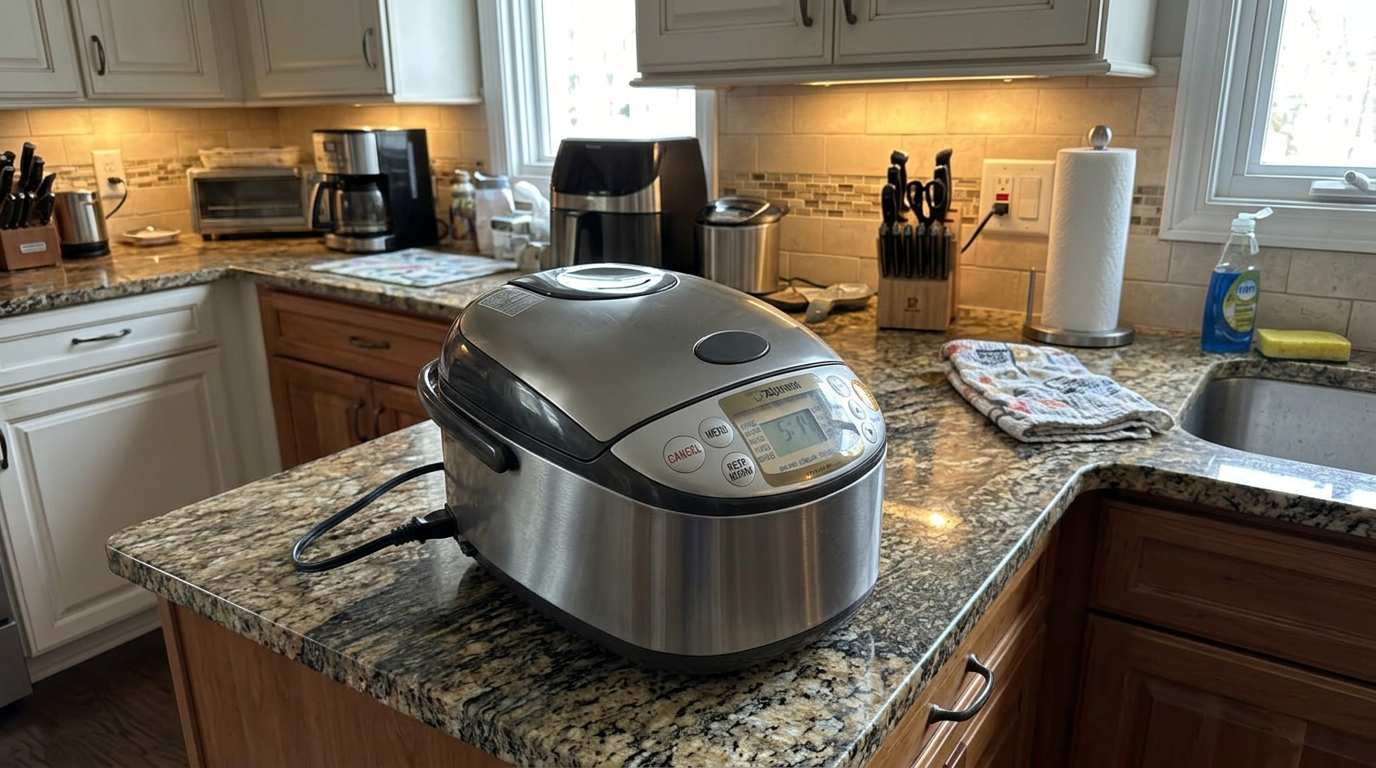
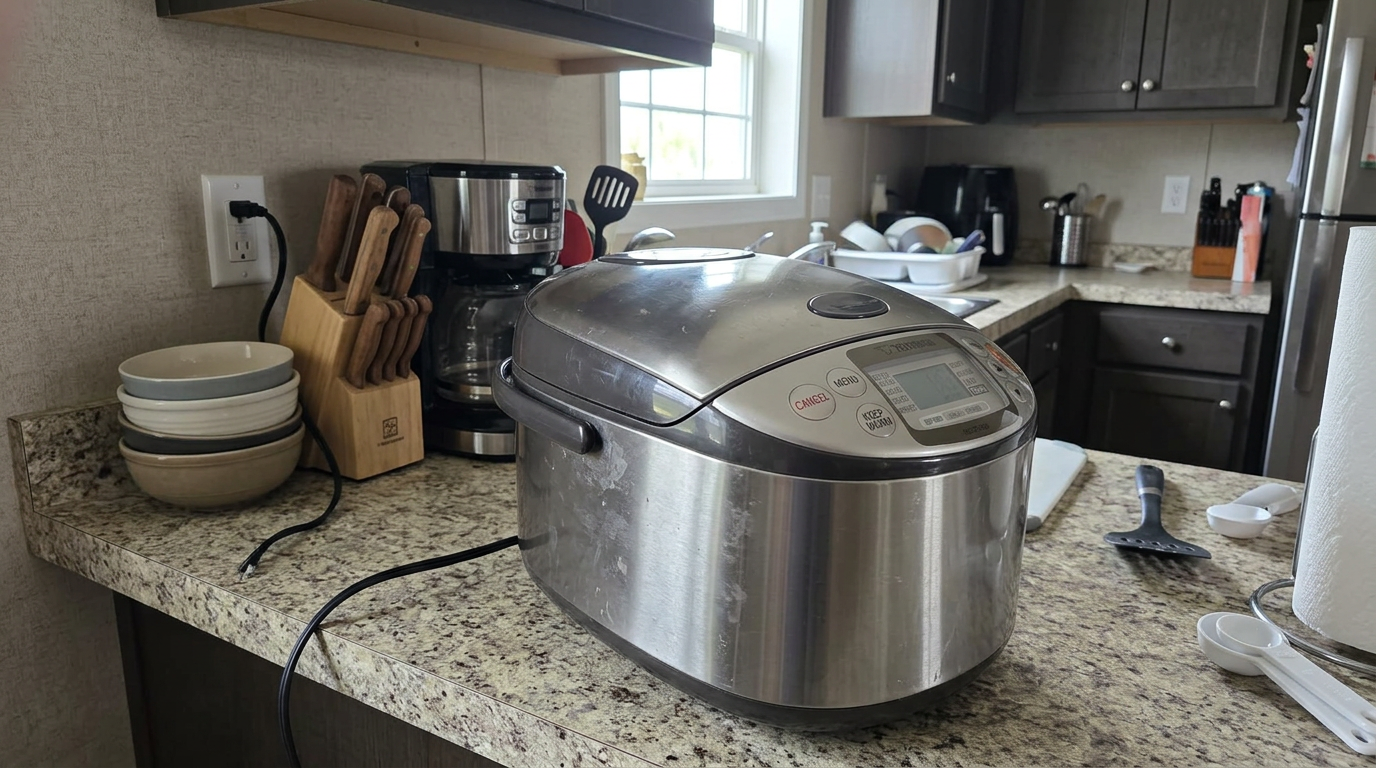
Rice from the Zojirushi: evenly cooked, with no scorched layer.
If rice texture is your priority, this is the result that matters most.
Basmati: three tries on the Instant Pot
Because the first Instant Pot Duo batch was sticky, I tried twice more. With a little less water and a quicker release, it improved. With the rice rinsed well and just 2.25 cups of water, it was my best batch, but still not perfect, and it never matched a careful stovetop absorption method. The method also needs a fairly large batch, which is not ideal for a small serving.
On the Zojirushi, basmati needed only one adjustment: slightly less water than the white line and a thorough rinse. That gave me long, separate grains with a lovely fragrance. Jasmine on the White setting came out soft, fragrant and lightly clingy, exactly as it should be.
| Attempt | Water for 2 cups rice | Release or setting | Result |
|---|---|---|---|
| Instant Pot 1 | 3 cups | About 10 minutes, then quick | Sticky, a little mushy |
| Instant Pot 2 | 2.5 cups | About 5 minutes, then quick | Better, still soft |
| Instant Pot 3 | 2.25 cups, rinsed well | Quick after 3 minutes | Best, still not perfect |
| Zojirushi | Slightly below the white line | White setting | Long, separate grains |
Brown, sticky, sushi and porridge rice
This is where the Zojirushi’s dedicated settings earn their place. Brown rice came out tender with a pleasant chew, without splitting or turning mushy. On the Sweet setting, I got glossy, cohesive sticky rice for a mango sticky rice dessert, the easiest I have made at home. Short-grain rice soaked for 30 minutes and cooked on White came out glossy, tender and slightly sticky, perfect for sushi. The Porridge setting made smooth, creamy congee.
I only tested basmati on the Instant Pot Duo, so I have marked brown, sticky, sushi and porridge rice as not tested. The Duo does have Rice and Porridge programs, and in my chicken and rice dinners the rice cooked through well enough for a one-pot meal.
| Rice type | Instant Pot Duo | Zojirushi NS-TSC10 |
|---|---|---|
| Long-grain white | Not tested | Fluffy, 9.4 |
| Basmati | Sticky, 6.2 | Long, separate grains |
| Jasmine | Not tested | Soft, fragrant |
| Brown | Not tested | Tender with a chew, 9.2 |
| Sweet sticky rice | Not tested | Glossy, cohesive, 9.2 |
| Sushi rice | Not tested | Glossy, tender |
| Porridge | Not tested | Smooth, creamy, 9.0 |
| Mixed rice | In one-pot chicken and rice | Flavorful, even, 8.8 |
Short-grain and sticky rice cling together because they have more amylopectin✕AmylopectinA starch that makes rice grains cling together. Short-grain and sticky rice have more of it; long-grain rice like basmati has less.; long-grain rice has less. The Zojirushi’s separate water lines for each type take the guesswork out of that.
Speed: 22 minutes or an hour?
Speed is the Instant Pot Duo’s clear advantage. My basmati took about 22 and a half minutes from start to finish, including the heat-up, four minutes at pressure and the rest on Keep Warm. Be aware that the time on its display is never the total time: the cooker first builds pressure for about 10 to 15 minutes, then counts down, then releases.
The Zojirushi’s regular white rice cycle takes about an hour, because it soaks, heats, simmers, steams and rests the rice in stages. Its Quick setting is noticeably faster; quick rice was good, though slightly firmer and less fluffy. Brown rice takes longer than white.
Rice cooking time
Total time from start in my tests. Shorter is faster.
The hour matters less than it sounds once you use the Zojirushi’s delay timer. On busy days, I loaded the rice in the morning and came home to fresh rice.
Delay timer and keep warm
The Zojirushi’s delay timer was one of my favorite features. You set the time you want the rice finished, not when it should start, and the cooker works out the start time. It has two memory settings, which I used for breakfast and dinner. The display may use a 24-hour clock, so 17:00 means 5:00 p.m.
After cooking, the Zojirushi switches to Keep Warm and counts the hours. Rice stayed moist and pleasant for several hours when dinner ran late; after many hours, the bottom layer firmed up slightly.
The Instant Pot Duo also switches to Keep Warm after most programs, which was useful. I did not test a delay timer on it, so I have not compared that.
| Feature | Instant Pot Duo | Zojirushi NS-TSC10 |
|---|---|---|
| Delay timer | Not covered in my test | Yes, finish-time based, 2 memories |
| Keep warm | Yes, after most programs | Yes, gentle, counts the hours |
| Rice after several hours | Not tested | Moist; bottom firms after many hours |
In practice, the timer turned the Zojirushi’s slowest feature into a non-issue. I would load rice and water after breakfast, set a 6:00 p.m. finish and forget about it. With the Instant Pot, rice is something you start when you are ready to eat, which suits spontaneous cooks better than planners.
Ease of use
For rice, the Zojirushi takes almost all the thinking out. The supplied cup holds about 180 ml, not a standard US cup, and the pan has separate water lines for white, brown, sweet and porridge. Keep to the line and press Start. Using a standard US cup by mistake gave me firm rice.
The Instant Pot Duo is easy to learn for pressure cooking, but rice needs exact liquid ratios because almost nothing evaporates in a sealed pot. You also need to check that the valve is on Sealing every time; I forgot once and lost about ten minutes. For rice, I had to experiment with water and release times to get a good result.
| Ease of use | Instant Pot Duo | Zojirushi NS-TSC10 |
|---|---|---|
| Rice measuring | Your own ratios | Supplied cup and water lines |
| Things to remember | Valve on Sealing, release method | Use the supplied cup |
| Hands-on attention for rice | Release at the right time | None |
| Score | 8.6 | 9.0 |
Our tip: On the Zojirushi, always use the supplied rice cup with the water lines. On the Instant Pot, write down the water and release time that worked for your rice and repeat it exactly.
Beyond rice: what else each one cooks
This is where the Instant Pot Duo pulls ahead by a mile. It turned a fatty lamb cut tender in 30 minutes for a one-pot lamb and orzo, cooked unsoaked pinto beans in about 45 minutes, made beef stew in about an hour and fifteen minutes instead of three, and produced a silky crème caramel and a moist steamed ginger pudding. Its Sauté function browns meat in the same deep pot, and it slow cooks and makes yogurt too.
The Zojirushi’s extras are basic. The Mixed setting made a flavorful stock rice with peas and carrots, the steam tray handled broccoli, carrots and dumplings in small portions, and the Cake setting made a moist, pale-topped cheesecake. It is not an oven or a multi-cooker replacement.
| Dish | Instant Pot Duo | Zojirushi NS-TSC10 |
|---|---|---|
| Lamb and orzo | Excellent, 9.2 | Not possible |
| Unsoaked beans | Very good, 8.8 | Not possible |
| Beef stew | Excellent, 9.0 | Not possible |
| Custard or cake | Crème caramel, 9.0 | Cheesecake, 7.8 |
| Steamed vegetables | Very good on the rack | Good, small tray |
| Rice with stock and vegetables | One-pot chicken and rice | Mixed setting, 8.8 |
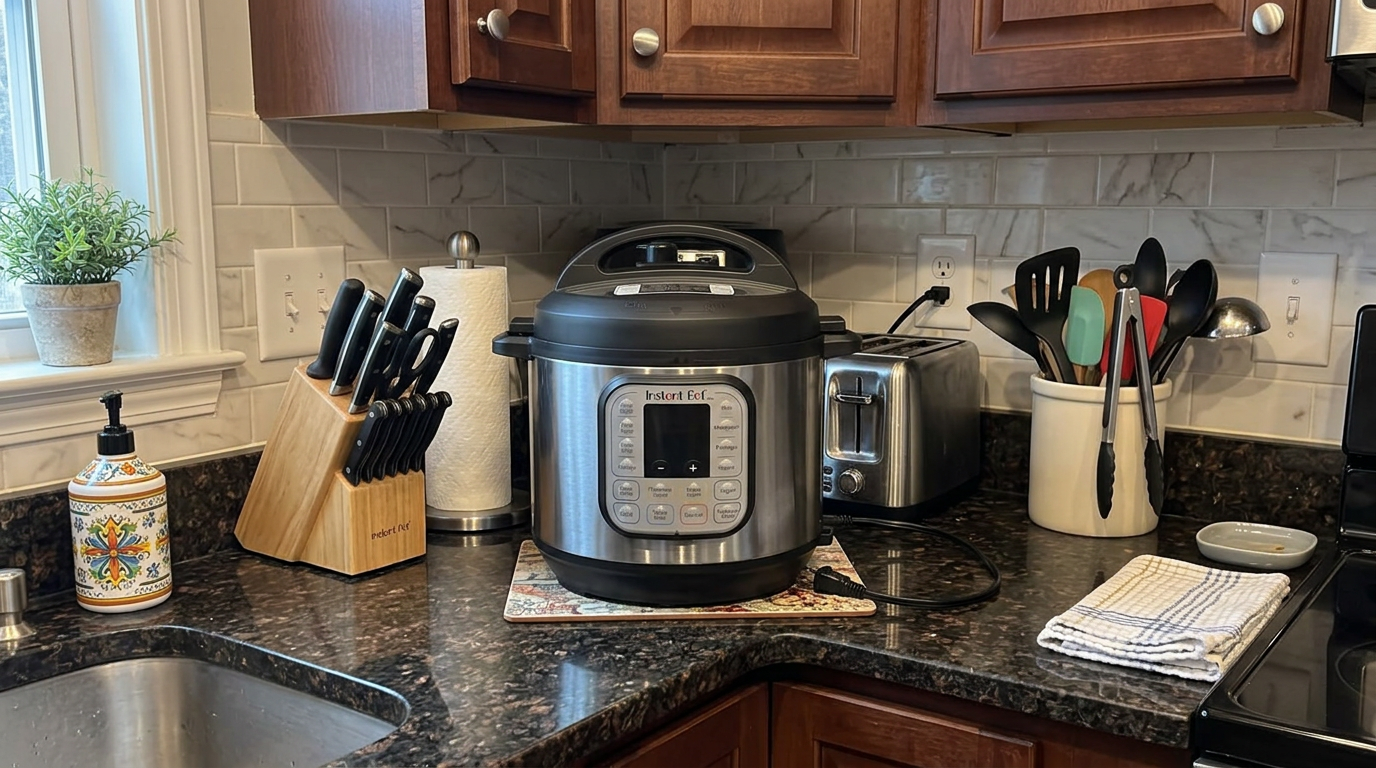
The Instant Pot’s stainless pot handles searing, pressure cooking and serving.
If you are choosing one appliance for a small kitchen, think about what you cook in an ordinary week. In mine, the Instant Pot was used three or four nights for mains, while the Zojirushi was used almost daily for rice. Both earned their counter space, for very different reasons.
One-pot rice dinners in the Instant Pot
Where the Instant Pot Duo really shines with rice is inside a full meal. A typical weeknight: brown chicken thighs on Sauté, add rice, stock and peas, then pressure cook for about ten minutes. Dinner was ready in about 35 minutes, with ten minutes hands-on and one pot to wash.
The Zojirushi can make a simple mixed rice with stock and vegetables, but it cannot brown meat, so a full one-pot dinner is not really its job. With the Zojirushi, I cooked the main dish on the stove while the rice looked after itself.
| Weeknight | Instant Pot Duo | Zojirushi NS-TSC10 |
|---|---|---|
| Chicken and rice | About 35 min, one pot | Rice only, main on the stove |
| Hands-on time | About 10 minutes | A few minutes for rice |
| Pots to wash | One | Rice pan plus your stove pan |
If you mostly eat rice as part of a one-pot meal, the Instant Pot’s softer rice matters less.
Capacity and portions
The Zojirushi cooks up to 5.5 cups of uncooked rice in its own cup, roughly 10 cups cooked. For my family of four, two to three cups was plenty for dinner and leftovers, and it cooked a single cup just as well, so it suits small households too.
The Instant Pot Duo’s 6-quart pot serves about six people and fits a full beef stew or a pound of dried beans. Its rice method needs a fairly large batch, though, so it is not ideal for one small serving of rice.
| Uncooked rice | Zojirushi cooked yield | Feeds |
|---|---|---|
| 1 cup | About 2 cups | 1 to 2 |
| 2 cups | About 4 cups | 3 to 4 |
| 3 cups | About 6 cups | 4 to 6 |
| 5.5 cups | About 10 cups | A gathering |
For small rice portions, the Zojirushi is more flexible. For big family dinners beyond rice, the Instant Pot holds more.
One more practical point: because the Zojirushi measures in its own rice cup, recipes written for US cups need converting. I simply used the supplied cup for rice and filled to the matching line, and ignored recipe water amounts entirely. On the Instant Pot, I used ordinary measuring cups and wrote down the ratio that worked, because the sealed pot leaves no room for guesswork.
Cleaning, size and storage
The Instant Pot Duo’s stainless steel inner pot and lid are dishwasher safe, and the pot came out spotless every time; after searing, I soaked it for ten minutes. Its sealing ring absorbs smells after spicy or garlicky dishes, so I washed it after each savory cook. At about 14.5 pounds and roughly a foot wide and tall, it is easy to move, but I kept it on the counter because I used it nearly every day.
The Zojirushi’s nonstick pan washes with a soft sponge in a minute, and the inner lid detaches for hand washing; Zojirushi recommends hand washing removable parts. At about 7 pounds, with a fold-down handle and a retractable cord, it went from counter to pantry with one hand. After three weeks, the pan was unmarked because I only used the supplied spatula.
| Care | Instant Pot Duo | Zojirushi NS-TSC10 |
|---|---|---|
| Inner pot | Stainless, dishwasher safe | Nonstick, hand wash |
| Smell | Sealing ring absorbs odors | None noted |
| Weight | About 14.5 lb | About 7 lb |
| Storage | About a foot wide and tall | About 10 x 14 x 8.5 in, handle, retractable cord |
| Noise | Quiet; loud steam on quick release | Almost silent; melody or beep |
Leftovers and meal prep
Rice from the Zojirushi made great leftovers. Chilled overnight, it was firmer and drier, perfect for fried rice the next day. On Sundays, I cooked a batch of brown and a batch of white back to back and portioned them for weekday grain bowls. Reheated with a splash of water and covered, it came back soft and fluffy.
The Instant Pot Duo was my meal-prep workhorse for everything else: on one Sunday I made broth, shredded chicken, pinto beans and crème caramel back to back, rinsing the stainless pot between rounds in a minute.
| Meal prep | Instant Pot Duo | Zojirushi NS-TSC10 |
|---|---|---|
| Best for | Broth, beans, chicken, desserts | Batches of white and brown rice |
| Back-to-back batches | Rinse the pot in a minute | Wash the nonstick pan gently |
Our tip: Refrigerate cooked rice within two hours, keep it cold and reheat it once until steaming hot throughout.
Compared with stovetop rice
Before these tests, I cooked most of my rice in a saucepan. It worked, but it needed attention: watching for boil-overs, turning the heat down at the right moment and hoping the bottom did not scorch.
With the Zojirushi, all of that disappeared. I measured, rinsed, added water to the line and walked away, and the rice was better and more consistent than my stovetop rice, with the stove free for the rest of dinner. It never scorched the bottom in my tests.
With the Instant Pot Duo, rice was faster and hands-off once the lid was locked, but my basmati was softer than a careful stovetop absorption method. For basmati in particular, a good saucepan beat it.
| Rice method | Attention needed | Result in my tests |
|---|---|---|
| Stovetop pot | Watch for boil-overs, adjust heat | Variable, sometimes scorched |
| Instant Pot Duo | Lock the lid, release on time | Fast, but sticky basmati |
| Zojirushi NS-TSC10 | None after Start | Fluffy and consistent |
Why the rice turned out so differently
Rice is mostly about controlling water and heat. In a saucepan, some water evaporates and you turn the heat down as it is absorbed. In the Instant Pot Duo’s sealed pot, almost nothing escapes, so the water you add is the water the rice absorbs. A little too much makes it mushy, and the high heat of pressure cooking leaves little margin. The rice also keeps cooking while it rests on Keep Warm before release, which softened my basmati further.
The Zojirushi works the opposite way. Its Micom chip soaks the grains, brings the water to a boil, holds a controlled simmer, then steams and rests the rice, adjusting heat as it goes. That slower, staged cycle is why it takes about an hour, and why the grains came out evenly cooked from top to bottom.
| Factor | Instant Pot Duo | Zojirushi NS-TSC10 |
|---|---|---|
| Heat | High, under pressure | Gentle, staged |
| Water margin | Small; nothing evaporates | Water lines for each rice type |
| Resting | Keeps cooking before release | Built into the cycle |
| Result | Fast, soft | Slow, fluffy |
That is also why the Instant Pot is so good at tough meat and beans: high, steady heat under pressure is exactly what they need.
Safety and everyday living
The Instant Pot Duo has more than ten safety mechanisms, including a lid that stays locked under pressure and overheat protection, and I never felt unsafe using it. The loud moment is a quick release, which sends out a strong jet of steam for a minute or so, so keep children away and wait for the float valve to drop before opening.
The Zojirushi is almost silent while cooking, with only a gentle hiss of steam from the vent, and it plays a short melody or a simple beep at the end. There is no pressure to release, so it is the more relaxed appliance to leave running while you do something else.
| Living with it | Instant Pot Duo | Zojirushi NS-TSC10 |
|---|---|---|
| While cooking | Quiet, soft click at pressure | Almost silent |
| Loudest moment | Quick release steam jet | End-of-cycle melody or beep |
| Before opening | Wait for the float valve to drop | Open any time |
| Leave it unattended | Yes, once sealed | Yes |
Who should buy which, in plain terms
Buy the Zojirushi if rice is on your table several times a week, you like brown, sushi, sticky or basmati rice, you want rice ready on a timer, or you have a small kitchen and want something light and easy to put away.
Buy the Instant Pot Duo if you want one appliance for weeknight dinners, love stews, braises and beans, eat rice now and then as part of a one-pot meal, or need rice in about 20 minutes.
Buy both if you eat rice most days and also cook tough cuts and dried beans every week. They worked well side by side in my kitchen.
All my test results in one place
These are the scores from my single reviews, with rice results side by side.
| Test | Instant Pot Duo | Zojirushi NS-TSC10 |
|---|---|---|
| Long-grain white rice | Not tested | 9.4 |
| Basmati | 6.2 | Long, separate grains |
| Brown rice | Not tested | 9.2 |
| Sweet rice | Not tested | 9.2 |
| Porridge | Not tested | 9.0 |
| Quick rice | About 22 min basmati | 8.2 |
| Lamb and orzo | 9.2 | Not possible |
| Pinto beans | 8.8 | Not possible |
| Crème caramel or cake | 9.0 | 7.8 |
| Overall | 8.0 | 8.7 |
Rice mistakes to avoid
Skipping the rinse. Sticky rice in both.
Using a standard US cup in the Zojirushi. The supplied cup is about 180 ml; the wrong cup gave me firm rice.
Too much water in the Instant Pot. Three cups for two of basmati made it mushy.
A long rest before releasing. Rice kept cooking on the Instant Pot and softened.
Forgetting the Zojirushi’s hour. Use the timer or the Quick setting.
Leaving the Instant Pot valve on Venting. It never builds pressure.
| Problem | Fix |
|---|---|
| Sticky basmati in the Instant Pot | Rinse well, about 2.25 cups water, quick release after 3 minutes |
| Soft rice in the Zojirushi | Measure with the pan flat, to the line |
| Rice ready too late | Zojirushi timer or Quick |
| Bottom firm after hours | Serve sooner, refrigerate leftovers |
Should you own both?
In my kitchen, the two did not compete as much as I expected. The Instant Pot Duo handled the main dish, a stew, beans or a curry, while the Zojirushi made the rice on a timer. If you cook rice several times a week and also love braises and beans, owning both is a perfectly sensible setup.
If you only have room or budget for one, decide by how often rice is on your table. Most days: the rice cooker. Now and then, as part of one-pot meals: the Instant Pot.
| Your kitchen | Best choice |
|---|---|
| Rice most days | Zojirushi NS-TSC10 |
| Stews, beans and one-pot meals, rice occasionally | Instant Pot Duo |
| Rice most days and braises every week | Both |
| Small kitchen, rice lover | Zojirushi, compact and light |
Four weeks with each: my diary notes
Instant Pot Duo 6 Qt
Early on: Lamb and orzo and unsoaked beans were excellent; basmati was the clear weak spot.
Desserts: The steamed ginger pudding and crème caramel were far easier than the traditional methods.
Everyday cooking: Three or four dinners a week, plus slow cooking, yogurt and meal prep. The pot still looked new.
Zojirushi NS-TSC10
White rice: Testing amounts, rinsing and water levels; once I had my routine, results were excellent and consistent.
Every menu: Brown, sweet, porridge, mixed, quick, cake and steam, with brown and sweet the standouts.
Living with it: The timer daily, gentle keep warm and easy cleaning; no wear on the pan.
Real-life scenarios
These are the situations where one appliance fit better in my kitchen.
Fluffy every time.
Dedicated Brown setting.
Glossy short-grain rice.
One pot in 35 minutes.
No overnight soak.
About 22 minutes.
My scorecard
These are my category scores out of 10 from my single reviews.
Instant Pot Duo 6 Qt
Instant Pot Duo category scores.
Zojirushi NS-TSC10
Zojirushi category scores.
Overall, I rate the Zojirushi NS-TSC10 8.7 and the Instant Pot Duo 6 Qt 8.0. For rice, the Zojirushi scored 9.3 against the Instant Pot’s 6.6.
Check price on AmazonWhich one is right for you?
4 quick questionsWhich one should you buy?
For better rice, the Zojirushi NS-TSC10: fluffy, evenly cooked rice every time and dedicated settings for brown, sticky, sushi and porridge.
For one appliance that does everything, the Instant Pot Duo 6 Qt: tender meat, unsoaked beans and one-pot dinners, with rice that is faster but softer.
For the full detail, read my reviews of the Instant Pot Duo 6 Qt and the Zojirushi NS-TSC10.
- You eat rice several times a week
- You want brown, sticky and sushi rice too
- You like rice ready on a timer
- You need rice in 20 minutes
- You want one appliance for every dinner
- You cook rice now and then, not daily
- You want stews, beans and one-pot meals too
- You need rice faster than an hour
- Rice is on your table most days
- You want perfect basmati
For rice, my pick is the Zojirushi NS-TSC10. It made fluffy, evenly cooked rice every time, handled every rice type I tried and had dinner rice ready on a timer.
Choose the Instant Pot Duo 6 Qt if rice is an occasional side and you want pressure cooking for stews, beans and one-pot meals. Expect to experiment with water and release times for rice.
If you eat rice most days and cook braises every week, owning both makes sense.
Instant Pot vs Zojirushi specifications
From manufacturer specifications and my own testing.
| Instant Pot Duo 6 Qt | Zojirushi NS-TSC10 | |
|---|---|---|
| Type | 7-in-1 electric pressure cooker | Micom rice cooker and warmer |
| Capacity | 6 quarts, about 6 servings | 5.5 cups uncooked, about 10 cups cooked |
| Power | 1,000 W | 610 W |
| Rice settings | Rice program, manual pressure | White/sushi, quick, mixed, porridge, sweet, brown |
| Other functions | Pressure, slow cook, sauté, steam, yogurt, keep warm | Cake, steam, keep warm |
| Timer | Not covered in my test | Delay timer, 2 settings |
| Inner pot | Stainless, dishwasher safe | Nonstick, hand wash |
| Weight | About 14.5 lb | About 7 lb |
| Included | Steaming rack | Steam tray, rice cup, spatula |
How I tested and compared them
Emily Carter here. I used each appliance as my main cooker for four weeks.
On the Instant Pot Duo, I made lamb and orzo, unsoaked pinto beans, basmati rice in three attempts, a steamed ginger pudding, crème caramel and everyday stews, chicken and soups. On the Zojirushi, I cooked long-grain and short-grain white rice in different amounts, brown, sweet, mixed, porridge and quick rice, plus the cake and steam settings, and used the timer and keep warm daily.
- Rice: texture, fragrance and consistency
- Speed: total time from start to finish
- Versatility: everything beyond rice
- Ownership: cleaning, storage and ease of use
Instant Pot vs Zojirushi FAQ
Does an Instant Pot make rice as well as a rice cooker?
Not in my tests. The Zojirushi NS-TSC10 made fluffy, evenly cooked rice every time; the Instant Pot Duo’s basmati was sticky with the standard method.
Which is faster for rice?
The Instant Pot, at about 22 minutes for basmati. The Zojirushi’s regular white cycle takes about an hour, with a faster Quick setting.
How do I make better basmati in an Instant Pot?
Rinse it well, use about 2.25 cups of water for 2 cups of rice and quick release after about 3 minutes. That was my best batch, though still not perfect.
Can the Zojirushi cook brown and sushi rice?
Yes. Brown rice came out tender with a chew, and short-grain rice was glossy and right for sushi.
Which is more versatile?
The Instant Pot, with pressure cooking, slow cooking, sautéing, steaming, yogurt and keep warm.
Which is easier to store?
The Zojirushi, at about 7 lb with a handle and a retractable cord.
Are the inner pots dishwasher safe?
The Instant Pot’s stainless pot is. The Zojirushi’s nonstick pan and inner lid are hand wash only.
Should I buy both?
If you eat rice most days and also cook stews and beans often, both work well together.