Instant Pot Duo 6 Qt review
The Instant Pot Duo 6-Quart 7-in-1 Electric Pressure Cooker is the classic all-rounder: pressure cooking, slow cooking, sautéing, steaming, rice, yogurt and keep warm in one simple machine. I used it for three weeks for a one-pot lamb and orzo, unsoaked pinto beans, basmati rice, a steamed ginger pudding, crème caramel and plenty of weeknight stews. Tough lamb turned tender in 30 minutes, beans cooked from dry without soaking and the crème caramel was silky. Basmati rice came out sticky and the times on the display do not include heat-up, but as an everyday pressure cooker, it is reliable and easy to love.

Emily Carter
Hands-on review
Hands-on testing, research, specs
3 weeks
26 minutes
Jargon helpNew to pressure cookers? Tap any dotted term to see what it means.
In this review
Yes, if you want a dependable pressure cooker for meat, beans, stews and one-pot meals. The Instant Pot Duo turned a fatty lamb cut tender in 30 minutes, cooked unsoaked pinto beans in about 45 and made a smooth, wobbly crème caramel on its rack. Sautéing in the deep pot kept splatter off my counter and saved a pan. Basmati rice was sticky with the standard method, and the total time is always longer than the number on the display. Buy it for pressure cooking, treat the rest as a bonus, and it will earn its counter space.
Instant Pot Duo 6 Qt at a glance
Instant Pot Duo 6 Qt pros and cons
- Makes tough meat tender in a fraction of the time
- Cooks dried beans without overnight soaking
- Sauté and pressure cook in one deep pot
- Basmati rice came out sticky
- Display time excludes heat-up and release
- Liquid ratios must be exact
Who should buy the Instant Pot Duo 6 Qt?
- Cooks who love stews, braises and beans
- Busy households who want one-pot dinners
- Anyone new to pressure cooking
- Rice purists who want perfect basmati
- People who already own a good pressure cooker
- Cooks who only make tiny portions
First impressions of the Instant Pot Duo
The Duo has the familiar look: a brushed stainless steel body, a round lid with a steam valve and a simple button panel.
It feels sturdy without being heavy, at around 14.5 pounds.
Setup took me five minutes, including a quick wash of the inner pot.
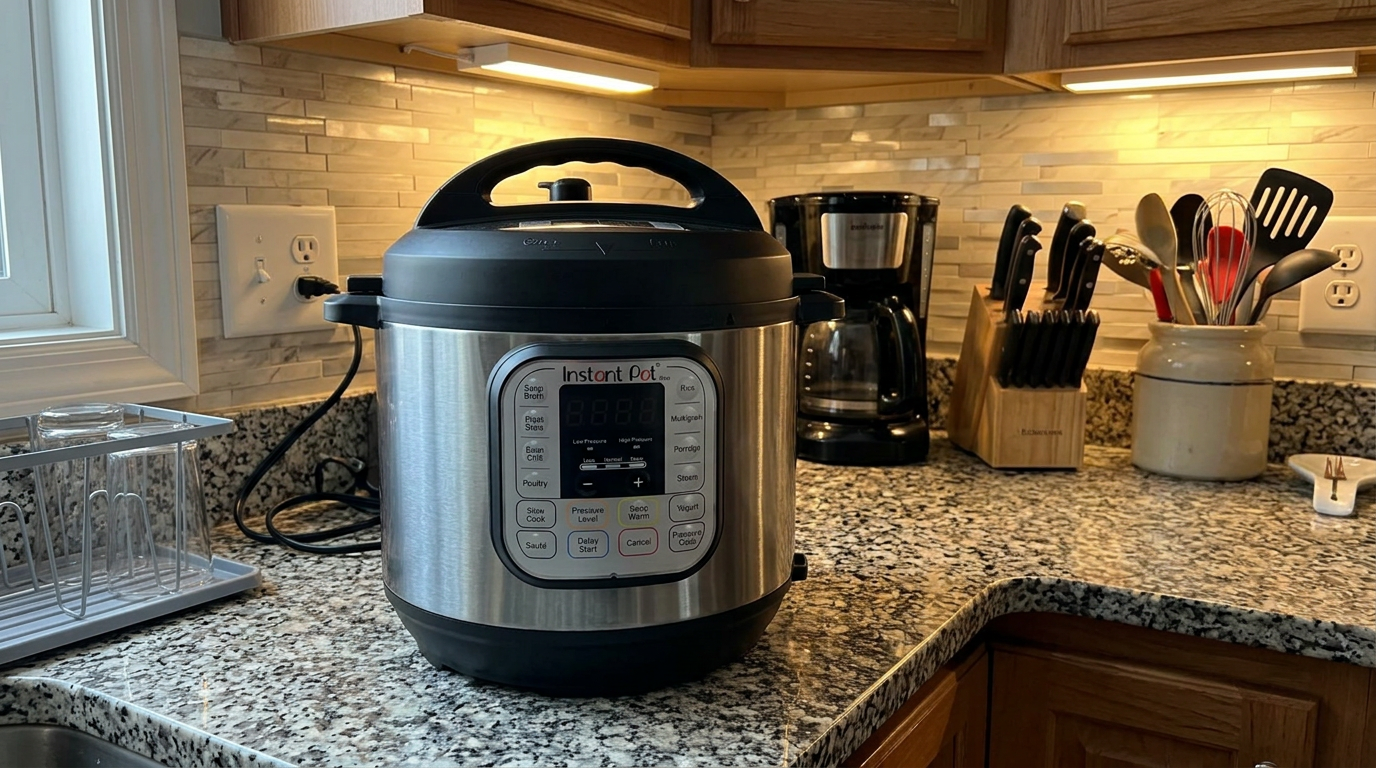
The stainless steel body, lid and control panel with one-touch programs.
Inside is a removable stainless steel inner pot and a steaming rack with handles.
There is no nonstick coating, which I prefer for searing and for long-term durability.
The control panel has one-touch smart programs for soups, meat, beans, poultry, rice, porridge, yogurt and more, plus manual pressure, sauté, steam, slow cook and keep warm.
It looks busy at first but is easy to learn.
Our tip: Do a water test before your first recipe, because three cups of water at high pressure for a few minutes shows you how the lid locks, how pressure builds and how the steam release behaves.
The seven functions
The Duo is a 7-in-1: pressure cooker, slow cooker, rice cooker, steamer, sauté pan, yogurt maker and food warmer.
It offers 13 smart programs that set sensible times and pressure levels for common dishes.
| Function | What I used it for | How well it worked |
|---|---|---|
| Pressure cook | Lamb, stews, beans | Excellent |
| Sauté | Searing lamb, softening onions | Very good |
| Steam | Ginger pudding, vegetables | Very good |
| Rice | Basmati | Sticky, needs tweaking |
| Slow cook | Chili | Good |
| Yogurt | Plain yogurt | Good |
| Keep warm | After most programs | Useful |
Pressure cooking is the reason to buy it.
The others are useful extras, but not all of them beat a dedicated appliance.
Our tip: Learn the manual Pressure Cook button first rather than all the presets, because once you know how time and pressure affect your food, you can cook almost any recipe with confidence.
How pressure cooking works
Pressure cooking traps steam in a sealed pot.
The pressure raises the boiling point of water, so food cooks at a higher temperature and much faster.
That is why tough cuts and dried beans soften so quickly.
One thing surprised new users I spoke with: the time on the display is not the total time.
The cooker first heats up and builds pressure, then counts down, then needs time to release.
The three stages of a pressure cooking cycle.
Our tip: Add 20 to 30 minutes to any pressure recipe when you plan dinner, because heat-up and release are not included in the cooking time shown on the display.
Sautéing in the deep pot
The Sauté function lets you brown food before pressure cooking.
I let the pot heat fully, added a little oil, then the meat.
If the pot is not hot enough, meat releases water and stews instead of browning.
The deep pot was a nice surprise.
Compared with a shallow skillet, it kept oil splatter contained and my stovetop stayed clean.
And because everything stays in the same pot, the browned bits flavor the final dish.
The flavor comes from the Maillard reaction✕Maillard reactionThe browning reaction between proteins and sugars at high heat that creates the savory, roasted flavors in seared meat and caramelized onions., so taking the time to brown properly pays off.
Our tip: Wait until the display says Hot before adding oil and meat, because a fully heated pot sears instead of steaming and gives you a far deeper flavor in the finished dish.
One-pot lamb with orzo
My first big test was a one-pot lamb and orzo.
I seared a fatty lamb cut on Sauté, set it aside, softened red onion in the juices, then added garlic, paprika, oregano, cinnamon, salt and pepper.
Canned tomatoes and about the same amount of water went in next, then the lamb.
I locked the lid, checked the valve was on Sealing and set high pressure for 30 minutes.
After the release, I stirred in the orzo, locked the lid again and pressure cooked for about six minutes.
Finally, I added spinach and olives and let the heat wilt the greens.
The lamb was succulent and fell apart with a spoon, the orzo was soft but not mushy and the sauce was rich and fragrant.
On the stove, that lamb would need hours.
Here, the whole dinner took under an hour.
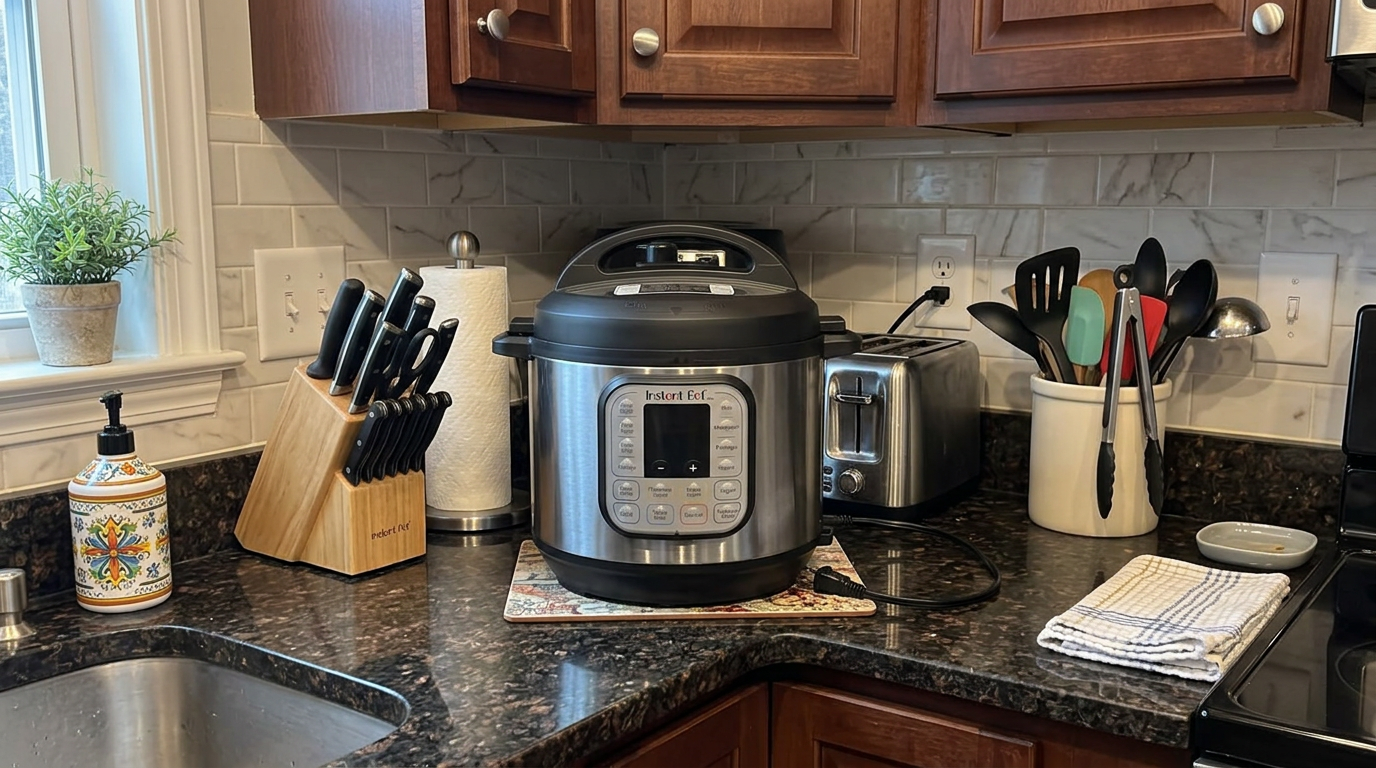
The stainless pot handled searing, pressure cooking and serving.
Our tip: Stir the orzo thoroughly into the sauce before locking the lid, because pasta that clumps or sits on top can cook unevenly while the rest of the pot is perfect.
Pinto beans without soaking
Cooking beans from dry is one of the Duo’s most useful tricks.
I put dried pinto beans straight into the pot with cold water, about six parts water to one part beans.
Then I added onion, garlic, lemon, fresh thyme, a generous glug of olive oil and salt.
High pressure for about 45 minutes, followed by a natural release, gave me tender, creamy beans.
I pulled out the lemon peel and thyme stems and mashed the soft garlic into the beans.
Served with a fresh herb sauce, they made a full meal.
The big win is time.
No soaking the night before means beans become a weeknight option, not a weekend project.
| Bean step | Detail |
|---|---|
| Water ratio | About 6 parts water to 1 part dried beans |
| Soaking | None |
| Pressure time | About 45 minutes on high |
| Release | Natural |
| Result | Tender, creamy, intact |
Our tip: Use the six-to-one water ratio for unsoaked beans, because the sealed pot loses almost no moisture and too little water leaves beans undercooked while too much turns them to soup.
Basmati rice: the Duo’s weak spot
Rice was where the Duo struggled in my testing.
I soaked two cups of basmati for 15 minutes, drained it and added three cups of cold water.
Then I pressure cooked for four minutes and left it on Keep Warm for about ten before releasing.
The whole process took about 22 and a half minutes.
The rice was too sticky and slightly overcooked, with some grains soft and mushy and others holding their shape.
The basmati fragrance was also faint.
With a little less water and a quicker release on later tries, it improved, but it never matched a careful stovetop absorption method.
The method also needs a fairly large batch, which is not ideal for one small serving.
| Rice attempt | Water | Release | Result |
|---|---|---|---|
| 1: standard method | 3 cups for 2 cups rice | About 10 minutes, then quick | Sticky, a little mushy |
| 2: less water | 2.5 cups for 2 cups rice | About 5 minutes, then quick | Better, still soft |
| 3: rinsed well, less water | 2.25 cups | Quick after 3 minutes | Best, still not perfect |
Our tip: Rinse basmati until the water runs clear and reduce the water slightly, because removing surface starch and using less liquid gives you more separate grains under pressure.
Steamed ginger and lemon pudding
The Duo can make old-fashioned steamed puddings, which surprised me.
I mixed breadcrumbs, sugar, flour, baking powder, lemon zest and vanilla, then stirred in melted butter, warm ginger preserve and three beaten eggs.
The batter went into a greased and lined pudding basin, covered tightly with foil to keep water out.
I set it on the rack and steamed it for about two hours on low pressure.
The finished pudding was soft, moist and comfortingly dense, with warm ginger and a bright lemon note.
It needed no attention during the two hours, which a stovetop steamer certainly would.
Our tip: Fold a pleat into the foil before covering a pudding basin, because the pudding rises as it steams and the extra room stops the foil from tearing and letting water in.
Crème caramel on the rack
Custards need gentle, even heat, so I was curious how the Duo would handle crème caramel.
I made a golden caramel and poured it into four ramekins.
Then I warmed cream, milk, sugar and vanilla and whisked it slowly into three beaten eggs.
The custard went into the ramekins, which sat on the rack above a little water in the pot.
High pressure for about nine minutes, a natural release and a few hours in the fridge later, they were ready.
Turned out onto plates, the caramel flowed over a smooth custard with a gentle wobble and no bubbles or overcooking.
It replaces a fussy bain-marie✕Bain-marieA water bath used to cook delicate dishes like custards gently and evenly, by surrounding the dish with hot water or steam instead of direct heat. in the oven and is perfect for making ahead.
How each recipe turned out in my tests.
Our tip: Strain the custard through a fine sieve into the ramekins, because it removes air bubbles and any bits of egg and gives you the smoothest, glossiest crème caramel.
Natural release vs quick release
There are two ways to release pressure.
A natural release✕Natural releaseLeaving the cooker alone after cooking so the pressure drops on its own. It is gentler and lets food keep cooking slowly. means leaving the cooker alone while the pressure drops by itself.
A quick release means turning the valve to vent and letting the steam out fast.
| Food | Best release | Why |
|---|---|---|
| Beans | Natural | Keeps skins intact, avoids foam |
| Tough meat | Natural | Stays tender and juicy |
| Custards and puddings | Natural | No sudden pressure change |
| Vegetables | Quick | Keeps texture |
| Pasta | Quick | Stops overcooking |
During natural release, food keeps cooking gently, which is great for meat and beans.
For vegetables and pasta, a quick release stops the cooking right away.
Our tip: Keep your hands and face away from the valve during a quick release and turn it with a long spoon, because the steam comes out forcefully and is hot enough to burn.
Slow cooking and yogurt
I used the slow cook setting for a beef chili.
It worked well, though the Duo’s lid is not glass, so I could not watch the food without opening it.
The chili was tender and flavorful after about seven hours.
Yogurt took a little patience but came out thick and mild.
I heated milk, cooled it, added a spoonful of live yogurt and let the yogurt program run overnight.
If you already own a good slow cooker, the Duo may not replace it for everyday slow cooking.
But for occasional use, it is perfectly fine.
Our tip: Use the steam valve on Venting for slow cooking, because slow cooking should not build pressure and venting lets excess moisture escape for a thicker, more concentrated result.
Pressure safety
The Duo has more than ten safety mechanisms, including a lid that stays locked under pressure and overheat protection.
I never felt unsafe using it, even during long pressure cycles.
- Always check the valve is on Sealing before pressure cooking.
- Never force the lid open; wait for the float valve to drop.
- Stay below the max fill line, and lower for beans and grains.
- Keep the sealing ring clean and seated properly.
- Keep children away during quick release.
Our tip: Check that the silicone sealing ring is seated evenly around the lid before every cook, because a twisted or missing ring stops the pot from building pressure and lets steam leak from the edge.
Cleaning and care
Cleaning was simple.
The stainless steel inner pot and the lid are dishwasher safe, and the pot came out spotless after every cycle.
After searing, I soaked the pot for ten minutes to loosen browned bits.
The sealing ring absorbs smells, especially after spicy or garlicky dishes.
Washing it after each savory cook and letting it air dry kept odors under control.
Our tip: Wipe the condensation collector and the rim of the base after each use, because trapped water and food bits there can start to smell and are easy to miss when washing the pot.
Weeknight beef stew
For a classic weeknight test, I made beef stew.
I browned chuck in two batches, softened onions, deglazed with stock and added carrots and potatoes.
Then high pressure for about 35 minutes and a natural release.
The beef was fork-tender, and the potatoes held their shape because I cut them large.
The broth was rich from the browned bits, and a few minutes on Sauté afterward thickened it into gravy.
Start to finish, it took about an hour and fifteen minutes.
In the oven, the same stew takes three hours.
Our tip: Cut potatoes and carrots larger than the meat, because under pressure everything cooks at the same time and bigger vegetables stay tender instead of falling apart.
Chicken and soups
I also used the Poultry and Soup programs regularly.
Bone-in chicken thighs were juicy after about 15 minutes at pressure plus a short natural release.
A pot of chicken soup with vegetables was ready in about 40 minutes total.
Shredded chicken for tacos and salads became a weekly habit.
Frozen chicken breasts even worked in a pinch, with a few extra minutes of pressure time.
| Dish | Pressure time | Release | Result |
|---|---|---|---|
| Bone-in chicken thighs | About 15 minutes | Natural 10 minutes | Juicy, tender |
| Chicken soup | About 10 minutes | Natural | Clear, flavorful |
| Frozen chicken breasts | About 12 minutes | Natural 10 minutes | Cooked through, shreddable |
| Bone broth | About 90 minutes | Natural | Rich, golden |
Our tip: Check thick or frozen chicken with a thermometer before serving, because pressure cooking times vary with size and the center must reach a safe temperature.
Why liquid ratios matter
The Duo’s sealed pot changes how you think about liquid.
On the stove, water evaporates, so you add more as you go.
In a pressure cooker, almost nothing escapes, so you need the right amount from the start.
Every pressure recipe needs a minimum amount of thin liquid to build steam.
Thick sauces alone can scorch on the bottom and trigger a burn warning.
| Food | Typical liquid |
|---|---|
| Unsoaked beans | About 6 parts water to 1 part beans |
| White rice | About 1 to 1.25 parts water to 1 part rice |
| Stews | Liquid just below the top of the ingredients |
| Custards on the rack | About 1 cup water in the pot |
Our tip: Layer thick sauces like tomato on top of the other ingredients without stirring, because keeping them off the bottom prevents scorching and burn warnings while the thin liquid builds steam.
Capacity and family meals
The 6-quart pot serves about six people.
It fit the lamb and orzo for four with leftovers, a full beef stew and a big batch of beans.
| Dish | How much fit | Servings |
|---|---|---|
| Lamb and orzo | About 2 lb lamb plus orzo | 4 to 6 |
| Beef stew | About 3 lb meat plus vegetables | 6 |
| Pinto beans | About 1 lb dried | 8 sides |
| Crème caramel | 4 ramekins on the rack | 4 |
For bigger families or batch cooks, an 8-quart model is worth considering.
For most households, 6 quarts is the sweet spot.
Our tip: Never fill the pot more than half full for beans and grains, because they foam and expand under pressure and the extra room keeps foam away from the steam release.
A typical weeknight with the Duo
By week two, the Duo was handling three or four dinners a week.
A typical evening: brown chicken thighs on Sauté, add rice, stock and peas, then pressure cook for about ten minutes.
Dinner in 35 minutes, one pot to wash.
On another night, I cooked pinto beans from dry while I prepared a salad and salsa.
That kind of meal would have needed planning a day ahead without a pressure cooker.
| Night | Dish | Hands-on time | Total time |
|---|---|---|---|
| Monday | Chicken and rice | 10 minutes | About 35 minutes |
| Tuesday | Unsoaked pinto beans | 10 minutes | About 75 minutes |
| Wednesday | Beef stew | 20 minutes | About 75 minutes |
| Thursday | Lamb and orzo | 20 minutes | About 60 minutes |
Our tip: Start the pressure cooker first and prep side dishes while it heats up, because heat-up and cooking happen hands-free and you can have a full dinner ready at the same time.
Make-ahead cooking and meal prep
The Duo is great for make-ahead food.
Crème caramel and steamed pudding can be made a day in advance and chilled.
Beans, shredded chicken and broth all freeze well in portions.
On one Sunday, I made beans, shredded chicken, broth and a batch of crème caramel back to back.
The stainless pot rinsed clean between rounds in a minute.
| Round | Dish | Total time |
|---|---|---|
| 1 | Chicken broth | About 2 hours |
| 2 | Shredded chicken | About 35 minutes |
| 3 | Pinto beans | About 75 minutes |
| 4 | Crème caramel | About 30 minutes plus chilling |
Our tip: Cook plain dishes first and desserts with a fresh or separate sealing ring, because savory smells cling to the ring and can flavor delicate custards and puddings.
Steaming vegetables and fish
For everyday steaming, I used the rack with a cup of water in the pot.
Salmon fillets with lemon and herbs were moist and flaky after a very short pressure cycle and a quick release.
Green beans, carrots and potatoes all steamed evenly.
The trick with steaming under pressure is timing.
Even one or two extra minutes can turn tender vegetables soft, so I kept times short and released quickly.
| Food | Method | Result |
|---|---|---|
| Salmon fillets | Short pressure on the rack, quick release | Moist, flaky |
| Green beans | Very short pressure, quick release | Bright, crisp-tender |
| Baby potatoes | About 8 minutes on the rack | Creamy, intact |
| Hard-boiled eggs | A few minutes on the rack, ice bath | Easy to peel |
Our tip: Set vegetables on the rack above the water instead of in it, because steam cooks them evenly while sitting in water makes them soggy and washes out flavor.
The lid, valve and float pin
The Duo’s lid twists on and locks with a clear click.
A steam release valve on top switches between Sealing and Venting, and a small float valve✕Float valveA small pin in the lid that rises when the pot is under pressure and locks the lid. When it drops, the pressure is gone and the lid can be opened. rises when the pot is under pressure.
Unlike some newer models, the valve does not set itself, so you need to check it each time.
I forgot once in week one, and the pot never built pressure, which cost me about ten minutes.
The lid also fits into the handles on the side of the base, which is handy for keeping it off the counter while you stir.
Our tip: Make checking the valve part of your routine every time you lock the lid, because the Duo does not seal automatically and a valve left on Venting means the pot never comes up to pressure.
Noise, storage and counter space
The Duo is quiet while cooking, with only a soft click when it reaches pressure.
The loud moment is a quick release, which sends out a strong jet of steam for a minute or so.
At about 14.5 pounds and roughly a foot wide and tall, it is easy to move and store compared with bigger multi-cookers.
I kept it on the counter because I used it nearly every day.
If you store it in a cupboard, keep the lid upside down on the base so the sealing ring can air out.
Our tip: Never vent steam under wall cabinets, because the hot, wet blast from a quick release can warp wood and peel paint over time, so slide the cooker forward before releasing.
Should you upgrade to it?
If you have never owned an electric pressure cooker, the Duo is an easy recommendation.
It is simple, safe and handles the dishes that benefit most from pressure: tough meat, beans, stews and broths.
If you already own an older electric pressure cooker that works, the Duo offers little new.
The benefits are the same core pressure cooking, smart programs and a dishwasher-safe stainless pot.
If you mainly slow cook or make rice, consider whether you need pressure at all.
A good slow cooker or rice cooker may serve you better for those specific jobs.
| Your situation | Recommendation |
|---|---|
| No pressure cooker yet | Buy it |
| Old stovetop pressure cooker | Worth the upgrade for ease and safety |
| Working electric pressure cooker | Probably skip |
| Mainly rice | Consider a rice cooker instead |
Our tip: Start with three recipes you already love and adapt them to pressure, because cooking familiar dishes is the fastest way to learn how the Duo changes timing and texture.
My three weeks with the Instant Pot Duo
In week one, I focused on the core recipes: lamb and orzo, unsoaked beans and basmati rice.
The meat and beans were excellent, while the rice was the clear weak spot.
In week two, I tried desserts: the steamed ginger pudding and crème caramel.
Both were far easier than the traditional methods and turned out very well.
In week three, I used it for everyday dinners, slow cooking, yogurt and meal prep, and paid attention to cleaning and wear.
The pot looked new, and the lid still sealed perfectly.
| Week | Focus | Main finding |
|---|---|---|
| 1 | Lamb, beans, rice | Excellent meat and beans, sticky rice |
| 2 | Desserts | Smooth crème caramel and moist pudding |
| 3 | Daily cooking and meal prep | Reliable, easy and quick to clean |
Our tip: Write down the times and liquid amounts that work for your favorite dishes, because pressure cooking is precise and a small cheat sheet makes repeat meals foolproof.
Troubleshooting what I ran into
A few small problems came up, all easy to fix.
| Problem | Cause | Fix |
|---|---|---|
| Sticky basmati | Too much water, long rest | Rinse well, less water, quicker release |
| Burn warning | Thick sauce on the bottom | Layer sauces on top, deglaze after searing |
| Meat stewed instead of browned | Pot not hot enough | Wait for Hot before adding meat |
| Steam leaking from the lid | Sealing ring not seated | Reseat the ring evenly |
| Dinner later than planned | Heat-up time not counted | Add 20 to 30 minutes to recipes |
Our tip: Deglaze the pot with a splash of liquid and scrape the bottom after searing, because stuck-on bits are the most common cause of burn warnings under pressure.
Who it suits in real life
The Duo suits people who cook tough cuts, beans, stews and one-pot meals and want them done faster.
It is also a great first pressure cooker, because the controls are simple and the safety features make it easy to trust.
It is less ideal for rice purists, since basmati in particular came out sticky in my tests.
If you already own a reliable slow cooker and rarely pressure cook, it may duplicate what you have.
Buy it for pressure cooking.
If that is something you will use every week, it will quickly become one of your most-used appliances.
Our tip: Base your decision on how often you would pressure cook, because that is where the Duo shines and the other functions are useful extras rather than reasons to buy it.
Is the Instant Pot Duo 6 Qt worth the money?
Yes, if you will pressure cook regularly.
It makes tough meat tender fast, cooks beans without soaking, handles one-pot meals and even makes excellent custards and puddings.
Its weaknesses are rice, especially basmati, and the need to plan around heat-up and release time.
Neither stops it from being a reliable everyday cooker.
My category scores after three weeks.
How it compares with other kitchen tools
| Feature | Instant Pot Duo | Slow cooker | Stovetop pot | Rice cooker |
|---|---|---|---|---|
| Pressure cooking | Yes | No | No | No |
| Tender meat | In about 30 to 45 minutes | In 6 to 8 hours | In 2 to 3 hours | No |
| Unsoaked beans | Yes | Slow | Slow, needs soaking | No |
| Basmati rice | Fair | No | Good | Excellent |
| Custards and puddings | Excellent | Fair | Needs a water bath | No |
| Sear in the same pot | Yes | Usually no | Yes | No |
| Your priority | Fit | Why |
|---|---|---|
| Tough cuts of meat | Excellent | Tender in a fraction of the time |
| Dried beans | Excellent | No soaking needed |
| One-pot dinners | Very good | Sauté and pressure cook together |
| Perfect basmati | Fair | Came out sticky |
| Desserts | Very good | Smooth custards, steamed puddings |
Which one is right for you: is the Instant Pot Duo your match?
4 quick questionsInstant Pot Duo 6 Qt specifications
From manufacturer data, retailer listings and my own testing.
How I tested and scored the Instant Pot Duo 6 Qt
For three weeks, the Instant Pot Duo was my main cooker.
I made structured test recipes (lamb and orzo, unsoaked pinto beans, basmati rice, steamed ginger pudding and crème caramel) and used it for everyday stews, chicken, soups, slow cooking, yogurt and meal prep.
I timed every stage, judged texture and flavor and cleaned the pot, lid and ring after each use.
- Pressure cooking (9.0): tender meat and beans in a fraction of the time.
- Ease of use (8.6): simple controls, easy cleaning, strong safety features.
- Versatility (8.0): seven functions plus excellent custards and puddings.
- Rice (6.6): basmati came out sticky with the standard method.
My test scores were: lamb and orzo 9.2, crème caramel 9.0, pinto beans 8.8, steamed pudding 8.6, beef stew 9.0 and basmati rice 6.2. The overall score of 8.0 is an editorial rating that reflects those results and three weeks of daily use.
Instant Pot Duo 6 Qt FAQ
Is the Instant Pot Duo 6 Qt worth it?
Yes, if you will pressure cook regularly. It makes tough meat tender fast, cooks beans without soaking and handles one-pot meals and desserts well.
What can the Instant Pot Duo do?
It is a 7-in-1: pressure cooker, slow cooker, rice cooker, steamer, sauté pan, yogurt maker and food warmer, with 13 smart programs.
Can it cook dried beans without soaking?
Yes. Unsoaked pinto beans with about six parts water took about 45 minutes at high pressure plus a natural release.
How fast does it make lamb tender?
A fatty lamb cut was tender after about 30 minutes at high pressure, compared with hours on the stove.
Is it good for rice?
It is fair. Basmati came out sticky with the standard method; rinsing well and using less water helped.
Does the display show the total cooking time?
No. The time shown is only the pressure cooking stage. Heat-up and release add about 20 to 30 minutes.
Can it make desserts?
Yes. Crème caramel on the rack and a steamed ginger pudding both turned out very well.
What is the difference between natural and quick release?
Natural release lets pressure drop on its own and suits meat and beans; quick release vents steam fast and suits vegetables and pasta.
Can you sauté in it?
Yes. Wait until the pot is hot, then brown meat or soften vegetables before pressure cooking.
How much does it hold?
6 quarts, about six servings.
Is it easy to clean?
Yes. The stainless steel inner pot and the lid are dishwasher safe. Wash the sealing ring after savory dishes.
Is it safe for beginners?
Yes. It has more than ten safety features, and the lid stays locked while there is pressure inside.
Senior home appliance tester
Emily has tested home appliances for a living since 2016, first as a test coordinator at a national consumer advocacy group and, since 2021, at HouseholdMe. She has a degree in industrial design from Ohio State, so she looks at how a product is built, not just how it performs. She used the Instant Pot Duo as her main cooker for three weeks for this review.
- Three weeks of hands-on testing of the Instant Pot Duo 6 Qt
- Instant Pot product information and manual