Instant Pot Duo 6 Qt vs Ninja HyperHeat 6.5 Qt
The Instant Pot Duo 6 Qt and the Ninja HyperHeat 6.5 Qt are two of the most popular electric pressure cookers, and they take different routes to dinner. The Duo is the classic: a stainless steel pot, simple buttons and 13 smart programs. The HyperHeat is newer and bigger, with a dial and screen, a 6.5-quart ceramic nonstick pot, a dedicated Pasta program and sous vide. I used each as my main cooker for four weeks to find out which one belongs on your counter.
We choose products independently. We may earn a commission when you buy through our links. Affiliate policy
Jargon helpNew to pressure cookers? Tap any dotted term to see what it means.
In this comparison
For most households, buy the Ninja HyperHeat 6.5 Qt. It made fluffy rice in about 11 minutes, cooked pasta al dente right in its sauce and slow cooked as well as a dedicated slow cooker, all in a pot you can serve from. Buy the Instant Pot Duo 6 Qt if you want a simpler, lighter cooker with an uncoated stainless pot, mainly for stews, beans and braises. Both made equally tender beef stew.
The two cookers
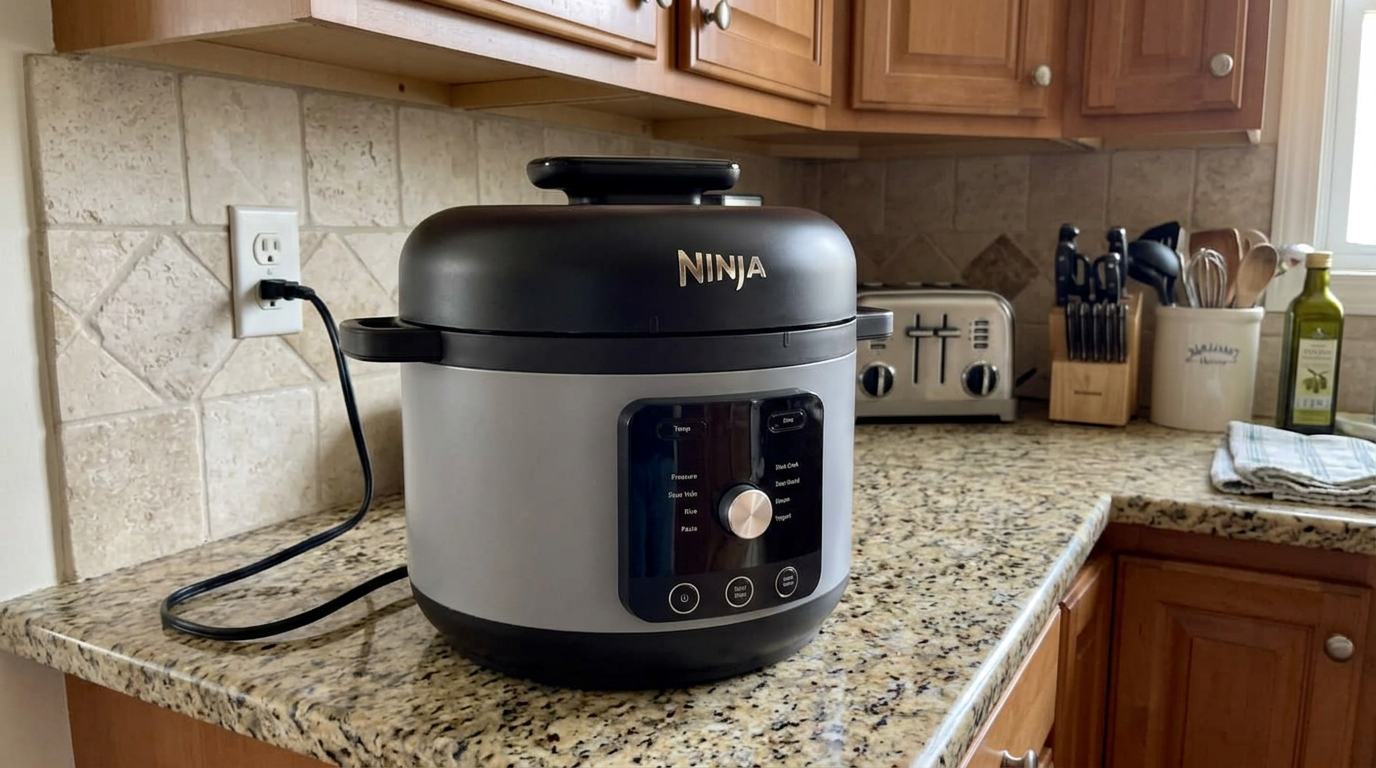
Specs checked November 26, 2026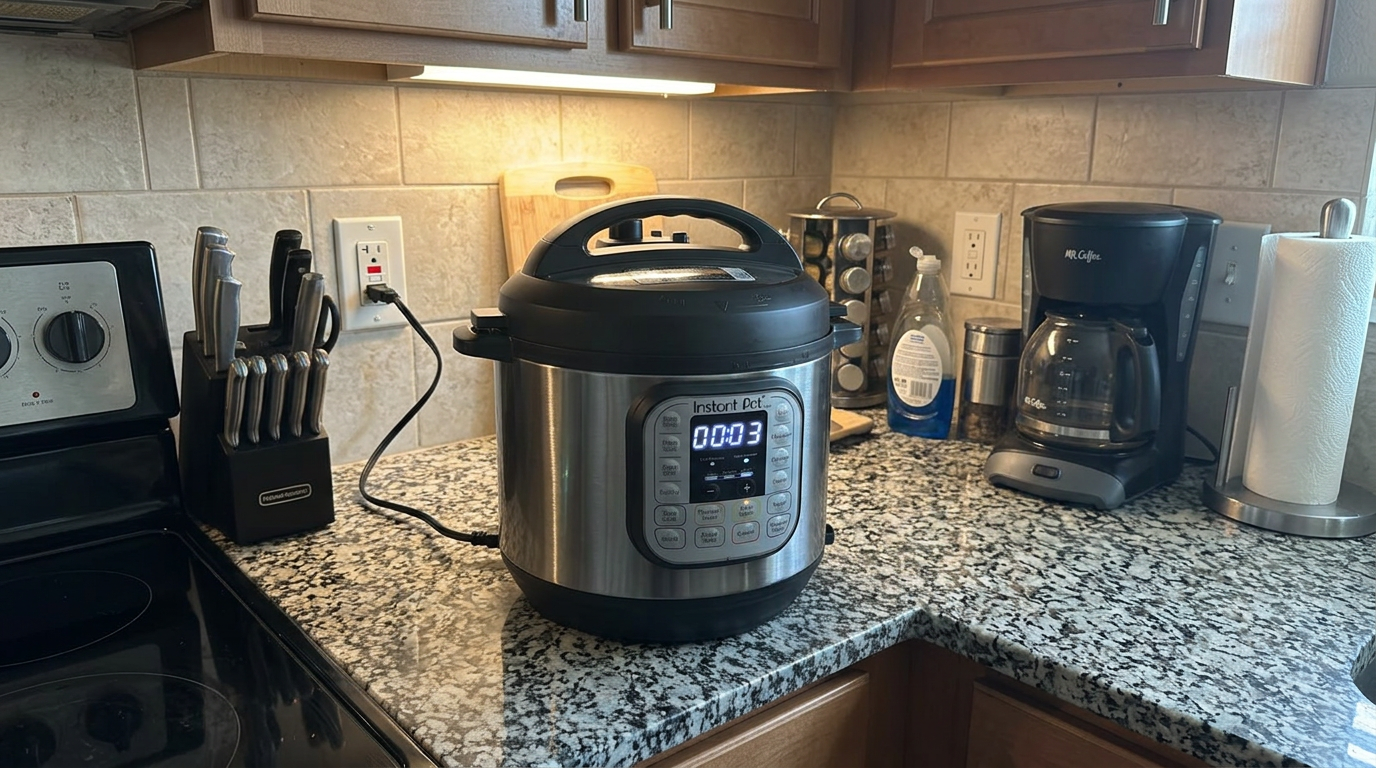
Classic 7-in-1 with 13 smart programs, a 1,000-watt heater and an uncoated stainless steel pot.
Check price on Amazon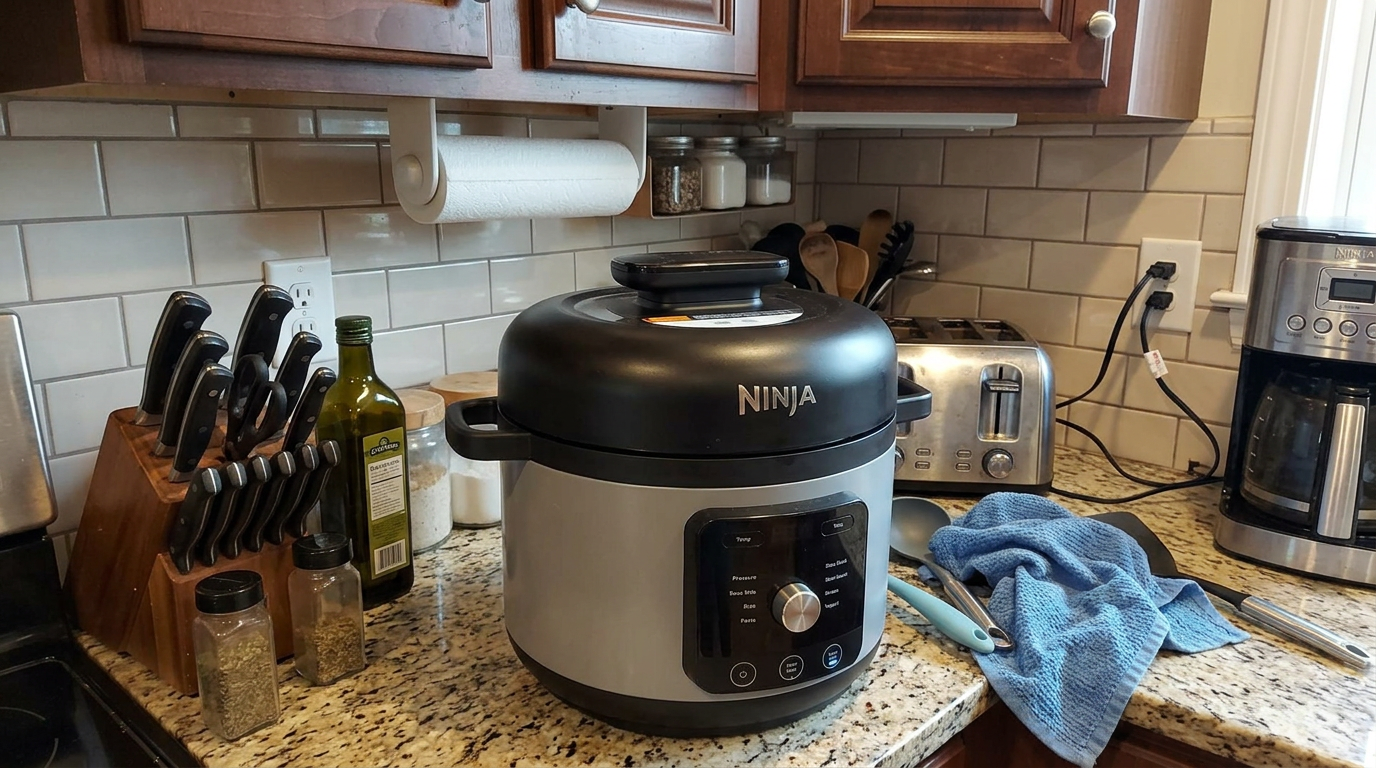
9-in-1 with a 1,200-watt heater, a dial and screen, a Pasta program, sous vide and a 6.5-quart ceramic nonstick pot.
See Today’s PriceInstant Pot Duo vs Ninja HyperHeat at a glance
- Both made fork-tender beef stew in about an hour.
- The HyperHeat’s rice and one-pot pasta were far better.
- The HyperHeat slow cooks and sears in the same serve-ready pot.
- The Duo is lighter, simpler and has an uncoated stainless pot.
Head to head
The best result in each row is marked, based on my four weeks with each cooker and the manufacturer specs.
The HyperHeat wins on rice, pasta, slow cooking and extras; the Duo wins on its steel pot, searing and weight.
| Spec | Duo | HyperHeat |
|---|---|---|
| Pressure cookingmy tests | Excellent, 9.0 | Excellent, 9.1 ✓ Best |
| Rice | Sticky basmati | Fluffy in about 11 min ✓ Best |
| One-pot pasta | No program | Al dente in its sauce ✓ Best |
| Slow cooking | Good | Excellent, 8.8 ✓ Best |
| Searing | Good, steel pot ✓ Best | Good, a bit slower |
| Pot material | Uncoated stainless ✓ Best | Ceramic nonstick |
| Extras | Yogurt, steam | Yogurt, steam, sous vide ✓ Best |
| Controls | Buttons | Dial and screen ✓ Best |
| Weight | About 14.5 lb ✓ Best | About 18 lb |
| Capacity | 6 qt | 6.5 qt ✓ Best |
| Rows won | 3 | 7 |
Seven rows to the HyperHeat and three to the Duo. Pressure cooking itself is a near tie; the gap is in everything else the cooker does.
Is It On Sale? Check NowInstant Pot Duo vs Ninja HyperHeat pros and cons
Instant Pot Duo 6 Qt
- Makes tough meat tender in a fraction of the time
- Uncoated stainless pot that sears and lasts
- Lighter and easier to store
- Basmati rice came out sticky
- No pasta program or sous vide
- Display time excludes heat-up and release
Ninja HyperHeat 6.5 Qt
- Fluffy rice in about 11 minutes
- One-pot pasta cooks al dente in its own sauce
- Sear, then slow cook, in the same serve-ready pot
- Searing a little slower than a pan
- Pasta program has no manual settings
- Heavy at about 18 lb, with a short cord
Who should buy which cooker?
- First-time pressure cooker owners
- Cooks who want an uncoated steel pot
- Smaller kitchens and cupboard storage
- Busy families who cook most nights
- Anyone replacing a rice cooker and slow cooker
- One-pot pasta and rice fans
How they really differ
Both are electric pressure cookers with a locking lid, a steam valve you set yourself and more than one way to cook. Both made fork-tender beef stew in about an hour, and both cooked dried beans without fuss.
The Duo is the older, simpler design: a 1,000-watt heater, seven functions, 13 smart programs and a 6-quart uncoated stainless steel pot.
The HyperHeat is bigger and more modern: a 1,200-watt heater, nine functions including Pasta and sous vide✕Sous videCooking sealed food in a water bath held at an exact, low temperature., a rotating dial with a digital screen and a 6.5-quart pot with a ceramic nonstick✕Ceramic nonstickA slick coating made from a mineral-based layer rather than traditional PTFE. Food releases easily, but it needs gentler tools than bare steel. coating that Ninja says is made without PFAS.
| Inside | Duo | HyperHeat |
|---|---|---|
| Heater | 1,000 W | 1,200 W |
| Functions | 7 | 9 |
| Programs | 13 smart programs | 9 functions, some automatic |
| Pot | 6 qt stainless steel | 6.5 qt ceramic nonstick |
| Controls | Buttons, plus and minus | Dial and screen |
| Weight | About 14.5 lb | About 18 lb |
In daily use, the biggest differences were rice, pasta and slow cooking, where the HyperHeat was clearly better, and the pot material, where your preference decides.
Put simply: the Duo is a pressure cooker with useful extras, and the HyperHeat is an all-in-one cooker that happens to pressure cook very well. Which suits you depends on how much of your weekly cooking is rice, pasta and slow-cooked meals.
Design and size
The Duo has the familiar Instant Pot look: brushed stainless body, round lid and a button panel. At about 14.5 pounds and roughly a foot wide and tall, it is easy to lift into a cupboard.
The HyperHeat feels more substantial. The lid is heavy, the base is solid and nothing creaks. It is about 12.4 inches tall and 14.6 inches deep and weighs about 18 pounds, so it is happiest on the counter. Its cord is about 31 inches, on the short side, so check where your outlet is.
The Duo is the lighter and easier of the two to put away.
Both lived on my counter during testing. If you plan to store yours in a cupboard, the Duo is noticeably easier to handle.
Setup and first cook
The Duo took about five minutes: wash the inner pot, check the sealing ring✕Sealing ringThe silicone gasket inside the lid that makes the pot airtight so pressure can build. and run a water test. In the box: base, lid, stainless pot, steaming rack and manual.
The HyperHeat was cooking rice within 15 minutes of unboxing. In the box: base, the 6.5-quart pot, the pressure lid and a quick start guide with recipes. The pot has measurement markings inside, which saved me reaching for measuring cups.
| Setup step | Duo | HyperHeat |
|---|---|---|
| Unbox to first cook | About 5 min plus water test | About 15 min to rice |
| Steaming rack | Included | Use your own basket |
| Pot markings | No | Yes, inside the pot |
| First real dish | Lamb and orzo | Basmati rice |
Our tip: On either cooker, do a water test before your first recipe; it shows you how the lid locks and how steam is released.
Controls and programs
The Duo uses one-touch buttons for soups, meat, beans, poultry, rice, porridge, yogurt and more, with plus and minus buttons for time. Everything is visible at once.
The HyperHeat uses a rotating dial and a clear screen. You turn to a function, adjust time or temperature where allowed and press start. I did not need the manual after day one.
The catch on the HyperHeat is that some programs are automatic. Pasta has no manual time or temperature, and Rice is a preset with adjustments. Convenient, but less control than the Duo’s manual Pressure Cook button.
| Control | Duo | HyperHeat |
|---|---|---|
| Interface | Buttons | Dial and screen |
| Manual pressure | Yes | Yes |
| Pasta | No program | Automatic only |
| Sous vide | No | Temperature and time |
| Valve | Turn to Sealing | Turn to Seal |
On both, you set the valve yourself. Both times I forgot, once on each cooker, the countdown never started.
Check price on AmazonPressure cooking
Both are excellent pressure cookers, and side by side the results were close.
On the Duo, a fatty lamb cut was succulent after 30 minutes at high pressure, and beef stew was fork-tender after about 35 minutes. On the HyperHeat, beef chuck for stew was fork-tender after about 35 minutes plus a natural release✕Natural releaseLeaving the cooker alone after cooking so the pressure drops by itself. Food keeps cooking gently while it does., in under an hour including searing.
The HyperHeat’s 1,200-watt heater builds pressure quickly: about five minutes for a cup of rice, about 11 minutes for a half-full stew and about 15 for a full pot of chili.
Pressure cooking scores
My category scores out of 10 from my single reviews.
| Dish | Duo | HyperHeat |
|---|---|---|
| Beef stew | About 1 hr 15 min total | About 1 hr total |
| Chicken and rice | About 35 min | About 30 to 35 min |
| Hard-boiled eggs | Easy to peel | Easy to peel |
| Potatoes | Creamy, on the rack | About 20 min for mash |
Our tip: Add time for heat-up and release on either cooker; the display time is never the total time.
Rice: the biggest difference
Rice was where the two cookers split most clearly.
On the Duo, two cups of soaked basmati with three cups of water and four minutes at pressure came out sticky and slightly overcooked. Less water and a quicker release helped, but it never matched the stovetop.
On the HyperHeat, one cup of basmati and one cup of water on the Rice program came out fluffy and separate in about 11 minutes plus the release. Rinsing first made the grains even more distinct.
Basmati rice
My ratings out of 10.
| Rice step | Duo | HyperHeat |
|---|---|---|
| Ratio | 1 : 1.5, then 1 : 1.1 | 1 : 1 |
| Pressure time | 4 min | 6 min |
| Total | About 22 min | About 13 min |
| Result | Sticky | Fluffy, separate |
If rice is a regular side in your house, the HyperHeat can replace a rice cooker. The Duo cannot.
Pasta and one-pot meals
The HyperHeat’s Pasta program impressed me most. A 16-ounce box of pasta, a 32-ounce jar of tomato basil sauce, two cups of water and a spoon of oil went in; about 10 to 11 minutes later, plus a short rest, the pasta was al dente and full of sauce. No boiling water, no colander, one pot.
The Duo has no pasta program, but it handles pasta in one-pot dishes. My lamb and orzo was the best dish of its test: lamb for 30 minutes, then the orzo for about six, and dinner in under an hour. The trick is checking the liquid, so it just covers the orzo.
| One-pot dish | Duo | HyperHeat |
|---|---|---|
| Pasta in sauce | Manual, check liquid | Automatic, al dente |
| Lamb and orzo | Excellent | Not tested |
| Chicken and rice | About 35 min | About 30 to 35 min |
| Pot to the table | Plain liner | Serve-ready pot |
Our tip: Stir pasta thoroughly into the sauce before locking either lid; clumps on top cook unevenly.
The pot and searing
This is the one area where your preference matters more than test scores.
The Duo’s pot is uncoated stainless steel. It sears well, its depth kept splatter off my counter and the browned bits flavor the dish through the Maillard reaction✕Maillard reactionThe browning reaction between proteins and sugars that gives seared meat its deep, savory flavor.. It is dishwasher safe and will not wear like a coating.
The HyperHeat’s pot has a ceramic nonstick coating. Food released easily even after searing, and the pot looks good enough to serve from. Browning ground beef took about six minutes, a minute or two longer than in a skillet.
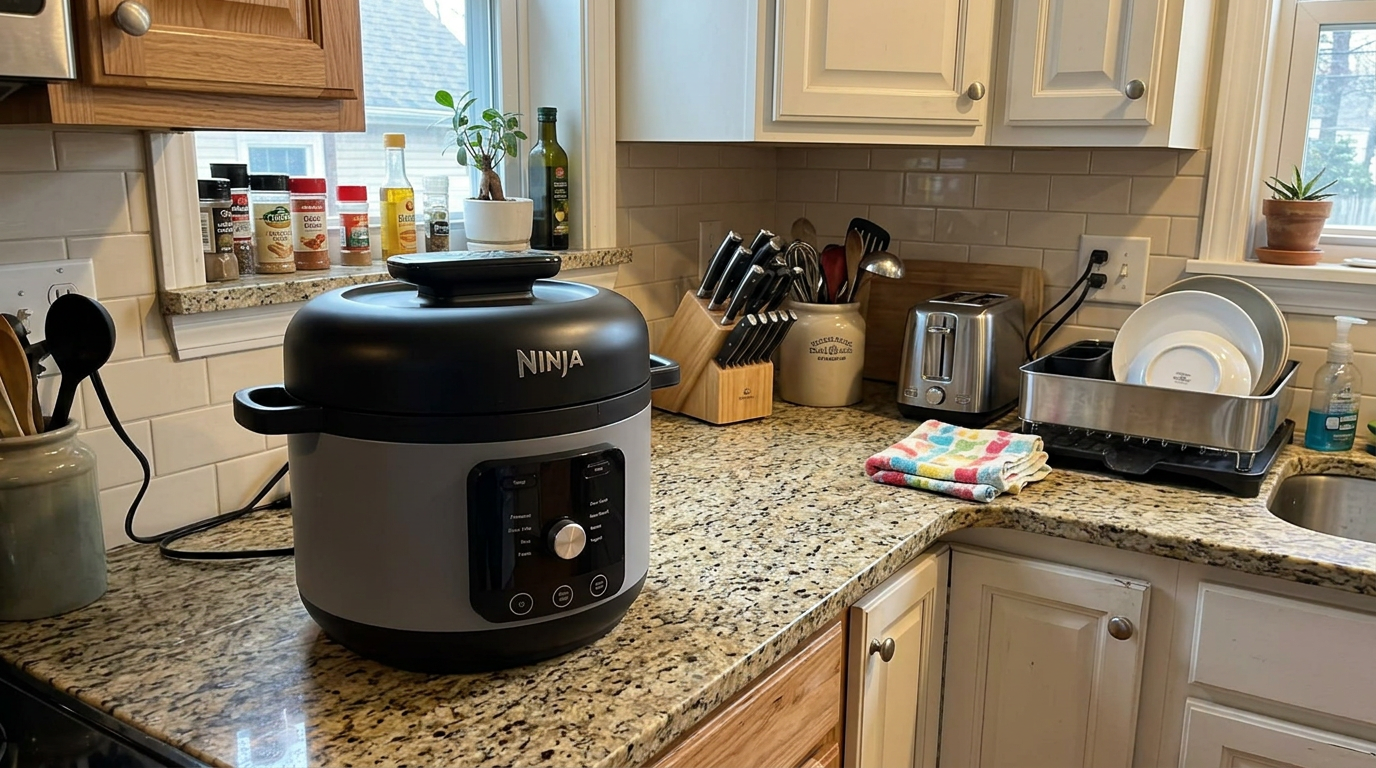
The HyperHeat’s ceramic pot released food easily and went straight to the table.
| Pot | Duo | HyperHeat |
|---|---|---|
| Material | Stainless steel | Ceramic nonstick |
| Capacity | 6 qt | 6.5 qt |
| Release after searing | Soak 10 min | Wipes clean |
| Serve from it | Plain liner | Yes |
| Metal utensils | Fine | Use gentler tools |
Our tip: Wait until either pot is fully hot before adding meat; a hot pot sears instead of steaming.
Natural release vs quick release
Both cookers release pressure the same way: you either wait for it to drop on its own or turn the valve to vent right away. Neither lid will open until the pressure is gone.
On both, I used a quick release for rice, pasta and vegetables, where overcooking is the risk, and a natural release of at least ten minutes for meat, beans and custards. During a natural release, food keeps cooking gently, which keeps meat tender and stops beans from splitting or foaming.
The HyperHeat needs a short rest before venting pasta, about ten minutes, to avoid starchy foam. The Duo needs a full natural release for custards, so there is no sudden pressure change in the ramekins.
| Food | Best release | Why |
|---|---|---|
| Rice | Short rest, then quick | Grains finish absorbing moisture |
| Pasta | About 10 min, then quick | Stops overcooking, avoids foam |
| Vegetables | Quick | Keeps them crisp-tender |
| Beef stew | Natural | Keeps meat tender |
| Beans | Natural | Prevents foaming and split skins |
| Custards | Natural | No sudden pressure change |
Our tip: Turn the valve with a long spoon on either cooker during a quick release; the steam comes out forcefully.
Slow cooking
Both slow cook, but the HyperHeat did it better.
On the HyperHeat, I seared ground beef, softened peppers and onions, added spices and tomato sauce, then switched to Slow Cook Low for seven hours. The taco meat was thick, rich and more concentrated than most slow-cooker versions. Chili and chicken stew were just as good.
On the Duo, a beef chili was tender after about seven hours. It worked well, but the lid is not glass and the setting felt more basic.
Slow cooking
My ratings out of 10.
After four weeks with the HyperHeat, my separate slow cooker went into the cupboard. With the Duo, I would keep it.
Beans, grains and potatoes
On the Duo, unsoaked pinto beans with six parts water took about 45 minutes at pressure and came out creamy and whole. That makes beans a weeknight option.
On the HyperHeat, soaked black beans took about 30 minutes plus a natural release and were creamy and intact. Quinoa took about 15 minutes total and steel-cut oats about 18.
| Food | Duo | HyperHeat |
|---|---|---|
| Dried beans | Unsoaked pinto, about 45 min | Soaked black, about 30 min |
| Potatoes | About 8 min on the rack | About 20 min total for mash |
| Grains | Porridge program | Quinoa, oats |
| Release | Natural | Natural |
Our tip: Never fill either pot more than halfway with beans and water; they foam under pressure.
Desserts, yogurt and extras
The Duo surprised me with desserts: a silky crème caramel after about nine minutes at pressure and a moist steamed ginger pudding after two hands-off hours. Yogurt came out thick and mild.
The HyperHeat made thick, mild yogurt overnight, steamed broccoli and dumplings well in a basket and held a steady sous vide bath for juicy chicken breasts.
| Extra | Duo | HyperHeat |
|---|---|---|
| Yogurt | Yes, good | Yes, good |
| Custards and puddings | Excellent | Not tested |
| Steam | Yes, rack included | Yes, with a basket |
| Sous vide | No | Yes |
For desserts, the Duo has the proven results. For sous vide, only the HyperHeat does it.
Speed and weeknight timing
Pressure build-up was quick on both. The HyperHeat felt faster on everyday staples because of its Rice and Pasta programs: a pasta dinner took about 25 minutes total with five minutes hands-on.
The Duo matched it on chicken and rice at about 35 minutes, and its lamb and orzo was under an hour.
Weeknight dinners, total time
My timings from start to table.
For Sunday meal prep, the HyperHeat cooked rice, shredded chicken, black beans and soup back to back in about two hours.
Cleaning and care
The Duo’s stainless pot and lid are dishwasher safe; after searing, I soaked the pot for ten minutes.
The HyperHeat’s ceramic pot wiped clean with warm soapy water, even after tomato-based slow cooking. The lid needs a little more care around the sealing ring and valve.
On both, the sealing ring absorbs garlic and spice smells, so I washed it after every savory cook.
| When | Duo | HyperHeat |
|---|---|---|
| After each cook | Dishwasher or soak | Warm soapy water |
| Sealing ring | Wash after savory dishes | Wash after savory dishes |
| Watch out for | Condensation collector | Valve area on the heavy lid |
Our tip: Store either lid upside down on the base so the sealing ring can air out.
Safety
Both lids lock before pressure builds and will not open until it is released. I never felt unsafe with either.
On both, you must remember to set the valve to Seal or Sealing, and both can show a burn warning✕Burn warningA safety message that appears when food sticks and scorches on the bottom of the pot. The cooker stops heating until you fix it. if thick sauce sticks to the bottom.
For a quick release✕Quick releaseTurning the valve to vent right after cooking so the pressure escapes fast and cooking stops., keep your face and hands away from the steam path on both.
Noise and storage
Both are quiet while cooking. The loud moment on each is a quick release, a sharp burst of steam for about a minute.
For storage, the Duo wins. At about 14.5 pounds, it is easy to lift into a cupboard. The HyperHeat at about 18 pounds with a heavy lid belongs on the counter; lifting it onto a high shelf is awkward.
Our tip: Never vent steam under wall cabinets with either cooker; slide it forward first.
Capacity and family meals
The Duo’s 6-quart pot serves about six. It fit lamb and orzo for four with leftovers, a full beef stew with about 3 pounds of meat and about a pound of dried beans.
The HyperHeat’s 6.5-quart pot fits about a 4-pound chicken or a 5-pound roast, and Ninja says it feeds 8 to 10. A full batch of chili fed my family twice, with lunch leftovers.
On both, the max fill line for pressure cooking means you cannot use every bit of the pot, and you should stay lower still for foods that foam.
| Dish | Duo | HyperHeat |
|---|---|---|
| Beef stew | About 3 lb meat, 6 servings | About 3 lb meat, 6 to 8 servings |
| Pasta | Orzo for 4 to 6 | One 16 oz box, 4 to 6 |
| Chili | Family batch | Full batch, 8 servings |
| Whole chicken | Cut-up pieces | Up to about 4 lb |
For a family of four, both are big enough. If you batch cook or feed six or more, the HyperHeat’s extra half quart is noticeable.
Steaming, eggs and small jobs
Small jobs are where a pressure cooker earns its counter space, and both handled them well.
On the Duo, salmon fillets on the included rack were moist after a very short cycle and a quick release. Green beans, carrots and baby potatoes steamed evenly, and hard-boiled eggs peeled easily after an ice bath.
On the HyperHeat, I used my own heat-safe basket for broccoli, green beans and frozen dumplings. A dozen eggs on a rack peeled cleanly, and potatoes for salad were evenly tender.
| Small job | Duo | HyperHeat |
|---|---|---|
| Hard-boiled eggs | Rack included, easy to peel | Own rack, easy to peel |
| Salmon | Moist, flaky | Not tested |
| Dumplings | Not tested | Steamed well |
| Reheating soup | Sauté | Sear/Sauté Low |
Our tip: Keep vegetables on a rack above the water in either cooker; sitting in water makes them soggy.
Keep Warm and dinner timing
Both switch to Keep Warm when most programs finish, which helped on evenings when dinner slipped by half an hour.
On the HyperHeat, I learned not to leave pasta or rice on Keep Warm for long. Both kept cooking gently and lost some texture after about 30 minutes. Stews and chili were fine for much longer, and a pot of chili stayed hot for hours at a family gathering.
On the Duo, Keep Warm worked the same way: great for stews and beans, less so for rice.
Our tip: Serve rice and pasta soon after the release on either cooker, and save long Keep Warm stretches for stews and chili.
Sunday meal prep
Both made meal prep easy, because each round is fast and the pot rinses clean between dishes.
On the Duo, one Sunday I cooked chicken broth, shredded chicken, pinto beans and a batch of crème caramel back to back. The broth took about two hours on its own.
On the HyperHeat, I cooked rice, shredded chicken, black beans and vegetable soup in about two hours total. The ceramic pot wiped clean between rounds in a minute.
| Round | Duo | HyperHeat |
|---|---|---|
| 1 | Chicken broth, about 2 hr | Rice, about 15 min |
| 2 | Shredded chicken, about 35 min | Shredded chicken, about 30 min |
| 3 | Pinto beans, about 75 min | Black beans, about 45 min |
| 4 | Crème caramel, about 30 min | Vegetable soup, about 25 min |
Our tip: Cook the plainest food first when meal prepping on either cooker, and save tomato and spice dishes for the last round.
What each can replace
After four weeks with the HyperHeat, my separate slow cooker and rice cooker went into the cupboard. It pressure cooks, slow cooks, makes rice and pasta and sears, all in one serve-ready pot.
The Duo replaced my stovetop braising pot for stews and beans and my oven water bath for custards. I kept my rice cooker and slow cooker alongside it.
| Appliance | Duo replaces it? | HyperHeat replaces it? |
|---|---|---|
| Pressure cooker | Yes | Yes |
| Slow cooker | For occasional use | Yes |
| Rice cooker | No | For most households |
| Steamer | Yes | Yes |
| Sous vide stick | No | For occasional use |
If counter space is tight and you want fewer appliances, that consolidation is the strongest argument for the HyperHeat.
Troubleshooting what I ran into
A few small problems came up on each, all easy to fix.
| Problem | Cooker | Fix |
|---|---|---|
| Countdown never started | Both | Turn the valve to Seal or Sealing |
| Sticky basmati | Duo | Rinse, less water, quicker release |
| Starchy rice | HyperHeat | Rinse until the water runs clear |
| Burn warning with sauce | Both | Add water, stir, layer sauce on top |
| Slow browning | HyperHeat | Brown in two batches |
| Thin stew | Duo | Thicken on Sauté after pressure cooking |
| Lingering smells | Both | Wash the sealing ring after cooking |
Our tip: Deglaze with a splash of stock after searing on either cooker; stuck-on bits cause most burn warnings.
Who each suits in real life
The HyperHeat suits busy households that cook most nights and want fast, reliable results with minimal cleanup. If you make rice, pasta, stews and slow-cooked meals regularly, it can replace several appliances. It is less ideal if you love fine-tuning every setting, because Pasta and Rice are largely automatic, and it needs a permanent spot near an outlet.
The Duo suits cooks who mainly pressure cook tough cuts, beans, stews and one-pot meals, want simple manual control and prefer an uncoated steel pot. It is lighter, easier to store and makes excellent custards. It is less ideal for rice lovers.
Couples and smaller households will do well with either. The deciding question is how often you cook rice and pasta, and whether you want to retire your slow cooker.
Is the HyperHeat worth choosing over the Duo?
Yes, if you will use what it adds. The rice, the one-pot pasta, the better slow cooking and the serve-ready pot made a difference to my weeknights every week.
If your pressure cooker will mostly make stews, beans and braises, the Duo does that core job just as well, with a simpler design and a lighter body.
| Your priority | Better pick | Why |
|---|---|---|
| Fast weeknight dinners | HyperHeat | Rice and Pasta programs |
| Rice every day | HyperHeat | Fluffy in about 11 minutes |
| Slow-cooked meals | HyperHeat | Sear and slow cook together |
| Manual control | Duo | Set your own times |
| Uncoated pot | Duo | Stainless steel |
| Small kitchen | Duo | Lighter, easier to store |
Mistakes to avoid
Leaving the valve on Vent. On both, the countdown never starts.
Skipping the rinse on rice. Starchy rice on both.
Thick sauce on the bottom. It can trigger a burn warning on both.
Browning too much meat at once. Brown in batches, especially on the HyperHeat.
Leaving pasta or rice on Keep Warm. It keeps cooking and goes soft.
| Problem | Fix |
|---|---|
| No pressure | Turn the valve to Seal |
| Sticky rice on the Duo | Rinse, less water, quicker release |
| Burn warning | Add water, stir, deglaze |
| Slow browning | Smaller batches |
A typical weeknight on each
On the Duo: sauté chicken thighs, add rice, stock and peas, set about ten minutes at pressure, short natural release. Dinner in about 35 minutes.
On the HyperHeat: the same idea, or a box of pasta, a jar of sauce and water on the Pasta program for dinner in about 25 minutes with five minutes of effort.
| Step | Duo | HyperHeat |
|---|---|---|
| Brown | Sauté | Sear/Sauté |
| Set | Buttons | Dial |
| Release | Turn the valve | Turn the valve |
| Serve | From a bowl | From the pot |
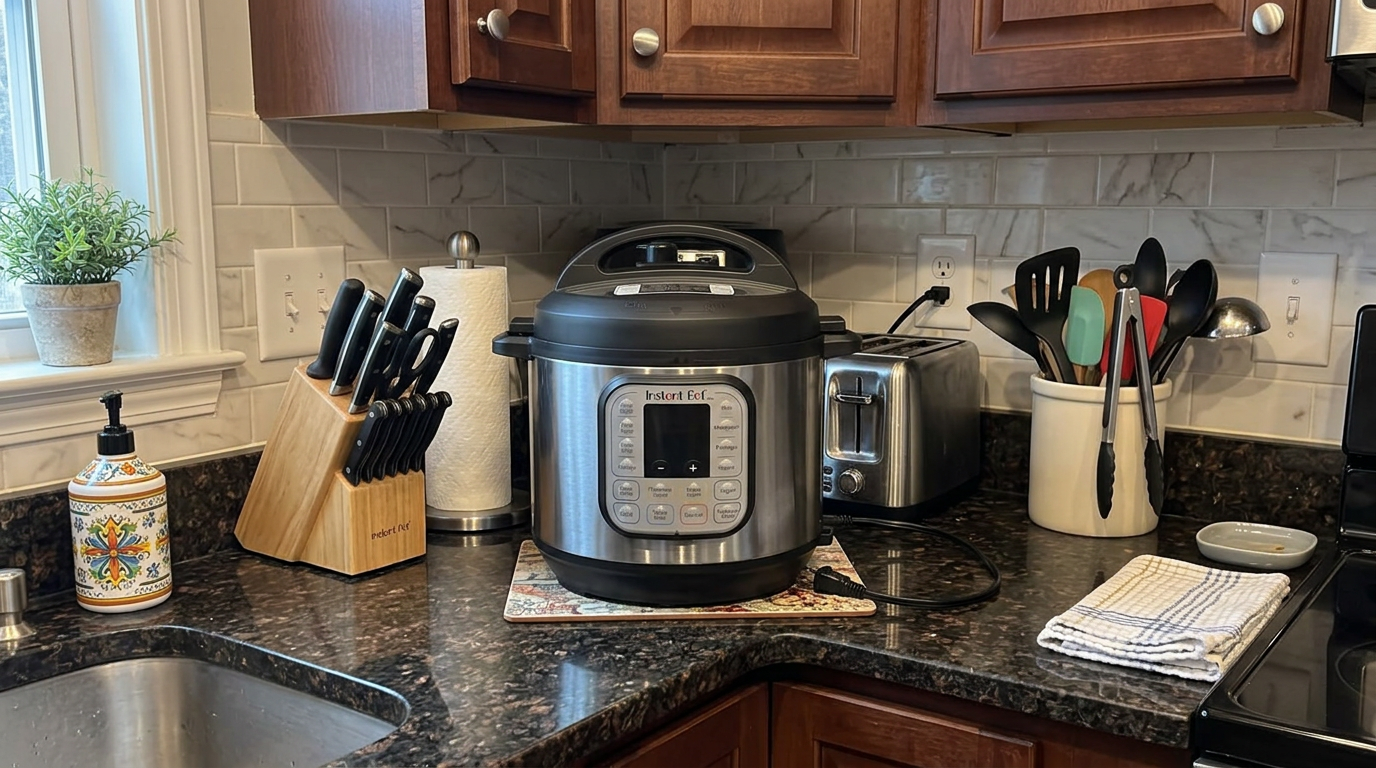
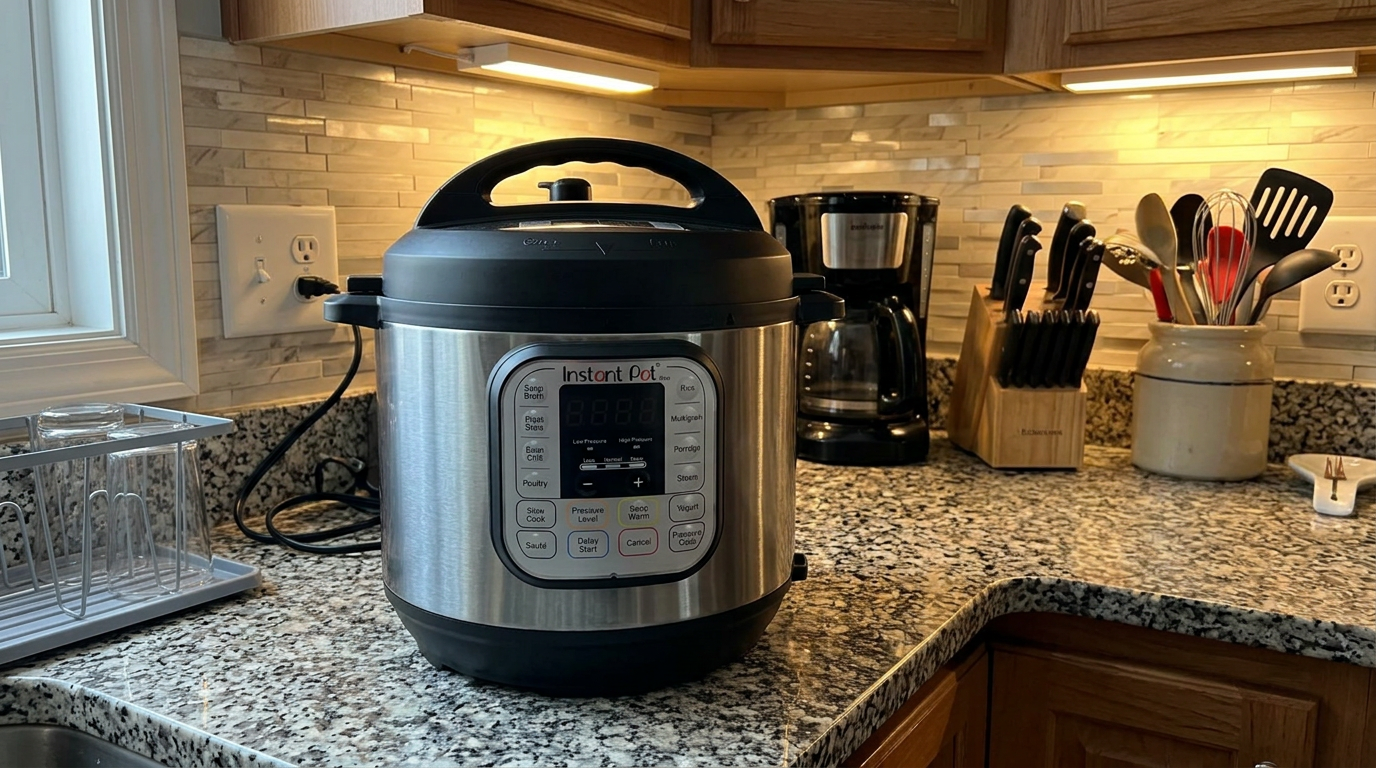
The Duo during a weeknight dinner.
On busy days, I started the HyperHeat on Slow Cook in the morning and came home to dinner on Keep Warm. With the Duo, I leaned on pressure cooking and kept slow cooking for weekends.
My first week on each
On the Duo, week one was lamb and orzo, unsoaked beans and basmati. The meat and beans were excellent; the rice was the weak spot.
On the HyperHeat, week one was rice, one-pot pasta and seared, slow-cooked taco meat. All three beat my expectations, especially the pasta.
| Day | Duo | HyperHeat |
|---|---|---|
| Day 1 | Water test | Rice in 15 minutes |
| Day 3 | Lamb and orzo | One-pot pasta |
| Day 5 | Unsoaked pintos | Taco meat, seven hours |
| Day 7 | Sticky basmati | Rinsed rice, even better |
Which makes the better first pressure cooker?
Both are good first cookers. The HyperHeat’s dial and automatic Rice and Pasta programs deliver reliable results while you learn, and its locking lid makes it one of the least intimidating models I have tried.
The Duo teaches you more about pressure cooking, because you set most times yourself, and it is lighter and simpler.
| Coming from | Better pick | Why |
|---|---|---|
| No pressure cooker, cooks rice often | HyperHeat | Fluffy rice, automatic programs |
| Wants to learn the basics | Duo | Simple manual control |
| Replacing a slow cooker | HyperHeat | Better slow cooking |
| Small kitchen, cupboard storage | Duo | Lighter |
Four weeks with each: my diary notes
Instant Pot Duo 6 Qt
Week 1: Lamb and orzo, unsoaked beans; sticky basmati.
Week 2: Crème caramel and steamed pudding, both excellent.
Week 3: Chili, yogurt and meal prep; pot like new.
Week 4: Rinsed rice with less water; better, not perfect.
Ninja HyperHeat 6.5 Qt
Week 1: Rice, pasta and taco meat, all excellent.
Week 2: Stews, chili, beans; trusting the automatic programs.
Week 3: Yogurt, steaming, sous vide; no wear on the pot.
Week 4: Slow cooker and rice cooker went into the cupboard.
Real-life scenarios
These are the situations where one cooker fit better in my four weeks.
Fluffy in about 11 minutes.
Al dente in its sauce.
Sear and slow cook in one pot.
Silky crème caramel.
About 14.5 lb.
Uncoated stainless.
My scorecard
These are my scores out of 10 from my single reviews. The categories differ because each cooker had different strengths and weaknesses.
Instant Pot Duo 6 Qt
Duo category scores.
Ninja HyperHeat 6.5 Qt
HyperHeat category scores.
Overall, I rate the Ninja HyperHeat 8.6 and the Instant Pot Duo 8.0. Pressure cooking is nearly tied; rice, pasta and slow cooking give the HyperHeat its lead.
Check price on AmazonWhich one is right for you?
4 quick questionsWhich one should you buy?
For busy households, rice and pasta fans and anyone replacing a slow cooker, the Ninja HyperHeat. It did more, and did most of it better.
For a simpler, lighter cooker with an uncoated steel pot, mainly for stews, beans and braises, the Instant Pot Duo.
For the full detail, read my reviews of the Instant Pot Duo 6 Qt and the Ninja HyperHeat 6.5 Qt.
- You cook rice and pasta often
- You want to replace a slow cooker and rice cooker
- You want a pot you can serve from
- You want full manual control
- You need to lift it in and out of a cupboard
- You want a simple, proven pressure cooker
- You prefer an uncoated stainless pot
- You need to store it in a cupboard
- You cook rice several times a week
- You want one-pot pasta
My pick for most households is the Ninja HyperHeat 6.5 Qt. Fluffy rice in about 11 minutes, al dente one-pot pasta and slow cooking as good as a dedicated slow cooker, all in a serve-ready pot.
Choose the Instant Pot Duo 6 Qt if you want a simpler, lighter pressure cooker with an uncoated stainless pot. Its stews, beans and custards were excellent.
Whichever you choose, rinse your rice, deglaze after searing and plan for heat-up and release time.
Instant Pot Duo vs Ninja HyperHeat specifications
From manufacturer specifications and my own testing.
| Instant Pot Duo 6 Qt | Ninja HyperHeat 6.5 Qt | |
|---|---|---|
| Type | 7-in-1 electric pressure cooker | 9-in-1 electric pressure cooker |
| Capacity | 6 quarts | 6.5 quarts |
| Functions | Pressure, slow cook, rice, yogurt, steam, sauté, keep warm | Pressure, slow cook, rice, pasta, sear/sauté, yogurt, steam, sous vide, keep warm |
| Power | 1,000 W, 120 V | 1,200 W, 120 V |
| Pot | Stainless steel | Ceramic nonstick, made without PFAS |
| Controls | Buttons | Dial and digital screen |
| Included | Steaming rack | Quick start guide with recipes |
| Weight | About 14.5 lb | About 18 lb |
| Cord | Standard | About 31 in |
How I tested and compared them
Emily Carter here. I used each cooker as my main cooker for four weeks, cooking for my family of four, and kept notes on timing, texture and cleanup.
On both, I made beef stew, chicken and rice, beans, rice, chili and yogurt. On the Duo, I also made lamb and orzo, crème caramel and a steamed pudding; on the HyperHeat, one-pot pasta, taco meat and sous vide chicken.
- Pressure cooking: tenderness, flavor and timing
- Everyday use: controls, searing and one-pot meals
- Extras: rice, pasta, slow cooking, yogurt and desserts
- Ownership: cleaning, noise, storage and safety
Instant Pot Duo vs Ninja HyperHeat FAQ
Is the Ninja HyperHeat better than the Instant Pot Duo?
For most households, yes. It made better rice, cooked one-pot pasta al dente and slow cooked better. Pressure cooking itself was nearly tied.
Which makes better rice?
The HyperHeat. Its basmati was fluffy in about 11 minutes, while the Duo’s came out sticky.
Can the Instant Pot Duo cook pasta?
Yes, in one-pot dishes like lamb and orzo, but it has no dedicated Pasta program.
Which is better for slow cooking?
The HyperHeat. Its taco meat and chili were rich and even, and you can sear in the same pot first.
Which pot is better?
The Duo has uncoated stainless steel; the HyperHeat has ceramic nonstick that releases food easily and doubles as a serving pot.
Which is bigger?
The HyperHeat holds 6.5 quarts versus 6 and weighs about 18 pounds versus about 14.5.
Does either have sous vide?
Only the HyperHeat.
Which is easier for beginners?
Both are easy. The HyperHeat’s automatic Rice and Pasta programs are the most foolproof.