Zojirushi NS-TSC10 vs Cuckoo CR-0631F
Zojirushi or Cuckoo is the main rivalry in premium rice cookers, and the Zojirushi NS-TSC10 and the Cuckoo CR-0631F are two of the most popular models. Both are Micom✕MicomShort for microcomputer. A chip uses fuzzy logic to adjust heat and timing through soak, heat, cook and steam stages, instead of simply boiling until the water is gone. cookers that soak, heat, cook and steam the rice for you. The Zojirushi is compact: 5.5 cups uncooked, a handle and a retractable cord. The Cuckoo is Korean-made and bigger, 12 cups cooked, with Turbo, GABA rice and a custom My Mode. I cooked rice in each almost daily for four weeks to find out which one belongs in your kitchen.
We choose products independently. We may earn a commission when you buy through our links. Affiliate policy
Jargon helpNew to Micom rice cookers? Tap any dotted term to see what it means.
In this comparison
For the best rice, buy the Zojirushi NS-TSC10. Its white rice was the fluffiest and most even of the two, brown and sweet rice were excellent and it is compact and easy to store; the trade-off is about an hour for regular white rice. Buy the Cuckoo CR-0631F if you cook for a family every day and want speed and capacity: 12 cups cooked, Turbo rice in about 35 minutes, GABA rice and a 13-hour timer.
The two rice cookers
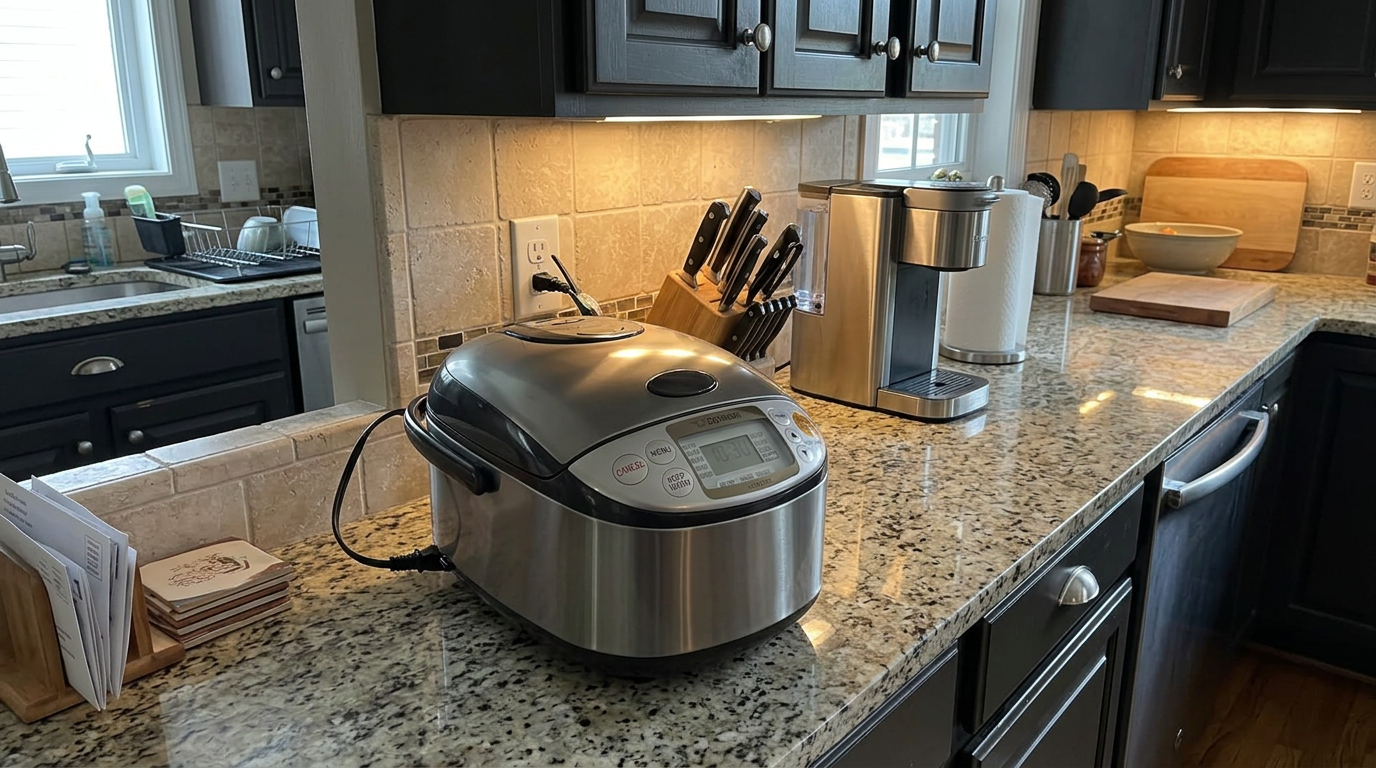
Specs checked November 26, 2026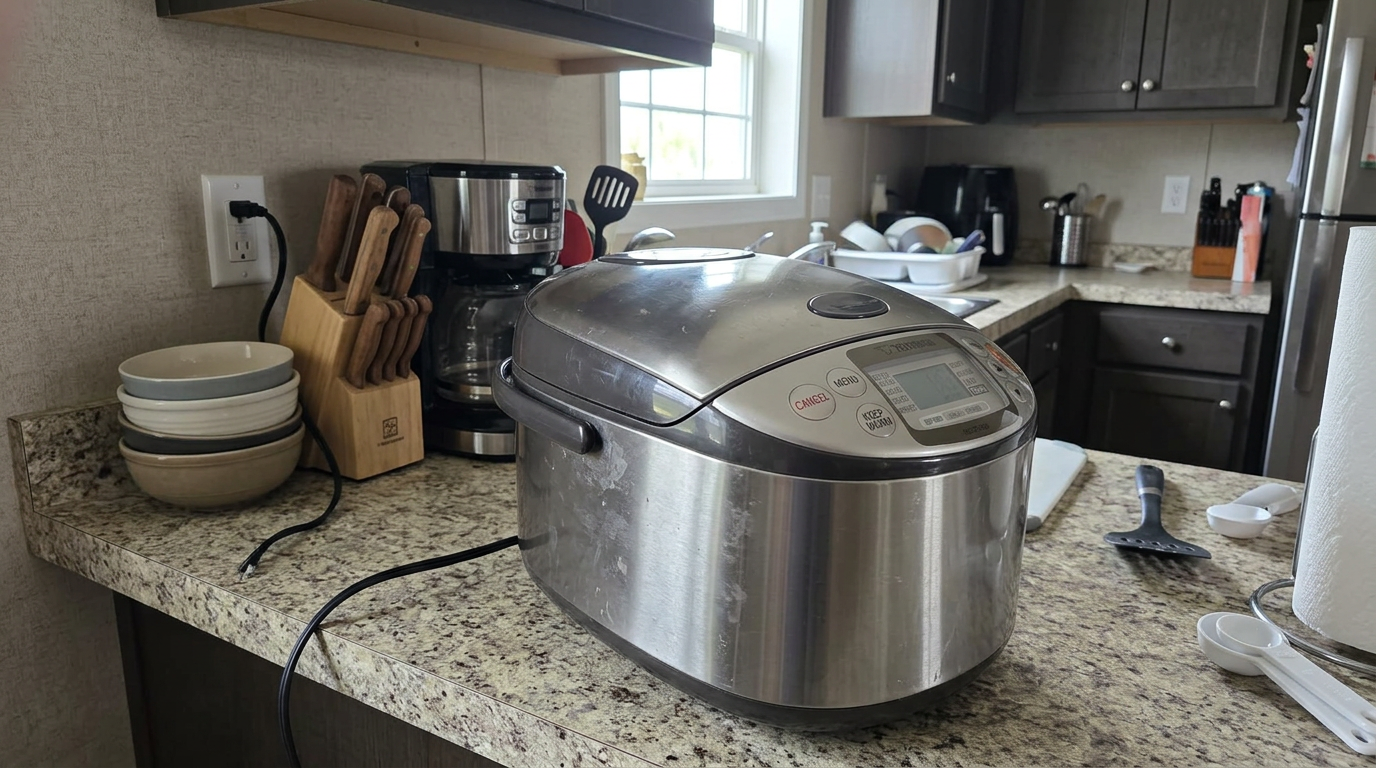
Compact 5.5-cup Micom cooker with eight menus, a delay timer, a steam tray, a carrying handle and a retractable cord.
Check price on Amazon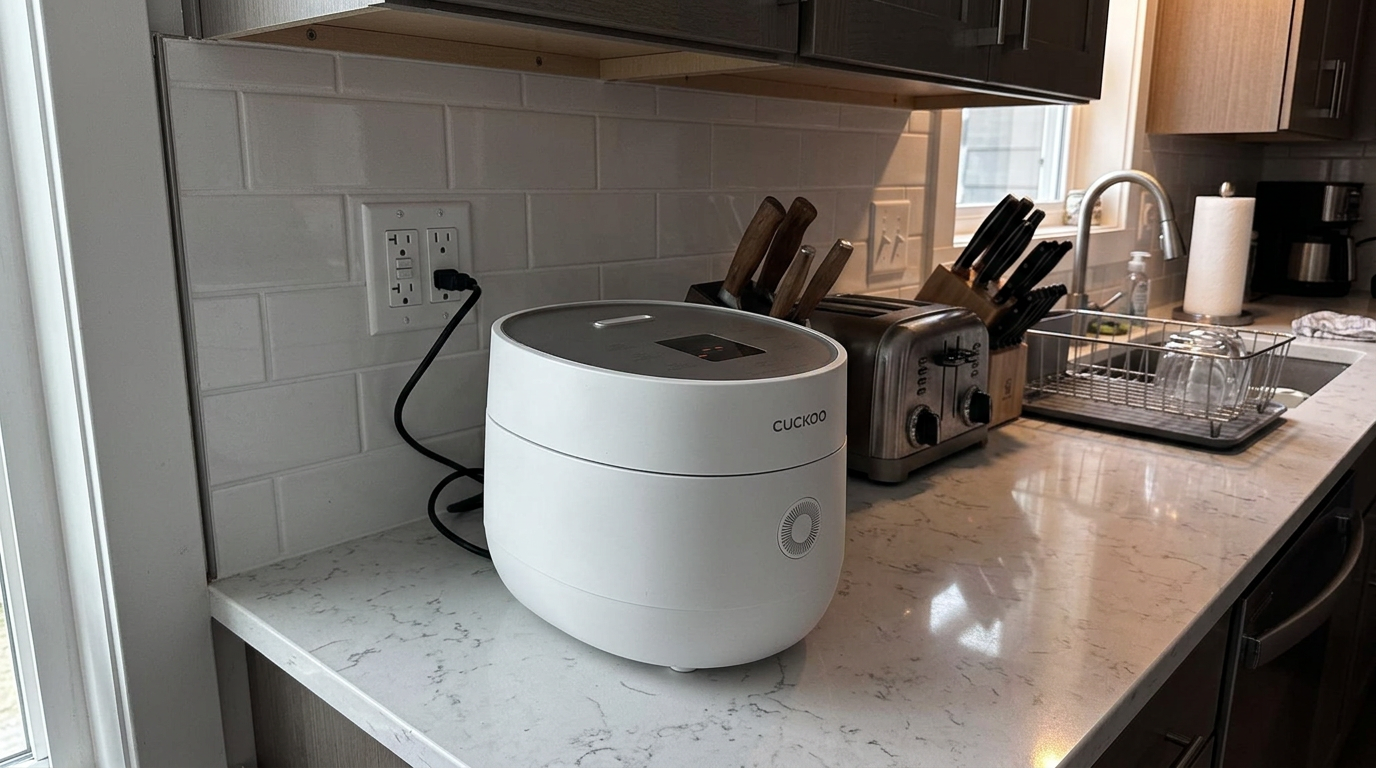
Korean-made 6-cup (12-cup cooked) Micom cooker with GABA, Turbo, My Mode, slow cook and a 13-hour preset timer.
See Today’s PriceZojirushi vs Cuckoo at a glance
- Both made excellent, consistent white and sticky rice with no scorching.
- The Zojirushi’s rice was slightly fluffier and more even; its regular cycle takes about an hour.
- The Cuckoo cooks twice as much, has Turbo for about 35 minutes and adds GABA and My Mode.
- The Zojirushi is smaller, lighter and simpler; the Cuckoo’s display takes a day to learn.
Head to head
The best result in each row is marked, based on my four weeks with each cooker and the manufacturer specs.
The Zojirushi wins on rice quality, size and simplicity; the Cuckoo wins on speed, capacity and special settings.
| Spec | Zojirushi | Cuckoo |
|---|---|---|
| White ricemy ratings | Fluffy, 9.4 ✓ Best | Soft, glossy, 9.2 |
| Sticky rice | Glossy, cohesive, 9.2 | Chewy, glossy, 9.2 |
| Brown rice | Tender, 9.2 ✓ Best | Tender, 8.8 |
| Speed | About 60 min, plus Quick | Turbo about 35 min ✓ Best |
| Capacity | 5.5 cups uncooked | 6 cups uncooked, 12 cooked ✓ Best |
| Special grains | Brown, sweet, mixed | GABA, mixed, My Mode ✓ Best |
| Timer | Delay, 2 memories | Preset up to 13 h ✓ Best |
| Size | About 7 lb, handle, cord retracts ✓ Best | About 10.8 lb, larger |
| Ease of use | Clear, simple ✓ Best | Learning curve |
| Cleaning | Hand wash, detachable lid | Detachable inner lid |
| Rows won | 4 | 4 |
Four rows each, with two ties. The Zojirushi makes slightly better rice; the Cuckoo makes more of it, faster.
Is It On Sale? Check NowZojirushi vs Cuckoo pros and cons
Zojirushi NS-TSC10
- Fluffy, evenly cooked rice every time
- Delay timer and gentle keep warm
- Compact, with a handle and retractable cord
- Regular white rice takes about an hour
- Removable parts are hand wash only
- Steaming and cake settings are basic
Cuckoo CR-0631F
- Soft, glossy white and sticky rice every time
- Big 12-cup cooked capacity
- Turbo rice in about 35 minutes and a 13-hour timer
- Display and My Mode take some learning
- Slow cook is basic
- Larger and heavier than small cookers
Who should buy which rice cooker?
- Couples and families of up to four
- Long-grain, jasmine and sushi rice fans
- Small kitchens and pantry storage
- Families who eat rice every day
- Sticky, Korean-style and GABA rice fans
- Meal preppers who cook big batches
How they differ
Both are computer-controlled rice cookers that use fuzzy logic✕Fuzzy logicSoftware that adjusts cooking as it goes, based on what the sensors read, rather than following one fixed cycle. to manage soaking, heating, cooking and steaming. Both have nonstick inner pots with water lines for each rice type, detachable inner lids, keep warm and a timer. Neither needs any attention once you press start.
The Zojirushi is the compact specialist: 5.5 cups uncooked (about 10 cooked), 610 watts, eight menus including white/sushi, quick, mixed, porridge, sweet, brown, cake and steam, plus a steam tray.
The Cuckoo is the family workhorse: 6 cups uncooked (about 12 cooked), 580 watts, settings for glutinous and white rice, GABA rice✕GABA riceBrown rice soaked at a warm, controlled temperature until it starts to sprout, then cooked. It comes out softer and slightly sweeter, and its gamma-aminobutyric acid content increases., mixed and brown rice, porridge, steam and slow cook, plus Turbo, My Mode and a 13-hour preset.
| Inside | Zojirushi | Cuckoo |
|---|---|---|
| Capacity | 5.5 cups uncooked, ~10 cooked | 6 cups uncooked, 12 cooked |
| Power | 610 W | 580 W |
| Fast option | Quick setting | Turbo, about 35 min |
| Special settings | Brown, sweet, cake, steam | GABA, slow cook, My Mode |
| Timer | Delay, 2 memories | Preset up to 13 h |
| Size | About 10 x 14 x 8.5 in, 7 lb | About 12.5 x 9.3 x 8.4 in, 10.8 lb |
In short: the Zojirushi puts rice quality and tidiness first; the Cuckoo puts capacity, speed and options first.
Both are also quiet, tidy appliances that sit happily on a counter, and both reward the same simple habits: rinse well, use the supplied cup and fluff the rice as soon as it is done.
How Micom cooking works
Both cookers follow the same idea. Instead of boiling until the water is gone, as a basic on/off cooker does, they run the rice through stages and adjust as they go.
First the grains soak and absorb water. Then the cooker brings the water up to temperature, holds a controlled boil and simmer, and finally steams and rests the rice so it finishes evenly. Brown rice gets a longer, gentler cycle to soften the bran layer; white rice gets a gentler finish to stay fluffy.
In practice, you do not need to think about any of it on either cooker. The Zojirushi’s hour-long White cycle spends more time on soaking and resting, which is part of why its rice was so even. The Cuckoo’s Turbo shortens those stages for speed, with slightly firmer rice as the trade-off.
| Stage | What happens | Why it matters |
|---|---|---|
| Soak | Grains absorb water | Even cooking to the center |
| Heat | Water comes up to temperature | Controlled, no boil-over |
| Cook | Controlled boil and simmer | Tender grains |
| Steam and rest | Finishes and fluffs | No hard spots or scorching |
Design and size
The Zojirushi is compact and tidy, with a brushed stainless exterior, a fold-down carrying handle and a clear LCD. At about 7 pounds, it was easy to move to the pantry with one hand, and the retractable cord disappeared at the press of a button.
The Cuckoo has a cheerful, rounded design with the display on the lid. At about 10.8 pounds and 12.5 inches long, it felt sturdy and well made, but it takes a fair amount of counter space. Its cord is about 1.2 meters long.
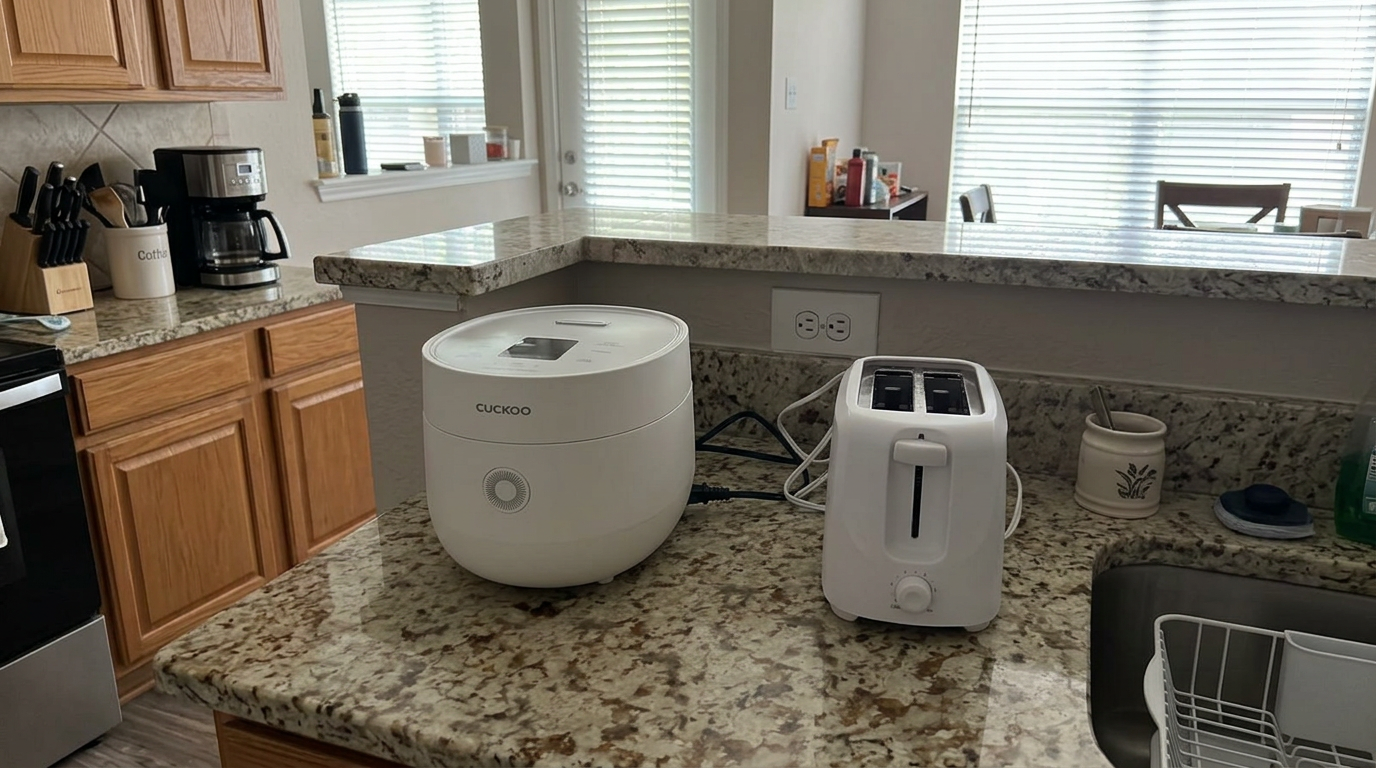
The Cuckoo is the bigger of the two, built for family-size batches.
Setup and controls
The Zojirushi was the simpler to learn. A Menu button cycles through eight settings, then Start; there are Timer and Cancel buttons and a choice of melody or beep at the end.
The Cuckoo took about a day. Its Menu button cycles the rice settings, while My Mode, Turbo and the preset timer have their own buttons, and some functions use two buttons pressed together, which is where the bilingual manual came in. After that, most days were Menu once or twice, then Cook.
| Control | Zojirushi | Cuckoo |
|---|---|---|
| Learning curve | Minutes | About a day |
| Menus | 8 | 10 including My Mode and Turbo |
| Signals | Melody or beep | Beeps and a melody |
| Button combos | No | Some functions |
Our tip: On the Cuckoo, check the clock after unplugging or moving it; otherwise the preset timer finishes at the wrong time.
Check price on AmazonMeasuring rice and water
Both come with a rice cup✕Rice cupThe measuring cup that comes with the cooker, about 180 ml, smaller than a US cup. The water lines in the pot are matched to it. of about 180 ml, not a US cup, and both pots have separate water lines for each rice type. Using a kitchen measuring cup threw the ratios off on both; with the supplied cup and the pot on a level counter, results were the same every time.
On the Zojirushi, slightly too much water made softer rice and too little made it firm, so I kept to the line and adjusted only a few millimeters. On the Cuckoo, I went slightly above the line for softer rice and slightly below for fried rice and sushi rice.
| Rice | Zojirushi water | Cuckoo water |
|---|---|---|
| White | White line | White line |
| Brown | Brown line | Brown line, more water |
| Sticky | Sweet line | White/glutinous line |
| Porridge | Porridge line | Porridge line, much more water |
White rice
Both made excellent white rice with no hard spots and no scorched layer. On the Zojirushi, two cups of rinsed long-grain rice on White took about an hour and came out moist, light and mostly separate after fluffing, better than my stovetop rice on its best day.
On the Cuckoo, three cups of rinsed medium-grain rice came out soft, glossy and lightly clinging, exactly how Korean-style rice should be. I made it more than a dozen times, with identical results.
White rice
My ratings out of 10.
The Zojirushi’s grains were a touch fluffier and more separate; the Cuckoo’s a touch softer and glossier. Which you prefer depends on the rice you eat.
Consistency is the real reason to buy either one. Over four weeks, I never had a scorched bottom, a hard center or a soggy top on either cooker once I measured with the supplied cup and rinsed properly. That reliability is what turned rice from a side dish I had to watch into one I could simply plan around, and it is what separates both of these from cheaper on/off cookers and a pot on the stove.
Speed: the Cuckoo’s advantage
The Zojirushi’s regular White cycle takes about an hour. Its Quick setting is noticeably faster, with slightly firmer, less fluffy rice that was perfectly fine for a weeknight stir-fry. Brown rice takes longer than white.
The Cuckoo’s Turbo cooks white rice in about 33 to 41 minutes depending on amount; two to three cups were usually ready in about 35. Turbo rice was slightly firmer than the regular setting but still very good, and it became my weeknight default. GABA rice takes much longer.
White rice cycle
My timings.
If you often decide on rice at the last minute, the Cuckoo’s Turbo matters. If you plan ahead, both timers make speed irrelevant.
Brown and GABA rice take much longer than white on both cookers, so for those I always used the timer and planned ahead.
Sticky, sushi and short-grain rice
Both excelled with sticky rice. On the Zojirushi, the Sweet setting produced glossy, cohesive glutinous rice✕Glutinous riceAlso called sweet or sticky rice. It contains almost no gluten despite the name; it is simply very high in the starch that makes grains cling together. that held together perfectly for mango sticky rice. On the Cuckoo, glutinous rice soaked for an hour came out chewy, cohesive and glossy on the white/glutinous setting, ideal for desserts and rice cakes.
For sushi, the Zojirushi’s White/sushi setting with rinsed, 30-minute-soaked short-grain rice was glossy, tender and slightly sticky; short-grain rice clings because it has more amylopectin✕AmylopectinA starch that makes cooked rice sticky. Short-grain and glutinous rice have more of it than long-grain rice.. On the Cuckoo, medium-grain rice cooked just below the white line was firm enough to hold its shape in rolls.
| Rice | Zojirushi | Cuckoo |
|---|---|---|
| Sticky rice | Glossy, cohesive | Chewy, glossy |
| Sushi rice | Glossy, tender | Firm, holds shape |
| Soak first | 30 min for short-grain | 1 hour for glutinous |
| Custom texture | Water level only | My Mode |
The two take slightly different paths to the same result. The Zojirushi has a dedicated Sweet setting for sticky rice, while the Cuckoo cooks glutinous rice on its combined white and glutinous setting after a longer soak. Both were the easiest sticky rice I have made at home.
Jasmine, basmati and long-grain rice
This is where the Zojirushi stood out. Jasmine on White was soft, fragrant and lightly clingy. Basmati needed slightly less water than the white line and thorough rinsing, then gave long, separate, fragrant grains. Long-grain American rice was fluffy and separate.
On the Cuckoo, I mainly cooked medium-grain and Korean-style rice, which suits its softer, glossier result. I did not test jasmine or basmati.
| Rice | Zojirushi | Cuckoo |
|---|---|---|
| Jasmine | Soft, fragrant | Not tested |
| Basmati | Long, separate, slightly less water | Not tested |
| Long-grain American | Fluffy, separate | Not tested |
| Medium-grain | Not tested | Soft, glossy |
If long-grain and aromatic rice are your staples, the Zojirushi is the safer choice.
Brown rice, GABA and mixed grains
On the Zojirushi, the Brown setting gave tender brown rice with a pleasant chew and no split grains; it scored 9.2, among its best results. The Mixed setting made chicken-stock rice with peas and carrots, evenly absorbed.
On the Cuckoo, the Mixed/Brown setting gave tender brown rice with a gentle chew and evenly cooked multigrain with barley and beans after a 30-minute soak. Its GABA setting soaked brown rice warm until it began to sprout, then cooked it: softer, slightly sweeter and nutty. Quinoa was fluffy and separate after a thorough rinse.
| Grain | Zojirushi | Cuckoo |
|---|---|---|
| Brown rice | Tender, 9.2 | Tender, 8.8 |
| GABA rice | No setting | Soft, nutty, 8.8 |
| Multigrain | Mixed setting | Even, hearty |
| Quinoa | Not tested | Fluffy, separate |
For healthy grains beyond brown rice, the Cuckoo offers more.
Mixed rice and one-pot sides
On the Zojirushi, the Mixed setting made a simple chicken-stock rice with peas, carrots and a little soy sauce. The rice absorbed the stock evenly, the vegetables were tender and nothing stuck. It scored 8.8.
On the Cuckoo, white rice with small cubes of sweet potato came out soft and lightly sweet, and a blend of white rice with barley, millet and black beans, the Korean japgokbap mix, cooked through after a 30-minute soak.
| Dish | Zojirushi | Cuckoo |
|---|---|---|
| Stock rice with vegetables | Even, flavorful, 8.8 | Not tested |
| Rice with sweet potato | Not tested | Soft, lightly sweet |
| Multigrain mix | Mixed setting | Even, hearty |
| Long delay with stock | Avoid | Avoid |
Custom texture: My Mode vs water level
The Cuckoo’s My Mode adjusts cooking temperatures to make rice firmer, softer or stickier. I used it for slightly firmer rice for sushi and fried rice, and softer rice for bowls with soup. It took some trial and error and a look at the manual, but once I found my settings, they were easy to repeat.
The Zojirushi has no custom mode. I adjusted texture with the water level, a few millimeters above the line for softer rice and slightly below for firmer, and by choosing between White and Quick.
If you like to fine-tune, My Mode is a real advantage. If you just want reliable rice, the standard settings on either cooker are excellent.
Our tip: Write down any My Mode or water-level tweak that works for your favorite rice; it makes every repeat batch the same.
Porridge, steaming and extras
Both made smooth, creamy rice porridge. On the Zojirushi, ginger porridge topped with scallions, a soft egg and sesame oil was a warming breakfast. On the Cuckoo, chicken-stock and ginger porridge set on the timer the night before was ready when I came downstairs.
The Zojirushi includes a steam tray, good for broccoli, carrots and dumplings in small portions, and a cake setting that made a moist, pale-topped cheesecake. The Cuckoo steamed vegetables and dumplings in small amounts and slow cooked a tender beef and vegetable stew, though I browned the meat in a pan first.
| Extra | Zojirushi | Cuckoo |
|---|---|---|
| Porridge | Creamy, 9.0 | Creamy, 9.0 |
| Steam | Tray included | Small amounts |
| Cake | Moist cheesecake, 7.8 | No |
| Slow cook | No | Basic, 7.6 |
Timers and keep warm
Both timers set the finish time, not the start time. The Zojirushi has two timer memories, which I used for breakfast and dinner; its display may use a 24-hour clock. Loading rice in the morning and coming home to fresh rice at 6 p.m. took one more job off my evening.
The Cuckoo schedules up to 13 hours ahead, perfect for overnight porridge. For food safety, I only used long delays with plain rice and water, never with stock, meat or milk.
Both kept rice warm for several hours. On the Zojirushi, the bottom layer firmed slightly after many hours; on the Cuckoo, the bottom packed down if left unfluffed, and its Reheat refreshed rice that had been on warm a while.
| Timer and warm | Zojirushi | Cuckoo |
|---|---|---|
| Timer | Finish time, 2 memories | Up to 13 h ahead |
| Keep warm | Moist for hours | Soft for hours |
| Reheat | No | Yes |
| Watch out | Bottom firms after many hours | Fluff right away |
Our tip: Fluff rice as soon as either cooker finishes, then close the lid; it stays light for hours.
Capacity and family meals
The Zojirushi handles one cup perfectly and up to 5.5 cups uncooked, about 10 cooked. For my family of four, two to three cups covered dinner and leftovers.
The Cuckoo makes up to 12 cups cooked from 6 uncooked. Three cups covered dinner and two lunches, and a full batch fed a weekend gathering without a second cycle. It handles two cups well, but very small amounts are less ideal.
| Uncooked rice | Zojirushi yield | Cuckoo yield |
|---|---|---|
| 1 cup | About 2 cups, perfect | Less ideal |
| 2 cups | About 4 cups | About 4 cups |
| 3 cups | About 6 cups | About 6 cups |
| Full pot | 5.5 cups, about 10 cooked | 6 cups, about 12 cooked |
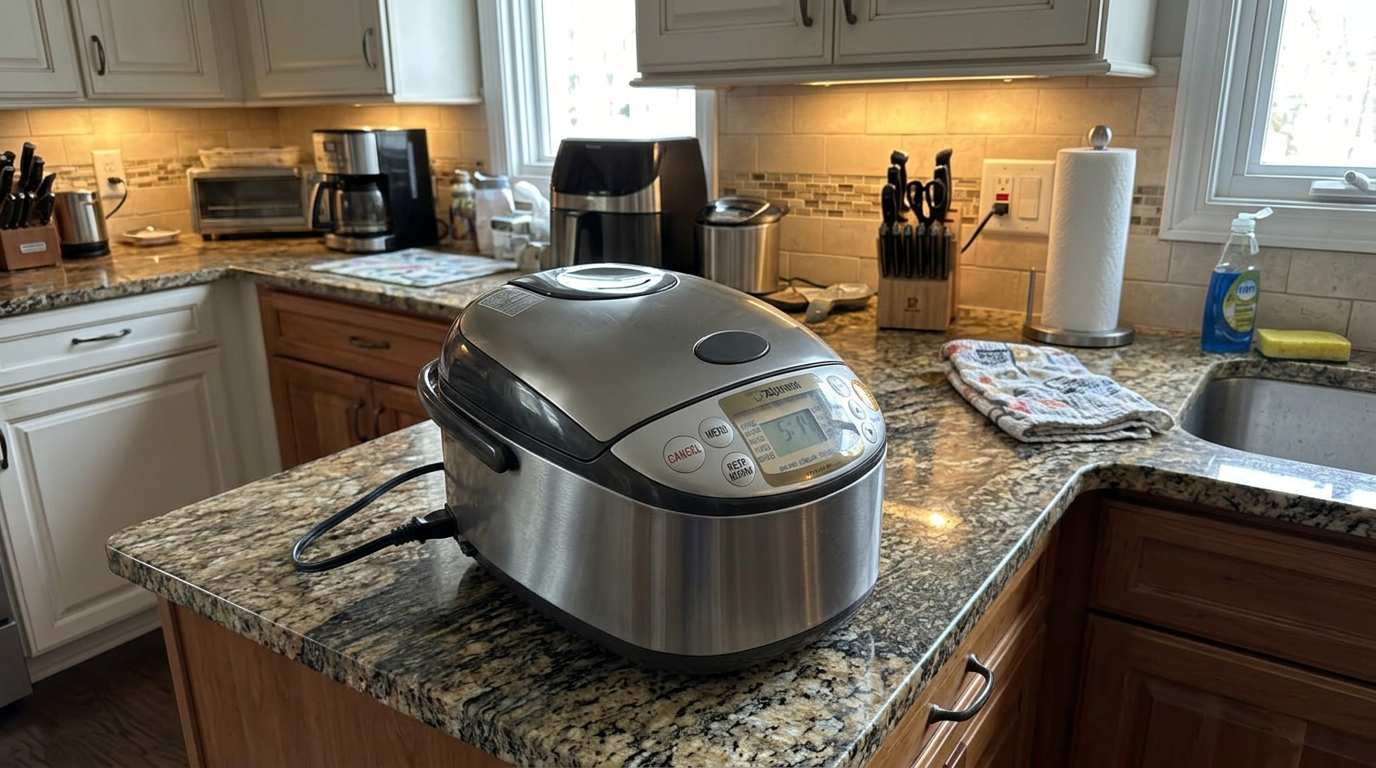
The compact Zojirushi suits couples and families of up to four.
One practical note: a full Cuckoo pot is heavy once cooked, so I served straight from the cooker with the spatula rather than lifting the inner pot out.
Cleaning and care
Both took a couple of minutes after each use. On the Zojirushi, the nonstick pan washed easily with a soft sponge, and the detachable inner lid came off for hand washing every few uses; Zojirushi recommends hand washing removable parts. After three weeks, the pan was unmarked.
On the Cuckoo, the nonstick pot, which Cuckoo describes as PTFE-free, released even sticky rice easily, and its detachable inner lid kept starch and odors at bay when washed weekly. A light plastic smell on the first cook disappeared after that.
| Part | Zojirushi | Cuckoo |
|---|---|---|
| Inner pot | Soft sponge, hand wash | Soft sponge |
| Inner lid | Detachable, hand wash | Detachable, wash weekly |
| Utensils | Supplied spatula only | Supplied spatula only |
| Base | Damp cloth | Damp cloth, never immerse |
Our tip: Dry the outside and bottom of either pot fully before putting it back in the cooker.
Noise, steam and safety
Both are almost silent while cooking. The Zojirushi gives only a gentle hiss from the vent and a melody or beep at the end; I switched to the beep for early mornings. The Cuckoo bubbles gently, clicks softly between stages and plays a short melody.
Steam escapes from the vent near the end on both, so I kept each away from cabinets and the wall. The Cuckoo’s lid locks during cooking and gets warm on top while the body stays comfortable.
Leftovers and meal prep
Both made great leftovers because the rice was cooked evenly to begin with. With the Zojirushi, I cooked brown and white rice back to back on Sundays, cooled and portioned them, and reheated with a splash of water under a cover. Chilled rice made excellent fried rice the next day.
With the Cuckoo, one full batch of mixed brown rice became a week of lunch bowls, and Turbo white rice covered dinner plus next-day fried rice.
| Plan | Zojirushi | Cuckoo |
|---|---|---|
| Sunday prep | White and brown, back to back | One big batch of mixed brown |
| Fried rice | From chilled leftovers | From chilled leftovers |
| Batch for a gathering | 5.5 cups max | 12 cups cooked |
Our tip: Refrigerate leftover rice within two hours and reheat it until steaming hot, only once.
Everyday dishes I made
Beyond plain rice, both cookers became the base for a lot of everyday meals, and because rice became effortless, we ate it more often and wasted less.
With the Zojirushi, white rice went with chicken curry and stir-fries, brown rice into grain bowls, sticky rice into mango sticky rice and sushi rice into rolls. Leftover white rice became fried rice with eggs, vegetables and soy sauce, one of the quickest lunches of the week.
With the Cuckoo, Turbo white rice went with weeknight stir-fries and curries, mixed brown rice into bibimbap bowls with a fried egg, sticky rice into a coconut dessert, and the slow cook setting made a beef and vegetable stew.
| Meal | Zojirushi | Cuckoo |
|---|---|---|
| Curry night | Long-grain white | Turbo white |
| Grain bowls | Brown rice | Mixed brown or GABA |
| Dessert | Mango sticky rice | Coconut sticky rice |
| Breakfast | Ginger porridge | Porridge on the timer |
| Lunch | Fried rice from leftovers | Fried rice from leftovers |
A typical week on each
With the Zojirushi: long-grain white rice with Monday’s curry, brown rice for Tuesday grain bowls, porridge on Wednesday, Quick rice for a Thursday stir-fry and sweet rice for a Saturday dessert. The timer changed my routine most.
With the Cuckoo: Turbo white rice for weeknight stir-fries and curries, bibimbap bowls with mixed brown rice, porridge on the timer for weekend breakfasts and a full batch of white rice for a gathering.
| Day | Zojirushi | Cuckoo |
|---|---|---|
| Monday | White with curry | Turbo white with stir-fry |
| Tuesday | Brown for grain bowls | Mixed brown for bibimbap |
| Wednesday | Porridge breakfast | GABA rice |
| Weekend | Sweet rice dessert | Porridge on the timer |
Why either beats the stovetop
Before this test, I cooked most rice in a saucepan, watching for boil-overs, turning the heat down at the right moment and hoping the bottom did not scorch. Both cookers removed all of that.
I measured, rinsed, added water to the line and walked away. Neither scorched once in four weeks, both had rice ready on schedule, and the stove was free for the rest of dinner.
| Task | Stovetop pot | Both cookers |
|---|---|---|
| Watching the pot | Yes | No |
| Adjusting heat | Yes | Automatic |
| Scorched bottom | Sometimes | Never in my tests |
| Ready on schedule | No | Timer |
| Keeping warm | Cools quickly | Automatic |
Build and long-term ownership
After four weeks of near-daily use, both looked new. The Zojirushi’s pan was unmarked and its water lines were crisp. Replacement inner pans, inner lids and steam trays are available for this model.
The Cuckoo’s lid hinge and latch stayed smooth and firm, its buttons crisp and its pot coating unscratched. Cuckoo sells replacement inner pots and parts. On any rice cooker, the pot coating and lid gasket are the main wear points; treat the coating gently and keep the gasket clean.
| Ownership | Zojirushi | Cuckoo |
|---|---|---|
| Pot after 4 weeks | Unmarked | Like new |
| Spare parts | Pan, lid, steam tray | Inner pots and parts |
| Wear points | Pot coating | Pot coating, lid gasket |
Troubleshooting
A few small issues came up on each.
| Problem | Cooker | Fix |
|---|---|---|
| Slightly sticky or gummy rice | Both | Rinse until nearly clear |
| Rice a bit soft | Zojirushi | Measure with the pan flat |
| Firm rice | Both | Use the supplied rice cup |
| Rice ready too late | Zojirushi | Use the timer or Quick |
| Bottom packed down | Cuckoo | Fluff right after cooking |
| Brown rice firm | Cuckoo | Use the brown water line |
| Timer finished early | Cuckoo | Reset the clock after unplugging |
What I would change on each
On the Zojirushi, a faster regular white cycle, dishwasher-safe removable parts and a larger steam tray for full steamed meals.
On the Cuckoo, a simpler display with fewer button combinations, a more capable slow cook mode with searing and a smaller footprint.
| Wish list | Zojirushi | Cuckoo |
|---|---|---|
| Biggest wish | Faster white rice | Simpler display |
| Second | Dishwasher-safe parts | Better slow cook |
| Third | Bigger steam tray | Smaller footprint |
Who each suits in real life
The Zojirushi suits anyone who eats rice often and wants it perfect with no effort: couples, families of up to four, rice lovers tired of scorched or gummy stovetop rice, and small kitchens and apartments. It is less ideal if speed matters most or you regularly feed a crowd; for bigger families, the 10-cup version of this model may be worth a look.
The Cuckoo suits families who eat rice every day, cook big batches and like Korean-style or sticky rice, plus meal preppers who want GABA and mixed brown rice without fuss. It is less ideal for singles cooking tiny amounts or very small kitchens.
| Household | Better pick | Why |
|---|---|---|
| Couple | Zojirushi | Perfect small batches |
| Family of four | Either | Both cover dinner and leftovers |
| Family of six | Cuckoo | 12 cups cooked |
| Busy weeknights | Cuckoo | Turbo |
| Rice purist | Zojirushi | Best texture |
Is a premium rice cooker worth it?
If rice is a regular part of your meals, yes. Both made consistently excellent rice with zero attention, which no saucepan or basic on/off cooker matched in my kitchen.
Choose by your household. The Zojirushi’s trade-offs, an hour for white rice and hand-wash parts, are easy to live with if you value perfect rice. The Cuckoo’s trade-offs, a learning curve and a bigger footprint, are easy to live with if you cook for a family every day.
Mistakes to avoid
Using a US measuring cup. Use the supplied rice cup.
Skipping the rinse. Sticky, gummy rice.
Long timer delays with stock or meat. Plain rice and water only.
Metal spoons in the pot. Use the supplied spatula.
Stirring sushi vinegar in the cooker. Use a wide bowl.
Four weeks with each: my diary notes
Zojirushi NS-TSC10
Week 1: White rice in different amounts; rinsing made the difference.
Week 2: Every menu; brown and sweet rice stood out.
Week 3: The timer every day; no wear on the pan.
Week 4: Jasmine, basmati and sushi rice, all excellent.
Cuckoo CR-0631F
Week 1: White and sticky rice, soft and glossy every time.
Week 2: GABA, brown, porridge and Turbo; the preset timer.
Week 3: My Mode, slow cook and steam.
Week 4: Turbo became the weeknight default.
Real-life scenarios
These are the situations where one rice cooker fit better in my four weeks.
One cup cooks perfectly.
12 cups cooked.
Turbo in about 35 minutes.
Long, fragrant grains.
GABA and multigrain.
Handle and retractable cord.
My scorecard
These are my scores out of 10 from my single reviews.
Zojirushi NS-TSC10
Zojirushi category scores.
Cuckoo CR-0631F
Cuckoo category scores.
Overall, I rate the Zojirushi NS-TSC10 8.7 and the Cuckoo CR-0631F 8.5. The Zojirushi’s rice quality edges it; the Cuckoo wins on speed and capacity.
Check price on AmazonWhich one is right for you?
4 quick questionsWhich one should you buy?
For the best everyday rice in a compact cooker, the Zojirushi NS-TSC10.
For families who eat rice daily and want speed and capacity, the Cuckoo CR-0631F.
For the full detail, read my reviews of the Zojirushi NS-TSC10 and the Cuckoo CR-0631F.
- You want the best everyday rice
- You cook for up to four
- You want a compact cooker you can put away
- You need rice in under 40 minutes
- You cook big batches for six or more
- You cook rice for a family daily
- You want faster rice on weeknights
- You want GABA and custom textures
- You cook tiny portions
- Your counter is small
My pick for most homes is the Zojirushi NS-TSC10. Its rice was the fluffiest and most even, it handles brown, sweet and sushi rice beautifully and it is compact and easy to store.
Choose the Cuckoo CR-0631F if you cook for a family every day: 12 cups cooked, Turbo rice in about 35 minutes, GABA rice and a 13-hour timer.
Whichever you choose, rinse your rice and use the supplied cup.
Zojirushi vs Cuckoo specifications
From manufacturer specifications and my own testing.
| Zojirushi NS-TSC10 | Cuckoo CR-0631F | |
|---|---|---|
| Type | Micom rice cooker and warmer | Micom fuzzy logic rice cooker |
| Capacity | 5.5 cups uncooked (1.0 L) | 6 cups uncooked, 12 cooked |
| Menus | White/sushi, quick, mixed, porridge, sweet, brown, cake, steam | Glutinous/white, GABA, mixed/brown, porridge, steam, slow cook, My Mode, Turbo, reheat |
| Power | 610 W, 120 V | 580 W, 120 V |
| Timer | Delay, 2 settings | Preset up to 13 h |
| Fast option | Quick | Turbo, about 33 to 41 min |
| Included | Steam tray, rice cup, spatula | Spatula, rice cup |
| Size | About 10 x 14 x 8.5 in | About 12.5 x 9.3 x 8.4 in |
| Weight | About 7 lb | About 10.8 lb |
| Extras | Handle, retractable cord | Detachable inner lid, PTFE-free pot |
How I tested and compared them
Emily Carter here. I used each as my only rice cooker for four weeks, cooking for my family of four almost every day.
On the Zojirushi, I tested long-grain, short-grain, jasmine and basmati white rice, brown, sweet, mixed, porridge and Quick, plus cake and steam. On the Cuckoo, I tested white and glutinous rice, GABA, mixed brown rice, porridge, Turbo, My Mode, slow cook and steam.
- Rice quality: texture, evenness and consistency
- Speed: cycle times and timers
- Everyday use: controls, capacity and keep warm
- Ownership: cleaning, size and build
Zojirushi vs Cuckoo FAQ
Is Zojirushi or Cuckoo better?
The Zojirushi NS-TSC10 made slightly fluffier, more even rice and is more compact. The Cuckoo CR-0631F is faster with Turbo, cooks twice as much and adds GABA and My Mode.
Which is faster?
The Cuckoo. Turbo white rice took about 35 minutes; the Zojirushi’s regular white cycle takes about an hour.
Which makes more rice?
The Cuckoo, up to 12 cups cooked versus about 10 for the Zojirushi.
Which is better for sticky rice?
Both were excellent, glossy and cohesive.
Which is better for basmati and jasmine?
The Zojirushi, which I tested with both.
Do they have timers?
Yes. The Zojirushi has a delay timer with two memories; the Cuckoo presets up to 13 hours.
Are the parts dishwasher safe?
I hand washed both. Zojirushi recommends hand washing removable parts.
Which is easier to use?
The Zojirushi. The Cuckoo’s display and My Mode take about a day to learn.