Cuckoo CR-0631F 12-cup review
The CUCKOO CR-0631F Micom Rice Cooker (6-cup uncooked, 12-cup cooked) is a Korean-made fuzzy logic rice cooker with dedicated settings for white and glutinous rice, GABA brown rice, mixed brown rice, porridge, steam and slow cook, plus a custom My Mode, a Turbo setting and a 13-hour preset timer. I used it for three weeks for family-size batches of white rice, sticky rice, mixed-grain rice, GABA rice, porridge and a slow-cooked stew. White rice was consistently soft and glossy, Turbo had rice ready in about 35 minutes and the big capacity covered every family meal. The display takes some learning and the extras are simpler than a multi-cooker, but for a family that eats rice daily, it is a strong pick.

Emily Carter
Hands-on review
Hands-on testing, research, specs
3 weeks
26 minutes
Jargon helpNew to rice cookers? Tap any dotted term to see what it means.
In this review
Yes, if you cook rice for a family most days. The Cuckoo CR-0631F made soft, glossy white rice and perfectly sticky glutinous rice, softened mixed brown rice properly and turned out creamy porridge. The 12-cup cooked capacity meant one batch for dinner and lunches, Turbo had rice ready in about 35 minutes and the 13-hour preset timer let me plan breakfast the night before. The detachable inner lid made cleaning easy. My Mode and the display take a little learning, and slow cooking is basic. For dependable everyday rice in large amounts, it is an excellent choice.
Cuckoo CR-0631F at a glance
Cuckoo CR-0631F pros and cons
- Soft, glossy white and sticky rice every time
- Big 12-cup cooked capacity for families and meal prep
- Turbo rice in about 35 minutes and a 13-hour timer
- Display and My Mode take some learning
- Slow cook is basic
- Larger and heavier than small rice cookers
Who should buy the Cuckoo CR-0631F?
- Families who eat rice every day
- Fans of sticky and Korean-style rice
- Meal preppers who cook big batches
- Singles who cook tiny portions
- Cooks wanting pressure cooking
- Very small kitchens
First impressions of the Cuckoo CR-0631F
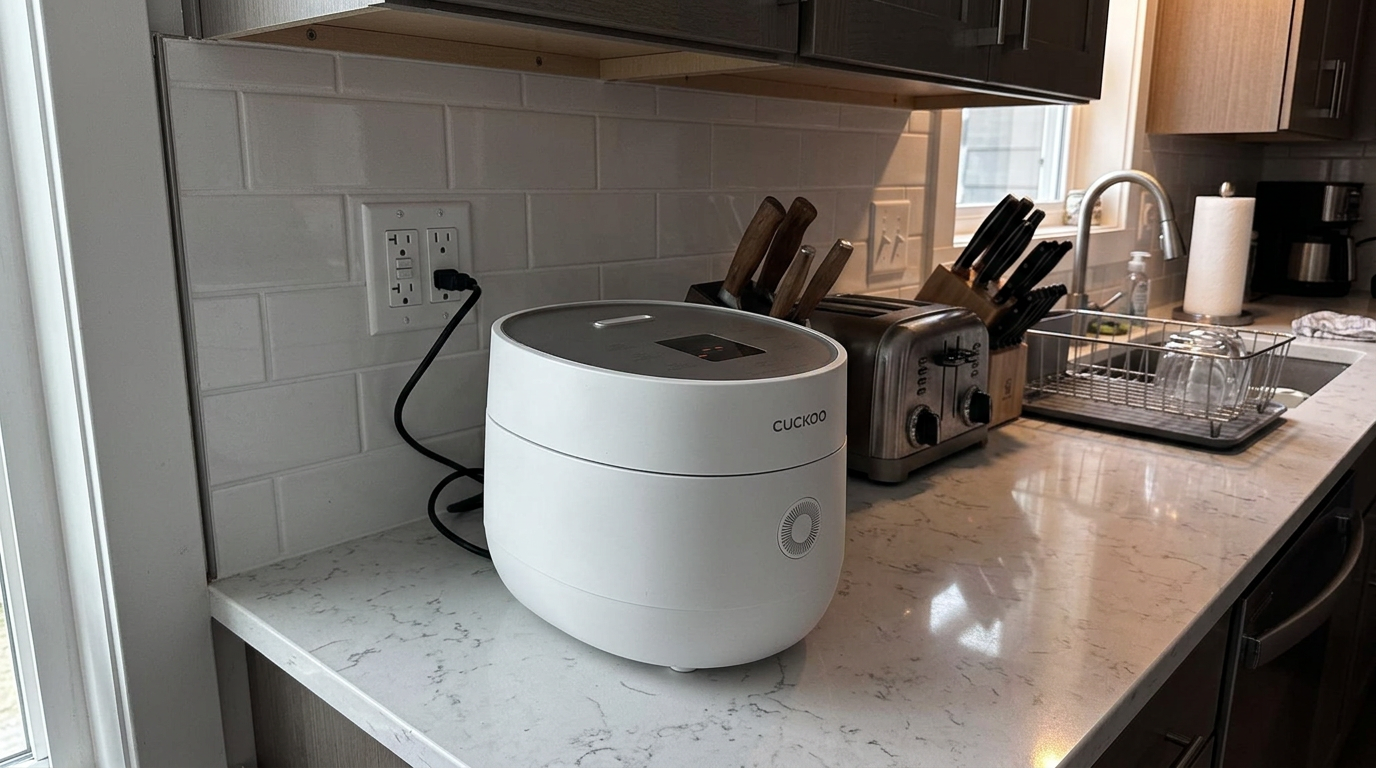
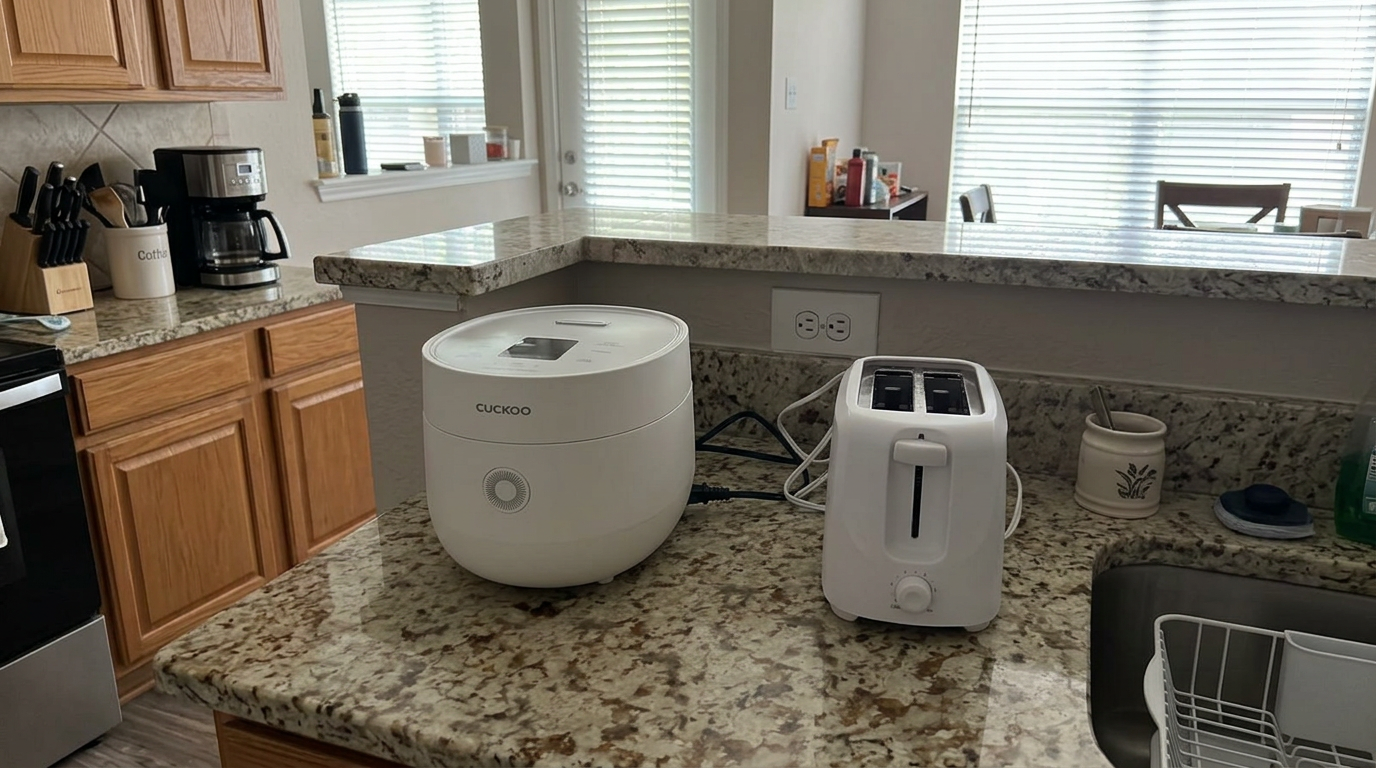
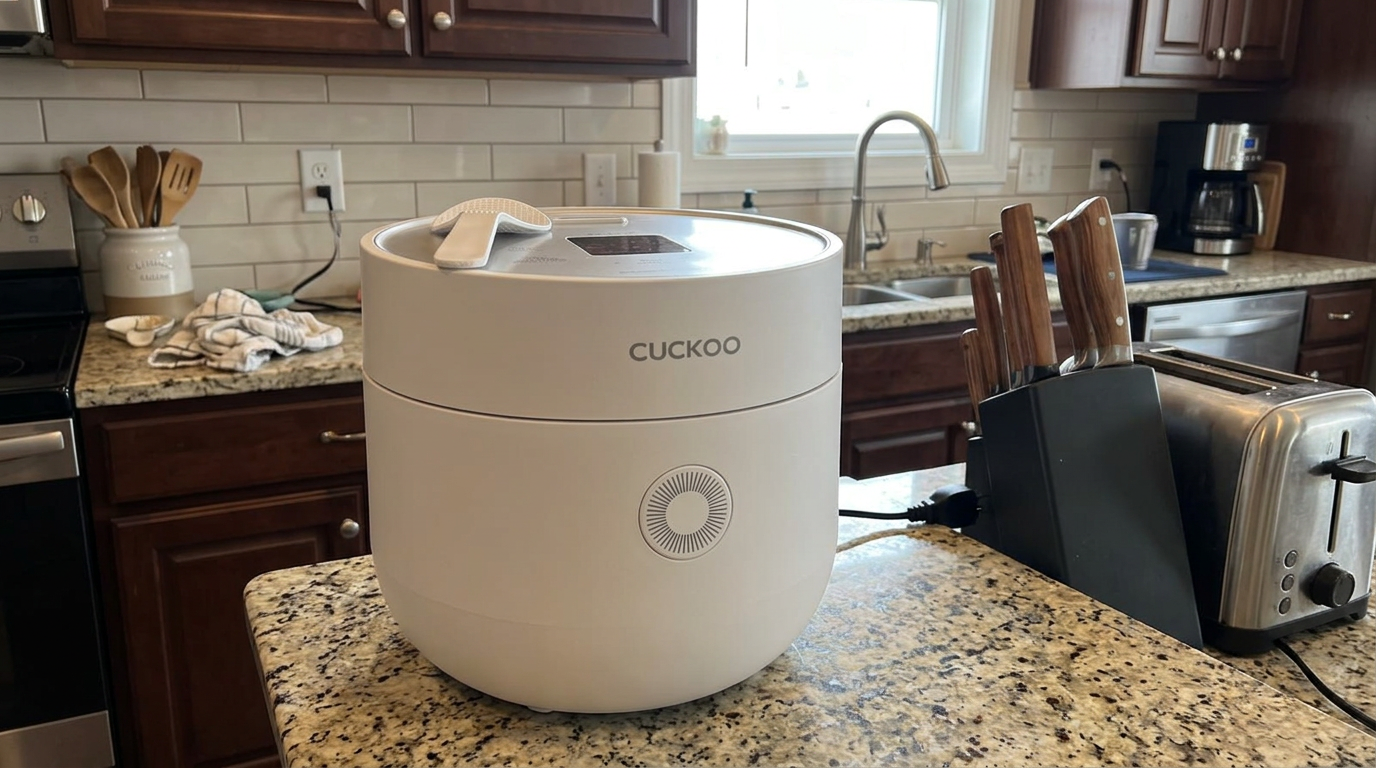
The CR-0631F has a cheerful, rounded design and a clear digital display on the lid.
It is about 12.5 inches long, 9.3 inches wide and 8.4 inches tall, and weighs around 10.8 pounds.
It feels sturdy and well made, which fits its Korean manufacturing.
The nonstick inner pot, detachable inner lid and control panel.
Inside sits a nonstick inner pot with water markings for different rice types.
The inner lid detaches for cleaning.
In the box, I found a rice spatula, a measuring cup and a bilingual manual.
The control panel has buttons for the menu, My Mode, Turbo, the timer and Cook.
It looked busy at first, but after a day, I knew my way around.
Our tip: Use only the supplied measuring cup for rice, because it is smaller than a standard US cup and every water marking inside the pot is calibrated to it.
How the fuzzy logic works
The CR-0631F uses a microcomputer with fuzzy logic✕Fuzzy logicA control method that lets the rice cooker adjust heat and timing during cooking based on temperature readings, rather than running one fixed program. to manage the cooking process.
Instead of one fixed heating cycle, it adjusts temperature and timing as the rice cooks.
That matters because different grains behave differently.
Brown rice needs more time and moisture to soften its bran, while white rice needs a gentler finish to stay fluffy.
The cooker handles those differences on its own.
The stages the cooker manages automatically.
Our tip: Leave the lid closed until the cooker signals it is done, because the fuzzy logic relies on trapped steam and temperature readings to finish the rice evenly.
White rice test
For my main test, I cooked three cups of medium-grain white rice with the supplied cup.
I rinsed the rice several times until the water was nearly clear, drained it and filled water to the “3” line.
Then I chose the white rice setting and pressed Cook.
When the cooker played its signal and switched to keep warm, the rice was soft, glossy and evenly cooked.
The grains held together lightly, which is exactly how Korean-style white rice should be.
No hard spots and no scorched layer at the bottom.
Over three weeks, I made white rice more than a dozen times, and the results were consistent every time.
That consistency is the main reason to buy a cooker like this.
Glossy, evenly cooked white rice in the nonstick pot.
Our tip: Rinse white rice until the water is almost clear, because removing the loose surface starch gives you glossy grains that cling gently instead of a gummy, sticky mass.
Glutinous (sticky) rice
The white rice setting also handles glutinous rice✕Glutinous riceA short-grain rice, also called sticky or sweet rice, that becomes chewy and cohesive when cooked. Despite the name, it contains no gluten., also called sticky or sweet rice.
I soaked it for an hour, used the matching water line and cooked it on the same setting.
It came out chewy, cohesive and glossy, ideal for a sticky rice dessert and for rice cakes.
It was the easiest sticky rice I have made at home.
Our tip: Soak glutinous rice for at least an hour before cooking, because the longer soak lets the grains hydrate fully and gives you an even, chewy texture without hard centers.
GABA rice: germinated brown rice
The GABA setting prepares germinated brown rice.
It soaks the rice at a warm, controlled temperature so the grains begin to sprout, then cooks them.
The whole process takes much longer than white rice, so I used the timer.
GABA stands for gamma-aminobutyric acid, a compound that increases when brown rice germinates.
The rice came out softer and slightly sweeter than ordinary brown rice, with a pleasant nutty taste.
It made great breakfast bowls and side dishes.
Our tip: Start GABA rice early or use the timer, because the extended warm soak is what makes it work and the cycle is far longer than a regular white rice cook.
Mixed and brown rice
Brown rice and mixed grains can come out hard or chewy if they are not cooked properly.
The Mixed/Brown setting adjusts the cycle to soften the bran layer while keeping the grains intact.
My brown rice was tender with a gentle chew, and a multigrain mix with barley and beans cooked evenly.
It was my go-to for healthy weekday lunches.
| Grain | Setting | Water | Result |
|---|---|---|---|
| Brown rice | Mixed/Brown | Brown line | Tender, slight chew |
| Multigrain mix | Mixed/Brown | Brown line | Even, hearty |
| GABA brown rice | GABA | GABA line | Soft, nutty |
| White and brown blend | Mixed/Brown | Brown line | Balanced texture |
Our tip: Soak mixed grains for 30 minutes before cooking if they include beans or barley, because harder grains need a head start to finish at the same time as the rice.
Rice porridge
The porridge setting cooks rice gently in plenty of water until it turns soft and creamy.
I made a savory rice porridge with ginger and chicken stock for breakfast and a plain one for a light dinner.
The texture was smooth and comforting, with the grains broken down just enough.
Set on the timer the night before, it was ready when I came downstairs.
Our tip: Use the porridge water line, not the white rice line, because porridge needs far more liquid and using the wrong line leaves you with thick, sticky rice instead of a smooth bowl.
Turbo rice for busy nights
Turbo cooks white rice in about 33 to 41 minutes, depending on the amount.
In my tests, two to three cups were usually ready in around 35 minutes.
Turbo rice was slightly firmer than the regular white setting but still very good.
It was perfect on nights when I got home late and needed dinner fast.
Relative cycle times in my tests.
Our tip: Rinse and drain rice well before using Turbo, because the shorter cycle has less soaking time and well-drained rice cooks more evenly in less time.
My Mode: custom rice texture
My Mode lets you adjust cooking temperatures to change the texture of your rice.
You can make rice firmer, softer or stickier, depending on what you are cooking.
I used it to make slightly firmer rice for sushi and fried rice, and softer rice for bowls with soup.
It took some trial and error and a look at the manual, but once I found my settings, it was easy to repeat.
My Mode is a feature for cooks who like to experiment.
If you just want reliable everyday rice, the standard settings are excellent on their own.
Our tip: Change only one My Mode setting at a time and note the result, because adjusting several at once makes it hard to tell which change improved the texture.
The 13-hour preset timer
The preset timer schedules cooking up to 13 hours ahead.
I loaded rice and water before bed and had fresh porridge or rice ready at breakfast.
On workdays, I set dinner rice in the morning.
The timer made the cooker feel like part of the household routine.
Rice was simply ready when we needed it.
For food safety, I only used long delays with plain rice and water.
Ingredients like stock, meat or milk should not sit at room temperature for hours.
Our tip: Set the preset timer for plain rice and water only on long delays, because perishable ingredients like stock or meat should never sit at room temperature for hours before cooking.
Slow cook and steam
The slow cook setting extends the cooker beyond rice.
I made a beef and vegetable stew, and it came out tender and flavorful after a long, gentle cook.
It is a simple function without searing or detailed temperature control, so I browned the meat in a pan first.
Steaming worked well for vegetables and dumplings in small amounts.
Our tip: Brown meat in a skillet before adding it to the slow cook setting, because the rice cooker cannot sear and the browning adds a deep flavor to the finished stew.
Big 12-cup capacity
The CR-0631F makes up to 12 cups of cooked rice from about 6 cups uncooked.
That is a big advantage for families and anyone who likes to cook once and eat several times.
For my family of four, three cups of uncooked rice covered dinner and two lunches.
For a weekend gathering, a full batch fed everyone without a second cycle.
| Uncooked rice | Cooked yield (approx.) | Feeds |
|---|---|---|
| 2 cups | About 4 cups | 2 to 4 |
| 3 cups | About 6 cups | 4 to 6 |
| 4 cups | About 8 cups | 6 to 8 |
| 6 cups | About 12 cups | A gathering |
It also handles two cups well, so it is not only for big batches.
Very small amounts are less ideal, though.
Our tip: Cook at least two cups at a time in this cooker, because very small amounts in a large pot can cook less evenly than the batch sizes the cooker is designed for.
Nonstick inner pot and detachable lid
The nonstick inner pot released rice easily, even sticky rice.
Serving with the supplied spatula was clean and simple, and the pot showed no scratches after three weeks.
Cuckoo describes the coating as PTFE-free.
I avoided metal utensils and abrasive pads to protect it.
The detachable inner lid was a highlight.
Starch and moisture collect on the underside of any rice cooker lid, and being able to remove it made cleaning quick and kept odors away.
Our tip: Remove and wash the inner lid at least once a week if you cook rice daily, because starch residue builds up on its underside and can make the cooker smell stale.
Cleaning and care
Cleaning took a few minutes after each use.
I washed the inner pot with a soft sponge and warm soapy water, removed and rinsed the inner lid and wiped the outside with a damp cloth.
- Wash the inner pot after every use with a soft sponge.
- Remove and clean the detachable inner lid regularly.
- Wipe the exterior with a damp cloth, never immerse the base.
- Use the supplied spatula, not metal tools.
- Dry all parts fully before reassembling.
Following these habits kept the cooker looking and smelling fresh through daily use.
Our tip: Dry the outside and bottom of the inner pot before putting it back, because water on the heating plate can affect temperature sensing and leave marks on the base.
Keep warm and reheat
After cooking, the cooker switches to keep warm automatically.
Rice stayed soft and pleasant for several hours, which helped on evenings when dinner ran late.
The reheat function warmed rice that had been sitting on keep warm for a while, refreshing its texture.
For leftovers from the fridge, I reheated them separately until steaming hot.
Our tip: Refrigerate leftover rice within two hours of cooking instead of leaving it on keep warm overnight, because cooked rice kept warm too long can grow bacteria and lose its texture.
Meal prep and family meals
The big capacity made meal prep easy.
On Sundays, I cooked a full batch of mixed brown rice, cooled it quickly and divided it into containers for weekday lunches.
Paired with chicken, beef, beans or roasted vegetables, it made healthy bowls in minutes.
For family dinners, a large batch of white rice covered the meal and next-day fried rice.
| Plan | Rice | Uses |
|---|---|---|
| Sunday prep | Mixed brown rice | Lunch bowls for the week |
| Weeknight dinner | White rice on Turbo | Stir-fries and curries |
| Weekend breakfast | Porridge on the timer | Hot breakfast without effort |
| Gathering | Full batch of white rice | Feeds a crowd |
Our tip: Spread freshly cooked rice on a tray to cool before portioning it, because a thin layer cools quickly, which is safer and keeps the grains from clumping in containers.
Controls and display
The control panel sits on the lid, with an LCD display that shows the selected menu, the clock and the remaining time.
The buttons are labeled in English, and the cooker also gives voice-free beeps and a short melody when cooking starts and finishes.
It took me about a day to feel comfortable.
The menu button cycles through the rice settings, while My Mode, Turbo and the timer each have their own controls.
Some functions use two buttons pressed together, which is where the manual came in handy.
Once learned, the controls were quick.
Most days, I pressed the menu button once or twice, then Cook, and walked away.
| Control | What it does | How often I used it |
|---|---|---|
| Menu | Cycles through rice and cooking settings | Every cook |
| Cook | Starts the selected setting | Every cook |
| Turbo | Faster white rice | Most weeknights |
| Preset | Schedules cooking ahead | Three or four times a week |
| My Mode | Custom texture | A few times |
| Warm / Cancel | Keeps warm or stops | Daily |
Our tip: Keep the manual in a kitchen drawer for the first few weeks, because a few button combinations, like setting the clock and adjusting My Mode, are much faster to learn with the diagrams in front of you.
Measuring rice and water
Getting the water right is the biggest factor in good rice, and this cooker makes it easy.
The inner pot has separate water lines for white or glutinous rice, mixed or brown rice, GABA rice and porridge.
The lines are matched to the supplied measuring cup, which holds about 180 milliliters, a common Korean cup measure✕Rice cup measureThe small cup supplied with most rice cookers. It holds about 180 ml, less than a standard 240 ml US cup, and the pot water lines are calibrated to it..
That is smaller than a US cup, so using a kitchen measuring cup throws the ratios off.
I measured the rice with the supplied cup, rinsed it, set the pot on a level counter and filled water to the matching line.
The results were the same every time.
Relative water levels for each type of rice in my tests.
For softer rice, I added a little water above the line.
For firmer rice, especially for fried rice, I stayed slightly below it.
Our tip: Read the water line at eye level with the pot sitting on a flat counter, because tilting the pot or looking from above makes it easy to add too much or too little water.
Sushi rice, quinoa and other grains
I made sushi rice with medium-grain white rice, rinsed well and cooked just below the white rice line for a slightly firmer texture.
Mixed with seasoned rice vinegar, it held its shape well for rolls and rice bowls.
Quinoa cooked well on the mixed and brown rice setting after a thorough rinse.
It came out fluffy, with separate grains, and made a quick base for salads.
I also tried a blend of white rice with barley, millet and black beans, a common mix for Korean japgokbap✕JapgokbapA Korean multigrain rice made by cooking white or brown rice with grains and beans such as barley, millet, sorghum and black beans..
On the mixed setting, after a 30-minute soak, every grain was cooked through.
| Dish | Setting | Tip | Result |
|---|---|---|---|
| Sushi rice | White | Water just below the line | Firm, holds shape |
| Quinoa | Mixed / Brown | Rinse well first | Fluffy, separate |
| Multigrain rice | Mixed / Brown | Soak 30 minutes | Even, hearty |
| Rice with sweet potato | White | Cut potato into small cubes | Soft, lightly sweet |
Our tip: Rinse quinoa in a fine strainer until the water runs clear, because its natural coating tastes bitter and soapy if you leave it on before cooking.
Everyday dishes I made
Beyond plain rice, the cooker became the base for many everyday meals.
White rice went with stir-fries, curries and grilled fish, while sticky rice became a simple coconut dessert.
Day-old rice from the fridge made excellent fried rice, because it had dried out slightly.
Mixed brown rice went into lunch bowls with vegetables and a fried egg.
- Weeknight stir-fry with Turbo white rice
- Bibimbap bowls with mixed brown rice
- Chicken and ginger rice porridge for breakfast
- Sticky rice with coconut and mango
- Fried rice from leftover white rice
- Slow-cooked beef and vegetable stew
The cooker made rice feel effortless, which meant we ate it more often and wasted less.
Our tip: Plan fried rice for the day after you cook a big batch, because chilled rice is drier and firmer and fries into separate grains instead of a soft, sticky clump.
Noise, steam and smell
The cooker is quiet during cooking, with a gentle bubbling sound and a soft click when it changes stages.
The finishing melody is pleasant and easy to hear from the next room.
Steam escapes from the vent on the lid, mostly near the end of cooking.
I kept the cooker away from cabinets and the wall so the steam had space to rise.
There was a light plastic smell during the first cook, which disappeared after that.
With the inner lid cleaned regularly, the cooker never smelled of old rice.
Our tip: Run one cycle with only water before your first batch of rice, because it clears any factory smell and lets you check how the steam vent behaves in your kitchen.
Safety and placement
The cooker sits steadily on the counter, and the lid locks closed during cooking.
The outside of the lid gets warm, but the body stayed comfortable to touch.
I kept it on a heat-resistant surface with a few inches of space around it and the steam vent pointing away from cabinets.
The power cord is about 1.2 meters long, enough to reach an outlet on most counters.
- Place on a flat, heat-resistant surface.
- Keep the steam vent away from cabinets and walls.
- Do not open the lid during cooking.
- Unplug before cleaning.
- Never immerse the main body in water.
Our tip: Open the lid away from your face after cooking, because the first burst of steam is very hot and it is easy to lean over the pot without thinking.
Build quality and durability
The CR-0631F feels solid in daily use.
The lid hinge opened and closed smoothly hundreds of times, the latch clicked firmly and the buttons kept a crisp feel through three weeks.
The outer body is made of plastic over an aluminum inner pot.
After daily cooking and washing, the pot coating looked new, with no scratches or discoloration.
The detachable inner lid and its gasket stayed flexible and sealed well.
Cuckoo sells replacement inner pots and parts, which helps a rice cooker last for many years in a busy kitchen.
The main wear points on any rice cooker are the pot coating and the lid gasket.
Treating the coating gently and keeping the gasket clean is the best way to protect both.
| Part | Condition after 3 weeks | Care |
|---|---|---|
| Inner pot coating | Like new | Soft sponge, no metal tools |
| Inner lid and gasket | Flexible, sealing well | Wash weekly |
| Lid hinge and latch | Smooth, firm | No care needed |
| Buttons and display | Crisp, clear | Wipe with a dry cloth |
| Exterior | Clean, no stains | Wipe with a damp cloth |
Our tip: Check the rubber gasket on the inner lid every few months for cracks or hardening, because a worn gasket lets steam escape and can make your rice cook less evenly.
My three weeks with the Cuckoo CR-0631F
In week one, I focused on white and glutinous rice, testing different amounts and rinsing.
The results were consistently soft, glossy and even.
In week two, I tried GABA, mixed brown rice, porridge and Turbo, and started using the preset timer.
GABA and porridge were the standouts, while Turbo became my weeknight default.
In week three, I experimented with My Mode, slow cook and steam, and paid attention to cleaning and keep warm.
The pot and lid showed no wear, and the cooker stayed fresh with regular cleaning.
| Week | Focus | Main finding |
|---|---|---|
| 1 | White and sticky rice | Soft, glossy and consistent |
| 2 | GABA, brown, porridge, Turbo, timer | Versatile and convenient |
| 3 | My Mode, slow cook, care | Flexible, easy to keep clean |
Our tip: Learn the standard settings before experimenting with My Mode, because once you know how the default rice tastes, it is much easier to judge which custom setting you prefer.
Troubleshooting what I ran into
A few small issues came up, each with a simple fix.
| Problem | Cause | Fix |
|---|---|---|
| Rice slightly gummy | Not rinsed enough | Rinse until water is nearly clear |
| Bottom layer packed down | Left unfluffed on keep warm | Fluff right after cooking |
| Brown rice a bit firm | Used white water line | Use the brown line |
| Confusing display | New to the controls | Check the manual for button combos |
| Lid smells stale | Inner lid not cleaned | Remove and wash it weekly |
Our tip: Check the manual for the button combinations used by My Mode and the timer, because a few functions need two buttons pressed together and the display does not always make that obvious.
Who it suits in real life
The CR-0631F suits families who eat rice every day, cook big batches and like Korean-style or sticky rice.
It is also great for meal preppers and anyone who wants healthier grains like GABA and mixed brown rice without the fuss.
It is less ideal for singles who cook tiny amounts, or for cooks who want one appliance that also pressure cooks.
It takes up a fair amount of counter space too.
If rice is at the center of your meals, though, it is a reliable, versatile and easy-to-use choice.
Our tip: Choose your rice cooker by how much rice you cook in a typical day, because the 12-cup capacity shines for families and batch cooks but is more than a single person needs.
Is the Cuckoo CR-0631F worth the money?
Yes, for families who eat rice daily.
It makes consistently excellent white and sticky rice, handles GABA, brown rice and porridge well, and adds a big capacity, Turbo and a 13-hour timer.
The trade-offs are a learning curve for the display and My Mode, basic slow cooking and a larger footprint.
If you want rice above all else, those are minor.
My category scores after three weeks.
How it compares with other ways to cook rice
| Feature | Cuckoo CR-0631F | Basic on/off rice cooker | Stovetop pot | Multi-cooker |
|---|---|---|---|---|
| Rice consistency | Excellent | Good | Variable | Good |
| Sticky and GABA rice | Dedicated settings | No | Hard to get right | Rarely |
| Capacity | 12 cups cooked | Varies | Varies | Varies |
| Quick option | Turbo, about 35 min | Fast | Fast | Fast |
| Preset timer | Up to 13 hours | Usually no | No | Often |
| Hands-on attention | None | None | Some | None |
| Your priority | Fit | Why |
|---|---|---|
| Daily family rice | Excellent | Big capacity, consistent results |
| Sticky and Korean-style rice | Excellent | Dedicated setting |
| Healthy grains | Very good | GABA and mixed brown settings |
| Fast weeknight rice | Very good | Turbo |
| One appliance for everything | Fair | Rice-focused, basic slow cook |
Which one is right for you: is the Cuckoo CR-0631F your match?
4 quick questionsCuckoo CR-0631F specifications
From manufacturer data, retailer listings and my own testing.
How I tested and scored the Cuckoo CR-0631F
For three weeks, the Cuckoo CR-0631F was my only rice cooker.
I cooked white rice in different amounts, glutinous rice, GABA rice, mixed brown rice and porridge, used Turbo and the preset timer, and tried My Mode, slow cook and steam.
I noted cycle times, judged texture and cleaned the pot and inner lid after each use.
- Rice quality (9.0): soft, glossy, even white and sticky rice.
- Capacity (9.0): 12 cups cooked for families and meal prep.
- Versatility (8.8): GABA, brown, porridge, slow cook, steam and My Mode.
- Speed (7.8): Turbo is quick, GABA and brown take much longer.
My test scores were: white rice 9.2, glutinous rice 9.2, porridge 9.0, GABA rice 8.8, mixed brown rice 8.8, Turbo rice 8.4 and slow-cooked stew 7.6. The overall score of 8.5 is an editorial rating that reflects those results and three weeks of daily use.
Cuckoo CR-0631F FAQ
Is the Cuckoo CR-0631F worth it?
Yes, for families who eat rice daily. It makes consistently soft, glossy rice, has a 12-cup cooked capacity and adds Turbo, GABA, porridge and a 13-hour timer.
How much rice does it make?
Up to about 6 cups uncooked, which makes roughly 12 cups of cooked rice.
How fast is Turbo mode?
Turbo cooks white rice in about 33 to 41 minutes, around 35 minutes in most of my tests.
What is GABA rice?
Germinated brown rice. The cooker soaks brown rice at a warm temperature so it begins to sprout, then cooks it, giving a softer, slightly sweet result.
Can it make sticky rice?
Yes. The white/glutinous setting made chewy, glossy sticky rice after an hour of soaking.
What is My Mode?
A custom setting that lets you adjust cooking temperatures to make rice firmer, softer or stickier.
How long can the timer delay cooking?
Up to 13 hours. Use long delays only with plain rice and water.
Can it slow cook?
Yes, for simple stews. It cannot sear, so brown meat separately first.
Is the inner pot nonstick?
Yes. Cuckoo describes the coating as PTFE-free. Use the supplied spatula and a soft sponge.
Is the inner lid removable?
Yes. The detachable inner lid makes it easy to clean away starch residue and prevent odors.
How big is it?
About 12.5 x 9.3 x 8.4 inches and around 10.8 pounds.
What comes in the box?
The cooker, a rice spatula, a measuring cup and a bilingual manual.
Senior home appliance tester
Emily has tested home appliances for a living since 2016, first as a test coordinator at a national consumer advocacy group and, since 2021, at HouseholdMe. She has a degree in industrial design from Ohio State, so she looks at how a product is built, not just how it performs. She used the Cuckoo CR-0631F as her only rice cooker for three weeks for this review.
- Three weeks of hands-on testing of the Cuckoo CR-0631F
- Cuckoo product information and instruction manual