Instant Pot Duo 6 Qt vs Crock-Pot Cook & Carry
Instant Pot or Crock-Pot is one of the most common kitchen questions, and the Instant Pot Duo 6 Qt and the Crock-Pot Cook & Carry answer it in opposite ways. The Duo is an electric pressure cooker that turns tough beef tender in about an hour, and it can slow cook too. The Cook & Carry is a 6-quart slow cooker built for set-and-forget days, with a lid that clips down so you can take dinner to a party. I used each for four weeks of family dinners to find out which one fits your life.
We choose products independently. We may earn a commission when you buy through our links. Affiliate policy
Jargon helpNew to pressure or slow cookers? Tap any dotted term to see what it means.
In this comparison
For most kitchens, buy the Instant Pot Duo 6 Qt. It made fork-tender stew in about an hour and a quarter, cooked dried beans without soaking, sears in the same pot and still slow cooks when you want it to. Buy the Crock-Pot Cook & Carry if you plan dinner in the morning, want the simplest possible controls or regularly bring food to potlucks; its slow-cooked results and locking lid were excellent.
The two cookers
Specs checked November 26, 2026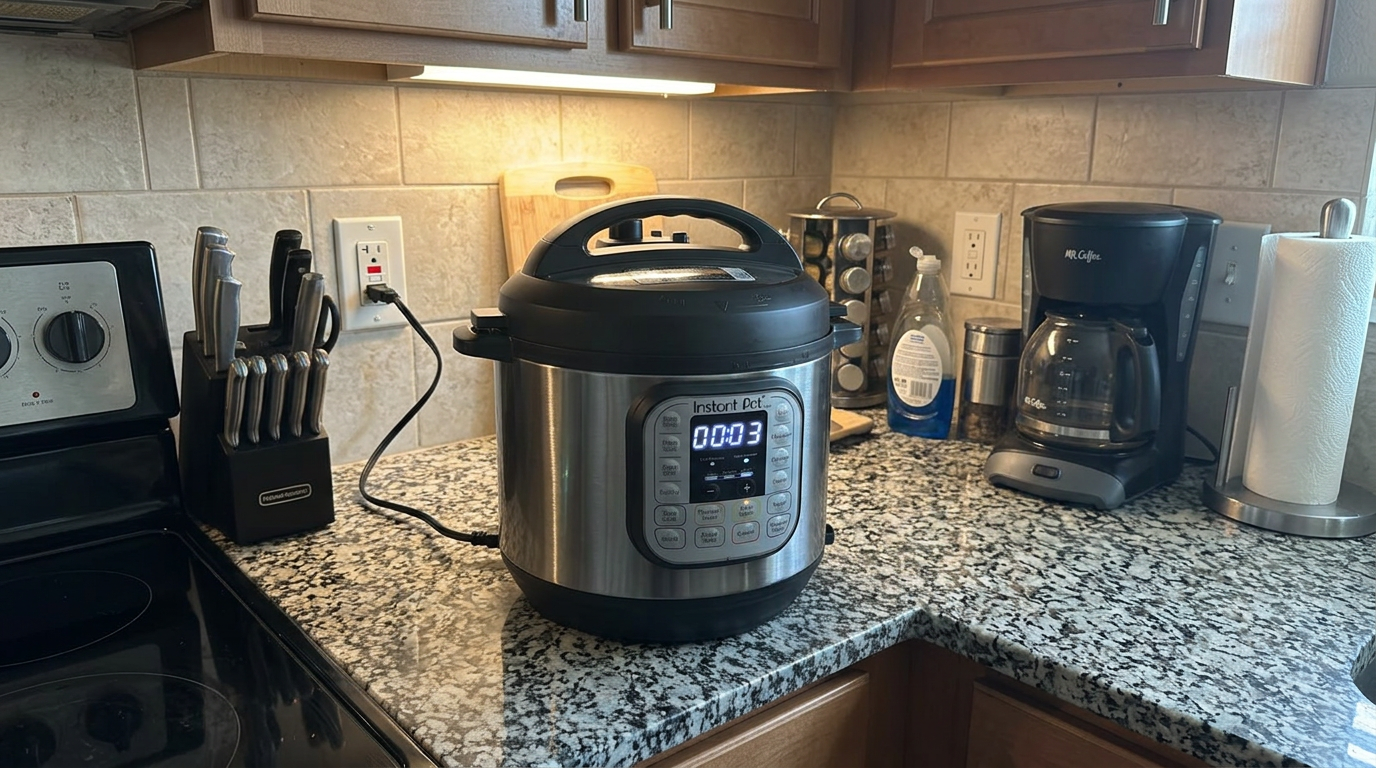
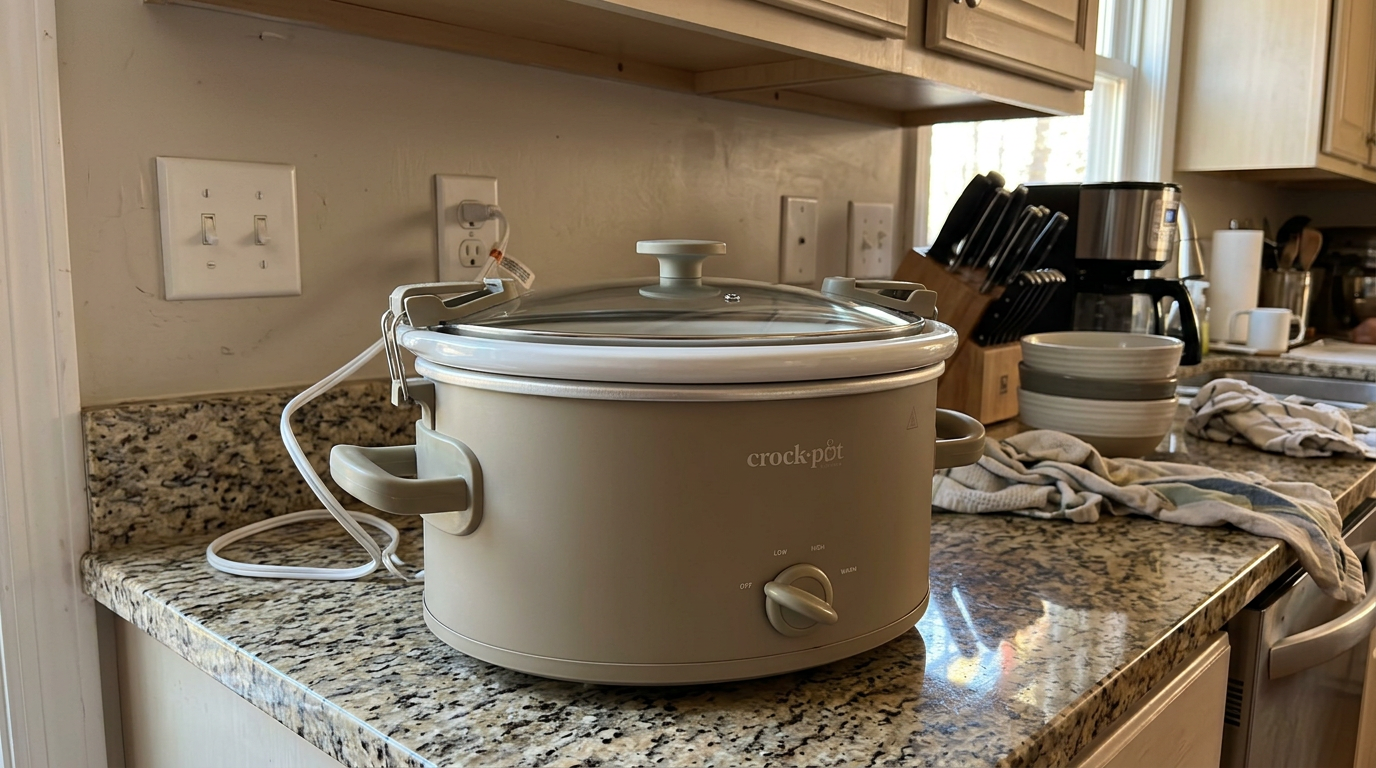
7-in-1 pressure cooker that also slow cooks, sautés, steams and makes rice and yogurt in a 6-quart stainless pot.
Check price on Amazon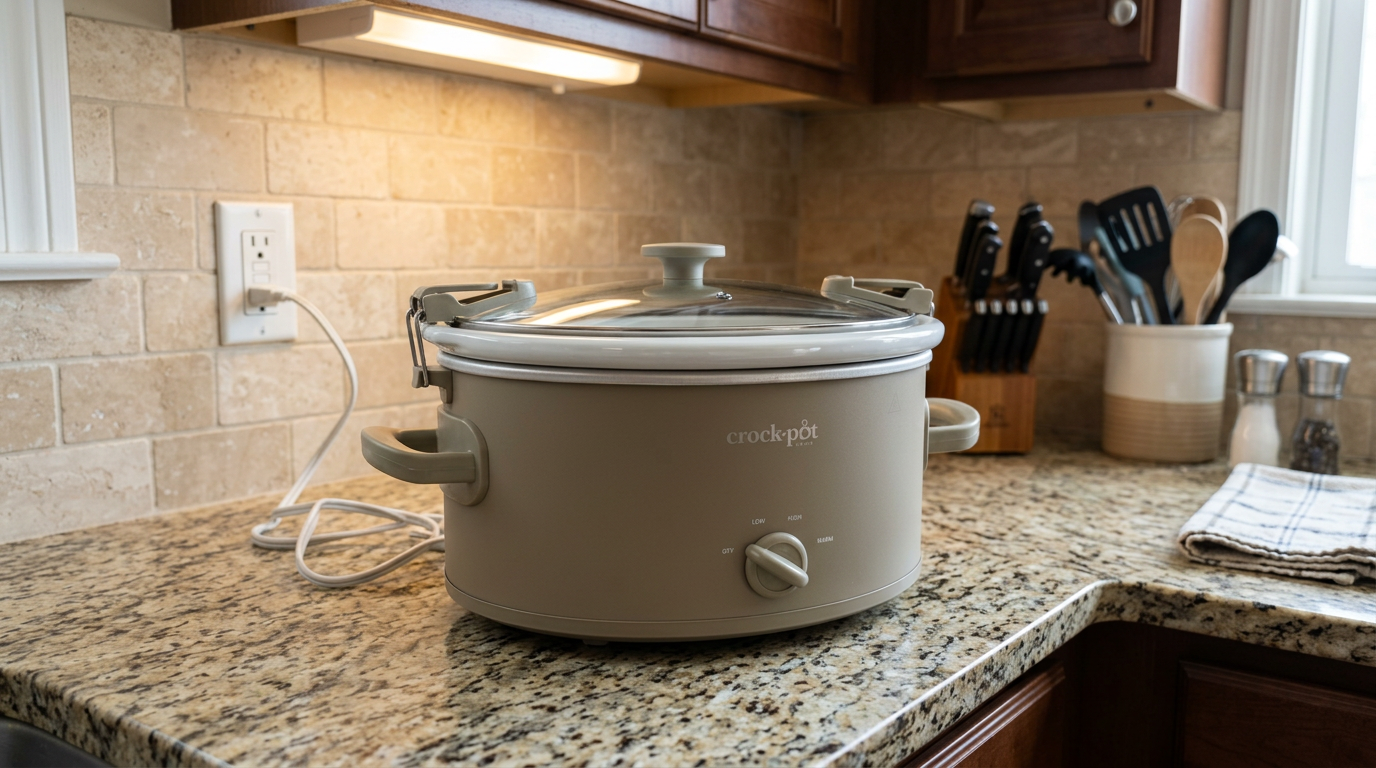
6-quart digital slow cooker with a clip-down gasketed lid, fixed 4 to 10 hour programs, auto warm and oven-safe stoneware.
See Today’s PriceInstant Pot Duo vs Crock-Pot at a glance
- Both made fork-tender beef; the Duo in about an hour, the Crock-Pot over 10 hours.
- The Duo sears, pressure cooks and slow cooks in one pot.
- The Crock-Pot is the better pure slow cooker and the only one built to travel.
- Choose by when you cook: at 5 p.m., the Duo; at 8 a.m., the Crock-Pot.
Head to head
The best result in each row is marked, based on my four weeks with each cooker and the manufacturer specs.
This is a pressure cooker against a slow cooker, so the table shows trade-offs rather than one clear winner.
| Spec | Duo | Crock-Pot |
|---|---|---|
| Speedbeef stew | About 1 hr 15 min ✓ Best | 6 to 10 hours |
| Slow cooking | Good | Excellent ✓ Best |
| Searing in the pot | Yes ✓ Best | No, separate pan |
| Dried beans | 45 min, unsoaked ✓ Best | 6 hr on high, unsoaked |
| Functions | 7 ✓ Best | Slow cook and warm |
| Controls | Buttons, many programs | One button ✓ Best |
| Travel | No locking lid | Clip-down lid and gasket ✓ Best |
| Auto warm | Yes | Yes, about 160 to 165°F ✓ Best |
| Oven-safe pot | No | Stoneware to 400°F ✓ Best |
| Dishwasher-safe pot | Yes | Yes |
| Rows won | 4 | 5 |
Four rows each, with one tie. The Duo wins on speed and versatility; the Crock-Pot wins on slow cooking, simplicity and travel.
Is It On Sale? Check NowInstant Pot Duo vs Crock-Pot pros and cons
Instant Pot Duo 6 Qt
- Tender stew and braises in about an hour
- Sauté and cook in the same pot
- Also slow cooks, steams and makes yogurt
- Liquid ratios must be right
- Display time excludes heat-up and release
- Not built to travel with food
Crock-Pot Cook & Carry
- Locking lid and gasket for travel
- Auto warm after cooking
- One button, dishwasher-safe stoneware and lid
- Only fixed 4, 6, 8 and 10 hour programs
- No searing in the pot
- Vent can seep if tilted
Who should buy which cooker?
- Cooks who decide dinner at 5 p.m.
- Anyone who wants one pot for searing and cooking
- Dried beans without soaking
- Families who prep in the morning
- Potluck and party regulars
- Anyone who wants the simplest controls
Pressure cooker vs slow cooker
These two cook in opposite ways, and that explains almost every difference in this comparison.
The Duo is a pressure cooker. It traps steam in a sealed pot, which raises the boiling point of water so food cooks hotter and much faster. Tough beef and dried beans soften in under an hour. It can also run as a slow cooker with the valve on Venting.
The Crock-Pot is a slow cooker. Its stoneware sits in a heated base and brings food to just below boiling over many hours. In my water test, high reached about 175°F after two hours and about 205°F after four; low reached about 170°F after four hours and about 205°F after eight. That long, gentle heat melts the collagen✕CollagenConnective tissue in tough cuts like chuck and pork shoulder. Long, moist heat melts it into gelatin, which makes meat tender and sauces silky. in tough cuts.
| Inside | Duo | Crock-Pot |
|---|---|---|
| Cooking method | Pressure, plus slow cook | Slow cook only |
| Pot | 6 qt stainless steel | 6 qt stoneware |
| Lid | Locking pressure lid | Glass lid with gasket and clips |
| Sear in the pot | Yes, Sauté | No |
| Programs | 13 smart programs | High 4 or 6 h, Low 8 or 10 h |
| Keep warm | Yes | Auto warm |
The real question is not which is better, but when you cook. If dinner gets decided at 5 p.m., the Duo saves the day. If you can load the pot at 8 a.m., the Crock-Pot gives you a hot dinner with almost no effort.
Design and size
The Duo has the classic Instant Pot look: brushed stainless body, round locking lid with a valve and a button panel. It weighs about 14.5 pounds and is roughly a foot wide and tall.
The Crock-Pot is clean matte black with two sturdy side handles, a glass lid with a rubber gasket✕GasketA rubber ring around the Crock-Pot lid that presses against the stoneware to hold in moisture and resist spills. It does not build pressure. and two metal clips that swing up to lock the lid down. The matte finish hid fingerprints well. It is a large appliance; it fit under my wall cabinets, but I stored it in a low cupboard between uses, and the clips fold flat.
The Crock-Pot’s stoneware and glass lid lift out for serving and cleaning.
Setup and first cook
Both were ready in about five minutes. On the Duo, I washed the pot, checked the sealing ring✕Sealing ringThe silicone gasket inside a pressure cooker lid that makes the pot airtight so pressure can build. and ran a water test to see how pressure builds.
On the Crock-Pot, I peeled the shipping tape off the clips, washed the stoneware and lid, dropped the pot into the base and pressed one button. No clock, no app, nothing to set. My first run was dried pinto beans on low for 8 hours, and they came out evenly soft with no split skins.
| Setup | Duo | Crock-Pot |
|---|---|---|
| Time to ready | About 5 min | About 5 min |
| First test | Water test | Pinto beans, low 8 h |
| Learning curve | Valve, release, liquid | Press one button |
| In the box | Rack, manual | Clips, recipes, warranty card |
Our tip: On the Duo, do a water test first; on the Crock-Pot, run one plain recipe to see how much liquid its gasketed lid holds in.
Controls
The Crock-Pot is the simplest cooker I have tested. You press the select button until the light reaches High 4, High 6, Low 8 or Low 10, and it starts after a few seconds. A countdown shows the time left, and it switches to warm on its own. To stop early, you press until it turns off.
The Duo has one-touch programs for soups, meat, beans, poultry, rice, porridge, yogurt and more, plus manual pressure, sauté, steam, slow cook and keep warm. It takes a day to learn, then gives you far more control.
| Control | Duo | Crock-Pot |
|---|---|---|
| Custom time | Yes | No, 4 fixed programs |
| Delayed start | Not tested | No |
| Auto warm | Yes | Yes |
| Buttons to learn | Many | One |
The Crock-Pot’s fixed programs rarely bothered me, because most slow-cooker recipes use those same time blocks. If you want 5 or 7 hours, the Duo can do it.
Check price on AmazonSpeed: the biggest difference
Speed is the reason most people buy a pressure cooker, and it was night and day.
On the Duo, a beef stew took about an hour and a quarter from first sear to the table, with about 35 minutes at pressure. Unsoaked pinto beans took about 45 minutes at pressure. Chicken and rice took about 35 minutes.
On the Crock-Pot, beef chuck took 10 hours on low or 6 on high, unsoaked black beans 6 hours on high, and pork shoulder 10 hours on low. The hands-on time was tiny, but you have to start early.
Beef stew, total time
My timings from start to table.
Measured in hands-on minutes, though, the Crock-Pot was the easier of the two on busy mornings: chop, load, press one button.
Heat-up and cooking temperatures
I filled the Crock-Pot two-thirds full with cold water and logged it with a probe thermometer. Both settings reached a gentle simmer; high simply got there in about half the time. A chicken stew on high for 4 hours and on low for 8 tasted nearly identical, though the low version had slightly more tender thighs.
The Duo works differently. It spends about 10 to 15 minutes heating and building pressure, counts down your time, then needs 10 to 20 minutes for a natural release. Under pressure, water gets hotter than its normal boiling point, which is why it cooks so fast.
Crock-Pot water test
Water temperature with the pot two-thirds full.
| Stage | Duo | Crock-Pot |
|---|---|---|
| Heat-up | 10 to 15 min to pressure | Hours to a simmer |
| Cooking | Minutes at pressure | 4 to 10 hours |
| After cooking | Natural or quick release | Auto warm, about 160 to 165°F |
Beef stew and pot roast
Both made excellent beef. On the Duo, chuck was fork-tender after about 35 minutes at pressure and a natural release✕Natural releaseLeaving a pressure cooker alone after cooking so the pressure drops by itself. Food keeps cooking gently while it does.. Browning in two batches on Sauté and deglazing gave a rich broth, and I thickened it on Sauté at the end.
On the Crock-Pot, chuck on low for 10 hours turned fork-tender, with a rich, silky sauce from the slowly melted collagen. A 4-pound chuck roast fit comfortably with potatoes and carrots underneath, where they cooked through.
The difference was depth of flavor from searing. The Duo browns in the pot. On the Crock-Pot, I seared in a separate skillet when a recipe called for it.
| Beef | Duo | Crock-Pot |
|---|---|---|
| Chuck stew | Fork-tender, ~35 min at pressure | Fork-tender, low 10 h |
| High setting | Not needed | Tender, high 6 h |
| Searing | In the pot | Separate pan |
| Sauce | Thicken on Sauté | Rich and silky; reduce liquid |
Chili and dried beans
On the Duo, unsoaked pinto beans with about six parts water, onion, garlic, lemon and thyme took about 45 minutes at pressure and came out creamy and intact. No overnight soak meant beans became a weeknight option.
On the Crock-Pot, chili on low for 8 hours blended beautifully and the beans held their shape. Unsoaked black beans took 6 hours on high; older beans took longer, and tomatoes slowed softening, so I cooked the beans first and added tomatoes later.
| Beans | Duo | Crock-Pot |
|---|---|---|
| Unsoaked beans | Pinto, ~45 min | Black, high 6 h |
| Soaking needed | No | No |
| Chili | Slow cook ~7 h, or pressure | Low 8 h, excellent |
| Tip | Six-to-one water | Add tomatoes after beans soften |
Our tip: Finish chili on either cooker with a squeeze of lime and fresh herbs; long cooking mellows the flavors.
Pulled pork and chicken
The Crock-Pot was made for pork shoulder. A 5-pound shoulder on low for 10 hours shredded easily with two forks and made dinner for four plus sandwiches for two days. Chicken thighs stayed juicy after 8 hours on low, but boneless breasts dried out on the 8-hour program; on high for 4 hours, they were good if served promptly.
On the Duo, bone-in chicken thighs were juicy after about 15 minutes at pressure, frozen breasts were shreddable in a pinch and chicken soup was ready in about 40 minutes.
| Meat | Duo | Crock-Pot |
|---|---|---|
| Pork shoulder | Not tested | Low 10 h, shreds easily |
| Chicken thighs | ~15 min, juicy | Low 8 h, juicy |
| Chicken breasts | Frozen, ~12 min | High 4 h; dry on low 8 h |
| Chicken soup | ~40 min total | Not tested |
If chicken breasts are a weekly staple, the Duo is more forgiving, because it cooks them quickly and does not leave them sitting for hours.
Pasta and one-pot meals
On the Crock-Pot, homemade mac and cheese with uncooked macaroni, milk and butter on low, cheese stirred in partway, came out rich and creamy. It needed two stirs and thickened on warm, so I added a splash of warm milk before serving. The oven-safe stoneware let me finish it under a crumb topping.
On the Duo, a one-pot lamb and orzo was the best dish of its test: lamb for 30 minutes, orzo for about six, spinach and olives stirred in at the end, dinner in under an hour.
| Dish | Duo | Crock-Pot |
|---|---|---|
| Pasta | Lamb and orzo, excellent | Mac and cheese, creamy |
| Attention needed | Check liquid before orzo | Stir twice |
| Finish in the oven | No | Stoneware to 400°F |
Our tip: Stir dairy and cheese in near the end on the Crock-Pot so the sauce stays smooth.
Desserts, rice and extras
The Duo does far more than one job. It made a silky crème caramel after about nine minutes at pressure, a moist steamed ginger pudding with no attention, plain yogurt overnight and steamed salmon and vegetables on its rack. Its weak spot was basmati rice, which came out sticky.
The Crock-Pot does one thing, slow cooking, plus a reliable warm mode. Its stoneware doubled as an oven dish for a browned shepherd’s pie topping.
| Extra | Duo | Crock-Pot |
|---|---|---|
| Custards and puddings | Excellent | Not tested |
| Yogurt | Yes | No |
| Steaming | Yes, rack included | No |
| Rice | Sticky basmati | No |
| Oven finishing | No | Stoneware to 400°F |
Auto warm and dinner timing
Auto warm was the Crock-Pot’s best everyday feature. On busy days, I started dinner at 8 a.m. on Low 8; it switched to warm at 4 p.m. and held about 160 to 165°F until we ate at 6. Stew and chili were excellent after two hours on warm, pulled pork very good, mac and cheese thickened after an hour.
The Duo also switches to Keep Warm after most programs, which helped when dinner slipped by half an hour, but rice lost texture if left too long.
After two hours on warm (Crock-Pot)
How each dish held up on auto warm.
Our tip: Use either warm setting only for food that is already cooked, never to reheat cold leftovers.
Taking food to gatherings
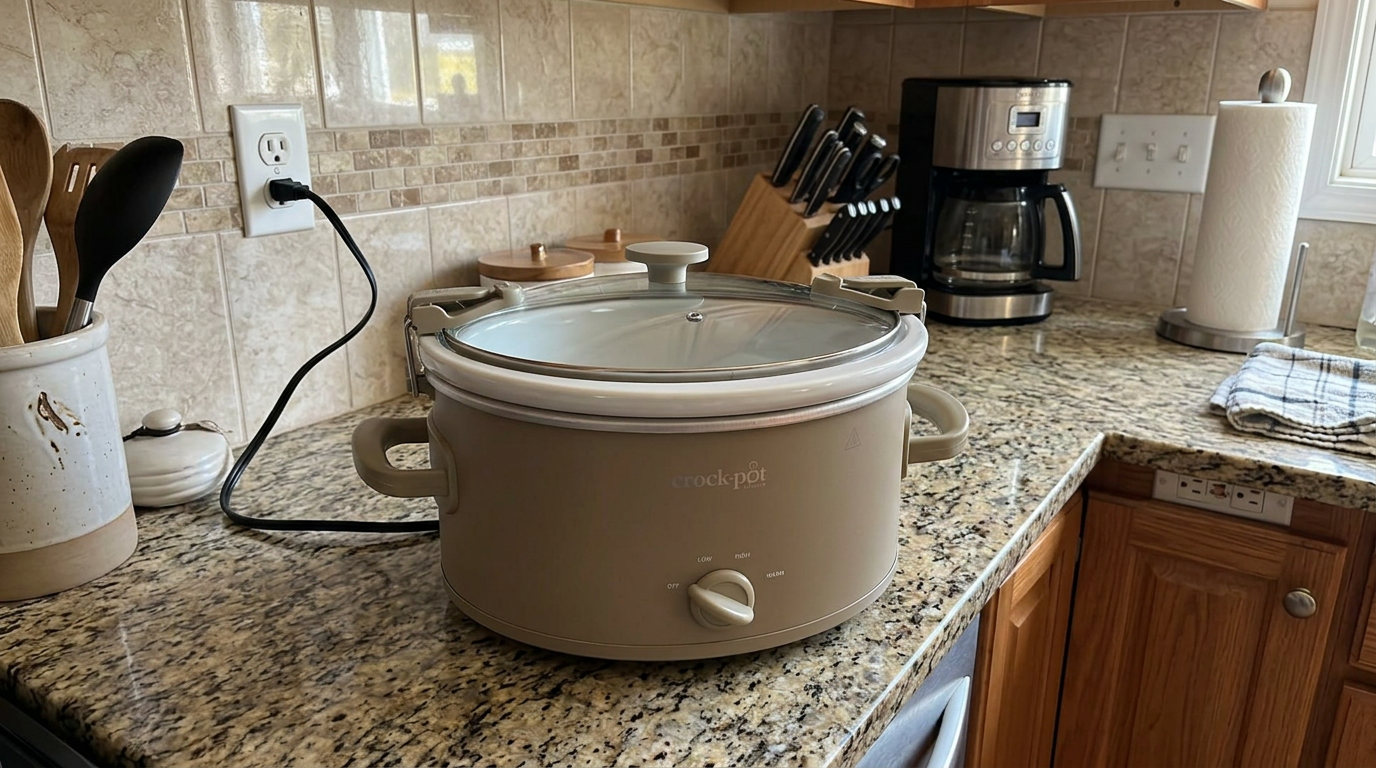
This is where the Crock-Pot has no competition. Two clips hook over the glass lid and the rubber gasket presses against the stoneware. A full pot of chili rode 25 minutes in my car’s footwell, with turns and speed bumps, without spilling. On another trip, tilting it while lifting it into the trunk let a little sauce seep from the vent, so it is spill-resistant rather than leakproof.
At a park shelter with an outlet, it kept pulled pork hot all afternoon on warm, and the heavy stoneware held heat for about the first hour even unplugged.
The Duo is not designed to travel with food inside. Its pressure lid locks only under pressure, and I would not carry it full.
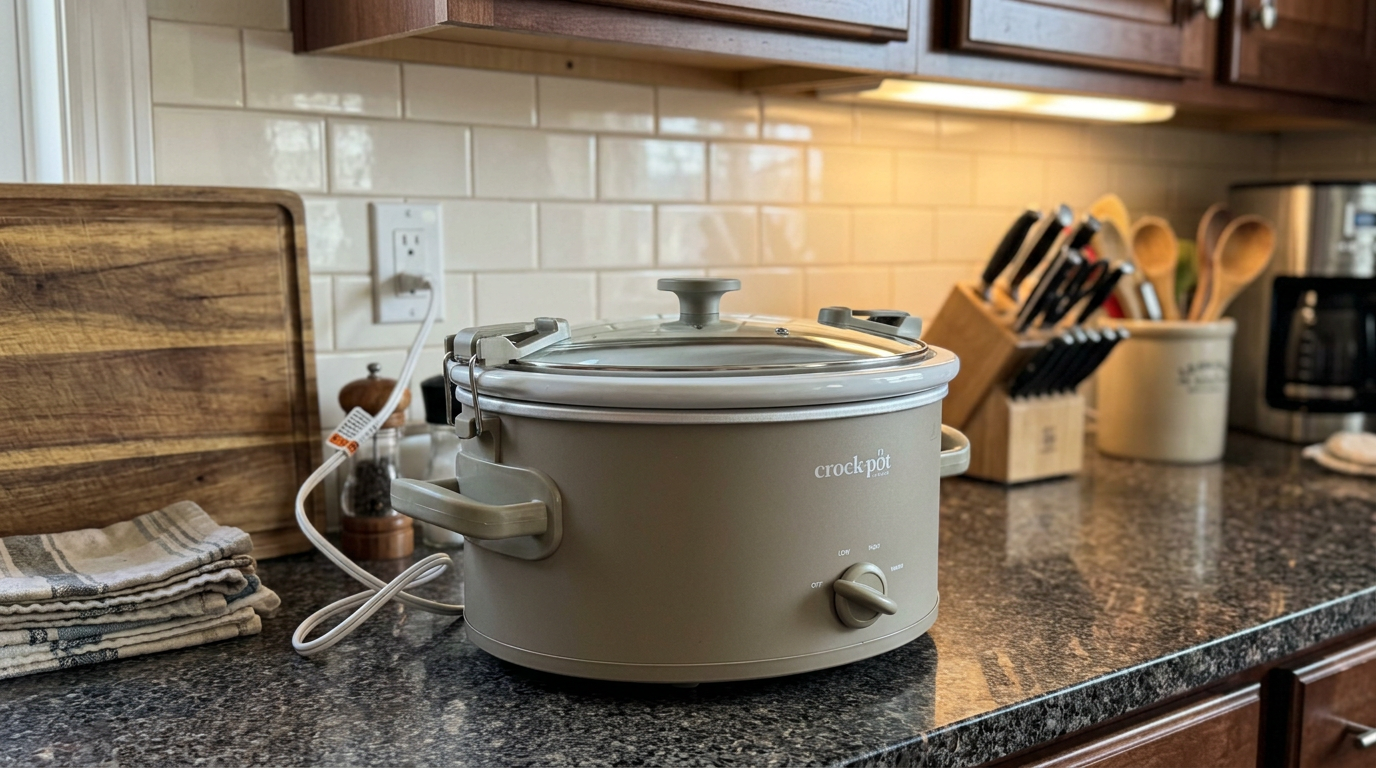
The side clips hook over the glass lid for travel.
Cleaning and care
Both were easy. The Duo’s stainless pot and lid are dishwasher safe; I soaked the pot for ten minutes after searing and washed the sealing ring after savory dishes, because it holds smells.
The Crock-Pot’s stoneware and glass lid both went into the dishwasher. After mac and cheese, a 20-minute soak lifted baked-on cheese with a soft sponge. The lid gasket groove needs a wipe after each use, and the base must never go under water.
On the stoneware, avoid thermal shock✕Thermal shockCracking caused by a sudden big temperature change, such as a cold stoneware pot going into a hot oven.: never move it straight from the fridge into a hot oven or rinse it hot under cold water.
| Part | Duo | Crock-Pot |
|---|---|---|
| Pot | Stainless, dishwasher safe | Stoneware, dishwasher safe |
| Lid | Dishwasher safe | Glass, dishwasher safe |
| Ring or gasket | Wash after savory dishes | Wipe the groove each time |
| Base | Wipe | Wipe; never submerge |
Our tip: Let the Crock-Pot stoneware cool before washing, and store the Duo lid upside down so its ring airs out.
Safety and food safety
Both are safe when used correctly. The Duo has more than ten safety features; its lid stays locked under pressure. You need to set the valve, keep thick sauces off the bottom to avoid a burn warning✕Burn warningA pressure cooker safety message that appears when food sticks and scorches on the bottom. The cooker stops heating until you fix it. and keep hands clear during a quick release.
The Crock-Pot heats food well above the danger zone✕Danger zoneThe temperature range of roughly 40 to 140°F where bacteria grow quickly. Cooked food should be kept above it or chilled below it.. I never put frozen meat straight in, avoided lifting the lid often, used warm only for cooked food and refrigerated leftovers within about two hours. Its base gets warm on the outside, so I kept it away from the counter edge and small hands.
Noise and everyday comfort
The Crock-Pot was silent apart from a soft bubbling near the end, and its steam was gentle. Leaving it on while I was out felt comfortable because the controls are so simple.
The Duo is quiet while cooking, with a soft click at pressure. The loud moment is a quick release, a strong jet of steam for a minute or so.
Our tip: Keep either cooker out from under wall cabinets while it steams.
Life with a busy family
With two small children, weekday dinners are the hardest part of my day, and the two cookers helped in different ways.
The Crock-Pot rewarded planning. I prepped ingredients straight into the stoneware the evening before, kept it in the fridge, let it sit 20 minutes in the morning and pressed one button. When family members ate at different times, warm kept a hot meal ready for each.
The Duo rescued unplanned evenings. Chicken and rice in about 35 minutes, beans from dry in about 75 and a stew in about an hour and a quarter, all from one pot.
| Night | Duo | Crock-Pot |
|---|---|---|
| Monday | Chicken and rice, ~35 min | Stew, loaded at 8 a.m. |
| Tuesday | Unsoaked beans, ~75 min | Chili, low 8 h |
| Wednesday | Beef stew, ~75 min | Pulled pork, low 10 h |
| Thursday | Lamb and orzo, ~60 min | Mac and cheese, low |
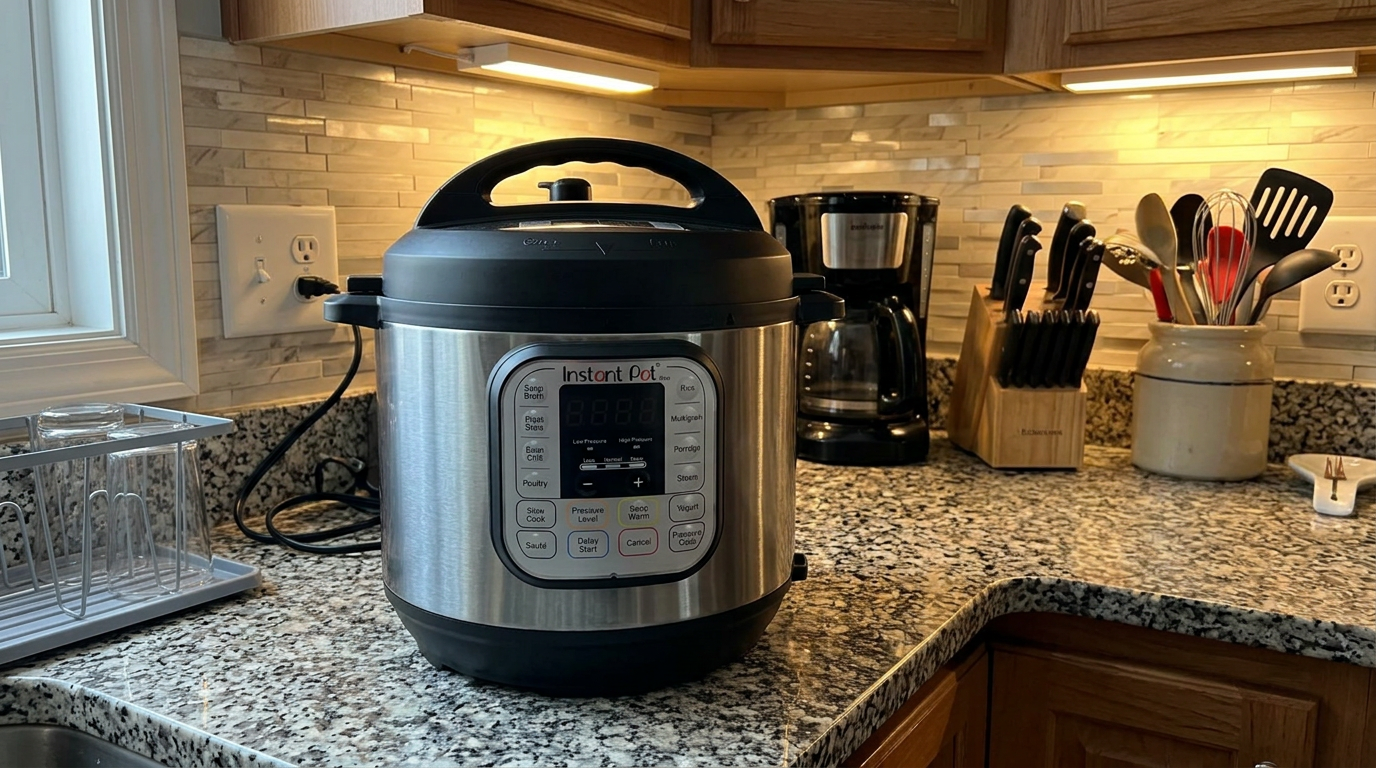
The Duo handled the evenings I had not planned for.
Six quarts in real life
Both hold 6 quarts, but you use them differently. The Crock-Pot can be filled two-thirds to three-quarters full: a double batch of chili, about 5 quarts, fed eight at a family dinner. A 4-pound chuck roast, a 5-pound pork shoulder and a snug 5-pound chicken all fit.
The Duo has a max fill line for pressure cooking, and should be no more than half full for beans and grains, so its usable capacity is smaller. It fit about 3 pounds of stew meat with vegetables and about a pound of dried beans.
| Dish | Duo | Crock-Pot |
|---|---|---|
| Chili for a party | Family batch | About 5 qt, feeds 8 |
| Chuck roast | About 3 lb stew meat | 4 lb roast with vegetables |
| Whole chicken | Cut-up pieces | About 5 lb, snug |
| Single portions | Fine | Can overcook |
Getting the best from each
A few habits made a real difference on both cookers.
On the Crock-Pot: cut meat and vegetables into even sizes, put root vegetables at the bottom nearest the heat, add peas and spinach in the last 30 minutes, stir dairy in near the end and finish with herbs, citrus or a splash of vinegar. To thicken, I stirred in cornstarch mixed with cold water for the last 20 minutes on high.
On the Duo: brown meat on Sauté until the pot shows Hot, deglaze to avoid burn warnings, layer thick sauces on top without stirring, cut potatoes larger than the meat and plan for heat-up and release time.
| Habit | Duo | Crock-Pot |
|---|---|---|
| Liquid | Exact amount, little evaporates | Cut by about a quarter |
| Vegetables | Larger than the meat | Root vegetables at the bottom |
| Dairy | Stir in after cooking | Stir in near the end |
| Thickening | Slurry on Sauté | Slurry, last 20 min on high |
Our tip: Write down the times and liquid amounts that work for your favorite dishes on either cooker; it makes repeats foolproof.
What I would change on each
On the Crock-Pot, I missed custom times now and then, and there is no delayed start, no built-in temperature probe and no way to sear in the stoneware. The lid is spill-resistant rather than leakproof.
On the Duo, I would like a lid that seals itself, so you cannot forget the valve, and a better rice method for basmati. Its pot also has no handles, which makes lifting it out with oven mitts clumsy.
| Wish list | Duo | Crock-Pot |
|---|---|---|
| Biggest wish | Self-sealing lid | Custom times |
| Second wish | Better basmati | Delayed start |
| Third wish | Pot handles | Searing in the pot |
None of these were deal-breakers on either. They are worth knowing so you pick the cooker whose limits you will notice least.
Is each worth the money?
The Duo is worth it if you will pressure cook regularly. It makes tough meat tender fast, cooks beans without soaking, handles one-pot meals and makes excellent custards. Treat its slow cook setting as a bonus.
The Crock-Pot is worth it for families and anyone who often brings food to someone else’s house. It does the core slow-cooker job very well and adds a lid that makes travel much easier. If you mostly cook the same stews, roasts and chili, you will hardly notice its fixed programs.
Meal prep and leftovers
The Duo was the better meal-prep tool. On one Sunday, I made chicken broth, shredded chicken, pinto beans and crème caramel back to back, rinsing the stainless pot between rounds in a minute. Beans, shredded chicken and broth all froze well in portions.
The Crock-Pot was the better big-batch tool. One pot of chili or pulled pork covered dinner plus two days of lunches, and the 6-quart stoneware went straight into the fridge once cooled.
For leftovers, I followed the same rule with both: refrigerate within about two hours, then reheat on the stove or in the microwave rather than on a warm setting.
| Meal prep | Duo | Crock-Pot |
|---|---|---|
| Several dishes in a row | Yes, about 1 hour each or less | One dish per day |
| Big single batch | Up to the fill line | About 5 quarts |
| Freezer-friendly results | Beans, chicken, broth | Chili, pulled pork, stew |
Our tip: Cook plain dishes first and desserts last on the Duo, because savory smells cling to the sealing ring.
Mistakes to avoid
Leaving the Duo valve on Venting. It never reaches pressure.
Using stovetop liquid amounts. Both hold moisture; cut it.
Chicken breasts on Low 8 in the Crock-Pot. Use thighs or High 4.
Frozen meat in the Crock-Pot. Thaw it first.
Carrying the Crock-Pot by the lid. Use the side handles.
| Problem | Fix |
|---|---|
| Thin stew | Less liquid, thicken at the end |
| Burn warning on the Duo | Deglaze, sauces on top |
| Sauce seeping from the vent | Keep the Crock-Pot level |
| Dry chicken | Thighs, or a shorter program |
Which suits you?
If you want one appliance and often decide dinner late, the Duo. It pressure cooks, sautés, slow cooks, steams and makes yogurt, and it teaches you skills that carry over to any pressure cooker.
If you love set-and-forget cooking, want the simplest controls and take food to gatherings, the Crock-Pot. It is the better pure slow cooker.
Some households will happily own both. If you already own a slow cooker, the Duo adds the most; if you already own a pressure cooker, the Crock-Pot adds travel and simplicity.
| Your situation | Better pick | Why |
|---|---|---|
| Decide dinner at 5 p.m. | Duo | About an hour for stew |
| Prep at 8 a.m. | Crock-Pot | One button, auto warm |
| Potlucks and parties | Crock-Pot | Locking lid |
| Small kitchen, one appliance | Duo | Does both jobs |
| Already own a slow cooker | Duo | Adds pressure cooking |
Four weeks with each: my diary notes
Instant Pot Duo 6 Qt
Week 1: Lamb and orzo, unsoaked beans; forgot the valve once.
Week 2: Crème caramel and steamed pudding.
Week 3: Slow-cooked chili, yogurt and meal prep.
Week 4: Weeknight stews and chicken in about an hour.
Crock-Pot Cook & Carry
Week 1: Beans, stew and chili; learned the programs.
Week 2: Mac and cheese, pulled pork, chicken; oven-finished stoneware.
Week 3: Two family dinners and a picnic; the lid held.
Week 4: Night-before prep became a habit.
Real-life scenarios
These are the situations where one cooker fit better in my four weeks.
Stew in about an hour.
One button, auto warm.
Clip-down lid.
Sauté in the pot.
About 45 minutes, unsoaked.
About 5 quarts.
My scorecard
These are my scores out of 10 from my single reviews. The categories differ because a pressure cooker and a slow cooker do different jobs.
Instant Pot Duo 6 Qt
Duo category scores.
Crock-Pot Cook & Carry
Crock-Pot category scores.
Overall, I rate the Crock-Pot Cook & Carry 8.3 as a slow cooker and the Instant Pot Duo 8.0 as a pressure cooker. I still recommend the Duo to most kitchens, because it does both jobs.
Check price on AmazonWhich one is right for you?
4 quick questionsWhich one should you buy?
For most kitchens, the Instant Pot Duo: fast pressure cooking, searing in the pot and a slow cook setting when you want it.
For set-and-forget families and potluck regulars, the Crock-Pot Cook & Carry: the better slow cooker, with a lid built to travel.
For the full detail, read my reviews of the Instant Pot Duo 6 Qt and the Crock-Pot Cook & Carry.
- You want dinner fast without planning ahead
- You want to sear and cook in one pot
- You want one appliance for several jobs
- You mainly slow cook all day
- You carry food to gatherings
- You start dinner in the morning
- You bring food to gatherings
- You want one-button simplicity
- You want dinner in under an hour
- You want to sear in the same pot
My pick for most kitchens is the Instant Pot Duo 6 Qt. It made fork-tender stew in about an hour, cooked beans without soaking and still slow cooks when you plan ahead.
Choose the Crock-Pot Cook & Carry if you prep in the morning, want one-button simplicity or bring food to gatherings. Its slow-cooked beef and pork were excellent, and its lid held on the road.
Whichever you choose, cut the liquid in your old recipes and thicken at the end.
Instant Pot Duo vs Crock-Pot specifications
From manufacturer specifications and my own testing.
| Instant Pot Duo 6 Qt | Crock-Pot Cook & Carry | |
|---|---|---|
| Type | 7-in-1 electric pressure cooker | Digital slow cooker |
| Capacity | 6 quarts | 6 quarts, serves 7 or more |
| Programs | 13 smart programs | High 4 or 6 h, Low 8 or 10 h |
| Warm | Keep warm | Automatic warm |
| Pot | Stainless steel | Stoneware, oven-safe to 400°F |
| Lid | Locking pressure lid | Glass with gasket, two locking clips |
| Sear in pot | Yes | No |
| Power | 1,000 W | Not listed in my notes |
| Dishwasher safe | Pot and lid | Stoneware and lid |
| Weight | About 14.5 lb | Heavy when full |
How I tested and compared them
Emily Carter here. I used each cooker for four weeks of family dinners for two adults and two small children, with leftovers for lunches.
On the Duo, I pressure cooked stews, beans, chicken and one-pot meals, slow cooked chili and made yogurt and desserts. On the Crock-Pot, I cooked beans, stew, pot roast, chili, pulled pork, chicken and mac and cheese, logged heat-up temperatures and carried it on three trips.
- Results: tenderness, flavor and texture
- Time: hands-on minutes and total time
- Everyday use: controls, warm mode and travel
- Ownership: cleaning, safety and storage
Instant Pot Duo vs Crock-Pot FAQ
Is an Instant Pot better than a Crock-Pot?
It depends on when you cook. The Instant Pot Duo makes stew in about an hour and also slow cooks; the Crock-Pot Cook & Carry is the better pure slow cooker and travels better.
Can the Instant Pot Duo replace a slow cooker?
For occasional slow cooking, yes. If you slow cook several times a week or carry food to gatherings, a dedicated slow cooker like the Cook & Carry is better.
Which makes more tender beef?
Both made fork-tender chuck: the Duo in about 35 minutes at pressure, the Crock-Pot in 10 hours on low.
Can you sear in the Crock-Pot Cook & Carry?
No. Its stoneware cannot go on a burner, so sear in a separate pan.
Does the Crock-Pot lid stop spills?
It is spill-resistant. It held on a 25-minute drive, but a little sauce seeped from the vent when tilted.
Can I set a custom time on the Crock-Pot?
No. It offers High 4 or 6 hours and Low 8 or 10 hours, then switches to warm.
Which is easier to use?
The Crock-Pot, with one button. The Duo takes a day to learn.
How big are they?
Both are 6 quarts, but the Crock-Pot can be filled fuller because it does not build pressure.