Gevi vs Breville Barista Express: can a budget machine compete?
Both put a burr grinder, a portafilter and a steam wand into one box, and both promise real espresso for beginners. The Gevi ECMI0 costs considerably less and brings a 58 mm portafilter and a solenoid valve, while the Breville Barista Express adds a pressure gauge, adjustable temperature and a more consistent grinder. I used each as my only espresso machine for four weeks, weighing every dose, to find out whether the budget machine can really keep up.
We choose products independently. We may earn a commission through links on this page; your price stays the same. Affiliate policy
Jargon helpNew to espresso? Tap any dotted term to see what it means.
In this comparison
Yes, the budget machine can compete, with a scale and some patience. The Gevi ECMI0 made thick, chocolatey espresso and silky lattes once I weighed my beans and switched to the single-wall basket. But the Breville Barista Express is still the better machine for most beginners: its pressure gauge teaches you what’s happening, its temperature is adjustable for light roasts and its grinder doses more consistently. Buy the Gevi if budget is the deciding factor and you’ll weigh every shot.
The two machines
Specs checked November 14, 2026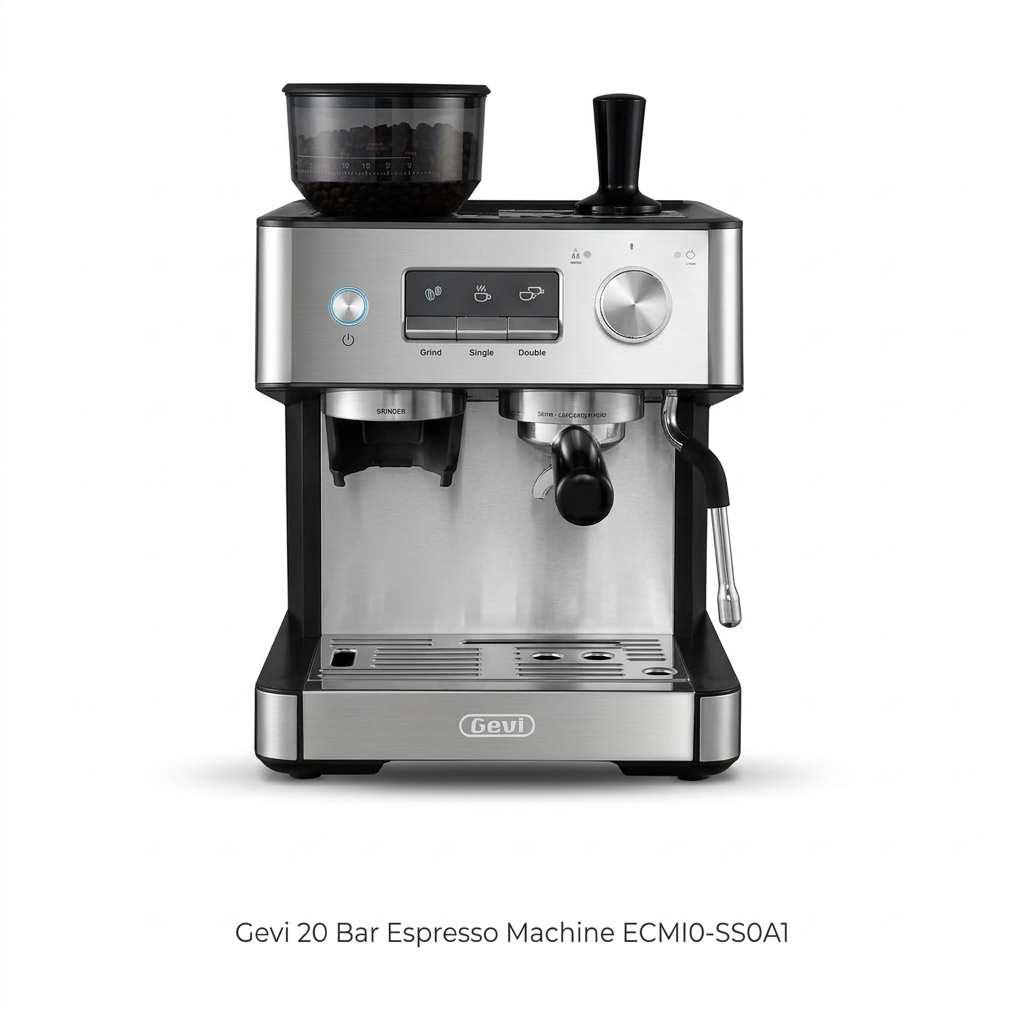
A 30-setting conical burr grinder, a 58 mm portafilter, four baskets, pre-infusion and a solenoid valve that leaves dry pucks.
Check price on Amazon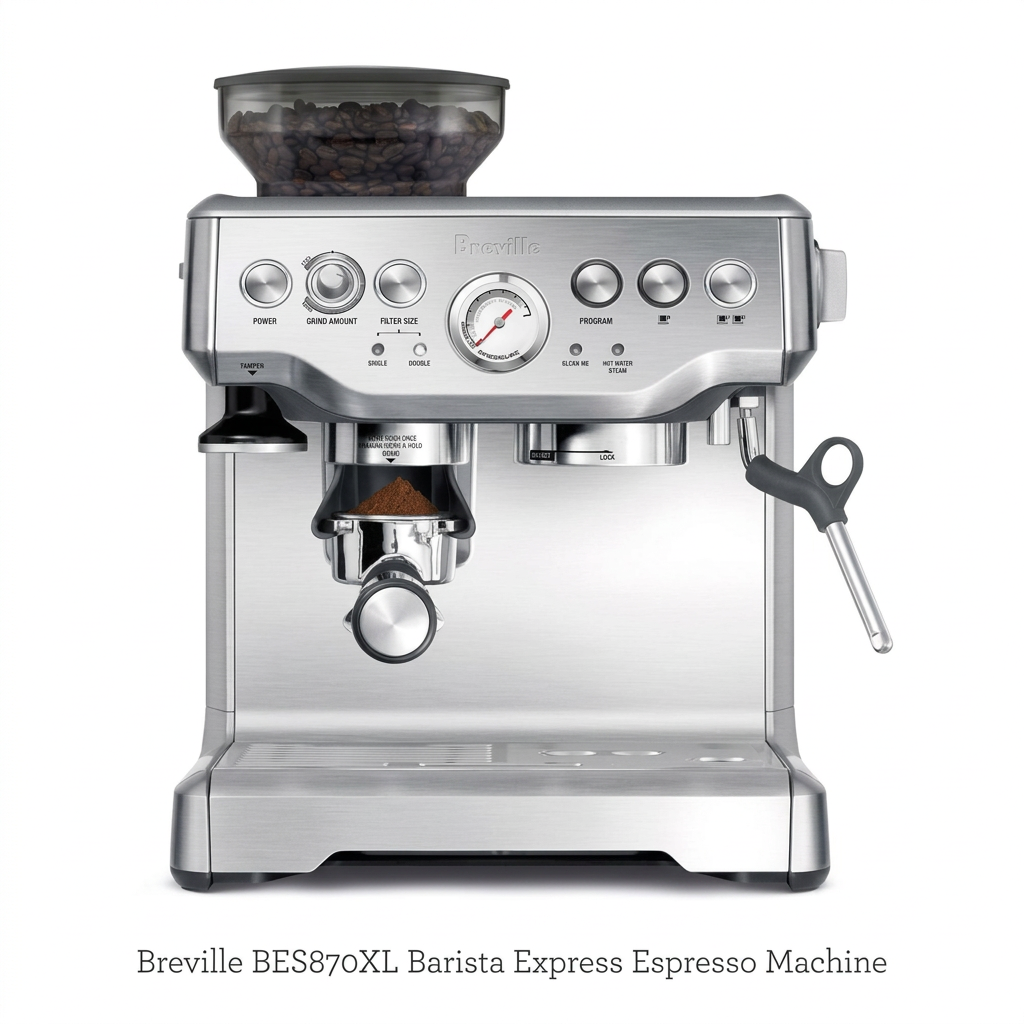
A built-in 16-step grinder, a 54 mm portafilter, a real pressure gauge and a manual steam wand that can pour latte art once you practice.
See Today’s PriceGevi vs Breville Barista Express at a glance
- The Gevi makes genuinely good espresso, but only if you weigh every dose.
- The Breville is easier to learn thanks to its pressure gauge and steadier grinder dose.
- The Gevi has the café-size 58 mm portafilter and a solenoid valve for dry pucks.
- The Breville lets you adjust temperature, which matters for light roasts.
Head to head
The better result in each row is marked, based on my testing and the manufacturer specs. Rows where they are equal have no winner.
The tally is not my verdict. A scale closes most of the gap, and value isn’t a row in this table.
| Spec | Gevi ECMI0 | Breville Barista Express |
|---|---|---|
| Espresso flavormy tasting, dialed in | Thick, chocolatey | Sweet, syrupy ✓ Best |
| Grinder settings | 30, turn the hopper ✓ Best | 16, plus inner burr |
| Dose consistency | Changes with grind setting | Steady by time ✓ Best |
| Portafilter | 58 mm, three-ear ✓ Best | 54 mm |
| Baskets | Four | Four |
| Pressure gauge | No | Yes ✓ Best |
| Temperature control | Fixed | Adjustable ✓ Best |
| Pre-infusion | Automatic | Yes |
| Solenoid valvedry pucks | Yes | Yes |
| Shot timer | No | No |
| Steam wand | One hole | Single hole, powerful |
| Warm-up | About 90 s | About 1 min ✓ Best |
| Water tank | Rear tank | About 67 oz, top-up lid ✓ Best |
| Rows won | 2 | 6 |
Gevi vs Breville Barista Express pros and cons
Gevi ECMI0
- Built-in burr grinder with 30 settings
- 58 mm portafilter and four baskets included
- Solenoid valve leaves clean, dry pucks
- Grinder dose changes with the grind setting
- No temperature control, gauge or shot timer
- One heater, so brew first and steam second
Breville Barista Express
- Sweet, syrupy espresso once dialed in
- Pressure gauge makes dialing in easy to learn
- Steam wand can make real latte-art microfoam
- Grinder needs an inner-burr tweak out of the box
- Slow steam and a wait between brewing and frothing
- No low-water sensor on the tank
Who should buy which machine?
- Beginners on a tight budget
- Tinkerers who want 58 mm accessories
- People who already own a scale
- First-time buyers who want guidance
- Light-roast drinkers
- Anyone who wants a proven, consistent machine
Design, size and build
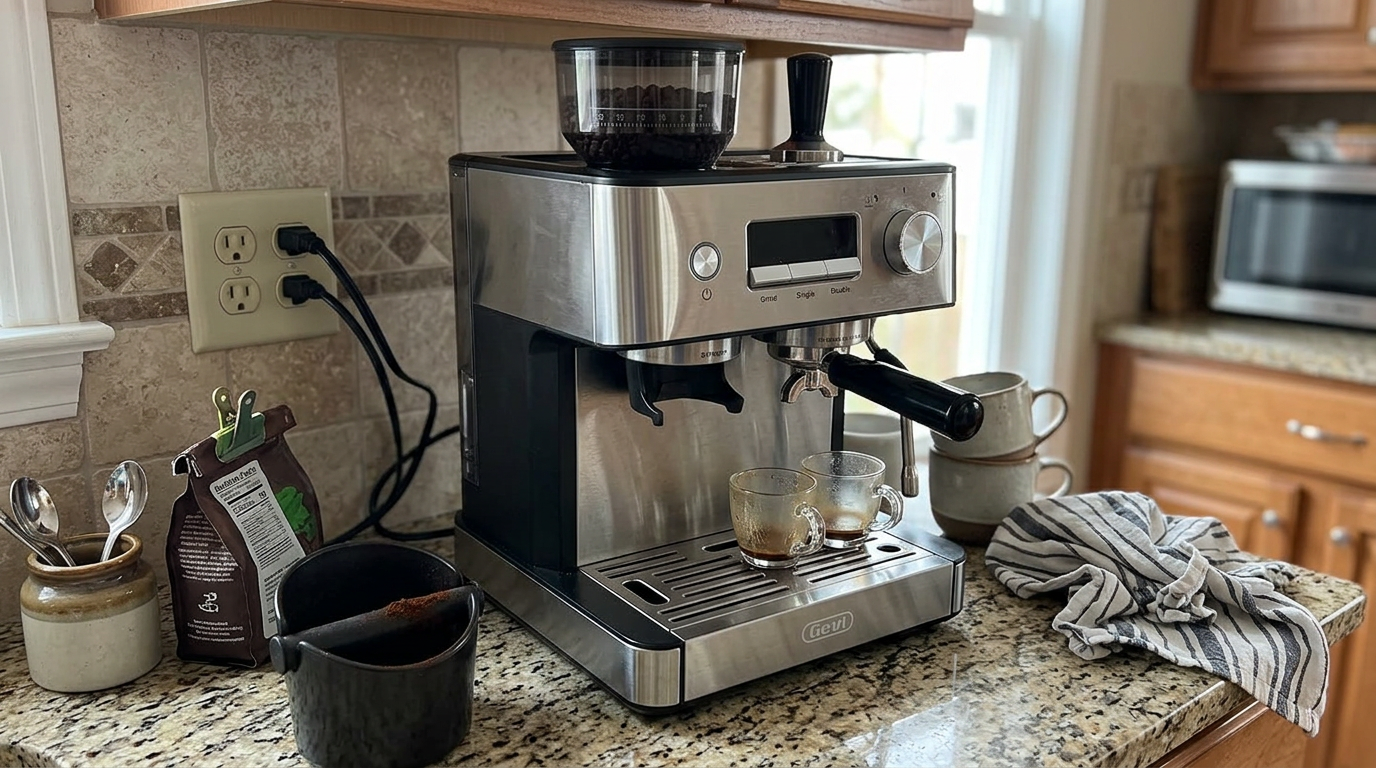
Both are all-in-one semi-automatic✕Semi-automaticA machine where you grind, dose and tamp into a portafilter yourself, and the machine controls the water and pressure. machines with the grinder on top, the portafilter✕PortafilterThe handle with a metal basket that holds the ground coffee. You lock it into the machine to brew. at the front and a steam wand on the side. From across the room, they look like close cousins.
The Breville Barista Express is the more polished of the two. Brushed steel, a big analog pressure gauge and solid dials make it feel like a small café machine, and at roughly 22 to 23 pounds it stays put when you lock in the portafilter.
The Gevi ECMI0 is built around everyday use rather than looks. It’s simpler, with fewer controls, and its portafilter is the café-size 58 mm with three ears.
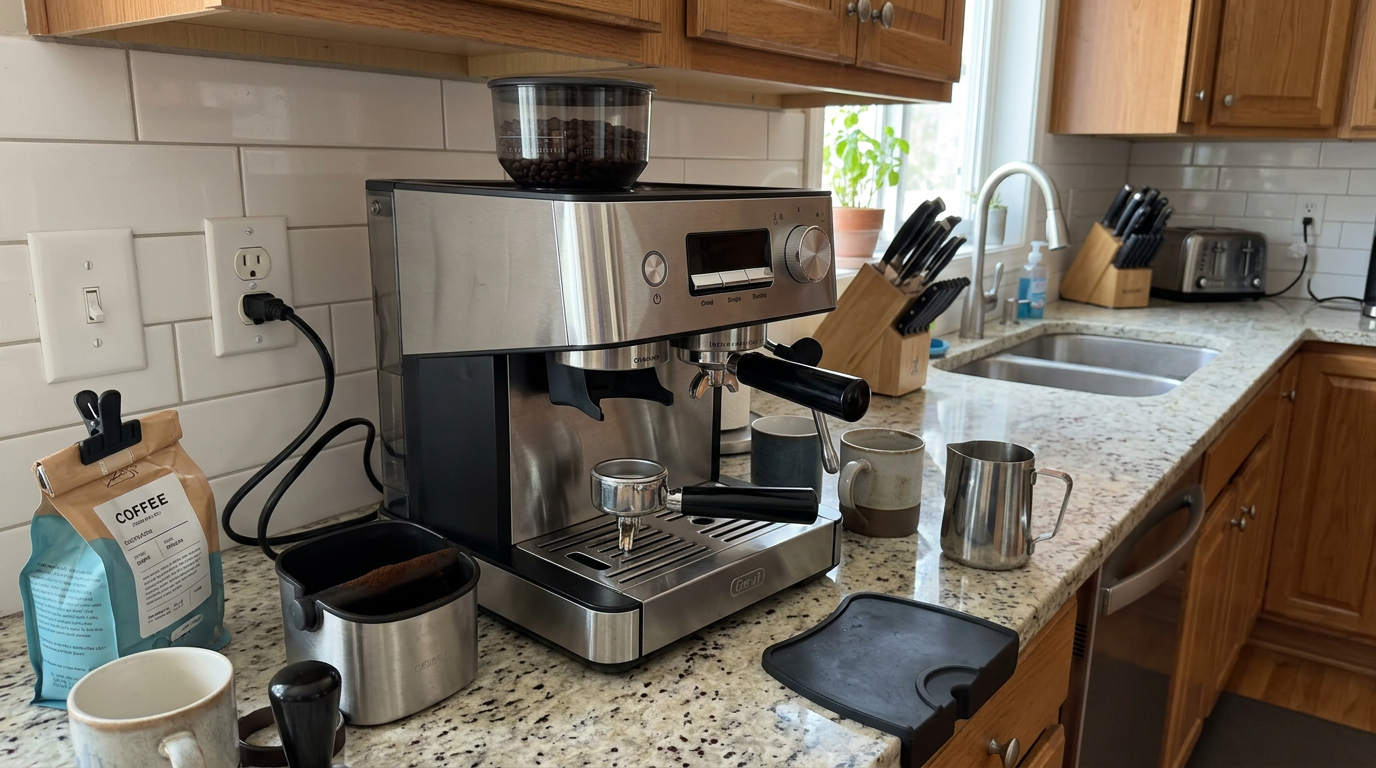
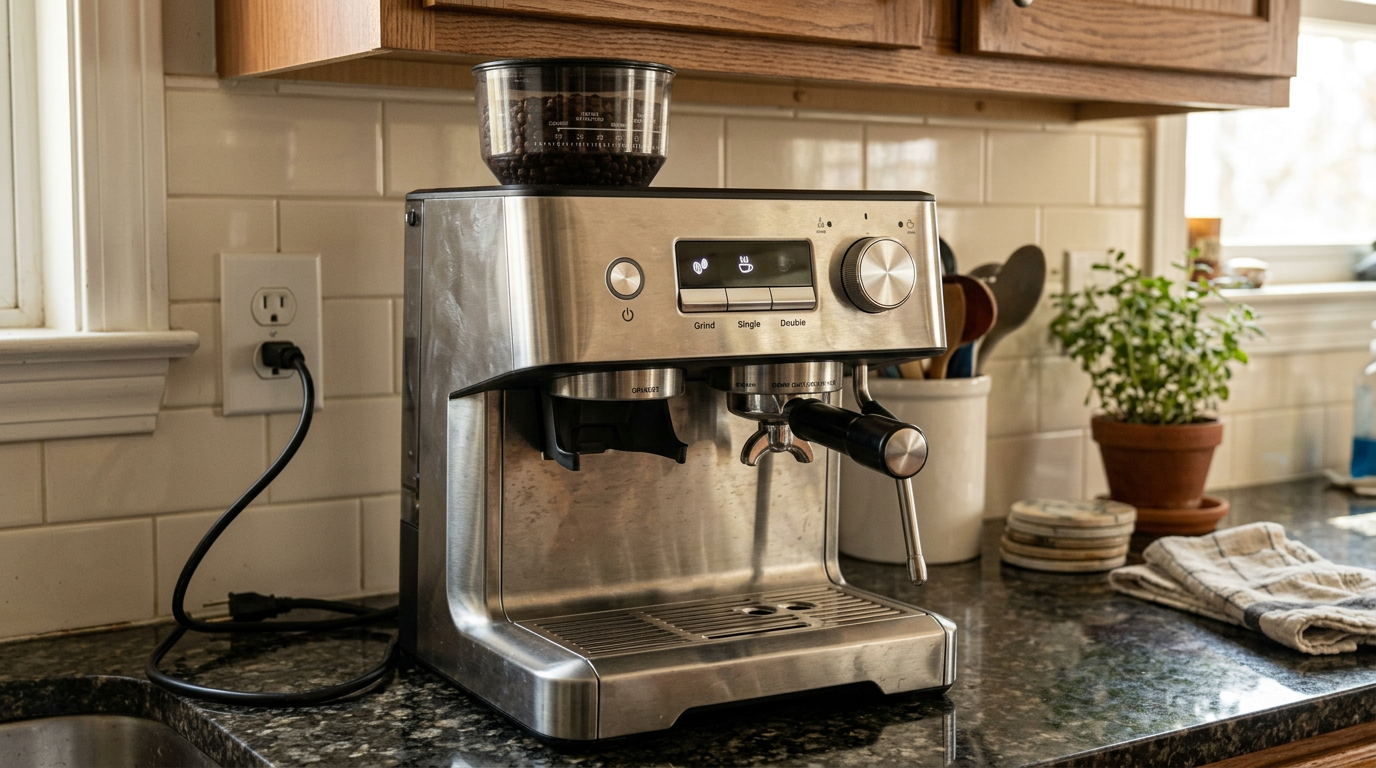
The Gevi packs a grinder, a 58 mm portafilter and a steam wand into one simple box.
The Breville measures about 12.5 inches wide, 13.8 deep and 15.9 tall with the hopper on, and fits under standard 18-inch cabinets. Both need a bit of room around them for a knock box, a jug and a scale.
Our tip: Leave space beside either machine for a knock box and a small scale, because you’ll use both for every single shot.
What the budget machine gives up, and what it doesn’t
The usual worry with a budget espresso machine is that it cuts corners in ways you can taste. On the Gevi, the cuts are real but specific.
What it keeps: a built-in burr grinder, a café-size portafilter, four baskets, automatic pre-infusion✕Pre-infusionA short, gentle soak of the ground coffee before full pressure, so water flows through the puck evenly. and a solenoid valve. Those are the parts that most affect the cup.
What it drops: a pressure gauge, adjustable temperature, a shot timer and a steadier grinder dose. Those are the parts that make learning easier.
| Feature | Gevi ECMI0 | Breville Barista Express | Does it change the taste? |
|---|---|---|---|
| Built-in burr grinder | Yes | Yes | Yes, essential |
| 58 mm portafilter | Yes | No, 54 mm | Slightly, mostly accessories |
| Pre-infusion | Yes | Yes | Yes |
| Solenoid valve | Yes | Yes | No, cleaner pucks |
| Pressure gauge | No | Yes | No, but it helps you learn |
| Adjustable temperature | No | Yes | Yes, for light roasts |
| Steady dose | No | Yes | Yes, unless you weigh |
So the Gevi gives up convenience and guidance more than flavor. A scale puts most of the flavor back.
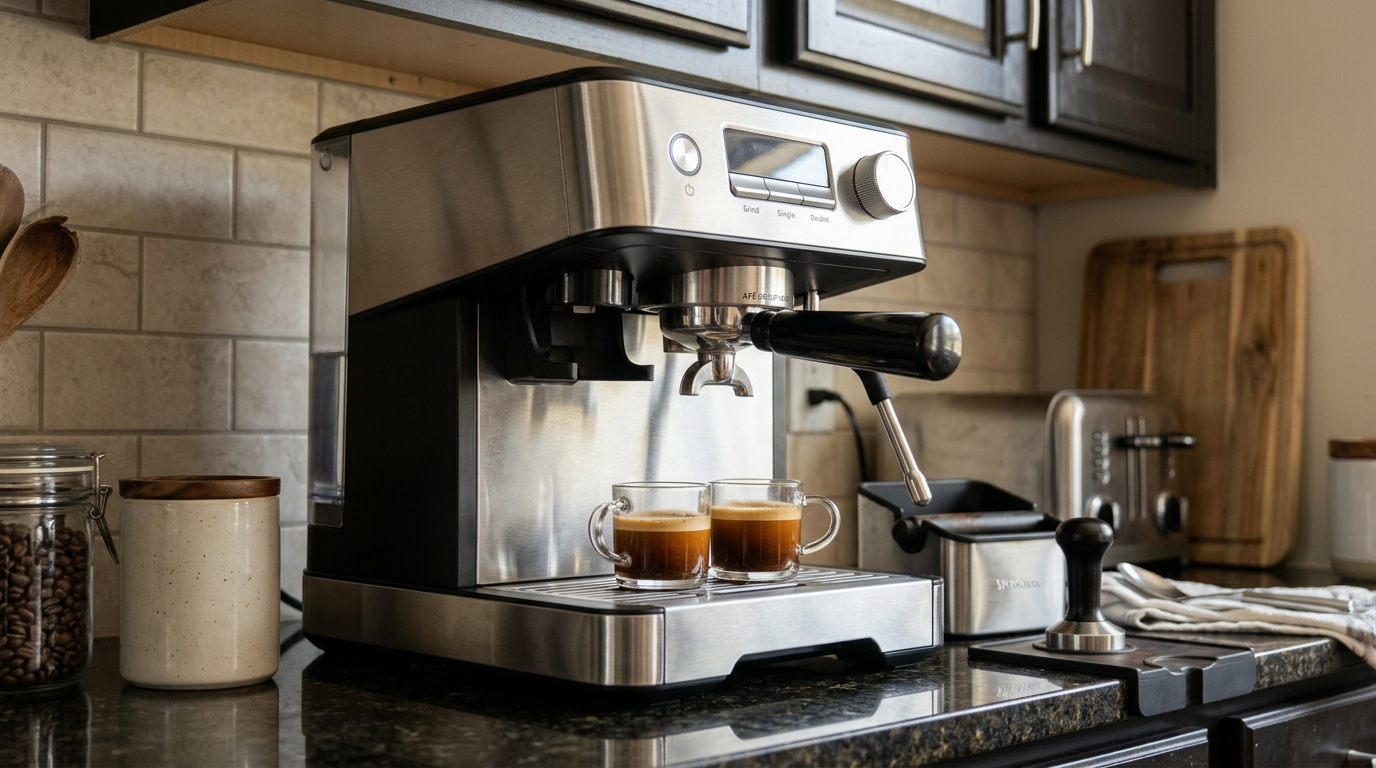
The Gevi keeps the parts that matter most for taste.
Our tip: Budget for a scale and a WDT tool if you buy the Gevi, because together they close most of the gap with the Breville.
Setup and the learning curve
Neither of these is a press-and-go machine. Both took me several days to dial in, for different reasons.
Gevi: learning the grinder
The Gevi ECMI0 was ready to use quickly: rinse, warm up for about 90 seconds and grind. The challenge was understanding how its dose follows the grind setting.
Once I accepted that I had to weigh every dose, things moved fast. Week one was about finding a grind setting that worked with 16 grams; week two was about the single-wall basket.
Breville: the inner burr
The Breville Barista Express needed one fix out of the box. With the factory inner burr setting, the side dial ran out of fine steps, so I moved the upper burr from 6 to 2.
After that, the pressure gauge did a lot of the teaching. My first properly dosed shot hit 30 grams in 27 seconds, and the needle told me why the next ones ran fast or slow.
How confident I felt, by week
My own rating of how reliably I got the shot I wanted.
| Week | Gevi ECMI0 | Breville Barista Express |
|---|---|---|
| 1 | Learning that dose follows grind | Inner burr moved, dose dialed in |
| 2 | Single-wall basket; shots much richer | Gauge in the espresso zone most shots |
| 3 | WDT and dosing ring added | Light roasts tamed with higher temperature |
| 4 | Milk steaming and a simple heart | First clean latte-art heart |
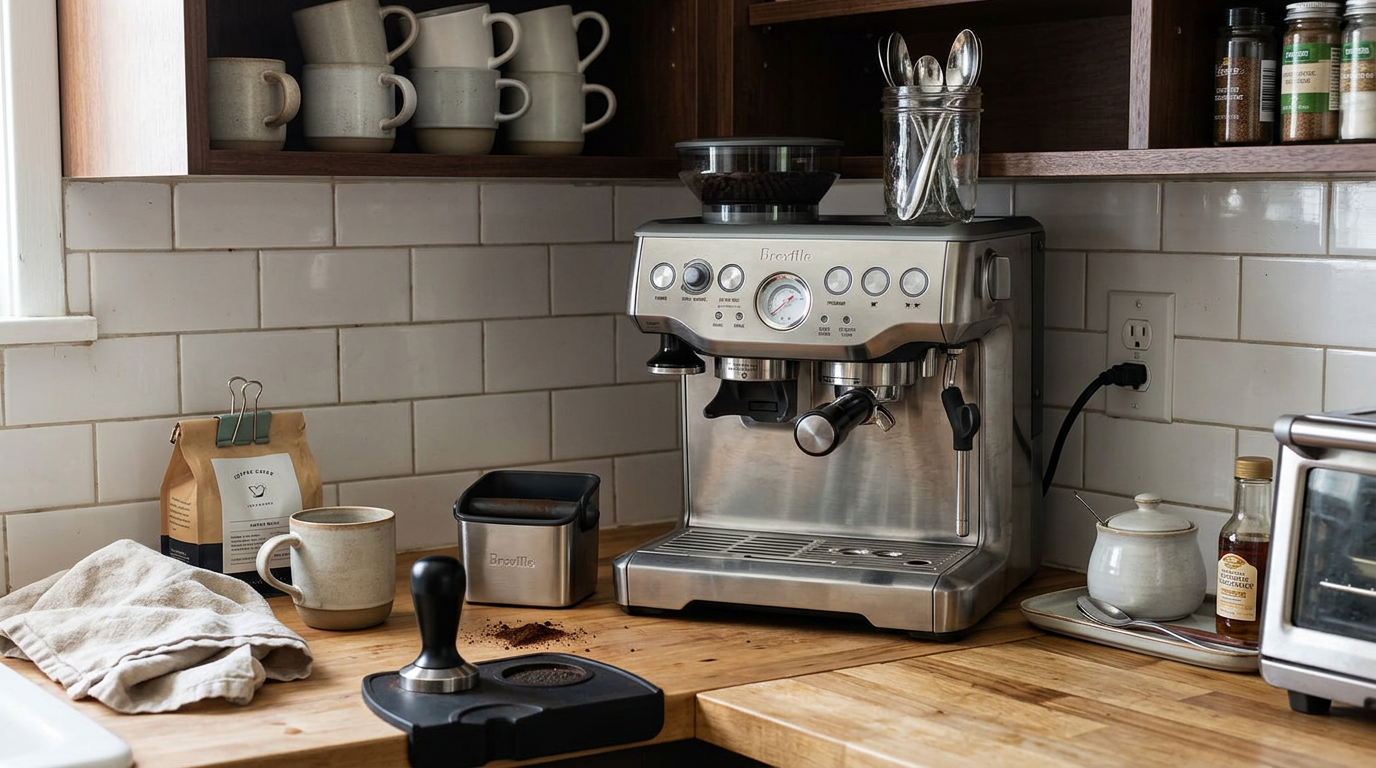
The Breville’s gauge made the learning curve a little gentler.
Our tip: Change only one thing at a time while dialing in either machine, because moving grind and dose together makes it impossible to tell which change helped.
Grinder and dose
The grinder decides more about espresso than the pump, and this is where the two machines differ most.
The Gevi ECMI0 uses a conical burrs✕Conical burrsA cone-shaped burr that turns inside a ring-shaped burr. The gap between them sets how fine the coffee is ground. grinder with 30 settings, adjusted by turning the bean hopper. More steps sounds better, and for fine-tuning it is.
The catch: on the Gevi, the dose changes with the grind setting. On setting 0, a double press gave me barely enough coffee for a weak single, and coarser settings gave more.
The Breville Barista Express grinds for a set time, so its dose stays steadier as you move the grind. Its side dial has 16 steps, and I moved the inner burr from 6 to 2 so there were fine steps left.
My double dose, weighed
Both were dialed in with a scale. Without one, the Gevi drifted more.
| Grinder detail | Gevi ECMI0 | Breville Barista Express |
|---|---|---|
| Burrs | Conical | Steel, conical |
| Settings | 30, turn the hopper | 16, plus inner burr |
| How it doses | Press, varies with grind | By time, programmable |
| Out-of-box tweak | None needed | Move the inner burr |
| Best habit | Weigh every dose | Weigh at least weekly |
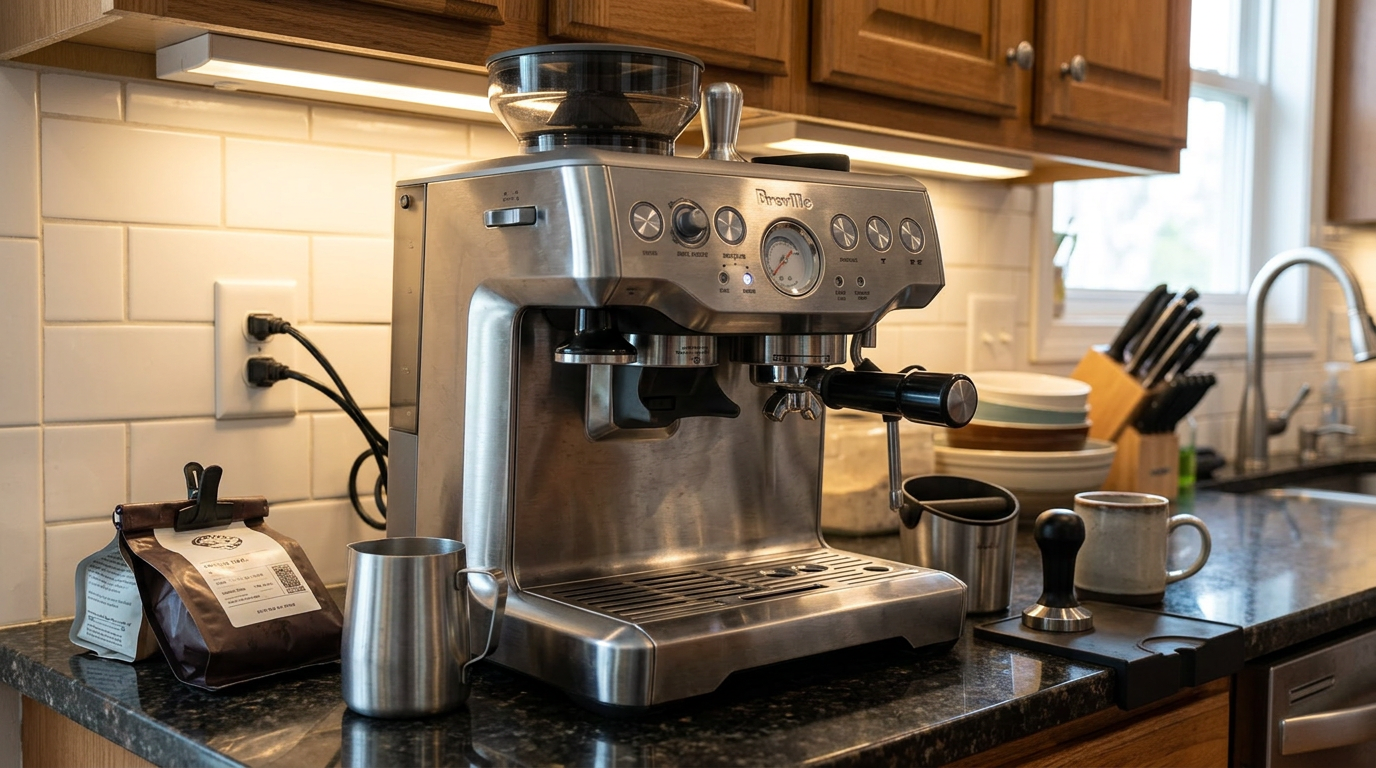
The Breville’s timed dose stays steadier as you change the grind.
Portafilter, baskets and pucks
Here’s where the budget machine has a real advantage. The Gevi uses a 58 mm✕58 mm groupThe portafilter size used on most café machines. It holds a wider, shallower bed of coffee and fits a huge range of accessories. portafilter, the same size as most café machines.
58 mm isn’t magic for taste by itself, but it is the most common size in professional espresso. That means a huge range of baskets, tampers, dosing rings and bottomless portafilters fit it.
The Breville uses 54 mm, standard across Breville’s home machines. Accessories exist, but fewer of them.
Both come with four baskets: single and double, in pressurized basket✕Pressurized basketA filter basket with a single tiny exit hole that builds pressure for you. It is forgiving with pre-ground or older coffee. and single-wall basket✕Single-wall basketA filter basket with many holes and no built-in pressure trick. It needs a fine, fresh grind but gives the richest shots. versions. Choosing the right one mattered more than any other setting on both.
In my testing, a pressurized basket on the Gevi at grind setting 10 still produced a reasonable shot. Switching to the single-wall double with fresh beans was the biggest step up in flavor.
Dry pucks
Both have a three-way solenoid valve✕Three-way solenoid valveA valve that releases leftover pressure after a shot, so the puck comes out dry and the portafilter does not spray., which releases pressure after the shot so the puck comes out dry. On the Gevi, cleanup took about 10 seconds per shot.
Puck cleanup per shot
Timed in my kitchen.
The Gevi’s solenoid valve leaves a dry, easy-to-knock-out puck.
Our tip: Switch to the single-wall basket as soon as you’re using fresh beans on either machine, because pressurized baskets make foamy but flat-tasting shots.
Espresso quality
Can the budget machine compete in the cup? With fresh beans and a scale, mostly yes.
My Gevi starting recipe was 16 grams of coffee in, about 36 grams out, in 25 to 30 seconds. That’s a brew ratio✕Brew ratioThe weight of dry coffee compared with the weight of liquid espresso. 1:2 means 18 g of coffee makes 36 g of espresso. of roughly 1:2.25, a good place to start.
The difference between my first and third shot was dramatic. By the third, the espresso looked thicker and creamier, with a hazelnut-brown crema✕CremaThe golden, foamy layer on top of a fresh espresso. It forms when pressure pushes oils and gases out of the coffee. that held its shape, and it tasted thick and chocolatey.
On the Breville, I locked the dose at 15.4 grams and moved the side dial to 7. Most shots landed between 26 and 30 seconds for 30 grams out, and the gauge sat in the espresso zone almost every time.
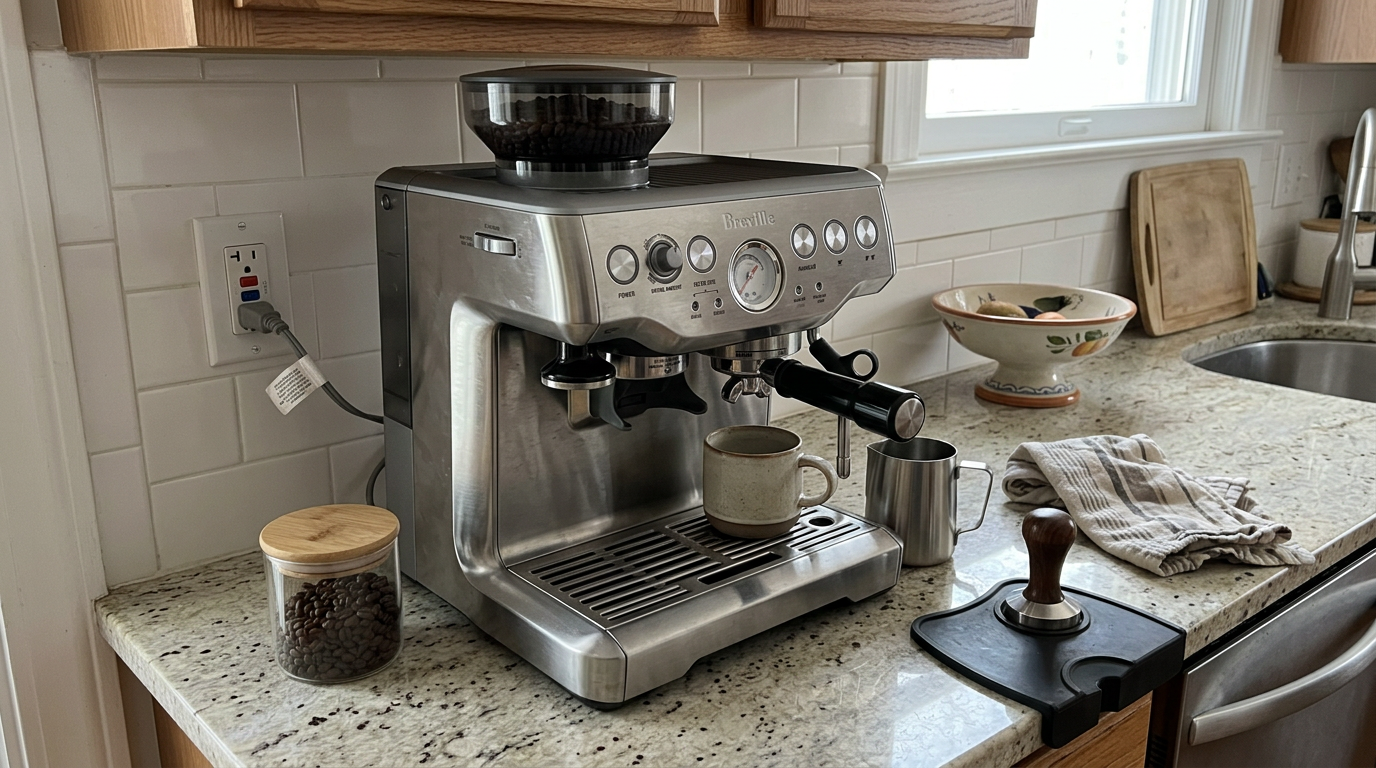
The Breville’s pressure gauge made consistent shots easier to repeat.
My espresso ratings
Scores out of 10 for body, sweetness, crema and consistency, using a medium roast.
With medium and dark roasts, the gap all but disappeared. In a blind tasting of two lattes, neither I nor my partner could reliably say which machine made which.
The gap was widest with light roasts. On the Breville, a finer grind and a slightly higher temperature turned sourness into a pleasant, fruity brightness.
On the Gevi, light roasts needed a grind close to setting 3 or 4 and still tasted a little sharp, because you can’t raise the brew temperature.
| What you taste | Gevi fix | Breville fix |
|---|---|---|
| Sour, thin | Finer, weigh the dose | Finer, or raise temperature |
| Bitter, harsh | Coarser, re-weigh | One step coarser |
| Sour and bitter together | WDT✕WDT toolA tool with thin needles used to stir ground coffee in the basket, breaking up clumps before tamping. and level tamp | Level tamp, check dose |
| Weak with fresh beans | Single-wall basket | Single-wall basket |
Our tip: Run a blank shot of hot water through the portafilter before your first espresso on either machine, because a cold group head makes the first shot taste flat.
Pressure gauge and temperature
These are the two features the Gevi leaves out, and they explain most of the Breville’s advantage for beginners.
The Breville’s analog gauge shows the pressure in the basket during the shot. If it stays low, your grind is too coarse or your dose too small; if it pegs high, the opposite.
It turned dialing in from guessing into reading. By week two, I could tell from the needle alone whether a shot would taste right.
The Gevi has no gauge and no shot timer. You rely on a scale with a timer and on taste, which works fine but takes longer to learn.
Temperature is the other gap. The Breville lets you adjust brew temperature, which helps with light and very dark roasts, while the Gevi’s is fixed.
| Feature | Gevi ECMI0 | Breville Barista Express |
|---|---|---|
| Pressure gauge | No | Yes, analog |
| Shot timer | No | No |
| Temperature control | Fixed | Adjustable |
| Pre-infusion | Automatic | Yes |
| Shot buttons | Single and double | Single and double, programmable |
The Breville’s gauge turns dialing in from guesswork into reading a needle.
Our tip: Buy a scale with a built-in timer for the Gevi, because it replaces both the missing gauge and the missing shot timer.
Milk and steaming
Both have a single heater, so you brew first and steam second. Neither can do both at once.
The Gevi’s one-hole steam wand on the right side is easy to control. 150 ml of cold whole milk took me about 45 to 60 seconds to reach drinking temperature, and by week four I had silky lattes and a simple heart.
The Breville builds steam within about 15 seconds of turning the dial. After about 40 seconds, my milk looked like glossy paint, and it was the easier of the two for latte art.
The Gevi’s one-hole wand is easy to control for silky lattes.
| Milk detail | Gevi ECMI0 | Breville Barista Express |
|---|---|---|
| Steam wand | One hole | Single hole |
| 150 ml whole milk | About 45–60 s | About 40 s |
| Brew and steam together | No | No |
| Pitcher included | Yes, stainless | Yes, stainless |
| Latte art | Simple shapes with practice | Yes, with practice |
Stop steaming at around 140 to 150°F, when the pitcher gets too hot to hold. Research from the University of Camerino found milk foam is most stable around 60°C.
Daily workflow
The Gevi takes about 90 seconds to warm up, which is quick enough that I never felt I was waiting. The Breville was ready in about a minute.
From there, the routine is the same: grind, weigh, tamp, brew, knock out, steam and wipe. The Gevi adds a step for weighing every dose; the Breville adds a weekly check.
| Step | Gevi ECMI0 | Breville Barista Express |
|---|---|---|
| Warm-up | About 90 s | About 1 min |
| Grind and weigh | Every shot | Check weekly |
| Brew | 25–30 s | 25–30 s |
| Steam 150 ml | 45–60 s | About 40 s |
| Espresso only, total | About 2 min | About 2–3 min |
| With milk, total | About 4 min | About 4–5 min |
Time for one latte, start to sip
My average over the last two weeks.
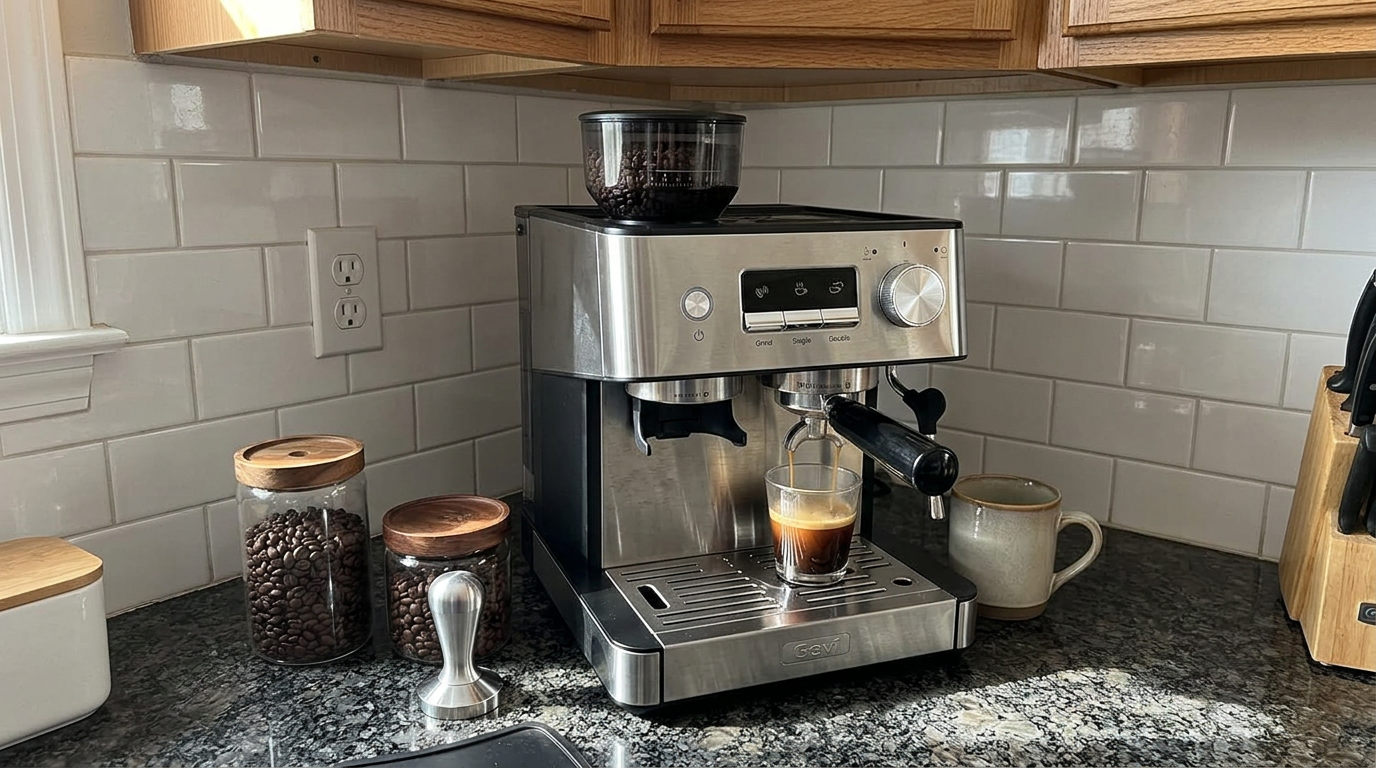
Once dialed in, a Gevi latte took about four minutes.
Neither machine is quick compared with a push-button automatic. Both reward people who enjoy the process.
Cleaning and upkeep
Daily cleaning is similar: empty the drip tray, wipe the shower screen and purge and wipe the steam wand after every use.
The Gevi needs a weekly grinder and basket clean, which took me about 10 minutes. The Breville needs a weekly brush of the group gasket and grinder chute, and a backflush✕BackflushRunning water backwards through the group head with a blank basket and cleaning tablet to clear coffee oils from the valve. with a tablet when prompted.
My daily hands-on cleaning time
My estimate of hands-on time per day.
| When | Gevi ECMI0 | Breville Barista Express |
|---|---|---|
| After milk | Purge and wipe the wand | Purge and wipe the wand |
| Daily | Empty tray, wipe screen | Empty tray, wipe screen |
| Weekly | Clean grinder and baskets, about 10 min | Brush gasket and grinder chute |
| When prompted | Descaling✕DescalingRunning a mild acid through the machine to dissolve the mineral scale that hard water leaves in the heater and pipes. | Backflush with a tablet |
| Every 2–3 months | Descale | Replace the water filter |
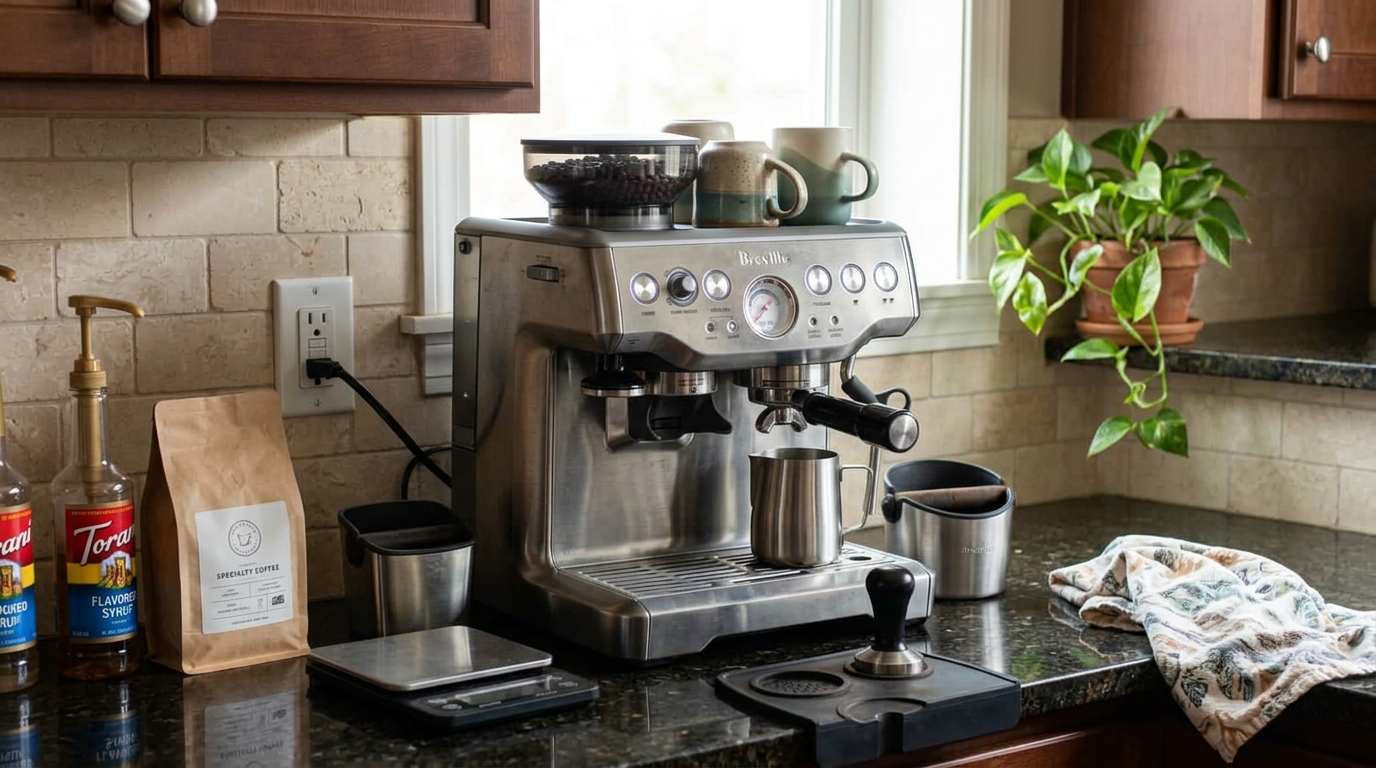
Both machines need the wand purged and wiped after every use.
Our tip: Wipe and purge the steam wand within seconds of steaming on both machines, because dried milk blocks the tip and spoils the next drink.
Accessories and upgrades
Both come with what you need to start, but a few small accessories make a big difference. The Gevi benefits most, because of its 58 mm size.
| Upgrade | What it fixes | Worth it on the Gevi? |
|---|---|---|
| Small scale with timer | Variable grinder dose, no shot timer | Essential |
| WDT✕WDT toolA tool with thin needles used to stir ground coffee in the basket, breaking up clumps before tamping. tool | Clumps and channeling✕ChannelingWhen water finds a weak spot in the coffee puck and rushes through it. The shot runs fast and tastes sour and bitter at once. | Yes, very cheap |
| 58 mm dosing ring | Spilled grounds while stirring | Yes |
| Solid 58 mm tamper | Uneven tamping | Yes |
| Knock box | Messy puck disposal | Nice to have |
| Bottomless portafilter | Hidden channeling | For curious learners |
On the Breville, a scale is the only upgrade I’d call essential. Its tamper and baskets are good enough to keep.
With a scale, a WDT tool and a dosing ring, the Gevi’s shots got noticeably more consistent. That is where it closed most of the gap to the Breville.
A scale and a WDT tool closed most of the gap between the Gevi and the Breville.
Our tip: Spend your first accessory money on a scale with a timer, because it fixes more espresso problems than any other gadget on either machine.
Beans and water
Both use about the same amount of coffee, 15 to 16 grams per double. Fresh beans matter more than either machine.
| Bean type | Gevi ECMI0 | Breville Barista Express |
|---|---|---|
| Medium roast | Excellent once dialed in | Sweet, chocolatey |
| Medium-dark | Thick, chocolatey | Rich body, thick crema |
| Light roast | Setting 3–4, still sharp | Finer, raise temperature |
| Very dark, oily | Coarser, clean grinder more | Coarser, clean more often |
Use beans within a few weeks of the roast date. Stale beans make pale, quick-fading crema on both, no matter how well you dial in.
Used pucks are a good addition to compost when mixed with other materials, so a knock box can double as a compost caddy.
Our tip: Buy a bag you can finish within two or three weeks, because both grinders show off fresh coffee far better than stale.
Mistakes to avoid on each
Both machines reward good habits and punish a few common mistakes. These are the ones that cost me the most shots.
| Machine | Mistake | Better habit |
|---|---|---|
| Gevi ECMI0 | Trusting the grinder dose | Weigh every dose |
| Gevi ECMI0 | Staying on the pressurized basket | Single-wall with fresh beans |
| Gevi ECMI0 | Clumpy grounds | Stir with a WDT tool |
| Gevi ECMI0 | Steaming straight after brewing | Purge, then steam |
| Barista Express | Factory inner burr setting | Move the upper burr finer once |
| Barista Express | Turning the dial on a stopped grinder | Adjust while grinding |
| Barista Express | Tilted tamp | Tamp level and firm |
| Barista Express | Forgetting the tank | Check the water every morning |
On the Gevi, trusting the grinder dose was the costliest mistake. Because the dose follows the grind, every grind change changed the shot twice over until I weighed.
On the Breville, the inner burr was the first hurdle. Once it was moved, the gauge and the scale did most of the teaching.
Weighing every dose was the single biggest fix on the Gevi.
Our tip: Knock out the puck and rinse the basket straight after each shot on both machines, because dried coffee oils make the next shot taste stale.
Real-life scenarios
Specs only go so far. These are the situations where one machine clearly pulled ahead during my testing.
With a scale and the single-wall basket, the Gevi made espresso I was genuinely happy to drink.
The Breville’s pressure gauge showed me exactly what each change did. The Gevi left me to taste and time.
Raising the Breville’s temperature tamed the sourness. The Gevi’s fixed temperature couldn’t.
The 58 mm portafilter fit every dosing ring, tamper and bottomless portafilter I tried.
The Breville’s steam came up faster and made art easier, though the Gevi managed a simple heart.
The solenoid valve left a dry puck that knocked out in about 10 seconds.
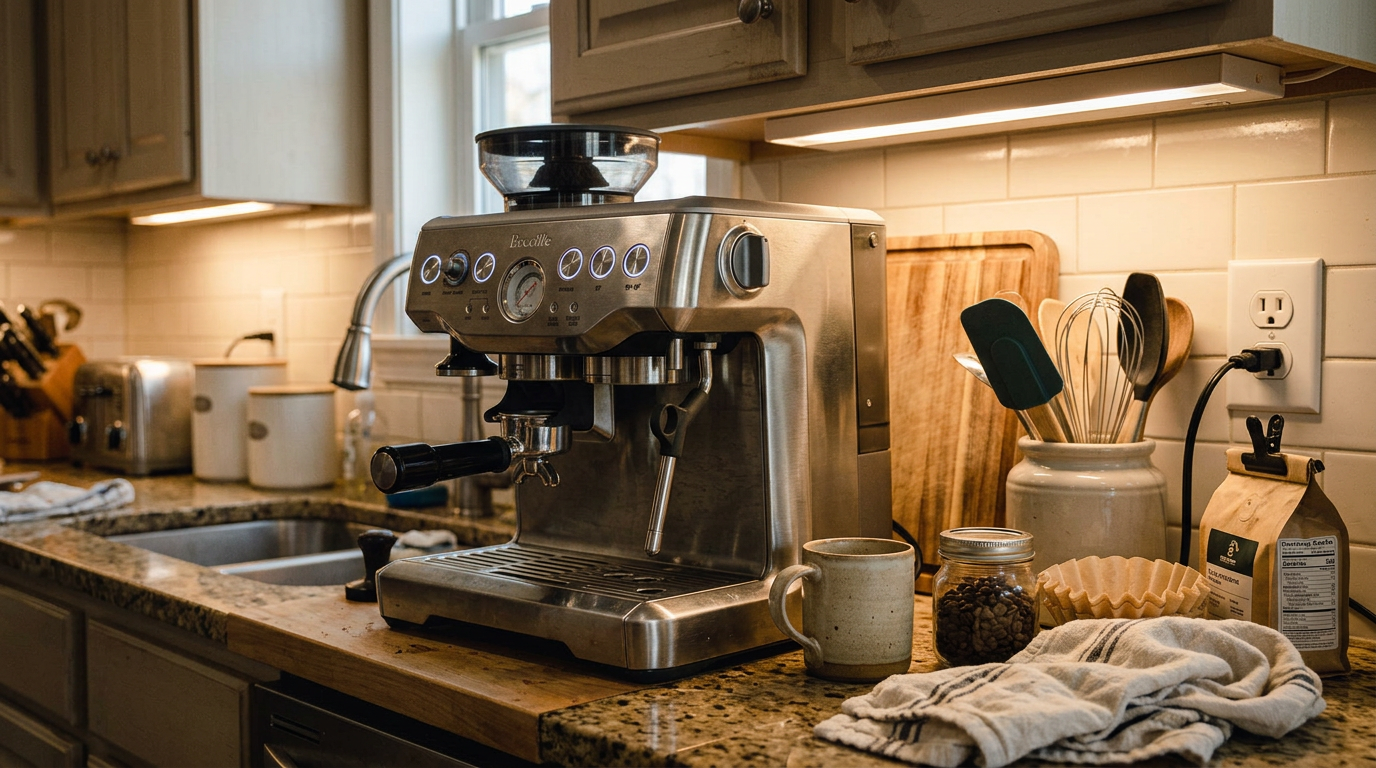
For most beginners, the Breville’s gauge and consistency are worth the extra.
My scorecard
These are my own scores out of 10 after four weeks with each machine. I added learning support and value because they decide this matchup.
Gevi ECMI0
Breville Barista Express
Overall, I rate the Breville 8.3 and the Gevi 8.2. That is about as close as it gets. The Breville is easier to learn and better with light roasts; the Gevi is the smarter buy if every dollar counts and you’ll use a scale.
Is It On Sale? Check NowWhich one is right for you?
4 quick questionsWhich one should you buy?
It comes down to one question: will you weigh every dose? If yes, the Gevi competes; if not, the Breville is the safer buy.
Think about your patience, too. If weighing every dose sounds like fun, the Gevi rewards it; if it sounds like a chore, the Breville’s steadier grinder is worth the difference. Still weighing other options? I rank every model I’ve tested in my guide to the best Breville espresso machines.
If you want even more control from a Gevi, see my Gevi 58mm review. If you’d like guidance instead of a gauge, my Ninja Luxe Café vs Barista Express comparison is the next read.
With a scale and patience, the Gevi makes espresso well above its price.
- Budget is the deciding factor
- You’ll weigh every dose
- You want 58 mm accessories
- You drink medium and dark roasts
- You want a pressure gauge
- You drink light roasts
- You won’t use a scale
- You want the easiest learning curve
- You drink light roasts
- You want a proven, consistent grinder
- You want latte art
- Budget is very tight
- You want 58 mm accessories
- You hate tweaking the inner burr
For most beginners, my pick is the Breville Barista Express. Its pressure gauge teaches you, its adjustable temperature handles light roasts and its grinder doses more consistently. Once dialed in, it pulled the sweeter shot of the two.
The Gevi ECMI0 proves a budget machine can compete. With a scale, the single-wall basket and a WDT tool, it made thick, chocolatey espresso and silky lattes, and its 58 mm portafilter and solenoid valve are features you rarely see at this level.
Whichever you choose, buy a scale, use fresh beans and practice steaming with cold milk. Both reward that with real espresso at home.
Gevi vs Breville Barista Express specifications
From manufacturer specifications and my own testing.
| Gevi ECMI0 | Breville Barista Express | |
|---|---|---|
| Model | ECMI0-SS0A1 | BES870XL |
| Type | Semi-automatic with grinder | Semi-automatic with grinder |
| Pump | 20 bar rated, pre-infusion | 15 bar |
| Heating | Single heater, about 90 s | 1600 W thermocoil |
| Grinder | Conical, 30 settings | Steel conical, 16 settings |
| Portafilter | 58 mm, three-ear | 54 mm |
| Baskets | Four | Four |
| Pressure gauge | No | Yes |
| Temperature control | Fixed | Adjustable |
| Solenoid valve | Yes | Yes |
| Steam wand | One hole | Single hole |
| Water tank | Removable | About 67 oz |
How I tested and compared them
I used each machine as my everyday espresso maker for four weeks, making espresso, americanos, cappuccinos, lattes and flat whites.
I weighed every dose and shot, timed extractions, tested pressurized and single-wall baskets, steamed whole milk with a probe thermometer and tried light, medium and dark roasts.
I tested common accessories on both, ran every cleaning routine and compared my notes with Gevi and Breville specifications and owner documentation.
- Coffee: dose, ratio, crema and body.
- Milk: steam speed, texture and temperature.
- Workflow: warm-up, dialing in and daily routine.
- Ownership: cleaning, accessories and footprint.
Gevi vs Breville Barista Express FAQ
Can a Gevi compete with the Breville Barista Express?
Mostly, yes. With a scale and the single-wall basket, the Gevi ECMI0 made thick, chocolatey espresso. The Breville was easier to learn and better with light roasts.
Which Gevi should I compare with the Barista Express?
The Gevi ECMI0, because it also has a built-in grinder. Gevi’s other models need a separate grinder.
Does the Gevi ECMI0 have a pressure gauge?
No. It has no pressure gauge, temperature control or shot timer, so a scale with a timer is essential.
What portafilter size does each use?
The Gevi uses a 58 mm portafilter, the café standard. The Breville uses 54 mm.
Why does the Gevi dose change?
Its grinder doses by press, and the amount follows the grind setting. Finer settings give less coffee, so weigh every dose.
Which is better for light roasts?
The Breville, because you can raise the brew temperature. On the Gevi, light roasts tasted a little sharp even at grind setting 3 or 4.
Can both steam milk for latte art?
Yes, with practice. The Breville’s steam came up faster and made art easier.
Can I brew and steam at the same time?
No, both have a single heater. Brew first, then steam.
Which is easier to clean?
They’re close. The Gevi’s solenoid valve leaves dry pucks, and it needs a weekly grinder and basket clean of about 10 minutes.
Do I need a scale?
Yes for the Gevi, strongly recommended for the Breville. It’s the single best upgrade for either machine.
Can I use pre-ground coffee in the Gevi or Breville?
Yes. Use the pressurized basket with pre-ground coffee on either machine; it is far more forgiving than the single-wall basket.
Which is easier for latte art?
The Breville, because its steam comes up faster and stronger. The Gevi can manage simple shapes with practice.

- Our hands-on Gevi ECMI0 review
- Our hands-on Breville Barista Express review
- Gevi and Breville product specifications and owner documentation
- Effect of milk processing and steam frothing conditions on microfoam formation, University of Camerino
- Composting and Coffee Grounds, Cornell University