De’Longhi vs Philips vs Jura: which super-automatic brand is best?
These three brands make most of the fully automatic machines people shortlist, and each one has a clear personality. I used the De'Longhi Magnifica Evo, the Philips 3200 Series and the Jura E6 as my everyday coffee maker for four weeks each, measured doses, temperatures and cleaning time, and lined up the data to find out which brand belongs in your kitchen.
We choose products independently. We may earn a commission through links on this page; your price stays the same. Affiliate policy
Jargon helpNew to espresso? Tap any dotted term to see what it means.
In this comparison
If espresso quality is what you are paying for, Jura wins: the Jura E6 pulled the fullest, sweetest shot of the three from a 16-gram dose. If you want the most coffee for your money, De’Longhi is the sweet spot, and the De'Longhi Magnifica Evo came within a whisker of the Jura on espresso while making denser foam. If you want the easiest daily routine, Philips is hard to beat: the Philips 3200 Series has a tube-free LatteGo jug that rinses clean in seconds, though its espresso is the mildest here.
The three brands, and the machines I compared
Specs checked November 14, 2026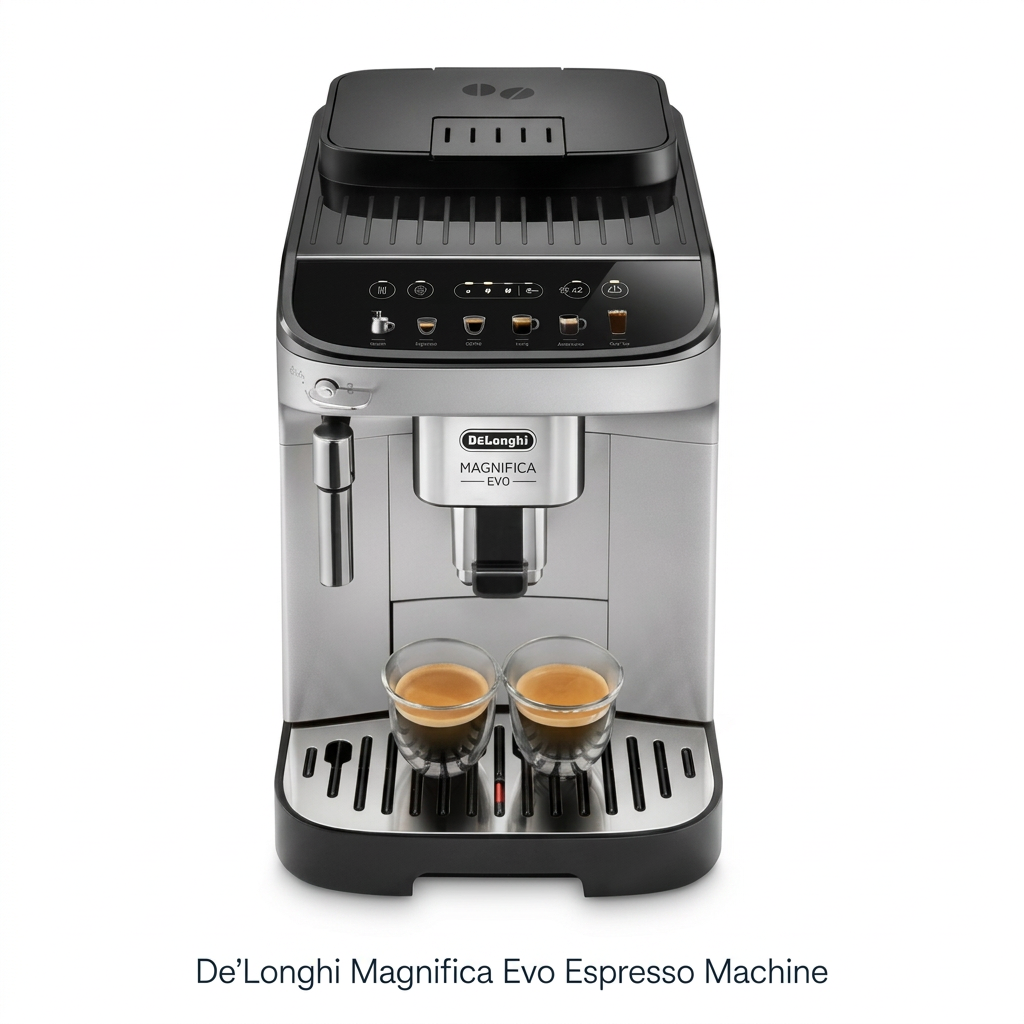
A 15-gram dose, a 13-step steel grinder, one-touch LatteCrema foam and a removable brew unit.
Check price on Amazon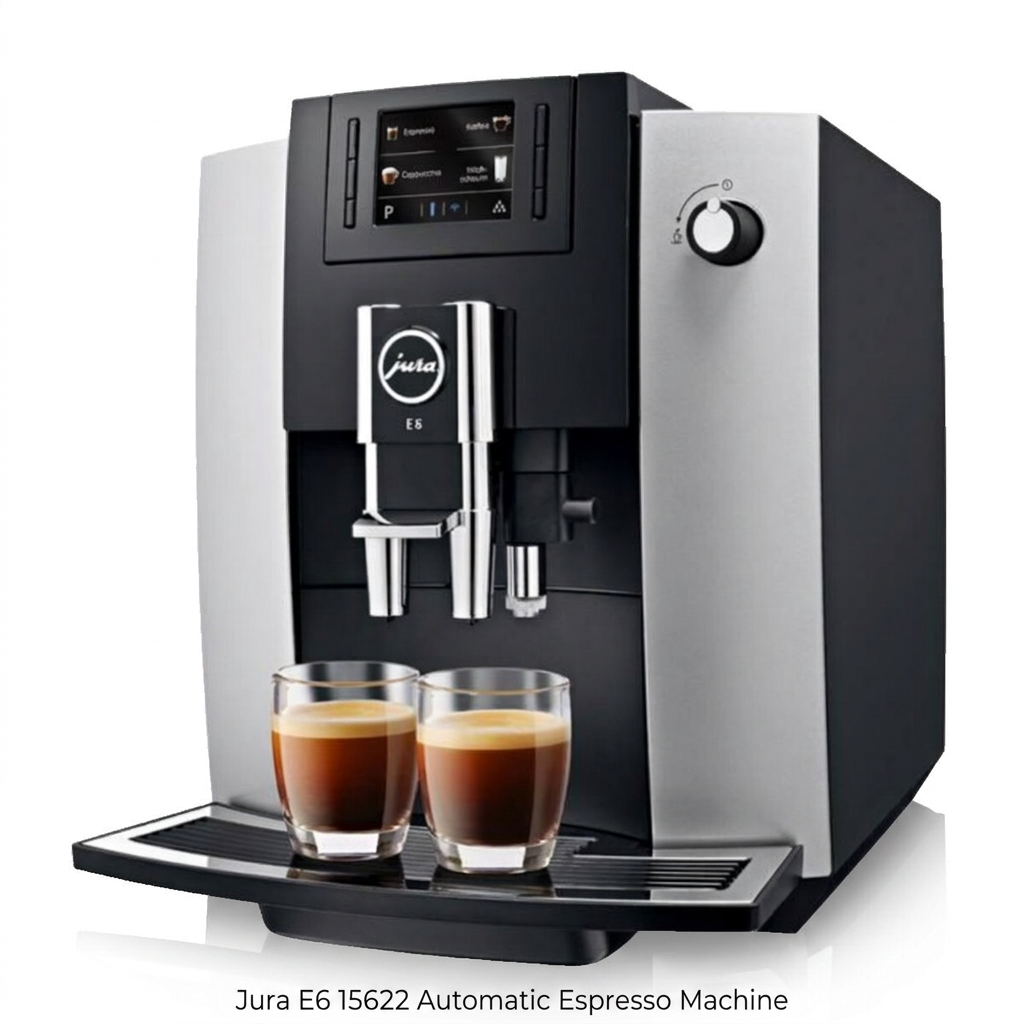
A 16-gram dose, Pulse Extraction, a quiet rubber-mounted grinder and hot water at three temperatures.
Reveal Today’s Deal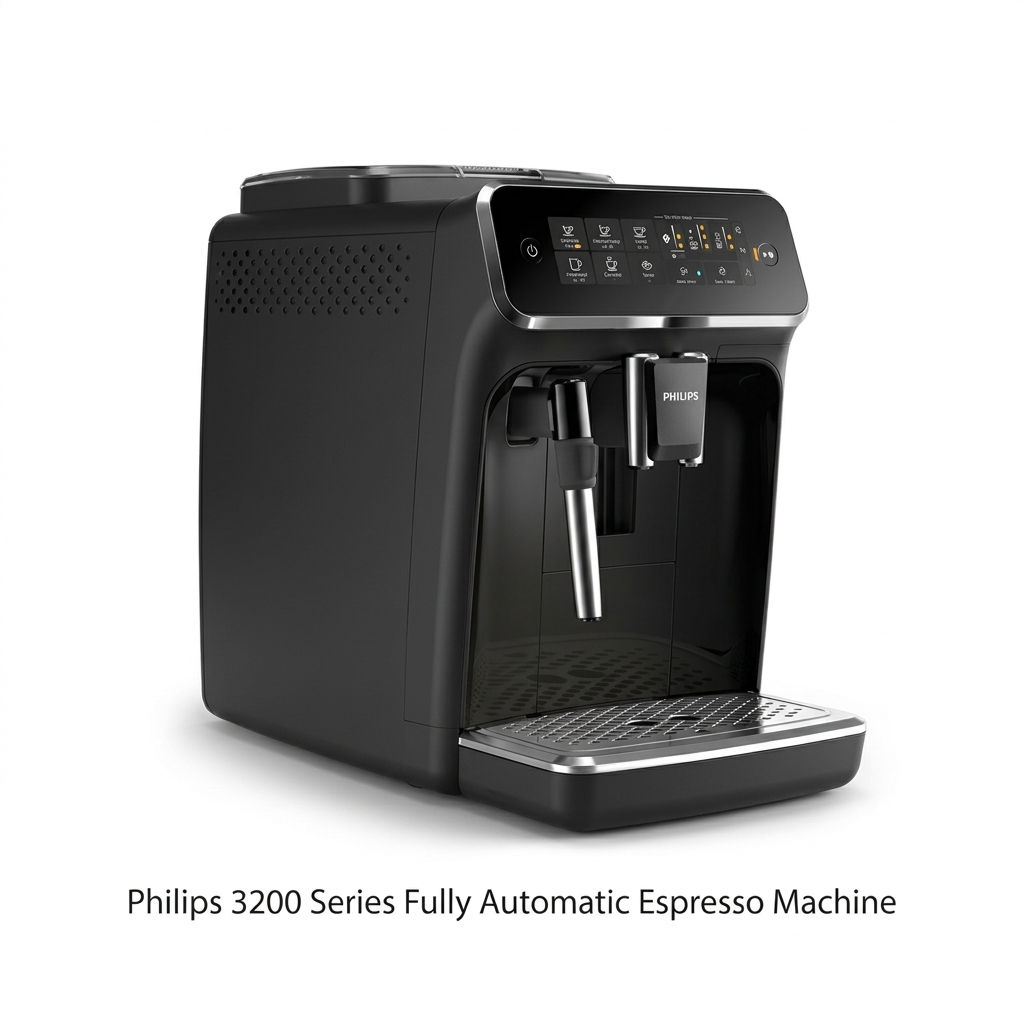
Five one-touch drinks, a tube-free LatteGo jug, a removable brew group and an AquaClean filter in the box.
See Today’s PriceDe’Longhi vs Philips vs Jura at a glance
- Jura is the premium choice: the fullest espresso, the quietest grinder and the most polished build.
- De’Longhi gives you near-Jura espresso and excellent foam for far less money.
- Philips is the easiest to live with, with tube-free milk and a removable brew group, but the mildest espresso.
- Both De’Longhi and Philips have removable brew units; Jura cleans its sealed unit with tablets.
Head to head
The better result in each row is marked, based on my testing and the manufacturer specs. Rows where the machines are identical have no winner.
Keep in mind that the tally is not my verdict. Some rows matter far more than others, and which ones matter depends on what you drink.
| Spec | De'Longhi Magnifica Evo | Philips 3200 Series | Jura E6 |
|---|---|---|---|
| Espressomy score | 8.5, rich and sweet | 7.2, mild, lungo-like | 8.8, heavy body, thick crema ✓ Best |
| Top dose | About 15 g | About 8 g | Up to 16 g ✓ Best |
| Grinder | Steel conical, 13 settings ✓ Best | Ceramic, 12 settings | Steel conical, rubber-mounted ✓ Best |
| Milk system | LatteCrema carafe | LatteGo jug, no tubes | Milk hose |
| Milk-drink score | 8.4 ✓ Best | 7.8 | 8.0 |
| One-touch drinks | 7 | 5 | 9, plus doubles ✓ Best |
| Hot water temperatures | One | One | Three, plus tea spout ✓ Best |
| Brew unit | Removable ✓ Best | Removable ✓ Best | Sealed, tablet cleaning |
| Milk cleaning | Carafe Clean setting | 10-second rinse style ✓ Best | Rinse and tablet clean |
| Grinder noise | Moderate | Moderate | Low, rubber-mounted ✓ Best |
| Water tank | About 60 oz | 61 oz | 64 oz ✓ Best |
| Width | 9.45 in ✓ Best | 9.7 in | 11 in |
| Ease of usemy score | 8.4 | 8.8 ✓ Best | 8.6 |
| Cleaningmy score | 8.0 | 8.5 ✓ Best | 8.1 |
| Rows won | 4 | 4 | 7 |
De’Longhi vs Philips vs Jura pros and cons
De'Longhi Magnifica Evo
- Rich, repeatable espresso with a 15 g top dose
- LatteCrema makes dense, hot foam at one touch
- 13 grind settings for any bean
- No screen or user profiles
- No hot milk button without a workaround
- Passive cup warmer, so the first drink runs cooler
Philips 3200 Series
- Five one-touch drinks, including latte macchiato
- LatteGo jug has no tubes and rinses clean fast
- Removable brew group and AquaClean included
- Mild espresso from a small coffee dose
- Milk foam is good, not café-smooth
- Mostly plastic body and a small drip tray
Jura E6
- Richest espresso with a heavy body and thick crema
- True two-step americano you can tune and save
- Hot water at three temperatures, with a tea spout
- Only one foam texture, so no one-touch flat white
- Brew unit is sealed, not removable
- Wider body at about 11 inches
Who should buy which brand?
- Espresso and cappuccino lovers on a budget
- People who like to tune grind and strength
- Anyone who wants a removable brew unit
- Households that hate cleaning milk tubes
- Mild coffee and latte drinkers
- First-time owners who want simple icons
- Espresso and americano drinkers who want the best cup
- Tea drinkers who need the right water temperature
- Early risers who want the quietest grinder
Three brands, three philosophies
De’Longhi, Philips and Jura dominate fully automatic coffee machines, and each has a very clear idea of what matters most.
De’Longhi is the value specialist. Its machines put a lot into the grinder and the dose, so even the cheaper models pull a full, sweet shot, and its milk carafes make dense foam.
Philips focuses on convenience. Its LatteGo jug is the easiest milk system I know to clean, its brew group slides out for rinsing, and its touch panels are almost impossible to get wrong.
Jura is the premium Swiss brand. It invests in extraction, with a large dose and its Pulse Extraction Process✕Pulse Extraction Process (P.E.P.)Instead of pushing water through the coffee in one steady stream, the machine sends it in short, rapid pulses. It helps short drinks like espresso extract more evenly., and in build quality, with quiet grinders and solid bodies.
| Brand trait | De’Longhi | Philips | Jura |
|---|---|---|---|
| Focus | Value and foam | Convenience and cleaning | Espresso and build |
| Grinder | Steel conical | Ceramic | Steel conical |
| Typical top dose | About 15 g | About 8 g | Up to 16 g |
| Milk system | Carafe (LatteCrema) | LatteGo jug | Hose or fine-foam frother |
| Brew unit | Removable | Removable | Sealed |
| Water filter | Supported | AquaClean | CLEARYL |
I used one machine from each brand as my everyday coffee maker for four weeks: the De’Longhi Magnifica Evo, the Philips 3200 and the Jura E6. They are the models most people shortlist, and together they show each brand’s character clearly.
Our tip: Decide which matters more to you, the taste of a straight espresso or the time spent cleaning, because that single answer usually picks the brand.
Design, size and build
The De’Longhi and Philips are both narrow. The Magnifica Evo is about 9.45 inches wide and the Philips 3200 about 9.7 inches, so either slips into a small gap.
The Jura E6 is wider at about 11 inches, but shorter at about 13.8 inches tall. It sits under low wall cabinets more easily than the other two.
The Jura E6 is the widest of the three, but the most solid and polished.
Width on the counter
Narrower is easier to place. All three are about 17 inches deep.
Build quality follows the price. The Jura’s glossy housing felt solid with no flex anywhere, and it weighs about 22 pounds.
The Evo also feels planted at about 21 pounds, with a silver front panel. The Philips 3200 is the lightest at about 17.6 pounds and mostly plastic, and it felt a little hollow next to the other two.
Our tip: Leave about 2 inches above the bean hopper on any of these, so refilling beans never means sliding the machine forward.
Controls and smart features
The three brands take very different approaches to controls, and you will use them every single day.
The De'Longhi Magnifica Evo uses icons and buttons, one per drink, with strength and size buttons beside them. There is no screen, and no user profiles, so everyone in the house shares the same settings.
The Philips 3200 uses a flat touch panel with clear icons for its five drinks, plus strength, size and temperature that light up in bars. It is the hardest of the three to get wrong.
The Jura E6 has a 2.8-inch color display flanked by real buttons, and each button controls the drink or setting next to it. They work with damp fingers, and nobody in my house needed instructions.
The Jura also has the cleverest trick. Its Smart Mode tracks which drinks you make most and moves them to the first page, so by the end of my first week, americano and espresso sat front and center.
| Control | De’Longhi Magnifica Evo | Philips 3200 | Jura E6 |
|---|---|---|---|
| Display | None, icons and buttons | Touch panel | 2.8-inch color with buttons |
| Profiles | None | None | None |
| Learns your habits | No | No | Yes, Smart Mode |
| Change drinks on the fly | Strength and size | Strength, size, temperature | Strength and volume, then save |
| Hot water settings | One | One | Three |
Our tip: Tune your favorite drink once on the Jura and save it when it asks, because it then makes exactly that cup every time.
Grinder and dose
The biggest technical difference between the brands is how much coffee goes into each shot. The dose✕DoseThe amount of ground coffee used for one drink, usually measured in grams. A bigger dose gives a stronger, fuller cup without simply adding bitterness. shapes the taste more than any other setting.
The Jura E6 takes between 5 and 16 grams per brew. At 16 grams, one pass holds a full double shot, so it never has to split a big drink into weak, partial extractions.
The Magnifica Evo offers three levels, about 9, 12 and 15 grams. Its 13-step stainless steel conical burrs✕Conical burrsTwo cone-shaped grinding parts, one inside the other. Beans are crushed between them, and the gap between the burrs sets how fine the coffee is. gave me plenty of room to tune.
The Philips 3200’s maximum dose came to about 8 grams in my testing. Its ceramic grinder has 12 settings and stays sharp for a long time, but the small dose is why its espresso tastes closer to a lungo.
Top dose I measured
A typical café double uses 14 to 18 grams.
Noise followed build quality. The Jura’s grinder sits on rubber mounts with sound damping in the housing, and it made a low, short burst that never woke anyone in my house.
The De’Longhi and Philips grinders were louder but still reasonable, with a short whir lasting around 10 seconds.
| Grinder detail | Magnifica Evo | Philips 3200 | Jura E6 |
|---|---|---|---|
| Burrs | Steel conical | Ceramic | Hardened steel conical |
| Settings | 13 | 12 | 6 positions |
| Dose range | About 9–15 g | Up to about 8 g | 5–16 g |
| Bean hopper | About 8.8 oz | 275 g / 9.7 oz | About 10 oz |
| Noise | Moderate | Moderate | Low, rubber-mounted |
Our tip: Turn the grind dial only while the grinder is running on all three brands, because adjusting it with the burrs stopped can jam beans.
Espresso quality
I pulled dozens of shots on each machine with the same medium-dark blend and tasted them side by side in warmed cups. The ranking matched the doses.
The Jura E6 came out on top at 8.8. On setting 3 with the strongest level, its espresso had a heavy body and a thick crema✕CremaThe golden, foamy layer on top of a fresh espresso. It forms when pressure pushes oils and gases out of the coffee., with dark chocolate and toasted nuts and a clean finish.
The De'Longhi Magnifica Evo was a close second at 8.5. At the 15-gram dose, its shot had real body and sweetness, and I would happily drink it every day.
The Philips 3200 was the mildest at 7.2. Its espresso was smooth and crema-topped, but gentle, and it tasted best as the base of a milk drink.
My espresso ratings
My scores out of 10 for body, crema, flavor and consistency.
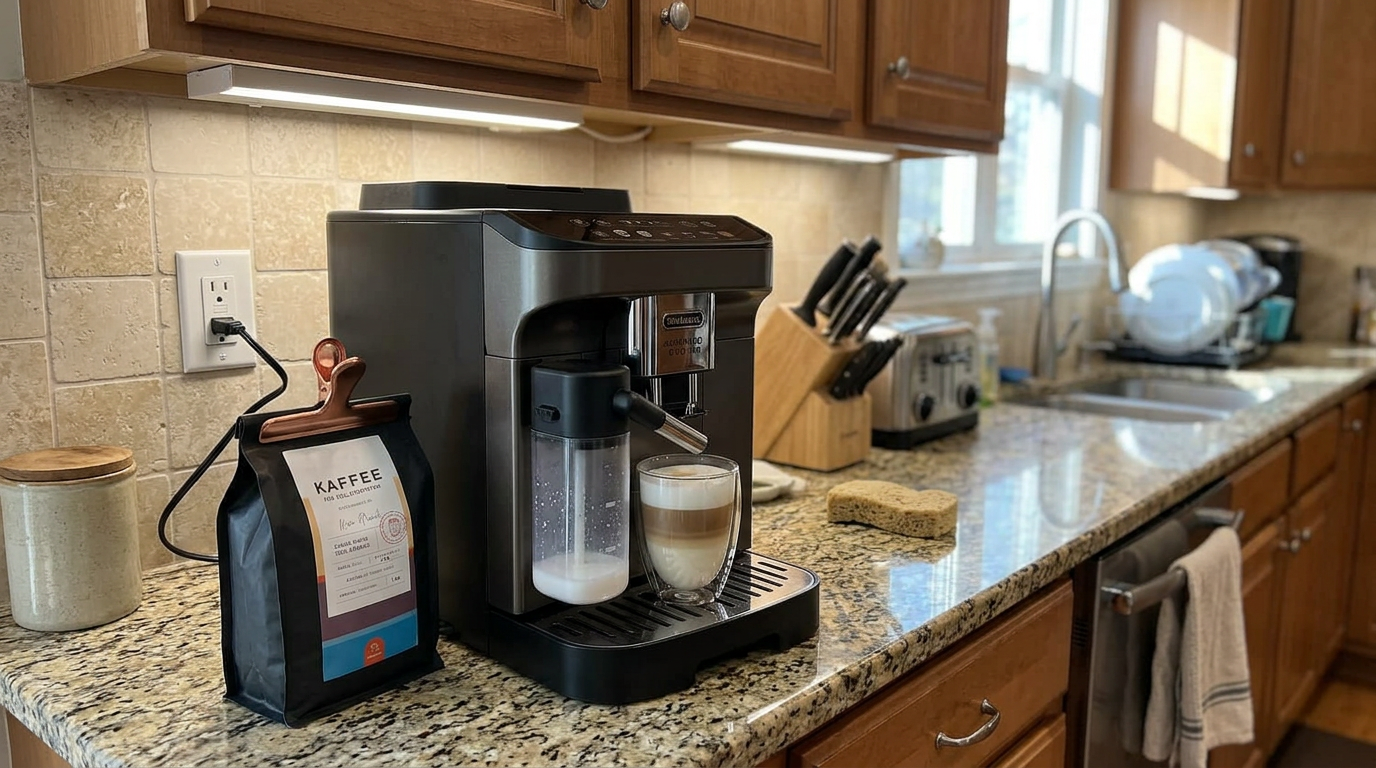
The Magnifica Evo came within a whisker of the Jura for a fraction of the price.
All three use a thermoblock✕ThermoblockA compact heater that warms water on its way through a metal block, instead of keeping a boiler hot. It heats up fast and switches between tasks quickly. and a 15-bar pump, and all heat up in under a minute. The Evo was ready in about 38 seconds from cold.
If you want more from a Philips, the Philips 5500 adds five strength levels and an Extra Shot. It scored 8.2 for espresso in my testing, the best of the Philips range.
| What you taste | Likely cause | First fix |
|---|---|---|
| Sour, thin, watery | Under-extracted✕Under-extractionWhen water does not pull enough flavor out of the coffee. The shot tastes sour, thin and watery. | Grind finer or raise strength |
| Bitter, harsh, drying | Over-extraction | Grind one step coarser |
| Pale crema that fades fast | Stale beans | Use beans within a few weeks of roasting |
| Lukewarm shot | Cold cup | Warm the cup with hot water first |
Americanos, long coffee and tea
All three make an americano properly: espresso first, then hot water through a separate path. That keeps the coffee from over-extracting and turning bitter.
The Jura E6 does it best. You can change the strength or volume during a drink, and it asks whether to save the new settings, so your americano gets tuned once and stays that way.
The Jura also has three hot water temperatures. Low suits green and white tea, medium suits herbal tea, and high handles black tea, and its separate hot water spout gave a steady, splash-free stream.
The Evo and Philips each have a single hot water setting, which is fine for americanos and most teas.
| Tea type | Ideal water | Best machine |
|---|---|---|
| Green tea | 158–176°F | Jura E6, low setting |
| White tea | 167–185°F | Jura E6, low setting |
| Herbal tea | 194–212°F | Jura E6, medium setting |
| Black tea | 203–212°F | Jura E6, high setting |
Our tip: Make your americano a little shorter than the default, because 3 ounces of water instead of 4 keeps more body and sweetness in the cup.
Milk drinks
Each brand has its own milk system, and each has a clear strength.
De’Longhi’s LatteCrema carafe made the densest, glossiest microfoam✕MicrofoamMilk foam with bubbles so small you can barely see them. It feels silky and glossy, which is what a good cappuccino or flat white needs. of the three. Milk came out at about 140°F, and the carafe goes straight in the fridge between drinks.
Philips’ LatteGo jug is the easiest to clean. It has no tubes, so after a latte you rinse two plastic parts under the tap and you are done.
Its foam is good rather than café-smooth. The 3200 scored 7.8 for milk, and the 5500 improves on it with milk at about 167°F and a two-part carafe that rinses clean in about 10 seconds.
The Jura E6 draws milk through a silicone hose from a carton or container. It makes one foam texture, dense and generous, which suits a cappuccino perfectly but means no one-touch flat white.
If milk drinks are a daily habit, the Jura E8 adds 17 one-touch drinks with silky microfoam, including a real flat white and latte macchiato.
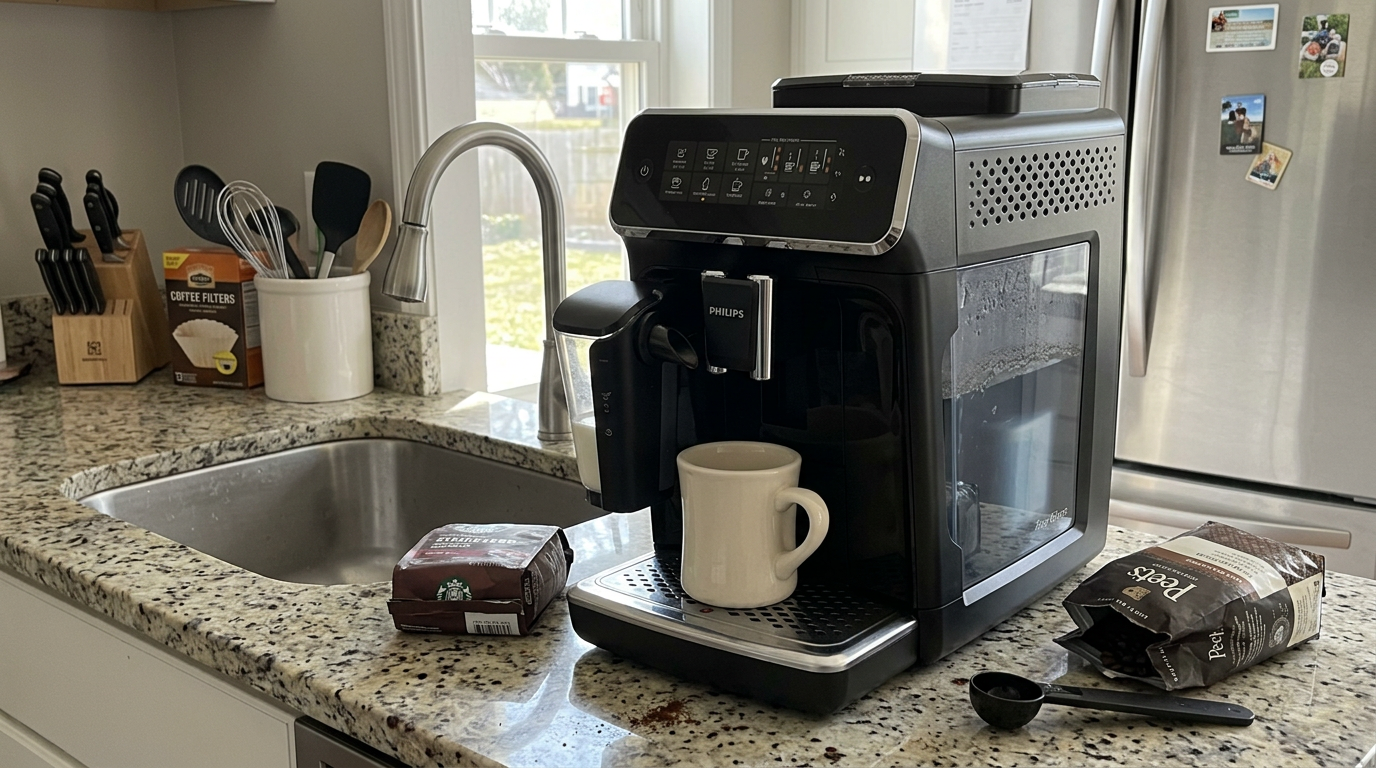
Philips’ LatteGo jug is the easiest milk system of the three to clean.
Milk-drink ratings
My scores out of 10 for texture, temperature and ease.
| Milk feature | Magnifica Evo | Philips 3200 | Jura E6 |
|---|---|---|---|
| System | LatteCrema carafe | LatteGo jug | Hose from carton |
| Tubes to clean | Carafe parts | None | Hose |
| One-touch latte macchiato | Yes | Yes | No |
| Measured milk temperature | About 140°F | Good | Hot, single texture |
| Fridge-friendly | Yes | Rinse and refill | Use your carton |
Our tip: Use cold milk straight from the fridge with every brand, because warm milk makes big, loose bubbles that collapse in the cup.
Cleaning and upkeep
This is one of the clearest brand differences. De’Longhi and Philips both have a removable brew unit✕Brew unitThe part that compresses the ground coffee, holds it while water passes through and then ejects the used puck. A removable one can be rinsed under the tap., which you slide out and rinse under the tap once a week.
Jura seals its brew unit inside the machine. Instead, it rinses the coffee path when it switches on and off, and asks for a cleaning tablet when it is due.
Both approaches work. I liked being able to see the De’Longhi and Philips brew units and know they were clean, while the Jura simply looked after itself with almost no effort from me.
On the milk side, Philips wins clearly. The LatteGo jug has no tubes, so it rinses clean in seconds, while the Evo’s carafe has a Clean setting and the Jura’s hose needs a rinse and a weekly deep clean.
My daily hands-on cleaning time with milk drinks
My estimate, not counting automatic rinses.
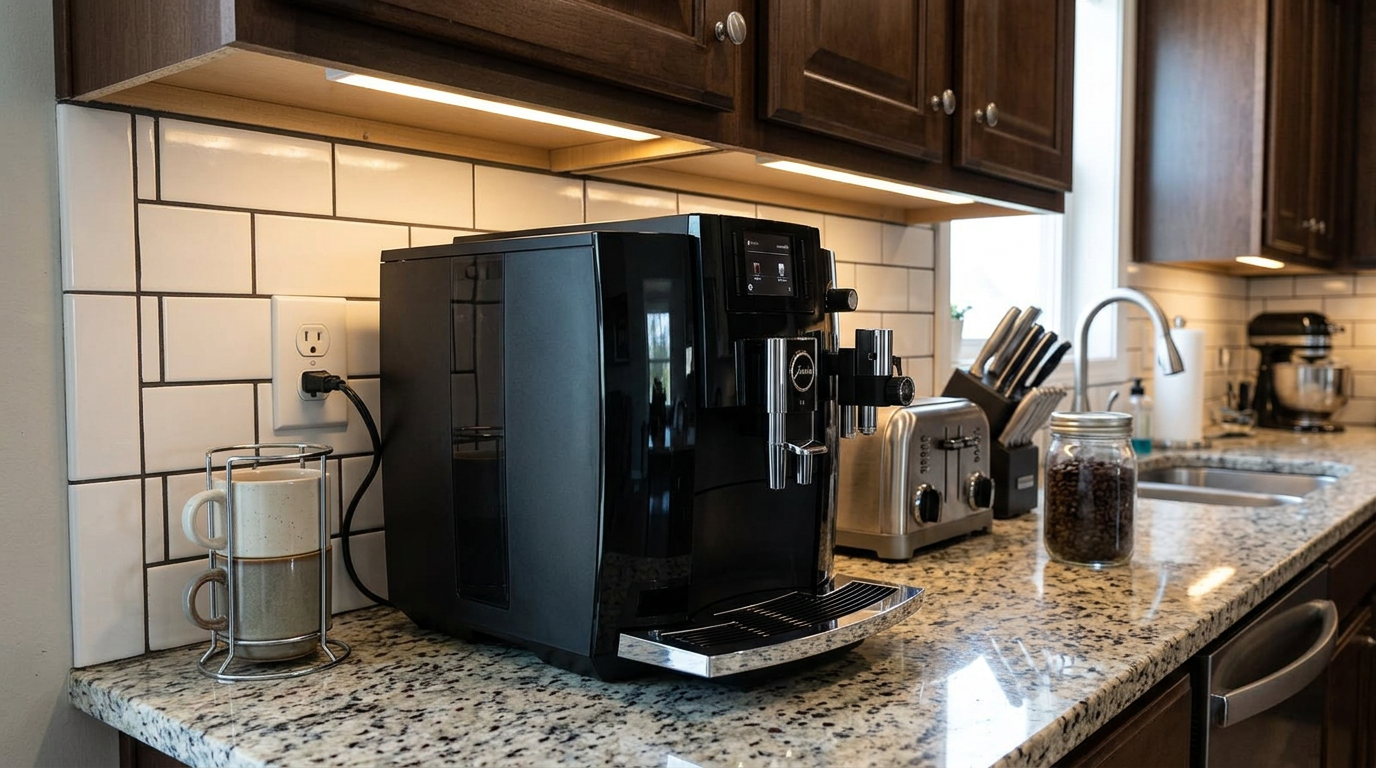
The Jura rinses its coffee path automatically and asks for tablets when cleaning is due.
| When | De’Longhi | Philips | Jura |
|---|---|---|---|
| After milk | Carafe Clean setting | Rinse the LatteGo parts | Rinse the hose when prompted |
| Daily | Empty tray and grounds | Empty tray and grounds | Empty tray and grounds |
| Weekly | Rinse the brew unit | Rinse the brew group | Deep milk clean with a tablet |
| When prompted | Descale | Descale | Brew unit cleaning tablet |
| Every few months | Replace the filter | Replace AquaClean | Replace CLEARYL, milk hose |
Our tip: Rinse the milk system straight after your last milk drink on any brand, because dried milk takes minutes to remove and fresh milk takes seconds.
Noise
Noise is where Jura’s build quality pays off. The E6’s grinder sits on rubber mounts with sound damping inside the housing, and it made a low, short burst rather than a sharp whine.
The De’Longhi and Philips grinders were louder, with a brighter whir lasting around 10 seconds per drink. Neither was unpleasant, but in an open-plan home at 6 a.m., the Jura was the one that let everyone sleep.
How loud each felt, my ranking
Relative loudness from my side-by-side use. Shorter bars are quieter.
Our tip: Put a thin silicone mat under any of these machines, because it soaks up vibration and makes the grinder sound softer.
Water, filters and running costs
All three hold a similar amount of water. The Jura E6 holds about 64 ounces, the Philips 3200 about 61 ounces and the Magnifica Evo about 60 ounces, so refills come around at about the same pace.
Each brand uses its own filter. Philips’ AquaClean comes in the box with the 3200, Jura uses CLEARYL cartridges, and De’Longhi has its own filter.
Water tank size
From manufacturer specifications.
Jura also uses cleaning tablets for the brew unit and the milk system, and replacement milk hoses every few months. De’Longhi and Philips use fewer consumables, because you rinse their brew units by hand.
Whichever brand you choose, use fresh whole beans within a few weeks of roasting, and avoid very oily or flavored beans that can clog the grinder.
| Supply | De’Longhi | Philips | Jura |
|---|---|---|---|
| Water filter | De’Longhi filter | AquaClean | CLEARYL |
| Brew unit cleaning | Rinse by hand | Rinse and lubricate | Cleaning tablets |
| Milk cleaning | Carafe Clean | Rinse, dishwasher | Milk cleaner, hose swaps |
| Descaling | When prompted | Less often with AquaClean | Less often with CLEARYL |
Our tip: Use the water filter from day one on any brand, because preventing scale is far easier than removing it.
Going further: the step-up models
The three machines I compared are each brand’s most popular entry point. If you want more drinks or profiles, every brand has a natural next step.
From De’Longhi, the De'Longhi Rivelia adds a touchscreen, four profiles and two swappable bean hoppers. From Philips, the Philips 5500 Series adds 20 hot and iced drinks, four profiles and a two-part milk carafe that rinses in about 10 seconds.
From Jura, the Jura E8 adds 17 one-touch drinks, silky microfoam and automatic filter tracking. Its milk comes out at about 122°F, though, so pre-warm your cups.
| Step-up | What it adds | My overall score |
|---|---|---|
| De’Longhi Rivelia | Two hoppers, touchscreen, 4 profiles | 8.5 |
| Philips 5500 | 20 hot and iced drinks, 4 profiles | 8.5 |
| Jura E8 | 17 drinks, microfoam, filter tracking | 8.1 |
Our tip: Move up a model only for a feature you will use daily, such as profiles or flat whites, because the espresso barely changes within each brand.
A month with each brand
Four weeks with each machine showed me what each brand is really like to live with.
The De’Longhi felt like the best deal from day one. The coffee was rich, the foam was dense and the carafe slipped into the fridge door, and my only complaint was sharing one strength setting with my partner.
The Philips was the machine I never had to think about. It made mild, pleasant drinks, and cleaning the LatteGo jug took seconds, so it never felt like a chore even on busy mornings.
The Jura felt like a premium appliance. Its espresso and americano were the best I made all month, it was the quietest, and its tea water was a bonus I didn’t expect to use as much as I did.
| After four weeks | De’Longhi | Philips | Jura |
|---|---|---|---|
| What I loved | Foam and value | Effortless cleaning | Espresso and quiet running |
| What annoyed me | Shared settings | Mild espresso | Sealed brew unit, tablets |
| Who used it most | Milk drinkers | Everyone, for quick coffee | Espresso and tea drinkers |
Our tip: Try a straight espresso and a cappuccino from any machine you are considering, because those two drinks show a brand’s strengths and weaknesses fastest.
Real-life scenarios
Specs only go so far. These are the situations where one brand clearly pulled ahead during my testing.
The heaviest body and thickest crema of the three, from a 16-gram dose.
LatteCrema foam was dense and sweet, and the carafe went back in the fridge in seconds.
The LatteGo jug rinsed clean in seconds, with no tubes to flush.
The low water setting kept green tea from turning bitter.
Thirteen grind steps and three dose levels gave me the most control.
Clear icons, five drinks and nothing that can go wrong.
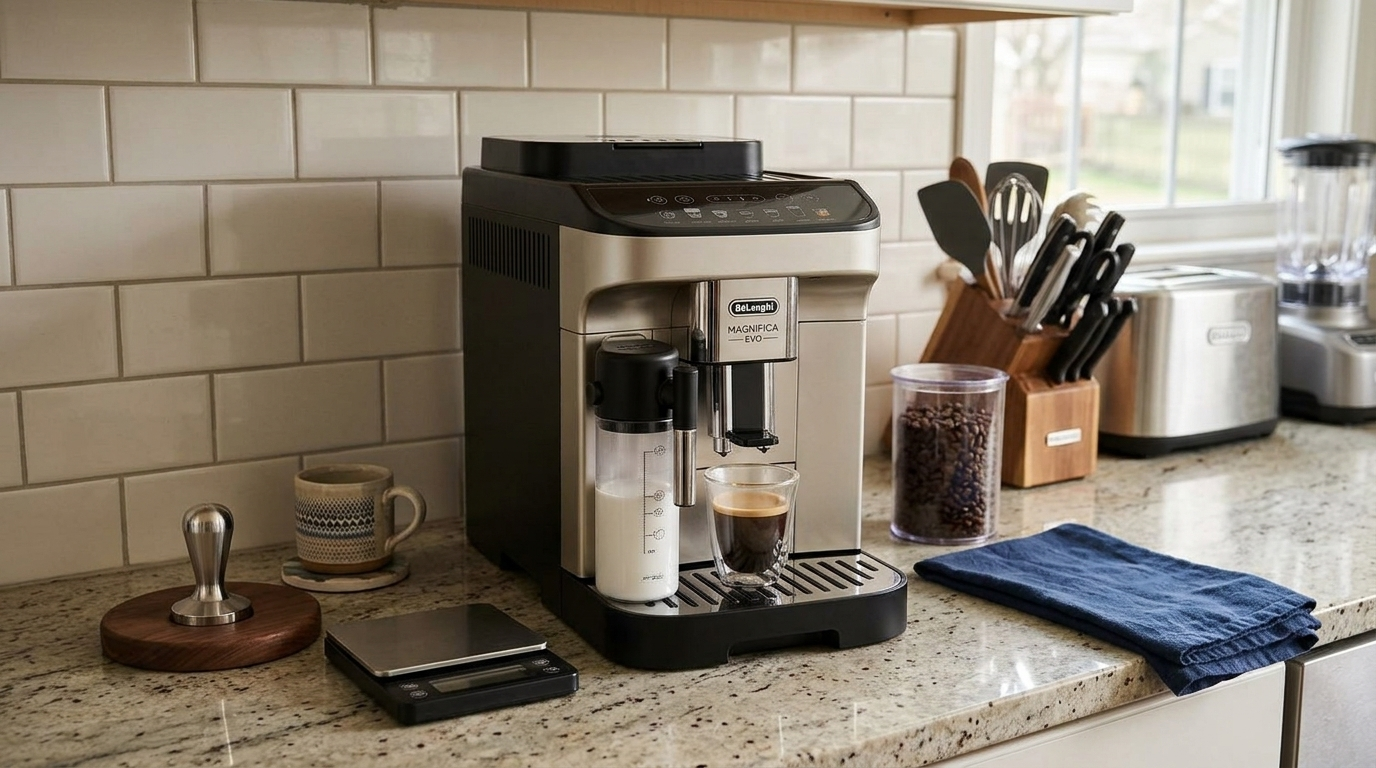
For most households, the Magnifica Evo was the best balance of coffee and cost.
My scorecard
These are my own scores out of 10. The first four come from my single reviews of each machine, and I added value because it often decides this matchup.
De'Longhi Magnifica Evo
Jura E6
Philips 3200 Series
Overall, I rate the Jura E6 8.4, the Magnifica Evo 8.3 and the Philips 3200 8.0. The Evo is the value champion; the Jura is the coffee champion.
See Today’s PriceWhich one is right for you?
4 quick questionsWhich one should you buy?
It comes down to two questions: how much does the taste of a straight espresso matter to you, and how much cleaning will you tolerate? For the wider picture beyond this matchup, see my guide to the best Jura coffee machines.
For two of these head to head, read my Jura vs De’Longhi, De’Longhi vs Philips and Philips 3200 vs Magnifica Evo comparisons.
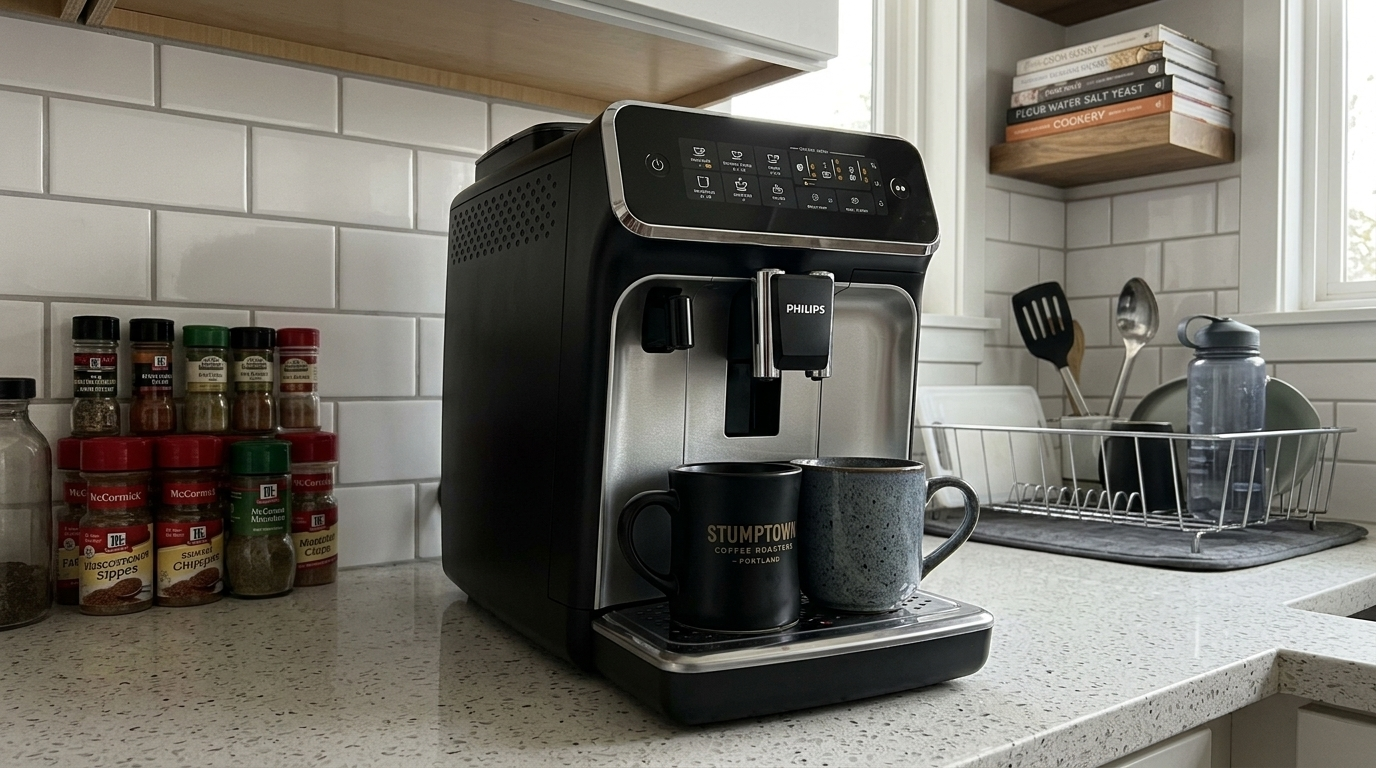
For the easiest daily routine, Philips is hard to beat.
- You want rich espresso for sensible money
- You make cappuccinos most days
- You want a removable brew unit
- You want profiles or a screen
- You drink a lot of tea
- You want the quietest grinder
- Espresso and americanos are your main drinks
- Someone at home drinks tea
- You want a quiet, solid machine
- You want a removable brew unit
- You want a one-touch flat white
- Your counter is narrow
- You hate cleaning milk tubes
- You like mild coffee and lattes
- You want the simplest controls
- You want strong espresso
- You want a premium-feeling build
- You want tea temperatures
For most homes, my pick is De’Longhi, starting with the Magnifica Evo. It pulled espresso within a whisker of the Jura, made the best foam of the three and costs far less.
If straight espresso is what you care about most, buy the Jura E6. It made the fullest shot, the best americano and hotter tea water, and it did it more quietly than the others.
Choose Philips and the 3200 if you want the easiest daily routine. Its LatteGo jug is the simplest milk system I know to clean, and its five drinks cover what most people make.
De’Longhi vs Philips vs Jura specifications
From manufacturer specifications and my own testing.
| De'Longhi Magnifica Evo | Philips 3200 Series | Jura E6 | |
|---|---|---|---|
| Model | Magnifica Evo with LatteCrema | 3200 Series, EP3241 | E6, 15622 |
| One-touch drinks | 7 | 5 | 9, plus doubles |
| Pump pressure | 15 bar | 15 bar | 15 bar |
| Heating | Thermoblock | Thermoblock | Thermoblock |
| Grinder | Steel conical, 13 settings | Ceramic, 12 settings | Steel conical, 6 positions |
| Top dose | About 15 g | About 8 g | 16 g |
| Bean hopper | About 8.8 oz | 9.7 oz | About 10 oz |
| Water tank | About 60 oz | 61 oz | About 64 oz |
| Milk system | LatteCrema carafe | LatteGo jug | Milk hose |
| Hot water temperatures | One | One | Three |
| Brew unit | Removable | Removable | Sealed |
| Display | Icons and buttons | Touch icons | 2.8-inch color, buttons |
| Dimensions (W × H × D) | 9.45 × 14.2 × 17.3 in | 9.7 × 14.6 × 17 in | 11 × 13.8 × 17.3 in |
| Weight | About 21 lb | About 17.6 lb | About 22 lb |
How I tested and compared them
I used each machine as my everyday coffee maker for four weeks, making espresso, long coffee, americanos, cappuccinos, latte macchiatos and tea water.
I weighed doses and yields, measured milk and hot water temperatures with a probe thermometer, worked through each grind range and frothed whole, semi-skimmed, skim and oat milk.
I ran every cleaning routine, then wrote up my notes and measurements together and compared them with each brand’s specifications and owner documentation.
- Coffee: dose, crema, body and consistency
- Milk: foam texture, temperature and cleaning
- Workflow: controls, drinks and daily routine
- Ownership: noise, filters, supplies and footprint
De’Longhi vs Philips vs Jura FAQ
Which is better: De’Longhi, Philips or Jura?
It depends on your priority. Jura makes the best espresso and the most polished machines, De’Longhi gives you near-Jura coffee and excellent foam for much less, and Philips is the easiest to clean with its tube-free LatteGo jug.
Is Jura worth the extra money over De’Longhi?
If straight espresso is your main drink and you value build and quiet running, yes. The Jura E6 scored 8.8 for espresso against 8.5 for the De’Longhi Magnifica Evo. If you mostly drink milk coffee, the Evo’s foam was actually better.
Why does Philips espresso taste weaker?
The dose is small. I measured about 8 grams at maximum on the Philips 3200, against about 15 grams on the Magnifica Evo and up to 16 grams on the Jura E6.
Which brands have a removable brew unit?
De’Longhi and Philips. Both slide out so you can rinse them under the tap. Jura’s brew unit is sealed, and you clean it with tablets when the machine asks.
Which brand is easiest to clean?
Philips. The LatteGo jug has no tubes and rinses clean in seconds, and the brew group comes out for rinsing. De’Longhi is close behind, and Jura needs more tablet-based cleaning.
Which brand is best for tea?
Jura. The E6 has three hot water temperatures and a separate hot water spout, so you can make green, herbal and black tea at the right temperature.
Which is quietest?
Jura. The E6’s grinder sits on rubber mounts with sound damping, and it was the quietest of the three in my kitchen.
Which brand makes the best milk foam?
De’Longhi, in my testing. The Magnifica Evo’s LatteCrema carafe made the densest, glossiest foam and scored 8.4 for milk drinks.
What is the best De’Longhi, Philips or Jura for a family?
For milk drinks and several users, look at the step-up models: the De’Longhi Rivelia, the Philips 5500 and the Jura E8. All three add profiles or many more one-touch drinks.
Do I need a water filter?
If your water is moderately hard, yes. Each brand has its own: AquaClean for Philips, CLEARYL for Jura, and De’Longhi’s own filter. They cut scale and mean fewer descaling cycles.

- Our hands-on De’Longhi Magnifica Evo review
- Our hands-on Philips 3200 Series review
- Our hands-on Jura E6 review
- De’Longhi, Philips and Jura product specifications and owner documentation
- How to Brew Coffee, National Coffee Association
- Composting and Coffee Grounds, Cornell University